This post may contain affiliate links. If you make a purchase through these links, we may earn a commission at no additional cost to you.
Every home has a forgotten corner, an empty closet, or a bare stretch of wall that could become your favorite spot in the house.
A diy reading nook turns dead space into a personal retreat where you can disappear into a good book without leaving home.
These ten builds range from a single afternoon with a staple gun to a full weekend with a circular saw.
Each project focuses on real materials you can find at a hardware store or salvage yard, paired with soft textiles that make the finished reading space feel warm and lived in.
A Plywood Platform Bench Tucked Beneath a Staircase
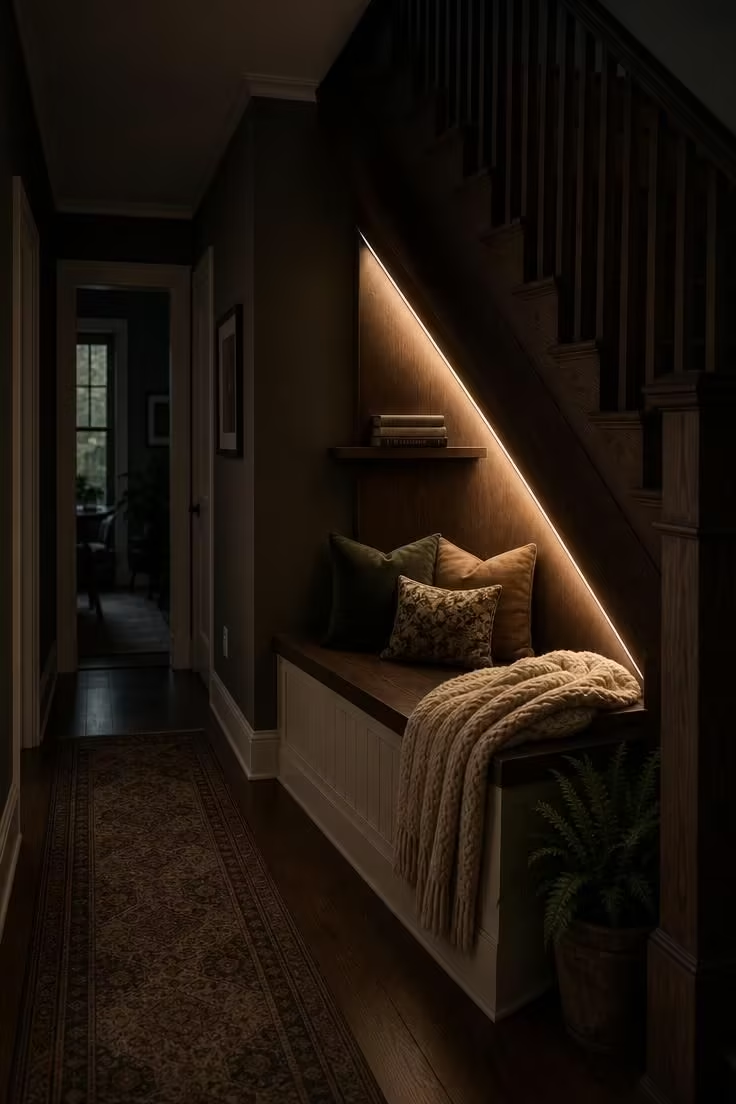
The triangular void beneath a staircase is one of the most underused pockets of square footage in any home.
Building a platform bench here requires only a sheet of 3/4 inch plywood, a handful of screws, and some bead board trim to finish the front face.
The angled ceiling created by the stair slope gives the nook a cave-like quality that naturally encourages you to settle in and stay.
A recessed LED strip mounted along the underside of the lowest stair tread provides enough reading light without any hardwiring, since battery-powered versions adhere with peel-and-stick backing.
Staining the plywood in a deep walnut and painting the bead board in matte ivory creates a contrast that makes this small reading area feel intentional rather than leftover.
Toss a heavy knit throw over the edge and stack a few books on a narrow ledge above, and the whole space reads as a cozy corner purpose-built for long afternoons.
Style Blueprint:
- Plywood bench platform with bead board face panel
- Battery-powered LED strip mounted under the stair tread
- Deep walnut stain on the bench, matte ivory on the trim
- Cable-knit throw in oatmeal or cream
- Narrow floating ledge for book storage
Repurposed Closet With Cedar Plank Walls and a Tufted Linen Cushion
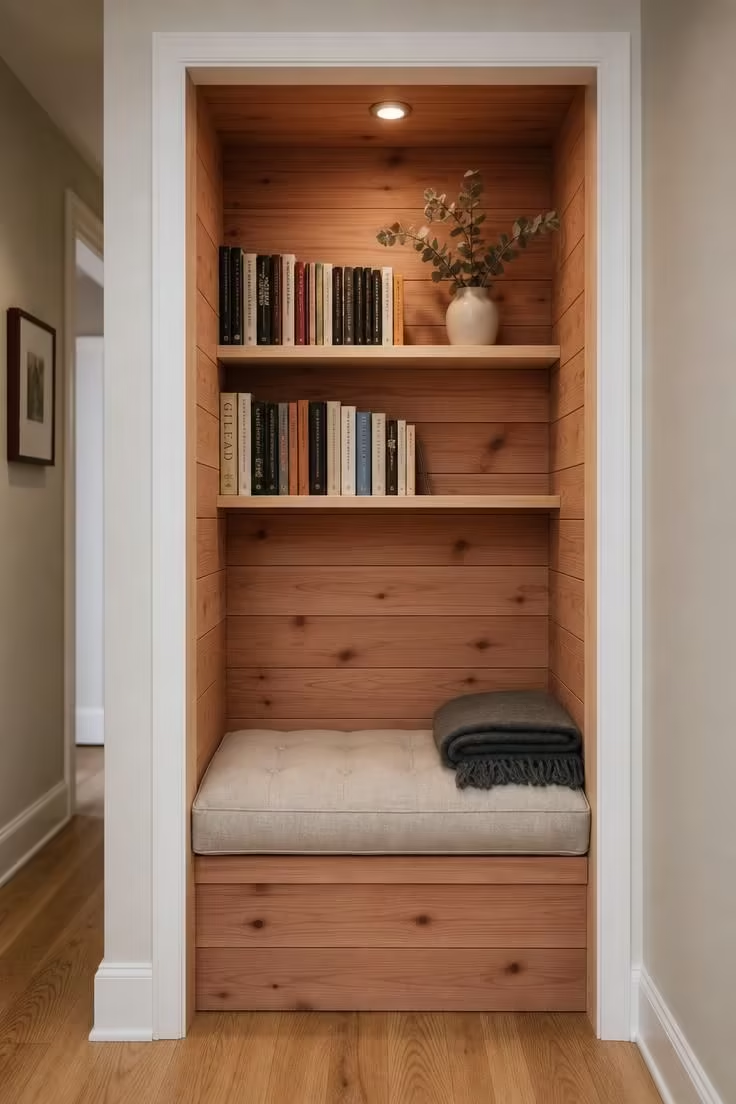
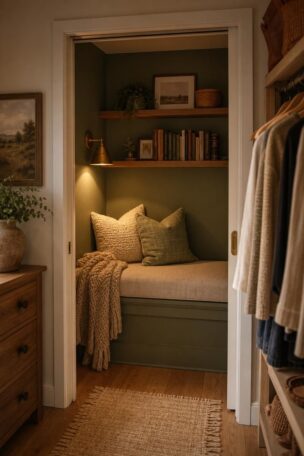
Removing a closet door is one of the fastest ways to open up a ready-made book nook without building a single wall.
Lining the interior with tongue-and-groove cedar planks adds texture and a faint woody scent that makes the small enclosure feel like a retreat rather than a storage box.
The cedar’s natural pinkish-tan color warms the space without paint, and the planks install with a brad nailer in about two hours.
A cushion seat cut from high-density foam and wrapped in undyed linen fits snugly inside the closet frame, creating a firm but comfortable perch at standard bench height.
Hand-tufting the cushion with covered buttons adds a finished look that elevates a piece of foam into something that belongs in a designed room.
One battery-operated puck light mounted to the closet ceiling provides enough nook lighting to read by without any electrical work.
Pine shelves above the cushion hold a short row of paperbacks and a dried eucalyptus sprig in a ceramic vase, keeping the look clean and uncluttered.
Style Blueprint:
- Tongue-and-groove cedar planks (horizontal, natural finish)
- High-density foam cushion covered in undyed linen
- Battery puck light with brushed nickel finish
- Pine shelves for book storage above the seat
- Folded wool blanket in a cool neutral tone
Canvas Drop Cloth Canopy Over a Layered Floor Cushion Pile
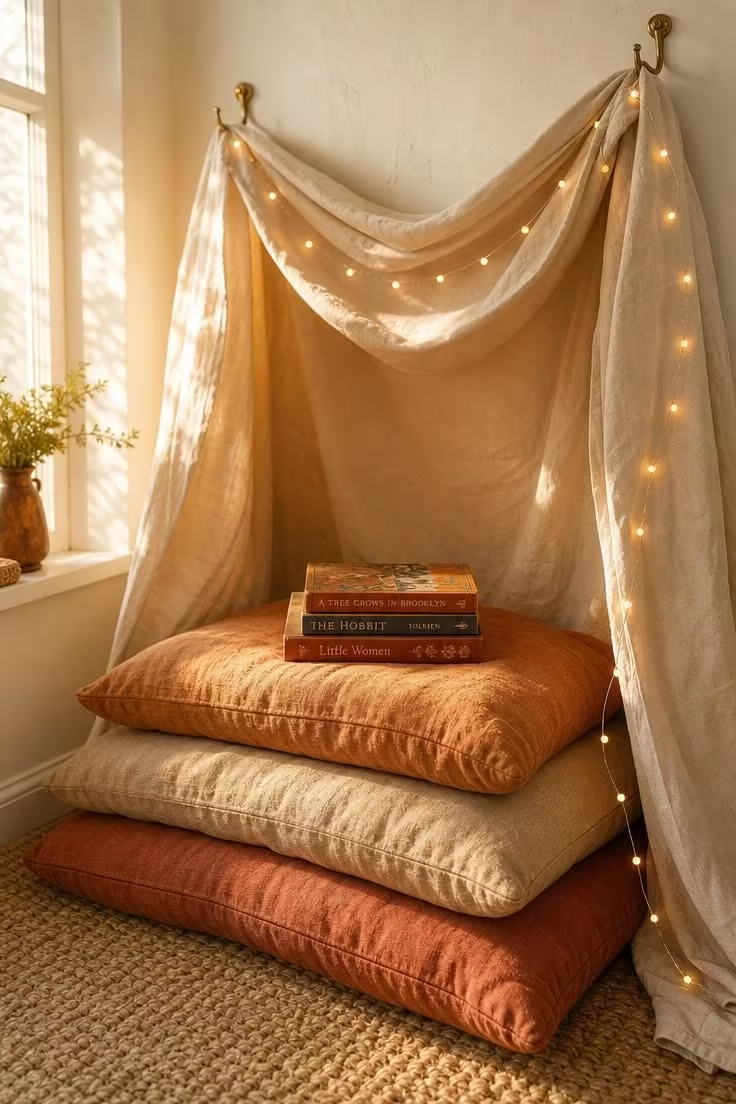
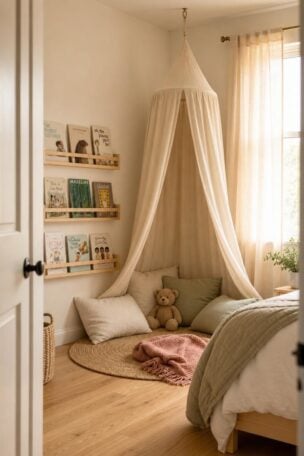
Two brass hooks screwed into ceiling joists and a ten-dollar canvas drop cloth are all you need to create a canopy that turns any reading corner into a sheltered hideaway.
The heavy weight of painter’s canvas gives the drape a relaxed, natural fall that synthetic fabrics cannot match.
Layering three or four floor cushions beneath the canopy in rust, sand, and clay tones builds a comfortable pile that invites you to sink in and stay.
String lights threaded along the canopy’s edge add a warm golden glow that replaces the need for a reading lamp on quiet evenings.
A jute rug beneath the cushion pile defines the nook’s footprint and keeps everything from sliding on a hard floor.
Style Blueprint:
- Canvas painter’s drop cloth (9 x 12 foot size works well)
- Two brass ceiling hooks rated for at least 15 pounds
- Three to four floor cushions in earthy cotton covers
- Battery-powered string lights with round bulbs
- Jute area rug to anchor the arrangement
A Pine Crate Bench With Hinged Storage and Denim Covers
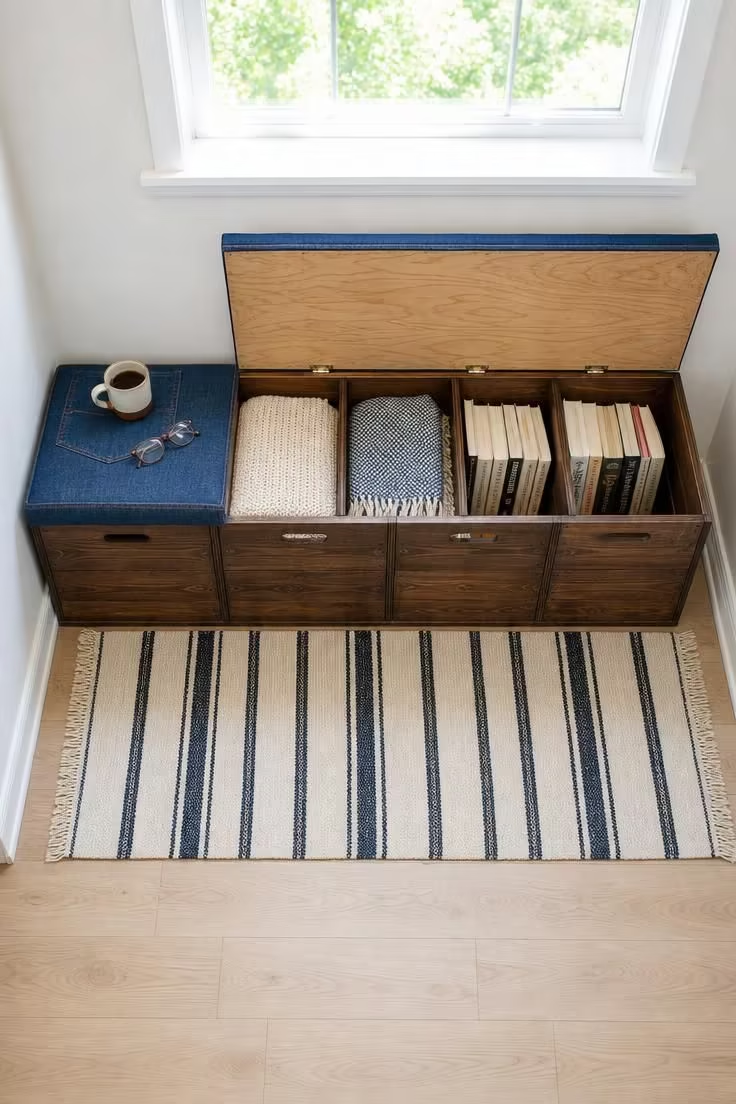
Wooden crates from a hardware store cost a few dollars each, and four of them screwed together in a line create a sturdy bench frame that holds real weight.
Sanding the rough edges and applying a single coat of honey-toned stain gives the pine a clean, intentional look without hiding the grain.
A plywood lid attached with piano hinges turns the top into a storage compartment deep enough for blankets, magazines, and a few stacked paperbacks.
Repurposed denim from old jeans makes a surprisingly durable cushion seat cover that softens with every wash and resists stains better than most upholstery fabrics.
The indigo color pairs naturally with warm wood tones, and the visible topstitching adds a handmade character that a store-bought cover would lack.
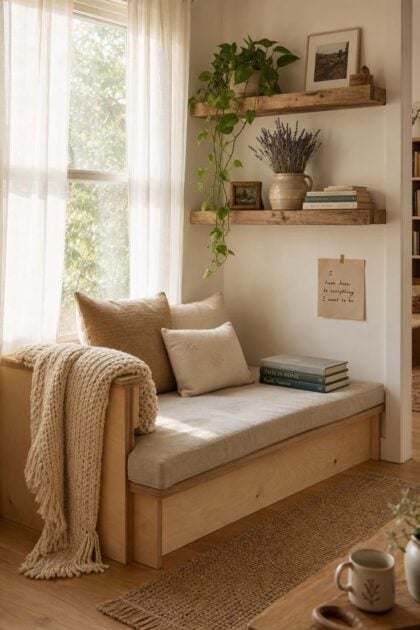
Placing this bench beneath a window fills the reading space with bright midday light, making it one of the most practical spots in the house for afternoon reading.
A pair of reading glasses and a ceramic mug on the closed lid suggest daily use, which is exactly the lived-in quality that makes a diy reading nook feel like it belongs.
This kind of built-in bench works in a hallway, a bedroom wall, or the end of a kitchen island where a standard chair would be too bulky.
Style Blueprint:
- Four sanded pine crates stained in honey tone
- Plywood lid with piano hinges for hidden storage
- Denim cushion covers sewn from repurposed jeans
- Cream and navy striped cotton runner beneath the bench
- Reading accessories left casually on the bench surface
Design Pro-Tip: When building a storage bench for your reading corner, line the interior with a cotton drop cloth before stacking blankets inside. The cloth catches dust and sawdust from unfinished wood, keeping stored textiles clean and extending their life between washes.
Pegboard Wall With Adjustable Shelves and a Sheepskin Rug Below
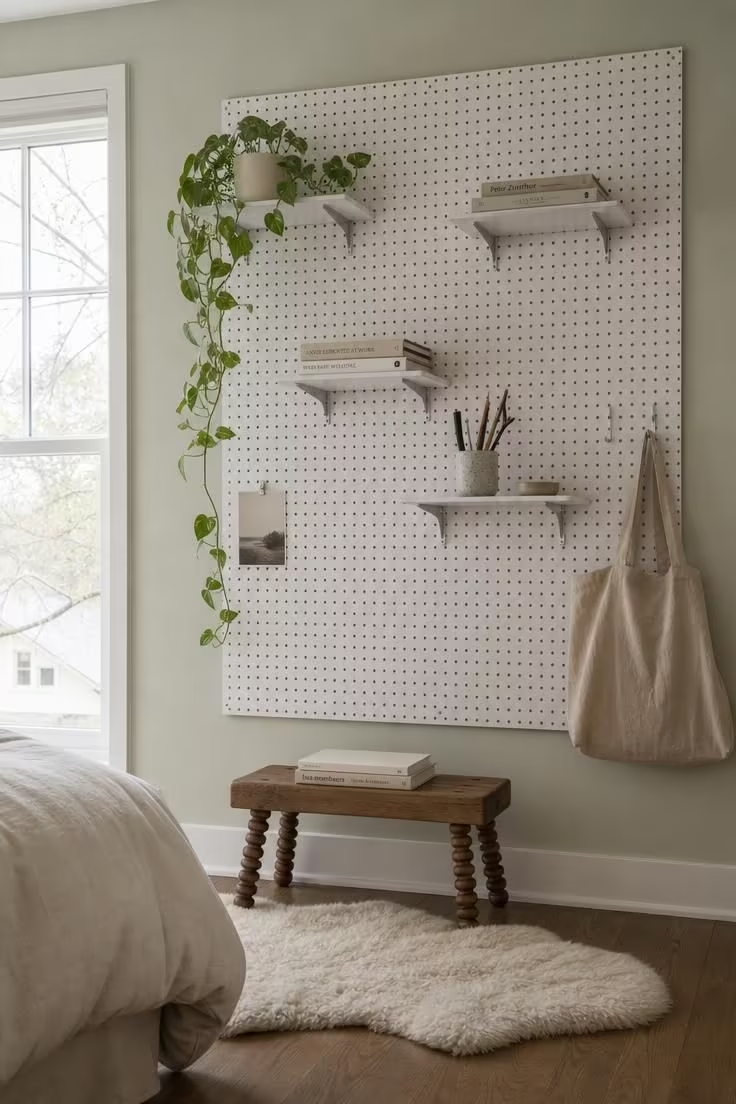
A four-by-four foot pegboard panel screwed into wall studs gives you a fully adjustable shelving system that can be rearranged in seconds without leaving new holes in your wall.
Metal shelf brackets, hooks, and small baskets snap into the pegboard grid, letting you organize books, reading glasses, a pencil cup, and a trailing plant all within arm’s reach.
The sheepskin rug beneath a low wooden stool softens the floor and signals that this spot is meant for sitting, not just passing through.
Painting the wall behind the pegboard in pale sage adds a quiet backdrop that makes the white board and its contents stand out without competing.
Cool, even light from a nearby window keeps the space comfortable for reading without harsh glare on the page.
This setup works especially well as a diy reading nook in a bedroom or guest room where a permanent built-in bench is not practical, since the entire arrangement can be taken down and reassembled somewhere else.
Style Blueprint:
- Large white pegboard panel (4 x 4 feet minimum)
- Metal shelf brackets and hooks for adjustable storage
- Low wooden stool with turned legs
- Sheepskin rug in natural ivory
- Pale sage wall paint as a backdrop
Macramé Curtain Partition Framing a Velvet Floor Pouf

A macramé panel hung from a dowel rod creates a soft boundary around a reading corner without blocking light or air, making it ideal for open floor plans and shared rooms.
The knotted cotton rope adds a handcrafted texture that a solid curtain or room divider cannot replicate.
Placing a large velvet floor pouf behind the macramé screen gives you a low, comfortable seat that feels private even in the middle of a living room.
The weight and pile of velvet make the pouf feel more solid than a bean bag, and the fabric holds its shape better over months of daily use.
A worn Persian-style rug beneath the pouf grounds the reading space and adds color depth that keeps the neutral macramé from feeling sparse.
Warm afternoon light streaming past the knotted ropes throws patterned shadows across the floor, turning the partition into a decorative element that changes throughout the day.
A brass tray on the rug next to the pouf holds a ceramic cup and a short book stack, creating a self-contained cozy corner that needs nothing else.
Style Blueprint:
- Macramé curtain panel on a wooden dowel rod
- Large round velvet floor pouf in a deep, saturated color
- Persian-style area rug in faded warm tones
- Lightweight linen throw for cool evenings
- Brass tray for a cup and book stack
A Birch Plywood Window Seat With Brass Puck Lights
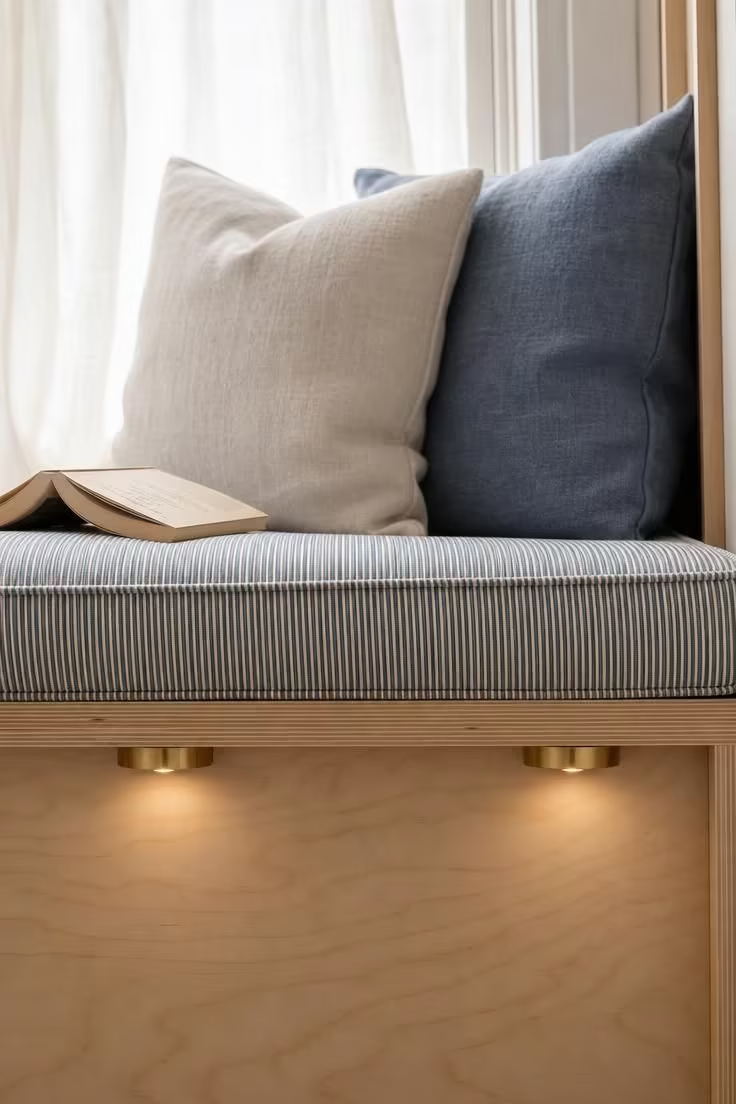
Birch plywood is one of the best materials for a DIY window seat because the layered edge grain looks clean without any edge banding or veneer.
Building an L-shaped bench into a window bay takes a Saturday morning and a few sheets of 3/4 inch birch, plus screws, wood glue, and a clear satin finish.
Brass-finish puck lights adhered under a shelf lip add focused nook lighting that looks intentional, and the batteries last for months with the low LED draw.
A cushion seat covered in blue-and-white striped ticking fabric gives the bench a classic look that fits coastal, farmhouse, and traditional rooms without committing to a single style.
Linen throw pillows in ivory and dusty blue lean against the window frame, softening the hard plywood edges and making the seat inviting enough for a full afternoon of reading.
Style Blueprint:
- Birch plywood (3/4 inch) with clear satin finish
- Brass-finish battery puck lights under the shelf lip
- Cushion in blue-and-white striped ticking fabric
- Linen throw pillows in ivory and dusty blue
- White painted window frame as the backdrop
Design Pro-Tip: When installing puck lights under a shelf or bench lip, place them 8 to 10 inches apart rather than grouping them in the center. Spacing the lights evenly across the full width of the seat prevents a single bright spot and creates a smooth wash of light that feels more like a designed fixture than an afterthought.
Salvaged Door Headboard Against a Limewashed Accent Wall
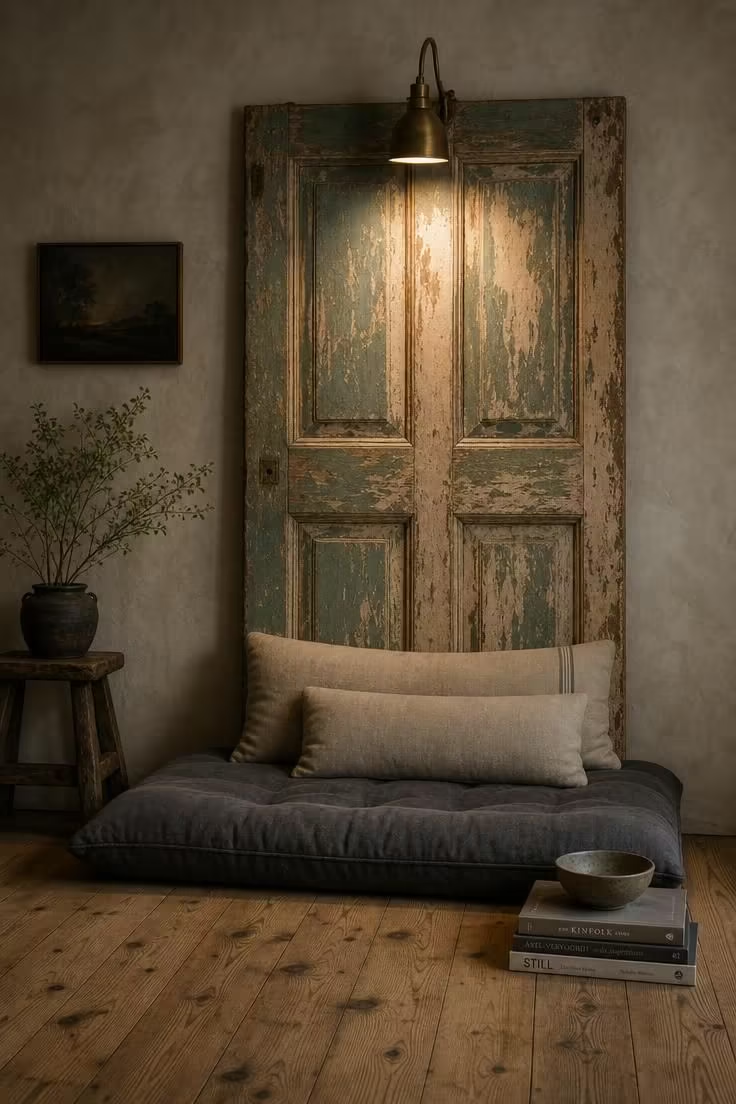
A salvaged paneled door from a demolition sale or architectural salvage yard brings more character to a wall than any piece of new furniture could.
Sanding it down to reveal layers of old paint in muted teal and cream creates a surface with depth and history that a fresh coat of paint would erase.
Mounting the door vertically against a limewashed accent wall in pale putty gives the reading space a European, plaster-walled feel that photographs beautifully.
A daybed-style floor cushion in washed charcoal cotton placed at the base of the door creates a low perch that works for reading, stretching, or napping.
The clip-on brass reading lamp attached to the top rail of the door is the smartest part of this build, since it provides adjustable task light without drilling into the wall or running a cord to a side table.
Two linen roll pillows propped against the door panels support your back and soften the hard wood surface behind you.
This diy reading nook works in a bedroom, a guest room, or a hallway landing where a tall vertical element fills an otherwise blank wall.
The entire project costs under fifty dollars if you find the door at a salvage yard and already own a sander.
Style Blueprint:
- Salvaged four-panel wooden door (sanded to show old paint layers)
- Limewash paint in pale putty for the accent wall
- Floor-level daybed cushion in washed charcoal cotton
- Clip-on brass reading lamp for task lighting
- Linen roll pillows for back support
Rope Swing Shelf and Woven Basket Storage on a Painted Arch
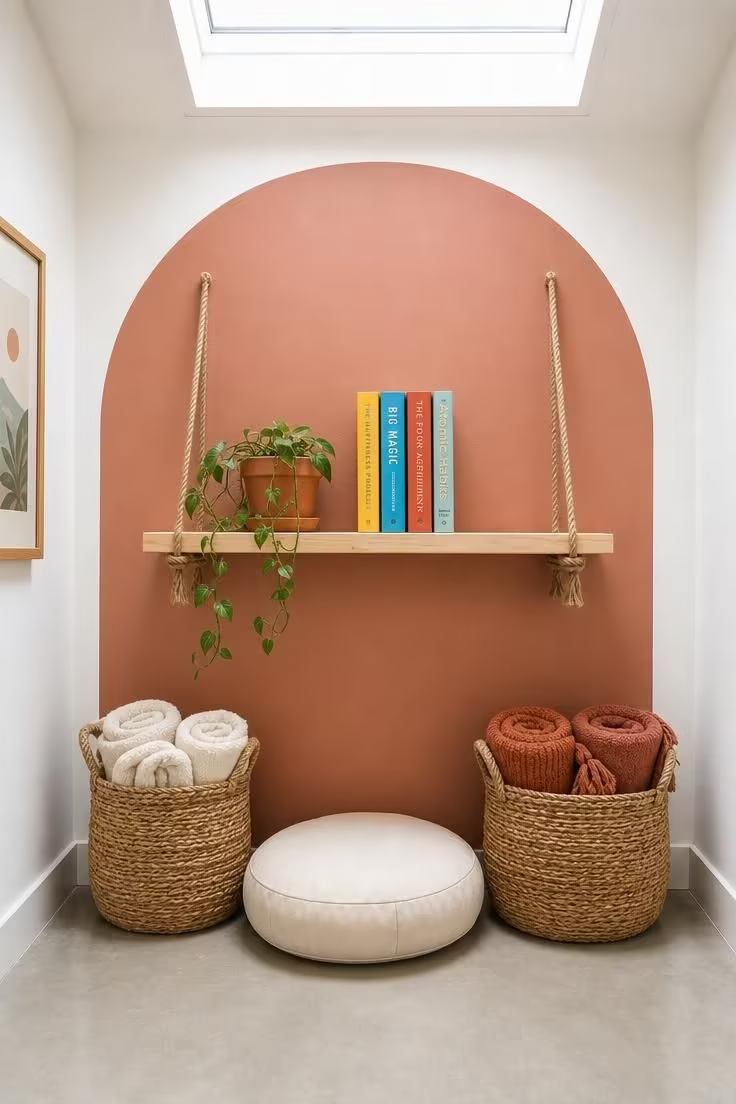
Painting an arch shape onto a flat wall with painter’s tape and a roller takes about an hour and creates a visual frame that makes any reading corner feel like a dedicated room.
A muted terracotta tone gives the arch warmth without overwhelming a neutral space, and the clean taped edges look surprisingly polished for a weekend project.
Hanging a single pine board from thick jute rope tied through drilled holes creates a swing shelf at arm height, perfect for holding four or five current reads within reach.
Woven seagrass baskets placed on the floor beneath the shelf store rolled throw blankets and extra cushions, keeping the nook organized without adding any furniture.
A round floor cushion in natural cotton canvas sits between the baskets as the primary seat, low enough that the hanging shelf doubles as an armrest.
Bright midday light from a skylight or overhead fixture fills the arch area evenly, making this one of the cheeriest spots in the house for a morning reading session.
Style Blueprint:
- Painted arch mural in muted terracotta (use painter’s tape for clean edges)
- Rope swing shelf from a pine board and thick jute rope
- Woven seagrass baskets for blanket and pillow storage
- Round floor cushion in natural cotton canvas
- Small trailing plant in a terracotta pot on the shelf
Design Pro-Tip: When painting a wall arch, tape your shape first and then apply a thin coat of the base wall color over the tape edges before switching to your arch color. This seals the tape and prevents the arch paint from bleeding underneath, giving you razor-sharp lines without any touch-up work.
French Cleat Book Ledges Flanking a Corduroy Roll Cushion Seat
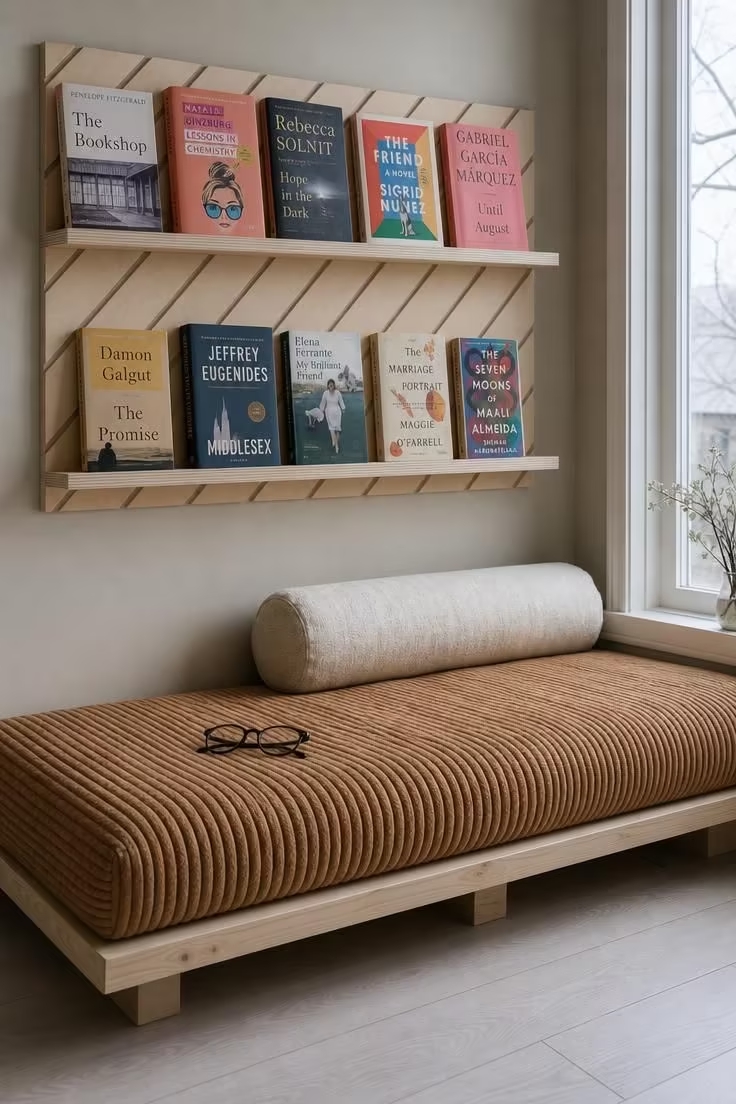
French cleats are one of the most underappreciated systems in home building, and cutting them requires only a table saw set to a 45-degree bevel.
Two strips of birch plywood, one mounted to the wall and one attached to the back of each shelf, lock together by gravity and can be repositioned in seconds without new screws or anchors.
This makes them perfect for a reading space where you want to rearrange your floating shelves by season or swap in new book displays whenever you finish a stack.
The book ledges hold paperbacks face-forward, turning your current reads into wall art that doubles as accessible storage.
A firm foam cushion seat covered in wide-wale corduroy in warm camel sits on a low pine platform beneath the shelves, creating a comfortable bench with a texture you can feel through your clothes.
A cylindrical roll pillow in cream linen supports your lower back and adds a second textile layer that keeps the corduroy from looking flat.
This is one of the simplest diy reading nook builds on the list, and the modular cleat system means it can grow or shrink as your collection changes.
Style Blueprint:
- French cleat strips cut from birch plywood at 45-degree angles
- Book ledges displaying paperbacks face-forward
- Firm foam cushion covered in wide-wale corduroy (warm camel)
- Low pine platform as a bench base
- Cylindrical roll pillow in cream linen
Conclusion
A diy reading nook does not need a large budget, a contractor, or a dedicated room to come together.
Every project on this list starts with a forgotten space and a few hours of hands-on work, turning a bare wall, an empty closet, or an unused corner into the most comfortable book nook in the house.
The materials are ordinary, from plywood and pine crates to drop cloths and denim, but the finished result feels personal in a way that catalog furniture never will.
Pick the build that fits your space, gather your tools, and give yourself permission to carve out a reading corner that belongs entirely to you.