This post may contain affiliate links. If you make a purchase through these links, we may earn a commission at no additional cost to you.
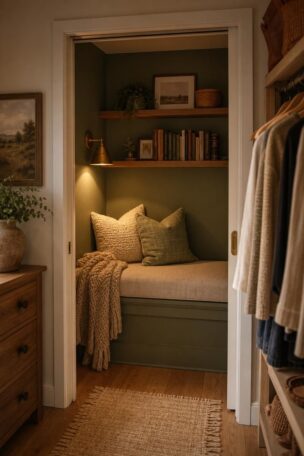
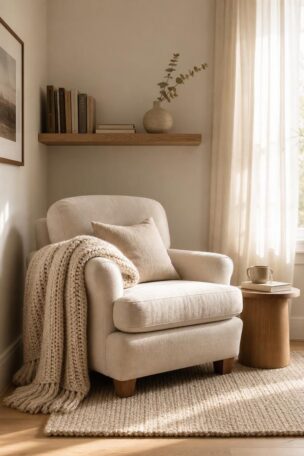
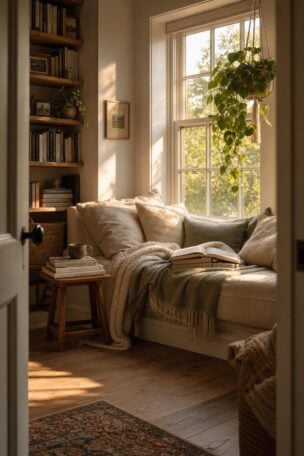
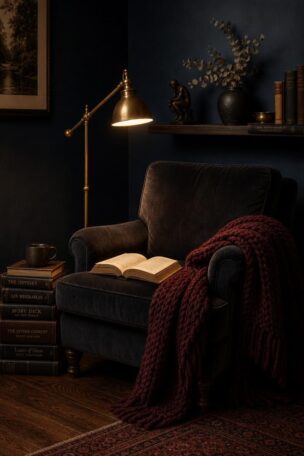
There is something about a room lined with old books and draped in deep, warm color that makes you want to sit down and stay for hours.
The dark academia aesthetic pulls from old-world libraries, lecture halls, and the kind of private studies you see in period films, and it translates surprisingly well into a reading nook at home.
These 13 dark academia reading nook ideas focus on specific materials, finishes, and arrangements you can actually recreate, whether you have a full alcove to work with or just a quiet corner and a good chair.
Each setup pairs moody tones with aged textures to build a cozy reading space that feels both personal and collected over time.
Oxblood Chesterfield Tucked Under a Walnut Arch
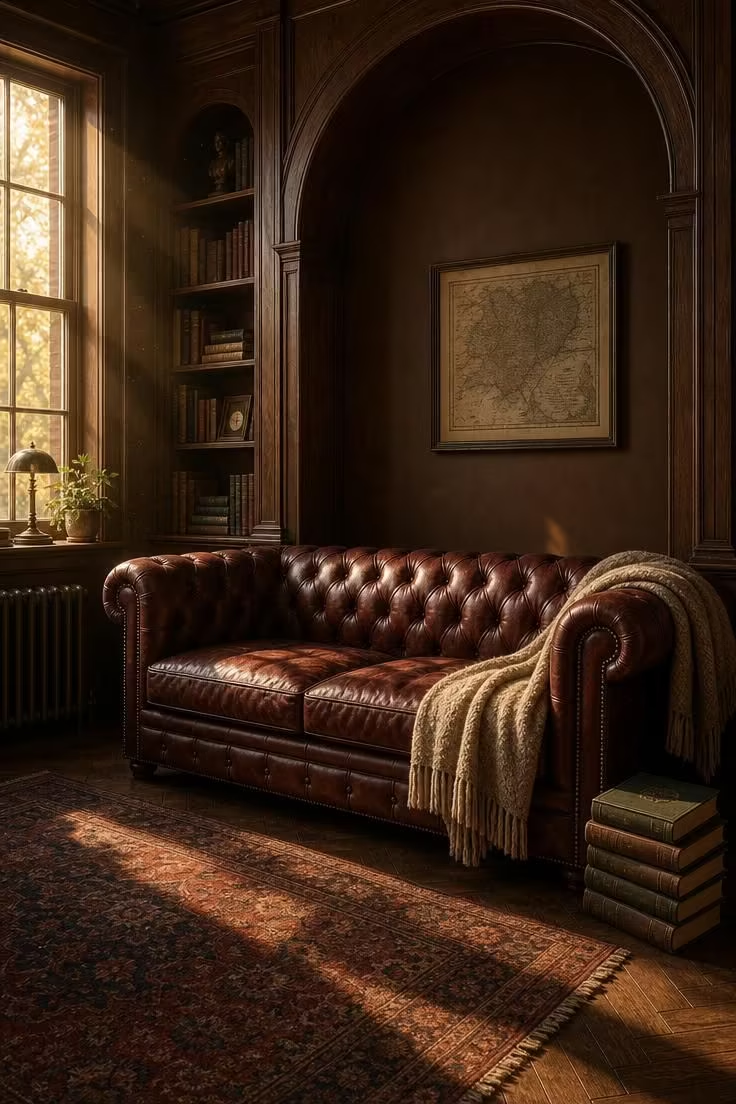
The weight of a Chesterfield changes a reading corner completely.
Its deep button-tufting and rolled arms create a sense of permanence that lighter chairs simply cannot match.
Placing it beneath a walnut arch frames the sofa like a painting, drawing the eye inward and making the nook feel like its own separate room within the larger space.
The oxblood leather darkens with age and develops a patina that only gets better, which fits the dark academia reading nook idea of spaces that feel inherited rather than purchased.
Keeping the surrounding palette tight, with tobacco walls, dark oak floors, and muted textiles, lets the leather remain the focal point without competition.
A stack of hardbacks on the floor beside the arm is more than decoration; it signals that this is a space in active use, not a staged vignette.
Style Blueprint:
- Oxblood or burgundy leather Chesterfield sofa or loveseat
- Walnut-stained arched frame or freestanding arch mirror behind the seating
- Faded Persian rug in burgundy and navy tones
- Oatmeal or cream chunky wool throw
- Stack of cloth-bound hardbacks in muted spine colors
A Marble-Top Side Table With Stacked Cloth-Bound Hardbacks
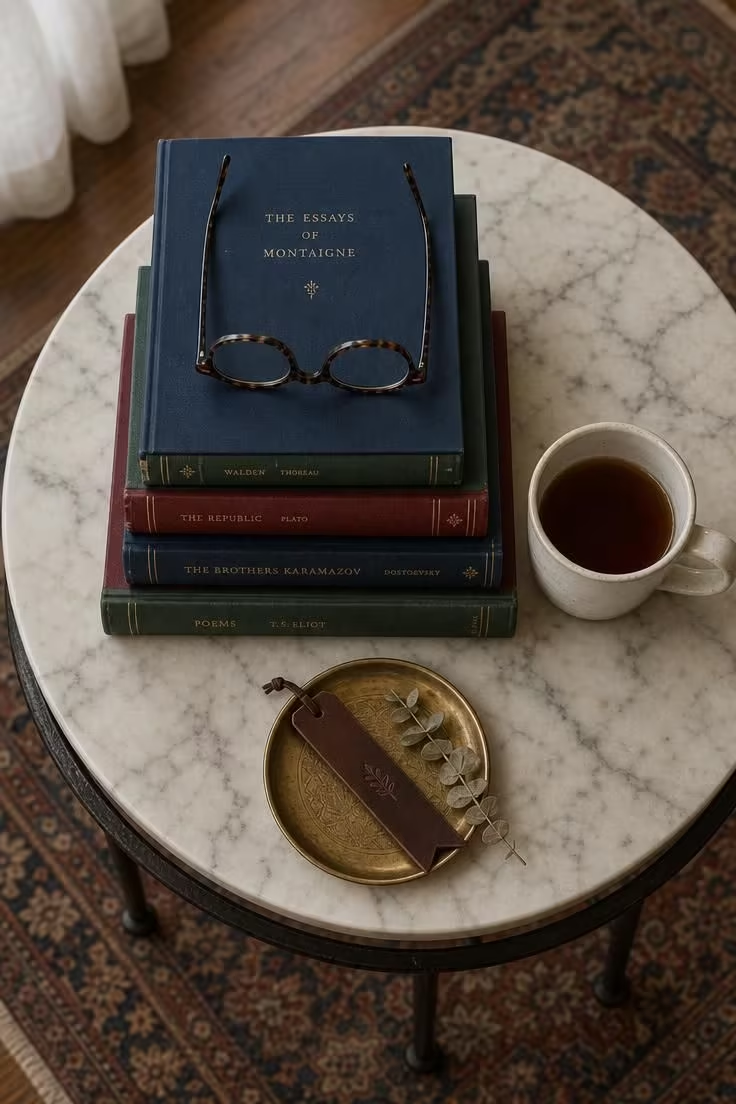
A side table styled this way becomes a small portrait of your reading life.
The marble surface adds a cool, polished contrast to the warm tones of leather and cloth book covers, and that temperature mix is what makes a dark academia space feel layered rather than heavy.
Choosing cloth-bound editions over glossy paperbacks matters here because the texture of the covers reads as deliberate and collected.
The reading glasses left open on top of the stack suggest a reader who just stepped away, which gives the arrangement life.
Keeping the objects few and intentional, just books, a mug, glasses, and one small brass tray, prevents the table from looking cluttered.
This kind of small vignette works well in apartments where a full vintage library setup is not possible, because it brings the mood to a single surface.
The eucalyptus sprig adds a muted green that keeps the palette from feeling too monochrome without pulling attention from the books.
Style Blueprint:
- Small round marble-top side table with iron or brass legs
- Four to six cloth-bound hardbacks in jewel-tone covers
- White or cream ceramic mug
- Brass tray for small accessories
- One dried botanical sprig for a natural accent
Herringbone Tweed Wingback Beside a Wrought-Iron Floor Lamp
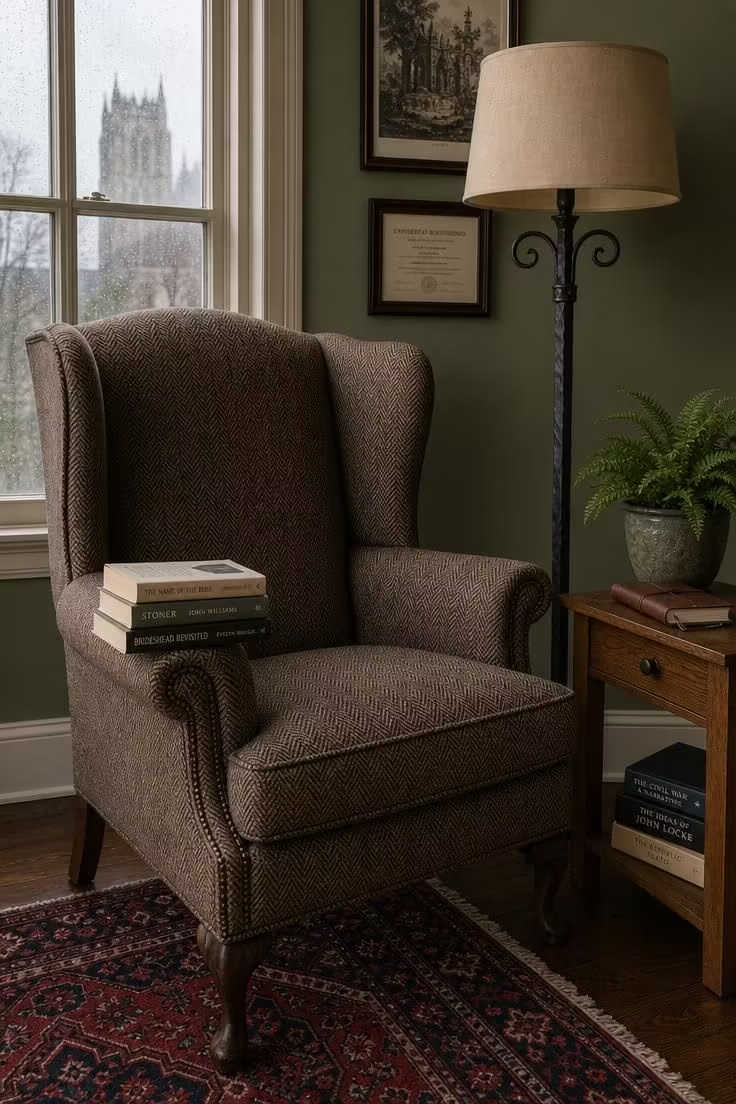
Tweed brings a texture that velvet and leather cannot, a kind of rough warmth that feels more countryside manor than city apartment.
The herringbone pattern adds visual movement to the chair without needing any bold color, which keeps the reading corner grounded and calm.
Pairing it with wrought iron instead of polished brass shifts the look toward something more rugged and less decorative.
The linen shade on the floor lamp softens the iron’s industrial edge and casts a warm, diffused circle of light that makes the chair the obvious place to sit.
Cool overcast light from the window works with this palette because it brings out the grey and brown tones in the tweed without washing them out.
A sage green wall behind the chair adds just enough color to prevent the space from feeling flat, without competing with the textiles.
This is a setup that works well in a guest bedroom or home office corner where the nook needs to feel inviting but not overly decorated.
Keeping props minimal, just a few paperbacks and a leather journal, lets the chair and lamp do the work.
Style Blueprint:
- Brown herringbone tweed wingback armchair
- Wrought-iron floor lamp with a natural linen drum shade
- Deep red and indigo Persian rug or rug fragment
- Narrow oak side table
- Closed leather journal and a small potted fern
Dark Plum Limewash Walls With a Mohair Throw and Brass Hooks
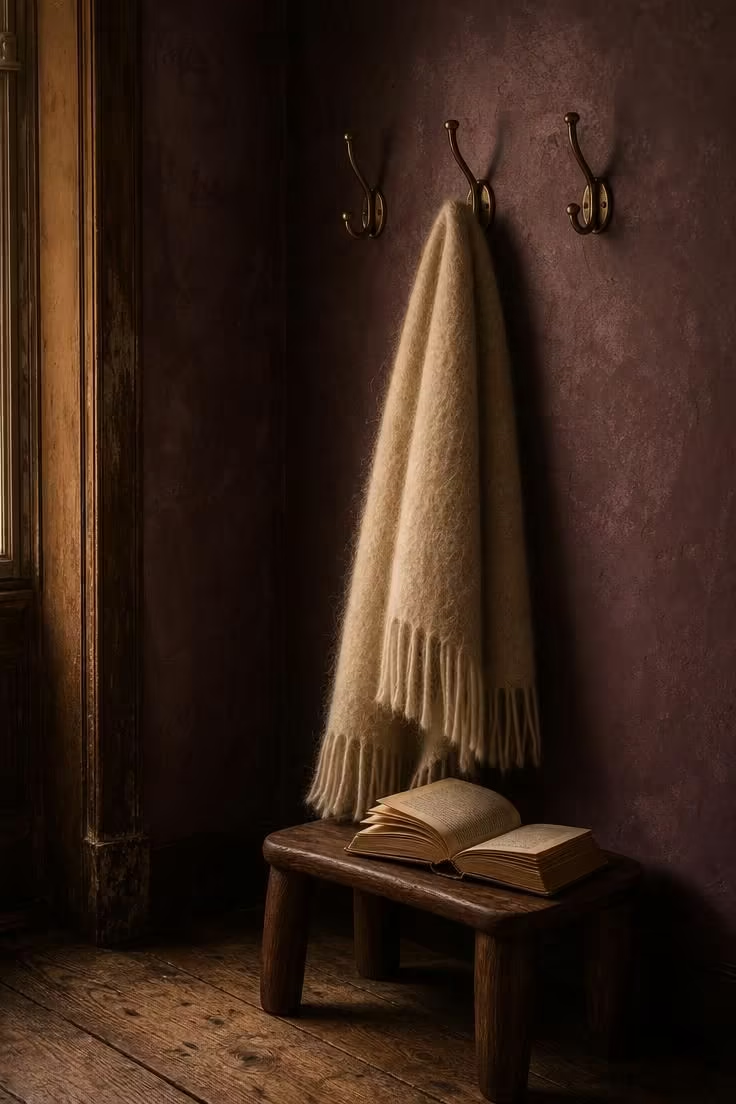
The moody color palette of a plum limewash wall does something that flat paint cannot: it holds light unevenly, creating depth and movement across the surface throughout the day.
This kind of wall treatment turns even a bare corner into something worth looking at, which is exactly what a dark academia reading nook needs when there is no built-in shelving or architectural detail to lean on.
Brass hooks are a low-cost, low-commitment way to add warmth to the wall without hanging art.
Using them to display a mohair throw instead of storing it in a basket puts the textile on view, where its texture becomes part of the room’s visual story.
The low stool with a facedown book is a small detail that makes the space feel used rather than arranged.
Limewash also ages gracefully, developing more character over time rather than chipping or peeling, which fits the overall dark academia idea of valuing things that improve with wear.
Style Blueprint:
- Dark plum or aubergine limewash wall finish
- Three to four aged brass coat hooks mounted in a row
- Cream or oatmeal mohair throw with fringe
- Low walnut stool or wooden step
- Wide-plank reclaimed oak flooring
Design Pro-Tip: When using limewash or chalk paint on walls, apply it in two thin coats with a large brush using crosshatch strokes rather than one thick coat. The uneven layering is what creates the cloudy depth that makes the finish look authentically aged rather than just matte.
A Cognac Leather Satchel and Stacked Folios on a Pine Bench
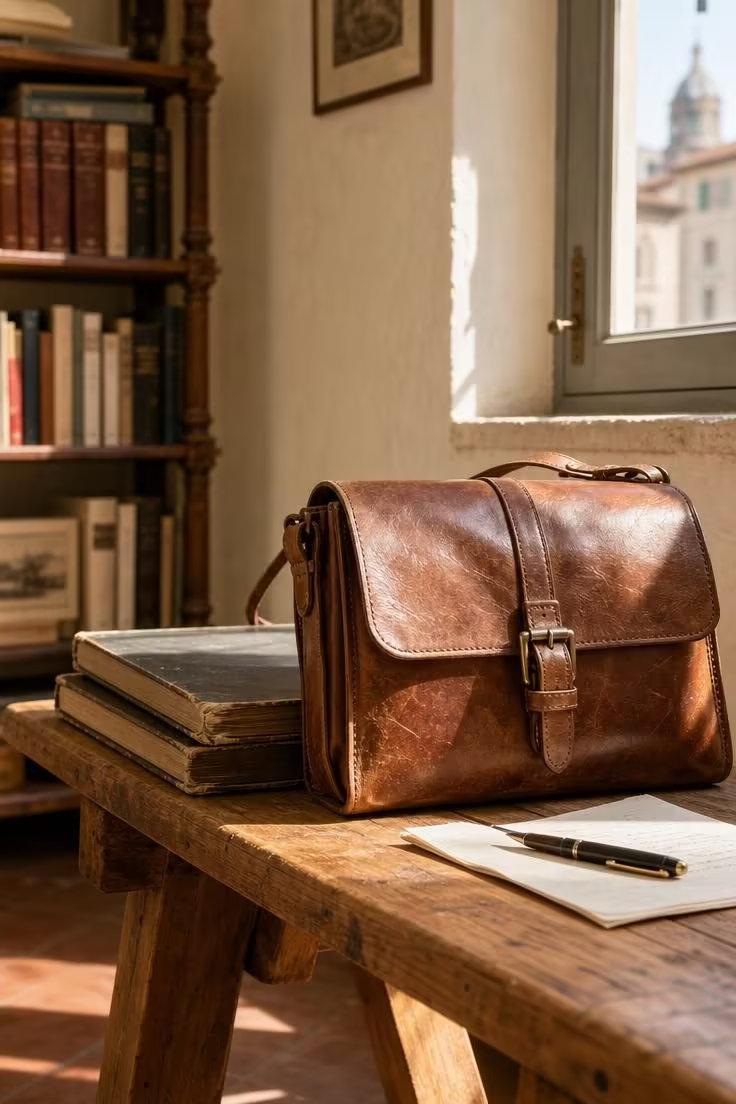
This arrangement leans into the traveling-scholar side of the dark academia aesthetic, where the reading nook is not just a place to sit but a staging area for intellectual life.
The satchel suggests someone who carries books between rooms, libraries, or cities, and its worn cognac leather tells a story of use that brand-new bags cannot.
Pine is an underrated wood for this style because its golden warmth balances the heaviness of darker pieces elsewhere in the room.
Bright midday light is unusual in dark academia setups, but it works here because it brings out the honey tones in the leather and wood, creating a scene that feels warm rather than gloomy.
The fountain pen and stationery add a writing element that connects reading to creation, a small detail that separates a book-lover’s nook from a purely decorative one.
Placing an antique bookshelf slightly out of focus in the background gives the image depth and context without pulling attention from the bench arrangement.
Stacked folios, whether art prints or old maps, add a sense of scale and seriousness that smaller books alone cannot.
A brass desk lamp on the antique bookshelf behind the bench would complete this corner for evening reading, adding a second pool of warm light after the sun goes down.
The cognac and pine palette keeps the whole vignette feeling approachable, even in a rental where you cannot paint the walls.
Style Blueprint:
- Cognac leather satchel bag with buckle closure
- Honey-toned pine bench or entryway table
- Two oversized art folios or vintage map portfolios
- Black fountain pen and cream stationery
- Antique bookshelf with four to five shelves of old books
Toile Wallpaper Alcove With a Deep Velvet Reading Cushion
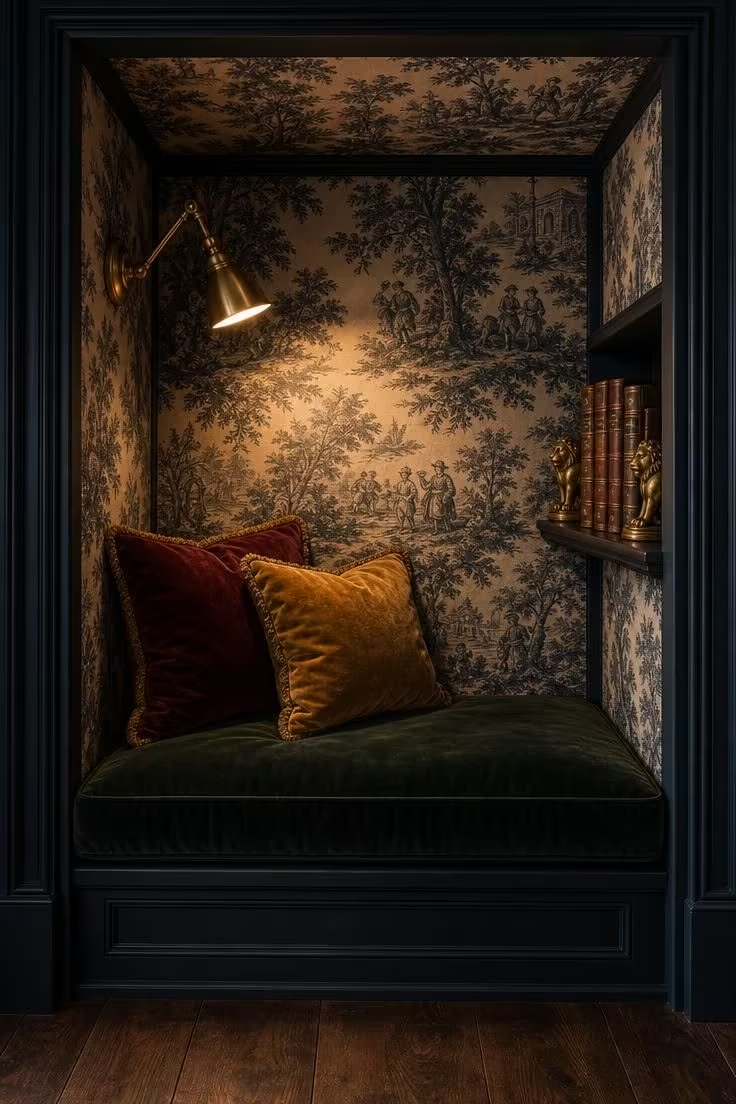
An alcove papered in toile immediately separates itself from the rest of the room, creating a small world within a larger space.
The navy and cream color story feels classic without being stiff, and the pastoral scenes printed on the wallpaper give the walls narrative, which is exactly what a reading nook should have.
Forest-green velvet cushions against navy toile is a color pairing borrowed from old British libraries, where deep greens and blues were layered without hesitation.
The brass reading light mounted inside the alcove is a practical detail that also serves the mood: its warm pool of light makes the nook feel self-contained, like it has its own atmosphere separate from the room.
Built-in bookshelves within the alcove, even just a single narrow shelf, turn the space from a seat into a destination.
Brass lion bookends are the kind of small decorative choice that signals intention and adds a sense of weight to the arrangement.
This setup works best in homes with existing alcoves or thick walls, but a similar effect can be built with shallow drywall framing and peel-and-stick toile wallpaper.
Style Blueprint:
- Navy and cream French toile wallpaper (peel-and-stick or traditional)
- Deep forest-green velvet seat cushion, at least 4 inches thick
- Burgundy and gold velvet cushions for back support
- Brass articulated reading light, wall-mounted
- Brass bookends and four to six leather-bound volumes
Cast-Iron Candelabra Sconces Flanking Reclaimed Oak Shelves
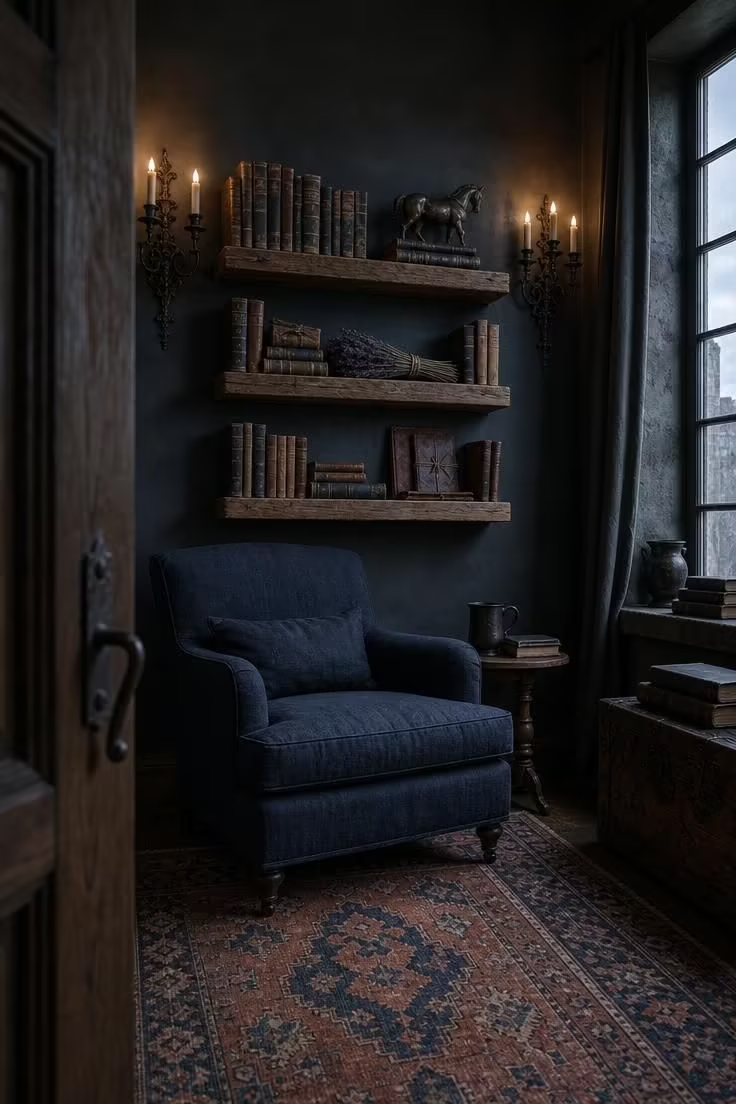
Iron sconces mounted beside open shelving create a visual frame that makes the shelves feel architectural rather than afterthought.
The candelabra style, with its branching arms and matte black finish, adds vertical interest that a single pendant or table lamp would miss.
Reclaimed oak brings a roughness and grain variation that new lumber does not have, and that texture reads as authentic on a screen or in person.
Mixing book orientations on the shelves, some vertical, some horizontal with objects on top, prevents the arrangement from looking like a bookstore display and gives it a more collected, vintage library character.
A navy linen armchair beneath the shelves is practical and visually quiet, letting the iron and oak above it stay the focus.
The dried lavender adds an organic, slightly wild element that softens all the hard materials without introducing bright color.
A kilim rug in terracotta and indigo grounds the chair and adds warmth underfoot that a dark academia reading nook needs when the walls and metals run cool.
Charcoal walls behind the shelves push the oak and iron forward visually, creating depth that lighter walls would flatten.
Style Blueprint:
- Cast-iron candelabra-style wall sconces, matte black finish
- Three reclaimed oak floating shelves, varying lengths
- Mix of old hardbacks, leather notebooks, and one small bronze figurine
- Deep navy linen armchair with a low back
- Faded kilim rug in terracotta and indigo
A Persian Runner Leading to a Deep Window Seat With Linen Bolsters
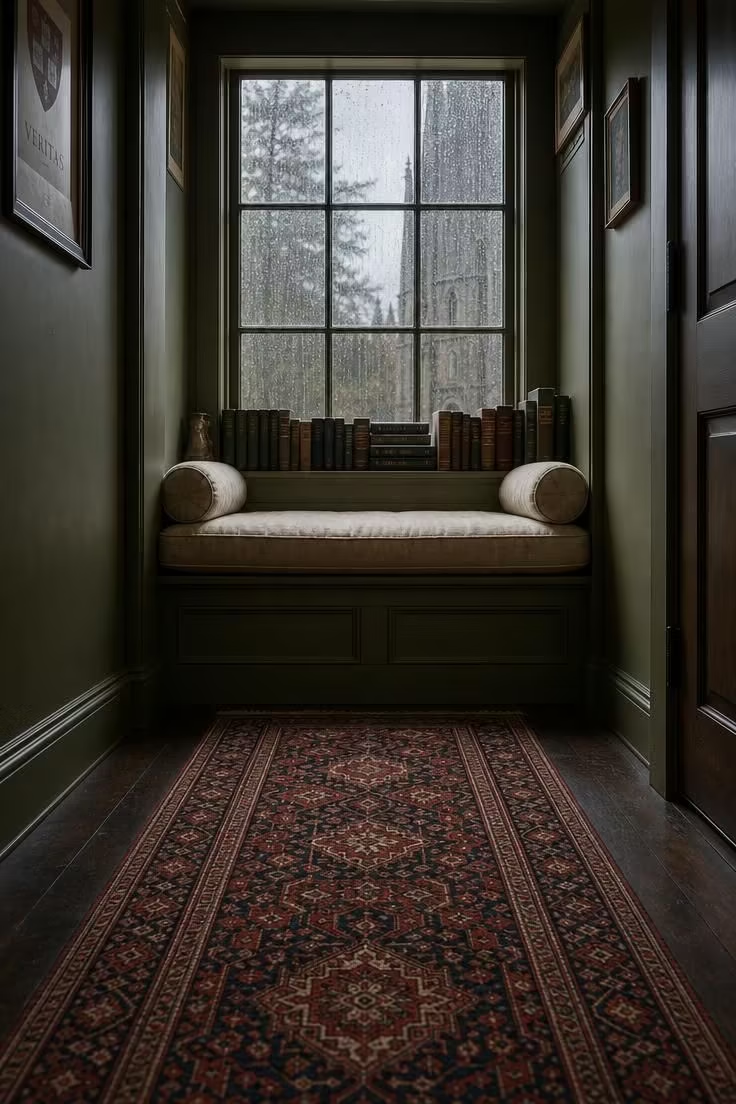
A runner rug leading to a window seat does something subtle but effective: it creates a sense of approach, turning the act of sitting down to read into a small ritual.
The Persian pattern in red and navy works as a visual pathway, drawing the eye from the entrance of the hall straight to the seat.
Linen cylinders in oatmeal are a deliberately understated choice that lets the rug and the stacked books carry the color.
Rain on the glass is not something you can plan, but choosing a window seat facing a direction that gets weather makes the nook feel more alive on grey days.
Stacking books along the window ledge behind the seat puts your reading material within arm’s reach and doubles as a low-profile design detail.
Style Blueprint:
- Narrow Persian runner rug in deep red and navy, at least 8 feet long
- Built-in window seat with a thick oatmeal linen cushion
- Two linen cylinder pillows in matching oatmeal
- Books stacked along the window ledge
- Muted olive wall paint on the surrounding walls
Design Pro-Tip: When stacking books on a window ledge, group them in sets of three to five with varying heights and lean the tallest stack against the window frame. This prevents the row from looking like a barricade and keeps the arrangement loose enough to pull a book from without toppling the rest.
Tartan Wool Cushion on a Ladderback Oak Chair
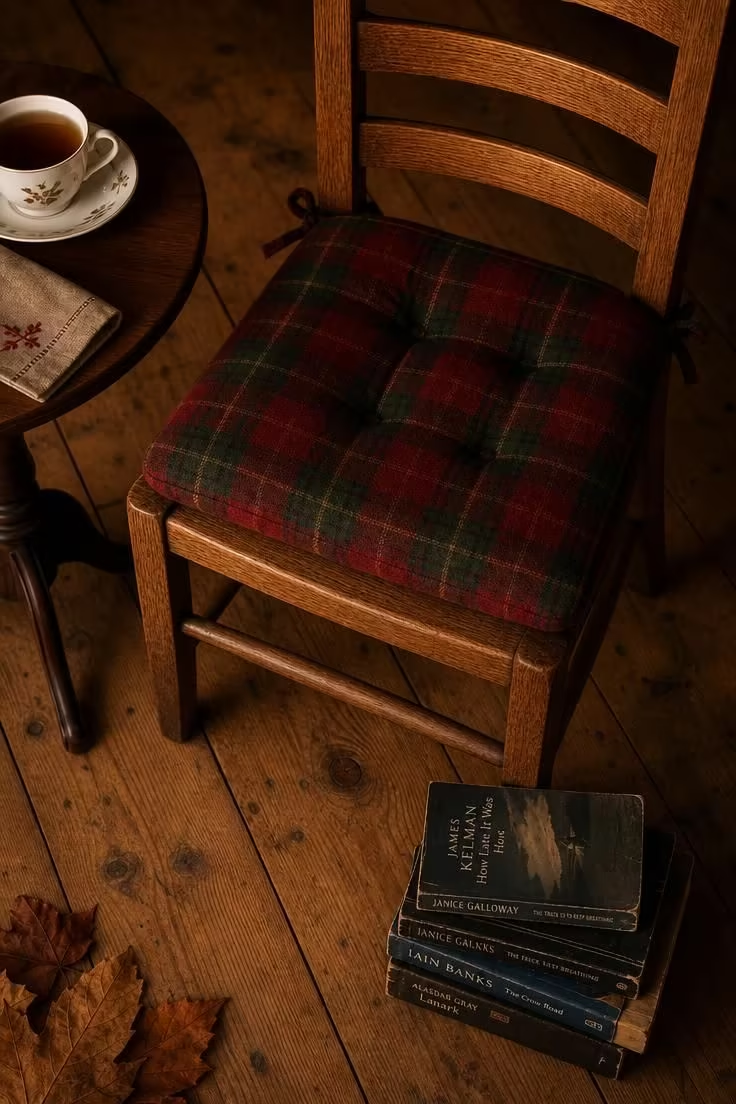
Not every dark academia reading nook needs a grand chair or a wall of books.
A ladderback oak chair with a good tartan cushion has a modesty that fits the style just as well, leaning into the tradition of scholars reading wherever they happened to sit.
The tartan wool brings warmth and pattern in a way that feels honest rather than designed, and its red and green tones are a natural fit with oak and walnut.
A white porcelain teacup on a simple side table grounds the scene in everyday ritual, connecting the act of reading to the act of settling in with a drink.
Paperbacks on the floor beside the chair suggest a reader who moves through books quickly, stacking finished ones rather than shelving them.
The low, amber lighting and wide-plank pine floor give this arrangement a farmhouse quality that pairs well with the academic mood of tartan and old books.
This is one of the most budget-friendly setups in the list, requiring only a thrift-store chair, a wool cushion, and books you already own.
Style Blueprint:
- Ladderback oak dining chair, vintage or reproduction
- Thick red and green tartan wool seat cushion with ties
- Small round walnut side table
- White porcelain teacup and saucer
- Stack of four to six well-worn paperback novels
A Walnut Card Catalog Repurposed as a Bookside Cabinet

A card catalog cabinet is one of those pieces that immediately signals a love of books and systems, and repurposing one as a side table or bookside cabinet is both practical and visually striking.
The small drawers, originally sized for index cards, are perfectly scaled for bookmarks, reading notes, pencils, and small objects that tend to clutter a reading corner if left in the open.
Walnut card catalogs from the mid-twentieth century have a density and finish that modern reproductions often miss, so hunting for an original at estate sales or library deaccession events is worth the effort.
Brass drawer pulls on walnut create one of the most reliable color pairings in the dark academia palette: warm metal against warm wood, each making the other richer.
Placing a tufted leather chair beside the catalog ties the two pieces together through their shared material vocabulary of leather, brass, and aged wood.
The midday light here is deliberate: it shows off the patina and grain in a way that low mood lighting would hide.
A few leather-bound journals stacked on the floor beside the cabinet extend the scholarly theme downward, filling the vertical space between the chair and the floor.
This piece works as well in a hallway nook as it does beside a full reading chair, because its compact footprint fits narrow spaces.
Pairing it with a brass desk lamp on top would make this corner functional for both day and evening reading.
Style Blueprint:
- Vintage walnut library card catalog cabinet, 10-20 drawers
- Dark green or oxblood leather club chair or tufted leather chair
- Brass letter opener and leather bookmarks
- Small stack of leather-bound journals
- Hardback book with dark cloth cover for the cabinet top
Amber Glass Bottles and Beeswax Tapers on a Worn Leather Desk Blotter

A leather desk blotter styled with a few well-chosen objects turns a flat surface into a piece of visual storytelling.
The amber glass bottles catch and hold warm light in a way that clear glass does not, and their apothecary shape connects to the old-world, pre-industrial side of the dark academia aesthetic.
Iron taper holders with visible wax residue look better empty than styled with fresh tapers, because the residue suggests evenings spent reading by low light.
Leaving the book open and facedown, rather than closed and centered, makes the arrangement feel interrupted rather than posed.
A brass letter opener adds a metallic accent that ties back to other brass elements in the room without introducing a new material.
Dried rose petals scattered near the book are a small, organic detail that softens the hard surfaces of iron, glass, and leather.
Style Blueprint:
- Large rectangular leather desk blotter, aged and cracked
- Three amber apothecary glass bottles in varying heights
- Two iron taper candle holders
- Brass letter opener
- Small hardback book with yellowed pages
Crown Molding and Charcoal Chalk Paint With a Chenille Armchair
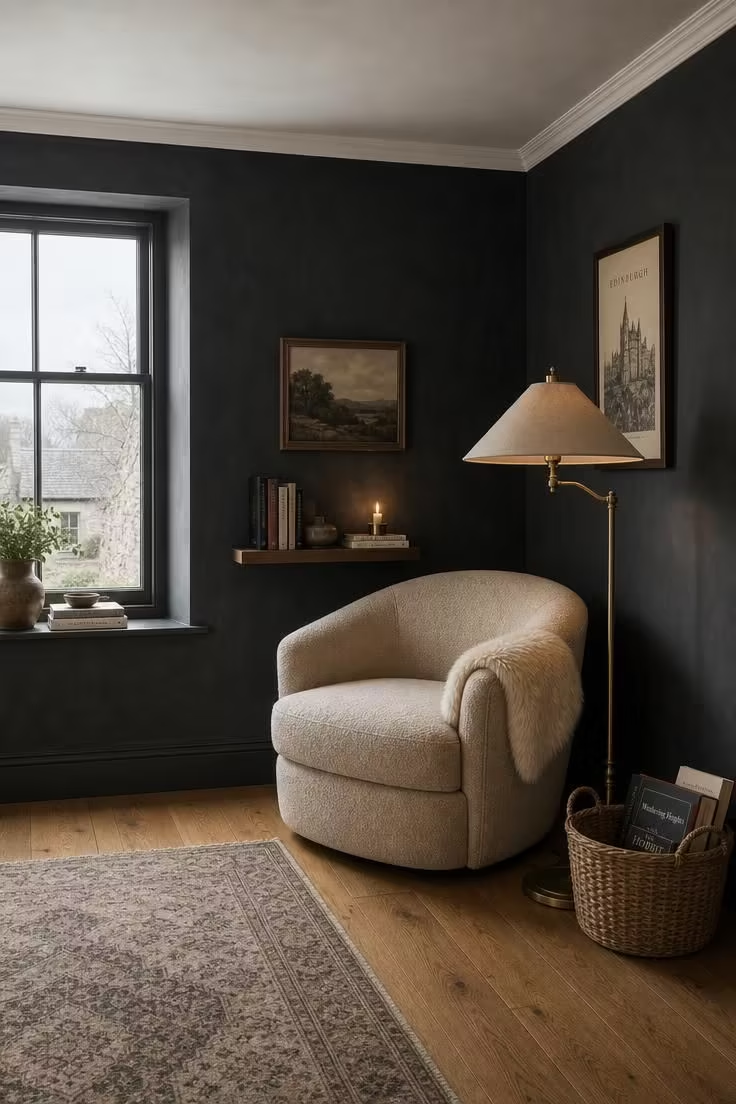
Charcoal walls with white crown molding create one of the sharpest visual contrasts in any reading nook, and the molding gives the room a finished, architectural quality that paint alone cannot achieve.
Chalk paint on the walls adds a matte, velvety texture that absorbs light rather than reflecting it, which deepens the charcoal and makes the white molding pop even more.
An oatmeal chenille armchair is a softer alternative to leather in spaces where you want warmth without heaviness.
The chenille texture catches light differently from velvet, with a subtle ribbed surface that adds visual interest without bold pattern.
Cool overcast light works well with this palette because it keeps the charcoal from feeling oppressive and brings out the warmth of the oatmeal and brass.
A woven basket of books on the floor is a practical storage solution that also reads as relaxed and unpretentious.
The ivory sheepskin draped over the arm adds a tactile invitation, signaling that this is a chair meant for long, comfortable reading sessions.
Crown molding can be added to any room with adhesive-backed or nail-on options, making this one of the more achievable architectural upgrades for renters and homeowners alike.
Style Blueprint:
- Charcoal chalk paint for walls
- White crown molding, adhesive-backed or nail-on
- Oatmeal chenille armchair with low curved back
- Tall brass floor lamp with wide fabric shade
- Woven rattan basket for book storage
Design Pro-Tip: When painting walls charcoal or near-black, always paint a test swatch at least 12 inches wide and observe it at three different times of day. Dark colors shift dramatically between morning, midday, and evening light, and a shade that looks rich at noon can feel flat or purple by lamplight.
An Antique Globe and Candlestick Lamp on a Stacked-Book Pedestal
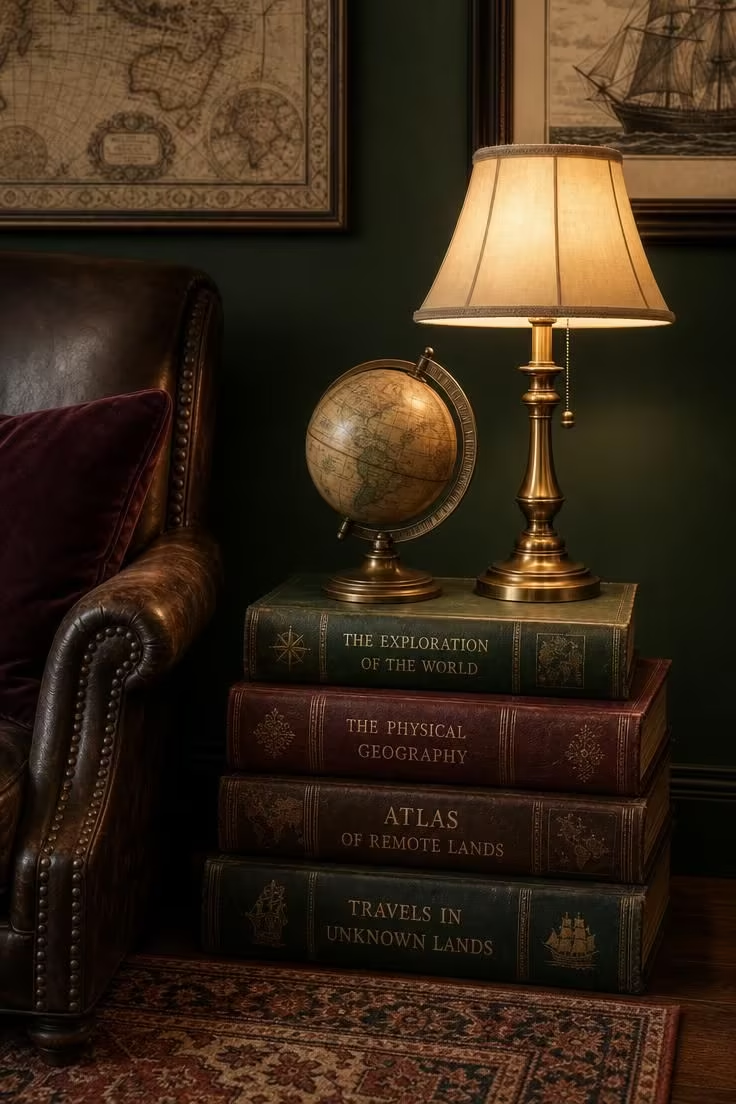
Stacking large books into a pedestal is one of the oldest styling tricks in home decor, and it works here because it solves two problems at once: it creates a side table where none exists, and it puts your books on display as structural objects rather than shelf filler.
The antique globe beside the lamp adds a sense of curiosity and wandering that pairs naturally with the reading nook concept.
Globes, maps, and atlases connect to the scholarly exploration side of the dark academia aesthetic, where reading is not just about fiction but about understanding the world.
A brass candlestick-style electric lamp gives the warm glow of an older light source without the mess or safety concerns, and its tall, narrow profile fits the vertical emphasis of the pedestal.
Choosing book spines in coordinated greens and burgundies makes the stack feel intentional rather than random.
A plum velvet cushion on the chair arm is a small color detail that bridges the green wall and the burgundy book spines, pulling the palette together through a shared warmth.
This setup costs almost nothing if you already have large books, and the globe and lamp can be found at thrift stores or flea markets for very little.
Style Blueprint:
- Four large hardback books with coordinated spine colors
- Small antique desktop globe with brass meridian ring
- Brass candlestick-style electric lamp with cream shade
- Dark leather reading chair
- Deep plum velvet cushion for the chair arm
Conclusion
A dark academia reading nook does not need to be built all at once.
Start with one piece that sets the tone: a tufted leather chair from a secondhand shop, a brass desk lamp with a green glass shade, or a single shelf of old hardbacks with worn spines.
The spaces in this list work because they layer specific materials, aged leather, dark wood, iron, brass, wool, and velvet, in combinations that feel gathered rather than bought as a set.
A moody color palette on one wall, a Persian rug underfoot, and a few well-chosen books on a side table can shift any quiet corner toward the feeling of a private vintage library.
The best cozy reading space is the one that invites you to sit down, and these setups all share that quality: they look like places where someone has already been reading for hours, and there is room for you to join.