This post may contain affiliate links. If you make a purchase through these links, we may earn a commission at no additional cost to you.
Dark floors carry a reputation for making kitchens feel heavy, closed in, and hard to keep looking clean.
That reputation oversimplifies what a dark floor can do.
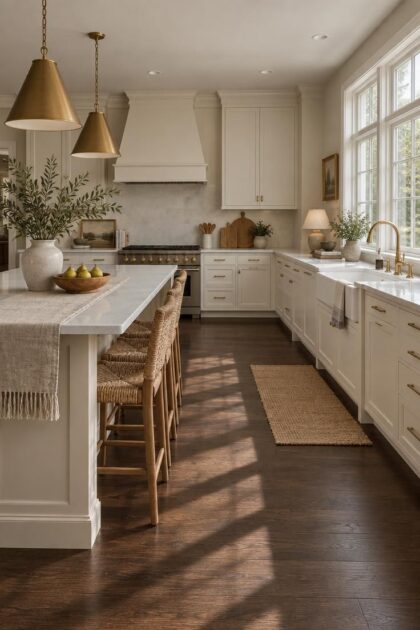
A deep brown plank under warm white cabinetry can anchor an entire room and give it a sense of permanence that lighter floors rarely match.
The choice comes down to shade, pairing, finish, and an honest read of your own habits.
This guide walks through what separates a memorable dark-floor kitchen from one that fights itself, and it gives you a practical way to decide where your own space lands.
A Dark Floor Is a Spectrum, Not a Single Look
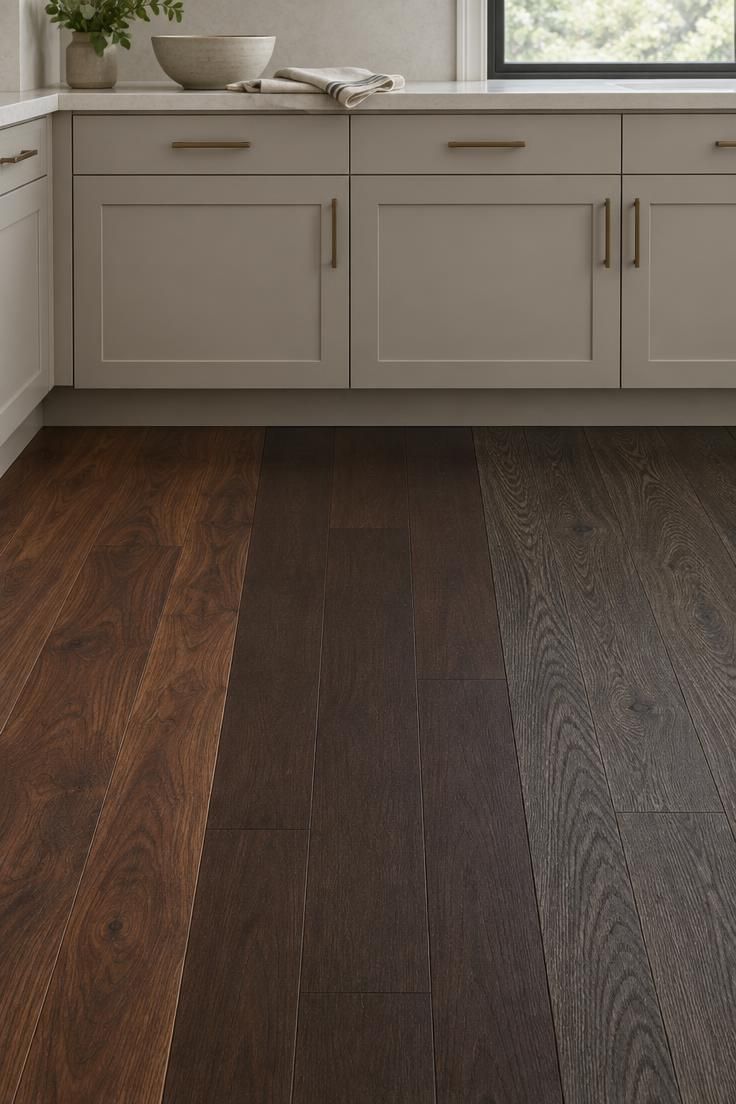
“Dark wood” covers a wide range of tones and characters, and treating it as one category hides the most useful distinctions.
Warm brown, walnut, and tobacco shades keep their grain readable and carry a historical weight that suits older homes and traditional interiors.
Espresso wood floors push deeper and more uniform, and that flatness gives them a contemporary feel that pairs naturally with clean-lined cabinetry and minimal detailing.
Smoked or dark natural oak sits somewhere between the two: still visibly grained, still matte, and part of the current return to warmer brown palettes.
Near-black or opaque finishes are the most dramatic option.
They also show every smudge, speck, and light scuff, which matters more than most style guides admit.
Houzz’s 2024 U.S. Kitchen Trends Study, based on responses from 3,437 renovating homeowners, found that about 6 percent selected dark wood as their kitchen floor color, against 30 percent for medium wood and 20 percent for light wood.
That number is worth sitting with.
This is a distinctive minority choice, not a default, and the kitchens that pull it off tend to be the ones that chose it deliberately.
The Current Shift Toward Warm, Natural Kitchens
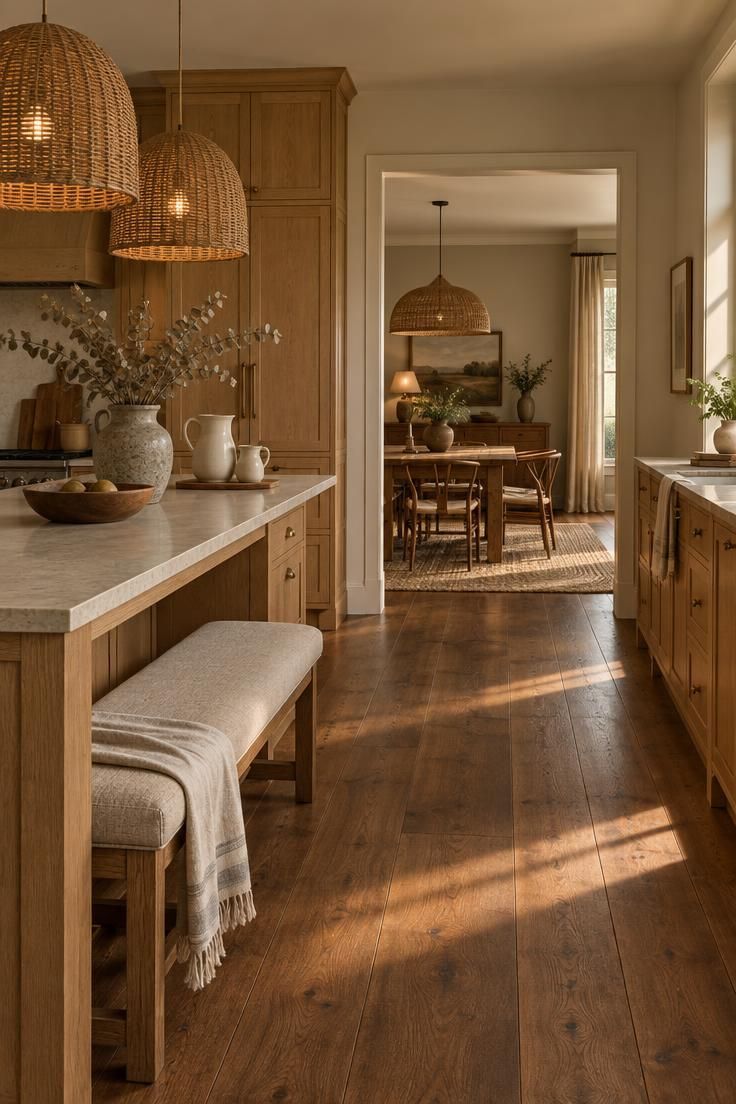
Dark floors are drawing attention now because they fit inside a larger movement toward warmer, browner, more natural kitchens rather than as a standalone dark-room aesthetic.
The National Kitchen and Bath Association’s 2026 Kitchen Trends Report noted that 94 percent of industry respondents expect wood flooring to remain popular, and the same report emphasizes continuity between the kitchen and the rest of the home.
Veranda’s 2026 trend coverage pointed to brown cabinetry, dark wood stains, and brown-toned stone as noticeable directions in current kitchen design.
Those signals describe a mood rather than a flood.
Houzz’s 2026 kitchen data shows dark wood as the main cabinet color for only about 3 percent of renovators, well behind medium wood at 15 percent and light wood at 11 percent.
A dark floor paired with lighter cabinetry reads as intentional precisely because it is not everywhere.
The continuity piece matters most in open-plan homes.
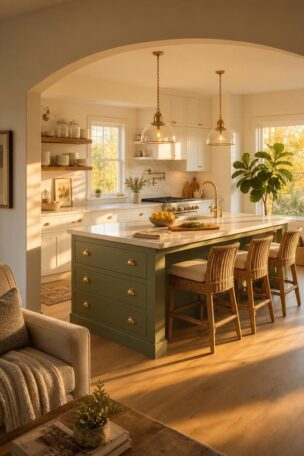
A dark floor that runs from the kitchen into an adjacent dining or living area creates a single visual field, which is the practical version of the connected-kitchen idea.
Pairing Dark Floors with Cabinets, Counters, and Metals
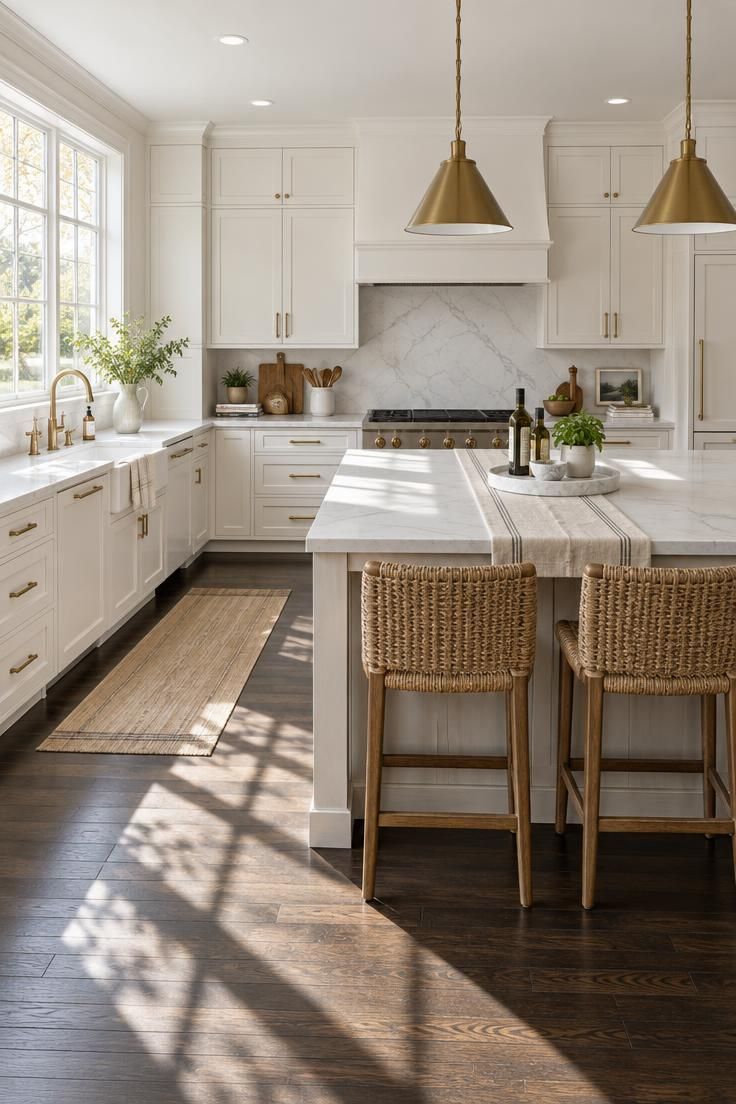
The most reliable formula for kitchens with dark wood floors is contrast at the cabinet line, and the reasons are visual rather than technical.
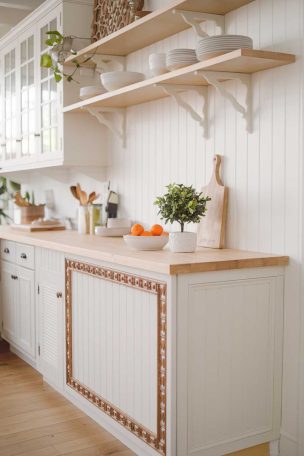
Warm white or creamy white cabinetry remains the classic answer.
It lifts the room, keeps the floor reading as a base rather than a blanket, and works across traditional and contemporary styles.
Light natural oak is the modern-organic alternative, especially when the floor is a warmer walnut or tobacco tone rather than a cool espresso.
Soft taupe, mushroom, and greige cabinets sit quietly beside a dark floor and tend to age well.
Muted sage or deep green pushes the kitchen toward a moodier, more designed look that suits larger rooms with good light.
Pairing a very dark floor with orange-toned oak cabinets tends to read as dated unless the counters, lighting, or hardware have been updated alongside.
This is a style observation, not a rule, but it is one of the most common ways a dark floor stops working.
Counters and backsplashes do a lot of the corrective work.
White or warm-veined quartzite, honed marble, and cream quartz all read cleanly above a dark floor, while light limestone softens the contrast in a rustic direction and soapstone leans more dramatic and traditional.
Metals matter more than most people expect.
Brushed brass, bronze, and aged nickel bring warmth that keeps a dark floor from feeling cold, and mixing two metals usually reads better than matching every fixture.
For dark wood floors with light cabinets, the details that prevent flatness are texture and material variety: linen shades, ceramic vessels, woven baskets, a wood cutting board left out on the counter.
Design Pro-Tip: Pull three cabinet color chips and one counter sample next to your floor sample before committing. The floor looks different against a painted chip than it does in a full kitchen, and the cabinet color drives more of the final result than the floor tone does.
Finish, Plank Width, and Direction as Design Levers
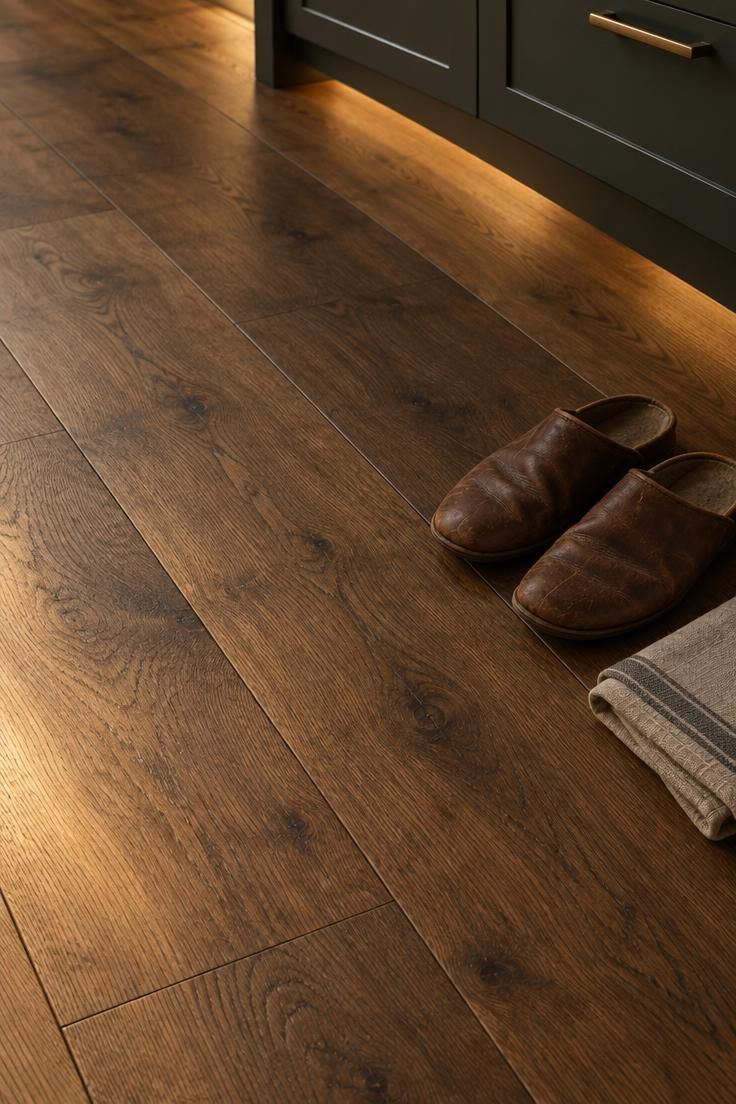
Finish sheen changes how a dark floor behaves in a room more than the stain color does.
Matte finish wood flooring and satin finishes soften reflections and let the grain read as texture rather than shine.
High-gloss finishes push light back at the viewer and tend to reveal every variation in the surface, which is why they have fallen out of favor in kitchens.
Plank width is a style signal.
Wide planks with visible grain read as warmer, more casual, and slightly rustic.
Narrow strips read as more formal and often point toward early-twentieth-century houses.
Plank direction is a long-standing visual convention more than a rule: running boards along the longest dimension of the room tends to make the space feel longer.
In an open-plan layout, the direction can also be used to define zones without adding a physical divider.
The combination that reads as most current is wide planks, visible grain, and a matte or satin finish, particularly in a warm brown or smoked oak tone rather than a flat near-black.
Honest Tradeoffs: Dust, Marks, and Light
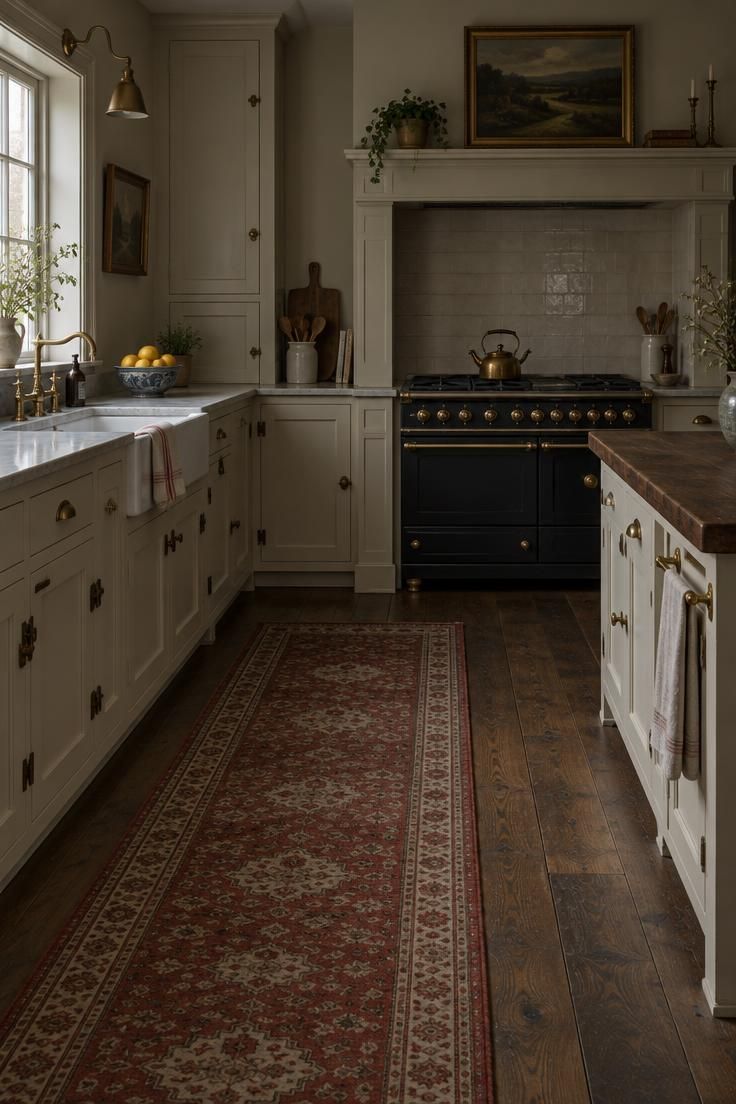
A dark floor shows more than a mid-tone floor does, and that is a design fact worth accepting before you commit.
Dust, pet hair, light scratches, and dried water marks all read more clearly against a dark surface, and the effect is strongest on smooth, uniform, near-black finishes.
A floor with visible grain and tonal variation disguises far more.
The practical middle ground for busy households is a medium-dark brown with pronounced grain rather than a flat espresso or near-black.
It still delivers the depth and contrast that make dark floors appealing, without demanding the same level of upkeep.
Rugs and runners in work zones are a common design response.
A runner along the sink and range keeps the busiest stretch of floor protected and adds a layer of pattern that breaks up a large dark field.
Wiping spills right away is the kind of habit that matters more with a dark floor than with a lighter one, and it is worth being honest with yourself about whether it fits your routine.
Material choice also affects the maintenance outlook.
Solid hardwood, engineered wood, and wood-look resilient products can all deliver a dark-floor look, and they behave differently in daily use.
Resilient and engineered options exist for readers who want the appearance with different wear characteristics.
Traditional kitchens with dark oak floors often benefit most from a floor that already has patina and variation built in.
The grain and the tonal shifts do the work that a uniform stain cannot.
Where Dark Floors Shine, and Where They Need Help
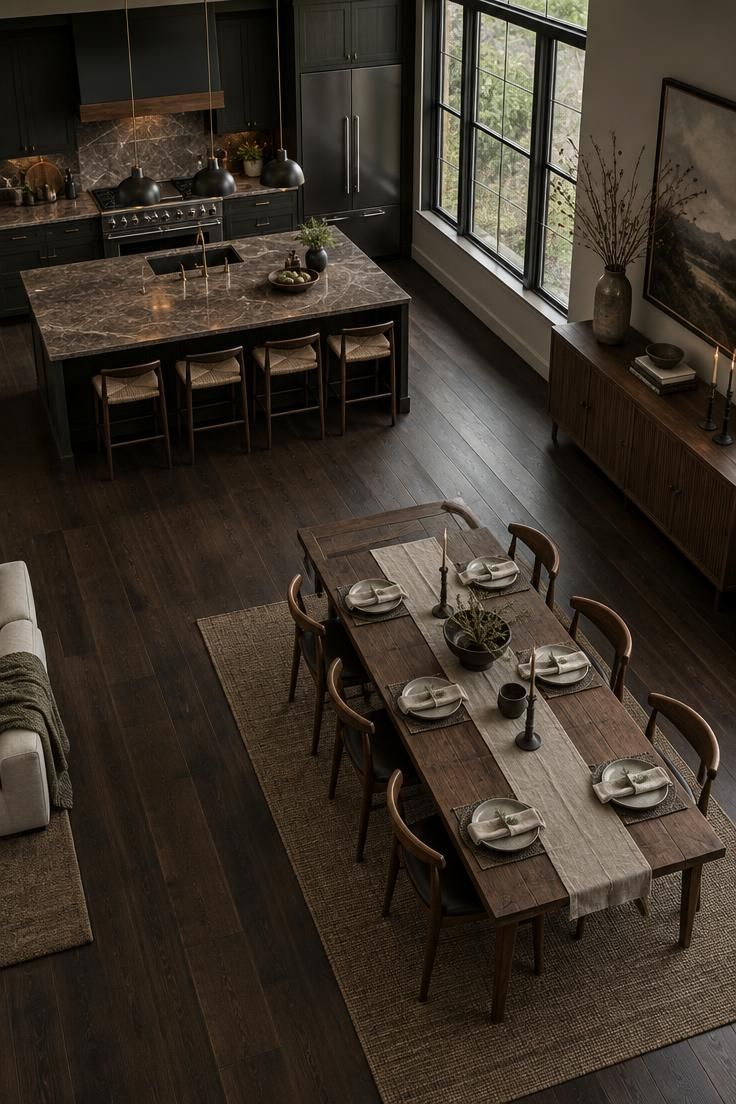
Some kitchens take to a dark floor almost immediately.
Others ask more of the palette and the light.
Dark floors work well in open-plan homes, where the visual continuity across kitchen, dining, and living zones gives the whole space a stronger sense of cohesion.
This is the clearest argument for dark floor contrast in open-plan kitchens: the floor becomes the connective tissue between rooms that might otherwise read as separate.
Traditional, transitional, and English-inspired interiors also tend to suit a dark floor, especially in warm brown, walnut, or aged oak tones rather than a flat modern espresso.
Large kitchens with strong natural light handle dark floors with ease.
The floor anchors the room without dominating it, and the lighter surfaces above do the lifting.
Small or low-light kitchens need more care.
Without enough reflected light or lighter elements above, a dark floor can compound the room’s visual weight and make the space feel tighter than it is.
Busy households with pets or young children should weigh the maintenance reality honestly.
If visible dust and marks will bother you, a medium-dark floor with grain is a more forgiving starting point than a smooth near-black.
Period homes are a separate question entirely, and the answer depends on whether you want an aged character or a crisp modern finish.
A Note on Period Homes and Historical Authenticity
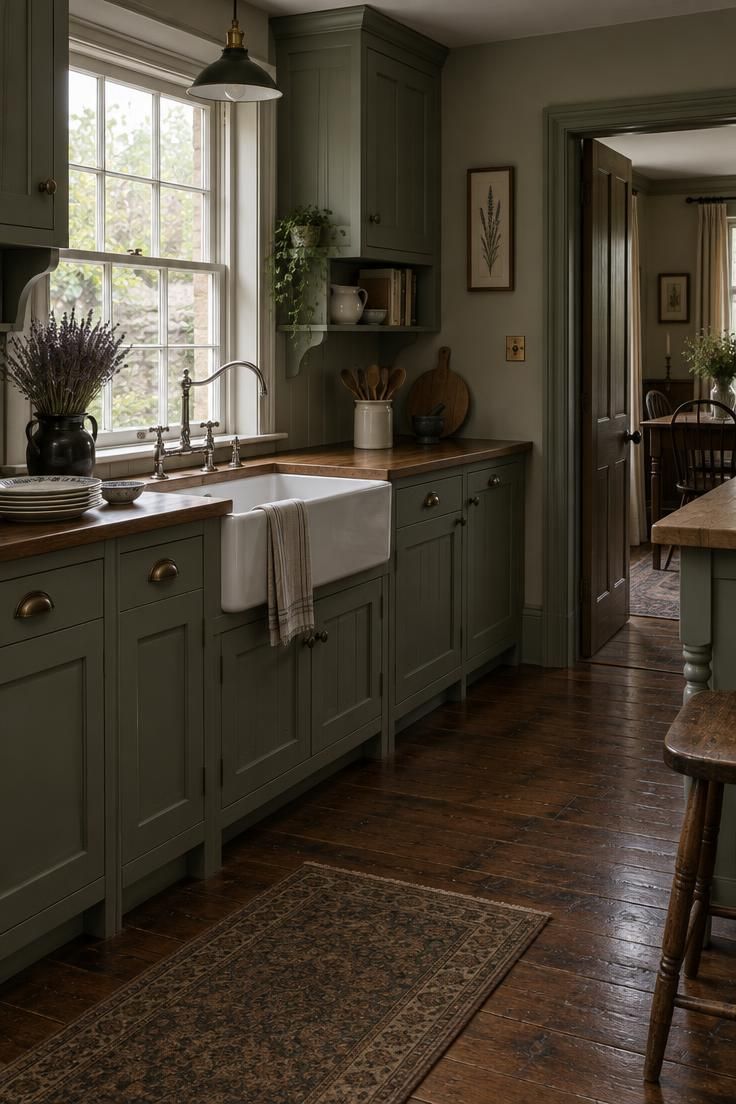
A common assumption about older houses is that their dark floors were always dark.
The National Park Service’s guidance on historic wood flooring points out that historic wood floors often darkened over time through age, waxing, soot, and repeated finishing rather than through an original dark stain.
That distinction matters when you are choosing a floor for a period home and want it to feel true to the architecture.
A uniform espresso stain reads as a modern choice, not a historical one, and in an older house it can feel at odds with the trim, the door casings, and the proportions of the rooms.
A mid-dark brown with visible patina, worn edges, and some variation across the boards tends to sit more naturally in an older home.
Neither path is better.
The question is which one you actually want: the polished modern contrast of a deliberate dark stain, or the quieter, uneven darkness that develops over decades in an old floor.
A Decision Framework for Your Kitchen
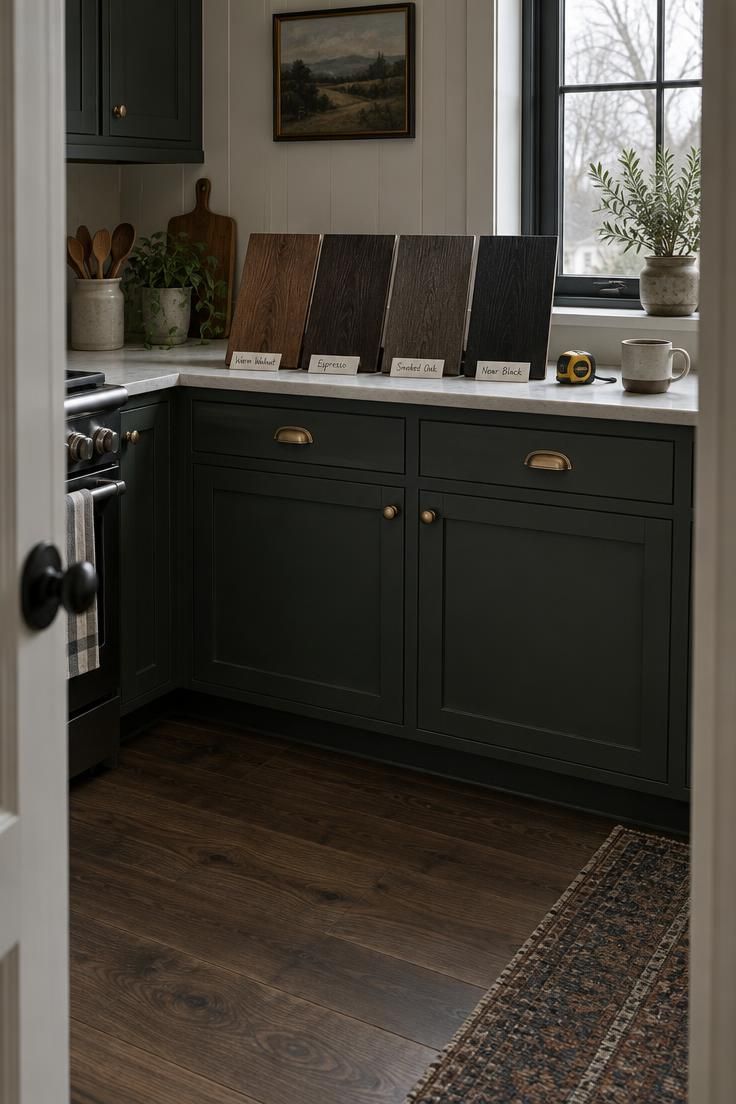
A dark floor is easier to choose well when the decision runs through a few specific questions in order.
Start with the shade itself.
Decide whether you want a warm brown with readable grain, a uniform espresso, a smoked oak, or a near-black.
Write down which one you keep returning to, because that instinct usually holds up better than second-guessing it later.
Then assess the room’s natural light and size.
A large, bright kitchen can carry almost any dark shade.
A small or low-light kitchen narrows the field to warmer browns with visible grain and benefits from lighter counters, lighter cabinets, or a lighter ceiling to keep the space from closing in.
Look at what is already in the room.
If the cabinetry is warm white, cream, or light oak, a dark floor will contrast cleanly.
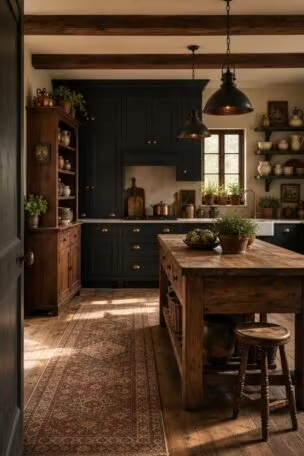
If the cabinetry is dark, the floor, counters, and ceiling need to do more of the lifting, and the palette needs more discipline.
Weigh maintenance tolerance honestly.
If you know that visible dust or pet hair will bother you daily, choose a medium-dark grained floor rather than a smooth near-black, or plan a runner through the busiest zone and accept the rest.
Check the floor’s reach.
If it will continue into a dining room, hallway, or living area, the visual payoff is larger and the shade should be chosen with those adjacent rooms in mind, not just the kitchen.
The direction the planks run is worth thinking through at this stage too.
It is one of the few decisions that shifts how the whole space reads without changing a single other finish.
Design Pro-Tip: Take your top two or three floor samples home and leave them in the kitchen for a full day. Look at them in the morning, at midday, and after dark with the kitchen lights on. The same sample can read warm and inviting in one light and flat and heavy in another, and only your own kitchen shows you which is which.
Conclusion
A dark floor earns its place in a kitchen when the shade, the finish, and the palette around it are chosen together rather than one at a time.
The most reliable combinations are a warm brown or smoked oak plank with visible grain, warm white or light oak cabinetry, a light counter, and brushed metal accents that keep the room from tipping cold.
Espresso and near-black can work, but they ask for more light, more contrast above, and a realistic tolerance for visible dust and marks.
In period homes, the more authentic move is usually a mid-dark floor with patina rather than a uniform modern stain.
Start by narrowing to two or three shades that fit your light and your cabinets, then bring the samples home and look at them across a full day.
That single step resolves more of the decision than any showroom visit will.
The first thing to try is the simplest one: set your top two floor samples beside the cabinet door you already own and leave them there until one of them stops asking for your attention.