This post may contain affiliate links. If you make a purchase through these links, we may earn a commission at no additional cost to you.
Winter rooms can hold onto the softness of the season without carrying tinsel into February.
The most useful winter room decor leans on texture, low light, and natural materials rather than themed motifs, which means it settles in comfortably from late November through the coldest weeks and comes down without ceremony.
Each idea below begins with a clear visual picture, then explains why the composition holds together and what everyday tradeoffs to expect.
Read it as a set of options to mix, not a checklist to complete room by room.
Stacked Softness in a Reading Corner
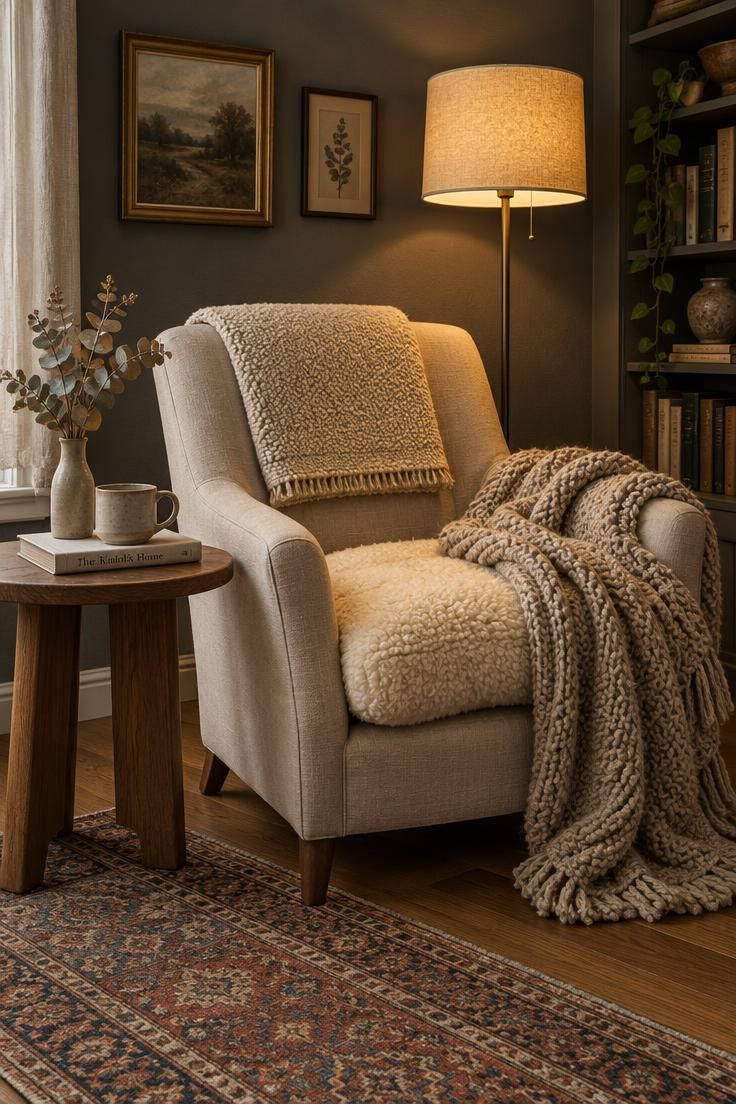
Softness stacks best when a single chair carries two or three textile weights in closely related tones.
A boucle throw folded over the back, a shearling cushion on the seat, and a chunky knit dropped loosely across one arm read as one gesture rather than three separate objects.
Keep the tones within oat, ecru, and camel territory so the eye registers depth of weave instead of scattered color.
The lamp position matters as much as the textiles.
Placed behind and slightly to one side of the chair, a floor lamp with a fabric shade throws light across the weave of layered throw blankets and gives the corner a bright edge against a dimmer background.
Overhead light flattens this effect, so use the lamp as the primary source in the evening and let the rest of the room stay lower.
Weighted textiles come with upkeep.
Boucle pills, chunky knits snag on jewelry and pet claws, and shearling needs a firm shake rather than a machine wash.
Rotating two or three throws across the season spreads the wear and keeps the arrangement from looking matted by January.
A stool or narrow side table keeps the corner from becoming a pile of mugs and remote controls.
Give each textile a defined home: the throw folded on the back, the knit draped over the arm, the cushion squared on arrival each morning.
That small discipline sustains the look longer than any single purchase.
Style Blueprint:
- An upholstered armchair in oatmeal linen or wool
- A wool boucle throw folded over the chair back
- A shearling or faux-shearling seat cushion
- A chunky knit blanket draped over one arm
- A slim floor lamp with a warm fabric shade
Design Pro-Tip: Choose throws in the same color family but different weaves so the corner feels considered rather than cluttered.
Bare Branches as Winter Sculpture
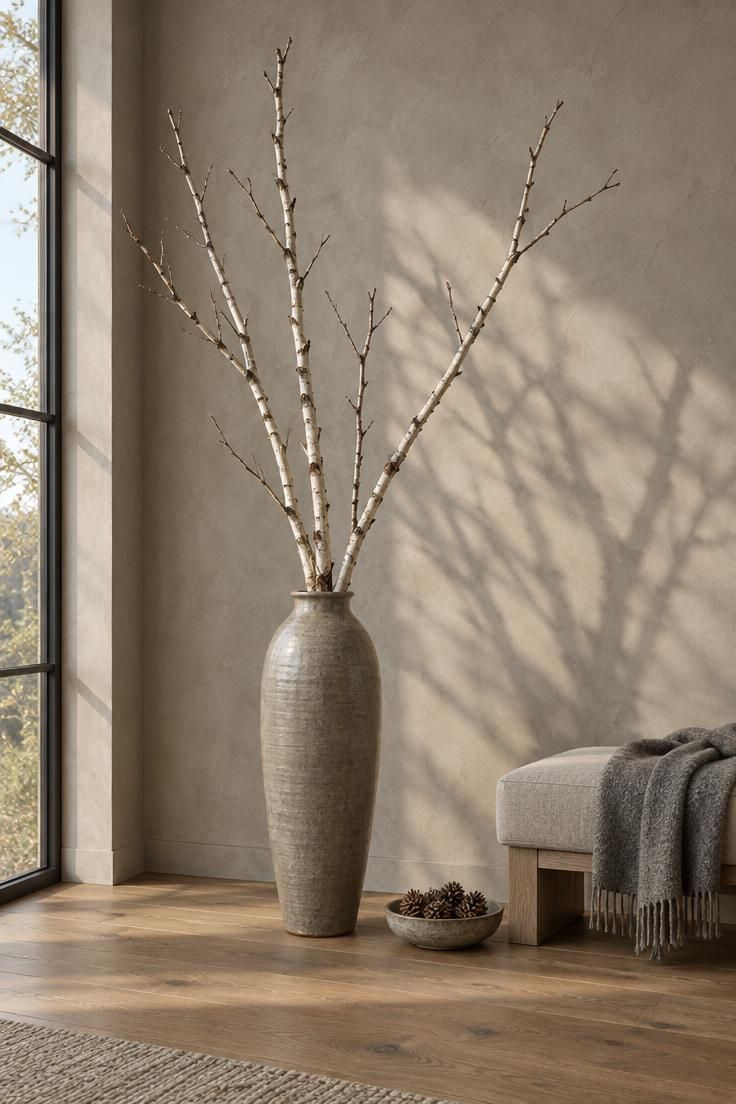
A floor vessel with bare branches brings a vertical line into a winter room decor scheme without a single ornament.
Birch, magnolia, and pussy willow offer the strongest silhouettes, and the branching curve does more visual work than the tips.
Choose branches with one clear directional lean so the arrangement reads as a deliberate shape rather than a broom.
Positioning against a plain wall is what turns branches into sculpture.
Plain plaster or a flat paint finish lets the cast shadow become part of the composition, and side light from a window gives that shadow movement through the day.
In a room with busy wallpaper, the effect disappears; the branches need quiet around them.
Dried plant material is fragile.
Twigs snap at the touch, fine bark drops onto the floor, and dust settles into the branching points.
A handheld vacuum with a brush attachment, used gently every week or two, keeps the silhouette from going gray, and a full refresh after a few weeks restores the crispness.
Branch count is a practical decision.
Three stems in a wide vessel look sparse and architectural, while a full bundle reads dense and softer.
Test the grouping outside the vase first: hold the stems together, check the spread against the wall, and trim only after the shape looks right.
Style Blueprint:
- A tall ceramic or earthenware floor vase
- Bare birch, magnolia, or pussy willow branches
- A plain wall or flat paint finish as backdrop
- A handheld vacuum with a brush attachment for upkeep
Cool Base, Warm Accent Palette
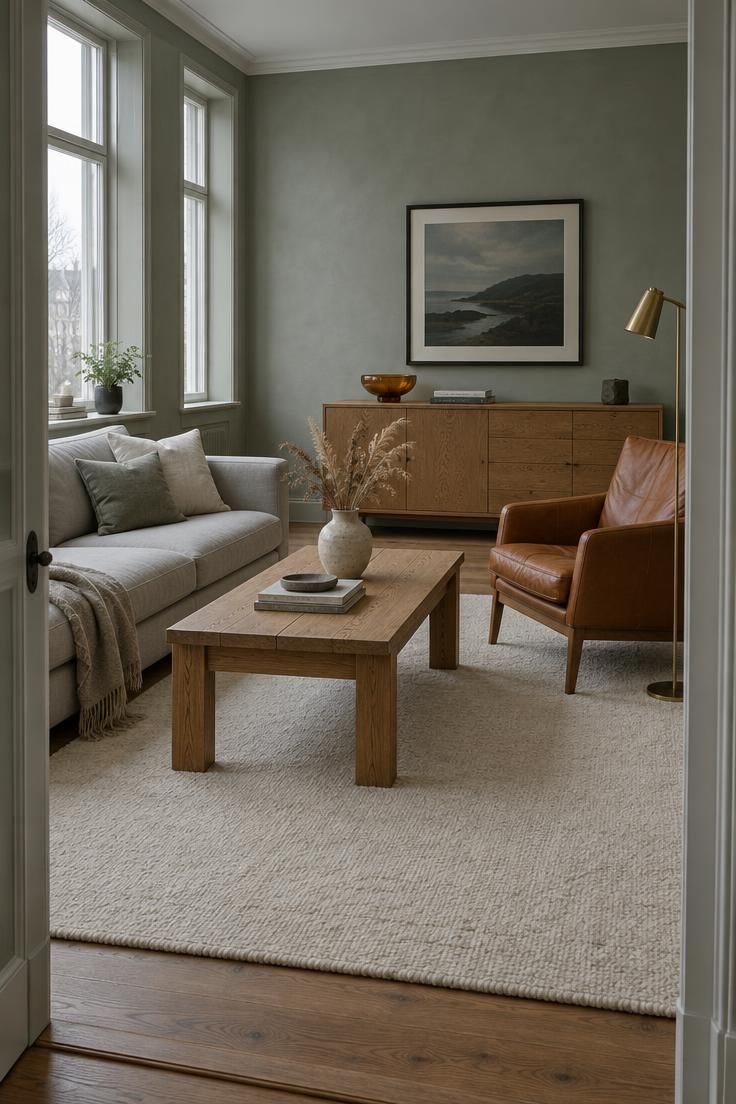
Building a room on cool neutrals and introducing warmth through a short list of smaller objects keeps a winter palette from turning uniformly beige.
Slate, gray-green, and greige walls paired with large upholstery in light gray establish the cool shell.
A cognac leather chair, an amber glass vessel, a warm oak table, and a brass lamp then supply warmth in measured doses.
The method rewards restraint.
Warmth reads best when it arrives against contrast, so a leather chair placed against a cool sofa and a cool wall does more work than the same chair in an all-cream room.
Decide early how many warm elements the room can carry, and treat that number as a budget.
Three or four warm materials is a useful ceiling in most rooms.
A leather chair, a wood table, a brass lamp, and an amber vessel sit at the edge of the limit.
Add a warm rug and a rust cushion on top and the palette drifts toward brown muddiness, especially in the flat light of an overcast day.
Cool-daylight rooms and warm-evening rooms behave differently with this palette.
North-facing rooms with gray window light make the warm accents pop, while rooms that turn golden in the late afternoon can make the same accents feel heavy.
Watch the room at both times before committing to an accent fabric.
Style Blueprint:
- Pale gray-green or greige wall paint
- A light gray wool or linen sofa
- One cognac leather chair as the warm anchor
- A brass floor lamp with a warm shade
- A small amber glass vessel on a sideboard
Design Pro-Tip: Compare each warm accent against the cool sofa and wall in flat natural light. If one accent seems to draw too much attention, remove or soften it.
Framing the Cold View with Soft Drapery
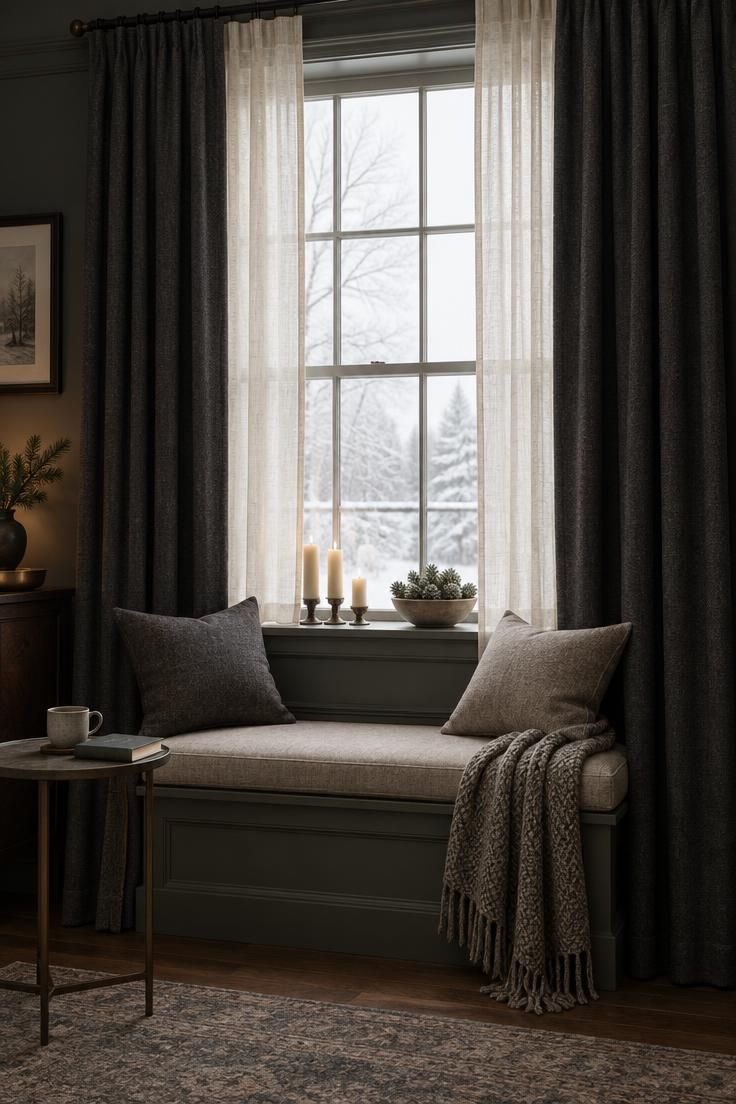
Heavy panels over a sheer layer frame a winter view and soften the glare that comes with bare winter light.
The wool or velvet outer layer creates a sense of enclosure at the room’s edge, while the sheer behind it diffuses daylight and keeps the window from reading as a hard black rectangle after dark.
Together they turn a plain opening into the room’s most deliberate feature, and the sill below becomes a small stage for quiet objects.
Fabric weight and color shift how bright the room feels.
Charcoal and deep olive panels absorb light and make the window glow more brightly by contrast, which suits a room that is dimmer by design.
Cream or oatmeal panels in the same construction read lighter and make the room feel larger, at the cost of some of that contrast.
A floor-to-ceiling panel changes the perceived proportion of the window and the wall.
Hanging the rod wide and high gives the drapery a generous frame and makes a modest window feel more generous in the room.
This is a finishing decision rather than a lighting or structural fix.
Wool and velvet collect dust and hold creases after a season tied back, so a light vacuum with a soft brush attachment every few weeks keeps the folds crisp.
Sheers need a cool wash and a low tumble to avoid shrinking.
Style Blueprint:
- Floor-length wool or velvet panels in charcoal or deep olive
- Cream linen sheers behind the heavy layer
- A rod installed wide of the window frame
- Cream pillar candles on the sill
- A low ceramic bowl of pinecones
Low Candle and Votive Clusters
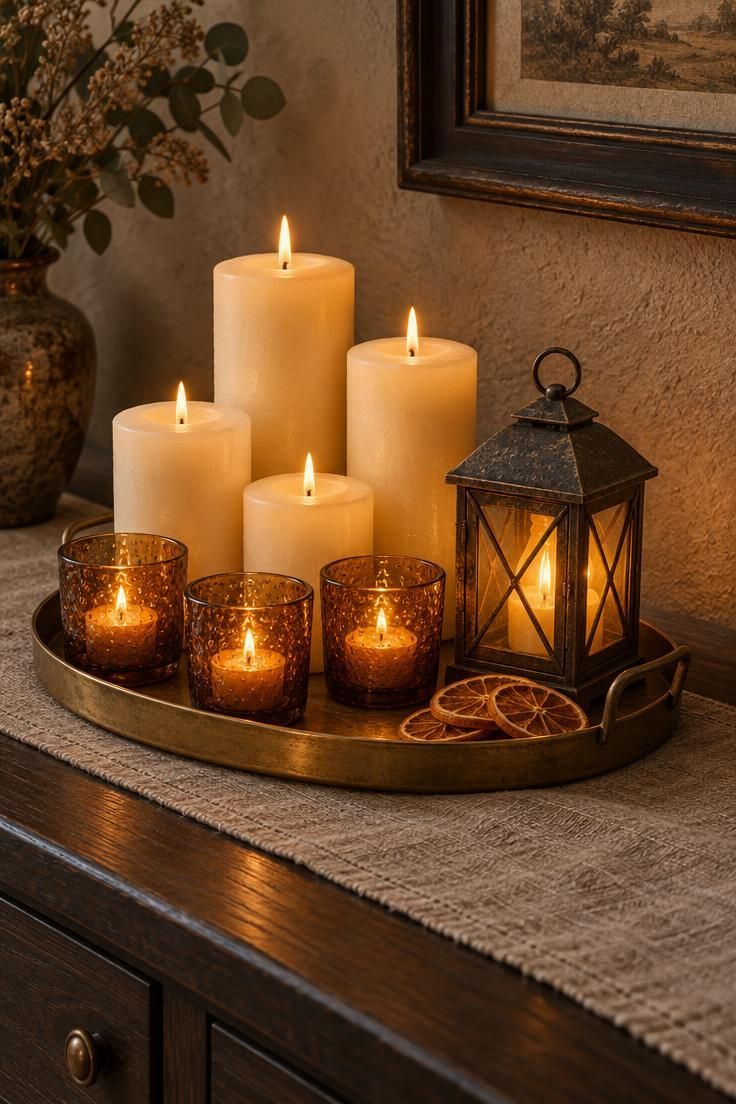
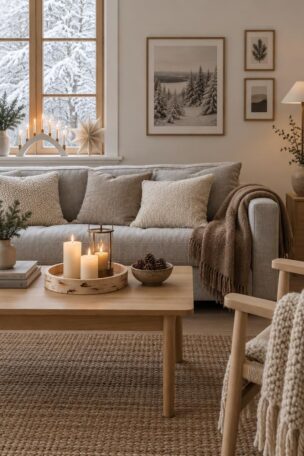
A candle and votive display works through height variation and clustering rather than through quantity.
Pillars in three heights, textured glass votives, and one lantern arranged on a tray create a small skyline of flame that draws the eye around the surface.
Keep the vessels in a tight family of finishes, such as smoked glass, aged brass, and stoneware, so the cluster reads as one composition.
Placement is the practical half of the idea.
A console, a hearth ledge, or a deep windowsill at seated eye level lets the flames sit in view without crowding traffic paths.
High shelves put candles out of sight, while low coffee tables invite knocks and wax spills.
Open flame requires attention.
Keep candles clear of nearby textiles and never leave them burning unattended.
On shelves or high surfaces, battery candles offer a straightforward alternative that carries the same glow without the watchfulness.
Wax and soot build up over a season.
Trim wicks before each lighting, and wipe the inside of glass votives with a dry cloth once the wax cools.
A tray under the cluster catches drips and makes the whole group easy to lift and clean.
Style Blueprint:
- Cream pillar candles in three heights
- Amber or smoked glass votives
- One small iron or brass lantern
- A brass or wood tray to contain the cluster
Design Pro-Tip: Use unscented candles near a dining table so the aroma does not compete with the food.
Tactile Bowl of Winter Objects
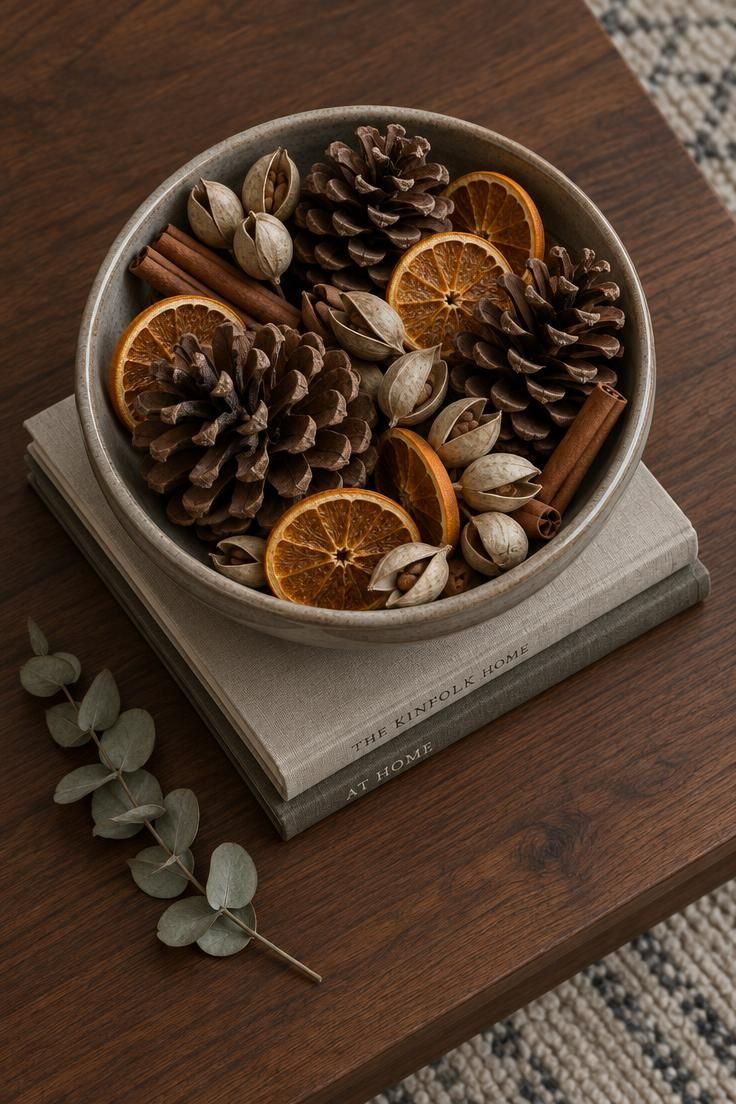
A single bowl of natural objects delivers tactile abundance without spreading small items across every surface.
Pinecones, dried citrus, cinnamon sticks, and seed pods carry varied textures and warm-neutral colors, and a low vessel in stoneware or aged metal gives them a calm boundary.
The bowl reads as one object even though it holds a dozen.
Bowl selection shapes the result.
A wide shallow bowl lets the objects spread out and show their silhouettes, while a deep bowl hides the lower layers and reads more like a container than a display.
Fill to just below the rim so the arrangement keeps its shape and resists becoming a catchall for keys and coins.
Real plant material needs realistic expectations.
Pinecones can carry sap and occasionally attract small pests, dried citrus fades in direct sunlight, and everything collects dust.
Refresh the bowl after a few months, and keep it in a spot where it can be admired without being knocked.
Style Blueprint:
- A low wide stoneware or aged metal bowl
- Large pinecones and dried citrus slices
- Cinnamon sticks and pale seed pods
- A stack of books as a base
Layered Rugs for a Deeper Floor Plane
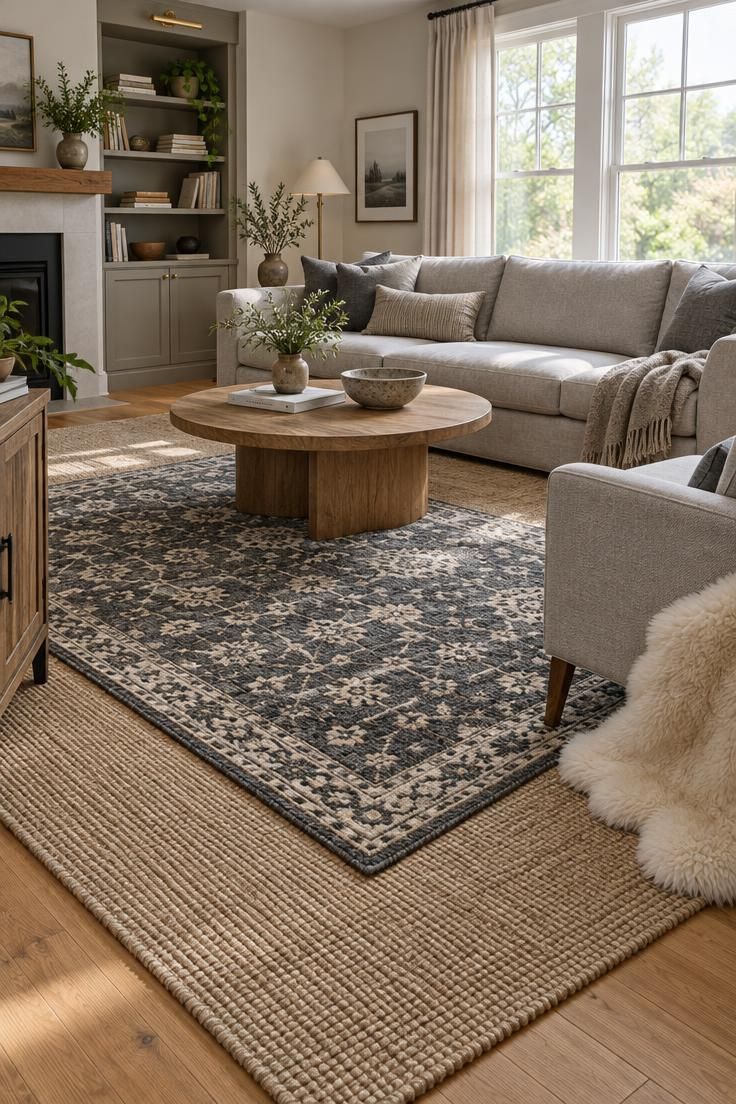
A layered rug composition defines a seating zone and adds a mid-scale pattern to a floor without shifting any furniture.
A large neutral base lays the foundation, a smaller textured or subtly patterned rug laid at a diagonal breaks the rectangle, and a sheepskin at one chair gives a single soft focal point.
The offset angle keeps the layering from reading as a mistake.
The top rug should be thin and flat.
A plush top layer over a thicker base creates a ridge at the overlap that catches feet and chairs, while a flat wool or cotton rug sits almost flush and lets furniture legs bridge both layers.
Test the top rug on the floor before committing to furniture placement.
Edge behavior is the main everyday friction.
Top rugs curl at the corners, creating trip hazards, so check the corners regularly and reroll them face-out for a day if they lift.
Vacuuming takes a lighter pass with lower suction, or a handheld tool along the edges.
Style Blueprint:
- A large neutral low-pile base rug
- A thinner patterned wool rug layered at an angle
- A cream sheepskin beside one chair
- A low-suction vacuum pass for maintenance
Design Pro-Tip: Keep both rugs in the same color family so the layering reads as intentional shading rather than an afterthought.
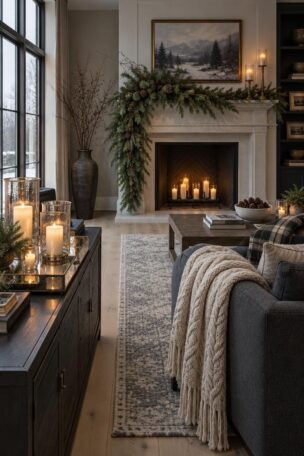
Restrained Evergreen Garland on the Mantel
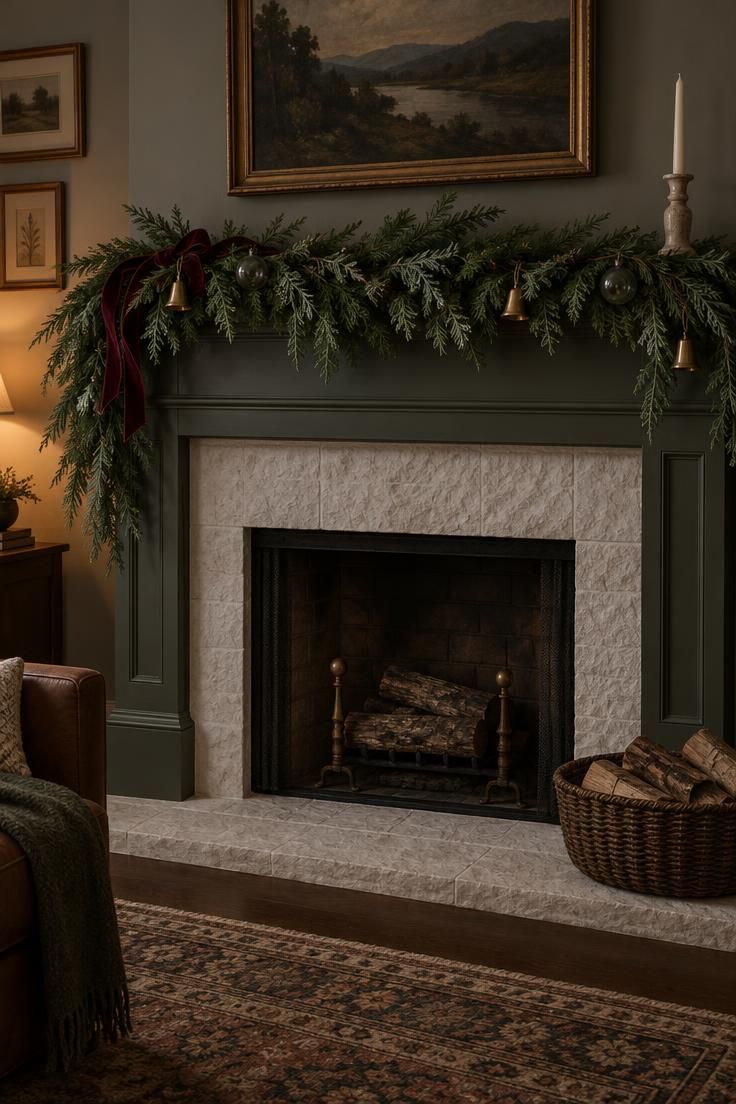
A muted evergreen garland on a mantel reads as winter botanical when the green is deep and slightly grayed and the accents stay sparse.
Cedar and pine in a mixed length, a few smoked-glass ornaments or thin brass bells, and one velvet ribbon in deep burgundy carry the look.
Bright kelly green and red-and-green pairings tip the same mantel back toward holiday styling.
Drape and density control the mantel’s visual weight.
A slightly asymmetrical garland, fuller on one end and tapering toward the other, looks more natural than a perfectly centered swag.
Let the branches spill a little over the front edge so the mantel reads as dressed rather than wrapped.
Fresh and faux garlands both ask something of the household.
Fresh cedar dries and drops needles within a few weeks, so a quick sweep along the mantel and hearth becomes part of the routine.
Faux garland needs a fluffing session when it comes out of storage and a dusting before it goes back.
Style Blueprint:
- A mixed cedar and pine garland in muted greens
- A few smoked-glass ornaments or brass bells
- One deep burgundy velvet ribbon
- A soft brush for dusting the greenery
Winter Still Life on a Shelf
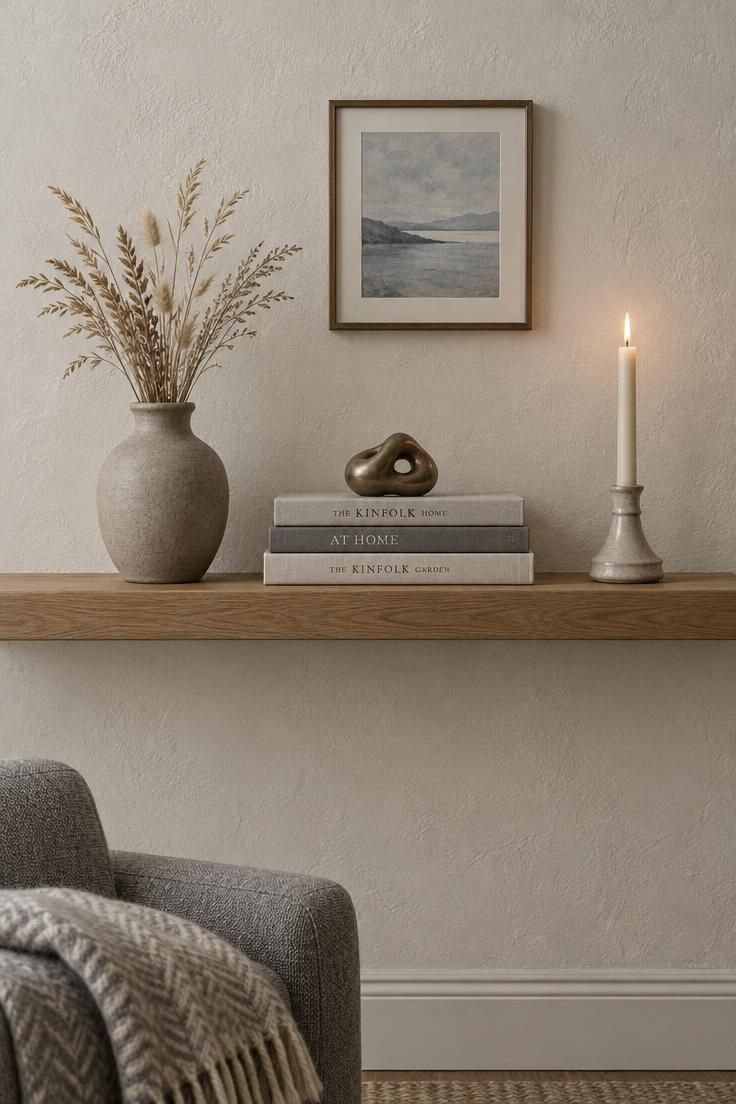
A winter still life works when a shelf or mantel holds a small group of objects in a narrow tonal range.
A stoneware vase, a short stack of books with deckled edges, a sculptural object, and a taper in a ceramic holder read as a considered composition because the palette stays within two or three related tones.
The shelf becomes a vertical vignette that adds seasonal weight without using floor space.
Negative space does most of the editing because three to five objects with clear gaps between them look intentional, while a shelf filled edge to edge reads as storage.
Vary heights and weights within the group: one tall vase, one low stack, one small sculptural accent, and one vertical taper gives the eye a path.
Small spaces gain the most from this idea because a vertical composition uses wall territory that furniture rarely claims, and a single shelf can carry the whole seasonal gesture in a room too tight for a floor arrangement.
Keep the objects light enough to move easily when the shelf needs dusting, and avoid placing anything too fragile near the edge where a passing hand could knock it.
Style Blueprint:
- One matte stoneware vase with dried grasses
- A short stack of muted books
- A small bronze or iron sculptural object
- A taper in a simple ceramic holder
Design Pro-Tip: Anchor the composition with one larger object, then add two or three smaller pieces, and leave one side intentionally clear.
Deep-Toned Accent Wall as a Backdrop
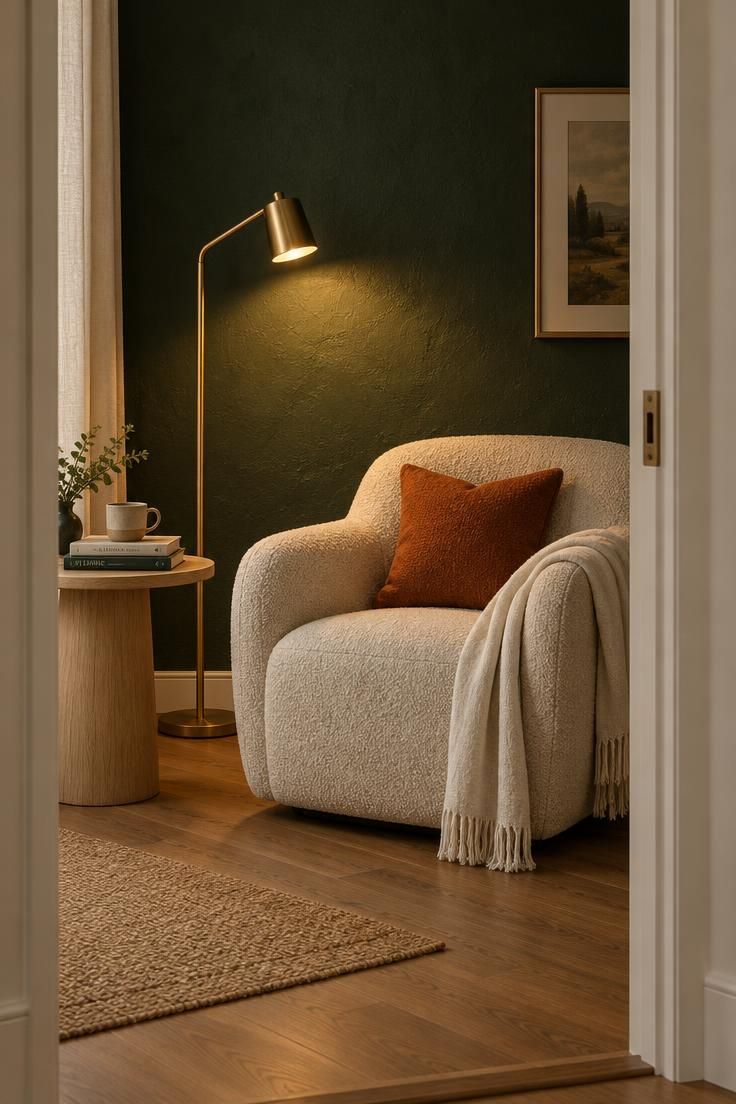
A deep-toned accent wall gives a small room an intentional sense of enclosure when the surrounding palette stays light.
Ink blue, forest, charcoal, and oxblood all push the wall back and let lighter textiles and warm light come forward.
The contrast does the work: a pale chair against a dark wall reads more sculptural than the same chair against cream.
Placement decides whether the wall feels deliberate.
Painting the wall behind a sofa, bed, or reading chair frames a defined seating area and gives the room a natural focal point.
A single accent wall reads as a design decision, while dark paint on every surface in the same room asks for more light and more editing to feel comfortable.
Furniture and lighting need to work with the darker backdrop.
Bring pale textiles and at least one warm light source near the dark wall so the area stays legible after dusk.
Keep the pieces in front of the wall relatively light so the contrast does not tip toward a dark corner.
Dark paint shows imperfections more than light paint.
Hairline cracks and uneven plaster become more visible under deep pigment, and the wall can absorb available light and make a small room feel flatter on gray days.
Test a sample patch across morning and evening light before committing to a full wall.
Style Blueprint:
- A deep forest, ink, or oxblood accent wall
- A cream or ivory upholstered chair in front
- A warm brass floor lamp close to the wall
- A lighter curtain or throw at the edge of the frame
Low Winter Centerpiece for the Table
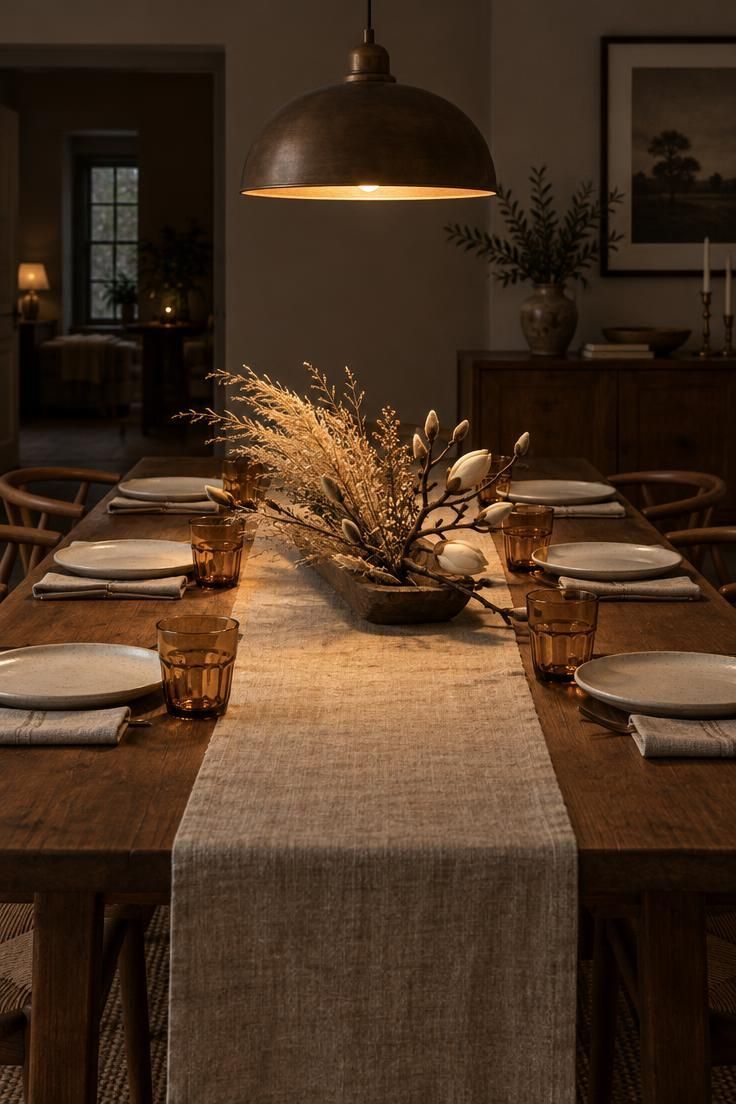
A low winter centerpiece keeps the table feeling dressed while preserving sightlines across it.
For a bare branch arrangement, dried grasses, a few bare branches, or a shallow bowl of seed heads arranged horizontally along a linen runner stay below eye level, so guests can see each other in dim evening light.
The runner defines the table’s center without covering the wood.
Height and width are the two decisions that matter.
Anything taller than a hand’s width above the table starts to block the view across it, and anything wider than the runner crowds the plates.
A tray under the arrangement contains the dried material, catches shedding, and lifts off in one piece when the table needs to be cleared.
Natural elements and food need separation.
Keep dried grasses and branches away from open flame and out of direct contact with plated food, and place any candles on a separate tray or in enclosed holders.
A light shake outside before the table is set clears loose seeds and dust.
Style Blueprint:
- An oatmeal or charcoal linen runner
- A low wood or ceramic tray
- Dried grasses and a few bare branches
- Amber or smoke glassware
Conclusion
The strongest winter rooms are edited rather than filled.
Choose two or three of these directions that suit the same house and let them echo each other, so the reading corner’s throw tones repeat on the table and the palette idea carries through the adjacent rooms.
Let bare branches and muted greens hold the seasonal note while textiles and low light do the rest.
When a piece starts to look tired, whether from shedding needles, pilling wool, or fading botanicals, replace it rather than adding more around it.
That habit keeps the house ready to ease toward spring without a single dramatic undecorating day.