This post may contain affiliate links. If you make a purchase through these links, we may earn a commission at no additional cost to you.
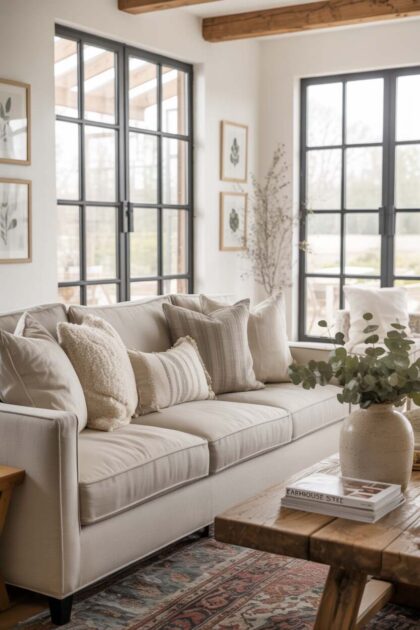
Modern farmhouse style strips away fussy detail and replaces it with honest materials, neutral tones, and a sense of calm that makes every room feel like a deep exhale.
This design approach mixes the warm, lived-in character of country living with updated finishes and simplified forms.
The result is a home that feels grounded and current at the same time, never leaning too far into nostalgia or too far into cold minimalism.
Reclaimed wood, shiplap walls, and matte black hardware sit side by side with streamlined silhouettes and open sight lines, giving modern farmhouse style its signature tension between old and new.
The Origins of Modern Farmhouse Style
The roots of modern farmhouse style reach back to actual working farms, where homes were built for function rather than fashion.
Large kitchens, wide porches, and open gathering areas served the daily rhythms of agricultural life.
Nobody chose these layouts from a catalog; they grew out of necessity, shaped by the land and the seasons.
Over the decades, designers and homeowners began to appreciate the honest beauty in those practical choices.
The shift toward what we now call modern farmhouse style gained momentum in the early 2010s, when architects started pairing rustic farmhouse details with cleaner geometry and refreshed materials.
Instead of recreating a period farmhouse piece by piece, the movement borrowed its most appealing qualities, including warmth, connection to nature, and unpretentious comfort, then filtered them through a contemporary lens.
That blend of heritage charm and modern restraint explains why this look has outlasted so many passing trends.
Core Elements of Modern Farmhouse Design
Architectural Features
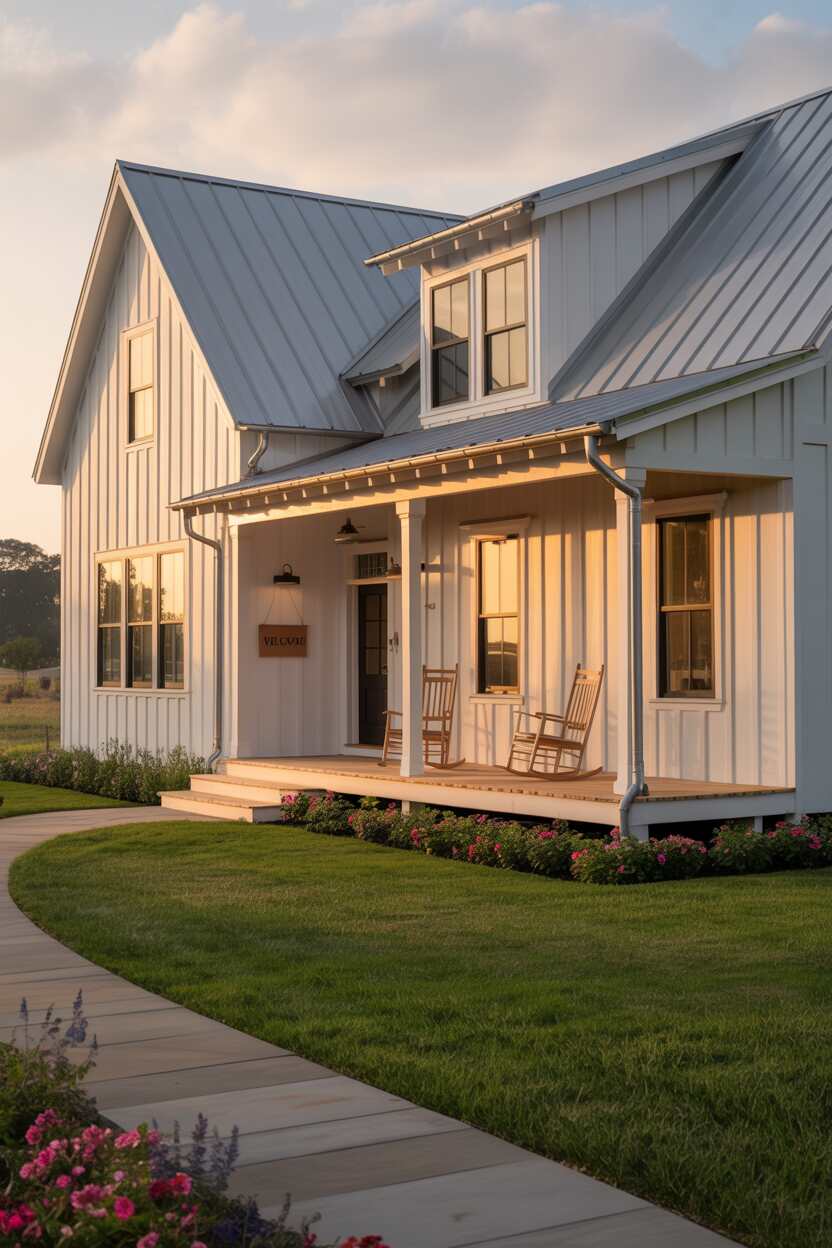
Distinct architectural details separate a modern farmhouse from a standard suburban build.
White exteriors set the stage, often paired with contrasting black window frames that sharpen every line.
Board-and-batten or lap siding introduces vertical rhythm and shadow, and gabled rooflines nod to traditional barn structures.
Generous windows pull daylight deep into the interior, creating bright rooms that shift in mood from morning to evening.
The covered porch remains a defining feature, sometimes wrapping around two or more sides of the home.
These outdoor spaces blur the line between inside and out, providing a practical spot to sit, eat, or watch the weather change.
Carriage-style garage doors fitted with “X” details or iron strap hinges maintain the design language down to the last detail.
Color Schemes
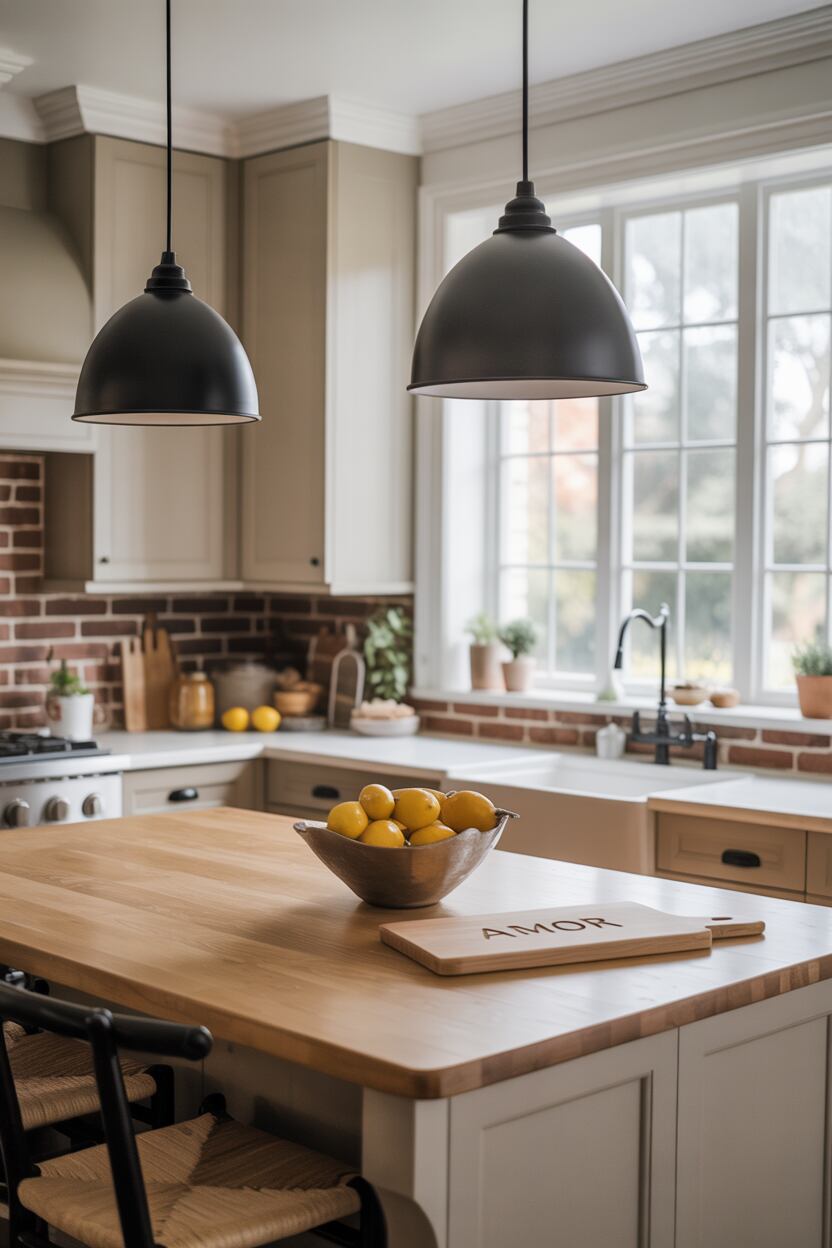
A modern farmhouse color palette starts with layered whites and off-whites that keep rooms feeling airy and spacious.
This neutral foundation becomes a quiet stage for textured materials and understated accent tones.
Greige, that warm midpoint between gray and beige, serves as a transitional shade that softens hard edges without muddying the palette.
Matte black accents in light fixtures, cabinet pulls, and window mullions provide sharp punctuation against lighter surfaces.
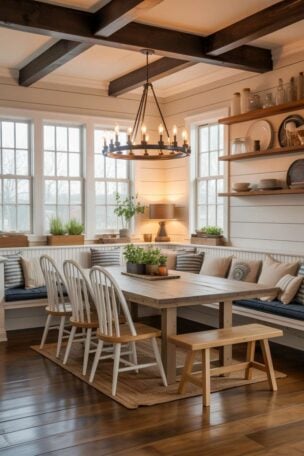
Natural wood tones, from honey oak to weathered driftwood, inject warmth wherever they appear, whether on exposed ceiling beams, wide-plank floors, or a dining table.
When bolder color does arrive, it stays muted: think dusty blue on a laundry room door, sage green on kitchen cabinetry, or terracotta on a single accent wall.
Design Pro-Tip: Start with one consistent white for walls and trim throughout the main living areas, then introduce your greige or muted accent color in a single secondary space like a powder room or mudroom to test the pairing before committing to larger rooms.
Material Selection
The materials in a modern farmhouse speak to authenticity and connection to the natural world.
Wood dominates in many forms: reclaimed beams overhead, wide-plank flooring underfoot, and shiplap walls as a backdrop.
The look rewards character, so boards with visible knots, grain variation, and weathered patina hold more appeal than perfectly uniform lumber.
Stone and brick contribute additional surface interest, usually in subdued, earthy tones rather than bold or polished finishes.
A stone fireplace surround or a brick accent wall anchors a room with visual weight and age.
Metal adds a contemporary counterpoint: iron pendant lights, steel-framed mirrors, or zinc countertops inject just enough industrial edge to keep the space from tipping into pure country territory.
The tension between smooth and rough, light and dark, aged and polished is what gives a modern farmhouse room its depth.
Inside the Modern Farmhouse
Living Spaces
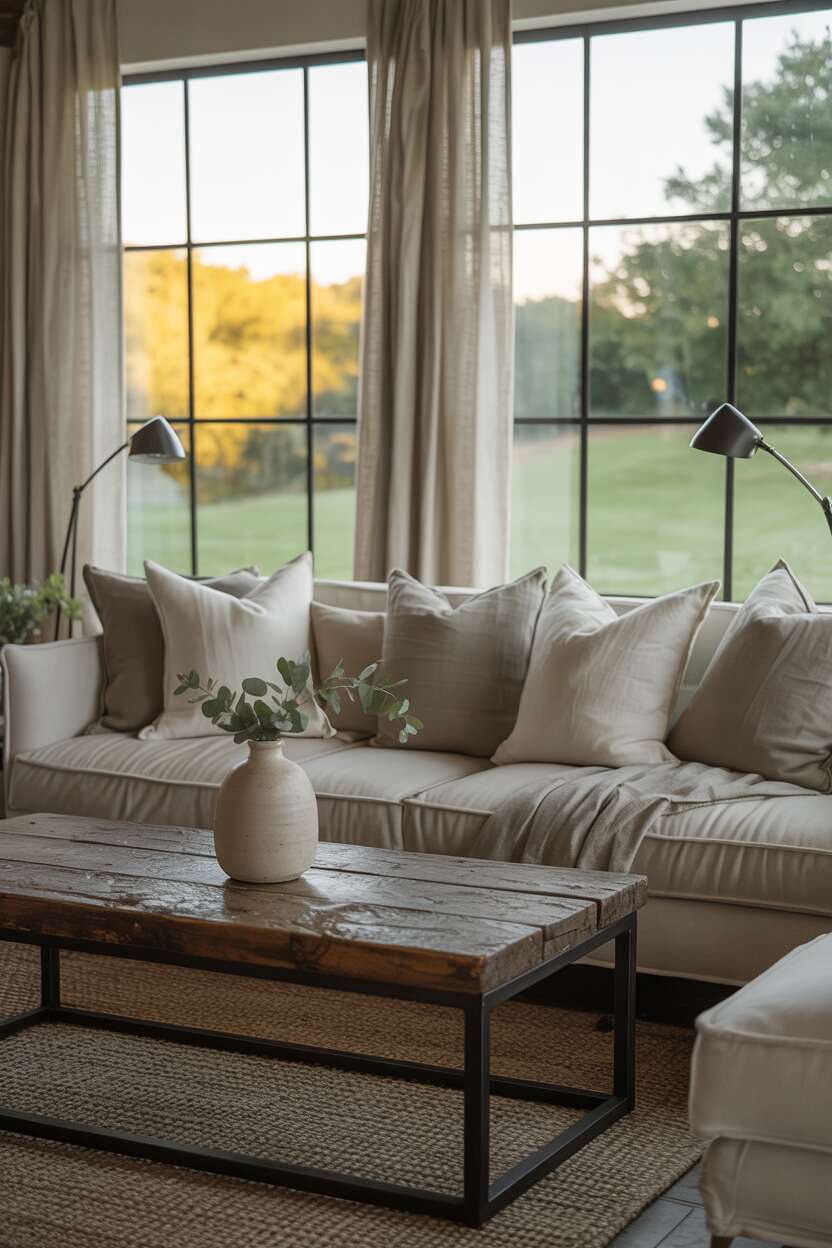
Open floor plans define how modern farmhouse homes function day to day.
Kitchens flow into dining areas, which spill into living rooms, creating one connected zone for cooking, eating, and gathering.
This layout echoes the communal spirit of original farmhouse gathering halls, updated for the way families actually live now.
Furniture strikes a balance between comfort and restraint: sofas with simple frames carry deep cushions, and armchairs trade ornate carving for clean profiles with linen or cotton slipcovers.
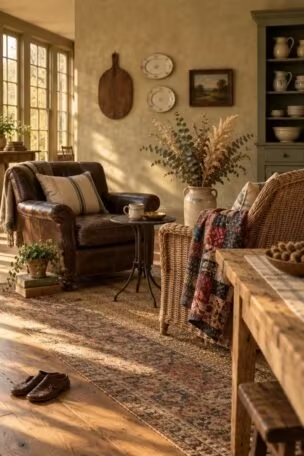
Texture does the work that pattern and color handle in other styles, arriving through woven throws, nubby pillows, and natural-fiber rugs layered over hardwood.
The most compelling living rooms mix eras with confidence, placing a contemporary sectional next to a vintage trunk repurposed as a coffee table, or hanging a modern abstract print above a reclaimed wood mantel.
Design Pro-Tip: Anchor your open floor plan with area rugs that define each zone, dining, seating, and entry, so the connected space reads as intentional rather than sprawling.
Kitchen Design
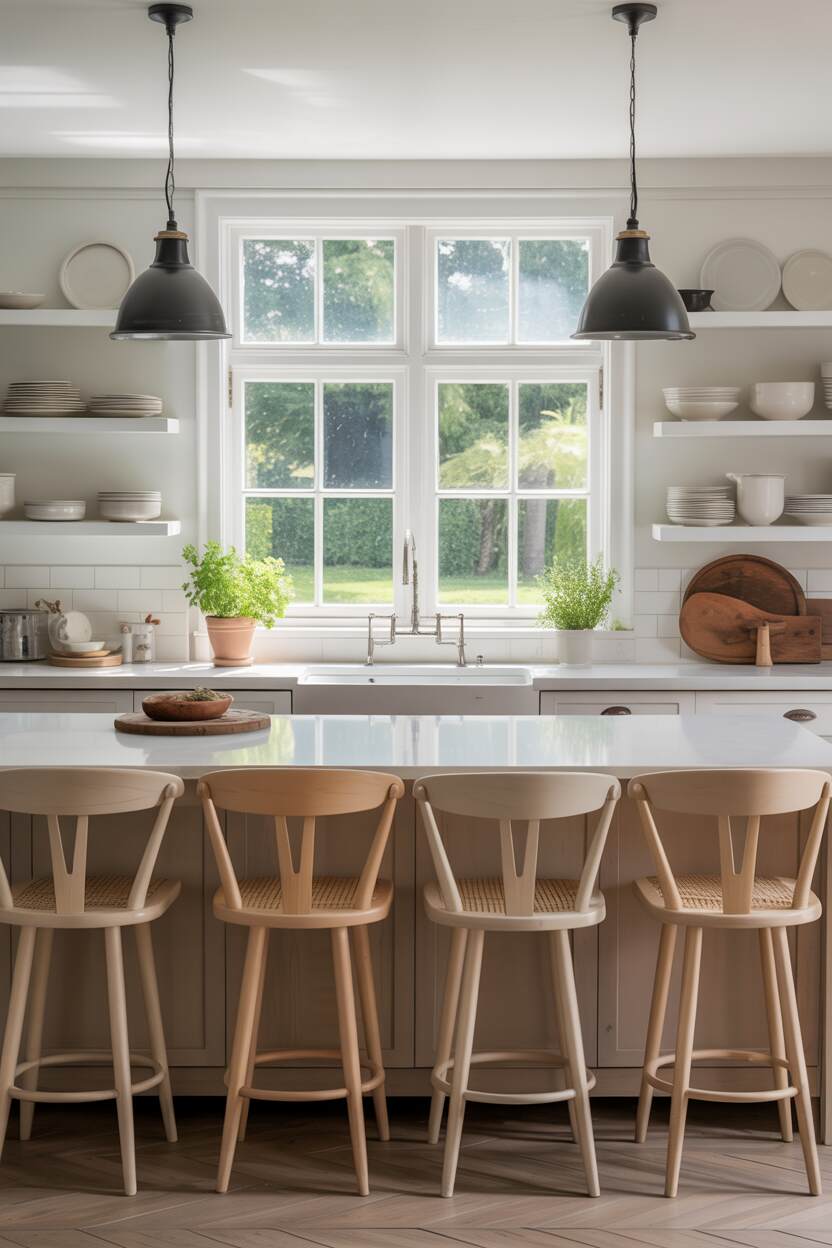
The kitchen is often the signature room in a farmhouse decor scheme, where function and personality converge most clearly.
A generous island anchors the layout, doubling as a prep surface, breakfast counter, and homework station.
White cabinetry lines the perimeter, sometimes interrupted by open wooden shelving that puts everyday dishes and glassware on display.
The farmhouse sink, deep and single-basin, pulls its weight as a working fixture and a style anchor in equal measure.
Black matte pulls and pendant lights punctuate the lighter surroundings with crisp contrast.
Modern appliances fit in without friction, occasionally concealed behind cabinetry panels, other times standing proud in stainless steel as a nod to the contemporary half of the equation.
Subway tile backsplashes, ceiling beams in raw or lightly stained wood, and honed stone countertops round out the farmhouse kitchen material mix.
Bedroom Retreats
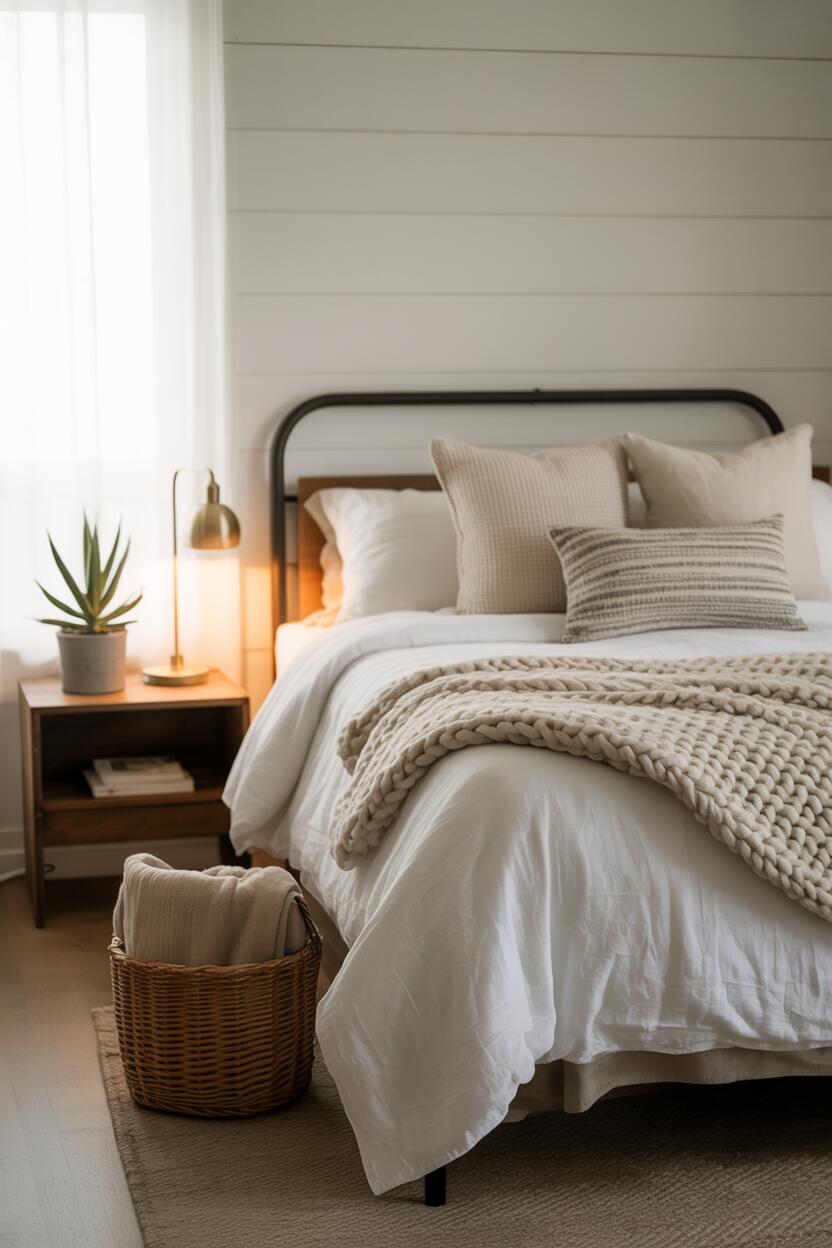
A modern farmhouse bedroom relies on subtraction as much as addition, creating calm through restraint and deliberate layering.
White or soft neutral walls set a quiet tone, sometimes punctuated by a shiplap or board-and-batten accent behind the headboard.
Bed frames in wrought iron or natural wood stand out against these pale backdrops, becoming sculptural focal points on their own.
Bedding stacks textures rather than colors: crisp white sheets under a rumpled linen duvet, a chunky knit throw at the foot, and pillows that vary in weave and weight.
Pendants or wall sconces with black iron finishes replace bulky table lamps, freeing up nightstand space for a book, a candle, or a small vase of clippings.
Storage leans on pieces with personality, like a blanket ladder propped in a corner, a painted vintage dresser, or a simple wooden bench at the foot of the bed.
Bringing Modern Farmhouse Style Home
Mixing Vintage and Contemporary
The most inviting modern farmhouse interiors look collected, not coordinated, as if each piece arrived at a different time and from a different place.
An antique dining table surrounded by newer upholstered chairs creates immediate tension and warmth in a room.
Vintage textiles, grain sack pillow covers, faded linen runners, hand-loomed throws, layer authenticity over sleeker contemporary upholstery.
Small accessories bridge the gap between eras just as effectively as larger furniture: new stoneware pottery next to inherited glass creamers, or an old wooden cutting board leaning beside a modern ceramic vase.
Balance is what separates a thoughtful mix from a cluttered one; too many antiques and the room becomes a museum, too many new pieces and it loses its soul.
The rustic modern design philosophy thrives in that middle ground, where every object earns its spot.
Design Pro-Tip: Limit your vintage pieces to one or two per surface (shelf, table, mantel) so each object gets breathing room and visual weight, rather than competing for attention.
Lighting Choices
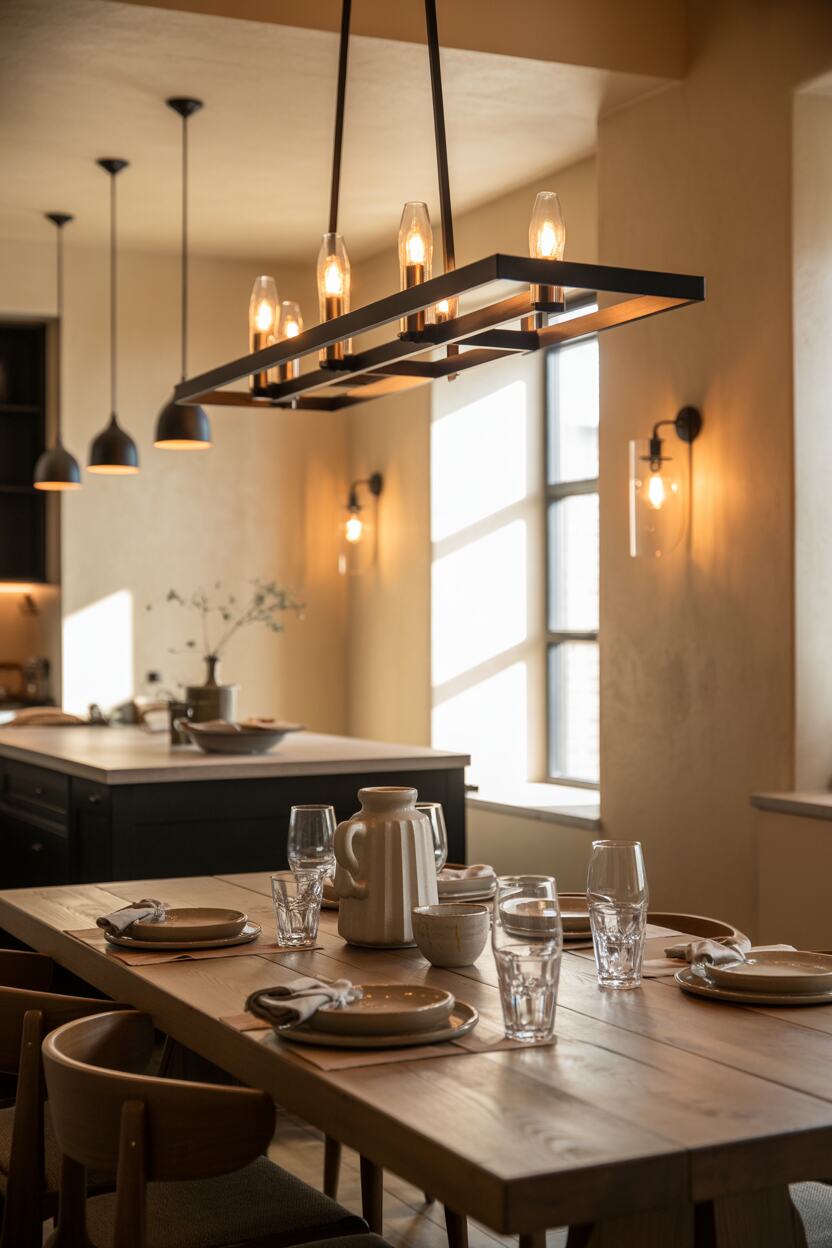
Light fixtures in a modern farmhouse pull double duty as task lighting and sculptural accents.
Pendant lights with industrial overtones hang over kitchen islands and dining tables, their black metal cages or clear glass globes riffing on old barn lighting.
Chandeliers layer rusticity and refinement, sometimes combining a reclaimed wood beam with iron arms, or pairing linen drum shades with forged metal frames.
Wall sconces appear in bathrooms flanking mirrors, in hallways marking transitions, and in bedrooms replacing table lamps for a cleaner silhouette.
Floor and table lamps favor honest materials: turned wood bases, spun ceramic bodies, and natural linen shades that filter warm light.
Beyond the fixtures, the quality and temperature of light matter as much as the hardware; warm-toned bulbs reinforce the cozy atmosphere that sits at the heart of this style.
Layered lighting, combining ambient, task, and accent sources, lets a room shift from bright and functional at midday to soft and intimate after dark.
Decorative Accents
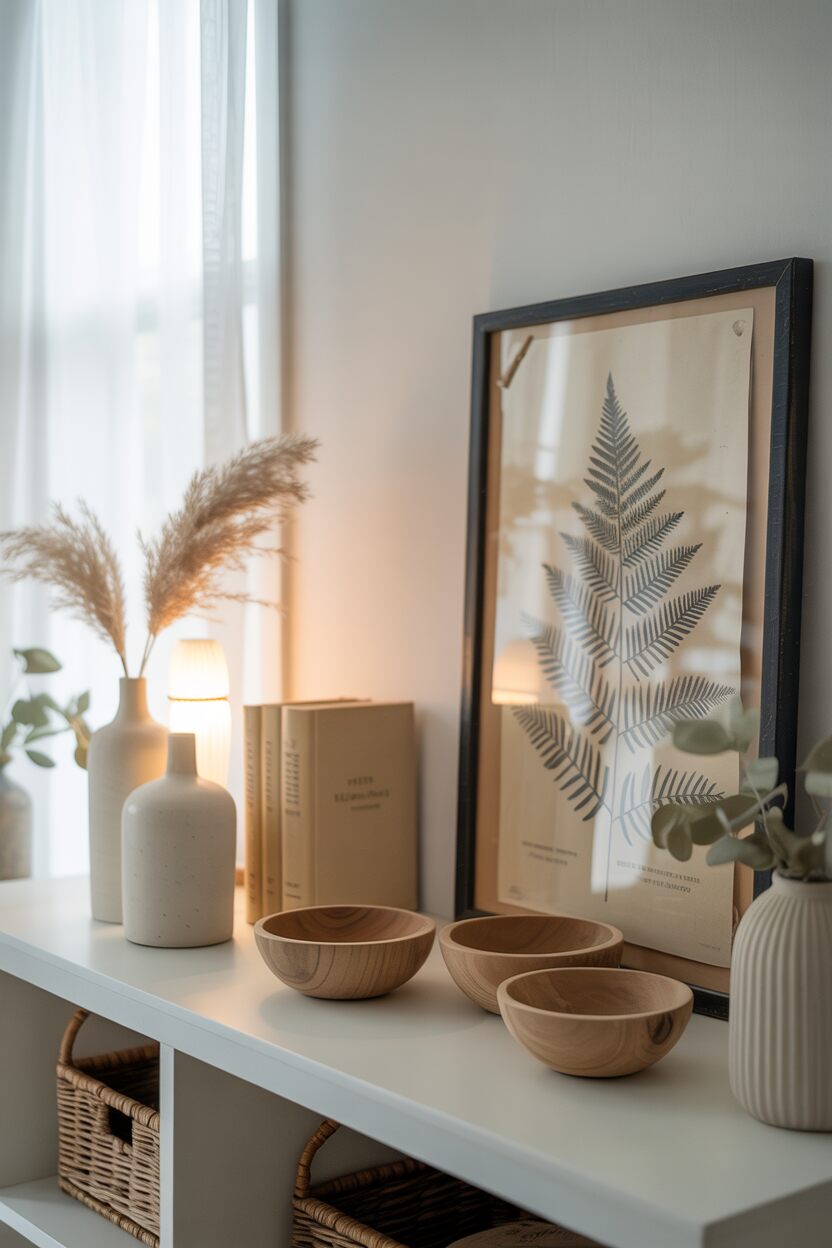
The final layer of a modern farmhouse room comes down to restraint and intention.
Meaningful objects carry more weight than mass-produced filler, and handmade ceramics, hand-turned bowls, and hand-stitched textiles signal that someone cared about what went on the shelf.
Natural elements pull the outdoors in: a few branches in a stoneware pitcher, a bowl of dried seed pods, or a potted herb on the kitchen windowsill.
Woven baskets appear under console tables, on open shelves, and as wall hangings, providing storage and warmth in one move.
Black-framed gallery walls create impact without noise, often holding botanical prints, simple ink landscapes, or family photos converted to black and white for cohesion.
Fewer, better pieces with a story behind them will always land harder than a shelf full of trendy trinkets.
Visual Inspiration Gallery
These visual snapshots highlight the building blocks of modern farmhouse style and offer concrete starting points for your own spaces.
Shiplap Accent Walls
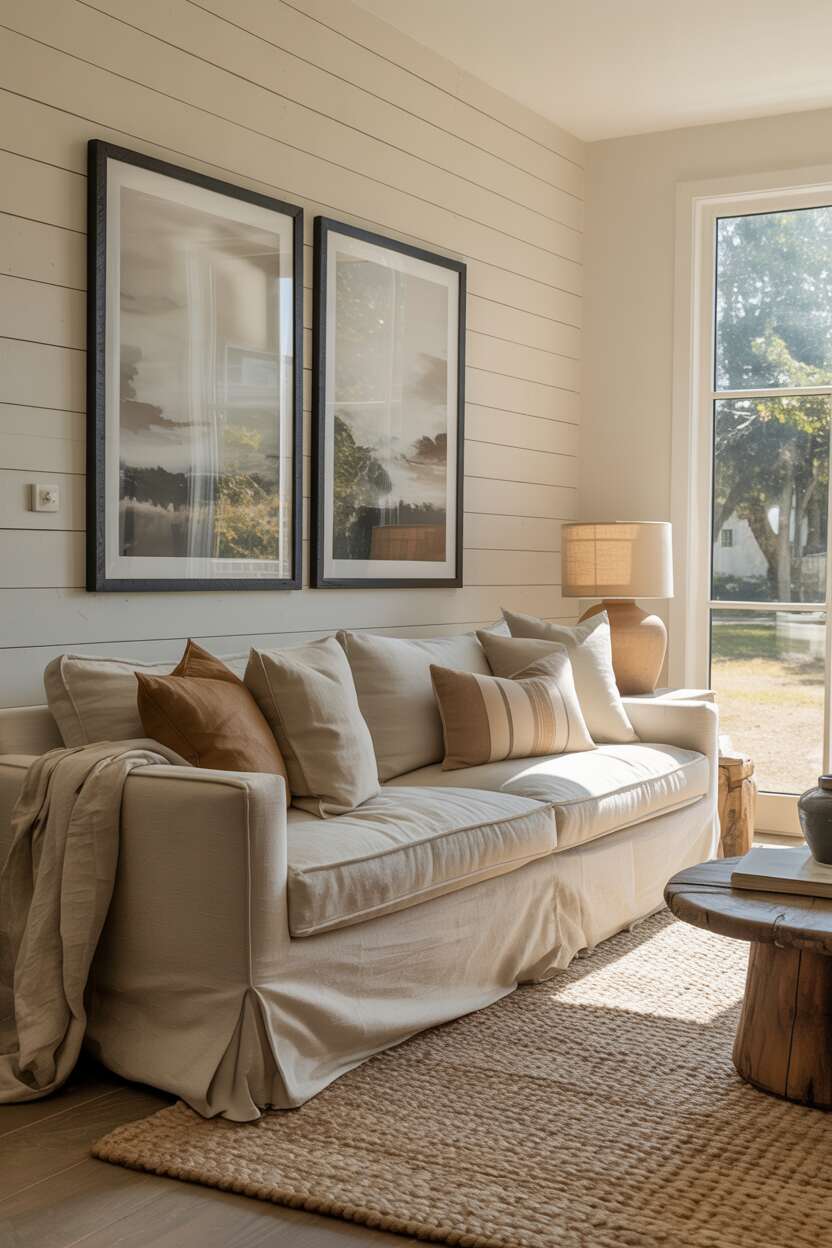
Shiplap paneling adds architectural texture to walls that might otherwise read as flat and forgettable.
Originally used on barns and outbuildings, this horizontal planking now brings quiet character to bedrooms, living rooms, and entryways.
Apply it to a single wall behind a sofa or headboard for focused impact, or run it through a compact room like a half bath where it can wrap the entire space without overwhelming.
Design Pro-Tip: Paint your shiplap the same color as the surrounding walls for a tone-on-tone effect that adds dimension through shadow lines rather than color contrast.
Board and Batten Charm
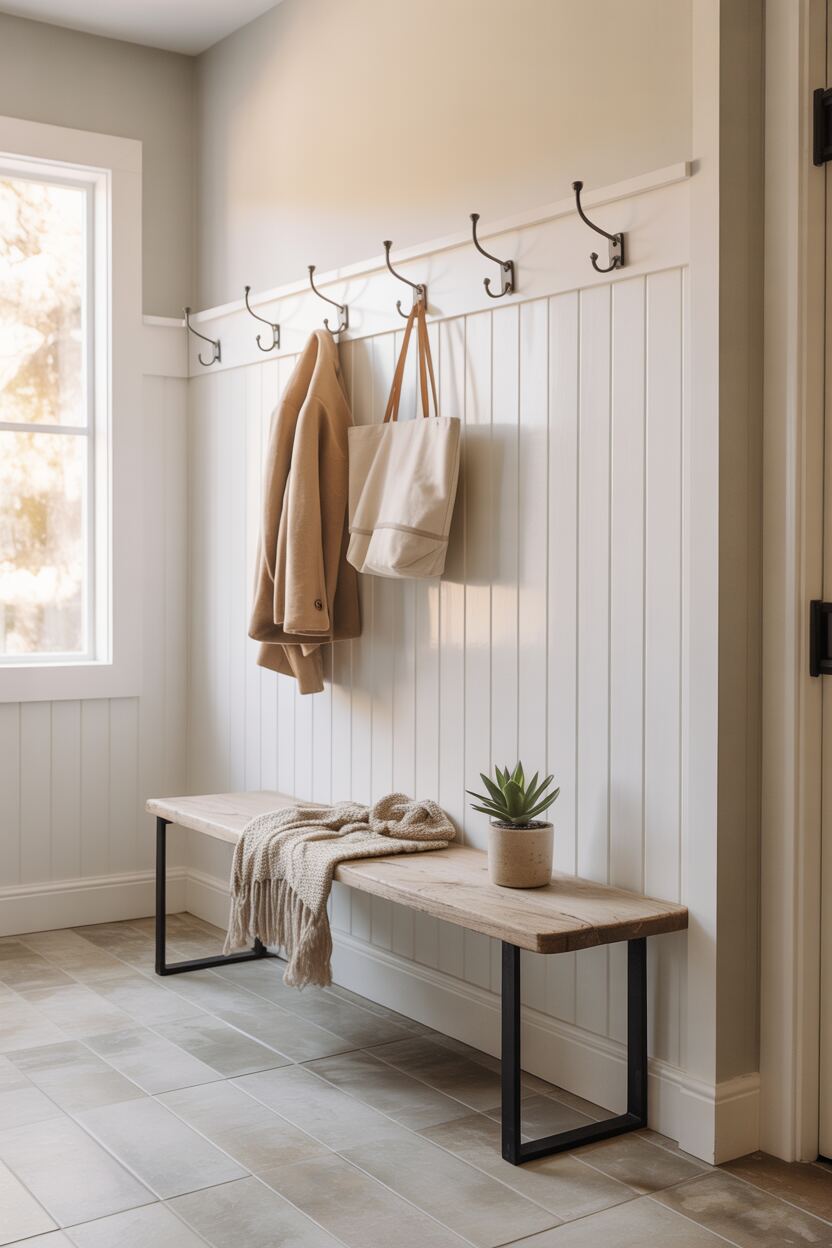
Board and batten introduces vertical depth and crisp shadow lines to modern farmhouse interiors.
This treatment works especially well in transitional zones, entryways, hallways, and dining rooms, where it adds formality without fussiness.
Install it at wainscot height, topping it with a contrasting paint color above, for an architectural detail that requires no structural changes.
Statement Barn Doors
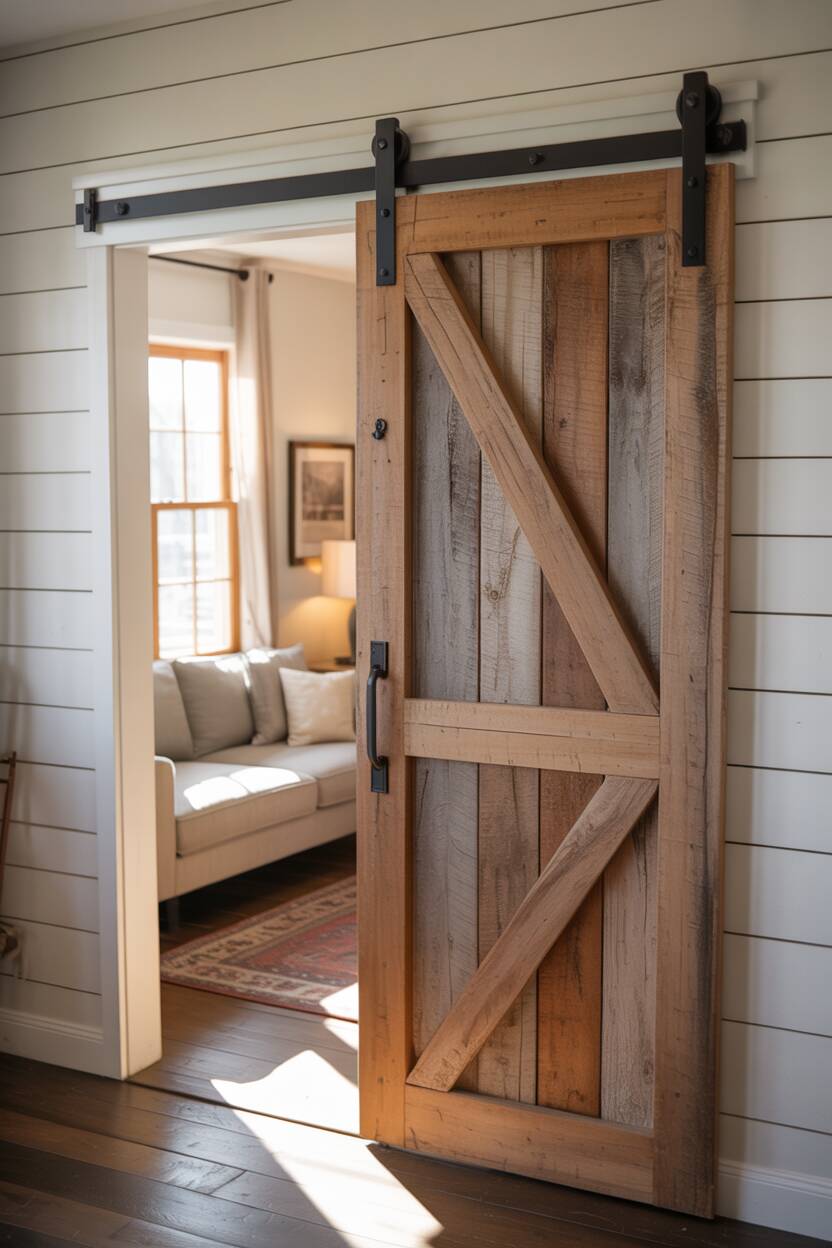
Sliding barn doors solve a practical problem and deliver a style statement in one piece of hardware.
Mounted on exposed metal tracks, they eliminate the need for door-swing clearance in tight hallways and small rooms.
Weathered wood versions bring a raw, rustic edge; painted and paneled versions suit spaces that call for a more polished approach with contrasting black iron fittings.
Pair the barn door with matching black strap hinges or flat-track hardware in an oil-rubbed finish to tie it into the room’s existing metal palette.
Mixed Metal Finishes
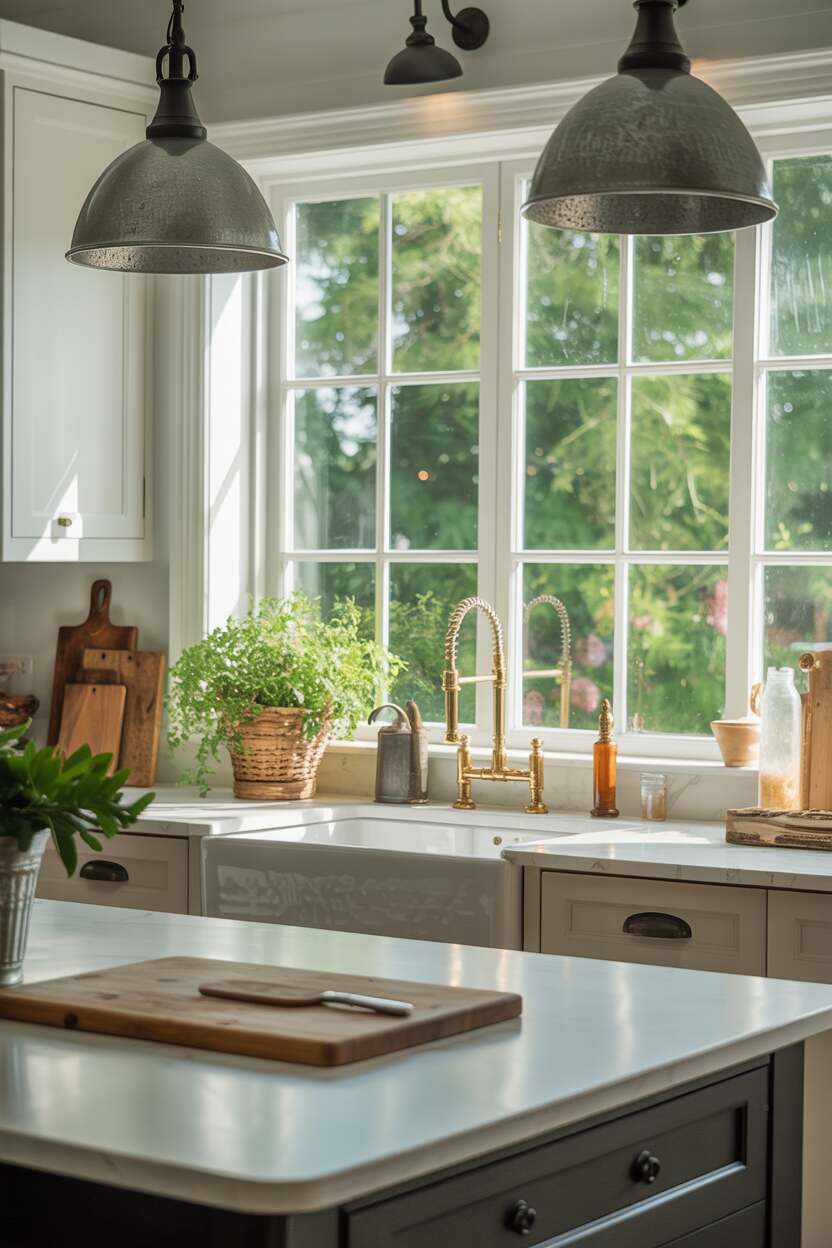
Matte black hardware anchors most modern farmhouse rooms, but layering in a second or third metal finish prevents the palette from going flat.
Pair black cabinet pulls with a brushed brass faucet, or set galvanized metal pendant shades above a counter fitted with oil-rubbed bronze knobs.
Commit to two or three metals and repeat them through the space so the mix reads as deliberate rather than accidental.
Texture-Rich Textiles
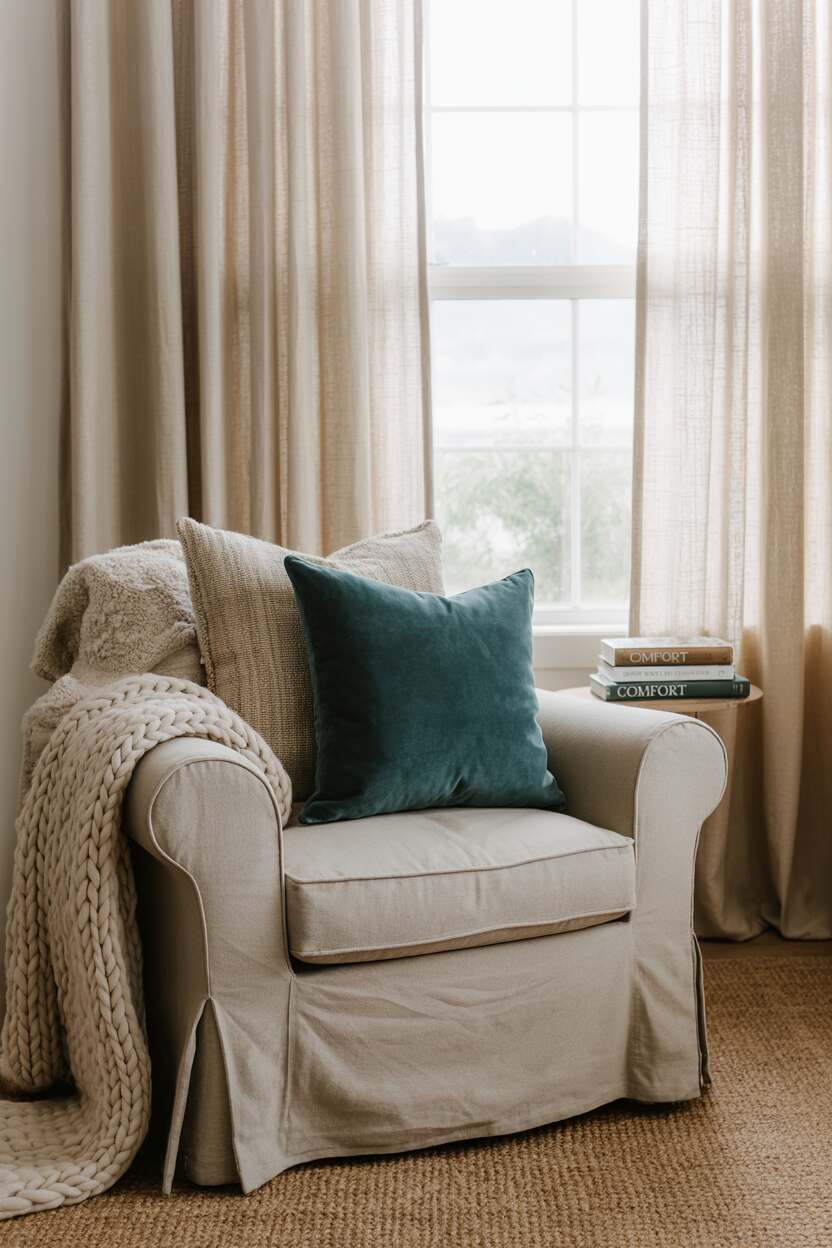
In a neutral color palette, texture becomes the primary source of visual interest and comfort.
Linen, cotton, wool, and jute each bring a distinct hand and weight to upholstery, curtains, and bedding.
A chunky knit throw over a smooth linen chair, a grain sack pillow on a cotton slipcover, and a jute rug under a wooden dining table build a tactile richness that rewards the eye and the fingertips at once.
Conclusion
Modern farmhouse style earns its staying appeal by refusing to choose between warmth and simplicity.
It borrows the best of country living, natural materials, open layouts, and that feeling of walking into a room that has actually been lived in, then refines every detail with a lighter, more deliberate hand.
The beauty of this approach is its flexibility: you can go all in with a full-home renovation or fold a few pieces, a barn door here, a shiplap accent there, into whatever space you already have.
What matters is the intention behind each choice, the honest grain of the wood, the quiet contrast of black iron against white walls, the texture you can feel under your palm.
That kind of attention turns a house into a place that feels unmistakably yours.