This post may contain affiliate links. If you make a purchase through these links, we may earn a commission at no additional cost to you.
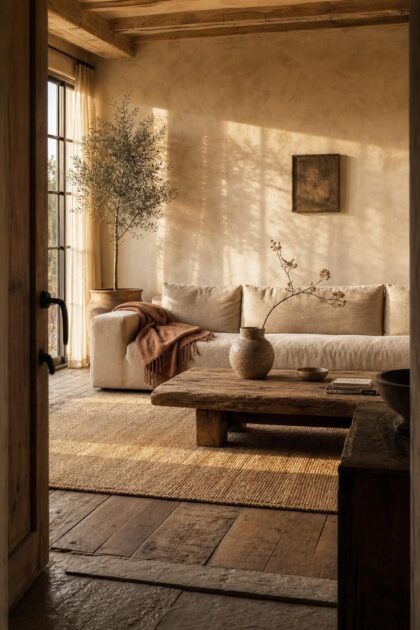
Modern wabi sabi rooms begin with one guiding rule: pick materials that look better as they age, not worse.
This Japanese aesthetic trades polished perfection for raw character, and the result is a space that feels calmer the longer you spend in it.
Each of the 13 ideas here focuses on a single material pairing or design moment you can recreate in your own home.
These are not full room makeovers but targeted choices, one corner or surface at a time, that shift the entire mood of a space toward something warmer and more honest.
Charcoal Shou Sugi Ban Accent Wall With Brass Shelf Pins
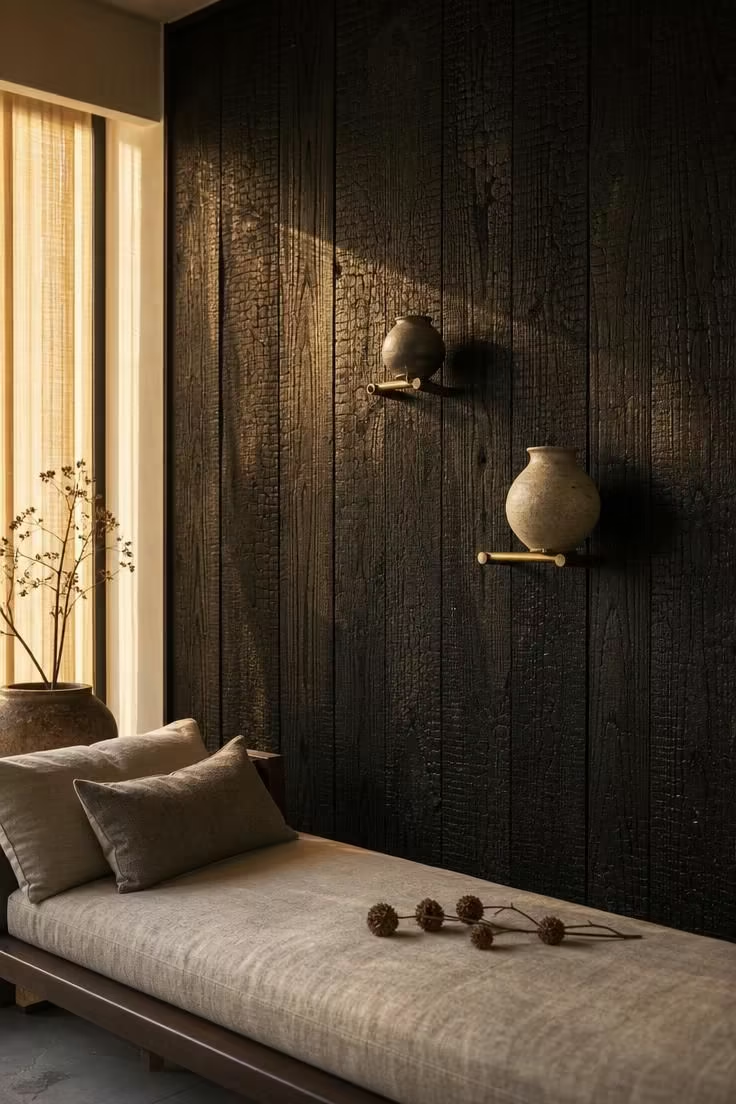
The first thing you notice is the texture, deep enough to run your fingers across and feel every ridge the fire left behind.
Shou sugi ban is a centuries-old Japanese wood-burning technique that chars the surface of timber planks to preserve them against rot and insects.
In a wabi sabi living room, that scorched surface becomes the focal point of an entire wall, replacing paint or wallpaper with something far more tactile.
The brass shelf pins add just enough metallic warmth to keep the dark wall from feeling heavy.
One or two hand-thrown vessels on those pins give the eye a resting place without cluttering the composition.
The beauty here is restraint: a single treated surface paired with a few honest objects, nothing more.
Style Blueprint:
- Shou sugi ban charcoal timber planks with visible crackle grain
- Brushed brass floating shelf pins at staggered heights
- Hand-thrown stoneware vessels in ash and cream glazes
- Low linen daybed in oatmeal or flax tones
- Dried seed pods or a single branch as a surface accent
A Tadelakt Plaster Fireplace Surround in Warm Putty
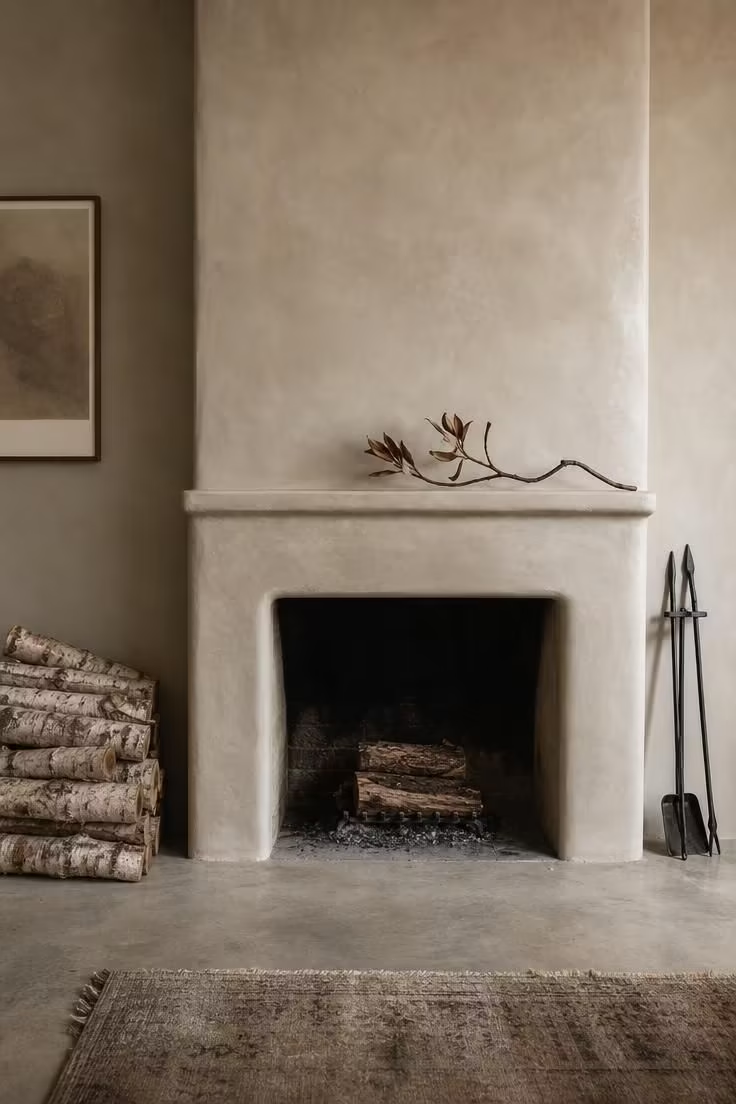
Tadelakt is a Moroccan lime plaster traditionally used in hammams, polished with river stones and sealed with olive oil soap to become waterproof.
Applied around a fireplace, it produces a surround that feels ancient and modern at the same time.
The surface holds soft trowel marks from the plasterer’s hand, giving each installation a fingerprint no factory wall panel can replicate.
That warm putty tone shifts slightly through the day as natural light moves across its polished face.
A stack of raw firewood beside the hearth reinforces the wabi sabi decor philosophy of leaving functional objects visible rather than hidden.
Iron fire tools and a single dried branch on the mantel complete the scene without competing for attention.
The whole composition asks the eye to slow down and appreciate surface, not ornament.
Style Blueprint:
- Tadelakt lime plaster surround in warm putty with hand-troweled finish
- Raw birch firewood stack on the floor beside the hearth
- Matte iron fire tools with simple forged handles
- Single dried magnolia branch on the mantel ledge
- Worn wool area rug in a muted neutral tone
Hand-Forged Iron Curtain Rod With Undyed Hemp Drapes
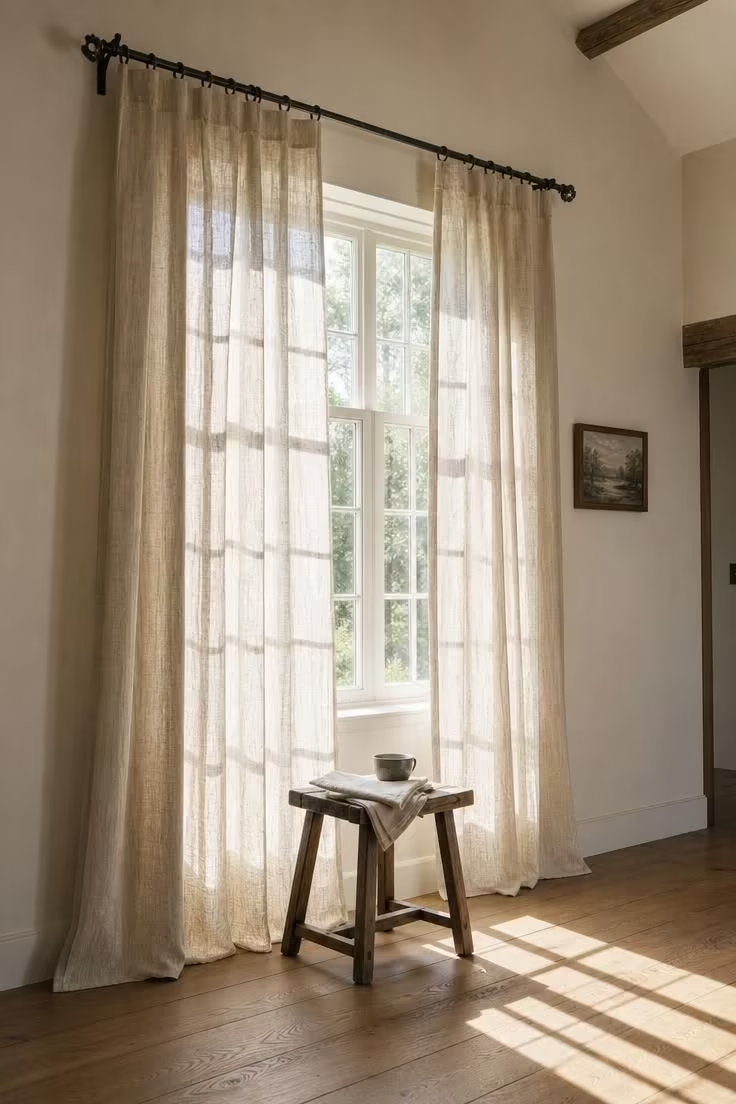
Most window treatments try to disappear, but this one announces itself as a piece of craft.
The iron rod carries visible hammer marks along its full length, a record of the blacksmith’s strokes that machine-made rods cannot match.
Hemp fabric hangs in loose, heavy folds with a slubby weave that filters light without blocking it.
As midday sun passes through the fibers, it throws soft parallel shadows across the floorboards, turning a window into a light installation.
The natural materials here, iron and hemp, are among the oldest building resources in human history and pair together with an almost ancestral logic.
Leaving the hemp undyed keeps the palette neutral and lets the organic textures speak for themselves.
A low stool beneath the window gives the arrangement a sense of everyday use rather than decoration.
This kind of wabi sabi interior design detail works in any room with a window tall enough to let the drapes pool slightly at the floor.
Style Blueprint:
- Hand-forged iron curtain rod with visible hammer texture
- Floor-length undyed hemp curtain panels with loose slub weave
- Bare wide-plank oak flooring
- Low wooden stool with folded linen cloth
- Small stoneware cup as a lifestyle accent
Cracked Raku Tea Bowls on a Blackened Steel Console
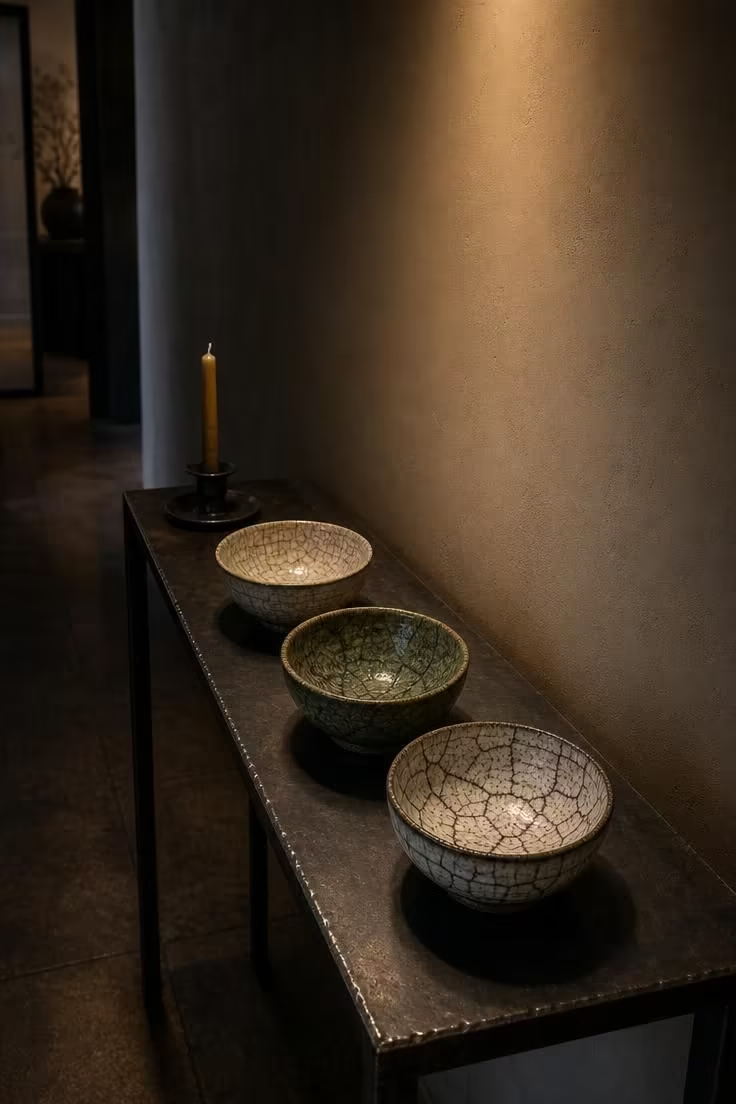
Raku firing is an ancient Japanese technique where potters pull red-hot vessels from the kiln and cool them rapidly, producing unpredictable crackle patterns no two bowls share.
Those surface fractures, far from being flaws, are the entire point of the form.
Placing three bowls on a blackened steel console turns a narrow hallway into a small gallery of imperfect design at its most deliberate.
The weld seams on the console legs echo the crackle lines in the glaze, tying the metal and ceramic together through shared rawness.
Low, focused light from above makes the glaze surfaces shimmer differently depending on where you stand.
This is one of the simplest modern wabi sabi ideas to execute: three objects, one surface, one light source.
Style Blueprint:
- Three raku-fired tea bowls with varied crackle glazes (pearl, copper oxide, ash white)
- Slim blackened steel console table with visible weld seams
- Single beeswax taper in a small iron candle holder
- Warm recessed ceiling spotlight as the sole light source
- Narrow hallway or entryway setting with minimal surrounding decor
Design Pro-Tip: When displaying handmade ceramics, odd numbers create visual tension that even numbers resolve too quickly. Three bowls on a shelf feel active and interesting; four bowls feel settled and finished. Lean into that slight imbalance, it mirrors the wabi sabi principle that completeness is less compelling than suggestion.
Split-Face Travertine Tile Behind a Freestanding Cypress Tub
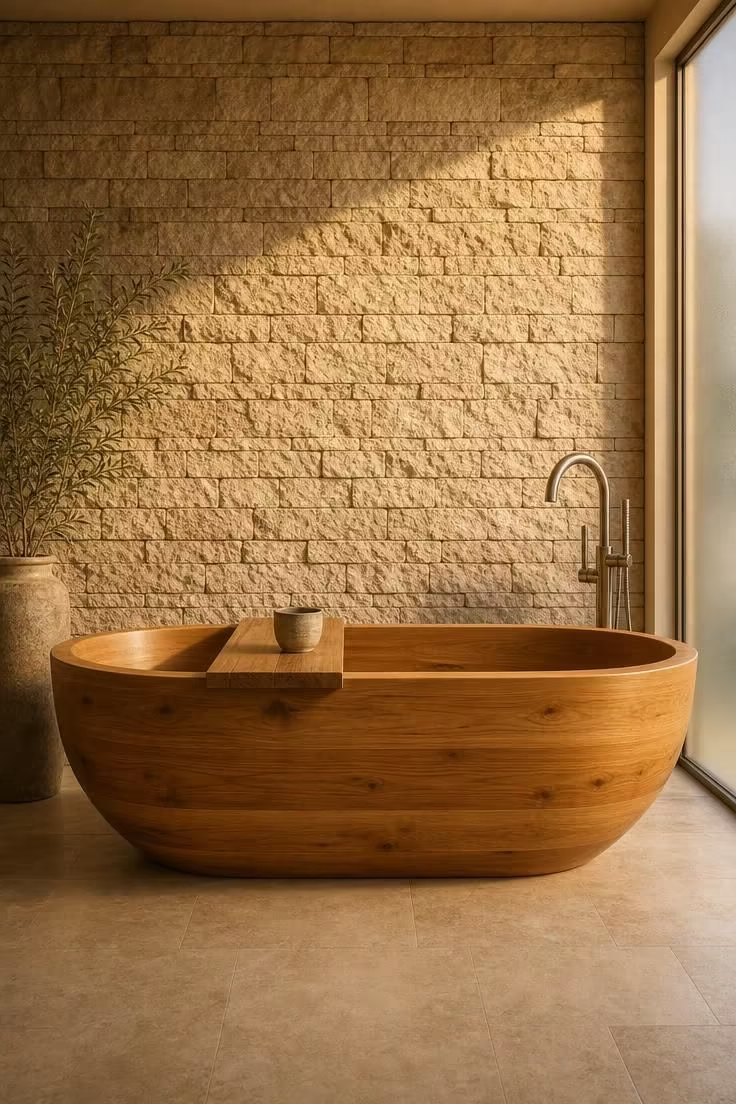
Split-face travertine is stone that has been mechanically fractured rather than polished, leaving the surface rough and deeply textured.
Stacked floor to ceiling behind a soaking tub, it turns an ordinary bathroom wall into something that feels carved from a canyon.
The cypress tub opposite that stone wall introduces a completely different kind of warmth: aromatic, smooth, and golden where the stone is cool and fractured.
Running your hand along the travertine and then gripping the tub rim gives you the full sensory range of natural materials within arm’s reach.
Late afternoon light deepens every crevice in the stone and turns the cypress grain into a warm amber.
A matte nickel filler keeps the hardware recessive so the material conversation between wood and stone stays uninterrupted.
The earth tone palette here, all honey, sand, and pewter, needs nothing added to feel complete.
A wooden bath tray with a single stoneware cup is the only accessory, and even that feels generous.
This bathroom pulls from the Japanese aesthetic tradition of soaking as ritual, not routine.
Style Blueprint:
- Split-face travertine tile accent wall in warm sand tones
- Freestanding oval cypress (hinoki-style) soaking tub
- Matte nickel floor-mounted tub filler
- Wooden bath tray with a single stoneware cup
- Large-format honed limestone floor tiles
Worn Leather Sling Chair Next to a Raw Concrete Side Table
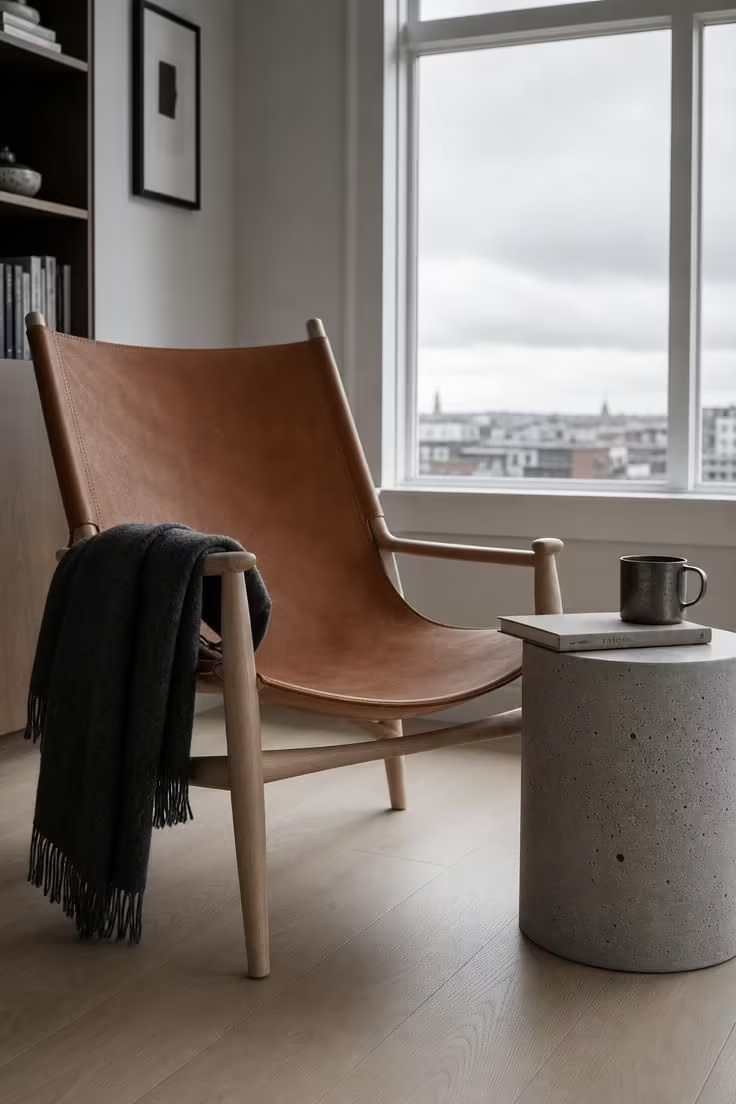
Vegetable-tanned leather starts stiff and pale, then softens and darkens over months of use until it carries a patina unique to its owner.
That aging process is the clearest expression of wabi sabi philosophy you can sit in.
Pairing it with a cast-concrete side table doubles down on the principle: the air bubbles trapped during the pour are permanent records of the moment the concrete set.
Neither material hides its history, and that honesty is what makes the corner feel grounded rather than decorated.
The cool light from a high cloud-layer day keeps both surfaces looking matte and tactile, with no harsh glare flattening the textures.
A linen-bound notebook and pewter mug on the concrete surface suggest this is a spot someone returns to daily.
Rustic minimalism works best when every object in the arrangement serves a purpose you can name.
Style Blueprint:
- Vegetable-tanned leather sling chair on ash dowel legs
- Cylindrical cast-concrete side table with visible air bubble marks
- Linen-bound notebook and pewter mug
- Charcoal wool throw draped over one chair arm
- Pale birch hardwood flooring
A Cedar Tokonoma Alcove With a Single Ikebana Stem
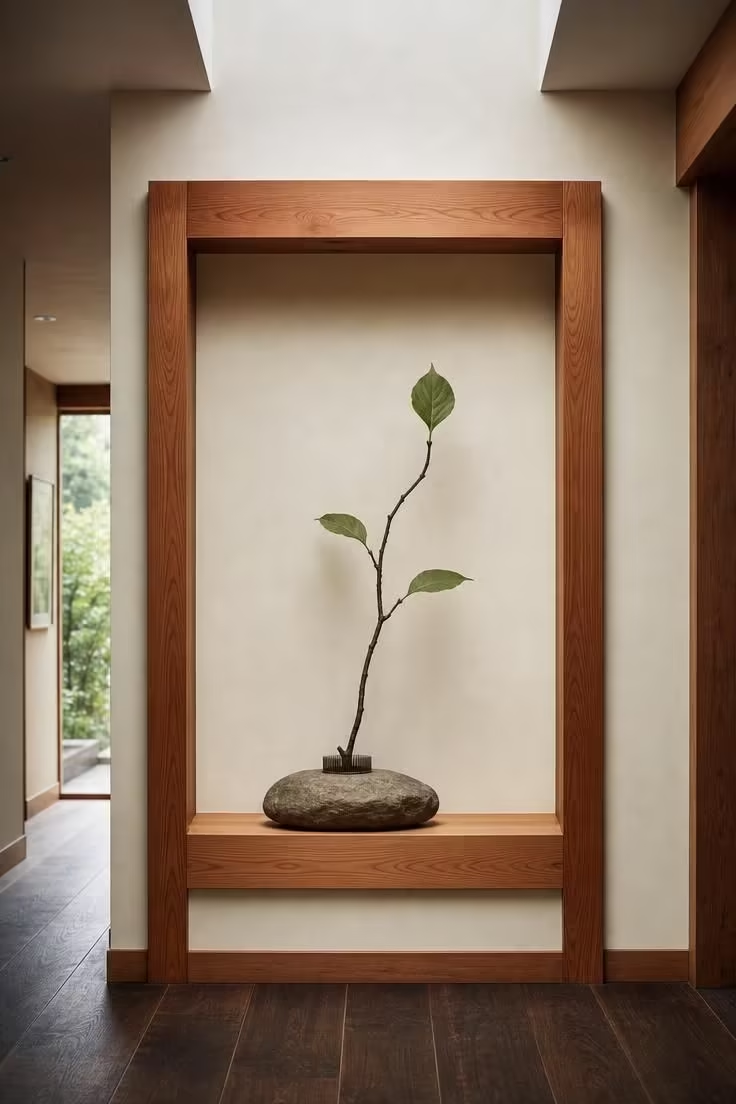
The tokonoma is a recessed alcove found in traditional Japanese rooms, reserved for displaying a scroll, a flower arrangement, or a single meaningful object.
Building one into a modern hallway is simpler than it sounds: a shallow niche framed in unpainted cedar, no deeper than the width of a dinner plate.
What makes it powerful is the emptiness around the arrangement, the deliberate decision to leave most of the alcove bare.
A single ikebana stem on a kenzan pin holder becomes the focal point of an entire corridor this way.
The unpainted cedar frame ages to a deeper amber over the years, marking time the way rings mark the inside of a tree.
Soft light from a skylight or a diffused ceiling fixture keeps the display gentle and shadow-free.
This is organic textures distilled to their simplest form: one branch, one stone, one frame.
The less you place inside, the more presence each element carries.
Style Blueprint:
- Shallow cedar-framed tokonoma alcove (approximately 60 cm deep)
- Kenzan pin holder on a rough river stone base
- Single sculptural branch with a few leaves (seasonal rotation)
- Lime plaster alcove wall in pale ivory
- Dark-stained wide-plank timber hallway floor
Pumice Stone Countertops Paired With Matte Black Faucets
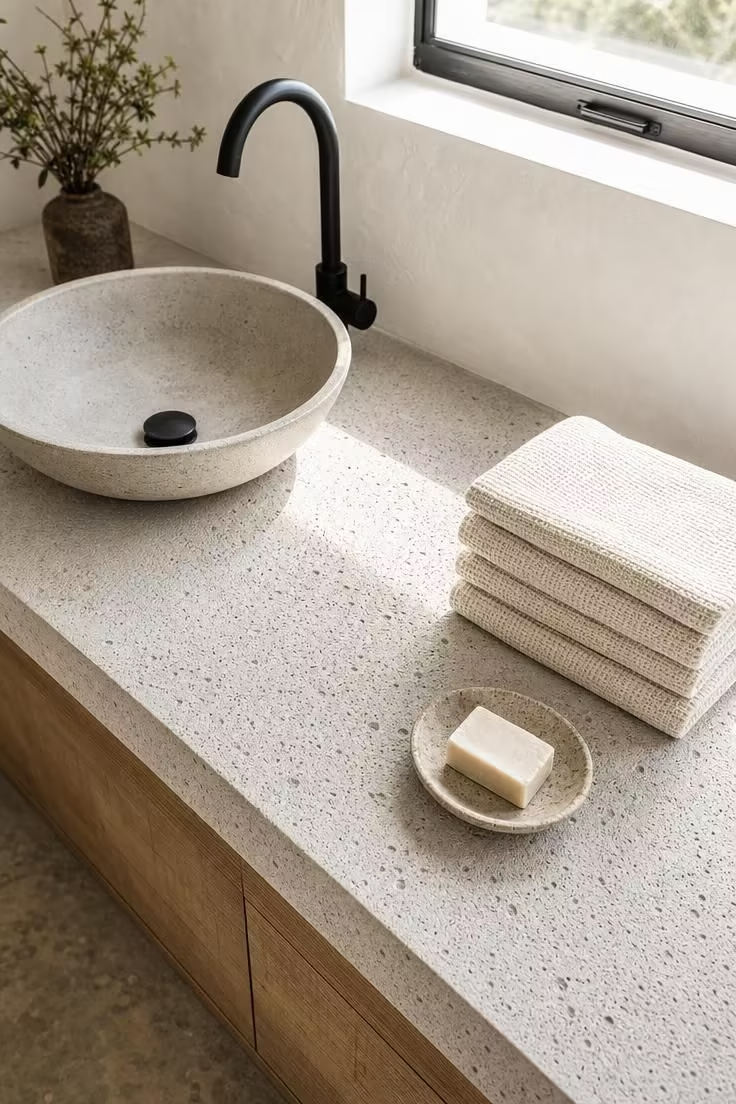
Pumice is volcanic stone riddled with air pockets, and when honed flat for a countertop, it looks like the surface of the moon brought indoors.
Every pore catches light differently, giving the surface a visual depth that solid quartz or marble cannot match.
Matte black fixtures against that pale, cratered stone create a contrast that feels deliberate without being dramatic.
The handmade ceramics of an unglazed soap dish sit naturally on a surface this raw, as if they were always meant to share the same counter.
Bright midday light is the best condition for pumice because it fills the tiny craters with shadow and makes the texture readable from across the room.
Style Blueprint:
- Honed pumice stone countertop in pale dove tones
- Matte black gooseneck faucet
- Shallow concrete vessel sink
- Handwoven undyed cotton towels
- Unglazed stoneware soap dish with natural bar soap
Design Pro-Tip: When mixing raw stone with matte metal fixtures, keep the finish temperatures consistent. Cool stones (limestone, pumice, marble) pair with black or pewter hardware. Warm stones (travertine, sandstone) pair with brass or bronze. Crossing temperatures, like brass on marble, can work but requires a third material (wood or textile) to mediate.
Mushroom-Dyed Linen Bed Canopy Over a Tatami Platform
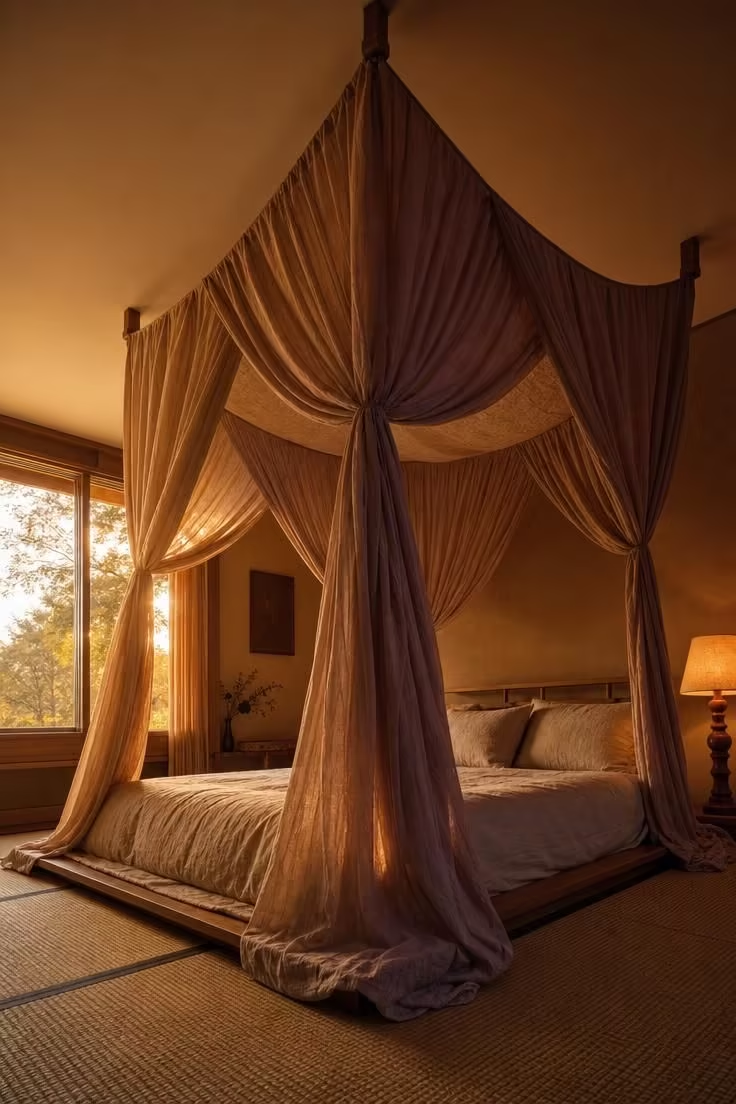
Mushroom dyeing is a slow-craft technique where foraged fungi produce pigments that range from deep amber to pale mauve depending on the species and mordant used.
A bed canopy dyed this way carries color that no synthetic process can duplicate: uneven, shifting, alive in the way handmade ceramics carry variation.
The tatami platform beneath keeps the bed low, close to the ground, which is a signature of wabi sabi interior design in sleeping spaces.
Buckwheat hull pillows replace standard poly-fill with a filling that molds to the shape of your head and rustles quietly when you move.
Late golden light passing through the dyed linen turns the entire bed into a warm amber cocoon.
A turned-wood bedside lamp keeps the material story consistent: everything in the frame grew from the earth at some point.
This bedroom is not about luxury in the conventional sense but about contact with materials that have their own histories.
Style Blueprint:
- Mushroom-dyed linen bed canopy in warm amber and soft mauve tones
- Low tatami platform bed frame
- Buckwheat hull pillows in undyed linen cases
- Turned-wood bedside lamp with linen shade
- Woven tatami mat flooring
Oxidized Copper Pendant Lamps Above a Rift-Sawn Oak Island
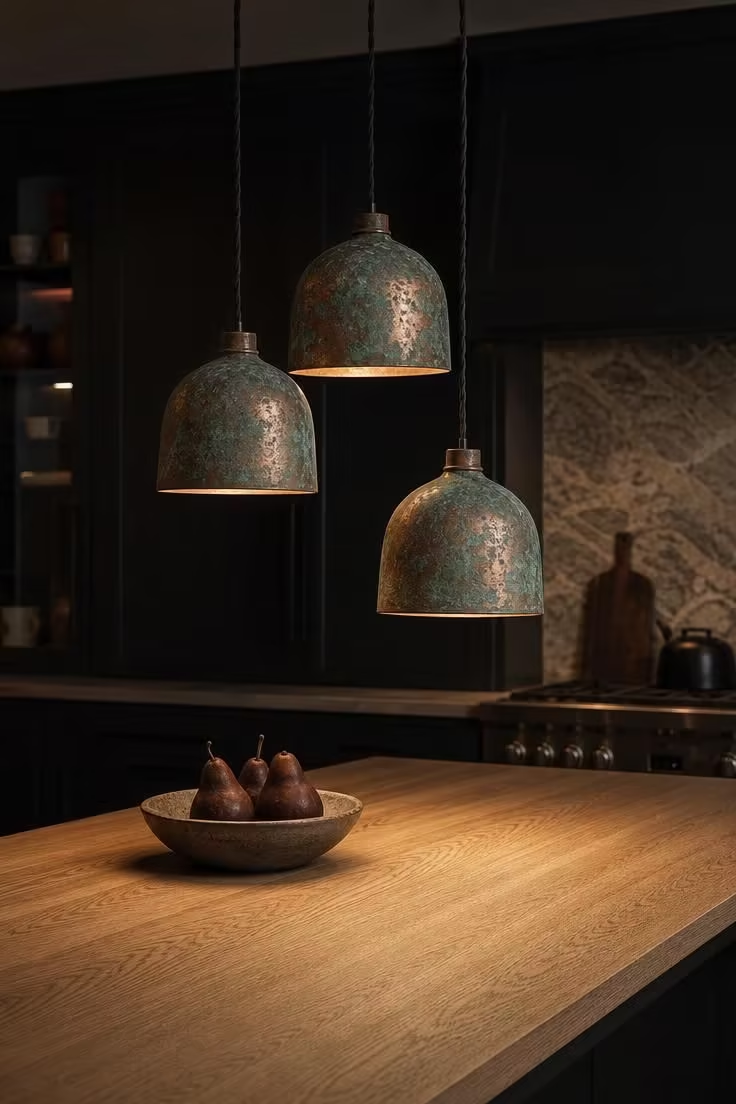
Copper left to oxidize develops a green verdigris crust that changes depending on humidity, air quality, and time.
Hanging three pendants at staggered heights over a kitchen island turns that chemical process into a lighting arrangement with more character than any showroom fixture.
Each dome will patina differently based on its position relative to cooking steam and airflow, so the set grows more individual with every passing month.
The rift-sawn white oak below those pendants has its own form of quiet character: tight, straight grain lines that come from cutting the log at a specific angle to the growth rings.
Together, the green-copper and pale-oak pairing creates a color tension that is warm at the surface and cool at the ceiling.
A stoneware fruit bowl is the only object on the island, giving the grain room to be seen from end to end.
Dark cabinetry behind the island recedes into shadow under the focused pendant light, framing the island as the room’s center of gravity.
This is wabi sabi decor applied to the most-used surface in the house: the kitchen counter.
The longer you cook under these lights, the more they become yours.
Style Blueprint:
- Three oxidized copper pendant domes at staggered heights
- Black cloth-covered pendant cords
- Rift-sawn white oak island top with matte oil finish
- Stoneware fruit bowl with seasonal fruit
- Dark charcoal cabinetry in the background
A Poured Clay Floor With Embedded Fossil Stone Fragments
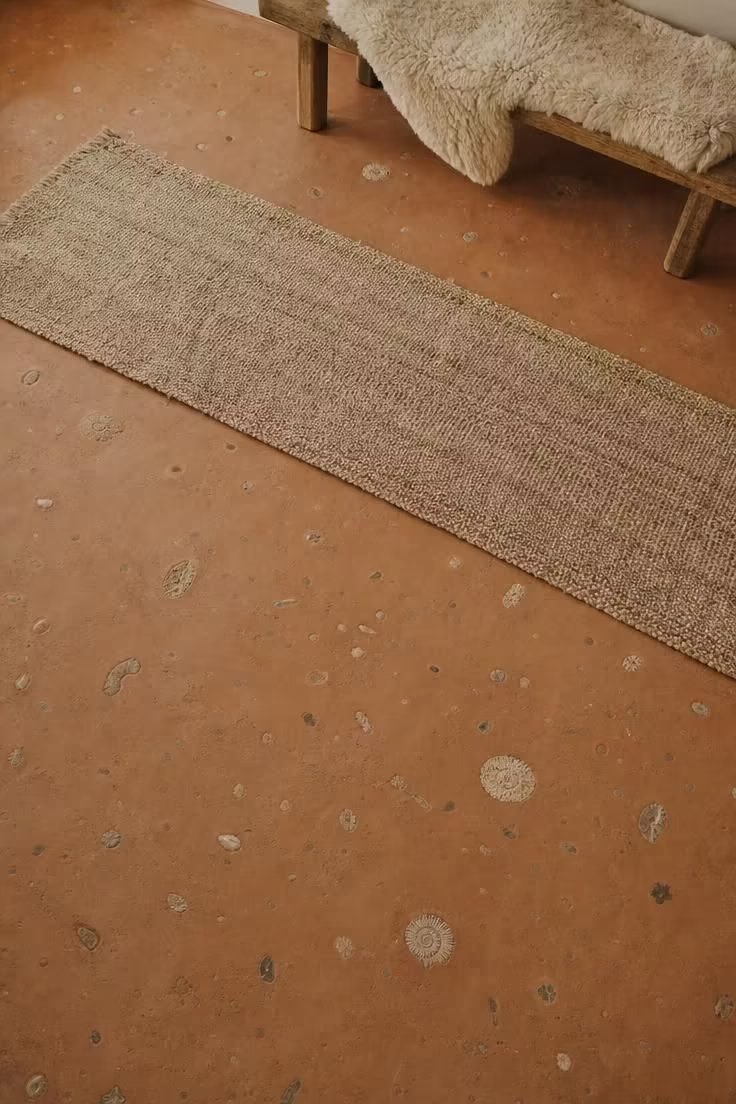
Poured clay floors are built the way adobe walls are: earth, water, and fiber mixed and troweled by hand over a prepared subfloor.
Pressing small fossil stone fragments into the wet surface before it cures gives the floor an archaeological quality, as if you uncovered something rather than installed it.
The surface is warm underfoot in a way tile and concrete never quite match, because earth has lower thermal conductivity than fired or poured mineral products.
Every footstep over time polishes the high points and wears the clay unevenly, creating a patina map of how the household moves through the room.
A jute runner protects the highest-traffic lane and adds a second layer of natural materials to the floor plane.
This is imperfect design at the scale of architecture: the floor itself becomes the statement.
Style Blueprint:
- Poured earthen clay floor in warm terra tones
- Embedded fossil stone fragments and pebble shards at irregular intervals
- Narrow jute runner along the primary walking path
- Low bench with draped sheepskin at the room edge
- High window providing even, diffused overhead light
Bark-Edge Walnut Floating Desk With a Hemp-Wrapped Stool
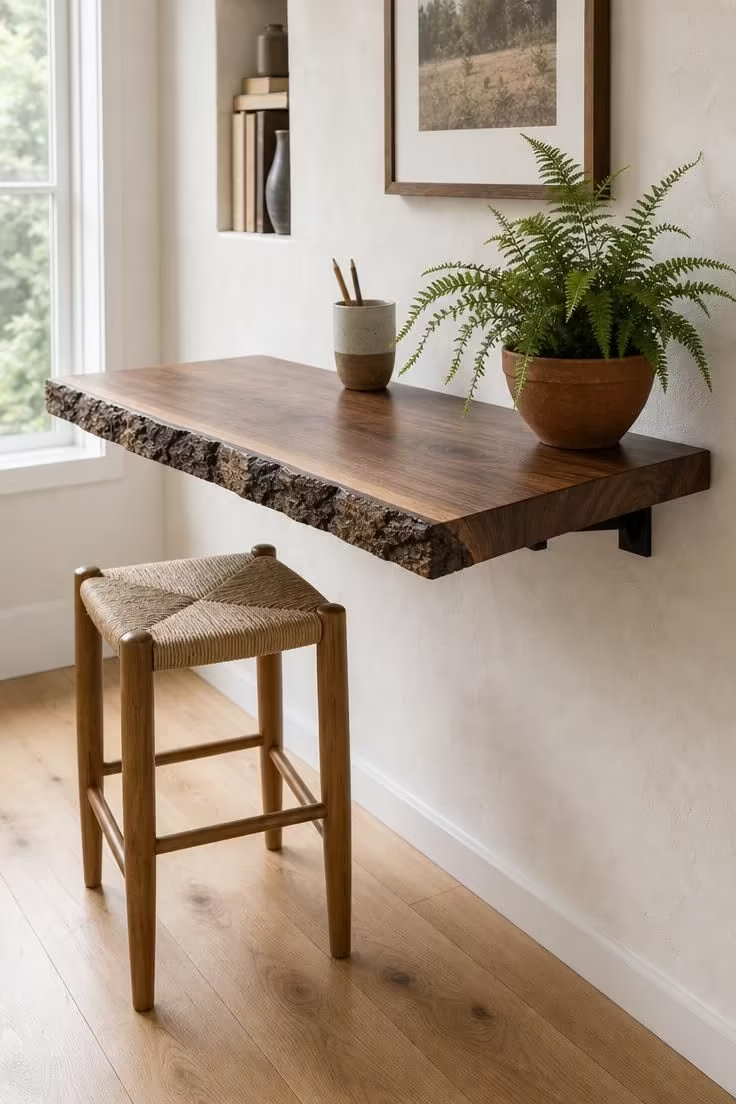
A bark-edge desk slab keeps the boundary between the tree and the workshop visible every time you sit down.
The sanded top surface is smooth enough to write on, but the front edge still carries the rough ridges of walnut bark, sometimes with a bit of lichen or moss stain.
Hidden steel brackets hold the slab flush against the wall, creating a floating effect that frees the floor beneath for a stool that tucks away completely.
Wrapping a stool seat in hemp cord adds grip and texture while connecting the seating to the same family of natural materials as the desk.
A stoneware pen cup and a small potted fern are the only objects on the surface, keeping the workspace open for actual work.
This setup works in a spare bedroom, a hallway niche, or a studio corner where space is limited but material quality matters.
Bright midday light is ideal here because it reveals every grain line and bark ridge without the drama of angled golden hour rays.
The result is a workspace built around contact with real surfaces rather than laminate and plastic.
Style Blueprint:
- Bark-edge walnut desk slab with hidden steel wall brackets
- Turned-wood stool with hemp cord-wrapped seat
- Stoneware pen cup with pencils
- Small potted fern in a terracotta vessel
- White lime plaster wall behind the desk
Design Pro-Tip: When mounting a live-edge or bark-edge slab to a wall, use French cleat brackets rather than L-brackets. A French cleat distributes weight evenly along the full length of the slab, prevents the forward tilt that heavy slabs develop over time, and stays invisible from the front. Secure the wall-side cleat into studs, not drywall anchors.
Sand-Blasted Glass Partition With Iron Framing in a Hallway
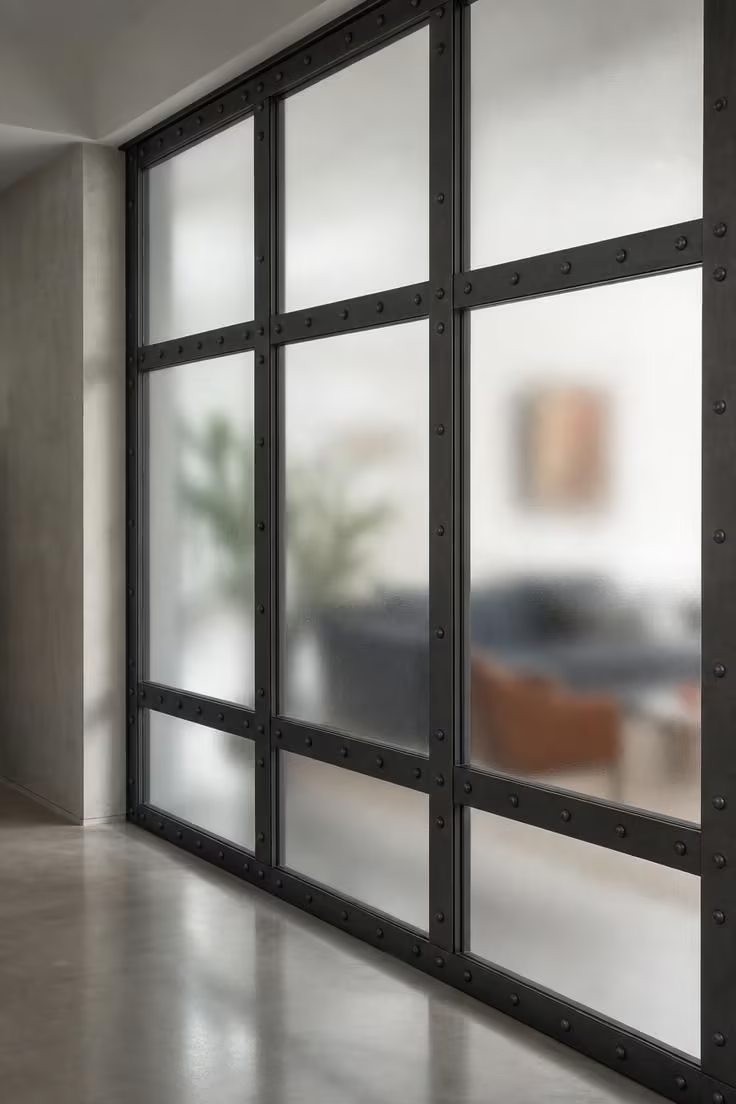
Sand-blasted glass strips a clear pane of its transparency and replaces it with a soft, milky translucence that lets light pass through without letting the eye travel.
Setting that glass in a simple iron frame with exposed rivet heads gives the partition an industrial directness that fits the wabi sabi preference for visible construction.
The effect is a room divider that connects two spaces through shared light without merging them into one.
From the hallway side, the living room beyond becomes an impressionist blur of muted color and shape, inviting you forward without revealing everything at once.
The iron frame ages on its own schedule, developing a faint surface variation over time as fingerprints and humidity leave their mark.
Polished concrete underfoot completes the material trio of glass, iron, and stone, all of them materials that show use rather than hiding it.
This partition works anywhere you want separation without walls: between a hallway and a living area, a bedroom and a study, or a kitchen and a dining space.
Style Blueprint:
- Sand-blasted (frosted) glass partition panel
- Riveted iron frame with exposed bolt heads and brushed matte finish
- Polished concrete flooring on the hallway side
- Diffused light filtering through from the adjacent room
- Minimal hallway decor to let the partition serve as the focal element
Conclusion
Every idea here circles back to the same principle: choose materials that carry evidence of how they were made and how they have been used.
A scorched timber wall, a cracked tea bowl, a bark-edge desk slab, each one tells you something about fire, kiln heat, or the shape of a living tree.
Modern wabi sabi is not a decorating trend with a shelf life but a set of preferences that deepen the longer you commit to them.
Start with one surface or one object, let it age alongside you, and notice how the room around it starts to feel more like yours.
The spaces that hold your attention longest are rarely the most polished.
They are the ones where every material has a story you can see and touch.