This post may contain affiliate links. If you make a purchase through these links, we may earn a commission at no additional cost to you.
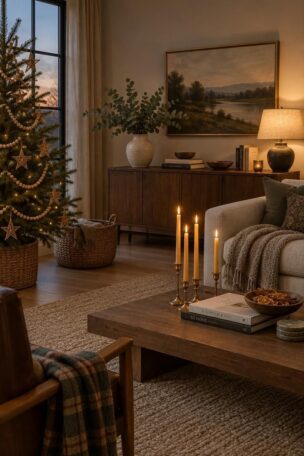
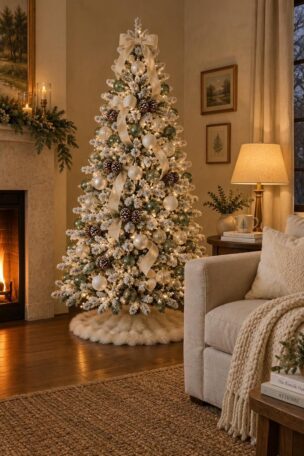
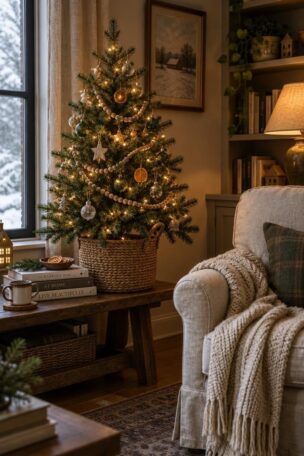
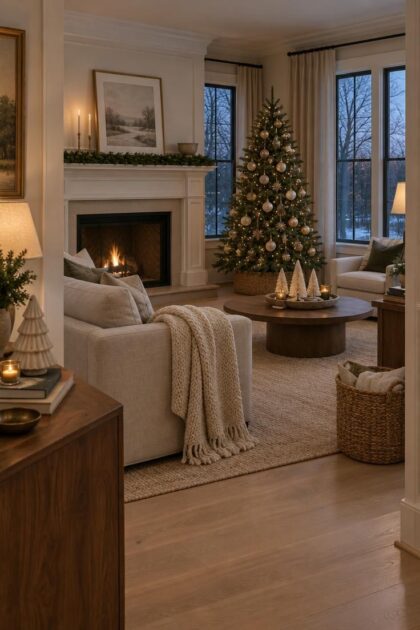
Modern Christmas decor begins with restraint: a narrow palette, a few honest materials, and room for surfaces to stay mostly empty.
In a private home, that often means one considered tree, a mantel with breathing room, and small arrangements that earn their place.
Texture carries the season instead of color density.
The ideas below move through trees, mantels, entryways, and tabletops, with attention to what each composition looks like, what it is made of, and how it holds up through December.
Tonal Evergreen Tree With Glass Icicles And Kraft Paper Cones
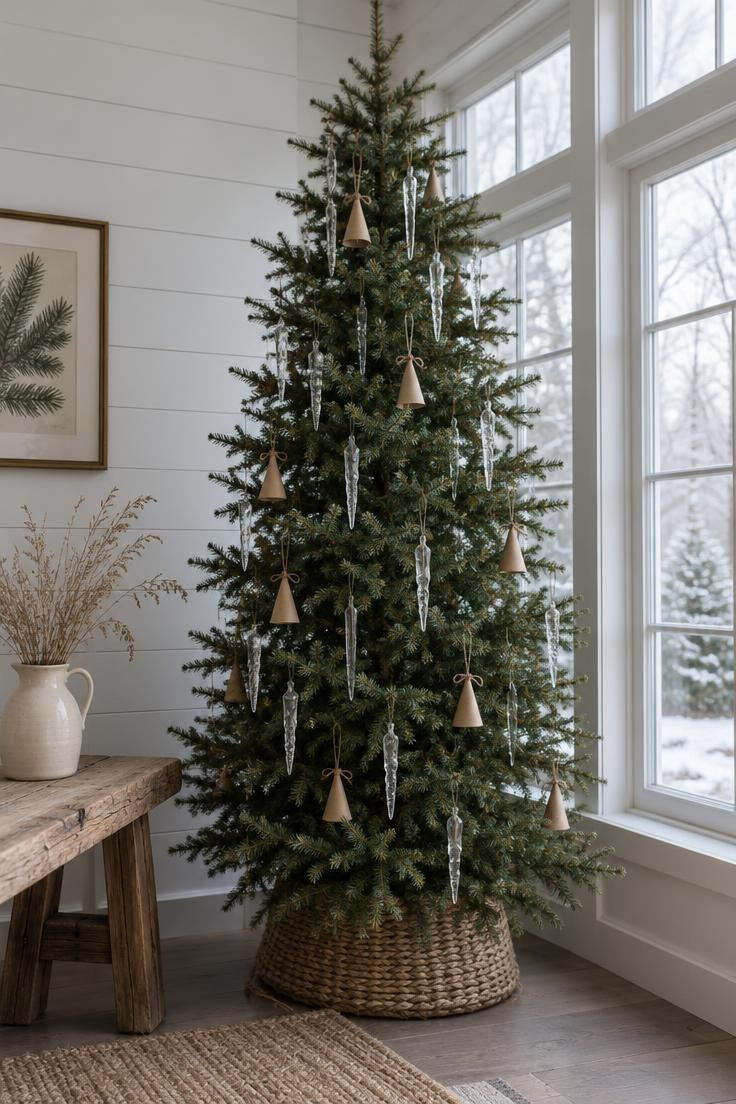
A single material story can give the tree more presence than a crowded mix.
Clear glass icicles bring subtle reflection and small flashes of light, while kraft paper cones add matte warmth that keeps the glass from feeling cold or formal.
The two finishes answer each other without competing against the green needles, and the jute twine loops make each piece feel hand-finished.
Placement changes the whole effect of a restrained tree.
Tucked into a sunroom corner with natural light on one side, the glass ornaments read differently at different times of day, and the kraft cones stay legible even in flat light.
A low bench nearby can hold one simple vessel with dried stems, which extends the winter botanical mood without adding another holiday-specific object.
Keeping the ornament set limited makes storage and handling easier from year to year.
Glass icicles need padded wrapping, but the kraft cones flatten enough to tuck into a small box, so the entire scheme fits into a compact storage bin without the usual tangle of layered decorations.
The jute twine can stay attached to each cone, which speeds up the next setup.
Style Blueprint:
- A slim evergreen tree with open, visible branch structure
- Clear glass icicle ornaments in varied lengths
- Small kraft paper cones hung from short jute twine loops
- One dried botanical accent on a nearby wood bench
Framed Pressed Botanicals as a Mantel Frieze
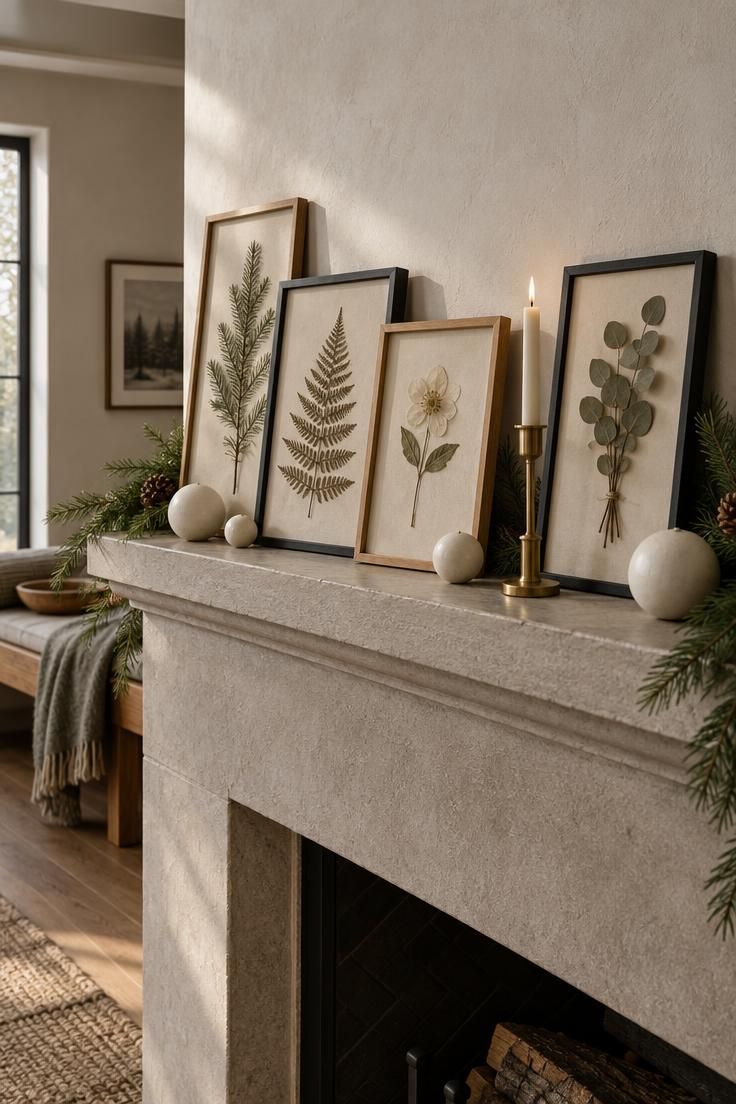
Framed pressed botanicals turn foraged greenery into a quiet wall frieze that changes the mantel without competing with stockings, garlands, or a tree nearby.
A row of mismatched frames feels collected rather than uniform, especially when the paper tones and frame woods stay close in value.
The practical appeal is scale and flexibility.
Small frames are easy to rearrange as the mantel fills with cards or other holiday objects, and the flat profile keeps the display from crowding a narrow ledge.
Mixed botanical shapes matter more than perfect specimens, since an irregular fern next to a simple spruce sprig creates the rhythm.
Leaning the frames against the wall, with a few small objects in front, softens the gallery effect and makes the arrangement feel lived in.
Keeping the botanicals pressed under glass protects delicate stems and petals from heat rising from a working mantel below.
Style Blueprint:
- Small rectangular frames in natural wood and matte black
- Pressed spruce, eucalyptus, fern, and hellebore on cream paper
- A loose overlapping line leaning against the mantel wall
- Matte white ceramic spheres and a narrow brass candle holder
- Soft side lighting that reveals paper texture without high glare
Sculptural Tabletop Tree In Stoneware
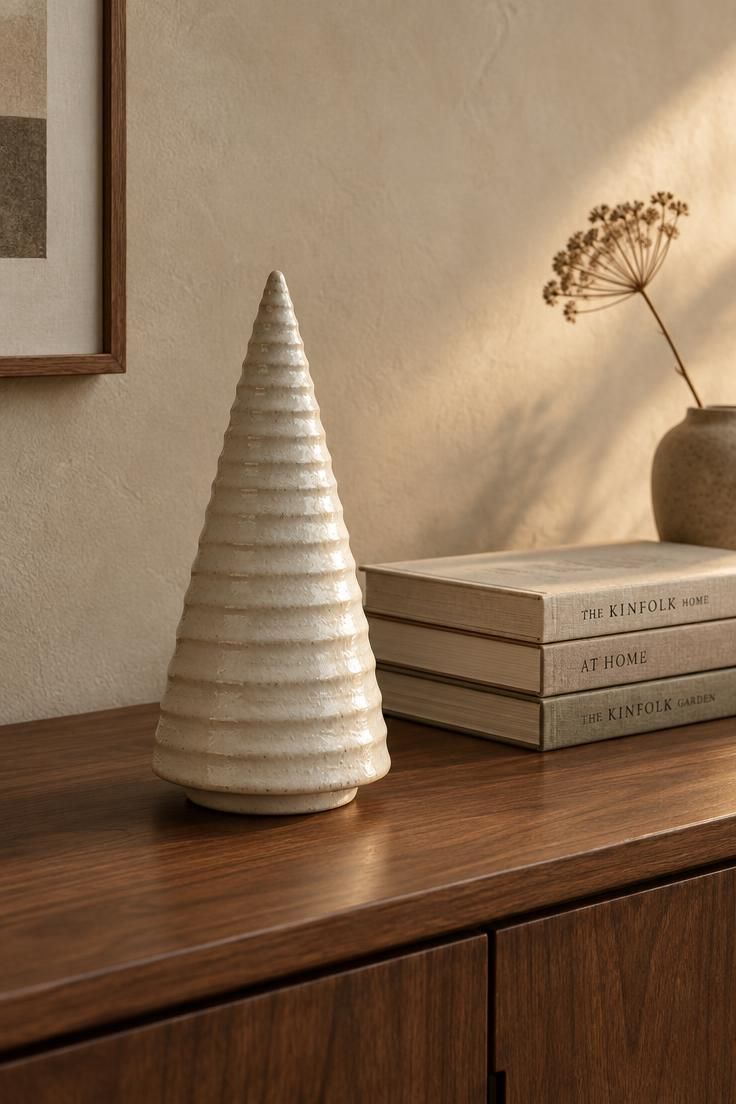
A handmade ceramic tree earns its place without lights or added decoration.
The silhouette reads clearly against a plain wall, and the uneven glaze supplies the detail that ornaments would otherwise provide.
One or two pieces in different heights create a collected rhythm on a console or sideboard, and this pairs well with modern christmas decor that favors objects over displays.
The material has a small footprint and stores easily, which suits a household that wants a holiday reference without a full tree or a crowded surface.
Dusting is the main upkeep, since textured stoneware holds dust in its recesses.
On a surface used daily, keep the base free of small loose items so the tree stays the focal point rather than an obstacle.
For neutral Christmas tree ornaments, pair one ceramic tree with a short stack of books in a matching neutral cover to anchor the vignette on a long console.
Heights should step gently: a taller tree near a lamp and a shorter one near the books keeps the surface from feeling flat.
Style Blueprint:
- A stoneware tree in white or speckled clay with a matte glaze
- A warm wood console or sideboard as the base
- Two or three neutral hardcover books for height
- One small vessel with a dried stem for organic contrast
Paper Honeycomb Tree Cluster On A Sideboard
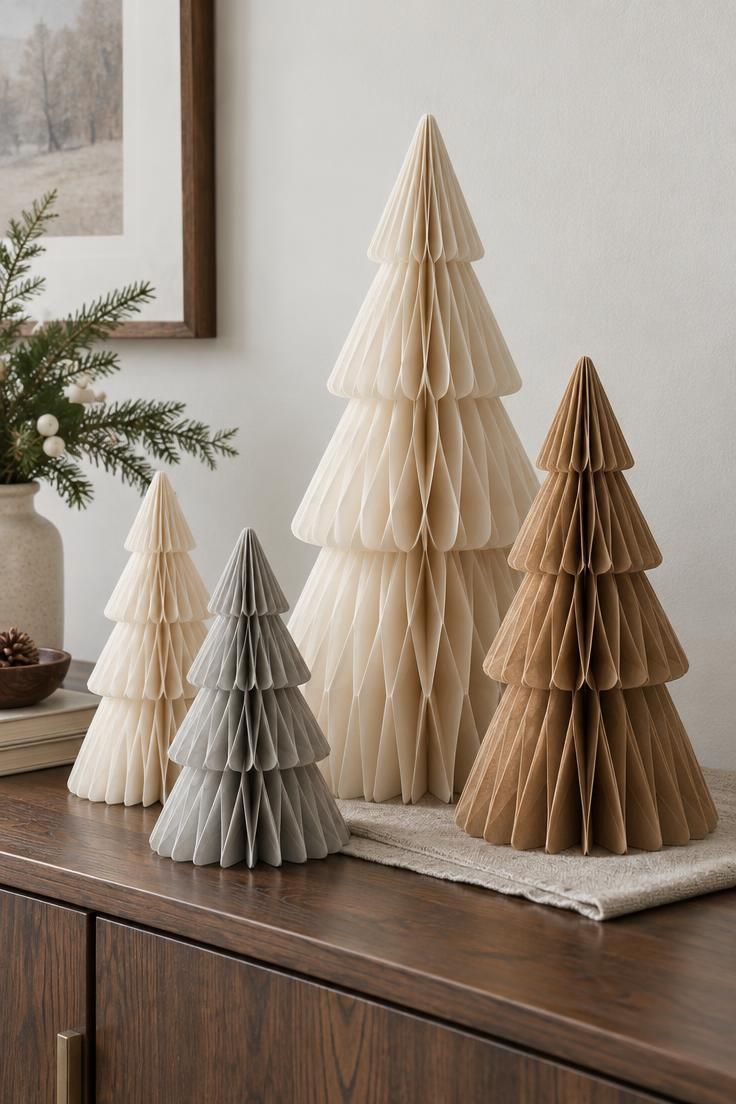
Honeycomb paper gives a crisp, repeatable shape that feels current without novelty.
A tight cluster of three or four trees reads as one display rather than scattered objects, which is the difference between sculptural tabletop Christmas trees and a collection of small trinkets.
Choosing two heights and repeating one shape holds the group together.
The material is light, so these pieces move easily from room to room, and they store flat between seasons.
That same lightness makes them crushable near doors, high-traffic edges, or the reach of pets and small children.
A shelf or the back of a low sideboard protects them better than a coffee table edge.
Keep the backdrop simple so the paper texture stands out, and group the trees close enough that the shadows they cast between one another become part of the composition.
Repeating one kraft tone inside the cream group ties the mix together.
Style Blueprint:
- Three or four honeycomb-paper trees in cream, pale gray, and kraft
- Two heights only, with one shape repeated
- A low sideboard or shelf away from walkways
- A folded linen square or runner for a soft base layer
Bottle-Brush Tree Group In A Tray
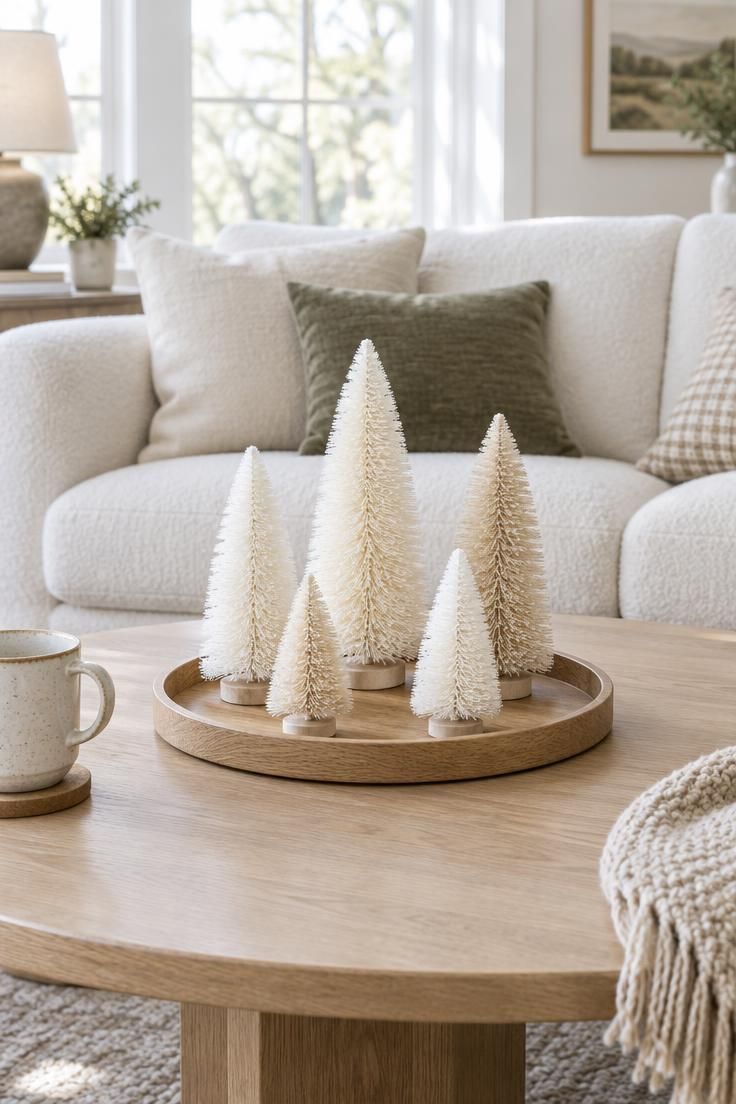
Bottle-brush trees bring a fuzzy texture that warms a cool modern palette, and a tray turns the group into one object instead of five separate trinkets.
Varying the heights and leaving open space between each tree keeps the arrangement from looking like a solid block of white on the table.
Dust shows up on bristle texture more readily than on glass or ceramic, so this display works best somewhere easy to wipe down or out of the sightline from the main seating.
In a smaller room, a single contained tray uses far less visual room than a full mantel arrangement and can be lifted away when the table is needed.
Choose a tray only slightly larger than the tree group, not a full serving tray, so the proportions feel intentional.
A tray in a natural material, such as oak or woven rattan, keeps the palette from tipping toward pure white.
Style Blueprint:
- Five or so bottle-brush trees in white and cream
- A shallow round tray in oak or rattan
- Varied heights with clear gaps between trees
- A neutral table beneath, kept otherwise bare
Design Pro-Tip: Compare the display against the wall color before adding a second accent hue, and let the tree or tray fill the frame loosely rather than tightly.
Bare Branch Floor Vase With Linen Ties
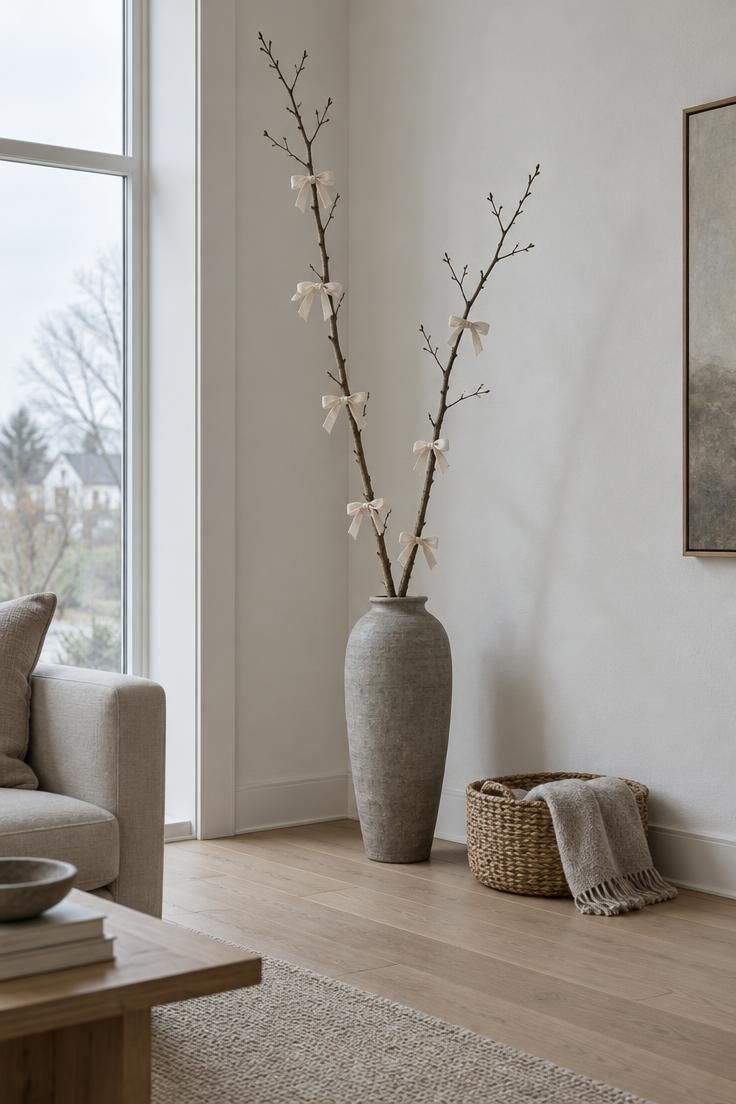
A vertical arrangement of bare branches brings height into a room without a tree.
Small linen bows at the widest points mark the piece as seasonal without introducing strong color or shine, which is the essence of minimalist holiday styling.
The pale fabric softens the hard line of the branches.
Set near a wall or in a corner, the sparse arrangement gains presence it would lack freestanding.
Branches shed small twigs and dust over time, so a hard floor or a low tray catches the debris, and the bows may need re-tying once the branches settle.
Cut one branch slightly shorter than the other so the overall shape feels organic rather than bundled.
Replacing the linen ties with a different fabric next year shifts the look without replacing the branches or vase, and the whole arrangement stores in a small space.
Style Blueprint:
- A tall floor vase in stoneware or concrete
- Two or three bare branches of unequal length
- Small linen bows in cream or natural
- A low tray or hard floor beneath for dropped twigs
Asymmetric Greenery Wreath On An Interior Door
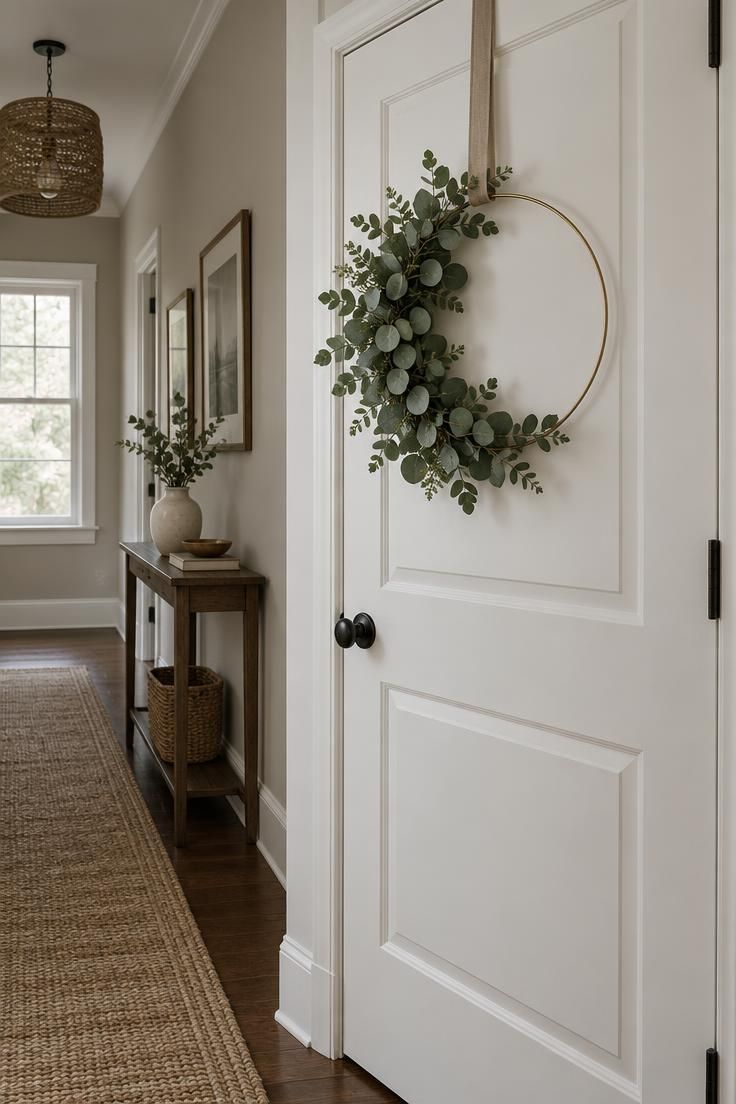
An asymmetric greenery wreath with an off-center mass of leaves and a bare section of wire or grapevine reads as a distinctly modern alternative to a dense, even ring.
Sticking to a single type of greenery keeps the palette limited, and the exposed structure makes the imbalance look chosen rather than accidental.
Real or faux greenery will drop small leaves or gather dust near the door.
A coat hook or hanging ribbon that allows occasional removal makes cleaning and reshaping easier.
In a narrow hallway, a smaller hoop with more negative space prevents the wreath from dominating the passage, and hanging the fullest part toward the door hinge or outward toward the room makes the asymmetry feel intentional.
The linen ribbon can match the bows or ties used elsewhere in the home, which quietly links the entry to the rest of the palette.
Style Blueprint:
- A hoop or grapevine base with exposed wire
- One greenery type, such as eucalyptus
- A simple linen ribbon for hanging
- A doorway or hall wall with open space around it
Neutral Mantel With Leaning Print And Narrow Greenery
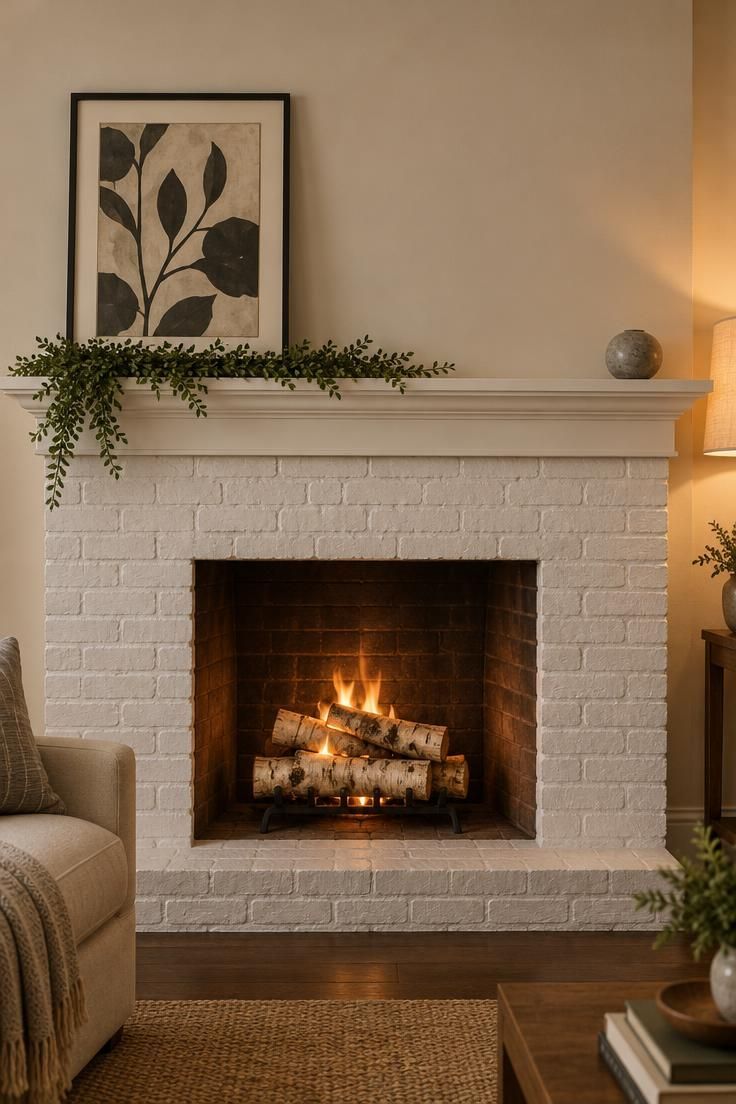
Two anchor points and open space between them define this mantel.
The flat framed print contrasts with the fine, textured line of boxwood, and a single ceramic object closes the composition at the opposite end.
This arrangement is deliberately less busy than a filled garland with a row of candlesticks, and the gaps do as much work as the objects.
The leaning print needs a secure spot where it will not slide, but the visual idea rests on the contrast between artwork and greenery rather than on anything structural.
Choose greenery with small leaves, such as boxwood, so the line reads as fine texture instead of a bulky garland.
On a working fireplace, place the greenery away from any heat source and keep the mantel surface cool, which is a placement choice rather than a construction one.
When the fire is lit, the low line of greenery frames the firebox rather than competing with it.
The print can lean year-round, with the greenery added for the season, which keeps the mantel from feeling like a display that appears and disappears.
Style Blueprint:
- A large framed print with a thin black frame
- A narrow line of boxwood or cedar greenery
- One small ceramic or stone object
- A clear gap between each anchor point
Single-Color Ornament Set In A Footed Glass Bowl
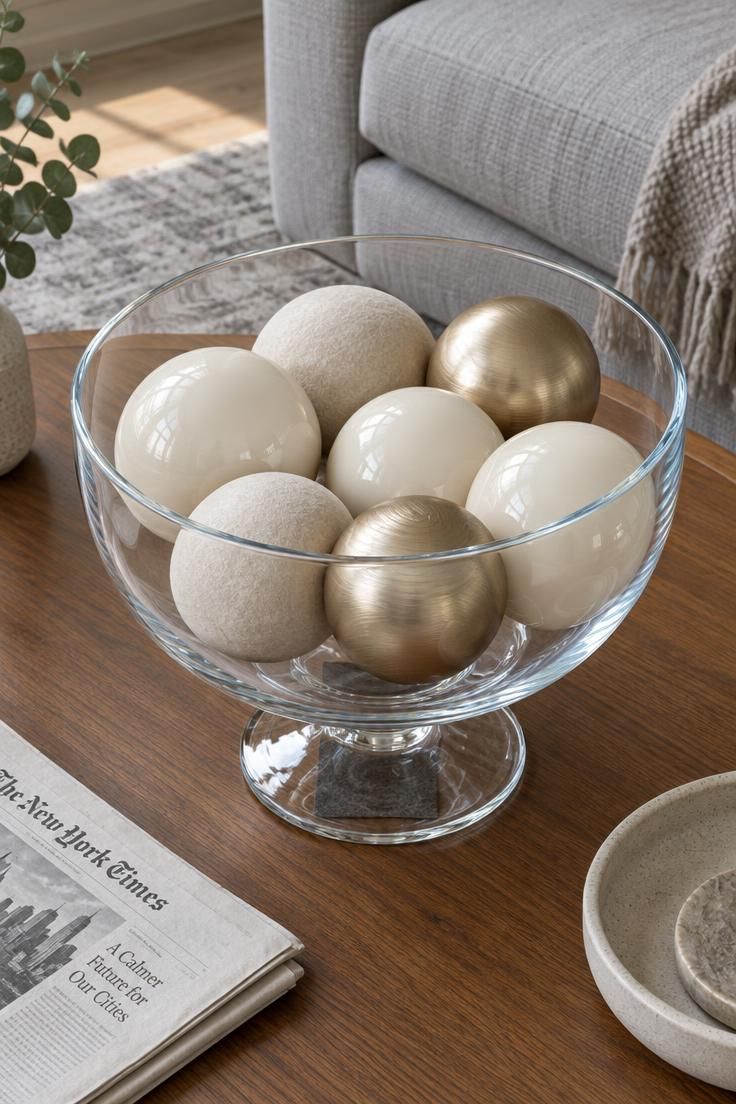
The bowl itself becomes the display, and repeating one hue makes the finish contrast more noticeable.
Matte, gloss, and brushed metallic versions of the same cream ornament read as a considered set rather than a random collection.
A footed bowl lifts the arrangement off the table and gives it a finished silhouette.
Ornaments can chip when they roll against each other during movement, so a smaller bowl that keeps the pieces settled works better than a wide shallow dish.
A small square of soft felt in the bottom quiets the rattle and protects the finish.
For an entry chest or coffee table, this is a low-effort way to show a collection without hanging anything or using floor space.
The bowl can shift from table to table through the season, and it packs away in minutes when the surface is needed.
Style Blueprint:
- A footed glass or smoked-glass bowl
- One ornament color in three finishes
- A small felt square at the bottom
- A surface kept mostly bare around the bowl
Chunky Knit Christmas Stockings On A Leaning Ladder
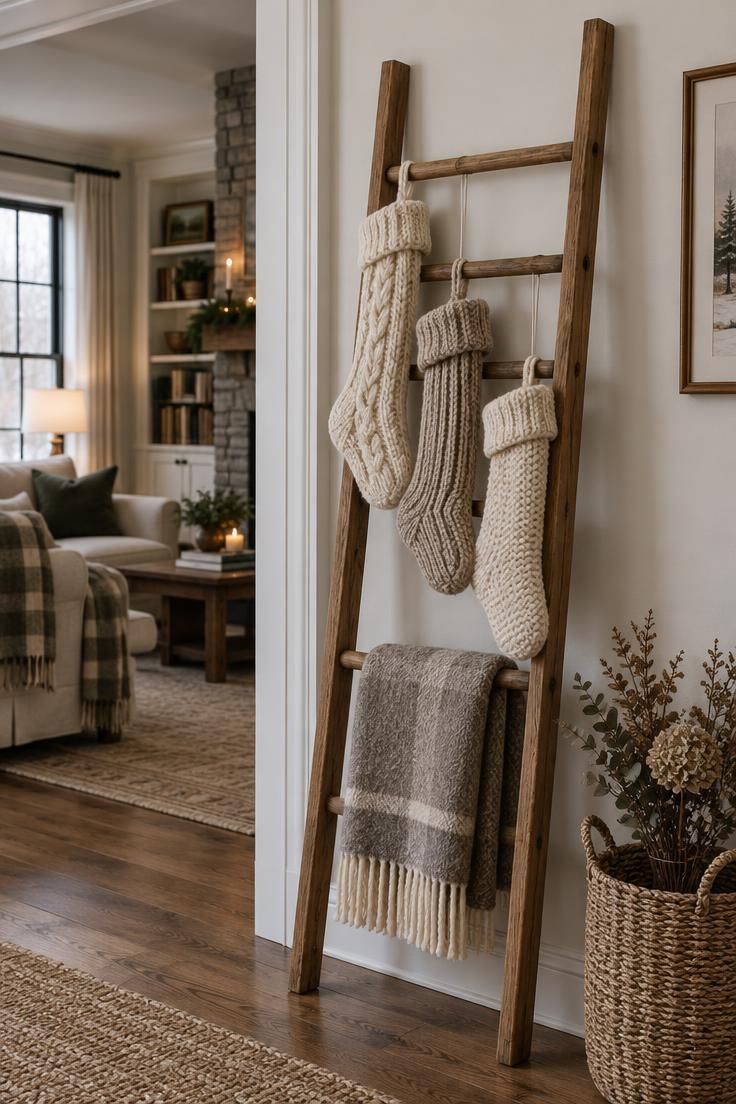
Thick knit texture supplies the seasonal signal without bright color or embroidery.
Hanging two or three chunky knit Christmas stockings from a wooden blanket ladder gives households without a mantel a vertical place to hang them, and the ladder itself adds a warm wood tone that suits the palette.
The ladder should sit against a stable wall and stay out of walkways, but the visual idea is the rhythm of the knits against the wood rails.
Slightly different rib or cable patterns make the texture read clearly from across the room, and hanging each stocking a little lower than the next forms a soft diagonal instead of a straight row.
A folded throw on a lower rung ties the ladder to the rest of the room, and a basket at the base keeps the arrangement grounded rather than floating on the wall.
Style Blueprint:
- A wooden blanket ladder in a warm finish
- Two or three chunky knit stockings in cream or oatmeal
- Varied rib and cable patterns
- A folded throw and base basket to anchor it
Design Pro-Tip: Stand back from the finished arrangement and check that the largest ornaments or objects land in the spots that read as most bare.
Layered Gift Wrap As An Under-Tree Display
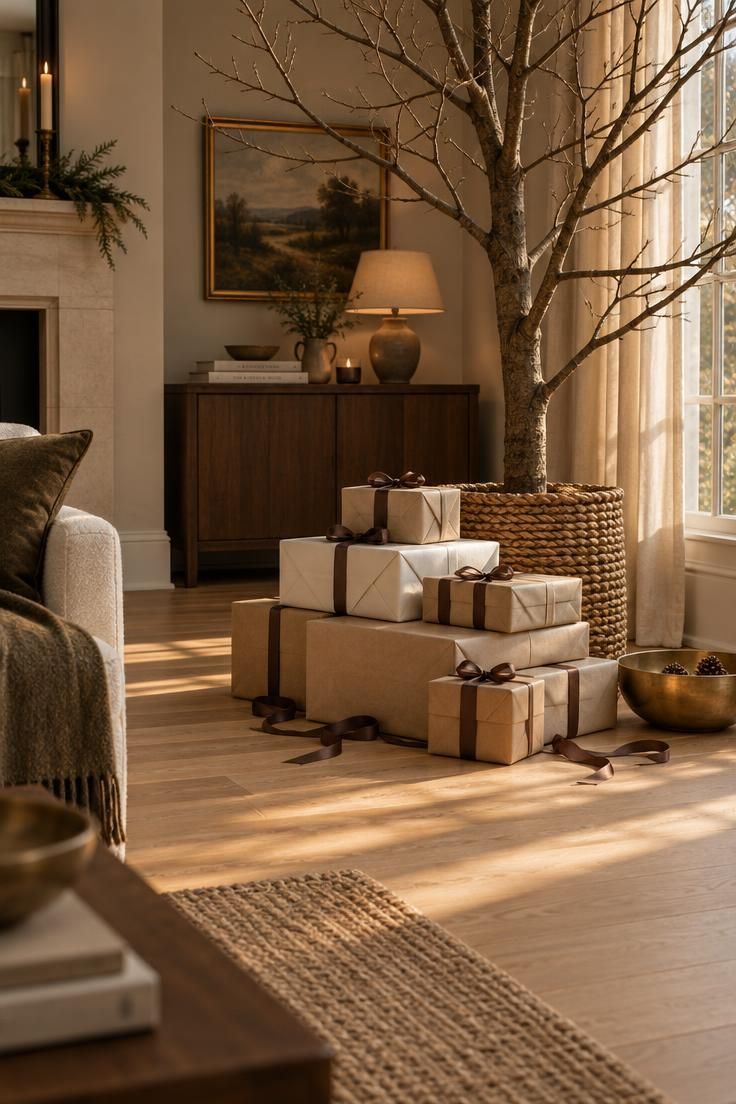
Wrapped boxes act as both decoration and a stand-in for gifts under the tree.
A limited palette of solid paper and narrow ribbon keeps the pile from competing with the tree, and larger boxes at the bottom give the arrangement a stable base.
Mixing cream, kraft, and warm beige papers produces subtle variation without a busy pattern.
Boxes will crush or bend with handling, so this works better as a stationary display than as a staging area for real packages.
For a smaller room, one or two larger boxes with darker ribbon can read as intentional without taking up much floor area.
Wrapping the box lids separately from the bases lets the containers be reused after the season.
Keeping ribbon widths consistent and colors tight holds the pile together visually, even when the boxes are different sizes.
Style Blueprint:
- Solid papers in cream, kraft, and warm beige
- Narrow ribbon in one dark neutral
- Larger boxes at the bottom of the pile
- A woven collar or low basket at the tree base
Conclusion
The through-line for a warm modern holiday palette is letting a few strong shapes, textures, and materials carry the season instead of adding more objects.
A tonal tree, an asymmetric wreath, or a paper cluster can each hold a room's holiday character while the space still belongs to the household the rest of the year.
Choosing pieces that store flat or return year after year, and editing each arrangement until the gaps feel as deliberate as the objects, keeps the result calm rather than sparse.
Material contrast within a narrow palette reads as intentional in any size of home.