This post may contain affiliate links. If you make a booking or purchase through these links, we may earn a commission at no additional cost to you.
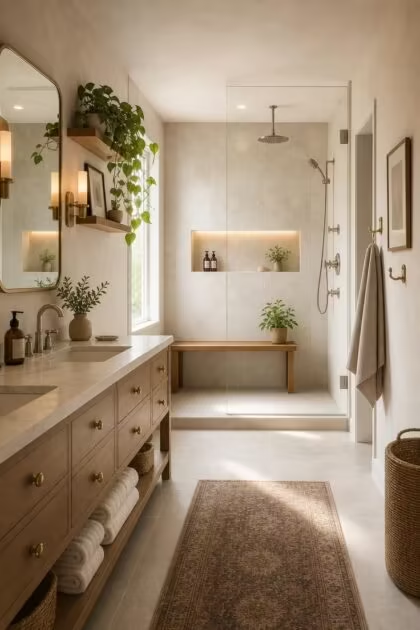
A full gut renovation is not the only path to a bathroom that feels like a retreat.
The difference between a master bath that functions well and one that actually calms you down often comes from sensory details, not square footage.
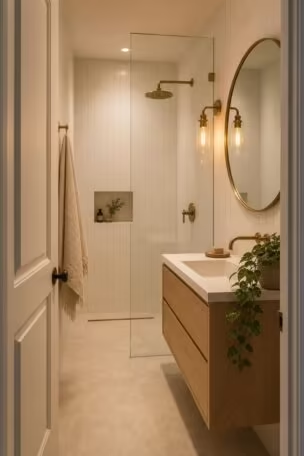
Most master bathrooms with walk in showers already have the bones for something much better, and the 9 updates here require no demolition permit, no plumber on speed dial, and no weekend lost to tile dust.
Each one targets a specific sense, and layered together, they shift the entire mood of the room before your coffee is ready.
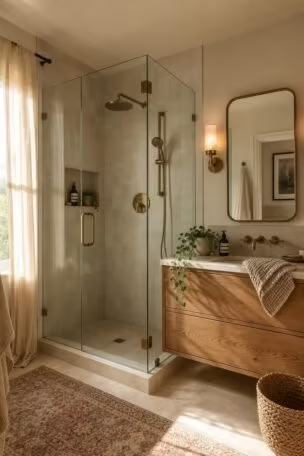
A Better Showerhead for Master Bathrooms With Walk In Showers
The NKBA 2026 Bath Trends Report, drawn from a survey of nearly 700 industry professionals, found that 55% of design pros now say a larger, better-equipped shower matters more to homeowners than keeping a bathtub.
That number reflects a real change in priorities, and it starts with the fixture people touch every morning.
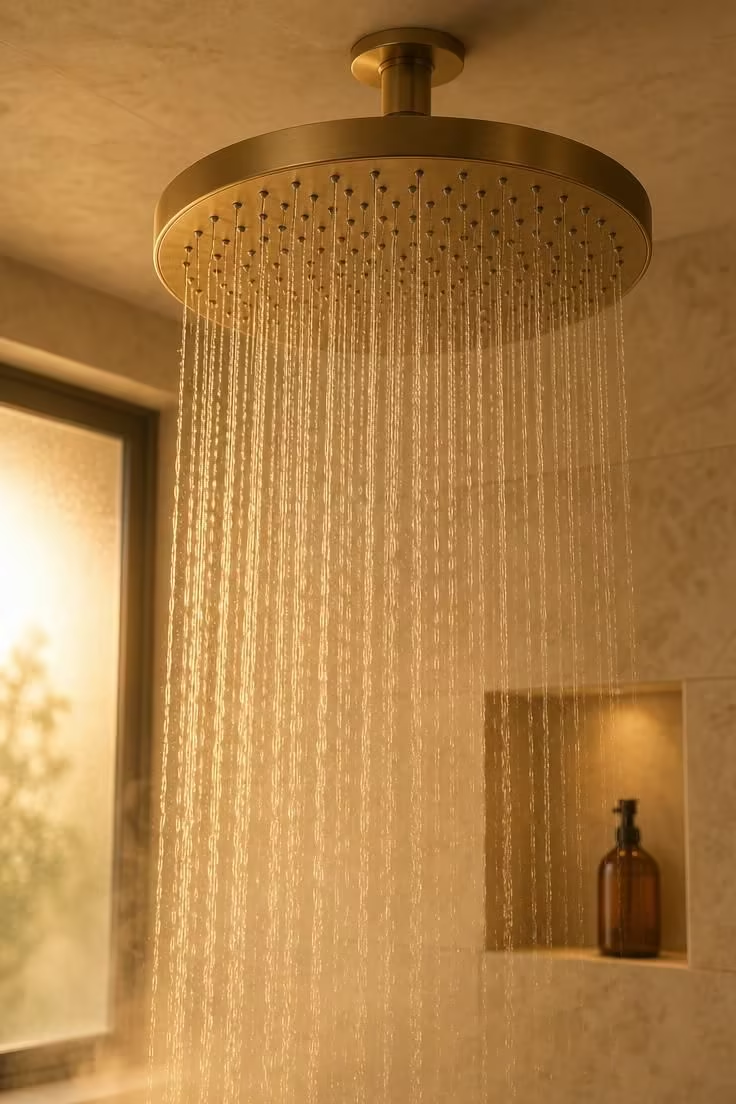
A rainfall showerhead is the single fastest way to shift a walk in shower from functional to restorative.
Modern low-flow models use air-induction technology to create full, soft pressure at 2.0 gallons per minute or less, so the spa feeling does not come at the cost of a higher water bill.
Ceiling-mounted options give the closest approximation to standing in warm rain, but wall-mounted rainfall heads on adjustable arms work in bathrooms where the ceiling height or framing makes a direct mount impractical.
Multi-spray showerheads with rainfall, focused-stream, and pause settings let you tailor water coverage and flow to different needs.
That flexibility aligns with the growing emphasis on personalized bathroom experiences identified in the NKBA’s 2025 Bath Trends Report.
The cost ranges from $30 for a solid brass-finish head to $200 for a ceiling-mount system, and the swap takes less than 20 minutes with an adjustable wrench.
Why Mixed Metal Finishes Changed the Rules for Fixture Updates
The old rule was simple: pick one metal finish and commit.
The 2026 direction throws that out, and the result looks more considered, not less.
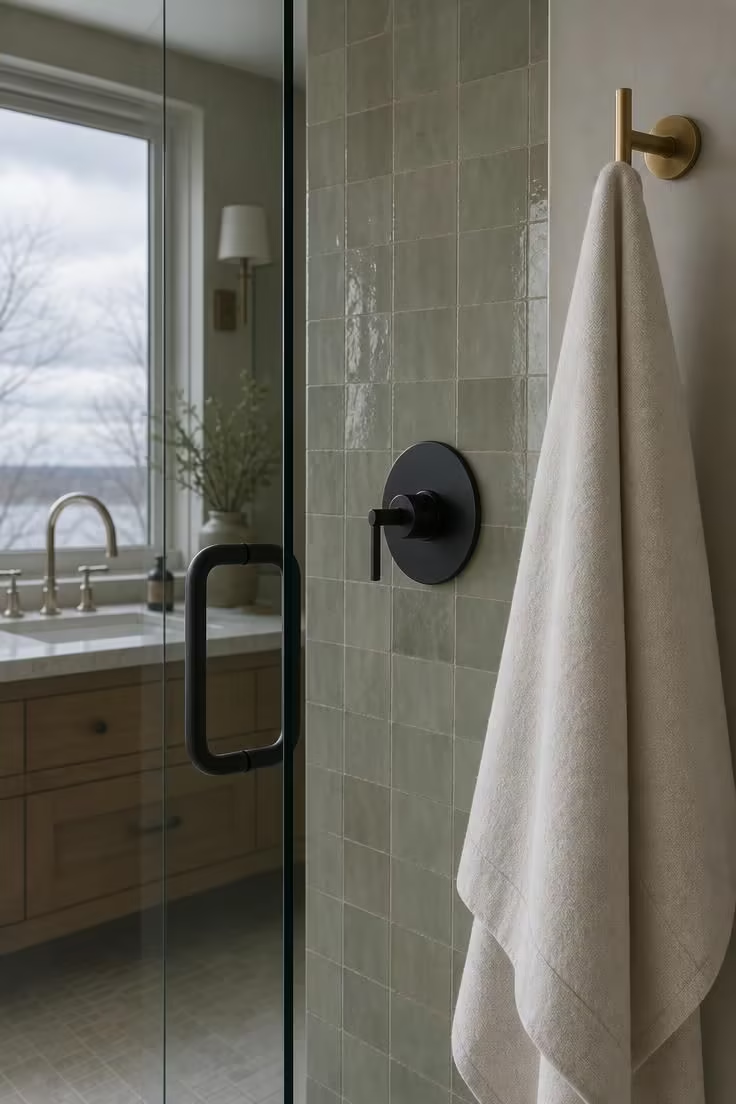
Pairing unlacquered brass pulls with polished nickel faucets and matte black accents is now one of the most cited mixed metal finishes combinations in recent designer portfolios, according to trend coverage from Architectural Digest and House Beautiful.
The key is treating one finish as the lead (the faucet and showerhead), a second as the supporting player (towel bars, hooks, cabinet hardware), and a third as the accent (a mirror frame or a single shelf bracket).
That hierarchy keeps the room from reading as mismatched, and it gives you permission to upgrade fixtures one category at a time rather than replacing everything in a single afternoon.
A coordinated set of new towel bars, robe hooks, and a toilet paper holder in a shared finish runs $60 to $150 and can be swapped with a screwdriver and a level.
Shower Niche Lighting Does More Work Than You Think
A shower niche without lighting is storage.
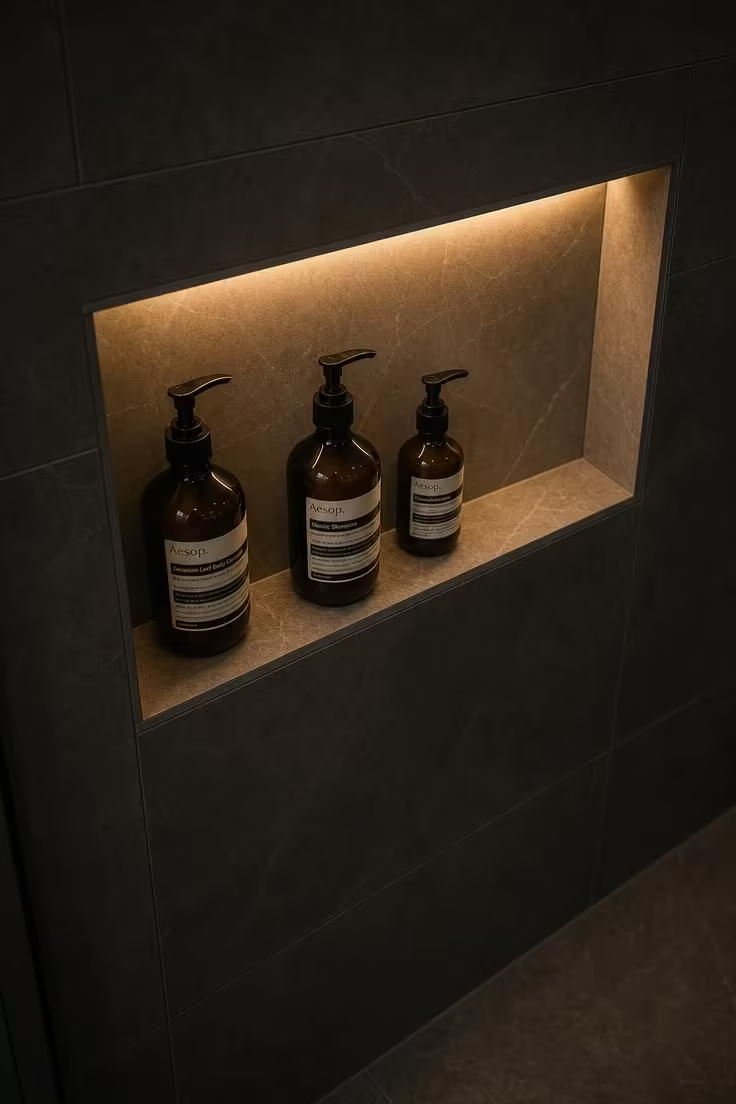
A shower niche with a warm LED strip becomes a design anchor for the entire shower.
The difference is not subtle, and it changes how the space feels at 6 a.m. as much as it does at 10 p.m.
Waterproof LED strip kits designed for wet locations run at 3000K, which puts out a soft, warm glow that flatters skin tone and makes tile colors look richer than overhead fluorescents ever could.
Schluter’s KERDI-BOARD-SNLT system builds the LED channel directly into the niche frame, which keeps the installation clean and code-compliant.
Aftermarket strip kits sealed with clear RTV silicone offer a less expensive path for existing niches, though they require a bit more care during installation to prevent moisture from reaching the wiring connections.
The real payoff is atmospheric: a lighted shower niche creates a focal point that draws the eye downward and inward, replacing the flat, overhead wash of a ceiling fixture with something that reads as intentional and layered.
If your walk in shower ideas lean toward a spa bathroom feel, this single addition moves the needle further than most people expect.
A Bench Turns the Shower From a Task Into a Ritual
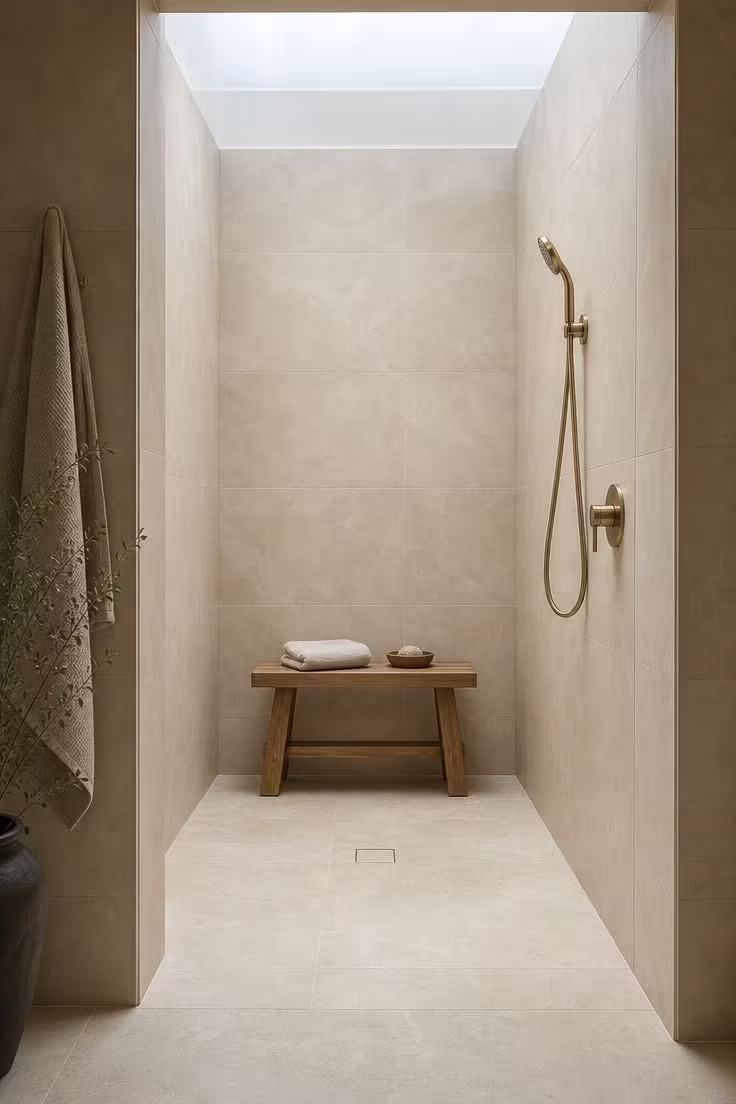
A shower bench changes your posture, and your posture changes your pace.
Standing in a shower is a task, something you power through before the next obligation.
Sitting, even for two minutes, sends a signal to your nervous system that this moment is different.
Freestanding teak benches are the zero-demolition option, and they fit inside any walk in shower with at least 36 inches of clear floor space.
The NKBA 2026 report noted that aging-in-place features like benches and grab bars have moved into the mainstream, with 32% of respondents saying these elements are already standard and another 48% predicting they will be soon.
A teak bench needs occasional oiling and should sit on rubber-tipped legs to prevent slipping, but the upkeep is minimal for a piece that changes how you use the room.
It also becomes a surface for scrubs, oils, and a folded washcloth, which turns the shower bench into a prop for ritual rather than just a seat.
Design Pro-Tip: Brass or matte black grab shelves combine a safety bar with a narrow ledge for a bottle or two, giving you support and storage in one piece of hardware. Mount one at shoulder height on the wall opposite the showerhead, and it pulls double duty every morning.
Scent Is the Fastest Way to Trick Your Brain Into Spa Mode
You do not need a scented candle budget to pull this off.
A fresh eucalyptus bundle tied to the showerhead with a piece of twine costs under $10 at most grocery stores and lasts two to three weeks.
The steam from a hot shower releases the plant’s natural oils, and the scent hits before you even step fully inside.
Lavender and bergamot are the two most commonly used spa scents, according to wellness-focused bathroom designers, and both are available as inexpensive concentrated oil blends that can be added to a ceramic diffuser dish placed near the shower entry.
The science behind it is straightforward: scent bypasses the analytical brain and connects directly to the limbic system, which processes emotion and memory.
That is why a single smell can shift your mood faster than new paint, new tile, or a new vanity ever could.
The Declutter-and-Decant Method Hotels Rely On
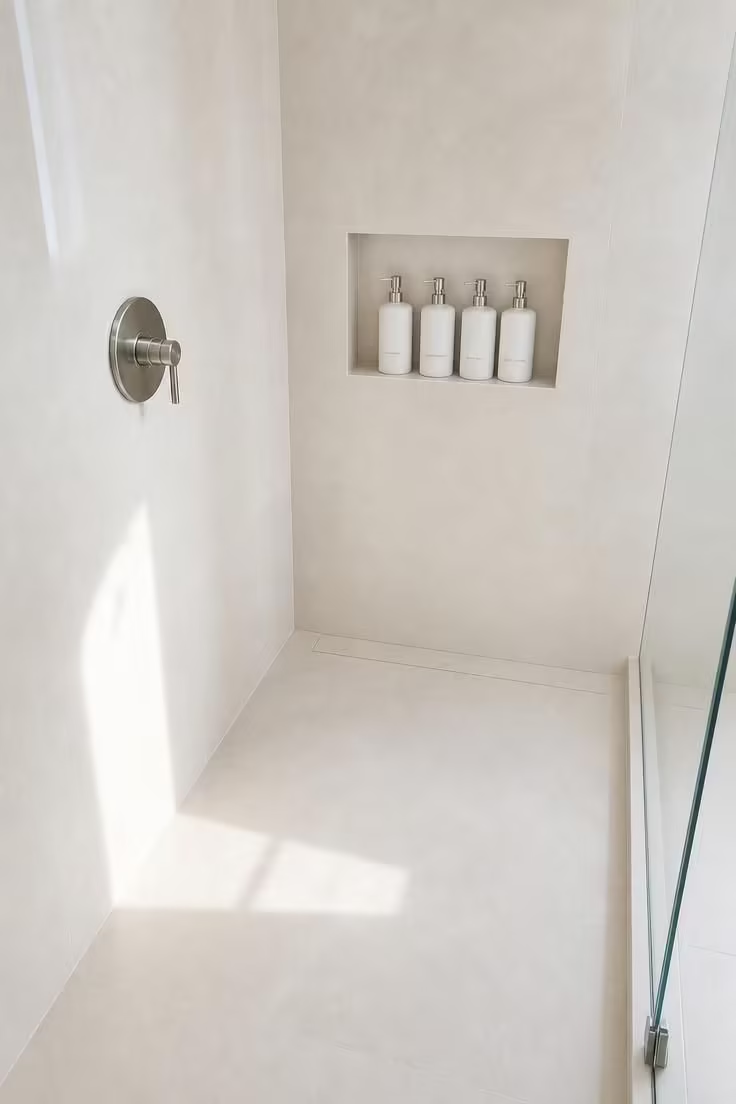
The first thing you notice in a hotel bathroom is what is missing.
No plastic bottles with peeling labels, no hanging shower caddies swaying from the showerhead arm, no half-squeezed tubes balanced on a ledge.
Transferring your daily products into matching amber, white, or clear glass pump bottles takes 15 minutes and costs less than $30 for a set of four.
The visual consistency is what makes a spa bathroom feel expensive, because the eye does not have to sort through competing shapes, colors, and label fonts.
A frameless glass shower amplifies this effect: without a curtain or frosted panel to hide the clutter, every mismatched bottle is on display.
If your bathroom remodel budget is small, decluttering and decanting is the highest-impact, lowest-cost move you can make inside a walk in shower.
Limit visible products to three or four per surface, and store the backstock in a closed cabinet outside the wet zone.
Hotels follow this rule every day, and it is the reason a $120-a-night room can feel more pulled together than a $50,000 renovation that skipped the details.
Better Towels Are the Most Underrated Bathroom Upgrade
A fresh towel is the last thing you touch before you leave the bathroom, and it sets the tone for everything that follows.
Spa-quality towels fall in the 500 to 700 GSM range, which gives them the thick, absorbent weight that a thin, stiff towel never matches.
White or soft neutrals read cleaner and calmer than patterned options, and they unify visually with any tile or fixture palette you already have.
Rolling towels instead of folding them is a small display choice that signals intention, the same way a rolled towel on a hotel shelf tells you someone thought about this moment.
The NKBA’s 2026 findings showed that 77% of designers say homeowners now expect their bath design to feel like a hotel or resort experience, and plush towels are the easiest entry point into that expectation.
Mount a hook or a short towel bar just outside the shower opening, close enough that you can grab it without stepping onto the main floor.
That one-reach distance is the difference between a thoughtful spa bathroom and a beautiful space that still makes you drip across the room.
One Dimmer Switch Replaces a Thousand-Dollar Lighting Plan
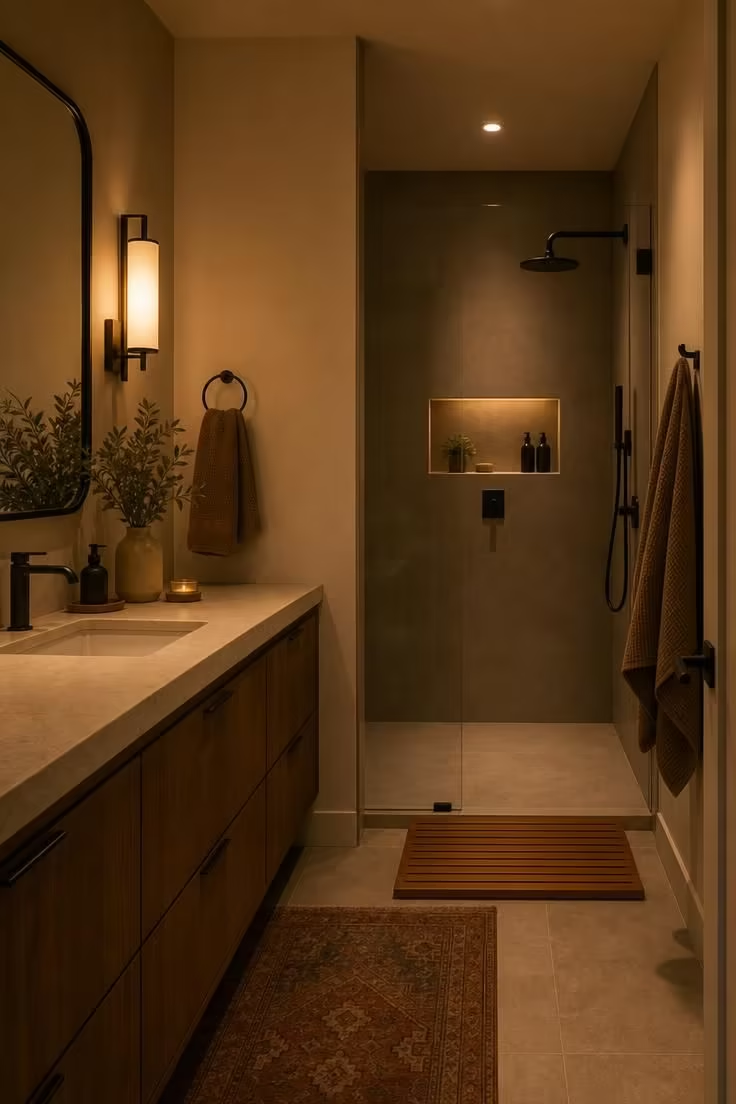
Harsh overhead lighting makes every bathroom feel clinical, regardless of how much money went into the tile.
Swapping standard daylight bulbs for warm LEDs in the 2700K to 3000K range takes five minutes and changes the perceived color temperature of every surface in the room.
A dimmer switch installation is a 30-minute project for anyone comfortable with basic wiring, or a $75 electrician call for those who are not.
Circadian lighting concepts are now filtering into residential bathroom design, and the core idea is simple: brighter, cooler light in the morning for alertness, and softer, warmer light in the evening for relaxation.
A single dimmer gives you both modes without a second fixture, a smart system, or a phone app.
Run the lights at full brightness when you brush your teeth and get ready, then drop them to 40% when you step into the shower, and the curbless shower entry becomes a threshold between task mode and rest mode in a single motion.
Design Pro-Tip: If your vanity has sconces, choose bulbs one shade warmer (2700K) than the overhead (3000K). That subtle mismatch creates depth the same way layered lighting works in a restaurant, and it keeps the mirror area from competing with the shower zone at night.
A Living Plant Finishes Master Bathrooms With Walk In Showers
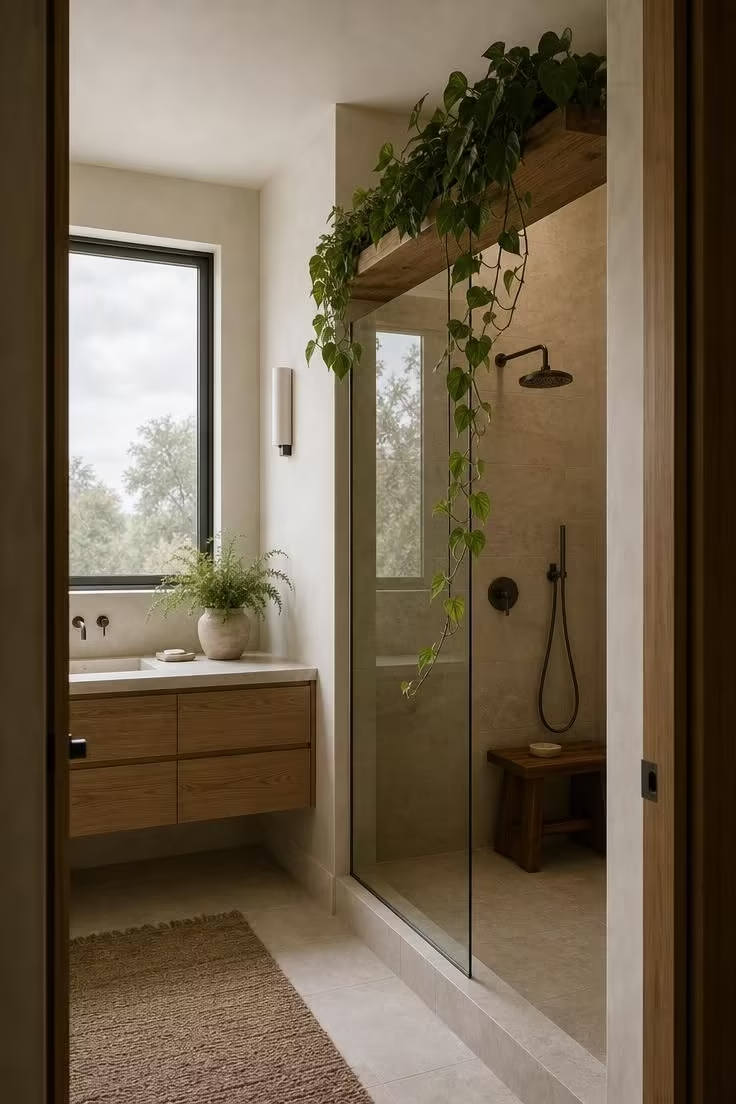
Tile, glass, stone, and metal are all hard surfaces, and a room built entirely from hard surfaces can feel cold no matter how warm the color palette runs.
A single living plant breaks that pattern in a way no textile or accessory can replicate.
Pothos, ferns, and snake plants are the three most reliable choices for bathroom humidity, and all three tolerate the low to moderate light that most master bathrooms receive.
A trailing pothos placed on a high shelf above the shower entry sends green vines downward into the sightline, which softens the transition between the dry area and the wet zone.
A small fern on the shower bench or in a hanging planter inside the shower itself brings organic texture directly into the water’s path.
The visual break matters because it signals something that a bathroom full of polished surfaces cannot say on its own: someone tends to this room.
That feeling of care is the final layer that separates a nice bathroom from one that actually feels like a retreat, and master bathrooms with walk in showers benefit from it more than most because the open layout puts every surface on display.
Conclusion
None of these 9 updates requires a permit, a contractor, or a lost weekend.
A rainfall showerhead, a set of coordinated mixed metal finishes on the hardware, LED lighting inside a shower niche, a freestanding teak shower bench, a eucalyptus bundle, matching pump bottles, better towels, a dimmer switch, and a single trailing plant: each one targets a different sense, and together they build a layered experience that reads as designed rather than decorated.
Start with the showerhead and the towels, because those two changes deliver the most immediate physical shift in how the room feels against your skin and under your feet.
Add the niche lighting and the dimmer next, because those two control the atmosphere of the entire space without touching a single tile.
The rest, the scent, the bottles, the bench, the plant, can follow over a few weekends, and each one will land harder because the foundation is already in place.
Master bathrooms with walk in showers already have a curbless shower entry, open sightlines, and enough floor area to hold a real morning routine, and these 9 low-lift updates simply finish what the layout started.