This post may contain affiliate links. If you make a purchase through these links, we may earn a commission at no additional cost to you.
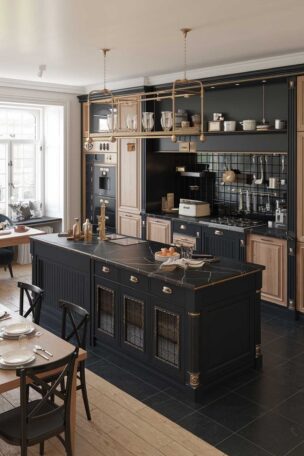
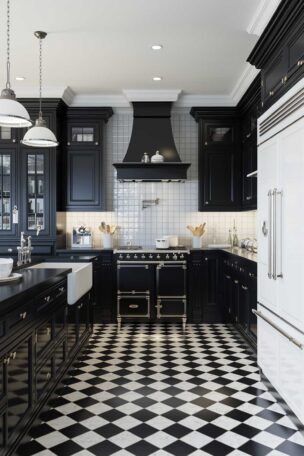
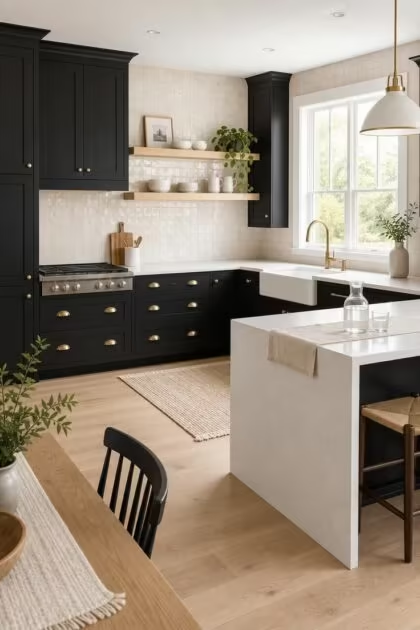
Black cabinets do the dramatic work, but drama alone does not make a kitchen feel finished.
The difference between a stock kitchen with black cabinets and one that looks like a designer built it sits in the details around the cabinetry, not inside it.
Nine surface-level changes, none requiring a contractor, can close that gap for a fraction of what a custom remodel costs.
The Reason Budget Swaps Read Bigger on a Kitchen With Black Cabinets
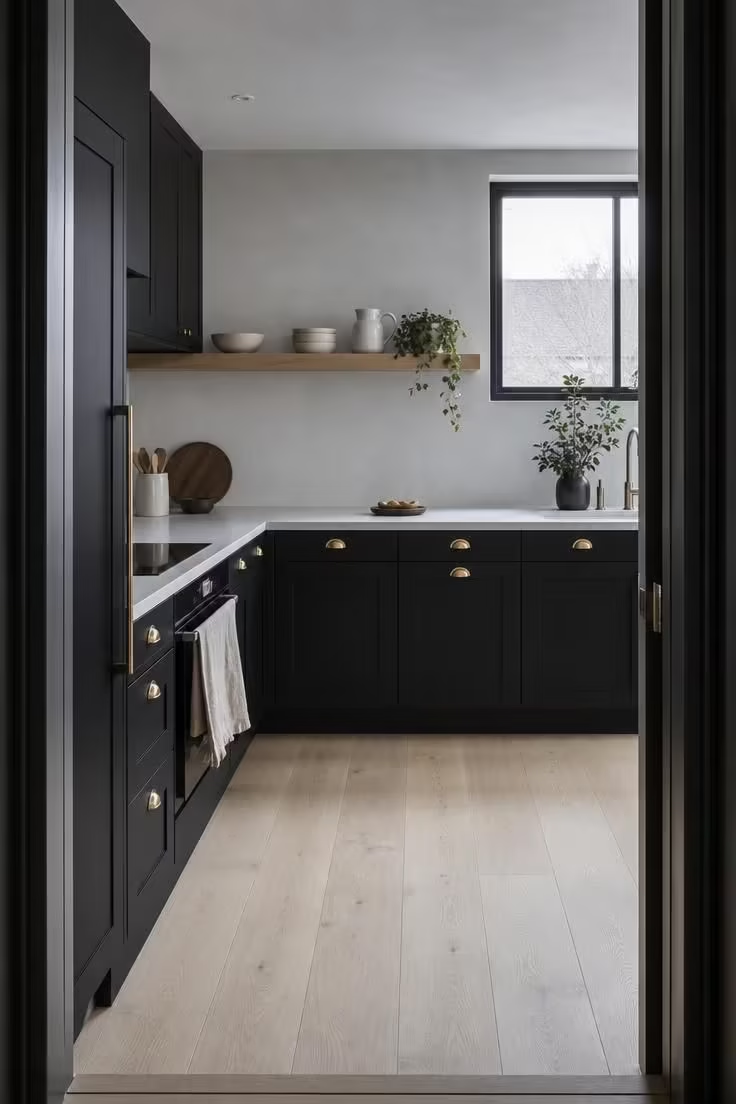
Black absorbs visual noise the way no other cabinet color does.
A white kitchen hides its upgrades because the eye skims across a bright, uniform surface without stopping.
A dark kitchen reverses that effect and makes every contrasting element land with more force.
A brass pull against a black door reads louder than the same pull against a white one, and a white countertop bordering a black base cabinet creates a hard edge that draws attention to the material quality of both surfaces.
According to industry data from 2026 trend reports, designer inquiries for dark kitchen cabinetry have climbed from 28 percent to 41 percent in the past three years, with matte black finishes leading the shift.
That matte finish matters because it suppresses reflection and lets every neighboring texture, color, and hardware piece speak at full volume.
The practical consequence is that a $200 hardware swap or a $400 backsplash change looks like a $5,000 renovation when the cabinet color behind it is black.
How a Hardware Change Resets the Entire Personality of a Kitchen With Black Cabinets
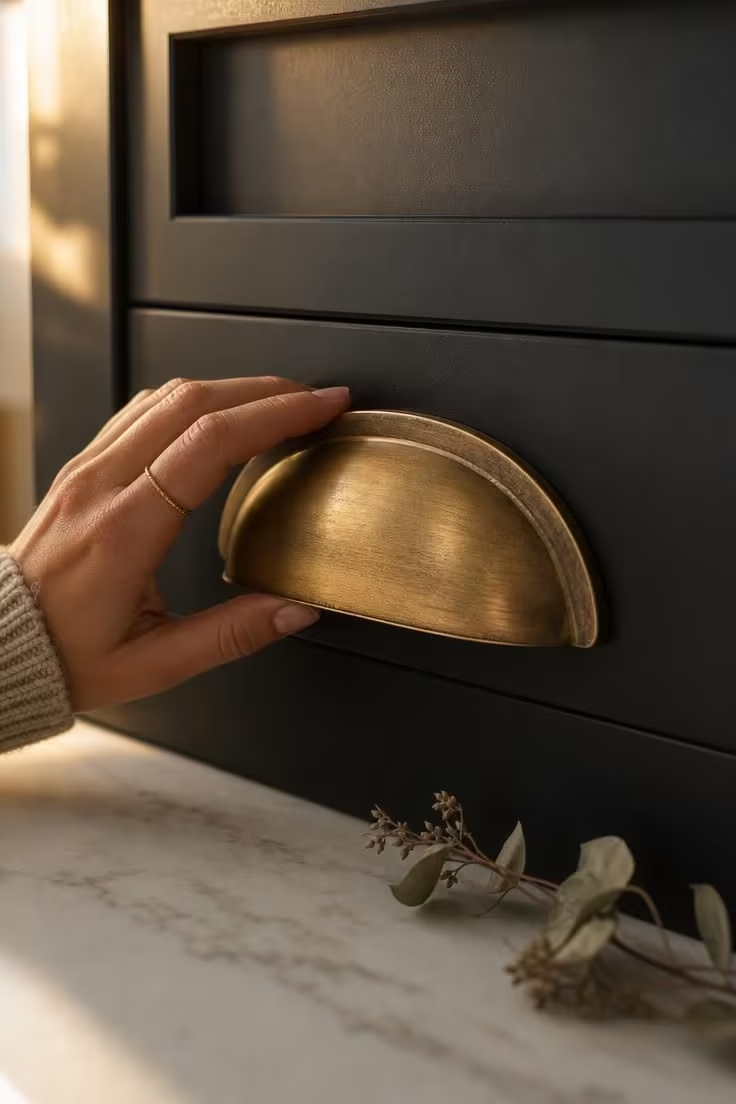
Builder-grade nickel bar pulls are the most common signal that a black kitchen came off a production line rather than out of a design studio.
Replacing them with brushed brass, unlacquered bronze, or matte champagne gold shifts the entire color story of the room in an afternoon.
The proportion of the pull matters as much as the finish: oversized cup pulls on base drawers paired with small round knobs on upper doors create a layered look that stock kitchens never ship with.
Unlacquered brass develops a living patina over months, which gives the black cabinet hardware a handmade quality that polished finishes cannot replicate.
The cost runs between $3 and $12 per piece depending on the supplier, and a typical kitchen needs 20 to 30 pieces, putting the total investment well under $300.
That number sits far below what any other single change can deliver in perceived value against a dark cabinet backdrop.
Crown Molding and Light Rail Strip Close the Custom Gap From Above and Below
The ceiling line above stock black cabinets exposes the one detail that separates every builder kitchen from a designed one: the gap.
Custom cabinets run flush to the ceiling or terminate with a thick crown molding that creates a finished frame around the room.
Stock cabinets stop short, leaving a visible strip of wall above them that collects dust and breaks the visual flow.
Adding a simple cove-profile crown molding in matching black paint closes that gap and makes the cabinetry look taller, heavier, and more deliberate.
A light rail strip along the bottom edge of upper cabinets does similar work on the lower line, creating a clean shadow edge that hides the underside of the cabinet box and the LED strip behind it.
Both pieces are sold as primed poplar or MDF at most home improvement stores, priced between $1 and $3 per linear foot before paint.
The installation is a weekend project with a miter saw and finish nails, and the result reads as carpentry rather than cabinetry.
Painting the crown molding in the same flat black as the cabinets gives the cleanest result, though some designers run it in a contrasting white for a modern black and white kitchen effect.
What Under-Cabinet Lighting Actually Does to a Matte Black Finish
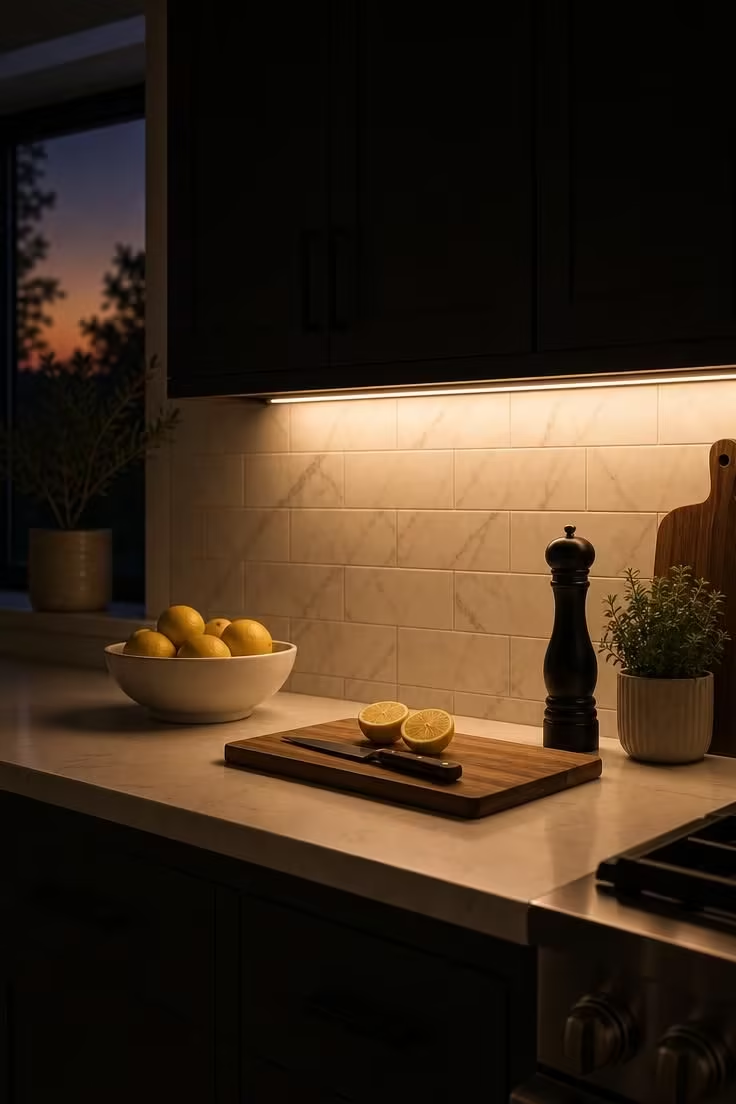
Matte black absorbs roughly 95 percent of the light that hits it, which means overhead ceiling fixtures leave the cabinet faces looking flat and dimensionless.
Under-cabinet lighting solves this by washing light downward across the backsplash and countertop, creating a bright working layer that contrasts sharply with the dark cabinetry above.
LED strip lights in the 2700K to 3000K range deliver the warmest tone, which keeps a modern black kitchen from feeling cold or industrial.
Puck lights create more focused pools of illumination and work better when the backsplash has pronounced texture, like hand-laid tile or natural stone, because the directional light catches the ridges and grout lines.
The installation is simple with adhesive-backed LED strips: peel, press along the underside of the upper cabinet, and plug in.
Hardwired options connected to a dimmer give more control but require an electrician, adding to the cost.
Either approach changes the way the entire kitchen reads after dark, pulling the room from flat and heavy into layered and inviting.
Choosing a Backsplash Material That Competes With Black Instead of Disappearing
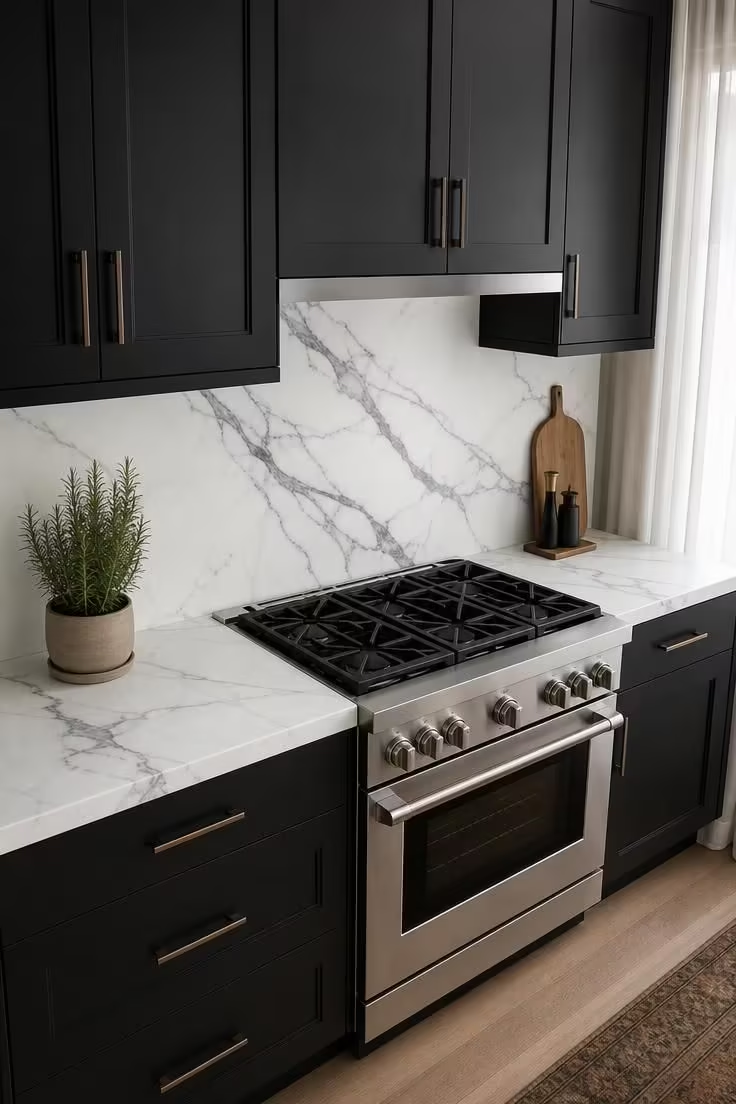
The most common black cabinet backsplash mistake is matching dark to dark, which erases the boundary between surfaces and turns the wall into a featureless plane.
A high-contrast backsplash in white, cream, or light stone gives the eye a destination between the upper and lower cabinet runs.
Honed marble slabs with visible veining create movement and pattern without competing with the flat finish of the cabinets.
Cream-toned zellige tiles add handmade imperfection that softens the precision of the black doors around them.
Running the backsplash material all the way up to the ceiling line, rather than stopping at the bottom of the upper cabinets, extends the visual height of the room and makes the cabinetry feel like it was designed around the stone.
This is one of the most effective upgrades because it changes the largest visible vertical surface in the kitchen.
Design Pro-Tip: Before committing to a backsplash material, hold a sample tile or slab offcut directly against the cabinet door in the actual kitchen lighting conditions. Colors shift significantly between the showroom and your north-facing or south-facing kitchen, and what looked bright in the store can read dull at home.
Floating Open Shelves in Warm Wood Give the Eye a Place to Land
All-black upper cabinets can press down on a room, especially in a kitchen where the ceiling sits below nine feet.
Replacing one or two upper cabinet boxes with floating shelves in a warm wood tone breaks that weight and introduces an organic layer that matte finishes cannot provide on their own.
White oak is the most popular choice in 2026 because its pale grain contrasts cleanly against black, while walnut skews richer and works better in kitchens that lean toward a moody, layered palette.
The shelf itself becomes a styling surface, which means choosing what sits on it is part of the design, not an afterthought.
Three to five objects in varied heights, a mix of white ceramics, clear glass, and a single plant, is enough to make one open shelf section feel intentional.
More than that tips into clutter, which undoes the purpose of the break in the first place.
Structurally, floating shelves need to anchor into studs, not just drywall, because the weight of stoneware and books adds up quickly.
Open shelving works best as a calculated interruption in the cabinet run, not a full replacement, because the black uppers provide storage that shelves cannot match.
Why the Faucet and Sink Upgrade Punches Above Its Price in a Dark Kitchen
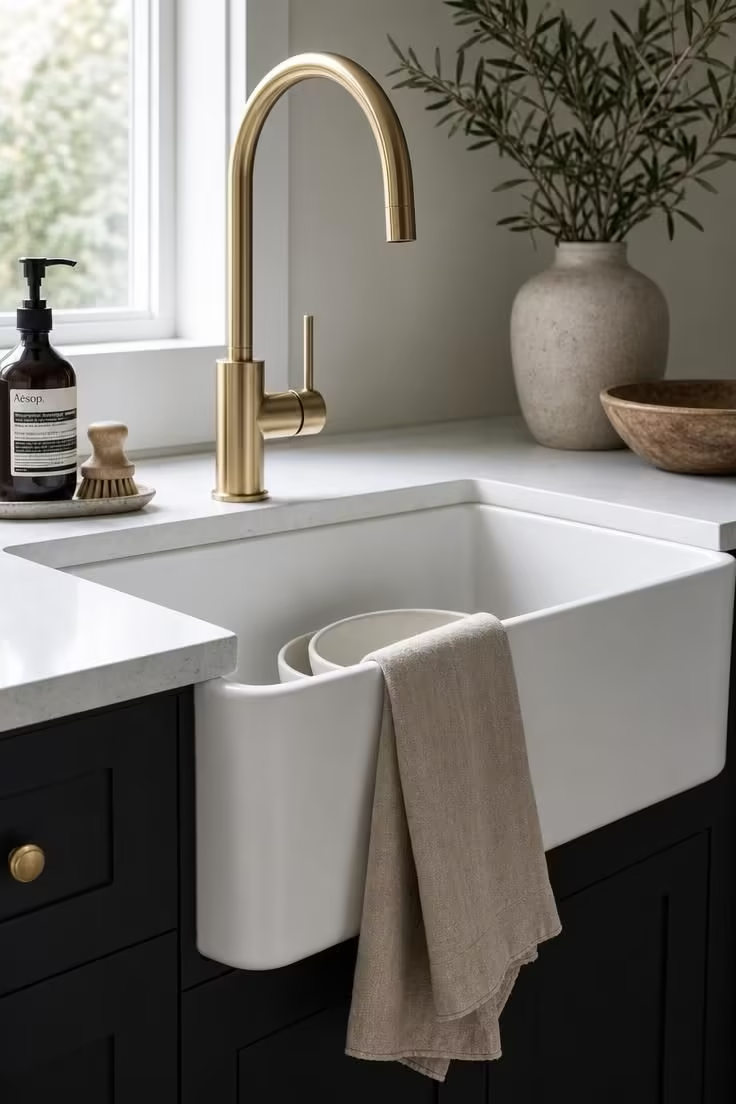
In a black cabinet kitchen, the sink area becomes the natural center of attention because it sits at the intersection of the countertop, the backsplash, and the lower cabinet face.
A builder-grade chrome faucet with a plastic base plate signals budget in a way that even new hardware on the surrounding cabinets cannot override.
Swapping it for a champagne gold, brushed brass, or matte nickel faucet with a high-arc or bridge profile changes the entire focal point of the room.
The faucet silhouette matters because it reads as a design decision rather than a plumbing default, the same way a well-chosen light fixture reads as intentional rather than functional.
A white fireclay or composite farmhouse sink pairs well here because the large white surface creates the same contrast principle that drives the backsplash and countertop choices.
Matching the faucet finish to the cabinet pulls creates visual continuity across the room, tying the black cabinet hardware story together.
The price range for a high-quality faucet sits between $150 and $400, which positions it as one of the most cost-effective upgrades per square inch of visual impact.
Painting the Island a Second Color Turns One Kitchen Into Two Layers
Two-tone kitchen cabinets have moved from a design-blog trend into the mainstream in 2026, and black perimeter cabinets make the ideal partner for a contrasting island.
A sage green, warm cream, or soft charcoal island against a black cabinet perimeter creates depth and prevents the room from reading as a single dark block.
The color does not need to be dramatic: a tone two or three shades lighter than the perimeter cabinetry, or a completely different color family, both work.
If the kitchen has no island, the same principle applies to a pantry cabinet, a standalone hutch, or even the lower bank on a different wall.
The second color reframes the black as a deliberate design choice by proving that the homeowner selected it, rather than inherited it.
A quart of cabinet-grade paint and a foam roller are the only materials needed, putting this upgrade well under $50 for a full island repaint.
A Countertop Swap Anchors Every Other Upgrade You Have Already Made
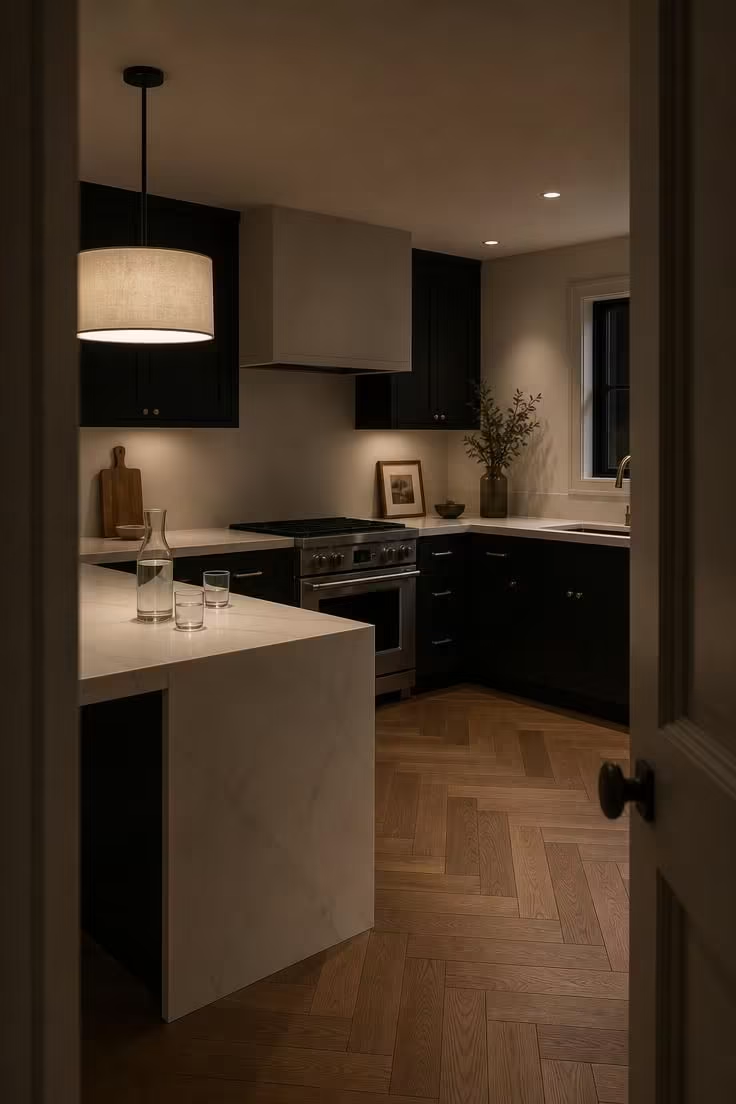
Builder-grade laminate countertops fight against every upgrade around them because the material reads as impermanent next to a permanent-looking black cabinet finish.
Swapping them for honed white quartz, marble-look engineered stone, or butcher block resets the contrast ratio that every other change depends on.
White quartz is the most popular pairing because its bright, clean surface maximizes the visual distance between the countertop and the dark base cabinets below it.
A waterfall edge, where the countertop material wraps down the side of an island or peninsula, creates an illusion of custom millwork at the cost of one additional slab cut.
Butcher block offers a warmer alternative that connects back to the open shelving material, tying the wood tones in the room together.
The countertop is the last upgrade in the sequence on purpose: it anchors every hardware, backsplash, and lighting change that came before it by providing the horizontal plane against which all those vertical details are measured.
If the budget allows only one large-scale change, this is the one that pulls the rest of the kitchen forward.
The return on a countertop investment in a black cabinet kitchen is higher than in a white one because the contrast is more visible and more dramatic.
Design Pro-Tip: When choosing a countertop material, bring home the largest sample slab the supplier will lend rather than a small chip. A 12-by-12-inch sample placed directly on the black cabinet face shows you the actual contrast ratio, which small samples distort.
Styling Open Surfaces So the Kitchen Reads Finished, Not Empty
The ninth upgrade costs nothing because it uses what you already own.
Editing and grouping the objects on the countertop, the open shelves, and the top of the fridge transforms a kitchen from functional to finished.
Odd-numbered groupings, three vessels or five stacked books, create visual tension that even numbers do not.
Varying the height within each grouping keeps the eye moving: a tall bottle next to a low bowl next to a medium crock reads as arranged, not accumulated.
Against black cabinets, white ceramics, clear glass, and warm brass objects photograph the best because each material reflects differently and prevents the surface arrangement from blending into the dark backdrop.
Negative space matters more in a dark kitchen than in a light one, because every object on a black surface is outlined and exposed.
Leaving one full counter section completely clear gives the eye a landing strip between the styled areas and prevents the room from tipping into visual overload.
Why These Low-Cost Upgrades Pay Off More Right Now
The 2026 kitchen design landscape has shifted firmly toward matte black kitchen cabinets paired with warm metals, natural textures, and high-contrast surfaces.
Every upgrade in this list aligns with the direction the market is already moving, which means the changes read as current rather than niche.
From a resale perspective, kitchens with visible design details, coordinated hardware, and under-cabinet lighting consistently appraise higher than kitchens with identical cabinetry but no finishing layer.
The cost gap is the real story: a full custom cabinet run in black starts at $15,000 or more, while these nine changes, taken together, rarely exceed $2,500.
Black shaker cabinets remain the most requested door style in both new builds and renovations, which means the base investment in dark cabinetry is sound.
The finishing details covered here are what separate a kitchen that photographs well from one that lives well too.
Conclusion
The fastest way to start is with the hardware and under-cabinet lighting, because both changes take less than a day and immediately shift how the rest of the kitchen looks.
From there, the backsplash and countertop upgrades build on the contrast that the new hardware and lights have already introduced.
A kitchen with black cabinets does not need a renovation to feel custom.
It needs the nine layers of detail that a renovation would have included, installed one affordable weekend at a time.