This post may contain affiliate links. If you make a purchase through these links, we may earn a commission at no additional cost to you.
Every home office starts with the same promise: a clean surface, a decent chair, and enough quiet to get work done.
The problem is that most of those rooms stop right there, stuck in a no-man’s-land between functional enough and actually good.
The distance between a generic setup and a home office for men that feels built around you is shorter than you think, and it comes down to ten specific material and styling swaps that change how the whole room reads.
The Swap Most Men Get Wrong First (And the One That Actually Moves the Needle)
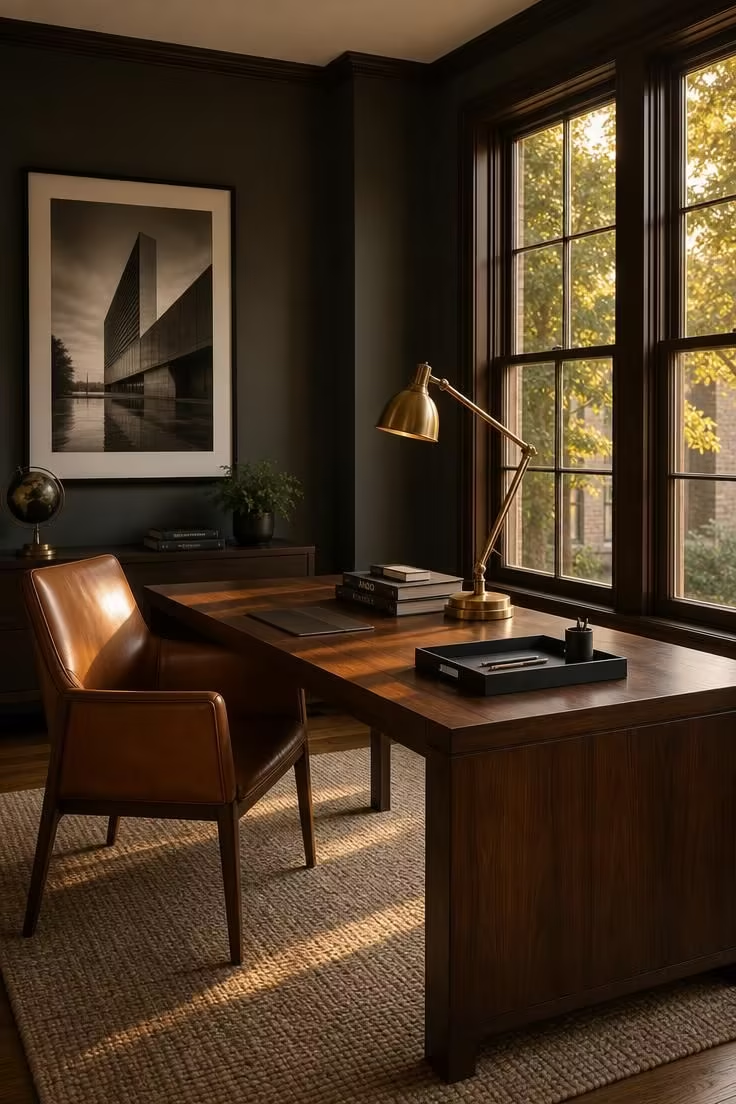
The first upgrade most men reach for is the chair.
It makes sense on paper: you sit in it all day, your back hurts, and every “best home office” list starts there.
But the chair is not what makes a room feel like yours.
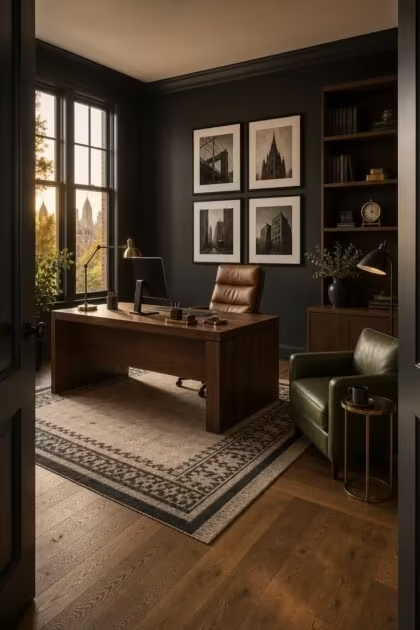
Interior design professionals point to a different swap as the single highest-impact change you can make in a masculine home office: the wall color.
Paint is the cheapest material in the room and covers the most surface area, which means it controls how every other object reads.
A $60 gallon of deep charcoal or navy paint shifts the entire office color palette in a weekend, and suddenly that same flat-pack desk looks more deliberate against a grounded backdrop.
The remaining nine swaps in this article build on that principle: change the surface that touches the most visual real estate first, then layer the details that make the room feel like it was built for you and no one else.
Swap the Safe Neutral Walls for a Dark, Saturated Paint Color
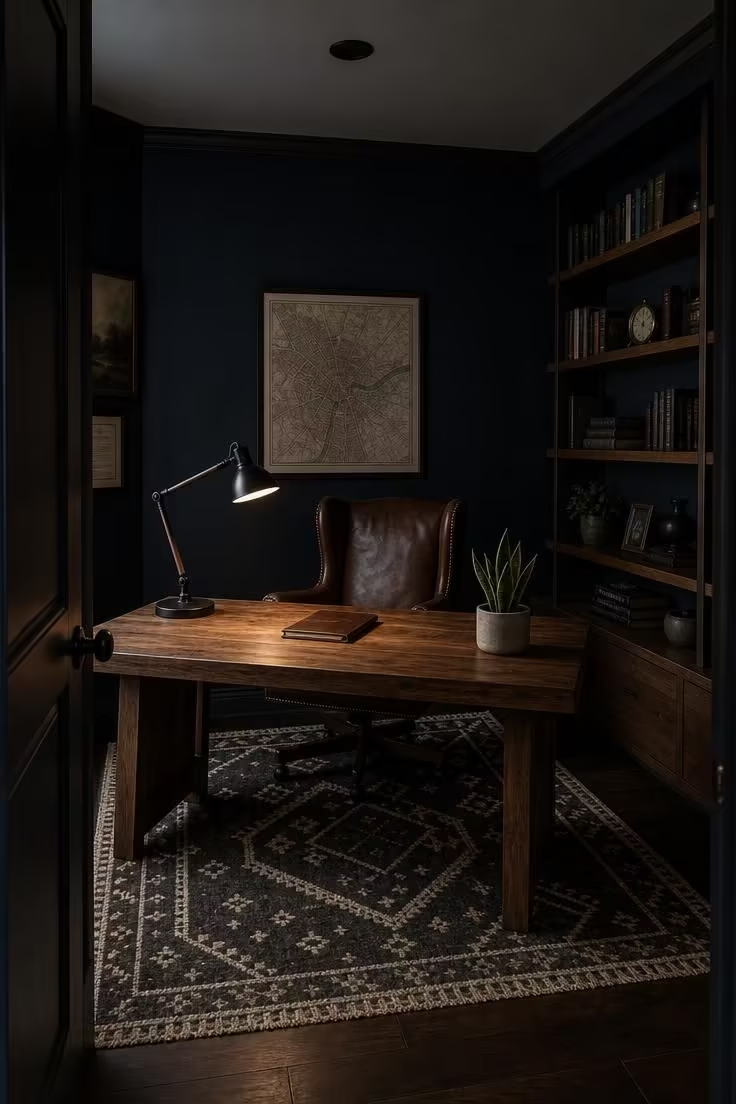
Beige, greige, and builder-white walls are the default for a reason: they offend no one and match everything.
They also say nothing, which is the exact quality that makes a room feel generic.
Dark wall colors work in a home office because they create depth that lighter shades cannot.
Charcoal gray absorbs harsh overhead light and reduces screen glare, making the room more comfortable for long hours without any other change.
Navy blue reads professional and focused without feeling cold, especially when paired with warm wood tones and brass accents.
Deep forest green introduces a natural quality that softens the hard edges of monitors and equipment.
The practical concern about dark walls making a room feel small is overblown in rooms with decent natural light or layered artificial light, and the visual weight of a dark wall actually pushes the boundaries of the room outward by creating the illusion of recession.
Stick to a matte or eggshell finish rather than satin or semi-gloss: matte hides wall imperfections and prevents the shiny, plastic look that fights against the raw material textures you want in a masculine office.
Design Pro-Tip: Paint two large test swatches (at least 2 feet by 2 feet) on adjacent walls and live with them for three full days. Morning sun, desk lamp at noon, and evening overhead light all shift how a dark color reads, and the color that wins at 10 a.m. might lose at 8 p.m.
Replace the Flat-Pack Surface With a Solid Wood Desk
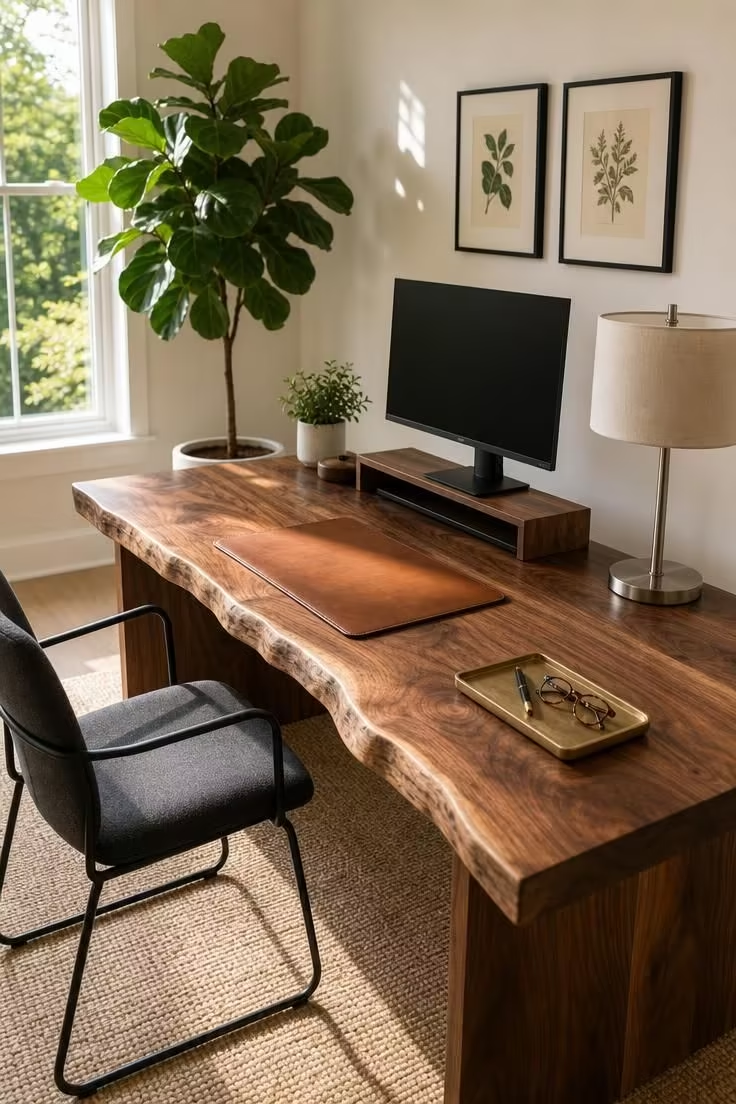
The home office desk is the single largest surface in the room, and it sets the material standard for everything around it.
A laminate desktop with a printed wood-grain pattern looks passable in isolation, but the moment you place a real leather pad or a brass accessory on it, the contrast exposes the surface as artificial.
Solid wood reads differently because it has weight, texture, and variation that your eye recognizes as real without thinking about why.
Walnut is the most popular choice for men’s office decor because its dark, chocolate-brown tones pair naturally with both warm and cool accent metals, and its tight grain does not compete with other textures in the room.
White oak offers a lighter, more modern alternative that works well against dark wall colors, creating contrast that keeps the room from feeling like a cave.
Reclaimed pine brings warmth and character at a lower price point, though the softer wood will dent and scratch more easily over years of daily use.
Trade the Mesh Task Chair for a Leather Desk Chair With Weight
A mesh-backed task chair does its job, and that is precisely the problem.
No matter how much you spend on one, it reads as office-supply-catalog furniture because the material itself has no warmth, no patina, and no personality.
A leather desk chair changes the temperature of the room the moment you roll it in.
The texture catches light differently than any synthetic mesh, and the material develops a patina over months of use that makes it look more distinguished rather than more worn.
Full-grain leather is the best long-term investment because the hide’s natural surface stays intact, breathes well, and ages with visible character.
Top-grain leather has been sanded and refinished, which makes it more uniform but less interesting over time.
Bonded leather, despite the name, is mostly synthetic and will peel within a year or two, making it the one option worth avoiding entirely.
Color matters here more than you might expect: cognac or saddle brown adds warmth to a room with cool walls, deep black reads sharp and modern against lighter wood tones, and dark chocolate brown splits the difference without committing to either extreme.
The ergonomic concern is valid, and the good news is that several manufacturers now build high-back leather chairs with adjustable lumbar support, tilt lock, and seat-depth control that match or exceed the ergonomic range of the mesh chairs they replace.
Layer Three Light Sources Where You Had One Overhead
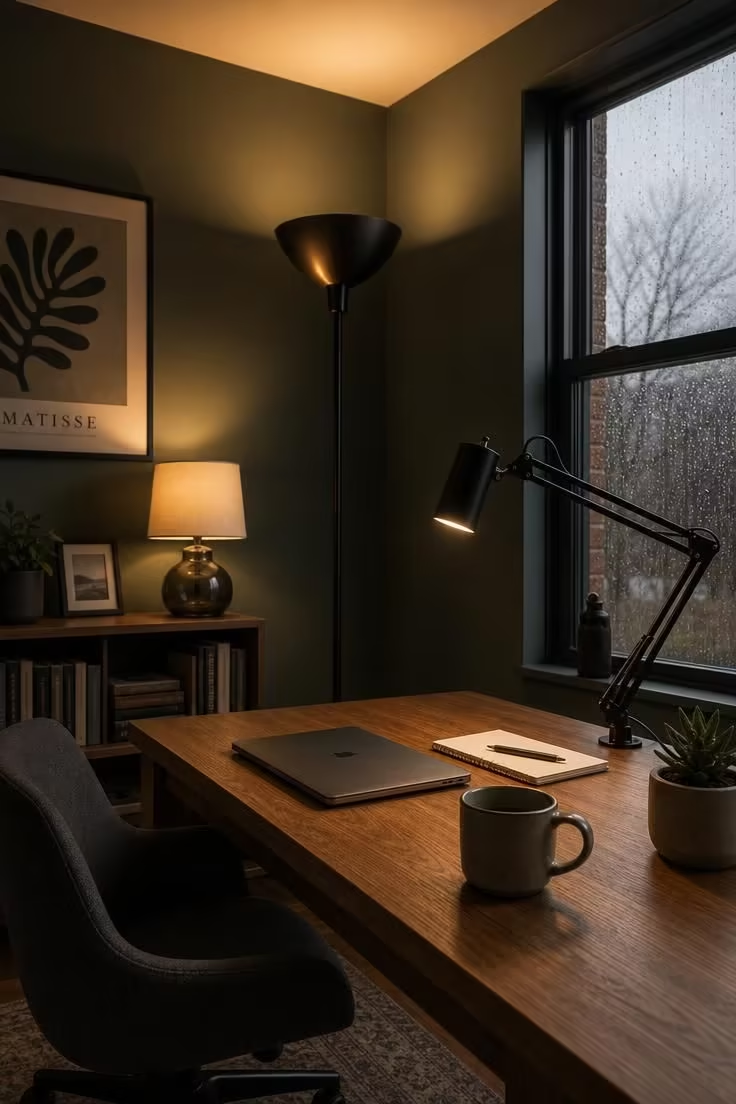
A single overhead ceiling light does two things badly: it flattens every surface in the room to the same brightness, and it bounces off your monitor screen at exactly the angle that creates glare.
The fix is not a better bulb but a different approach entirely: three separate light sources, each doing a distinct job.
Task lighting sits at the desk and aims where your eyes need it most, on paper, on your keyboard, or on a notebook beside the screen.
An articulated desk lamp with an adjustable arm gives you control over direction and intensity without adding clutter, because the whole fixture folds out of the way when you don’t need it.
The second layer is ambient light, a floor lamp or table lamp placed away from the desk that fills the room with soft, indirect glow and prevents the “spotlight in a dark cave” effect that makes late-afternoon work feel oppressive.
The third layer is overhead or accent light, kept dim and pointed at a wall or ceiling rather than straight down, which adds dimension to the room without interfering with screen work.
Color temperature makes a measurable difference in focus and fatigue: cooler light in the 4000-5000K range sharpens attention during working hours, while warmer tones around 2700K ease the transition into evening.
Design Pro-Tip: Aim at least one light source at a wall or the ceiling rather than at your desk. Reflected light fills the room without creating hard shadows and makes dark paint colors come alive at night.
Swap Plastic Organizers for Metal Desk Accessories That Age Well
Every surface accessory on your desk either reinforces the room’s material story or undercuts it.
A plastic pencil cup and an acrylic paper tray might cost a fraction of their metal counterparts, but placed next to a wood desk and a leather chair, they broadcast “temporary” louder than anything else in the room.
Metal desk accessories hold up under daily use and develop subtle patina that makes them look better, not worse, over years of handling.
Blackened steel pen trays, brushed brass document holders, and cast-iron cable clips read as permanent fixtures rather than disposable office supplies.
The rule worth borrowing from interior professionals is simple: every object on the desk should either function or say something about who you are.
If it does neither, it does not belong on the surface.
A well-chosen brass desk tray that holds your phone, keys, and pen is doing both jobs at once, keeping the surface clear while reinforcing the room’s warm-metal accent palette.
Rethink the Walls Beyond Paint With Intentional Office Wall Art
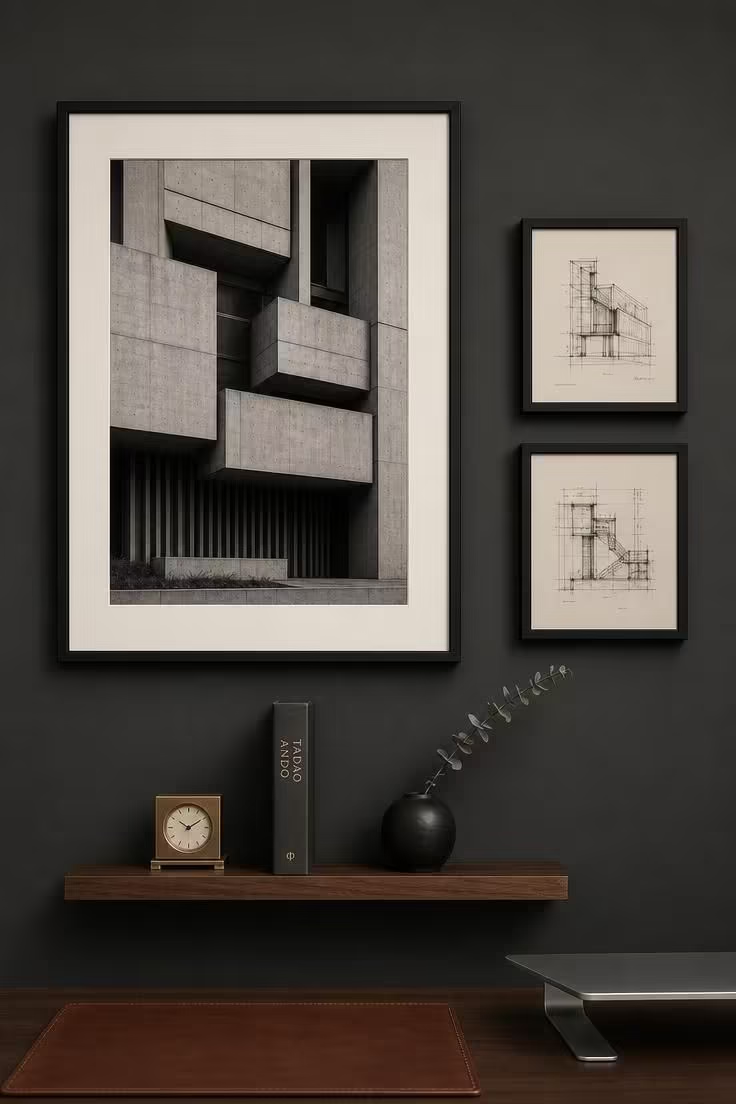
A freshly painted wall with nothing on it reads as unfinished.
A wall covered with random prints from different eras, styles, and frame types reads as careless.
Intentional office wall art sits between those two extremes, and getting it right matters more than most men expect because the wall behind or beside the desk is the backdrop to every video call, every glance up from the screen, and every first impression the room makes.
The safest starting point for men’s office decor is a single oversized piece that anchors the wall and eliminates the guesswork of spacing, alignment, and visual balance.
Architectural photography, vintage patent diagrams, topographic maps, or abstract line work all read clean and masculine without tipping into decoration-for-decoration’s-sake territory.
If you prefer a gallery approach, stick to matching frame material and mat color across every piece, and keep the spacing between frames consistent at two to three inches so the grouping reads as one intentional composition rather than a patchwork.
Hanging height is the detail that separates polished from amateur: the center of the artwork or the center of the grouping should sit at 57 to 60 inches from the floor, which is average eye level and the standard galleries and museums use worldwide.
Too high and the art floats awkwardly above the furniture below it, too low and it crowds whatever sits beneath.
Hide Every Cable and the Room Instantly Looks Built In
You can install a beautiful wood desk, a quality leather chair, and a perfectly chosen wall arrangement, and one tangle of visible power cables behind the monitor will pull the entire room back to “temporary setup.”
Cable management is the swap that nobody photographs but everyone notices when it’s missing.
The simplest first step is an under-desk cable tray: a metal channel that screws to the underside of the desk and holds every power strip, adapter, and excess cord length completely out of sight.
Adhesive cable clips running along the back edge of the desk or down the desk legs keep individual cords in clean, parallel lines rather than drooping loops.
For a more permanent solution, a cord channel mounted to the wall behind the desk hides the run from desk height to the nearest outlet, which removes the last visible cable from the room entirely.
The “wire basket trick” that professional organizers use is worth knowing: a small metal mesh basket screwed to the underside of the desktop holds external hard drives, power bricks, and USB hubs completely hidden from any seated or standing vantage point.
Remote and hybrid work have made the home office a permanent room in the house, not a temporary arrangement that will be dismantled when “things go back to normal,” and that permanence is exactly why these infrastructure-level swaps matter now more than they did three years ago.
Design Pro-Tip: Route one power strip with a long cord to a single wall outlet, then connect everything else to that strip under the desk. Managing one cord to the wall is far cleaner and faster than managing five.
Mix Brass, Matte Black, and Brushed Steel Instead of Matching Everything
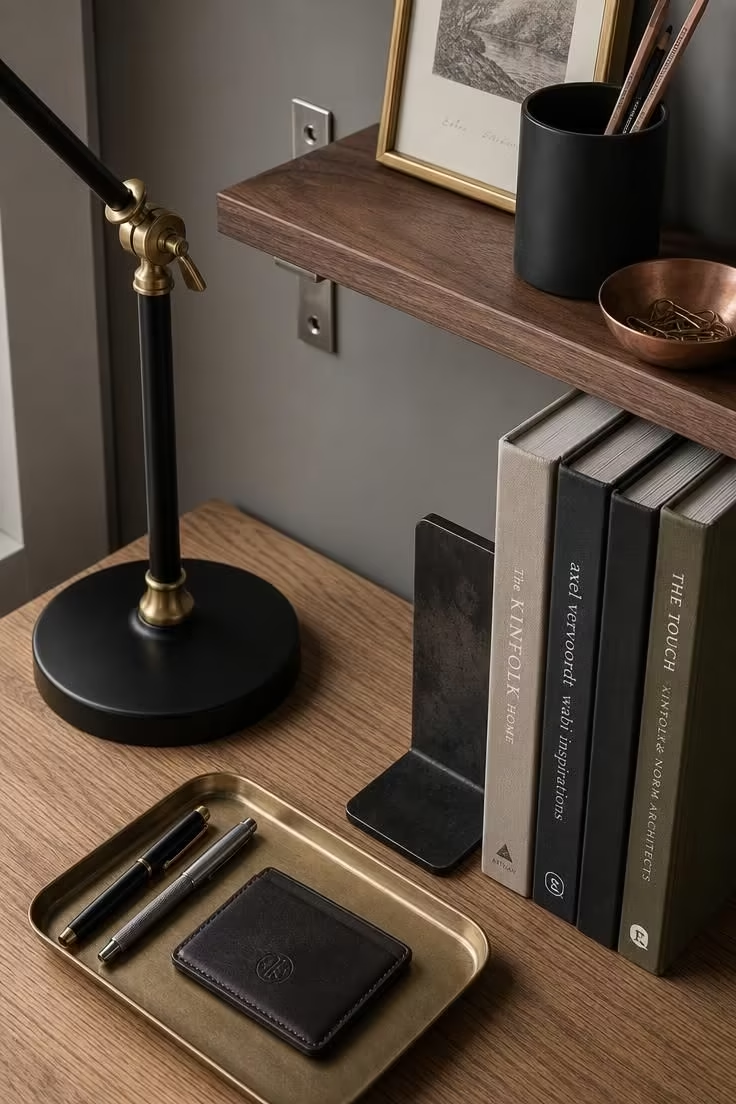
Matching every metal finish in a room to a single tone is the safe, catalog approach, and it shows.
When every hinge, pull, bracket, and fixture shares the same brushed nickel sheen, the room looks coordinated in a way that feels impersonal, like a model unit no one actually lives in.
Mixed metals add depth and personality because each finish carries its own visual temperature.
Brass and copper read warm, steel and chrome read cool, and matte black or iron sits in a neutral zone that bridges the two.
The practical formula that works across most masculine home office setups is “two plus one”: pick two related finishes in the same temperature family, then add one from the opposite camp as a counterpoint.
A desk lamp with a brass joint on a matte black base, paired with brushed steel shelf brackets, gives the room three distinct metal voices that harmonize without matching.
The places where metal shows up in a home office show up in more places than most people realize: drawer pulls, lamp bases, shelf brackets, picture frame edges, desk accessories, light switch plates, and even pen clips all contribute to the room’s metal story.
Keeping that story deliberately varied, rather than accidentally mismatched or rigidly uniform, is the difference between a room that looks planned and one that looks purchased.
Finish the Room With One Functional Corner Piece
Most home offices have at least one empty corner that silently announces the room is not finished.
The instinct is to ignore it or fill it with a storage bin, and both choices reinforce the same problem: the room reads as a workspace that happens to be in a house rather than a room designed to work in.
One deliberate piece in that corner changes the proportion of the room and creates a second zone that makes the whole space feel larger than its footprint.
A low leather club chair with a small side table creates a reading or thinking zone that pulls you away from the desk during breaks, which is both a styling win and a practical one.
A narrow bookstand filled with books you actually reference, not decorative spines bought by the foot, adds height and intellectual texture to the corner without taking up more than eighteen inches of floor space.
A tall floor plant in a matte ceramic or concrete pot introduces the only organic shape in a room full of straight lines, and that contrast is what makes the plant read as intentional rather than obligatory.
Conclusion
None of these ten swaps requires demolition, rewiring, or hiring a contractor.
A gallon of dark paint, a solid wood desk, a leather desk chair, three layered light sources, metal desk accessories that age well, intentional office wall art, clean cable management, mixed-metal finishes, and one considered corner piece: that is the complete list.
Start with the swap that bothers you most when you sit down to work each morning.
If the walls feel bland, paint first.
If the desk feels flimsy, replace the surface.
If the cables drive you crazy, install an under-desk tray this weekend.
One swap every few weeks keeps the investment manageable and lets you see each change’s effect before making the next one.
The goal is not a magazine spread or a showroom vignette.
The goal is a home office for men that feels like it was built around the specific person who sits at that desk, not pulled from a catalog page and assembled by whoever got there first.