This post may contain affiliate links. If you make a booking or purchase through these links, we may earn a commission at no additional cost to you.
Most homes already hold the raw material for a memorable Halloween scene, and the real work is composition rather than shopping.
Lower the overheads, pick one focal point, and a dining room or hallway starts to look like a set.
Each idea here centers on a single visual moment a guest passes, faces, or stops at, chosen because it reads clearly once the lights come down.
Dim rooms favor large shapes and strong contrast over fine detail, and one focal point per zone usually beats several competing arrangements.
These are composition ideas to adapt to your own rooms, linens, and surfaces, with the tradeoffs and upkeep each one carries.
Black Paper Silhouette Drift Across a Pale Wall
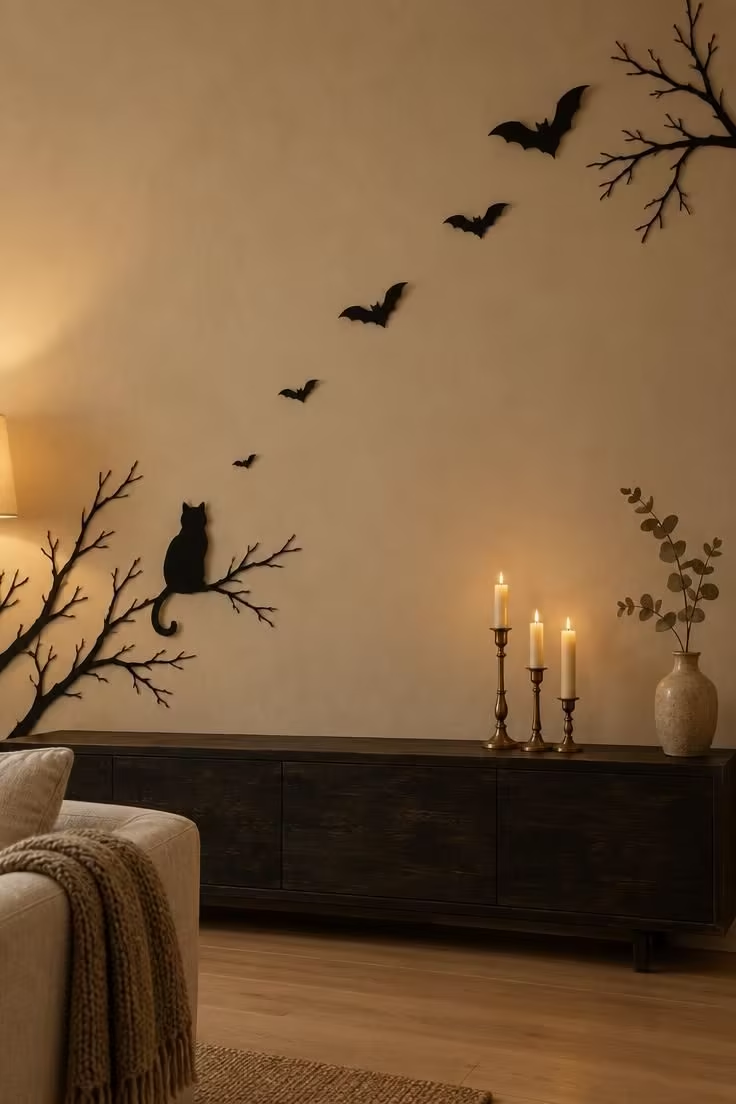
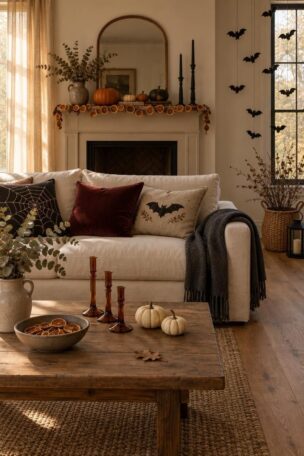
High-contrast flat shapes hold their edge in low light, where fine pattern and small detail dissolve into gray.
The drift pattern matters more than the individual motifs, since a diagonal path pulls the eye across the wall instead of letting it scan a grid.
A corner cluster that thins outward works in a small room, while mirrored pairs flanking a doorway suit a wider wall.
Surfaces that carry the look include pale plaster, a light linen curtain, a sliding door panel, or a lit window.
Paper curls and sags over a long evening in humid rooms, so pressing the shapes flat between books keeps edges crisp between seasons.
Black decor on a charcoal or dark green wall disappears entirely, and that arrangement needs a lighter backdrop or a backlight to register.
Crowded silhouette walls read as noise rather than atmosphere, so protecting the gaps between shapes matters as much as choosing the shapes.
Style Blueprint:
- Choose silhouettes within one motif family rather than mixing bats, cats, ghosts, and ravens on the same wall
- Arrange them in a rising or drifting path, diagonal or clustered at one corner, so the eye travels
- Protect negative space, since the gaps between shapes are what make the pattern read in dim light
- Press paper shapes flat between books between seasons so edges stay crisp
- If the wall is dark, move the same arrangement to a pale door, a light curtain, or a backlit window
Gauze-Draped Doorway With Backlight
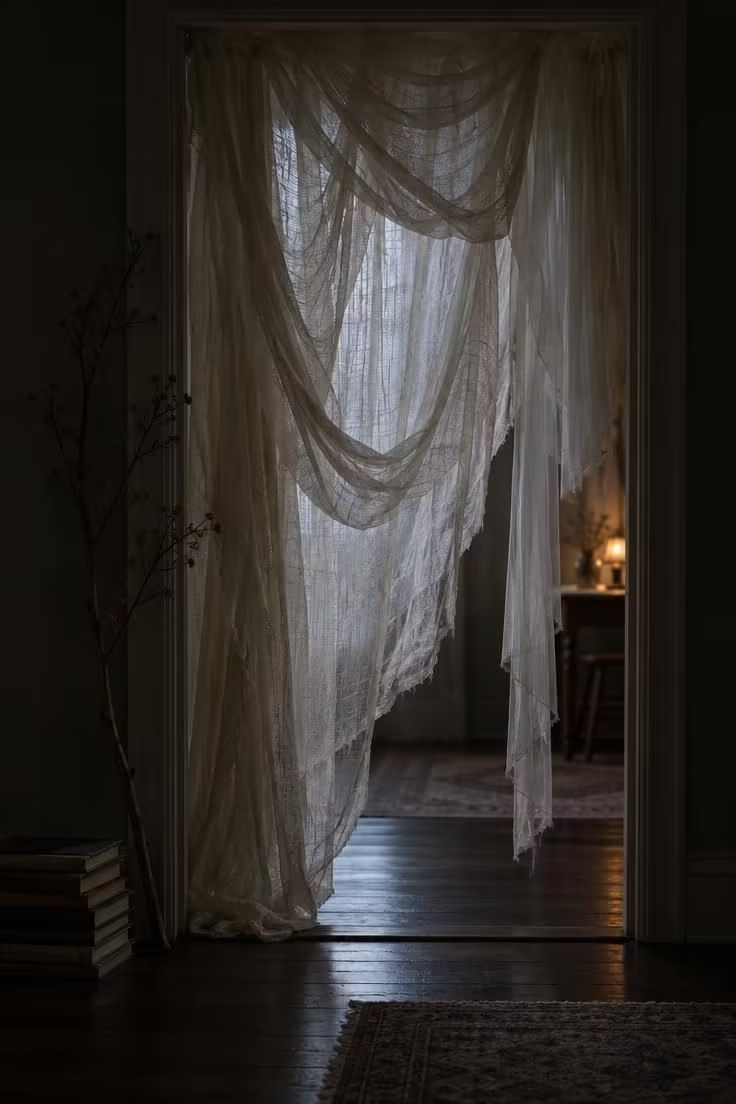
Gathered fabric holds shape and diffuses light, while taut fabric exposes whatever sits behind it and loses the glow.
Layering a coarse gauze under a finer tulle gives the drape depth and a visible weave at both distances.
One backlight does the whole job, since a second source flattens the folds and kills the translucency.
Leaving the lower third of the opening clear lets guests pass without pushing fabric aside or catching a shoulder on the way through.
Gauze and tulle collect dust, resist easy cleaning, and typically last a single season or need gentle hand washing.
Fabric draped low across a walking path catches shoulders, drinks, and rings, so keeping the drape above waist height preserves both the look and the evening.
A single doorway or closet opening gives the same threshold moment in a small home, and the same setup can work as one small halloween party decoration among several.
Design Pro-Tip: Photograph your draped entryway from the dark side of the threshold with the backlight on. That camera position is where guests will actually see the glow.
Mixed-Height Candle Cluster on a Dark Runner
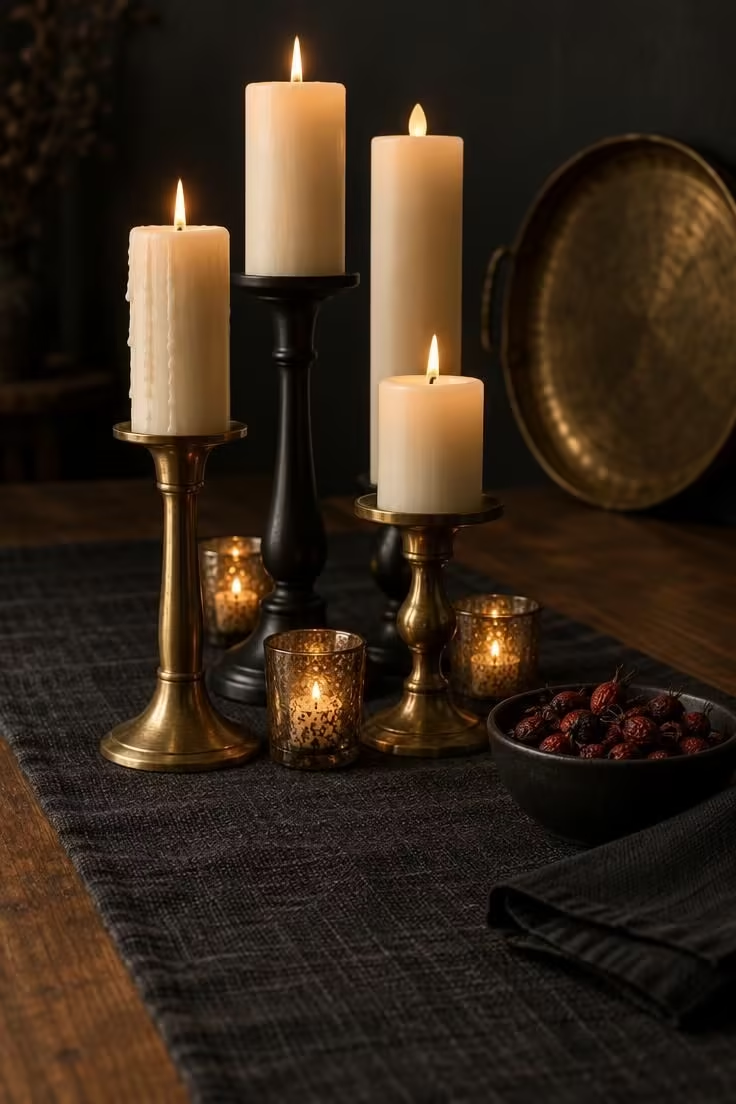
Working in three heights, low, mid, and tall, gives the eye a path across the arrangement.
Uniform-height candles read as a row rather than a centerpiece.
Keeping every candle in one color family, cream or bone or charcoal, prevents the cluster from splintering visually.
Candlesticks in one finish hold the group together, since mixed brass, matte black, and glass cancel each other out.
Clustering tightly beats spacing candles evenly, which flattens the composition across the runner.
This arrangement works as the table's single centerpiece, and a second competing arrangement splits attention.
Layered candle heights and a dark runner build the kind of spooky halloween decor that reads as moody rather than theatrical.
Real-flame candles drip wax onto linens and runners, and flameless pillars read nearly identically at party distance while skipping the cleanup.
Real-flame candles are a decorative choice some hosts avoid around costumes and paper decor, and flameless candles give the same candlelit silhouette as a visual alternative.
Glass and ceramic candlesticks store compactly and reuse year to year, while wax is consumable.
On a small table, one tall candlestick flanked by two votives gives the same layered read.
Style Blueprint:
- Work in three heights, low, mid, and tall, so the eye has a path across the arrangement
- Keep every candle in one color family, cream, bone, or charcoal, never mixed
- Choose candlesticks in one finish rather than mixing brass, matte black, and glass
- Cluster tightly instead of spacing candles evenly across the runner
- Place a flameless pillar at the same height as the tallest real candle so the silhouette matches
Apothecary Shelf With Backlit Glass Bottles
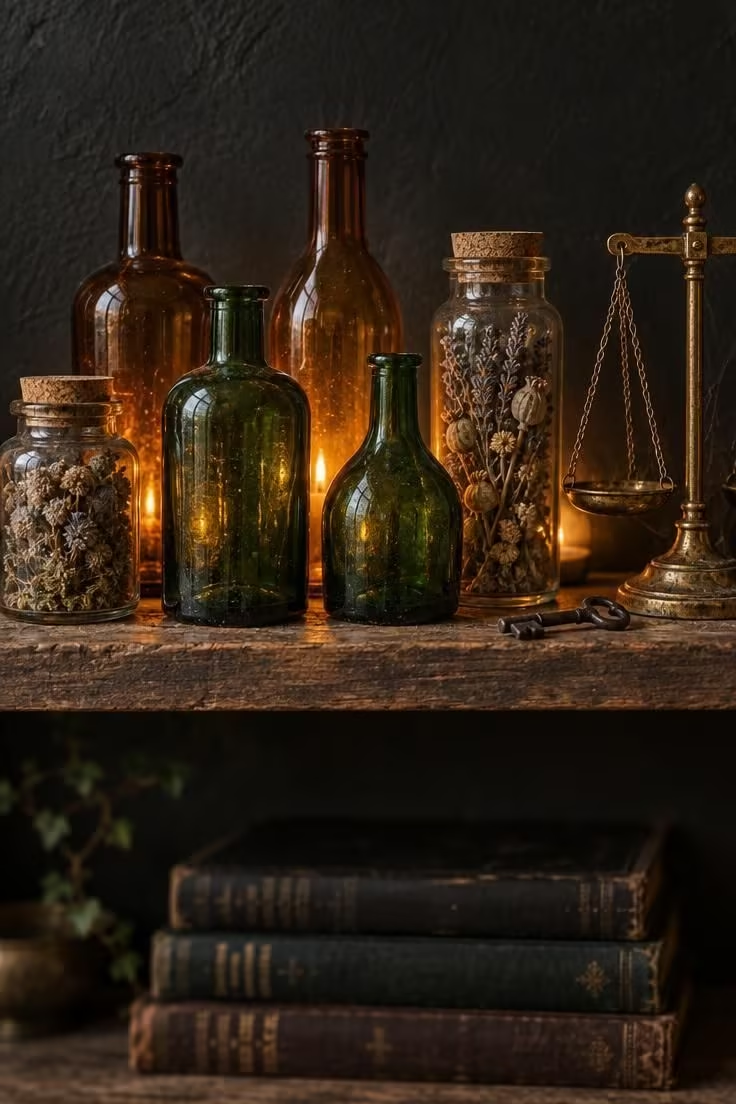
Odd numbers, three, five, or seven, give a styling group a rhythm that even pairs lack.
Backlighting is the whole idea here, because amber and green glass reads as dark clutter in a dim room unless light passes through it.
Varying bottle height and shoulder shape keeps the row from looking like a pharmacy shelf.
One non-glass object, a brass scale, a key, or a dried branch, acts as punctuation and gives the eye a matte surface against all that gloss.
Dried florals and cut branches drop material over an evening, so placing them where crumbs are easy to sweep saves trouble later.
Empty decorative bottles belong to display only and should stay clearly separate from anything guests might drink from.
Aging labels add detail, but fine text disappears in dim light, so larger handwritten labels read better.
A single tray on a side table carries the same story without a shelf, and this grouping can serve as a compact halloween apothecary shelf in a narrow room.
Style Blueprint:
- Group in odd numbers, three, five, or seven, rather than even pairs
- Vary bottle height and shoulder shape so the row has rhythm
- Backlight the glass so the amber and green tones actually glow
- Keep a single non-glass object, a scale, a key, or a dried branch, as the group's punctuation
- Stay within amber, green, and brass rather than adding a fourth color
One Pool of Light on a Dimmed Table
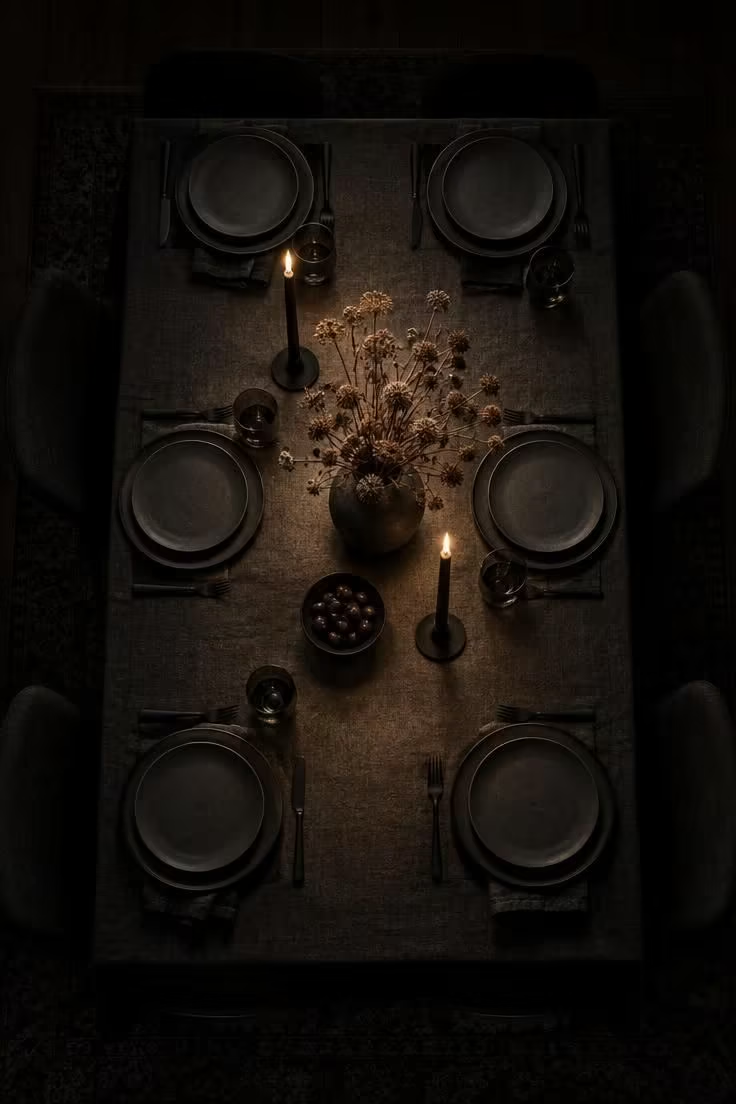
One bright zone against dim surroundings tells guests where to look, and layering additional ambient light flattens the effect.
Inside the light pool, large shapes, strong contrast, and matte finishes read clearly, while fine pattern and low-contrast detail vanish.
Tall centerpieces, cluttered condiments, and reflective objects without light aimed at them often belong outside the pool.
Charcoal, slate, and bone plates hold the mood, and bright white plates bounce the light and lift the room out of it.
A heavily dimmed room makes menus and food harder to read, so keeping the pool wide enough for comfortable serving matters.
This composition is at its best before and after the meal, when guests are standing and moving rather than seated and reading.
A second, much dimmer pool at a sideboard gives the room depth without splitting the focal point.
If the room already runs warm, cooling the table light toward moonlight blue and keeping the candles warm creates contrast.
A small dining nook with one pendant already has this composition built in as halloween table decor.
Design Pro-Tip: Set your table light one notch lower than feels right, then stand at the doorway and look back. That doorway view is the composition your guests will actually see.
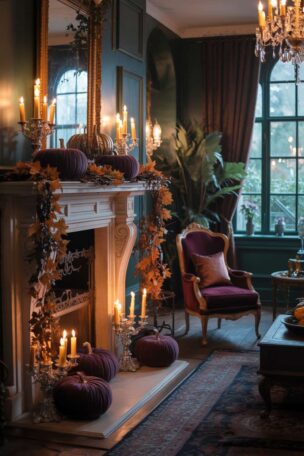
Layered Mantel Vignette With a Candelabra
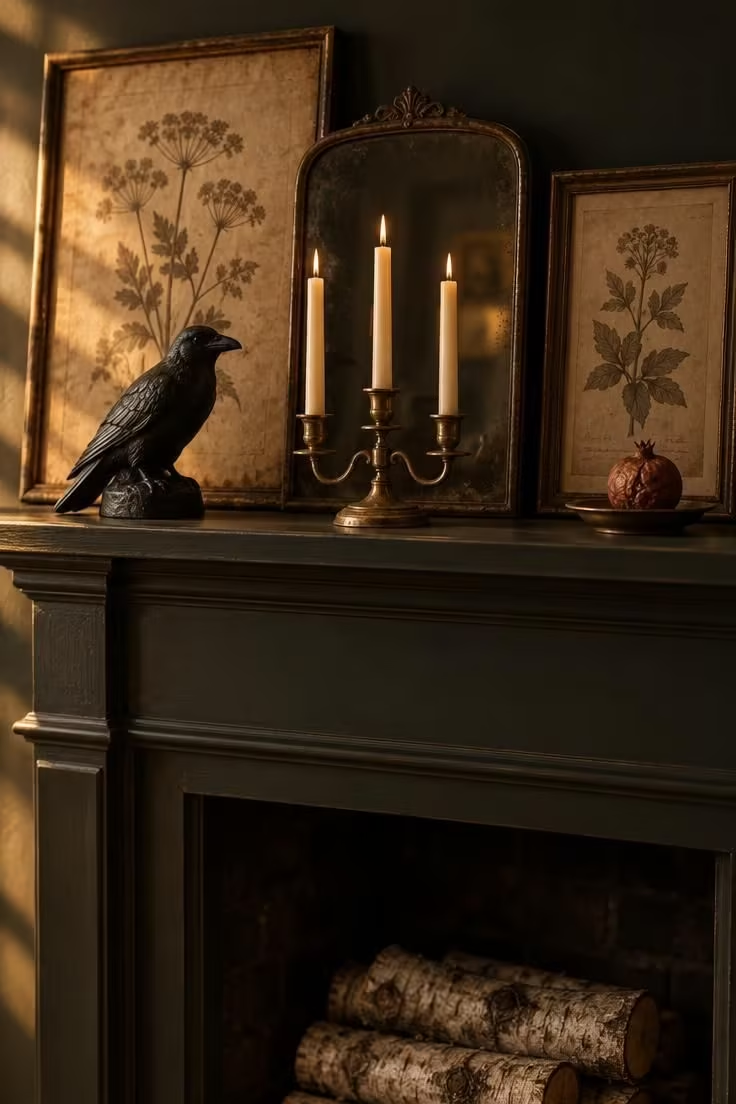
Building in three depths, a leaning back layer, an upright middle, and a low front, gives the vignette dimension that a flat row never has.
Off-centering the tallest object keeps the arrangement reading like a styled moment rather than a display shelf.
One sculptural anchor, with everything else supporting it, holds the composition together.
Leaning framed prints rather than hanging them keeps the layers adjustable throughout the season.
The mirror only earns its place when light falls near it, since otherwise it reads as a dark rectangle.
A busy mantel competes with the dining table as a focal point, so choosing which one leads the room matters.
Leaning frames and a low candelabra sit close to the front edge, where a passing guest is more likely to bump them, so keeping that row shallow helps.
Frames, candelabra, and prints store compactly and adapt to other seasons by swapping only the prints.
A narrow console in a hallway gives the same three-layer composition at half the width.
Style Blueprint:
- Build in three depths, a leaning back layer, an upright middle, and a low front
- Off-center the tallest object rather than creating a centered peak
- Use one sculptural object as the anchor and let everything else support it
- Lean framed prints rather than hanging them so the layers stay adjustable
- Keep frames, candelabra, and objects within brass, black, and aged paper tones
Hand-Height Photo Corner With One Clean Backdrop
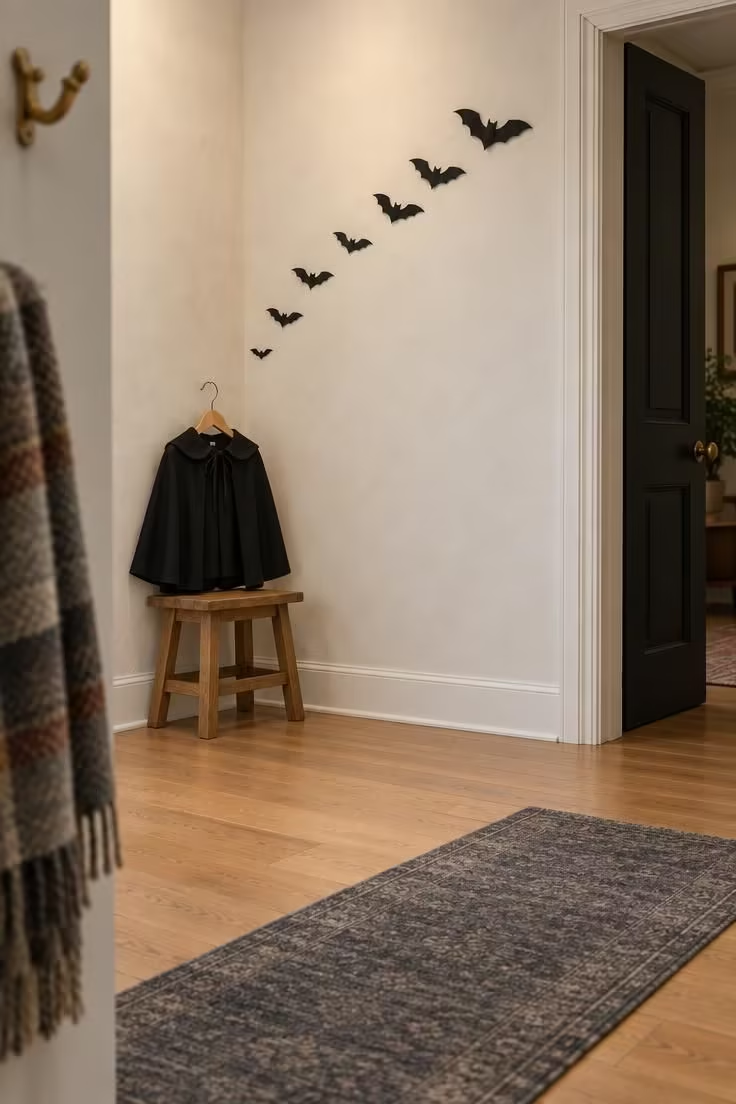
A halloween photo corner works best when the backdrop stays simple and the styling stays above shoulder height.
Decoration above shoulder height frames a guest's head rather than hiding it, while one prop at hand height gives guests something to do without cluttering the arrangement.
Depth behind the standing spot matters more than adding more props, since a guest standing two steps in front of the wall reads better than one pressed flat against it.
A single soft source in front of the guest works, while backlighting turns faces into silhouettes.
The corner holds floor space all evening, even when no one is using it, so placing it where guests already pause, near the entry or at the end of a hallway, keeps it useful.
Paper decorations at head height get knocked over the course of a party, so keeping the styled element high enough to clear hair and hats helps.
A paper backdrop and one prop flatten into almost nothing between seasons, and a stair landing or the wall beside a doorway gives the same clean backdrop in a small home.
This setup doubles as halloween entryway decor when the corner sits near the front door.
Style Blueprint:
- Choose one backdrop and stop rather than adding a second competing element
- Keep the styled element above shoulder height so it frames a guest's head
- Place one prop at hand height for guests to hold
- Leave depth behind the standing spot so a guest can step forward from the wall
- Match the corner's palette to the party palette so photos look intentional
Darkened Mirror Reflecting a Candle Cluster
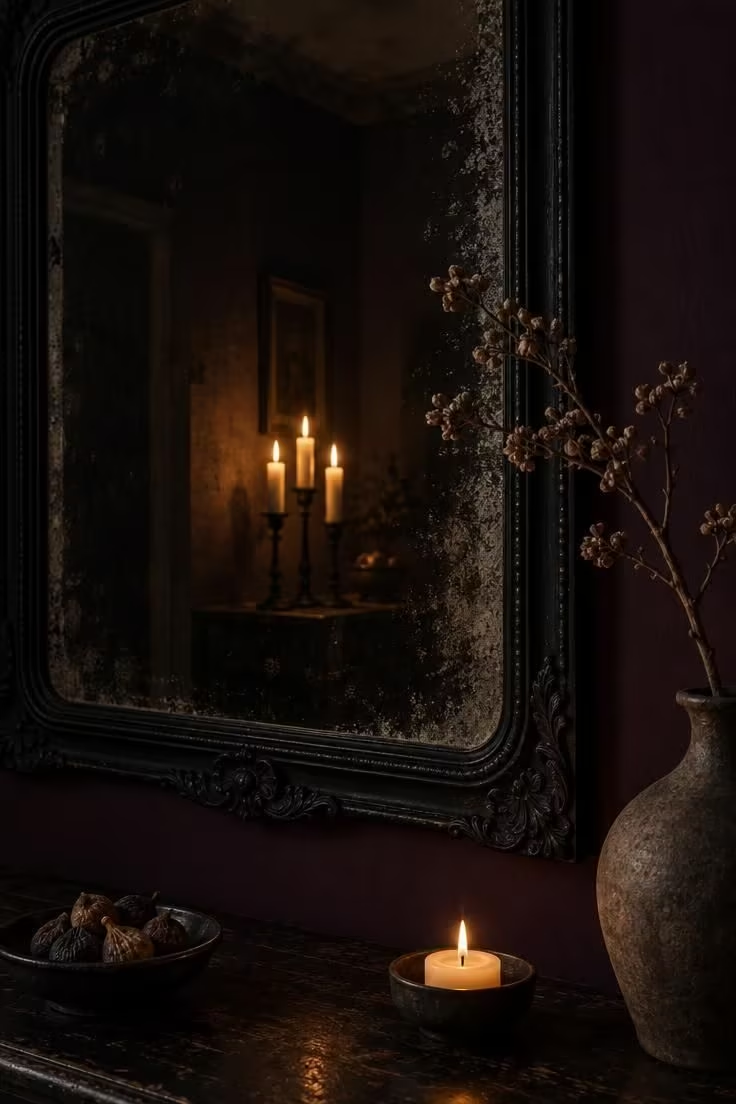
A mirror doubles one small light source into two, giving depth for the cost of a single halloween candle display.
Keeping the reflected arrangement small and tight preserves that effect, since a wide reflected arrangement turns to mud in the glass.
Letting the mirror's age and speckling stay visible keeps the antique read, because perfect glass loses the character that makes the reflection interesting.
Pairing the mirror with one matte object, a dried branch, a stone, or a dark ceramic, gives the eye a surface contrast against the glass.
Positioning the mirror so it reflects the room's warmest light, rather than its brightest, keeps the glow from turning flat.
Reflecting a doorway means the mirror catches every passing guest and reads as busy.
Tarnished or darkened mirror glass looks intentional here but shows fingerprints and smudges clearly, so expect to wipe it before the party.
Style Blueprint:
- Aim one light source at or near the mirror so the reflection actually glows
- Keep the reflected arrangement small and tight, one subject only
- Let the mirror's age and speckling stay visible rather than polishing it clear
- Pair the mirror with one matte object to contrast with the glass
- Position the mirror so it reflects the room's warmest light, not its brightest
Glowing Silhouette Behind a Sheer Curtain
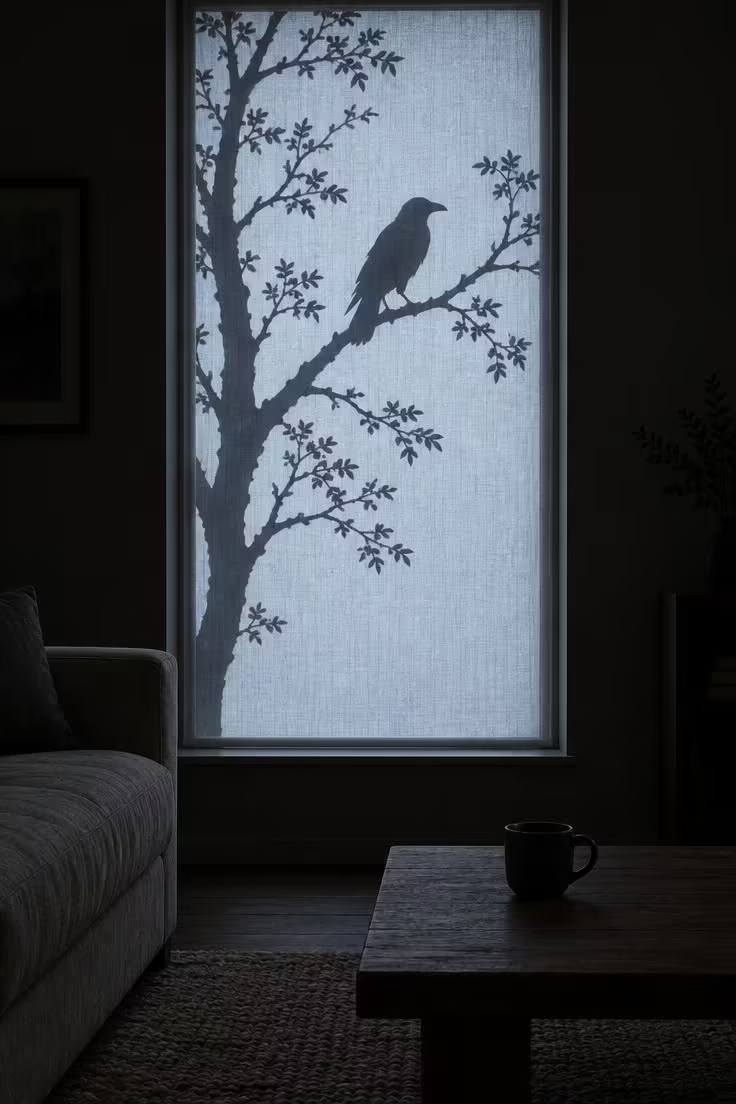
Guests register a lit window as a glow with a shape inside it, which suits a hallway or transition space rather than a room's main focal area.
Scale matters greatly here, since a small silhouette inside a large lit panel reads as a smudge.
The sheer panel does the diffusing that makes the glow soft, and a bare lit window with a shape in front loses that quality.
Sheer panels show every crease and dust line against a backlight, so steaming or pressing before the party makes a visible difference.
A halloween silhouette wall in a lit panel becomes the room's brightest surface, so using it in a hallway or separate room keeps the table leading.
A single small window or glass cabinet door gives the same passing-glow moment in a compact home.
Swapping a cool backlight for warm amber turns the same silhouette into a lantern-like glow.
Design Pro-Tip: Walk past your lit silhouette panel from three rooms away. If the shape is not readable at that distance, it is too small for a glow effect.
Two-Tone Black-and-Bone Table
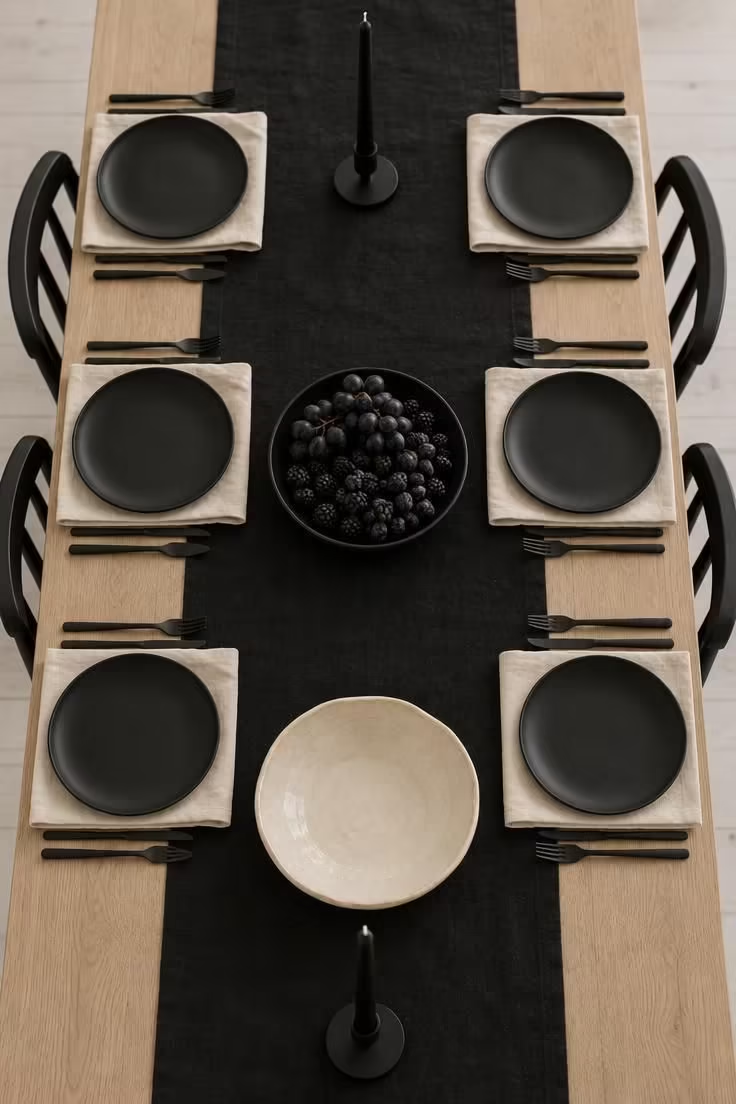
With color removed, form and silhouette carry the entire composition, which holds up under nearly any light.
Fine pattern, printed napkins, and detailed centerpieces disappear into that restraint, so committing to two tones means letting go of those layers.
Bone linens show every spill, so keeping a second runner on hand for the second half of the evening rescues the look.
An all-black table under a dim light reads as a void, and the bone ground is what makes the dark objects visible.
Varying the finish within the two tones, matte plates against a glossy vessel, gives the eye something to catch.
Matte black and bone are the most reusable pairing on this list, since both work again for other gatherings with a different centerpiece.
The scheme works on a four-seat table as easily as a long one, with only the number of place settings changing.
These two-tone settings can anchor halloween party decorations in a dining room without competing with the rest of the decor.
Style Blueprint:
- Commit to exactly two tones and keep a third color out of the composition
- Vary the finish within the two tones, matte against glossy, rather than the color
- Keep the centerpiece low and dark so the tabletop pattern stays visible from standing height
- Use the lighter tone as the ground and the darker tone as the objects
- Repeat one shape, a round plate or a round bowl, so the scheme has a rhythm
Friendly Halloween Decor With Soft Shapes and Warm Low Light
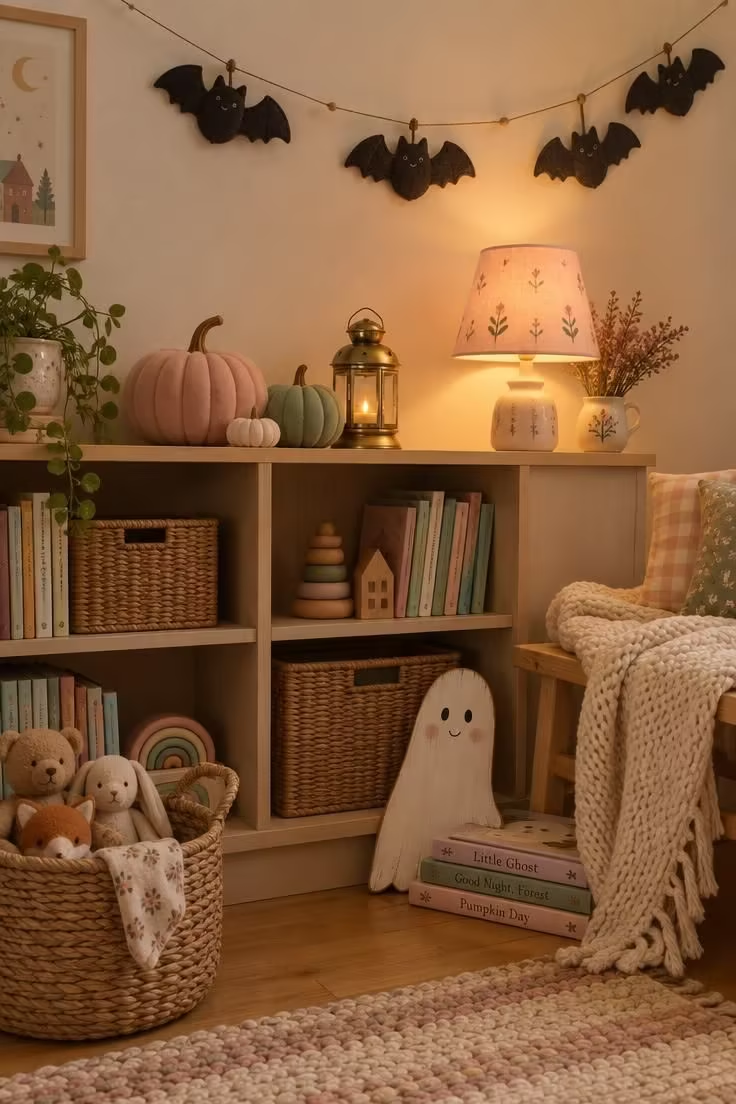
Soft shapes and rounded edges read as approachable in a way that sharp silhouettes do not, which suits homes where young children or guests who prefer gentler themes will be present.
Felt and knitted textures give the corner a matte warmth that glossy paper and plastic cannot match.
Keeping the light warm and low, rather than bright and cool, does most of the work of making pastels feel seasonal rather than summery.
Sticking to a small pastel range, blush, sage, cream, and pale pink, keeps the corner reading as intentional rather than scattered.
Felt and knitted decorations collect dust and are difficult to clean deeply, so treating them as seasonal pieces and storing them in a breathable bag between years extends their life.
Pastel pieces sit at the opposite end of the Halloween palette from black-and-orange classics, so mixing the two in one room tends to mute both.
A small corner of a playroom or the end of a shelf carries this theme without a dedicated space, and these pieces work well as friendly halloween decor for a casual gathering.
Style Blueprint:
- Choose soft shapes and rounded edges in felt, wool, or knit rather than sharp silhouettes
- Stay within a small pastel range, blush, sage, cream, and pale pink
- Keep one warm light source low in the composition rather than overhead
- Mix in one natural material, wood or brass, so the pastels have an anchor
- Let the styling overlap with everyday objects, books, blankets, baskets, so the corner feels lived in
Conclusion
These ideas come down to composition rather than shopping, and most of them lean on light, contrast, and one focal point instead of new purchases.
The strongest rooms usually pick one idea per zone: one focal wall, one table treatment, one entry moment, rather than layering every idea into a single space.
Practicality separates the keepers from the one-season experiments, since ideas that store flat or stack compactly return year after year while wax, dried botanicals, and heavily taped arrangements tend to last a single October.
Adapt palettes, heights, and materials to what your own rooms already hold, because the underlying logic, contrast, layering, and one strong light source, holds regardless of the specific objects.