This post may contain affiliate links. If you make a purchase through these links, we may earn a commission at no additional cost to you.
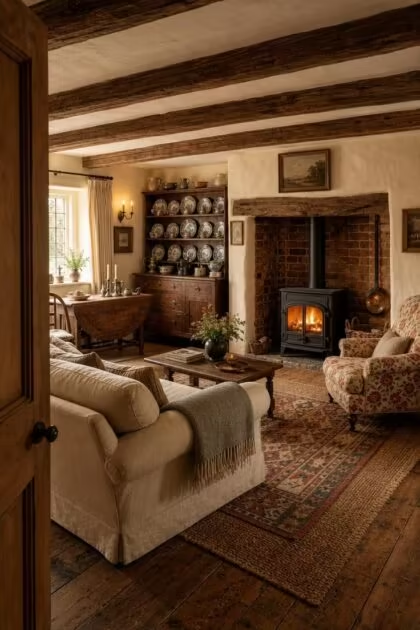
There is something about an english cottage living room that makes you want to sit down and stay a while.
Low ceilings, worn wood, and soft fabrics layered over decades create rooms that feel as if they grew into their beauty rather than being decorated all at once.
Whether your home has original period details or modern bones that need a little dressing up, the ideas in this collection will help you bring that same quiet, collected warmth into your own space.
Each one captures a specific scene you can recreate, from hearthside arrangements to the way light falls through a deep-set window onto a faded rug.
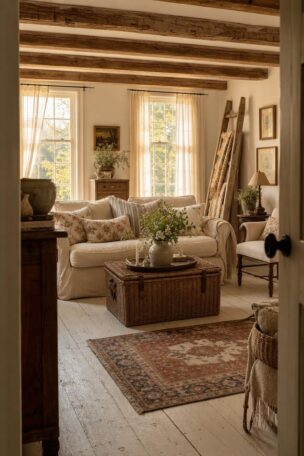
A Low Oak Coffer With Brass Hinges as a Coffee Table
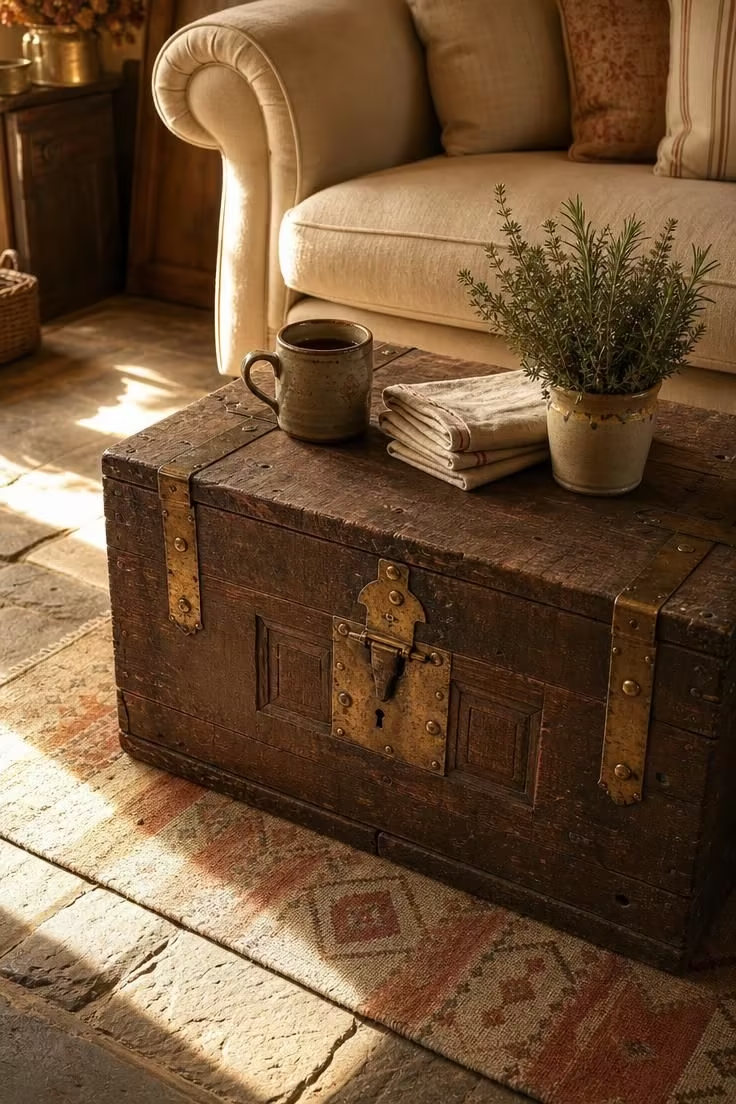
An old blanket chest makes a better coffee table than anything you could buy new.
This oak coffer, with its hand-forged brass hinges darkened by centuries of handling, brings the kind of weight and warmth that flat-pack furniture simply cannot replicate.
The flagstone flooring beneath it grounds the whole room in texture, each stone slightly uneven and cool to the touch.
A faded kilim layered over the stone adds color without competing for attention.
On top, a few carefully chosen objects, a stoneware mug, a bundle of garden herbs, some folded linen, turn the surface into a still life rather than a storage shelf.
The worn edges and ring marks on the oak tell a story that new wood never could.
Style Blueprint:
- A low oak coffer or blanket chest with original brass or iron hardware
- Flagstone or reclaimed stone flooring beneath
- A flat-weave kilim or cotton rug in muted earth tones
- Salt-glazed stoneware and fresh herbs for tabletop styling
Climbing Roses Framed Through a Deep Stone Casement Window
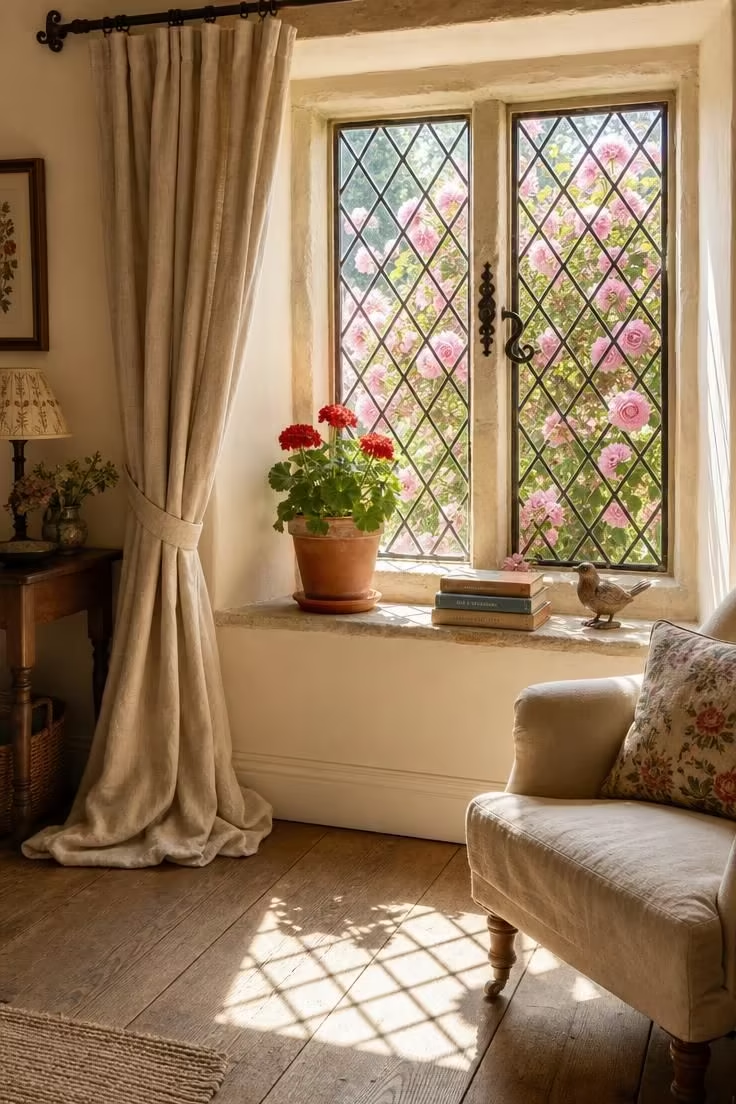
Few things feel more rooted in the English countryside than the view of climbing roses through old glass.
The deep stone reveal of the window creates a natural shelf, a stage for the kind of small, personal objects that make a room feel genuinely inhabited.
A potted pelargonium, a ceramic bird, a few old books, these are not decoration but evidence of someone’s daily life.
The leaded glass breaks the bright midday light into fragments that scatter across the reclaimed oak floor in shifting diamond patterns.
Leaving the linen curtain untied and slightly puddled on the boards gives the whole scene a relaxed quality, as if the room was arranged by habit rather than intention.
The roses outside press close enough to touch, blurring the line between garden and living room.
That blurring is one of the core pleasures of cottage life, where indoors and outdoors stay in constant conversation.
Style Blueprint:
- A deep-set casement window with small panes or leaded glass
- Climbing roses or jasmine trained on the exterior wall
- An unlined linen curtain on a simple iron or wooden pole
- A stone or plaster window sill with a potted plant and personal objects
- Wide oak or elm floorboards catching the incoming light
A Tufted Chintz Floral Armchair Beside an Inglenook Fireplace
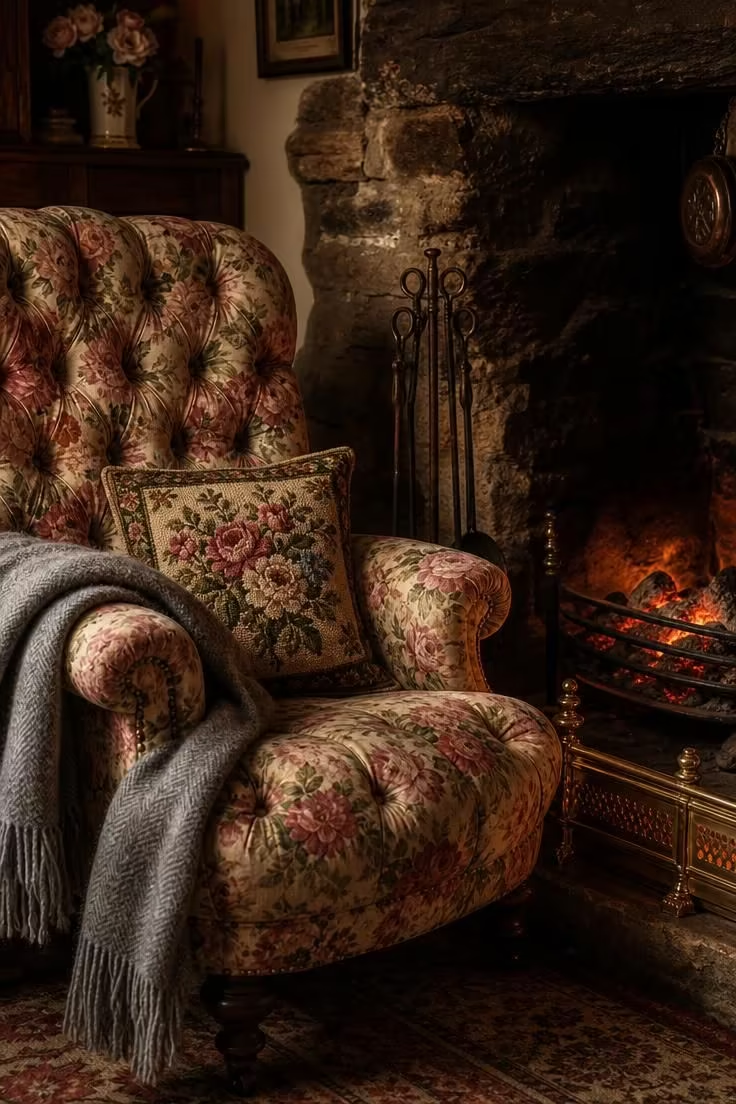
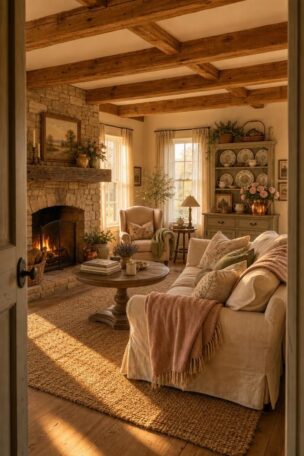
The inglenook fireplace is the emotional center of any cottage living room, and placing a deep armchair right beside it is the oldest form of comfort there is.
This chintz floral fabric, with its full-blown cabbage roses, is the kind of pattern that has anchored English interiors for three hundred years.
The button tufting gives the chair a structured formality that plays well against the rough stone of the hearth.
Firelight does something particular to chintz, warming the pinks and deepening the greens until the whole surface seems to glow.
A needlepoint cushion in the seat adds another layer of handwork, another suggestion that this room has been loved and mended over generations.
The brass fender at the hearth catches every flicker from the fire basket and throws it back into the room as tiny moving points of light.
There is a reason this arrangement has survived centuries of changing fashion.
It works because it addresses something basic in us, the desire to sit close to warmth, wrapped in softness, protected by stone walls.
Style Blueprint:
- A deep button-tufted armchair in chintz floral fabric
- An inglenook fireplace with stone surround and iron fire basket
- A brass fender and iron fire tools
- A wool throw and needlepoint cushion for layered texture
- Low firelight as the primary light source
Lime Wash Plaster Walls in Warm Cream With Gilt-Framed Botanicals
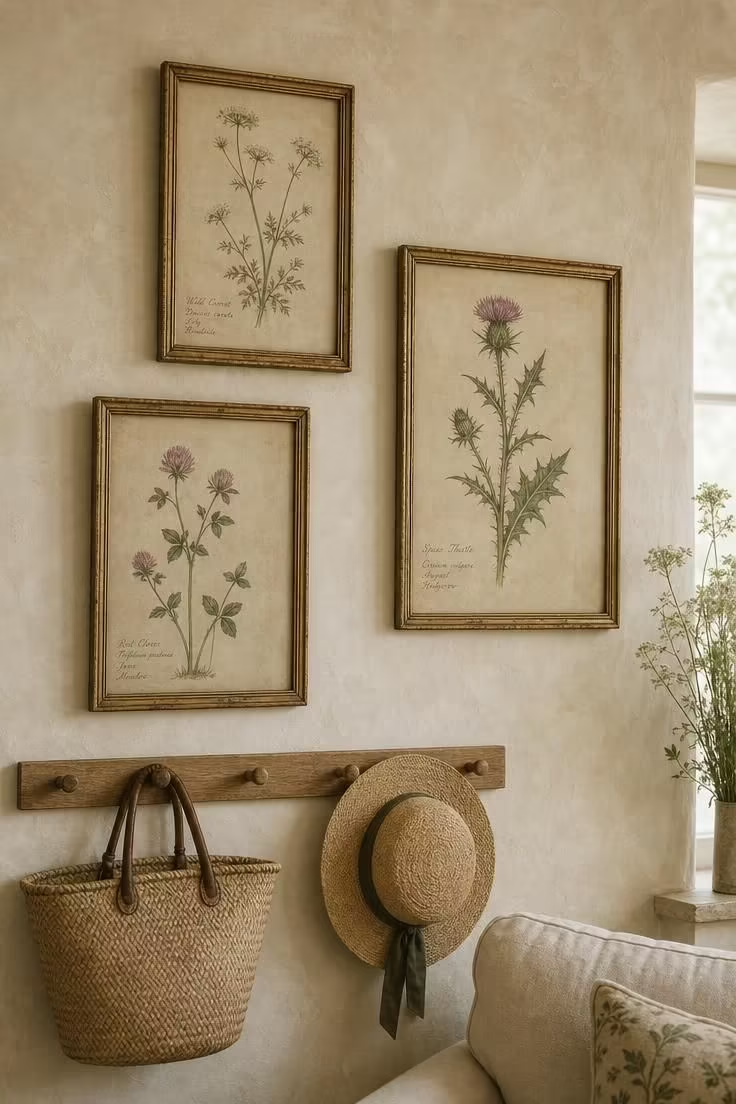
Lime wash walls have a texture that no roller-applied paint can match.
The brush strokes remain visible in the finish, creating a surface that shifts subtly as the light changes throughout the day.
In warm cream, the effect is soft and chalky, a backdrop that makes everything hung on it look more considered.
These gilt-framed botanicals work precisely because they are imperfect, slightly foxed, faded by decades of daylight, framed in mismatched gold frames of different widths.
The oak peg rail below them is a practical detail borrowed from Shaker interiors that English cottages adopted long ago.
A hanging basket and a sun hat turn the rail into a working part of daily life rather than a decorative afterthought.
Style Blueprint:
- Lime wash plaster in warm cream or off-white
- Gilt-framed antique botanical or natural history prints
- A simple oak or ash peg rail at hip height
- Woven baskets and everyday objects hung from the rail
Design Pro-Tip: When hanging prints on textured lime wash walls, use picture rail hooks rather than drilling into the plaster. The chalky surface can crumble around screws, and picture rail lets you adjust placement without patching holes every time you rearrange.
A Welsh Dresser Stacked With Blue-and-White Transferware
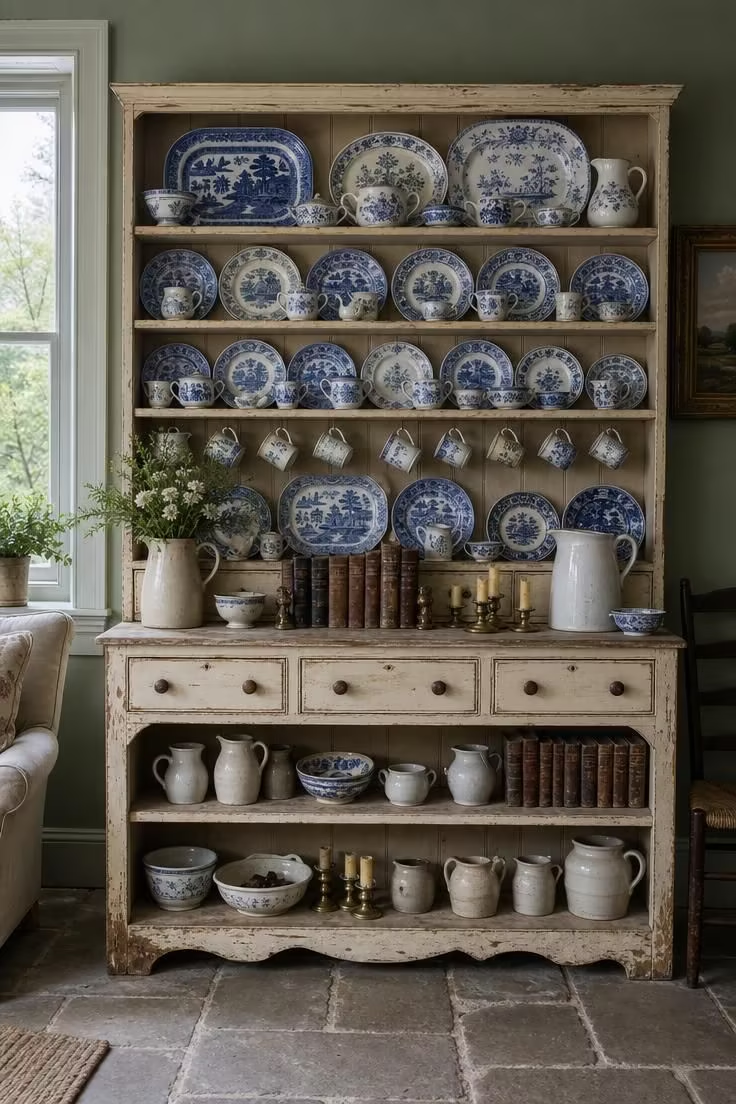
A Welsh dresser display is as much a portrait of its owner as it is a piece of furniture.
The plates stacked in the rack, the jugs lined up on the lower shelf, the candle stubs and old books, all of it accumulates over years of browsing antique markets and car boot sales.
Blue-and-white transferware is the classic choice, and for good reason: the patterns read clearly against painted wood, and mismatched pieces from different makers sit together without clashing.
The key is casual abundance, plates leaning at slight angles, cups hung from hooks rather than lined up with military precision.
Painting the dresser in soft putty white and letting the paint wear away at the corners gives it the look of something that has always been in the room.
Cool morning light is kind to this kind of display, revealing the blue glaze tones without washing them out.
The cottage color palette here, sage, putty, porcelain blue, stone, is one that has repeated across English country homes for generations.
A stone floor beneath anchors the dresser and keeps the eye grounded.
The whole arrangement works because it looks loved rather than styled.
Style Blueprint:
- A freestanding pine or oak Welsh dresser with plate rack
- A collected mix of blue-and-white transferware and ironstone
- Beeswax candles, old books, and small brass objects for the lower shelves
- A painted finish in putty white, sage, or muted green with visible wear
- Stone or flagstone flooring beneath
Reclaimed Elm Floorboards Under a Layered Kilim Runner
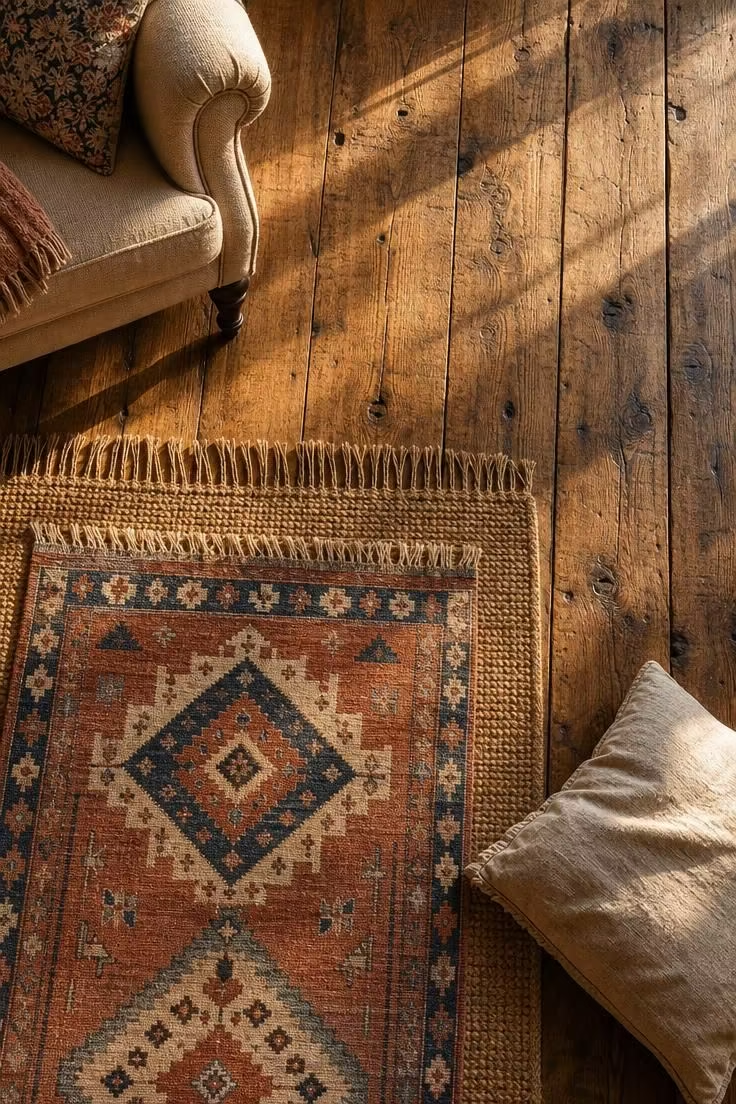
A reclaimed oak floor, or in this case elm, is the foundation that every other decision in the room builds on.
The wide boards have a grain and color that new wood cannot replicate, darkened by decades of boot traffic and furniture scraping.
Layering rugs is the cottage way to soften hard floors without covering them completely.
A jute rug goes down first for texture, and a faded kilim on top for color and pattern.
The combination creates depth underfoot, a sense that the floor has been dressed in stages over time rather than outfitted all at once.
A rolled-arm sofa nearby, its turned oak legs matching the boards beneath, ties the seating area to the floor in a quiet, unforced way.
The warm golden light raking across at a low angle is what brings all these textures alive, catching every grain line and rug fiber.
Style Blueprint:
- Wide reclaimed elm or oak floorboards with visible grain and patina
- A natural jute or sisal base rug for texture
- A flat-weave kilim runner layered on top in faded earth tones
- A rolled-arm sofa with turned wood legs nearby
A Cast-Iron Stove Set Inside a Brick Hearth Alcove
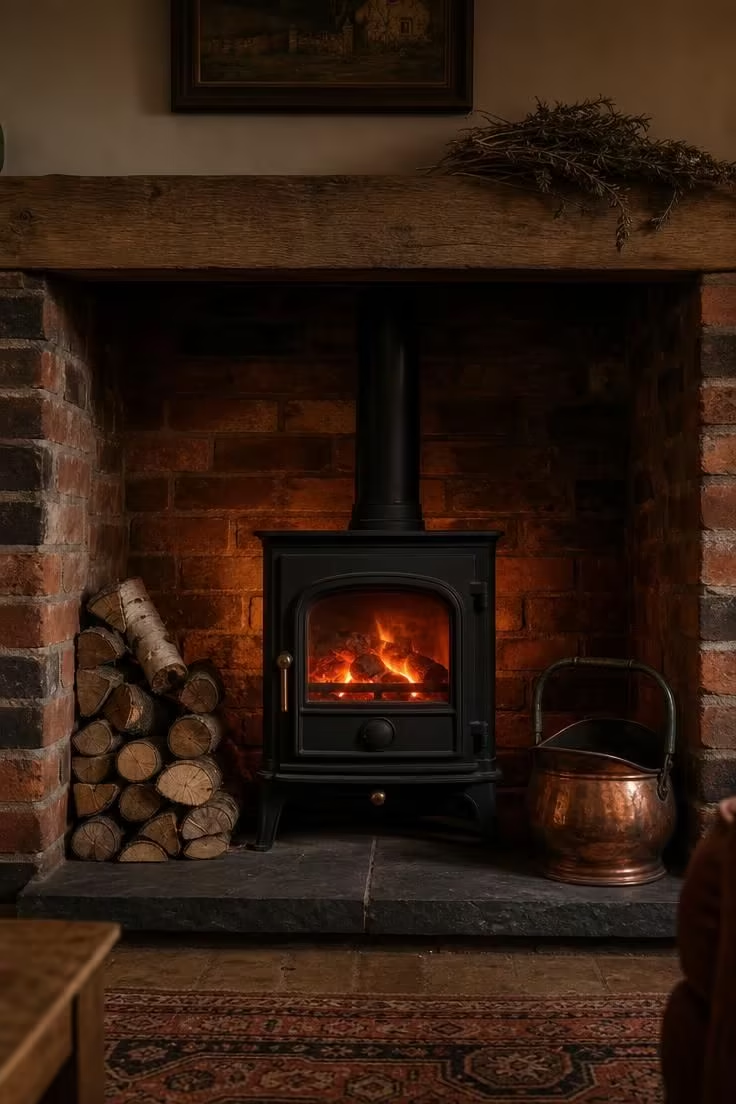
A wood-burning stove inside a brick alcove is the modern cottage answer to the open hearth.
It burns more efficiently, throws more heat into the room, and still gives you the flicker and glow that makes winter evenings worth looking forward to.
The brick alcove creates a natural frame, drawing the eye inward toward the glowing stove window.
Old handmade bricks in uneven reds and charcoals give the surround a warmth that new machine-pressed brick cannot match.
The oak lintel beam above is both structural and decorative, a reminder that these alcoves were originally built to hold open fires beneath heavy timber mantels.
A slate hearth slab handles the practical side, protecting the floor from sparks and ash while adding another layer of natural stone texture.
The copper coal scuttle is a link to an earlier heating era, now mostly decorative but adding a warm metallic accent against the matte black iron.
Dried rosemary on the mantel fills the room with a faint herbal scent when the stove heat rises.
Style Blueprint:
- A matte black cast-iron wood-burning stove with a glass door
- A brick-lined hearth alcove with an oak or elm lintel beam
- A slate or stone hearth slab extending in front
- A copper coal scuttle and stacked split logs for styling
- A dried herb bundle on the mantel
Gathered Linen Curtains Pooling on a Flagstone Floor
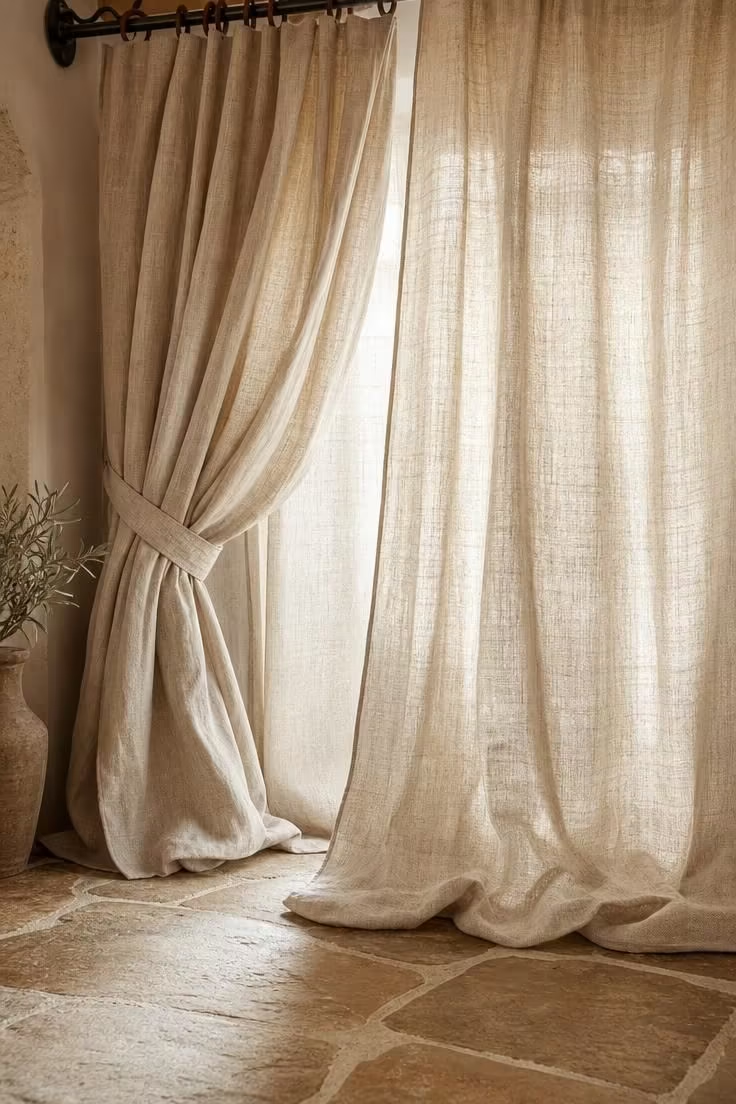
The point where a curtain meets the floor tells you a lot about a room.
In a cottage, letting linen puddle on flagstone is a deliberate choice, a small signal that comfort matters more than neatness.
Unlined oatmeal linen filters daylight without blocking it, turning harsh sun into a soft, even glow that fills the room without glare.
The flagstone flooring beneath, each piece a slightly different shade of warm sandstone, gives the curtain something beautiful to rest against.
Wrought-iron poles and wooden rings are the right hardware for this weight of fabric, simple and sturdy without drawing attention away from the drape itself.
Style Blueprint:
- Unlined oatmeal or natural linen curtains with generous length
- A wrought-iron curtain pole with wooden or iron rings
- Flagstone flooring in warm sandstone or limestone tones
- A deliberate puddle or break at the hem rather than a precise floor-length cut
A Gate-Leg Table With Pewter Candlesticks and Dried Lavender
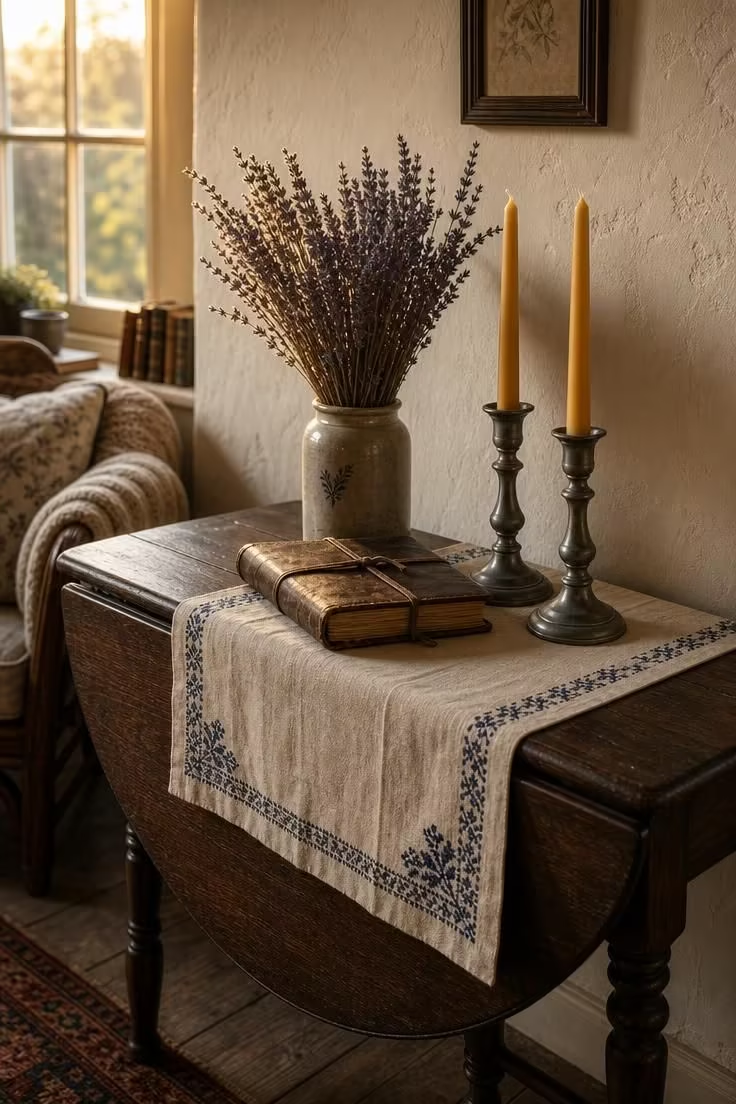
Gate-leg tables were designed for rooms where space had to serve more than one purpose.
With one leaf down, this table sits flush against the wall as a console.
With the leaf raised, it becomes a small dining surface for two.
That flexibility is pure cottage logic, furniture that earns its place by adapting.
Pewter candlesticks have a quiet authority that brass does not, their matte gray surface absorbing light rather than bouncing it back.
Beeswax tapers in pewter holders bring a golden warmth to the table without the polished formality of silver.
The dried lavender in a stoneware jar adds color and a faint clean scent that sharpens each time someone brushes past.
An embroidered linen runner grounds the arrangement, its cross-stitch borders proof of handwork that connects this table to an older domestic tradition.
Style Blueprint:
- A dark oak gate-leg table with turned legs
- Pewter candlesticks with beeswax tapers
- A stoneware jar with dried lavender or herbs
- An embroidered or cross-stitch linen table runner
- A worn leather journal or stack of old books
Design Pro-Tip: Beeswax tapers burn more slowly than paraffin and produce less soot, making them a better choice for cottages where candle smoke can stain low plaster ceilings over time. Look for hand-dipped English beeswax candles in the natural golden color rather than bleached white.
Needlepoint Cushions Mixed With Ticking Stripe on a Settle Bench
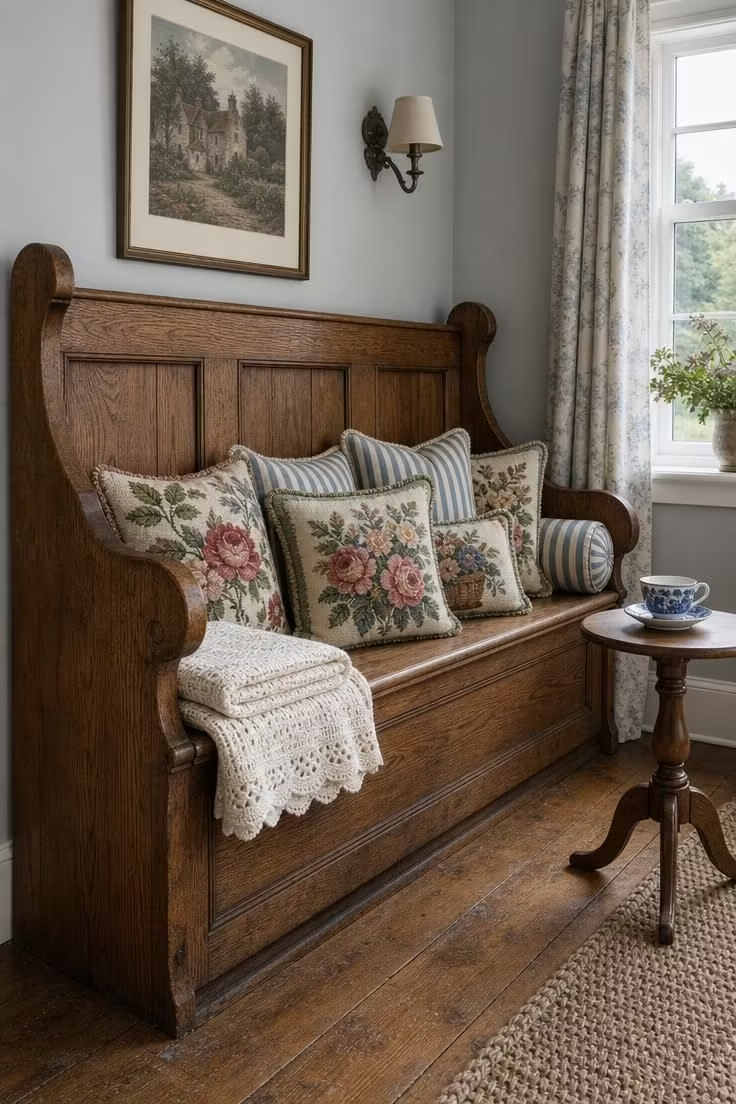
The settle bench is one of the oldest forms of English seating, built with a high back to block drafts in rooms that relied on a single fireplace for heat.
Its tall wooden back creates a sense of enclosure, almost like sitting inside a piece of furniture rather than simply on it.
Mixing needlepoint cushions with ticking-stripe bolsters follows the cottage rule of combining pattern scales, one detailed and small, the other bold and linear.
Hand-worked needlepoint has a texture that printed fabric cannot replicate, each stitch slightly raised, slightly irregular.
The ticking stripe beside it is the opposite: crisp, repetitive, and factory-made.
Together they create a conversation between the handmade and the manufactured that gives the bench depth and visual interest.
A crocheted blanket folded at one end is both practical and decorative, ready to be pulled over your knees on a cold evening.
The willow-pattern teacup on the side table ties back to the blue-and-white palette seen elsewhere in the room.
Cool overcast light is gentle on these fabrics, revealing the color range without washing out the softer needlepoint tones.
Style Blueprint:
- A high-backed oak settle bench or hall bench
- Hand-worked needlepoint cushions in muted floral motifs
- Blue-and-cream ticking-stripe cylindrical cushions
- A crocheted or knitted cotton throw for one end
- A small side table with blue-and-white china for scale
A Copper Kettle and Stoneware Jug on a Worn Pine Side Table
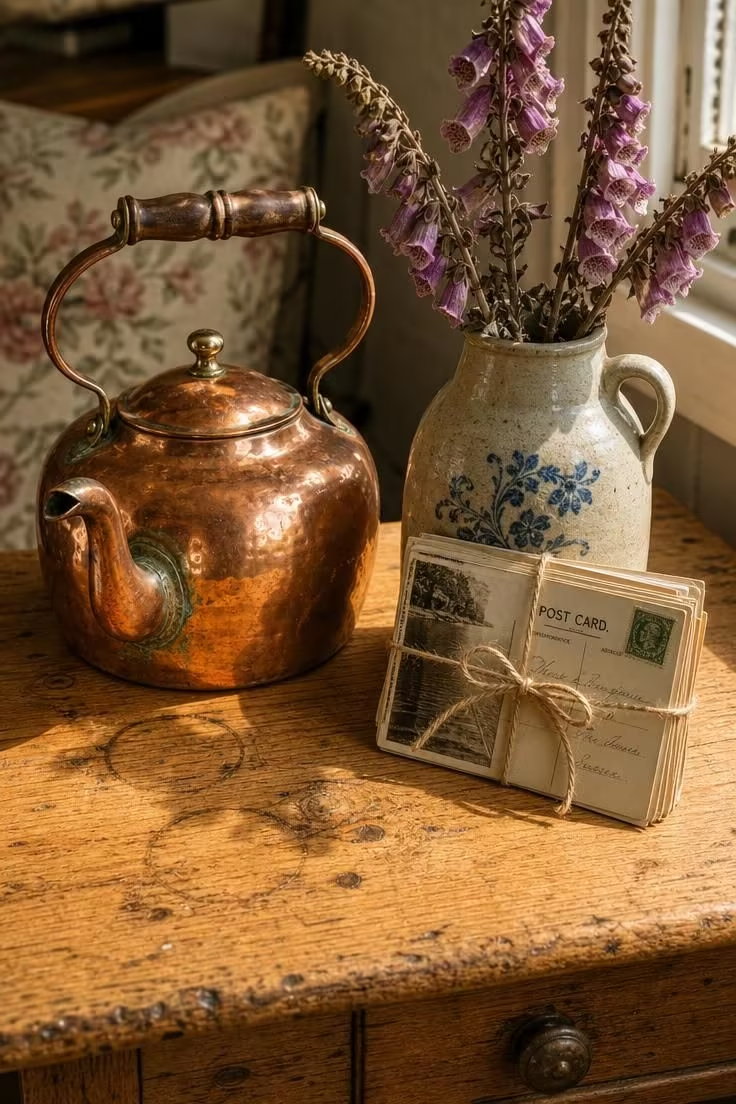
The surface of a well-used pine table is a record of every cup set down, every book dragged across it, every spill wiped up in a hurry.
Those ring marks and scratches are not damage.
They are character.
A copper kettle that has moved from the kitchen to the living room as a decorative object carries the same kind of earned beauty.
The verdigris at the spout, where moisture has slowly oxidized the metal, adds a green accent that no stylist could plan better.
Dried foxgloves in a salt-glazed jug bring the garden indoors in preserved form, their dusty purple holding its color for months.
Bright midday light is the best way to appreciate these surfaces, catching every scratch in the pine and every dimple in the copper.
Style Blueprint:
- A worn pine or elm side table with visible age marks
- A polished copper kettle or vessel with natural patina
- A salt-glazed stoneware jug with dried garden flowers
- Old postcards, letters, or small paper ephemera for personal detail
Hand-Hewn Chestnut Beams Framing a Low Plaster Ceiling
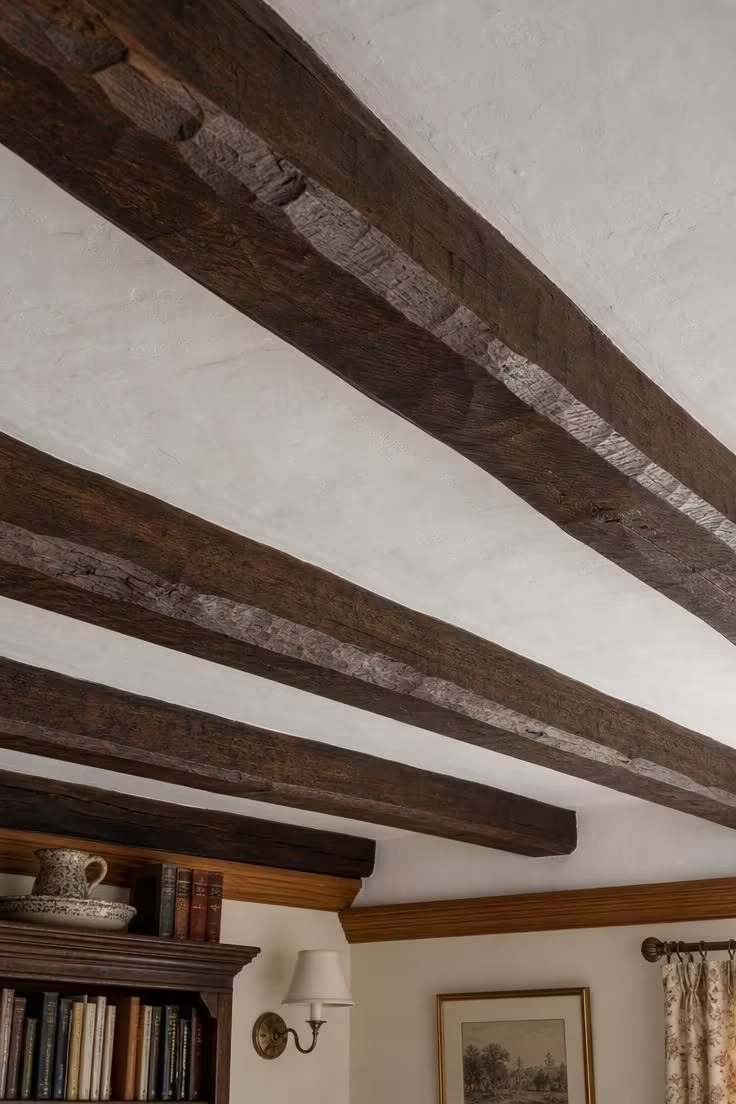
An exposed beam ceiling tells you immediately that you are in a building with history.
These chestnut beams, shaped with an adze rather than a saw, carry the tool marks of the carpenter who fitted them, possibly centuries ago.
The low ceiling they support is part of the appeal, creating a sense of shelter and enclosure that high-ceilinged modern rooms often lack.
Whitewashed plaster between the beams brightens the space without hiding the structural bones.
The slight unevenness of the plaster, thicker in some places, thinner where it has been patched over generations, gives the ceiling movement and warmth.
A brass wall sconce below the beam line throws light upward, catching the texture of both wood and plaster at the same time.
The picture rail running below is a practical addition that lets you hang and swap artwork without putting hooks into old plaster.
Low ceilings ask you to choose proportional furniture, keeping pieces below shoulder height and avoiding tall items that would make the room feel cramped.
Style Blueprint:
- Hand-hewn chestnut, oak, or elm beams with visible tool marks
- Whitewashed lime plaster between the beams
- A brass wall sconce that throws light upward onto the ceiling
- An oak picture rail below the beam line for hanging art
- Low-profile furniture to respect the ceiling height
Design Pro-Tip: If your cottage has blackened beams that have been painted or varnished in a previous era, resist the temptation to strip them back to raw wood. The dark patina is the result of centuries of woodsmoke and polish. Stripping removes that history and often reveals surprisingly pale timber that looks out of place. A coat of dark beeswax polish restores the depth without paint.
A William Morris Willow Boughs Print on a Deep Reading Chair
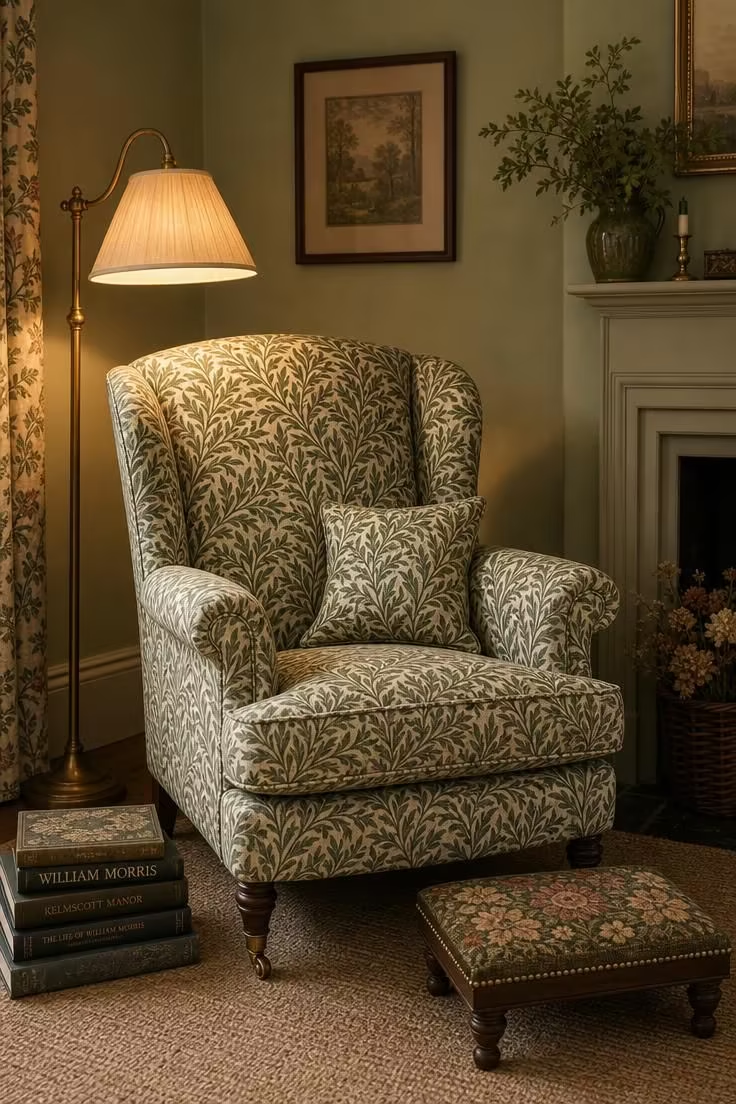
A William Morris print on upholstery brings the Arts and Crafts tradition directly into the room.
Willow Boughs, with its repeating pattern of curved branches and elongated leaves, is one of the more restrained Morris designs, making it a good choice for a large piece of furniture.
The green and cream colorway reads as almost neutral from a distance, revealing its complexity only when you sit down and look closely.
A Howard-style chair, deep-seated and low-armed, is the right frame for this fabric because it shows a large uninterrupted area of the pattern.
The brass floor lamp beside it provides the kind of focused side light that reading actually requires, unlike overhead fixtures that leave the page in shadow.
Books stacked on the floor rather than shelved say something about how this chair gets used, as a place for active reading, not display.
A needlework footstool drawn up close completes the arrangement, making it physically difficult to leave once you have settled in.
Style Blueprint:
- A deep-seated reading chair in a William Morris print fabric
- A brass floor lamp with a cream linen or silk shade
- A low needlework-covered footstool positioned within reach
- Books stacked on the floor or a nearby low table
- A wall color that picks up one of the fabric’s secondary tones
Quarry Tile Hearth With an Embroidered Wool Fireside Rug
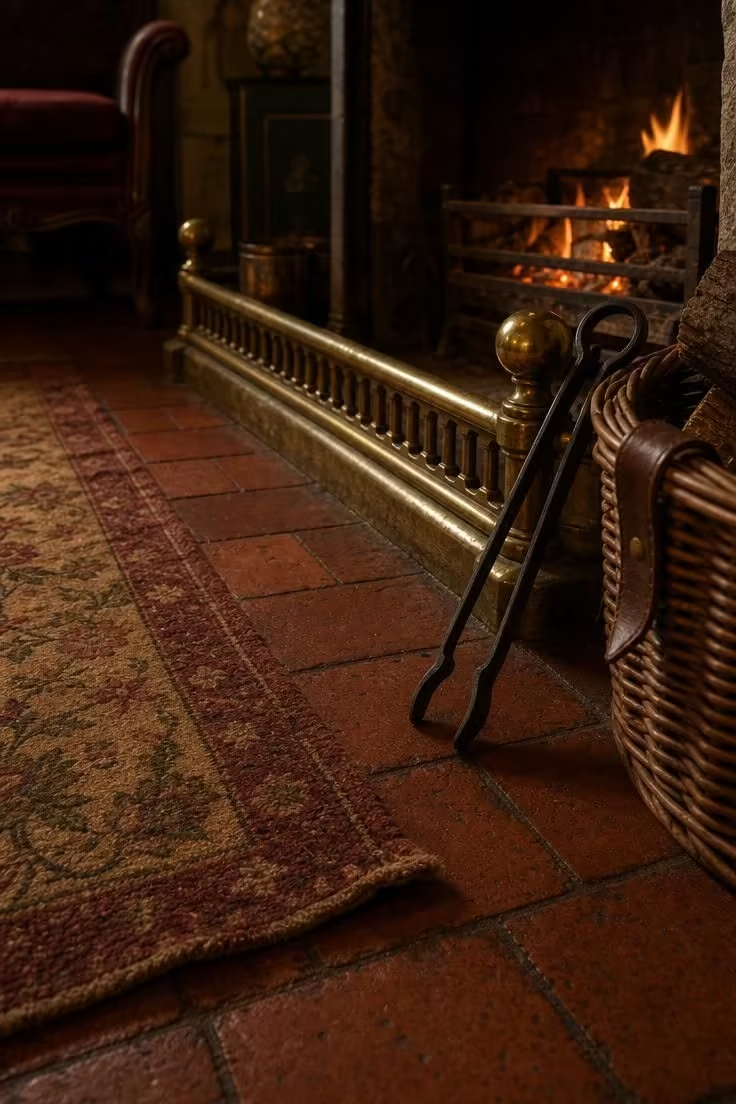
Quarry tiles have been the standard cottage hearth material for centuries, and their warm terracotta color only improves as they wear.
The slight unevenness of the surface, each tile a fraction different in shade and thickness, gives the hearth a handmade quality that polished stone cannot match.
An embroidered wool rug placed in front of the fire protects the tiles from sparks while adding a layer of softness underfoot.
The faded florals on the rug, once bright, now mellowed to muted burgundy and dusty rose, suggest decades of fireside evenings.
A brass fender with ball finials marks the boundary between hearth and room, a small but meaningful piece of metalwork that catches every shift in firelight.
The wicker log basket is the most practical object in this arrangement, keeping fuel within arm’s reach of the fire without trailing bark across the floor.
Style Blueprint:
- Quarry tiles in traditional red or terracotta for the hearth area
- An embroidered or hooked wool fireside rug in muted tones
- A brass fire fender with ball or urn finials
- Iron fire tools and a wicker or canvas log basket
- Low firelight as the dominant light source
A Freestanding Oak Bookcase Overflowing With Cloth-Bound Volumes
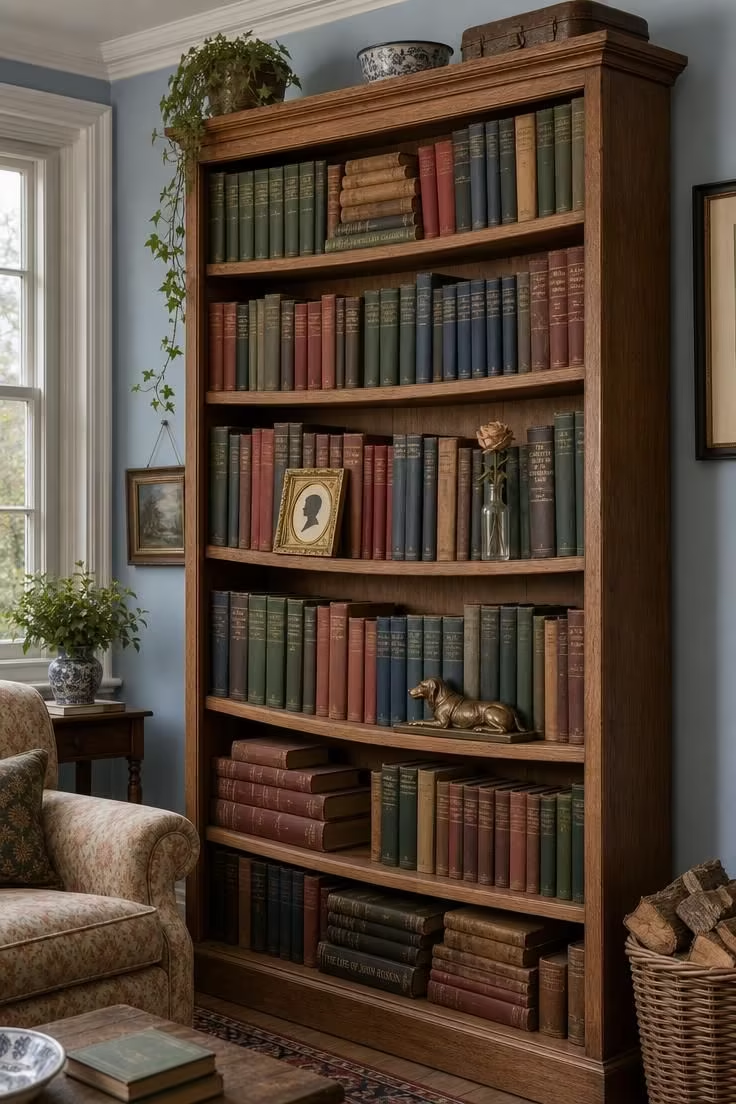
A bookcase that looks like it might collapse under its own weight is doing its job correctly.
The slight bow in the middle shelves, where hardbacks have pressed the oak downward over years, is a sign of genuine use rather than decorative staging.
Cloth-bound books in muted greens and deep reds have a warmth that glossy modern jackets lack, their spines fading and softening in color as they age.
Mixing upright and horizontally stacked books creates natural variation in the shelf line, avoiding the rigid uniformity of a styled display.
A small gilt-framed silhouette tucked among the volumes adds a personal note, a portrait that could be family or could be a market find.
The dried rose in a glass bottle is one of those small additions that takes almost no effort but changes the feel of an entire shelf.
Cool overcast light is the kindest illumination for a bookcase, revealing the range of cloth colors without washing out the darker spines.
The Wedgwood blue wall behind provides enough contrast to let the oak frame and book colors stand forward.
Style Blueprint:
- A tall freestanding oak bookcase with adjustable or fixed shelves
- Cloth-bound and leather-spined books in varied muted colors
- Small decorative objects tucked among the books, a framed silhouette, a brass bookend, a dried flower
- A painted wall in a heritage blue, green, or gray behind
- Even, natural light to reveal the full color range
A Brass Table Lamp With a Cream Silk Shade on a Mahogany Desk
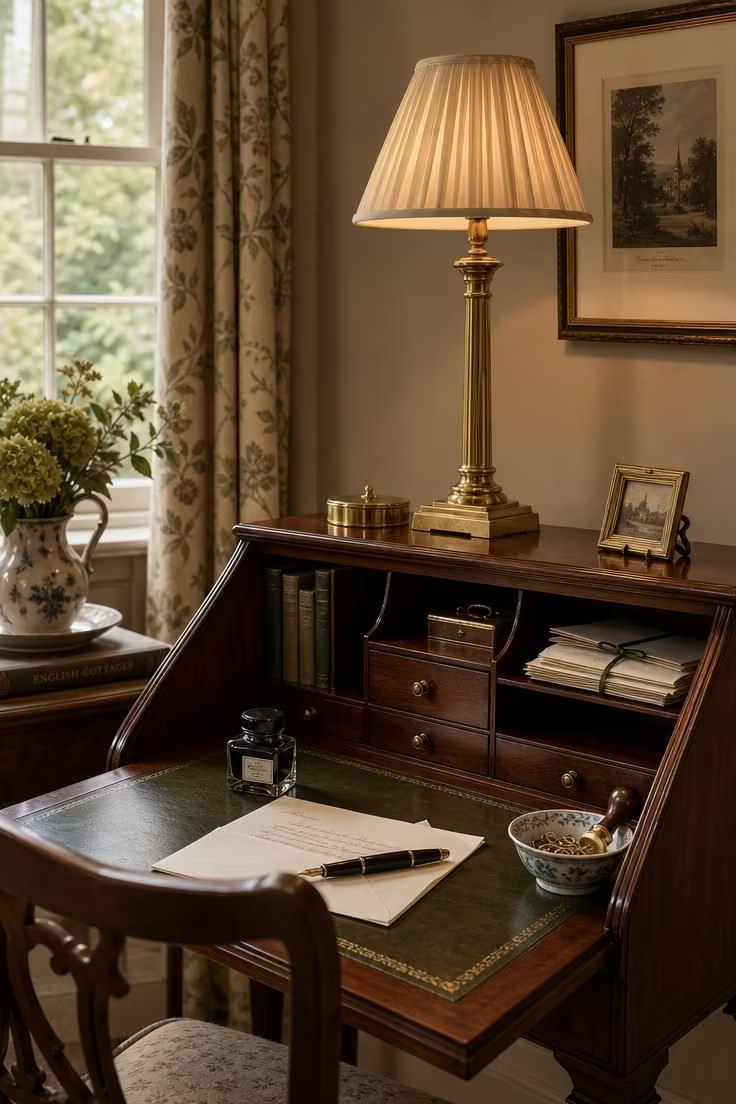
A dedicated writing corner is a luxury that cottages, with their many small rooms and odd alcoves, accommodate better than open-plan homes.
This mahogany desk, compact enough for a cottage-scale room, provides a surface for letters, lists, and the kind of slow thinking that a screen does not encourage.
The brass column lamp is the workhorse of cottage lighting, its gathered silk shade throwing a warm pool of light directly onto the writing surface.
Cream silk diffuses the bulb’s glare into something soft and golden, making the desk inviting to sit at even after dark.
The pigeonholes are sized for the pre-digital correspondence they were designed to hold, envelopes, folded letters, stamps, and calling cards.
A fountain pen and glass ink bottle are not affectations in this setting.
They are the tools that match the furniture’s era and purpose.
The lime wash walls behind, painted in a warm heritage tone, complete the sense that this corner belongs to a slower pace of life.
Style Blueprint:
- A small mahogany or walnut writing desk with pigeonholes
- A polished brass table lamp with a gathered cream silk shade
- A fountain pen, glass ink bottle, and writing paper
- A porcelain or brass dish for small desk objects
- A heritage-toned painted wall as backdrop
Design Pro-Tip: Position a writing desk near a window but facing into the room rather than directly at the glass. This avoids glare on paper during daylight hours and keeps the window light as a side source, the most flattering angle for reading your own handwriting. The table lamp takes over as the primary source in the evening.
A Low Stoneware Bowl of Garden Roses on an Elm Refectory Table
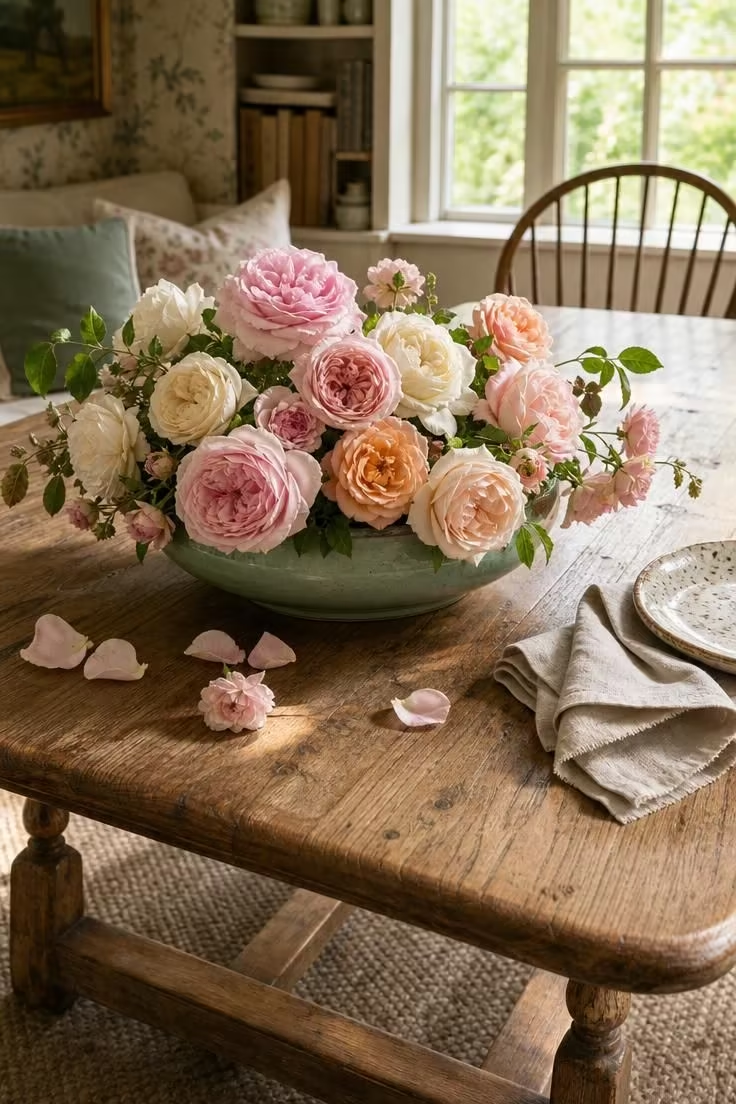
Garden roses in a shallow bowl on a long table is the single most effective arrangement you can make in a cottage living room.
The low profile keeps sightlines clear across the table while still filling the space with color and scent.
A celadon-glazed stoneware bowl is the right vessel because its muted green complements every shade of pink without competing for attention.
Loose, slightly blown roses with a few petals already falling look more natural than tightly packed buds, as if someone walked in from the garden five minutes ago and set them down.
The elm refectory table beneath is a piece of furniture built for communal life, long enough for a family supper, sturdy enough to last another hundred years.
Its stretcher base and worn edges are markers of age that pair naturally with the fleeting beauty of the flowers above.
Style Blueprint:
- A long elm or oak refectory table with a stretcher base
- A low stoneware bowl in a muted glaze for loose flower arrangements
- Fresh garden roses or seasonal cut flowers, loosely arranged
- A Windsor or ladderback chair at the table
- Natural linen and simple ceramic tableware nearby
Conclusion
An english cottage living room is not something you assemble in a weekend.
It is something you build slowly, piece by piece, season by season, until the room starts to feel as if it has always looked this way.
The oak coffer you found at a country auction, the chintz armchair you had reupholstered in your grandmother’s fabric, the Welsh dresser you painted yourself and filled with plates collected over a decade, each one adds a layer of personal history that no decorator can fabricate.
What holds these seventeen ideas together is a shared respect for materials that age well, handwork that shows, and light that is allowed to move through the room without interference.
If you take nothing else from this collection, take this: start with one good piece, place it where the light is best, and let the rest of the room gather around it.