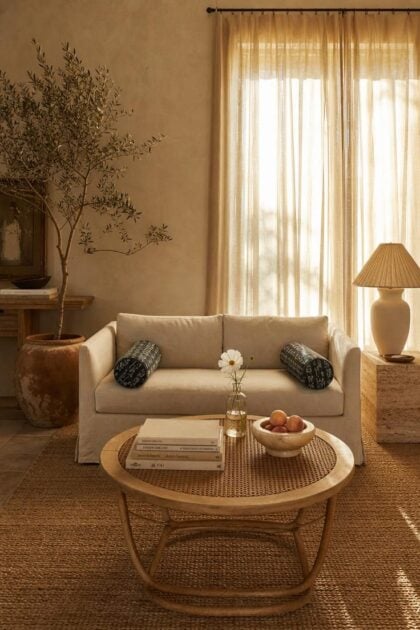
This post may contain affiliate links. If you make a purchase through these links, we may earn a commission at no additional cost to you.
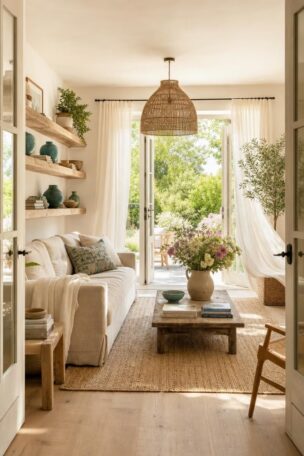
Summer arrives, but the living room often lags a season behind, holding onto velvet pillows, wool throws, and the heavier mood of cooler months.
This article walks through 13 small, mostly reversible moves that lighten the room without redecorating from scratch.
Most of them happen across a single afternoon, with a laundry basket of swaps and a trip to the garden.
The goal is not a themed makeover but a quieter, calmer version of the room you already love, ready for warm evenings and longer light.
If you have been collecting summer decorating ideas all spring, this is the list that turns them into actual furniture moves.
A Bleached Oak Console Topped With a Tall Olive Tree in a Terracotta Pot
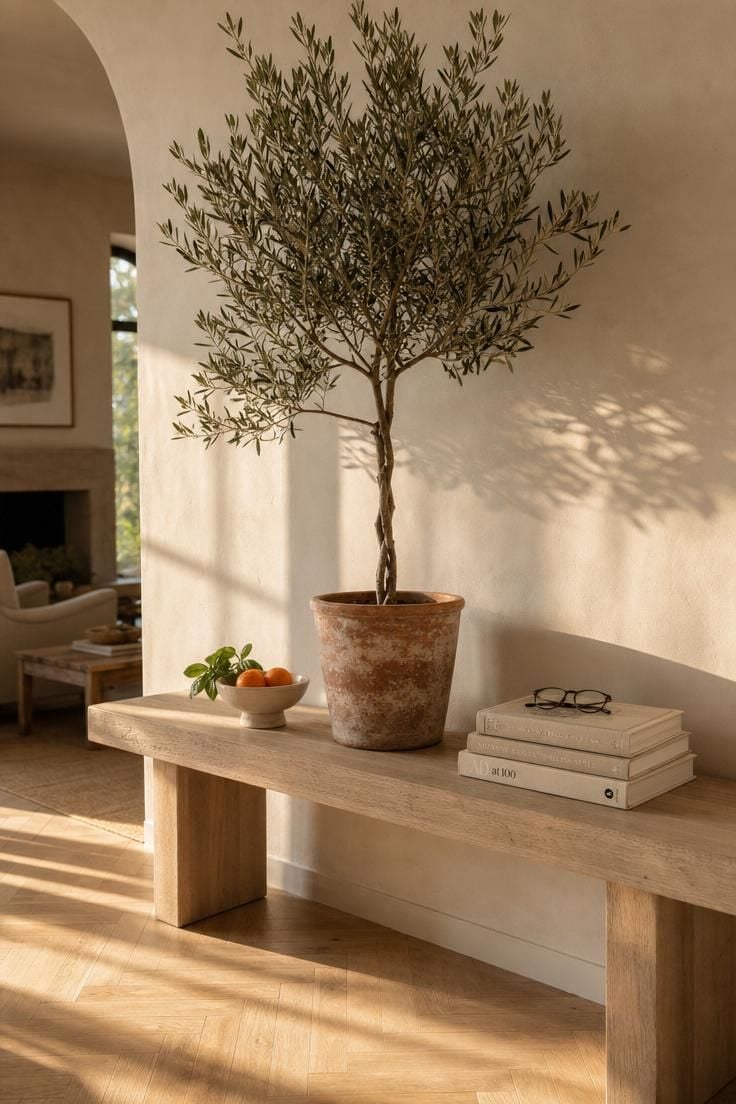
An olive tree is the single piece of greenery that does the most work in a summer living room.
The silvery leaves catch the afternoon sun and throw a quiet, almost coastal light across the wall behind them.
Unglazed terracotta is the right pot, not the glossy high-fired ceramic version, because the porous clay ages with white salt bloom and reads honest rather than decorated.
Place the console along the wall opposite your largest window so the tree clears the morning light line and reads as a silhouette by midday.
A small ceramic dish of stone fruit and a stack of linen-bound books finishes the surface without crowding it.
Olive trees want six hours of strong sun and a deep watering only when the top inch of soil is dry.
Style Blueprint:
- Bleached oak console table, 60 inches wide
- Five-foot olive tree, lightly braided trunk
- Aged unglazed terracotta pot, 14-inch diameter
- Small footed ceramic dish for seasonal fruit
- Stack of linen-bound hardback books in oat and ivory
Washed Linen Slipcovers in Buttermilk Over a Boxy Sofa
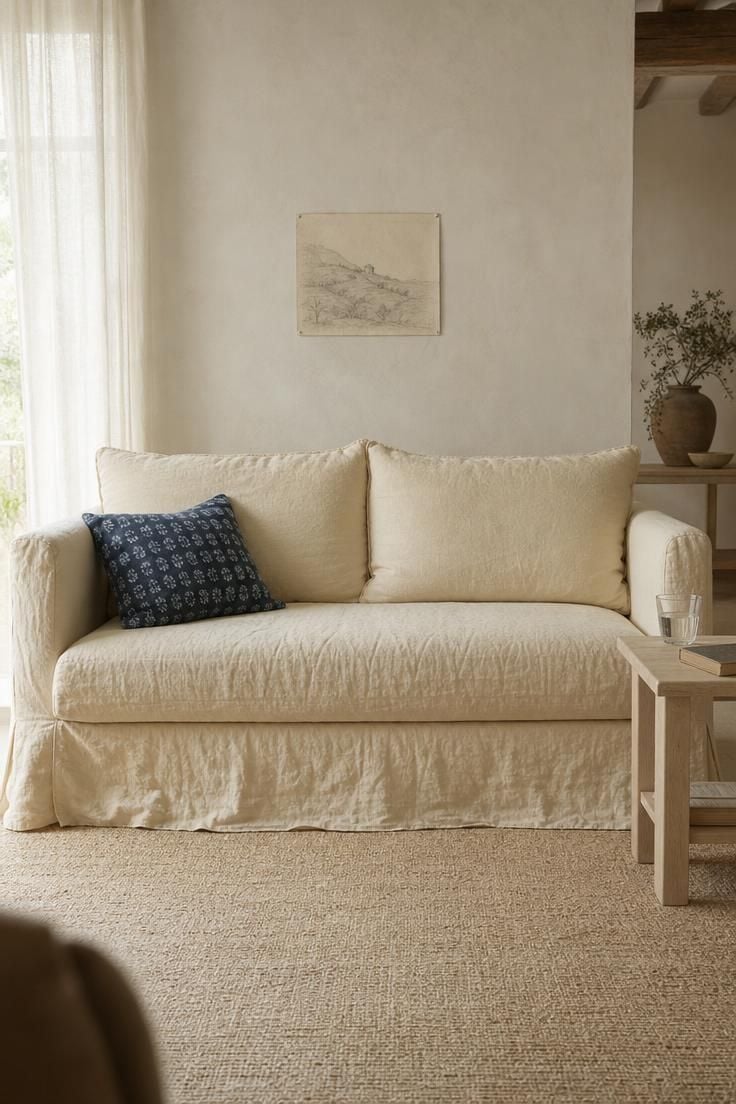
A washed linen slipcover is the fastest texture shift a sofa can make for summer.
The fiber reflects light differently than velvet or boucle, sending soft glow back into the room rather than absorbing it.
Buttermilk reads warmer than chalk and easier than oat, and it forgives the inevitable picnic-blanket dust of a working summer.
A gathered skirt drapes more honestly than a structured fit on a boxy frame, and a relaxed-fit slipcover is faster to put back on after washing.
Plan to launder it twice across the season, once midway and once at the end before storing.
Ready-made covers from a few well-known makers fit most standard sofa shapes, but a local upholsterer can pattern a custom set in a few weeks.
One contrast pillow in a deeper tone keeps the whole thing from going wedding-cake white.
Style Blueprint:
- Washed linen slipcovers in buttermilk, relaxed fit
- Boxy three-seat sofa underneath, neutral upholstery
- One contrast pillow in faded indigo block print
- Pale jute flatweave rug as the base
- Bleached pine side table for the human-scale props
A Caned Coffee Table Holding a Stack of Color-Sorted Pale Spines
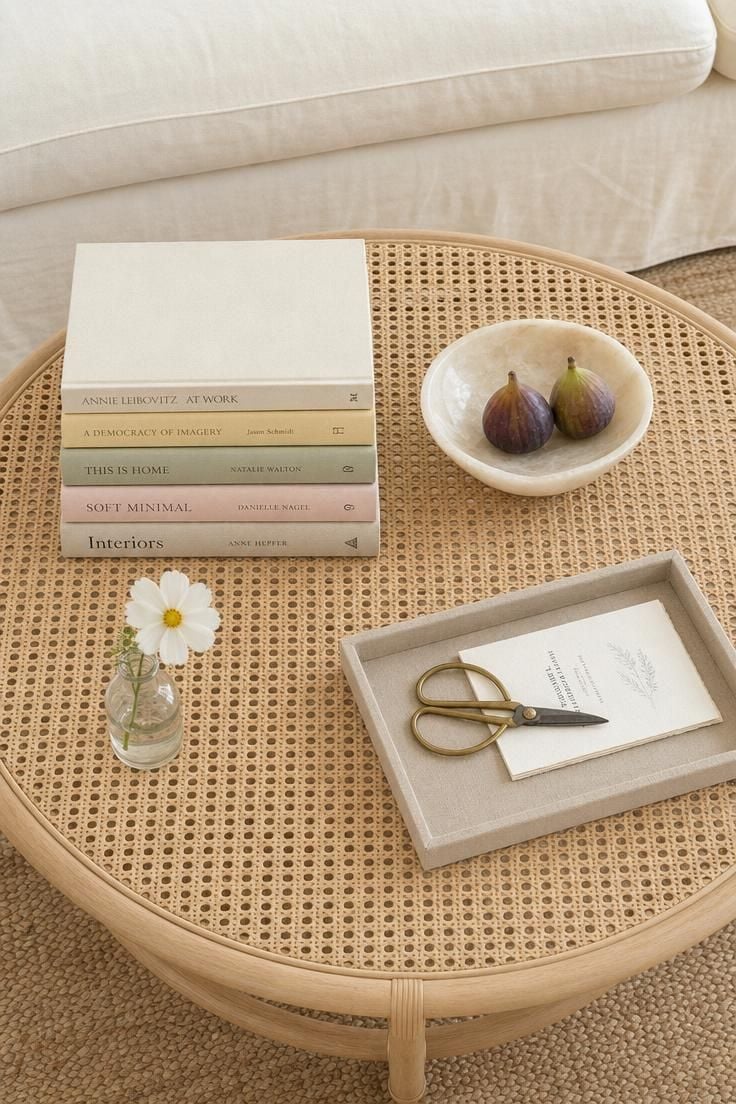
A caned coffee table feels lighter than a solid block of wood because the open weave lets the floor breathe under it.
The eye reads the surface as filled but airy, and the room behind the table stays visible through the gaps.
Color-sorting book spines by pale tones is a small trick that turns a working stack into a quiet still life.
Cream, butter, sage, blush, and ivory are the easy summer palette to pull from your own shelves.
An alabaster bowl anchors the stack without competing, and a linen-wrapped tray holds the remotes and small tools that would otherwise scatter.
The rule that matters most: leave at least forty percent of the tabletop visible, because crowded surfaces read busy regardless of how well each object is chosen.
A single fresh-cut stem in a clear glass bottle closes the vignette and pulls the eye to a small vertical.
This kind of styling is the foundation of any living room summer style worth photographing.
Style Blueprint:
- Round caned coffee table with rattan frame
- Five pale hardback books, sorted by spine color
- Alabaster bowl for seasonal fruit
- Linen-wrapped oat tray, 12 inches across
- Clear glass medicine bottle for a single stem
Block-Printed Indigo Long Pillows on a Cream Boucle Settee
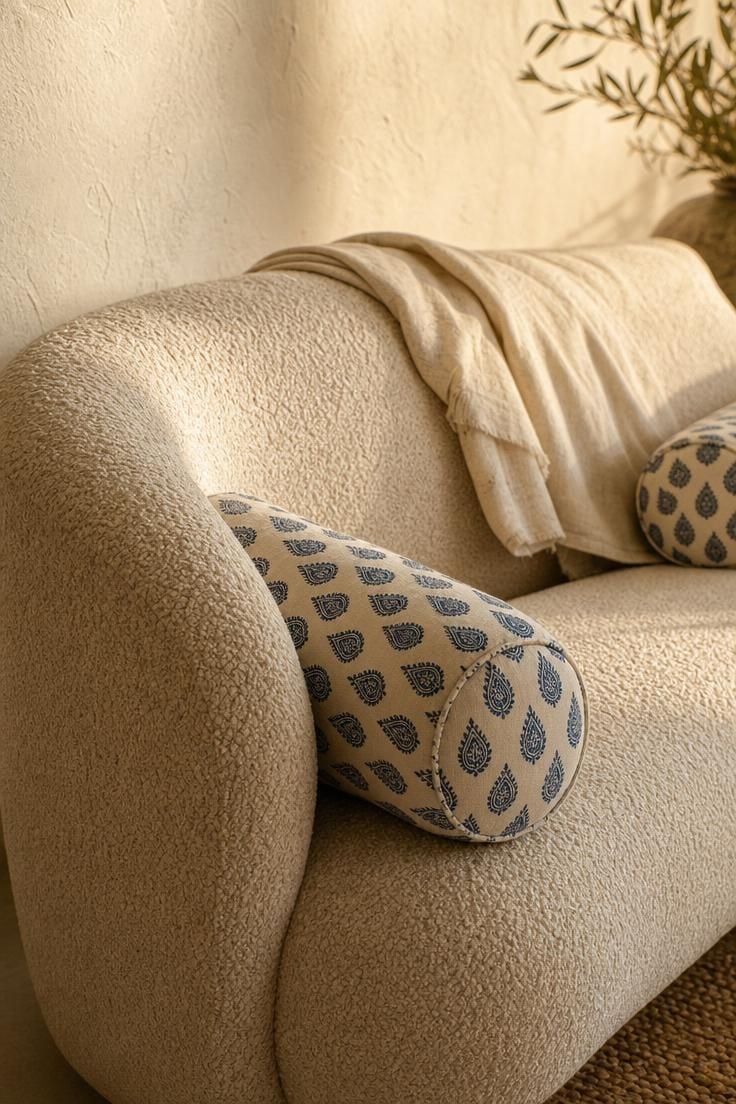
A single bold pattern is enough when the rest of the room stays neutral, which is the central rule of pattern in summer.
Two long pillows in hand-block-printed indigo cotton read richer than five throw pillows in coordinated tones, and they leave more of the settee visible.
Hand-block printing has a slightly uneven ink coverage and small registration drifts that screen-printed fabric never shows.
Cream boucle is the unexpected summer base, lighter than navy or charcoal and warmer than pure white.
Indigo reads summery in a way that navy never will, because the dye has more red in it and feels closer to a faded denim than a uniform.
Picking two long pillows rather than a pile of light summer cushions is a quiet decision that pays off every time someone sits down.
Where most rooms collect summer throw pillows by the half-dozen, this approach keeps the settee uncrowded and easy to actually sit on.
Style Blueprint:
- Cream boucle settee or armchair pair
- Two long pillows, hand-block-printed indigo cotton
- Folded pale linen throw on the back
- Chalk plaster wall behind for color quiet
- Cream wool flatweave or jute rug below
Design Pro-Tip: Pick one bold textile and let the rest of the room go quiet around it. A single block-print pillow, a single striped shade, a single floral pitcher, never all three at once. The pattern reads louder when it is alone.
A Pleated Paper Drum Lamp on a Travertine Cube Side Table
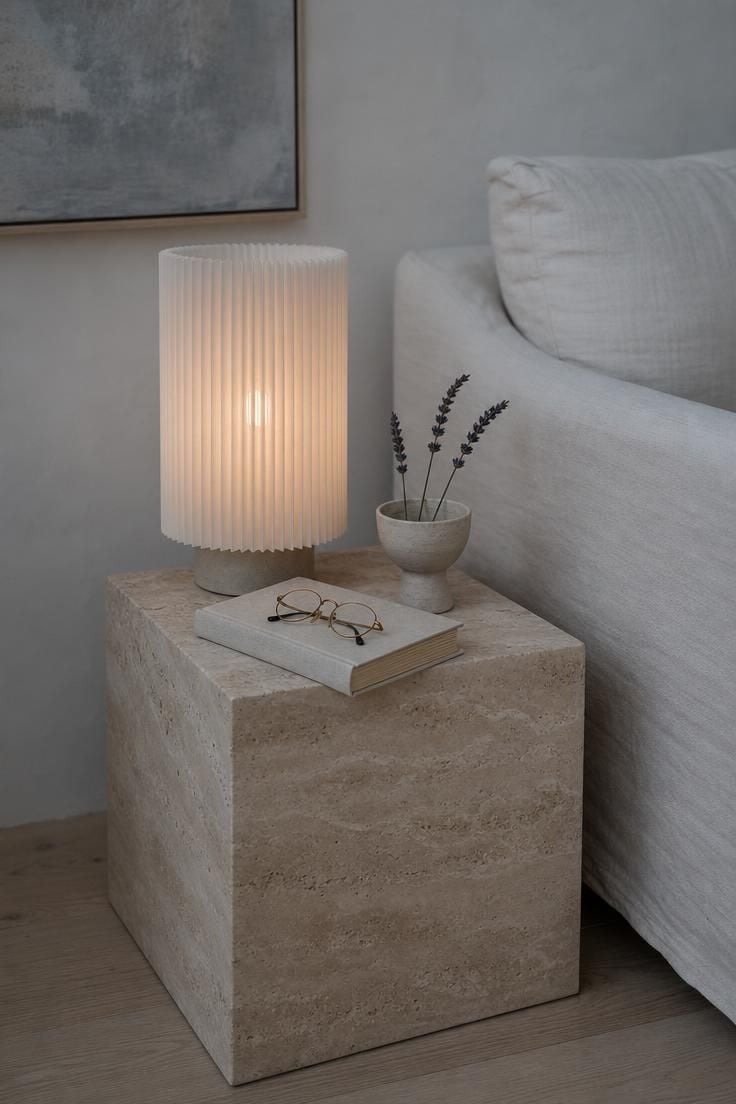
A pleated paper shade diffuses warmer than a fabric drum, because the paper softens the bulb temperature instead of filtering it.
The result is a small pool of light that reads almost golden against a cool wall.
Travertine veining runs warm beige with faint apricot threads, and it sits beautifully against linen upholstery without competing with it.
A low cube proportion grounds the lamp better than a tall slim pedestal in summer, because the eye wants stability beside an airy seat.
Pick a 2700K warm-white bulb at twenty-five or forty watts, and run it on a dimmer if you can.
A small ceramic vessel and a single dried stem keeps the surface composed without crowding it.
The reason to turn off the overhead light in summer evenings is simple: the room feels cooler when only the lamps are on, even if the temperature has not changed.
Travertine wants a yearly sealing and a daily blot if anything wet lands on it, and citrus juice should never touch the stone.
A paperback novel and a folded pair of reading glasses is the human presence that finishes the scene.
Style Blueprint:
- Travertine stone cube side table, honed finish, 14 inches tall
- Pleated paper drum lamp with chalk-white pleated shade
- Warm-white 2700K low-wattage bulb on a dimmer
- Small footed ceramic vessel in pale clay
- Dried lavender or sage sprigs for the still life
Faded Ticking Stripe Roman Shades in Soft Apricot
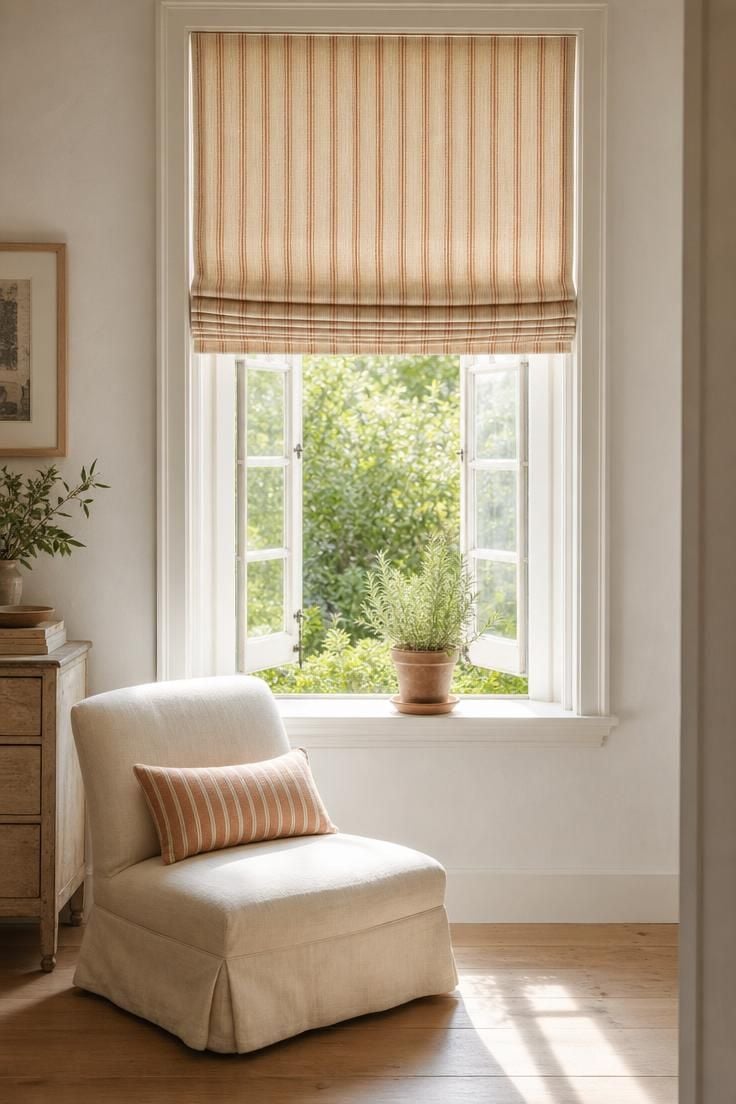
Ticking stripe is the pattern that reads summer without going coastal-themed.
The narrow vertical lines feel grown-up where awning stripes can feel beachy and out of place in a quiet living room.
Apricot is the warmer alternative to blush, a touch deeper and less fragile, and it stays light without going washed-out.
A folded Roman shade construction holds its shape and shows the fabric off cleanly, while a relaxed Roman drapes softer if you want a less crisp look.
Mounting inside the window casing gives the cleanest line, with the shade clearing the trim by an eighth of an inch on each side.
The pairing of apricot stripe with cream walls and a sage potted plant is the trio that always works.
Fading is a feature in this fabric, not a flaw, because new ticking can read too uniform and a slightly sun-bleached version sits more honestly in a summer room.
Style Blueprint:
- Faded ticking stripe Roman shade in apricot and cream
- Inside-mount installation, narrow casing reveal
- Small slipper chair in cream linen below
- Striped lumbar pillow picking up the apricot tone
- Potted sage in a small terracotta pot on the sill
A Hand-Thrown Ceramic Bowl of Peaches Beside Taper Holders in Brass
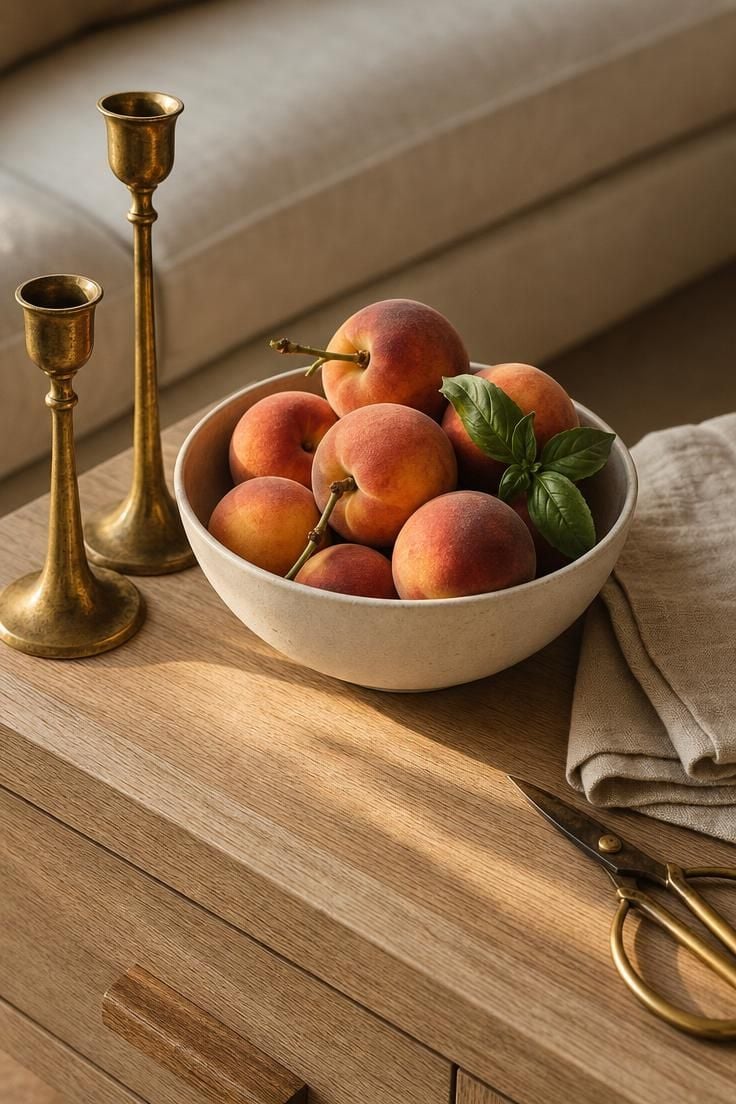
Fresh fruit beats decor objects through the warm months, because the colors change weekly and the bowl never reads stale.
Chalky matte ceramic in cream is the right finish against linen upholstery, holding light without throwing glare back.
Peach skin runs through six color stages as the fruit ripens, and a bowl of stone fruit becomes a slow-moving still life on its own.
Two unlacquered brass taper holders mixed in height read intentional without feeling formal, and the brass patinas down over a season into a softer honeyed tone.
Beeswax tapers in ivory or pale apricot are the color choice that holds with this palette, even left unlit during the day.
As summer rolls on, peaches give way to figs in late July and plums in August, so the bowl reads slightly different every two weeks.
A small sprig of basil or mint laid beside the bowl carries scent into the room as much as visual texture.
This single tabletop vignette is one of the smallest summer home decor moves with the largest visual payoff.
Style Blueprint:
- Hand-thrown matte ceramic bowl in chalk cream
- Six summer peaches, figs, or plums in season
- Two unlacquered brass taper holders, mixed heights
- Ivory or pale apricot beeswax tapers
- Sprig of fresh basil or mint as the final note
A Jute Flatweave Summer Rug Replacing the Wool Underfoot
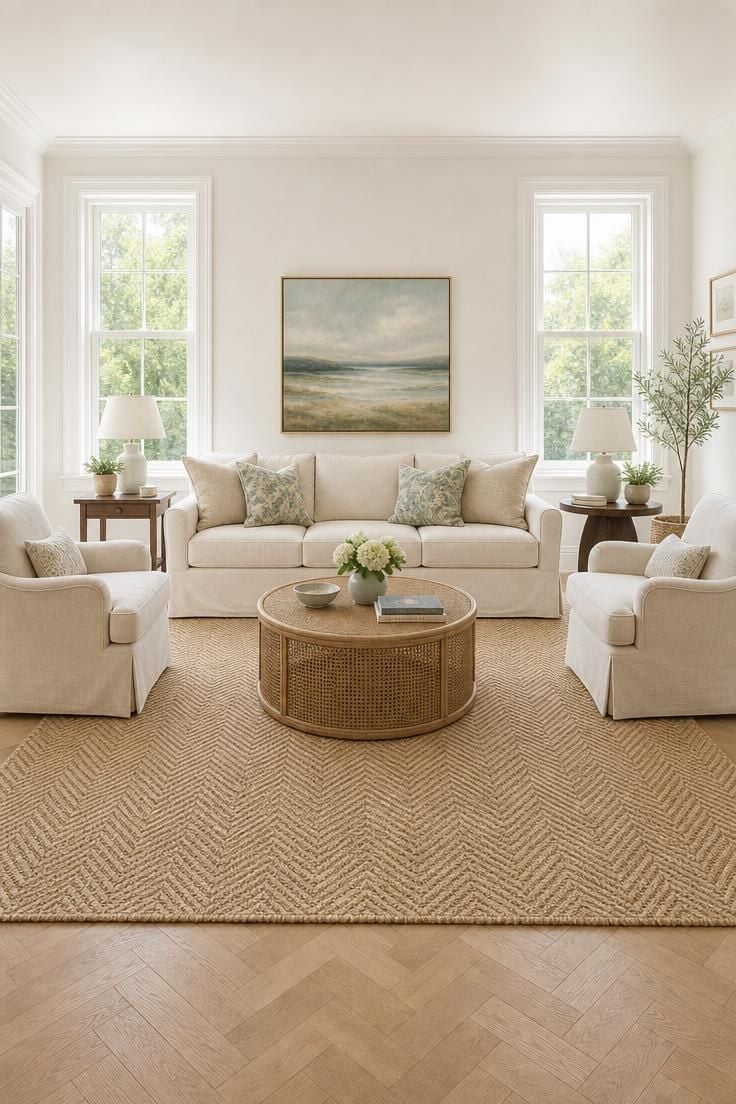
A flatweave reduces visual weight underfoot in a way that a thick pile rug cannot, and the room reads cooler the moment the wool comes up.
Jute is softer than sisal and holds up better than seagrass, but the three fibers all read summer when the wool is gone.
Sizing matters more than fiber choice: the summer rug must extend under at least the front legs of all seating in the conversation, or the room reads chopped.
A two-foot allowance past the front of each piece is the rule that almost never fails.
Anyone who wants a softer step in one spot can layer a small wool or sheepskin under the coffee table only, which keeps the bones of the room light.
Style Blueprint:
- Large jute flatweave rug in natural oat
- Sized to fit under front legs of all seating
- Two-foot allowance past the front of each piece
- Optional sheepskin layer under the coffee table only
- Pale wood floor beneath, visible at the edges
Design Pro-Tip: Roll up the heaviest rug in the room and put it in the closet for ten weeks. The bare floor reads cooler underfoot than any styling trick, and the rug comes back in September feeling new again.
Hydrangea and Cosmos Stems in a Stoneware Pitcher
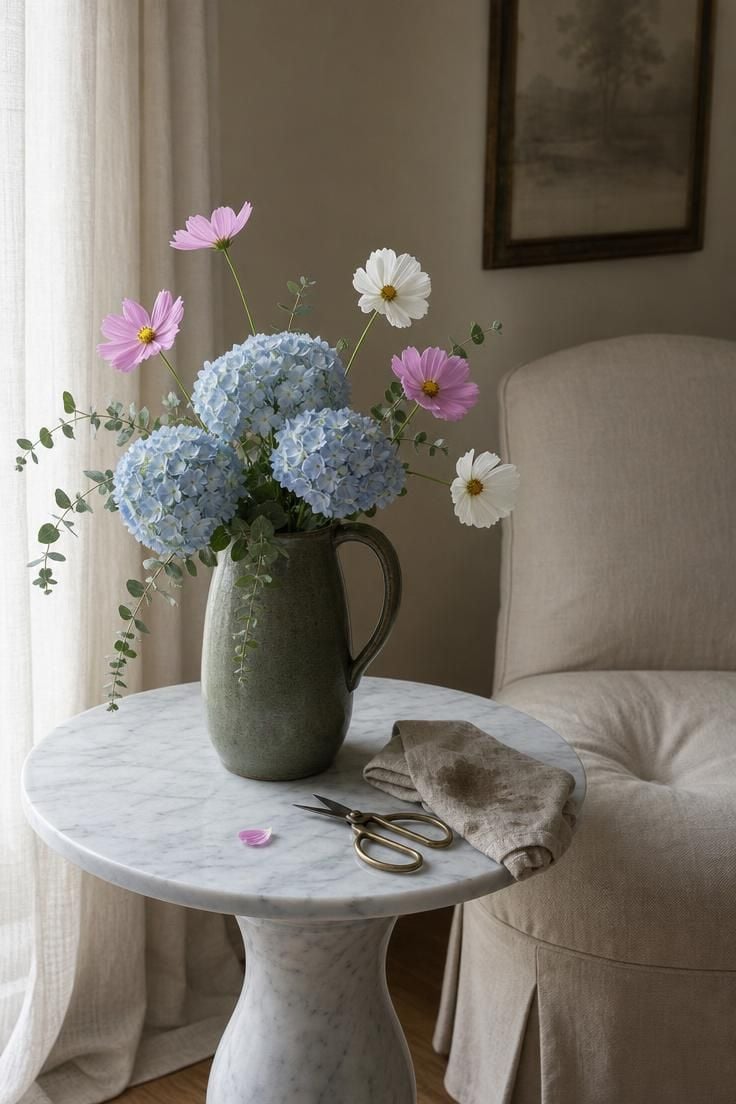
A pitcher reads more honest than a tall slim vase for garden-cut summer stems, because the proportions match the way the flowers naturally grew.
Hydrangea, cosmos, and zinnia are the three summer florals that hold up through a week of warm rooms without wilting.
Cut the stems at slightly different lengths so the arrangement gathers rather than reads as a styled bouquet.
A round marble pedestal table at 18 to 20 inches tall and 14 inches across is the right proportion next to a slipper chair.
Refresh the water every other day and the cosmos will keep opening fresh blooms for a full week.
A small pair of pruners and a folded linen towel laid beside the pitcher reads like someone just came in from the garden.
This is the smallest moment in the room and almost always the one people photograph first.
Style Blueprint:
- Stoneware pitcher in muted moss green or chalk white
- Round marble pedestal table, 18 to 20 inches tall
- Hydrangea, cosmos, and trailing eucalyptus stems
- Brass garden pruners as a styled accessory
- Folded oat linen towel with a slightly damp edge
A Pleated Linen Lampshade on a Plaster Column Lamp
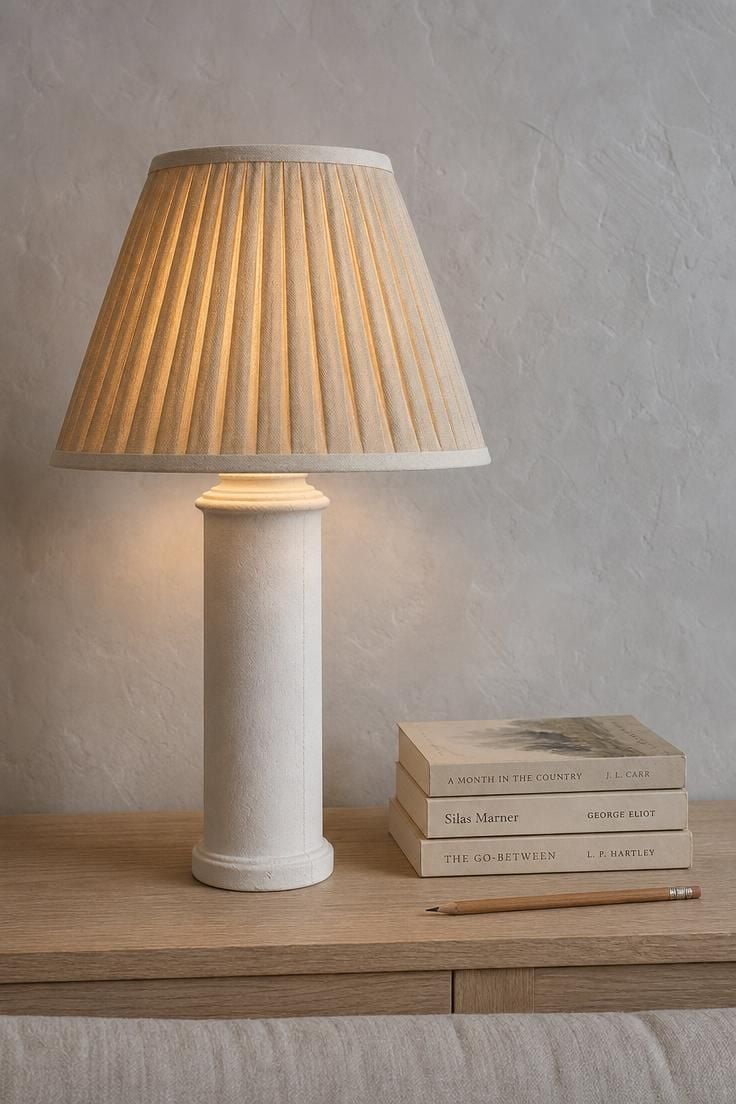
Plaster lamps have surged as the summer alternative to brass or ceramic, and the reason is the surface itself.
The matte chalky finish has a powdery quality that absorbs light rather than reflecting it, which sits beautifully against pleated linen.
Pleated linen in oat, chalk, soft apricot, or pale sage reads richer than a flat fabric drum because the folds catch light and shadow in a moving way.
The proportion rule for matching shade to base is loose but useful: the shade height should be about a third of the lamp’s total height.
A column shape grounds a sofa table or entryway console in a way that a turned spindle base never quite does.
Switching the bulb to a clear filament gives a warmer pool of light, even on the dimmest setting.
Plaster wants only dusting and never a damp cloth, because moisture will pit the surface permanently.
A small stack of paperbacks beside the lamp is the finishing note that pulls the eye to the human-scale detail.
The way the room shifts at dusk with this lamp on a dimmer is one of the underrated rewards of switching out for summer.
Style Blueprint:
- Tall plaster column lamp, 22 to 24 inches base height
- Pleated linen knife-pleat shade in oat or chalk
- Clear filament bulb, low wattage, on a dimmer
- Pale oak or bleached pine sofa table
- Stack of three paperback novels for human scale
Cotton Gauze Curtains Pooling at the Baseboards
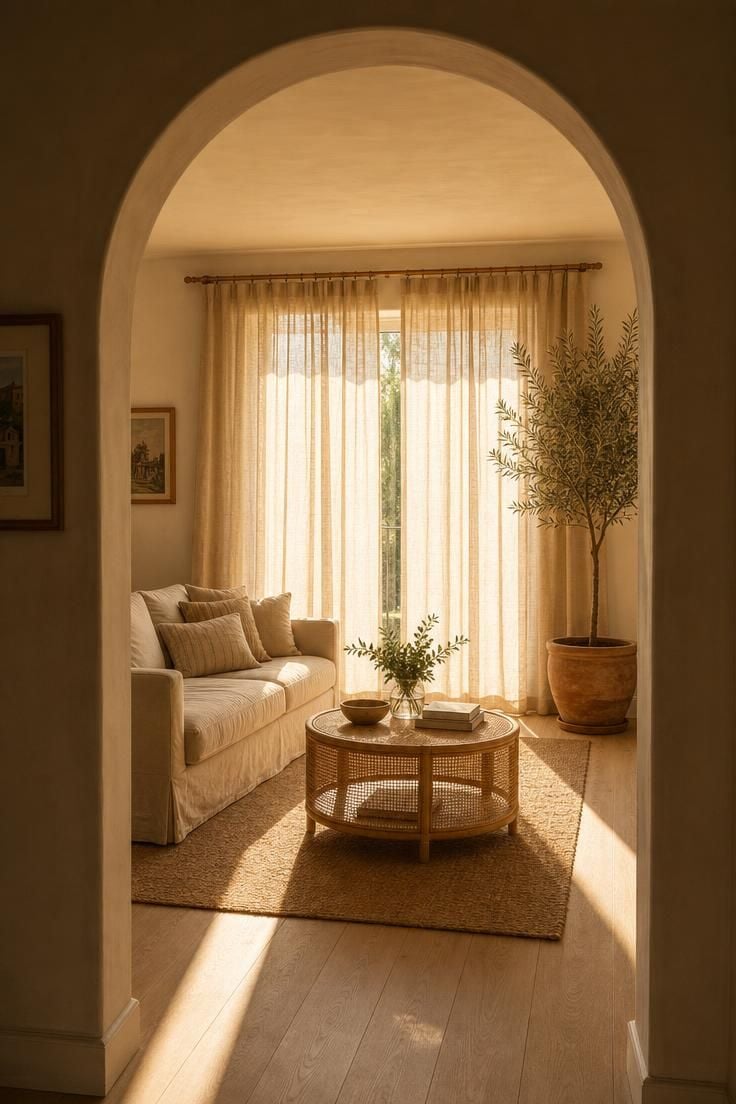
A gauze weave filters summer sun rather than blocking it, sending a soft warm glow across the floor instead of a flat shadow.
Sand reads warmer than chalk and easier than oat for afternoon light, sitting halfway between the two with a quiet earthy tone.
The hem length matters more than the fabric: a generous two-inch pool reads intentional, a half-inch float reads short, and three inches and more reads romantic and slightly impractical.
Hanging the rod an inch below the ceiling line makes the curtain feel as tall as the room, which is the airiest possible line for a summer window.
Layering with a plain woven roller blind behind keeps the curtain decorative and lets you drop the blind for evening privacy without losing the daytime softness.
Wash the gauze once a season on a delicate cycle, because the fiber drinks dust and dulls quickly otherwise.
Style Blueprint:
- Floor-to-ceiling cotton gauze curtains in sun-bleached sand
- Slim oak rod mounted an inch below the ceiling
- Two-inch hem pool at the floor
- Plain woven roller blind behind for evening privacy
- Pale oak floor for the warm reflective base
A Woven Seagrass Pouf Pulled Up to the Coffee Table
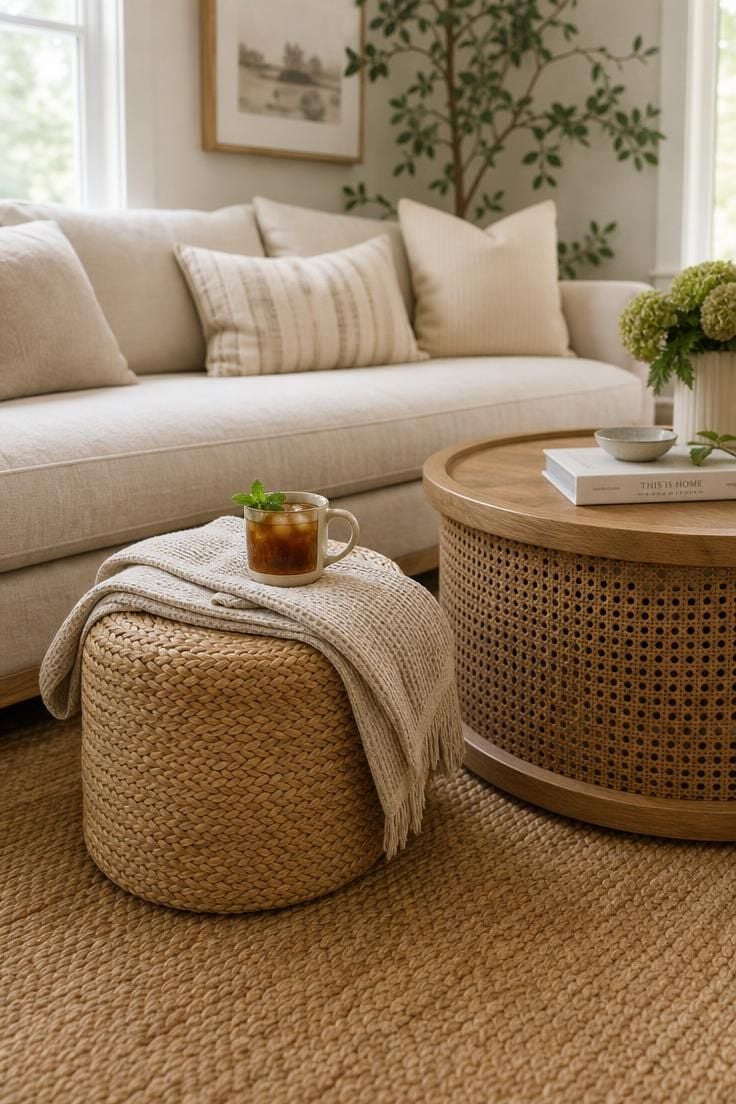
A pouf earns its keep in summer because it does three jobs at once.
The piece works as extra seating when a friend drops by, a footrest after a long afternoon, and a small side surface for an iced tea and a book.
Seagrass weighs slightly more than jute and holds up better than pure woven leather in a humid room, while jute is the softer option underfoot.
A round drum shape reads softer in a summer room than a square cube, even when both are the same fiber.
The seagrass weave gives a quiet nod to coastal living room decor without leaning into anchors and sailboats.
The 16-inch height matches most coffee tables for a comfortable footrest position.
Layering a small folded linen waffle-weave throw on top is the seasonal touch that signals the pouf is in use, not just placed.
When the room fills up for a small gathering, the pouf moves easily to a corner or even to the porch.
A ceramic mug balanced on top is the styled moment that says someone is actually sitting here.
Style Blueprint:
- Round drum-shape woven seagrass pouf, 16 inches tall
- Natural oat tone, tight herringbone weave
- Small oat linen waffle-weave throw folded loosely on top
- Ceramic mug for the lived-in styling note
- Positioned a foot away from the coffee table for breathing room
Design Pro-Tip: Move one piece of seating slightly away from the wall before summer guests arrive. Even three inches makes the room feel airier and reads as if the furniture is enjoying the season too.
Open Shelves Restyled With Alabaster Bowls and a Single Stem of Dried Wheat
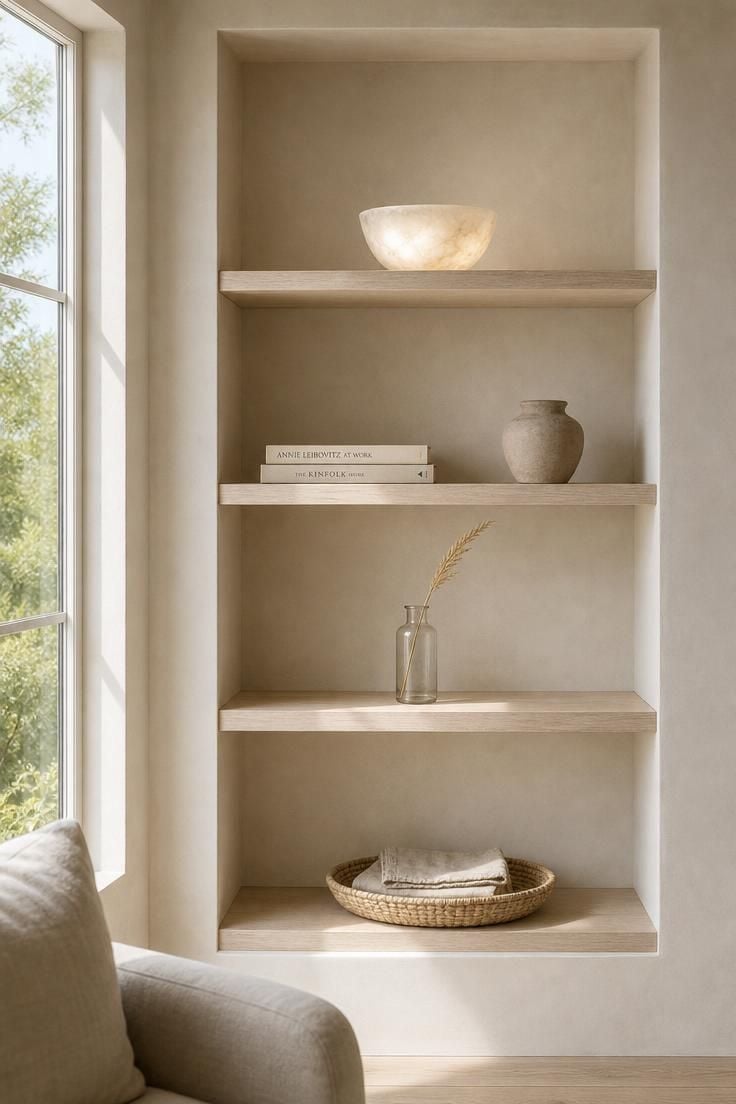
Summer shelves should feel half-empty rather than full, because the eye reads negative space as breath.
Alabaster bowls are the standout summer object because the stone is faintly translucent and seems to glow from within when light hits it.
A single stem of dried wheat in a slim glass bottle is the lone vertical that anchors the middle of the shelving wall without crowding it.
The rule of odd numbers stays loose here: three objects per shelf with room between them, not five tightly grouped.
Removing books temporarily and storing them in a woven basket on the bottom shelf is one of the small tricks of a seasonal living room refresh that almost no one tries.
A weekly reset, even a five-minute one, keeps the shelves looking intentional rather than collecting dust and forgotten mail.
The shelf wall is often the largest visual surface in a living room, so leaving it under-styled changes the room’s whole atmosphere more than any single piece of furniture.
Style Blueprint:
- Pale bleached oak open shelves, four levels
- Translucent alabaster bowls in varying sizes
- Slim glass medicine bottle with a single dried wheat stem
- Flat woven oat basket on the bottom shelf for stored books
- A weekly five-minute reset to keep dust from settling
Conclusion
The through-line across these 13 ideas is breath: lighter textiles, fewer objects, more visible floor and table surface, more living greenery.
None of these moves require an investment beyond a single trip to a fabric store and a garden cut.
Most of them are fully reversible by mid-September, which is the quiet promise of any honest seasonal living room refresh.
The reward is not photographable but felt: evenings spent in the room rather than passing through it, light reading instead of heavy upholstery, a calmer mood that meets the warmer weather halfway.
A summer living room makeover does not have to mean buying new furniture, it can mean editing the room that is already there.
By the time the first cool morning of September arrives, the slipcovers come off, the wool rug comes back, and the room moves forward into its next season with the lightness still tucked into its memory.