This post may contain affiliate links. If you make a purchase through these links, we may earn a commission at no additional cost to you.
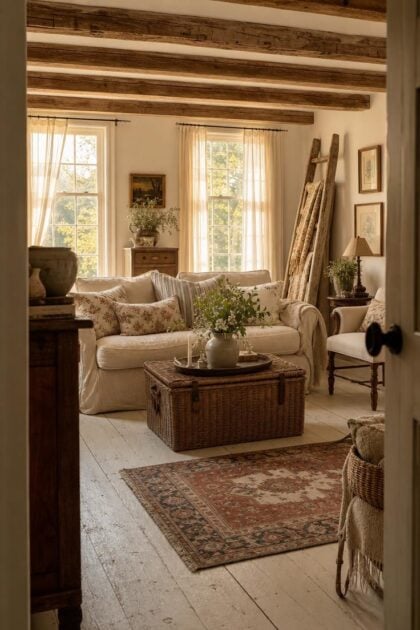
A cottage living room never looks like it was put together in a single afternoon.
The best ones feel gathered, as if every linen cushion and chipped pottery vase arrived at its own pace over many slow seasons.
That collected quality comes from real choices: the right wood grain on a mantel shelf, a rug faded just enough to prove it has been walked on, a lamp that throws a circle of warm light no bigger than a reading chair.
This collection of ideas covers seating, walls, floors, lighting, and the small objects that hold a room’s personality together, each one paired with the specific materials and finishes that make it work.
A Rolled-Arm Linen Slipcover Sofa Anchoring a Stone-Walled Room
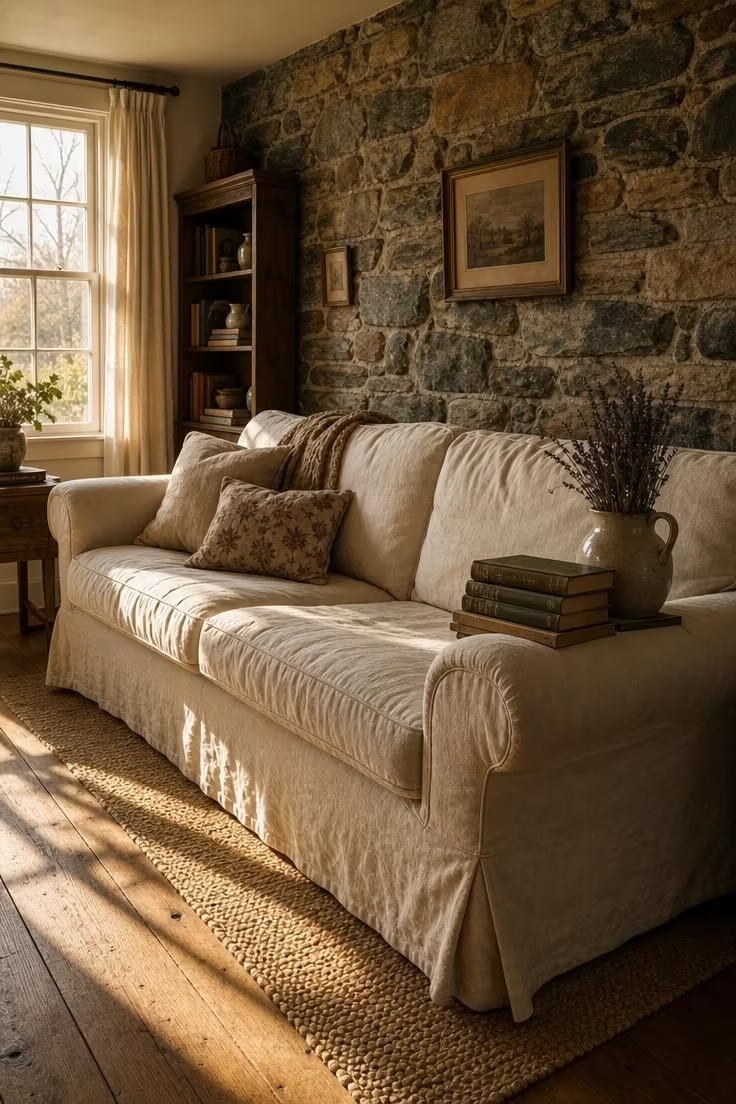
A linen slipcover sofa with rolled arms is the piece that tells visitors this room is meant for sitting down and staying put.
The cream fabric works against fieldstone because both materials are imperfect on purpose, one soft and washable, the other rough and cold to the touch.
That contrast gives a cottage living room its pull, the meeting point between comfort and raw material.
Placing dried lavender in a stoneware pitcher instead of a glass vase keeps the arrangement grounded in the same earthy register as the wall behind it.
The color of the linen matters less than the weight of it, something heavy enough to hold a wrinkle and light enough to bleach in the wash.
This is the kind of linen slipcover sofa that looks better with age, not worse.
Style Blueprint:
- Rolled-arm sofa in heavyweight washed linen (natural or cream)
- Fieldstone or stacked-stone accent wall with exposed mortar
- Stoneware pitcher with dried lavender or dried herb bundle
- Cloth-bound hardcover books in muted tones
- Braided sisal or jute area rug
Whitewashed Pine Plank Floors With a Faded Turkish Runner
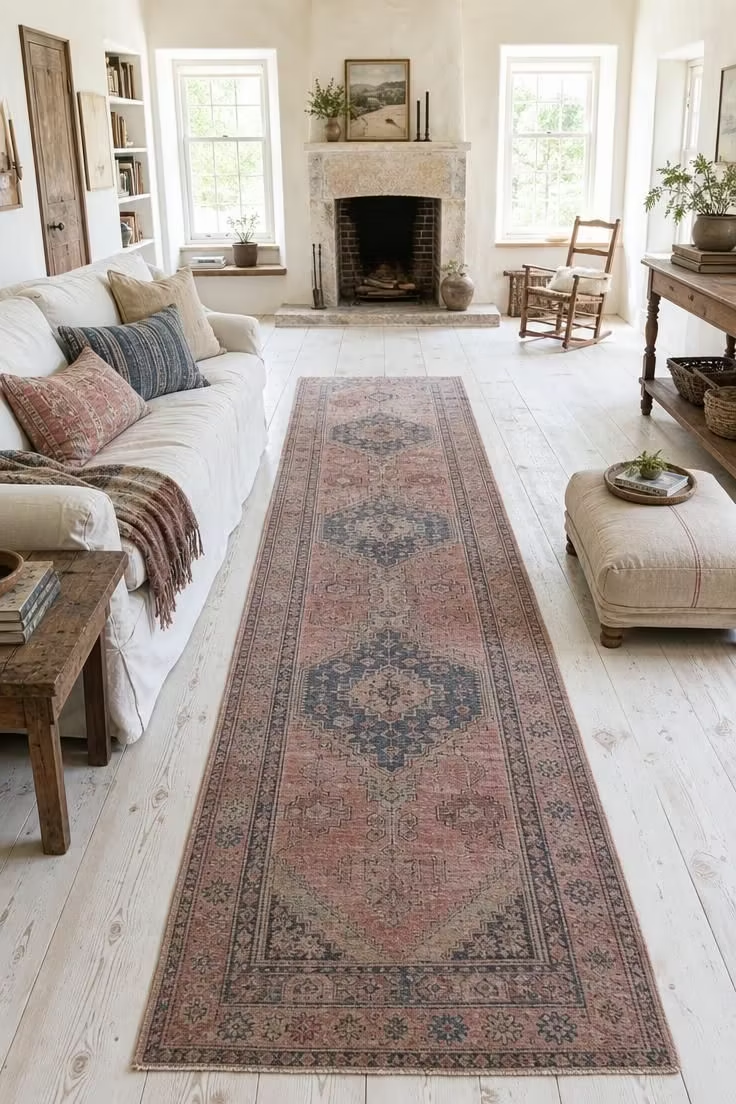
Whitewashed floors give a room the feeling of a beach house even when the nearest coast is hours away.
The trick is letting the wood grain show through the wash, so the floor reads as pine first and paint second.
A Turkish runner in faded tones of rose and indigo adds the kind of pattern that feels inherited rather than purchased, which is exactly the mood a vintage living room needs.
The runner also defines a natural walking path through the room, giving long open floor plans a sense of direction without walls or furniture doing that work.
Keeping the rest of the floor bare lets the planks breathe and makes the room feel larger than its square footage suggests.
Wide boards, anything over seven inches, sell the cottage effect more convincingly than narrow strips.
Pine is soft enough to dent under furniture legs, and those marks become part of the character over time.
Style Blueprint:
- Wide-plank pine floors with whitewash or lime-wash finish
- Faded Turkish or Persian runner in muted rose, indigo, or sage
- Smooth plaster walls in warm white
- Low linen-covered footstool or ottoman
- Bare surrounding floor to let the boards show
A Painted Brick Fireplace With Stacked Birch Logs on the Hearth
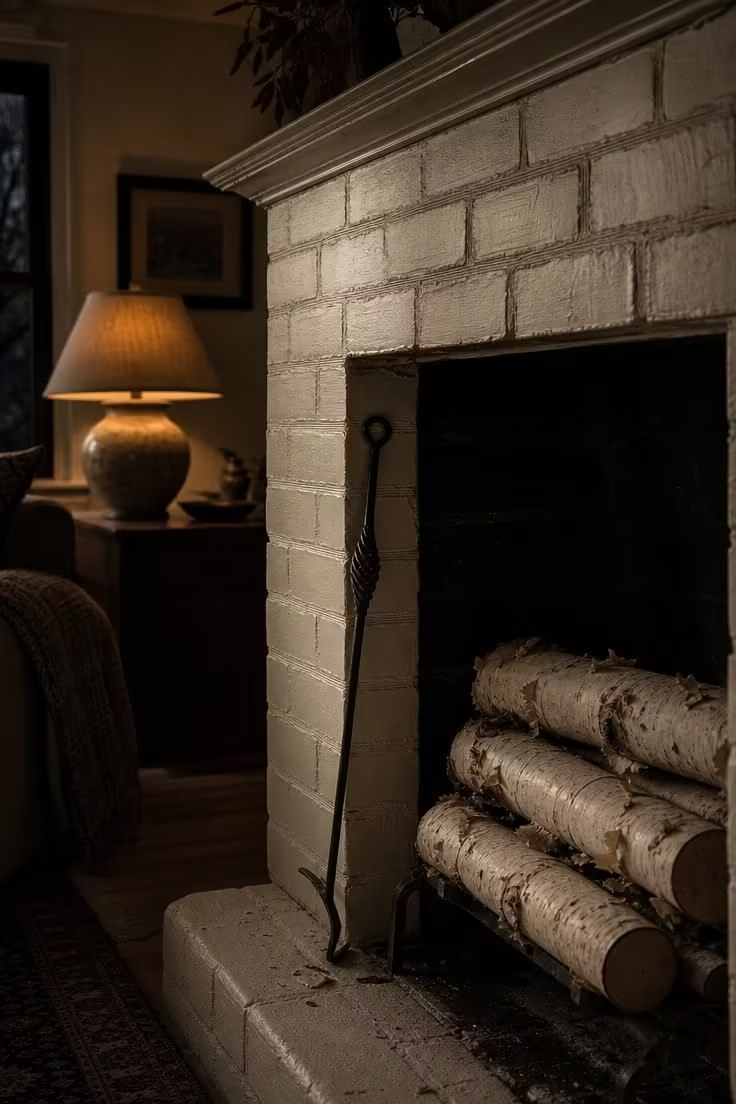
A painted brick fireplace does something unpainted brick cannot: it quiets the wall down so the fire, or in this case the birch logs, becomes the only thing worth looking at.
Warm ivory is a safer choice than pure white because it picks up the amber tones of lamplight without turning yellow.
Stacking birch logs in the firebox during warmer months keeps the hearth from looking like a dark hole in the wall.
The peeling bark on birch adds a papery texture that reads well against the matte paint, one rough and organic, the other smooth and deliberate.
A single wrought-iron fire tool leaned against the firebox edge is enough to suggest the fireplace still works without cluttering the scene.
Style Blueprint:
- Brick fireplace surround painted in warm ivory or soft cream
- Stacked birch logs with intact bark filling the firebox
- Wrought-iron fire tool or poker
- Ceramic table lamp with linen shade for ambient light
- Dark, unlit firebox for contrast
Mismatched Floral Print Pillows on a Ticking-Stripe Settee
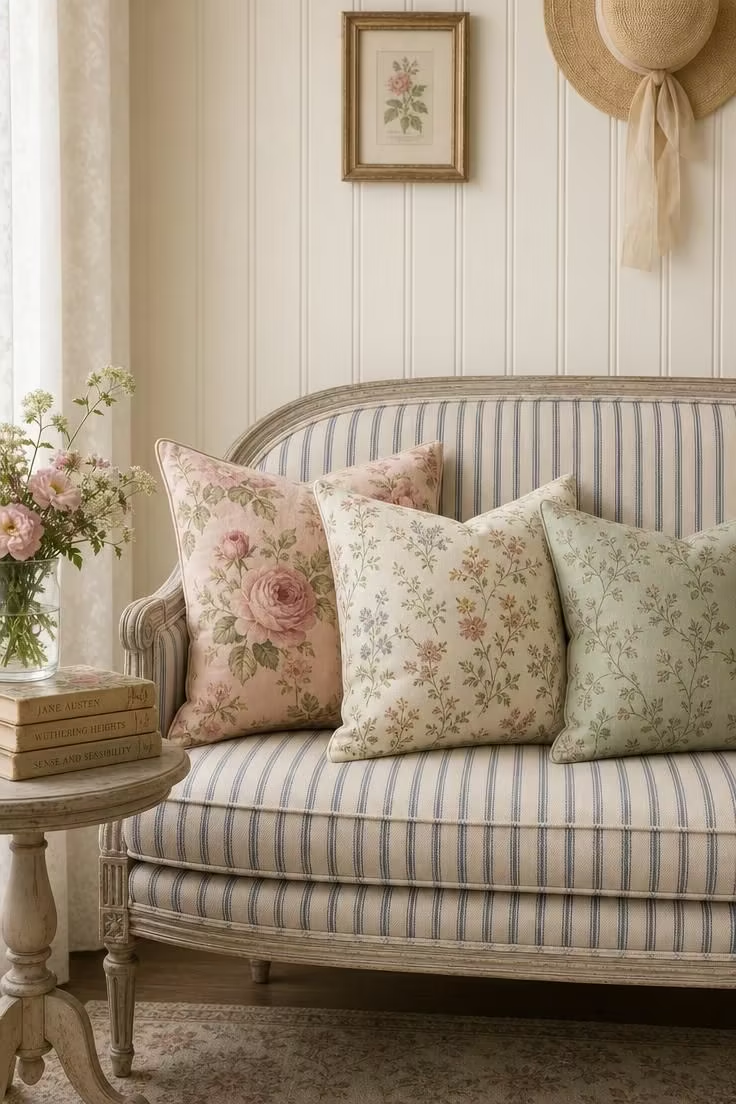
Mixing floral patterns is the move that separates a real cottage room from a catalog reproduction.
The rule is simple: keep the background colors in the same family (blush, cream, soft sage) and let the floral scales differ (large cabbage rose next to tiny scattered wildflowers next to a medium climbing vine).
Ticking stripe on the settee itself acts as a neutral anchor, holding all three prints together without competing.
Floral print pillows lose their sweetness when the fabric feels stiff or new, so washed cotton or linen covers with a bit of softness to them look more convincing.
The beadboard paneling behind the settee adds vertical lines that play against the organic shapes of the florals, a quiet geometry that keeps the wall from disappearing.
This is cottage style decor at its most personal, a collection of patterns that would never appear together in a showroom but feel completely natural in a room someone actually lives in.
A settee rather than a full sofa keeps the seating narrow and leaves room for a side table or a standing lamp without crowding the wall.
Three pillows is enough for a settee this size, and the odd number prevents the arrangement from looking too symmetrical.
Style Blueprint:
- Narrow settee in blue-and-cream ticking stripe
- Three floral pillows in varying scales (cabbage rose, wildflower, climbing vine)
- Beadboard paneling painted in pale cream behind the seating
- Washed cotton or linen pillow covers for a soft hand
- Small round side table with vintage books
Design Pro-Tip: When mixing florals, choose one large-scale print, one medium, and one small. Keep background tones within two shades of each other, and let the settee or sofa fabric stay in a simple stripe or solid so the patterns have a calm surface to rest against.
An Iron Chandelier Wrapped in Dried Eucalyptus Sprigs
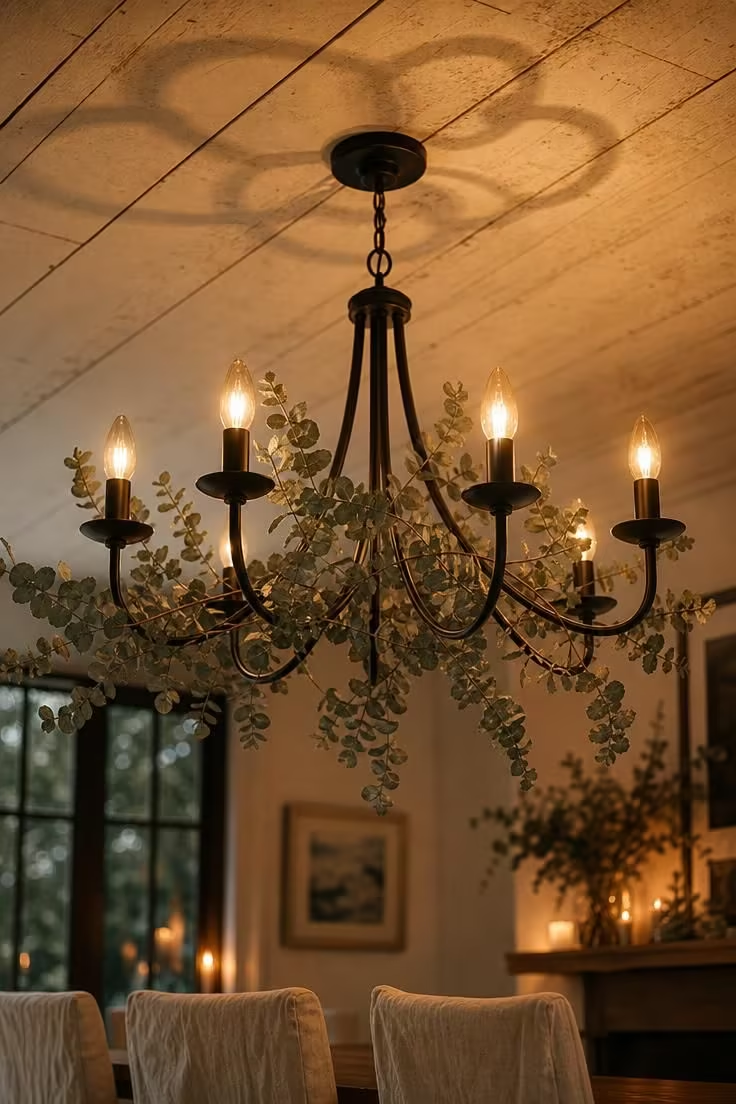
An iron chandelier on its own looks farmhouse, but threading dried eucalyptus through its arms shifts the piece toward something softer and more layered.
The silvery-green leaves catch the warm light from the bulbs and throw small, moving shadows on the ceiling, which gives the room a sense of life that a bare fixture cannot match.
This works best when the chandelier hangs low enough that the eucalyptus is visible at eye level, not lost up near the ceiling where nobody looks.
A farmhouse living room and a cottage living room share a lot of DNA, and the chandelier is where the two styles often overlap: wrought iron, simple shapes, warm bulbs.
The eucalyptus will dry out over several weeks and hold its shape for months, so this is not a high-maintenance arrangement.
Replacing the sprigs seasonally, rosemary in winter, fresh bay laurel in spring, keeps the fixture changing without requiring a new light.
Style Blueprint:
- Matte-black wrought-iron chandelier with curved arms
- Dried eucalyptus sprigs threaded loosely through the arms
- Warm-toned Edison-style bulbs
- Whitewashed plank ceiling above
- Low hanging height (36 to 42 inches above table or seating)
Tongue-and-Groove Wainscoting in Sage Below a Botanical Print Gallery
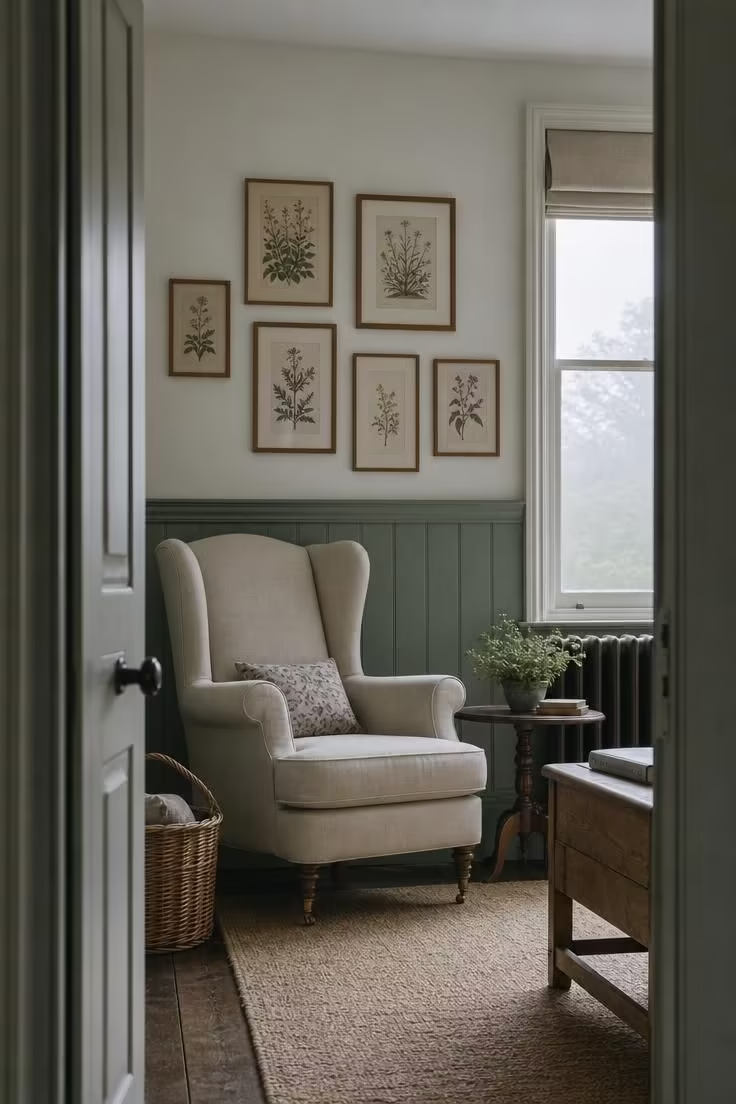
Painting wainscoting in sage rather than white gives the lower wall its own identity instead of letting it fade into the baseboard.
The color reads as green in warm light and leans slightly blue on cloudy mornings, which keeps the room from feeling static throughout the day.
A botanical print gallery above the rail connects to the green below without matching it literally, leaves on paper echoing the leaf-toned paint in a way that feels discovered rather than planned.
Thin oak frames keep the prints from competing with the wainscoting texture, which already adds enough visual weight with its vertical lines and shadow gaps.
An English cottage living room leans hard on this kind of wall treatment because it divides the room into two registers, sturdy and painted below, light and decorated above.
The wingback chair in oatmeal linen grounds the corner without adding another color to a wall that already has plenty going on.
Six prints in an asymmetrical cluster feels more natural than a rigid grid, and the odd spacing between frames mimics the way pictures accumulate in a real home over years.
Style Blueprint:
- Tongue-and-groove wainscoting painted in muted sage green
- Chair rail in matching or slightly darker tone
- Six botanical prints in thin light oak frames, asymmetrical layout
- Plaster wall above in soft white
- Wingback chair in oatmeal or natural linen
A Wicker Trunk Coffee Table With Brass Latches and Stacked Trays
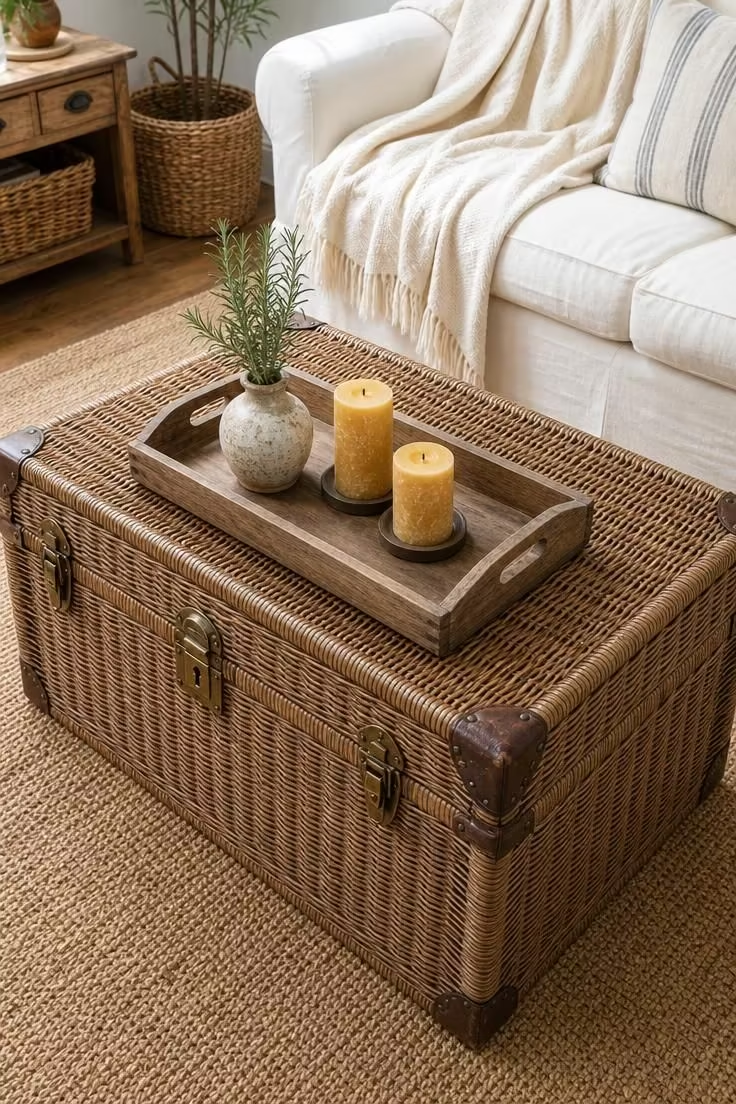
Using a wicker trunk as a coffee table solves two problems at once: surface space and hidden storage.
The brass latches and leather corner straps give it a traveled look, as if it arrived from somewhere more interesting than a furniture store.
Keeping a shallow wooden tray on top creates a defined zone for smaller objects so the trunk surface does not turn into a catch-all.
The flat woven texture of the wicker reads differently from every angle and picks up overhead light in a way that solid wood or glass cannot.
A rustic living room benefits from this kind of dual-purpose piece because it keeps the room functional without adding more legs to an already furnished floor.
Style Blueprint:
- Large rectangular wicker trunk with aged brass hardware
- Leather corner straps and reinforced edges
- Shallow wooden serving tray for surface organization
- Small ceramic vase with a single herb sprig
- Beeswax pillar holders (unscented, natural color)
A Deep Window Seat With a Linen Cushion and Crocheted Throw
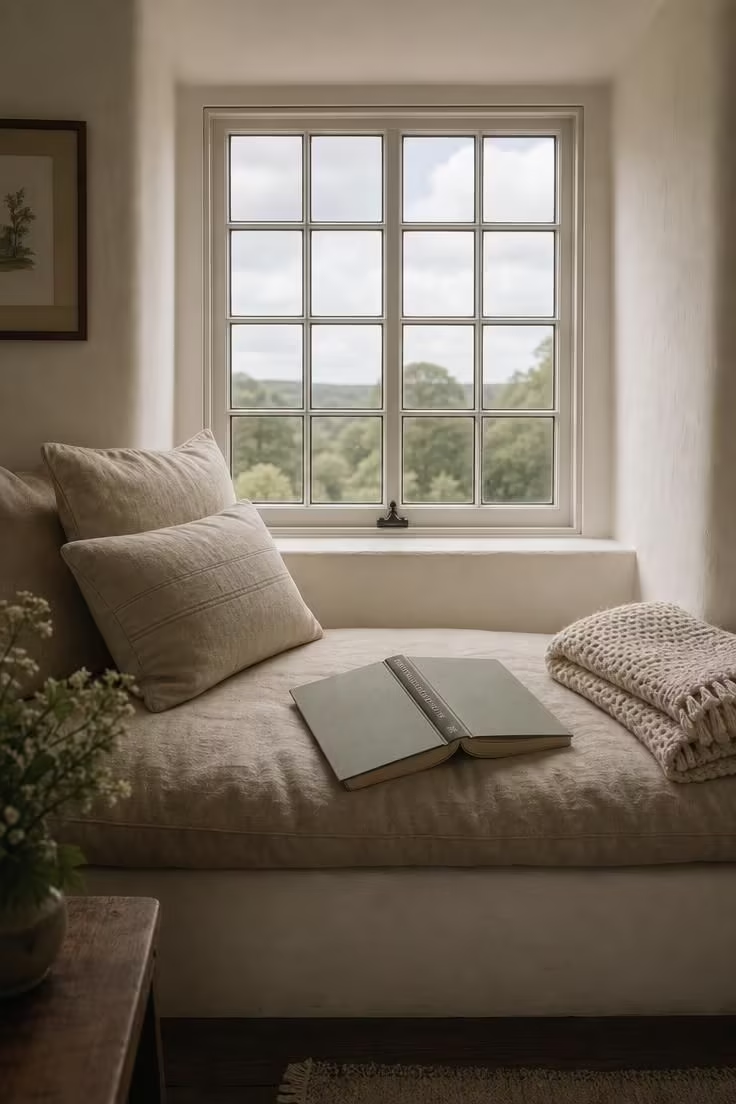
A window seat is the piece of architecture that turns a cozy living room from comfortable into truly private.
The depth matters more than the width: anything over eighteen inches lets someone sit with their back against one wall and their feet up, which changes how the seat gets used from perching to lounging.
A natural linen cushion in a heavier weight holds its shape under repeated sitting without flattening into a sad pancake by the end of the month.
The crocheted throw folded at one end signals that this seat is meant for long stays, not quick glances out the window.
Mullioned windows with small square panes break the outside view into a grid, which makes even an ordinary backyard look like a painting hung in individual frames.
Keeping the alcove walls in warm white prevents the nook from feeling like a cave, especially on cloudy days when the diffused light is all the room gets.
An open book face-down on the cushion is the kind of lived-in touch that makes the difference between a window seat someone built and a window seat someone actually uses.
A cushion cover with a hidden zipper allows for easy washing, which matters in a spot that will collect dust, crumbs, and afternoon naps in equal measure.
Style Blueprint:
- Built-in window seat at least 18 inches deep
- Thick natural linen cushion with removable cover
- Hand-crocheted cotton throw in cream or ecru
- Mullioned or divided-light window above
- Warm white paint on alcove walls and trim
Design Pro-Tip: When building or retrofitting a window seat, add a hinged lid to the cushion platform for blanket storage beneath. This keeps extra throws and seasonal pillows hidden but within arm’s reach, and it eliminates the need for a separate storage basket on the floor.
Exposed Oak Ceiling Beams Above a Plaster-White Room
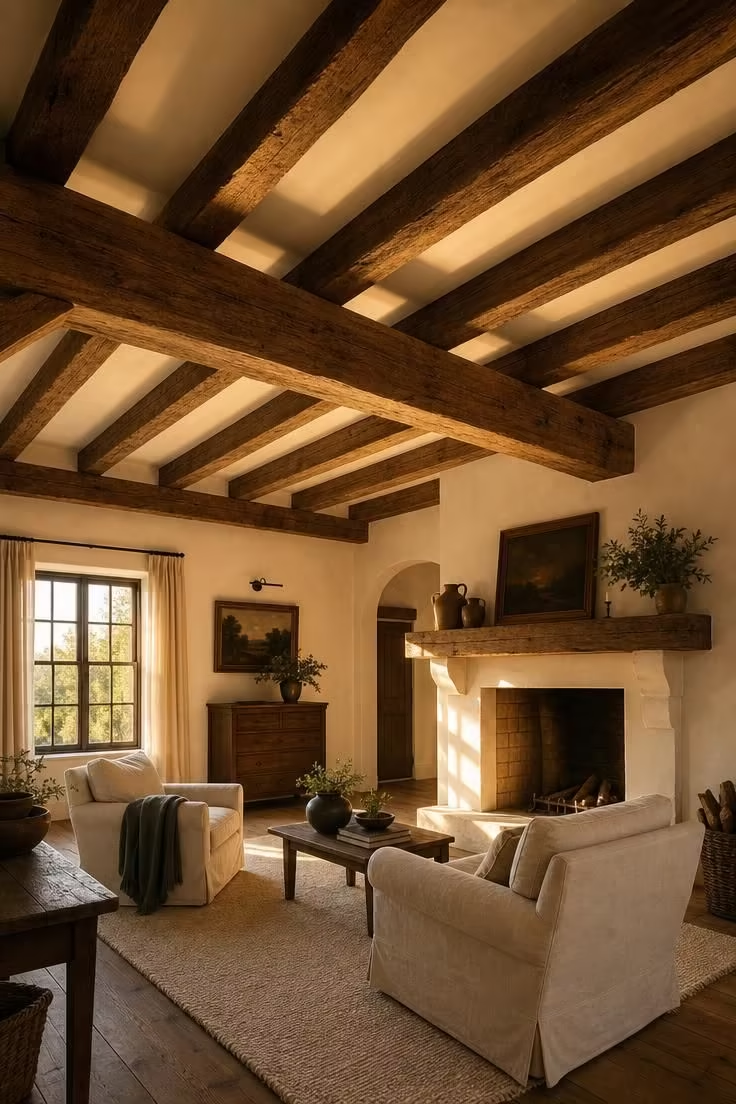
Exposed ceiling beams do the most work in a room where everything else stays quiet.
When the walls, trim, mantel, and even the rug are in the same register of soft white, the dark oak overhead becomes the only thing the eye travels to, which gives the room a clear hierarchy without any single piece of furniture fighting for attention.
Hand-hewn beams with visible adze marks and slight irregularities read as genuinely old, while machine-milled faux beams look convincing only from a distance.
The honey tone of aged oak warms the entire room by reflected light alone, bouncing a golden cast downward onto the white surfaces below.
This treatment works best in rooms with ceilings at nine feet or higher, because the beams add visual weight that can make a low ceiling feel oppressive.
Pairing exposed ceiling beams with simple washed cotton seating keeps the room from tipping into a period-piece museum, grounding the architecture in everyday comfort.
Style Blueprint:
- Hand-hewn oak beams with visible tool marks and natural finish
- Smooth plaster ceiling and walls in soft white
- Matching white-painted trim and fireplace mantel
- Armchairs in washed cotton (not formal upholstery)
- Pale wool area rug beneath seating
A Worn Leather Club Chair Beside a Ceramic Table Lamp
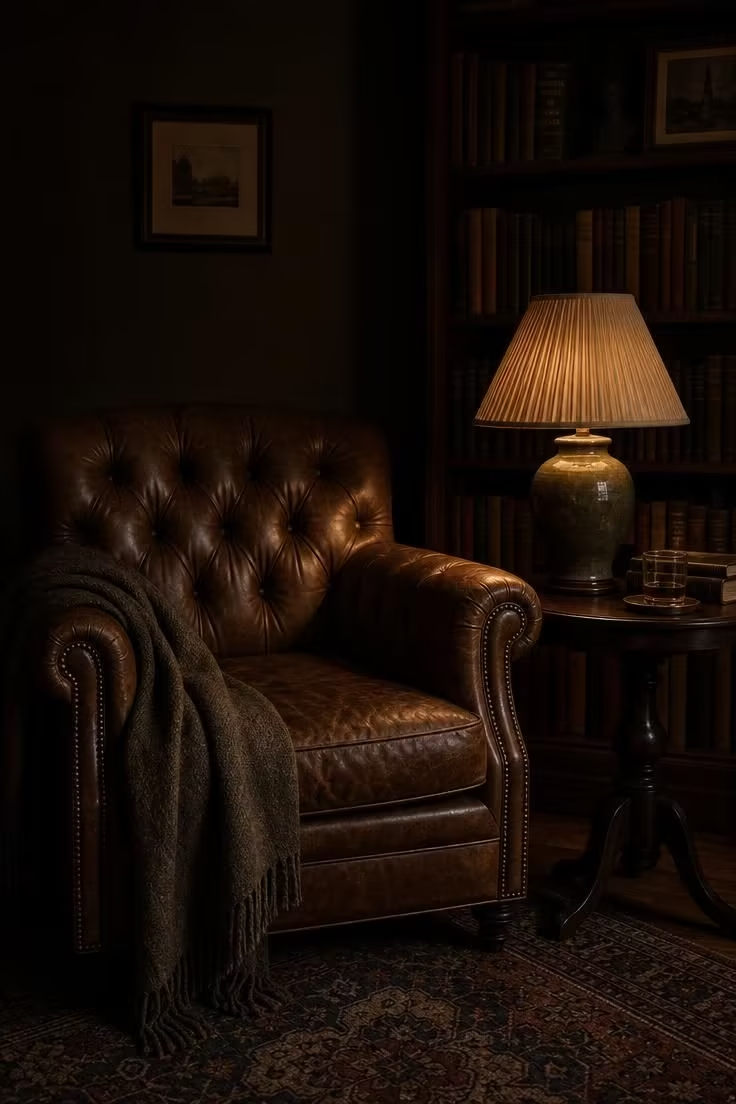
A leather club chair in a cottage living room might seem like a contradiction, but worn cognac leather has the same warmth and patina as an old wood floor.
The key is the wear: new leather looks like an office, but leather that has softened and cracked at the seat creases looks like it belongs in a room with plaster walls and iron hardware.
Button tufting and brass nail-head trim along the arms add just enough formality to keep the chair from reading as a recliner someone dragged in from the den.
The ceramic table lamp beside it matters because the glaze, something in that range between green and brown, connects the chair to the natural palette of the rest of the room.
A pleated linen shade throws a focused cone of light downward, which creates a reading spot without illuminating the whole room.
This pairing works especially well in a corner near a bookshelf, where the contained light and deep seat suggest a place to sit for hours.
The wool throw draped over one arm is not decoration: it is there because someone gets cold at the end of a chapter.
Style Blueprint:
- Cognac-brown leather club chair with visible wear and patina
- Button tufting and brass nail-head trim on arms
- Hand-thrown ceramic table lamp in green-brown glaze
- Pleated natural linen lampshade
- Dark-stained round side table in walnut or oak
Open Timber Shelves Holding Ironstone Pitchers and Old Books
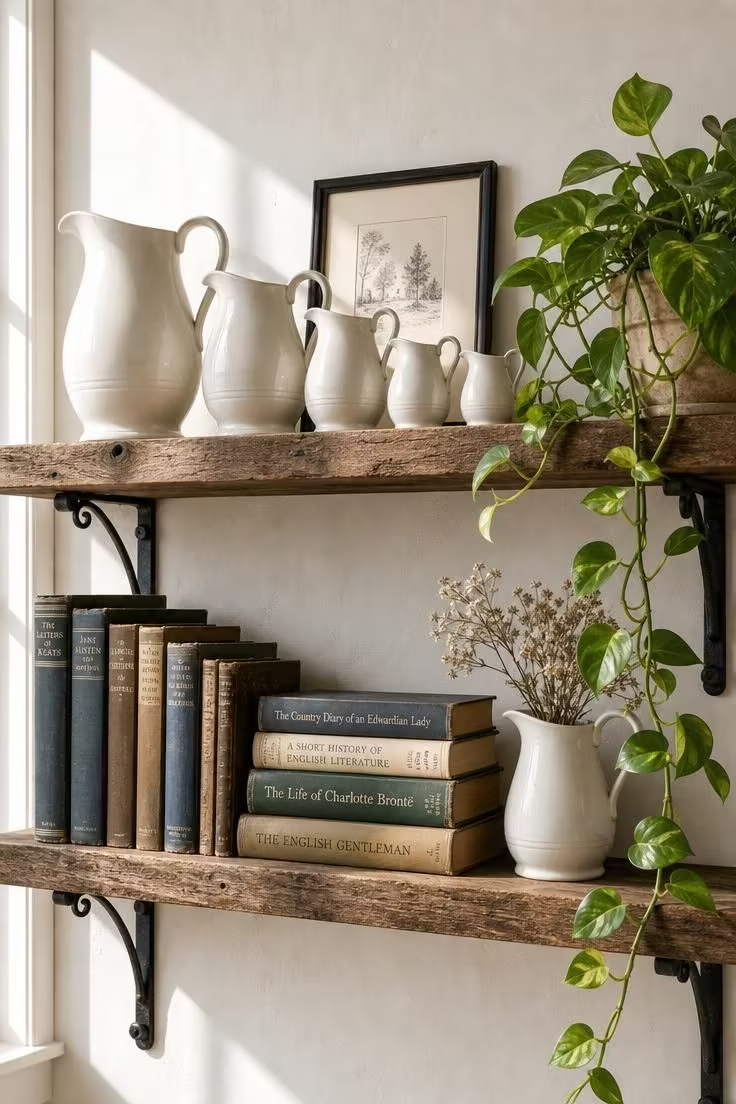
Open shelves in a cottage living room are not about storage: they are about display, and the objects on them tell the room’s story.
White ironstone pitchers have the right weight and simplicity for this, heavy enough to anchor a shelf, plain enough to let the timber and iron do the talking.
Mixing vertical and horizontal book stacks breaks up the straight line of the shelf and creates small pockets of space for a framed drawing or a trailing plant.
Pothos is the right plant here because it tolerates low light, grows without fuss, and its trailing habit softens the hard edge of the shelf in a way that an upright plant cannot.
Wrought-iron brackets with a slight curve or scroll add a decorative line without competing with the objects on the shelf above.
Style Blueprint:
- Rough-sawn timber shelves (at least 2 inches thick)
- Wrought-iron brackets with subtle scroll or curve
- White ironstone pitchers in 3 graduated sizes
- Spine-faded hardcover books stacked vertically and horizontally
- Trailing pothos or ivy plant
A Braided Jute Rug Layered Under a Round Pedestal Table
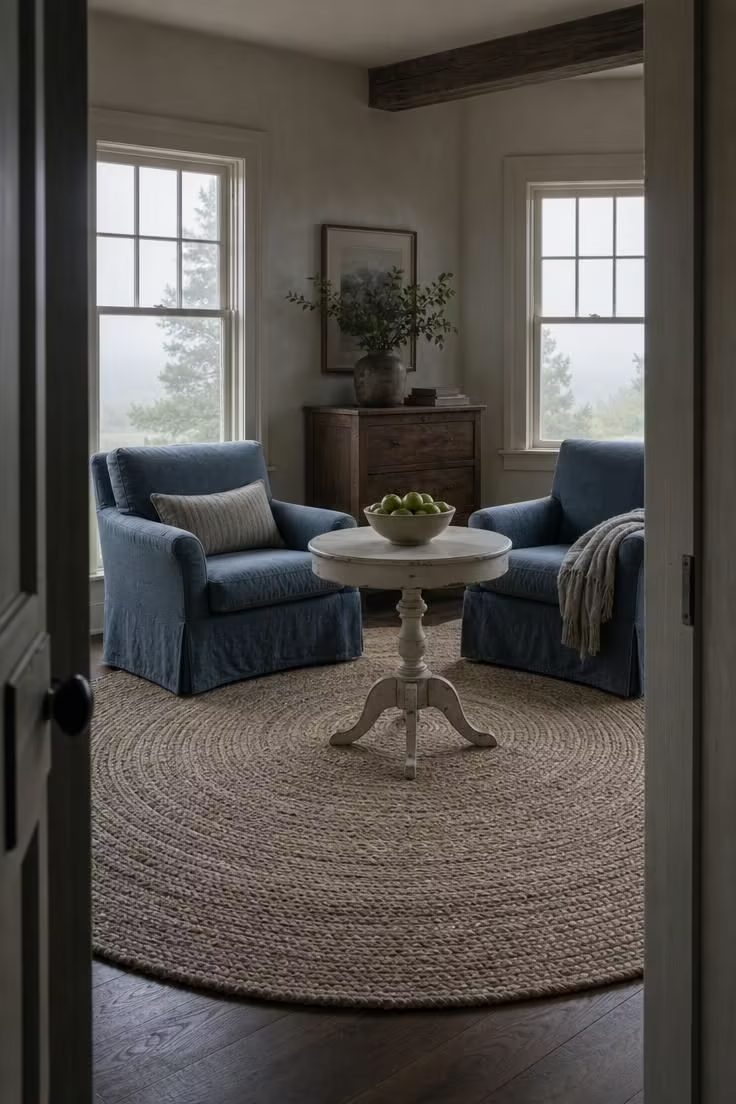
A braided jute rug does what a flat-weave cannot: it adds a three-dimensional texture to the floor that you can feel through your socks.
The circular shape of both the rug and the pedestal table creates a visual anchor in the center of the room, pulling the surrounding furniture inward and giving the seating arrangement a clear center of gravity.
Distressed cream paint on the table keeps it from looking too precious, and the green apples in the ceramic bowl are the only saturated color in the scene, which makes them a quiet focal point.
Jute has a natural stiffness that holds the braid pattern flat without curling at the edges, which is a common problem with softer fiber rugs.
Pairing the rug with dark-stained oak floors creates a contrast that makes both surfaces more visible: the pale jute floats on the dark wood like an island.
Faded blue linen on the armchairs keeps the palette cool without introducing a color that fights with the warm neutrals of the rug and table.
On mornings with even, shadowless light, the jute fibers pick up a silvery tone that looks entirely different from their warm golden appearance at sunset.
The room reads differently at every hour, which is part of what makes natural fiber rugs more interesting than solid-colored synthetics.
Style Blueprint:
- Large circular braided jute rug (at least 8 feet diameter)
- Round pedestal table in distressed cream or white paint
- Ceramic bowl with seasonal fruit or greenery
- Armchairs in faded blue or sage linen
- Dark-stained oak or walnut floors beneath
Design Pro-Tip: When layering a rug on a dark floor, leave at least 12 inches of bare floor visible between the rug edge and the nearest wall. This border frames the rug and keeps the room from feeling carpeted, which would erase the texture contrast that makes the combination work.
Cotton Voile Curtains Pooling on Wide-Board Walnut Floors
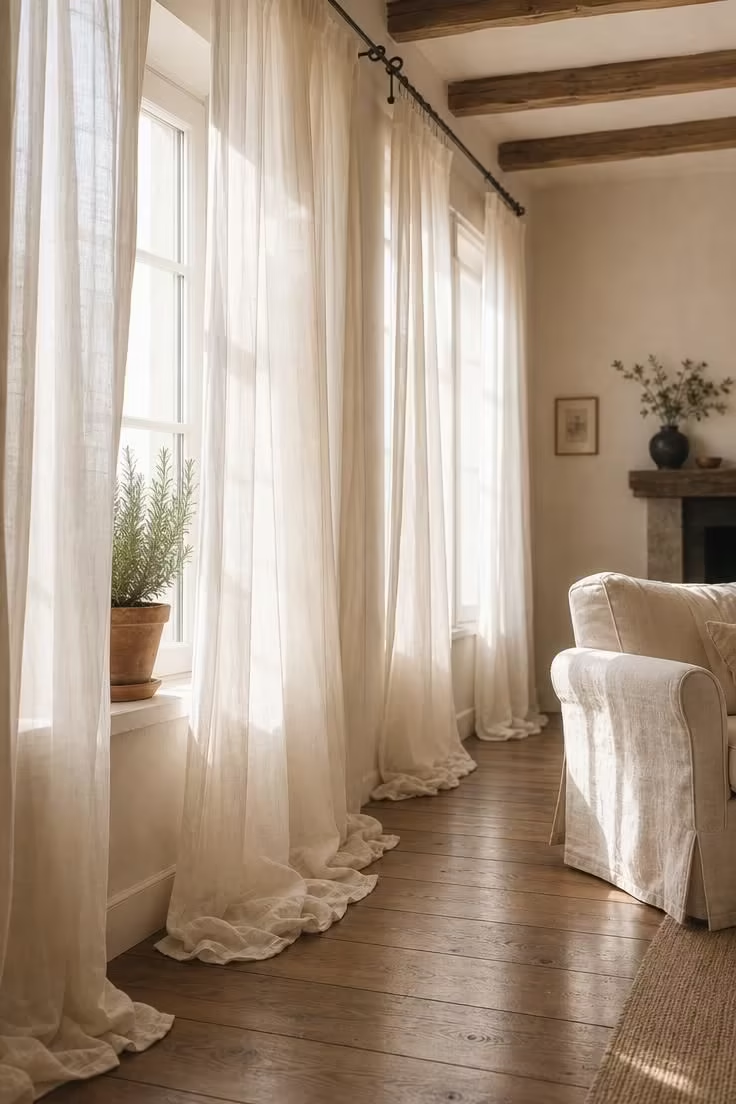
Curtains that pool on the floor are a deliberate choice, not a hemming mistake.
The extra two or three inches of fabric that gather at the base give the panels a relaxed, slightly undone look that stiff, floor-skimming hems cannot achieve.
Cotton voile in natural ivory lets light through while softening it, which means the room stays bright without harsh glare or hot spots on furniture surfaces.
A wrought-iron rod in a simple design, round bar with minimal finials, keeps the hardware from competing with the fabric.
Wide-board walnut floors have enough color depth to absorb the pooled fabric without looking cluttered, and the contrast between the pale curtain and the dark wood makes both more noticeable.
This combination works in any room where the windows are the main source of natural light, because the voile never blocks it completely, just filters it into something gentler.
Style Blueprint:
- Floor-length cotton voile panels in natural ivory or ecru
- Extra 2 to 3 inches of length for pooling at the floor
- Simple wrought-iron curtain rod with minimal finials
- Wide-board walnut or dark-stained oak floors
- Terracotta or stoneware pot with herbs on the windowsill
A Painted Ladder Leaning Against the Wall as a Blanket Rack
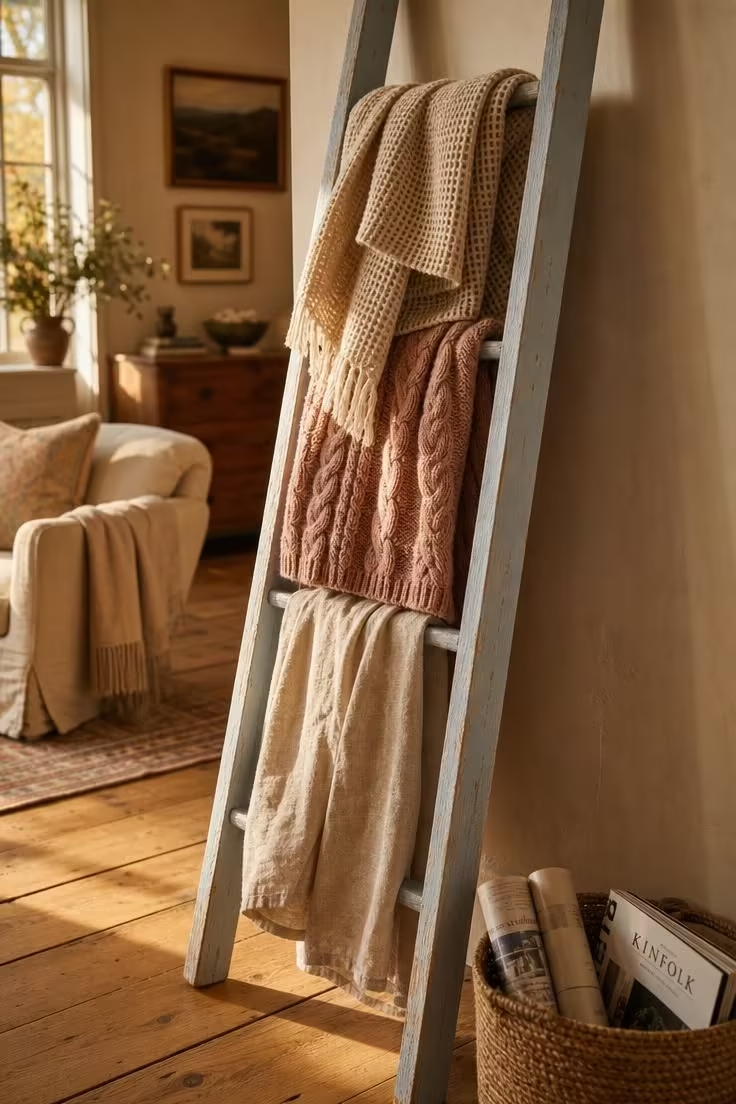
A painted ladder is the kind of repurposed object that gives a cottage room its character without requiring any construction or installation.
Leaning it against the wall at a gentle angle turns the rungs into a tiered display for throws, and three different fabrics (waffle-weave cotton, cable-knit wool, thin linen) give the ladder visual variety while keeping the color palette tight.
Chalky blue-white paint on the ladder reads as intentionally aged, and the slight roughness of chalk paint catches light in a way that glossy finishes do not.
A cozy living room is made by the number of soft surfaces within arm’s reach, and a blanket ladder puts three of them in a single vertical footprint.
The basket of rolled magazines at the base grounds the ladder and keeps the floor around it from looking empty, which is the difference between a leaning object and a leaning object that looks like it belongs there.
Dusty rose on one of the throws introduces a color that connects to the floral tones elsewhere in the room without introducing a pattern.
Rotating throws by season, lighter cotton and linen in summer, heavier wool and chunky knits in winter, keeps the ladder looking fresh without replacing the piece itself.
Style Blueprint:
- Tall wooden ladder painted in chalky blue-white or cream
- Three throws in different textures (waffle-weave, cable-knit, linen)
- Dusty rose, oatmeal, and natural flax color palette
- Small woven basket with rolled magazines at the base
- Smooth plaster wall behind for clean contrast
A Cluster of Mismatched Candlesticks on a Reclaimed-Wood Mantel
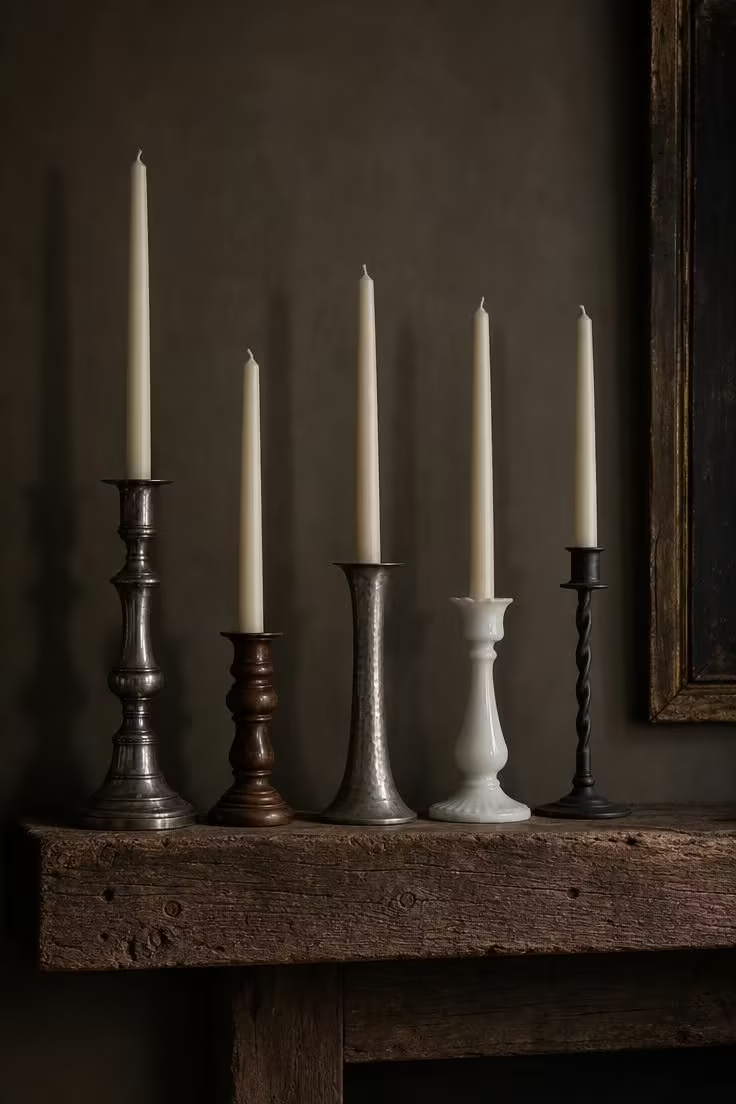
Five candlesticks that do not match tell a better story than ten that do.
The mix of materials, tarnished silver next to turned walnut next to hammered tin next to milk glass next to wrought iron, suggests that each one arrived in the house through a different door: an estate sale, a grandmother’s sideboard, a flea market in a town you drove through once.
Height variation matters more than material variety, because the stepped silhouette is what the eye reads first from across the room.
Ivory tapers rather than colored ones keep the focus on the holders themselves, and unlit tapers look better than burned-down stubs because the straight lines of the wax echo the vertical forms of the sticks.
A reclaimed-wood mantel with rough-cut edges and visible nail holes has enough texture to hold its own against five competing objects, which is something a smooth painted shelf cannot always do.
Style Blueprint:
- Five candlesticks in varied materials (silver, wood, tin, milk glass, iron)
- Graduated heights from short to tall
- Ivory or beeswax taper candles (unlit for display)
- Reclaimed-wood mantel shelf with rough-cut edges
- Dark plaster or painted wall behind in mushroom or charcoal tone
Conclusion
A cottage living room comes together one decision at a time, not all at once.
Start with the piece that matters most to you, whether that is the sofa you sink into every evening or the mantel shelf that holds the objects you have collected over years.
Let the room fill slowly, and resist the urge to finish it in a single weekend.
The imperfections, the mismatched heights of those candlesticks, the faded spot on the rug, the crocheted throw with one dropped stitch, are what make it feel like yours.
Every idea here is meant to be adapted, mixed with what you already own, and adjusted to fit the light, the size, and the rhythm of your own home.