This post may contain affiliate links. If you make a purchase through these links, we may earn a commission at no additional cost to you.
A cottage fireplace does more than heat a room.
It anchors the entire space, pulling furniture, light, and conversation toward one wall.
The right materials and a few well-chosen details can make a fireplace feel like it has always been there, even in a newer home.
These 11 cottage fireplace ideas focus on natural textures, honest materials, and the kind of relaxed styling that makes a room feel genuinely lived-in rather than staged.
A Lime-Washed Stone Surround With a Reclaimed Elm Mantel Beam
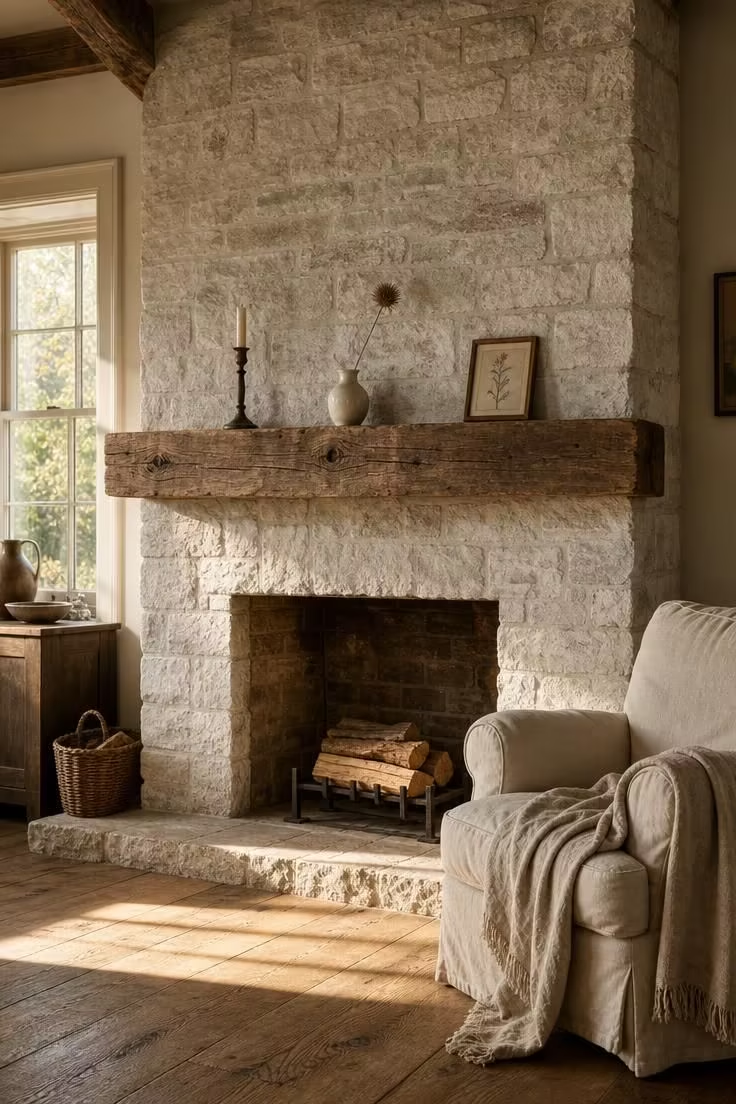
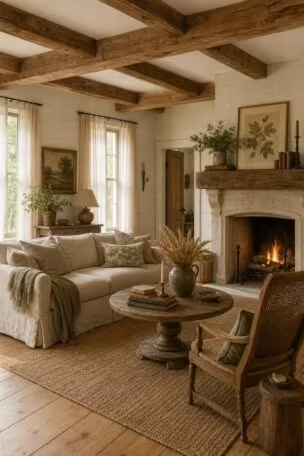
A stone fireplace surround covered in lime wash has a way of looking centuries old within the first year.
The wash sits unevenly on the natural ridges of the stone, thinning over the high points and settling thicker in the crevices.
That irregularity is what makes it feel authentic rather than finished.
The reclaimed elm beam above the opening does something a milled mantel cannot: it brings the weight and warmth of real age to the room.
Leaving it unfinished, with the original saw marks and knot holes visible, keeps the focus on the material itself.
A cottage mantel styling approach works best here when you resist the urge to fill the shelf, letting two or three collected objects breathe with space between them.
The combination of mineral and wood, rough and soft, is what gives this kind of cottage fireplace its particular gravity.
- Lime-washed natural stone surround with visible texture
- Single reclaimed elm beam as the mantel shelf
- Iron candlestick and handmade ceramic vase on the mantel
- Deep slipcovered armchair in oatmeal linen beside the hearth
- Wide plank oak flooring in front of the firebox
Herringbone Firebrick Inside an Arched Whitewashed Opening
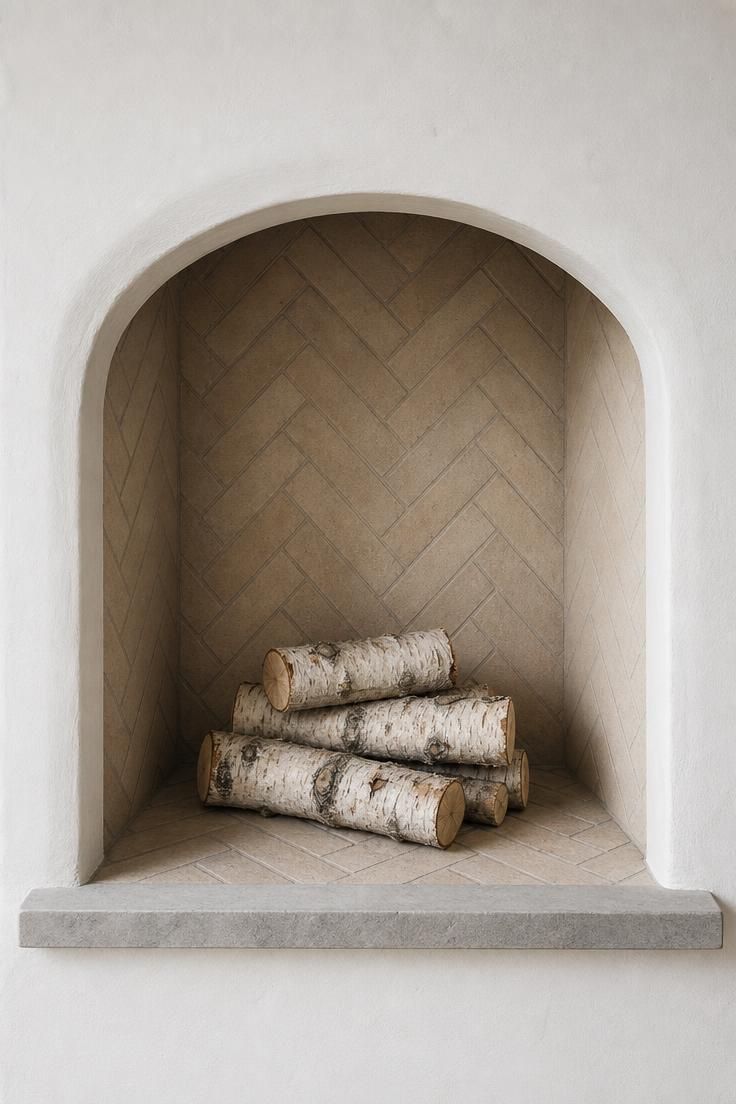
The inside of a firebox rarely gets much attention, but a herringbone brick pattern changes that.
Each brick is set at a precise angle, creating a woven visual rhythm that draws the eye inward.
Buff-toned firebrick works better here than red, keeping the warmth without competing with the fire itself.
The arched opening above is a small architectural decision that shifts the entire feel of the fireplace from boxy to gentle.
A cozy hearth design like this one relies on proportion: the arch should feel like a natural curve, not a forced half-circle.
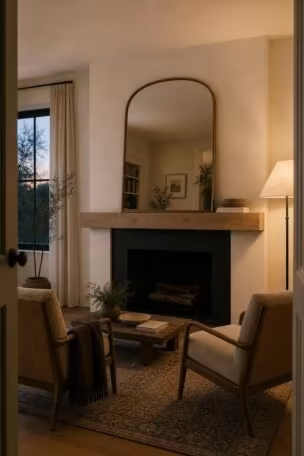
Skipping the traditional mantel shelf and letting the plaster wall run clean above the arch gives the whole composition a European cottage quality that feels old and unhurried.
- Herringbone-laid buff firebrick inside the firebox
- Arched plaster opening in warm white
- Narrow honed stone ledge at the base
- Birch logs stacked inside for contrast
- No mantel shelf, clean plaster wall above
A Chunky Soapstone Hearth Slab With Iron Andirons and a Woven Basket
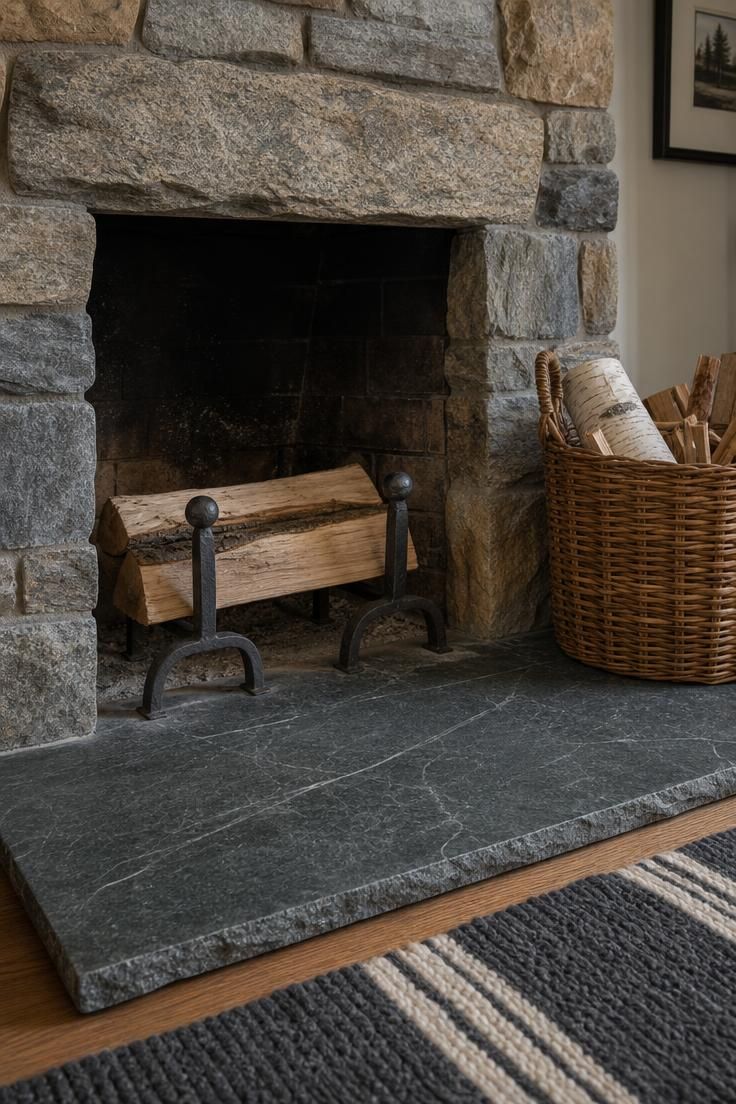
Soapstone has a density and coolness that most hearth materials cannot match.
It absorbs heat slowly and releases it for hours, which makes it more than a surface choice.
The dark gray-green color deepens with time and use, developing a patina that no engineered stone can replicate.
Iron andirons are the most honest fireplace accessory: two uprights, a crossbar, and nothing else.
They hold the logs at the right height for airflow without trying to be decorative.
The woven basket beside the hearth is a functional detail that also softens the hard mineral palette of the stone and iron.
Keeping the basket slightly overfilled with kindling and bark strips makes the whole arrangement feel ready to use rather than arranged for a photograph.
A rustic fireplace decor approach is at its best when every object in the scene actually serves a purpose.
- Thick soapstone slab hearth in dark gray-green
- Forged iron andirons with simple crossbar
- Tall woven rattan firewood basket with kindling
- Rough-cut fieldstone surround in mixed tones
- Charcoal and cream striped wool rug nearby
Hand-Painted Encaustic Tiles Framing a Cast-Iron Firebox Insert
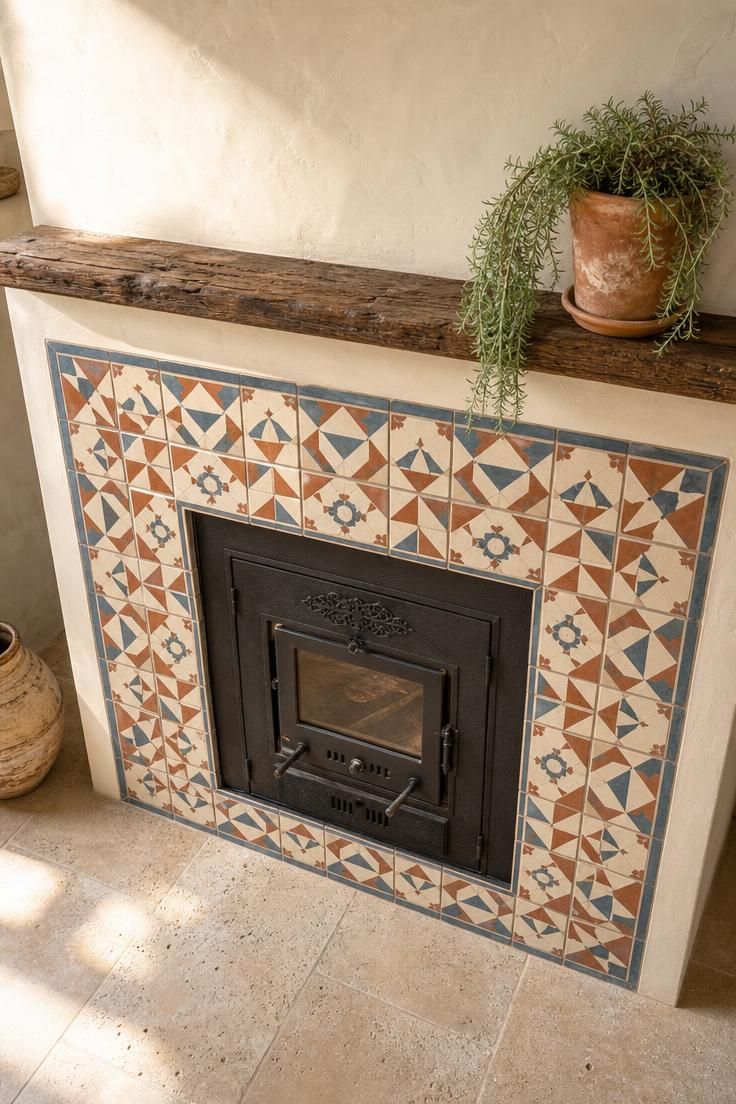
Encaustic tile around a firebox is one of the fastest ways to add color and pattern to a room that otherwise leans neutral.
The tiles are cement-based, not ceramic, which means their pigment goes all the way through the body of the tile.
That depth of color matters over time, because surface-printed tiles can chip and fade where encaustic tiles simply wear smoother.
A geometric pattern in three colors, like terracotta, slate blue, and cream, gives the fireplace a Mediterranean warmth without overwhelming the room.
The cast-iron insert behind the tiles is practical above all: it burns more efficiently than an open firebox and keeps the heat inside the room.
Pairing a patterned surround with a plain mantel shelf is a good rule for keeping the eye on one strong element at a time.
A single potted herb on the mantel is enough to break the hard lines of the iron and tile below.
- Hand-painted encaustic cement tiles in terracotta, slate blue, and cream
- Cast-iron firebox insert with glass viewing window
- Narrow reclaimed oak mantel shelf
- Warm ivory plaster walls as the backdrop
- Pale limestone flooring in front of the hearth
Design Pro-Tip: When a fireplace surround has a strong pattern, like encaustic tile or decorative stonework, keep the mantel styling to one or two objects maximum. The pattern is already doing the visual work. Adding a full mantel arrangement on top creates two focal points competing for attention, and neither one wins.
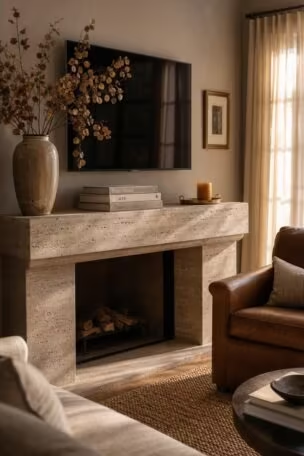
A Thick Driftwood Mantel Shelf Over Stacked River Rock
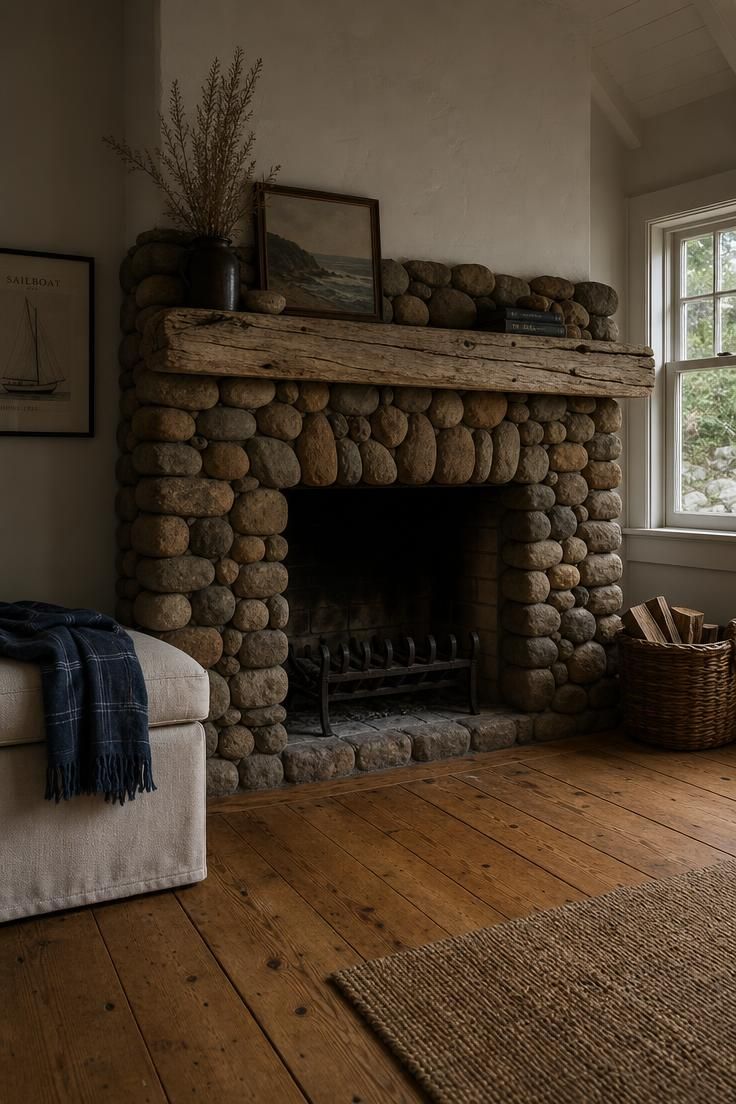
River rock is the opposite of cut stone, and that is its appeal.
Each stone is rounded by water, irregular in size, and unique in color, which means no two sections of the surround look alike.
Stacking them in a mortar bed with the flattest faces forward creates a surface that reads as both solid and organic.
The driftwood mantel above picks up that coastal, weathered quality and carries it across the top of the composition.
A piece thick enough to feel like a beam, with visible cracks and sun-bleaching along the grain, holds its own against the weight of the stone below.
This kind of farmhouse fireplace ideas crossover works best in rooms where the rest of the palette stays quiet: white walls, natural wood floors, and soft textiles in linen or cotton.
- Stacked river rock surround in rounded earth-toned stones
- Thick sun-bleached driftwood slab as the mantel shelf
- Simple iron grate inside a deep firebox
- Low linen-upholstered bench with indigo cotton throw
- Wide plank pine floors and white painted walls
Plaster-Finished Chimney Breast With Niched Candle Alcoves
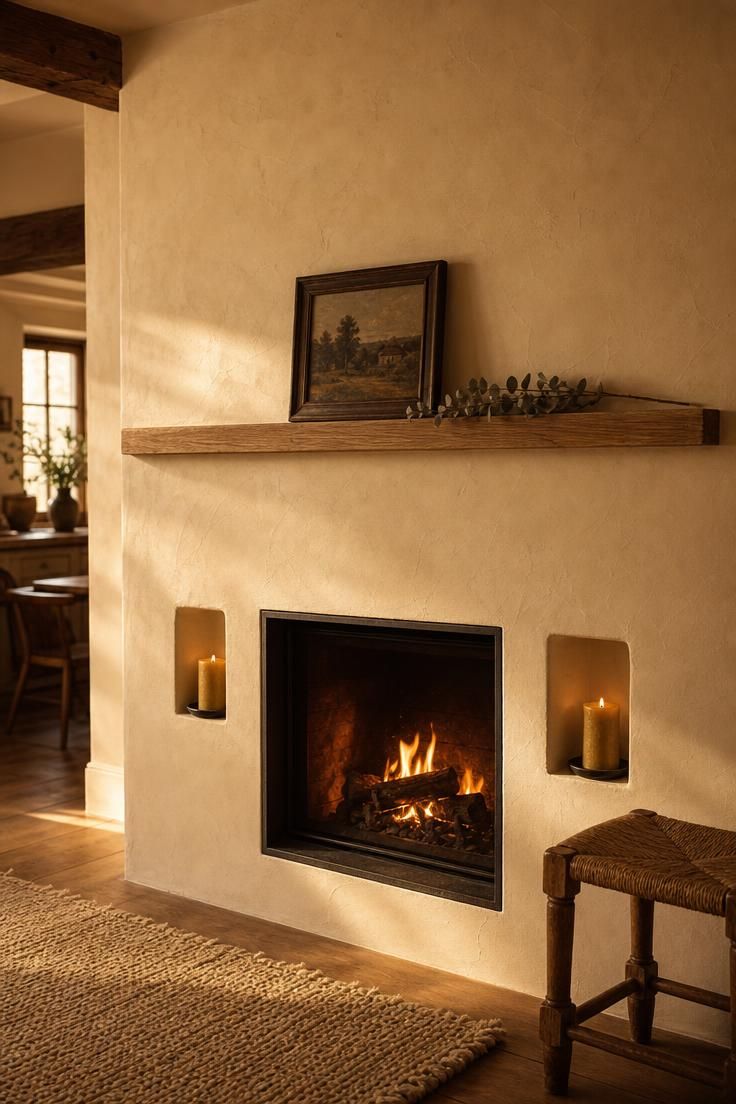
A full chimney breast finished in hand-troweled plaster has a presence that no paint or wallpaper can match.
The trowel marks create a subtle, irregular texture that changes with the light throughout the day, looking flat in the morning and deeply shadowed in the evening.
Warm cream is the right tone here, not bright white, because it absorbs golden light instead of bouncing it back.
The niched alcoves on either side of the firebox are a detail borrowed from old European farmhouses, where thick walls naturally allowed for recessed storage and display.
Each niche is just deep enough to hold one object, which forces restraint.
A beeswax pillar on a small iron dish fills the space completely and gives the wall a devotional, quiet quality.
The fireplace mantel shelf above, kept to a single painting and one dried stem, continues that same discipline of less over more.
This kind of cottage fireplace relies on the wall itself as the decoration, with objects playing a supporting role.
- Hand-troweled plaster finish in warm cream over the full chimney breast
- Recessed niches on either side of the firebox for display
- Thick beeswax pillars on small iron dishes in the alcoves
- Narrow oak mantel shelf with a small oil painting
- Woven stool beside the hearth
A Reclaimed Brick Surround With a Copper Spark Screen and Leather Log Tote
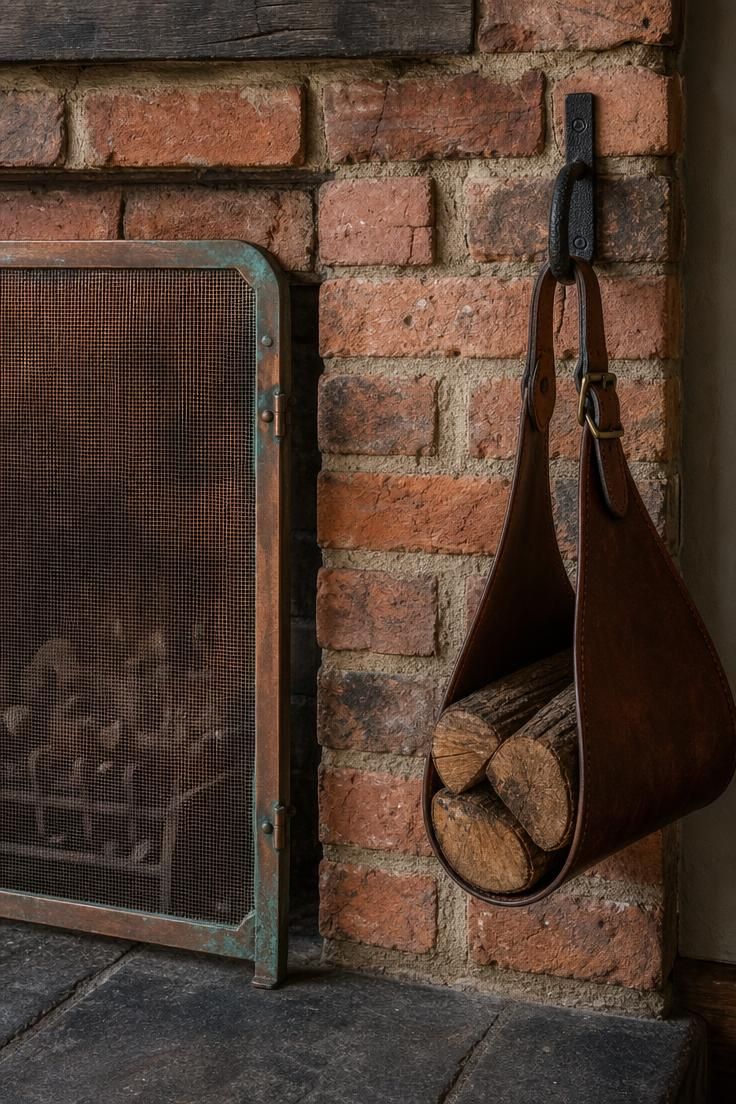
Old brick has a color range that new brick tries to imitate but never quite reaches.
Each reclaimed brick carries its own history of heat, weather, and time, and those differences in tone from deep rose to faded salmon are what make a wall of them feel alive.
The mortar between them matters just as much: a sandy tan with visible texture holds the composition together without looking too clean.
A copper spark screen in front of the firebox adds a layer of warm metallic tone that sits between the cool of iron and the warmth of brass.
Over months the copper develops a patina, with green-tinged edges that only add to its character.
The leather log tote hanging from an iron hook is the kind of functional accessory that a whitewashed brick fireplace rarely gets, but it brings a material warmth that softens the hard surfaces of brick and metal.
These three materials, brick, copper, and leather, share a quality of aging well and looking better with use.
- Aged reclaimed brick surround with visible mortar variation
- Fine-mesh copper spark screen with developing patina
- Thick saddle-leather log tote on a black iron wall hook
- Dark slate hearth floor
- Cool, tactile material palette throughout
Rough-Cut Slate Ledge Hearth With a Low-Profile Fender Seat
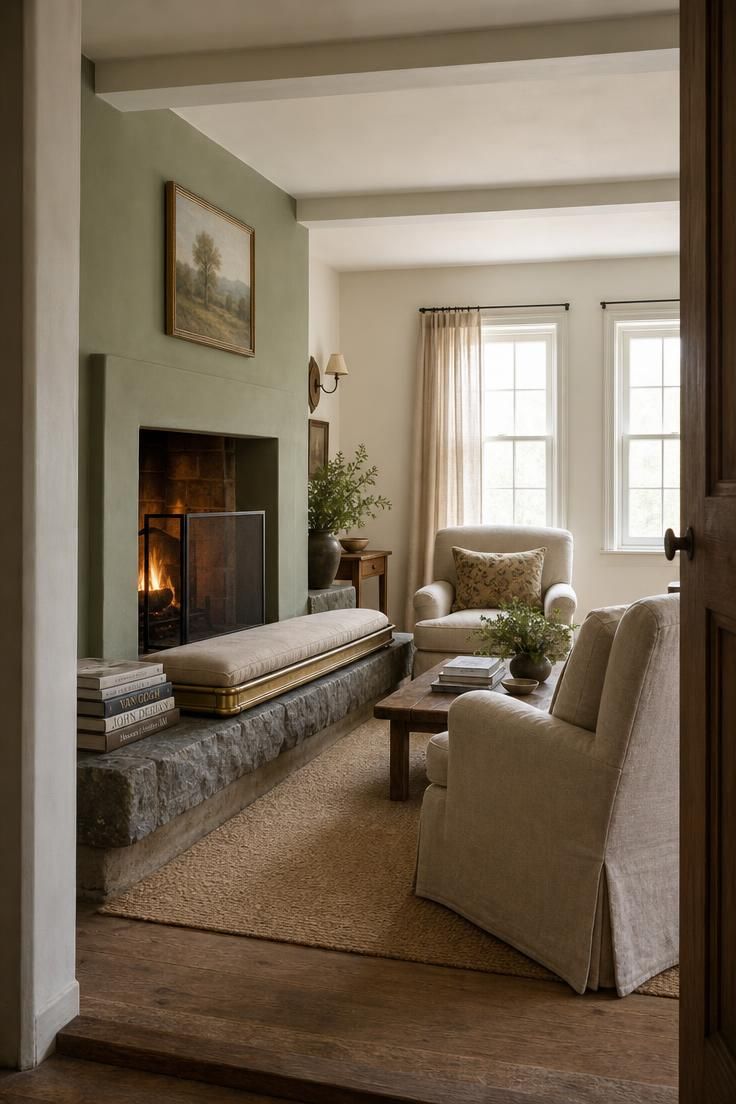
A raised hearth in rough-cut slate creates a visual platform for the entire fireplace, lifting it off the floor and giving the room a sense of grounded architecture.
The rough surface of the slate, with its natural cleft and slight irregularity, feels more honest than polished stone.
A fender seat along the front edge turns that ledge into usable space, adding a place to sit that no chair in the room can replace.
The brass frame of the fender adds a thin line of warmth without being ornamental, and the linen cushion on top makes it comfortable enough to stay.
In a cottage living room, the hearth is where people naturally gather, and a fender seat acknowledges that instinct instead of blocking it with a decorative screen.
Keeping the plaster surround above in a soft sage green ties the mineral tones of the slate to the softer palette of the room.
- Thick rough-cut slate ledge forming a raised hearth
- Low-profile brass fender seat with natural linen cushion
- Soft sage green painted plaster surround
- Pale gray slipcovered armchairs facing the hearth
- Stack of hardcover books on the hearth ledge
Design Pro-Tip: A fender seat cushion should be made from a tightly woven natural fabric like linen or cotton duck, not synthetic blends. The seat sits close to the fire, and natural fibers handle radiant heat without off-gassing or pilling. Keep the cushion removable and washable, because hearth seating collects ash dust faster than any other spot in the room.
A White-Painted Wood Mantel With Collected Stoneware and Brass Candlesticks
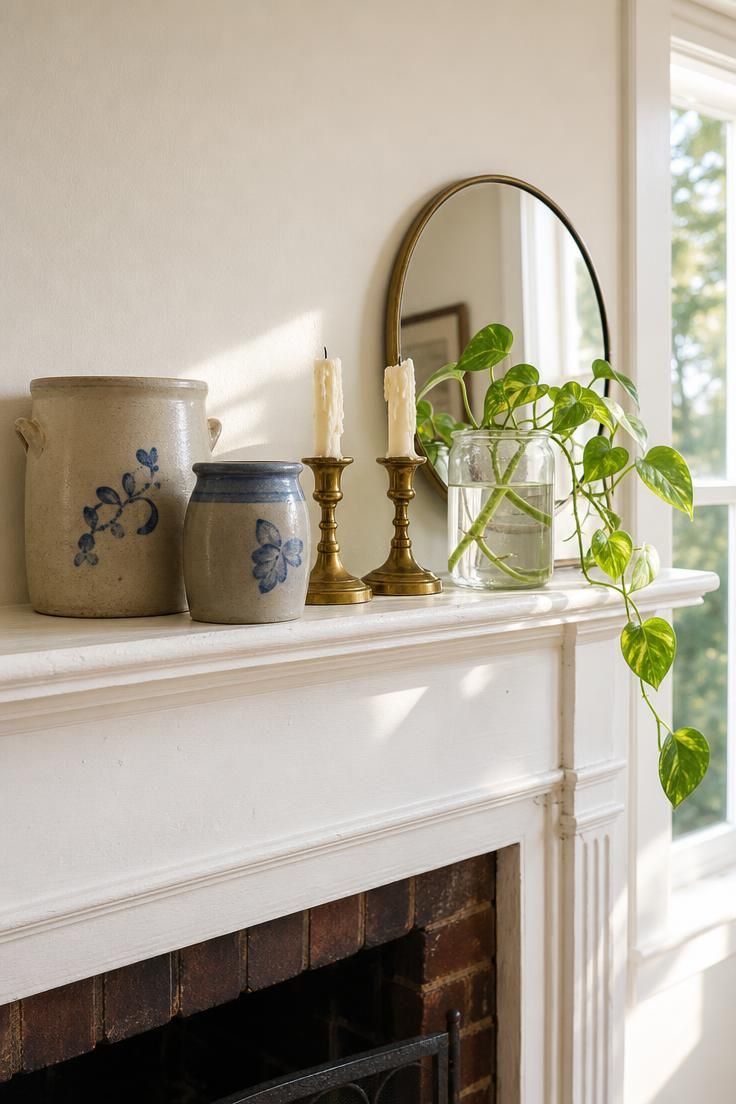
A white-painted wood mantel is the most common cottage fireplace surround, and what makes one look good while another looks forgettable is almost always the styling on the shelf.
The key is to arrange objects as if they arrived over years, not in a single shopping trip.
Mismatched stoneware crocks in slightly different heights and colors have more presence than a matching set, because each piece has its own weight and shape.
Brass candlesticks work here because their warm tone pulls against the cool of the stoneware and the green of the plant, creating a small color conversation on the shelf.
A trailing pothos cutting in a glass jar is alive and growing, which gives the whole arrangement a sense of time passing.
The small round mirror leaning at the back catches light and doubles the depth of the shelf without adding another object.
This reclaimed wood mantel approach, even on a painted surface, works because the styling respects the shelf as a place for real things rather than a display case.
Leaving visible gaps between objects is what keeps it from tipping into clutter.
- Classic white-painted wood mantel surround
- Mismatched stoneware crocks in cream and dusty blue
- Short brass candlesticks with half-melted ivory tapers
- Trailing pothos cutting in a clear glass jar of water
- Small round brass-framed mirror leaning against the wall
An Open Firebox Styled With Pillar Candles and Potted Ferns for Summer
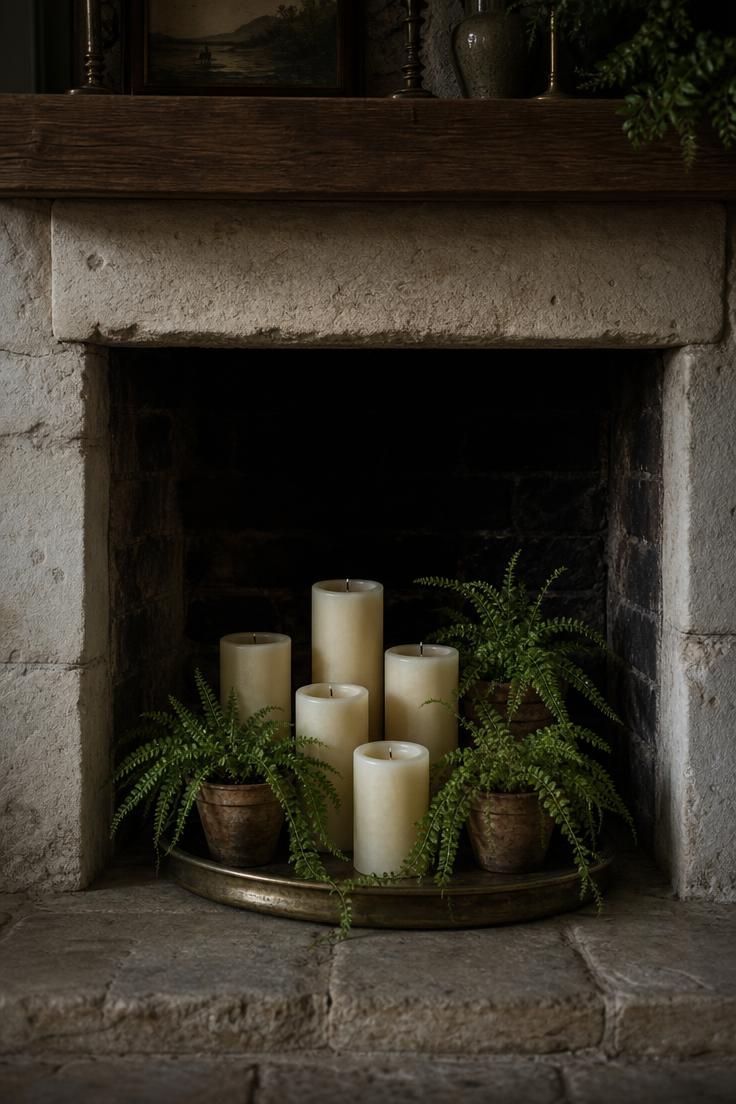
A fireplace without a fire still needs to be the center of the room, and an empty firebox is a missed opportunity in the warmer months.
Grouping pillar candles on a brass tray fills the dark space with form and warmth, even when they are unlit.
The tray matters: tarnished brass picks up the same tones as the oak mantel and the aged terracotta of the pots, tying the arrangement to the room around it.
Potted ferns tucked between the candle bases bring the green of the garden inside, and their soft fronds soften the hard geometry of the firebox opening.
The dark sooty brick behind the arrangement acts like a backdrop, pushing the pale candles and bright foliage forward.
This is firebox styling ideas at their simplest, using just two categories of objects, light and plant, to keep the fireplace working as a focal point through every season.
The result feels layered and intentional without being fussy.
- Six ivory pillar candles of varying heights on a tarnished brass tray
- Three small potted ferns in aged terracotta pots
- Dark sooty brick firebox interior as backdrop
- Pale limestone surround with simple oak mantel
- Summer arrangement that keeps the firebox visually active
A Tongue-and-Groove Overmantel Panel With Wrought-Iron Wall Sconces
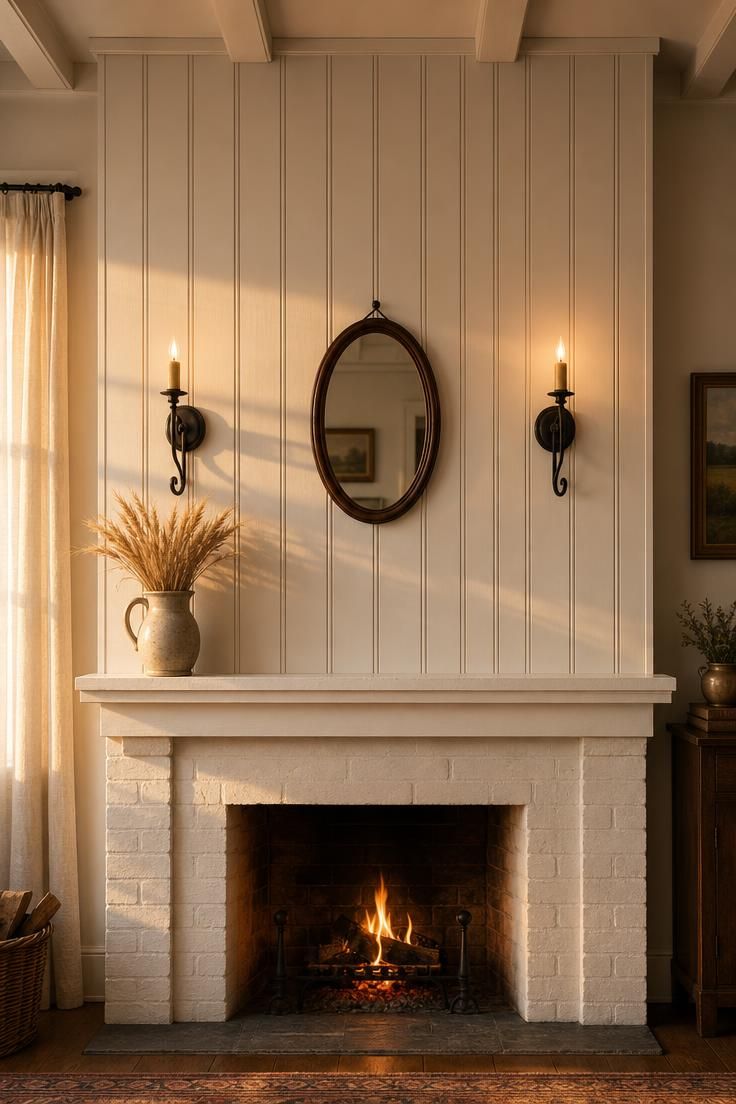
Vertical tongue-and-groove paneling above a mantel does something no flat wall can: it adds height to a room with low ceilings without raising the actual ceiling line.
The grooves create thin vertical shadow lines that lead the eye upward, making the chimney breast feel taller than it is.
Painting the paneling in matte white keeps it from looking like a cabin and instead gives it a clean, cottage-chapel quality.
A pair of wrought-iron wall sconces mounted on the paneling brings in a material that grounds the white wood with weight and darkness.
The curved iron arms catch warm evening light and throw shadows of their own across the grooves, adding another layer of texture to the wall.
A small oval mirror between the sconces reflects the room back and gives the centered composition a natural focal point that is not the fireplace itself.
- Vertical tongue-and-groove paneling in matte white from mantel to ceiling
- Pair of wrought-iron wall sconces with curved arms
- Small oval mirror with dark wood frame
- Thick painted wood mantel shelf in matte white
- Stoneware pitcher with dried wheat stalks on the mantel
Conclusion
Every cottage fireplace in this collection shares a few things in common: natural materials that age well, styling that looks collected rather than coordinated, and a sense that the room was built around the hearth rather than decorated after the fact.
Stone, wood, iron, plaster, and brick each bring their own texture and warmth, and the best cozy hearth design choices let those materials do the talking without adding too much on top.
Whether the approach is a full stone surround with a rough elm beam or a simple painted mantel with a few stoneware crocks, the goal is the same.
A cottage fireplace should feel like the one spot in the house where everything slows down.