This post may contain affiliate links. If you make a purchase through these links, we may earn a commission at no additional cost to you.
Fall has a way of making people pile things on every shelf and ledge, but the most striking seasonal spaces work the opposite way.
A few honest materials, a quiet color shift, and one or two objects that actually mean something to you can carry more autumn weight than a dozen store-bought accents ever could.
These 11 minimalist fall decor ideas each focus on a single visual moment, something you can set up in minutes and live with for the whole season.
The goal is not to strip your rooms bare but to let each piece breathe, so you notice the texture of a wool throw or the curve of a ceramic bowl the way you notice the first cool morning.
1. A Single Dried Wheat Bundle Tied With Raw Linen Cord on a Bare Mantelpiece
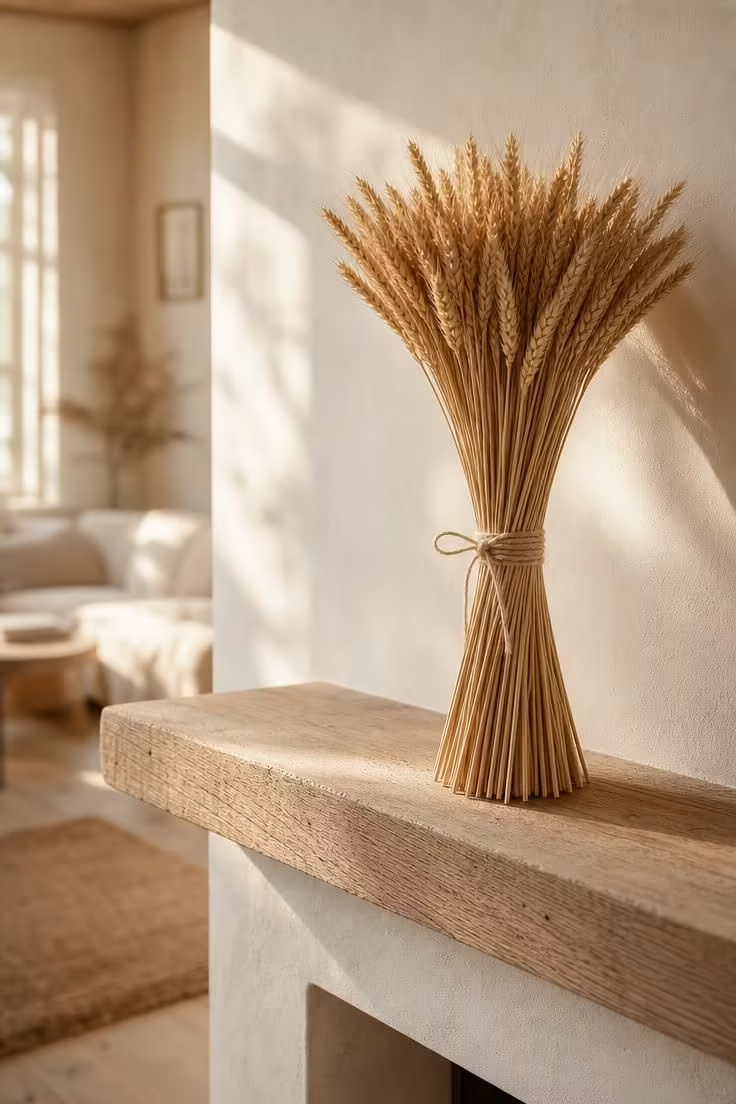
Wheat is one of those materials that does all the seasonal work without asking anything of you.
A single bundle on a clear mantel reads as both purposeful and relaxed, the kind of autumn home styling that signals the season changed without screaming about it.
The raw linen cord adds a second layer of texture that keeps the arrangement from feeling too polished or too rustic.
Leave the rest of the mantel surface empty, because the negative space around the wheat is doing half the decorating.
Light hits the dried heads differently at every hour, shifting from pale straw in the morning to deep ochre by late afternoon.
That tonal color scheme of ivory and flax against a white wall proves you do not need contrast to create presence.
Style Blueprint:
- One large dried wheat bundle (natural, unbleached)
- A length of raw linen cord or cotton twine
- A cleared mantel surface with visible wood or stone grain
- Bare walls behind the arrangement, no artwork competing for attention
2. Terracotta Pillar Candles Grouped on a Rough Slate Board at the Dining Center
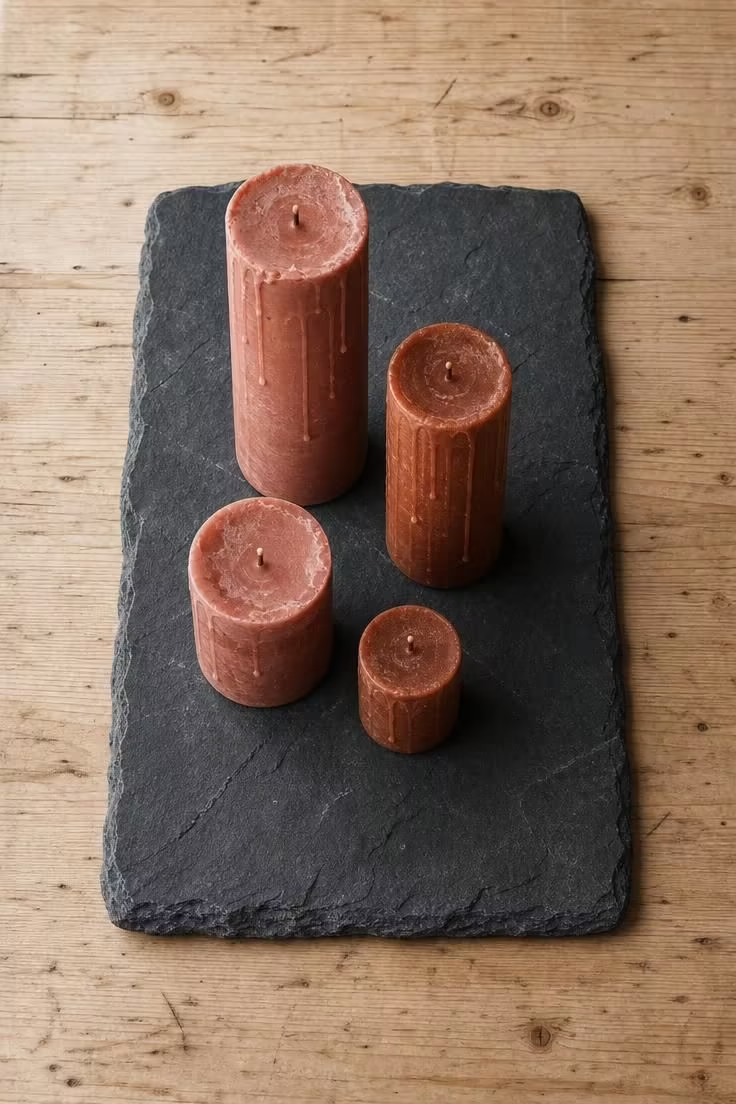
There is something about an overhead view of a dining table with almost nothing on it that makes you want to sit down immediately.
The slate board acts as a frame within the frame, giving the candles a stage without adding any visual fuss.
Terracotta tones sit right in the sweet spot of the neutral fall palette, warm enough to feel seasonal but muted enough to live alongside your everyday dishes.
Choosing candles at staggered heights creates rhythm that a single uniform row never achieves.
The drip marks and uneven wax tops matter here, they signal that these are objects you actually use, not props arranged for a photograph.
Dried floral arrangement lovers might want to add stems beside the board, but resist that impulse, the restraint is the whole point.
Rough-cut slate brings a mineral coolness that balances the warm wax tones and keeps the arrangement from tipping too cozy.
Style Blueprint:
- A rough-cut slate cheese board or natural stone slab
- 3-4 unscented pillar candles in terracotta tones, varying heights
- A cleared dining table with visible wood grain
- No table runner, no placemats, no additional decor on the table
3. One Oversized Jarrahdale Pumpkin on a Bare Black Iron Plant Stand
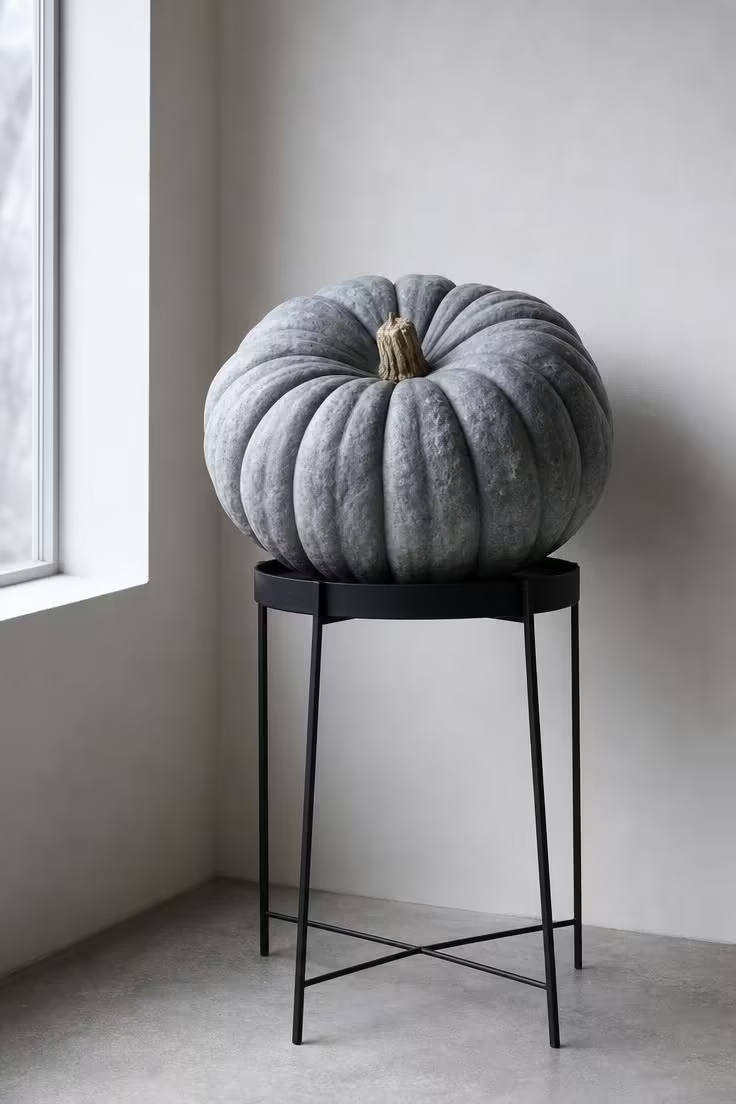
A Jarrahdale pumpkin already looks like someone sculpted it on purpose, so placing it on a stand only heightens what nature started.
The blue-grey skin sits far enough from traditional orange that it reads as a decor object first and a seasonal accent second.
Black iron legs underneath introduce a graphic line that grounds the organic form and keeps it from looking like a pumpkin just rolled into the corner.
This is the kind of white pumpkin display alternative that works in spaces where traditional harvest colors would clash with the existing palette.
Cool overcast light from a cloudy window is the best friend of muted tones decor, it flattens harsh shadows and lets the ribbing create its own subtle depth.
One oversized pumpkin on an otherwise bare floor says more about seasonal simplicity than a dozen small gourds ever could.
The stand lifts the pumpkin to a height where you actually notice it as you walk by, rather than stepping over it.
Position it where traffic naturally slows, near an entry wall or beside a reading chair, somewhere the eye can rest on it.
Style Blueprint:
- One oversized Jarrahdale pumpkin (or similar blue-grey heirloom variety)
- A matte black iron plant stand with slim legs (12-16 inches tall)
- Clear floor space around the stand, no rugs or baskets nearby
- A neutral wall backdrop with no competing artwork
4. A Minimalist Fall Decor Table With Just a Draped Oat-Colored Muslin Runner
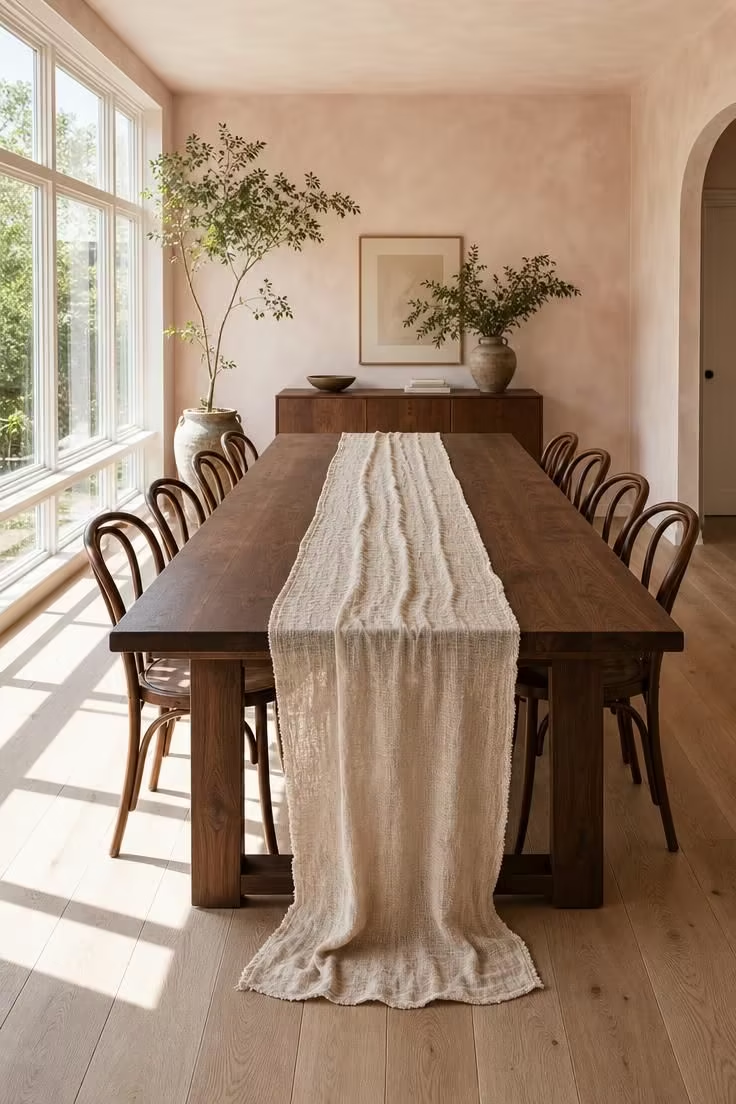
The muslin runner does something a tablecloth cannot, it adds a layer of texture without hiding the table underneath.
Leaving both sides of the surface exposed means the walnut grain becomes an active part of the arrangement rather than a hidden foundation.
The loose drape and raw selvedge edges keep this from feeling stiff or fussy, it looks like someone tossed it down and let the fabric settle where it wanted.
Bright midday light reveals every thread in the weave, turning a simple piece of cloth into something almost architectural.
There is a confidence in a dining table set with nothing but a runner, it tells guests the meal itself will be the centerpiece.
This approach to understated fall styling works best on tables with character, visible grain, patina, or honest wear marks that deserve to be seen.
Style Blueprint:
- An oat, flax, or unbleached muslin table runner (raw selvedge edges preferred)
- A dining table with exposed wood grain, no protective glass tops
- Chairs pushed in neatly to frame the runner
- No centerpiece, no candles, no place settings until mealtime
Design Pro-Tip: When your seasonal decor relies on a single textile, choose one with visible weave or texture. A smooth, tightly woven fabric reads as everyday, but a loose gauze, a waffle knit, or a nubby boucle signals intention and makes the absence of other objects feel deliberate rather than forgotten.
5. A Forked Birch Branch Propped in the Corner Behind a Low Bench
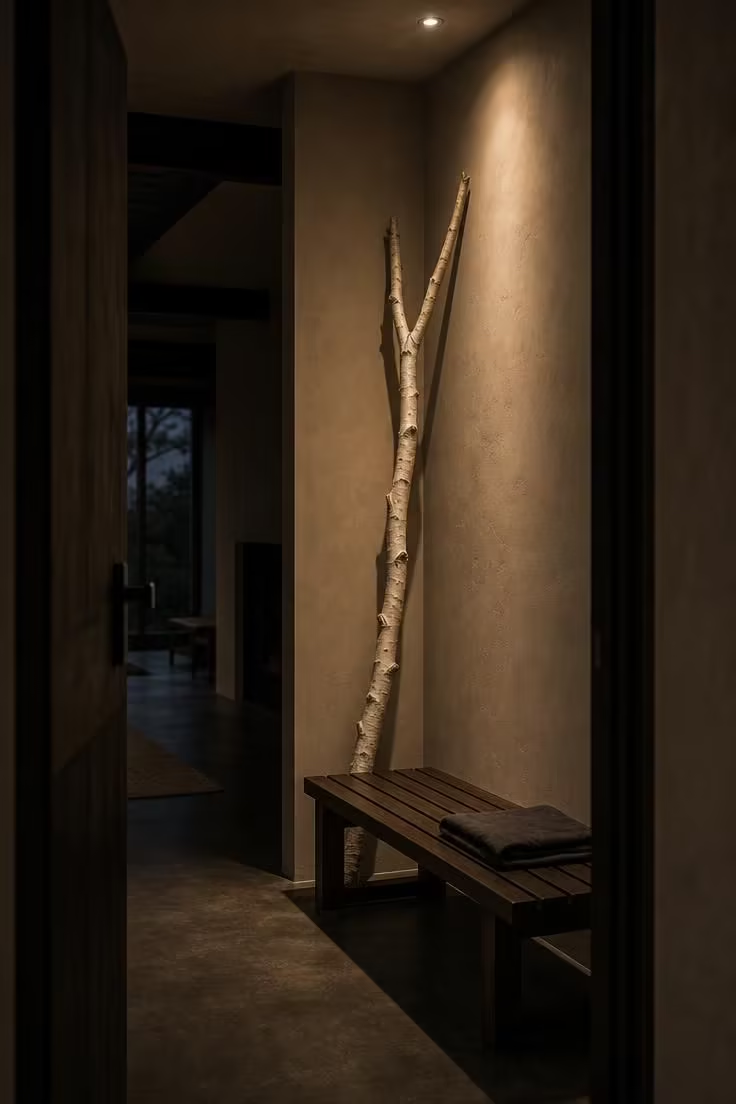
A single branch does what a vase of flowers does, it brings the outdoors into a room, but with none of the upkeep and all of the sculptural impact.
Birch bark has a papery quality that catches even low light and holds it, so a dim entryway becomes the ideal backdrop rather than a problem to solve.
Propping the branch rather than placing it in a vessel keeps things raw and a little unpredictable, exactly the feeling that organic fall accents are meant to create.
The forked shape matters here, it draws the eye upward and fills the vertical space that corners usually waste.
Position a low bench in front to anchor the arrangement and keep the branch from looking abandoned.
A folded cloth on the bench adds just enough evidence of daily life, someone sets their bag down here, drops their keys on the wood.
This is the kind of natural textures moment that works from September through February without ever looking dated.
Darker rooms actually serve minimalist compositions better than bright ones, the focused light creates drama that a sunlit corner would flatten.
In a space with no other decor on the walls or floor, that solitary branch becomes the room’s entire personality.
Style Blueprint:
- One tall forked birch branch (naturally fallen, dried, bark intact)
- A low slatted wood bench or narrow console
- A single folded linen or cotton cloth in a dark neutral tone
- Bare walls and cleared floor space around the arrangement
6. Matte Charcoal Stoneware Bowls Stacked on an Open Kitchen Shelf
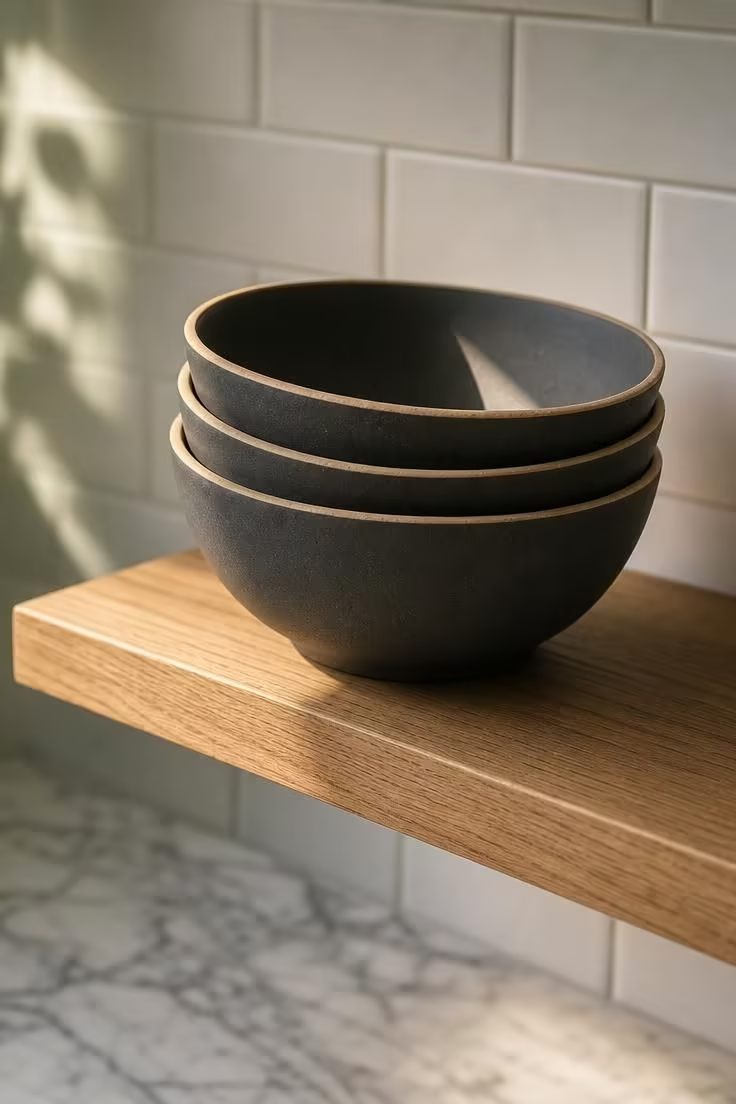
Stacked bowls on a single shelf might be the quietest kitchen moment you can create, and that is exactly why it works.
The unglazed rim is the detail that lifts this from storage to display, it reveals the raw clay underneath the finish and adds a second color without adding a second object.
Charcoal stoneware bridges the gap between autumn home styling and year-round living, warm enough for October and cool enough for March.
Leaving the rest of the shelf empty is the hard part, because open kitchen shelves beg you to fill them, but one cluster surrounded by space reads as intentional.
The offset stacking creates a casual lean that feels hand-placed, not catalog-posed.
Side light does all the decorating here, catching the top rim and dropping a crescent shadow inside the bowl that shifts as the afternoon moves.
These bowls serve double duty, they are your everyday cereal bowls and your seasonal decor at the same time, which is about as minimalist as a kitchen gets.
Style Blueprint:
- 3 matte stoneware bowls in charcoal or deep slate (unglazed rim preferred)
- A floating wood shelf with enough depth for the bowls and breathing room
- Cleared shelf space on both sides of the stack
- No additional shelf styling, no cookbooks or jars flanking the bowls
7. A Loose Arrangement of Dried Lunaria in a Narrow Brushed Concrete Cylinder
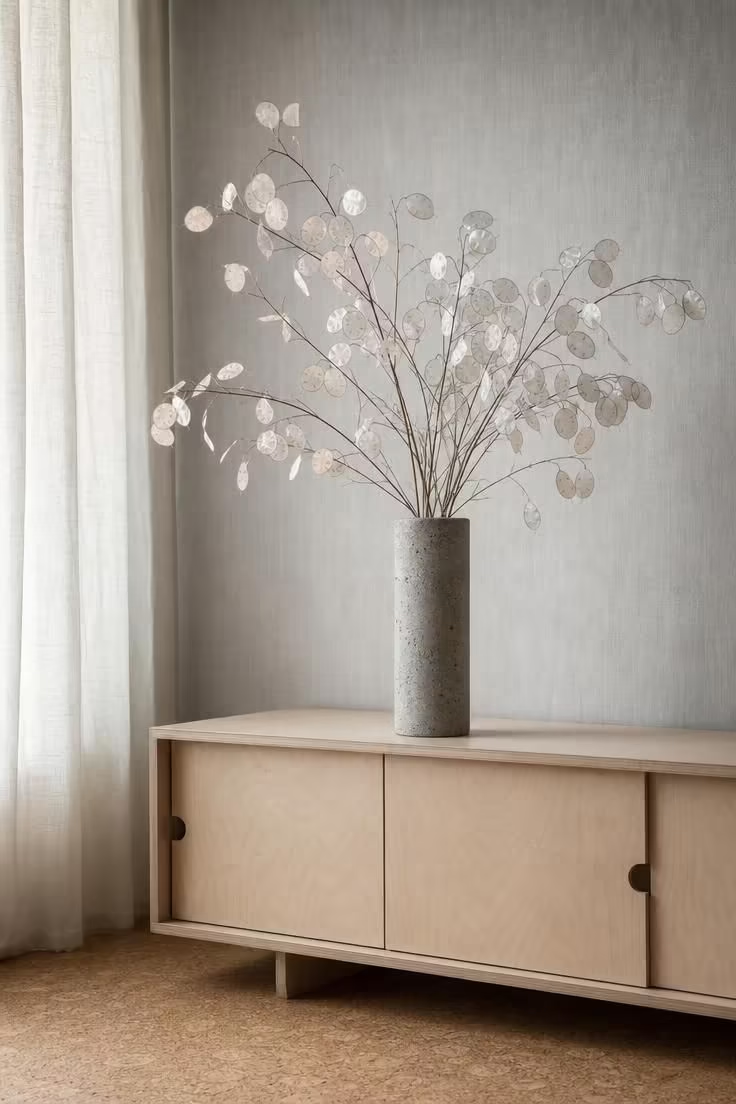
Lunaria pods look almost unreal, those translucent discs catch light like tiny windows and throw the faintest blush onto whatever surface sits behind them.
A narrow concrete cylinder keeps the stems upright and contained without competing with their delicate silhouettes.
The contrast between the heavy, rough vessel and the nearly weightless pods is what makes this arrangement feel considered rather than accidental.
Set against a pale grey wall, the silver tones of the lunaria almost disappear, then a shift in daylight catches the pods and the whole thing glows.
This dried floral arrangement lasts through fall and well into winter, which means you set it up once and forget about it for months.
Brushed concrete has a mineral coolness that reads as modern, but the organic curve of the stems softens it just enough.
Position the vase on a surface where the light source hits the pods from behind, backlighting is what activates the translucence that makes lunaria special.
Leave the credenza bare around the vase, a single book or a stray set of keys beside it would break the spell.
Style Blueprint:
- 5-7 dried lunaria stems (silver-white, fully dried with pods intact)
- A narrow brushed concrete cylinder vase (6-8 inches tall)
- A low credenza or console with a cleared surface
- Positioning near a window for backlight through the pods
8. A Cream Wool Throw Folded in Thirds Across a Walnut Bench Seat
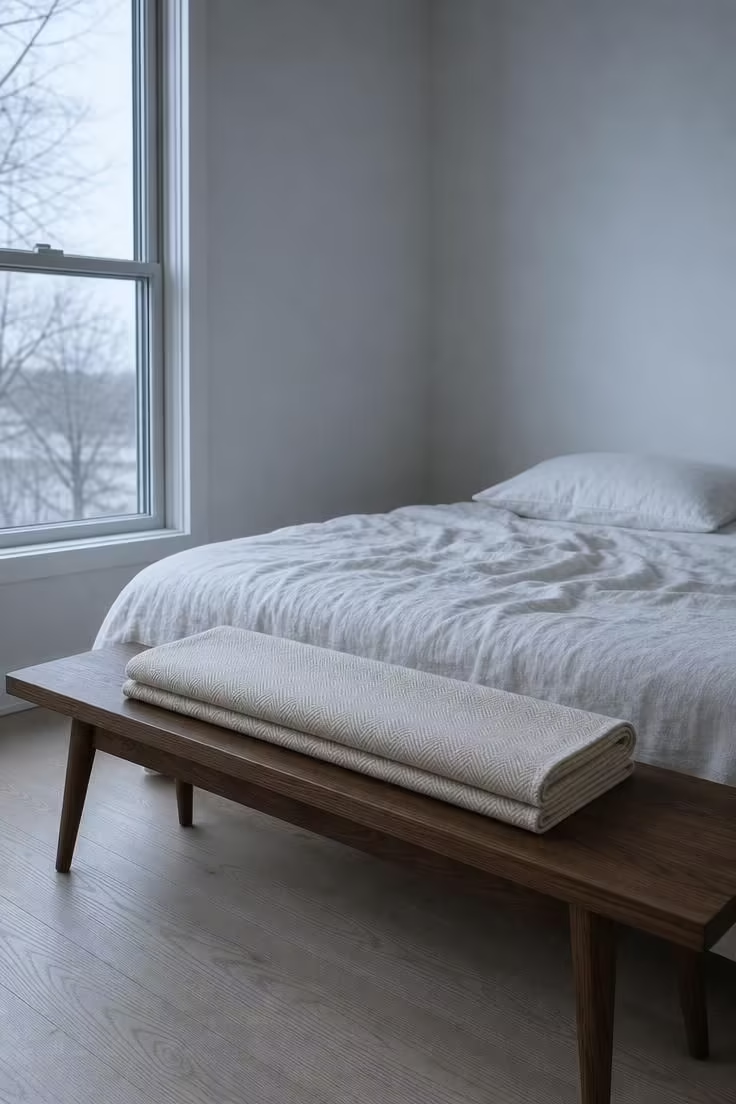
A folded throw on a bench is not new, but folding it in precise thirds and leaving nothing else on the seat changes the gesture from casual to composed.
The herringbone weave adds a micro-texture that gives the eye something to find up close, even though from across the room the throw reads as a simple cream rectangle.
Cool overcast light is the secret here, it pulls the warmth out of the cream and lets the wool read as almost architectural rather than cozy.
Walnut and cream are a pairing that carries seasonal weight without leaning on any obvious fall signifier like color or motif.
Keeping the bed behind deliberately simple, rumpled white linen with a flat pillow, extends the restraint across the whole field of view.
Style Blueprint:
- One cream or ivory wool throw with visible weave (herringbone, waffle, or ribbed)
- A walnut or dark wood bench with tapered legs
- A bed made with plain white or off-white linen
- No rug, no nightstand clutter, no additional blankets on the bed
Design Pro-Tip: The fold matters more than the throw itself. A throw tossed casually over an arm signals comfort; a throw folded with visible edges signals control. In a minimalist room, that distinction is the difference between “I haven’t finished decorating” and “this is exactly how I want it.”
9. Three White Taper Candles in Mismatched Clay Holders for Minimalist Fall Decor Windowsills
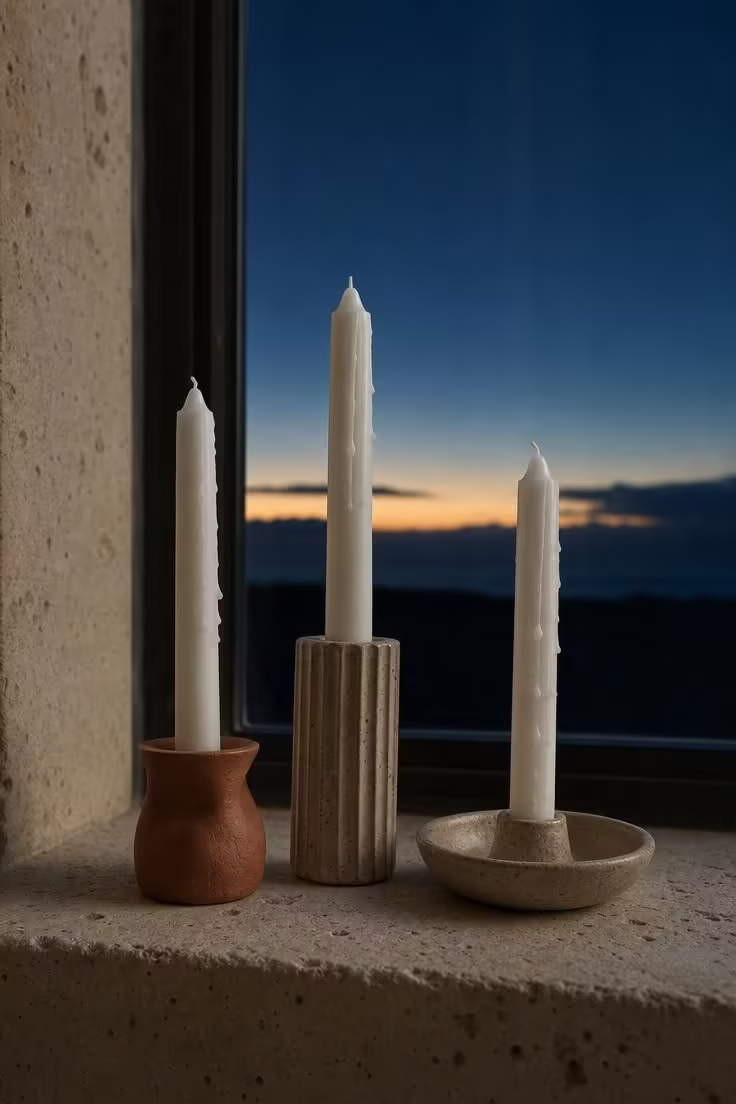
Mismatched holders are the key to making a candle arrangement feel collected rather than purchased as a set.
Each piece brings a different hand, a different glaze, a different silhouette, and that variation keeps three identical candles from looking like a catalog display.
A deep stone windowsill is one of the most underused surfaces in any home, wide enough for a real arrangement yet naturally framed by the window itself.
The transition from daylight to dusk outside the glass adds a second layer of muted tones decor, the blue-grey sky becomes the backdrop that no wall color could replicate.
Wax drips from previous burnings tell a story of evenings spent in this room, and that lived-in evidence is something brand-new candles can never offer.
Leaving the candles unlit during the day lets the white wax and clay holders carry the arrangement on form alone, no flame needed.
When evening comes and you do light them, the windowsill becomes the brightest point in a dark room, pulling the eye exactly where you want it.
Style Blueprint:
- 3 white taper candles (dripless or standard, slight drip marks add character)
- 3 different handmade clay or stoneware holders (varying heights and shapes)
- A deep windowsill, stone ledge, or wide window frame
- No curtains, no additional objects on the sill
10. A Shallow Matte Ivory Dish Holding Five Foraged Walnuts on a Side Table
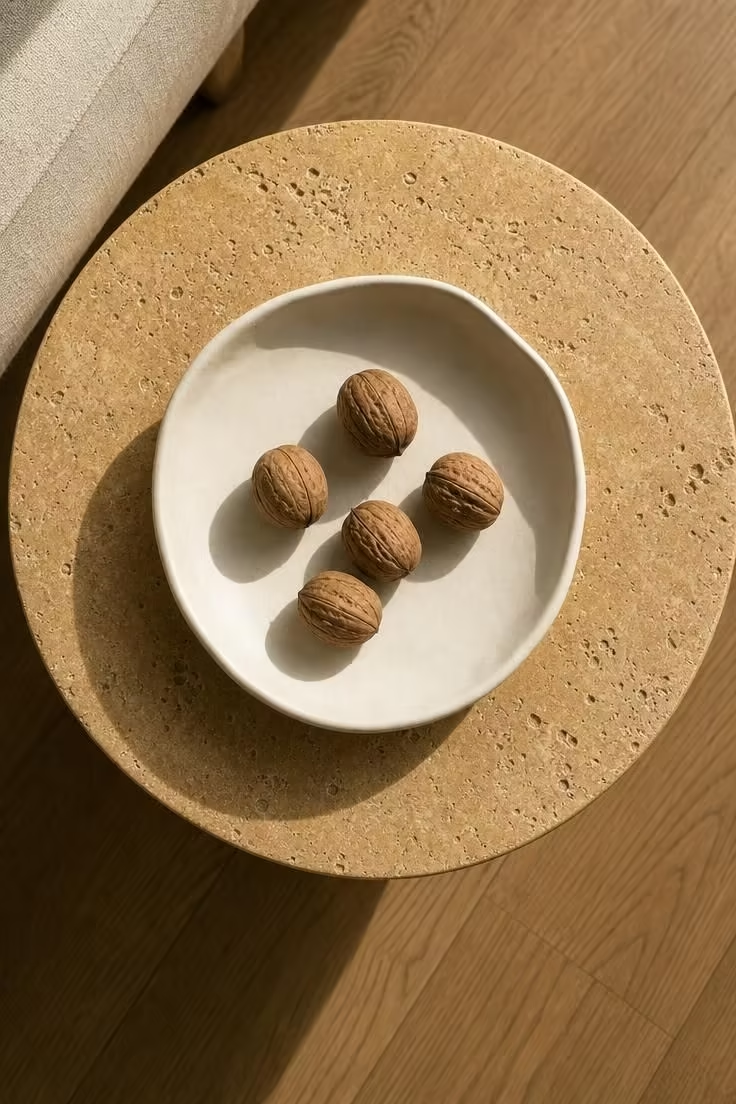
Five walnuts in a dish is the kind of arrangement that makes people pause and wonder if it is art or an afterthought, and that ambiguity is exactly what you want.
The shells have a craggy, fissured surface that photographs with surprising depth under direct light, every ridge casting its own micro-shadow.
A hand-pressed ceramic dish with an irregular rim echoes the organic imperfection of the walnuts, so the two objects feel like they belong together rather than being forced into proximity.
Travertine as a surface choice adds fossilized texture that bridges the smooth ceramic and the rough shells, a middle ground of natural textures that ties the whole vignette.
Overhead light is the right call here, it turns the arrangement into a graphic composition where the shadows do as much work as the objects.
This is foraging as fall decorating, a five-minute walk outside, a handful of whatever the trees dropped, and a dish you already own.
Foraged materials carry a specificity that store-bought decor cannot match, these are the walnuts from your street, your park, your neighbor’s yard.
The number five matters, odd groupings create natural asymmetry that the eye finds more interesting than even counts.
A seasonal simplicity statement this small works on any surface, a nightstand, a bathroom shelf, a desk corner.
Style Blueprint:
- A shallow matte ceramic dish (ivory, cream, or pale stone, slightly irregular shape)
- 5 foraged walnuts, acorns, or chestnuts in their shells
- A side table or surface with visible texture (travertine, wood grain, concrete)
- Nothing else on the table surface
11. A Plain Eucalyptus Sprig Tucked Into a Door Handle With Twine
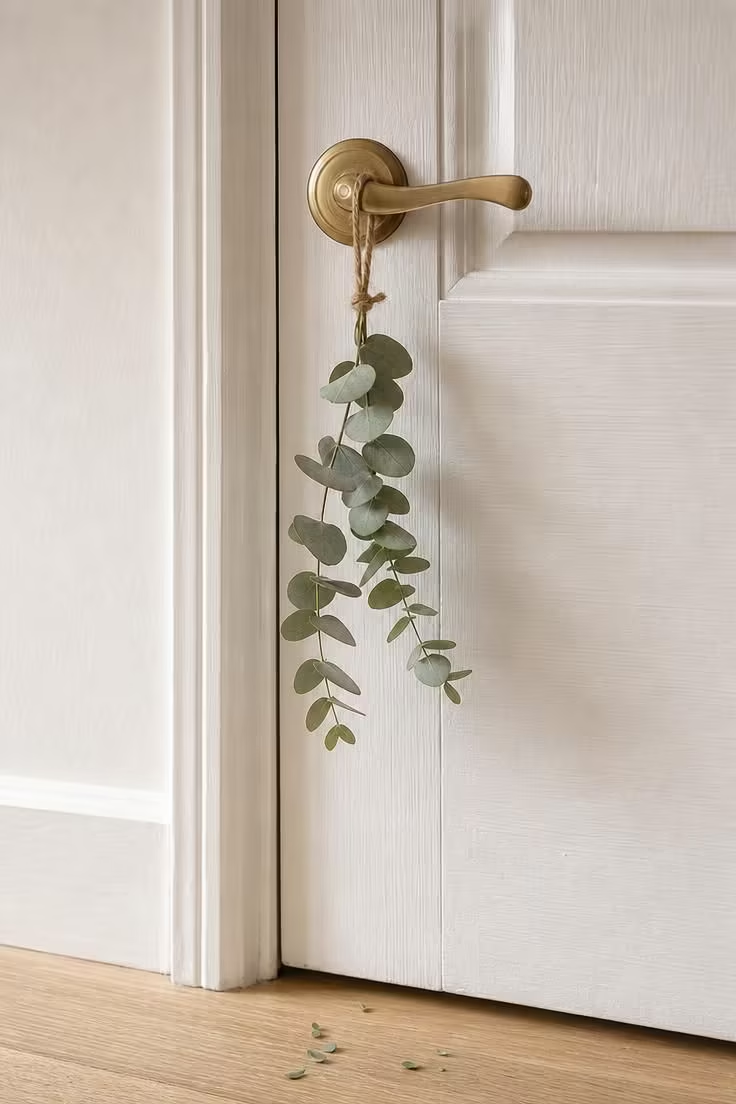
This might be the simplest idea in the entire list, and it might also be the one that makes the strongest first impression.
A sprig of eucalyptus on a door handle greets you with scent before you even see it, the oils release a cool, clean fragrance every time someone opens the door.
Jute twine is the right binding because it matches the casual, impermanent nature of the gesture, you are not mounting hardware or hammering nails.
The silvery green leaves contrast just enough with a white door to register as intentional, but not enough to dominate the entry.
As the eucalyptus dries over the coming weeks, the leaves curl slightly and the color shifts toward sage, which means the arrangement actually gets more interesting as the season progresses.
Fallen leaf fragments on the threshold below are not mess, they are evidence that something alive is changing with the weeks, and that is what fall decorating is supposed to feel like.
Style Blueprint:
- One fresh eucalyptus sprig (8-10 inches, rounded leaf variety preferred)
- A short length of natural jute twine
- A lever-style door handle in brass, black iron, or brushed nickel
- No wreath, no door mat, no additional door decor
Conclusion
Minimalist fall decor is not about doing less for the sake of doing less.
It is about choosing the one thing that will make you notice the season every time you walk into a room, and then letting that one thing breathe.
A wheat bundle on a mantel, a single heirloom pumpkin on a stand, a handful of walnuts in a dish, these are not compromises, they are choices that trust your home to do its own work.
The neutral fall palette, the natural textures, the organic fall accents that dry and shift as the weeks pass, all of it adds up to a version of autumn that feels lived in rather than decorated.
Start with one idea from this list, the one that matches a surface or a corner you have been meaning to do something with, and see if the rest of your rooms even need anything else.