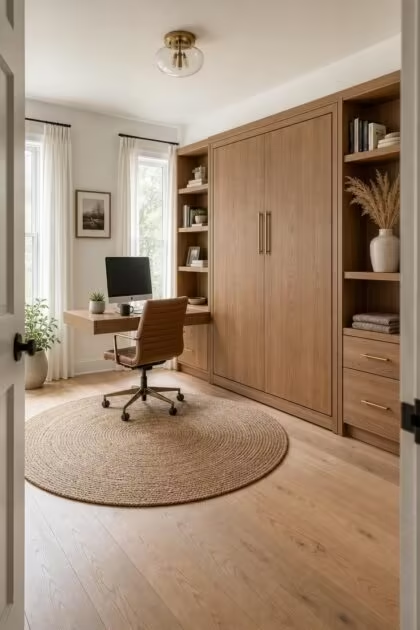
This post may contain affiliate links. If you make a purchase through these links, we may earn a commission at no additional cost to you.
Somewhere in your home, a room is quietly underperforming.
It might be the guest bedroom that sits empty 350 days a year, or the makeshift office where a permanent bed steals half the floor and all your focus.
The cost of that arrangement is not just wasted space, it is wasted potential: lower productivity, fewer hosting options, and a smaller return on every square foot you are paying to heat, cool, and maintain.
A home office with murphy bed rewrites that math entirely, and the numbers behind it are more convincing than most people expect.
The Real Cost of a Room That Only Does One Thing
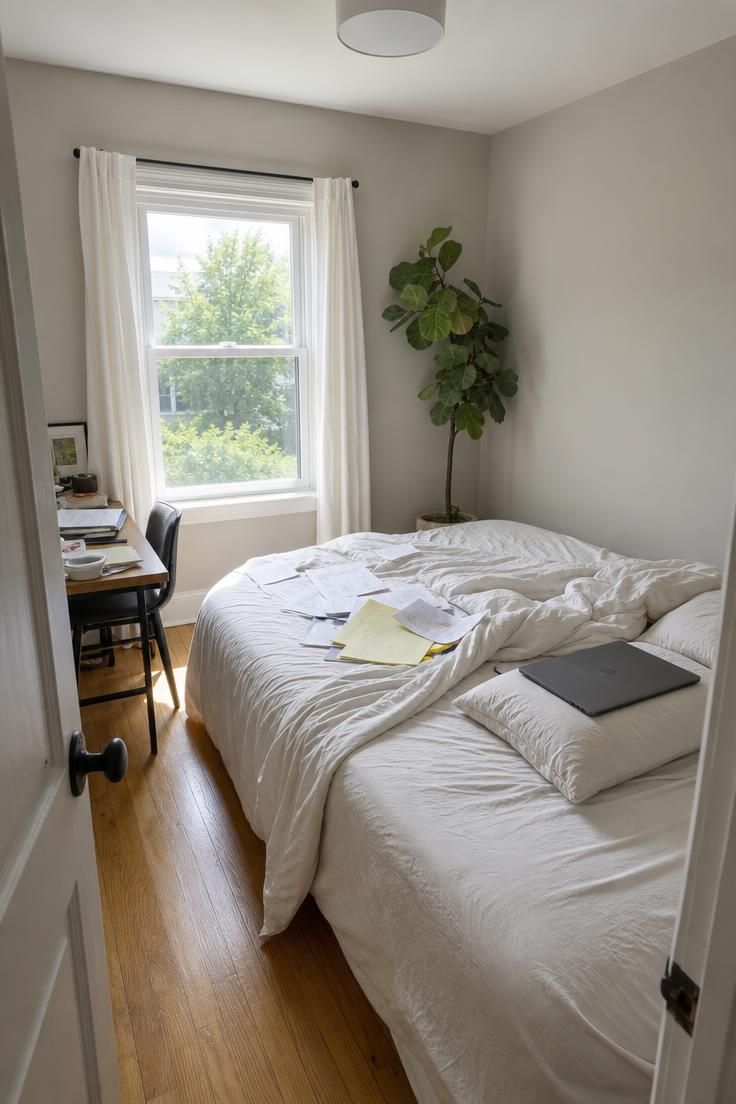
More than 30 percent of homeowners now treat their single-purpose rooms as candidates for conversion into multifunctional furniture layouts.
That statistic reflects a shift in how people think about residential space, not as fixed rooms with fixed roles, but as square footage that should adapt to daily life.
A standard queen bed claims roughly 35 square feet of permanent floor space.
At the national average price per square foot, that sleeping surface alone represents more than $7,000 in real estate value locked behind a single function.
For a room that hosts overnight guests a handful of times per year, those numbers start to feel like a quiet drain on your home’s return.
The financial argument for a dual-purpose room is not abstract.
It is the difference between a spare bedroom that costs you money every month and a space-saving workspace that earns its keep every single day.
Why Remote Work Made the Murphy Bed Relevant Again
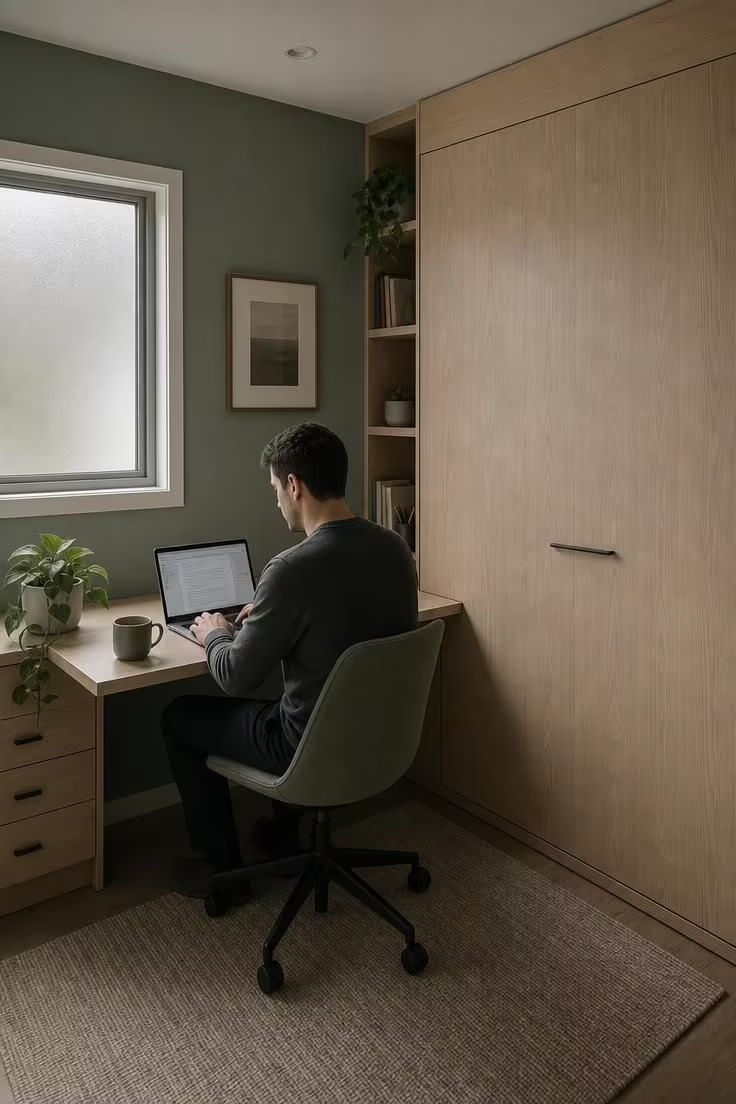
Remote and hybrid work schedules are not a passing phase.
They have settled into a permanent reality for millions of workers, and the homes those workers live in were never designed with a dedicated office in mind.
The result is a generation of improvised workspaces carved out of dining rooms, bedroom corners, and closets that were never built for eight-hour stretches of focused attention.
A home office with murphy bed solves that tension by letting a room fully commit to work during the day.
When the bed folds up and disappears behind a cabinet panel, the psychological shift is immediate: the room reads as an office, not a bedroom with a laptop in it.
That mental separation between rest and productivity matters more than most people realize, and it is a primary reason demand for murphy bed units has grown by 10 to 15 percent in recent years.
How a Wall Bed With Desk Actually Works Day to Day
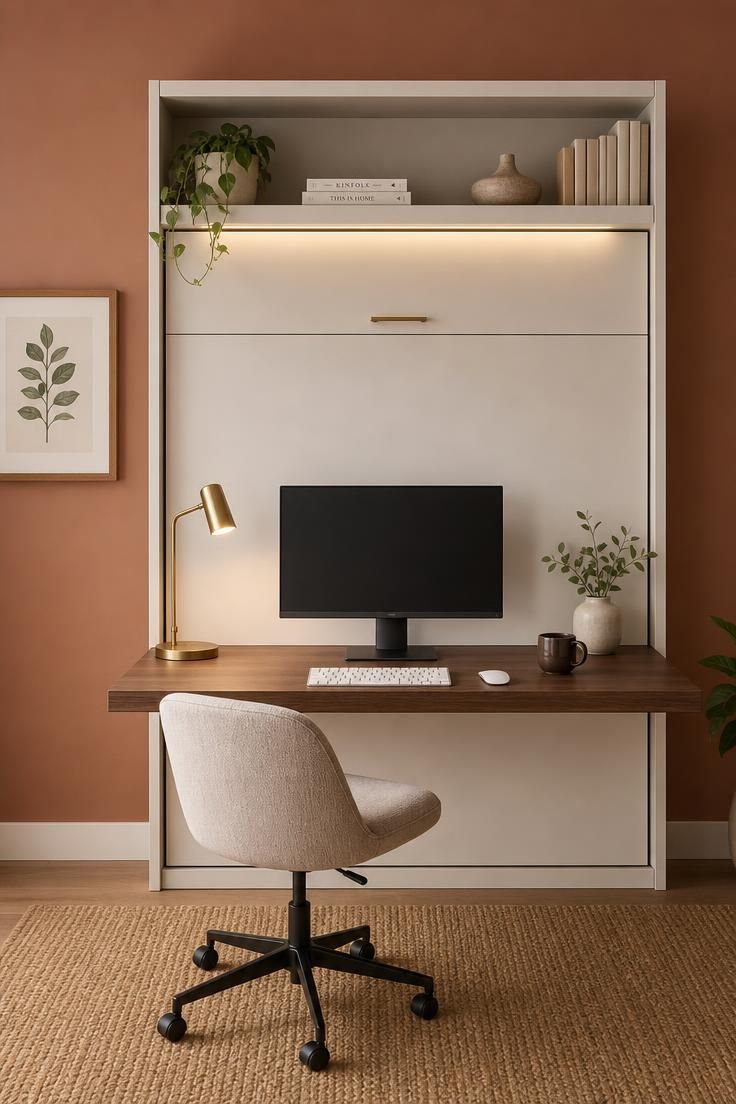
The daily mechanics of a murphy bed desk combo are simpler than they sound.
Modern piston and spring-balance systems allow a single person to lower or raise the bed in under ten seconds, with no heavy lifting required.
The desk component, typically 18 to 21 inches deep, either folds up with the bed or remains fixed on a separate wall, depending on the configuration you choose.
In a fold-up design, morning routine looks like this: you push the mattress up, the desk latches into place, and your workspace is ready before the coffee finishes brewing.
At night, you unlatch the desk, lower the bed, and the room converts to a guest retreat with a real mattress, not an air mattress or a thin sofa cushion.
Cable management channels built into the cabinet keep power cords and monitor cables organized during the transition.
Integrated LED task lighting, USB ports, and wireless charging pads come standard on many current models, which means the desk functions like a legitimate remote work setup rather than a temporary surface.
The whole system only works, though, if the room layout supports it.
The Layout Decisions That Make or Break a Dual-Purpose Room
The orientation of the bed is the first and most consequential layout choice.
Vertical murphy beds stand tall and are the most common option for rooms with standard eight-foot or higher ceilings.
Horizontal models mount along the wall’s width and suit rooms with lower ceilings or limited vertical clearance, though they typically accommodate only twin or full mattresses.
Positioning matters just as much as orientation.
Place the bed wall opposite the primary window so natural light falls on the desk during work hours rather than creating glare on screens.
Leave at least 36 inches of clearance in front of the bed wall so the mattress can deploy fully without blocking the door or pinning furniture against the opposite surface.
The floor space math is worth running before you commit: a well-planned small space home office with a vertical queen murphy bed gains roughly 30 usable square feet during the day compared to a room with a stationary bed.
Built-In Storage That Keeps the Room From Feeling Like a Compromise
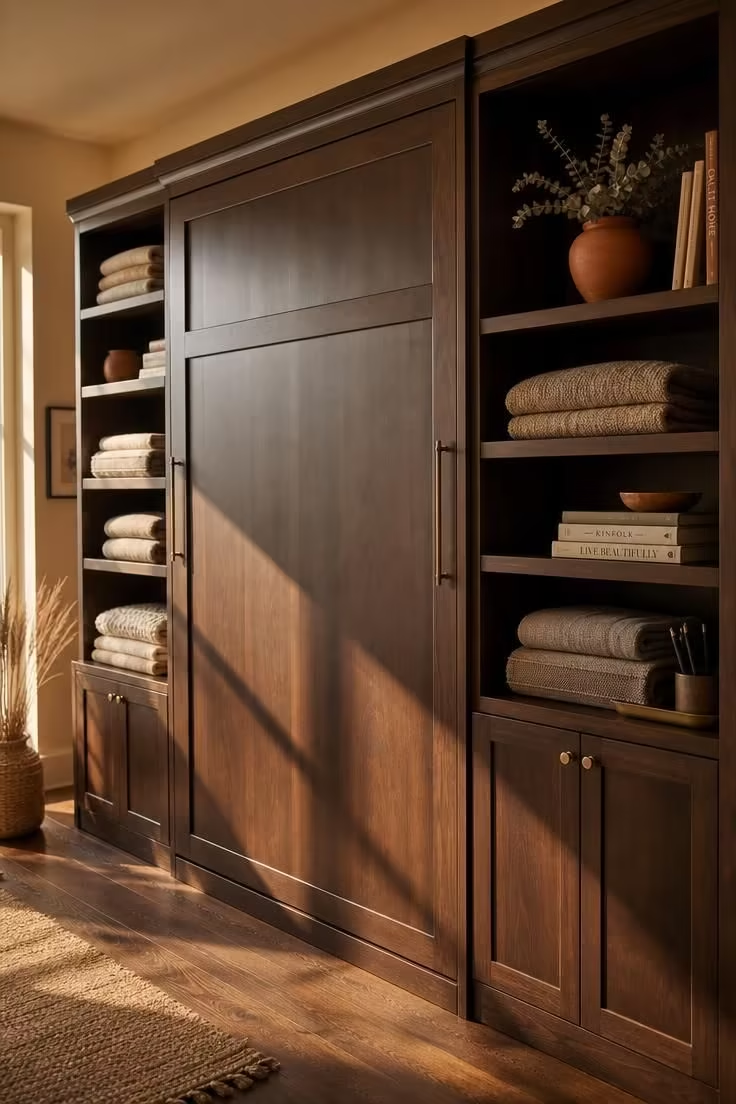
Built-in storage is what separates a thoughtful fold-down bed installation from a piece of furniture that just happens to fold.
Integrated piers on either side of the cabinet create vertical storage that serves both office and guest modes without requiring a separate shelving unit.
Upper open shelves can hold books, framed photos, and decorative objects that make the room feel like a real workspace during the day.
Lower closed cabinets are the hidden heroes: they store guest bedding, extra pillows, and office supplies in the same compact footprint.
Many current murphy bed systems offer hidden compartments behind the headboard panel for pillow storage, so you never have to find a closet shelf for the bedding when the bed goes up.
The goal is a room where nothing looks displaced, regardless of which mode the space is currently serving.
Design Pro-Tip: Choose murphy bed cabinet finishes that match your room’s existing trim, closet doors, or built-in cabinetry. When the bed panel reads as part of the architecture rather than a standalone furniture piece, the entire room feels permanent and planned.
What a Guest Room Office Combo Signals to Home Buyers
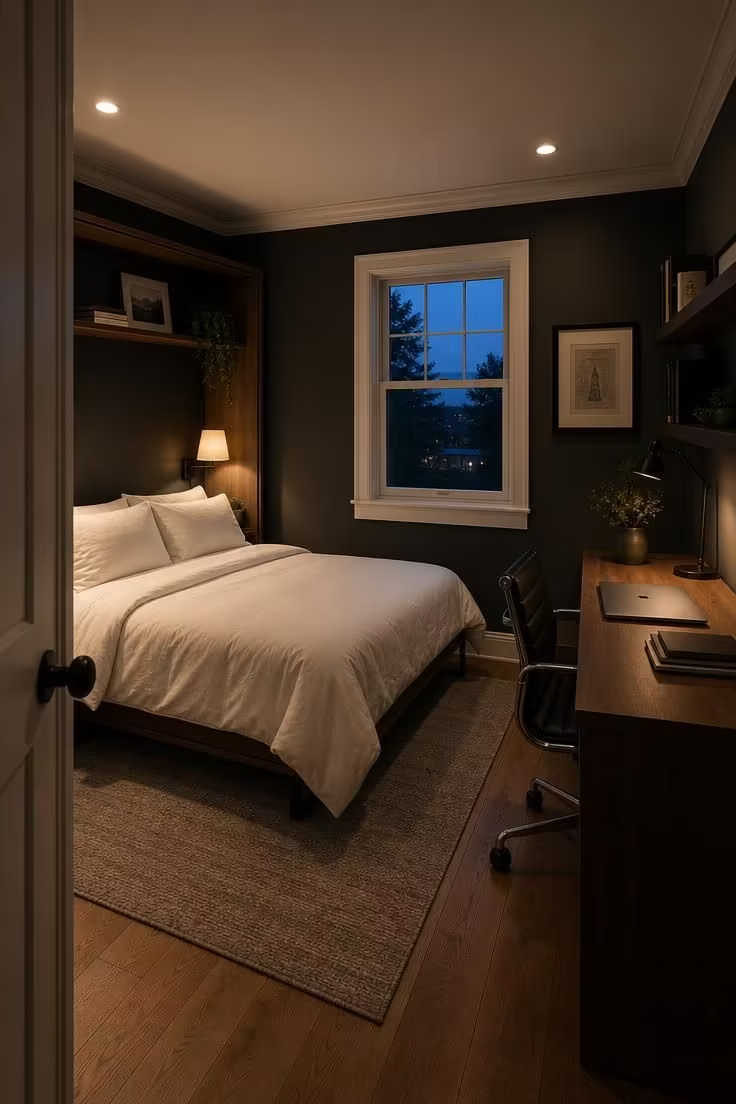
Real estate professionals consistently point to flexible, multi-use rooms as a feature that moves a listing faster.
A guest room office combo tells a buyer that the home was designed with intention, not just filled with furniture.
In urban and tight-space markets, that flexibility translates directly into competitive pricing.
A room that can serve as a productive workspace during the week and a comfortable guest suite on weekends appeals to a wider pool of buyers than a room that can only do one of those things.
The distinction between a murphy bed that looks built-in and one that looks like an afterthought is worth paying attention to here.
Custom finishes, integrated storage, and quality hardware signal a level of care that buyers associate with a well-maintained property.
A wall bed installed with matching piers, coordinated paint, and proper lighting reads as a renovation, not a workaround.
That perception of quality is what turns a multi-use room from a curiosity into a genuine selling point.
The Finishes and Materials That Make a Murphy Bed Desk Combo Look Permanent
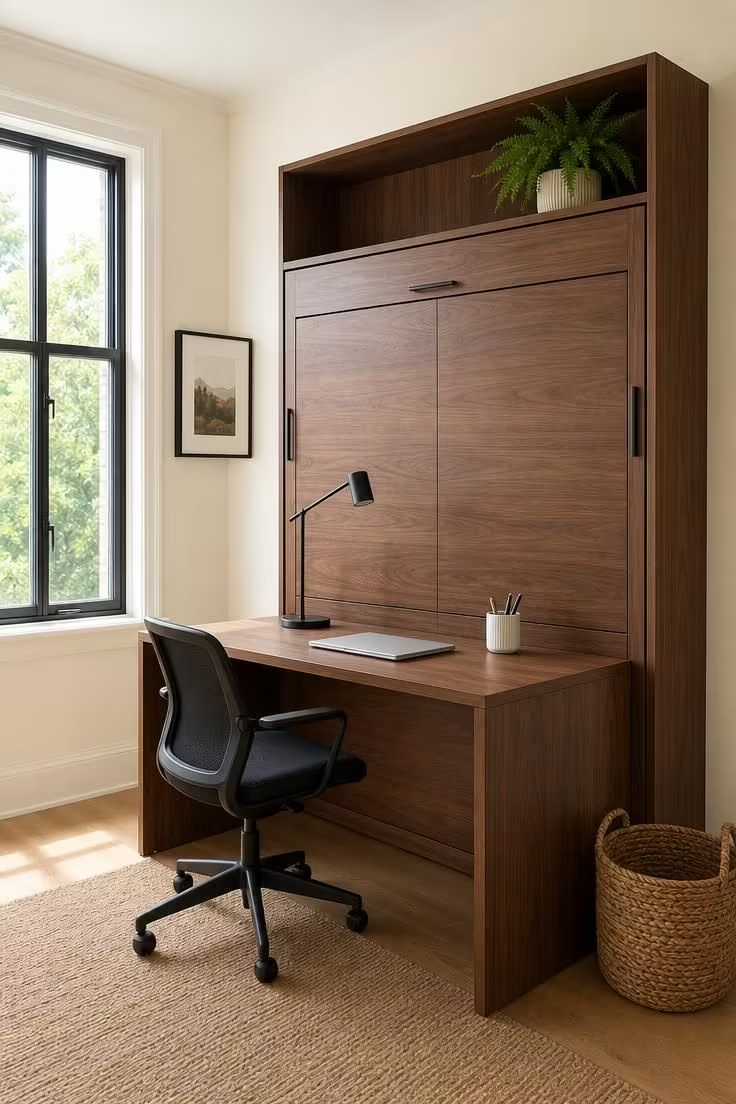
The shift toward earthy, grounded color palettes in interior design has given murphy bed manufacturers a reason to expand their finish libraries.
Current options range from warm walnut and honey oak veneers to matte whites, greige laminates, and deep espresso tones that coordinate with today’s most popular wall colors.
Reclaimed wood panels and low-VOC finishes are gaining traction with buyers who want their multifunctional furniture to reflect environmental responsibility, not just a clever use of square footage.
Hardware choices matter more than most buyers expect.
Matte black pulls, brushed brass knobs, and minimal bar handles give a murphy bed desk combo the kind of intentional detail that separates custom millwork from flatpack.
Matching the bed cabinet’s finish to your room’s existing flooring, closet doors, or window trim creates visual continuity that makes the unit disappear into the architecture.
This is the “why now” of the home office with murphy bed: the design options available today bear no resemblance to the clunky, institutional wall beds of a generation ago, and the aesthetic gap between a murphy bed and a built-in has nearly closed.
Three Mistakes That Make a Small Space Home Office Feel Cramped Instead of Clever
The first mistake is choosing the wrong bed orientation for the room’s proportions.
A vertical queen murphy bed needs roughly 90 inches of uninterrupted wall height, and installing one in a room with low ceilings or a ceiling fan directly above the deployment zone creates a daily frustration that no amount of good design can fix.
Mistake number two is treating the desk chair as an afterthought.
In a dual-purpose room, the chair is the one piece of furniture that stays put regardless of which mode the space is in, and a cheap folding chair or a dining seat borrowed from the kitchen will undermine every hour you spend working there.
Ergonomic seating is not a luxury add-on for a remote work setup, it is foundational.
The third mistake is over-decorating.
A room that transitions between office and guest bedroom needs clean surfaces, minimal wall art, and decor that does not need to be relocated every time the bed comes down.
Design Pro-Tip: Test your room’s transition before committing to a final layout. Lower the bed, walk around it, open the door, sit in the desk chair. If anything feels pinched or blocked, rearrange now rather than after the cabinet is bolted to the wall.
One Room, Two Roles, Zero Compromise
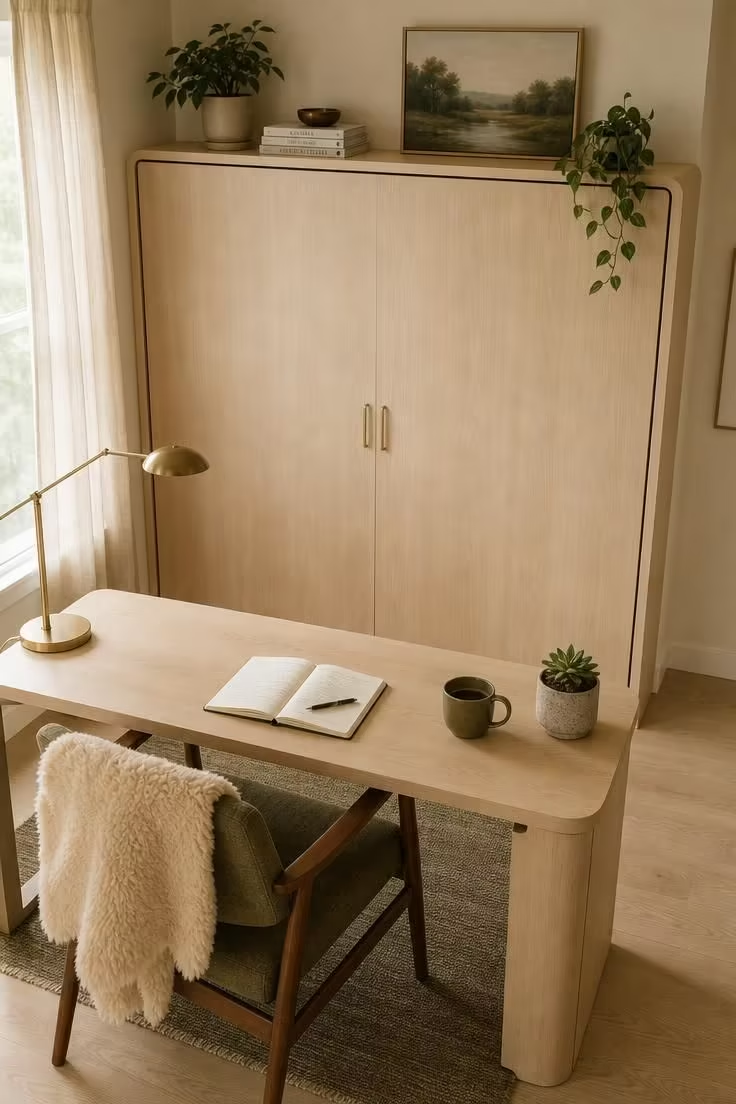
A home office with murphy bed is not a compromise between two competing needs.
It is a deliberate choice to make one room perform at the level of two, without sacrificing comfort, productivity, or design quality in either mode.
The practical argument comes down to numbers: reclaimed square footage, increased home value, and a daily remote work setup that actually supports focused, professional work.
Start with the wall that gets the least direct morning glare, measure the ceiling height, and decide whether a vertical or horizontal orientation fits your space.
From there, choose a murphy bed desk combo with built-in storage, coordinate the finishes to your room’s existing palette, and invest in an ergonomic chair that earns its place whether the bed is up or down.