This post may contain affiliate links. If you make a purchase through these links, we may earn a commission at no additional cost to you.
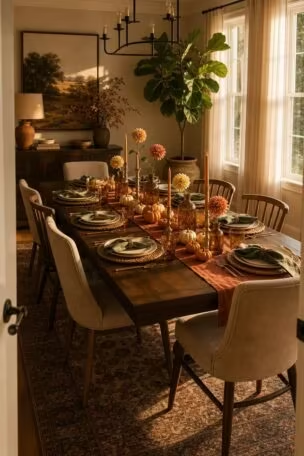
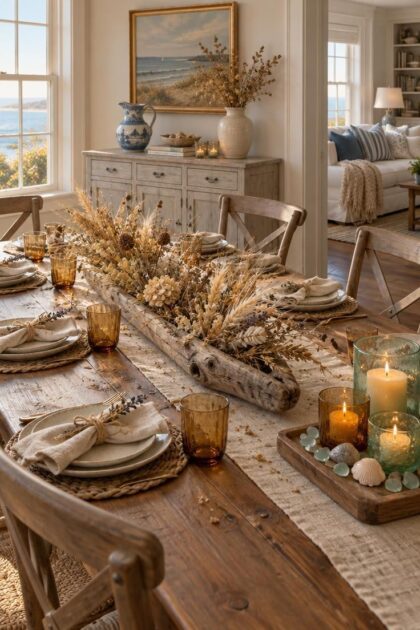
Thanksgiving styling and coastal interiors can pull in opposite directions, one toward harvest warmth and the other toward pale, breezy lightness.
The most comfortable solution is to let texture and muted color do the seasonal work instead of importing heavy rust and orange into a room built on cream, sand, and blue.
A shore house or a landlocked home with coastal leanings can both host a holiday table that feels autumnal and calm.
The ideas below focus on the dining table first, then spread outward to nearby surfaces so the whole room reads as one considered space.
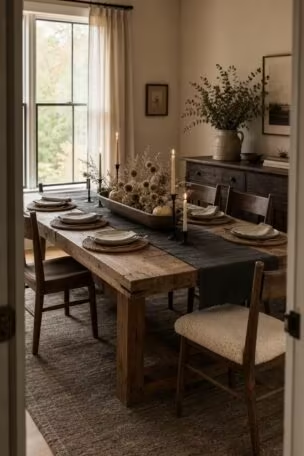
Driftwood Trough Centerpiece With Dried Grasses
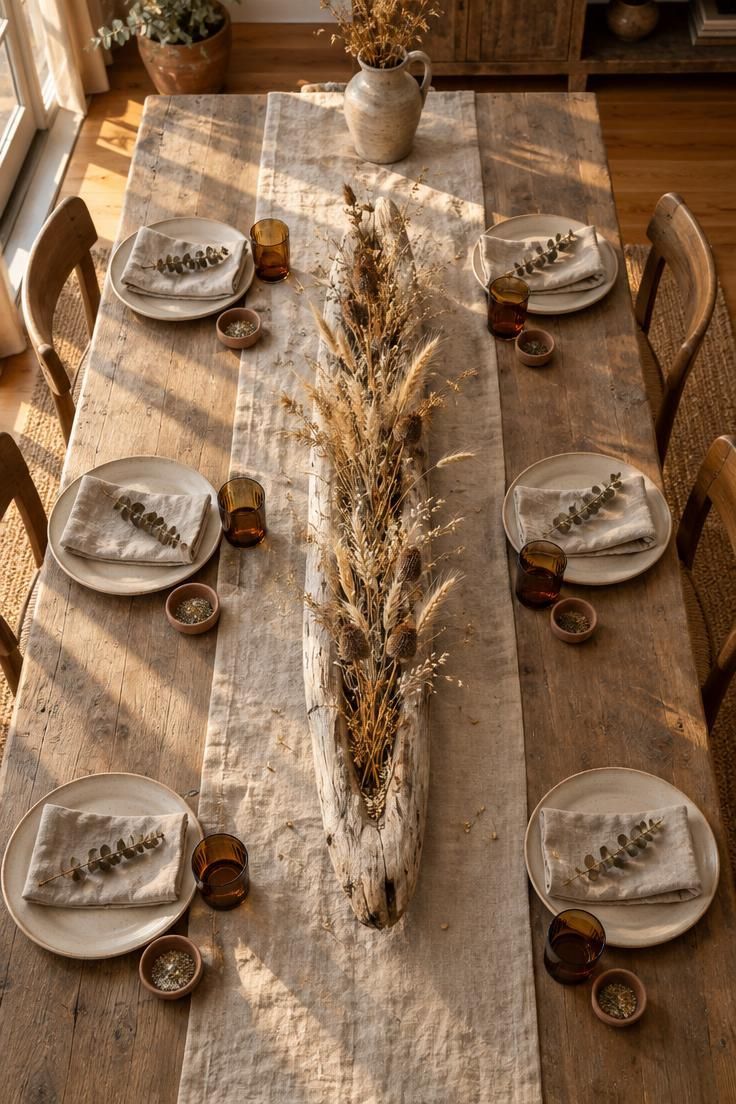
A long, low vessel solves the main problem with holiday centerpieces at a dining table: anything tall enough to look generous is also tall enough to block the view across the table.
A driftwood trough keeps the arrangement wide and shallow, so guests can see one another while the dried stems still give the table a seasonal silhouette.
Bleached, silver-gray wood carries a coastal note through its weathered surface rather than through color, which lets the harvest materials read as autumn without fighting the room's light palette.
The filler matters as much as the vessel.
Wheat stems, thin tan grasses, and a few seed pods sit in the same color family as sand and stone, so the driftwood centerpiece reads as texture first and season second.
Swap the fillers after the holiday for olive branches or dried hydrangeas and the same trough works through the rest of the year, which makes it a reasonable piece to store and reuse rather than a single-occasion purchase.
Choose a trough long enough to leave clear plate space at each end, and keep the fillers loose rather than tightly packed so the arrangement looks gathered rather than built.
Style Blueprint:
- A shallow trough in bleached or raw driftwood, wider than it is tall
- Dried wheat, tan grasses, and a few seed pods in sand and mushroom tones
- An oatmeal or pale blue linen runner underneath to soften the wood
Linen Table Runner as a Grounding Layer
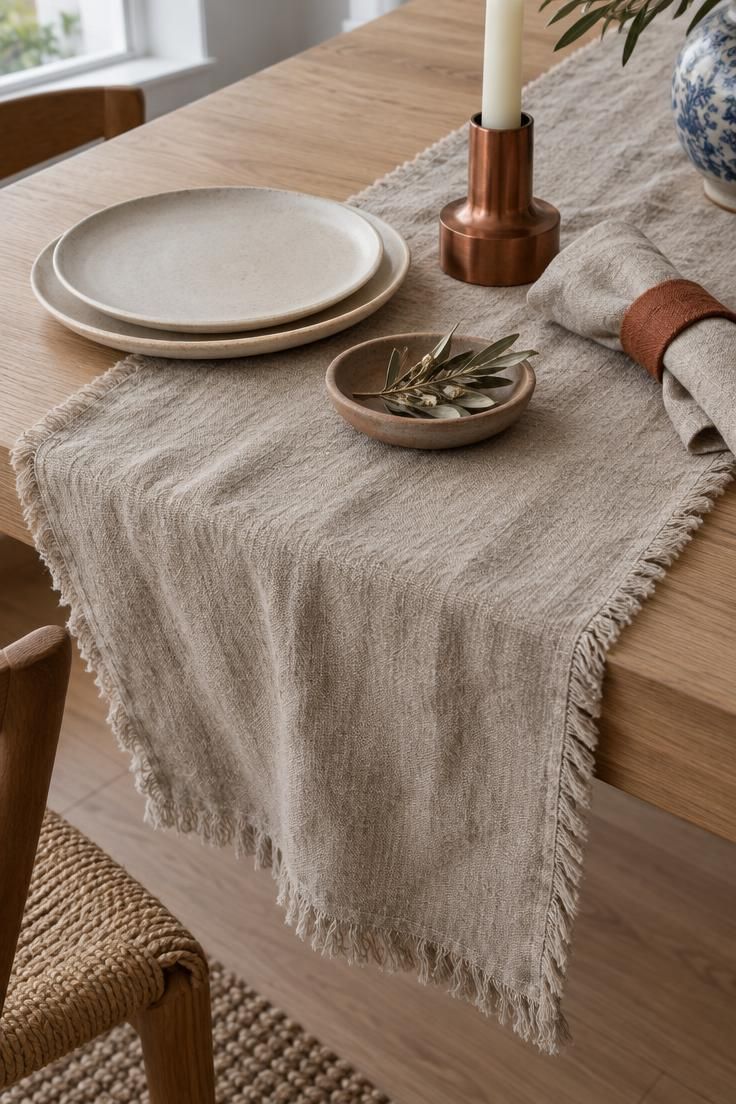
A single textile layer under everything else does more for a table than most individual objects.
The linen table runner sets a quiet base in sand, cream, or muted blue-gray, and that base is what makes the warm accents on top look intentional.
A copper candle holder or a rust napkin ring placed on bare wood can read as an accident; the same object on a grounded linen layer reads as a decision.
The runner also gives the eye a horizontal line to follow, which pulls a long table together visually.
Practicality favors the runner over a full cloth in most homes.
It protects the center of the table where dishes and spills are most likely, and it is easier to wash than a floor-length tablecloth.
Linen wrinkles, and letting it do so suits the relaxed coastal look better than pressing it flat.
Choose a weight heavy enough to stay put when plates slide across it, and check that the fringe clears the seats at either end.
Style Blueprint:
- A heavy linen or cotton runner in sand, cream, or muted blue-gray
- A fringe or raw edge for a relaxed drape
- One warm accent such as a copper holder or clay dish to test the balance
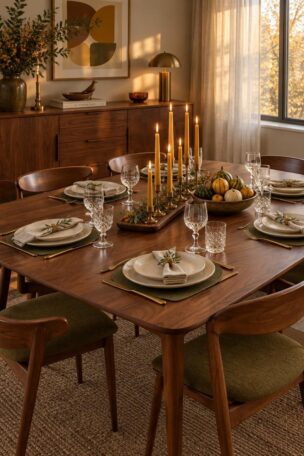
Sea Glass Candles With Amber Glass
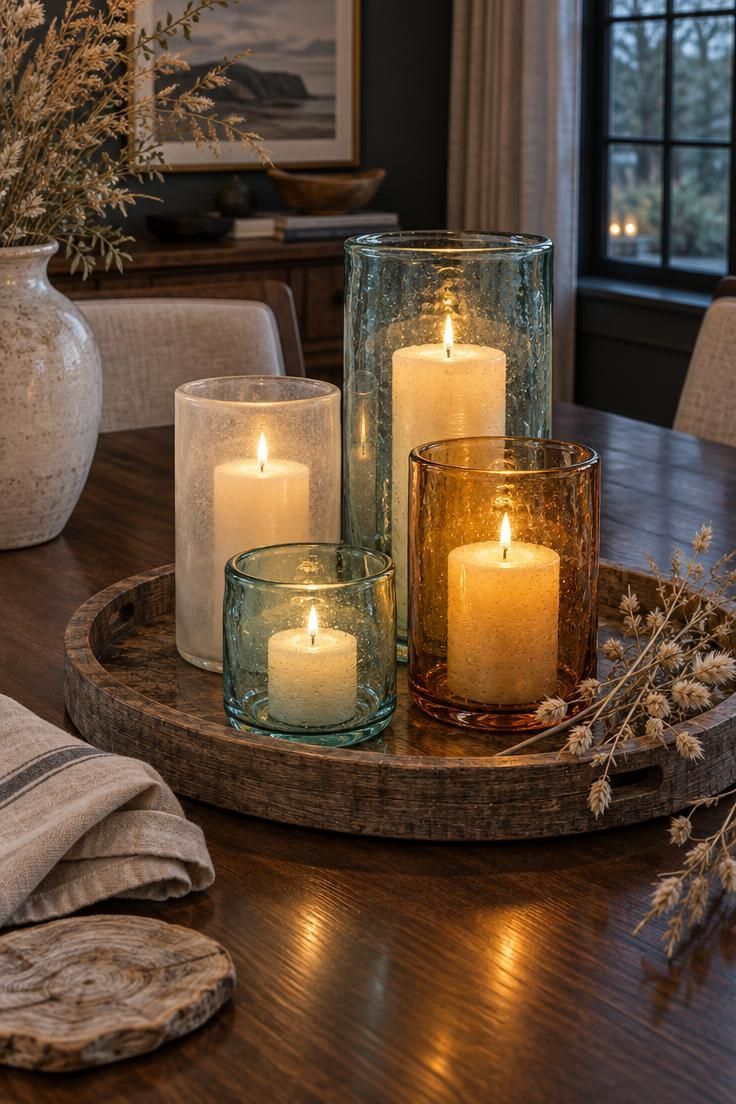
Glass groupings earn their place at a holiday table because they hold light rather than color.
Pale blue-green and warm amber vessels set side by side give the table an evening glow that feels autumnal through the amber and coastal through the blue-green, without a single orange candle in sight.
Glass with visible bubbles or softened edges looks gathered from a beach walk rather than bought as a matched set, which keeps the arrangement from feeling formal.
Keeping the whole cluster on one tray is the practical move.
The tray lets the sea glass candles travel as a unit when the table needs clearing, and it corrals wax drips and spent matches in one place.
Vary the pillar heights rather than the vessel sizes so the grouping stays compact.
Place the tray so the glass sits clear of draping linens and dried arrangements, and keep taller candles toward the middle of the tray where they are least likely to be knocked.
Style Blueprint:
- A shallow round or oval tray in weathered wood or aged metal
- Glass holders in sea-glass blue-green, frosty white, and amber
- Pillar candles in two or three heights
- A few dried stems laid beside the tray to tie it to the table
Blue and White Ceramics Filled With Dried Botanicals
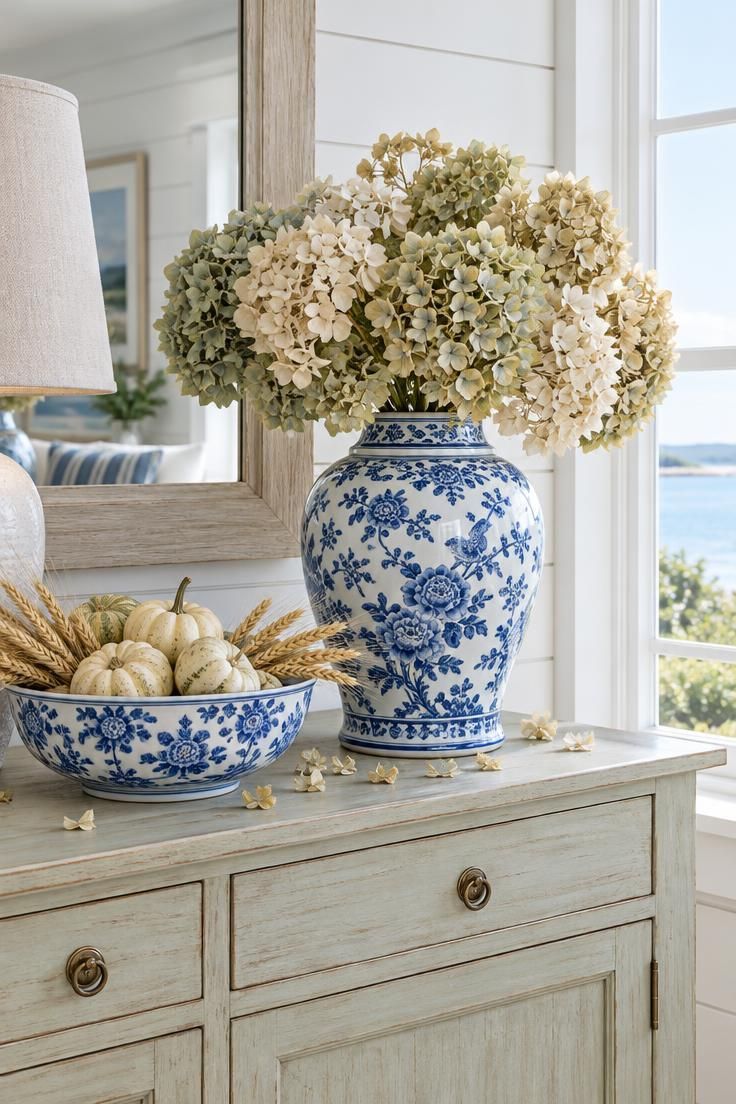
For blue and white ceramics, blue-and-white ceramics already belong in most coastal rooms, which makes them the easiest seasonal bridge available.
The pattern supplies the coastal note, and what goes inside the vessel supplies the autumn note.
Dried hydrangeas in faded cream and sage, olive branches, or a few wheat stalks all sit above the rim so the blue pattern remains visible around the arrangement.
Grouping one tall piece with one short bowl gives the vignette a clear top and bottom rather than a row of similar shapes.
Choose patterns with breathing room between motifs so the ceramics still read as blue and white from across the room.
A busy chinoiserie scene and a simple geometric border can look mismatched when grouped, while two pieces with similar density look collected.
Filling vessels with dried botanicals instead of fresh ones means the arrangement holds its shape for the whole season and returns to the cupboard afterward.
This is also the most storage-friendly approach to seasonal color: the ceramics stay out year-round, and only the fillers change.
Style Blueprint:
- One tall blue-and-white jar and one short patterned bowl
- Dried hydrangeas, olive branches, or wheat as the seasonal filler
- A pale sideboard or shelf that lets the blue pattern stand out
Place Settings With Warm Neutral Layers
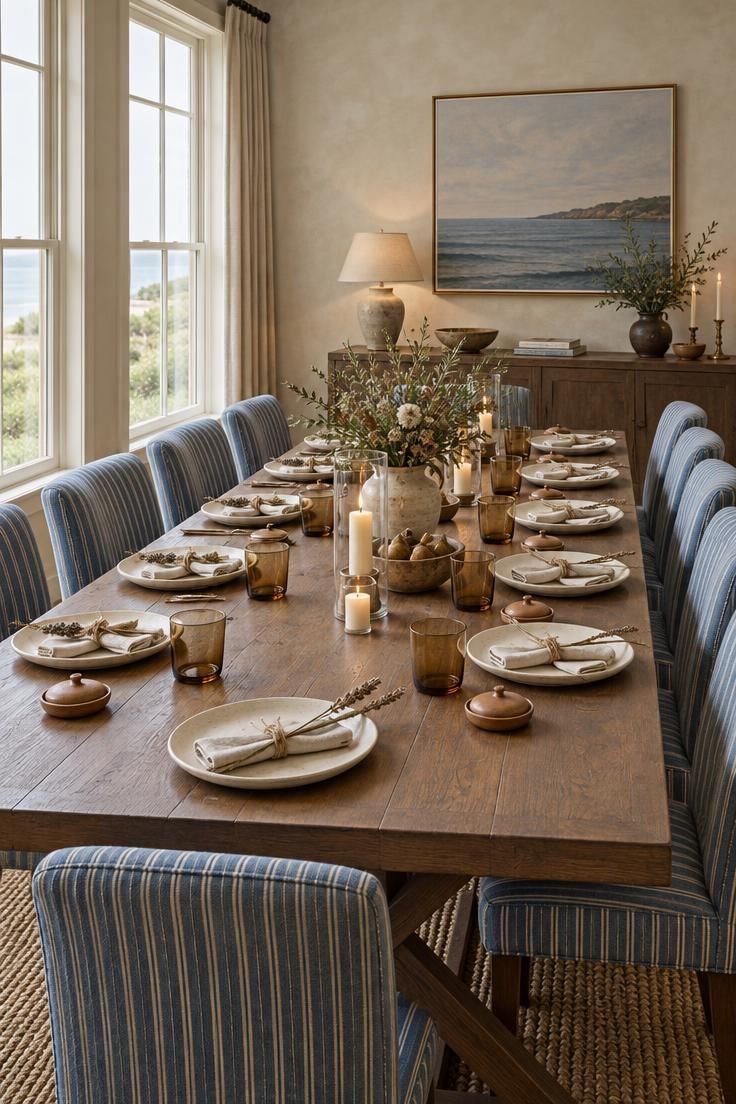
A repeated place setting is where a table either feels composed or cluttered, and the safest structure is a small number of repeated objects with one variable.
Cream stoneware, an amber or smoke glass tumbler, and a linen napkin tied with jute twine form a consistent frame at every seat.
The variable is the single dried stem laid across each plate: the same material throughout, but a slightly different stem at each setting, which gives the table movement without breaking the set.
The autumn note comes from restraint.
One clay or terracotta piece per setting, such as a small butter dish or a low candle holder, brings warmth without turning the whole table orange.
Keep the ceramic and glass shapes similar from seat to seat, and resist adding a second accent color; the blue in the chairs or the wall already supplies the coastal anchor.
Count the layers before adding another object, since four elements per setting plus one accent is usually all a table needs to read as finished.
Style Blueprint:
- Cream matte stoneware plates in matching shapes
- Amber or smoke glass tumblers
- Flax linen napkins with jute twine ties
- One dried stem per plate, varied across seats
- A single clay or terracotta accent dish
Woven Jute Mats Under Each Charger
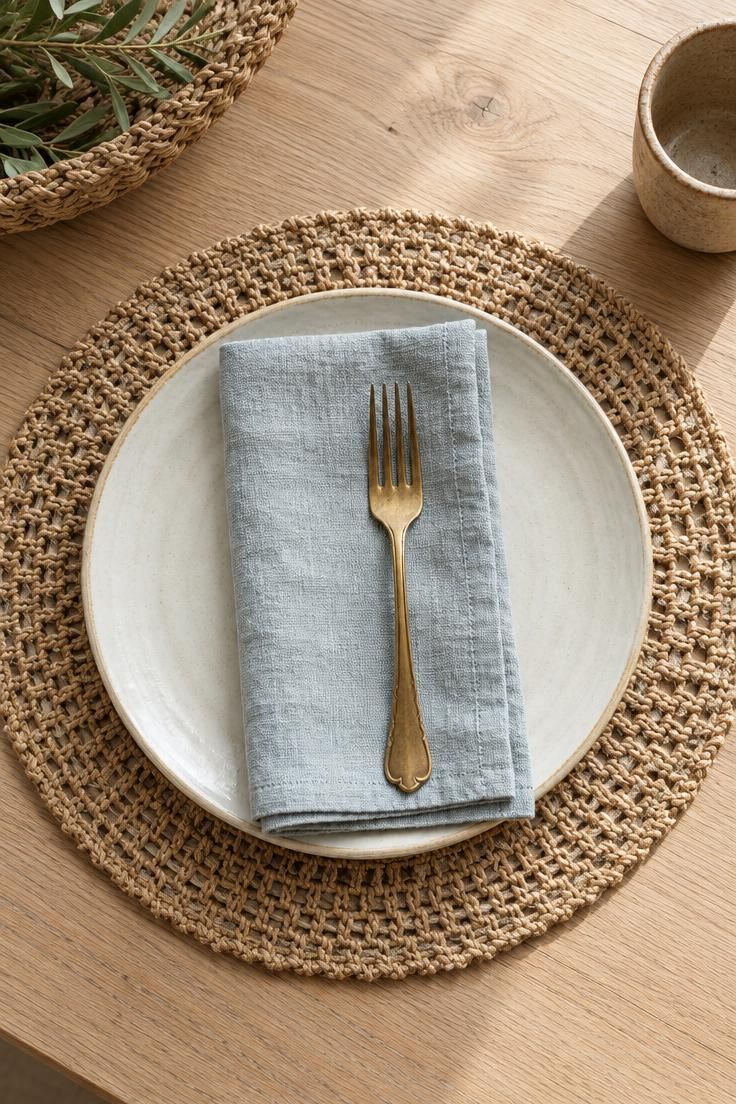
A woven mat under each charger adds a fibrous layer that sits naturally between coastal and autumnal, since natural fiber reads as both beach-house casual and harvest-table warm.
Loose weaves and slightly irregular edges suggest handwork and keep the setting from looking machine-perfect.
The mat also does real work by protecting the table surface under hot plates and catching crumbs at the edge of each setting.
Consistency across seats matters more than the mats themselves.
Keep the weave tone similar from setting to setting, and let the chargers and napkins carry the variation.
Because the natural color suits both a holiday table and everyday meals, these mats can stay in rotation after the holiday rather than going into storage.
Jute and seagrass should stay dry, so wipe spills right away and choose a mat with a tight enough weave to sit flat.
Style Blueprint:
- Round or oval woven placemats in natural jute or seagrass
- A loose weave and irregular edge for a handworked look
- Cream chargers and pale blue-gray napkins to keep the palette light
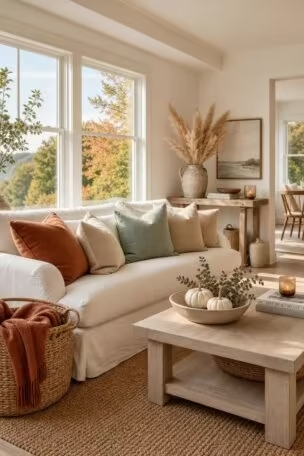
Dried Grass Arrangement in a Floor Basket
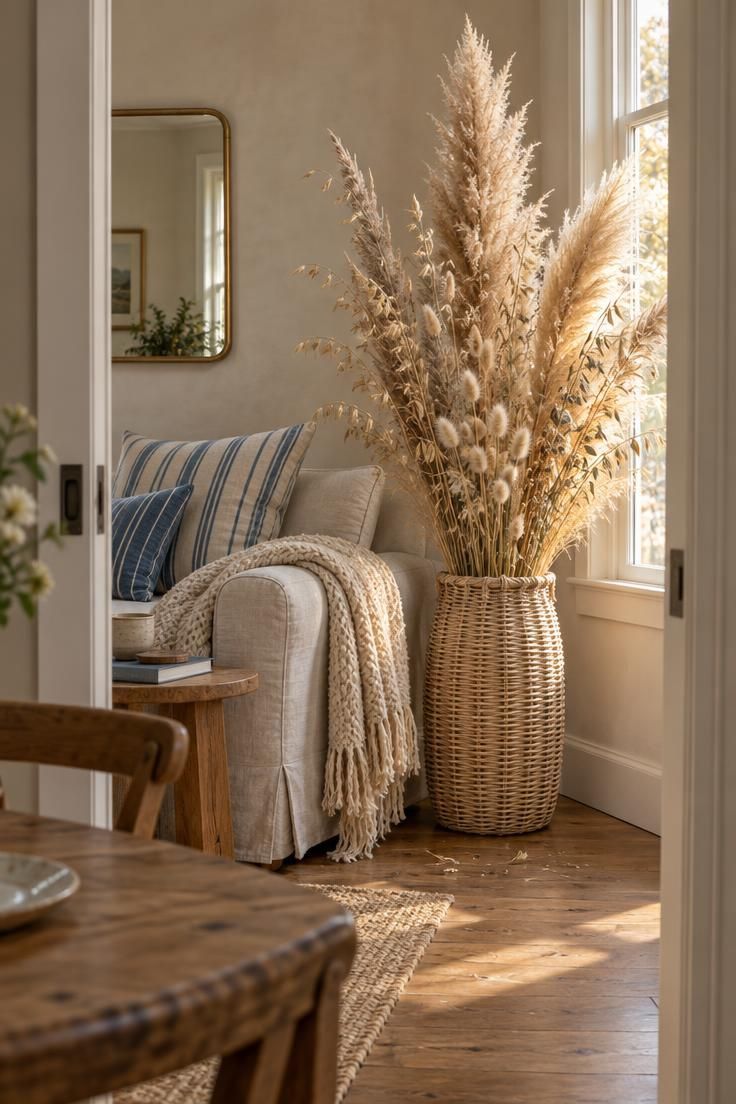
A tall basket of dried grasses brings the height and movement of dune grass indoors, and the dried texture carries the late-autumn note without adding a warm color.
Placement does most of the work here: a corner near the dining area, or a spot that anchors a living room opening onto the table, lets the arrangement connect the two spaces.
Bleached or natural rattan blends with both the coastal base and the seasonal materials.
Shedding is the honest tradeoff with pampas and similar plumes.
Fibers drop when the arrangement is handled or when air moves across it, so a low-traffic corner suits it better than a walkway, and keeping the stems gathered inside the basket helps hold the shape.
A contained vessel with the stems lightly bunched also keeps the arrangement from sprawling.
Store the basket of dried grasses in a dry spot between seasons, since damp air softens the plumes.
Style Blueprint:
- A tall woven basket in bleached or natural rattan
- Pampas, bunny tails, or dried oat stems bunched and contained
- A low-traffic corner near the dining room or living area
Coastal Mantel With Muted Autumn Accents
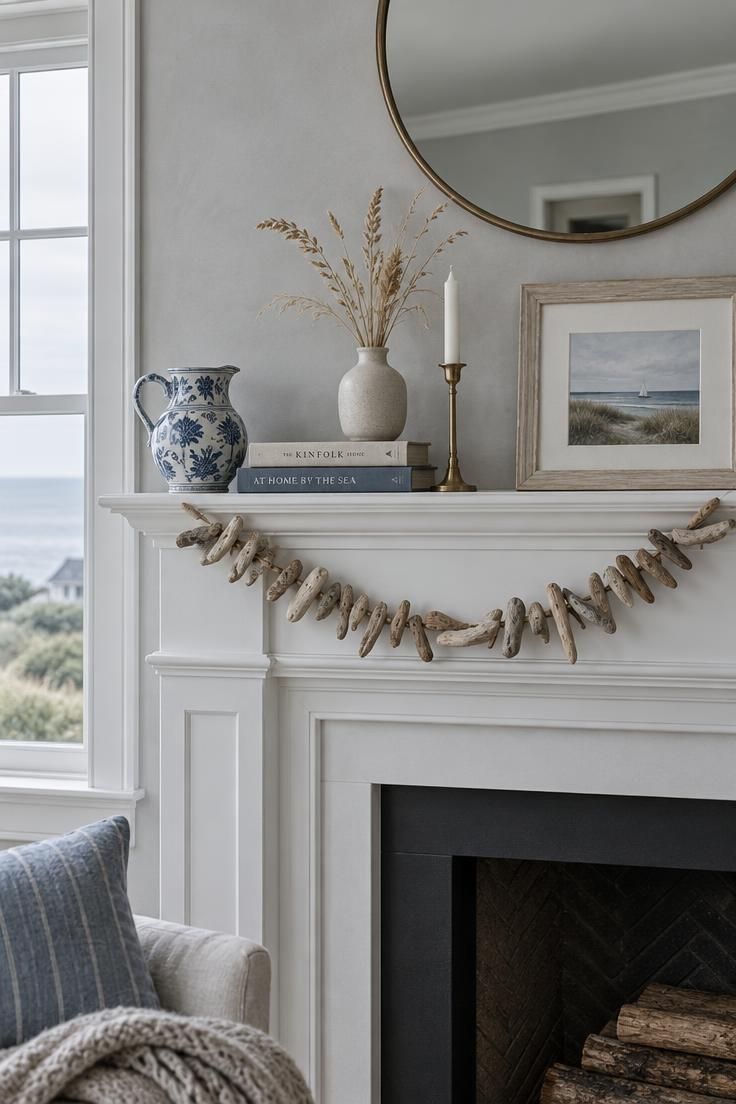
A mantel gives the room its coastal thanksgiving decor without touching the dining table, which is useful when the table itself is already full.
The composition follows a simple proportion: bleached wood and stoneware carry the neutral base, a piece of blue-and-white pottery or a sea-glass bottle anchors the coastal side, and a brass candlestick or two supplies the only warm metal.
Keeping warm objects to roughly a third of the total preserves the pale, airy foundation while the dried stems and blue-and-white piece do most of the seasonal work.
Layering height rather than width keeps a long shelf from looking scattered, with the tallest object, usually the frame or the vase, sitting off center and the book stack and lower ceramics balancing it at the other end.
Books in cream and slate covers double as risers and as color control, since their spines stay inside the palette and keep the mantel from drifting too far into autumn brown or orange.
Change the dried stems through the year and the same arrangement holds; the mantel becomes a seasonal surface without a full restyle.
Style Blueprint:
- A bleached wood frame and a matte stoneware vase
- One or two blue-and-white or sea-glass ceramic pieces
- A slim brass candlestick as the single warm metal
- Books in cream and slate as risers
Thanksgiving Place Cards With Shell or Stone Details
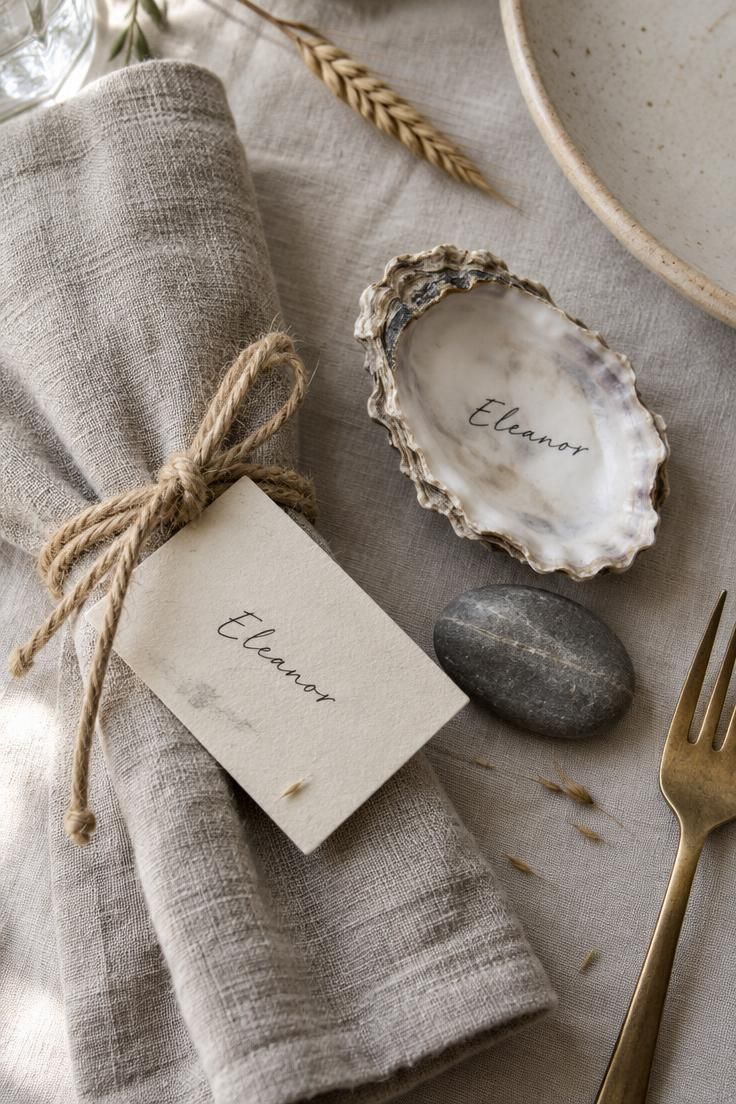
Place cards do two jobs at a holiday table: they assign seats and they give each setting a small personal point of focus.
Coastal materials make the assignment feel specific to the room.
A kraft or cream card tucked into a jute twine napkin knot is the simplest version, and a single flat scallop shell or smooth water-worn pebble with a name in fine marker adds the shore note at one seat per place.
Legibility is the limit worth respecting.
Names written on shells or stones need a smooth, pale surface and a fine dark marker, and the lettering should stay large enough to read from standing height.
Keep the coastal object to one per setting, since a shell, a stone, and a card together tip a place setting into clutter.
These details also cost little and store flat, which makes them easy to repeat in later years with new names.
Style Blueprint:
- Kraft or heavy cream cardstock cut to a simple rectangle
- Jute twine for napkin knots or a flat shell for a name
- A fine dark marker that reads clearly on a smooth surface
Rattan-Wrapped Pitcher as a Drink Station Accent
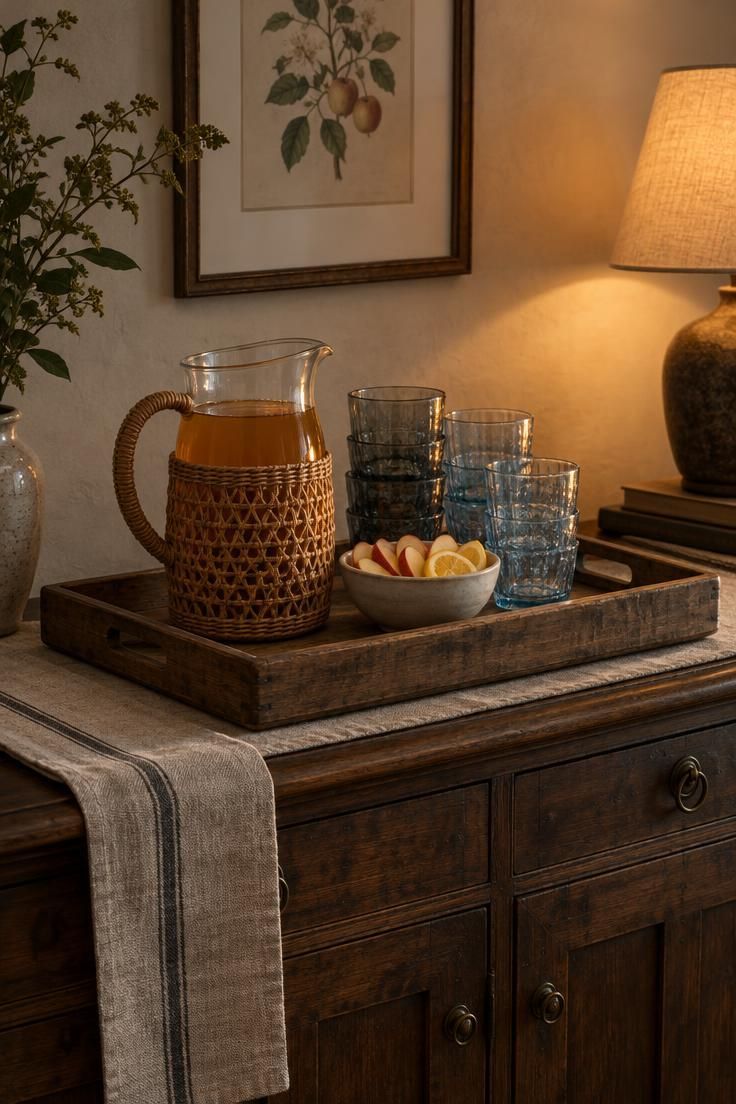
A drink station on a sideboard or cart keeps serving away from the table itself, which leaves the centerpiece and place settings undisturbed during the meal.
The rattan-wrapped pitcher ties the station to the rest of the room by repeating the natural texture already present in the placemats or floor basket.
Glass in smoke or pale blue picks up the coastal palette, while the cider or amber drink supplies the seasonal warmth.
Function should shape the arrangement.
Keep the pitcher on a tray with the glasses stacked beside it rather than in front, so the station stays easy to reach and refill.
A small bowl of apple slices or lemon wedges gives guests something to add without a second trip.
Because the surface is used rather than purely decorative, keep the grouping low and leave clear working space at the front edge of the sideboard.
Style Blueprint:
- A glass pitcher with a woven rattan sleeve
- A weathered wood tray to contain the station
- Smoke or pale blue tumblers stacked beside the pitcher
- A small ceramic bowl for fruit slices
Layered Textile Throw With Striped Cushions
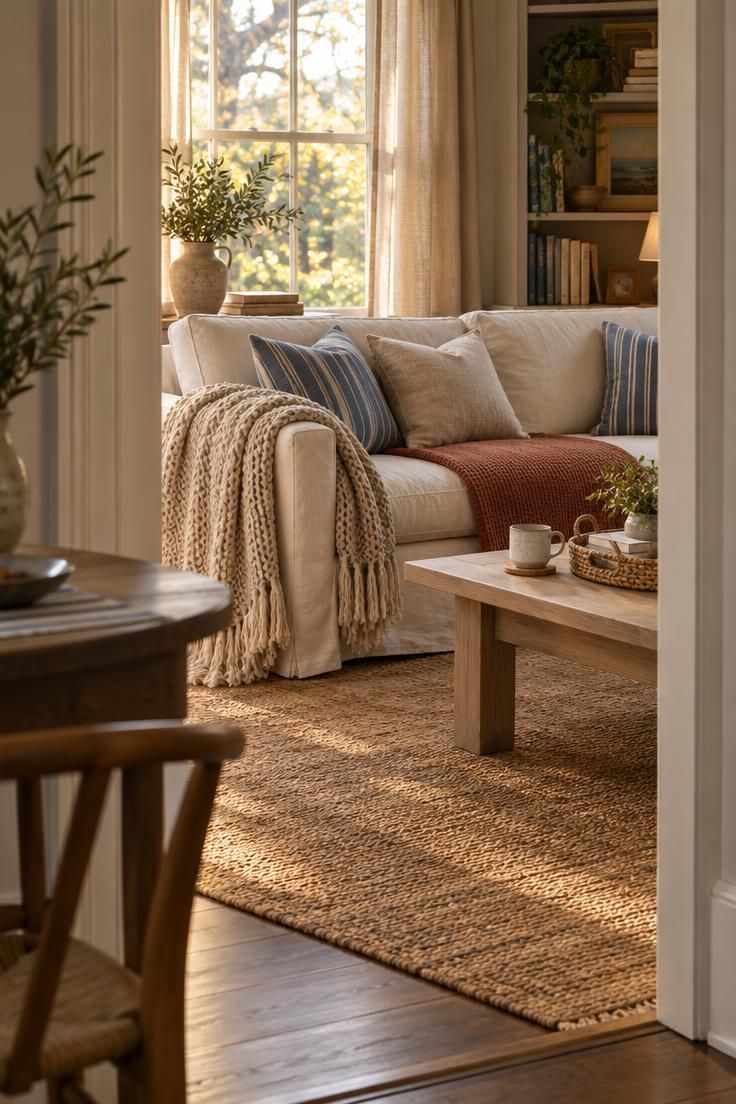
The dining table is only one part of the room on Thanksgiving, and a nearby sofa or bench is where guests settle before and after the meal.
Carrying the table's palette onto that furniture keeps the home from feeling like a display set apart from daily life.
A chunky knit or waffle-weave throw in oatmeal, clay, or muted rust layered with blue-and-cream striped pillows extends the exact color story already on the table.
The restraint rule applies here more than anywhere.
One or two warm pieces, a rust throw and a clay cushion, are enough to signal the season against a white or linen sofa.
A third warm piece usually tips the room toward a generic fall scheme and loses the coastal base.
A fringed edge on the throw softens the transition and echoes the linen runner on the table.
Fold rather than spread the throw so the layers stay visible.
Style Blueprint:
- A chunky knit or waffle-weave throw in oatmeal or clay
- One muted rust textile as the warm accent
- Blue-and-cream striped pillows and natural linen cushions
- A fringed edge to echo the table linen
Conclusion
A warm coastal Thanksgiving works because light, texture, and muted color do the seasonal work, not a pile of heavy autumn objects.
Choose a few ideas that suit the rooms already in use, and repeat the same natural materials across the table, the sideboard, and the nearby sofa so the whole home feels connected.
Keep clay, rust, and copper to a small share of the palette, and let blue, cream, linen, and woven fiber hold the foundation.
The holiday table then reads as an extension of the home itself rather than a temporary restyle.