This post may contain affiliate links. If you make a booking or purchase through these links, we may earn a commission at no additional cost to you.
A backyard kitchen changes the rhythm of a household from the first warm evening it gets used.
Instead of running plates between the indoor stove and the patio table, the entire meal happens in one spot, from chopping vegetables to plating dessert.
These 14 ideas cover a wide range of styles and budgets, each one specific enough to picture and practical enough to build.
Whether the yard is compact or stretches past the tree line, there is an outdoor kitchen layout here worth borrowing for relaxed outdoor cooking all season long.
A Soapstone Prep Counter on a Stacked Limestone Base
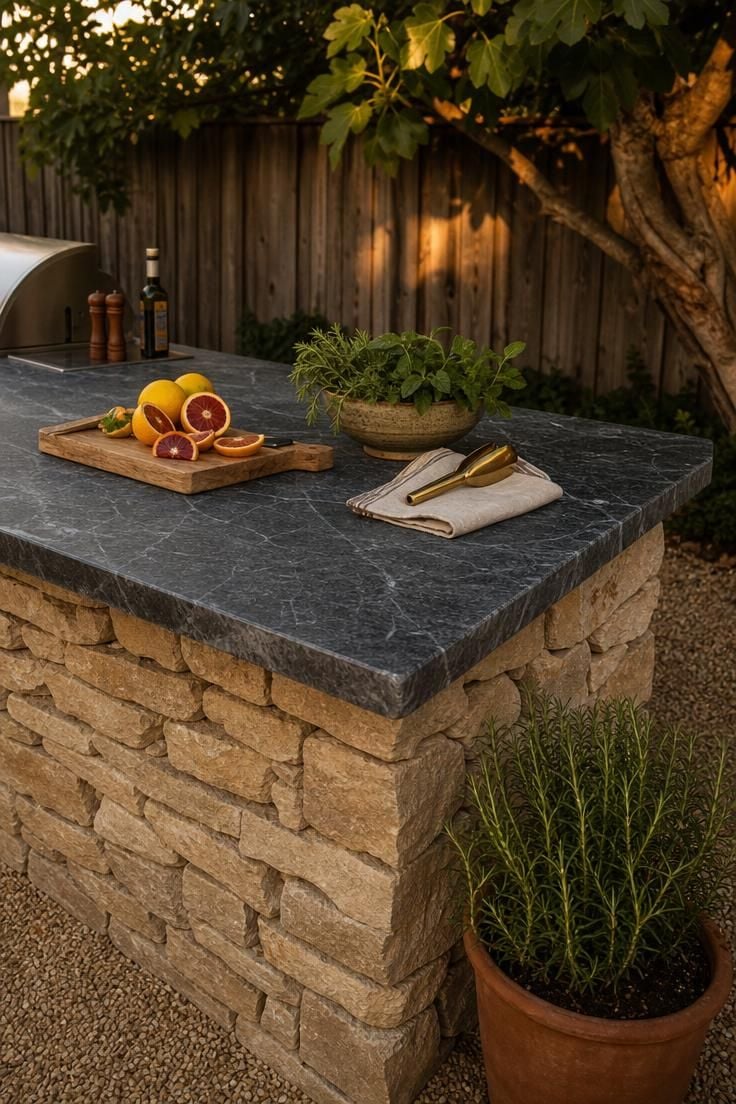
Soapstone earns its place in any backyard kitchen because it handles heat without scorching and develops a darker patina over months of use.
The dry-stacked limestone base gives the island a sense of permanence, as if it grew out of the ground rather than being assembled last weekend.
A prep counter placed this close to the grill means fewer trips back inside for forgotten ingredients.
The warm golden light here is doing real work, softening the hard mineral surfaces and making the whole station feel like a place you would linger.
Brass tongs and ceramic bowls instead of plastic utensils set a tone that says this outdoor kitchen design is for cooking with care, not just convenience.
Pairing rough stone with smooth soapstone creates a tactile contrast that keeps the eye interested across a single piece of furniture.
The rosemary at the base is not decoration, it is a reach-and-snip herb supply that puts flavor within arm’s length.
- Honed soapstone countertop (minimum 1.25-inch thickness)
- Dry-stacked limestone or fieldstone base with mortar joints hidden behind
- Brass or oil-rubbed bronze utensil hooks
- Potted culinary herbs at island corners
- Pea gravel ground surface raked to a level finish
Cedar Plank Ceiling Under a Gabled Roof Pavilion
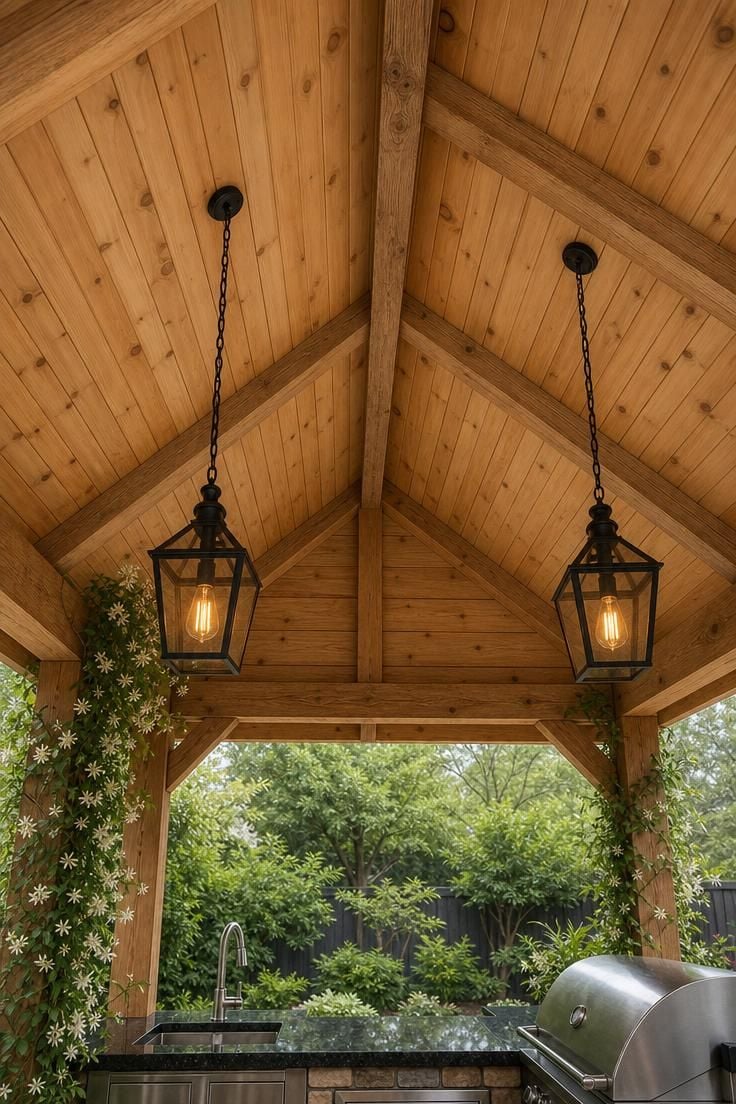
A solid roof overhead is what separates a grill that gets used three months a year from a backyard cooking station that works in light rain and midday heat.
Cedar plank ceilings age into a silver-gray patina if left unsealed, or they hold their honey tone for years with a single coat of exterior oil.
The gabled shape allows hot air and smoke to rise and escape at the peak, keeping the cook comfortable underneath.
Hanging pendant lights from the ridge beam puts task lighting directly over the prep surface without clamping fixtures to a post.
Climbing jasmine on one corner post brings a green accent that smells sweet on summer nights without blocking airflow.
This is the kind of shelter that turns an outdoor kitchen pergola into something closer to an actual room.
- Tongue-and-groove cedar plank ceiling (western red cedar or Alaskan yellow cedar)
- Gabled roof frame with exposed ridge beam
- Black iron pendant lights with Edison-style filament bulbs
- Rough-hewn cedar support posts (6×6 minimum)
- Climbing vine trained up one corner post
A Built-In Kamado Grill Flanked by Poured Concrete Counters
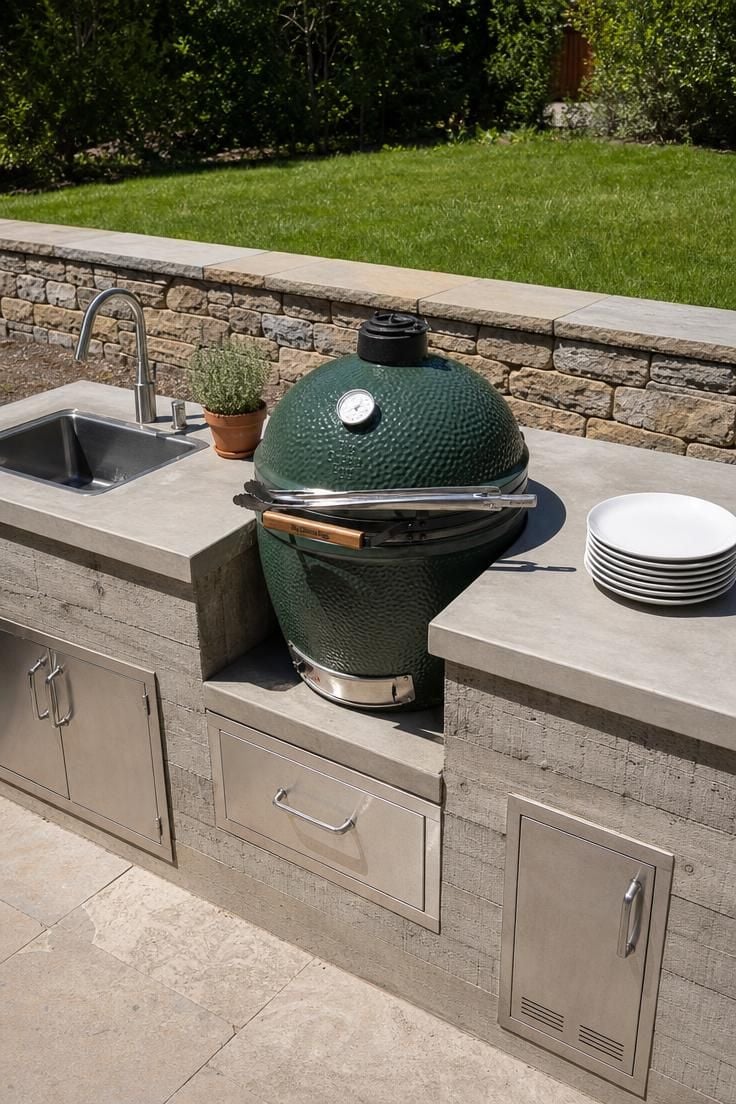
The kamado grill is a single appliance that grills, smokes, roasts, and bakes, which makes it a practical centerpiece for a built-in grill island that does not need five separate units.
Board-formed concrete on the base shows the grain pattern of the lumber used to pour it, giving an industrial texture to what could otherwise look flat.
Poured concrete counters accept built-in color pigments during mixing, so the tone can match any outdoor countertop materials palette from charcoal to warm sand.
The stainless steel sink on one side keeps raw proteins away from finished plates, a small detail that matters when cooking for a group.
Bright midday light reveals every texture in this scene, from the ceramic glaze on the grill to the tiny air bubbles in the concrete surface.
A low stone retaining wall behind the island defines the cooking zone without blocking sight lines to the rest of the yard.
Three feet of counter on each side of the grill gives enough room for a cutting board, a plate stack, and a beverage without crowding.
This kind of patio kitchen ideas setup works especially well on a flat lot where the kitchen can sit against a grade change.
- Large-format ceramic kamado grill (22-inch or 24-inch diameter)
- Board-formed poured concrete island base
- Smooth-troweled concrete countertops with added color pigment
- Stainless steel undermount sink with cold water supply
- Terra cotta herb pots as functional counter accents
Design Pro-Tip: When planning counter depth for a built-in grill island, allow at least 28 inches from front edge to back wall. This gives you room for the grill, a narrow prep zone behind it, and enough overhang at the front for comfortable bar seating on the opposite side.
Zellige Tile Backsplash Behind a Stainless Steel Cooktop
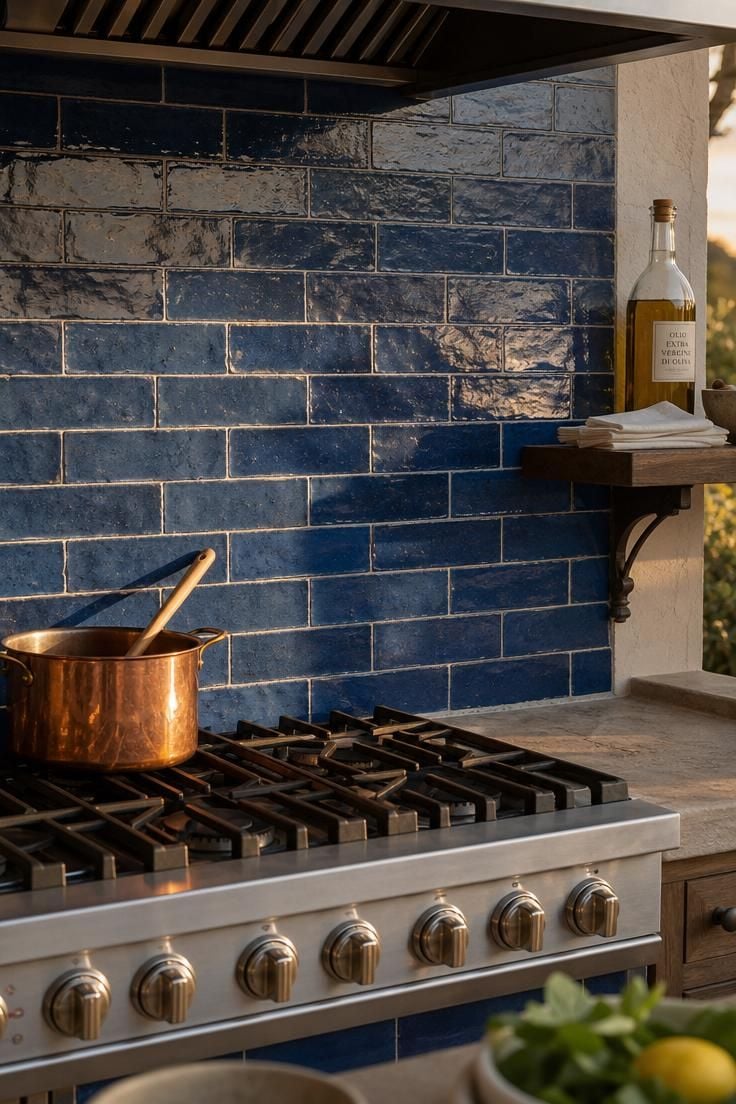
Each zellige tile is formed, glazed, and cut by hand, which means no two have the same surface depth or color saturation.
That inconsistency is the whole point, it makes a backsplash shimmer and shift in warm light rather than sitting flat like a printed sheet.
A six-burner cooktop behind an outdoor kitchen opens up the option of preparing entire multi-course meals without relying solely on the grill.
Copper cookware against blue tile is a color pairing that has been working in Mediterranean kitchens for centuries, and it loses nothing when moved outdoors.
The thin grout lines between tiles keep water from pooling behind the cooktop, where grease splatter would otherwise stain a bare wall within weeks.
Open shelving next to the cooktop keeps linen and oil close without the cost and bulk of full outdoor cabinetry.
This is a backyard kitchen that earns its detail through craft, not size.
- Hand-made zellige tiles in a saturated glaze color (ocean blue, forest green, or warm white)
- Six-burner stainless steel cooktop rated for outdoor use
- Copper cookware as both functional and decorative pieces
- Open wooden shelf for linens and pantry staples
- Pale gray grout that defines tile edges
A Reclaimed Brick Island with a Cast Iron Plancha
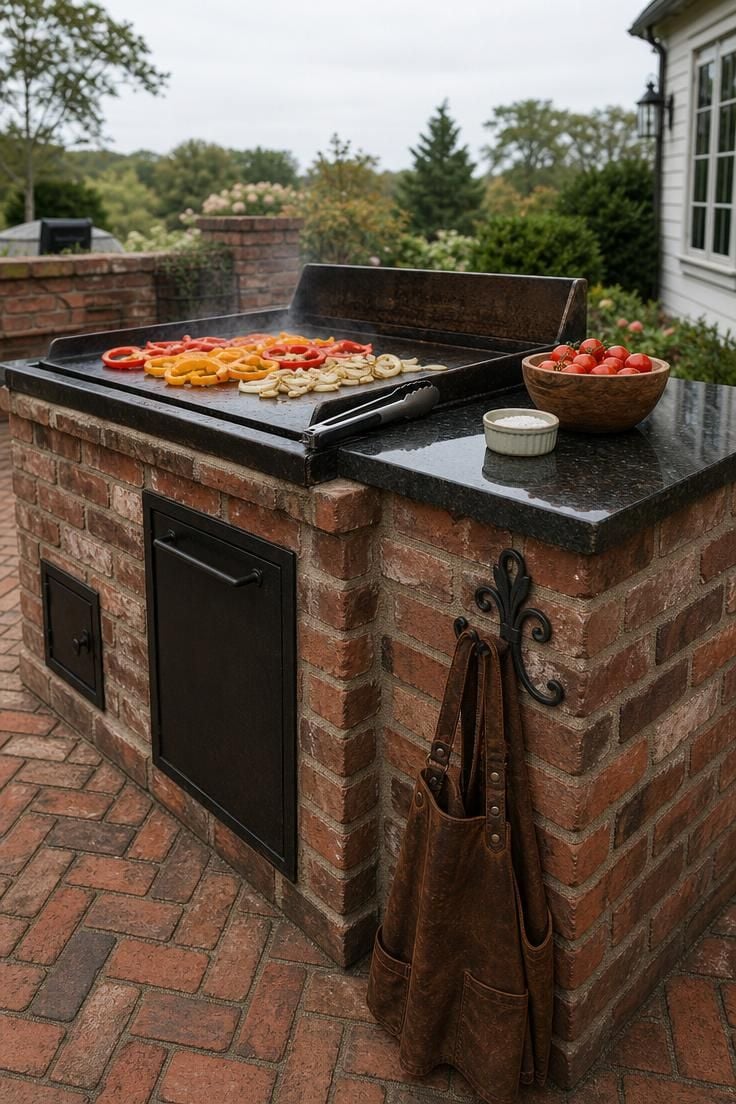
Reclaimed brick carries a color variation that new brick cannot replicate, with scorched faces, chipped edges, and mortar stains from a previous life.
The cast iron plancha is a flat cooking surface that works well for vegetables, seafood, and breakfast items where a grill grate would lose smaller pieces.
Cool overcast light flattens the contrast in this scene, which lets the warm red tones of the brick and the deep black of the iron hold the viewer’s attention without competing with harsh shadows.
Matching the island base to the herringbone brick floor ties the kitchen to its surroundings as if both were laid at the same time.
A leather apron on a wrought iron hook adds the kind of lived-in character that makes a backyard dining area feel personal rather than staged.
This is a compact setup that proves a backyard kitchen does not need to stretch along an entire wall to feel complete.
- Reclaimed red brick island base with raked mortar joints
- Built-in cast iron plancha or flat-top griddle
- Polished black granite countertop section beside the griddle
- Wrought iron hooks for aprons and utensil storage
- Herringbone brick paver flooring to match the island
Teak Bar Stools Along a Quartzite Waterfall Counter
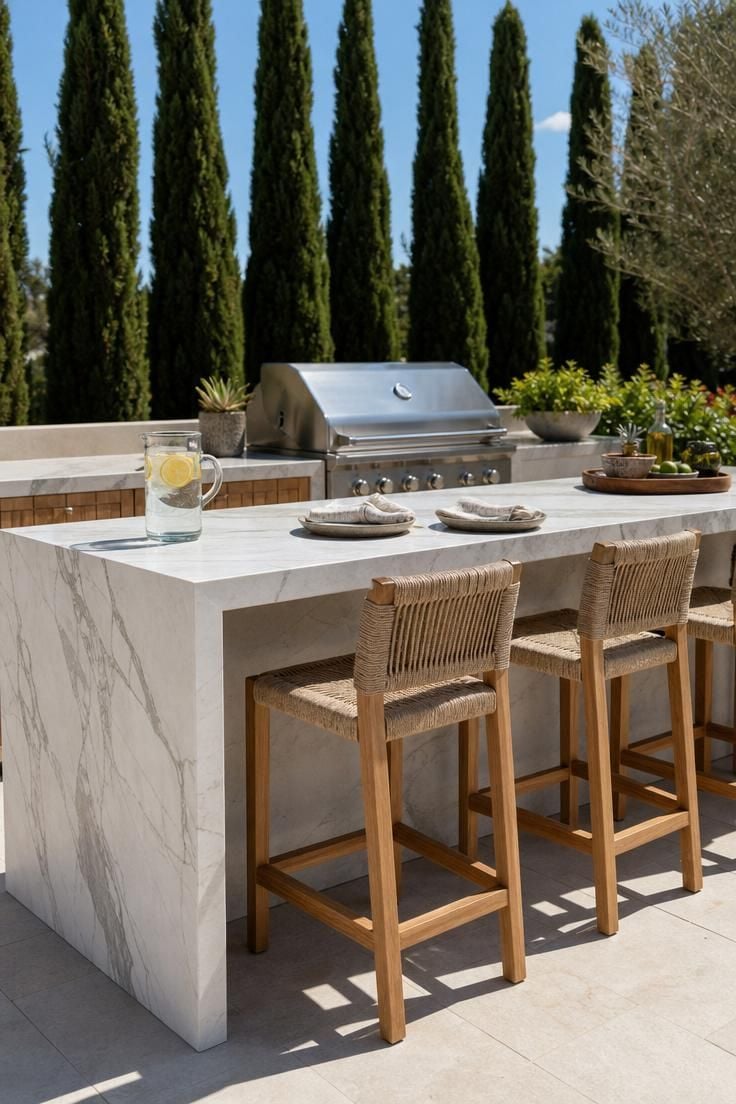
A waterfall counter, where the stone continues down the side of the island without a visible seam, gives a backyard kitchen the same visual weight as an indoor showpiece.
White quartzite with gray veining is dense enough to resist outdoor staining and UV fading, which makes it a strong choice for outdoor countertop materials that see direct sun.
Teak bar stools darken to a silver gray over time if left untreated, or they keep their warm honey color with annual oiling.
The woven rope seats add a textured softness that keeps bar seating comfortable for long meals without needing cushions that have to be stored.
Bright midday light makes the veining in quartzite pop in ways that softer lighting would mute, so this material choice rewards the sunniest spot in the yard.
A row of Italian cypress trees behind the island creates a green wall that blocks wind and frames the cooking area without feeling like a fence.
Placing three stools on the guest side of the counter means the cook is always facing the group, which changes the social energy of every meal.
This is the kind of outdoor kitchen design that doubles as a bar during parties and a breakfast counter on slow mornings.
- White quartzite slab with waterfall edge (mitered or full-thickness)
- Teak bar stools with woven rope or rattan seats
- Built-in gas grill with stainless steel hood
- Glass and stoneware serving pieces for a natural palette
- Italian cypress or columnar evergreen screen behind the island
Design Pro-Tip: For bar-height seating at an outdoor kitchen counter, set the countertop at 42 inches and choose stools with a seat height of 30 inches. This leaves 12 inches of legroom, the same standard used in indoor kitchen design, and keeps guests comfortable for hours.
A Powder-Coated Steel Frame Kitchen with Corrugated Metal Roof
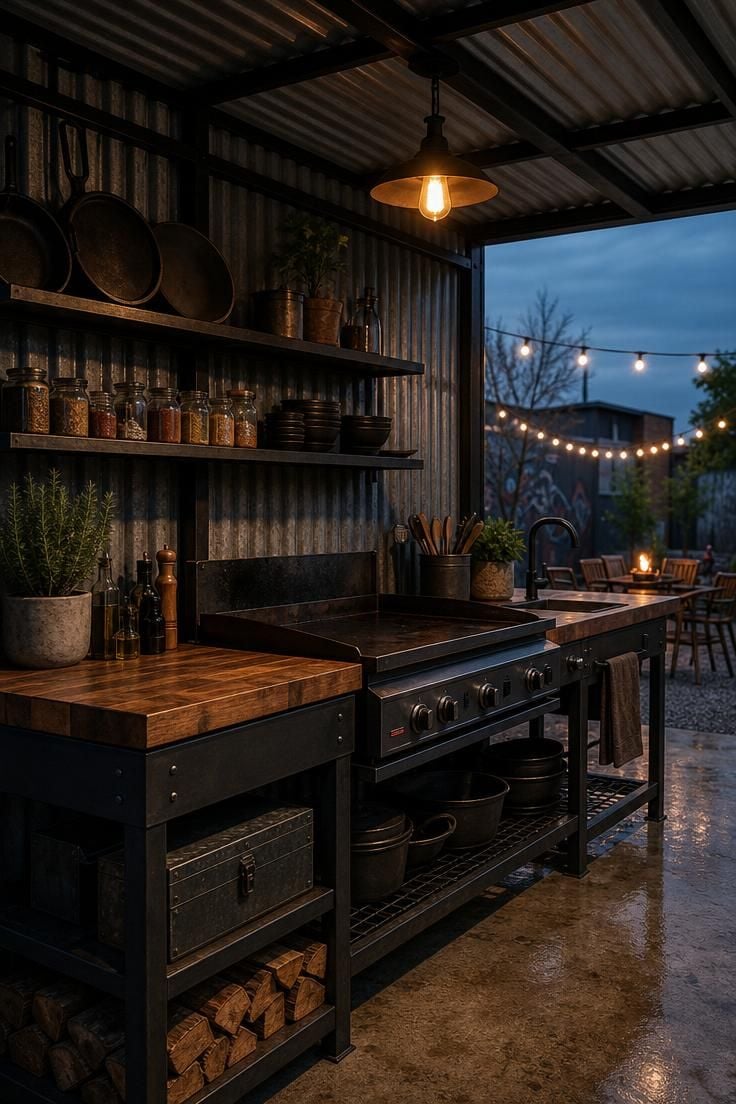
Powder-coated steel weathers without rusting, which means the frame can stay exposed to rain and sun without needing paint touch-ups every spring.
Corrugated metal overhead gives this kitchen a warehouse character that stands apart from the wood-and-stone look of most outdoor builds.
Open shelving on the back wall keeps everything visible, from cast iron pans to jars of smoked paprika, which speeds up cooking and adds an honest, working-kitchen feel.
A butcher block counter in an outdoor setting does need annual sealing with food-safe mineral oil, but the warmth of the wood against cold steel is worth the upkeep.
Moody low light from a single pendant bulb turns this kitchen into the kind of spot where outdoor kitchen lighting becomes part of the atmosphere, not just a practical add-on.
The poured concrete floor reflects just enough light to brighten the space from below when the overhead bulb is on.
This is an outdoor kitchen that would feel at home behind a brewery or a converted loft, and that industrial edge gives it a personality most backyard setups lack.
- Matte black powder-coated steel frame (square tubing, 2×2 inch minimum)
- Corrugated galvanized metal roof panels
- Thick butcher block countertop sealed for outdoor use
- Open steel shelving along the back wall
- Single pendant light with warm-tone bulb
Hand-Troweled Stucco Base with a Wood-Fired Copper Dome Oven
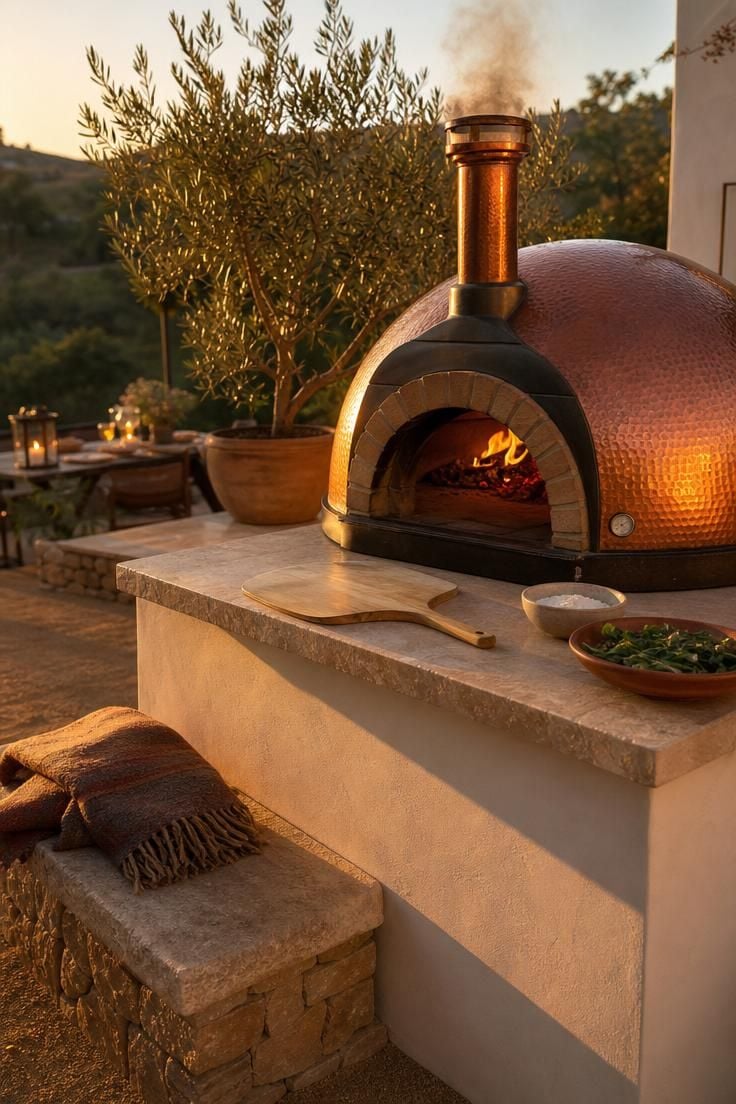
A pizza oven outdoor setup with a copper dome becomes the visual anchor of a backyard kitchen, the piece that guests photograph before they even taste the food.
Hammered copper reflects warm light in uneven bursts, which means the oven looks different at every hour of the day.
White stucco reads as Mediterranean, Californian, or Southwestern depending on the surrounding plantings, making it one of the most adaptable base finishes.
The travertine counter beside the oven provides a heat-resistant staging area where a pizza peel can rest between rounds.
Decomposed granite on the ground ties into the warm palette without adding the formality of cut stone pavers.
A potted olive tree behind the oven reinforces the Southern European feeling without committing to a full landscaping overhaul.
- Hand-troweled stucco base in bright white or warm cream
- Wood-fired pizza oven with hammered copper dome
- Honed travertine countertop beside the oven
- Decomposed granite ground surface in a tan or gold shade
- Potted olive tree or dwarf citrus as a backdrop accent
Porcelain Slab Counters Under Motorized Louvered Shade Panels
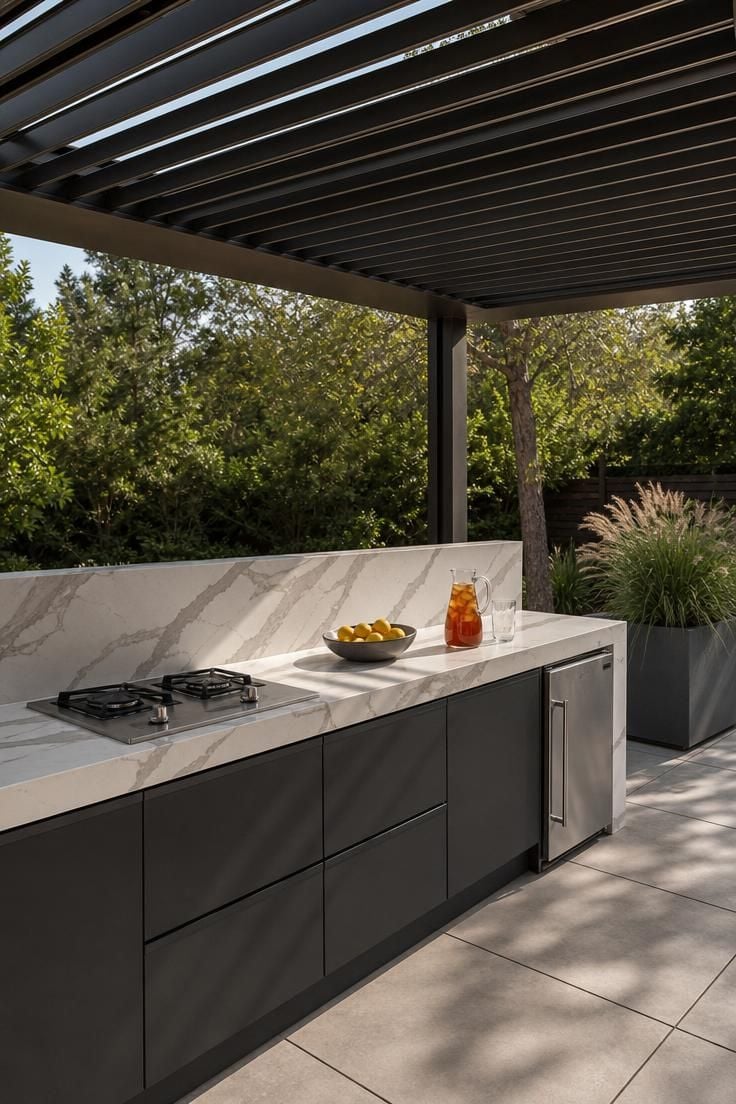
Motorized louvers give the cook control over sun exposure by the minute, open for morning warmth, closed for midday shade, angled for filtered afternoon light.
Porcelain slabs printed to mimic marble deliver the look of Calacatta or Statuario without the porosity that makes real marble a poor outdoor countertop choice.
A compact under-counter refrigerator keeps proteins and beverages cold at arm’s reach, which eliminates the constant back-and-forth to the indoor fridge that breaks the flow of outdoor cooking.
Matte charcoal polymer cabinets resist moisture, insects, and UV fading, which makes them a maintenance-free alternative to wood or even marine-grade stainless.
The soft diffused light passing through angled louvers creates a pattern of stripes on the counter that shifts as the panels adjust, adding movement to a static surface.
Ornamental grasses in a minimalist planter soften the hard geometry of the steel columns and aluminum panels with something organic.
Large-format concrete pavers on the floor repeat the clean, seam-free look of the porcelain counters overhead.
This is an outdoor kitchen layout built for daily use, not just weekend barbecues, because the shade system makes cooking comfortable at every hour.
- Large-format porcelain slab countertops (marble-look or stone-look finish)
- Motorized aluminum louvered roof system in dark bronze or black
- Compact under-counter outdoor refrigerator
- Matte polymer cabinetry rated for outdoor use
- Large-format concrete pavers for flooring
Design Pro-Tip: When choosing porcelain slabs for outdoor counters, look for a minimum thickness of 20mm (about 3/4 inch) and a slip rating of R10 or higher. Thinner porcelain can crack under the weight of a heavy grill grate, and a rated surface resists slipperiness from rain or spilled marinade.
A Flagstone Floor Kitchen with Wrought Iron Pendant Lights
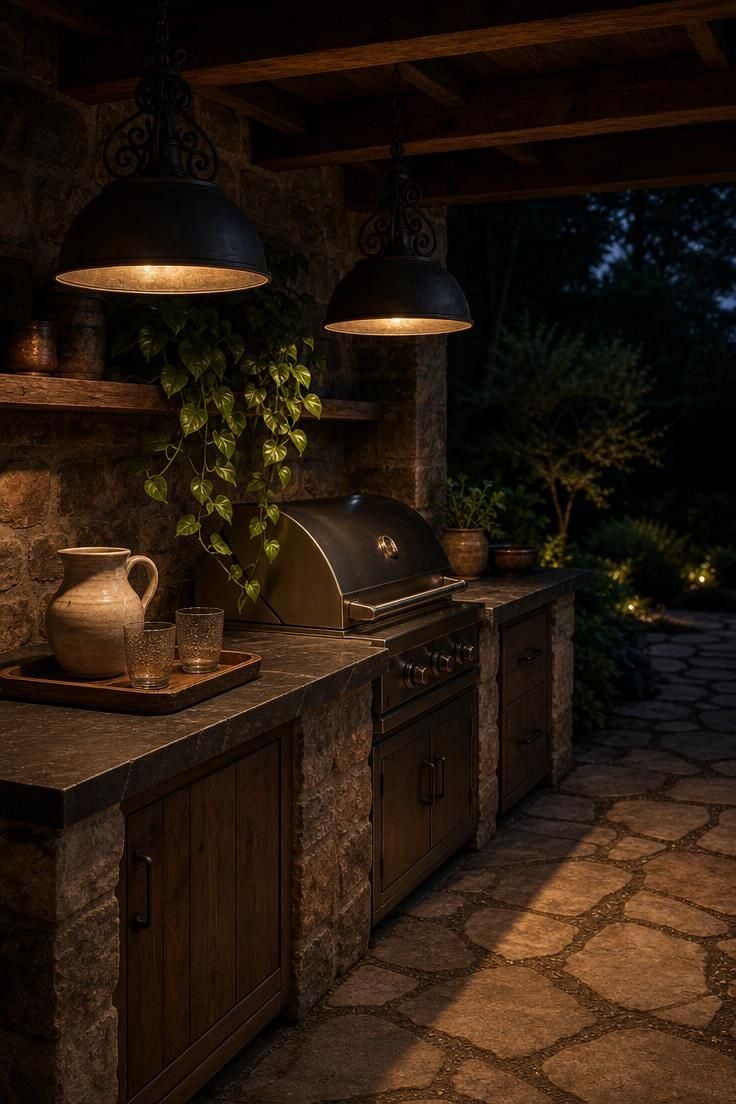
Flagstone laid in irregular shapes with wide mortar joints creates a floor that feels ancient and settled, as if the kitchen has always been here.
Wrought iron pendants with open bottoms direct light downward in focused pools, which is exactly what you need over a cooking surface after dark.
The combination of dark soapstone and dark-stained wood overhead wraps the cook in warm, low contrast surroundings that encourage slow, unhurried meals.
A charcoal grill built into the counter brings smoke flavor to the food and a campfire quality to the atmosphere that gas simply cannot replicate.
Trailing pothos from a high shelf adds a living, green element that breaks up the heaviness of all that iron and stone.
Moody outdoor kitchen lighting like this works best when the rest of the yard is kept deliberately dim, so the kitchen becomes the only bright point in the landscape.
That focused glow draws people in from across the yard the way a hearth draws people into a living room.
- Irregular-cut flagstone flooring with dark mortar joints
- Oversized wrought iron pendant lights with open-bottom shades
- Dark soapstone countertop
- Built-in charcoal grill with hinged steel lid
- Trailing greenery (pothos, string of pearls, or creeping fig) on a high shelf
Marine-Grade Polymer Cabinets in a Coastal White Palette
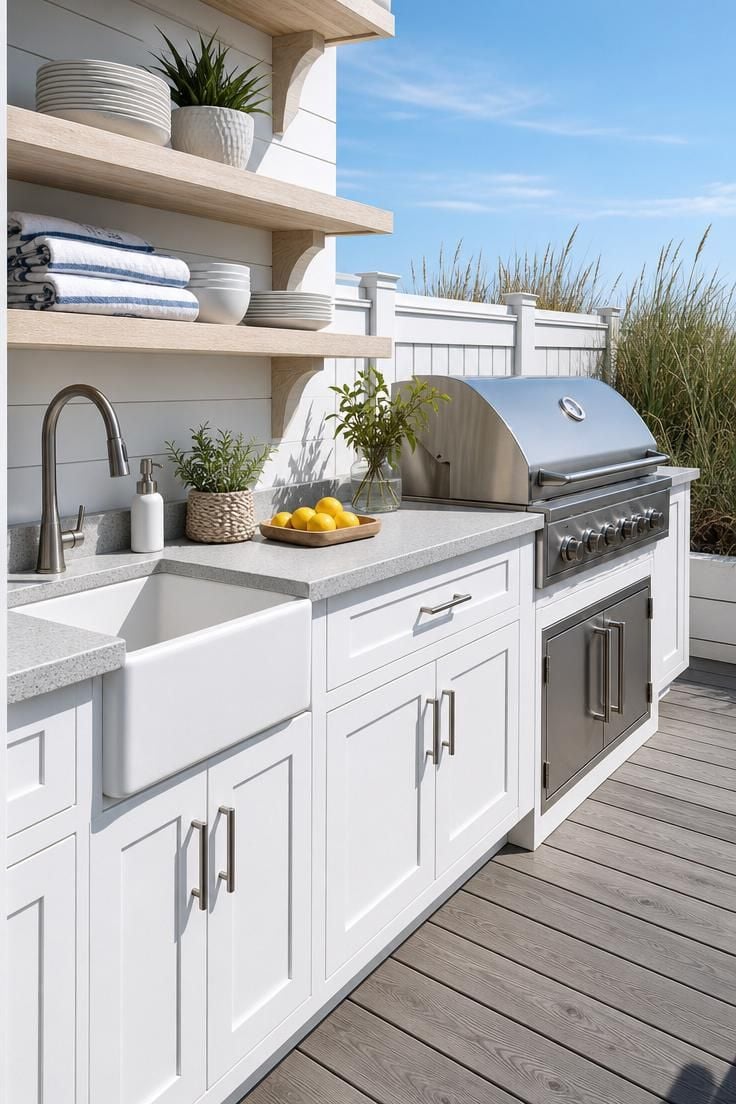
White polymer cabinets hold their color year after year in direct sunlight because the pigment is molded into the material rather than painted on top.
A shaker-style door profile gives these cabinets the same traditional look as painted wood, but without the cracking, peeling, or swelling that ruins wooden outdoor cabinets within a few seasons.
A farmhouse apron-front sink adds a domestic, cozy quality to a backyard kitchen, bridging the gap between indoor comfort and outdoor utility.
Bleached white oak open shelves above the counter keep plates and linens within reach and add a warm, natural grain that prevents the all-white palette from feeling sterile.
Bright midday light is the harshest test for a white kitchen, and the fact that this one still looks clean and inviting says the material choices are doing their job.
Wide-plank composite decking in weathered gray ties the kitchen to a coastal palette without the maintenance demands of real wood on a deck.
- Marine-grade polymer cabinets in white shaker profile
- Light gray quartz or engineered stone countertop
- White porcelain apron-front outdoor sink
- Bleached white oak open shelving for display storage
- Composite decking in weathered gray for the floor surface
A Sunken Gravel Pad Kitchen with Corten Steel Planter Walls
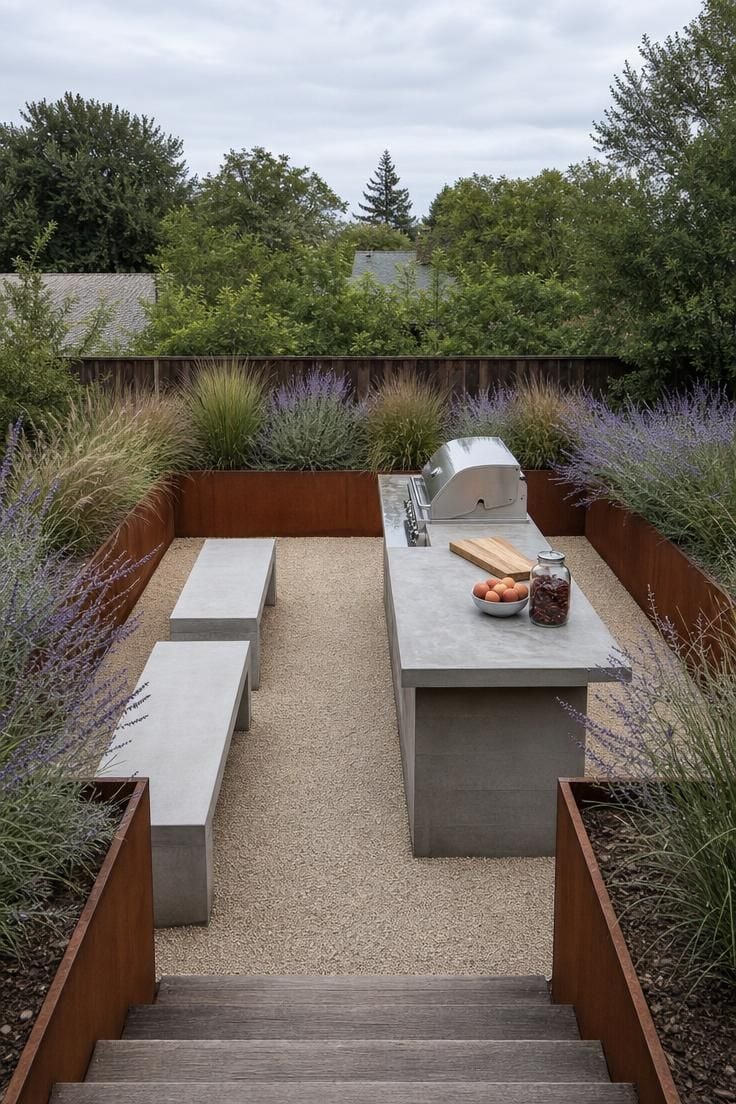
A sunken pad, even just two steps down from the surrounding lawn, creates a sense of enclosure that makes a backyard kitchen feel like a destination rather than an afterthought.
Corten steel planters develop their rusted orange patina over the first year and then stabilize, so the color only gets richer with time.
Russian sage and ornamental grasses in those planters move with the breeze, adding sound and motion to an otherwise still cooking area.
A long, narrow island is the most efficient use of a compact sunken space because it keeps the cook’s back to one planter wall and faces guests seated on the opposite benches.
Crushed limestone gravel drains instantly and stays cooler underfoot than concrete or stone pavers on a hot day.
Cool overcast light flattens the warm orange of the Corten against the soft purple of the sage blooms, letting both colors read equally without one overpowering the other.
Low concrete benches keep the seating profile below the planter walls, which preserves the enclosed, private feeling of the sunken pad.
- Corten steel planter walls (minimum 24 inches tall)
- Crushed limestone gravel in pale buff or gold
- Stucco-over-cinder-block island base
- Poured concrete countertop in medium gray
- Low concrete or stone benches for seating
Design Pro-Tip: If you are building on a gravel pad, set a compacted gravel base at least 4 inches deep beneath the surface layer. This prevents the island base from shifting over time and keeps the gravel from developing uneven low spots where water pools after rain.
Live-Edge Walnut Serving Shelf on a Concrete Block Base
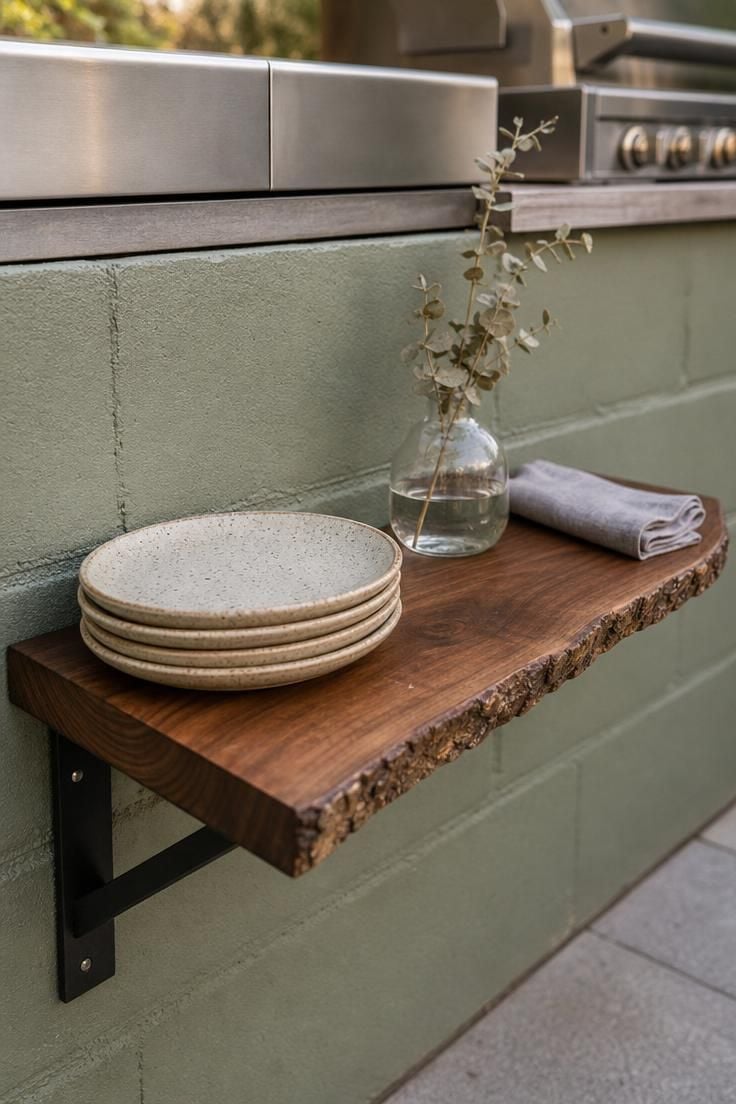
A live-edge walnut slab brings a piece of the forest into an outdoor kitchen, and the natural bark edge adds the kind of organic irregularity that manufactured materials cannot match.
Steel L-brackets in matte black hold the slab firmly against the wall without adding visual clutter.
Sage green paint on the concrete block base is a quiet color choice that lets the warm brown of the walnut stand forward.
A serving shelf like this works best as a plating station, a surface where finished dishes wait for two minutes before being carried to the table.
Handmade ceramic plates in a speckled cream glaze carry the same one-of-a-kind quality as the live-edge wood, and together they set a tone of careful, intentional cooking.
Soft diffused light is the most flattering condition for natural wood because it reveals the grain pattern without bleaching the color or creating dark distracting shadows.
Dried eucalyptus in a glass vase adds a scent layer to the visual, a subtle detail that most backyard kitchen builds overlook.
This detail alone can shift a concrete block island from basic to personal.
- Live-edge walnut or white oak slab (minimum 1.5 inches thick, sealed for outdoor use)
- Matte black steel L-bracket mounts
- Concrete block base wall painted in a muted accent color
- Handmade ceramic serveware as shelf display
- Dried botanical accent in a simple glass vessel
String Lights on a Painted Steel Pergola Over a Gas Grill Station
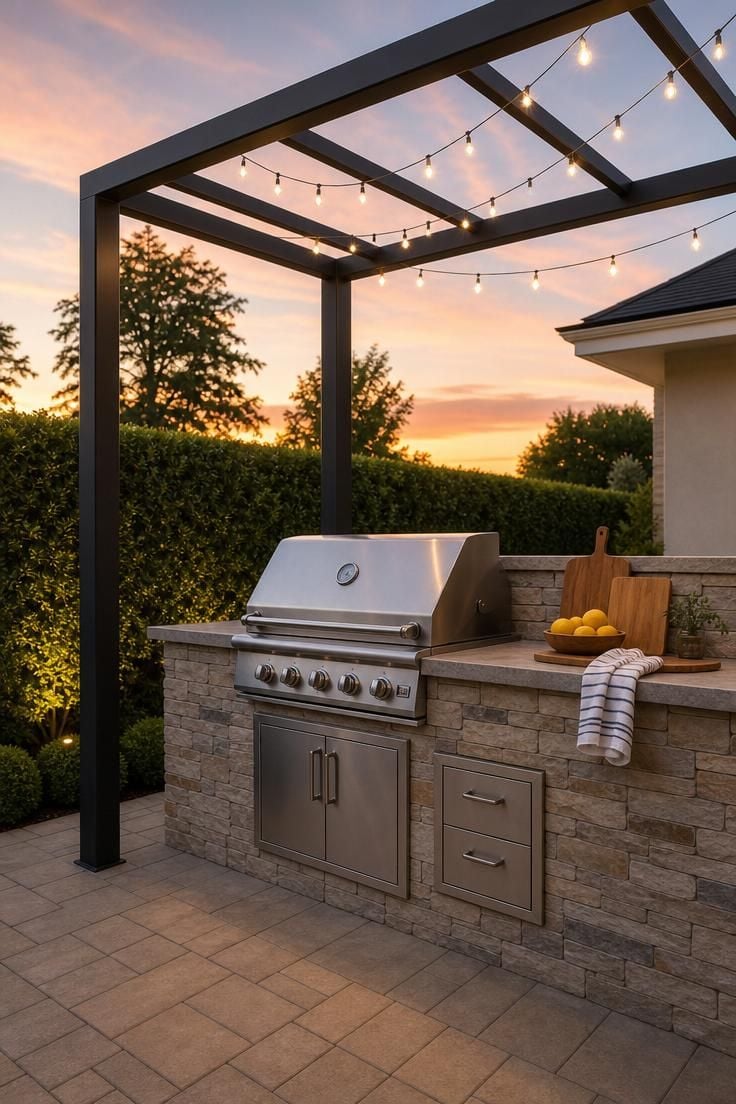
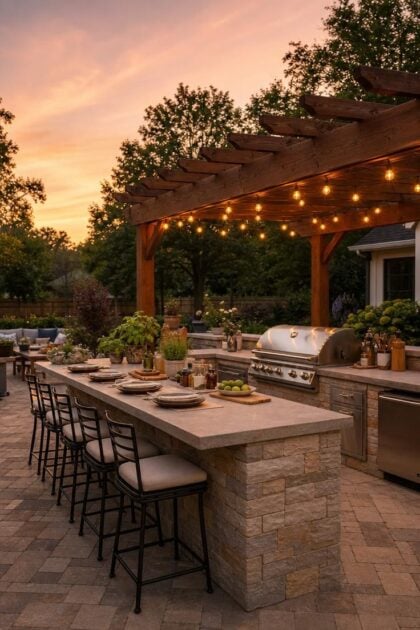
String lights on a pergola are one of the simplest additions that change how a backyard kitchen feels once the sun drops.
The warm white glow softens everything beneath it, smoothing out the hard lines of stainless steel and stone veneer into something more inviting.
A matte black steel pergola reads as modern but not cold, especially when the lights add a layer of warmth that balances the dark frame.
This kind of outdoor kitchen pergola does not need to support a full roof because the lights themselves create a visual ceiling that defines the space.
A stone-veneer island gives the look of a full masonry build at a fraction of the weight and cost, making it a practical choice for patio kitchen ideas on a moderate budget.
Running bond concrete pavers in a warm tan echo the golden tones in the string lights and the late-day sky.
- Painted steel pergola frame in matte black (square tube, 3×3 inch)
- Warm white outdoor-rated string lights in gentle swag pattern
- Stainless steel built-in gas grill
- Stone-veneer island with polished concrete countertop
- Low evergreen hedge or boxwood border for a clean edge
Conclusion
A backyard kitchen is one of those projects where the return is not just financial, it is felt every time the back door opens and dinner is already underway outside.
The 14 ideas here move from rough stone and reclaimed brick to sleek porcelain and motorized louvers, covering enough ground that any yard and any budget can find a starting point.
What matters most is choosing materials and a layout that match how you actually cook and eat outdoors, not what looks best in a catalog.
Start with the grill or cooking surface, add counter space on both sides, and build outward from there.
The rest, from outdoor kitchen lighting to seating to shade, can come one season at a time.