This post may contain affiliate links. If you make a purchase through these links, we may earn a commission at no additional cost to you.
Wabi-sabi kitchen design draws from a Japanese philosophy that finds beauty in wear, age, and imperfection.
It is a deliberate reaction against overly polished, magazine-perfect spaces that feel staged rather than lived in.
Organic materials, muted earth tones, and handmade objects sit at the center of this aesthetic, creating rooms that feel calm and grounded.
The result is a kitchen that ages with grace, where a scratch on the countertop or a chip on a ceramic bowl becomes part of the story.
From textured plaster walls to reclaimed wood shelving, here are 21 ways to bring the wabi-sabi spirit into your cooking space.
Textured Surfaces for Visual Interest
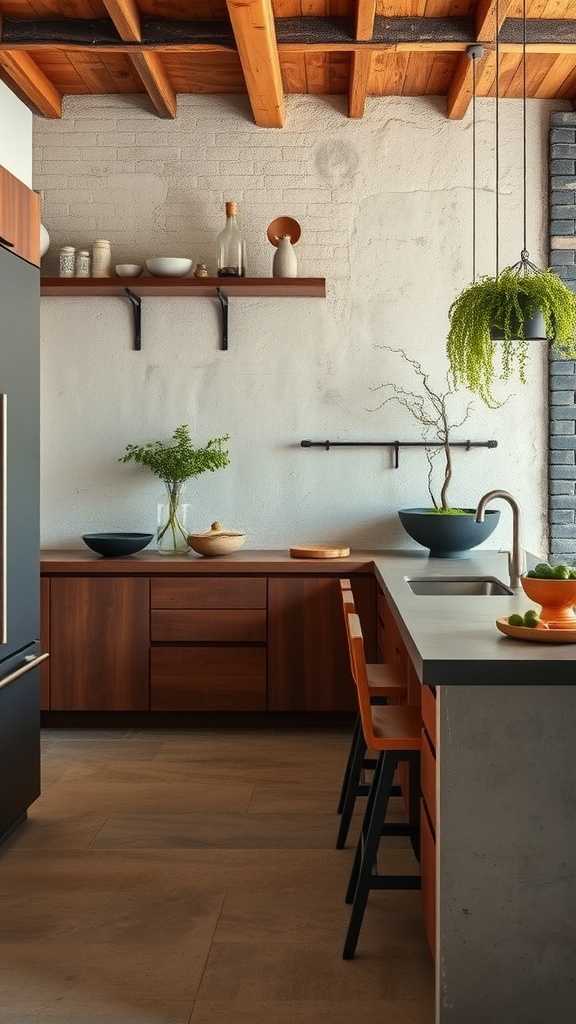
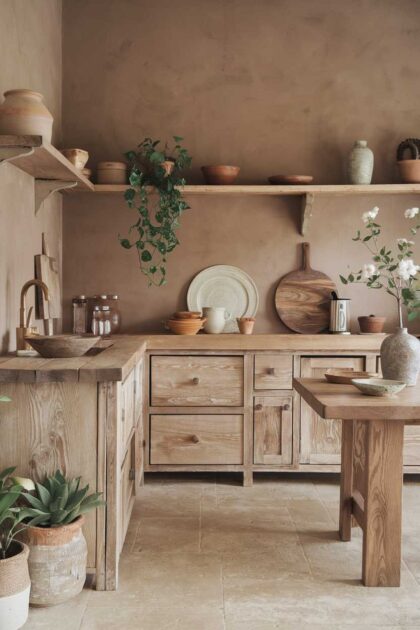
Hand-troweled plaster walls and raw-sawn timber shelves give a wabi-sabi kitchen its tactile character.
Run your hand along a brushed concrete countertop or an unfinished oak cabinet door, and you can feel the difference from a factory-smooth surface.
These finishes pick up light in uneven, interesting ways, casting soft shadows that shift throughout the day.
Try pairing a rough stone backsplash with a smooth ceramic bowl to create the kind of contrast that makes a room feel layered.
The imperfections in the grain, the visible trowel marks, the slight unevenness of hand-applied lime wash, all of these add depth that flat, glossy surfaces cannot.
A single wall of textured plaster in warm putty or raw umber can anchor the whole room.
Incorporating Vintage Elements

Flea markets, estate sales, and your grandparents’ attic hold the kinds of pieces that give a wabi-sabi kitchen its soul.
A worn copper colander hung on a wall hook, a chipped enamel pitcher repurposed as a utensil holder, or a set of mismatched ironstone plates can each anchor a whole vignette.
These objects carry decades of use in their patina.
Rustic wooden cabinets with visible joinery and hand-forged iron hardware fit the aesthetic far better than anything mass-produced.
The goal is a space where every item looks like it arrived with a story already attached.
Embracing Imperfection with Natural Materials
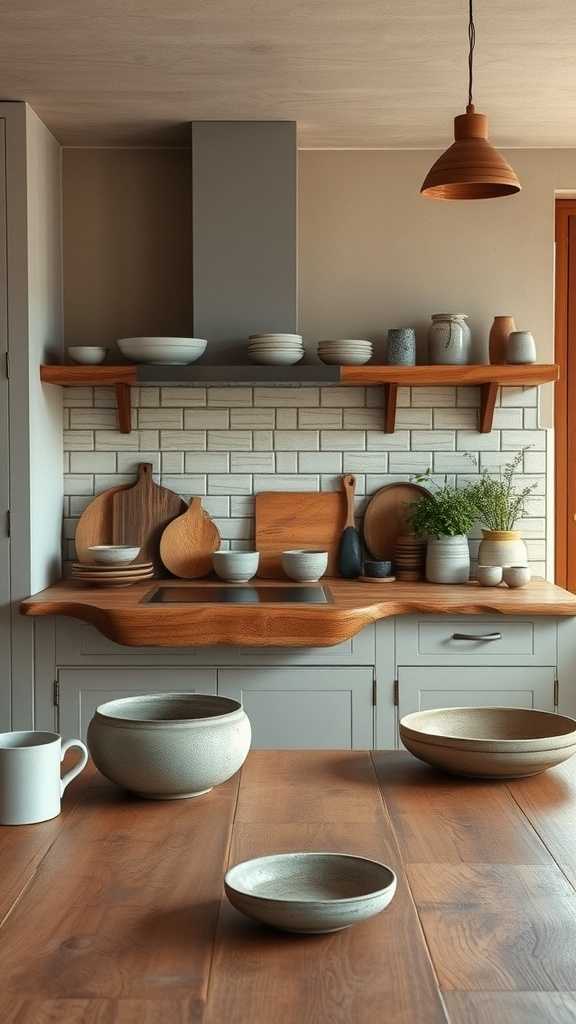
Wabi-sabi kitchen design centers on the idea that flaws are features.
A live-edge walnut countertop with its bark still intact looks more honest than a polished slab.
Handmade ceramic dishes from a local potter, each one slightly different in shape and glaze, bring warmth that uniform dinnerware sets never will.
Clay tiles with uneven edges, a wooden cutting board with knife marks, a hand-thrown stoneware vase with a visible fingerprint in the glaze, these are the details that separate a wabi-sabi space from a generic one.
Look for artisans working in raku, a traditional Japanese firing technique that produces one-of-a-kind crackle patterns on every piece.
The beauty of these materials grows over time as they develop patina, darken with oil, or soften at the edges.
Each mark records a meal cooked, a gathering hosted, a life in progress.
Organic Shapes and Curves in Design
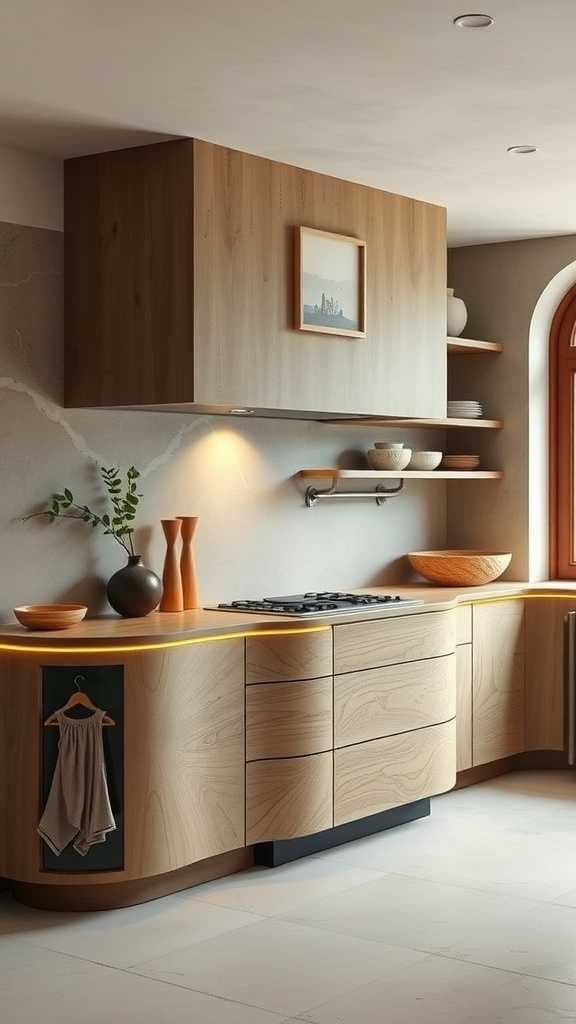
Straight lines and sharp corners belong to a different aesthetic.
A kidney-shaped island, a round stone sink basin, or an arched open shelf softens the geometry of a kitchen and makes it feel less rigid.
Curved range hoods in plaster or beaten copper draw the eye upward and create a gentle focal point.
Nature produces very few perfect right angles, so letting curves into the room makes the whole space feel more connected to the natural world.
Rounded cabinetry edges and a circular dining table complete the effect.
Sustainable Kitchen Fixtures and Appliances
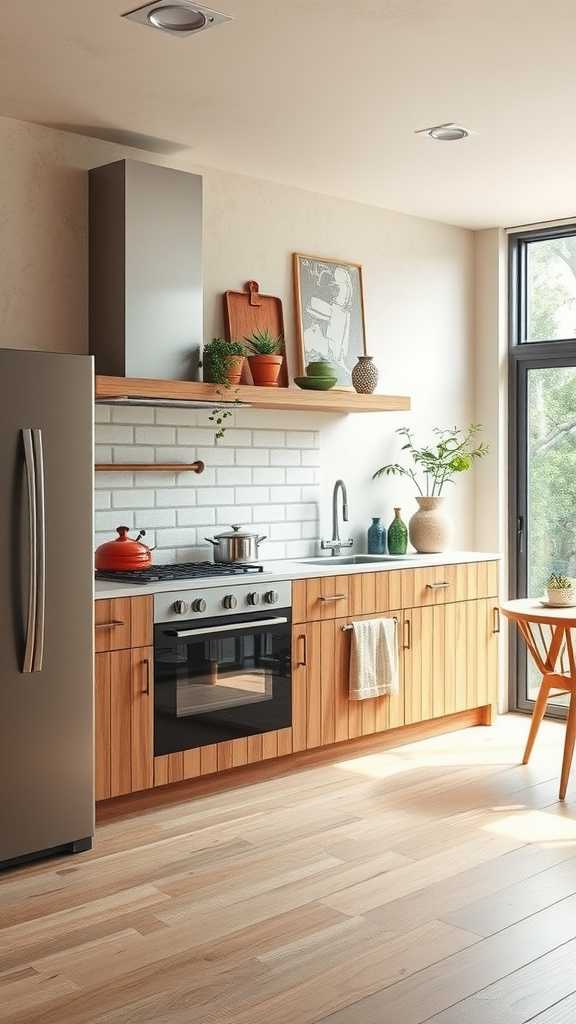
Choosing reclaimed wood for cabinet fronts or salvaged barn beams for open shelving gives a wabi-sabi kitchen depth that new materials struggle to match.
A hammered copper faucet or a fireclay farmhouse sink ages beautifully, developing a soft patina over months and years of use.
Bamboo drawer pulls, recycled glass pendant lights, and hand-finished brass hardware are all small choices that add up to a coherent philosophy.
Energy-conscious appliances with clean, minimal exteriors blend into the background rather than competing with the natural materials around them.
These decisions reflect a respect for resources and a preference for objects that last, two values that sit at the heart of the wabi-sabi approach.
A low-waste mindset and this design philosophy share the same root: nothing discarded carelessly, nothing rushed.
Thoughtful Arrangements of Kitchen Tools
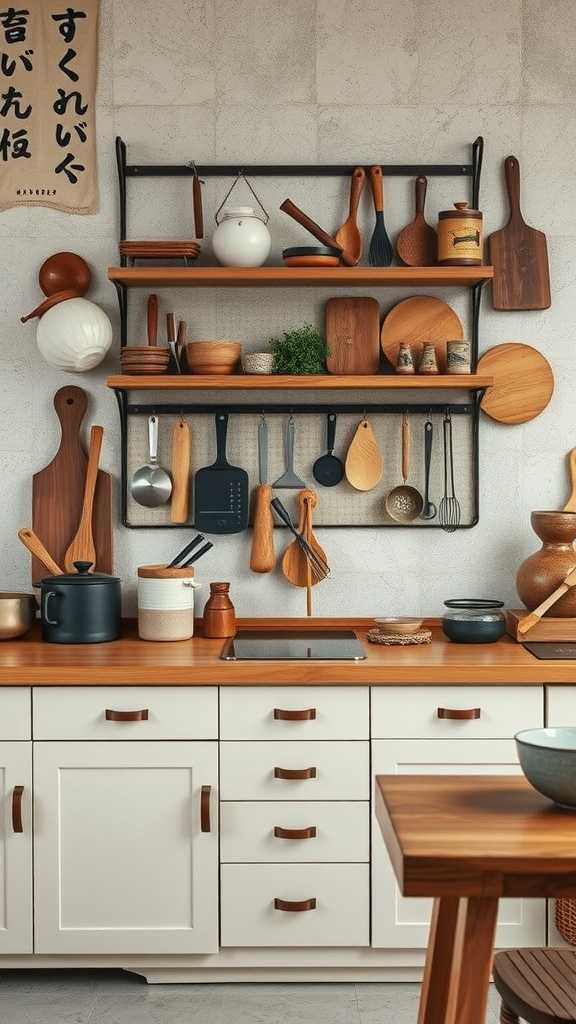
Open shelves lined with wooden spoons, a mortar and pestle in rough granite, and a stack of linen napkins turn everyday tools into a visual display.
The arrangement itself matters, and a few inches of space between objects lets each piece breathe.
Group items by material: wooden utensils together, ceramics on a separate shelf, glassware near a window where light passes through.
This kind of intentional placement turns a functional shelf into something worth looking at.
Soft, Ambient Lighting Solutions
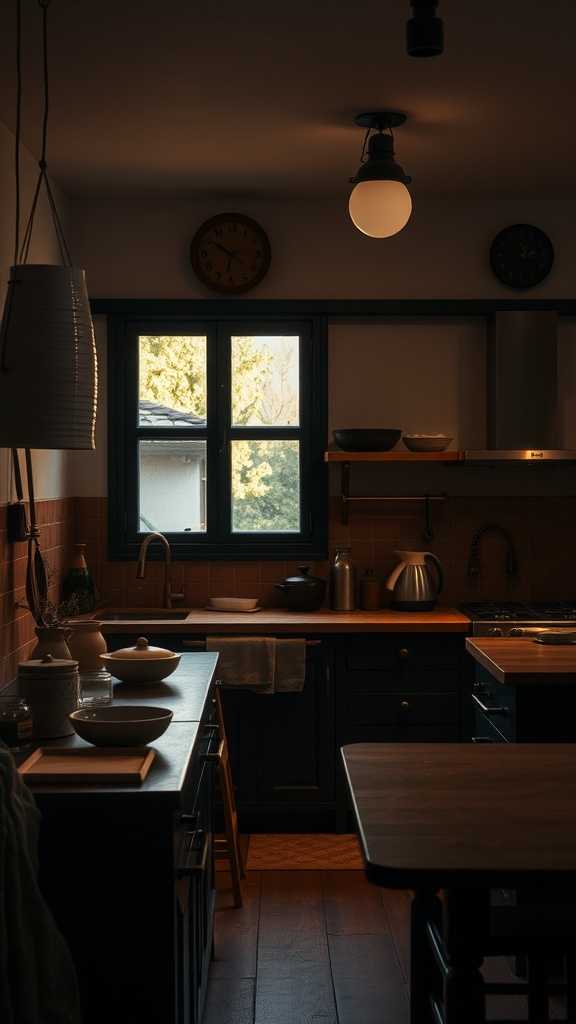
Bright overhead fluorescents kill the wabi-sabi mood in seconds.
Soft, warm lighting from rice paper pendants, linen-shade sconces, or dimmable LED strips tucked under shelves creates the right atmosphere.
Beeswax candles in hand-thrown ceramic holders add a flickering warmth during evening hours.
Layering different light sources at different heights gives the room dimension and avoids flat, even illumination.
Position a single pendant with a warm-tone bulb over the main work surface and let the corners stay a little dim.
The push and pull of light and shadow is what makes textures come alive, turning a simple plaster wall into something worth staring at.
Aim for a color temperature around 2700K to keep the space feeling warm without going orange.
Monochromatic Color Palettes
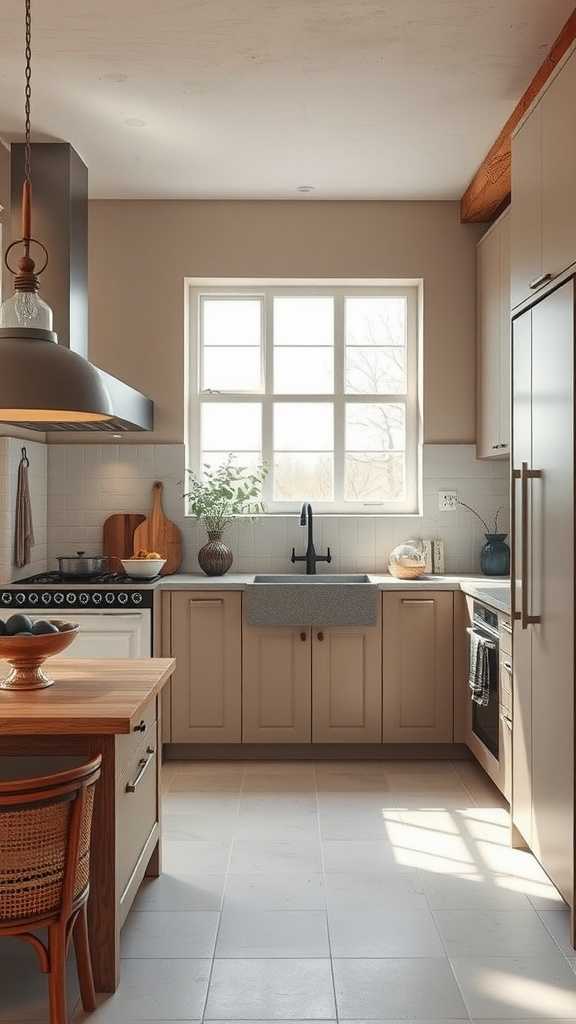
A palette built around warm whites, sandy beige, wheat, and driftwood gray gives a wabi-sabi kitchen its signature calm.
Paint walls in soft ivory or mushroom, and let the natural wood tones of shelving and cabinetry supply the variation.
The trick is staying within a narrow range where everything relates but nothing matches exactly.
A cream-colored stoneware mug on a taupe linen cloth on a honey oak shelf, that kind of layered warmth reads as intentional without looking coordinated to the point of being staged.
Avoid pure bright white, which can feel sterile; off-whites and warm neutrals carry more visual weight.
This restrained color story lets the textures and materials do the talking instead of competing wall colors.
Mixing Old and New Design Elements
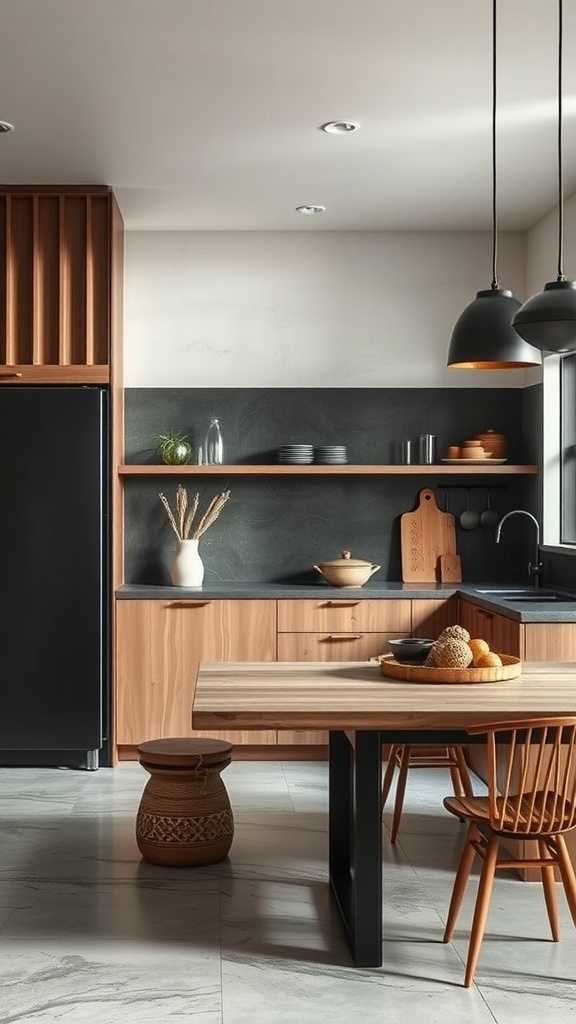
A sleek matte-black induction cooktop sitting on a reclaimed pine countertop captures this idea perfectly.
Pair a modern pendant light with a weathered wooden cutting board hung as wall art.
Set clean, contemporary bar stools against a hand-plastered kitchen island with visible trowel marks.
The contrast is what gives the room energy: the new pieces feel crisper next to the old, and the old pieces feel richer next to the new.
Wabi-sabi kitchen inspiration often comes from these unexpected pairings, where decades separate the origin of two objects sitting side by side.
Open Shelving for Displaying Everyday Items
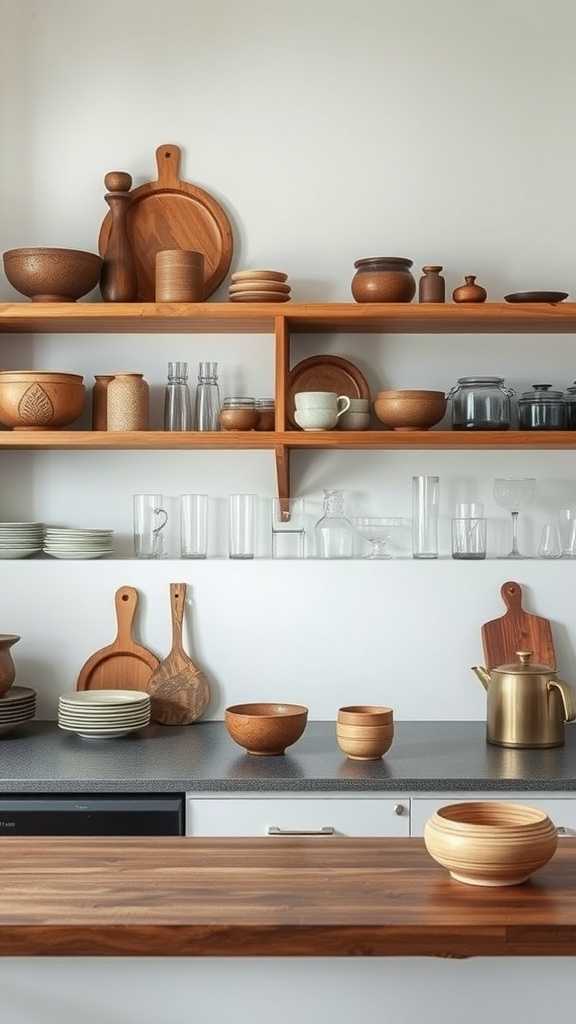
Removing upper cabinet doors, or replacing a section with floating shelves, immediately opens up a kitchen and lets its contents become the decor.
Stack handmade bowls in graduated sizes, line up a row of amber glass jars filled with dry goods, and lean a small wooden cutting board against the wall.
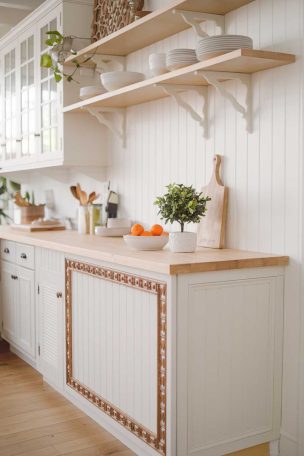
Live-edge wood planks mounted on simple black iron brackets look striking without trying too hard.
The shelf itself becomes part of the aesthetic when the wood is left unsealed, showing its grain and natural color shifts.
Leave some empty space, since a crowded shelf feels chaotic rather than composed.
This approach works best when you limit the palette to two or three material families: wood, ceramic, and glass make a reliable trio.
Rotate items seasonally to keep the display feeling fresh.
Creating a Sense of Balance with Symmetry
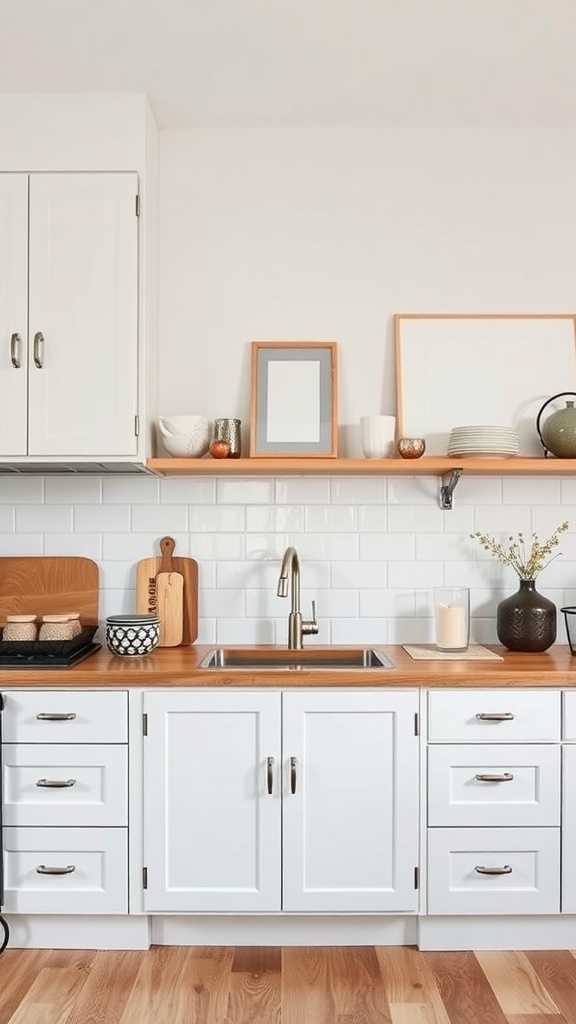
Symmetry brings a sense of order that grounds the relaxed, imperfect character of wabi-sabi.
Two matching ceramic canisters flanking a wooden cutting board on a shelf, or a pair of woven pendant lights above an island, create quiet visual rhythm.
Evenly spaced hooks holding linen aprons, or identical pottery mugs lined along a rail, give the eye a place to rest.
This balance prevents the “imperfect” elements from tipping into looking messy.
A wabi-sabi kitchen reads as intentional, never accidental, and symmetry is one of the simplest tools for achieving that.
Earthy Color Accents in Decor

Terracotta pots clustered on a windowsill, a single sage-green linen towel draped over a brass hook, or a set of rust-colored stoneware plates on open shelving inject color without disrupting the calm.
Earth tones come from nature, and they carry the same warmth here as they do outdoors.
Burnt sienna, olive, clay red, and ochre work well as accent colors against a neutral base of warm white or beige.
A hand-glazed tile backsplash in matte terracotta can serve as the room’s defining feature.
Potted herbs like rosemary and thyme pull double duty: soft green accents that you can cook with.
These color moments feel more grounded and less forced than a bright accent wall or a primary-color accessory.
Thoughtfully Placed Greenery
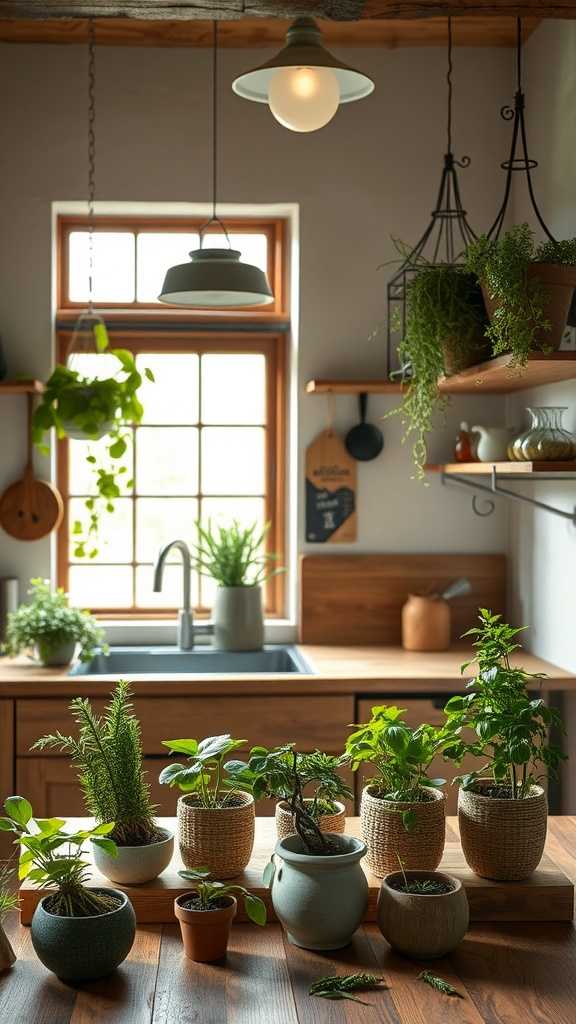
A trailing pothos on a high shelf, a small fern on the windowsill, and a pot of basil on the counter bring different shapes and greens into the room.
Plants soften hard surfaces like stone and wood, and their irregular shapes reinforce the organic feel of the space.
Use unglazed terracotta or rough stoneware pots rather than slick plastic planters, since the container is part of the look.
A single large fiddle-leaf fig in a woven basket makes more of a statement than a dozen tiny succulents scattered around.
Let the greenery be a little imperfect, with a yellowed leaf here or a leggy stem there, to stay true to the wabi-sabi spirit.
Integrating Natural Elements like Stone and Wood
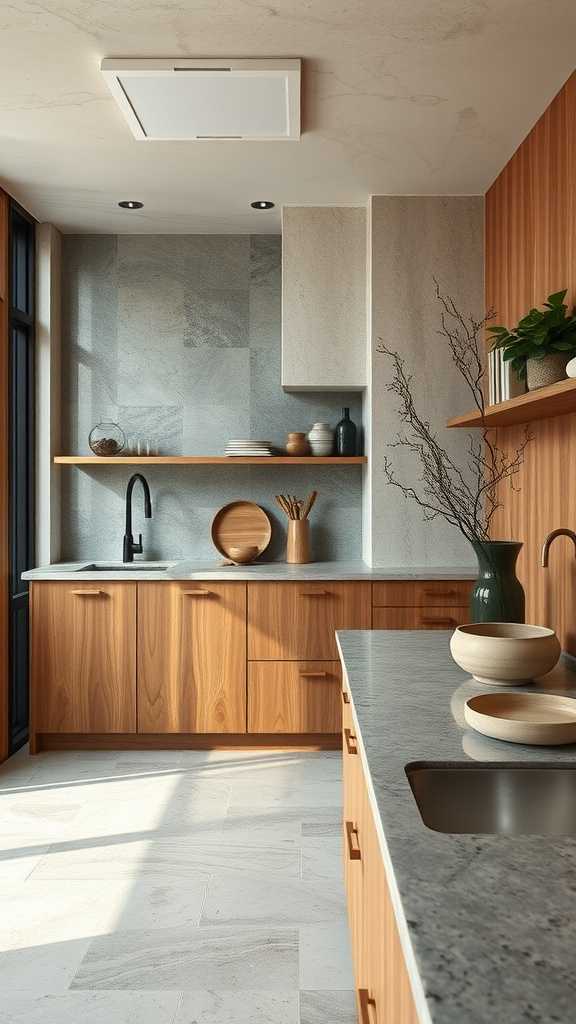
Soapstone countertops darken with age and use, developing a rich, deep gray that you cannot replicate with synthetic materials.
Pair them with open shelving in white oak or ash, and the combination of cool stone and warm wood anchors the entire room.
A rough-cut stone mortar on the countertop or a river-stone trivet on the table extends this material language into the small details.
Tadelakt plaster, a traditional Moroccan lime finish, can be applied to walls or even countertops for a smooth, waterproof surface with a subtle organic sheen.
Mixing stone types, like matte slate flooring under a honed marble prep surface, creates visual interest through variation in tone and texture.
Wood that has been oiled rather than lacquered shows its grain more honestly and develops a deeper glow over time.
These natural materials respond to touch, to moisture, to light, and that responsiveness is what gives a wabi-sabi kitchen its living quality.
Rugged Flooring Choices for Authenticity
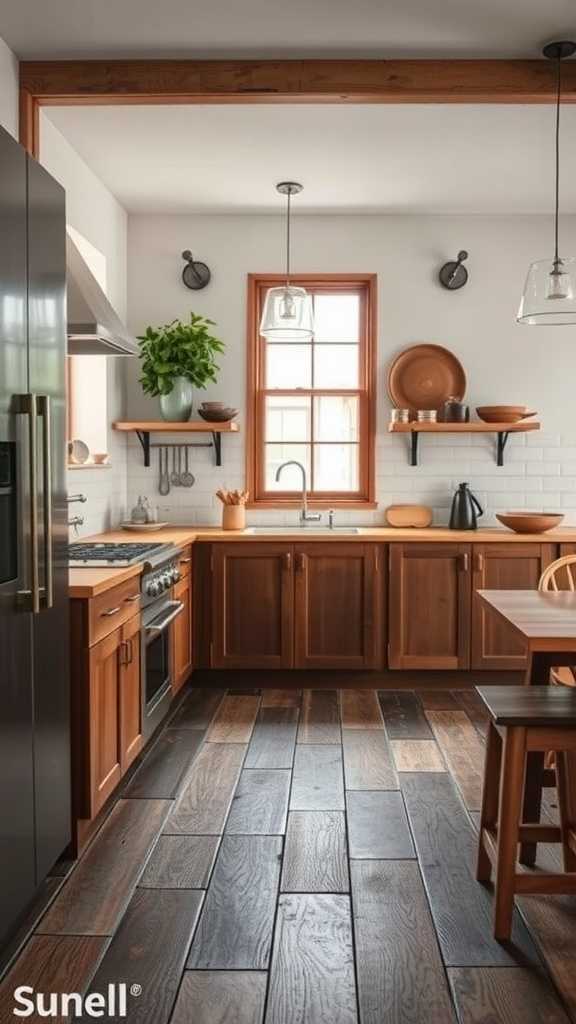
Wide-plank reclaimed oak with visible nail holes and color variation underfoot sets the tone for an entire wabi-sabi kitchen.
Tumbled travertine tiles with their soft, rounded edges and natural pitting give a similar aged feel.
Terracotta floor tiles, common in Mediterranean and Japanese country kitchens alike, warm up from cold to a rich russet as they absorb years of foot traffic and spilled olive oil.
Matte-sealed concrete with hairline cracks left visible offers a more modern take on the same principle.
Skip the high-gloss finishes and the perfectly uniform planks; the floors should look like they have been walked on, cooked on, and loved.
A wool-and-jute runner in a neutral weave adds comfort underfoot and another layer of texture.
Layering Textiles for Comfort
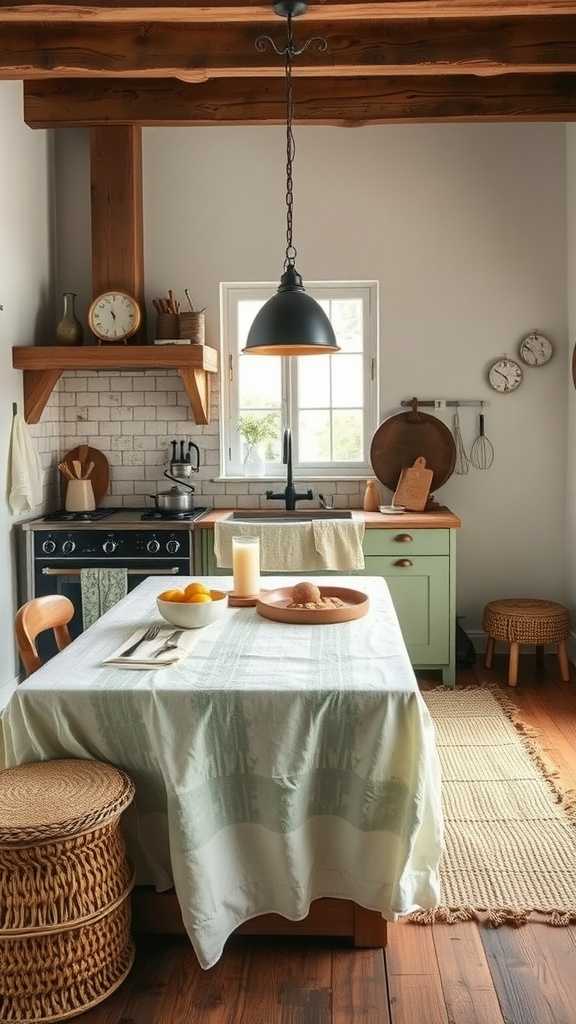
A Belgian linen table runner draped loosely over a rough-hewn oak table sets a tone that paper napkins never could.
Add unbleached cotton napkins folded casually beside mismatched stoneware plates, and the table already tells a story.
Hemp placemats, a hand-loomed cotton dish towel over the oven handle, and an undyed wool throw on a kitchen bench bring softness into a room dominated by hard surfaces.
The weave matters: slubby, irregular textures fit the wabi-sabi approach far better than tight, uniform fabrics.
Stick to natural fibers and undyed or vegetable-dyed colors to keep everything feeling connected to the earth.
Personalized Touches with Family Heirlooms
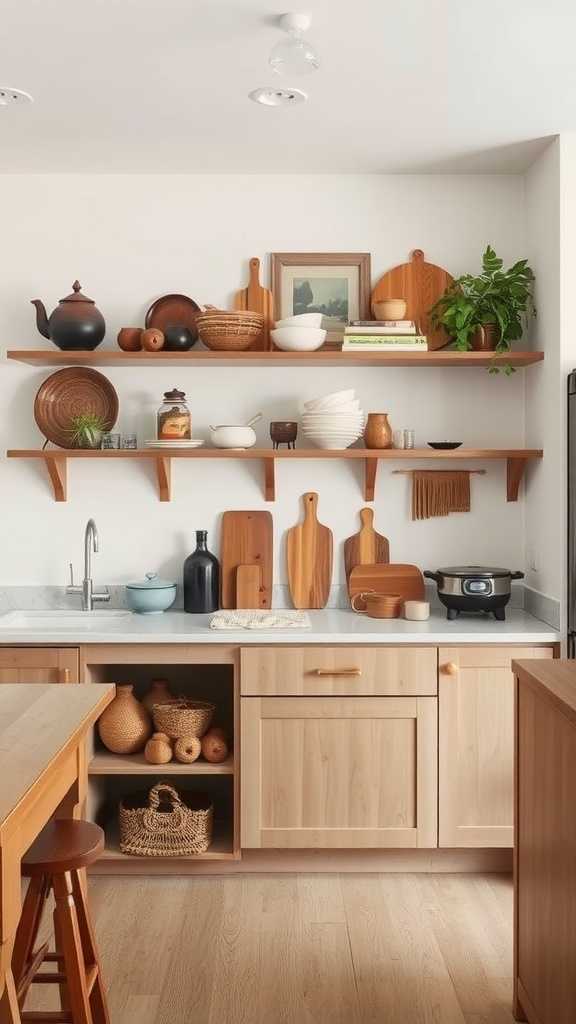
Your grandmother’s cast-iron skillet, hung on the wall or sitting on the stove, does more for the room than any piece of decor bought new.
A framed handwritten recipe propped on a shelf, a stack of well-worn cookbooks, or a set of mismatched china inherited from different relatives, these are the pieces that make a kitchen irreplaceable.
Family heirlooms carry weight that store-bought accessories cannot replicate.
They invite conversation, and guests will ask about the dented copper pot or the hand-painted platter before they notice the countertop material.
Displaying these objects openly rather than storing them behind cabinet doors keeps their stories present in the room.
A single heirloom piece in each zone of the kitchen, one on the counter, one on the shelf, one on the wall, distributes that personal warmth evenly.
The most meaningful wabi-sabi kitchens are ones where you can point to an object and tell someone exactly where it came from.
Artisanal and Handcrafted Decor
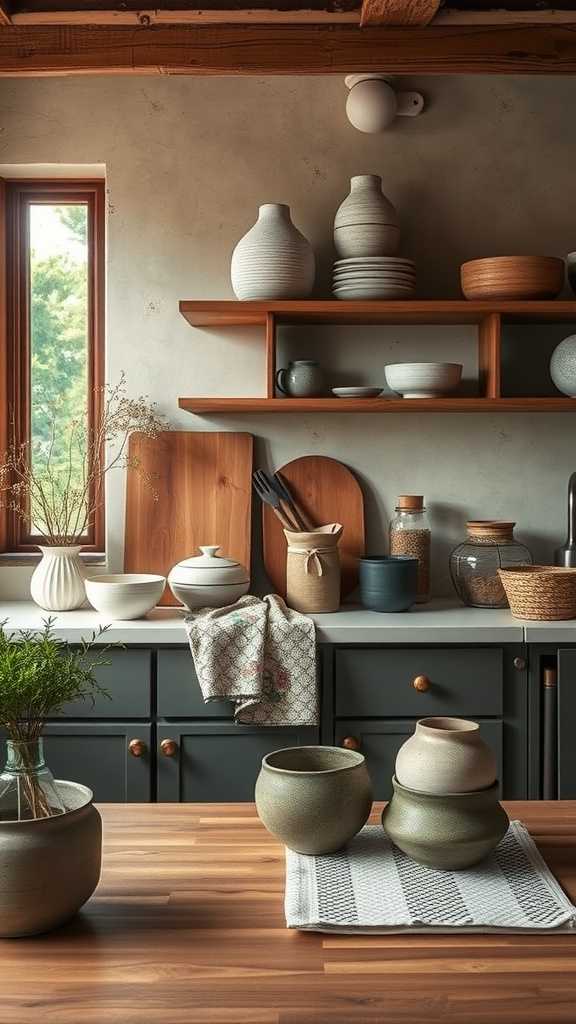
A hand-thrown ceramic soap dish beside the sink, a carved wooden breadboard leaning against the backsplash, and a set of handwoven linen tea towels hung from iron hooks, these small additions define the character of the space.
Seek out local potters, woodworkers, and textile artists whose work shows the hand that made it.
The slight wobble of a handmade cup, the chisel marks on a carved spoon, and the irregular weave of a handspun cloth all signal authenticity.
Every piece made by hand carries the small inconsistencies that machines eliminate, and those inconsistencies are exactly what wabi-sabi values.
Buy one handmade item at a time and let the collection grow slowly, reflecting your taste rather than a single shopping trip.
Craftsmanship and simplicity, not price, determine whether a piece belongs in this kind of kitchen.
Casual and Unpretentious Dining Spaces
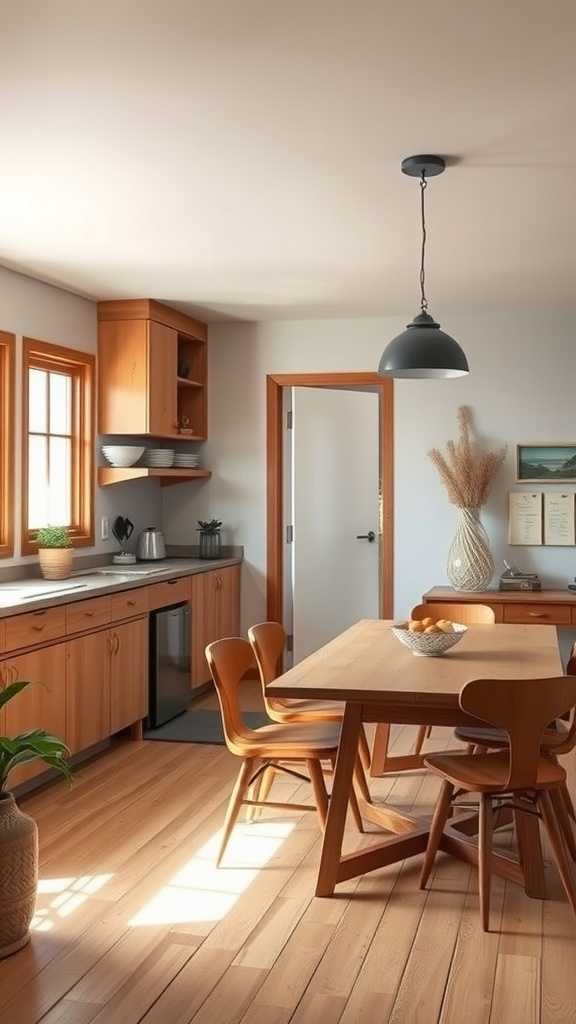
A wabi-sabi kitchen calls for a dining setup that feels approachable, where no one worries about putting down a glass without a coaster.
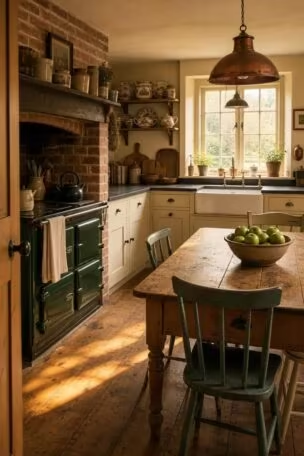
A chunky farmhouse table in unstained pine or reclaimed elm, surrounded by mismatched chairs, invites people to sit down and stay awhile.
Skip the formal place settings; stack plates in the center and let people serve themselves.
The muted tones of natural wood, linen, and stoneware create a backdrop that makes food look better and conversation flow more easily.
This is a space built for long meals, for elbows on the table, for second helpings.
Using Natural Light to Enhance Space
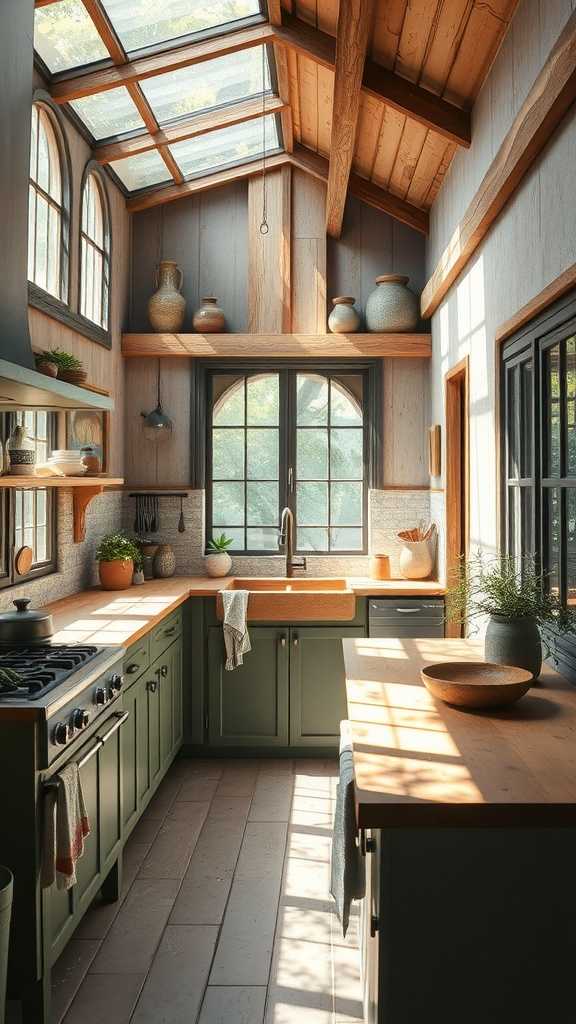
Large windows with minimal or no window treatments let sunlight move through the room and shift the mood from morning to evening.
That changing light reveals different qualities in the materials: the grain of the wood glows golden in the afternoon, the plaster wall turns cool blue at dawn, and the stone countertop warms to amber at sunset.
Sheer linen curtains soften direct sun without blocking it, keeping the room bright and connected to the outdoors.
A window positioned near the main prep area makes cooking feel less like a chore and more like a quiet, grounding activity.
Where structural windows are not an option, a large skylight or a series of clerestory windows along the roofline pulls in overhead light that reaches deeper into the space.
Wabi-sabi kitchens gain much of their character from how natural light interacts with their surfaces, making window placement one of the most consequential design decisions you can make.
Crafting a Cozy Nook for Relaxation
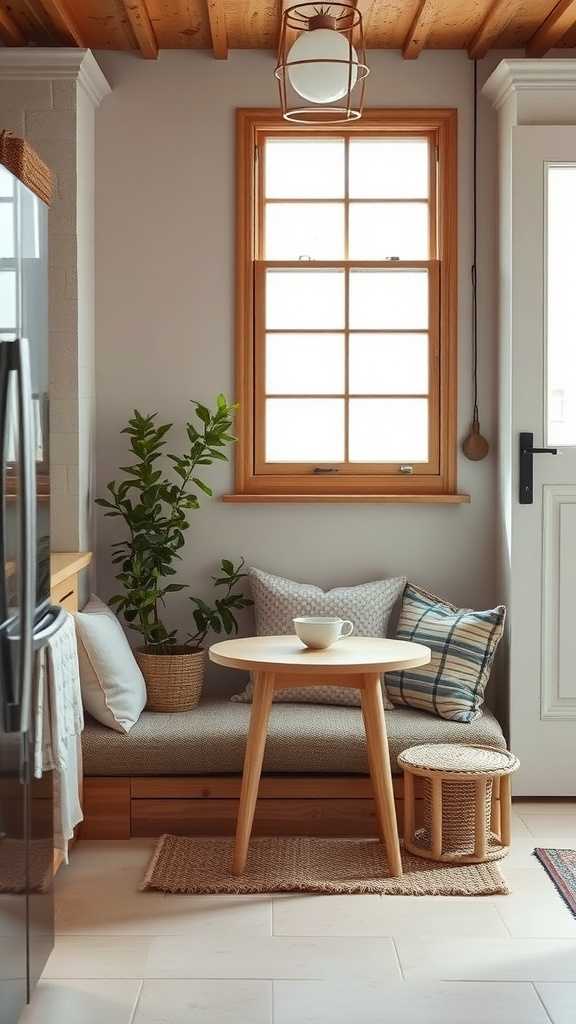
A built-in bench under a window, a small round table, and a few linen-covered cushions can turn an unused corner of the kitchen into the most popular seat in the house.
Use the same natural materials as the rest of the room: unfinished wood for the bench, a jute rug underfoot, and a ceramic mug within arm’s reach.
A single shelf above the nook with a trailing plant and a stack of well-loved books completes the scene.
This is the spot for morning coffee before the house wakes up, or for a glass of wine once the kitchen has gone quiet.
Keeping it simple, with just enough comfort and nothing extra, is the most wabi-sabi thing you can do.
Conclusion
Wabi-sabi kitchen design starts with a single choice: a handmade bowl, a reclaimed wood shelf, or a coat of lime-wash plaster on one wall.
From there, each addition builds on the last, guided by a preference for natural materials and the honest wear of real life.
There is no need to overhaul everything at once.
Swap out a set of matching mugs for a few hand-thrown ones from a local potter, or replace a plastic cutting board with a scarred maple one from a secondhand shop.
The philosophy itself is the permission slip: imperfection is welcome here, and the kitchen gets better with age, not worse.
Embrace the essence of wabi-sabi, and let your kitchen tell its own story.
Sources: