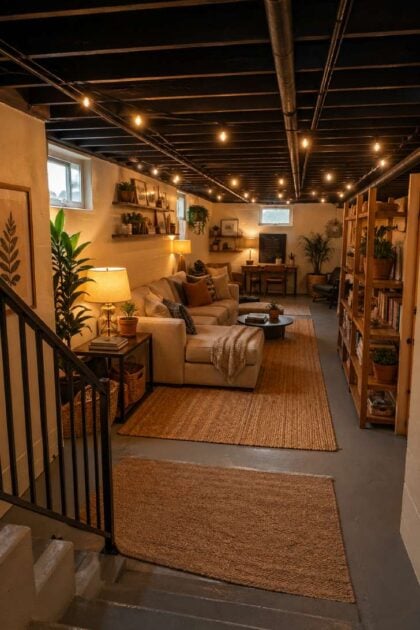
This post may contain affiliate links. If you make a purchase through these links, we may earn a commission at no additional cost to you.
Your basement doesn’t need to drain your bank account to become beautiful and functional.
Most people overlook their basement because they assume renovation means thousands of dollars and months of construction noise.
But here’s the truth: some of the most impressive basement transformations start with simple, inexpensive fixes.
We’re talking painted concrete, strategic lighting, clever storage, and smart furniture placement.
The ideas below prove you can create a stylish, usable space without major construction or a six-figure budget.
Painted Concrete Floors
A fresh coat of epoxy or concrete paint completely changes the game for basement flooring.
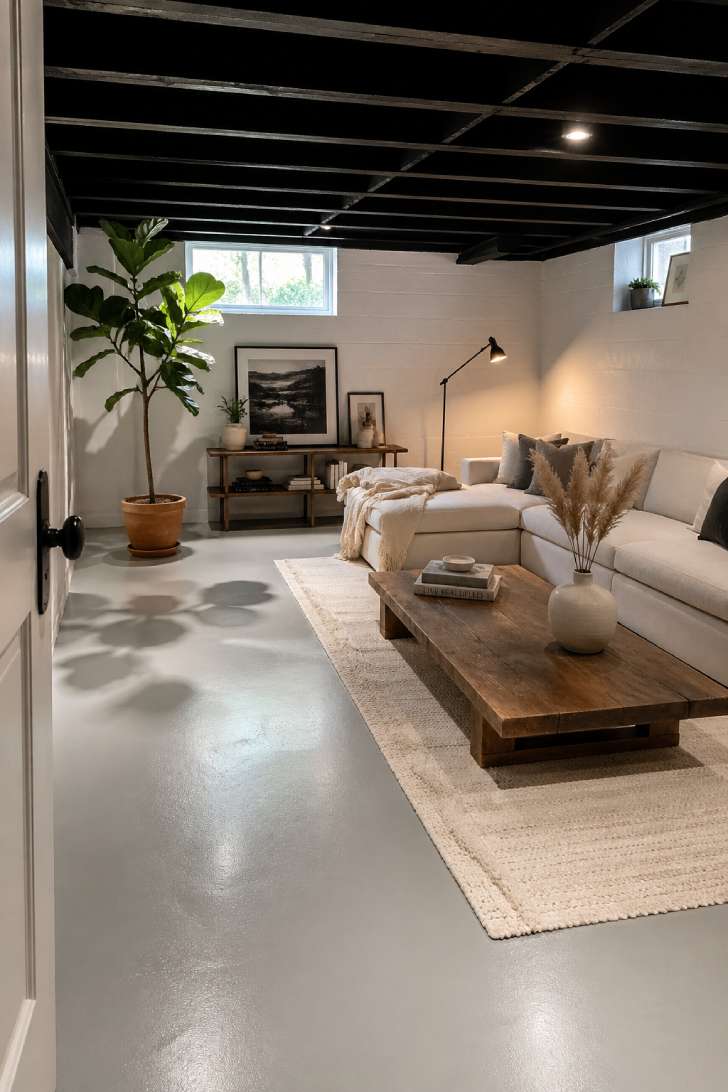
When the basement floor finally looks intentional rather than utilitarian, the entire room feels more put-together.
Painted concrete doesn’t just improve aesthetics—it actually affects how you perceive the space’s cleanliness and organization.
Your brain reads a finished floor as a sign that the room is cared for and usable, even if everything else is still raw.
Most people choose matte finishes in grays, taupes, or soft blues because these colors recede visually and won’t show dust as easily.
Style Blueprint:
- Concrete floor paint or epoxy coating (look for one-step solutions)
- Primer suited specifically for concrete
- Quality paint rollers and protective gear
- Optional: area rug to define zones
Design Pro-Tip: Paint your concrete floor in a cool gray-blue rather than true gray—it tricks the eye into feeling the space is larger and lighter, even in a basement without abundant natural light.
Interlocking Foam Mats
Foam mats aren’t just for gyms anymore—they’re a genius basement hack that costs pennies and creates instant comfort.
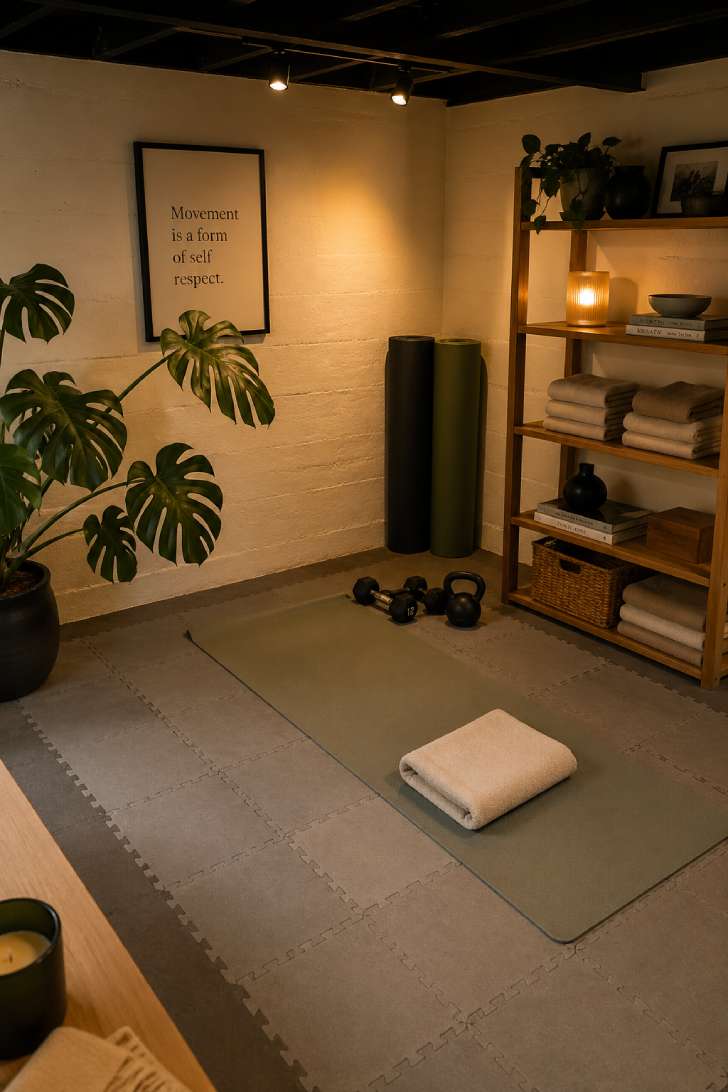
These foam puzzle pieces add cushioning underfoot while defining space psychologically—they create a literal boundary that signals “this zone is for movement and comfort.”
That visual separation matters more than you’d expect because it tells your subconscious this area has a purpose.
The mats also absorb sound and temperature, making the basement feel less cold and echoey, which directly impacts how inviting the space feels to be in.
Installation takes less than an hour, and if you need to change the layout, you simply pop them apart and reconfigure.
Style Blueprint:
- Interlocking foam mats (gray, charcoal, or neutral tones blend best)
- Edge trim pieces to finish borders
- Vacuum or broom for underneath
- Optional: protective mat corners
Carpet Remnant Flooring
Warehouse carpet remnants offer full-coverage flooring texture at a fraction of what new carpet costs.
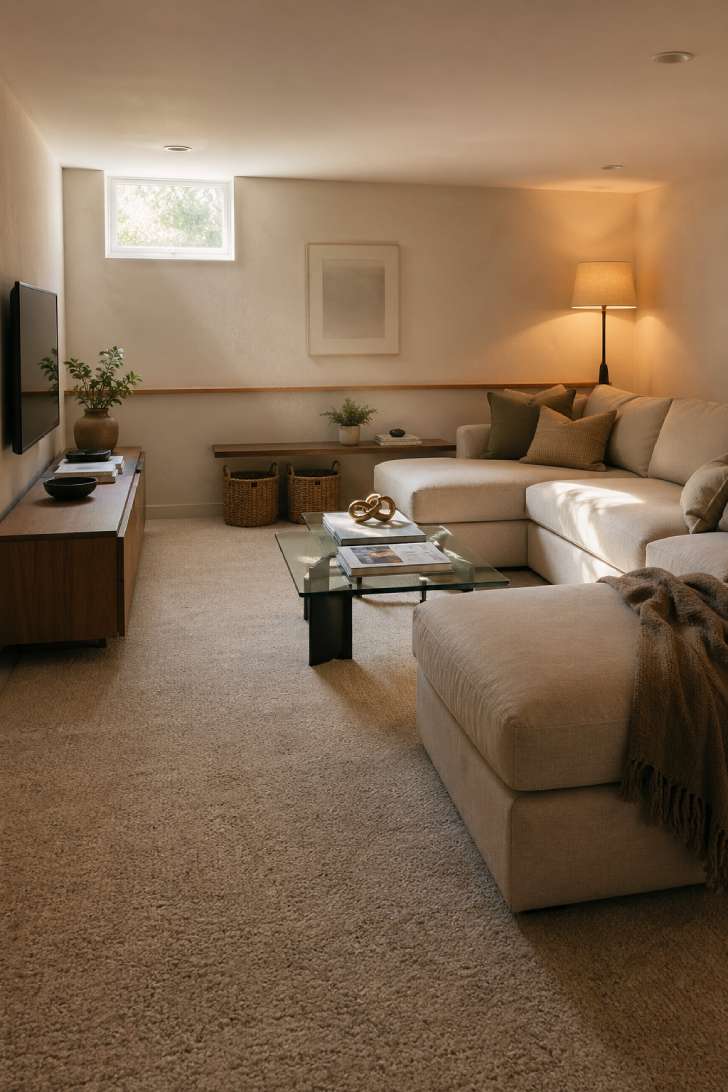
Carpet remnants provide the warmth that every basement craves, plus they’re the most budget-conscious way to cover large floor areas.
The texture and cushioning make the space feel more bedroom-like and less cold, which shifts the entire emotional experience of being down there.
Many carpet warehouses will cut, bind, and deliver remnants affordably, especially if you’re flexible on color choices.
Neutral tones—cream, warm gray, soft taupe—work across almost any design direction and hide everyday wear and dust.
Style Blueprint:
- Carpet remnant from local warehouse or closeout supplier
- Seaming tape and services (usually included)
- Area rug for layering (optional but recommended)
- Stain-resistant treatment or cleaner
Design Pro-Tip: Layer a smaller, patterned area rug on top of your carpet remnant to define furniture groupings and add visual interest without covering your investment.
Vinyl Plank Flooring
Luxury vinyl plank mimics real wood or stone while staying moisture-resistant and incredibly affordable.
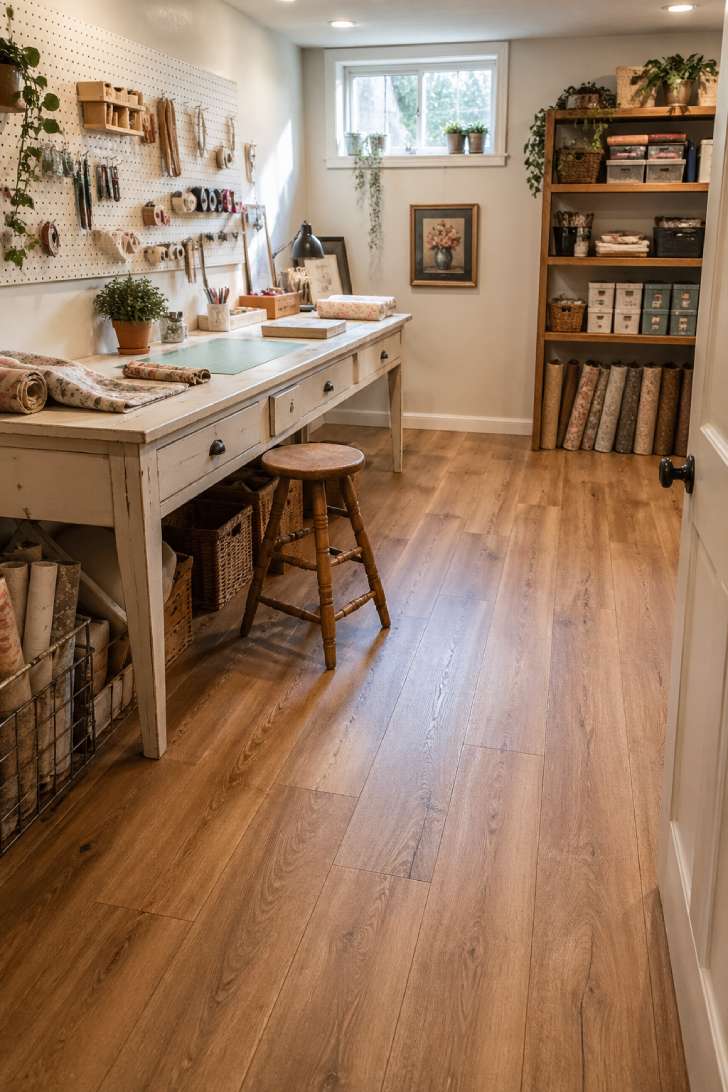
Vinyl plank flooring checks the practical boxes that basements demand: moisture resistance, durability, and easy cleaning.
But here’s what’s often overlooked—the visual warmth of wood-grain or stone-look vinyl makes the space feel more refined and intentional than raw concrete.
Unlike carpet, vinyl won’t absorb humidity or support mold growth, so it’s genuinely the smarter long-term choice for below-grade spaces.
Installation is straightforward enough for a motivated DIYer, though professional installation adds minimal cost for a perfect result.
Style Blueprint:
- Luxury vinyl plank flooring (waterproof, click-lock system)
- Underlayment rated for basements
- Basic installation tools or professional installation
- Threshold trim pieces
Layered Area Rugs
Stacking rugs in complementary sizes and textures transforms cold basement zones into intentional, designed spaces.
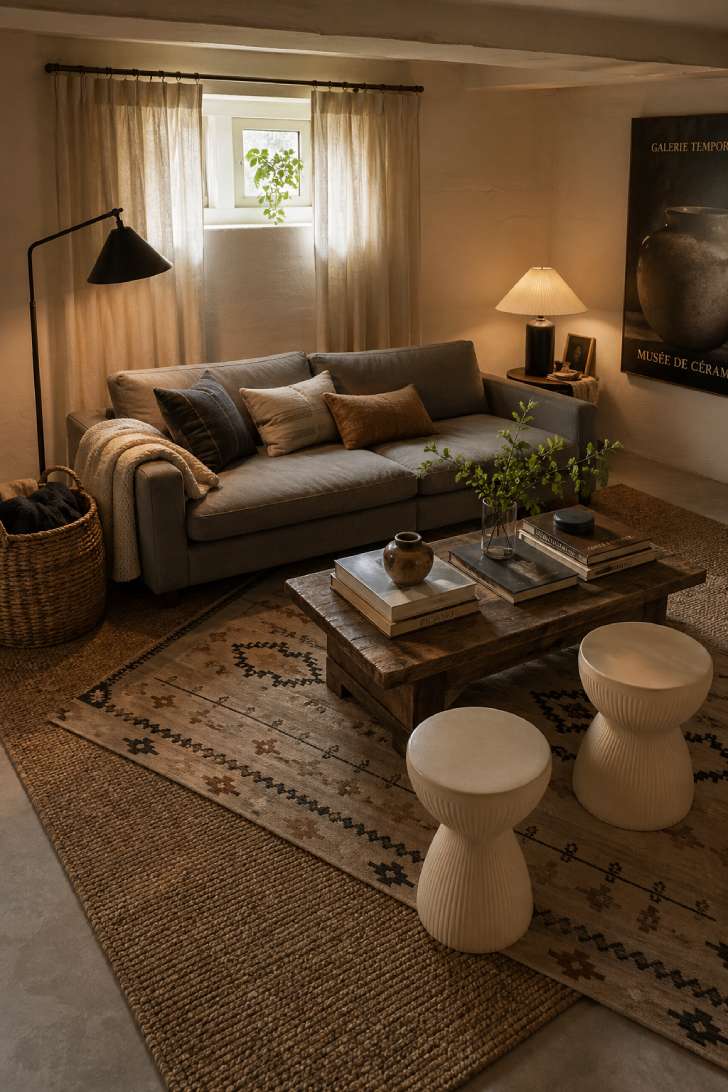
Layering rugs does something psychologically powerful: it creates visual hierarchy and signals that a zone is intentional and thoughtfully designed.
The pattern on top draws the eye to the seating area, telling visitors “this is where to gather” without requiring any verbal direction.
Different rug textures—a natural jute base under a softer wool layer—add tactile interest that makes you want to walk through the space barefoot.
This combination lets you experiment with color and pattern without committing to the entire floor, plus you can swap the top rug seasonally.
Style Blueprint:
- Large natural-fiber base rug (jute, sisal, or natural wool)
- Smaller patterned or textured top rug
- Rug pad to prevent slipping
- Complementary color or subtle pattern coordination
Design Pro-Tip: Choose one neutral base color that anchors everything—cream, warm gray, or soft taupe—then layer patterns on top. This keeps a basement feeling spacious while adding personality.
Painted Concrete Walls
Painting cinder block or concrete walls costs almost nothing and completely transforms the basement from dungeon to living space.
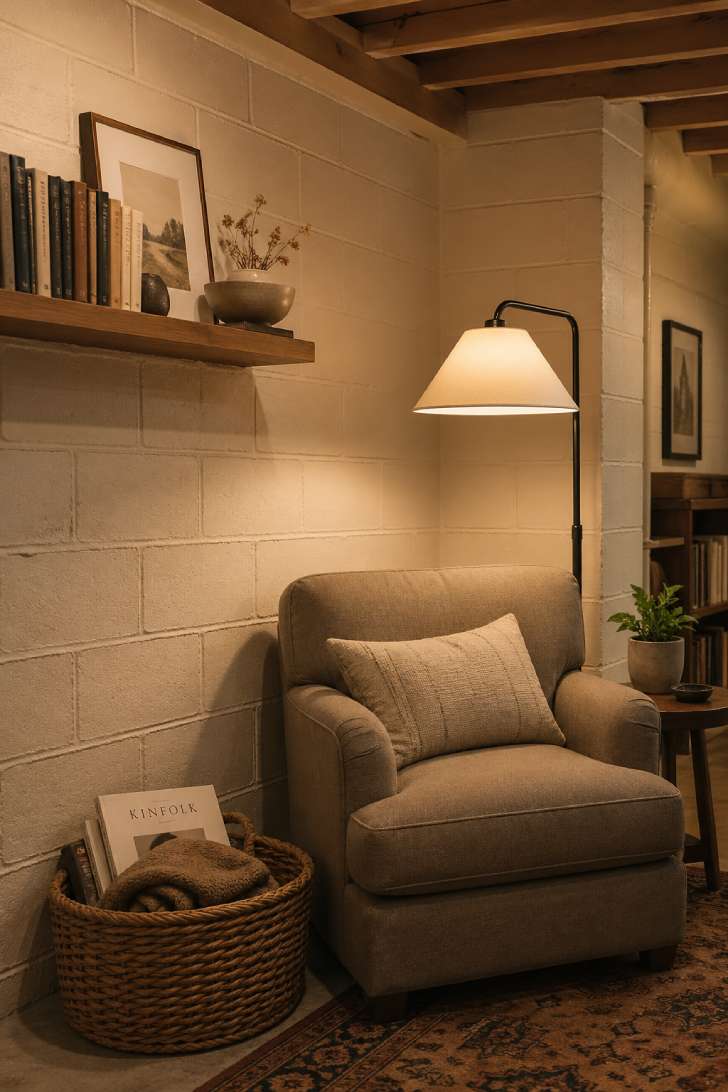
Most people don’t realize that unpainted concrete walls absorb light, which makes basements feel darker and more oppressive than they actually are.
Paint a light color and suddenly the walls reflect light around the room, making everything brighter and more open.
The shift from gray concrete to warm white or cream is often the single biggest factor in whether a basement feels livable or feels like a storage dungeon.
Semi-gloss or satin finishes work better than flat in basements because they’re more moisture-resistant and easier to wipe clean.
Style Blueprint:
- Concrete primer formulated for basement/below-grade spaces
- Quality interior paint in light, warm tone
- Paint roller and extension pole
- Moisture-sealing paint or additives for humidity control
Accent Wallpaper Wall
A single accent wall with peel-and-stick wallpaper adds personality without the commitment or installation hassle of traditional wallpaper.
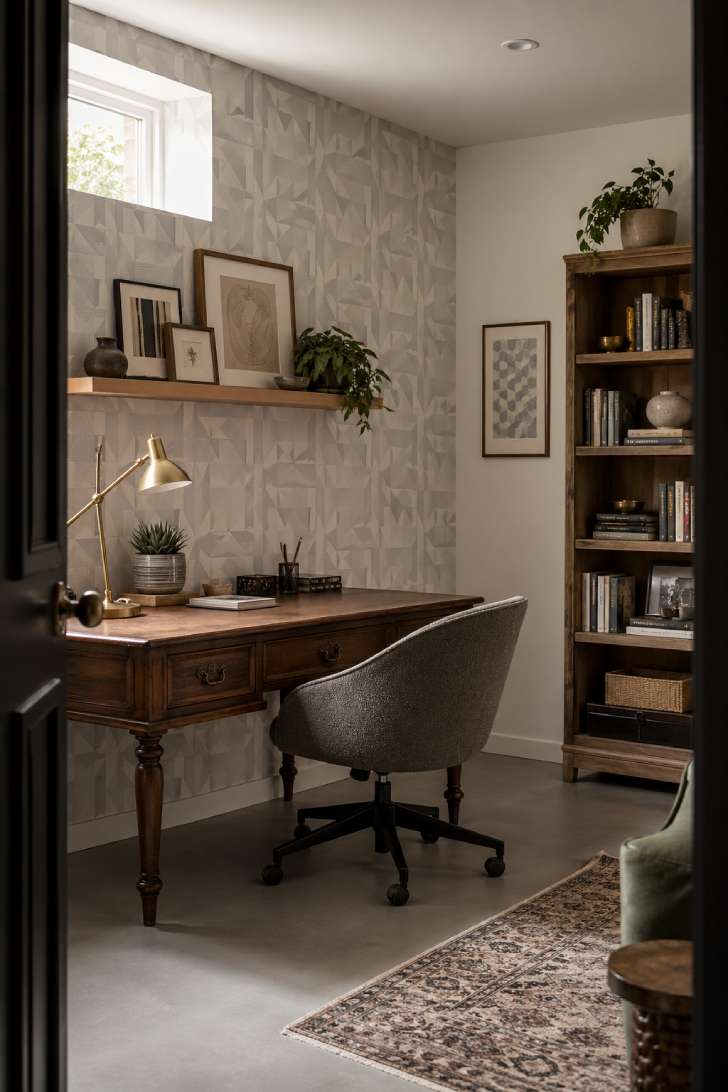
A single accent wall offers personality and visual interest without overwhelming the space or making it feel smaller.
Peel-and-stick wallpaper removes the anxiety from committing because you can change it whenever the mood strikes, yet it still registers as intentional design to the eye.
The pattern creates a focal point that draws attention and makes the room feel thoughtfully decorated rather than empty and unfinished.
Geometric or subtle botanical patterns work better than loud florals in basement spaces because they feel more sophisticated and age-resistant in terms of style.
Style Blueprint:
- Peel-and-stick wallpaper (high-quality, thick material)
- Squeegee for smooth application
- Level and measuring tape
- Optional: coordinating paint color for adjacent walls
Design Pro-Tip: Apply peel-and-stick wallpaper to the wall you see first when entering the basement—it immediately signals that this space is designed and cared for, setting the tone for everything else.
Pegboard Feature Wall
Pegboard is the unsung hero of basement storage because it’s affordable, functional, and actually visually interesting when styled correctly.
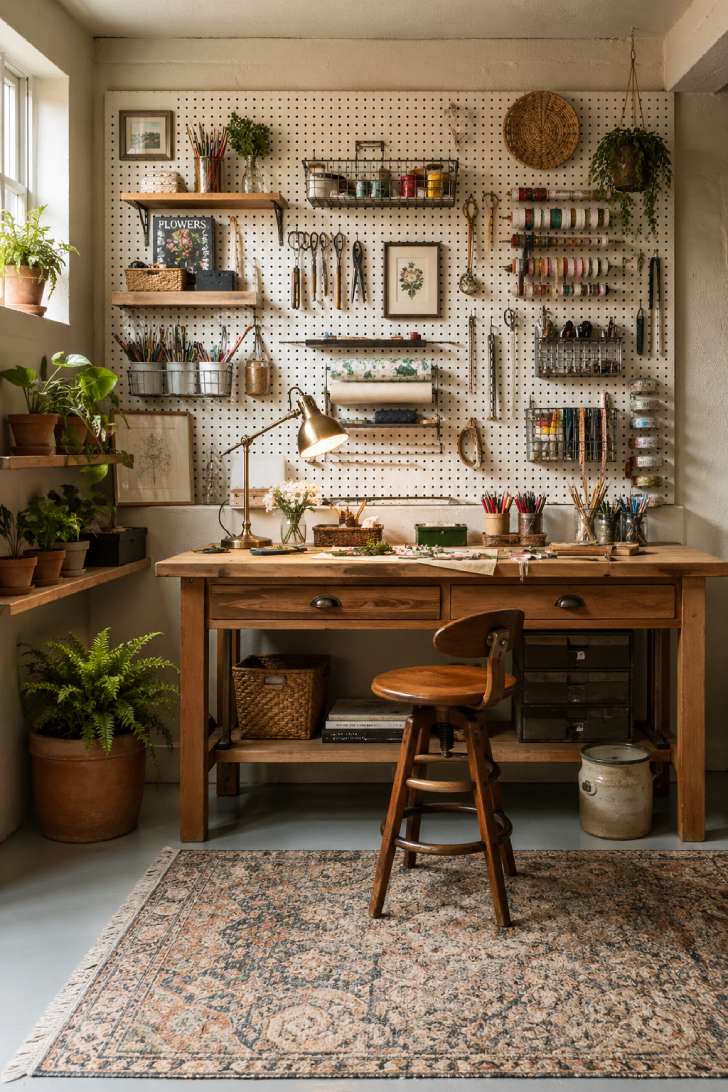
When pegboard is painted to match your walls and organized with intention, it becomes a design feature rather than a storage afterthought.
The visual rhythm of hanging objects creates movement and interest on what might otherwise be a blank wall, and seeing your tools organized and accessible makes you actually want to use them.
Unlike closed cabinets, pegboard makes it obvious what you have and where it is, which cuts down on duplicate purchases and wasted money.
You can rearrange it seasonally or as your needs change, so it’s never locked into one configuration.
Style Blueprint:
- Pegboard sheets in standard sizes
- Metal hooks, brackets, and baskets in coordinating finish
- Paint to match wall color
- Small shelves or bins for varied-sized items
Tapestry Wall Coverings
A large fabric tapestry instantly adds warmth, softness, and an artistic focal point to raw basement walls.
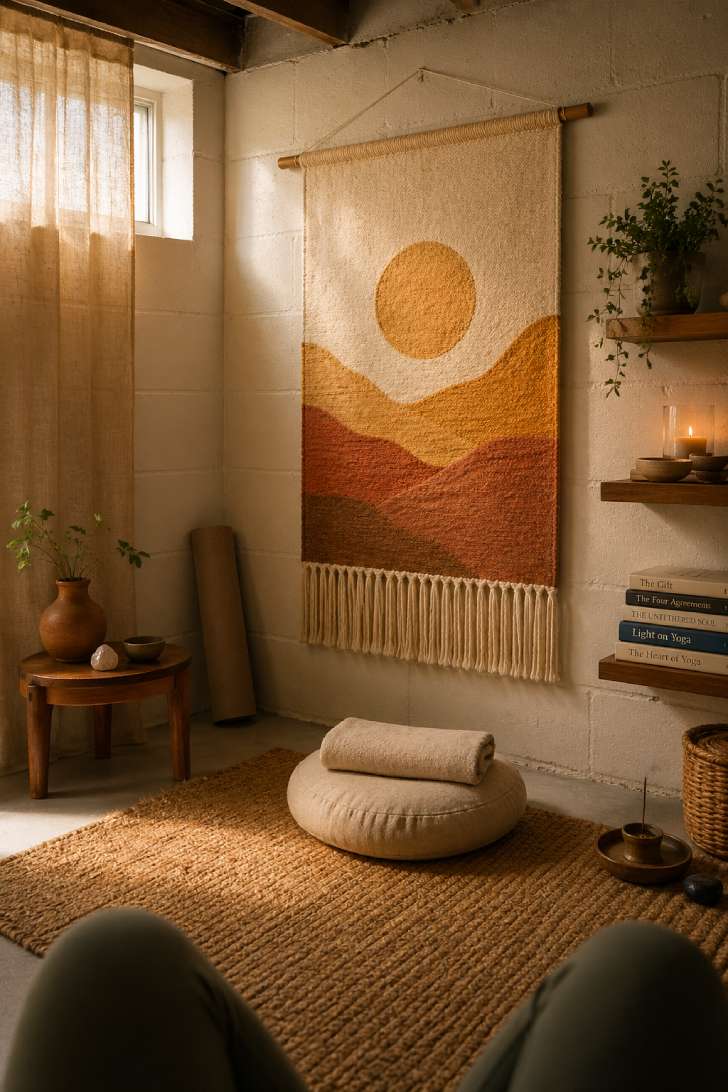
Tapestries work on a subtle psychological level: fabric makes hard concrete feel softer, and textures make a room feel inhabited and warm rather than clinical.
A large tapestry creates an instant focal point and sense of intentionality that tells your brain “someone cared about this space.”
Unlike paint, you can swap tapestries seasonally or whenever you want a change, plus they help absorb some sound and add a layer of warmth to the room.
Choose neutral or earth-tone tapestries that complement your overall color story rather than fight against it.
Style Blueprint:
- Large fabric tapestry (quality woven material)
- Wooden dowel or hanging rod
- Mounting hardware for secure installation
- Neutral or earth-tone color palette
Design Pro-Tip: Hang your tapestry at eye level as the focal point of a room zone rather than as a ceiling accent—this creates visual balance and draws attention where you want it in the space.
Black-Painted Exposed Joists
Painting exposed ceiling joists matte black (or white for brightness) transforms raw construction into an intentional architectural feature.
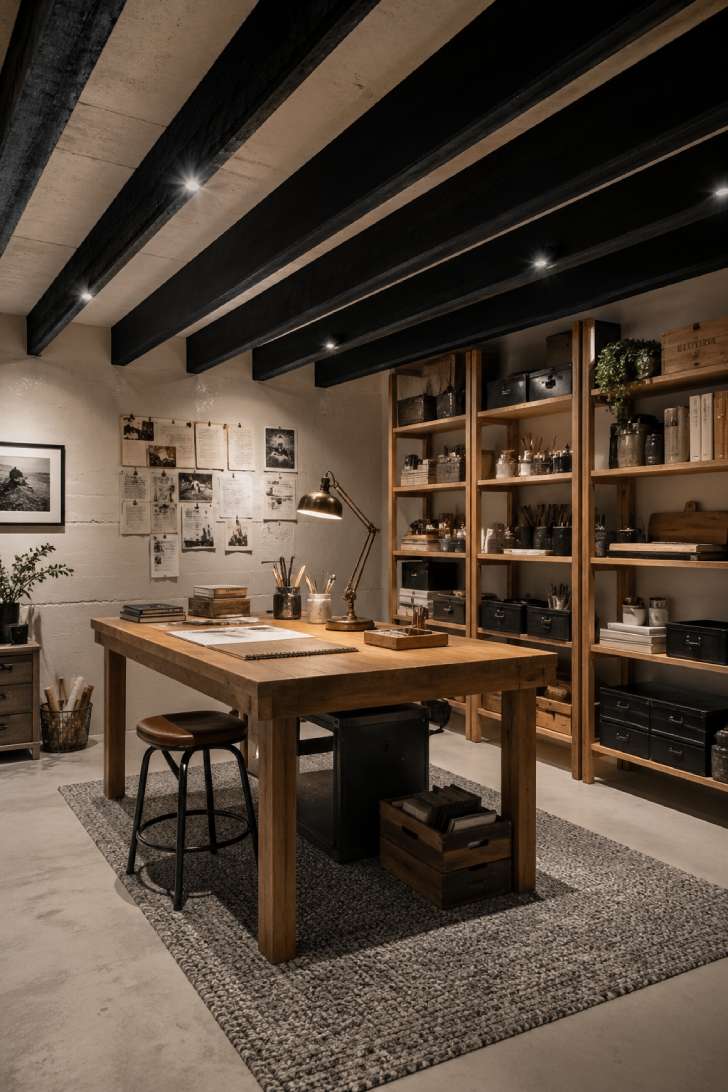
Painted joists do something extraordinary: they make raw basement ceilings look intentional rather than unfinished.
Black creates visual drama and depth, making the ceiling recede psychologically, which makes the room feel larger and more defined.
The contrast between dark joists and light ceiling creates visual lines that guide the eye through the space and create structure without requiring walls or permanent fixtures.
This trick works especially well if you’re planning to add recessed lights along the joists—the black creates a clean, intentional look rather than exposed electrical clutter.
Style Blueprint:
- Matte black (or white) exterior paint
- Paint suitable for wood/metal
- Roller and painting pole
- Drop cloths and protective gear
Fabric Ceiling Panels
Suspended fabric panels soften harsh basement ceilings while adding texture and absorbing sound for a cozier atmosphere.
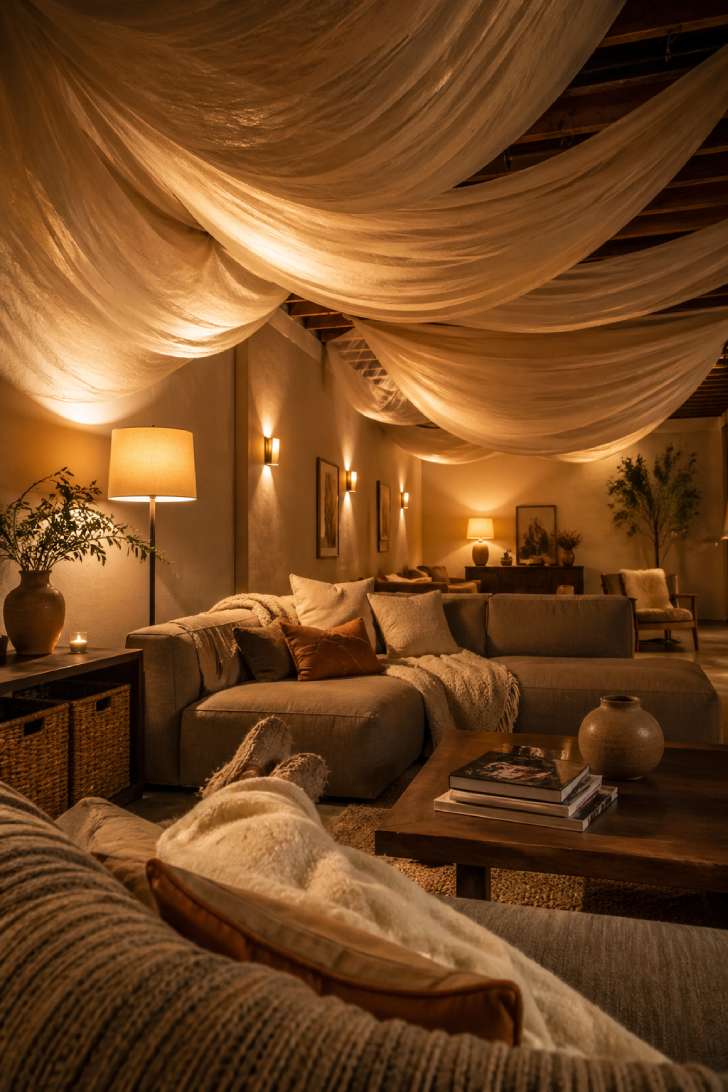
Fabric panels instantly soften the harsh, utilitarian feeling of exposed basement ceilings while adding acoustic benefits that make the space feel quieter and more intimate.
Raw concrete ceilings feel cold and institutional, but a layer of soft fabric creates a psychological shift—suddenly the space feels intentional, designed, and welcoming.
The translucent quality of light linen or cotton allows light to filter through while creating a gentle, diffused glow that’s far more flattering than harsh overhead lighting.
Installation can be as simple as tension rods and lightweight fabric or as refined as a professional suspended ceiling system—both look intentional and beautiful.
Style Blueprint:
- Lightweight fabric in cream, white, or soft neutral (linen, cotton, voile)
- Tension rods, cable, or professional suspension system
- Installation hardware appropriate to your ceiling structure
- Neutral color that complements overall room palette
LED Strip Lighting
Modern LED strips installed along baseboards, shelves, or ceiling lines provide ambient lighting that changes the entire mood and functionality of a basement.
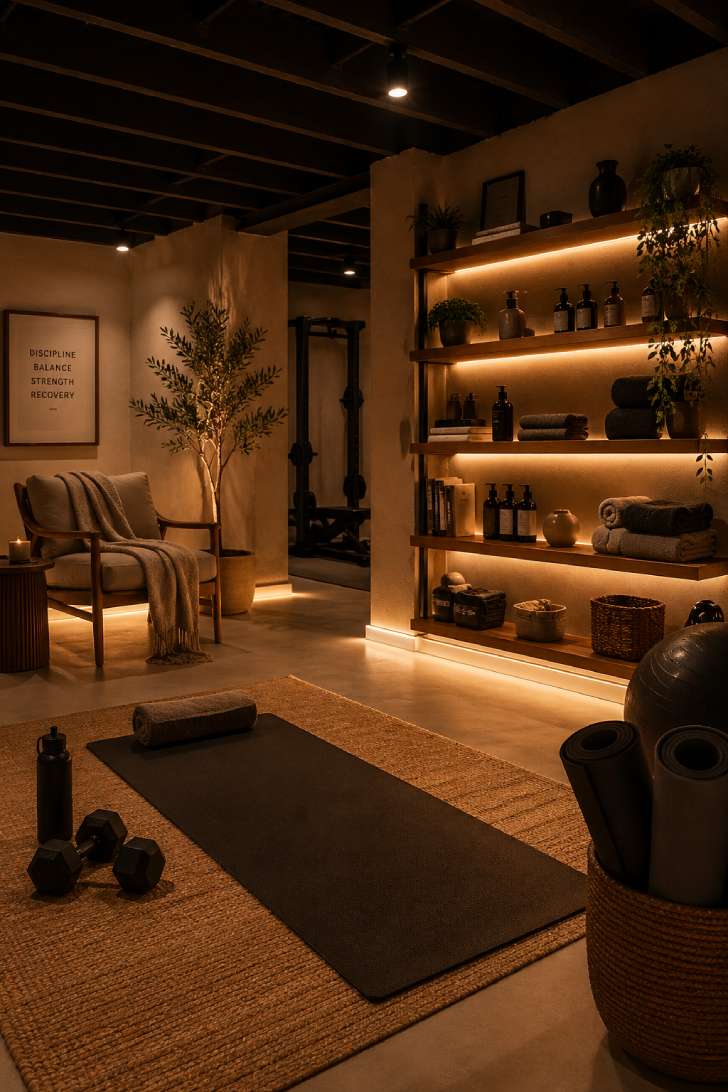
LEDs are the secret weapon of basement design because they’re affordable, flexible, and completely transform the mood of a space without major electrical work.
Warm-temperature LEDs (2700K or lower) make basements feel less clinical and more spa-like, which directly impacts whether you actually want to spend time down there.
Unlike traditional overhead lighting that washes everything in harsh fluorescent, LEDs create pools of light and shadow that add depth and visual interest.
They’re also energy-efficient and long-lasting, so the upfront cost is offset by years of low operating expense.
Style Blueprint:
- Warm LED strip lights (2700K color temperature)
- Power supply and connectors
- Installation adhesive or brackets
- Dimmer switch (optional but recommended)
Design Pro-Tip: Install LEDs along baseboards and behind floating shelves rather than overhead—the uplighting creates ambient mood while keeping task lighting separate, which gives you the flexibility to adjust brightness for different activities.
Cafe Light String Installation
Bistro-style string lights create instant atmosphere and define spaces without the expense of permanent fixtures.
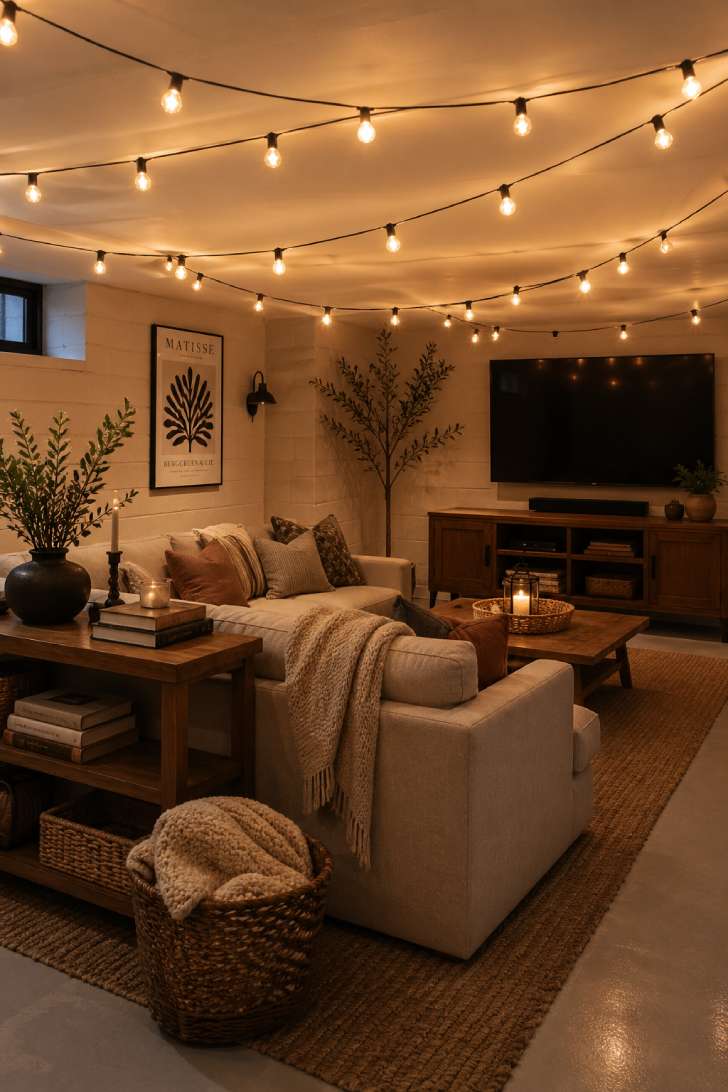
Bistro lights do more than provide illumination—they signal “this is a place to gather and enjoy” without requiring permanent electrical modifications.
The warm, diffused glow from string lights makes people linger in a space longer because the lighting feels flattering and relaxed rather than utilitarian.
Lights overhead create a sense of occasion and celebration, which makes a basement feel special rather than like a storage area you’re forced to occupy.
They’re also incredibly affordable and completely removable, so you can experiment with placement until you find what works best for your space and activities.
Style Blueprint:
- Bistro or cafe string lights with warm bulbs
- Metal hooks and anchoring hardware
- Power outlet or extension cord rated for outdoor use
- Dimmer switch (optional, for adjusting ambiance)
Strategic Lamp Placement
A thoughtful arrangement of floor and table lamps creates layered lighting that’s infinitely more flattering and functional than a single overhead fixture.
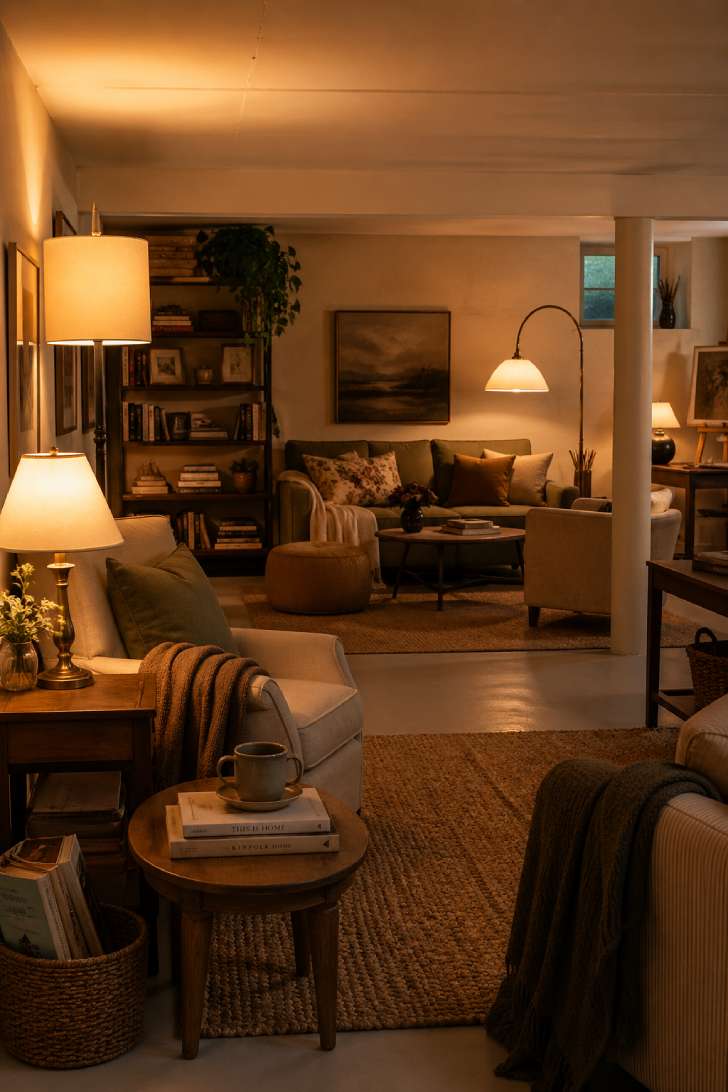
Layered lighting—using multiple smaller light sources rather than one big overhead—makes basements feel more like intentional living spaces and less like commercial spaces.
Each lamp creates its own pocket of light and warmth, which psychologically makes the room feel bigger because your eye can focus on individual zones rather than taking in the entire space at once.
Mixing floor and table lamps at different heights creates visual rhythm and draws the eye through the room in an intentional path.
Warm-bulb lamps (2700K) placed strategically make even a basement with small windows feel bright and welcoming without the harshness of fluorescent or daylight-temperature LEDs.
Style Blueprint:
- Floor lamps with adjustable height or arc function
- Table lamps in assorted heights
- Warm-temperature bulbs (2700K)
- Variety of bases and shades to coordinate with design
Design Pro-Tip: Place task lighting (bright enough to read or work by) near work areas, and reserve ambient lighting (softer, dimmer) for relaxation zones—this creates visual hierarchy and lets you adjust brightness for different activities without rewiring.
Puck Light Accents
Small, battery-powered puck lights installed under shelves or in corners provide focused accent lighting that highlights details without wiring.
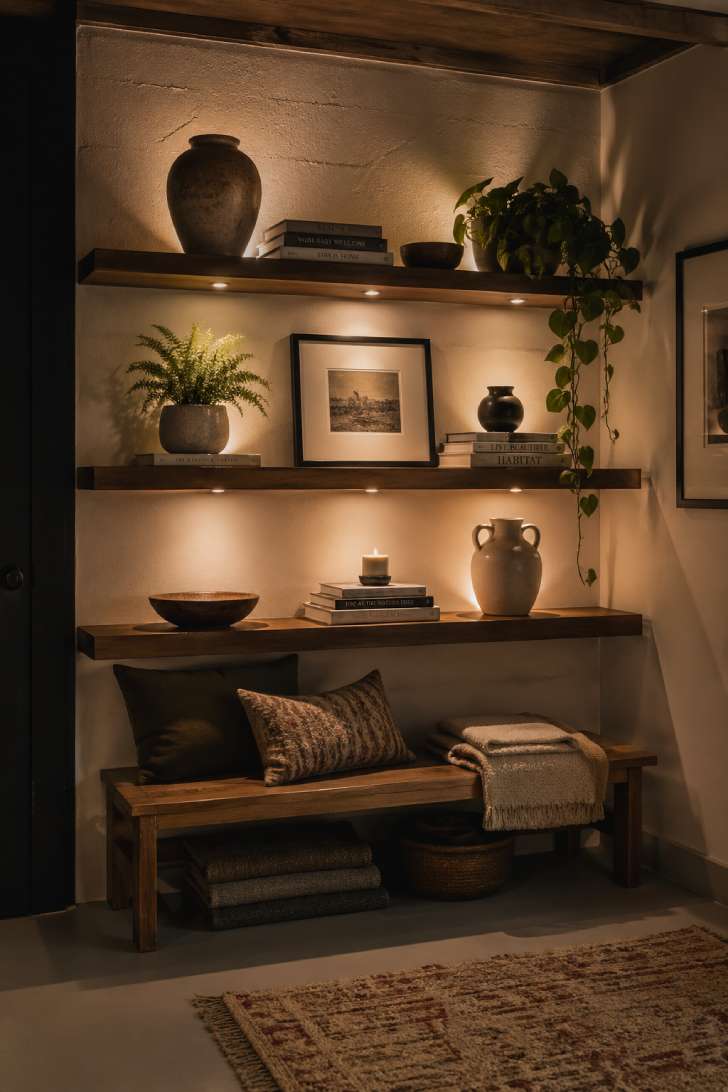
Puck lights are unsung heroes because they require zero wiring yet completely change how a space reads at night.
Installed under floating shelves or in recessed areas, they draw attention to decorative objects and architectural details that would otherwise disappear in shadow.
This kind of accent lighting creates visual hierarchy and tells viewers where to focus their attention, which makes even a small shelf display feel gallery-worthy and intentional.
Battery-powered versions are especially convenient for renters or anyone hesitant about electrical modifications, yet they deliver the same sophisticated effect as wired solutions.
Style Blueprint:
- Battery-powered LED puck lights
- Warm color temperature (2700K)
- Adhesive backing or mounting brackets
- Extra batteries for replacements
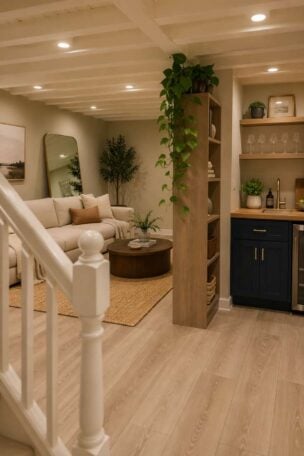
Bookshelf Dividers
Strategic furniture placement—especially tall bookcases—creates zones within an open basement without requiring walls or construction.
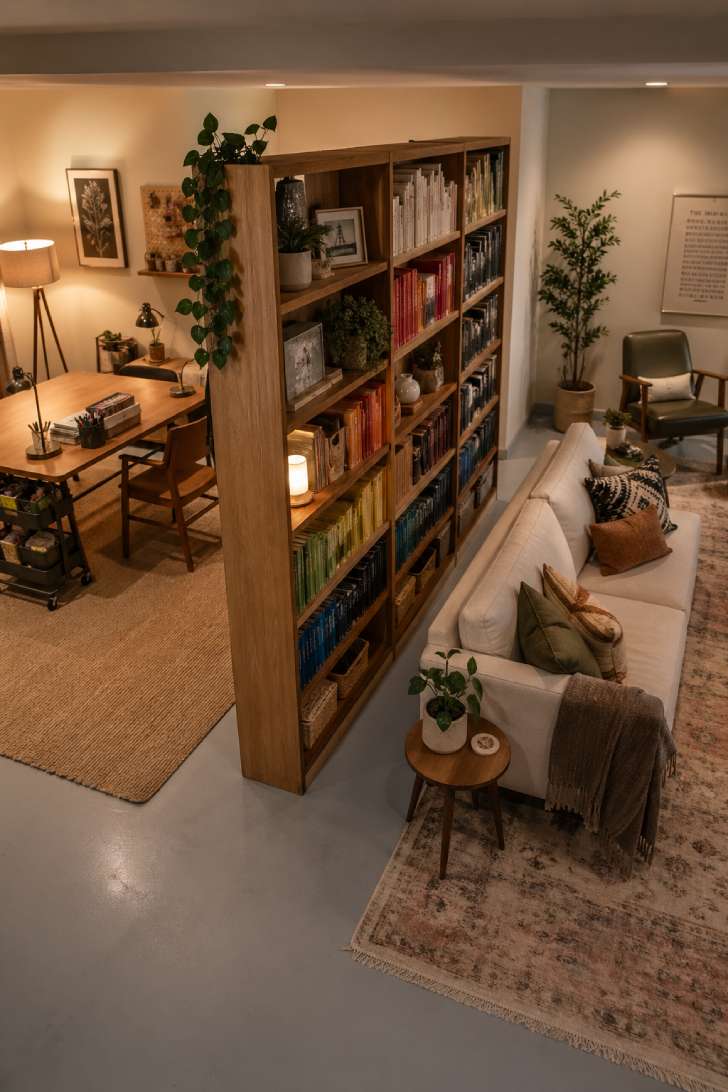
A freestanding bookcase works as a room divider because it creates a psychological boundary while maintaining sightlines and light flow through the space.
Unlike a wall, the bookcase lets you see around and through it, so the basement doesn’t feel chopped up or cramped.
This kind of soft division signals that different activities happen in different zones, which helps your brain transition between work mode and relaxation mode.
The bookcase serves double duty as storage and display, maximizing its functional value and turning a necessary divider into a design feature.
Style Blueprint:
- Tall wooden bookcase (or shelving unit) in natural or painted finish
- Books arranged by color for visual interest
- Decorative objects and plants to fill empty shelf space
- Anchoring hardware to secure unit to wall for safety
Design Pro-Tip: Arrange books on shelves by spine color to create a gradient effect—this makes the bookcase itself a focal point and adds visual sophistication without requiring expensive decor.
Curtain Privacy Walls
Lightweight fabric curtains hung from ceiling rods create flexible, removable room dividers that define zones without the commitment of walls or bookcases.
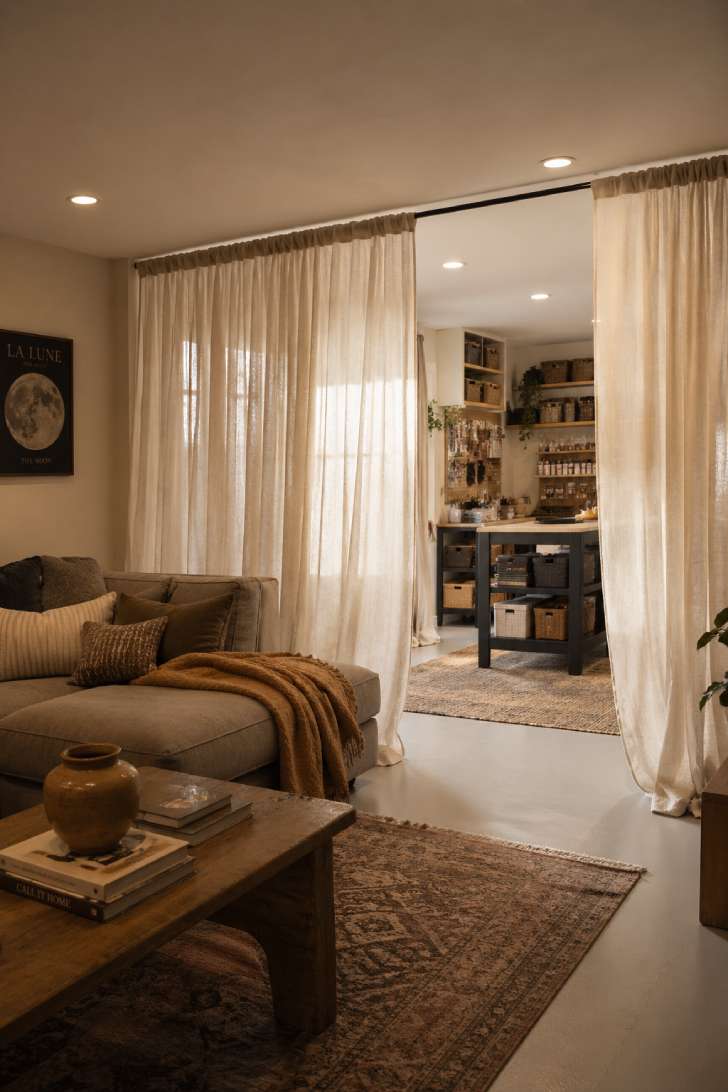
Curtain dividers offer the most flexibility of any space-division solution because you can open them for an expansive feel or close them for privacy and focus.
Semi-sheer fabrics allow light to filter through, so neither side of the curtain feels dark or cut off from the rest of the space.
The ability to open and close a divider gives you control over how you perceive and use the space, which makes it feel more adaptable to your changing needs.
Lightweight linen or cotton curtains absorb sound better than hard dividers, so they improve acoustics while creating visual separation.
Style Blueprint:
- Lightweight linen or cotton fabric in neutral tone
- Ceiling-mounted tension rods or track system
- Heading tape or rod pocket on fabric
- Installation hardware appropriate to your ceiling structure
Conclusion
Your basement doesn’t require a major renovation budget or professional contractor timeline to become something you’re proud of.
These seventeen unfinished basement ideas on a budget prove that thoughtful design and strategic investments deliver results that feel far more expensive than their actual cost.
A few gallons of quality paint, some affordable flooring solutions, and intentional lighting completely shift how your basement functions and feels.
Prioritizing visual impact—painted walls, layered lighting, and defined zones—creates the impression of a finished, designed space even when you haven’t touched the foundation or structure.
Consider your primary intended use for the space and invest first in the elements that support that activity: lighting and flooring for a gym or playroom, basement storage and organization for a craft or work area, comfortable seating and ambient lighting for a relaxation retreat.
Moisture control remains a must in any basement improvement plan, so include a dehumidifier and moisture-resistant materials in your budget, even if everything else is budget-friendly.
The beauty of starting with affordable solutions is that you can implement these basement flooring ideas, affordable wall treatments, and basement lighting solutions immediately, then expand and refine your design over time.
Start with one or two foundational improvements—painted concrete and layered lighting work especially well as a starting point—and build from there.
Your future self will thank you for reclaiming this square footage and making it both beautiful and practical.