
This post may contain affiliate links. If you make a purchase through these links, we may earn a commission at no additional cost to you.
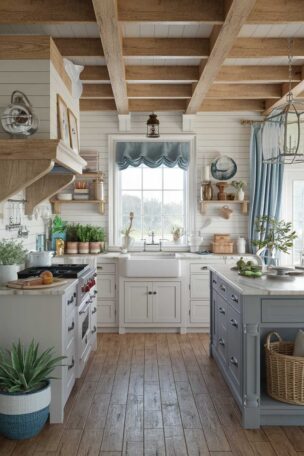
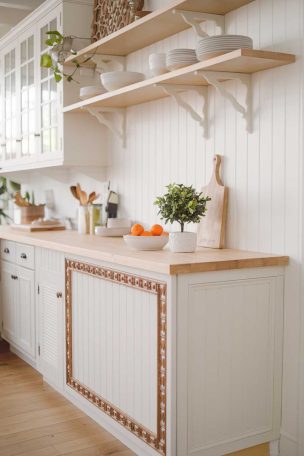
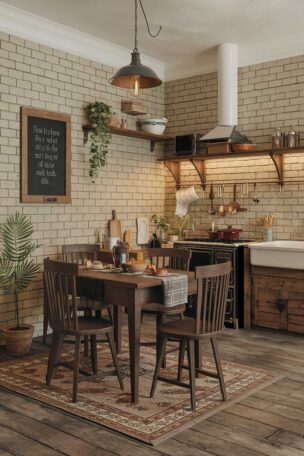
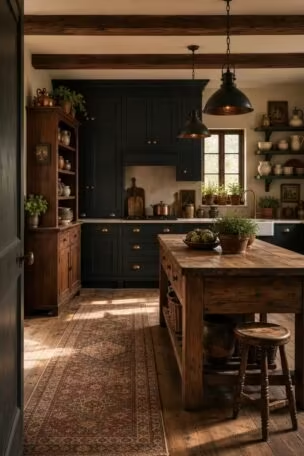
Dark-stained cabinets, hand-thrown pottery on open shelves, and the low amber glow of a pendant light over a worn butcher-block counter: that is the mood.
A moody farmhouse kitchen leans into shadow and warmth at the same time, trading the all-white trend for deeper tones that make a room feel lived-in from day one.
The ideas here cover color, materials, lighting, layout, and accessories that pull the look together without tipping into anything too heavy or dark.
Deep Blue Cabinetry with Warm Wood Countertopss
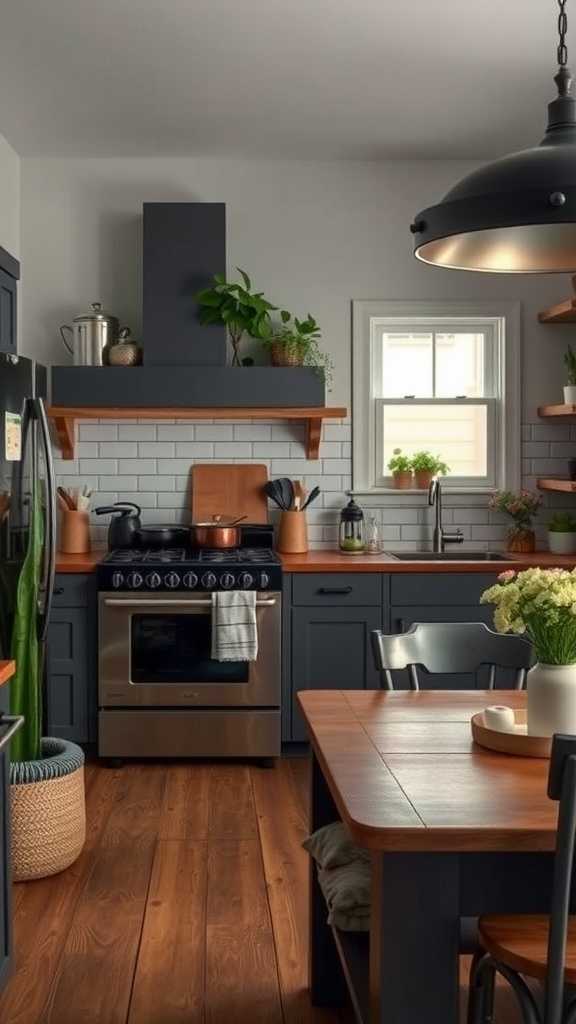
This moody farmhouse kitchen pairs deep blue cabinetry with rich wooden countertops that bring immediate warmth to the space.
The blue reads like late twilight, a shade dark enough to anchor the room but saturated enough to keep it from feeling cold.
Thick wood countertops in a honey-oak tone sit on top of those dark cabinets, and the contrast makes the grain pop.
Simple open shelving and a few potted herbs add a fresh layer of green against the blue.
Stainless steel appliances cut through the warmth with a clean, modern edge that keeps the room from leaning too rustic.
Warm wood and deep paint work best when they share the same intensity, so neither one drowns out the other.
A cup of coffee in this kind of space just hits differently on a slow Saturday morning.
Vintage Chairs and a Round Wooden Breakfast Table
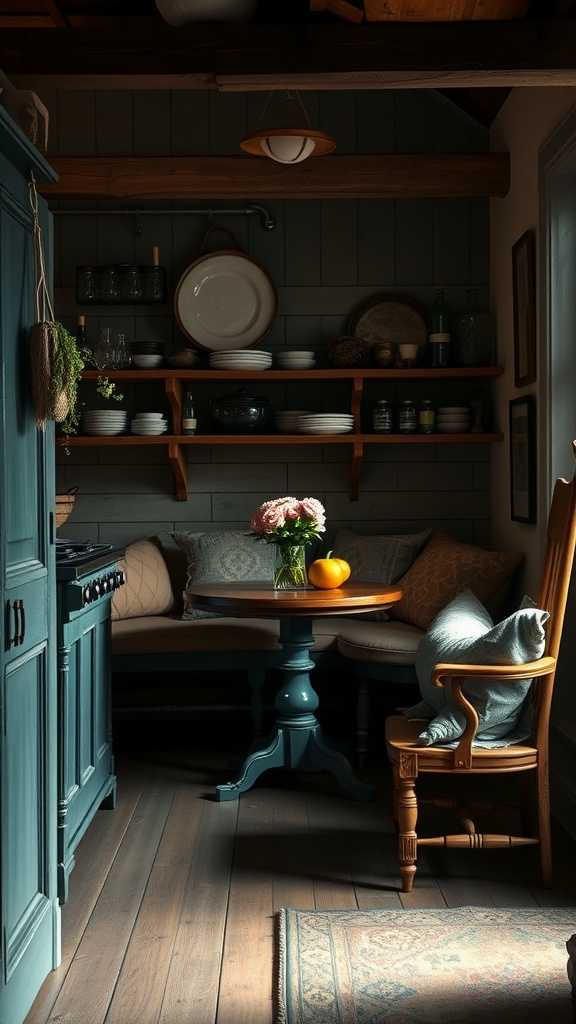
This cozy breakfast nook proves that a moody kitchen can extend beyond the countertops.
A small round table in worn oak and a pair of vintage spindle-back chairs create an inviting corner for morning meals or a quiet read.
Natural light pours through the window, softening the darker tones of the surrounding cabinetry.
Potted plants on the sill and a draped linen cloth add texture without clutter.
Soft cushions on the chairs invite you to sit a little longer than you planned.
Every piece in this nook looks collected over time rather than bought in one trip, and that layered history is what gives a moody kitchen its soul.
Rough-Hewn Ceiling Beams and Open Pine Shelving
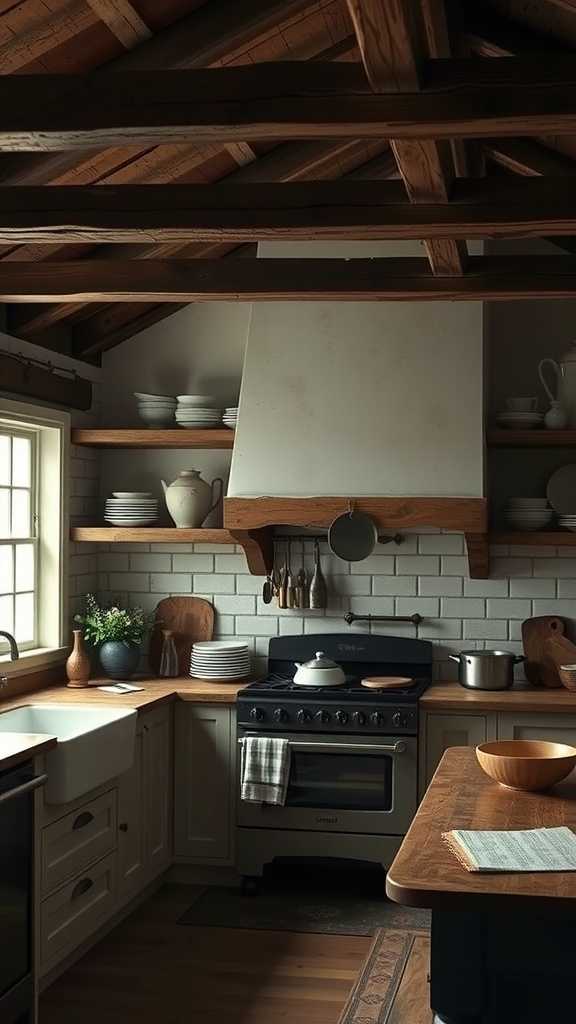
Exposed wooden beams overhead do more for a moody farmhouse kitchen than almost any other single element.
The rough-hewn timbers in this kitchen have a hand-scraped texture you can almost feel from across the room.
Open pine shelves line one wall, stacked with stoneware bowls, copper measuring cups, and a few mismatched ceramic pitchers.
Dark wood and soft ceramic tones play off each other, giving the room a layered depth that painted cabinets alone would never achieve.
Everything on those shelves is within arm’s reach, which means the display does double duty as storage.
Cooking in a kitchen like this feels grounded, a bit slower, and that is part of the appeal.
Black Iron Pendant Lights over a Dark Countertop
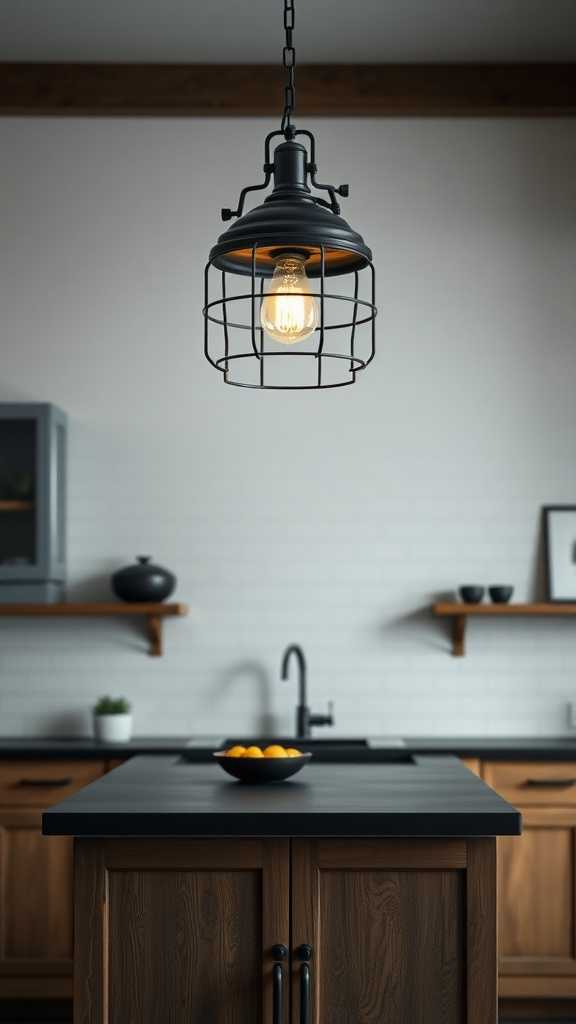
The right light fixture can shift the entire mood of a kitchen.
In this space, a black iron pendant with an exposed Edison bulb hangs above a charcoal-toned countertop, casting a warm, low glow.
The cage-style frame throws small shadows across the ceiling, adding a hint of industrial grit to the farmhouse setting.
Warm cabinetry in a medium walnut stain surrounds the pendant, and the mix of black metal with natural wood strikes a comfortable middle ground between modern and traditional.
Fixtures like this one work well over islands, dining nooks, or anywhere you want a pool of warm light instead of overhead glare.
Choosing a bulb with a low color temperature, around 2200K, keeps the amber tone that this style of kitchen demands.
A single statement pendant often does more than a row of recessed cans ever could.
Stacked Stone Walls with Reclaimed Wood Cabinets
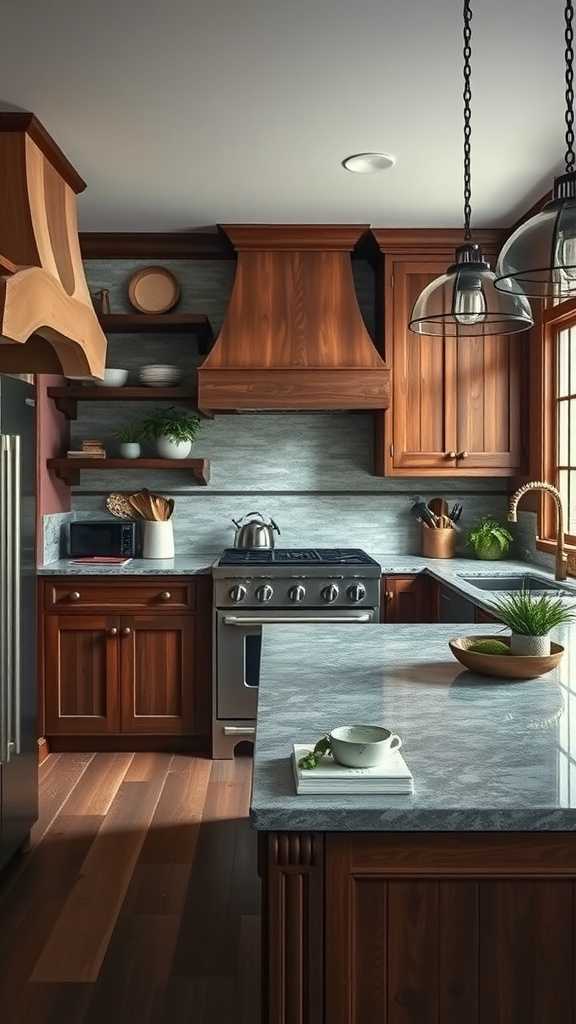
Stone and wood together create a texture combination that no single material can match.
Light limestone walls in this kitchen contrast with deep-toned reclaimed wood cabinets that still carry the marks of their previous life.
The earthy palette moves from cool gray stone to warm chestnut wood, and the shift feels natural rather than forced.
Matte black cabinet pulls and a simple iron pot rack add small details that tie the two materials together.
Running your hand along the stone and then the wood, you would feel entirely different surfaces that somehow belong in the same room.
This kind of material pairing works for anyone who wants a kitchen that feels rooted and permanent.
A countertop in honed soapstone or oiled slate would complete the palette without introducing a competing finish.
Apron-Front Porcelain Sink with an Antique Bronze Faucet
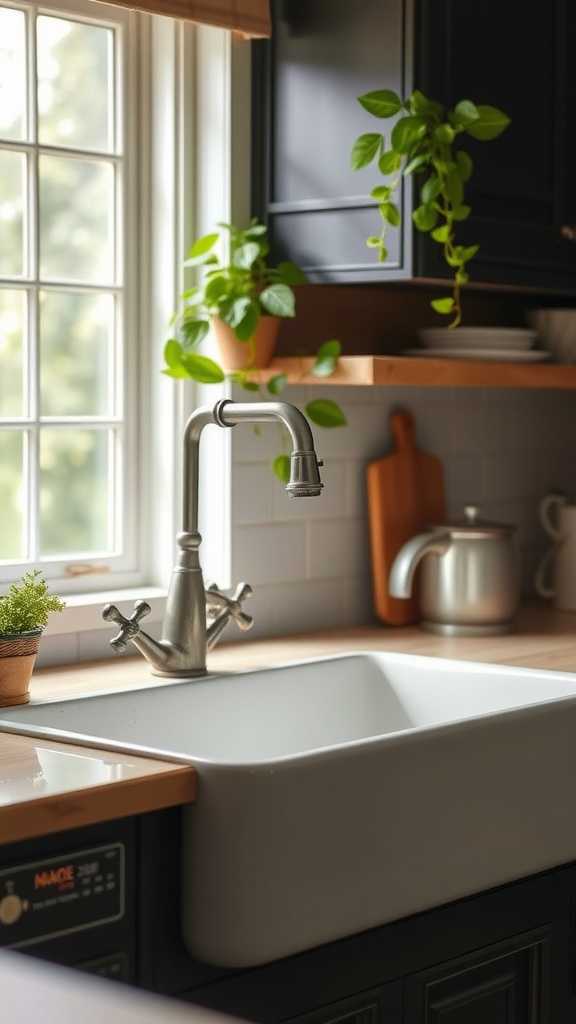
A deep apron-front sink in white porcelain becomes the workhorse of a moody farmhouse kitchen, and it looks good doing it.
The generous basin handles oversized stockpots, sheet pans, and the inevitable pile of Sunday-dinner dishes.
An antique bronze gooseneck faucet arches above the sink, its aged patina matching the warm tones in the surrounding wood.
A sprig of eucalyptus in a mason jar and a linen hand towel draped over the edge are all the styling this corner needs.
The contrast between the bright white basin and the dark cabinet below creates a focal point that draws the eye as soon as you walk in.
Vintage-style hardware like this faucet gives a kitchen character that modern pull-down sprayers simply do not replicate.
Swapping out a standard sink for an apron-front model is one of the highest-impact changes you can make for the cost.
Open-Concept Layout with Exposed Ceiling Beams
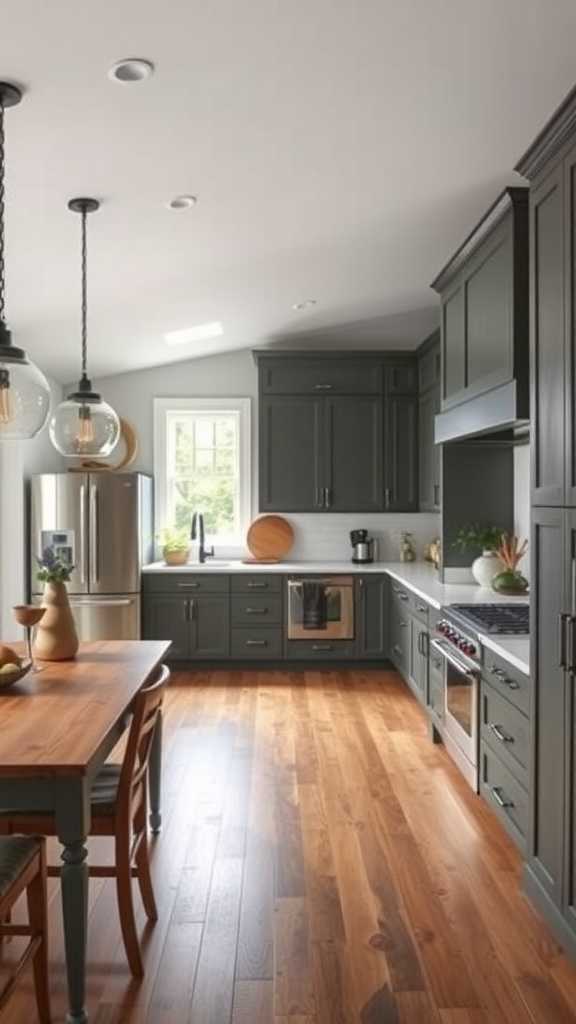
An open floor plan lets a darker kitchen breathe.
High ceilings with exposed timber beams stretch the room upward, and large windows on two walls flood the space with natural light that tempers the darker paint tones.
A large center island in white with a butcher-block top anchors the room, giving you prep space, seating, and a natural gathering point all in one piece.
White shaker cabinets line the perimeter and keep the edges bright, and the wood accents on the beams, countertop, and bar stools tie everything to the farmhouse roots.
A fruit bowl and a few potted succulents on the island add color without turning the surface into a display case.
This layout proves that dark, cozy kitchens can still feel expansive when the ceiling height and window placement work in their favor.
Modern appliances, including a stainless range and French-door refrigerator, tuck in without fighting the rustic surroundings.
Sliding barn doors or a wide cased opening between the kitchen and living area would push the open-concept feel even further.
Shiplap-Clad Range Hood with a Wooden Shelf
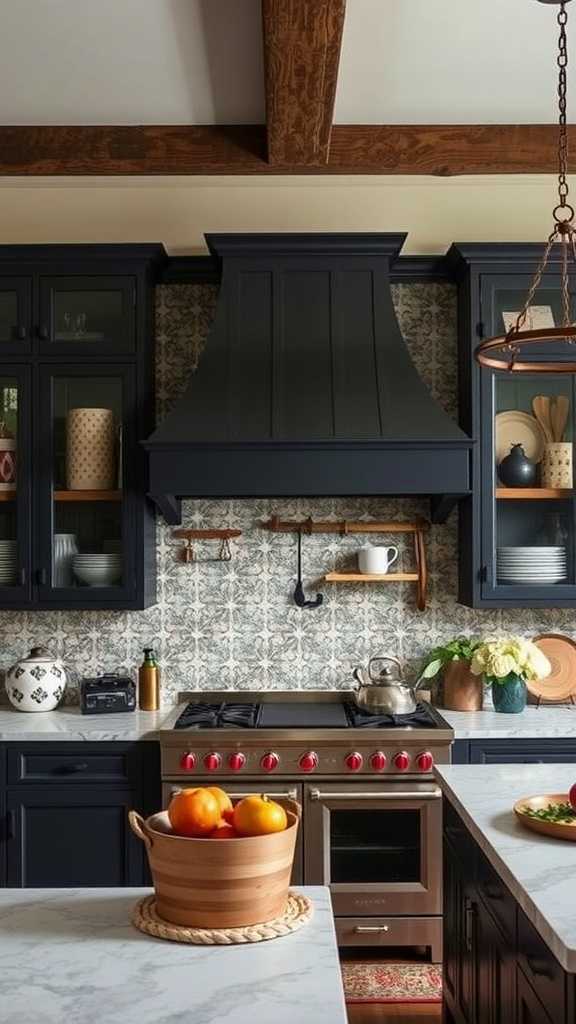
Range hoods are one of the most underused design opportunities in a kitchen.
This farmhouse kitchen wraps its hood in warm-toned shiplap that picks up the color of the hardwood floors, turning a purely functional element into a centerpiece.
A narrow wooden shelf just below the hood holds a small herb pot and a few everyday spice jars, keeping them within reach of the stovetop.
Flanking the hood, a wall-mounted clock and a dried-flower wreath add personal touches that soften the hard lines of the range and cabinetry.
Dark lower cabinets paired with the lighter hood create a top-heavy balance that lifts the eye upward.
That upward pull is what separates a well-composed moody kitchen from one that just feels dim.
Dark-Toned Dining Table Integrated into the Kitchen
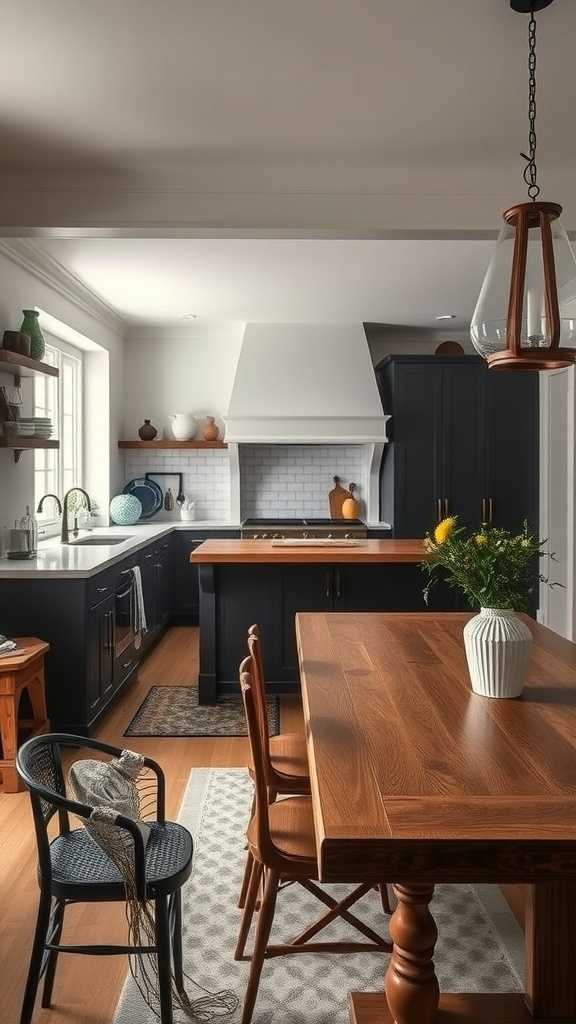
Bringing a full dining table into the kitchen, rather than separating it into another room, changes how the whole space is used.
Here, a long farmhouse table in a deep walnut stain sits just steps from the stove, flanked by black windsor chairs that echo the iron chandelier overhead.
Dark shaker cabinets in the background and light gray walls in the foreground give the room a tonal gradient from dark to light.
Large windows on one side keep the dark furniture from absorbing too much light, and the black accents against the pale walls read as deliberate rather than heavy.
A wall clock, a small potted fern, and a ceramic vase on the table are enough to make the space feel personal.
Having dinner where you cooked it shortens the distance between stove and table, and that closeness is what makes family meals feel relaxed.
The layout encourages lingering, which is exactly what a moody kitchen should do.
Checked Linen Curtains and a Woven Persian-Style Rug
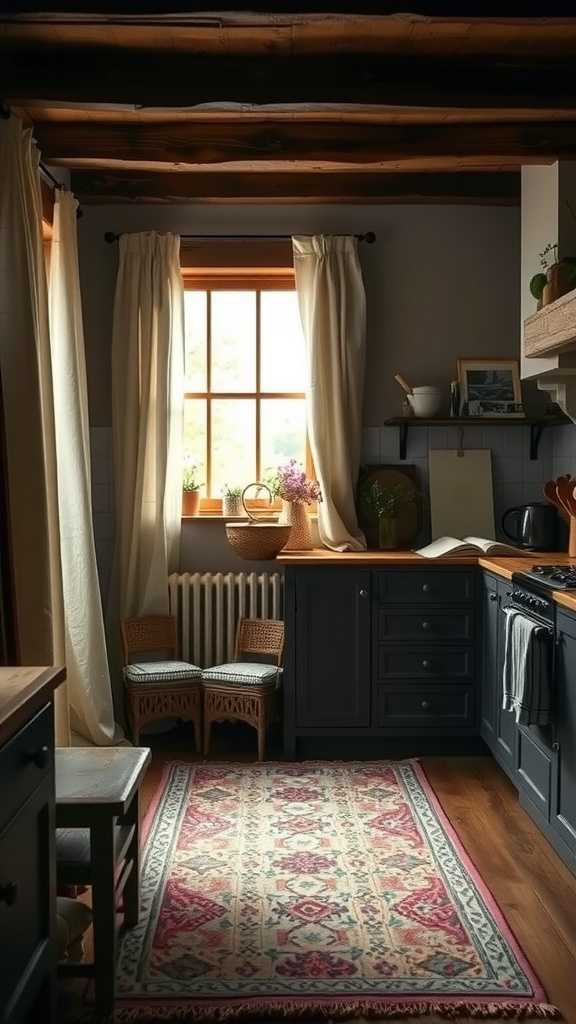
Textiles are the fastest way to layer warmth into a moody farmhouse kitchen.
In this space, soft checked curtains in cream and sage filter the light and add a pattern that feels handmade.
A richly patterned Persian-style runner in burgundy and navy anchors the floor in front of the sink, introducing color that the cabinets and walls do not provide.
The rug’s fringe and the curtain’s weave give the room a tactile quality that hard surfaces, stone, wood, metal, cannot achieve on their own.
Layering a flat-weave runner under a thicker wool rug in front of the stove would push the comfort even further.
Mixing patterns works here since the scale is different: small checks on the window, larger motifs on the floor.
Botanical-Print Wallpaper with Neutral Color Cabinetry
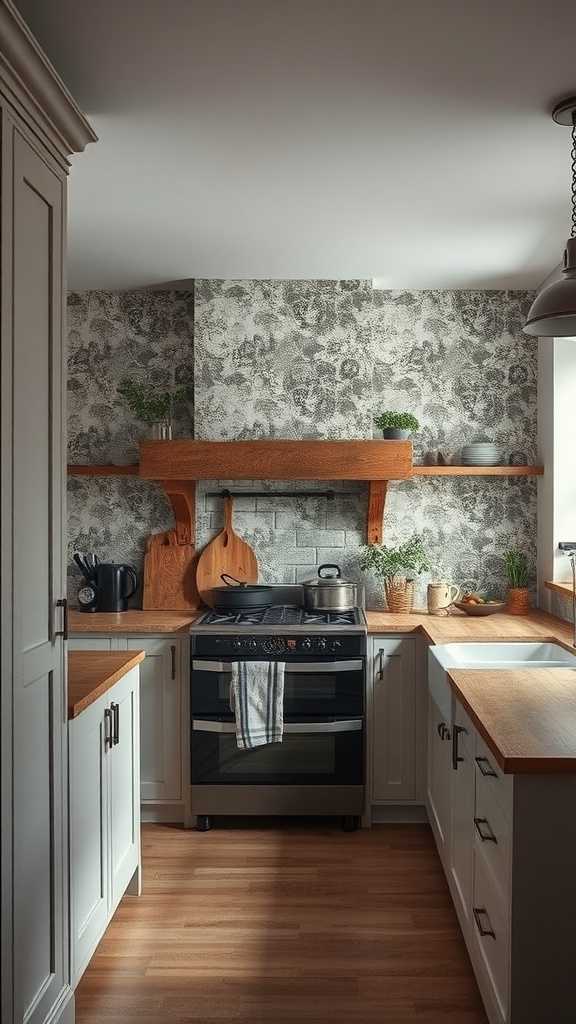
Textured or printed wallpaper turns a plain kitchen wall into something you actually want to look at.
A subtle botanical print in muted greens and tans covers the upper portion of this kitchen, giving it a garden-room quality that complements the moody farmhouse palette.
Pale sage lower cabinets sit below the wallpaper and pull one of its softer tones forward.
Warm wooden shelves and a turned-leg stool break up the green with contrasting honey-toned wood.
A trailing pothos on the top shelf and a stack of linen tea towels on the counter bring the botanical theme into three dimensions.
The balance between the printed wall and the solid cabinet fronts keeps the room from feeling overly busy.
Peel-and-stick options make this kind of accent wall low-commitment if you want to test the look before committing to paste.
Wallpaper in a kitchen works best on a wall away from the stove, where heat and grease are less of a concern.
Copper Pots and Cast-Iron Skillets on Open Display Shelves
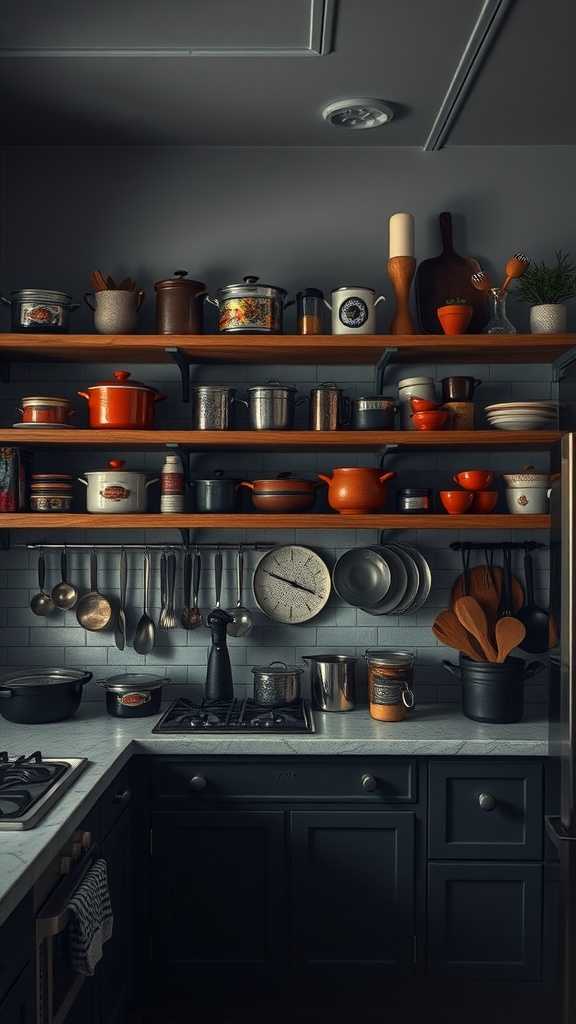
Everyday cookware becomes art when you arrange it intentionally on open shelves.
In this kitchen, a pair of orange enameled Dutch ovens sits next to a stack of hand-thrown bowls, and a row of cast-iron skillets hangs from iron hooks below the shelf.
The dark, muted wall behind the shelves makes the warm copper and enamel tones jump forward.
Vintage containers, a wooden clock, and a few ceramic crocks fill the gaps without overcrowding.
Each piece looks as though it has been used hundreds of times, and that sense of daily life is what gives the display its warmth.
Hanging utensils from a wrought-iron rail below the shelves keeps wooden spoons and ladles accessible at arm’s length.
The trick is leaving a little breathing room between objects so the eye can rest.
Terracotta Herb Pots on a Sunny Kitchen Windowsill
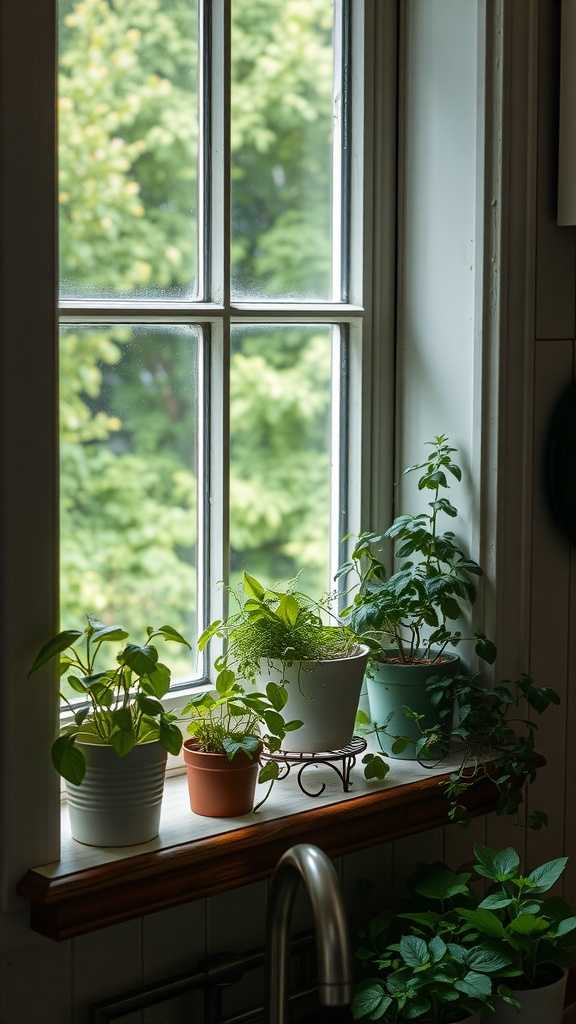
Fresh herbs on the windowsill bring living green into a moody farmhouse kitchen and put flavor within arm’s reach of the cutting board.
A row of terracotta pots, each holding basil, flat-leaf parsley, or mint, lines the sill where morning sun hits first.
The warm clay color of the pots picks up the amber tones in the surrounding wood and softens the darker cabinet hues nearby.
Snipping a few leaves straight from the plant and dropping them into a pan of butter is one of those small pleasures that makes cooking feel less like a task.
Terracotta breathes better than glazed ceramic, which helps prevent root rot in a kitchen that can run warm near the stove.
Grouping the pots in a low wooden tray keeps water from dripping onto the sill and makes the arrangement easy to move for cleaning.
A small chalkboard label pushed into the soil of each pot adds a charming, low-effort finishing touch
Woven Baskets, Cutting Boards, and Linen Towels as Decor
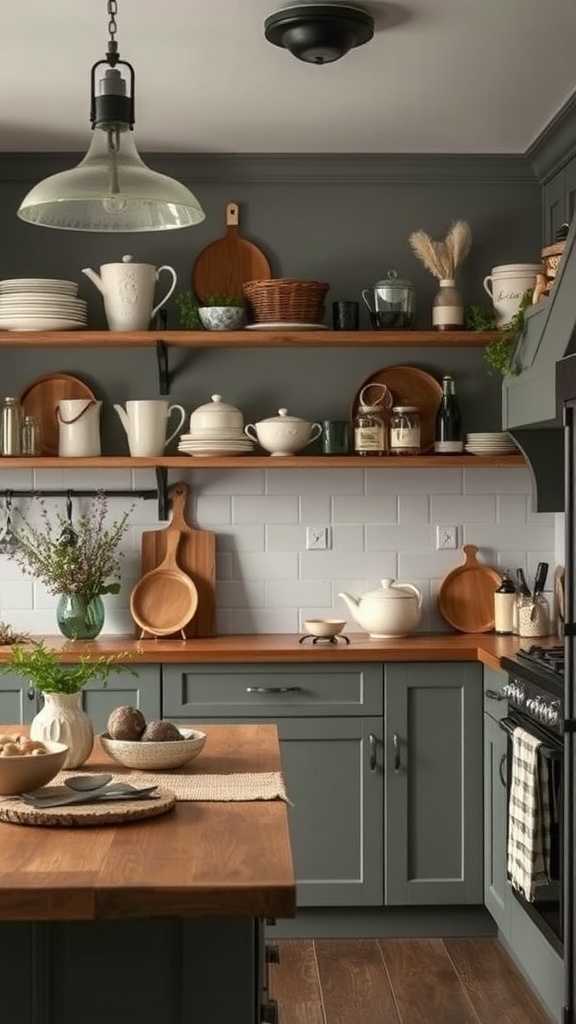
A moody farmhouse kitchen looks its best when the accessories are things you actually use.
Thick maple cutting boards leaned against the backsplash, a woven seagrass basket holding cloth napkins, and a stack of striped linen towels: this is decor that works.
Framed botanical artwork and a small analog clock on the wall add personality without turning the counter into a museum.
A single black pendant fixture overhead introduces a modern note that plays well against all the natural fiber and wood tones.
Patterned dish towels draped from a hook and a clay bowl of lemons on the counter bring quiet color into the neutral palette.
Every item in this kitchen earns its spot by being useful, beautiful, or ideally a mix of the two.
That dual-purpose approach keeps surfaces from feeling cluttered and makes the room easy to maintain day to day.
Navy Kitchen Island with Butcher-Block Top and Open Shelving
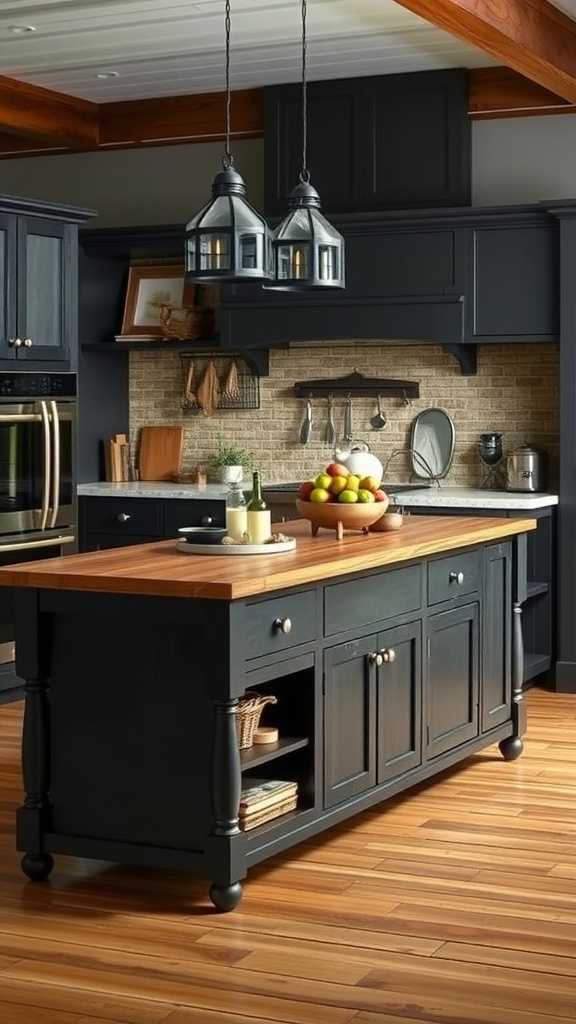
A well-built island can change the way a kitchen functions, and in this moody farmhouse kitchen, the island is the clear anchor.
Finished in deep navy with a thick butcher-block countertop, it provides prep space, display shelving, and cabinet storage in one piece.
The navy reads darker than the surrounding lighter cabinetry, giving the island visual weight that holds the center of the room.
Two weathered iron pendant lights hang above at just the right height to light the countertop without blocking the sightline across the room.
Open cubbies on one end of the island hold ceramic bowls and a small stack of cookbooks, blending storage with display.
A practical island like this earns its footprint many times over.
The wood countertop can be oiled every few months with mineral oil and beeswax to keep the grain rich and the surface protected.
Conclusion
A moody farmhouse kitchen is really just a kitchen that chooses warmth over brightness, character over polish.
Dark paint, raw wood, vintage hardware, and layered textiles do most of the work, and none of those elements require a full renovation to introduce.
Start with the piece that excites you most, a deep-toned island, a set of copper pots on a new shelf, a runner with real color, and let the rest of the room respond over time.
The kitchens that feel the best are the ones that were built slowly, one considered choice at a time.