This post may contain affiliate links. If you make a purchase through these links, we may earn a commission at no additional cost to you.
A countertop crowded with half-used bottles rarely reflects how anyone actually lives.
The problem is not a lack of discipline but a lack of assigned places.
The remedy starts with an honest question: which items touch your hands on an ordinary morning?
Everything else needs a home that is not the primary surface.
What follows is a practical look at how frequency of use, internal drawer systems, and deliberate containment work together, so the surface stays clear without turning the morning routine into a scavenger hunt.
The Design Logic Behind a Clear Vanity Surface
Organized storage ranks among the features homeowners value most in a renewed bathroom.
The 2026 Houzz Bathroom Trends Study found that 67% of renovating homeowners describe organized storage as one of the most relaxing features of their updated space.
That finding points to a useful design principle rather than a decorating trend.
A clear surface is not an empty surface.
It is a surface where every object has earned its place by being used almost daily.
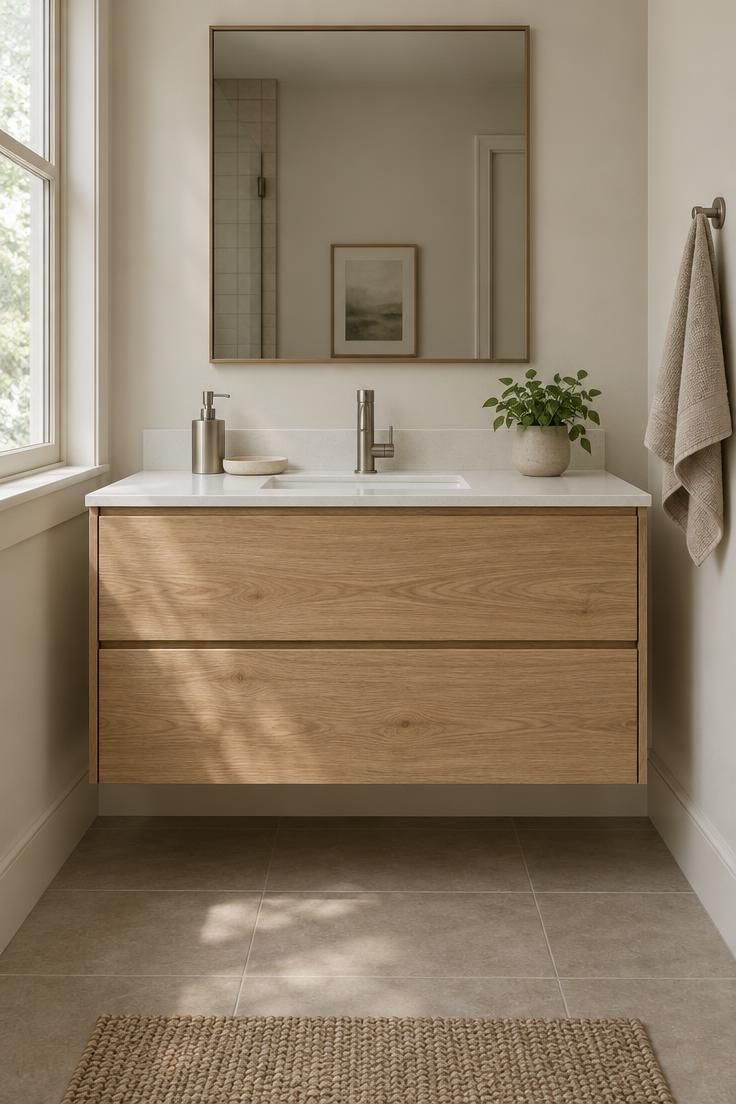
Hand soap, a toothbrush, one moisturizer or serum, and perhaps a small tray to gather them are typical candidates.
Backups, travel sizes, occasional makeup, hair tools, medicines, and bulk toiletries rarely qualify.
Frequency of use becomes the sorting tool that makes this workable.
Picture three tiers.
Daily items live on the counter or in the top drawer.
Weekly items belong in an easily reached drawer or cabinet.
Occasional items move to a lower cabinet, a closet, or a labeled bin.
Assigning each category a location prevents the under-sink cabinet from absorbing everything that has no other home, which is how most vanity clutter begins, and this simple grouping habit is the core of minimalist vanity organization.
The same principle scales differently across households.
A single-person vanity can afford a generous top drawer for skincare and dental items.
A shared vanity needs that same drawer divided by person or by task, because two morning routines passing through one shallow space will overlap without a clear boundary.
A surface kept clear is the visible result of decisions made inside the cabinet and drawers.
The next sections examine those decisions one zone at a time.
Drawer Dividers and the Top-Drawer Workhorse
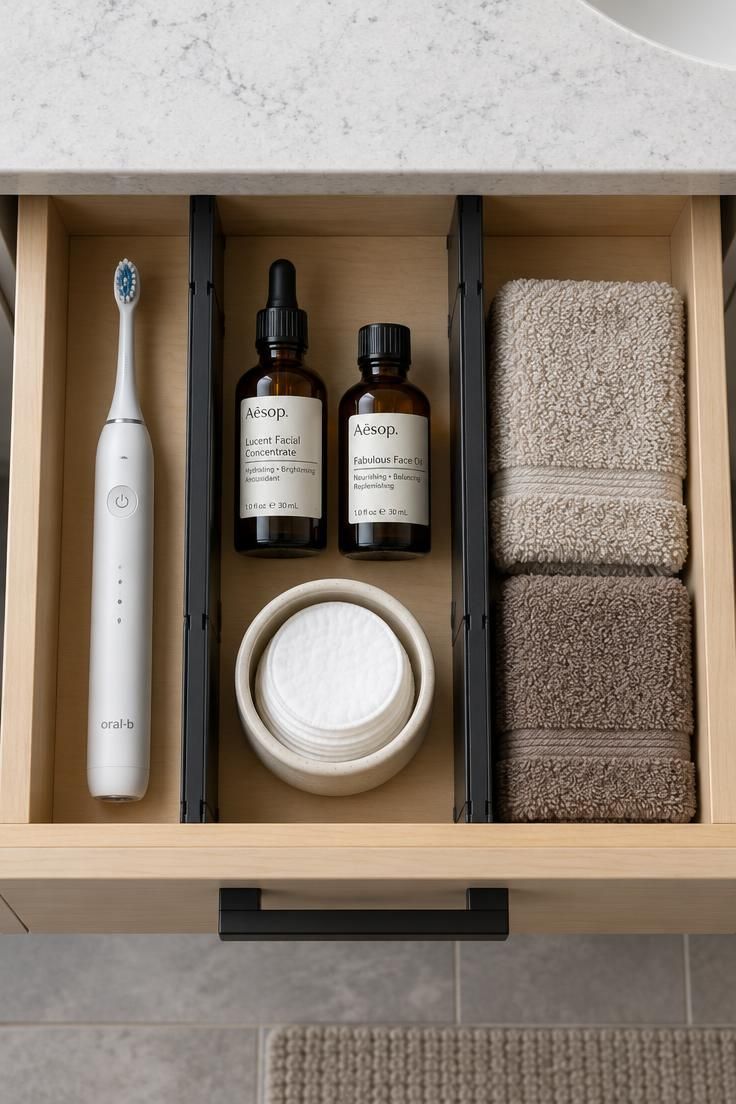
For vanity drawer dividers, the top drawer carries more daily traffic than any other part of the vanity.
Left undivided, it becomes a shallow box where small objects migrate toward the back and disappear.
Adjustable dividers solve this by creating compartments sized to what actually lives there.
The adjustable part matters: product sizes change, and a fixed layout stops fitting within a season.
Materials present a real choice rather than a cosmetic one.
Clear acrylic inserts let you see contents at a glance and wipe clean easily, though they can look clinical against warm wood.
Bamboo or wood inserts bring warmth and suit oak, walnut, or painted cabinetry, but they need occasional drying to avoid marking.
Soft fabric bins are quiet and forgiving for hair ties and small tools, yet they hold dust and stain more readily than hard surfaces.
A grooming drawer works well with three zones.
Dental items occupy one compartment near the front.
Skincare bottles and jars take a deeper middle section.
A narrow third compartment handles razors, tweezers, nail clippers, and other small metal tools.
This layout reflects a broader shift in how homeowners plan vanities.
The 2026 Houzz study found 25% of renovating homeowners added built-in drawer organizers, which suggests dividers are moving from afterthought accessory to expected feature.
The tradeoff is maintenance.
Every compartment has a capacity, and once a divider section is overfilled, the drawer stops closing smoothly and the sorting system quietly collapses.
A minute of editing during the weekly reset keeps the layout functioning.
Recessed Medicine Cabinets with Hidden Daily Storage
A flat mirror occupies wall space that could hold daily items instead.
Replacing it with a cabinet of similar footprint keeps the reflection while absorbing the small objects that otherwise colonize the counter.
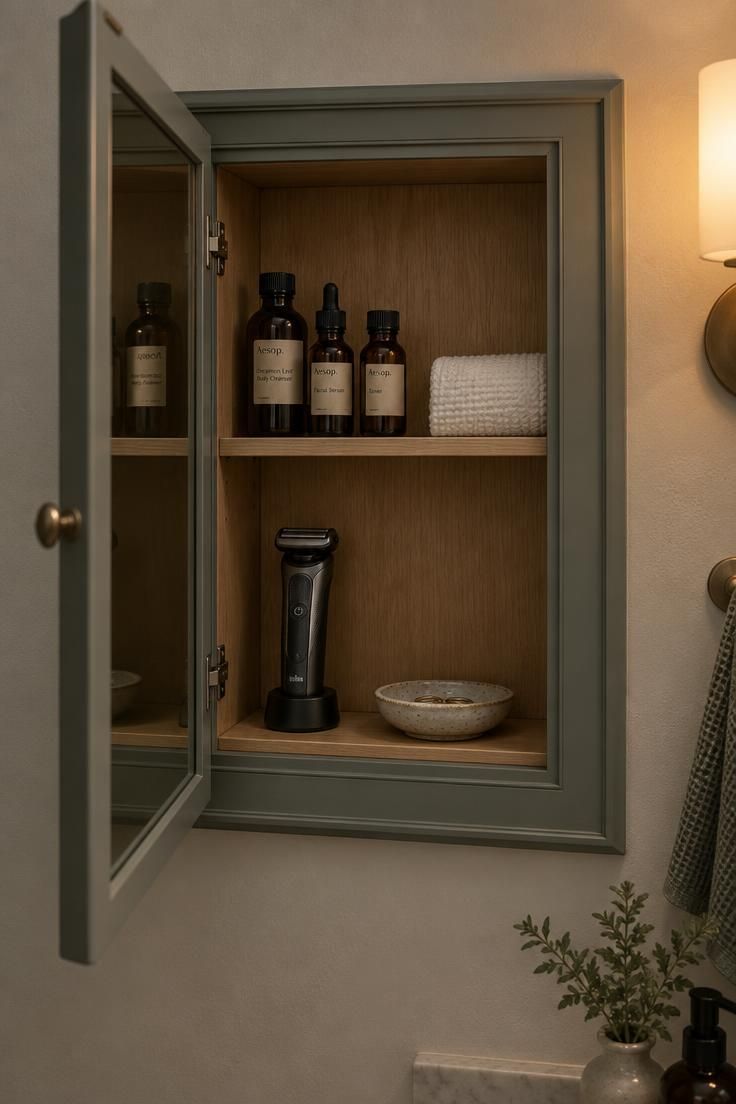
Recessed medicine cabinet storage works best when it becomes the primary home for things used every morning and evening.
Contact lens supplies, a razor, dental floss, small skincare tubes, and a daily moisturizer all fit comfortably on two adjustable shelves.
Adjustable shelving is worth prioritizing.
Fixed shelves force tall bottles to lie down and short jars to waste vertical room, and the mismatch tends to push items back onto the counter.
Interior lighting or an integrated outlet adds practical value for charging an electric toothbrush or shaver out of sight.
Houzz data shows continued demand for upgraded mirror systems that support the vanity as a grooming station.
The format has one honest limitation.
How deeply a cabinet can sit within a wall depends on the wall's existing depth, and some walls simply allow less than others.
Confirming that early prevents a disappointing substitution.
Backups stay out.
A medicine cabinet that also stores spare toothpaste and unused travel bottles fills quickly and loses the daily-access advantage that justified it.
Under-Sink Cabinet Zones for Backup and Utility Items
The cabinet beneath the sink sits lowest, opens least often, and suits items used weekly or occasionally.
Treated as a catch-all, it becomes the place where expired products quietly accumulate.
Plumbing interrupts the space, so organizers that work around it matter more than raw volume.
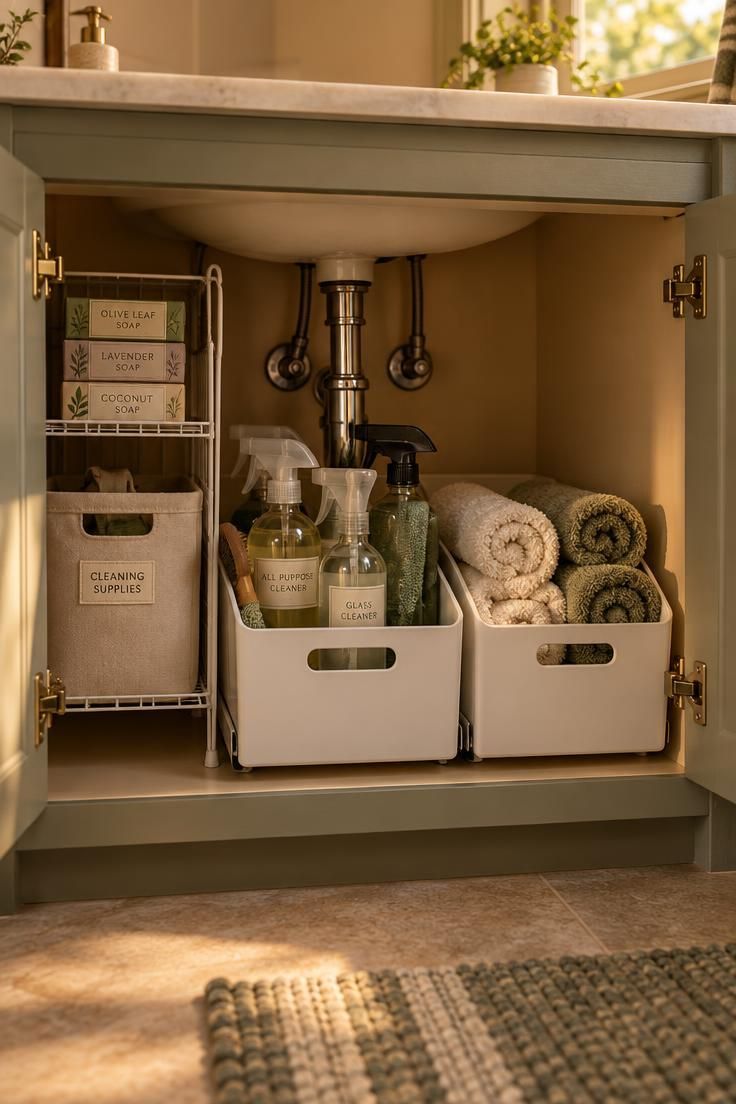
Removable U-shaped organizers wrap around the drain assembly.
Sliding bins let you pull contents forward without kneeling.
Narrow side shelves use the wasted strip beside the pipe.
Four zones keep the cabinet legible.
Cleaning supplies take one area, backup toiletries another, extra towels or toilet paper a third, and hair-tool heat mats or refill items a fourth.
Containers here should be simple to wipe down.
This zone sees drips, dust, and the occasional leak, so smooth plastic or coated bins serve better than woven or unsealed materials.
Labels help in this lower, less visible area.
A labeled bin for first-aid supplies or shared household backups saves time for everyone, and the practice becomes more useful as the household grows.
Under-sink cabinet organization also benefits from a seasonal review.
Twice a year, expired products, duplicates, and near-empty bottles that nobody reaches for can leave, keeping the zone from drifting back toward a junk drawer.
The effort is modest and the payoff is structural.
A cabinet with defined zones stays organized longer than one that relies on good intentions.
Design Pro-Tip: Choose dividers that adjust rather than fit a single bottle size. When a product changes shape, a flexible compartment absorbs the difference and the layout survives.
Choosing a Countertop Tray That Fits Your Daily Pattern
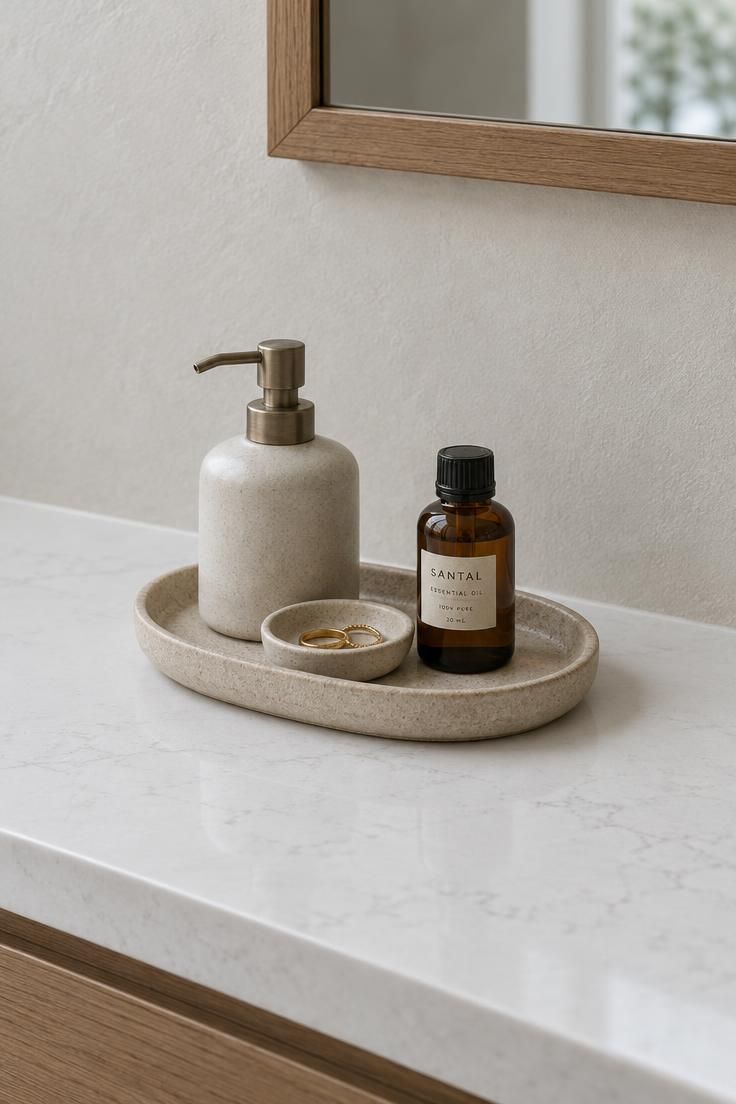
A single tray does more organizational work than several scattered containers.
It gathers the few visible items into one defined footprint and leaves the remaining surface genuinely open.
Material sets the tone.
Ceramic or stoneware reads heavier and more anchored, which suits a calm composition.
Lacquered wood brings warmth that pairs well with natural cabinetry.
Clear acrylic nearly disappears, keeping the surface visually light at the cost of some presence.
For a small bathroom vanity layout, size is the decision that determines whether a bathroom countertop tray helps or hurts.
It should be large enough to hold only the selected daily items and small enough that open counter remains on either side.
A tray that spans the full vanity has simply relocated the clutter.
A typical arrangement holds a hand soap, a small ring dish, and one daily serum.
That is a working maximum rather than a starting point.
The tray also functions as a template for reset.
Lifting it to wipe beneath takes seconds, and returning items to their spots restores the whole surface at once.
It is a system, not a guarantee.
Without periodic editing, a tray slowly fills with items that were never chosen, and the visible calm erodes.
Pull-Out Utility Liners Under the Basin
A narrow vanity often wastes the space directly beneath the basin because plumbing makes fixed shelves difficult to use.
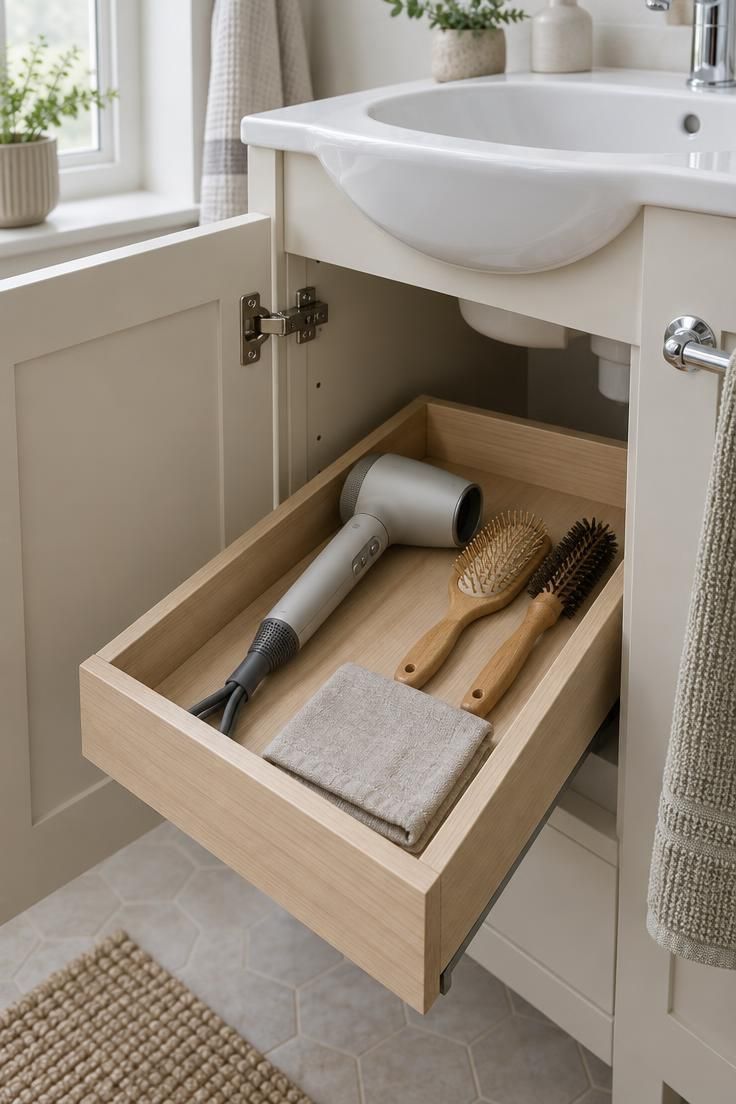
A slim pull-out liner tray can turn that awkward area into a defined home for small tools, no matter how short the cabinet is.
Instead of organizing around the pipes, the tray organizes the narrow strip in front of them.
A shallow rim keeps items from sliding sideways during use.
A cutout in the back is not part of the visual plan, so the tray reads as a clean rectangle even where the cabinet interior gets busy.
This idea helps most in shared or full bathrooms where a hair dryer, a few extra washcloths, or a small brush caddy never found a stable spot.
The tray can hold only what the person actually reaches for while standing at the sink, which keeps it from becoming a miscellaneous drawer.
For a daily-use version, dedicate the liner to one task.
A hair styling liner might hold a single dryer and two narrow brush slots.
A cleanup liner might hold a folded microfiber cloth, a small spray bottle, and a short handled dusting brush.
The visual benefit is that the countertop stays clear while the cabinet interior reads as intentional when the door swings open.
Choose a liner tray that matches the cabinet interior tone or it will look like leftover kitchen storage.
The maintenance burden is low if the tray slides out fully for a quick wipe.
It does not solve bulk storage, and that is the point.
Backup bottles still belong in another zone, while this tray keeps only the slim items that would otherwise migrate to the counter.
Style Blueprint:
- Use a shallow natural wood or matte white liner tray with a low front rail.
- Leave visible space around each object so the tray never looks packed.
- Pair with one hand towel hung beside the vanity rather than folded on the counter.
- Pick a smooth interior cabinet finish so the tray moves without catching.
- Keep all items under the height of the basin rim so the tray stays easy to slide.
Design Pro-Tip: Think of this tray as a functional still life, not hidden storage. When the cabinet door opens, the first thing visible should be the tray edge and one or two neatly placed objects, not a wall of plastic bottles. If the liner tray becomes a catch-all, reduce its contents until there is open track on both sides.
Wall-Mounted Storage Ledges Above the Towel Bar
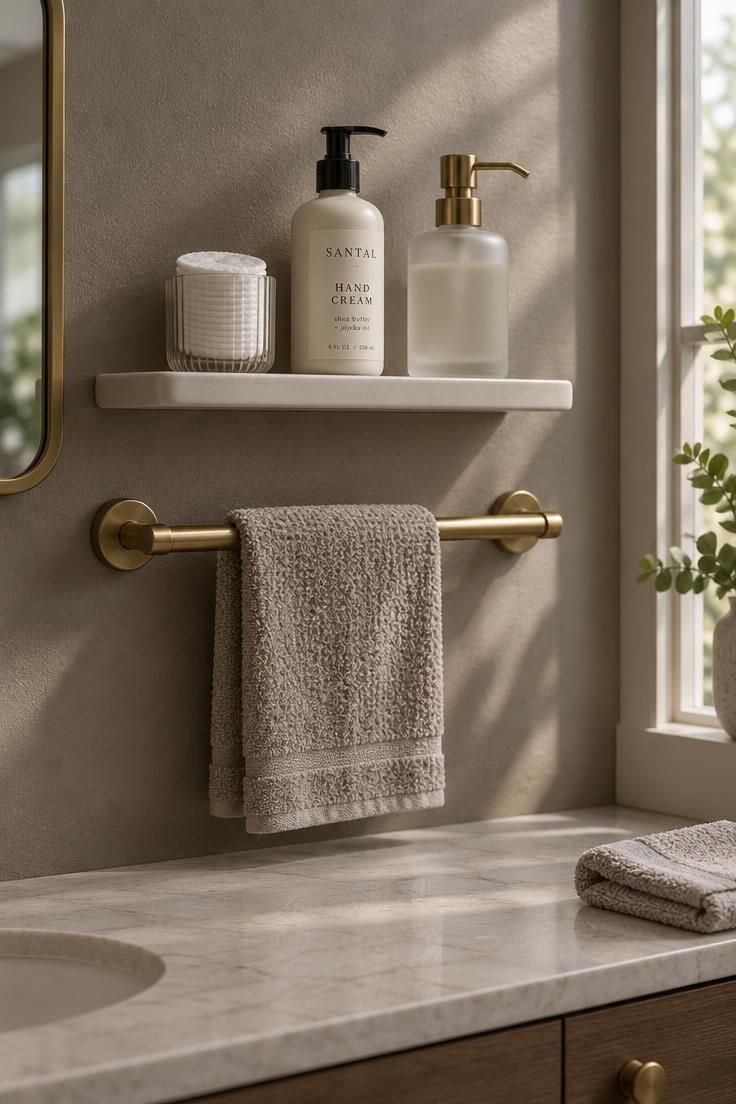
A narrow ledge can give bathroom sundries a place without taking counter area away from daily grooming.
Wall-mounted storage changes the relationship between the vanity and the wall, letting the surface stay clear while a few intentional objects remain reachable.
The ledge should hold only what is used while standing at the sink.
A short glass, a hand cream pump, a small lidded jar for cotton rounds, and a single refillable soap bottle all suit this height.
Anything requiring two hands or wide clearance belongs in a drawer instead.
Look for a slim profile with a low front edge so taller bottles do not rely on the ledge for stability.
Powder-coated metal, sealed oak, or matte ceramic all work, depending on whether the bathroom finishes lean warm wood, cool stone, or painted millwork.
Because the ledge is near water and hand movement, wipe it with the same cloth used on the countertop.
A dry cloth works for wood; a lightly damp cloth suits ceramic or metal.
This small addition to the bathroom routine prevents dust from building inside the low lip.
The practical tradeoff is straightforward.
A ledge creates more visible inventory than a drawer, so it suits a short list of frequently handled items rather than backup storage.
The same idea in a busy bathroom with many users can quickly read as clutter unless each person has only one item on the ledge.
A One-Hand Rack That Matches the Wall
Most organizing advice assumes items need to be hidden.
That leads to deeper drawers, more bins, and a surface that still accumulates the tools left out between steps.
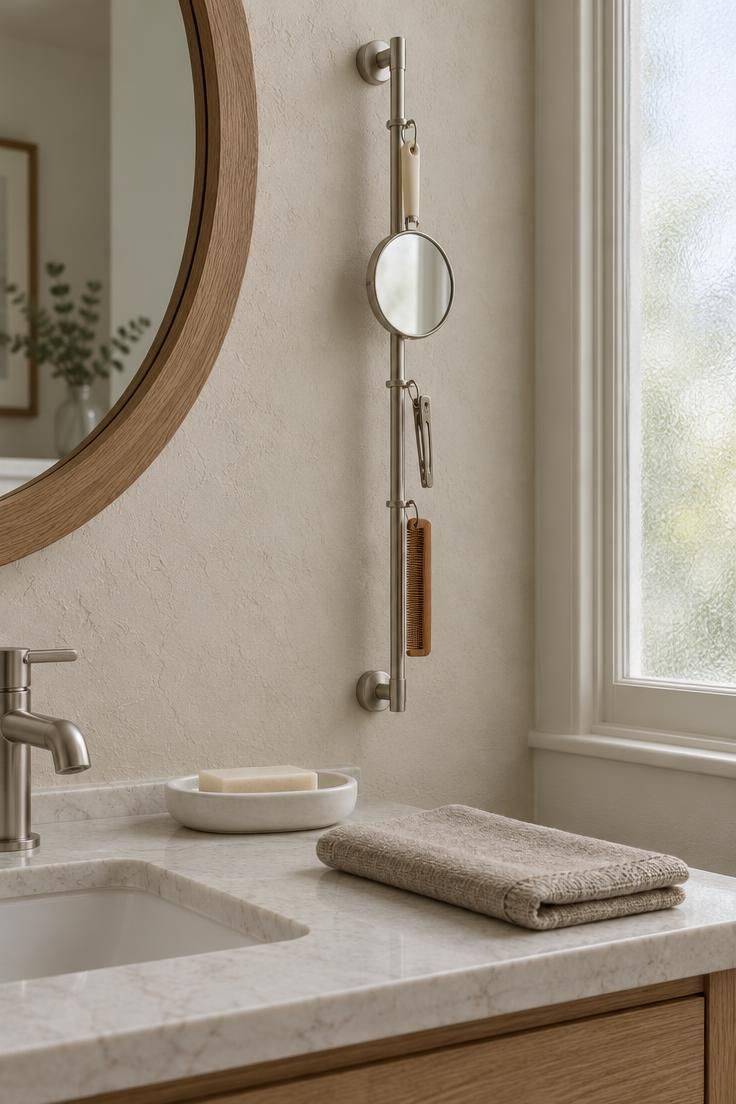
A single wall rail beside the mirror offers a different idea.
It keeps a narrow group of skinny items visible in one vertical line, so the countertop stays open without requiring every object to disappear.
Choose a rail in the same finish as the faucet or cabinet hardware.
Then limit the rack to the few pieces that would otherwise lie flat: a folding hand mirror, a slim metal hair clip, a small comb, and one pair of tweezers in a loop.
The visual weight runs upward, not across the vanity.
That leaves the counter height available for drying a soap dish or setting down a warm styling tool temporarily.
Reserve the rail for dry objects.
Wet brushes, cotton pads, or damp cloths belong elsewhere, because water pooling in metal loops will eventually mark the wall or corrode light plating.
The rack should resemble an absent-minded habit rather than a display.
If every hook is filled and the line begins to look like inventory, store the extras and keep only the repeat offenders.
Design Pro-Tip: Keep the rail roughly one elbow reach from the sink, not directly over the faucet. That way reaching for a clip never sends sleeve fabric through water.
>
Conclusion
A clear vanity surface is the outcome of decisions made inside drawers and cabinets, not a matter of owning almost nothing.
The surface stays open when everything else has a defined place.
The three-tier frequency system carries most of that weight.
Daily items stay within reach, weekly items sit close by, and occasional items live outside the main zone.
A short reset, monthly on the counter and quarterly in the drawers, keeps the arrangement from drifting.
Start with one drawer.
Empty it completely, choose a single category for it, and return only the items that belong.
That first compartment becomes the template for the rest of the vanity, and the clear surface follows from there.