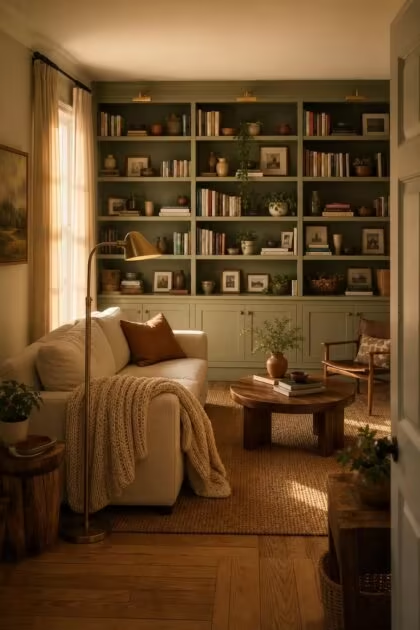
This post may contain affiliate links. If you make a purchase through these links, we may earn a commission at no additional cost to you.
Most people start with the shelf and figure out the room later.
That instinct is exactly what turns a promising living room with bookshelves into a space that feels either cramped or half-finished, with shelves that compete against the furniture instead of supporting it.
The order of decisions matters more than any single product choice, and the checklist of things worth confirming before a single book goes on display is shorter than you think but much harder to undo once you skip it.
Why the First Mistake Usually Happens Before the Shelf Arrives
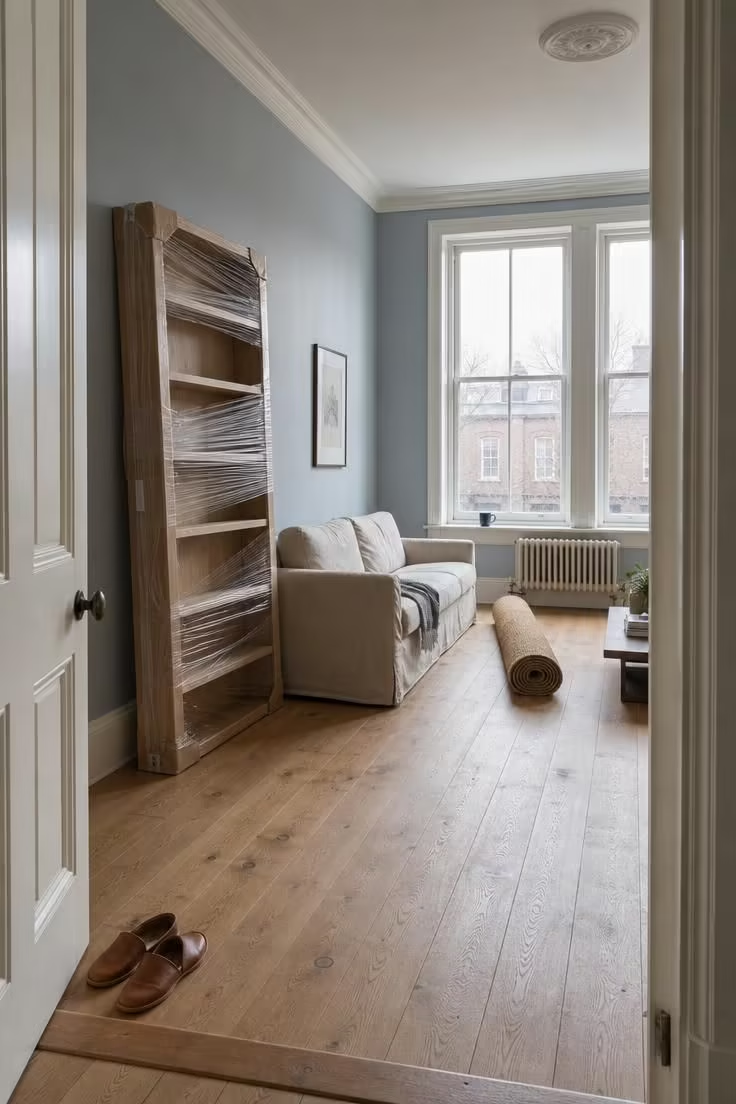
The most common error with a living room with bookshelves is not a styling mistake at all.
It is a scale mistake, and it happens at the furniture store.
Interior designers return to this point consistently: homeowners fall in love with a bookshelf in a showroom where 14-foot ceilings make everything look proportional, then bring that same unit home to an 8-foot room where it swallows the wall.
The shelf-to-room relationship is the single factor that determines whether bookshelves will anchor a space or overwhelm it.
A general guideline from design professionals suggests scaling shelf depth to roughly one-sixth of a room’s width, which keeps the unit from protruding too far into walkways while leaving enough surface area for books and objects.
That math sounds dry, but it prevents the most expensive version of buyer’s regret: a 14-inch-deep built-in in a 10-foot-wide room that makes the sofa feel like it belongs in a hallway.
Checking proportions first, before browsing styles or finishes, is the difference between a shelf that looks like it was always part of the room and one that looks like it arrived uninvited.
How Room Proportions Should Dictate Shelf Size, Not the Other Way Around
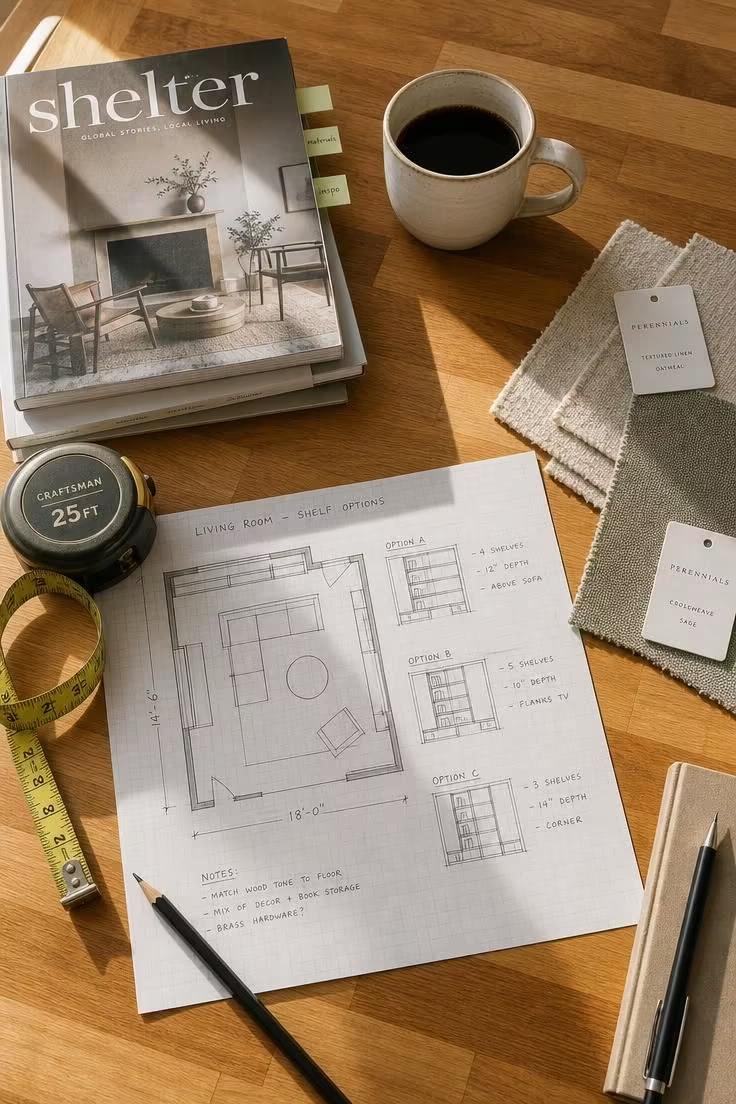
Ceiling height is the first number to know.
A floor-to-ceiling built-in bookshelf at 96 inches looks like architecture in a room with 10-foot ceilings, but the same unit in a standard 8-foot room leaves almost no breathing room above the top shelf, and the wall reads as a solid block rather than a composed feature.
The relationship between shelf height and ceiling height matters more than the shelf’s style or finish.
Depth carries just as much weight in the equation.
For most book collections, 12 inches of shelf depth accommodates hardcovers and trade paperbacks comfortably, and that measurement also keeps the unit from jutting into a walkway or making the room feel narrower than it is.
Going deeper than 14 inches rarely adds function but almost always adds visual bulk.
Width is the third dimension that first-timers tend to underestimate, and it is where freestanding units and built-in bookshelves diverge most sharply.
A freestanding bookcase wider than 48 inches often needs a companion piece or some form of visual counterweight on the opposite wall, otherwise the room tilts toward the shelf side and the visual balance collapses.
Where to Place Bookshelves So They Work With Traffic Flow and Natural Light
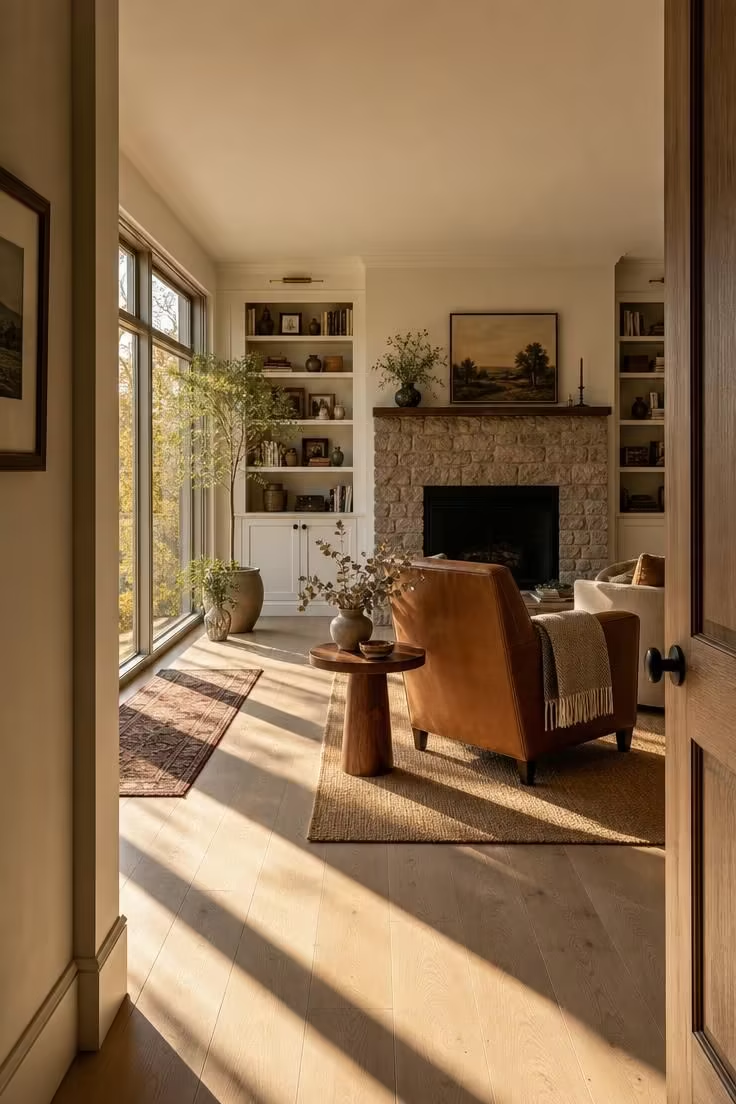
Placement is not about where the shelf fits physically.
It is about where the shelf makes the room work better.
A full-wall bookshelf installation becomes the room’s focal point by default, which works well in spaces that lack a natural anchor like a large window or a fireplace, but can create a competing center of attention in rooms that already have one.
Flanking a fireplace with symmetrical shelving is one of the most reliable placements because the shelves frame something the eye already gravitates toward, adding depth without introducing visual conflict.
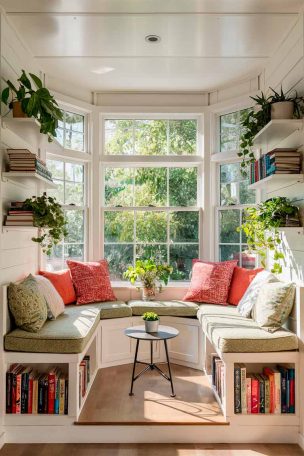
Corner placement turns dead space into a reading zone, and when paired with a low chair and a floor lamp, it creates a destination within the room rather than just a storage feature along a wall.
The one placement to avoid consistently is positioning a bookcase directly in front of a window, which blocks natural light and disrupts the room’s architecture in a way that no amount of shelf styling can correct.
The Lighting Layer Most First-Timers Forget Entirely
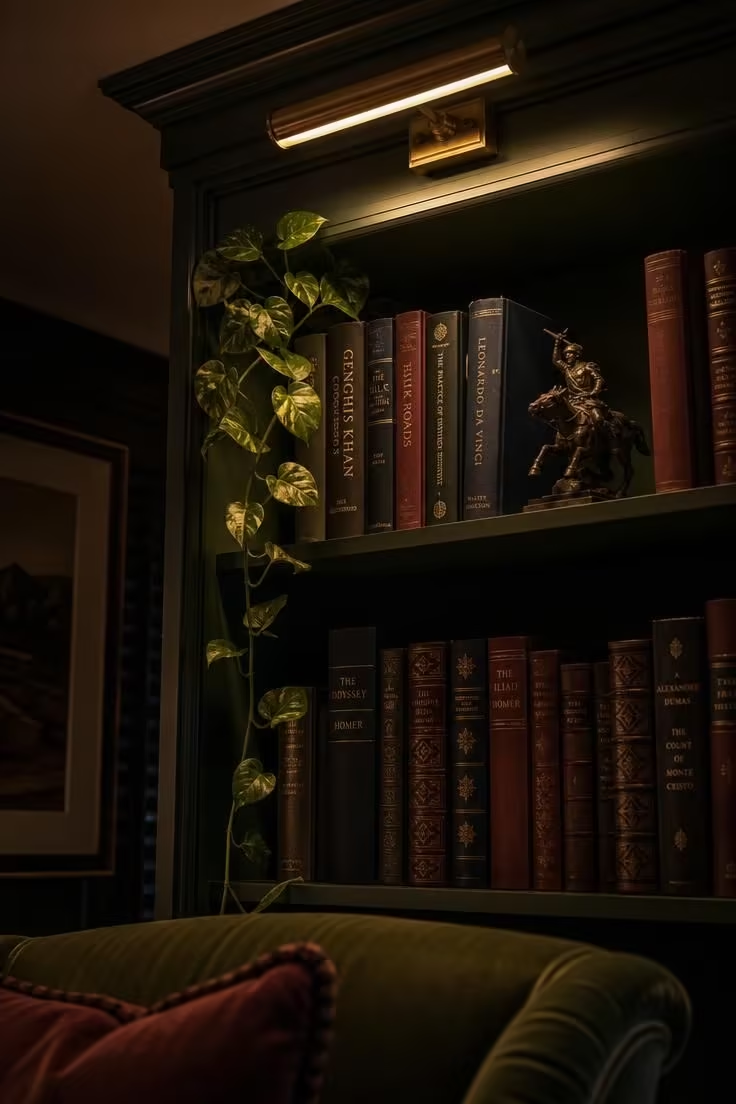
Without intentional lighting, a bookshelf goes dark the moment the sun sets.
The objects on it lose dimension, the colors flatten, and what looked curated by daylight becomes a shadowy rectangle by evening.
This is the layer most first-timers skip entirely, and it separates a living room with bookshelves that feels considered from one that feels incomplete.
Picture lights mounted above the shelf are the most traditional approach, and the proportion rule is straightforward: the fixture should be roughly one-third the width of the section it illuminates.
LED strip lighting inside the shelves works quietly and can be tucked behind the front lip of each shelf so the source stays hidden while the light washes downward across objects.
A floor lamp positioned near the shelf’s edge serves double duty, lighting both a reading chair and the lower shelves without requiring any installation.
The reason this check belongs on the pre-styling list rather than the post-styling one is that wiring decisions are much easier to make before the shelves are loaded with books.
Running a cord behind a fully loaded built-in is a frustrating project that often leads to visible cables or abandoned lighting plans.
Shelf lighting has become its own distinct category in living room design as trends like book drenching and full-wall installations push open shelving into the spotlight, and homeowners realize that a beautifully styled shelf means very little if it disappears after 5 p.m.
Design Pro-Tip: Before loading a single book, tape a battery-powered LED puck light to the underside of each shelf for one evening. Walk through the room and see which shelves actually need dedicated lighting and which ones catch enough ambient glow from nearby lamps. That one-night test prevents both over-lighting (which makes shelves look like a retail display) and under-lighting (which makes styling efforts invisible).
What Built-In Bookshelves Offer That Freestanding Units Cannot (and Vice Versa)
Built-in bookshelves add architectural weight to a living room that no freestanding unit can match.
They look like they belong to the house itself, they follow the wall’s exact dimensions, and they can increase property value when done well.
The trade-off is permanence: built-ins require professional installation, they cannot move with you, and modifying them later usually means starting over.
A freestanding bookcase offers the opposite set of strengths.
It can travel from apartment to apartment, it requires no installation, and it can be repositioned whenever a living room layout changes.
Modular shelving systems split the difference between the two, allowing homeowners to start with a small configuration and add sections over time as their collection or their room grows.
For tall freestanding units, one non-negotiable safety step belongs on every first-timer’s checklist: wall anchoring with anti-tip brackets, which takes five minutes to install and prevents the kind of accident that no amount of bookshelf styling advice can address.
How to Read Your Existing Furniture Before Choosing a Shelf Style
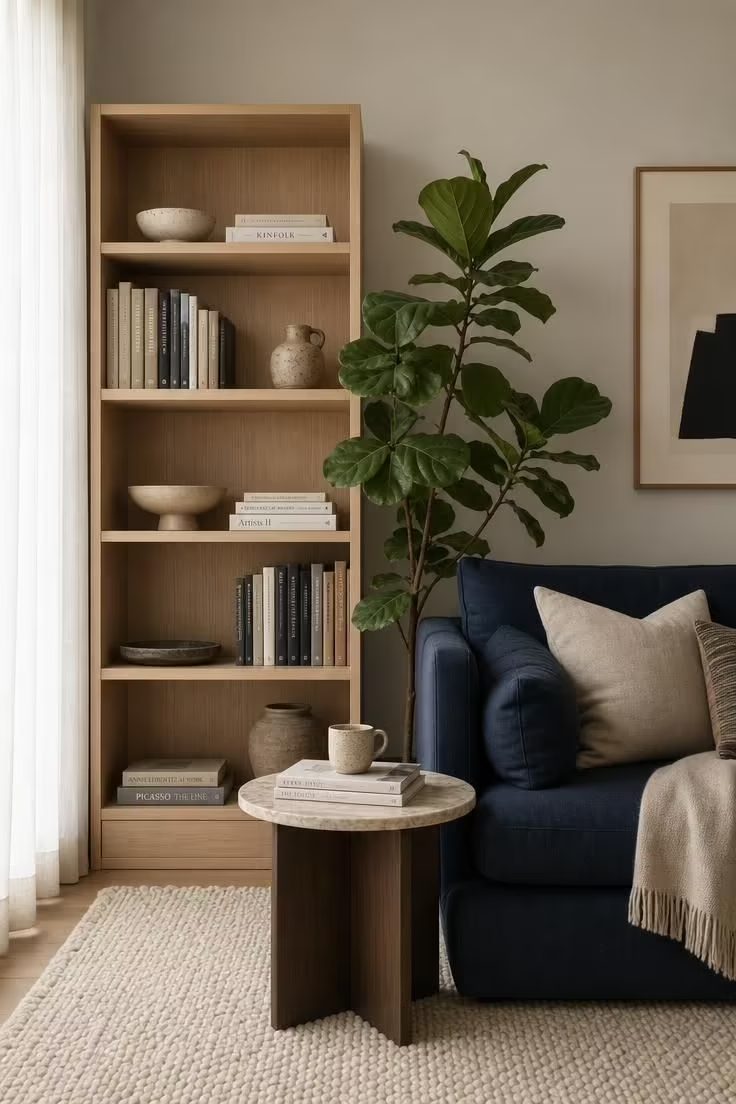
A bookshelf does not exist in isolation, and the most common reason a new shelf feels wrong in a room is that it ignores the furniture already there.
Height is the first thing to read: a tall bookcase next to a low-profile sofa creates a sharp vertical drop that makes the seating feel smaller and the shelf feel looming.
Bridging that height difference with a tall plant, a floor lamp, or a piece of wall art creates a visual step between the two heights and softens the transition.
Material and finish are the second read.
A glossy white lacquered shelf next to a rough-hewn reclaimed wood coffee table sends two conflicting signals about the room’s identity, and the eye registers that conflict even if the homeowner cannot name it.
The finishes do not need to match exactly, but they should speak a compatible language: warm wood tones pair with brass and leather, cooler painted finishes work alongside matte metals and linen, and mixing those two families without a bridge piece creates friction.
The shelf’s visual weight relative to the rest of the room is the third and least obvious read.
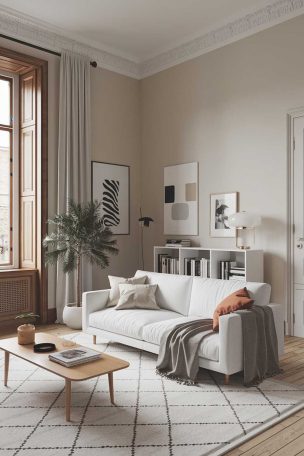
A solid-backed bookcase with thick shelves carries more weight than an open-backed ladder shelf with thin rails, and placing a heavy-looking unit in a room full of leggy, airy furniture makes the shelf dominate in a way that has nothing to do with its actual size.
The Shelf Arrangement Hierarchy That Keeps Displays From Looking Cluttered
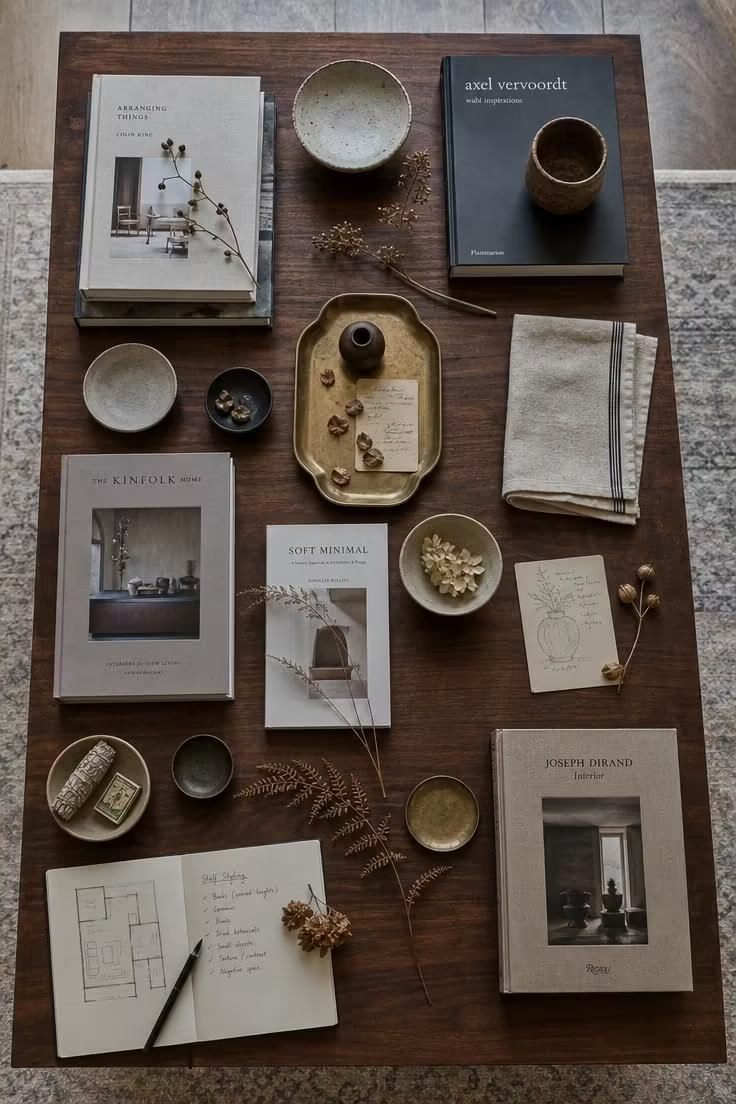
The single biggest bookshelf styling mistake is treating books as filler and letting decorative objects take over.
When the vases and frames claim the prime shelf real estate and the books get stuffed into whatever gaps remain, the whole display reads as cluttered and performative rather than personal.
Books are the foundation of a bookshelf, not the afterthought, and the strongest arrangements start there.
The method that interior stylists return to most consistently is the “clear everything” approach: remove every item from the shelf, then reintroduce pieces one category at a time, starting with books, then adding objects, then editing.
Varying heights across the shelf creates visual rhythm, and the simplest technique is alternating between vertical book rows and horizontal stacks, using the horizontal stacks as platforms for small objects like a ceramic bowl or a framed photograph.
Negative space is what separates a curated shelf from a crowded one, and leaving at least 20 percent of each shelf section empty gives the eye a place to rest and makes every object on the shelf feel more intentional.
Design Pro-Tip: Stand six feet back from the shelf and squint. If every section looks equally dense, the display has no focal point. Pick one shelf section to keep almost empty, maybe just a single object and a short stack of books. That open space will draw the eye and make the surrounding sections feel more composed by contrast.
Why Color Coordination Matters More Than Color Sorting
Sorting books by spine color photographs well and performs on social media, but it makes finding a specific title nearly impossible and tends to look more like a set piece than a living collection.
Color coordination is the more practical and longer-lasting approach, and it operates at a different level.
Instead of organizing books by color, it means being intentional about the overall palette of decorative objects scattered across the shelves so they relate to the room’s broader color story.
A living room with bookshelves in warm earth tones benefits from shelf objects in terracotta, cream, and matte brass rather than a sudden cluster of cobalt blue ceramics that belong to a different color family.
The same principle applies to book jackets: you do not need to sort them, but grouping a few similarly toned spines together in one section and balancing them with a contrasting cluster elsewhere creates a loose rhythm that feels considered without feeling forced.
Color coordination across shelf and room is what makes a bookshelf look like it was designed with the space rather than purchased separately and dropped in.
The practical version of this check is simple: before loading the shelves, hold each decorative object at arm’s length against the wall behind the shelf and see whether its color feels like it belongs to the same family as the paint, the rug, and the upholstery.
The Maintenance Reality Check Nobody Mentions at the Planning Stage
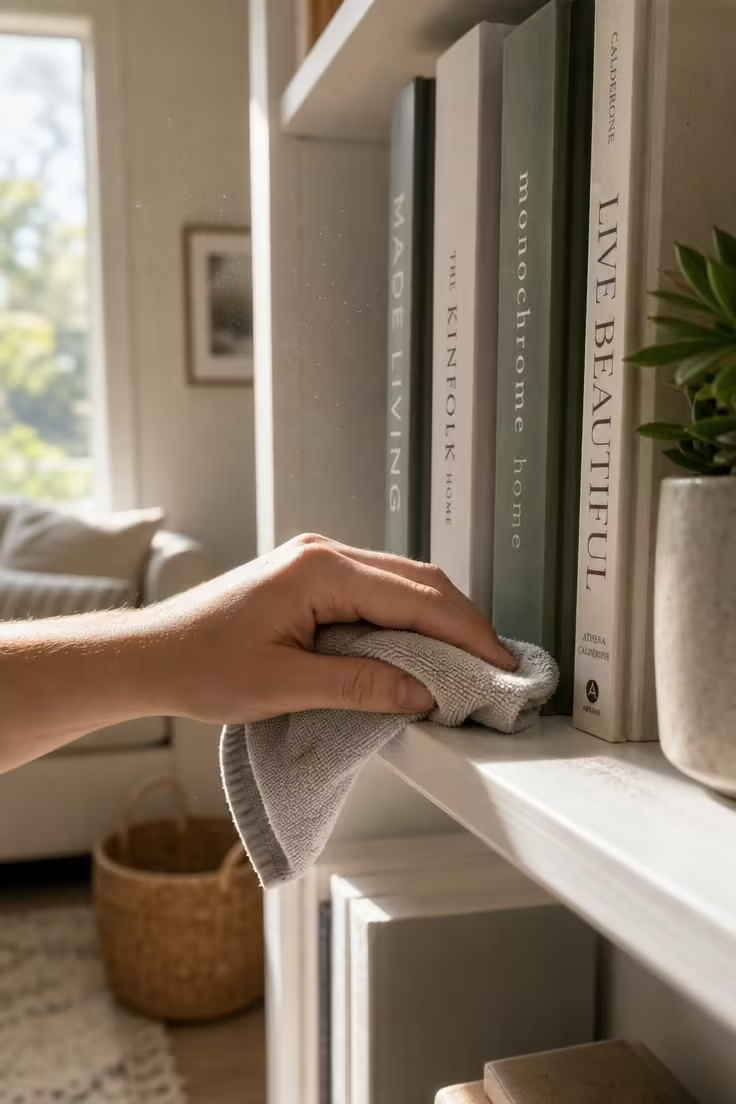
Open shelves collect dust faster than almost any other surface in a room.
This is not a reason to avoid them, but it is a reason to plan for the reality before committing to a shelf style.
If weekly dusting is realistic, open shelving works beautifully and keeps books and objects accessible and visible at all times.
If weekly dusting is not realistic, and for many households it genuinely is not, glass-fronted cabinets or a hybrid design with open upper shelves and closed lower sections reduces the maintenance load without eliminating the display entirely.
The closed lower section also solves a second problem: it hides the items that every living room accumulates but nobody wants on display, like board games, remote controls, charging cables, and the kind of clutter that has no aesthetic value but needs to live somewhere.
Asking the maintenance question before buying a shelf is a check that prevents the slow decline from “beautifully styled” to “dusty and neglected” that happens when the initial excitement of a new bookshelf fades and the daily reality of upkeep sets in.
Choosing a shelf type that matches your actual cleaning habits, not your aspirational ones, is one of the most practical things a first-timer can do.
Long-term satisfaction with a living room bookshelf depends as much on how easy the shelf is to maintain as on how good it looked the day it was styled.
Conclusion
The checklist for a first-time living room with bookshelves is not about shelf styling at all, at least not yet.
It is about the decisions that come before the first book lands on a shelf: measuring the room’s proportions, choosing a placement that respects traffic flow and light, confirming that the shelf’s height and depth and finish work with the furniture already in the room, and solving for lighting and maintenance before they become problems.
Start by measuring the wall where the shelf will go, including the ceiling height above it and the depth available before you hit a walkway or a piece of furniture.
Photograph the room from the doorway so you can see the full living room layout and spot any visual imbalances before committing to a position.
Decide whether you need the permanence of built-in bookshelves or the flexibility of a freestanding bookcase before you start browsing.
Once those structural questions are settled, the shelf arrangement and color coordination and object placement that most people think of as “bookshelf styling” become the easy, enjoyable part, because the foundation is already right.