This post may contain affiliate links. If you make a purchase through these links, we may earn a commission at no additional cost to you.
A japandi reading nook strips a room down to what actually matters: a comfortable seat, good light, and quiet.
The style borrows its calm from Japanese wabi-sabi and its warmth from Scandinavian hygge, and the two meet somewhere in the middle where nothing feels fussy or overdone.
These 13 ideas lean on japandi interior design principles to create reading corners that feel personal without trying too hard.
Each one is built around specific materials and finishes you can picture in a single photograph.
Pull what works for your space and leave the rest behind.
A Charred Cedar Platform With Cream Bouclé Floor Cushions
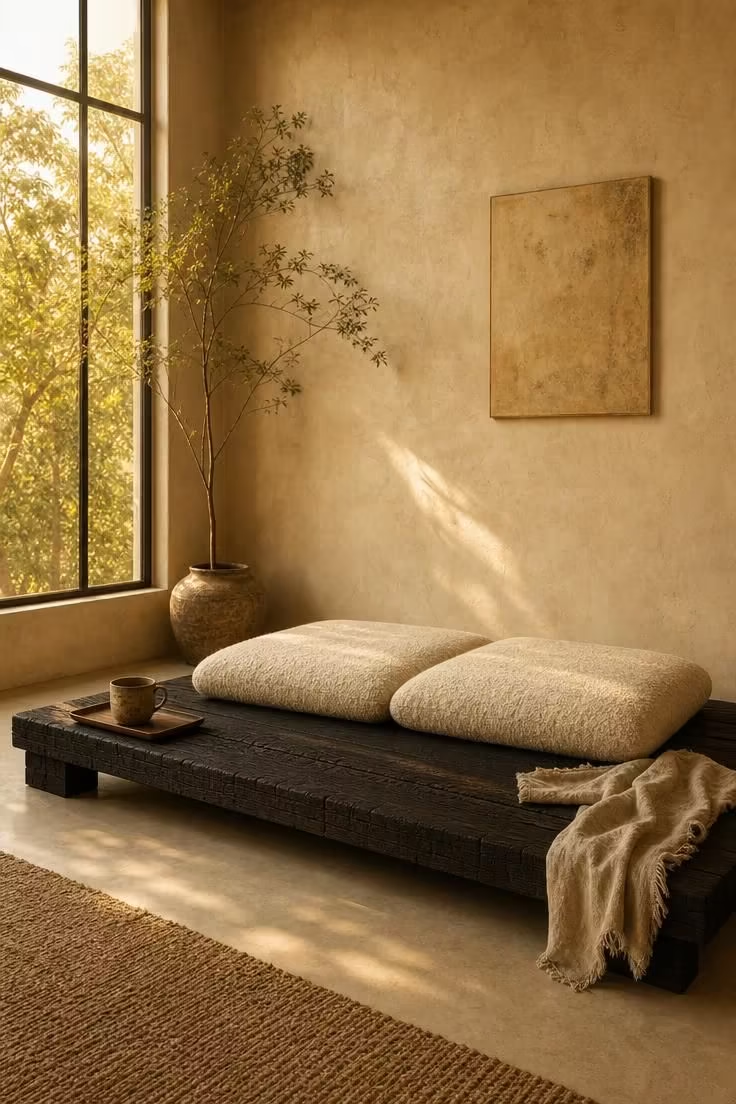
Low profile seating changes how a room feels from the moment you step into it.
Sitting closer to the ground slows you down, and a platform like this one makes that shift physical.
The shou sugi ban cedar gives the base real weight and texture without making the corner feel heavy.
Bouclé cushions in cream keep things soft enough to sit on for an hour or two at a time.
The walnut tray is a small touch, but it means you never have to get up for your drink.
A single color story, black wood against cream fabric against pale plaster, holds the whole scene together.
Style Blueprint:
- Shou sugi ban cedar platform (8-10 inches high)
- Two oversized cream bouclé zabuton cushions
- Small walnut serving tray
- Handmade ceramic mug in matte glaze
- Folded oatmeal linen cloth
An Ash Wood Alcove With a Single Ceramic Akari Lamp
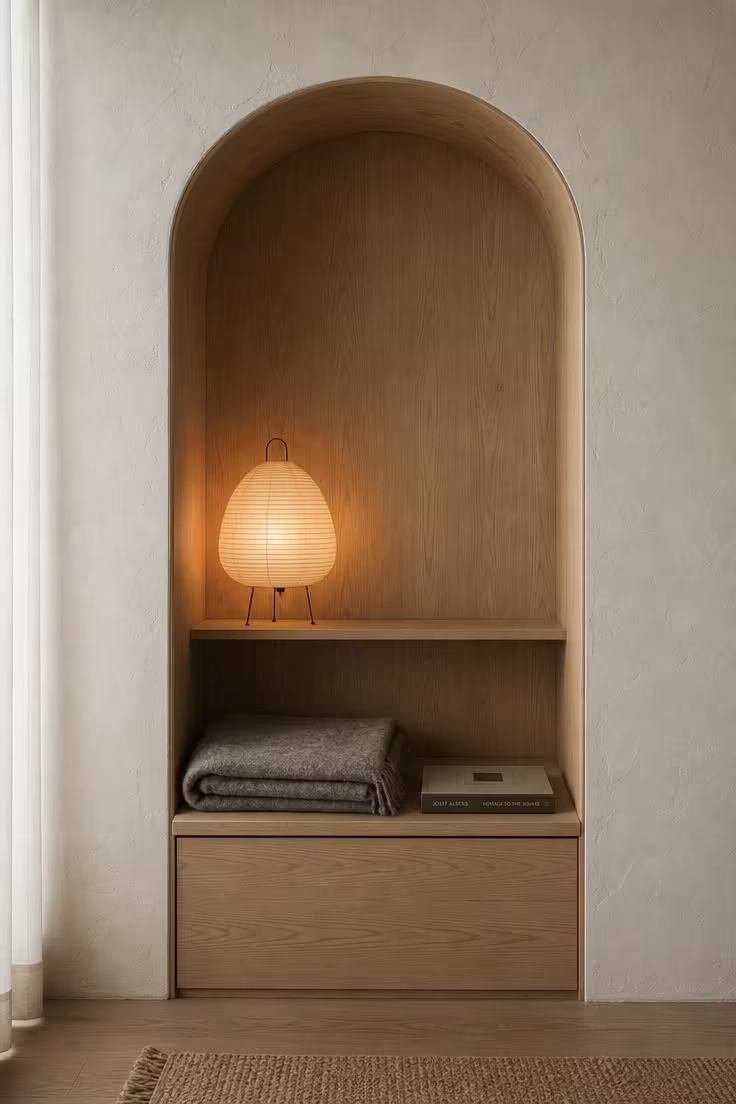
The alcove does something that a chair in the middle of a room cannot.
It wraps around you, and the rounded corners at the top soften what could feel like a rigid box.
Ash wood has a grain that is open and airy, which keeps the built-in from looking dense or dark.
One lamp is enough here because the alcove concentrates its light into a small area.
The ceramic surface of an akari-style lamp scatters that light in every direction, filling the niche with a warm amber tone.
A gray wool blanket folded on the seat signals comfort without adding clutter.
The single book left spine-up suggests this is a space that gets used, not styled for a photo and then forgotten.
Style Blueprint:
- Built-in ash wood alcove with rounded top corners
- Ceramic akari-style lamp on a recessed shelf
- Gray wool blanket
- White plaster wall with visible texture
- One hardcover book placed casually
A Shou Sugi Ban Bench Under a Rice Paper Pendant
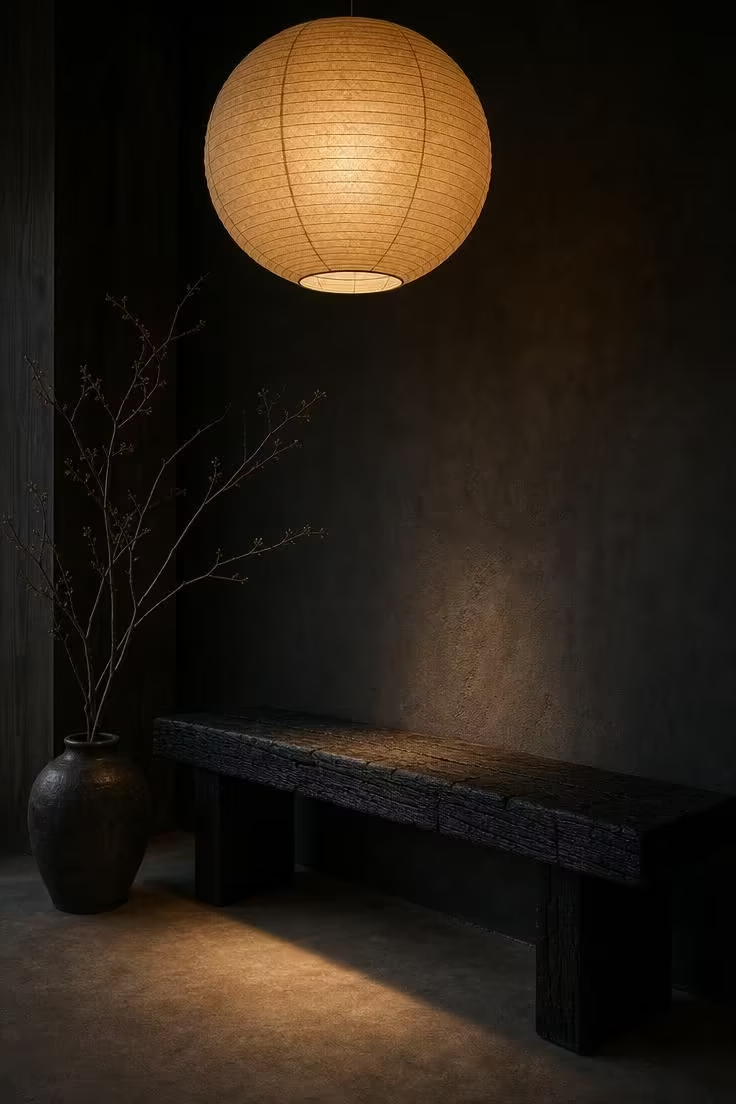
Dark walls ask more of the objects in front of them.
Every texture, every edge, every shift in surface finish becomes louder against charcoal.
That is why the shou sugi ban bench works so well here, because its blackened grain holds enough variation to stay interesting without competing with the wall behind it.
The rice paper pendant is doing all the work for the atmosphere.
It pulls the eye upward, softens the mood, and draws a clear boundary around the reading spot with its circle of light.
Dried branches in a stoneware vase add an organic line that breaks up the strong horizontal of the bench.
The floor is concrete, which might sound cold, but the pendant warms everything it touches.
This is a corner that rewards sitting still.
Style Blueprint:
- Narrow shou sugi ban bench
- Large round rice paper pendant (hung low)
- Dark charcoal wall paint or plaster
- Dried branch in a dark stoneware vase
- Pale concrete flooring
A White Oak Window Ledge With a Linen Zabuton and Wool Throw
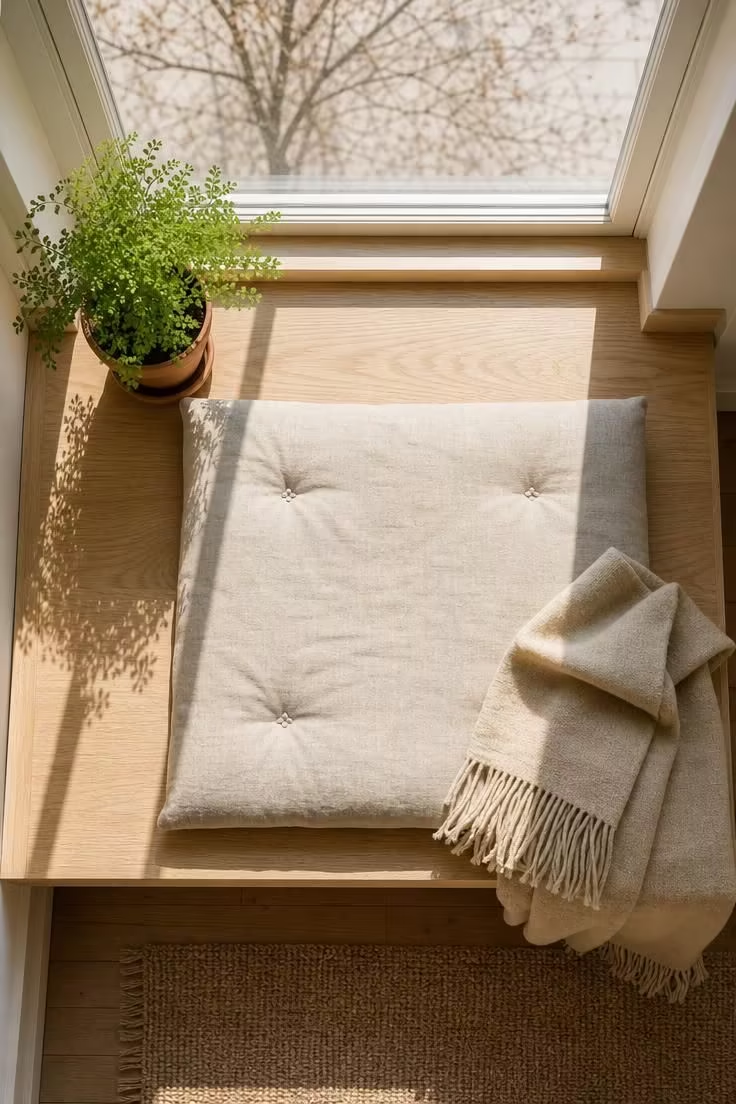
A window ledge wide enough to sit on is one of the simplest reading spots you can build.
White oak brings warmth without the heaviness of darker wood species.
The grain catches direct sunlight in a way that makes the whole surface glow, and that changes the character of the seat throughout the day.
A linen zabuton keeps the seating low and relaxed, closer to a scandinavian reading corner than a formal window bench.
The wool throw is there for when the sun moves and the ledge cools.
A single fern in terracotta adds just enough green to make the corner feel alive.
Style Blueprint:
- Deep white oak window ledge (sitting depth)
- Natural linen zabuton cushion
- Oatmeal wool throw blanket
- Small terracotta pot with maidenhair fern
- Bare window (no curtains or blinds)
Design Pro-Tip: A reading nook does not need to be enclosed to feel private. A change in floor material, a shift in ceiling height, or even a single piece of furniture angled away from the room can create a sense of separation without building a wall. The boundary is psychological, not structural.
A Birch Slat Room Divider Framing a Low Walnut Stool
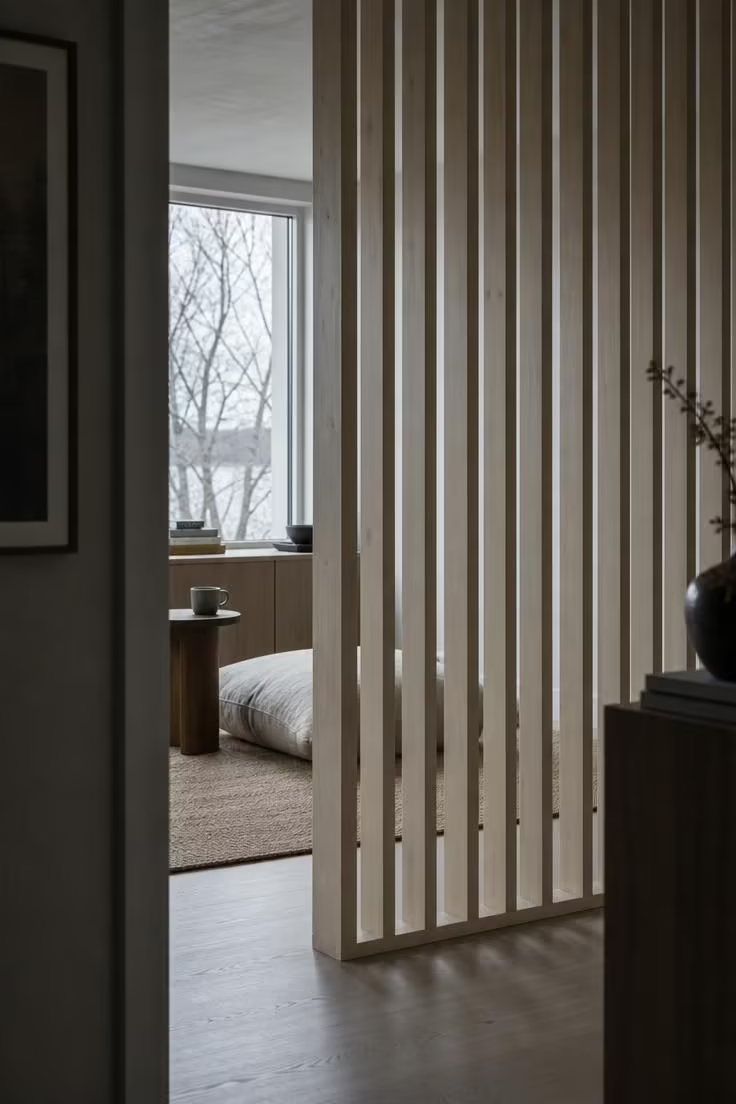
A slat divider does something a shoji screen does with less permanence.
It breaks a room into zones without cutting off light or air.
Birch is light enough in both weight and color that even a floor-to-ceiling installation feels airy rather than solid.
The rhythm of the slats creates a pattern that changes depending on where you stand and where the light falls.
From outside the nook, you catch glimpses of the reading corner, which makes it feel like a discovered space rather than an obvious one.
The low walnut stool is the only piece of japandi furniture in view, and it works as both a surface and a visual anchor.
Floor cushions keep the seating lower than the top of the stool, so the sightlines from the main room stay clean.
Jute underfoot adds a texture that is rough enough to feel grounded, not polished.
A space like this rewards the person who finds it.
Style Blueprint:
- Floor-to-ceiling birch slat room divider (2-inch spacing)
- Low round walnut stool (side table height)
- Large undyed cotton floor cushion
- Pale jute area rug
- Simple ceramic cup
A Travertine Side Table Beside a Rounded Oatmeal Linen Chair
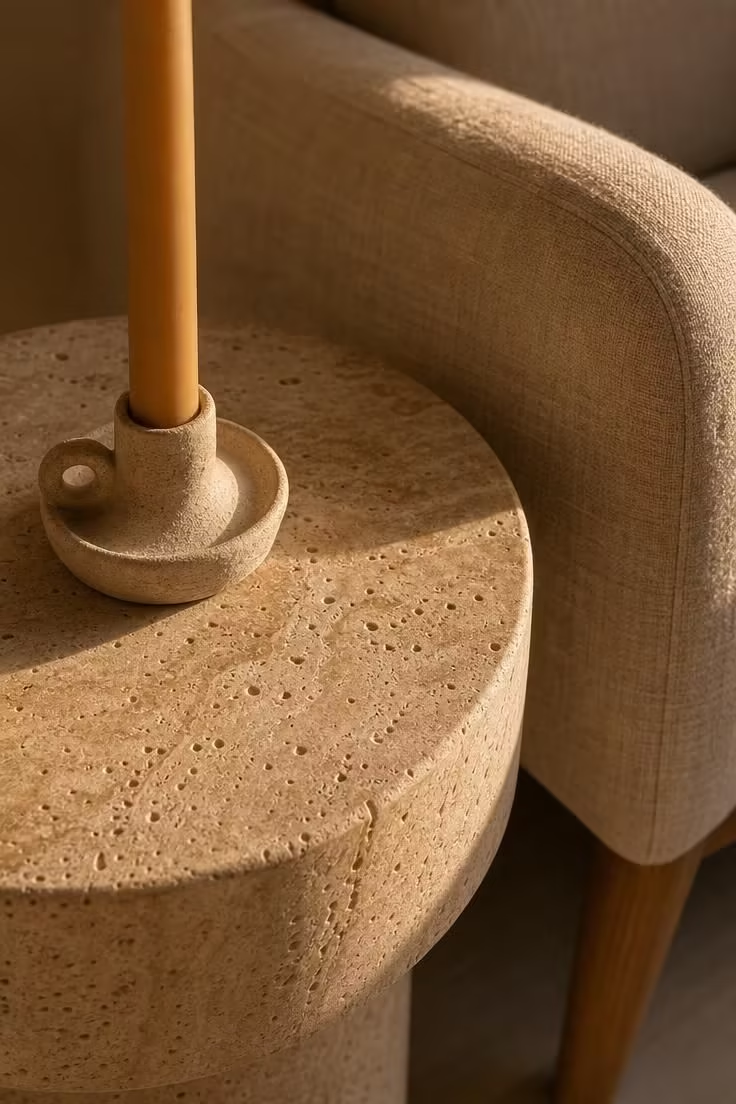
Travertine has a presence that most side table materials cannot match.
The pitting in the surface catches light and shadow at the same time, which gives a small object real visual depth.
Placing it beside a rounded linen chair creates a conversation between hard and soft, rough and smooth.
The neutral color palette here, sand and cream and pale honey, keeps the pairing quiet.
Nothing fights for attention, so your eye moves slowly across the textures.
An unglazed ceramic holder adds one more layer of handmade character to the arrangement.
A corner like this does not photograph well from across the room, but up close it tells you everything about the space.
Style Blueprint:
- Small round travertine side table
- Rounded low-slung armchair in oatmeal linen
- Tapered ash wood chair legs
- Handmade unglazed ceramic holder
- Beeswax taper
A Recessed Wall Niche With Dried Eucalyptus and a Matte Black Sconce
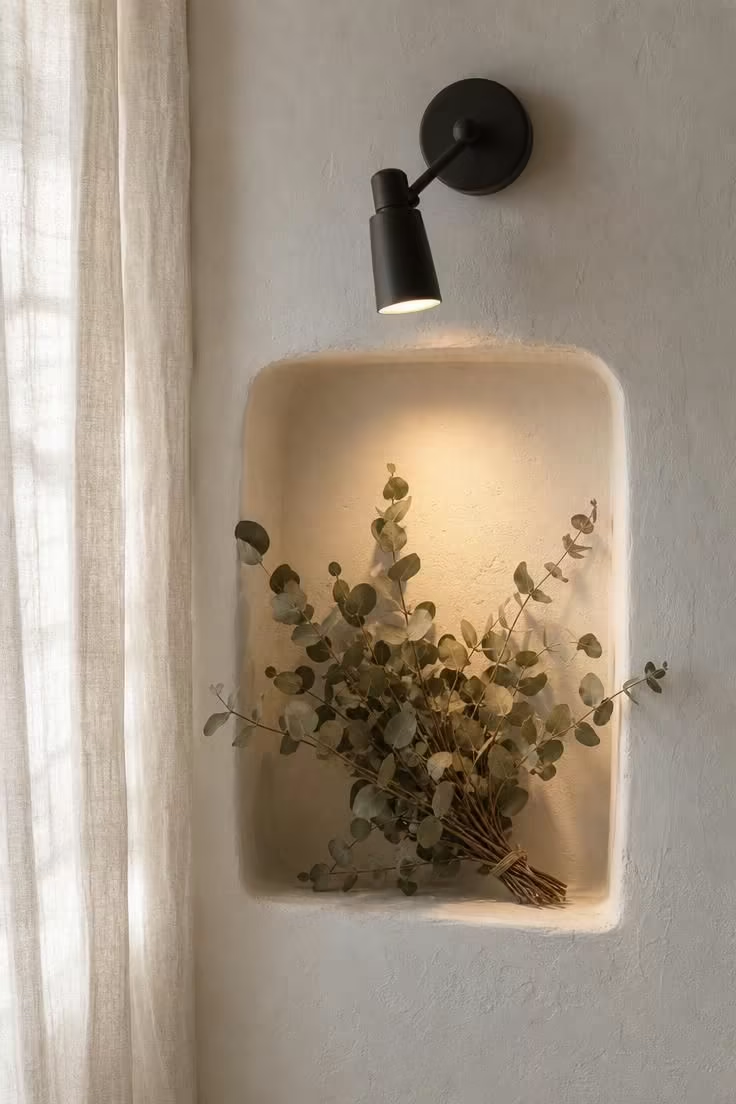
A recessed niche gives a wall something to hold onto.
It breaks the flat surface and creates a small stage where even a single object can feel deliberate.
Dried eucalyptus works better than fresh here because the muted sage tones sit closer to the plaster color, keeping the palette tight.
The matte black sconce above does two things at once: it provides directed reading light, and it draws a strong vertical line that anchors the composition.
Black against white plaster is a contrast that Japandi handles well, bold enough to notice but not loud.
An adjustable arm means the light can shift to follow wherever you sit.
The niche itself becomes a kind of altar for small, chosen objects, and that restraint is where wabi-sabi decor lives.
Plaster texture around the opening adds warmth that painted drywall would not.
Style Blueprint:
- Shallow recessed wall niche (12 inches deep)
- Dried eucalyptus bundle
- Matte black adjustable reading sconce
- White plaster wall with visible texture
- Sheer linen curtain nearby
A Tatami Mat Corner With an Iron Tripod Floor Lamp
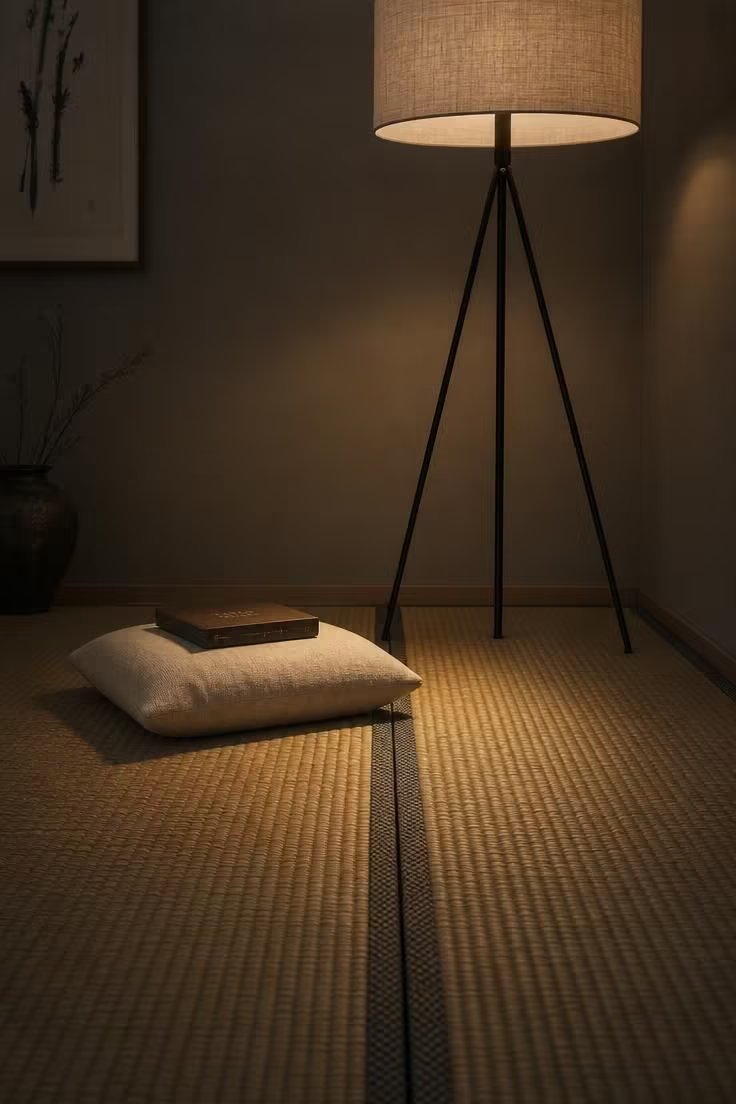
Tatami mats do something to a room that no rug can replicate.
The woven rush surface has a scent, a give, and a texture that registers before you even sit down.
From floor level, the linear borders of the mats create a geometry that organizes the whole corner.
This is a minimalist reading nook reduced to its simplest parts: a mat, a cushion, a lamp, a book.
The iron tripod lamp keeps the light contained to one area, which makes the rest of the room feel further away.
Style Blueprint:
- Two tatami mats (standard size, laid edge to edge)
- Slender black iron tripod floor lamp with linen drum shade
- Raw cotton cushion in natural cream
- Soft warm gray wall paint
- One closed hardcover book
Design Pro-Tip: The fewer objects in a reading nook, the more each one matters. Before adding anything, ask whether the space would feel worse without it. If the answer is no, leave it out. A japandi reading nook earns its calm by subtraction, not addition.
A Raw Linen Curtain Partition With a Sheepskin Floor Layer
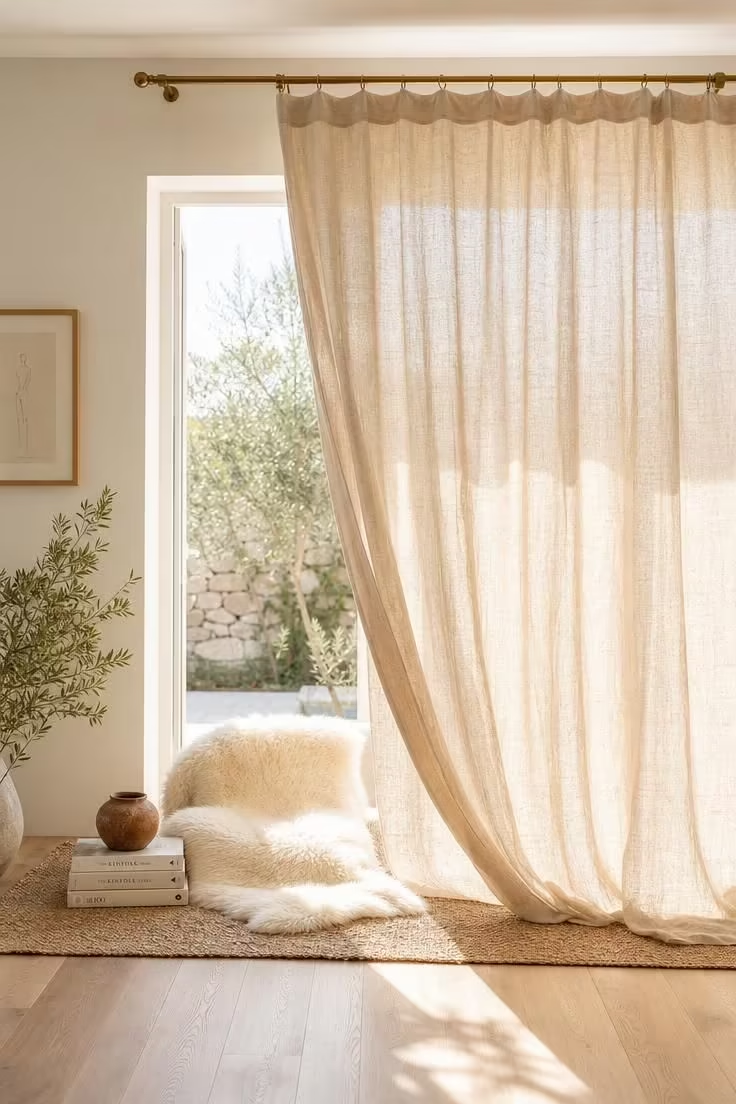
A curtain is the softest wall you can build.
Raw linen has enough weight to hang straight but enough transparency to let light through, and that balance makes it better than cotton or canvas for a partition.
When the sun hits the fabric from behind, the weave pattern becomes visible, turning a plain divider into something worth looking at.
The sheepskin over jute combination creates two layers of texture underfoot, one rough and one impossibly soft.
That contrast is felt more than seen, and it makes the floor itself part of the comfort of the space.
A brass curtain rod adds one warm metallic note that ties the linen and the wood flooring together.
Three books and a clay pot on the floor are enough to make the corner feel lived in without filling it up.
Style Blueprint:
- Floor-to-ceiling raw linen curtain
- Simple brass curtain rod
- Sheepskin throw over a jute area rug
- Small handmade clay pot
- Light wood flooring
A Wabi-Sabi Clay Accent Wall With an Indigo Cotton Cushion
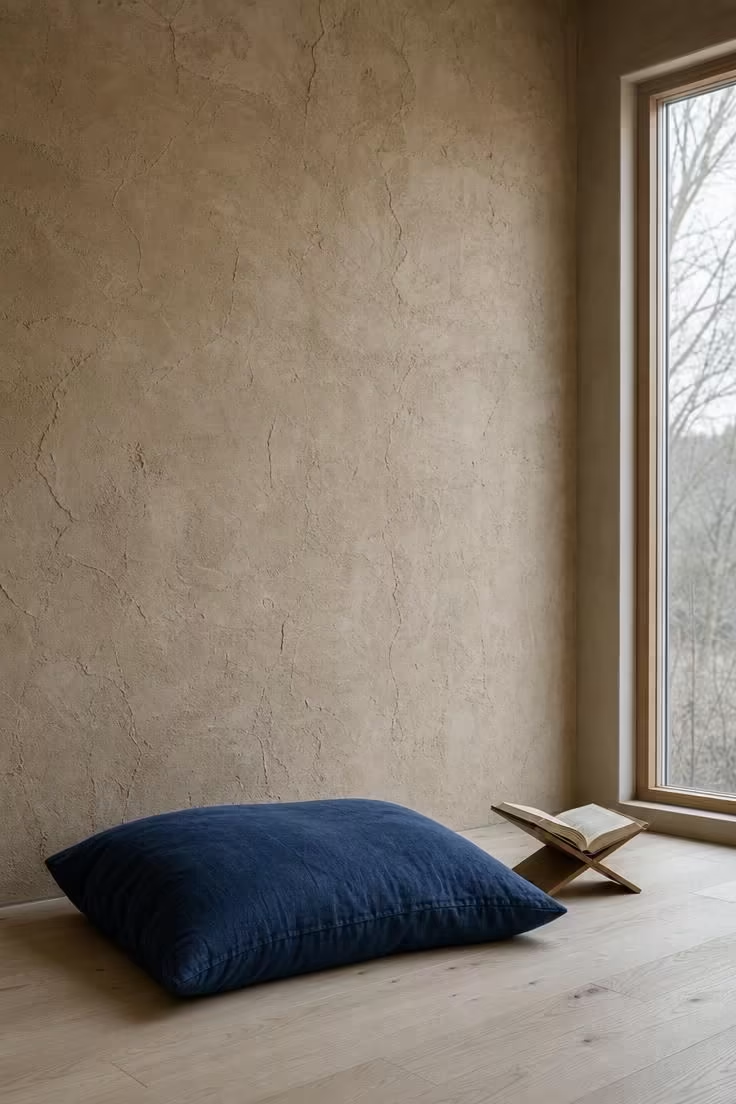
Clay walls carry their own history in every crack and trowel mark.
The imperfections are not flaws; they are the point, and they give the surface a quality that paint on drywall will never have.
Against that warm, irregular background, a single indigo cushion becomes the strongest element in the room.
Deep blue and warm sand is a color pairing that has worked for centuries in both Japanese and Scandinavian interiors.
The wooden book stand is a small detail that changes the reading experience, holding pages open so your hands stay free.
Overcast light is the best light for a textured wall because it removes harsh shadows and lets every ridge and valley show evenly.
This is wabi-sabi decor at its most direct: beauty in the unfinished, comfort in the imperfect.
A room does not need to be polished to feel complete.
There is a stillness in uneven surfaces that smooth walls cannot produce.
Style Blueprint:
- Clay-finish accent wall in warm sand tone
- Large floor cushion in deep indigo cotton
- Simple wooden book stand
- Pale hardwood flooring
- Cool, flat natural light (no direct sun)
A Pale Bamboo Ladder Shelf With Turned Ceramic Bookends
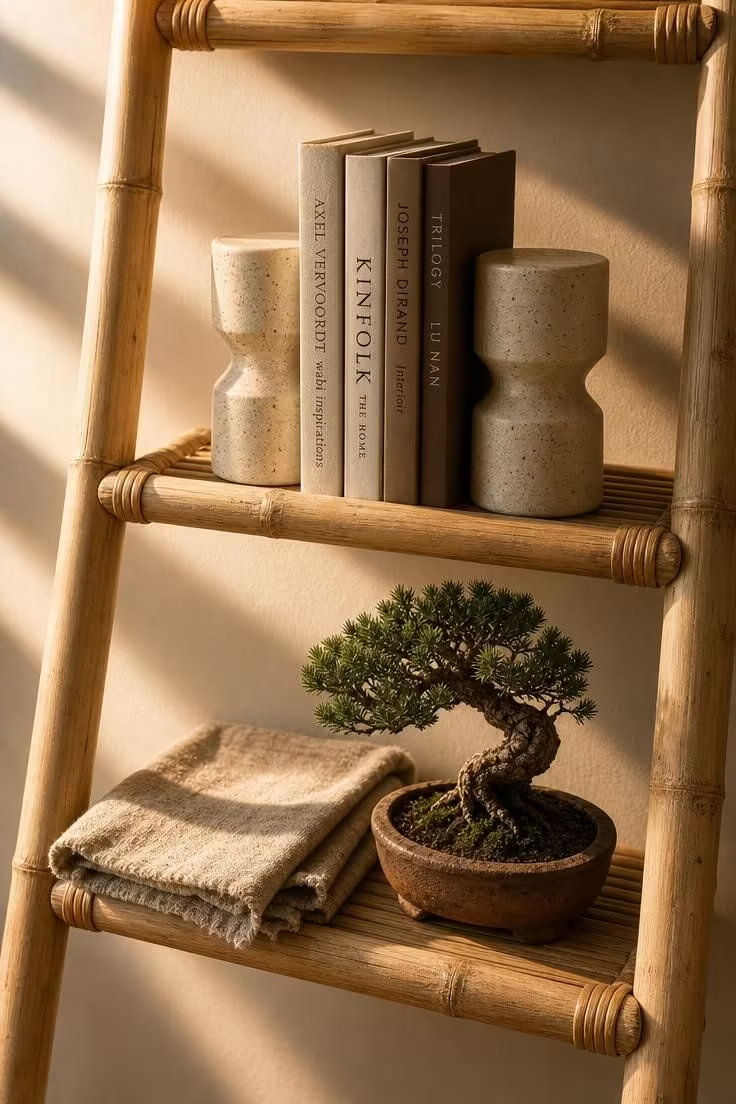
A ladder shelf leans against a wall with a casualness that built-in shelving cannot match.
Bamboo is lighter than most hardwoods, both in color and in actual weight, which makes the whole structure feel temporary in the best way.
Hand-turned ceramic bookends have slight variations in shape and glaze that machine-made versions lack.
Those small differences matter here because everything else in the scene is neutral, so texture carries the visual interest instead of color.
A bonsai in a clay pot adds one living element that changes slowly over time.
The linen cloth folded on a rung is a practical touch, useful as a reading lap blanket or a surface cover.
Style Blueprint:
- Leaning pale bamboo ladder shelf (4 rungs)
- Two hand-turned speckled cream ceramic bookends
- Small bonsai in a shallow clay pot
- Folded natural linen cloth
- Warm white wall
A Rounded Concrete Stool Under a Woven Reed Pendant Light
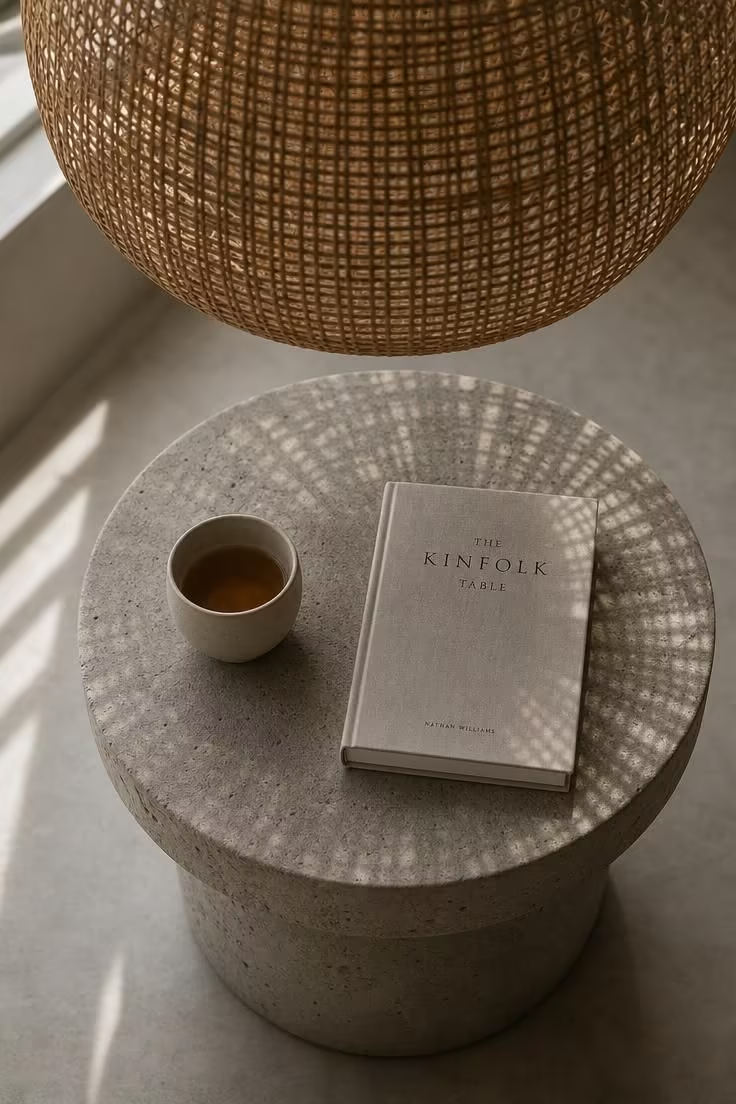
Concrete and reed should not work well together, but the contrast between industrial weight and organic lightness is exactly what makes this pairing land.
The stool has enough mass to feel permanent, like a stone pulled from a riverbed and placed in the corner of a room.
Overhead, the reed pendant breaks every ray of light into pattern, scattering it across the concrete in lines and curves that shift as the sun moves.
That kind of changing light gives a static corner a sense of motion throughout the day.
The pitted surface of the concrete holds shadow in its small craters, which adds a depth that smooth surfaces miss.
A ceramic teacup and a book on the surface are all it takes to make this feel like a place someone comes back to.
Two circles stacked vertically, stool below and pendant above, create a geometry that is simple but hard to forget.
The pairing reads as both modern and ancient, which sits right at the center of Japandi thinking.
Style Blueprint:
- Small rounded concrete stool (side table height)
- Large woven reed pendant light
- Ceramic teacup with matte finish
- Closed hardcover book
- Pale gray concrete with natural pitting
A Matte Black Metal Frame Daybed With a Sand-Toned Linen Mattress
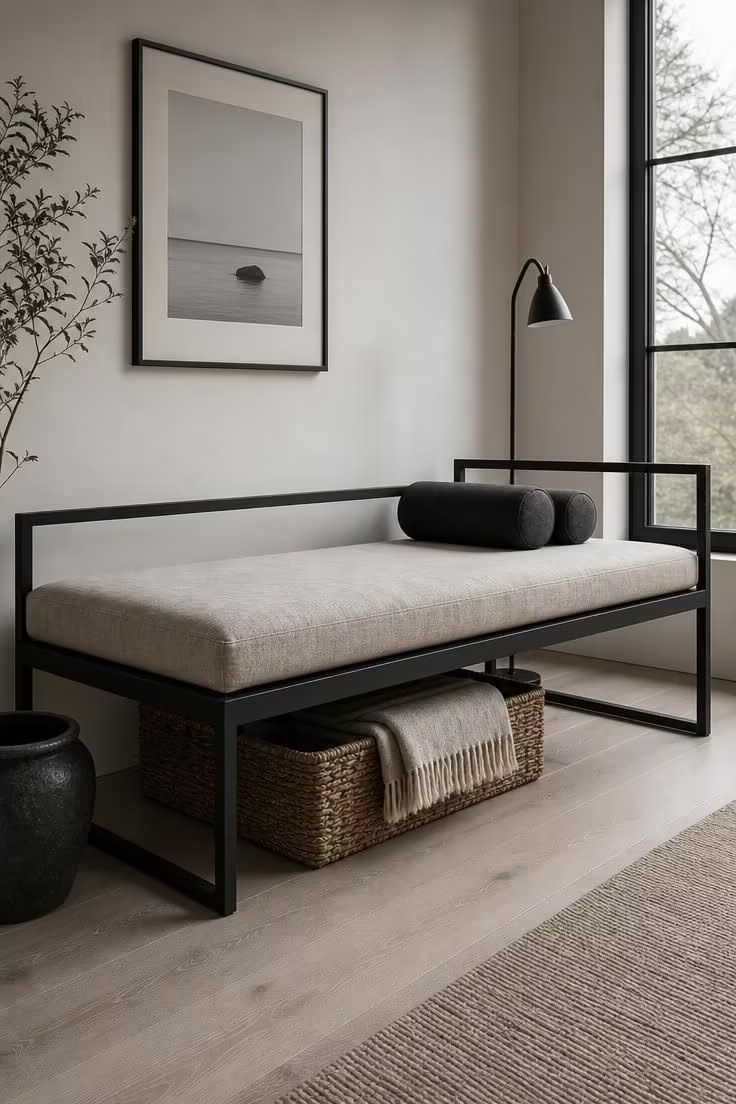
Metal frames in Japandi spaces work when the lines are thin enough to feel drawn rather than built.
This daybed reads as a single dark stroke against a pale wall, and that graphic quality is what gives the piece its presence.
Sand-toned linen softens the metal without hiding it, keeping the two materials in clear conversation.
Charcoal cylinders at one end create a headrest that signals this is a place for lying down with a book, not just sitting.
The woven basket beneath the frame solves storage without adding another piece of furniture to the room.
Overcast light is generous to this combination because it removes glare from the metal and lets the linen texture show clearly.
A daybed is the most versatile piece of japandi furniture for a reading nook because it works as both a seat and a place to stretch out.
Style Blueprint:
- Slim matte black metal frame daybed
- Sand-toned linen mattress cover
- Two charcoal cylinder pillows
- Woven seagrass storage basket
- Light ash hardwood flooring
Design Pro-Tip: Color in a Japandi space should feel like it arrived by accident. One indigo cushion, one terracotta pot, one charcoal cylinder. If you can count more than two saturated items in a reading nook, one of them should probably leave.
Conclusion
A japandi reading nook does not need much to work.
The 13 ideas here share a few things in common: honest materials, low furniture, soft light, and enough empty space for the room to breathe.
Start with one piece, a platform, a tatami mat, a daybed, and build around it slowly.
The best reading corners are the ones that make you forget the rest of the house is there.