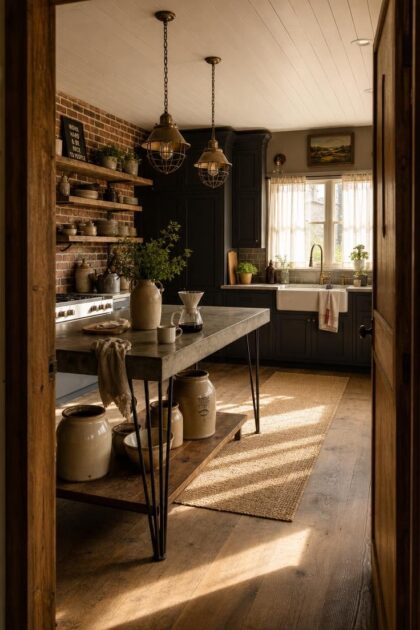
This post may contain affiliate links. If you make a purchase through these links, we may earn a commission at no additional cost to you.
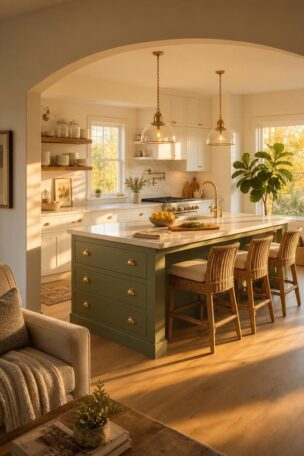
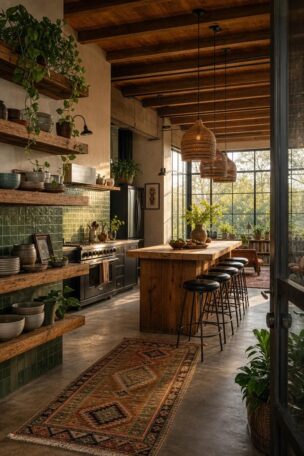
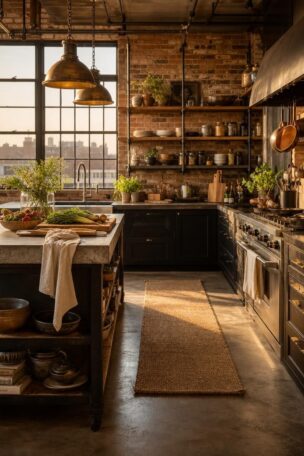
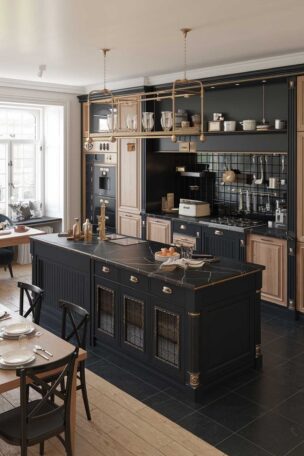
An industrial farmhouse kitchen earns its character from real material tension, not from a single color palette or a matching set of fixtures.
Raw metal meets reclaimed wood, matte finishes sit next to hand-thrown ceramics, and every surface tells you something about how the room was built.
These 11 industrial farmhouse kitchen ideas focus on specific pairings of textures, finishes, and objects that you can recreate in your own space.
Each one reads like a scene from an editorial shoot, grounded in materials you can source and install without a full renovation.
Hammered Copper Range Hood in an Industrial Farmhouse Kitchen
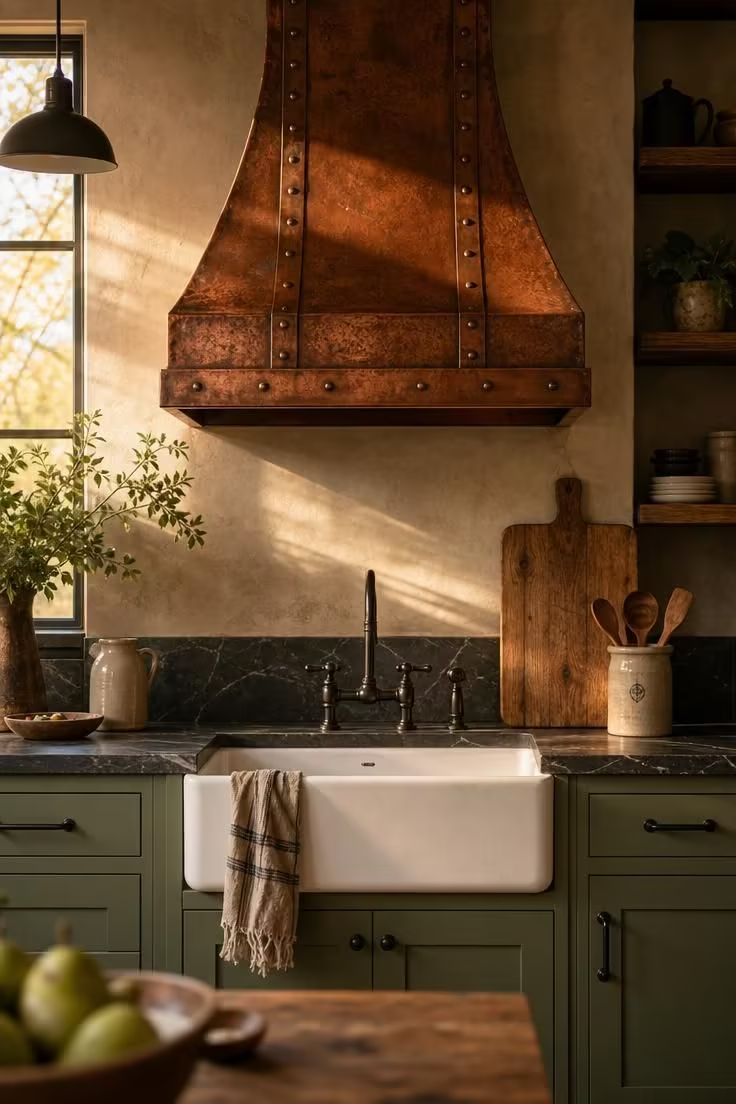
The copper hood commands this wall the way a fireplace commands a living room.
Its hammered surface catches every shift in afternoon light, turning a functional vent into something worth looking at from across the house.
Pairing it with a fireclay apron front sink grounds the scene in farmhouse tradition without making the space feel quaint or overly rustic.
The sage green cabinets work because they sit between warm and cool on the color wheel, letting the copper stay warm without competition.
Matte black hardware on every drawer pull and hinge adds the industrial thread that ties the metals together.
A soapstone countertop ages naturally over time, developing a patina that matches the copper’s slow shift in tone.
Style Blueprint:
- Hand-hammered copper range hood with exposed rivets
- White fireclay apron front sink
- Sage green painted lower cabinets
- Matte black iron pull handles and hinges
- Honed soapstone countertop
Black Iron Pipe Shelving Against Raw Brick Veneer
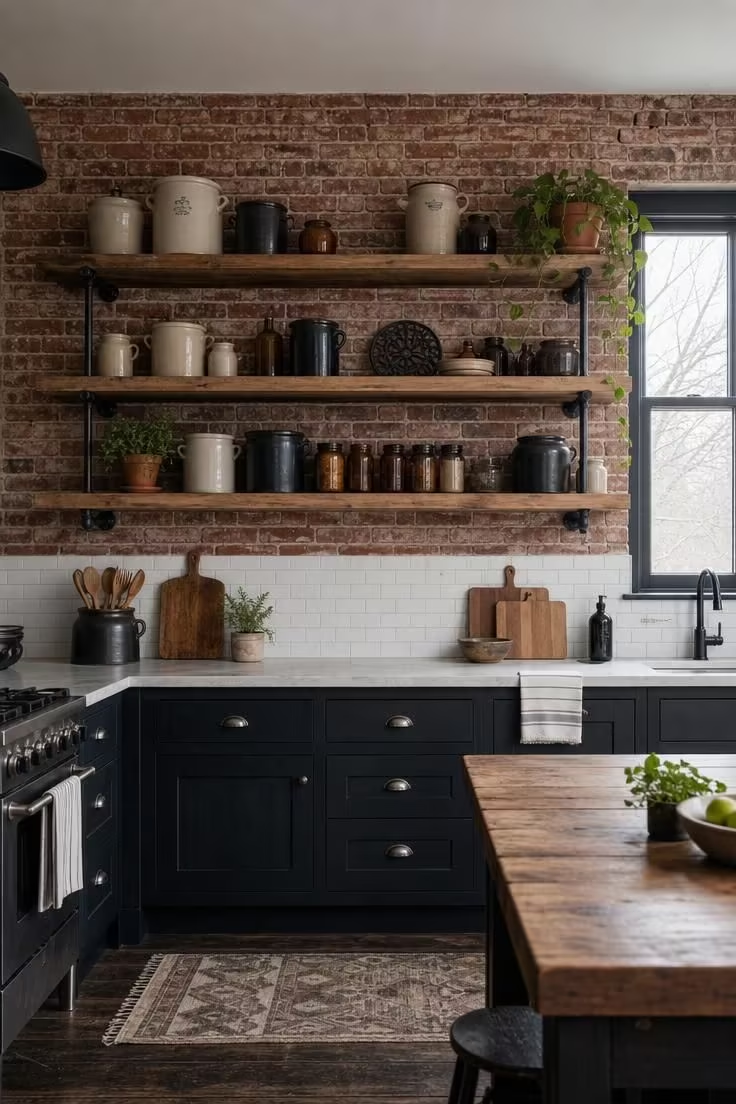
Three tiers of reclaimed wood shelving on iron pipe brackets turn a bare wall into the most photographed spot in the kitchen.
The black iron pipe fittings read as industrial without trying too hard, their threaded joints and floor flanges adding mechanical texture against the brick.
Red brick veneer behind the shelves brings warmth and dimension that painted drywall simply cannot match.
Stoneware crocks and amber glass jars give the shelves a purpose beyond display, holding flour, dried beans, and cooking salt within arm’s reach.
A trailing pothos in a terra cotta pot adds the one living element that keeps the arrangement from feeling like a museum exhibit.
This setup works in an open shelving kitchen because every item on the shelf earns its place through daily use.
The cool morning light that fills this wall reveals the grain patterns in the reclaimed pine and the subtle color variation across each brick, a combination that defines the industrial farmhouse kitchen at its most honest.
Style Blueprint:
- Black iron pipe shelf brackets with floor flanges
- Reclaimed pine plank shelves
- Thin-cut red brick veneer wall treatment
- Stoneware crocks and amber glass storage jars
- Trailing pothos in a terra cotta pot
Concrete-Look Porcelain Island With Steel Hairpin Legs
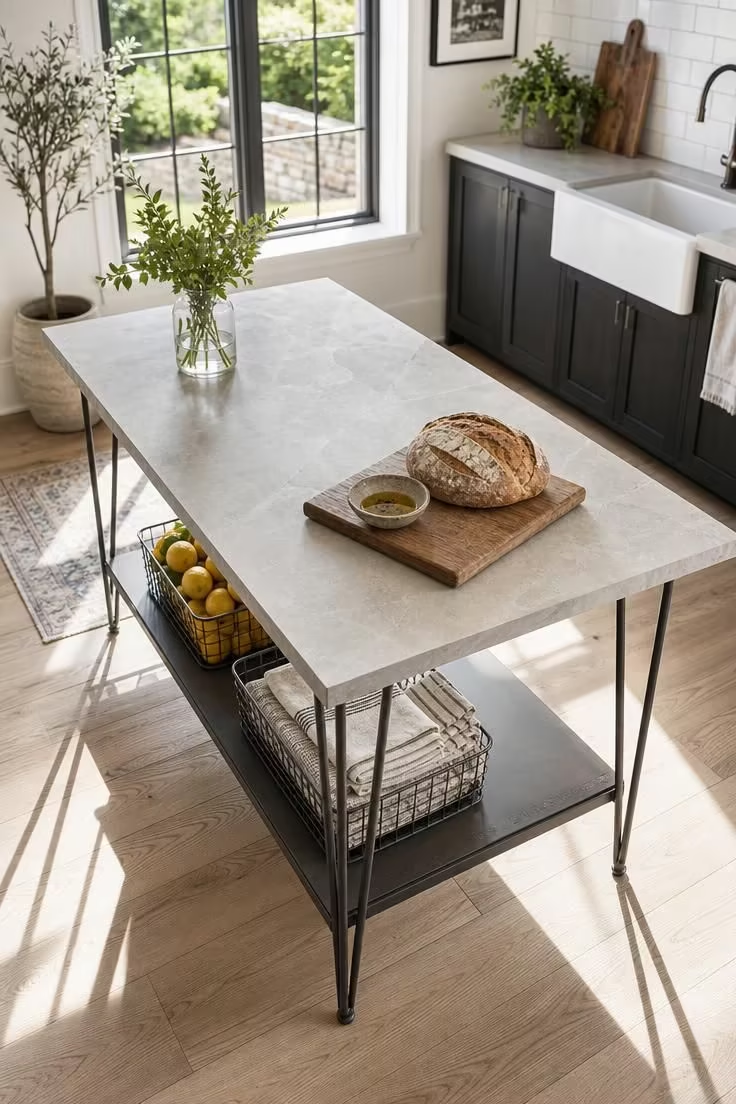
A freestanding island on hairpin legs gives the kitchen a lighter footprint than a traditional built-in cabinet island.
The concrete-look porcelain slab delivers the industrial weight of real concrete without the sealing, staining, and cracking that comes with a poured surface.
Steel hairpin legs in matte black keep the base visually open, letting light pass underneath and making the kitchen feel larger than its square footage suggests.
Wire baskets on the lower shelf serve as open storage for produce and linens, a detail that reads as farmhouse practicality rather than minimalist affectation.
The porcelain surface resists heat, stains, and scratches better than natural concrete, making it a workhorse for daily meal prep.
Bright midday light reveals the subtle veining in the slab, a detail that disappears under artificial light and rewards you for cooking during the day.
Wide-plank white oak flooring beneath the island creates a tonal bridge between the cool porcelain above and the warm wood tones across the rest of the space.
This is an industrial farmhouse kitchen island that you can disassemble and move if your layout changes, a flexibility that fixed cabinetry cannot offer.
Style Blueprint:
- Concrete-effect porcelain slab island top
- Matte steel hairpin legs
- Wire storage baskets on the lower shelf
- Wide-plank white oak flooring
- Stoneware and wood prep accessories
Aged Brass Cage Pendants Flanking a Plank Ceiling
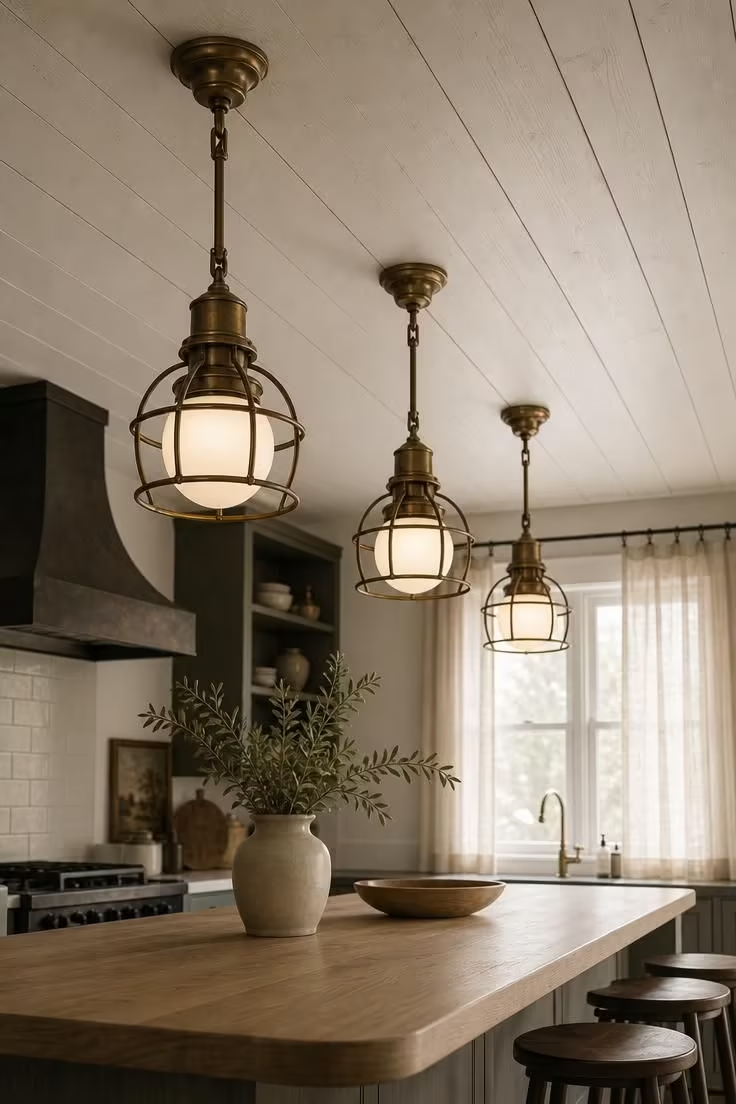
Looking up in this kitchen reveals as much character as looking across it.
The tongue-and-groove plank ceiling adds a farmhouse layer overhead that most kitchens ignore entirely, turning a flat white surface into something with grain, shadow, and depth.
Three aged brass cage pendants drop from that ceiling on simple black cords, their open metalwork casting geometric shadows on the planks above.
Frosted globe bulbs inside each cage soften the light output, avoiding the harsh glare that exposed filament bulbs sometimes produce at close range.
This pendant lighting kitchen arrangement works because the fixtures relate to each other and to the ceiling above them, creating a finished composition rather than isolated light sources.
The white oak counter below catches the brass tones and reflects them back, linking the upper and lower halves of the room in a single warm color story.
Style Blueprint:
- Aged brass cage-style pendant fixtures
- Tongue-and-groove white plank ceiling
- Frosted globe bulbs
- White oak dining counter with rounded edges
- Sheer linen window curtains
Design Pro-Tip: When hanging pendant fixtures over a counter or island, keep the bottom of each shade 30 to 36 inches above the surface. Too high and the light scatters without focus. Too low and seated guests stare directly into the bulb. Measure once before you drill.
Charcoal Shaker Cabinets With Cross-Handle Bridge Faucet
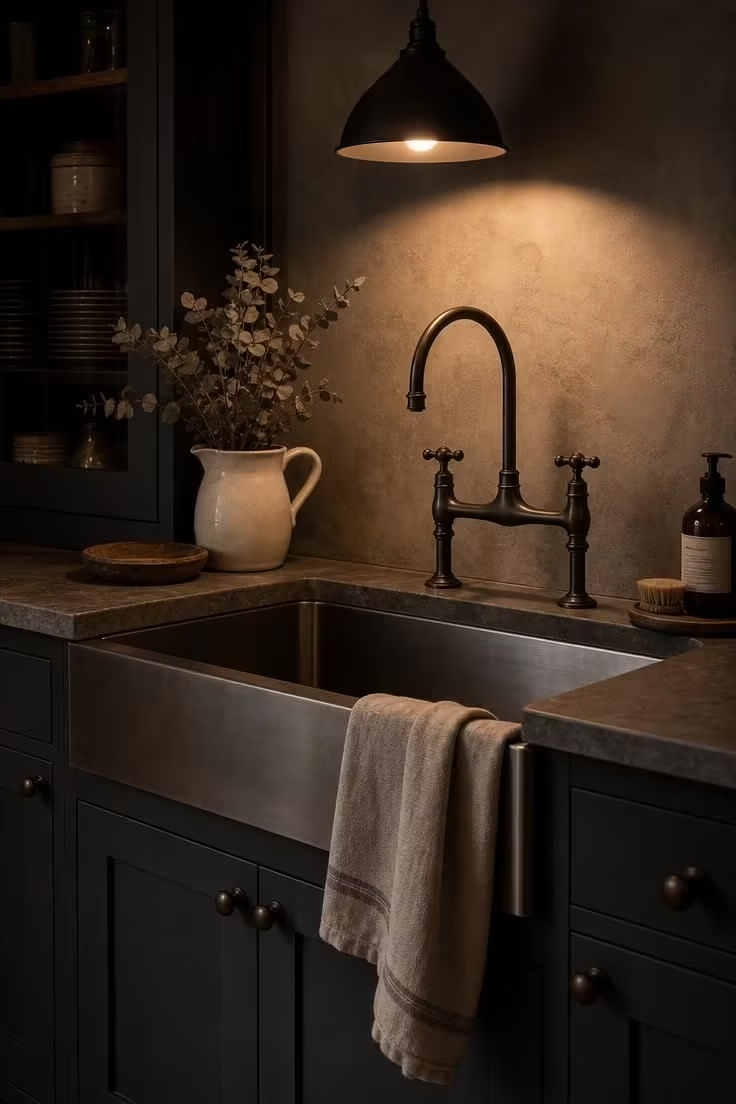
The bridge faucet is the piece that stops people in their tracks when they walk into this kitchen.
Its arched spout and cross handles recall turn-of-the-century plumbing, but the oil-rubbed bronze finish reads as industrial rather than antique.
Charcoal shaker style cabinets behind the sink provide a dark, grounding backdrop that makes the bronze hardware stand out without needing a spotlight.
The single-basin stainless steel sink sits deep enough to soak a full sheet pan, a practical choice that looks at home in a space designed around function.
Moody low light from the pendant above creates a focused pool of warmth directly over the work area, leaving the rest of the wall in soft shadow.
That contrast between light and dark is what gives this corner of the kitchen its editorial quality, the kind of drama that overhead fluorescents would flatten completely.
An oatmeal linen towel draped over the sink edge and a sprig of dried eucalyptus in an ironstone pitcher are the only styling props this scene needs.
Farmhouse kitchen cabinets in this charcoal shade absorb light rather than reflect it, making the room feel more contained and deliberate after dark.
The cross handles on the faucet are easier to operate with wet or greasy hands than a single-lever design, a detail that matters every day.
Style Blueprint:
- Charcoal-painted shaker style cabinets
- Oil-rubbed bronze cross-handle bridge faucet
- Deep single-basin stainless steel sink
- Matte black pendant fixture
- Ironstone pitcher with dried eucalyptus
Whitewashed Brick Backsplash Under Floating Oak Planks
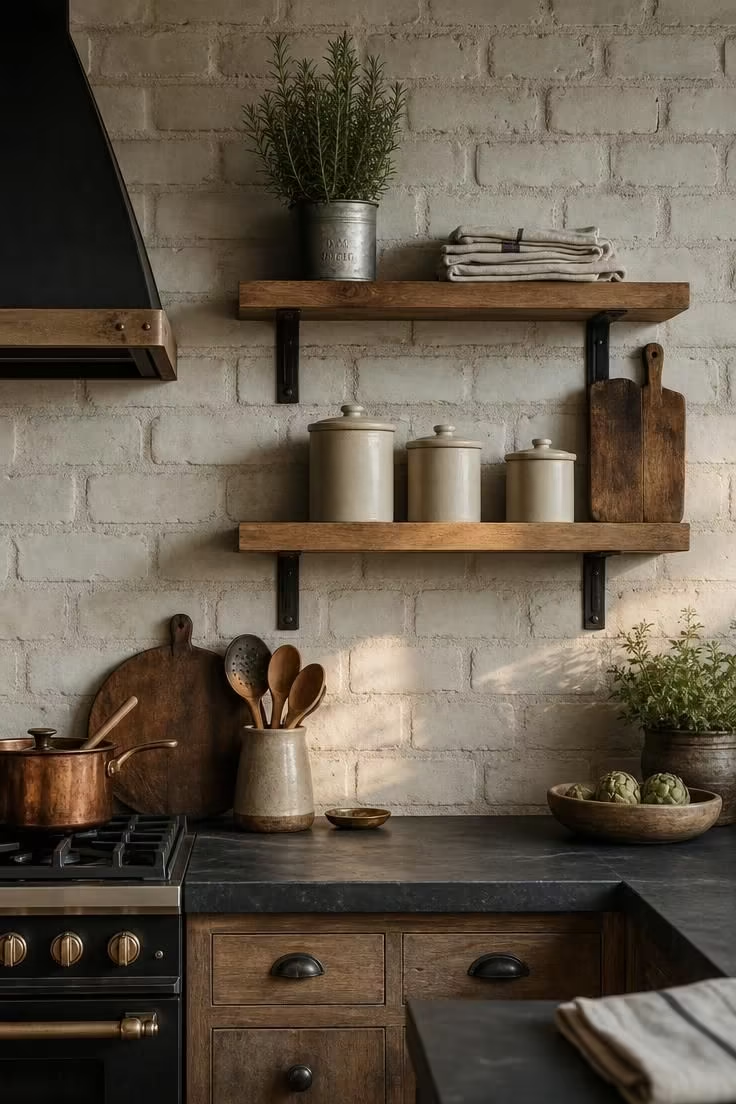
Whitewashing brick does something that paint alone cannot manage.
It softens the red and brown tones beneath without erasing them, leaving a surface that shifts in color depending on the time of day and the angle of light.
Two floating oak shelves mounted on simple iron L-brackets break the brick into horizontal bands, giving the eye a place to rest between the texture of the wall and the objects on display.
Ceramic canisters in matte cream sit beside a cutting board that shows years of knife marks, the kind of surface you keep because it tells a story.
A small rosemary plant in a repurposed tin can adds a living green note that makes the arrangement feel like a kitchen, not a styled photograph.
This is an exposed brick kitchen treatment that works in both new construction and older homes, since thin-cut brick veneer installs directly over existing drywall.
Reclaimed wood shelving in white oak holds up to steam and splashes better than pine, making it an ideal material for any industrial farmhouse kitchen zone directly above a cooktop.
Style Blueprint:
- Whitewashed thin-cut brick veneer panels
- Floating white oak shelves on iron L-brackets
- Matte cream ceramic canisters
- Honed slate countertop
- Potted rosemary in a repurposed tin container
Galvanized Steel Stools at a Douglas Fir Bar Counter
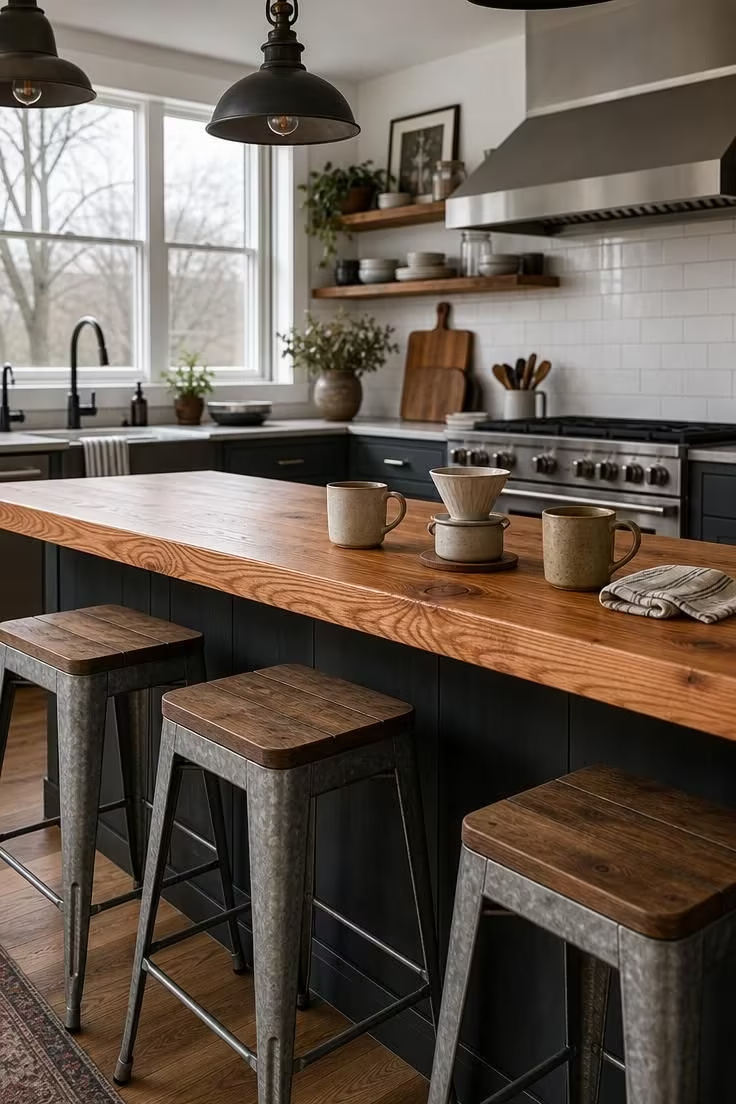
The breakfast bar is where this kitchen shifts from a cooking space into a gathering spot.
Three galvanized steel stools carry enough industrial character to anchor the look, their silvered surfaces marked with the subtle imperfections that come from the hot-dip coating process.
Wooden plank seats on top of each stool add farmhouse warmth where your body actually makes contact, a practical choice that cold metal alone does not offer.
The Douglas fir counter is thick enough to feel solid and grounded, its honey-toned grain running the full length of the bar without a single seam.
Stoneware coffee mugs and a ceramic pour-over dripper suggest morning routines, the kind of daily ritual that makes a kitchen feel inhabited rather than staged.
Cool morning light fills the space without harsh contrast, revealing the interplay between the silvered galvanized surfaces and the warm fir grain.
This layout works because the bar counter extends directly from the island, keeping the cook connected to anyone seated on the other side.
A butcher block countertop on the main island beyond the bar adds a second wood tone that keeps the material palette layered without feeling chaotic.
Style Blueprint:
- Galvanized metal stools with wooden plank seats
- Thick Douglas fir bar counter with satin finish
- Stoneware coffee mugs and ceramic pour-over dripper
- Charcoal lower cabinets behind the bar
- Extended island-to-bar counter layout
Slate Hexagon Floor Tile With a Jute Runner
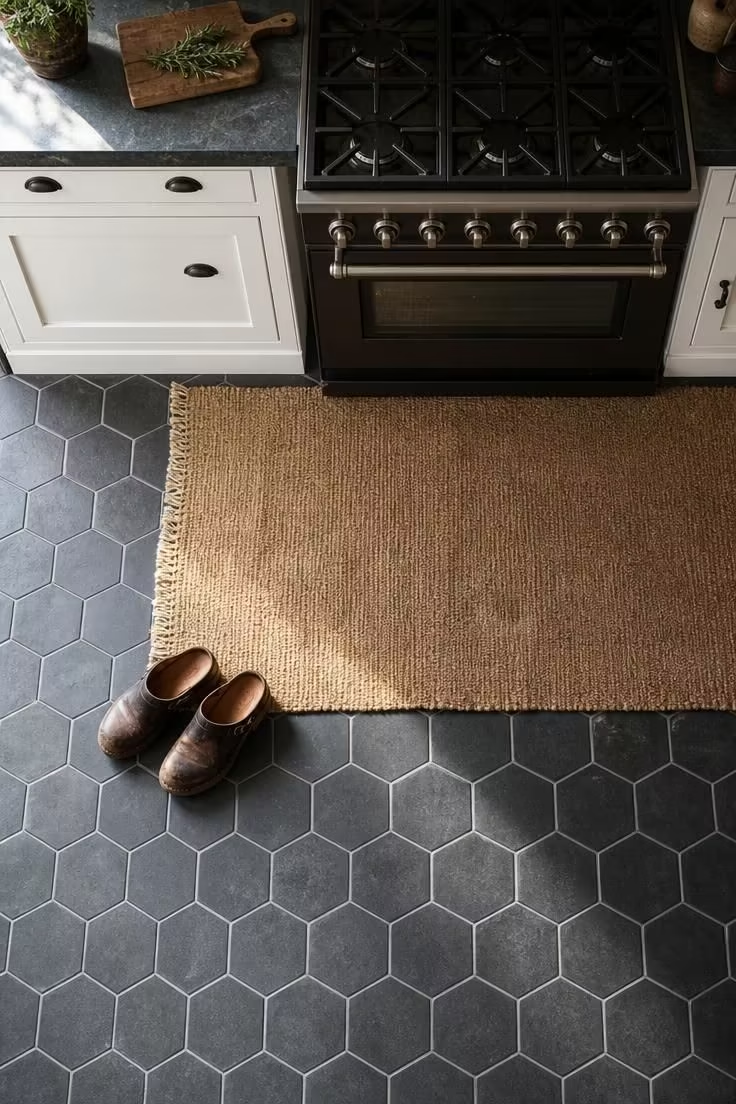
The floor is the largest uninterrupted surface in any kitchen, and slate hexagons make the most of it.
Each tile’s irregular cleft face catches light differently, creating subtle tonal shifts across the floor that flat porcelain cannot replicate.
A jute runner in front of the range adds farmhouse texture underfoot and protects the high-traffic zone from dropped utensils and grease splatter.
The hexagonal shape reads as more interesting than square or rectangular tile without crossing into a trendy pattern that dates quickly.
Ash-colored grout lines between the charcoal tiles create a quiet geometric grid that gives the floor depth when viewed from above.
Style Blueprint:
- Charcoal natural slate hexagonal floor tiles
- Natural jute runner with frayed edges
- Ash-colored grout for subtle contrast
- Soapstone countertop above white lower cabinets
Design Pro-Tip: Seal natural slate tiles with a penetrating impregnator before grouting, then apply a second coat after the grout cures. Slate is porous and will absorb grout pigment permanently if left unsealed. Two coats upfront save you from living with stained tile for years.
Glass-Front Iron Mullion Cabinets With Linen Interiors
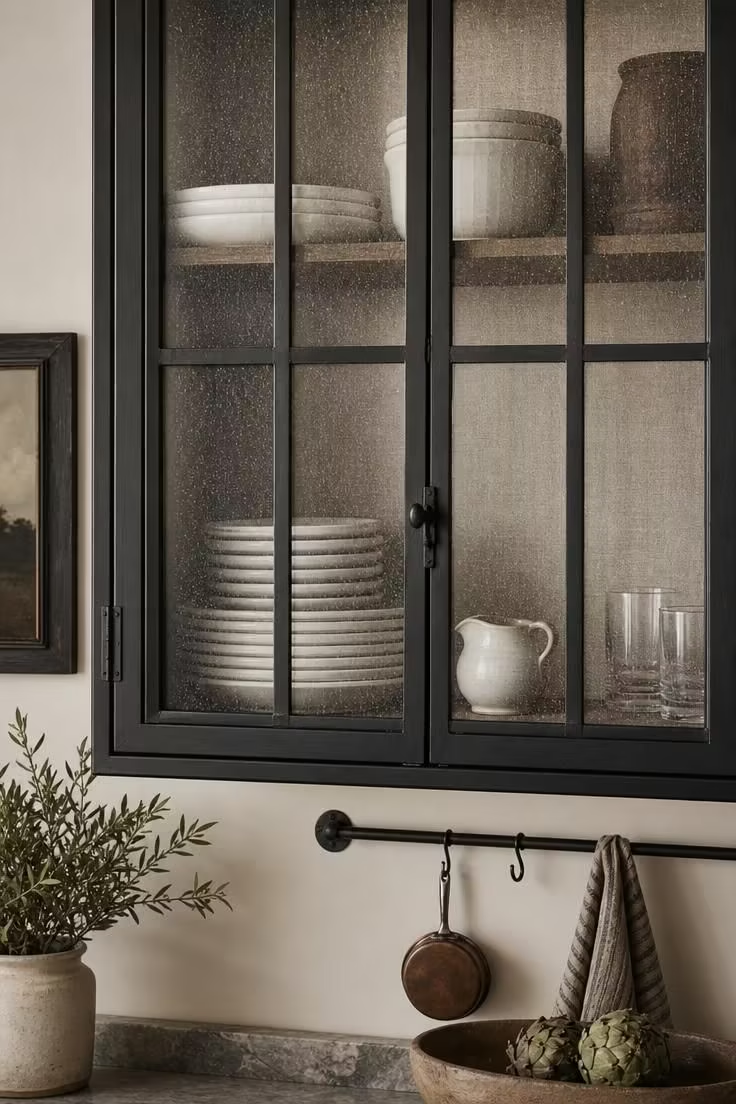
Seeded glass in iron mullion frames gives these upper cabinets the look of old factory windows repurposed for kitchen storage.
The glass texture obscures just enough to hide imperfect stacks and mismatched pieces behind a softened veil, which means your cabinets look deliberate without needing constant rearrangement.
Lining the cabinet backs with natural linen in a pale oatmeal shade adds warmth and acoustic softness, dampening the clink of stoneware against wood shelves.
White stoneware plates and an ironstone creamer glow behind the seeded glass when light hits from outside, turning ordinary dishware into a soft backlit display.
The iron mullion frames are finished in flat black to match the matte black hardware on the lower cabinets, creating a continuous metallic thread from counter to ceiling.
This combination of industrial framing and farmhouse linen works because neither material tries to dominate the other, a balance that makes the industrial farmhouse kitchen style feel collected rather than forced.
Style Blueprint:
- Seeded glass cabinet door panels
- Black iron mullion frames with rectangular divisions
- Natural linen cabinet back lining in oatmeal
- White stoneware and ironstone dishware
- Flat black finish to match lower cabinet hardware
Pulley Pendant and Conduit Sconce Lighting Cluster
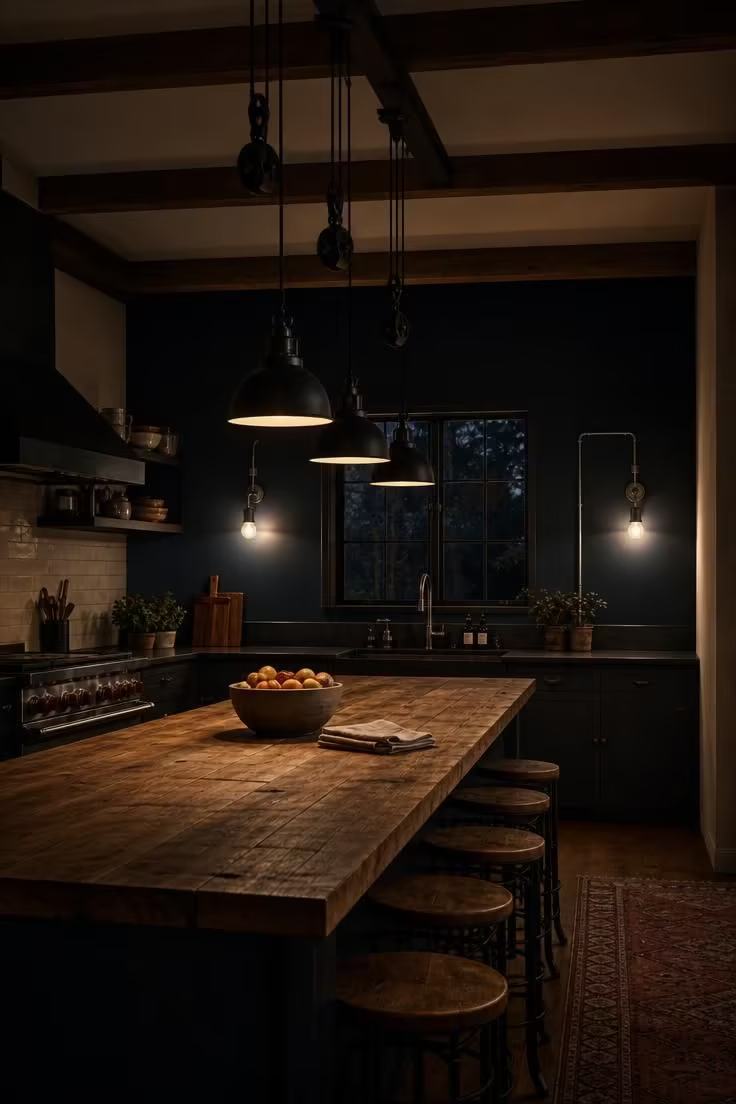
Layered lighting in this kitchen comes from two fixture families that share an industrial vocabulary without matching exactly.
The three pulley pendants over the island hang at staggered heights, their adjustable mechanisms letting you raise or lower each one depending on whether you need task light for chopping or ambient glow for a dinner party.
On the far wall, two conduit sconces flank the window like a pair of factory fixtures pulled from a salvage yard.
Exposed conduit piping runs along the wall surface rather than hiding inside it, turning the electrical pathway into a decorative line that draws the eye sideways.
The navy accent wall behind the sconces absorbs light and pushes the bright bulb glow forward, creating a contrast that makes the fixtures appear brighter than their wattage suggests.
Frosted bulbs in the sconces soften the output enough to prevent glare at seated eye level, a consideration that bare filament bulbs often ignore.
The reclaimed oak island top beneath the pendants picks up their warm downlight and reflects it softly, adding to the room’s overall warmth without any supplemental source.
This pendant lighting kitchen arrangement works because each fixture serves a distinct zone, the pendants for the island work surface and the sconces for the perimeter wall.
Together, they create the kind of dimensional light that a single overhead fixture cannot produce.
Style Blueprint:
- Adjustable matte black pulley pendant fixtures
- Exposed conduit wall sconces in brushed steel
- Frosted globe bulbs in all fixtures
- Navy painted accent wall behind sconces
- Reclaimed oak island top
Industrial Farmhouse Kitchen Character From a Wrought Iron Pot Rack
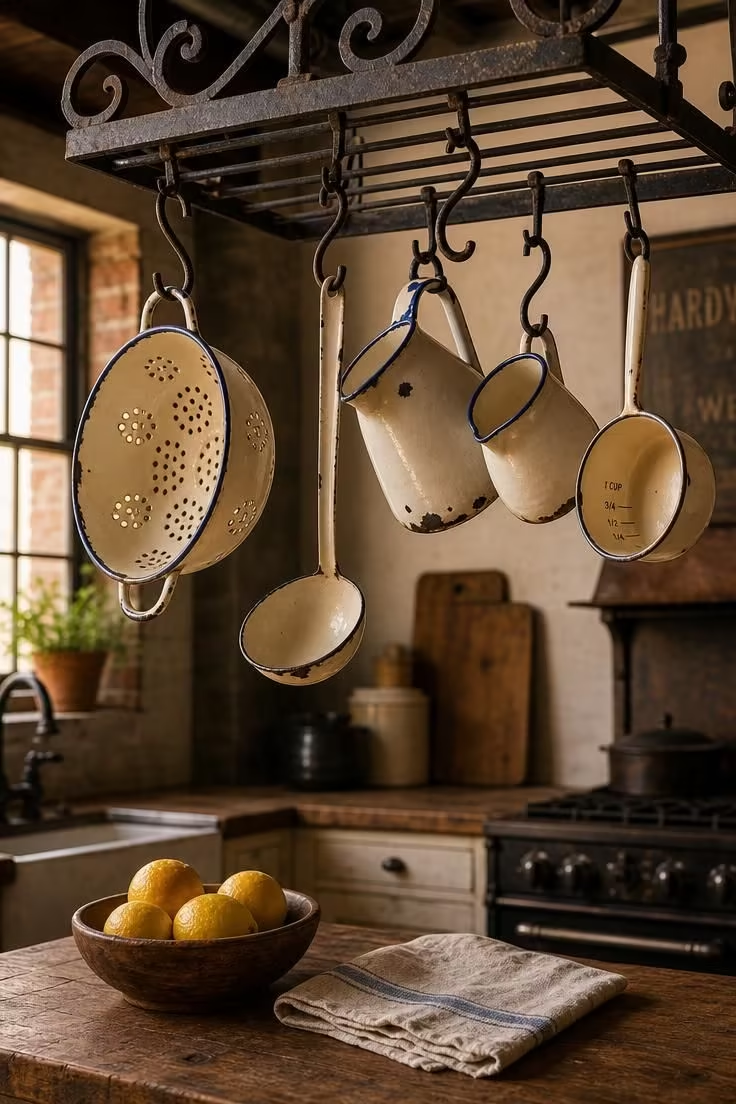
A wrought iron pot rack suspends your most characterful kitchen pieces at eye level, where they contribute to the room every time you walk through it.
Vintage enamelware in cream and cobalt blue brings a color accent that feels earned rather than applied, each chip and wear mark proving years of actual use.
The S-hooks that hold each piece are themselves industrial objects, their simple bent iron forms repeating the material language of the rack above.
A butcher block countertop below the rack adds the warmest surface in the room, its end-grain pattern darkening over years of oiling and use.
Golden light from a nearby window catches the glossy enamel surfaces and throws small bright reflections onto the ceiling, an effect that disappears under artificial light.
This is the kind of industrial farmhouse kitchen detail that costs almost nothing but changes the feel of the entire room.
Style Blueprint:
- Ceiling-mounted wrought iron pot rack with horizontal bars
- Vintage enamelware in cream with cobalt blue rims
- Wrought iron S-hooks for hanging
- Butcher block countertop
- Small ceramic bowl for fruit display
Design Pro-Tip: Hunt for vintage enamelware at estate sales and flea markets rather than buying reproductions. Originals have a heavier gauge, smoother enamel coating, and visible wear that new pieces take decades to develop. Look for pieces stamped with maker marks on the bottom for the best quality.
A Kitchen Built on Honest Materials
The best industrial farmhouse kitchen ideas start with a single honest material and build outward from there.
Copper next to fireclay, iron pipe against brick, porcelain on steel legs: each pairing in this collection works because the two materials have something to say to each other.
You do not need to renovate the entire room at once.
Start with one fixture swap, one shelf installation, or one surface upgrade, and let the space grow around it.
The industrial farmhouse kitchen is not a trend that expires next season.
It is a way of building a room from materials that age well, work hard, and look better with every year of use.