This post may contain affiliate links. If you make a purchase through these links, we may earn a commission at no additional cost to you.
A pared-back room can look serene in a photograph yet feel unwelcoming in daily life.
The usual instinct is to add more furniture or more decorations, which slowly erodes the minimalism that made the room appealing.
The real gap is rarely a shortage of objects.
It is a shortage of tactile surfaces, warm tones, and forgiving light.
Learning how to make a minimalist home cozy means working with the room’s restraint rather than against it.
What Actually Makes a Minimalist Room Feel Cold
Coldness in a sparse room usually traces back to three visible conditions: colors with blue or gray undertones, a run of hard and smooth surfaces, and one bright ceiling fixture doing all the work.
Remove the clutter and those conditions become more obvious, not less.
Emptiness gets blamed, but tone and material are the actual culprits.
For a warm neutral color palette, Molly Torres Portnof of DATE Interiors describes warm minimalism as pairing “simplicity and intentionality with warm, earthy tones, layered textures, and natural materials,” which produces a result she calls inviting and cozy.
That description is useful because it names the levers directly: what the surfaces are made of, what color they are, and how many layers of fabric and finish the room carries.
Sarah Ellison of Frank & Faber draws the contrast another way.
The style keeps minimalism’s “calm restraint,” she says, without “any of the austerity or starkness.” Restraint and austerity are not the same thing.
One is an editing choice.
The other is a byproduct of choosing finishes that reflect light sharply and absorb nothing.
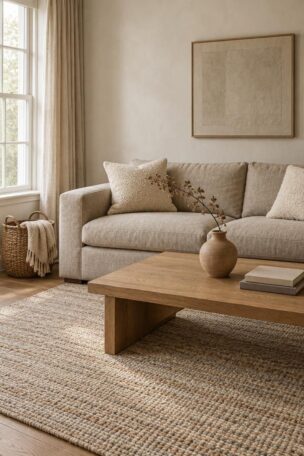
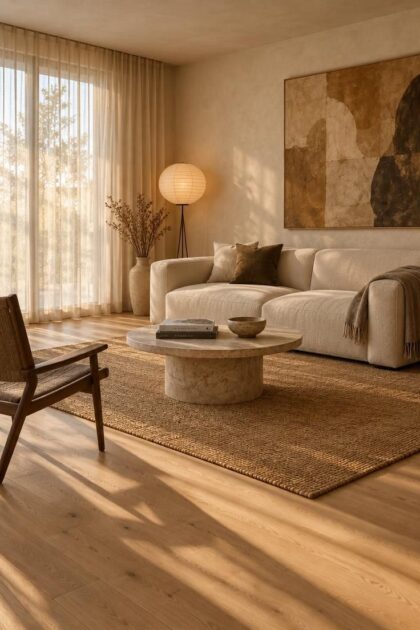
A cozy minimalist living room tends to have a particular signature when you look closely: a few large soft elements, several small warm lights, and a mix of matte and textured surfaces within a narrow tonal range.
None of those additions crowds the room.
They change how the existing space reads.
Start by noticing which surfaces you touch, see, and use most often: the sofa, the rug underfoot, the wall behind the reading chair, the lamp beside it.
Those spots carry most of the room’s warmth, so they are where a first change pays off.
A new throw pillow on a distant chair will do less than a better textile on the seat you actually use.
Design Pro-Tip: Before buying anything, note which surfaces you touch, see, and use most often; those are the highest-impact places to add warmth.
Warm Minimalism Defined
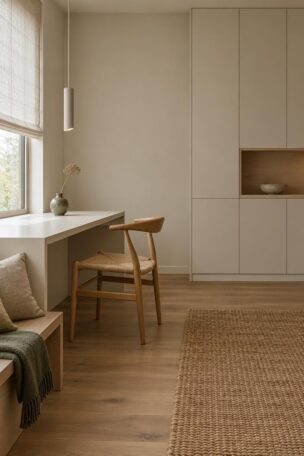
Warm minimalism keeps the edited composition of minimalism and replaces its stark whites and polished chrome with earthy tones, natural materials, and softened shapes.
Bethany Adams describes the approach as keeping minimalism’s simplicity while welcoming “softer colors and richer materials.” The structure of the room stays spare.
The surfaces do the emotional work.
Jordana Ashkenazi of Element One House frames the goal as “calm, uncluttered spaces that still feel warm and lived-in… a clean look, but never stark.” Her material list is telling: natural woods, stone, and linen mixed with bouclé or wool.
Each of those materials has visible grain, weave, or surface variation, which gives the eye something to rest on without introducing pattern.
The approach has deep roots.
Scandinavian design grew partly from a wish to bring light and comfort into long dark winters, and hygge is the word most often attached to that impulse.
For layered lighting ideas, japanese ideas of ma, or meaningful negative space, and wabi-sabi, an appreciation for the imperfect and weathered, supply a second lineage.
Both traditions treat empty space as something to compose, not something to fill.
Modern warm minimalism also draws on the legacy of Finnish architect and designer Alvar Aalto, whose bent laminated birch furniture of the early 1930s demonstrated that modernist simplicity could be expressed through warm, natural materials rather than tubular steel.
That single move, wood instead of metal, previewed the whole direction.
The distinction from ordinary minimalism comes down to what gets edited out.
A stark room removes color, texture, and softness in addition to clutter.
A warm minimalist room removes only clutter, then spends its visual budget on fewer but richer surfaces.
Treat the style as a filter rather than a separate identity: the room you already have, passed through a set of choices about tone, material, and light.
Design Pro-Tip: Warm minimalism is not a separate style; it’s a filter you apply to the minimalist room you already have.
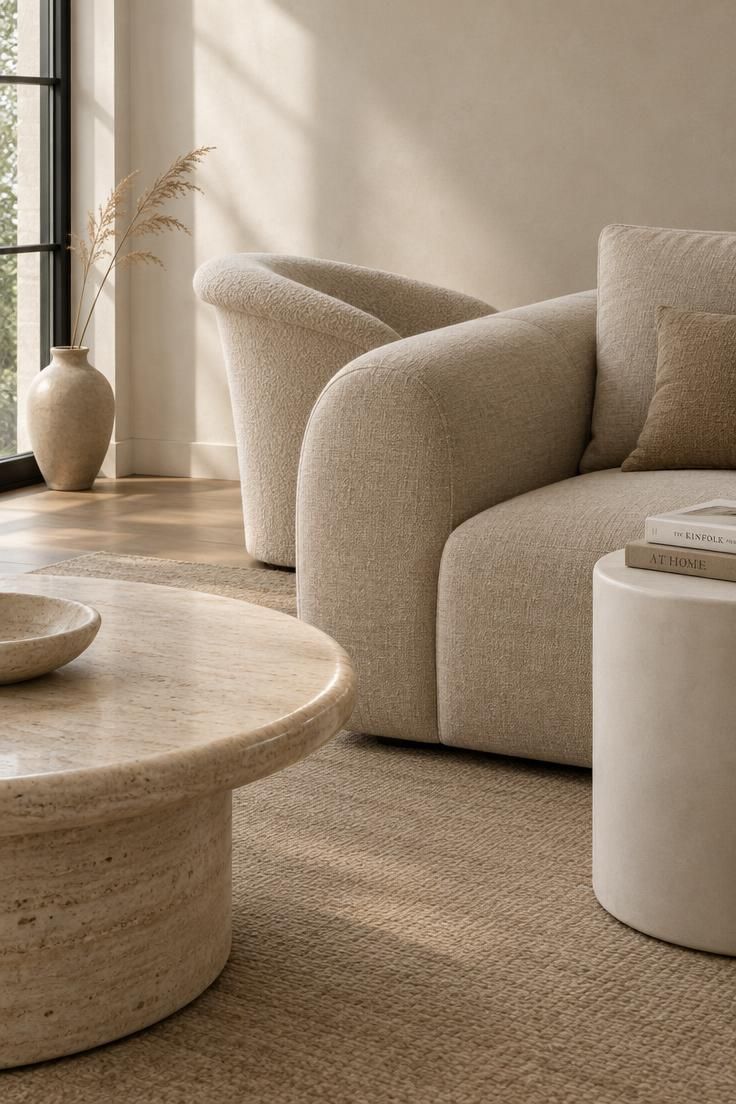
Use Furniture Edges as the Visual Detail a Bare Room Is Missing
Many minimalist rooms have enough surface softness but still feel unfinished because every silhouette is a plain slab.
A quiet way to add coziness is to treat the outer edges of furniture as a styling decision rather than leaving them as default factory lines.
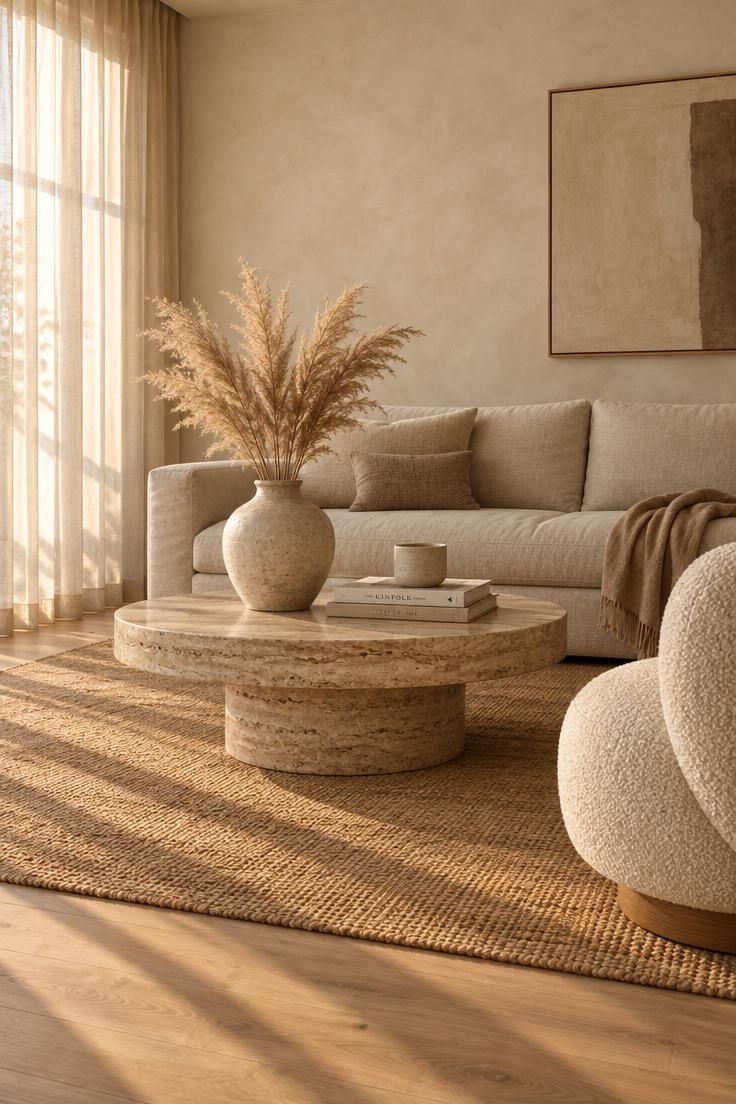
Rounded corners, tapered legs, softly rolled arms, and stepped bases give the eye a place to pause without introducing extra accessories.
That small change makes a pared-down room feel considered instead of simply empty, and it works with the same neutral palette that already anchors the space.
The easiest place to start is where the body touches the furniture most often.
A sofa with slightly flared arms and a low rounded back reads more inviting than a rigid box frame, while a cylindrical side table softens the corner of a seating group.
An oval dining table removes the hard corners that can make a compact room feel like a corridor, and the curved edge also changes how people move around the table during an ordinary weeknight meal.
Scale matters here as much as shape.
A single rounded chair in a room of rectangular casework may look accidental, but repeating one edge idea across two or three pieces gives the room a quieter rhythm.
The repetition can appear in different materials, such as a soft arc in a lounge chair, a round travertine coffee table, and a pillow with a piped curved seam.
The shape repeats while the surfaces stay varied.
There is a tradeoff to this approach.
Curved and shaped pieces often give up some storage usefulness, because the space tucked behind a rounded cabinet side or under a flared arm becomes less practical for tucking things away.
In a small room, it may be worth choosing one sculptural item rather than several smaller curved pieces that each sacrifice a little floor area.
Keep the practical storage pieces rectangular and let the softer shapes live where storage is not the priority.
Wood finishes respond well to shaped edges because the contour creates a slight highlight along the worked surface.
A table apron with a simple bevel or a chair back with a gentle bend reflects light differently than a flat cut.
Painted surfaces can do the same job in a softer way, especially when a low-sheen finish prevents the curve from reading as glossy.
In both cases, the shape becomes the ornament, which keeps the room decorative without adding density.
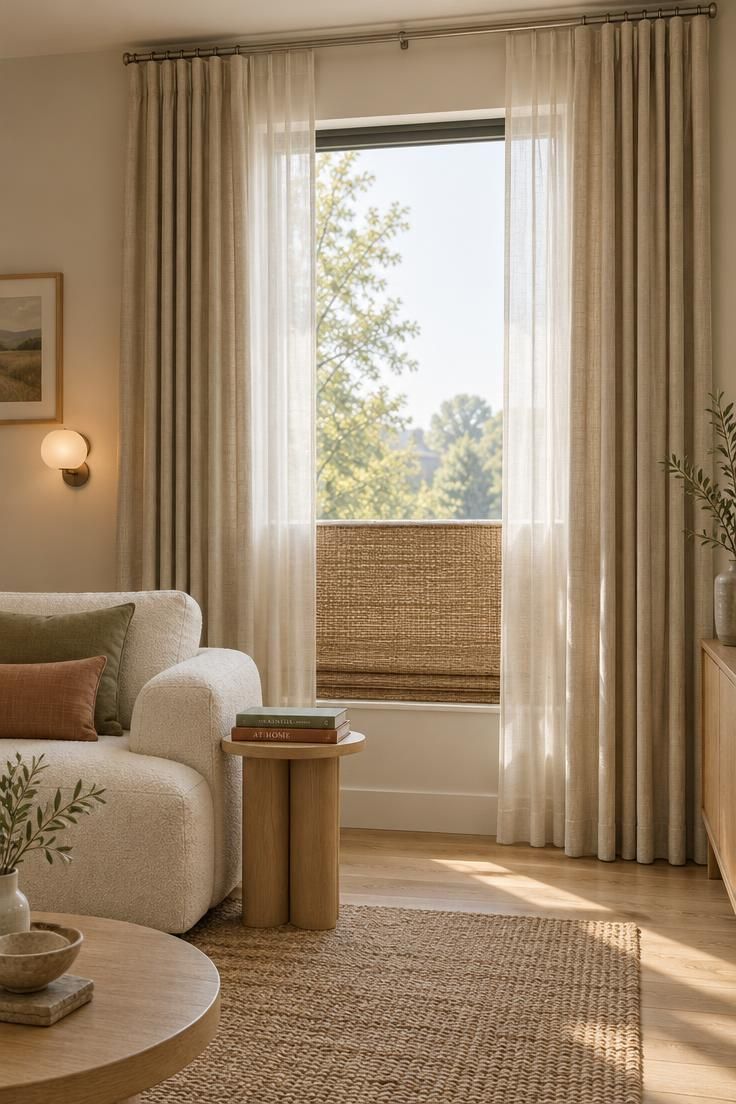
Use Drapery and Soft Vertical Layers to Warm Bare WindowsUse Drapery and Soft Vertical Layers to Warm Bare Windows
Bare windows are one of the quiet reasons a minimalist room can feel hard.
Glass, metal frames, and sharp daylight introduce contrast that furniture alone cannot soften.
A simple curtain treatment changes that by adding a soft vertical plane, bringing texture and warmth without unnecessary decoration.
Full-length panels in a matte linen or cotton blend are a natural starting point.
Choose fabric with a slightly open weave so daylight can filter through while the surface retains its soft, tactile quality.
Warm ivory, oatmeal, and camel work particularly well, especially when the fabric is one or two shades deeper than the surrounding walls.
This subtle difference makes the drapery visible as a distinct layer without creating strong contrast.
How the curtains hang matters as much as the fabric itself.
A simple rod positioned closer to the ceiling draws the eye upward and makes the window appear taller.
Back-tab panels conceal the hardware and create a clean, uninterrupted line, while ring clips introduce small metal details that can complement an otherwise soft room.
For warm minimalism, the simpler the heading, the more attention remains on the texture and natural folds of the fabric.
Curtain length also influences the composition.
Floor-reaching panels with a slight break or shallow fold at the bottom create a relaxed line, while panels that stop at the windowsill can make the window feel visually disconnected from the rest of the wall.
The goal is to let the fabric fall naturally, adding softness without excessive pooling on the floor.
Layering sheer and heavier curtains can introduce additional depth without visual clutter.
A sheer linen layer in warm ivory sits closest to the glass, while heavier oatmeal or camel panels hang in front on a double rod or track.
During the day, the heavier curtains remain open, allowing the folded fabric at either side to form soft, sculptural vertical lines.
Keeping these stacks mostly clear of the glass preserves daylight and maintains the room’s sense of openness.
Natural woven shades offer another way to introduce texture and privacy, though not every window needs multiple treatments.
A Roman shade in warm jute or woven oat fiber can provide screening, while simple curtain panels on either side add height and softness.
Selecting materials from a related family, such as linen and jute, keeps the arrangement cohesive rather than visually busy.
Drapery also changes how daylight enters the room.
Warm-toned, translucent fabrics gently filter incoming light and can soften the cool appearance of white walls.
The result is a more diffused quality of light that complements the natural wood, matte surfaces, and muted colors often found in warm minimalist interiors.
In a rented home, no-drill tension rods can provide a similar effect when the window frame and curtain weight allow.
Press-in café rods are another option for shorter, lightweight panels, offering a softer window treatment without permanent changes to the surrounding wall.
A well-edited rod and two calm panels can do more for a bare room than several small decorative objects.
The fabric introduces warmth, frames the daylight, and gives the wall a gentle vertical rhythm while preserving the simplicity that makes minimalism appealing.
Design Pro-Tip: When installing the rod, allow enough space beyond each side of the window for the gathered curtains to sit mostly off the glass. This creates a soft vertical frame without sacrificing natural light.
Soften the Geometry: Rounded Forms and Low Profiles
Straight lines and sharp corners are efficient, and a room composed entirely of them reads as rigid regardless of how warm its colors are.
Curved sofas, round mirrors, oval tables, and organically shaped ceramics introduce softness at the level of silhouette.
The eye follows a curve more slowly than it follows a corner.
Rounded shapes, curved mirrors, and organic silhouettes soften the straight lines of minimalist interiors, creating a more balanced and inviting atmosphere.
The effect is compositional: a curve interrupts the grid the room would otherwise form, and that interruption reads as ease.
Low-profile furniture with slim legs keeps the visual field open.
A low seat leaves more wall visible above it, which makes a small room feel less compressed.
Slim legs let floor show through beneath, which does the same for the ground plane.
The underlying idea is sequence.
A room reads as cozy when the eye moves from soft to hard and back again rather than encountering one material category at a time.
A curved bouclé chair beside a stone table beside a linen sofa offers that alternation.
Learning how to make a minimalist home cozy often comes down to arranging those transitions deliberately.
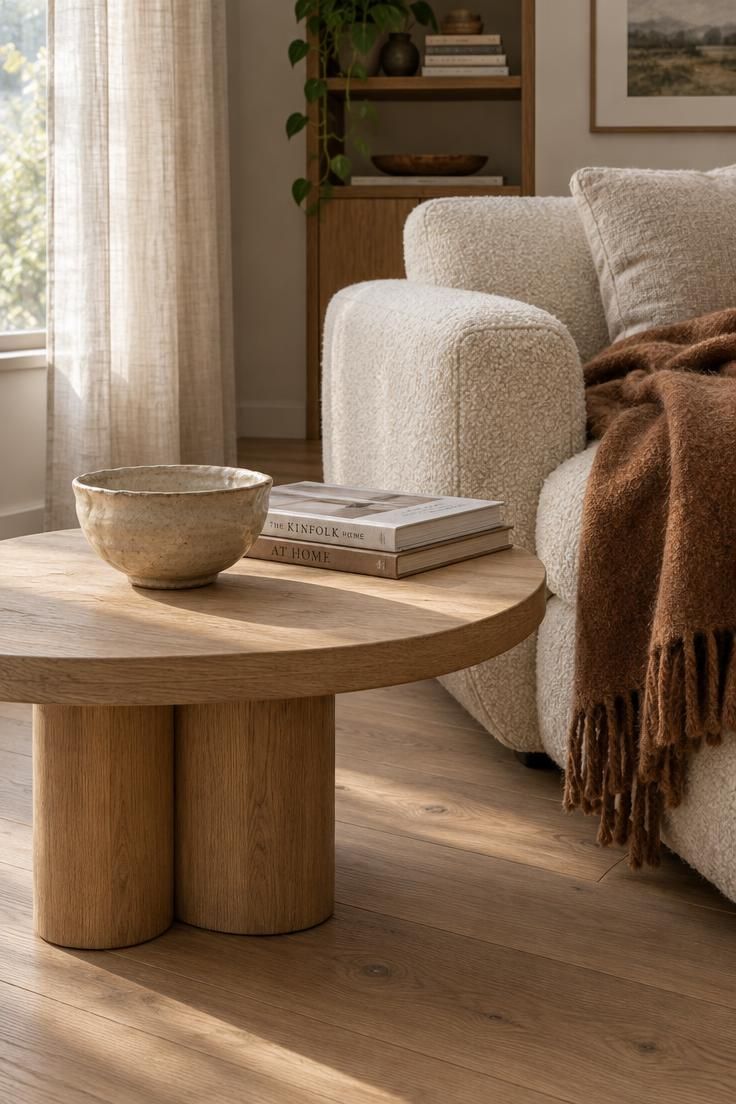
Low-Profile Side Tables as Cozy Focal Points in a Minimalist Room
A bare room often feels cold because every object sits at the same visual height: sofa back, side table, shelf line.
A low-profile side table breaks that repetition by pulling the eye downward, creating a lower visual layer that makes the floor plane feel part of the composition rather than an empty stage.
Choose one table with a sculptural base or a single strong material contrast, such as a travertine slab on a pale wood floor.
Keep the surface mostly clear, then add one warm object: a small stack of softcover books, a hand-thrown ceramic bowl, or a framed snapshot leaning against a low stack of paper.
Place the table within easy reach of the sofa or a reading chair, but not perfectly centered in the arrangement.
A slight offset from the furniture line gives the room a less formal rhythm.
The material matters more than the size.
A pale oak table with a rounded edge reads softer against low seating than a glass or polished steel piece with sharp corners.
When the table sits below knee height, the eye travels down to it and rests there, giving the room a quiet anchor.
Design Pro-Tip: Keep the tabletop object count to one or two, and let the material of the table do the rest; an empty low surface beside a full sofa still reads as intentional.
Natural Textures for a Minimalist Home: A Material Guide
Choosing natural textures for a minimalist home comes down to knowing how each material looks, feels, and ages.
Woven fabrics form the first category.
Linen has a visible slub and a dry hand, and it creases in a way that reads as lived-in rather than untidy.
Wool has loft and warmth, with a surface that holds shadow.
Cotton is smoother and more uniform, useful when a room already carries several strong textures.
Plant fibers form the second group.
Jute has a coarse, matte surface that grounds a floor without shine.
Rattan and seagrass bring an open weave that lets light and air pass through, which suits a minimal room because the material occupies space without blocking it.
These fibers show soil less than pale fabric but can dry out and crack in very dry conditions.
Hard surfaces carry the largest visual weight.
Wood brings grain, and reclaimed or new timber both work when the finish stays matte rather than glossy.
Honed stone such as travertine or limestone offers subtle movement without reflection.
Plaster, as noted earlier, gives walls a surface that shifts with the light.
Warm metals finish the palette.
Brushed brass, bronze, copper, antiqued gold, and blackened iron all read warmer than polished chrome or nickel.
A single brass lamp base or a bronze drawer pull can shift a whole surface from cool to warm, which makes metal one of the most efficient changes in a minimal room.
A practical way to prioritize spending is to invest more in the elements you touch every day, such as sofas, upholstery, and rugs, while saving on less tactile details like curtain rods, side tables, and hardware.
The idea is simple: the quality of materials you regularly touch has a greater impact on everyday comfort than decorative details you mainly notice visually.
Maintenance varies across these categories and deserves a place in the decision.
Linen and cotton wash well but shrink and crease.
Wool needs gentle care and can pill.
Jute should stay dry.
Stone can stain from oil and acid and benefits from a matte sealer.
Brass develops a patina that some people love and others polish away.
The useful approach is to match material to use.
A jute rug in an entryway takes traffic gracefully; a pale linen sofa in the same spot will not.
Stone on a coffee table handles a hot mug better than unfinished wood.
Choosing by how a surface will be used keeps the texture scheme intact over years rather than months.
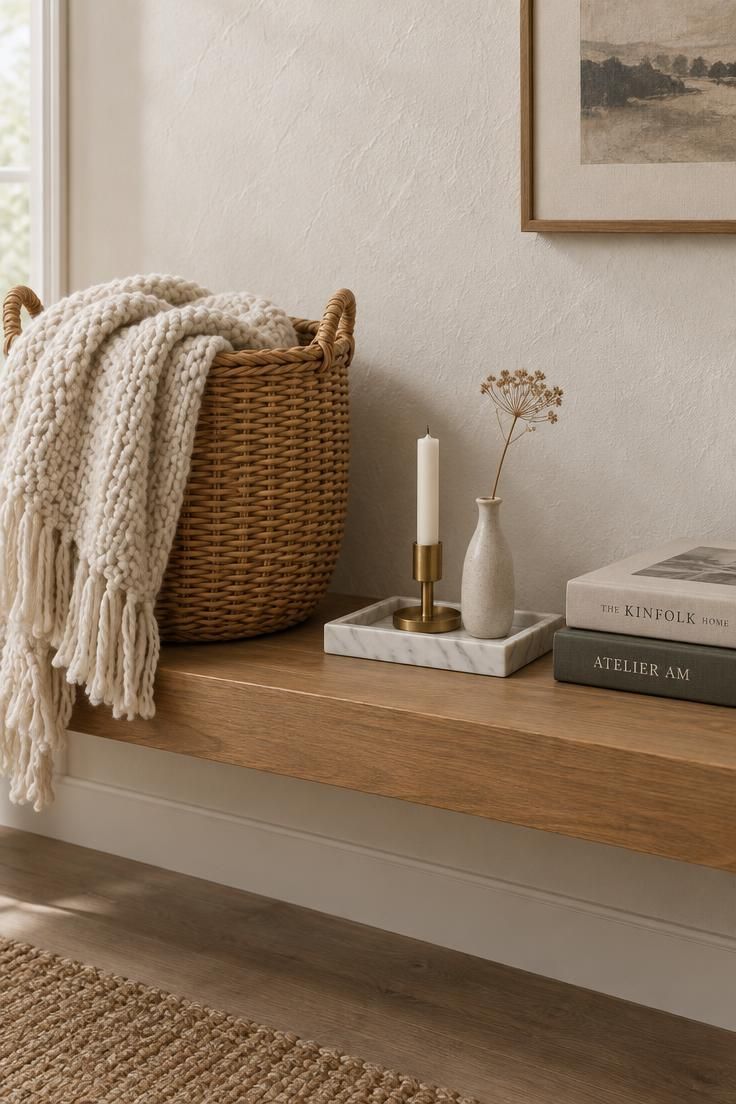
Curate Rather Than Decorate: The One-Object Rule
An empty surface is not the goal of minimalism; a surface where every object earns its place is.
That standard changes how you shop and how you edit.
Instead of filling a shelf, you choose one item and let the space around it do the rest.
Monika Puccio of Sofa Club describes the target as surfaces that stay clean but curated, naming a single ceramic vase, a sculptural lamp, or a stack of well-chosen books as examples.
The list is short on purpose.
One strong object reads as a decision; three weak ones read as indecision.
Meaning matters more than quantity.
Minimalism is not about creating empty spaces, but about making thoughtful choices that give every object a clear purpose.
Accessories should combine functionality, texture, and personality without overwhelming the room, while leaving enough space around them to let each piece stand out.
This approach makes it easier to highlight meaningful objects, such as artwork, family heirlooms, handmade ceramics, and vintage finds, which bring warmth and character to an interior.
By removing unnecessary distractions and keeping only carefully selected pieces, a room can feel clean and balanced without becoming bare or impersonal.
The result is a more intentional space that reflects the personality and experiences of those who live in it.
The editing process becomes a form of selection rather than deprivation.
What survives the edit tells the room’s story.
Bolognino’s rug-first sequence gives the process a starting point.
Begin with the rug because it grounds the space and sets the palette, then build the rest of the room in response to it.
The rug is also the largest textile in most rooms, so it carries more warmth than any accessory.
Concealed storage supports the whole approach as a design concept: everyday items live behind clean fronts so the visible surfaces stay edited.
The benefit is that the room’s calm does not depend on daily tidiness.
What you see is what you chose to display.
Display Delay: Let Quiet Surfaces Wait Their Turn
A spare room can feel unfinished when every object appears at once the moment a person enters.
Delaying attention is a simple remedy.
Set a bowl in the entry credenza niche, leave the coffee table bare until a book or small tray is needed, and keep the dining table clear between meals.
The eye then moves from the room’s larger surfaces to fewer, more deliberate pauses.
This does not require adding clutter or arranging a tabletop tableau.
It creates a sense that the room is lived in at a slower pace.
Fresh greenery is one dependable signal of inhabited warmth without adding permanent decoration.
A single branch in a tapered glass bottle can sit on a windowsill for a few days.
Kitchen herb cuttings in a small ceramic cup bring a little color and domestic activity near the sink.
Leaving one surface deliberately empty is a choice most households do not make.
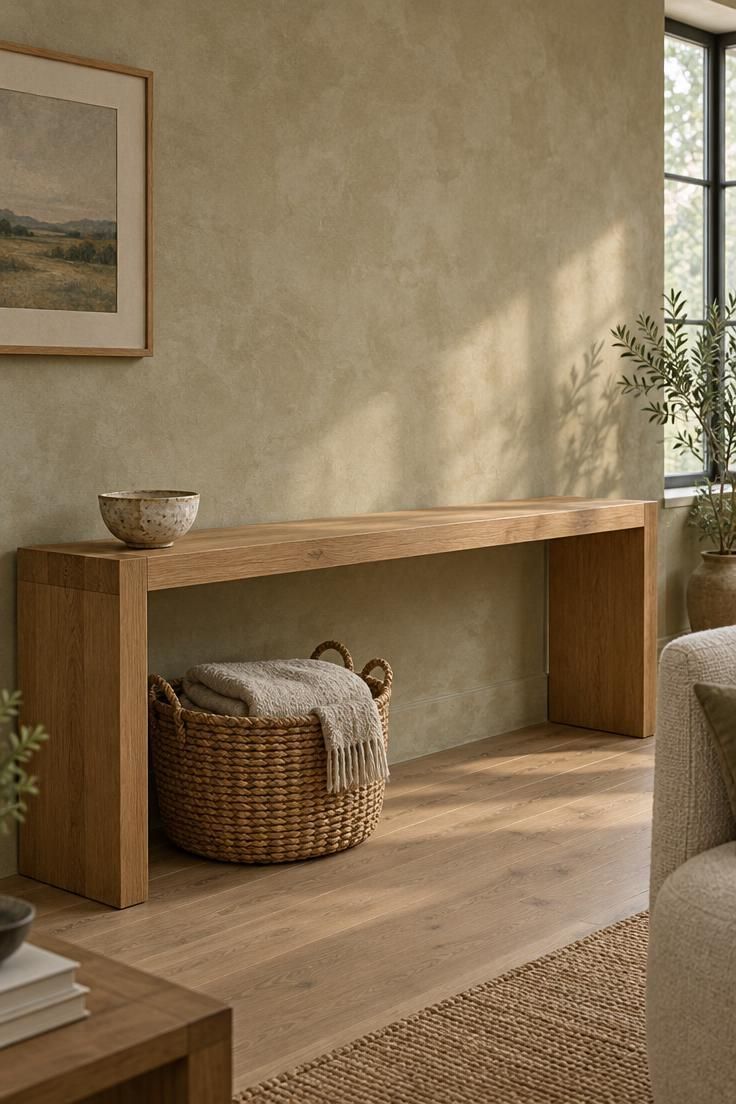
An empty bench seat, a clear stretch of hallway console, or a bare corner floor reads as confidence rather than neglect.
The other warm layers in the room then have room to be noticed.
Making Warm Minimalism Work in a Small or Rented Home
Small rooms and rental agreements both limit what you can change, and neither prevents the style.
The constraint actually pushes toward better decisions, because every addition has to justify the space it takes.
Rearranging existing furniture is the first move and costs nothing.
A 2025 Rently survey of 500 U.S. renters planning to redecorate found that 45% intended to rearrange their furniture, highlighting how common this simple, budget-friendly approach to refreshing a space has become.
Pulling a sofa away from the wall or turning a chair toward the light can change how a room reads before any purchase.
Textiles are the fastest reversible layer.
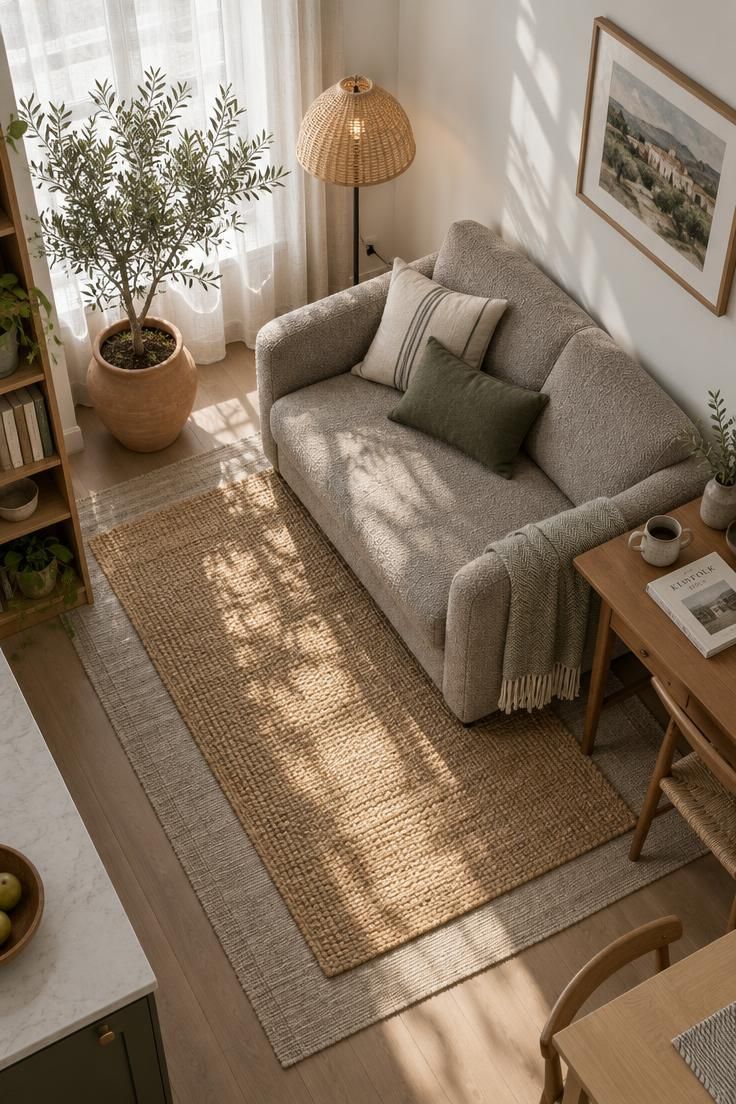
A new throw, cushion covers, or a rug swap introduces warmth and texture without touching the structure of the room.
In a rental, these are also the items you take with you, which makes spending on them more sensible than investing in fixed finishes.
Plants add organic shape and a living texture that hard surfaces cannot supply.
A single potted olive tree or a trailing plant on a shelf can bring natural texture and warmth to a sparse corner, often making more of an impact than another decorative object.
Pale woods and a terracotta planter keep the palette warm.
Lighting swaps are similarly reversible.
New lamp shades in linen or rattan change the quality of light from an existing fixture, and plug-in sconces or floor lamps let you layer without any wiring.
Choosing shades that diffuse rather than direct light keeps the effect soft.
Multifunctional pieces serve small rooms directly.
A desk that doubles as a side table, a storage ottoman that seats a guest, or a bench with space beneath all reduce the number of objects a room needs.
Multifunctional storage enhances the style’s practical appeal by combining everyday functionality with a cohesive aesthetic.
The through-line for renters and small-space dwellers is reversibility.
Every change should be one you can undo, take with you, or move to another room.
That constraint keeps the budget focused on textiles, light, and plants, which happen to be the three elements that carry warmth most efficiently.
Design Pro-Tip: Swap lamp shades and cushion covers before buying furniture; they change a room’s warmth at a fraction of the cost and move with you.
Conclusion
The route to a warm minimalist room runs through subtraction first and addition second.
Edit what you own until the surfaces are clear, then choose a warm neutral base with enough tonal range to avoid flatness, bring in two or three natural textures at different scales, replace a single overhead light with several small sources at different heights, and curate the remaining objects so each one earns its spot.
Start with the step that requires no spending: clear one surface and one corner, then look at what the room feels like with less in it.
That clarity tells you what the room actually needs, whether a warmer textile, a different lamp placement, or simply a deeper tone somewhere in the palette.
The first thing to try is turning off the overhead light and switching on three small lamps at different heights.
Once the room is edited, every addition has room to breathe, and the result feels cozy because it holds only what works.