This post may contain affiliate links. If you make a purchase through these links, we may earn a commission at no additional cost to you.
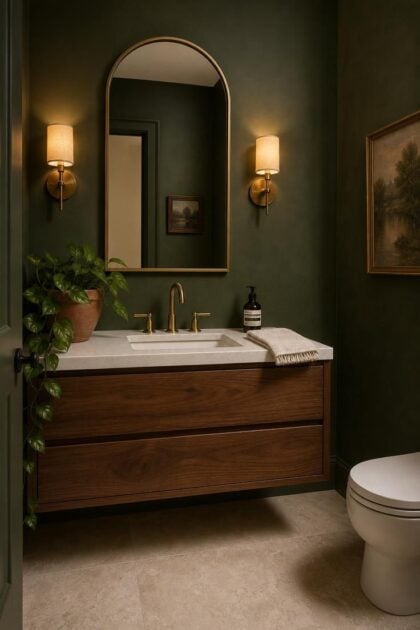
A green powder room turns the smallest room in your home into a space worth lingering in.
Something about stepping through a doorway into a wash of sage, emerald, or olive brings an immediate calm that white walls simply cannot match.
Green works here because the room is compact, which means even a bold shade feels collected rather than overwhelming.
These 13 ideas cover every tone from soft pistachio to deep bottle green, with specific materials, fixtures, and finishes you can bring into your own small powder room.
The right shade paired with the right texture can make a half bath feel like a destination.
Sage Green Lime Wash Over a Slim Marble Ledge Sink
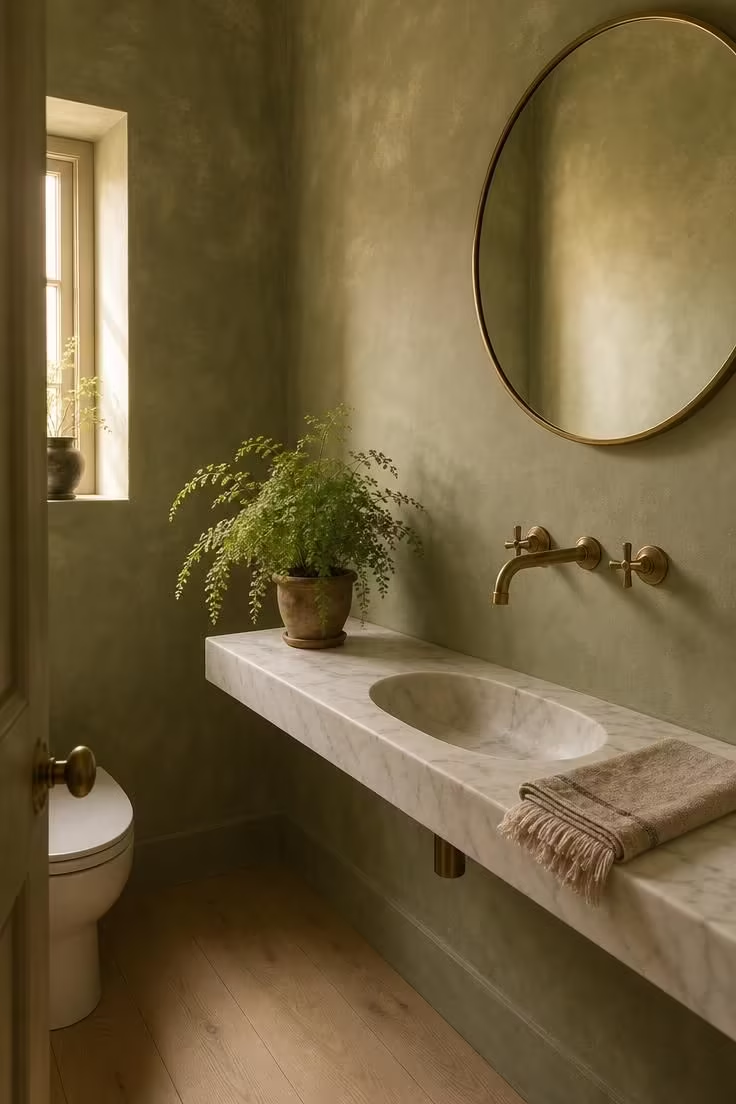
The uneven texture of lime wash gives these sage green bathroom walls a depth that flat paint cannot reach.
Each layer of the wash catches and scatters light differently, so the color shifts slightly depending on where you stand.
That subtle movement makes the room feel alive rather than static.
A marble ledge sink keeps the footprint minimal, freeing up visual space below.
The unlacquered brass will darken with use over time, which adds a lived-in quality that complements the handmade feel of the plaster.
Keeping the floor pale balances the warmth of the walls without competing with them.
A single fern is enough greenery to reinforce the palette without cluttering a small surface.
- Sage green lime wash wall finish
- Wall-mounted marble ledge sink with integrated basin
- Unlacquered brass cross-handle faucet
- Round brass-framed powder room mirror
- Pale wide-plank oak flooring
Hunter Green Beadboard With a Porcelain Console Sink and Nickel Legs
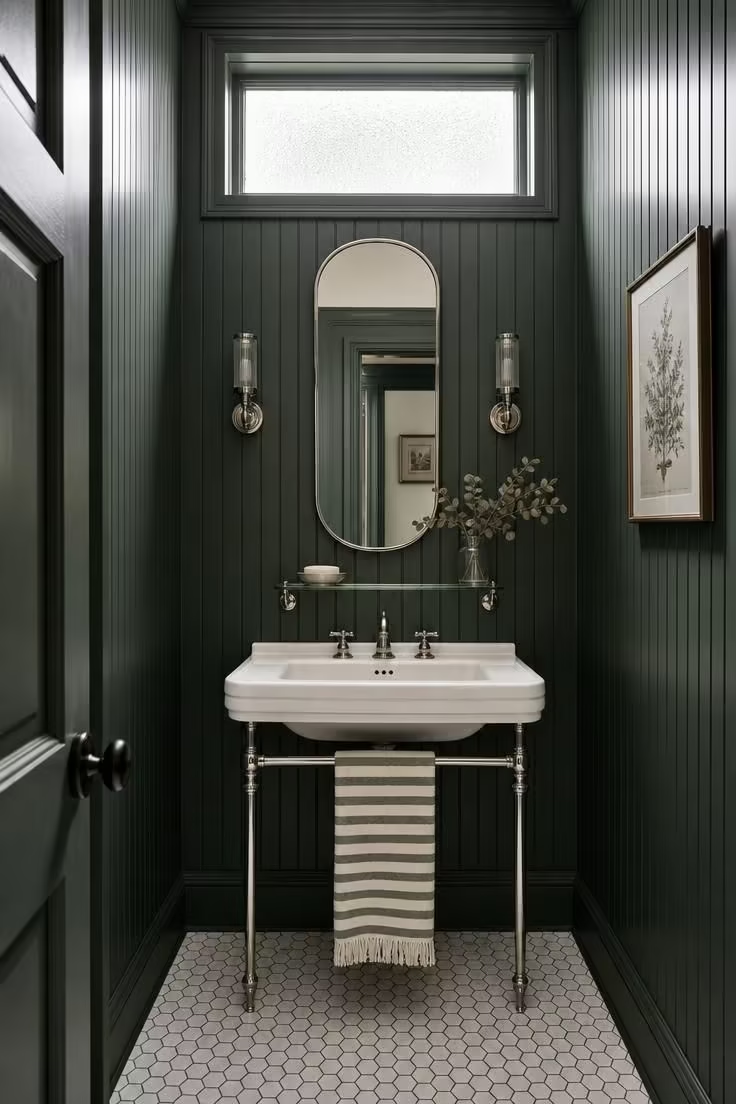
Beadboard brings vertical rhythm to the walls, which makes even a narrow room feel taller than it measures.
The deep hunter green reads as a near-neutral here, grounding the space without pulling attention away from the architectural lines.
White porcelain against that depth of color creates a contrast sharp enough to anchor the whole composition.
Polished nickel legs on the console sink add a cool, reflective quality that balances the warmth of the wood paneling.
Hexagonal marble on the floor is a classic pairing with beadboard, and the small tile scale relates well to the narrow plank width of the panels.
Keeping accessories minimal lets the material contrast between wood, porcelain, and stone carry the design.
Dried eucalyptus instead of fresh flowers adds a muted green that ties to the walls without introducing a competing color.
The frosted glass transom gives the room cool, even light that reads as clean and composed.
- Hunter green satin-finish beadboard paneling
- White porcelain console sink on polished nickel legs
- White hexagonal marble floor tile
- Capsule-shaped nickel-framed mirror
- Nickel towel bar with striped cotton hand towel
Emerald Green Lacquered Walls With a Smoked Glass Pendant
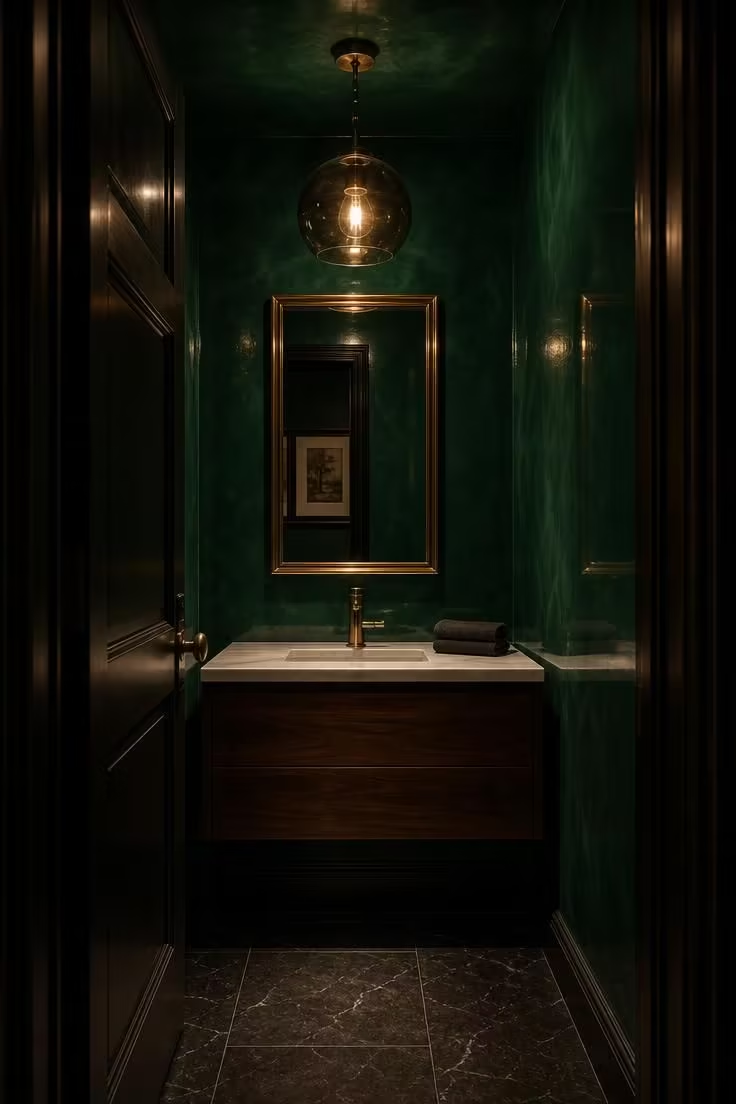
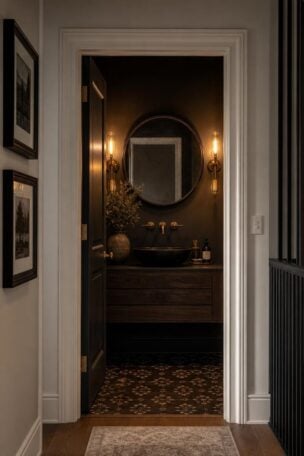
High-gloss lacquer on every wall turns this emerald green bathroom into a space that feels wrapped in color.
The reflective surface bounces whatever light exists back into the room, which means even a single pendant can light up the entire space.
That interplay between the deep green and the moving reflections gives the powder room a jewel-box quality that flat-finish walls would not deliver.
Dark walnut grounds the vanity area without fighting the wall color for attention.
Black honed marble on the floor extends the moody palette downward, creating a continuous depth from floor to ceiling.
Keeping the pendant in smoked glass softens the light source itself, preventing harsh contrasts in such a small, reflective room.
- Emerald green high-gloss lacquer wall finish
- Smoked glass pendant light fixture
- Dark walnut floating powder room vanity
- Black honed marble floor in large format
- Aged brass single-lever faucet
Olive Green Venetian Plaster With a Live-Edge Walnut Shelf Vanity
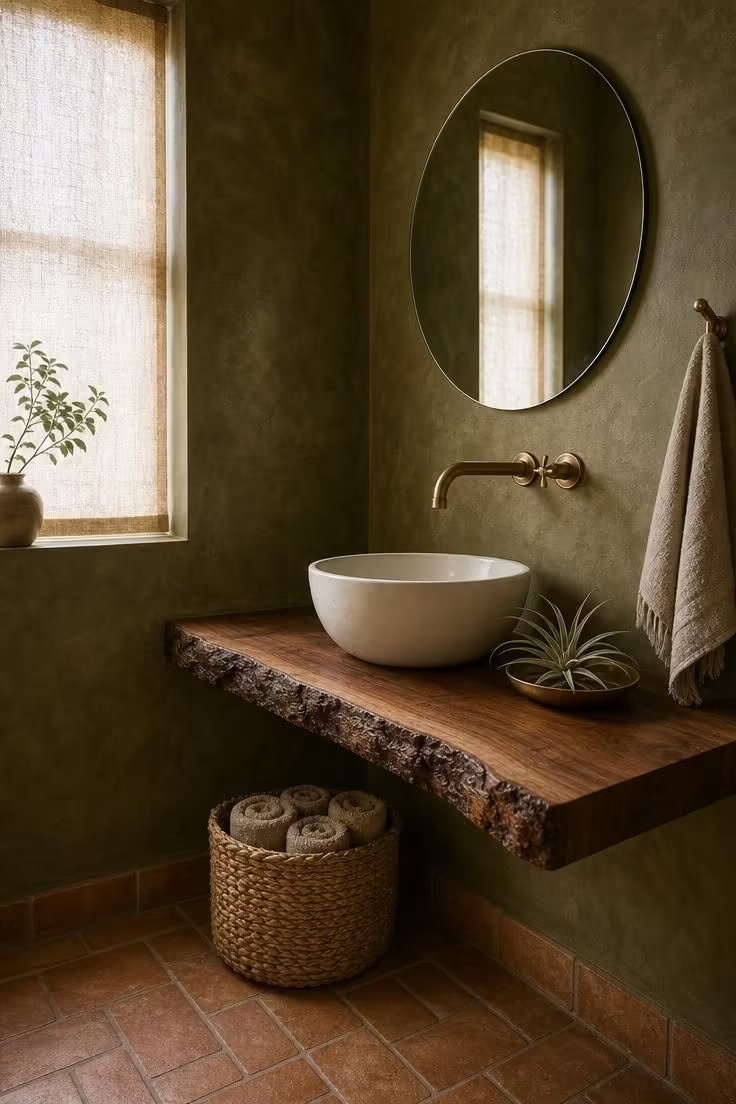
Venetian plaster moves through several shades within a single wall, which gives olive green a richness that a single paint swatch would never suggest.
The trowel marks become part of the visual texture, creating a surface that feels handmade in a way that invites you to look more closely.
A live-edge walnut slab brings organic shape into a room that is otherwise defined by flat planes and right angles.
That contrast between the rough bark edge and the smooth plaster wall is what gives the space its character.
A white vessel sink keeps the vanity area bright enough to function well, balancing the depth of the surrounding walls.
Terracotta tile on the floor adds a warm undertone that pulls the olive green toward amber rather than ash.
Seagrass below the vanity introduces yet another natural texture, reinforcing the room’s grounded feeling without adding visual clutter.
Brass bathroom fixtures here darken and patina over the years, which only deepens their connection to the earthy palette around them.
The entire room reads as something built slowly with found materials, not purchased as a set.
- Olive green Venetian plaster walls
- Live-edge walnut floating shelf vanity
- White ceramic vessel sink
- Aged brass wall-mount faucet
- Warm terracotta running bond floor tile
Design Pro-Tip: In a green powder room, matching your metal finish temperature to the green’s undertone creates a more unified space. Warm greens like olive and sage pair naturally with brass and bronze, and cooler greens like mint and jade sharpen up with polished nickel or chrome.
Mint Green Subway Tile Wainscoting With a Cast Iron Bracket Shelf
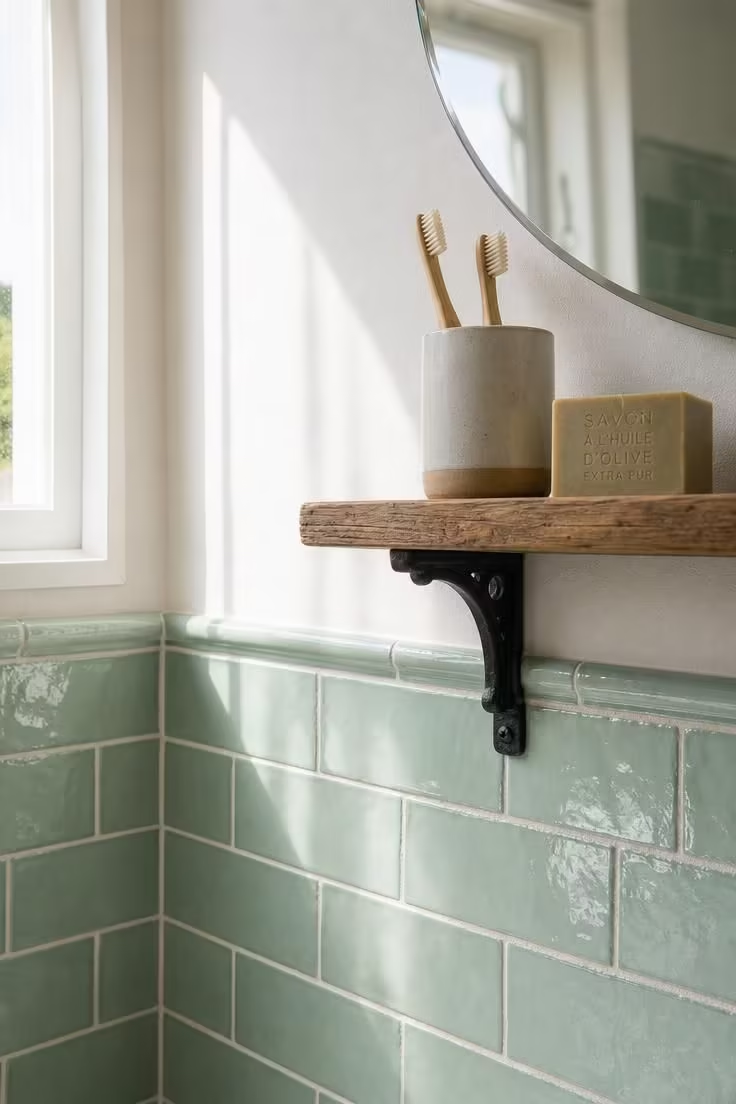
The slight irregularity in hand-formed subway tiles gives mint green a personality that machine-cut tiles lack.
Each piece catches light at a fractionally different angle, so the wainscoting reads as a surface rather than a pattern.
Glossy glaze amplifies this effect, bouncing bright midday light across the room in small, shifting highlights.
Black cast iron brackets bring a weight to the shelf that keeps the space from feeling too light or too sweet.
That contrast between the heavy iron and the delicate mint tile is what makes this particular green tiles bathroom combination work.
A frameless beveled mirror keeps the upper wall clean, letting the tilework carry all the visual interest.
Simple stoneware and handmade soap on the shelf reinforce the handcrafted quality without overloading the small surface.
- Mint green glossy hand-formed subway tile to chair-rail height
- Off-white grout with beveled cap tile trim
- Black cast iron wall bracket with reclaimed pine shelf
- Frameless beveled round mirror
- Matte white paint above the wainscoting
Forest Green Hand-Glazed Ceramic Tile Floor With a White Pedestal Sink
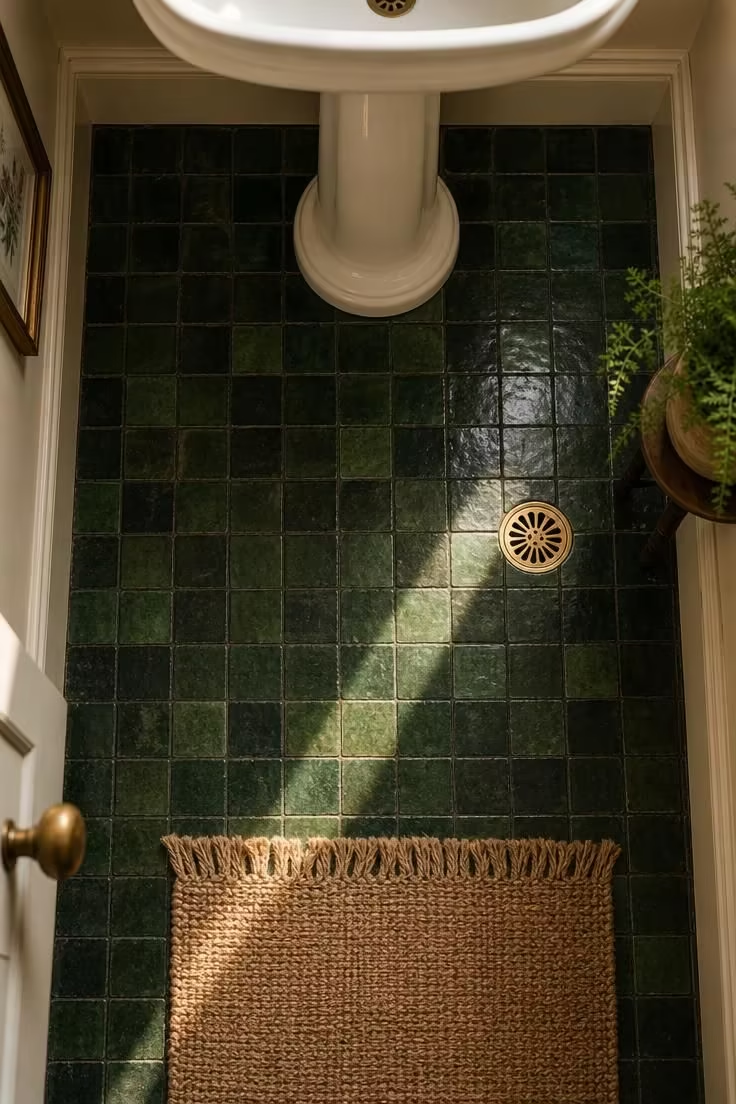
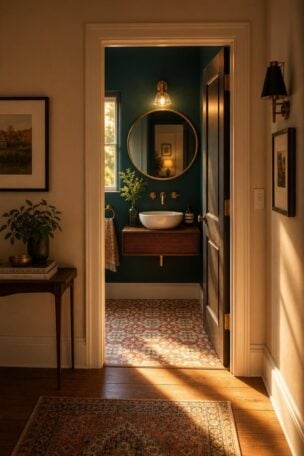
Looking down at a floor of hand-glazed tiles, you notice no two squares are the same shade.
That variation is the whole point, because it gives the surface a depth that uniform tiles cannot touch.
Forest green in this format reads as organic and almost geological, like looking at a surface shaped by weather rather than a factory.
A white pedestal sink above this floor creates the strongest possible contrast between the two main surfaces in the room.
Dark charcoal grout lets the tiles bleed into each other, which keeps the floor feeling continuous rather than gridded.
A jute mat softens the transition from cold tile to bare feet, and its neutral tone bridges the green floor and cream walls.
Brass at the drain cover adds one small warm accent that catches the eye without competing with the tile.
The best green paint colors for surrounding walls here are warm cream or soft putty, which keep the green floor as the clear focal point.
- Forest green hand-glazed square ceramic floor tiles
- Dark charcoal grout
- Classic white porcelain pedestal sink
- Woven jute bath mat with fringed edge
- Warm cream wall paint
Malachite-Patterned Wallpaper With a Gold Leaf Oval Mirror
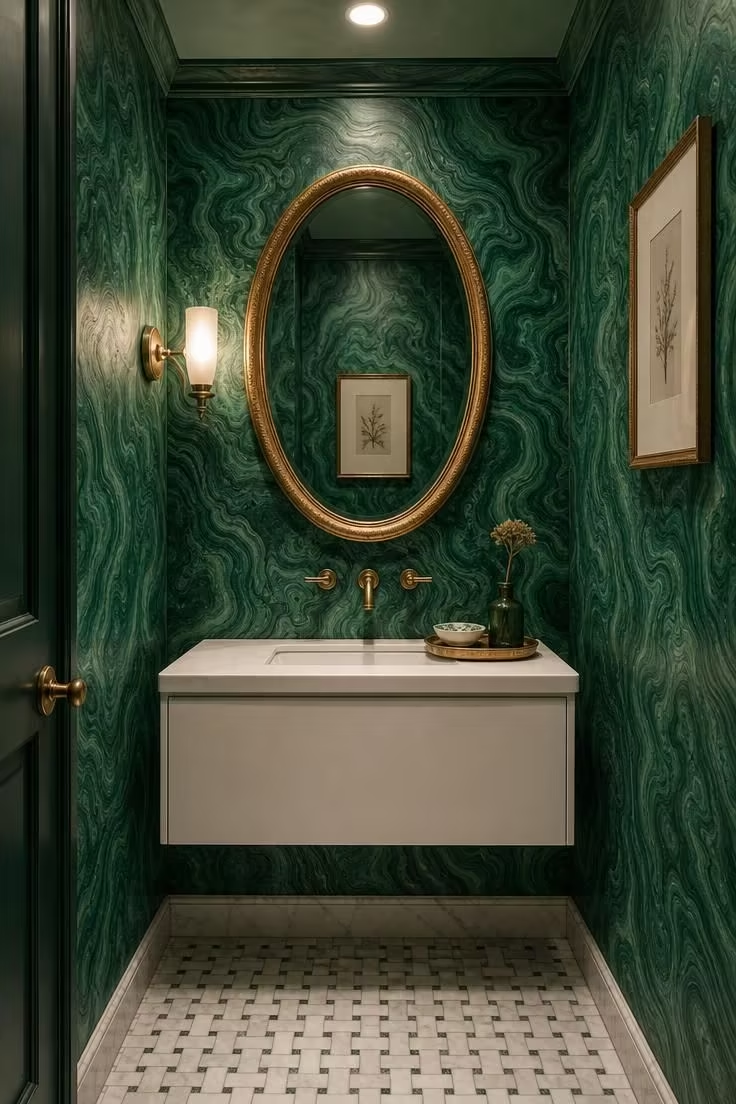
Green wallpaper with a malachite pattern wraps the room in a single, continuous visual story.
The swirling bands of color mimic the natural stone so closely that the walls feel geological rather than decorative.
Covering every surface with the same pattern is a move that only works in a very small room, and a powder room is exactly the right scale for it.
A gold leaf oval mirror introduces a material warm enough to hold its own against the busy pattern below.
White marble in a basketweave pattern on the floor gives the eye a resting place after taking in the walls.
A single sconce rather than a pair keeps the wall composition asymmetrical, which feels more relaxed in a room this ornate.
- Malachite-patterned green wallpaper on all walls
- Gold leaf oval mirror with molded frame
- White floating vanity with undermount sink
- White marble basketweave floor tile
- Single warm-toned frosted glass wall sconce
Sage Green Fluted Plaster Walls With a Concrete Basin and Matte Black Tap
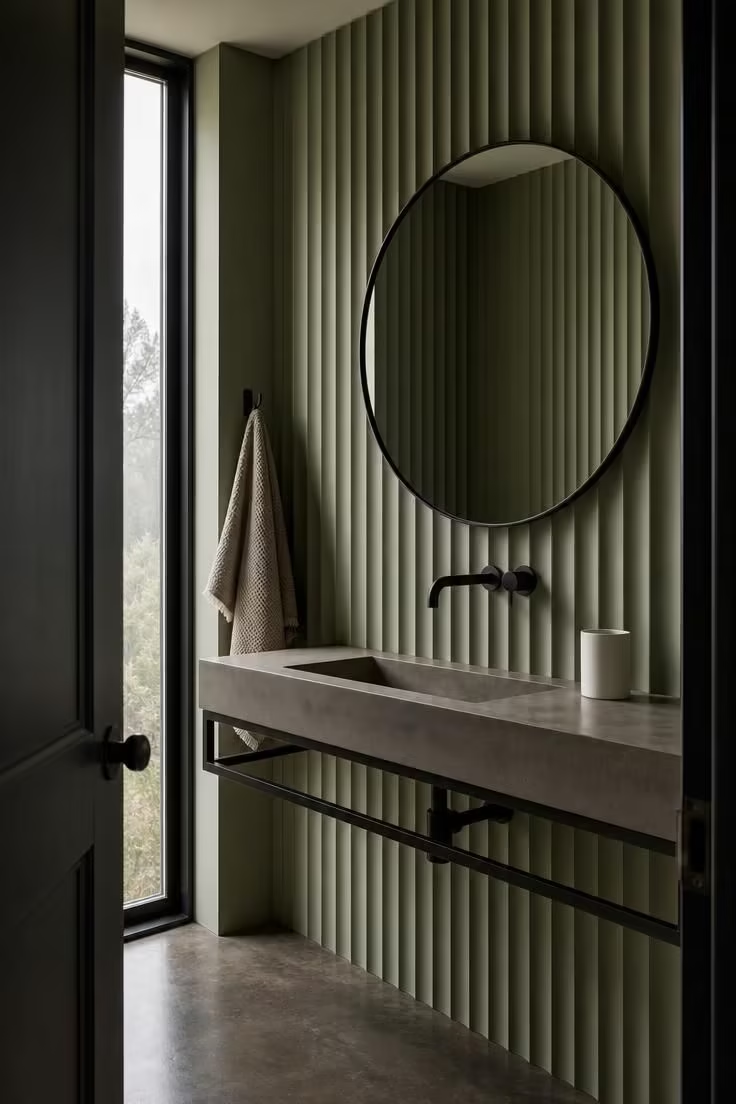
Vertical fluting transforms a flat sage wall into something with rhythm and shadow.
Each channel catches morning light differently, which means the wall changes character as the hours pass.
Concrete for the basin introduces a raw, industrial texture that pushes against the softness of the plaster.
That tension between rough and smooth is what keeps this sage green bathroom from reading as too gentle or too expected.
Matte black fixtures sharpen the composition, creating clear outlines against the muted green.
A polished concrete floor in warm charcoal carries the material palette from the countertop downward, which makes the room feel like one continuous thought.
The waffle-weave towel adds just enough textile softness to prevent the room from feeling cold.
- Sage green vertically fluted plaster walls
- Poured concrete countertop with integrated basin
- Matte black wall-mounted cylindrical faucet
- Large round matte black-framed mirror
- Polished concrete floor in warm charcoal
Design Pro-Tip: When choosing green paint colors for a small powder room, test the swatch on the wall that receives the most light and the wall that receives the least. Green shifts dramatically between sun and shadow, and you want to love both versions of the color before committing.
Jade Green Herringbone Zellige With a Brass Vessel Sink
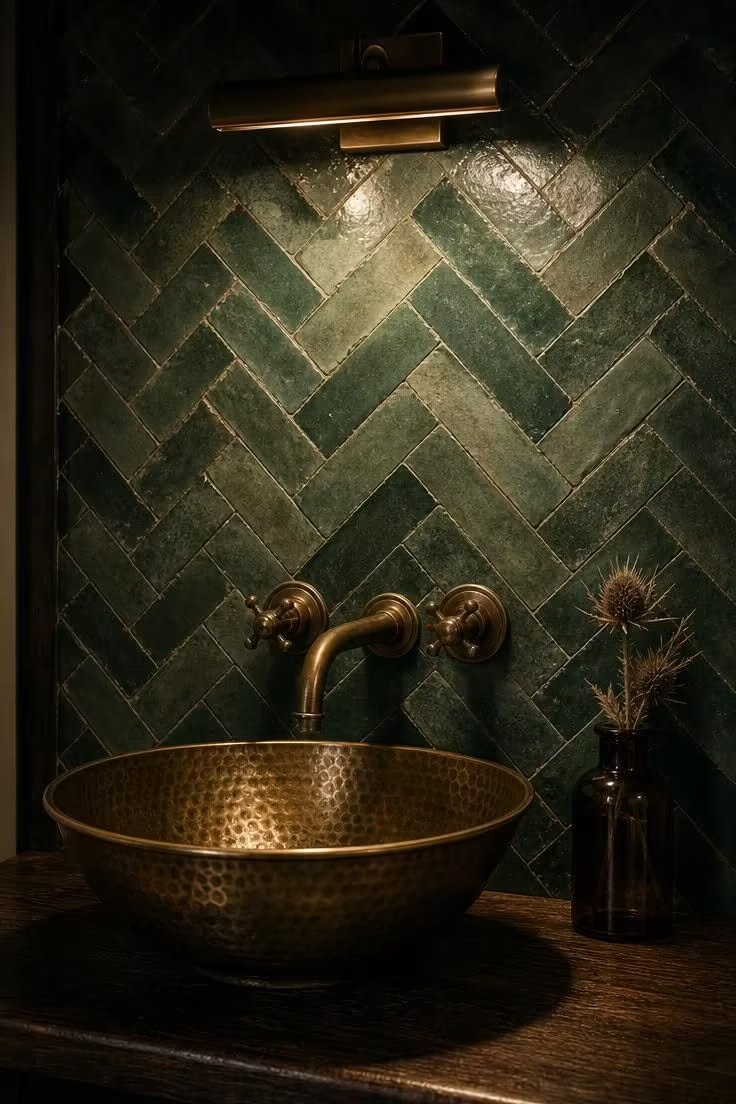
Zellige tiles are never uniform, and that inconsistency is their greatest strength.
Each piece carries a slightly different glaze thickness, so the jade green moves from near-teal to pale celadon across a single wall.
Laying them in herringbone amplifies the variation by forcing the eye to follow the zigzag rather than tracking a straight grid.
Under low light from a single picture lamp, the raised and recessed surfaces of the glaze catch and release small points of brightness.
A hammered brass vessel sink echoes this quality of irregular surfaces reflecting light in unpredictable ways.
Dark stained oak beneath the vessel gives the bright brass and jewel-toned tile something stable and warm to rest against.
The entire composition reads as something built by hand over time, every surface carrying the mark of the person who shaped it.
Dried thistle in amber glass adds a muted botanical note without introducing any competing color.
- Jade green zellige tile in herringbone layout
- Hammered brass vessel sink
- Dark stained oak countertop
- Aged brass wall-mount faucet
- Single brass picture light above
Celadon Grasscloth Walls With a Rattan-Frame Mirror and Stone Countertop
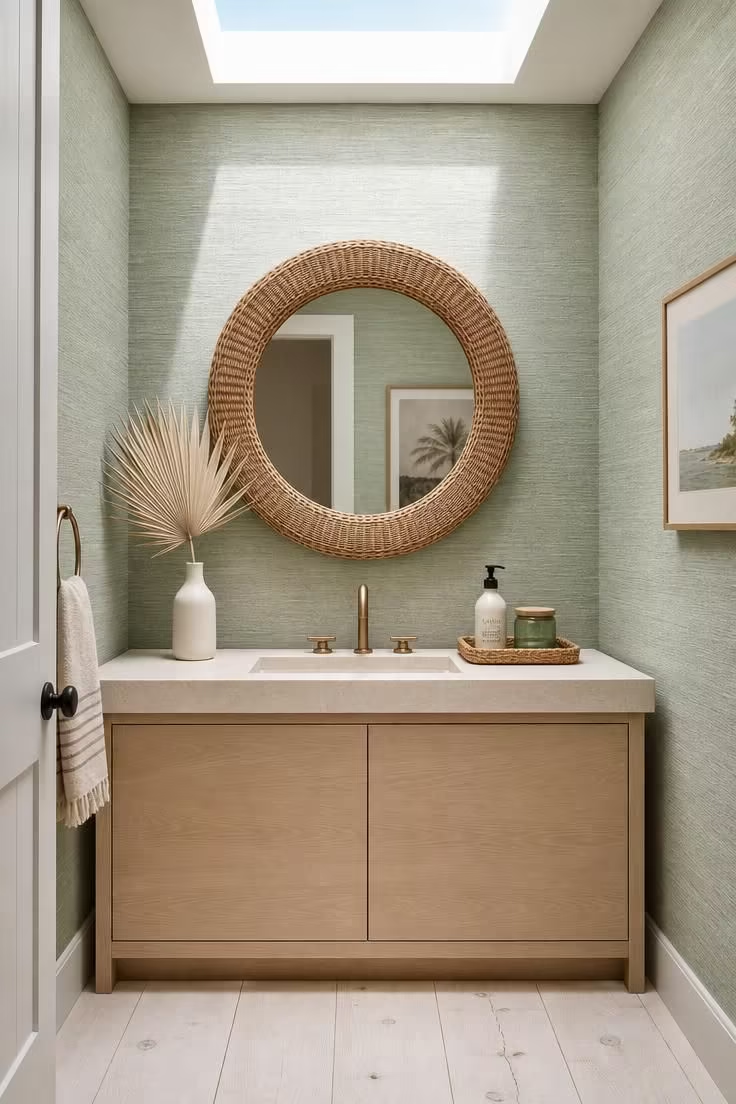
Grasscloth adds a layer of physical texture that changes the way light travels across the room.
The horizontal fibers cast tiny shadows along their length, giving the celadon green a warmth that smooth wallpaper would miss.
A rattan-framed powder room mirror leans into this natural, woven quality and makes the space feel connected to the outdoors.
Honed limestone for the countertop introduces a cool, matte surface that plays well against the warm fibers of the grasscloth and rattan.
White oak below keeps the palette light enough that the green reads as a gentle tint rather than a dominant force.
Bright midday light from a skylight is the best possible scenario for grasscloth, because it reveals the full depth of the woven surface.
- Celadon green grasscloth wallpaper
- Large round rattan-framed mirror
- Light white oak flat-panel vanity
- Honed limestone countertop with integrated basin
- Whitewashed wide-plank wood floor
Dark Bottle Green Tongue-and-Groove Paneling With a Copper Wall Faucet
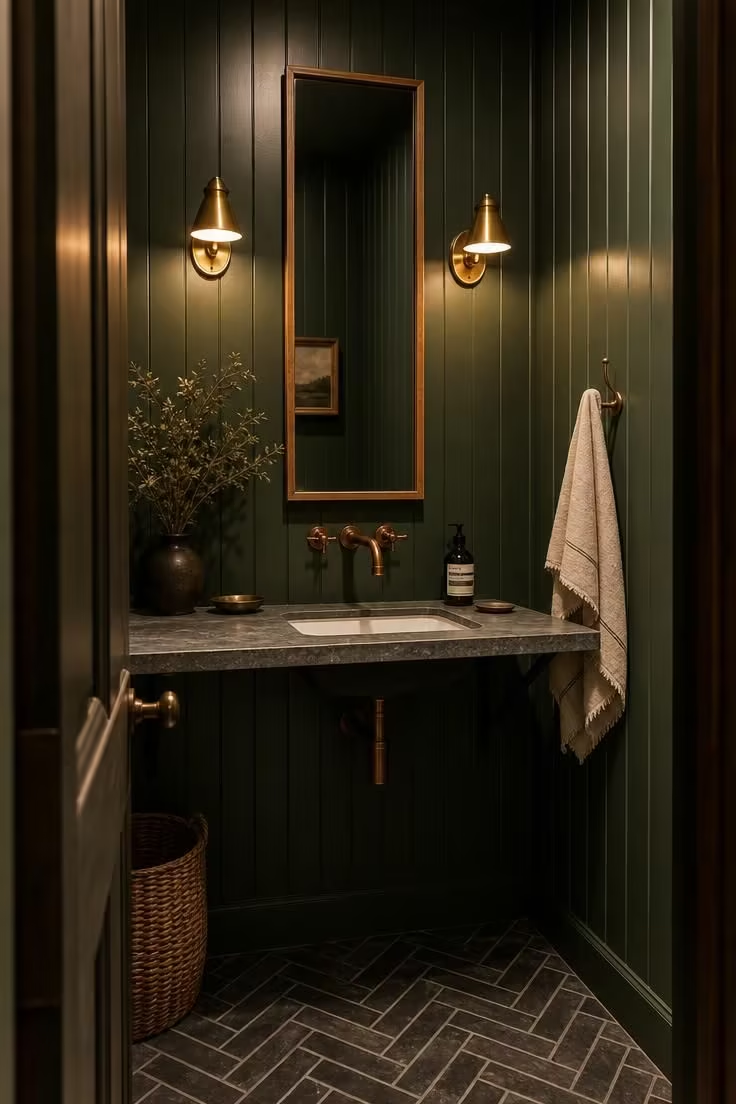
Floor-to-ceiling paneling in bottle green surrounds you the moment you step through the doorway.
The vertical groove lines add just enough shadow to prevent the solid color from reading as flat or monotonous.
Satin finish is the right choice here, because it catches small points of light from the sconces without turning fully reflective.
A copper faucet with natural patina brings a reddish warmth that deepens the green by contrast, the two colors sitting directly opposite on the color wheel.
Soapstone for the countertop offers a dark, matte surface with subtle veining that relates to the green without matching it.
Blackened steel brackets below read as nearly invisible against the dark walls, letting the countertop appear to float.
Dark herringbone brick tile on the floor adds a masonry texture that makes the room feel solid and grounded.
A tall, slim mirror stretches the vertical lines of the paneling upward, which keeps the ceiling from feeling low in such an enclosed space.
The overall effect is a room that holds you close, like a library or a reading nook, rather than one that tries to appear larger than it is.
- Dark bottle green satin-finish tongue-and-groove paneling
- Wall-mounted copper faucet with natural patina
- Honed soapstone countertop on blackened steel brackets
- Tall narrow wood-framed mirror
- Charcoal herringbone brick floor tile
Design Pro-Tip: Darker green paint colors can shrink a room visually, but leaning into that effect rather than fighting it creates a more intentional result. Skip the big mirror trick and instead choose a slim vertical mirror that stretches the ceiling line upward.
Green Terrazzo Countertop on a Floating Oak Vanity With Leather Pulls
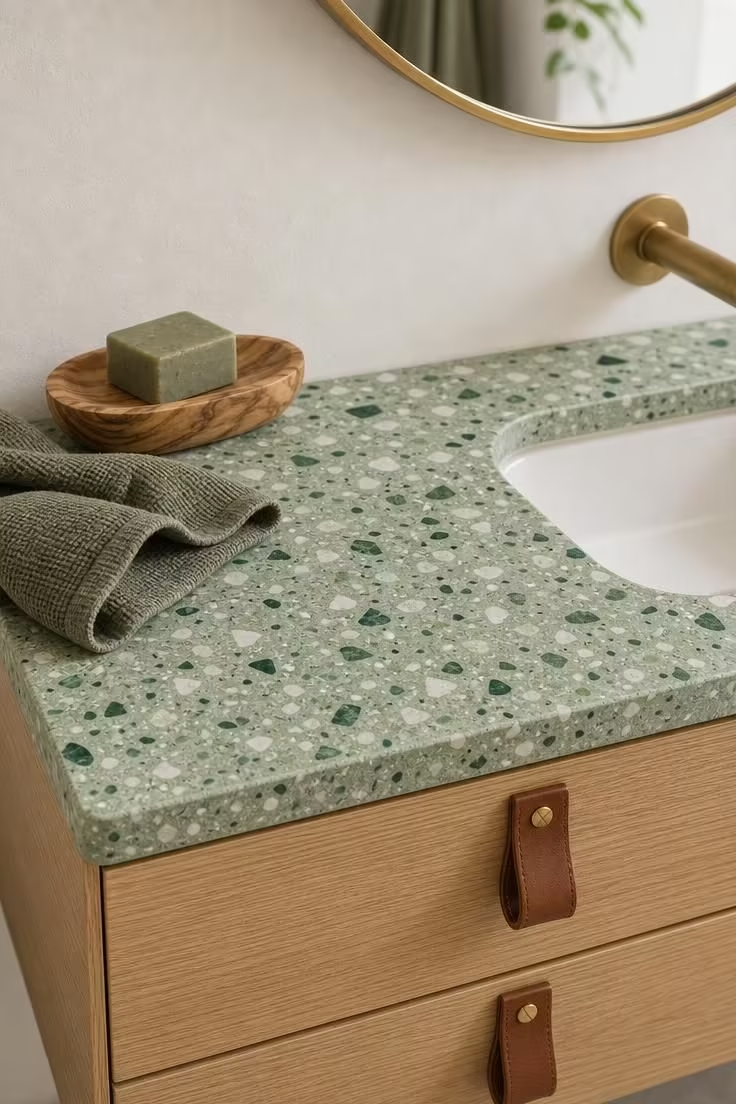
Terrazzo brings the green palette into a surface you can touch, and each cut of aggregate tells a slightly different color story within the same family.
The mix of emerald glass and mint marble chips against a sage base means the countertop itself contains three distinct greens working together.
White oak below offers a warm, neutral frame that lets the terrazzo claim all the visual attention.
Saddle leather pulls on the drawers introduce a material you rarely see in a bathroom, which gives the space a collected, furniture-like quality.
The brass screws holding each strap catch light in a way that connects back to the brass mirror rim above.
Soft white walls behind the vanity let the countertop surface read as clearly as possible, without any competing pattern or color.
A sage linen washcloth laid flat on the terrazzo blends into the surface just enough to feel like a deliberate extension of the palette.
- Green terrazzo countertop with mixed aggregate
- Floating white oak vanity with horizontal grain
- Saddle brown leather strap pulls with brass screws
- White ceramic undermount sink
- Soft warm white wall paint
Pistachio Green Moroccan Fish Scale Tile With a Carved Stone Basin
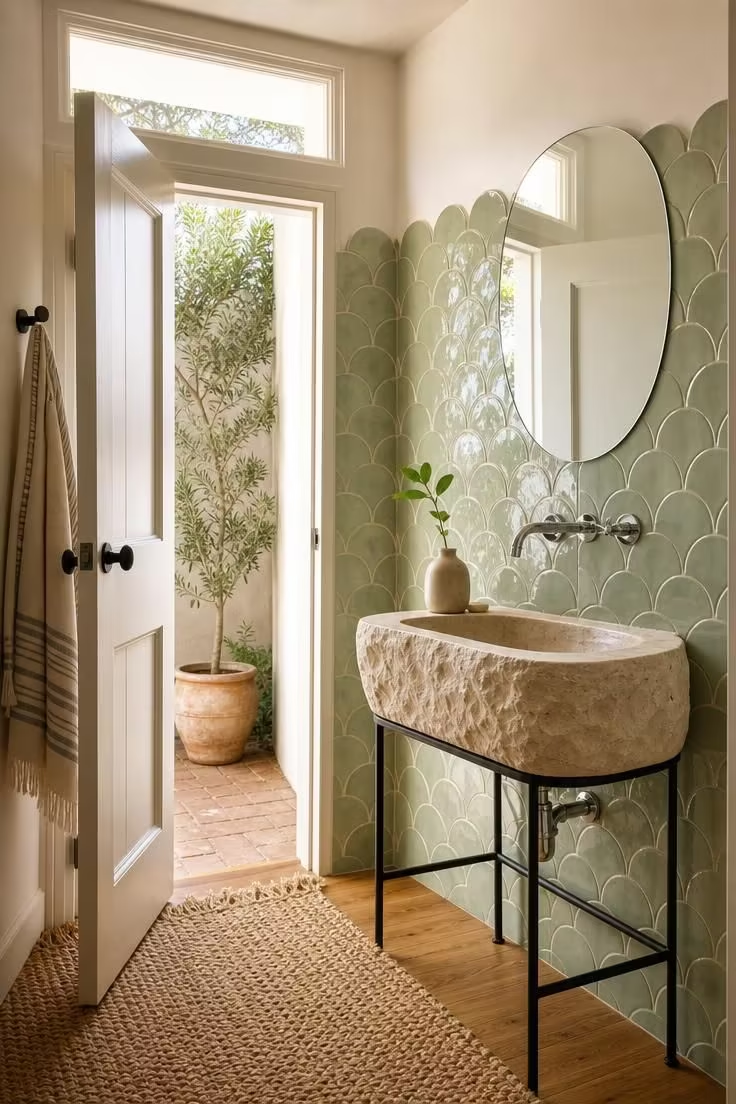
Fish scale tiles create a pattern that looks different depending on how close you stand.
From across the room, the scalloped edges read as a gentle, wave-like texture covering the wall.
Up close, each individual tile reveals its own glaze variation, from pale pistachio at the center to a slightly deeper green where the curve meets the grout.
A carved stone basin brings a rough, mineral quality that grounds all that glossy ceramic movement.
The contrast between the smooth, reflective tiles and the matte, chiseled stone is what holds the composition together.
Bright midday light is ideal for this arrangement, because it turns each curved tile into its own small reflector.
A jute rug on warm wood planks softens the base of the room and adds another organic texture to the mix.
Chrome on the faucet reads clean and sharp against the warm-toned tile, providing a cool counterpoint that prevents the palette from tipping too warm.
- Pistachio green Moroccan fish scale wall tile
- Carved natural stone basin on matte black iron stand
- Chrome gooseneck wall-mounted faucet
- Oval frameless mirror
- Woven jute rug over honey-toned wood plank floor
Conclusion
Thirteen green powder rooms, and not one of them looks like another.
That range is what makes green such a reliable choice for a small space, because the color family spans from barely-there celadon to near-black bottle green, each shade carrying its own mood and material preferences.
Sage lime wash and mint subway tile land on the softer, brighter end, working well with natural wood and brass.
Emerald lacquer and forest green hand-glazed floor tiles push toward the dramatic, pairing with dark stone and moody lighting.
The finishes you choose around the green matter as much as the shade itself, so let the countertop, the hardware, and the mirror frame do the work of pulling the room together.
Start with the green tone that matches the feeling you want when you walk through the doorway, then build outward from there.