This post may contain affiliate links. If you make a booking or purchase through these links, we may earn a commission at no additional cost to you.
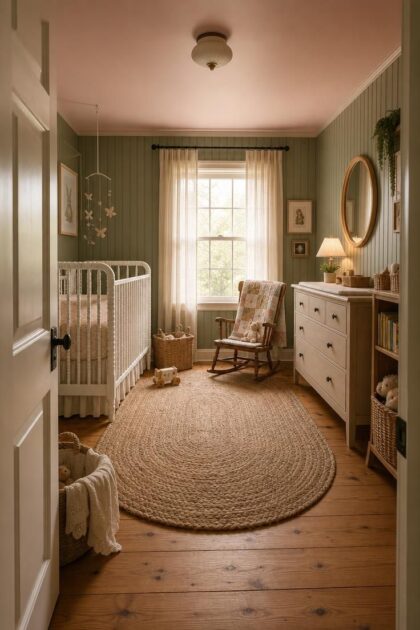
A cottage nursery is one of those rooms that should feel like it has always been there.
The best ones look collected, not decorated, with soft linen, weathered wood, and colors pulled straight from a garden at dusk.
These 11 cottage nursery ideas show you how to build a baby room that feels personal, gentle, and full of quiet warmth.
Whether you lean toward floral nursery wallpaper or prefer bare beadboard and muted tones, every idea here gives you a clear starting point.
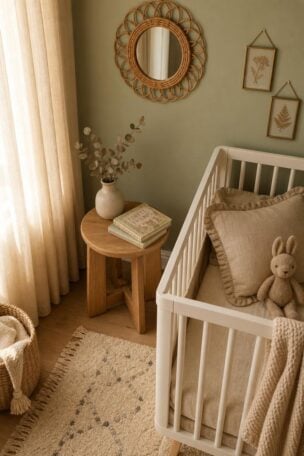
A Jenny Lind Crib in a Cottage Nursery With Sage Green Beadboard
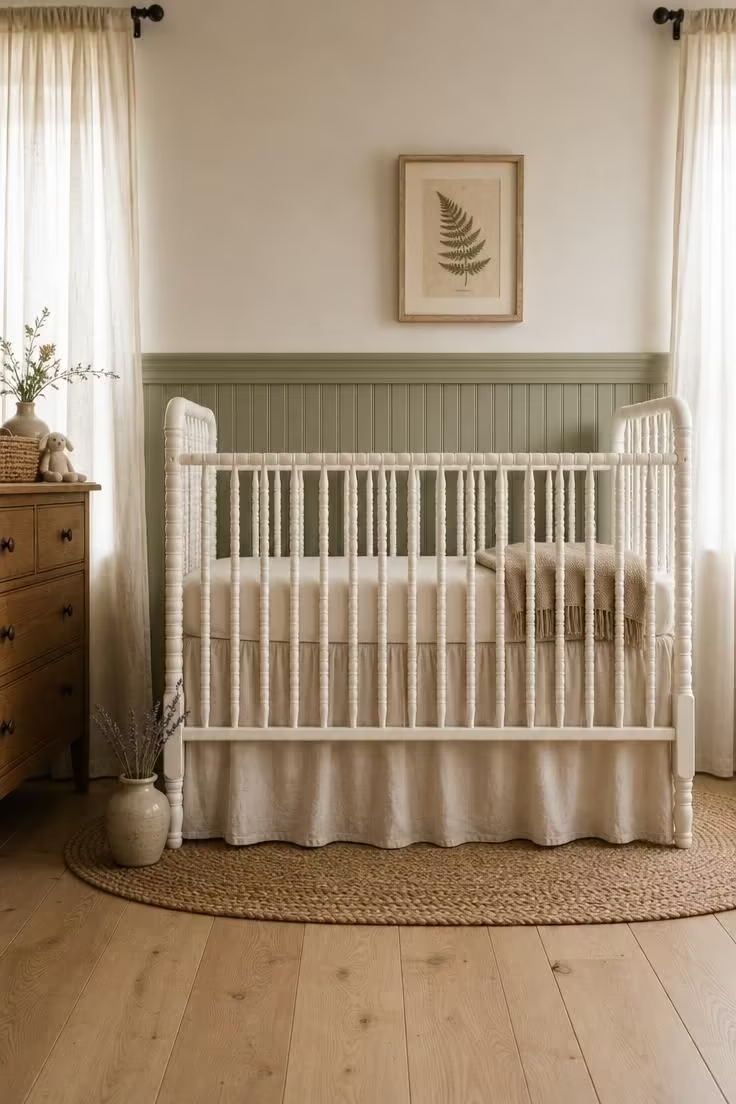
A Jenny Lind crib is one of those pieces that belongs in a cottage nursery decor scheme without trying.
The turned spindles catch light in a way that feels handcrafted, even when the crib itself is brand new.
Placing it against a beadboard nursery wall in sage green gives the room an anchor that reads both gentle and grounded.
The beadboard adds vertical rhythm behind the crib, which draws the eye upward and makes the wall feel taller than it is.
Keep the bedding deliberately simple here, because the crib’s silhouette does most of the visual work.
A cream linen skirt and a single folded blanket say everything the room needs to say.
One small framed print above the crib is enough to finish the arrangement without crowding the wall.
Style Blueprint:
- White Jenny Lind spindle crib with a cream linen crib skirt
- Sage green beadboard paneling from floor to chair-rail height
- Thin birch frame with a single pressed botanical print
- Braided jute rug in a natural wheat tone
- Small ceramic vase with dried lavender
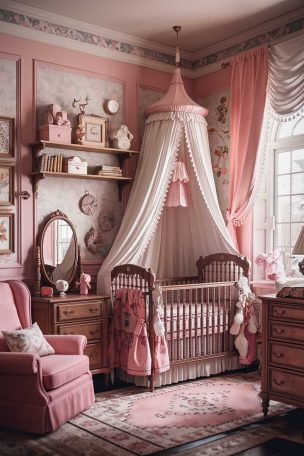
Ditsy Floral Wallpaper With a Whitewashed Oak Dresser
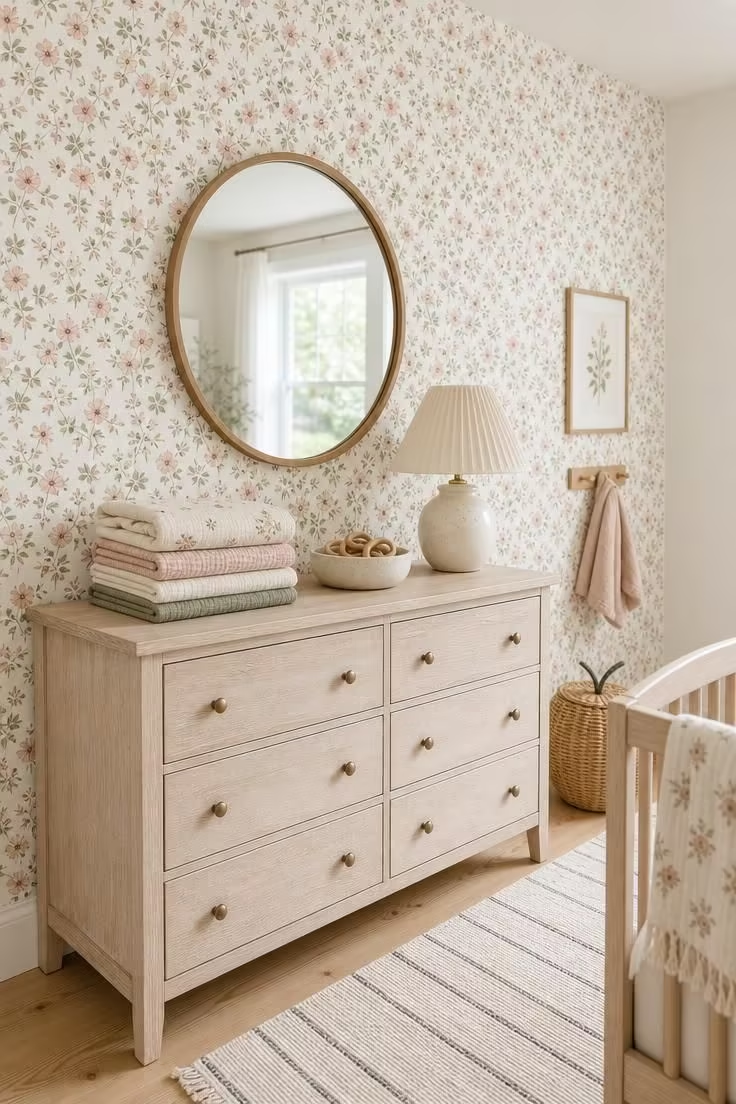
A small-scale floral nursery wallpaper keeps the room feeling young and playful without overwhelming the space.
The pattern works best on a single accent wall, where it can set the tone without competing with other textures in the room.
Pairing it with a whitewashed oak dresser creates a natural contrast between the soft blooms and the solid grain of the wood.
Brass or aged-copper knob hardware adds just enough weight to keep the dresser from disappearing against the busy pattern.
Stack folded muslin swaddles on one corner to give the surface a practical, lived-in quality.
A round mirror above the dresser catches light from the window and bounces it back into the room, making the whole wall feel brighter.
This combination works particularly well in a nursery with natural wood floors that can ground the floral pattern without pulling attention away from it.
The key is keeping the dresser top edited, not empty, with just a few objects that belong there.
Style Blueprint:
- Small-scale ditsy floral wallpaper in blush, cream, and sage
- Whitewashed oak dresser with brass knob hardware
- Round wooden-frame mirror hung above the dresser
- Muslin swaddle stack and ceramic lamp with linen shade
- Flat-woven cotton rug in ivory
A Linen Canopy Drape Over a Low Wooden Crib
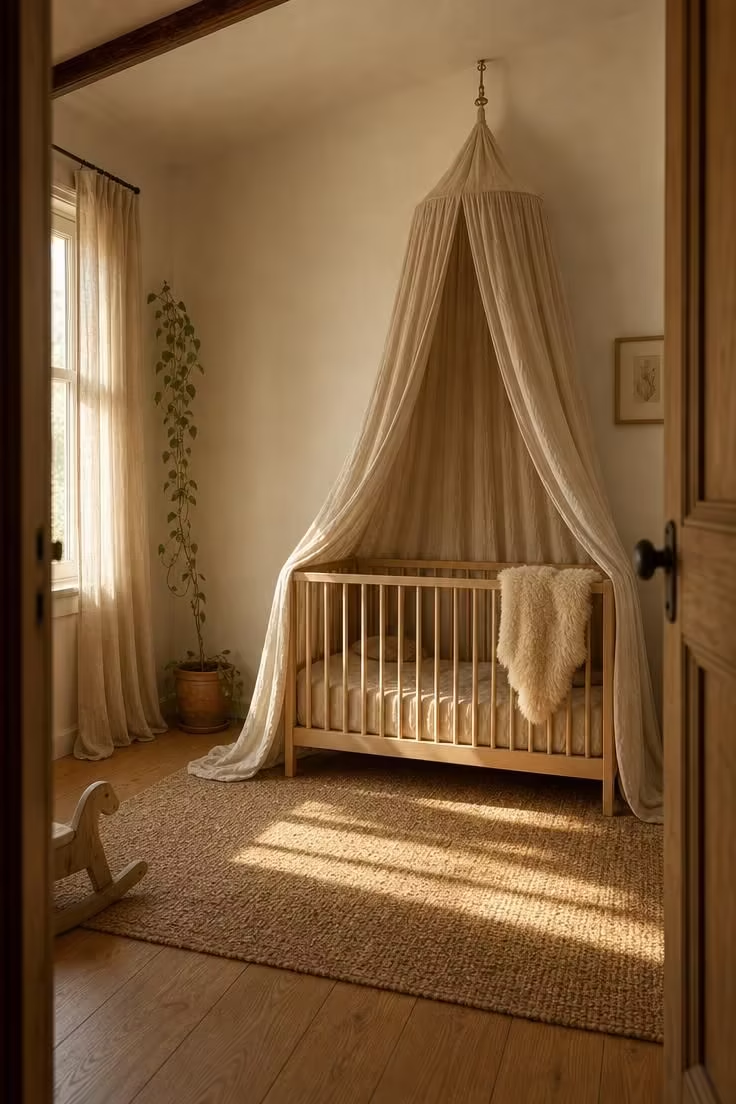
A linen canopy turns a simple crib into something that feels sheltered and private.
The drape does not need to be architectural or precise, and in fact it works better when the linen falls with a few natural creases and wrinkles.
Hanging it from a single brass hook keeps the installation minimal and easy to remove when you want to change the room later.
The low-profile birch crib underneath stays close to the ground, which makes the canopy feel like a soft ceiling rather than a tall tent.
A sheepskin throw draped over the rail adds one more layer of texture that catches the light differently than the linen above.
This is one of those cottage nursery setups that photographs beautifully but also works practically, because the canopy filters direct sunlight during afternoon naps.
Style Blueprint:
- Sheer unbleached linen canopy hung from a brass ceiling hook
- Low-profile crib in natural birch with visible wood grain
- Woven jute rug beneath the crib
- Small sheepskin throw over the crib rail
- Trailing potted plant in a terracotta pot
Wicker Storage Baskets Lined Up Below Open Pine Shelving
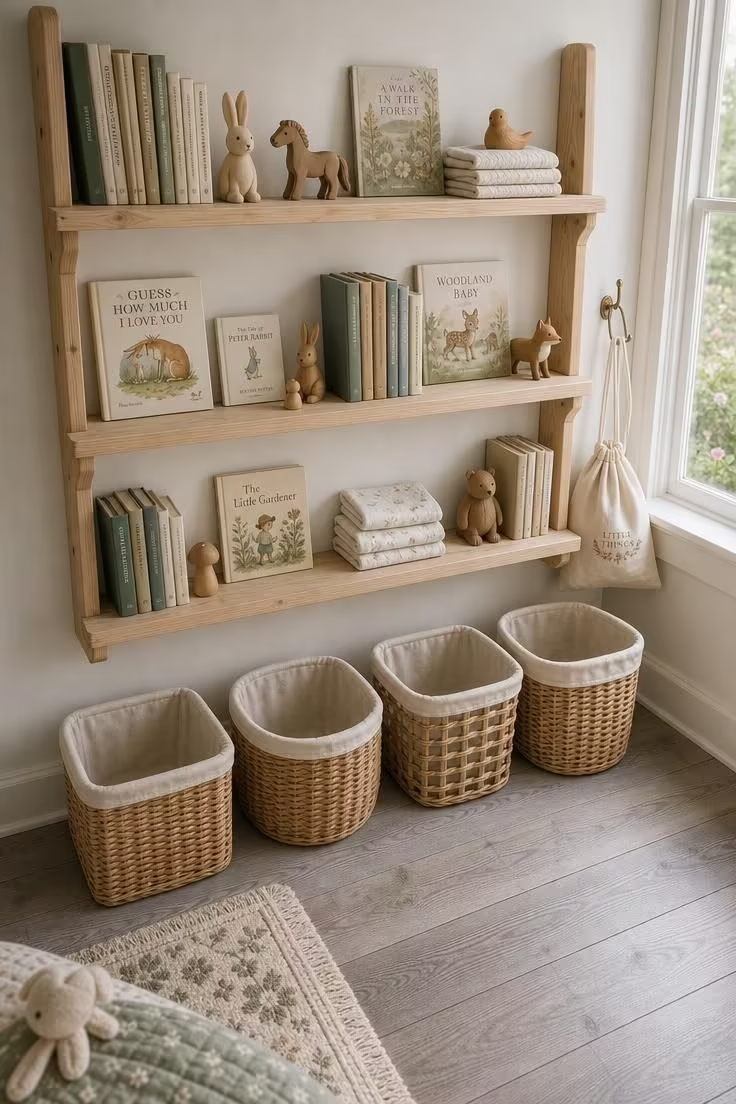
Open shelving paired with woven baby room storage gives a cottage nursery the kind of order that still feels soft.
The baskets do the heavy lifting here, hiding diapers, extra blankets, and small clothes behind their textured walls.
Lining each basket with a natural cotton liner keeps the contents clean and adds a finished edge that you can see from across the room.
The pine shelving above works best when it is not overfilled, because negative space between objects lets each piece breathe.
A few cloth-bound books, two or three wooden animals, and a small stack of folded muslin create enough visual interest without clutter.
Varying the basket shapes slightly, one round, one oval, one rectangular, breaks up the row and keeps the arrangement from looking too rigid.
This setup turns storage into a display, which is the real trick in any nursery where space is tight.
A cotton drawstring bag on a side hook adds one more layer of function without adding furniture.
Brass hooks are a small detail that ties back to the cottage vocabulary of the rest of the room.
Style Blueprint:
- Three rows of open pine shelving, lightly styled
- Four wicker baskets with natural cotton liners on the floor
- Wooden animal figurines and cloth-bound children’s books
- Gray-washed wide-plank hardwood floor
- Brass side hook with a cotton drawstring bag
Design Pro-Tip: Layer your storage by reach height. Keep daily needs like diapers and wipes in baskets at hip level, place less-used items on higher shelves, and reserve the top row for display-only pieces that small hands cannot reach.
A Painted Rocking Chair With a Patchwork Quilt Draped Over the Arm
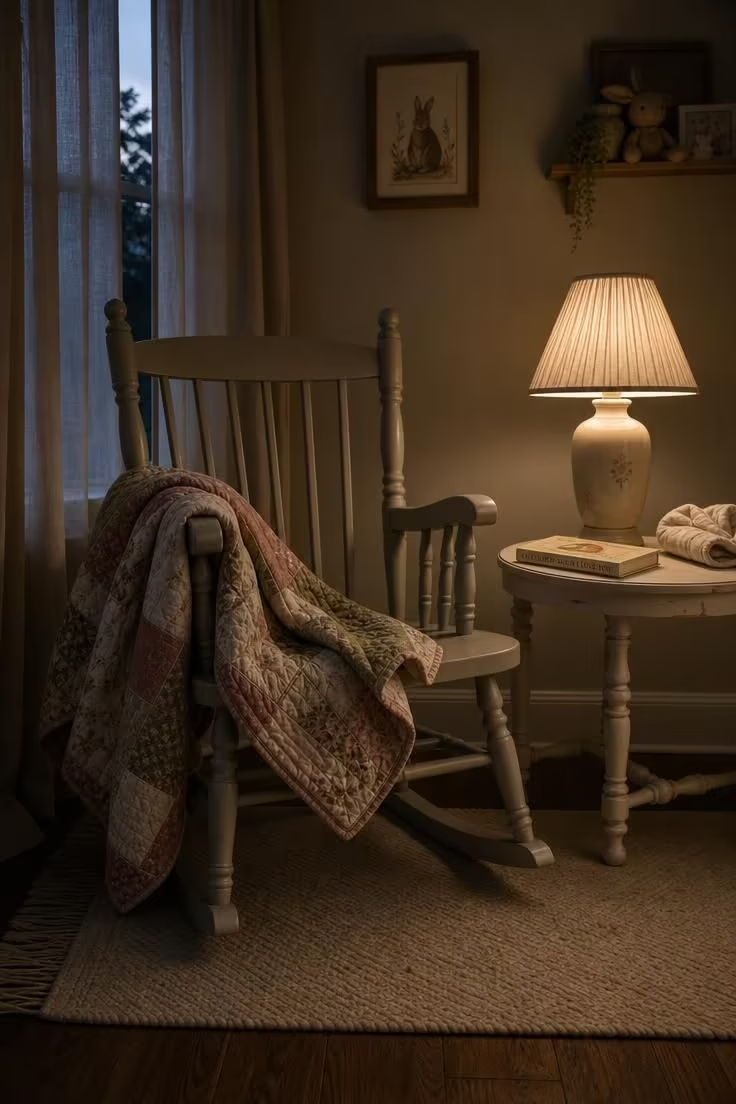
A rocking chair nursery corner is where the cottage feeling becomes most personal.
The chair itself should look like it has been used before, and a matte paint finish in dove or pale blush gives it that quality even when it is new.
Draping a patchwork quilt over the arm is a detail that connects this room to the tradition of handmade things.
The quilt’s muted tones, rose, sage, cream, should feel like they faded naturally over many washes rather than arriving in those colors.
A turned-leg side table beside the chair holds the essentials without looking like a nightstand borrowed from another room.
The ceramic lamp on the table provides warm, localized light that makes late-night feedings feel less clinical and more like a ritual.
This is the part of the room that belongs to the parent as much as the baby, and it should feel that way.
Style Blueprint:
- Matte dove-painted wooden rocking chair
- Hand-stitched patchwork quilt in rose, sage, and cream
- Turned-leg side table in aged white
- Ceramic table lamp with a pleated linen shade
- Small wool area rug in oatmeal beneath the rocker
Board-and-Batten Wainscoting in Warm White Below a Dusty Rose Ceiling
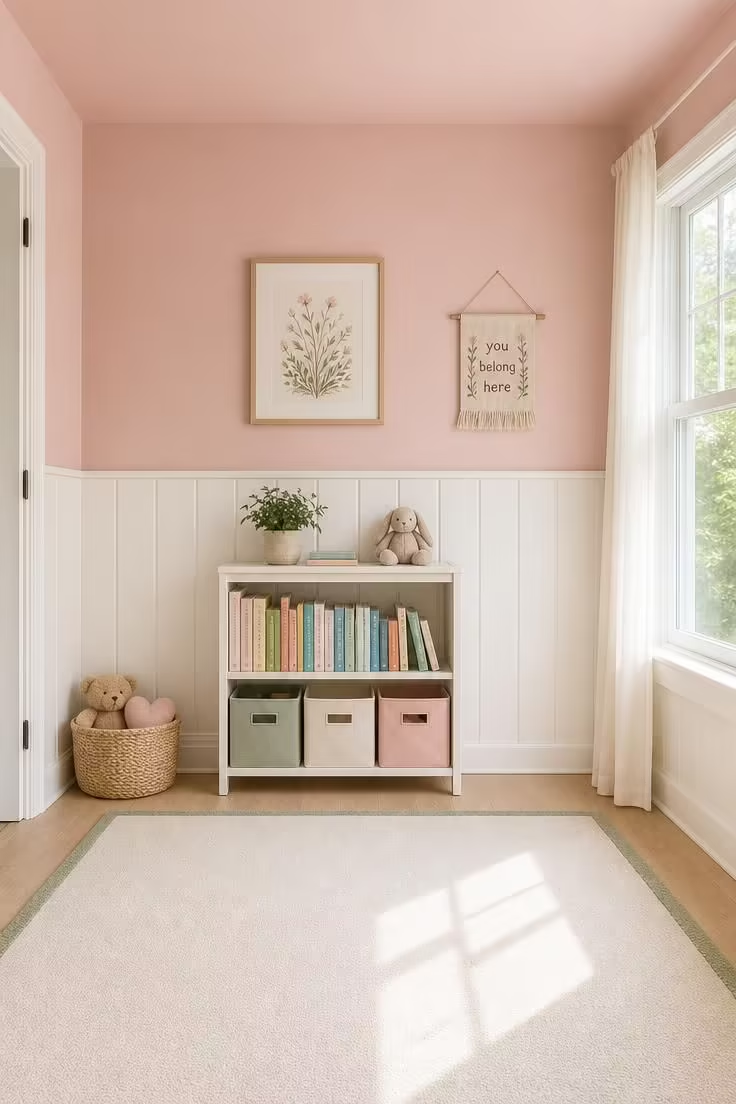
Board-and-batten wainscoting brings structure to a room that might otherwise feel too soft.
The vertical battens create a visual rhythm along the lower wall that grounds the space and gives it architectural presence.
Painting the wainscoting in warm white and then carrying a dusty rose up to the ceiling is a move that feels surprising without being bold.
The color break at chair-rail height creates a horizon line that your eye follows around the room.
A neutral nursery color palette anchors the lower half while the rose above adds warmth that bounces off any light coming through the windows.
This is a good wall treatment for parents who want color in the nursery but prefer to keep it above eye level, where it reads as ambient rather than dominant.
A small white bookcase against the wainscoting becomes part of the architecture rather than a piece of furniture sitting in front of a wall.
Fill it loosely with pastel-spined books and a couple of fabric storage cubes that match the rose above.
Style Blueprint:
- Board-and-batten wainscoting in warm white to chair-rail height
- Dusty rose paint on walls above the wainscoting and ceiling
- Small white wooden bookcase with pastel picture books
- Cream cotton area rug with a thin sage border
- Light maple hardwood floor
A Scalloped-Edge Shelf Displaying Wooden Toys and Dried Eucalyptus
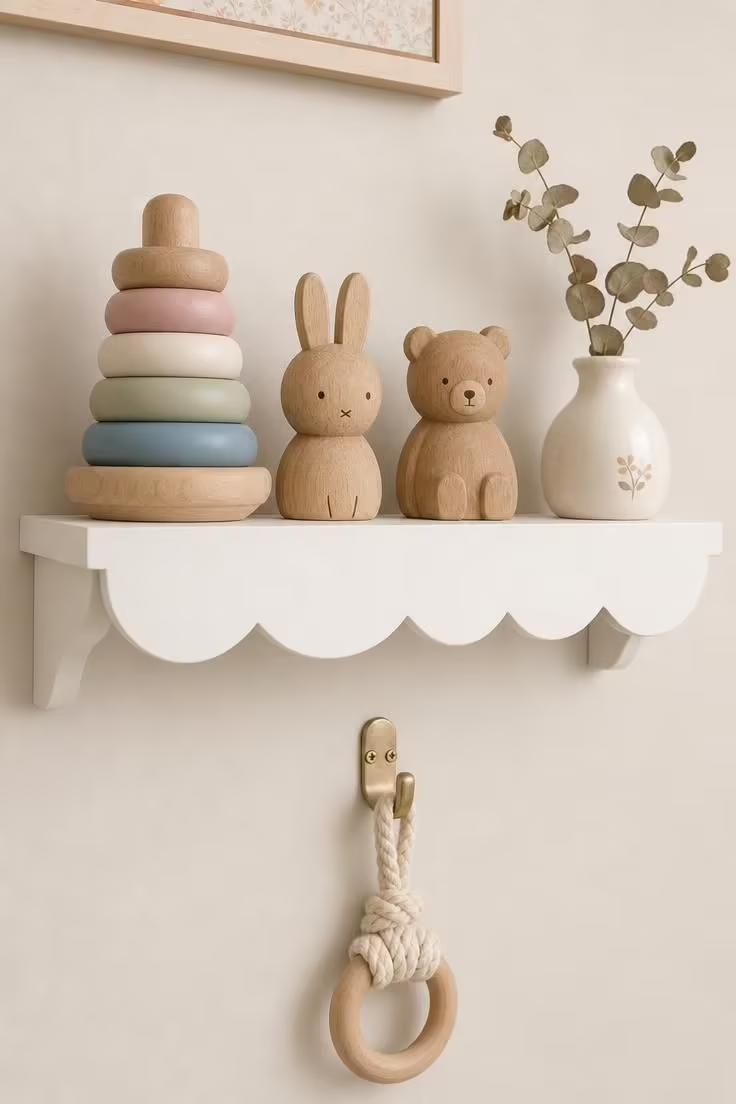
A scalloped shelf adds a decorative edge without requiring any other ornament on the wall around it.
The scallop detail does the work of an entire gallery arrangement, which means the wall can stay clean and calm above and below.
Wooden stacking toys in natural and pastel tones belong on this kind of shelf because they double as decorative objects.
The dried eucalyptus in a small ceramic vase introduces a muted green that reads as organic rather than styled.
Keep the arrangement to three clusters: one group of toys, one pair of figures, one vase.
Odd numbers of groups create visual tension that keeps the eye moving across the shelf rather than settling in the middle.
Style Blueprint:
- Matte white scalloped-edge wall shelf
- Wooden stacking rings in natural and pastel tones
- Small wooden animal figurines (rabbit, bear)
- Ceramic vase with dried eucalyptus stems
- Brass wall hook with a knotted cotton teething ring
Embroidered Cotton Curtains in a Cottage Nursery Garden Window
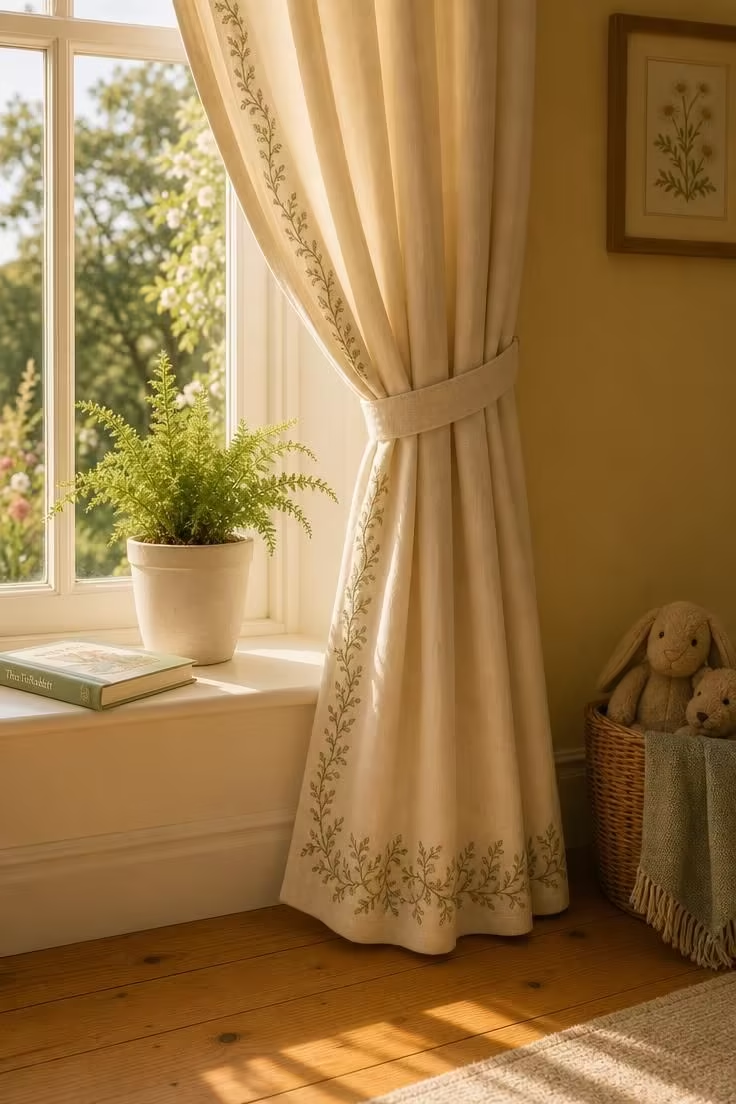
Linen nursery curtains get a lot of attention in cottage nurseries, but embroidered cotton deserves the same consideration.
The stitching along the hem adds a handmade quality that plain fabric cannot achieve on its own.
A leaf-and-vine pattern in sage thread on ecru cotton keeps the detail subtle enough that it blends into the room rather than announcing itself.
Pulling the curtains back with simple linen ties lets natural light fill the room while still framing the window as a deliberate part of the design.
The windowsill becomes a small display shelf when it is deep enough, and a potted fern paired with a children’s book gives it purpose.
Cottage nursery windows work best when they connect the interior to whatever is outside, and sheer or semi-sheer fabrics preserve that relationship.
These curtains filter harsh afternoon sun into something buttery and soft, which changes the way every surface in the room looks.
The honey-toned pine floor picks up that filtered light and reflects it back, warming the entire lower half of the space.
A chamomile-painted wall behind the curtain keeps the backdrop neutral so the embroidery and the garden view remain the focal points.
Style Blueprint:
- Floor-length ecru cotton curtains with sage embroidered hem
- Simple linen curtain ties
- Wide painted windowsill with a potted fern and a cloth-bound book
- Chamomile-painted wall as a neutral backdrop
- Honey-toned pine floor
Design Pro-Tip: Choose curtain fabric that filters light rather than blocking it completely. Embroidered cotton or lightweight muslin softens direct afternoon sun and keeps the nursery feeling bright without any harsh glare on the crib.
A Vintage Ceramic Lamp on a Turned-Leg Nightstand
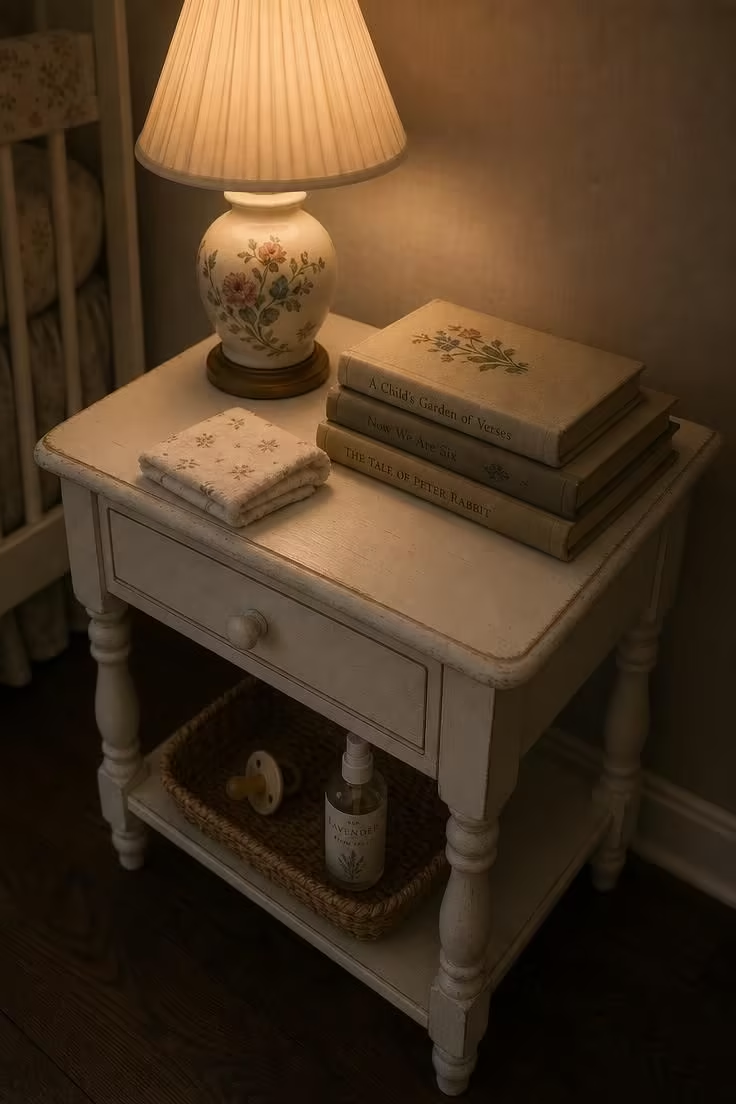
Baby room with vintage furniture works best when the vintage piece is small and functional, like a nightstand you might find at an estate sale.
A turned-leg table in aged white paint has enough visual character to stand on its own beside a crib or a rocking chair.
The ceramic lamp on top becomes the room’s evening personality, shifting the nursery from a daylit playroom to a quiet, warm retreat.
A hand-painted floral motif on the lamp base ties back to the cottage vocabulary without requiring any other floral element in the room.
Stacking cloth-bound children’s books beside the lamp gives the surface a purpose that goes beyond decoration.
The lower shelf of the nightstand is an underused storage opportunity, and a woven seagrass tray keeps small necessities organized there.
This kind of vignette proves that one good piece of furniture can set the mood for an entire corner.
Style Blueprint:
- Turned-leg nightstand in aged white paint
- Vintage-style ceramic lamp with a hand-painted floral motif
- Pleated cream lamp shade
- Three cloth-bound children’s books stacked on the tabletop
- Woven seagrass tray on the lower shelf
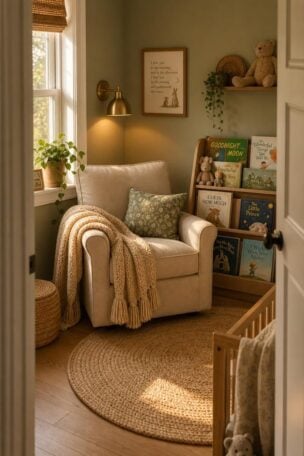
A Braided Jute Rug Anchoring a Reading Corner With Floor Cushions
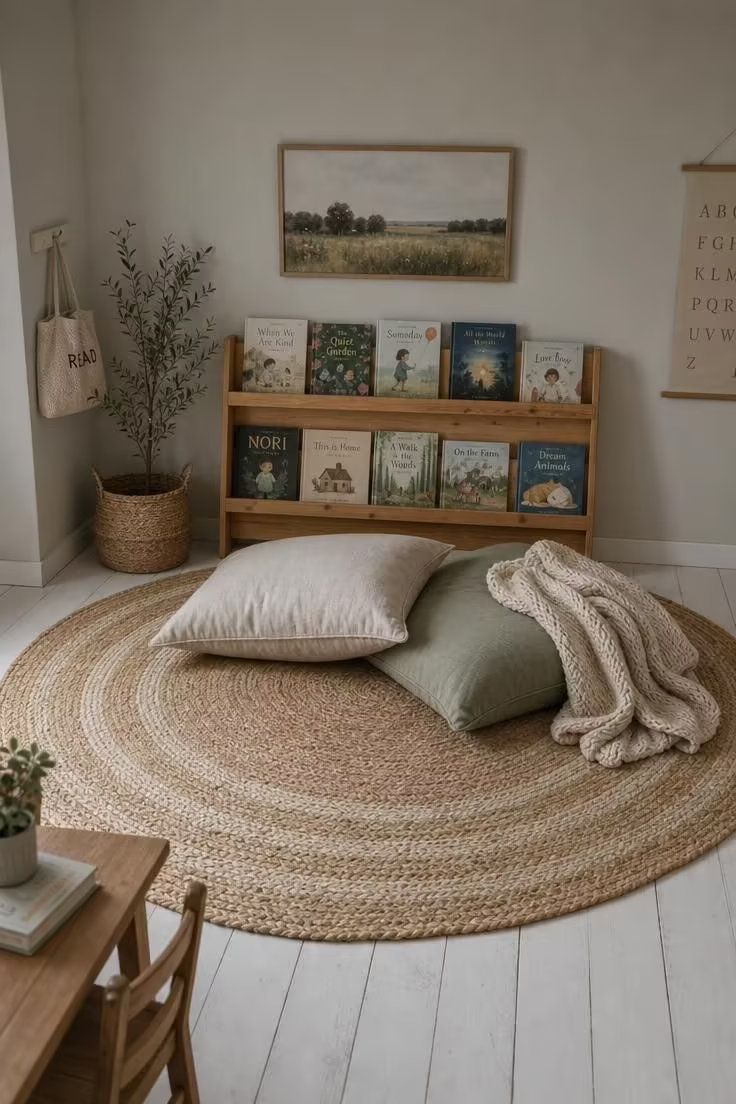
A reading corner does not require a chair when the rug and the cushions do the job on their own.
A braided jute rug in natural tones defines the area without adding a visual border, because the rug’s edge blends softly into the surrounding floor.
Linen floor cushions in oatmeal and faded sage give parents a comfortable place to sit at the baby’s level during storytime.
The low bookshelf behind the cushions keeps picture books within arm’s reach, and displaying them face-out makes choosing one faster and more visual.
Two shelves are enough for a nursery collection, and keeping the shelf at child height means it will stay useful as the baby grows into a toddler.
A knitted throw blanket tossed over one cushion adds warmth on cooler mornings and gives the corner a casual, unplanned quality.
This is one of those cottage nursery setups that costs very little but changes how the room is used every day.
Pale dove gray on the wall behind keeps the reading corner feeling like a separate zone within the larger room.
Style Blueprint:
- Large round braided jute rug in natural wheat and cream
- Two linen floor cushions in oatmeal and faded sage
- Low two-shelf pine bookcase with books displayed face-out
- Knitted cream throw blanket
- Pale dove gray accent wall behind the corner
Pressed Botanical Prints in Thin Birch Frames Grouped Above the Crib
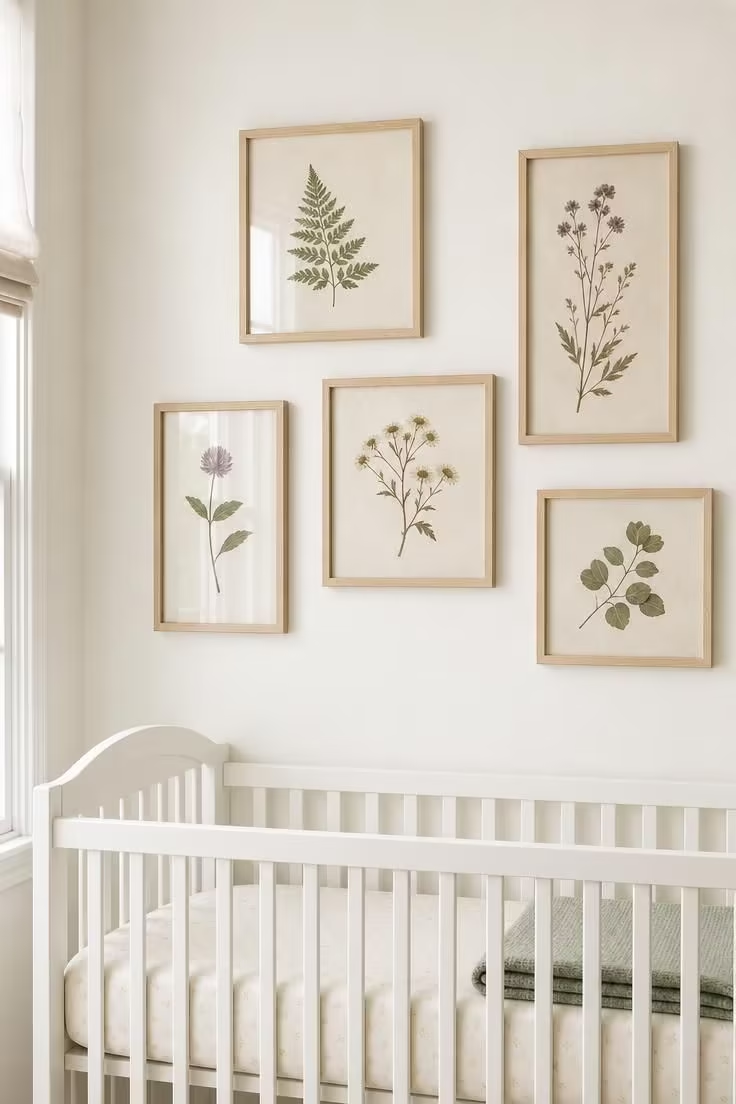
A gallery grouping of pressed botanical prints gives the crib wall a finished look that still feels organic.
The asymmetric layout is important here, because a perfect grid would read as modern rather than cottage.
Varying the frame sizes, two vertical and three square, creates visual interest that a set of identical frames cannot offer.
Thin birch frames keep the arrangement light and let the botanicals themselves hold the attention.
Muted greens and faded purples in the prints connect the wall to the nursery with natural wood tones and garden-inspired colors in the rest of the room.
Spacing the frames with uneven gaps lets the warm white wall breathe between each piece, which prevents the grouping from looking heavy.
Style Blueprint:
- Five pressed botanical prints in muted greens and faded purples
- Thin birch frames in mixed sizes (two vertical, three square)
- Asymmetric cluster arrangement with organic spacing
- White slatted crib with cream fitted sheet and sage cotton blanket
- Warm white wall as backdrop
Design Pro-Tip: Hang framed prints at least 12 inches above the crib rail. This keeps them safely beyond reach while still framing the crib as the visual anchor of the wall.
Conclusion
A cottage nursery does not ask for perfection.
It asks for softness, for materials that feel good under your hand, and for colors that make the room feel like it is always bathed in early morning light.
These 11 ideas give you a range of starting points, from a single scalloped shelf to a full accent wall of floral nursery wallpaper.
The thread that connects all of them is intention: choosing a Jenny Lind crib because you love its silhouette, draping a patchwork quilt because it belonged to someone, lining wicker baskets because the cotton edge makes you smile.
Start with the piece that means the most to you and build the room around it.
That is how a cottage nursery becomes a real room, not a mood board, but a place where someone small will wake up every morning feeling held.