This post may contain affiliate links. If you make a booking or purchase through these links, we may earn a commission at no additional cost to you.
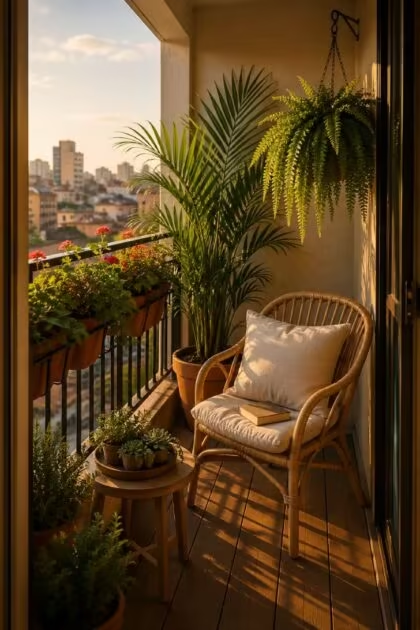
You don’t need a backyard to grow something worth looking at.
A few square feet of concrete, a railing, and some afternoon light — that’s enough to build a space that feels alive.
These 17 balcony plants ideas prove that even the smallest outdoor footprint can hold real color, real texture, and real food if you pick the right containers and the right greenery for your specific conditions.
Trailing Geraniums Cascading From the Railing
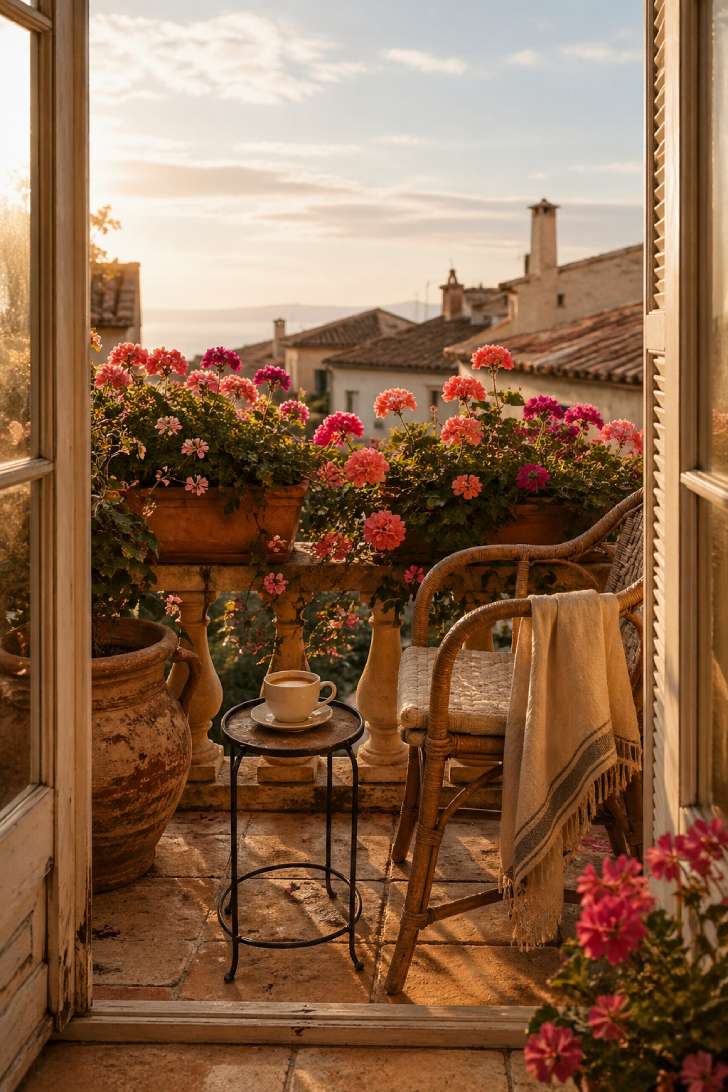
There’s a reason you see these on every balcony from Lisbon to Dubrovnik.
Trailing geraniums (pelargoniums, technically) handle heat, drought, and the kind of neglect that comes from a busy week without punishing you with dead leaves.
They bloom from late spring through the first frost if you deadhead them occasionally.
The cascading habit turns a plain metal railing into something that looks like it belongs in a travel magazine, and that visual payoff comes from almost zero effort.
What makes this work on an emotional level is the contrast between the soft, organic shapes of the blooms and the hard geometry of the railing and building facade.
Your eye reads that tension as charm.
The warm pinks and corals against weathered terracotta create a color temperature that literally makes a space feel warmer — your brain associates those tones with sunlight and relaxation, so the balcony becomes a place you want to sit, not just walk past.
Style Blueprint:
- Terracotta railing planters with drainage holes (at least 8 inches deep)
- Trailing ivy-leaf geranium starts in coral, magenta, or mixed warm tones
- Slow-release granular fertilizer for season-long feeding
- A small bistro chair or stool to give yourself a reason to sit out there
- A watering can you’ll actually use — something that stays on the balcony
A Compact Herb Wall for Daily Picking
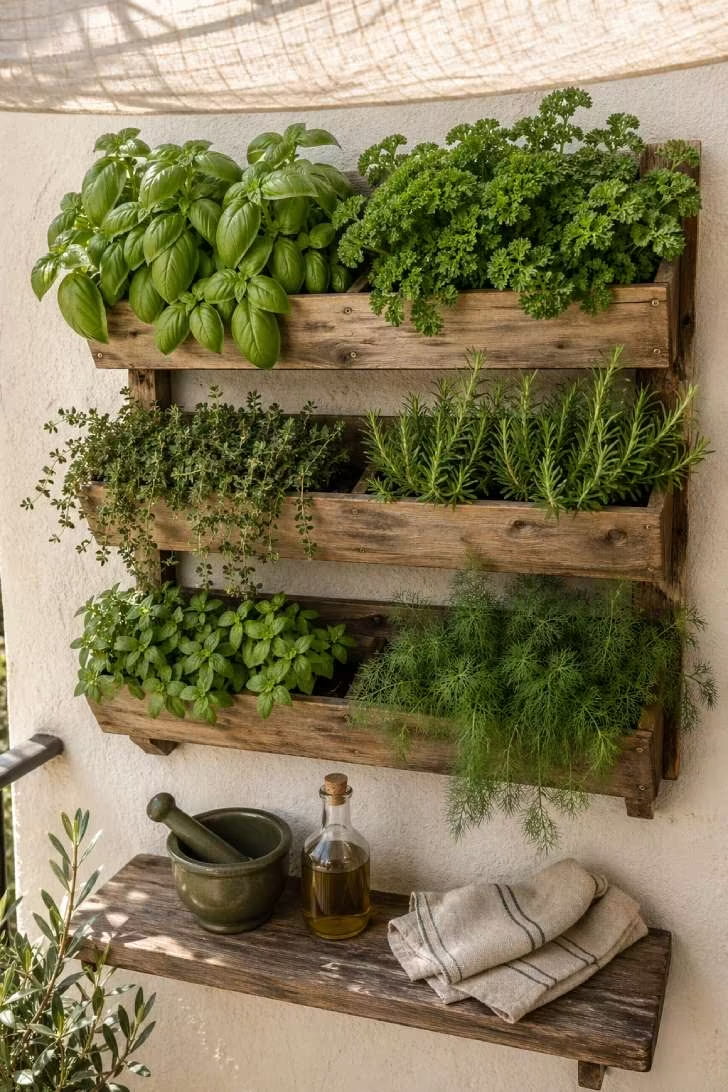
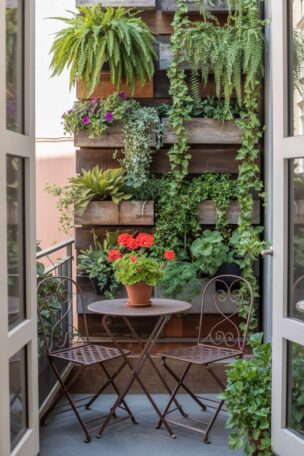
This is balcony container gardening at its most practical.
A vertical herb setup takes almost no floor space — just a blank wall and some sun.
Basil, thyme, rosemary, parsley, and chives all grow happily in small pockets of soil as long as they get six or so hours of direct light.
You step outside, pinch what you need for dinner, and step back in.
The reason a setup like this feels so satisfying goes beyond the cooking.
Seeing living green things arranged on a wall activates the same visual pleasure as artwork — your brain processes the varied leaf textures and shades of green the way it processes pattern and color in a painting.
But unlike a painting, it smells like something.
Rosemary and basil release oils when you brush past, and scent is the sense most directly linked to memory and mood.
A balcony herb garden makes you feel like you live somewhere generous, even if the square footage says otherwise.
Style Blueprint:
- Wall-mounted wooden or felt pocket planters (three to four rows)
- Herb starts: basil, rosemary, thyme, parsley, and one wildcard like dill or mint
- Potting mix with added perlite for fast drainage in small pockets
- A small shelf below for a watering pitcher and kitchen tools
- Hooks or brackets rated for the weight of wet soil
Boston Ferns Softening a Shady Corner
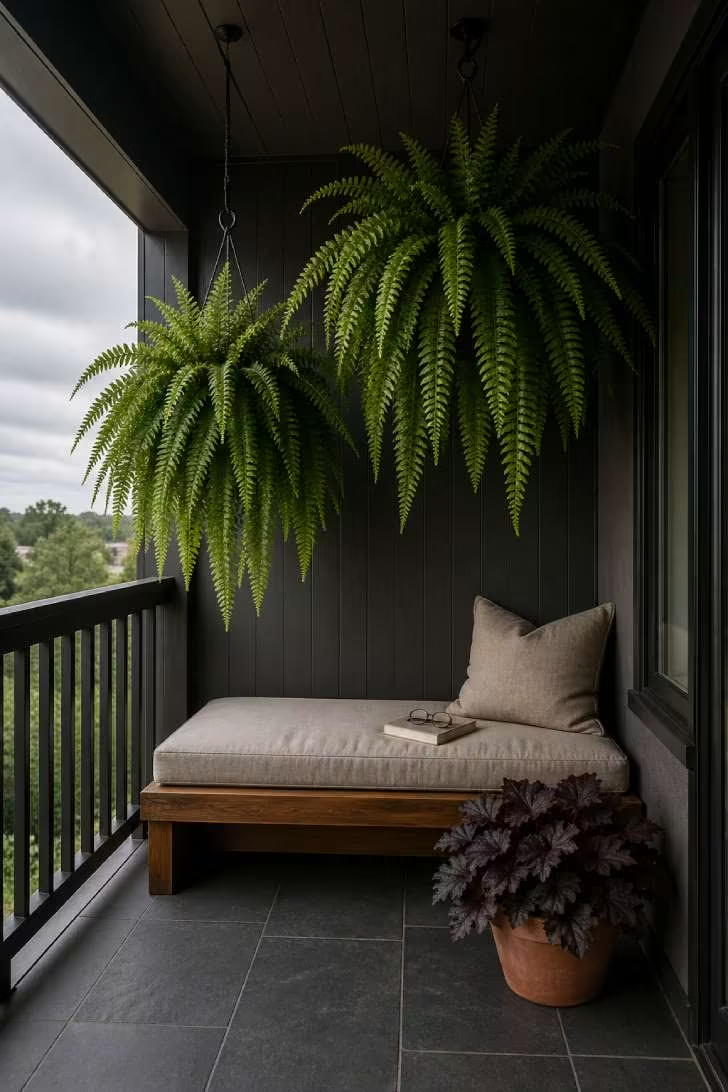
Shade plants for balconies don’t get enough attention.
Most balcony gardening content assumes you’ve got blazing afternoon sun, but plenty of apartments face north or sit in the shadow of a taller building.
Boston ferns are the answer.
They thrive without direct sunlight, their fronds move in any breeze, and hung at different heights they create a layered canopy effect that makes even a narrow balcony feel lush.
What ferns do to a shady space is soften it.
Hard surfaces — concrete walls, metal railings, tile floors — dominate most balconies.
They bounce sound, they feel cold, they look institutional.
Fern fronds break up those hard planes with curves and organic movement.
Your eye relaxes.
The space stops feeling like a ledge and starts feeling like a room.
Pair them with a bench and a cushion, and you’ve created a spot that pulls you outside even on overcast days.
Style Blueprint:
- Two or three Boston ferns in hanging baskets (self-watering baskets help in shade where you might forget to check)
- Matte black or dark bronze ceiling hooks rated for 25+ pounds each
- A low bench or stool with a weatherproof cushion in a neutral tone
- One contrasting foliage plant at floor level — heuchera or a dark-leafed begonia
- A misting bottle for humid days when the ferns want extra moisture
One Big Tomato Plant Against a Sunny Wall
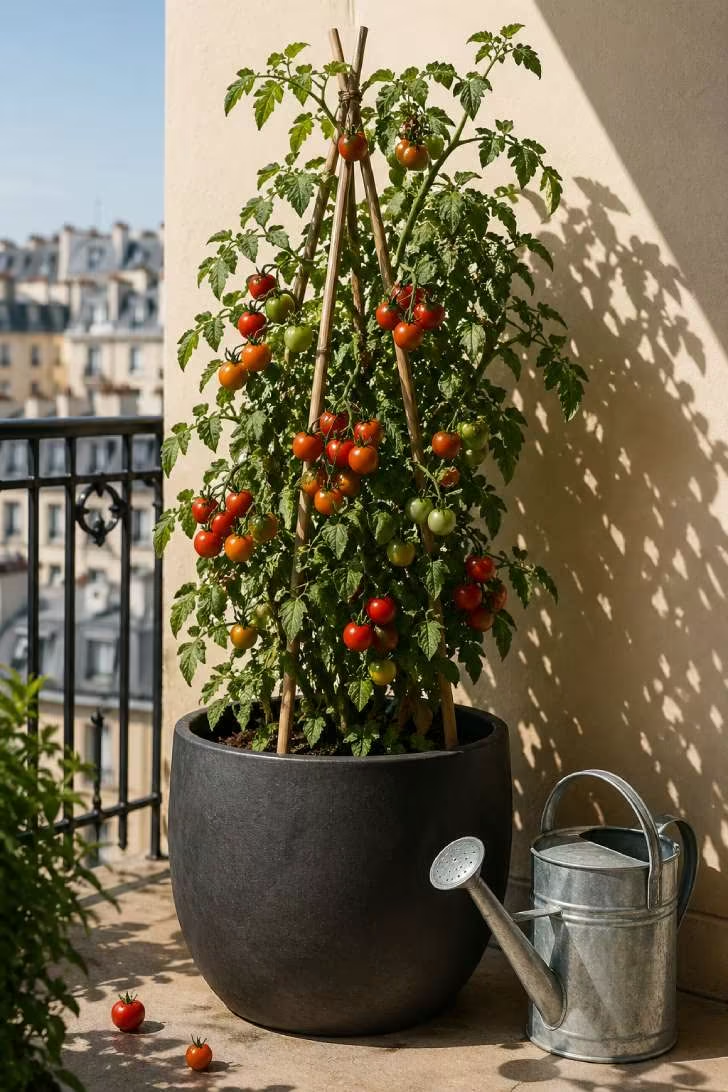
You only need one plant.
A single cherry tomato in a five-gallon container, staked against a warm south-facing wall, can produce handfuls of fruit for six weeks or more.
It’s the most rewarding balcony container gardening project you can try — you eat the results.
The visual appeal here is the contrast of wild, vining growth against a clean architectural backdrop.
Tomato plants aren’t tidy.
They reach, they sprawl, they drop the occasional fruit.
That messiness reads as abundance, and abundance makes a space feel generous.
There’s a psychological reward cycle at work too: watching fruit ripen day by day gives you a reason to check the balcony every morning, and that daily ritual turns the balcony from “that space outside the door” into a destination.
Style Blueprint:
- A five-gallon pot (ceramic, fabric grow bag, or lightweight fiberglass) with drainage
- One cherry tomato seedling — Sungold and Sweet 100 are reliable producers
- A bamboo or metal support cage or tripod
- Potting mix with slow-release fertilizer mixed in at planting
- A small watering can that lives next to the pot as a visual reminder
Design Pro-Tip: Group your pots in odd numbers — three or five — and cluster them at slightly different heights using overturned pots or plant stands as risers. Odd groupings look intentional. Even groupings look like a store display.
Calibrachoa Tumbling Along the Edge
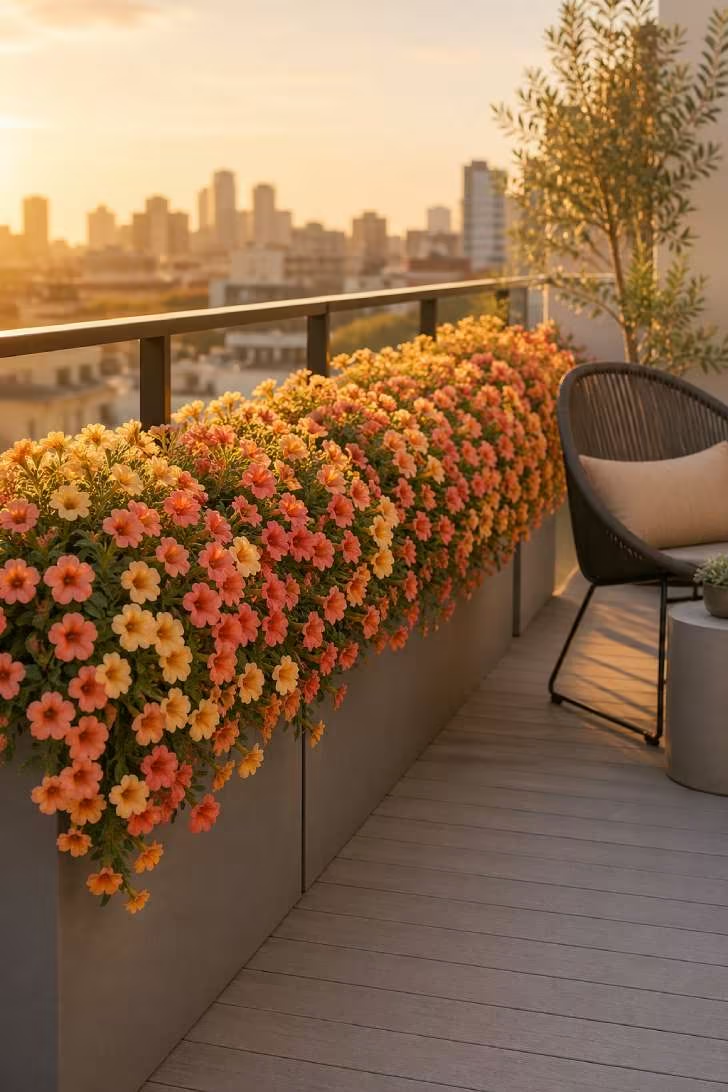
Calibrachoa looks like a miniature petunia but handles wind and heat with more grace.
On higher-floor balconies where gusts dry out soil and snap tall stems, these low-growing plants just keep blooming.
They mound and trail without reaching upward, so the wind passes right over them.
The effect of a continuous band of color along a railing is one of the strongest visual moves you can make on a balcony.
It creates a border — a frame — between your private space and the open air beyond.
Your brain reads that color line as a boundary, which paradoxically makes the small balcony feel more like a room.
Stick to two or three colors in the same warm family (peach and coral, or purple and lavender) rather than mixing every shade available.
Restraint is what separates a planted balcony from a garden center cart.
Style Blueprint:
- Long, narrow railing planters in a neutral matte finish (gray, charcoal, or white)
- Calibrachoa six-packs in two or three complementary sunset tones
- Potting mix with added perlite for drainage and lightweight structure
- Liquid fertilizer every two weeks — calibrachoa are hungry plants
- Railing brackets rated for the weight of wet soil in a full planter
Tall Grasses as a Green Privacy Wall
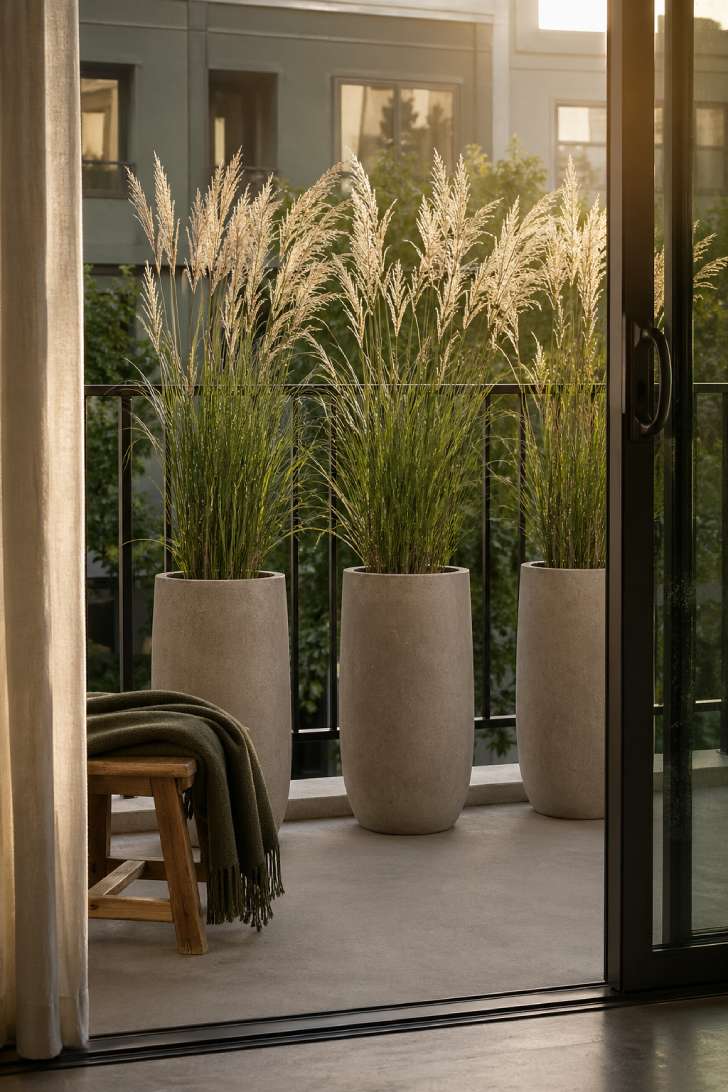
Balcony privacy plants solve a problem that curtains can’t — they block sightlines without blocking airflow or light.
Ornamental grasses grow tall and narrow, which is exactly the profile you need when floor space is tight.
Karl Foerster feather reed grass hits four to five feet and barely takes up a foot of width per clump.
What grasses add that a screen or panel never could is movement and sound.
The seed heads catch light.
The blades rustle.
These are sensory qualities that make a space feel like it’s outdoors — connected to weather and wind — rather than sealed off.
A solid privacy screen turns your balcony into a box.
Grasses turn it into a garden with a soft edge.
Style Blueprint:
- Three narrow, tall planters in concrete, fiberglass, or corten steel finish (at least 14 inches deep)
- Karl Foerster feather reed grass or dwarf fountain grass plugs
- Heavy potting mix or add stones at the bottom for ballast against wind
- A simple low stool or bench to sit below the grass line for full privacy
- Scissors or garden shears for cutting back in late winter
Strawberries Stacked in a Vertical Planter
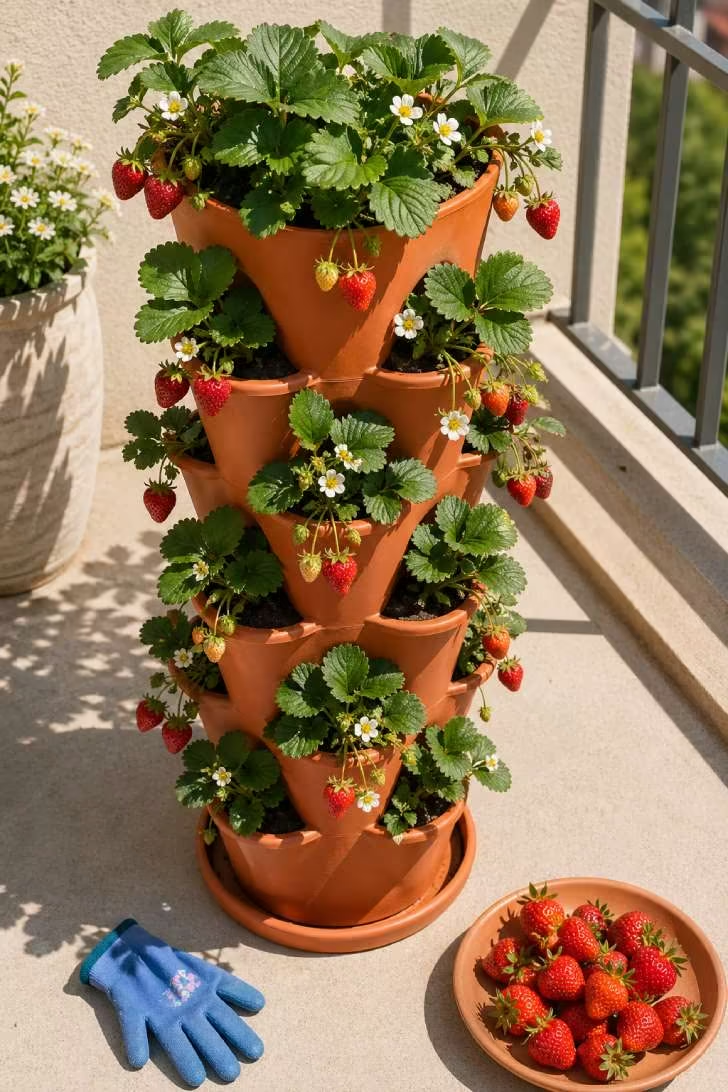
A vertical balcony garden doesn’t have to be all ornamental.
Strawberries produce in pockets as small as four inches across, and a tiered planter can hold eight or ten plants in less than two square feet of floor space.
The fruit hangs over the edges, which keeps it clean and easy to spot when it’s ripe.
East-facing balconies with morning sun work well for strawberries — they like light but don’t love scorching afternoon heat.
There’s something about growing food vertically that feels clever.
Your eye follows the tiers upward, and the repetition of the leaf-flower-fruit pattern at each level creates a visual rhythm.
It’s structured enough to look intentional but wild enough (berries hang where they want) to look alive.
Kids respond to this setup immediately — it’s a small, reachable garden that produces something sweet.
Style Blueprint:
- A tiered vertical strawberry planter (terracotta, plastic, or stackable pot system)
- Everbearing strawberry varieties like Albion or Seascape for continuous harvest
- Rich potting mix with compost blended in
- A saucer or small bowl kept nearby for picking
- Netting or bird cloth if pigeons or sparrows are a problem on your floor
Succulents Arranged in a Low Tray
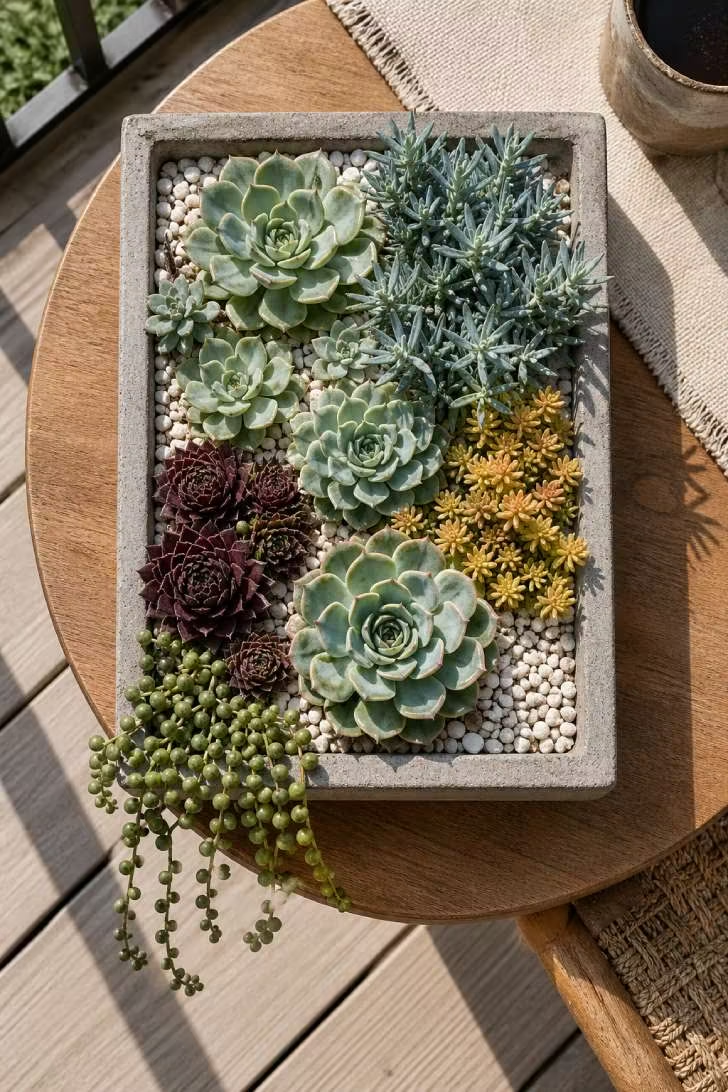
If you forget to water for a week — or two — succulents won’t hold it against you.
They’re the most forgiving balcony plants ideas on this list, and arranged in a shallow tray they double as a living tabletop sculpture.
The flat, overhead composition of a succulent tray triggers the same satisfaction as a well-organized shelf or a tidy desk.
Your brain enjoys the geometry: rosettes, spikes, spheres, trails, all packed together with clear negative space (the gravel) between them.
It reads as order within variety.
Self-watering pots aren’t necessary here — in fact, too much moisture kills succulents faster than neglect does.
A tray with a drainage hole and bright full sun balcony flowers beside it for color contrast is all you need.
Style Blueprint:
- A shallow concrete, ceramic, or wooden tray (at least 2 inches deep with drainage)
- Assorted succulents: echeveria, sempervivum, sedum, senecio, string of pearls
- Cactus and succulent potting mix (fast-draining)
- White or pale gravel for top dressing
- A small wooden table or plant stand to display the tray at a visible height
Design Pro-Tip: Self-watering pots are worth every penny for thirsty balcony plants like ferns, tomatoes, and calibrachoa. On a hot day with wind, a standard pot can dry out in hours. The reservoir buys you a full extra day between waterings.
Lavender in Terracotta for Scent at the Door
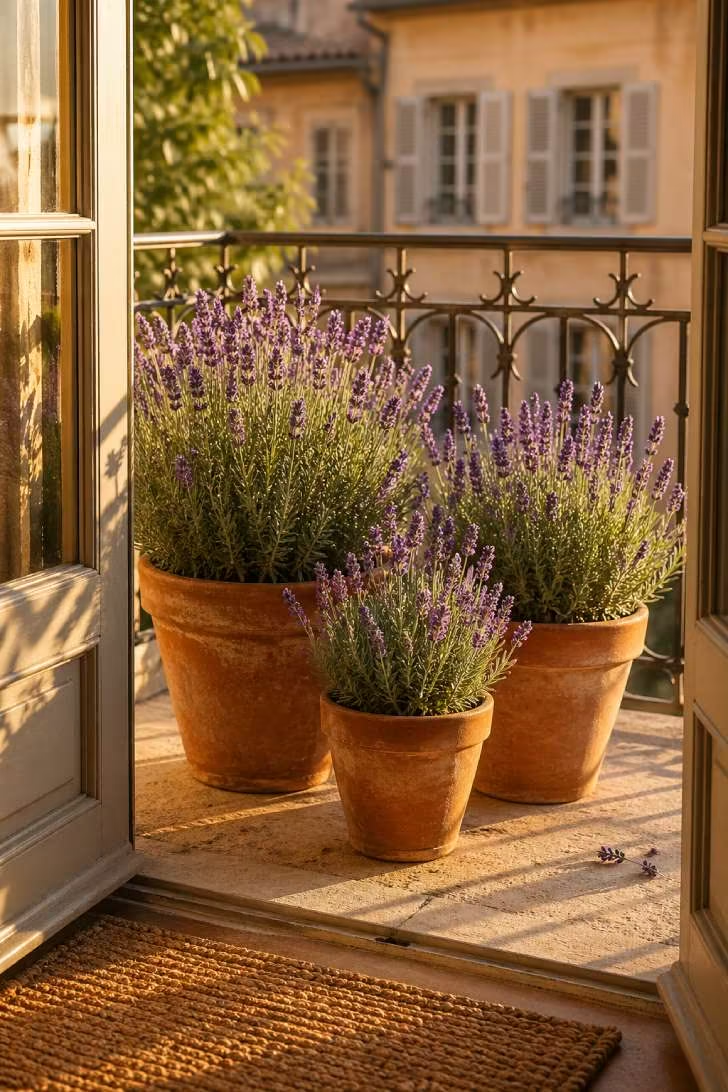
Lavender planted near the door is a trick borrowed from old Provençal houses.
Every time you step outside or open the door, the scent reaches you before you’ve even looked at the plants.
That’s not an accident — lavender releases its oils in warmth, so a sun-baked terracotta pot on a south or west-facing balcony becomes a passive diffuser all afternoon.
Scent does something to a space that no visual element can.
It creates a sense memory.
After a few weeks, you won’t just see your balcony when you think of home — you’ll smell it.
Lavender thrives on the exact conditions that kill most other plants: full sun, poor-ish soil, and infrequent watering.
If your balcony bakes in the afternoon, this is the plant that will thank you for it.
Style Blueprint:
- Three terracotta pots in graduated sizes (8, 10, and 12 inches)
- French lavender (Lavandula stoechas) or English lavender (Lavandula angustifolia)
- Sandy, fast-draining potting mix — add extra perlite or coarse sand
- Placement near the balcony door for maximum scent exposure
- Pruning shears to trim spent flower spikes and keep the plants compact
Morning Glory Climbing a Wall Trellis
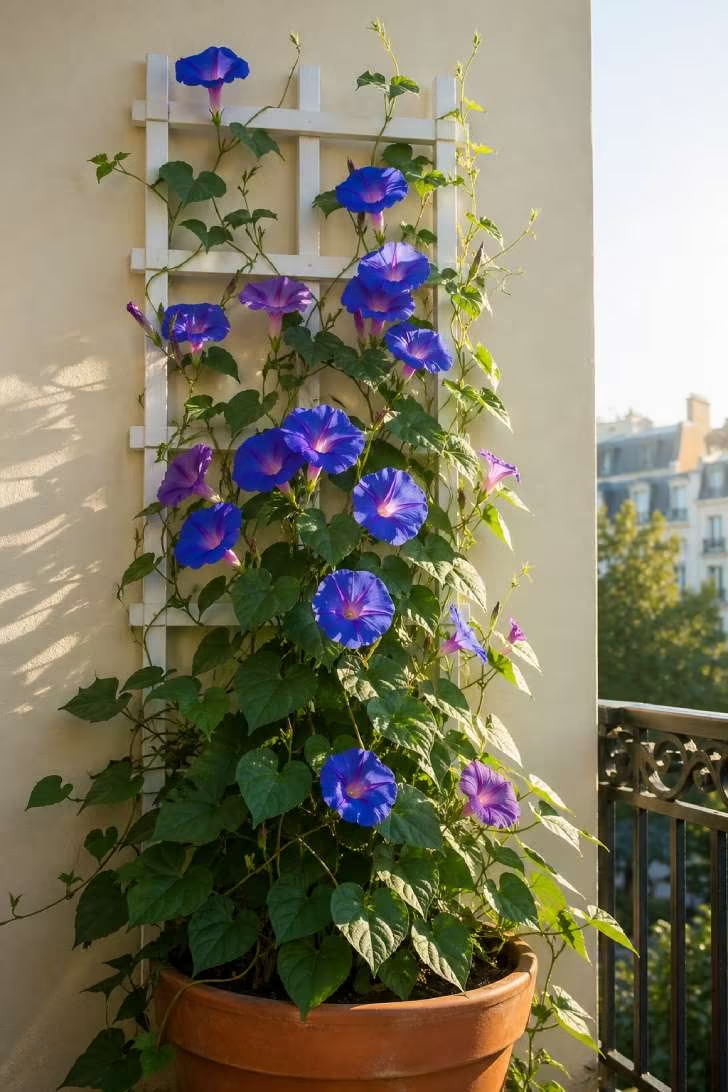
Morning glories cover bare walls faster than any other annual vine — some varieties grow ten feet in a single season.
If you’ve got a blank wall on your balcony that makes the space feel like a concrete box, a trellis and a packet of seeds can change the whole thing by midsummer.
The flowers open each morning and close by afternoon.
That daily cycle gives the balcony a sense of time passing, of living rhythm, that static decor can’t replicate.
You notice morning glories because they’re different at 7 AM than at 2 PM.
They make you pay attention to your own space, which is half the point of having plants out there at all.
This works as a renter-friendly option too — a freestanding trellis leaned against the wall or mounted with removable adhesive hooks means no drilling.
Style Blueprint:
- A wooden or wire trellis (4 to 6 feet tall) mounted or leaned against the wall
- Morning glory seeds (Heavenly Blue is the classic cobalt; mix in a violet variety)
- A deep pot — at least 10 inches — for the root system
- Standard potting mix; morning glories aren’t fussy about soil
- Twine or plant ties to guide early vines toward the trellis
Coleus in Bold Leaf Colors for Shade
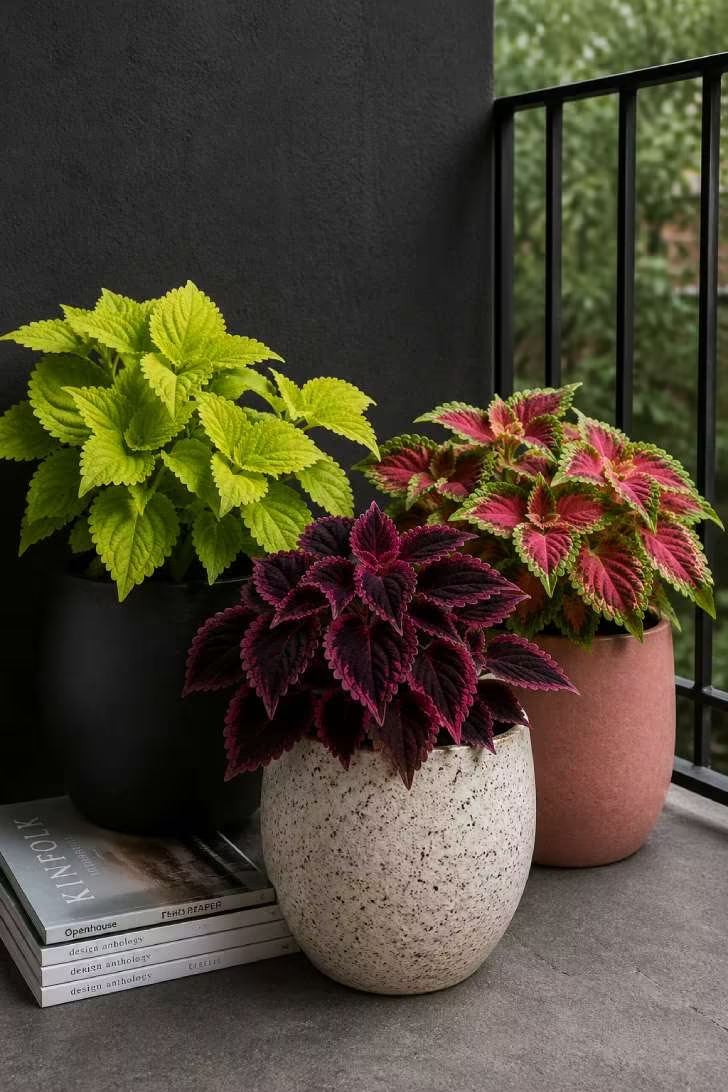
Shade plants for balconies don’t have to be boring greens.
Coleus comes in colors that most flowers can’t match — electric lime, near-black burgundy, coral-and-cream swirls, magenta edges on chartreuse centers.
They grow fast in part shade, and pinching off the small flower spikes keeps the leaf color concentrated.
The visual trick here is using foliage as your color source instead of blooms.
Flowers fade and drop.
Coleus leaves hold their color all season.
Grouped in mismatched pots against a dark wall, they create a moody, almost gallery-like vignette.
The dark background makes the saturated leaf colors advance toward your eye — the same principle galleries use when they hang vivid paintings on dark walls.
Style Blueprint:
- Three coleus varieties in contrasting colors (one light, one dark, one patterned)
- Mismatched ceramic pots in muted, neutral tones to let the leaves be the color
- Potting mix that holds moisture — shade plants dry out slower, but they still need consistent water
- Pinching shears or your fingertips to remove flower buds regularly
- Placement against the darkest wall on your balcony for maximum contrast
Design Pro-Tip: If your balcony faces north and gets very little direct sun, don’t fight it. Pick shade plants — ferns, coleus, begonias, heuchera — and lean into the moody, green palette. A shady balcony done well looks better than a sunny one done wrong.
A Dwarf Palm as a Single Statement Plant
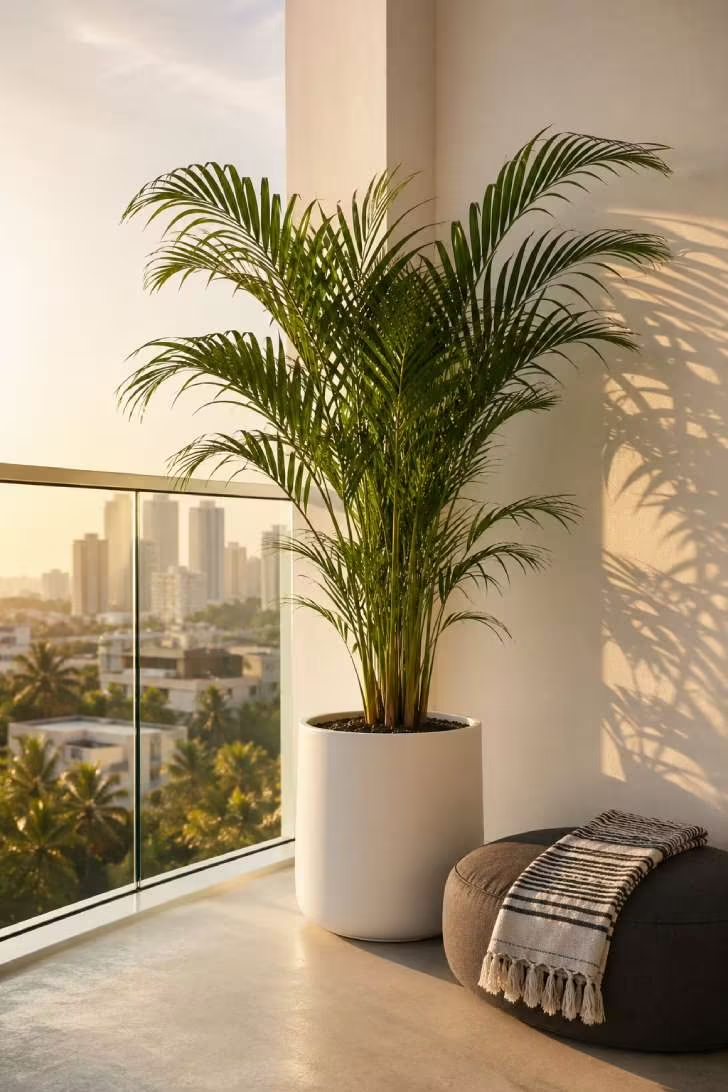
Sometimes one plant is enough.
A single dwarf palm or bird of paradise in a big, clean planter does more for a balcony than ten small pots scattered around.
It gives the eye one clear thing to land on, which makes the space feel composed rather than cluttered.
The scale shift matters here.
Most balcony plants are small — six-inch pots, compact herbs, trailing flowers.
Putting one large plant in the mix breaks the pattern and tricks your eye into reading the space as bigger than it is.
Interior designers use the same move in small rooms: one oversized piece of art or one big plant creates a focal point that stretches the perceived boundaries.
Parlor palms handle low light.
Bird of paradise wants full sun.
Pick based on your exposure, not the Instagram aesthetic you’re chasing.
Style Blueprint:
- One dwarf palm (parlor palm, majesty palm) or bird of paradise
- A large planter (at least 14 inches wide) in a clean, modern finish — matte white, charcoal, or concrete
- Lightweight fiberglass planter if weight is a concern on your balcony
- A plant dolly or wheeled base for moving it when you need to sweep
- Placement in the corner or beside the door as a visual anchor
Sweet Potato Vine Trailing From a Window Box
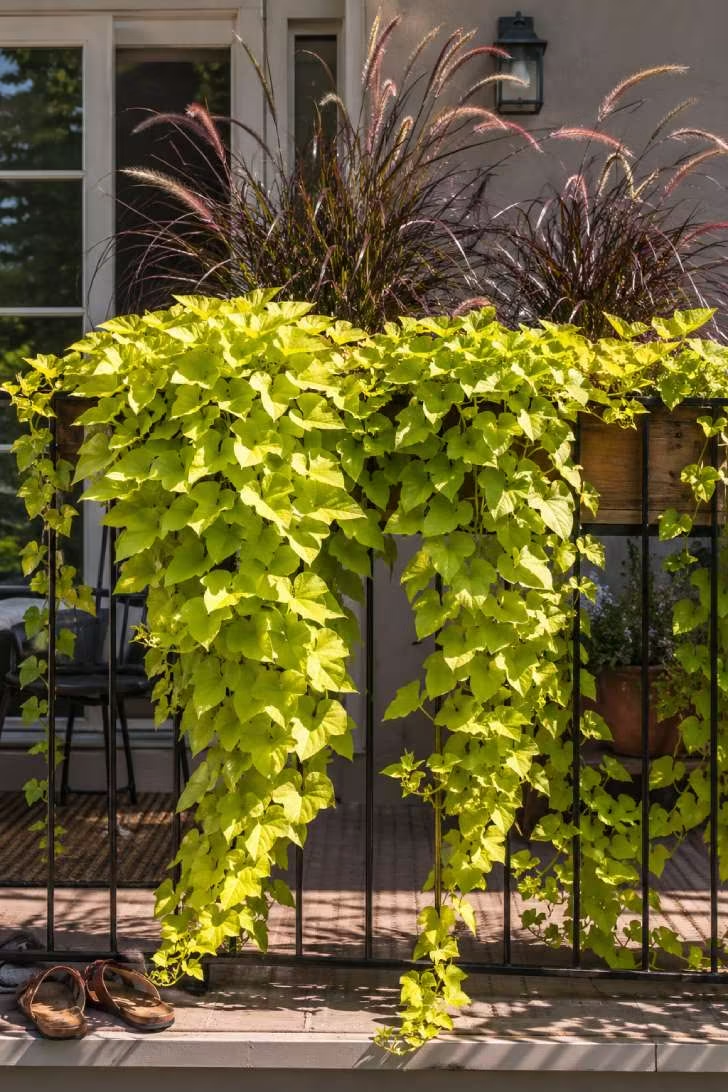
Sweet potato vine does one thing and does it fast: it fills space.
Within weeks of planting, the chartreuse or deep purple leaves spill over whatever container you put them in, creating the illusion that your railing planters have been there for years.
That speed of growth is the visual payoff.
New balcony plantings often look sparse and tentative.
Sweet potato vine eliminates that problem.
The leaves are large and heart-shaped, which gives them a different texture from the small, fussy foliage of most balcony flowers.
Used as a “spiller” in combination with upright plants, it ties a planter together the way a throw blanket ties a sofa together — it’s the finishing layer that makes everything else look more intentional.
Railing planters with this vine are about as close to instant gratification as balcony gardening gets.
Style Blueprint:
- A long window box or railing planter (at least 24 inches)
- Sweet potato vine starts in chartreuse (Marguerite variety) or deep purple (Blackie variety)
- One upright companion plant for height contrast — fountain grass, geraniums, or coleus
- Standard potting mix with slow-release fertilizer
- Trimming shears — you’ll need to cut this vine back by midsummer or it’ll take over
Clipped Boxwood Flanking the Door
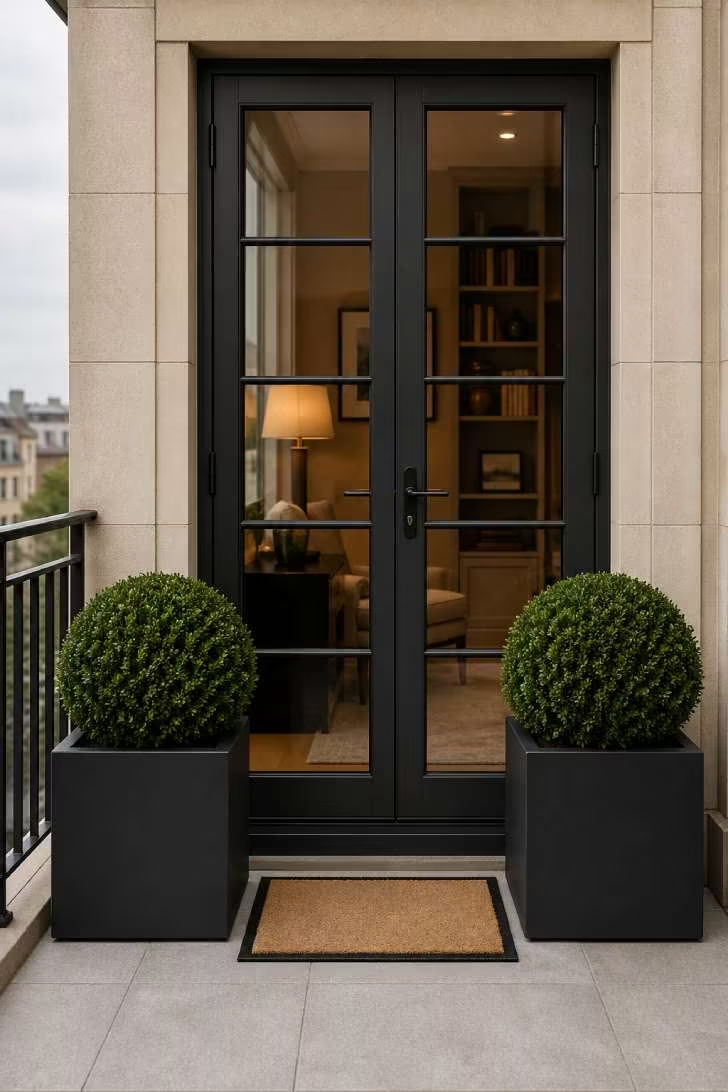
Not every balcony needs a riot of color.
Matching boxwood in square planters creates a formal, grounded look that works every month of the year.
There’s no dead season, no replanting, no flowers to deadhead.
Just green spheres that get a trim every few months.
The symmetry is doing all the psychological work here.
Two identical forms on either side of a door create a sense of arrival — you’ve entered a space that someone cares about.
It’s the same principle hotel entrances use: flanking elements signal that the threshold matters.
On a small balcony, this kind of structured simplicity can feel more generous than filling every surface with pots.
Boxwood handles part shade, stays green through mild winters, and the dense foliage absorbs sound.
Style Blueprint:
- Two matching square planters (charcoal, black, or dark concrete finish)
- Two boxwood plants of equal size — ask the nursery to match them
- Slow-release evergreen fertilizer applied once in spring
- Hand shears for shaping twice a year (late spring and late summer)
- A coir or natural-fiber doormat between them to complete the entrance feel
Design Pro-Tip: Railing planters come in two mounting styles — over-the-rail brackets and inside-rail hooks. Measure your railing width before buying. A planter that wobbles or tips forward is a safety hazard on any floor, and a liability on upper stories.
Pansies and Violas for the Cold Months
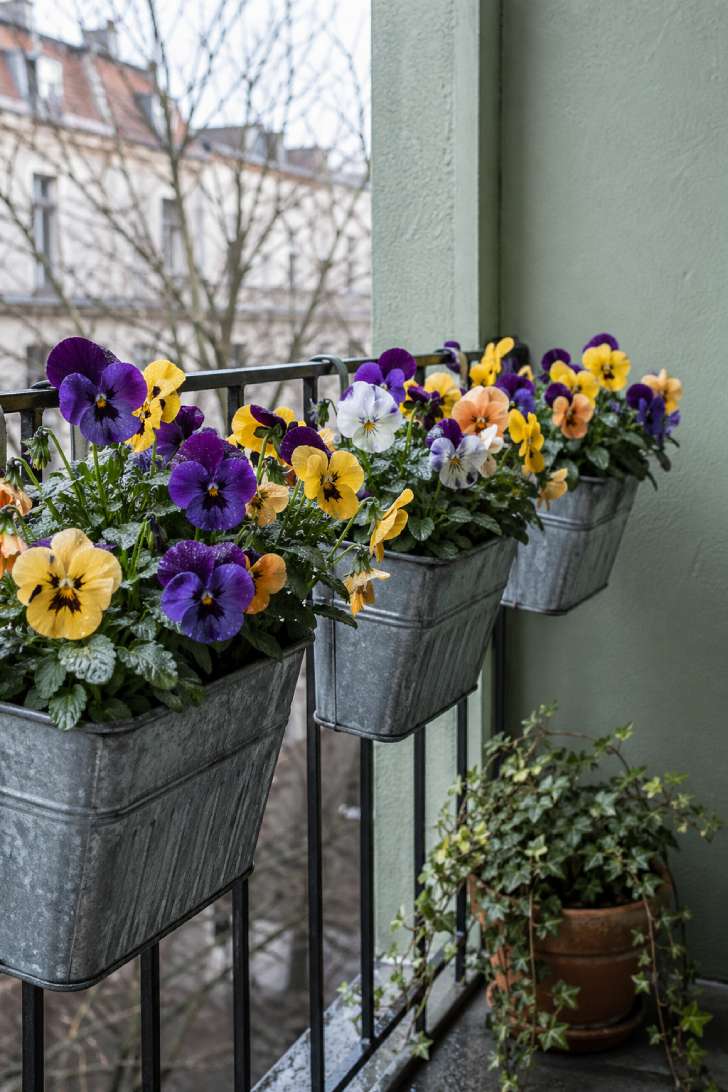
Most balcony plants ideas focus on summer, but pansies and violas own spring and fall.
They shrug off light frost, bloom in cool temps that would stall petunias, and their colors are some of the richest in the garden — deep velvet purples, clean yellows, bicolor faces that look hand-painted.
Planted in October, they’ll hold through Thanksgiving in most climates.
Planted in March, they fill the gap before warm-season annuals are ready.
What makes cool-season color feel special is context.
When everything else has gone dormant — trees are bare, the light is thin, the air is sharp — a box of pansies signals life.
That contrast between the cold environment and the warm color creates an emotional response that midsummer blooms can’t match, precisely because midsummer is already saturated with color.
Pansies in November are surprising, and surprise is what makes a space feel personal.
Style Blueprint:
- Small galvanized metal or painted tin window boxes for a seasonal look
- Pansy and viola six-packs in two or three color combinations (purple-yellow is classic)
- Standard potting mix — pansies aren’t picky about soil
- Placement on the railing or a shelf where the “faces” of the flowers are visible from inside
- Accept that these are temporary — plant them knowing you’ll swap them out in a few months
Jasmine Winding Up a Freestanding Obelisk
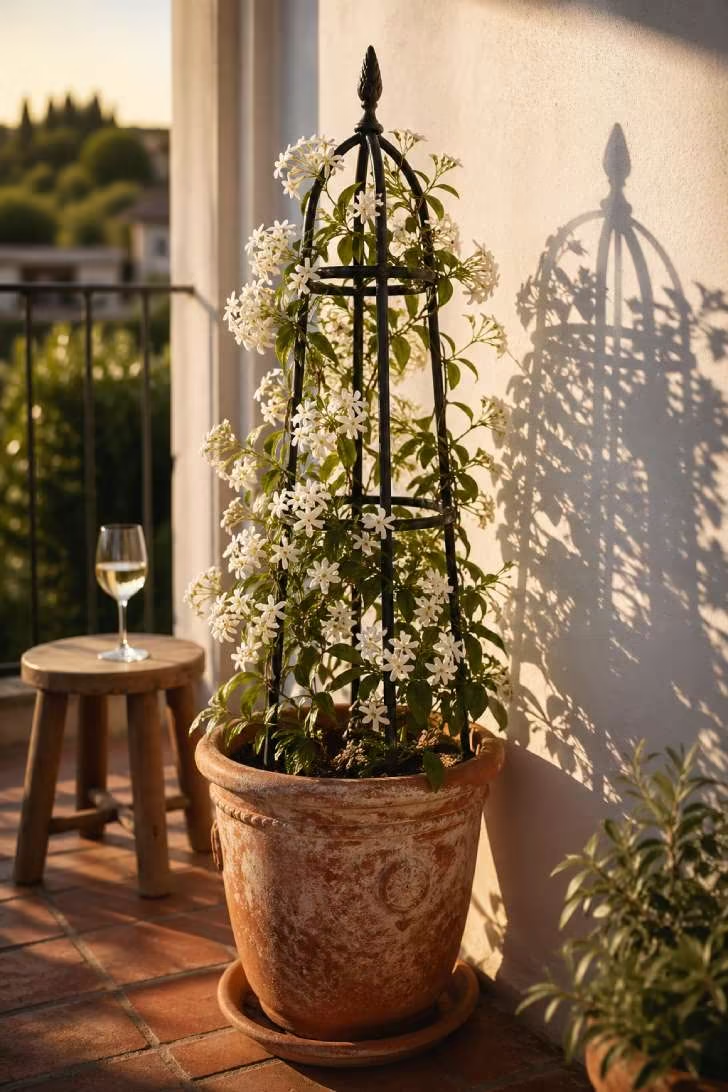
Jasmine is the rare plant that earns its space with scent alone — the fact that it also covers a trellis in white flowers is almost a bonus.
A freestanding obelisk trellis in a pot lets renters add vertical interest without drilling a single hole.
Star jasmine (Trachelospermum jasminoides) is the hardier choice; it tolerates more cold and handles part shade better than common jasmine.
Put this near where you sit, not where you walk past quickly.
The fragrance is strongest in warm evening air, which makes it perfect next to a chair or a small table.
When the breeze moves through the flowers toward your seat, the balcony stops being a visual space and becomes a sensory one.
That’s the difference between a balcony that photographs well and one you actually spend time on.
Hanging baskets for balconies often handle the visual, but jasmine adds the invisible layer that keeps you outside longer.
Style Blueprint:
- A freestanding metal obelisk trellis (3 to 4 feet tall) that fits inside a large pot
- Star jasmine or common jasmine (one plant is enough — it’ll fill in)
- A large pot (14+ inches) with good drainage
- Rich potting mix with compost for steady growth
- Placement near seating, not against the far wall where you won’t catch the scent
Fall Kale and Mums to Close the Season
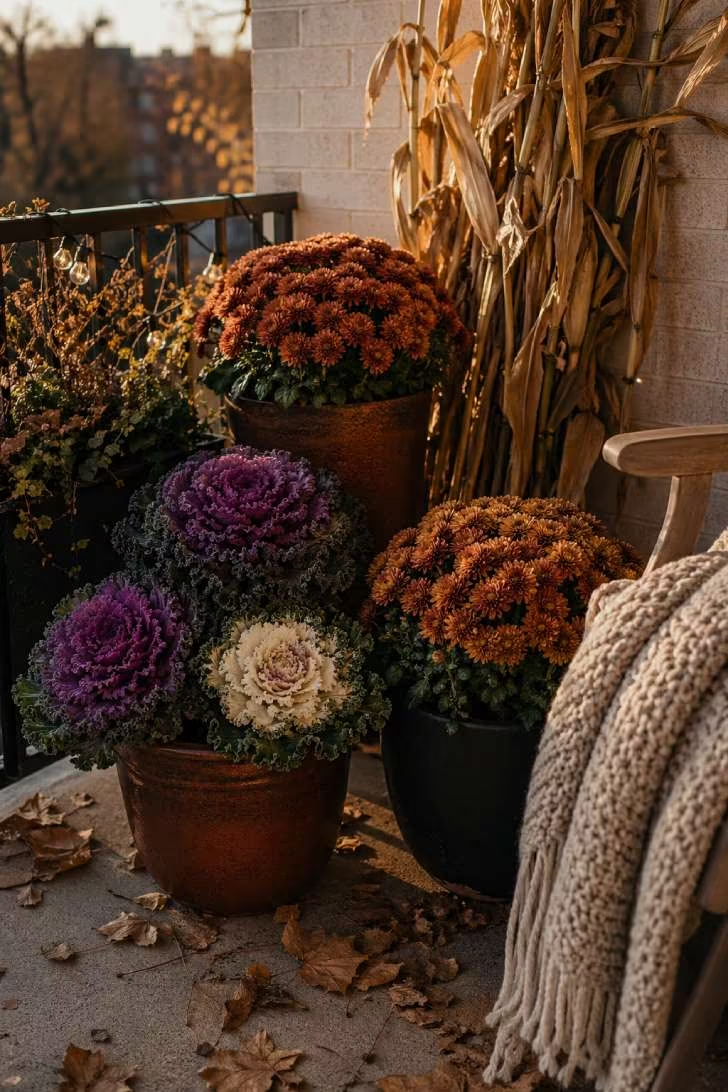
When the petunias give up and the tomato plant is done, ornamental kale and chrysanthemums step in.
They handle cool temps and light frost, and their colors — plum, cream, bronze, russet — belong to autumn the way pansies belong to spring.
This is about keeping the balcony relevant past September.
A seasonal rotation is what separates someone who “has plants” from someone who gardens.
The kale rosettes are architectural — tight, layered, almost floral in their structure.
Paired with mums in warm bronze or rust tones, they create a palette that matches the light of late October (low, golden, amber-tinged) rather than fighting against it.
Your balcony looks like it’s participating in the season instead of clinging to summer.
That alignment between what you plant and what’s happening in the sky makes the whole space feel coherent.
Style Blueprint:
- Ornamental kale in purple-and-cream or pink-and-green varieties
- Chrysanthemums in bronze, rust, or deep gold — avoid dyed unnatural colors
- Pots in autumn-toned finishes (rust, matte black, warm brown)
- One seasonal prop — dried corn stalks, a small pumpkin, or a burlap wrap around a pot
- A warm throw or outdoor blanket to extend the time you’ll actually sit outside in cool weather
Design Pro-Tip: Weight matters. A large ceramic pot filled with wet soil can easily hit 75 to 100 pounds. If you’re loading up a small apartment balcony with multiple big containers, check your lease or building code for the structural weight limit. Fiberglass and fabric grow bags cut the weight in half.
Making It Work Year After Year
The best balcony plants ideas are the ones that match your actual conditions — your light, your wind, your attention span.
Don’t try all seventeen at once.
Pick two or three from this list that suit the direction your balcony faces and the amount of time you’ll realistically spend watering.
A balcony herb garden and a couple of railing planters is a fine place to start.
Get those right, and you’ll find yourself adding a vertical balcony garden or a privacy screen of grasses next season because you want to, not because a list told you to.
The space is small.
That’s actually the advantage — every plant you add is visible, every choice matters, and the results show up fast.