This post may contain affiliate links. If you make a purchase through these links, we may earn a commission at no additional cost to you.
Some rooms look finished on the day the last pillow lands.
A vintage cottage living room never does, and that is the whole point.
Every chipped frame, every sun-faded slipcover, every stack of old hardcovers on the side table adds another chapter to the room’s story.
These 10 ideas show you how to build a living room that collects character the way a real cottage does: slowly, personally, and with more heart than a catalog page could ever deliver.
A Cane Back Chair Pulled Up to a Drop-Leaf Mahogany Side Table
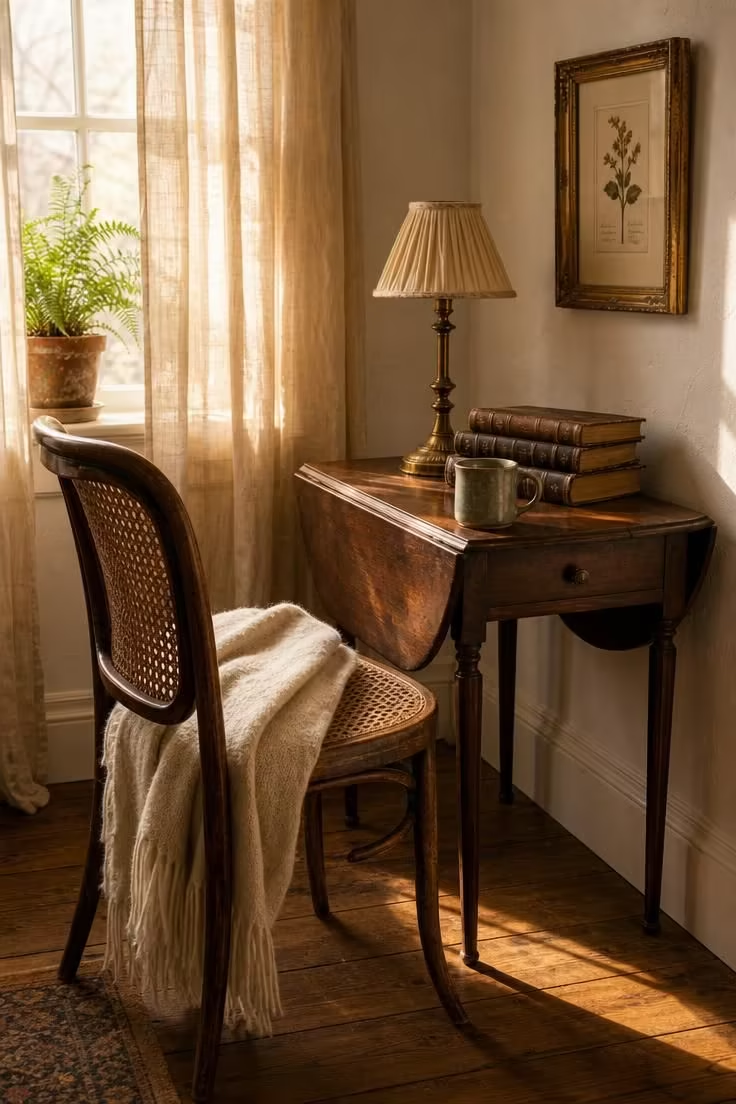
There is something about a cane back chair that no other seat can replicate.
The woven rattan catches light in a way that makes the whole corner feel alive, almost breathing, as if the chair itself remembers every afternoon spent in it.
Pairing it with a drop-leaf mahogany side table keeps the footprint small enough for any room, yet the dark wood adds a richness that grounds the scene.
A brass lamp with a linen shade throws a warm circle of light that turns this into the most coveted spot in the house after dinner.
The leather-bound books are not decorative props here; they are an invitation to sit, stay, and lose track of the hour.
A matte sage ceramic mug and a potted fern bring just enough organic life to the arrangement without cluttering the surface.
This is a vintage cottage living room distilled to its purest form: one good chair, one good table, one good light, and the permission to linger.
Style Blueprint:
- Antique or reproduction cane back chair with a natural rattan seat
- Drop-leaf mahogany side table with turned legs
- Brass reading lamp with a gathered linen shade
- Cream wool throw and hand-thrown ceramic mug in a matte glaze
- Small framed botanical print in a chippy gilded frame
Floral Chintz Upholstery on a Rolled-Arm Settee Beside a Stone Hearth
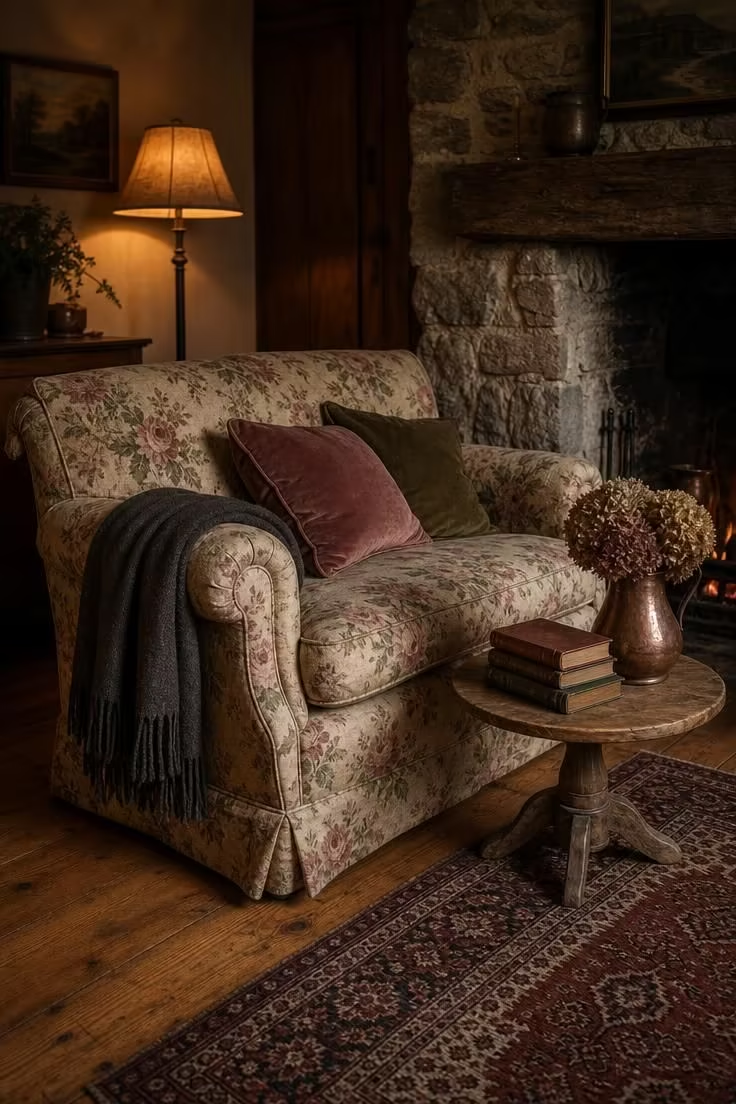
Floral chintz upholstery gets dismissed too quickly as old-fashioned, but in a room with real stone and real wood, the softness of the pattern is exactly what the space needs.
The muted tones in the fabric pick up the natural warmth of the stone hearth without competing for attention.
A rolled-arm settee feels more intimate than a full sofa, which makes it the right choice for a room that is built around the fireplace rather than a screen.
The charcoal wool throw adds a heavier, cooler note that keeps the floral from reading too sweet.
Chintz works best when the print scale matches the room’s proportions: a large cabbage rose on a petite loveseat overwhelms, but the same pattern on a deep settee feels grounded and generous.
The dried hydrangea stems in a copper jug bring a faded elegance that ages in step with the rest of the room.
This is where a cottage color palette reveals its strength, letting soft pinks, muted greens, and warm neutrals coexist without a single loud note.
The floor lamp in the corner does more work than any overhead fixture could, pooling light exactly where you need it and leaving the rest of the room in comfortable shadow.
Style Blueprint:
- Rolled-arm settee in a faded floral chintz with muted rose and sage tones
- Charcoal wool throw and mismatched velvet cushions in dusty mauve and olive
- Copper jug filled with dried hydrangea stems on a stripped oak pedestal table
- Worn Persian rug in burgundy and cream over honeyed pine floors
- Parchment-shaded floor lamp for low, directional light
A Mercury Glass Collection Arranged on Reclaimed Barn Wood Shelves
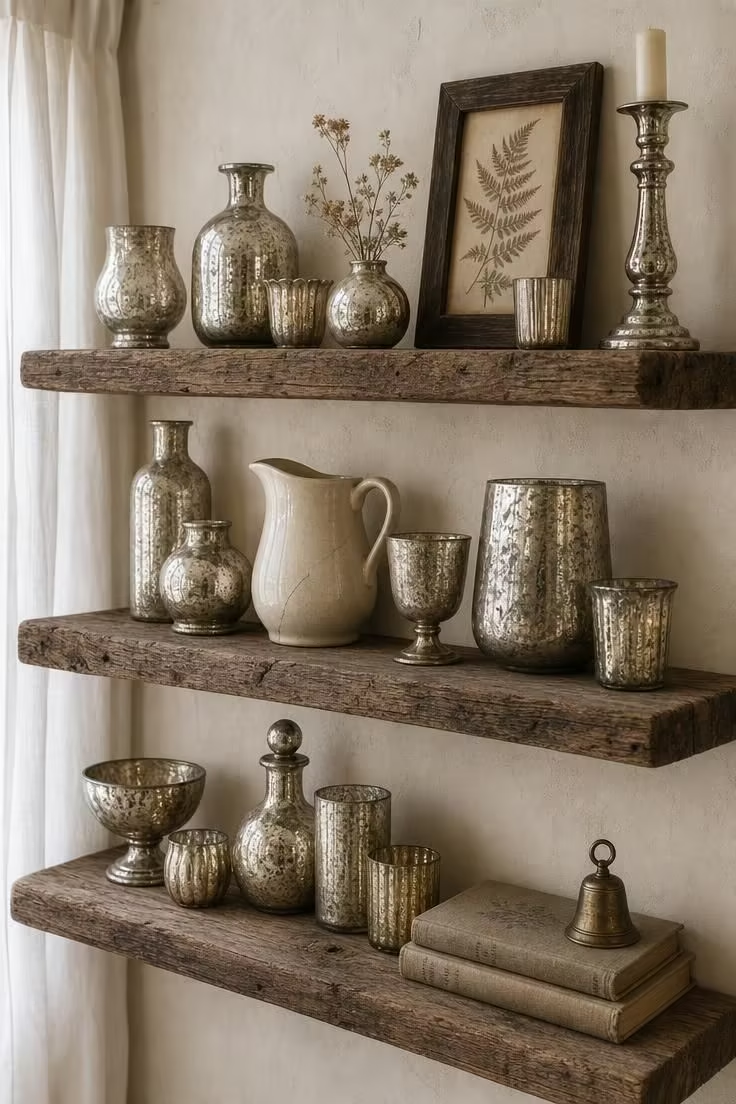
Mercury glass has a quality that new metallic finishes cannot match: it looks like it has already lived a full life before it arrived on your shelf.
The silver-toned surfaces catch whatever light is in the room and scatter it gently, which softens hard corners and adds a quiet glow to walls that might otherwise feel flat.
Barn wood shelves give the collection a rough backdrop that makes the glass look even more refined by contrast.
Tucking an ironstone pitcher among the mercury glass pieces breaks the material monotony and adds a heavier, earthier anchor to the arrangement.
A pressed fern specimen in a dark frame introduces a botanical note without the maintenance of a living plant.
The goal with open shelving in a vintage cottage living room is to make each piece look like it found its place naturally, not like it was assigned a grid position.
Style Blueprint:
- Reclaimed barn wood floating shelves with visible grain and nail holes
- Mercury glass votives and vases in mixed sizes and silver-gold tones
- Ironstone pitcher with visible age and character
- Framed pressed fern or botanical specimen in a dark wood frame
- Stacked linen-covered journals on the lowest shelf
Whitewashed Brick Walls With a Hanging Woven Textile Panel
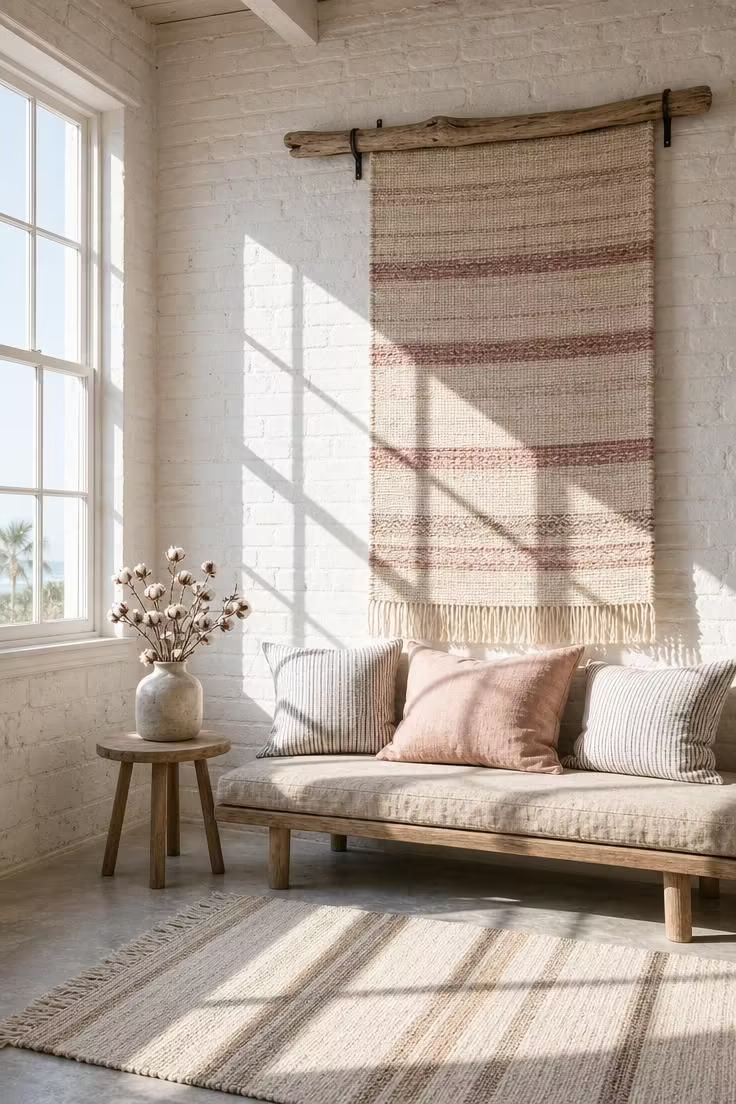
Whitewashed brick changes the entire acoustic and emotional feel of a room.
The lime wash softens the industrial edge of exposed brick while preserving the texture, so the wall becomes a living surface instead of a flat plane.
Hanging a woven textile panel from a piece of driftwood adds a layer of warmth that brick alone cannot provide.
The handwoven fibers absorb sound and break up the hardness of the masonry, which makes the room feel quieter and more restful.
A cottage color palette shines here: cream, sand, dusty rose, and natural linen all pull from the whitewashed tones of the brick itself.
Ticking-stripe cushions on the bench below connect to the linear texture of the brick’s mortar lines, creating a subtle visual rhythm that runs from wall to seating.
The dried cotton bolls in the stoneware vase add a sculptural organic shape that complements the flat geometry of the textile weave.
Bright midday light from a bare sash window is the best partner for whitewashed walls, because it reveals every chalk-like variation and shadow in the lime wash.
This is the kind of wall treatment that makes guests reach out and touch the surface.
Style Blueprint:
- Whitewashed brick wall with visible mortar texture
- Handwoven textile panel in cream, sand, and dusty rose hung from a driftwood rod
- Low linen-upholstered bench with ticking-stripe and blush cushions
- Stoneware vase with dried cotton bolls on a light oak side table
- Flat-weave cotton rug in ivory and sand stripes
A Distressed Wood Furniture Console Holding Stacked Transferware Plates
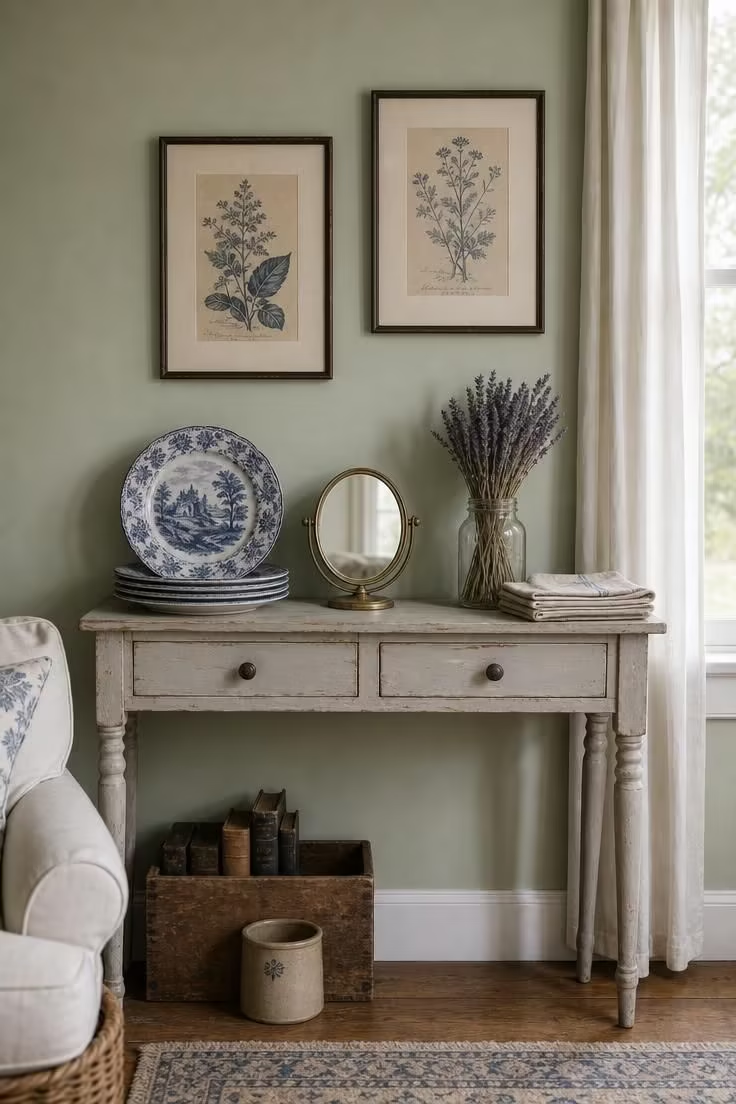
A narrow console does something that a wider piece of furniture cannot: it creates display space without eating into the room’s walkway.
Distressed wood furniture carries its history in the brush strokes and the worn edges, and that visible wear is what separates a genuine vintage cottage living room from a room full of reproduction pieces.
Stacking transferware plates vertically turns tableware into wall art, and the blue-and-white patterns hold their own against the soft dove finish of the console.
The vintage botanical prints above should hang slightly off-center, because a perfectly centered arrangement looks too deliberate for a room that is supposed to feel gathered over time.
Dried lavender in a glass jar adds a faint scent layer that activates a sense beyond the visual, which is something most decorating advice overlooks.
The folded linen napkins are a functional touch, ready to be pulled into service during an impromptu tea, and that readiness is what makes a cottage room feel genuinely lived in.
A tarnished brass mirror reflects the overcast light back into the room without the sharpness of a polished chrome surface.
Style Blueprint:
- Narrow distressed wood console in a dove or putty paint finish
- Blue-and-white transferware plates displayed vertically in a stack
- Vintage botanical prints in thin dark frames with off-white mats
- Tarnished brass round mirror leaned against the wall
- Glass jar of dried lavender and folded vintage linen napkins
Design Pro-Tip: When you lean a mirror behind a stack of plates on a console, tilt the mirror just a few degrees forward so it catches the ceiling and upper wall rather than reflecting the floor. This lifts the visual weight of the whole display upward.
Layered Rug Styling With a Kilim Over Natural Sisal
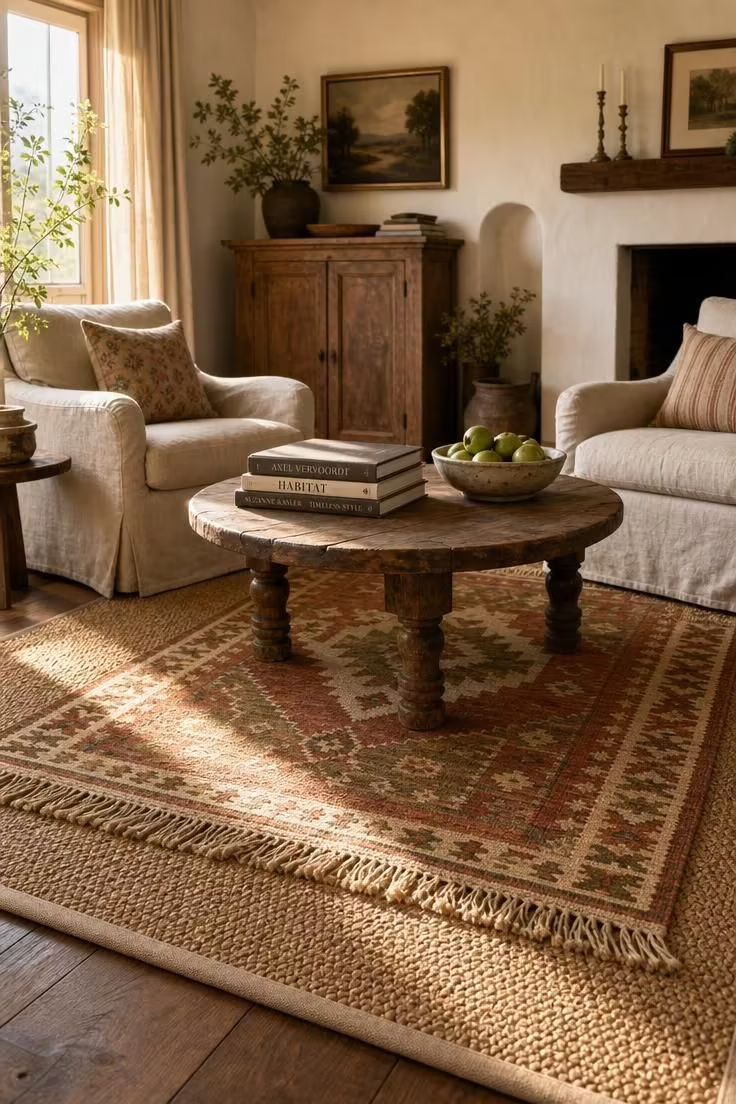
Layered rug styling works because it creates visual depth underfoot, and in a room where the walls are soft and neutral, the floor becomes the main event.
A natural sisal base rug gives the whole seating area a unified boundary, which helps even a modestly sized room feel purposeful.
The kilim on top brings the pattern, the color, and the personality, and because kilims are flat-weave, they lie flat over the sisal without bunching.
Terracotta and olive tones in the kilim connect to the natural fiber palette of a cottage room without introducing anything too bright or modern.
A round coffee table with turned legs softens the geometry of the rectangular rugs and keeps the arrangement from feeling like a stack of rigid rectangles.
Green apples in a stoneware bowl are the kind of everyday object that belongs on a cottage coffee table, not a crystal vase or a design magazine.
The fringed ends of the kilim add a handmade detail that catches the eye at floor level.
This combination of textures underfoot is what gives a vintage cottage living room its grounded, warm-from-the-floor-up feeling.
Style Blueprint:
- Large natural sisal area rug with cotton twill binding
- Faded kilim rug in terracotta, olive, and cream geometric patterns
- Rustic round coffee table with turned legs
- Linen-slipcovered armchairs in pale flax
- Stoneware bowl and large-format art books on the coffee table
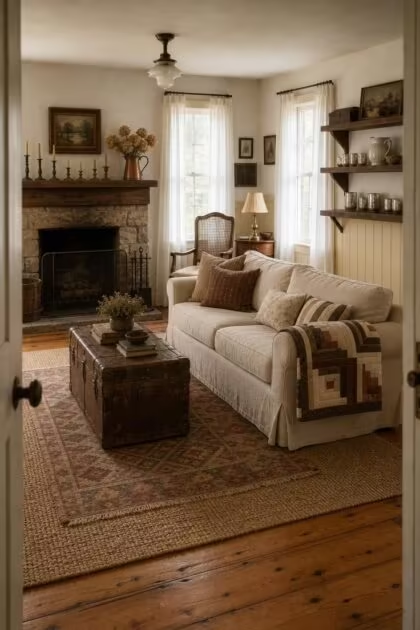
A Linen Slipcover Sofa Facing a Steamer Trunk Coffee Table
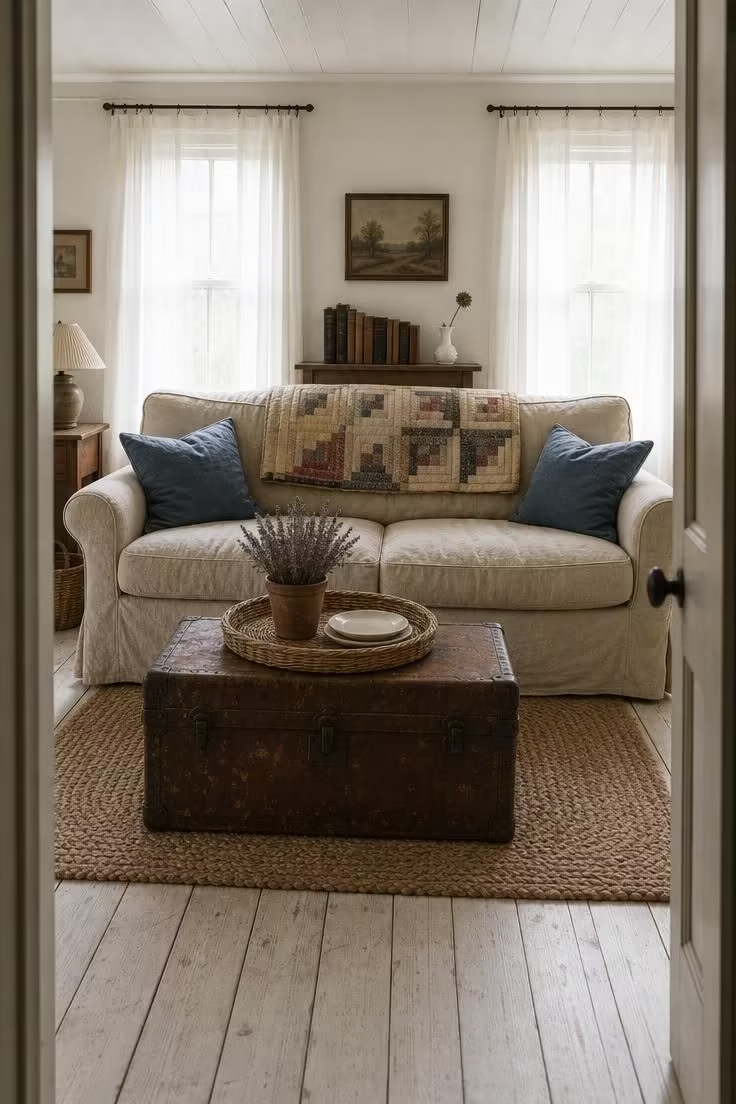
The linen slipcover sofa is the workhorse of every vintage cottage living room that actually gets used.
Oatmeal linen wrinkles and softens with every sit, and that lived-in texture is a feature, not a flaw.
A steamer trunk as a coffee table carries the right proportions for a deep sofa, and the leather patina adds a warmth that wood or glass cannot duplicate.
The woven rattan tray on top corrals the surface objects without looking fussy, which keeps the trunk feeling like luggage and not like a dining table.
A log cabin quilt folded over the sofa back is the kind of heirloom detail that anchors a room in family history.
Washed indigo cushions against oatmeal linen create a soft contrast that holds together without needing a third color.
Style Blueprint:
- Deep-cushioned linen slipcover sofa in oatmeal
- Battered leather steamer trunk used as a coffee table
- Woven rattan tray with a terracotta pot of dried lavender
- Vintage log cabin quilt in warm patchwork tones
- Washed indigo linen cushions and a braided jute rug
Beadboard Paneling in Buttermilk Yellow Below a Plate Rail
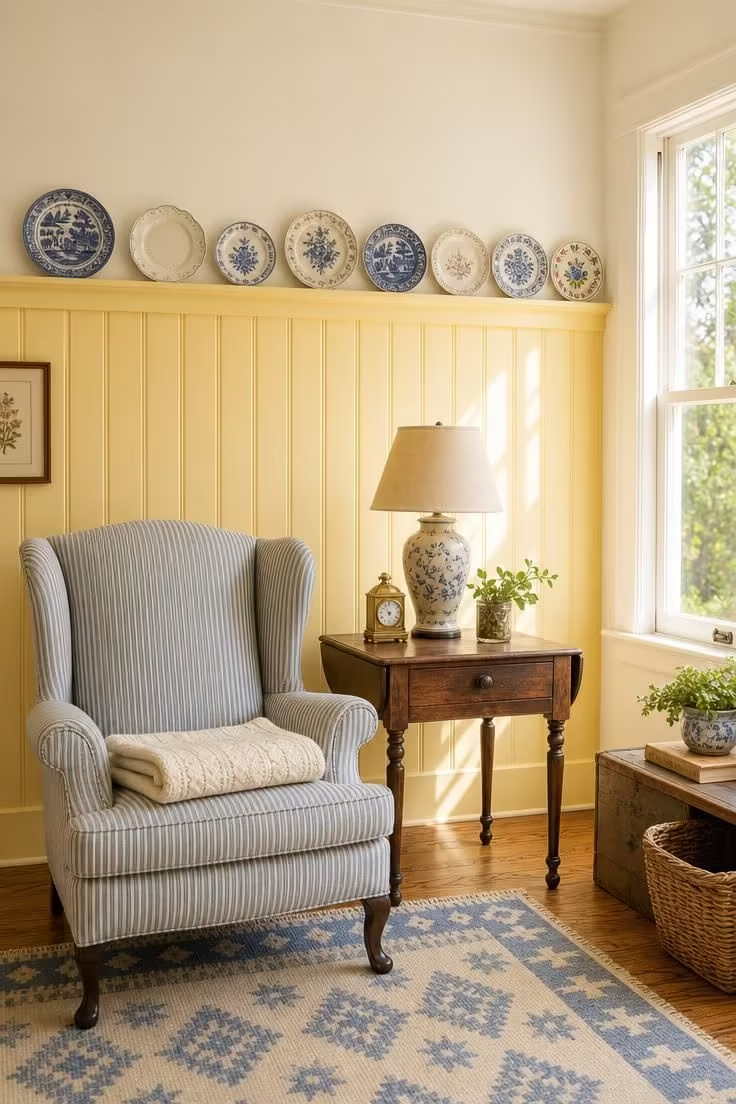
Beadboard paneling gives a wall vertical rhythm that flat drywall simply cannot.
Painting it in buttermilk yellow, rather than the expected white, floods the lower half of the room with a warmth that mimics sunlight even on a cloudy afternoon.
The plate rail above becomes a narrow gallery, and mismatched plates turn everyday tableware into a rotating art collection.
Blue willow, ironstone, and floral transferware patterns share a common age and sensibility, so the mix looks deliberate without looking coordinated.
A wingback armchair in faded blue ticking stripe adds a structured, upright seating option that balances the softness of a slipcover sofa elsewhere in the room.
The antique farmhouse table beside the chair does double duty as a lamp stand and a place to set a cup, which is the kind of two-purpose thinking that cottage rooms demand.
Buttermilk yellow beadboard paneling reads best when the upper wall is kept in a warm off-white, which frames the color without overwhelming it.
The brass clock on the side table adds a small metallic glint that pairs with the hardware on the plate rail brackets.
Even the choice of lamp shade matters: a natural linen shade filters the bulb’s light into a warm pool that echoes the color of the beadboard behind it.
Style Blueprint:
- Half-height beadboard paneling painted in buttermilk yellow with white trim
- Narrow wooden plate rail with mismatched vintage plates
- Wingback armchair in faded blue ticking stripe
- Antique farmhouse table in dark walnut as a lamp stand
- Ceramic table lamp with a natural linen shade
Design Pro-Tip: Mount your plate rail directly on the top edge of the beadboard, not above a gap. The unbroken transition from vertical paneling to horizontal rail creates a clean architectural line that looks built-in rather than added on.
A Hand-Knotted Macramé Panel Framing an Antique Farmhouse Table Lamp
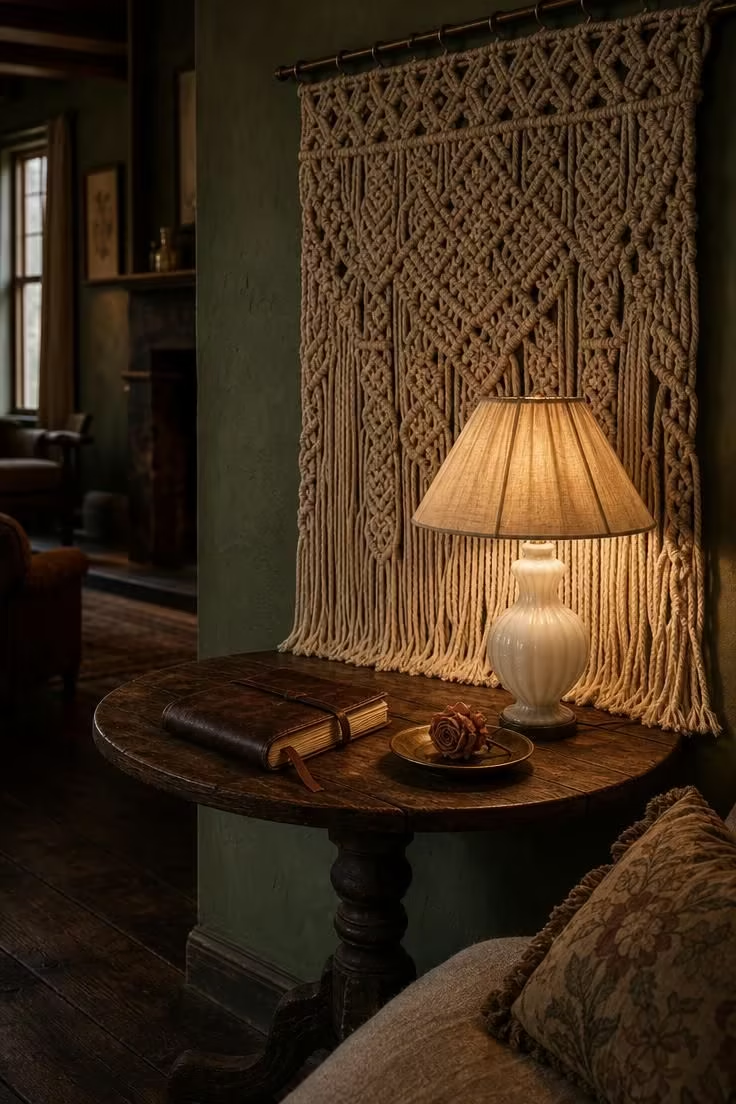
A hand-knotted macramé panel turns a bare wall into a fiber canvas that absorbs sound and softens the hard edges of a corner.
The undyed cotton picks up whatever color temperature the light brings, shifting from cool cream in daylight to warm ivory under lamplight.
Pairing it with an antique farmhouse table in dark pine creates a deliberate contrast between the soft fiber overhead and the solid wood below.
A milk glass lamp base has a luminous opacity that scatters light sideways, giving the macramé knots their own shadow play across the wall.
The gathered cream shade narrows the light into a focused pool, which is the right approach for a reading nook where concentrated light matters more than ambient glow.
A leather-bound journal and a brass dish holding a dried rose are small, quiet objects that belong in a corner meant for sitting still.
The macramé fringe brushing the tabletop is a deliberate styling choice, creating a visual bridge between the wall art and the furniture.
Style Blueprint:
- Hand-knotted macramé wall panel in natural undyed cotton on a slim bronze rod
- Antique farmhouse table with a dark pine pedestal base
- Milk glass lamp with a fluted base and gathered cream linen shade
- Leather-bound journal and small brass trinket dish
- Deep sage plaster wall as a contrasting backdrop
Cafe Curtains in Cotton Voile Filtering Light Onto a Painted Wicker Rocker
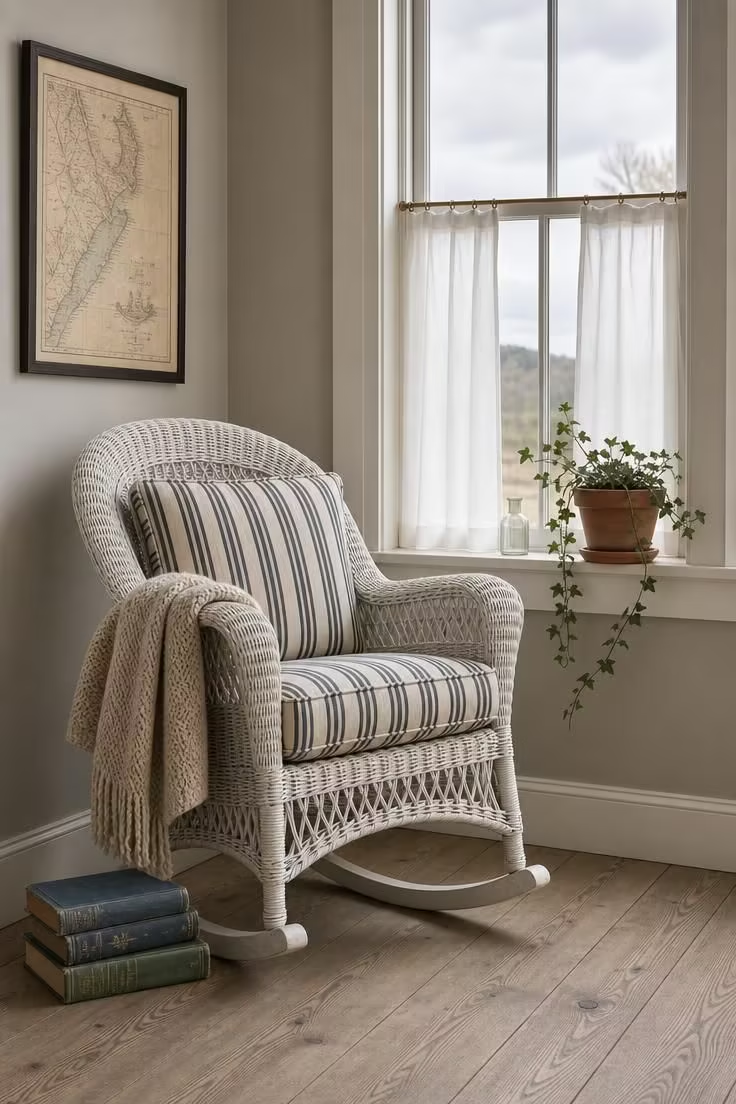
Cafe curtains solve a problem that full-length panels create: they let in light from the top half of the window while still giving privacy below.
Cotton voile is the right fabric choice because it filters rather than blocks, turning harsh afternoon glare into a gentle wash that flatters every surface in the room.
A painted wicker rocker has a lightness that wooden chairs cannot match, and that visual weight matters in a corner that needs to feel open and airy.
The ticking-stripe cushion in navy and cream is a pattern so closely tied to cottage history that it reads as a neutral, even in a room full of other textures.
Stacking vintage hardcovers on the floor beside the chair signals that this is a spot for long, uninterrupted reading sessions, not a decorative arrangement.
The trailing ivy on the windowsill adds a living green element that moves slightly in any breeze from the window, bringing a sense of air and season into the room.
A framed vintage map on the adjacent wall introduces a narrative layer, hinting at places visited or dreamed about, which adds depth beyond the purely decorative.
This is where the vintage cottage living room idea comes down to its simplest version: a chair, a window, a curtain, and a stack of good books.
Style Blueprint:
- Painted white wicker rocking chair with a ticking-stripe cushion in navy and cream
- Cafe curtains in white cotton voile on a thin brass rod at window midpoint
- Oatmeal knitted wool throw and stacked vintage hardcovers
- Trailing ivy in a terracotta pot on the windowsill
- Framed vintage map in a thin dark frame
Conclusion
A vintage cottage living room is never a finished project, and that is what makes it worth building.
Every flea market find, every inherited quilt, every sun-faded slipcover adds a layer that makes the room more yours.
The 10 ideas here share one common thread: they choose character over perfection, softness over polish, and real comfort over staged beauty.
Start with one good vintage piece, a cane back chair, a steamer trunk, or a stack of old transferware, and let the room grow around it.
The best vintage cottage living room is the one that looks like it has been loved for decades, even if you just started last weekend.