This post may contain affiliate links. If you make a purchase through these links, we may earn a commission at no additional cost to you.
A small teen bedroom carries more weight than its square footage suggests.
It has to hold a bed, a study surface, a place for a friend to sit, and the growing pile of belongings that arrives with each school year.
Layering those functions without visual heaviness is the real work.
Teen taste also keeps moving, so the arrangements that last are the ones that adapt without a full overhaul.
This list centers on specific materials, finishes, and objects rather than broad style labels, and small bedroom ideas for teens work best when each choice earns its place.
A Low Platform Bed With a Woven Cane Headboard and Floating Nightstands
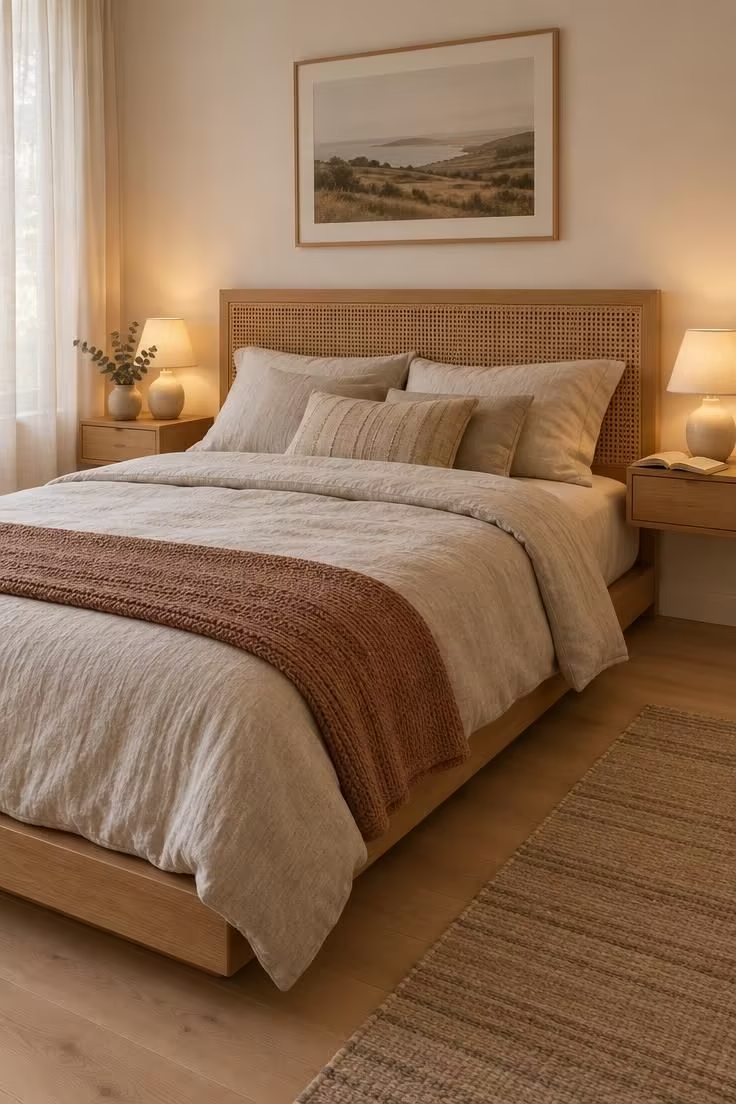
Small teen bedroom design often starts with a low platform bed because it opens wall space without asking much of the room.
A mattress sitting low on a light wood platform changes how much wall a small bedroom appears to have.
The cane-webbed headboard adds texture across a wide horizontal band without the depth of an upholstered panel.
Two slim floating nightstands keep the floor beneath them clear, which matters when the walking path beside the bed is narrow.
Low furniture also pulls the eye downward, so a compact room reads as wider rather than taller.
Cane and rattan collect dust in the weave, and a soft brush every few weeks keeps them looking even.
This arrangement suits a teen who wants a quiet base to dress up later with bedding and art.
Choosing bedding in oatmeal or clay keeps the palette open for a future color shift.
Style Blueprint:
- Light oak or ash platform bed frame
- Woven cane or rattan headboard panel
- Two floating nightstands in a matching wood tone
- Small ceramic table lamps with warm bulbs
- Linen or cotton bedding in oatmeal or clay
A Corner Study Nook Built From a Floating Oak Desk and a Slim Pegboard
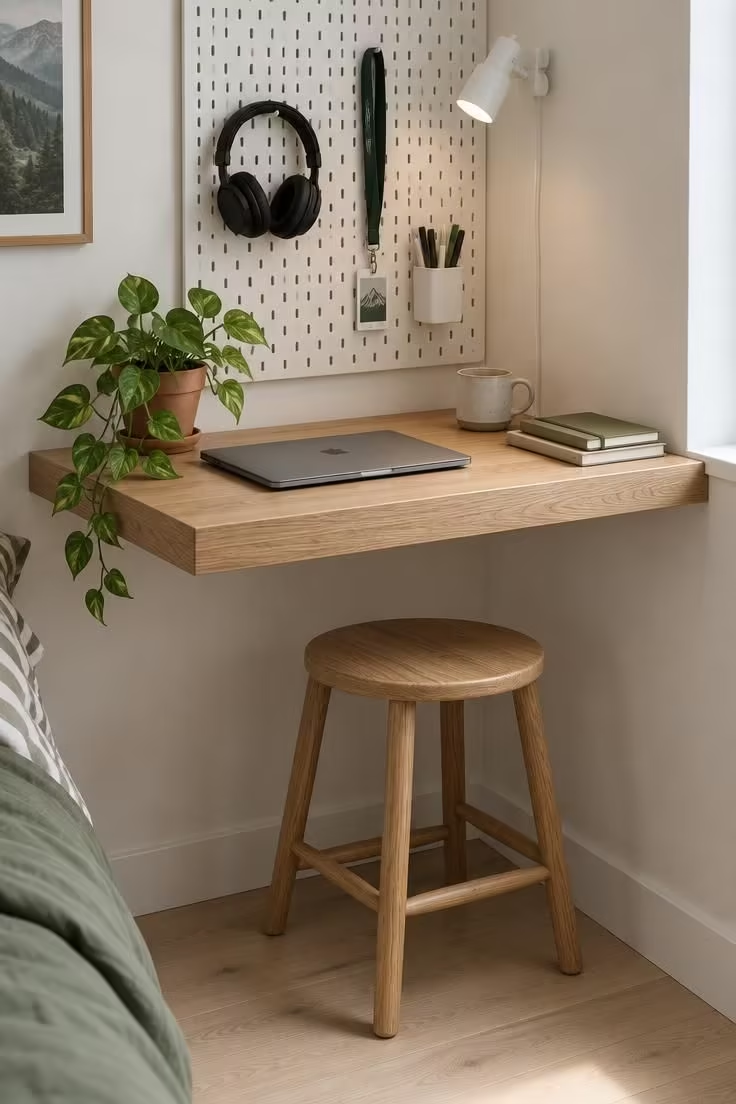
Corners absorb furniture poorly in most small rooms, which makes them good candidates for a desk that hugs two walls.
A floating oak plank used as a corner desk for teen bedroom leaves the floor beneath it open, so the eye travels to the far wall instead of stopping at a bulky base.
A narrow pegboard above the work surface gives a teen a place for headphones, lanyards, chargers, and small tools without adding a drawer stack.
A clip light attaches to the pegboard edge and can be aimed at the desk surface when homework runs late.
The stool matters here: a backless wooden stool slides aside easily when the room shifts into social mode, while a full chair tends to stay in the middle of the floor.
A shallow tray or cup corrals pens so the plank stays clear.
Style Blueprint:
- Oak or birch floating desk plank
- White or natural pegboard panel with a simple frame
- Clip-on task light
- Backless wooden or small upholstered stool
- Small tray or cup for pens
A Tall Narrow Bookcase That Doubles as a Room Divider
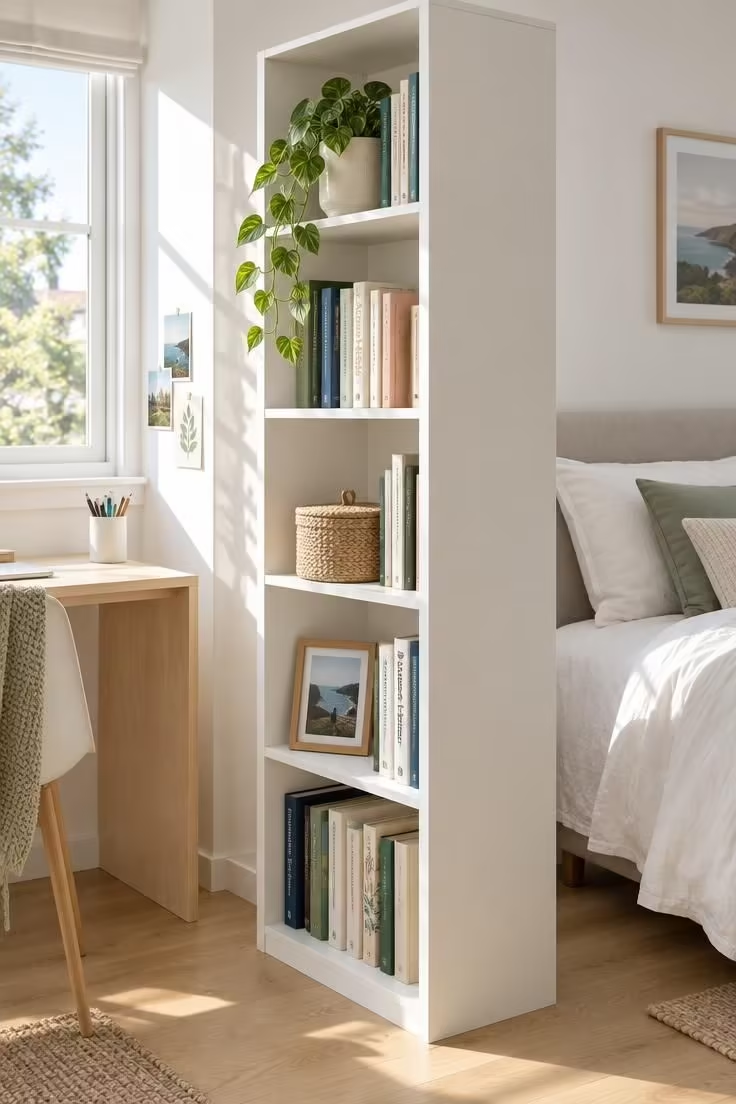
A slim bookcase set perpendicular to a wall creates an edge between two parts of a room without the permanence of a partition.
Height does the work here rather than width, which suits a narrow footprint where a wide unit would eat the walking path.
The back panel becomes visible from the far side, so a clean finish in white, birch, or matte black matters as much as the shelves themselves.
Open shelving displays a rotating collection well, though dust settles quickly and the arrangement needs periodic editing.
Pairing open shelves with two lidded boxes on the lower tiers gives the teen a place to hide the messier items.
A single trailing plant on a middle shelf softens the vertical line.
Style Blueprint:
- Narrow bookcase in white, birch, or matte black
- Two lidded storage boxes for the lower shelves
- One small trailing plant
- Bookends in wood or stone
- Small basket for charging cables
An Over-Door Organizer Plus a Peg Rail for Daily Grab-and-Go Items
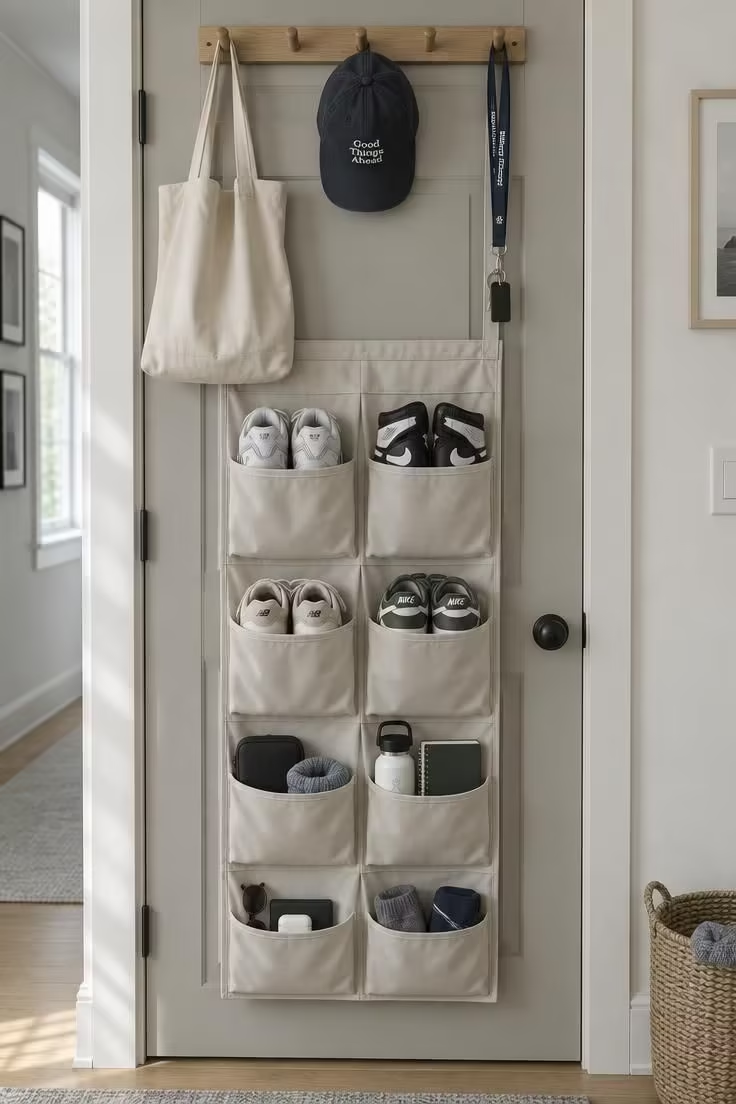
The back of a bedroom door is often the emptiest surface in the room, which makes it a strong candidate for daily grab-and-go storage.
A canvas pocket organizer near the bottom holds sneakers and small accessories, while a peg rail higher up takes bags, caps, and a lanyard.
The arrangement frees closet space and keeps the floor beside the door clear.
Over-door organizers can look busy fast, so limiting what goes in them to one or two color families keeps the door visually quiet.
Check that the door still closes cleanly with the organizer in place.
A small woven basket on the floor beside the door catches loose items that do not belong to either system.
Teen bedroom storage solutions like this one work best when the teen leaves early and wants everything in one spot.
Style Blueprint:
- Canvas or mesh over-door pocket organizer
- Wooden peg rail with four to six pegs
- Small woven basket for loose items
- Matching hangers or hooks for bags
- One neutral tote for library or sports gear
Design Pro-Tip: Before buying any storage piece, empty everything the teen currently keeps on the floor and count it. Storage that fits the actual pile beats storage that only looks tidy.
A Curtained Reading Nook With a Floor Cushion and a Clip Light
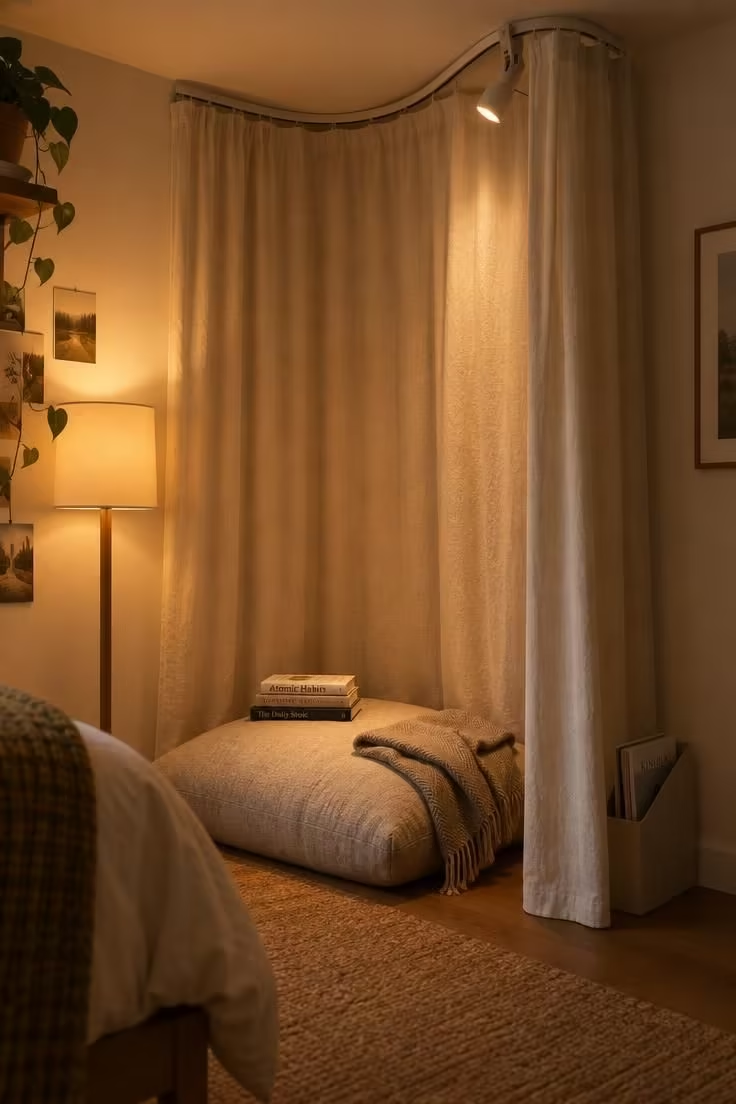
A single curtain panel on a ceiling-mounted track turns an unused corner into a defined spot without adding a wall.
The curve of the fabric softens the corner, and the teen can draw it closed when the room needs a quieter zone.
Fabric collects dust in a room used daily, so a washable cotton or linen panel is the more practical choice.
A large floor cushion in a durable cover handles daily use better than a loose beanbag shell.
The clip light gives the nook its own small pool of light, separate from the room’s overhead source.
This idea suits a teen who reads, journals, or wants a low-key hangout spot that is not the bed.
Style Blueprint:
- Washable cotton or linen curtain panel in a solid color
- Ceiling-mounted curtain track or rod
- Large floor cushion or beanbag in a durable cover
- Clip-on reading light
- Small stack of books or a magazine file
A Loft Bed With a Below-Bed Study and Storage Alcove
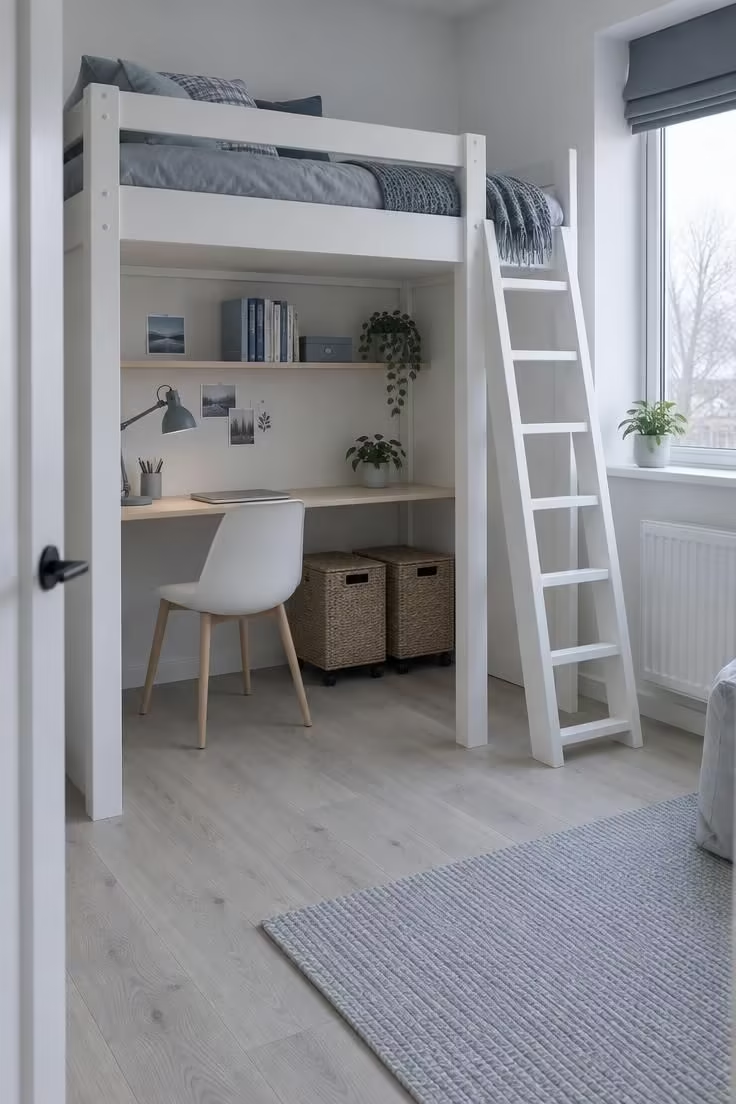
Picture the bed lifted high on a white frame while the footprint beneath it becomes a compact study and storage alcove.
A loft bed for small room layouts trades unused upper volume for a desk, a shelf, and a pair of lidded bins on casters that roll out when the teen needs them.
The tradeoff is visual weight: a raised bed pulls the eye upward, so lighter bedding and a ceiling color close to the walls keep the room from feeling closed in.
Treat the alcove as a small room of its own, with a defined desk surface, one shelf for current books, and bins that tuck away rather than pile up.
For lighting, a task lamp clipped to the desk or shelf keeps the study area bright while the bed above stays dimmer for winding down.
Plan a spot for the lamp cord before choosing the lamp, since the nearest outlet may sit at the wrong end of the alcove.
This approach suits a teen who needs a dedicated study surface and a full-size bed in a room that cannot fit both side by side.
Style Blueprint:
- Loft bed frame in white or natural wood
- Below-bed desk plank or small freestanding desk
- Two lidded storage bins on casters
- Small wall shelf above the desk
- Clip or task lamp for the alcove
A Woven Jute Rug Defining a Hangout Zone Beside the Bed
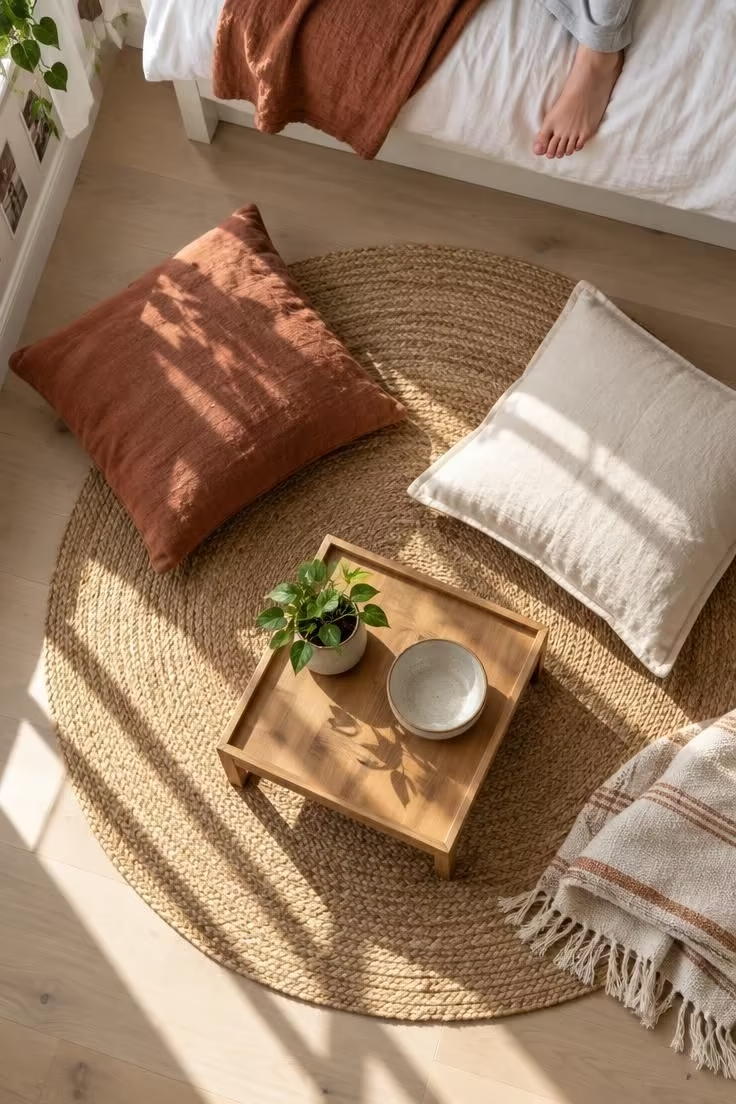
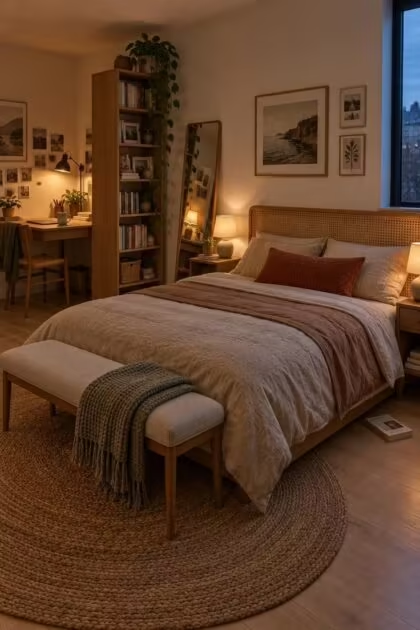
A round jute rug placed beside or at the foot of the bed marks an activity zone without any furniture at all; the round shape softens a room full of straight edges, and jute handles being sat on better than most flat-weave alternatives.
Jute can feel rough underfoot, so a thin cotton throw rug layered on top adds softness where feet land.
Natural fiber rugs shed, and they are harder to clean than flat-weave synthetics, so placing the zone away from snacks and drinks matters.
Check that the rug has a backing suited to the floor beneath it.
Two washable floor pillows and a low tray table complete the zone and store flat when not in use.
This idea suits a teen who hosts a friend or two but has no room for a chair.
Style Blueprint:
- Round or oval woven jute rug
- Two washable floor pillows
- Low tray table or wooden crate table
- Folded cotton throw
- One small plant or lantern for the center
A Shelf-and-Basket Wall That Turns a Blank Wall Into Storage
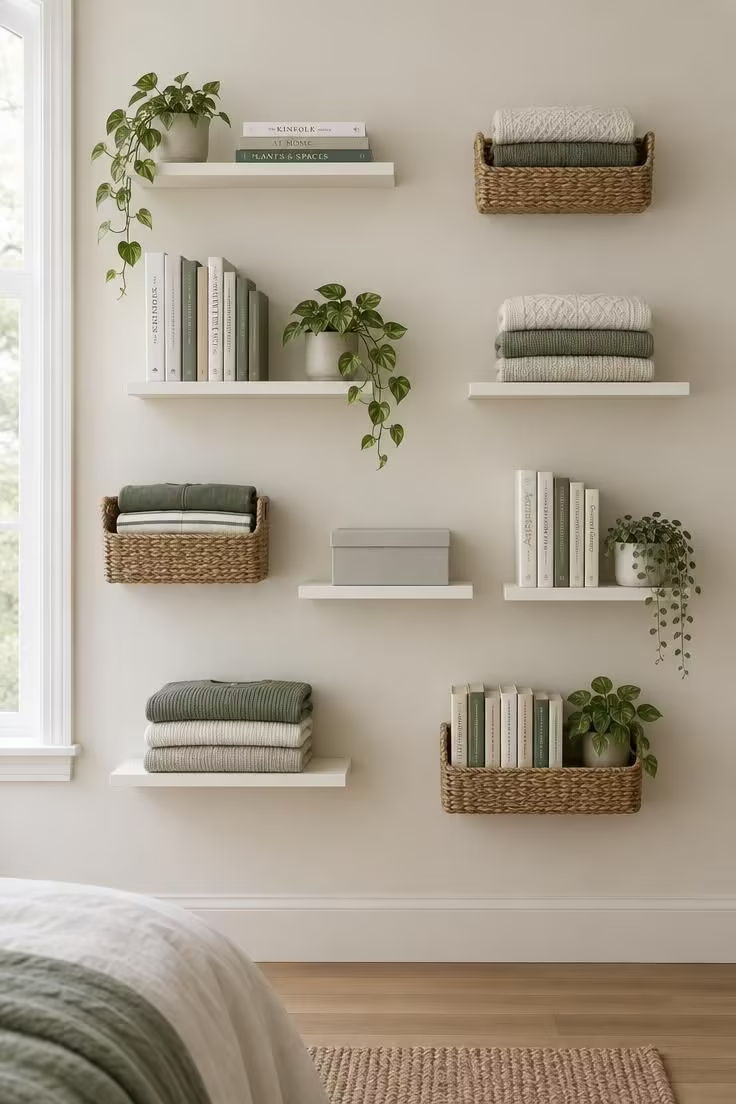
Small bedroom wall shelves arranged in a loose grid use a wall’s full height without taking any depth from the floor.
Mixing open shelves with baskets keeps the arrangement from reading as flat; basket fronts hide the items that do not display well.
A simple rule such as one basket per shelf keeps the grid from drifting into clutter.
Painting the shelves the same color as the wall reduces visual noise in a small room.
This approach suits a teen whose belongings change often and who wants to rearrange without new furniture.
Style Blueprint:
- Three to five slim floating shelves
- Two to four shallow wall-mounted baskets
- Matching small brackets or concealed hardware
- Small trailing plant in one basket
- One closed box for items that do not display well
A Bedside Cart That Rolls Between Study and Sleep Zones
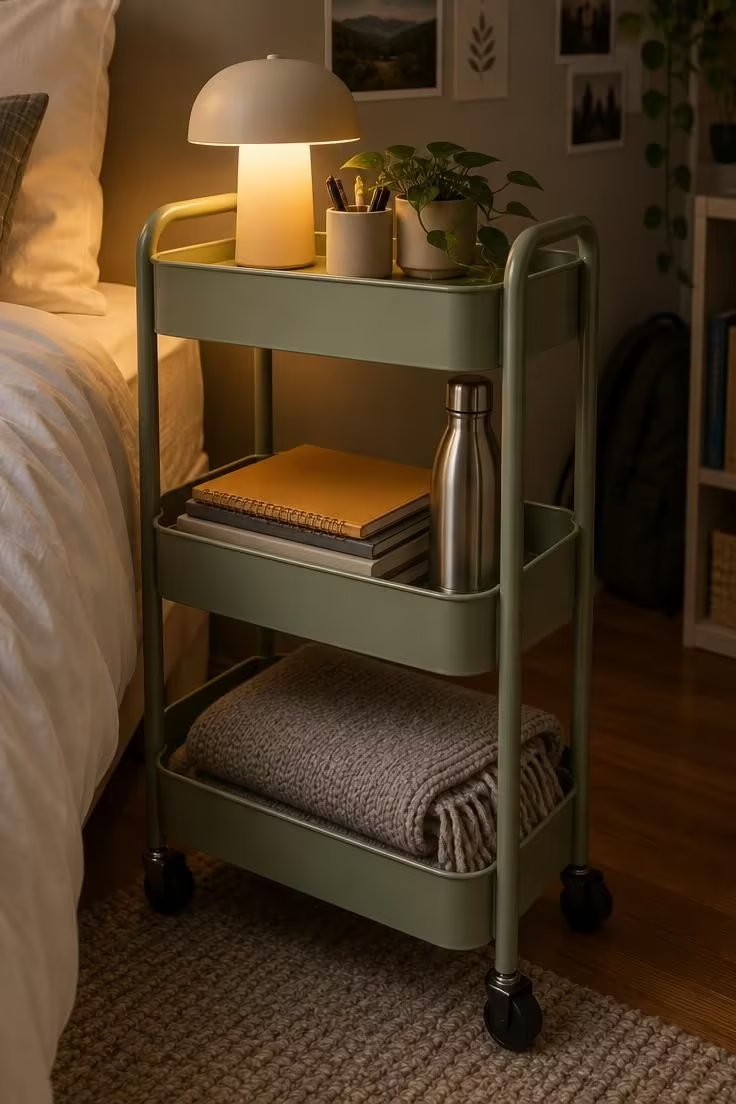
A slim rolling cart lets one piece of furniture serve as a nightstand in the evening and a homework caddy in the afternoon.
Moving it takes seconds, which matters in a room where the desk and bed sit on opposite sides.
Multi functional teen furniture like this cart earns its place by changing jobs without changing rooms.
Casters should suit the floor surface, and the cart should stay stable when rolled.
Rolling carts fill up quickly because they are easy to reach, so assigning one tier to each purpose keeps them useful rather than crowded.
The top tier takes a small lamp, the middle tier holds notebooks and a water bottle, and the bottom tier can carry a folded throw.
Bedroom organization for teenagers improves when each surface has a narrow job instead of catching whatever lands there.
Style Blueprint:
- Slim three-tier rolling cart in metal or powder-coated steel
- Small rechargeable or plug-in lamp
- Two small bins or cups for pens and chargers
- Folded throw on the bottom tier
- Water bottle or tumbler
A Clip-On Bedside Light Paired With a Slim Wall Pocket for a Book
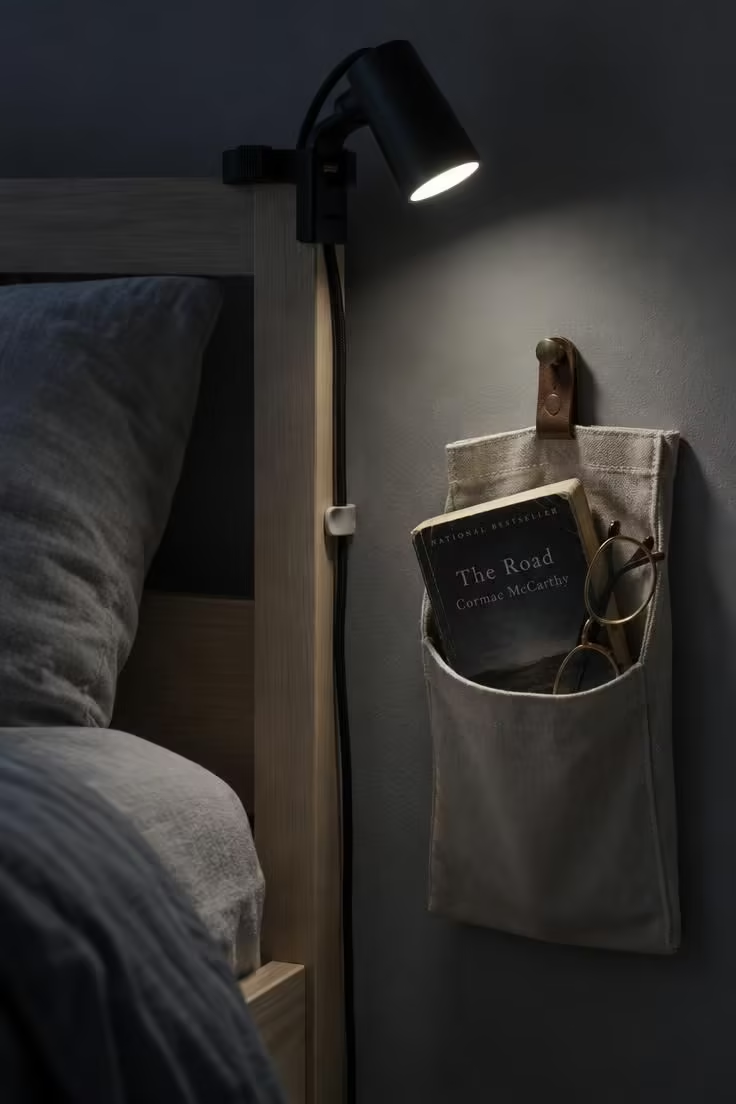
A clamp light and a small wall pocket replace a bulky nightstand with two low-profile pieces that free the floor beside the bed.
Any plug-in light should be routed so the cord is not pinched or stretched, and applicable local requirements govern electrical questions.
A clamp light is directional rather than room-filling, so it works as a task or accent source, not as the only light in the room.
Bedroom lighting for teens often works better as separate small pools than as one overhead source.
The canvas pocket holds a book, glasses, and a charging cable within arm’s reach.
This idea suits a reader who wants a low-cost change with no furniture to move.
Style Blueprint:
- Clamp-style LED reading light
- Small fabric wall pocket or hanging caddy
- Paperback or e-reader sleeve
- Cord clip or cable tidy
- Optional second clip light for the other side
Design Pro-Tip: Give every zone its own light source before adding any decor. A task light, an ambient source, and one small accent light usually do more for a small room than another shelf.
A Fold-Down Desk With a Bulletin Board That Hides When Not in Use
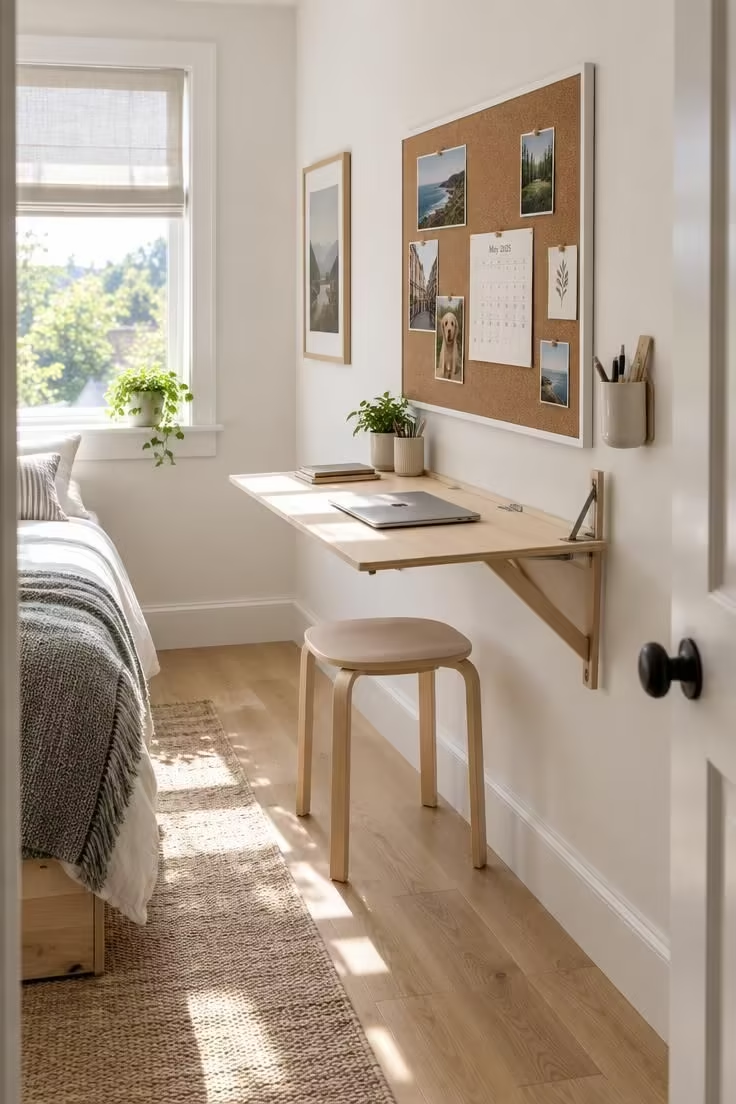
A fold-down desk removes its own footprint when the room shifts into social or sleep mode, which is the main advantage over a permanent desk.
The bulletin board behind it stays usable whether the desk is up or down, so the wall keeps working in both states.
A qualified professional should handle the mounting question when the wall type or load is uncertain.
The work surface is smaller than a standard desk, so it suits a laptop and a notebook rather than a full spread of materials.
A slim backless stool or folding chair tucks away when not in use.
A study space for teen bedroom layouts often has to appear only when homework does, and this desk fits that rhythm.
This idea suits a teen whose schoolwork is mostly digital or who values floor space over a permanent desk.
Style Blueprint:
- Fold-down wall desk with a bracket or hinge system
- Cork bulletin board mounted behind the desk
- Slim backless stool or folding chair
- Small supply cup attached to the wall
- Pushpins and a few printed photos
A Full-Length Mirror Leaning in a Corner That Bounces Light
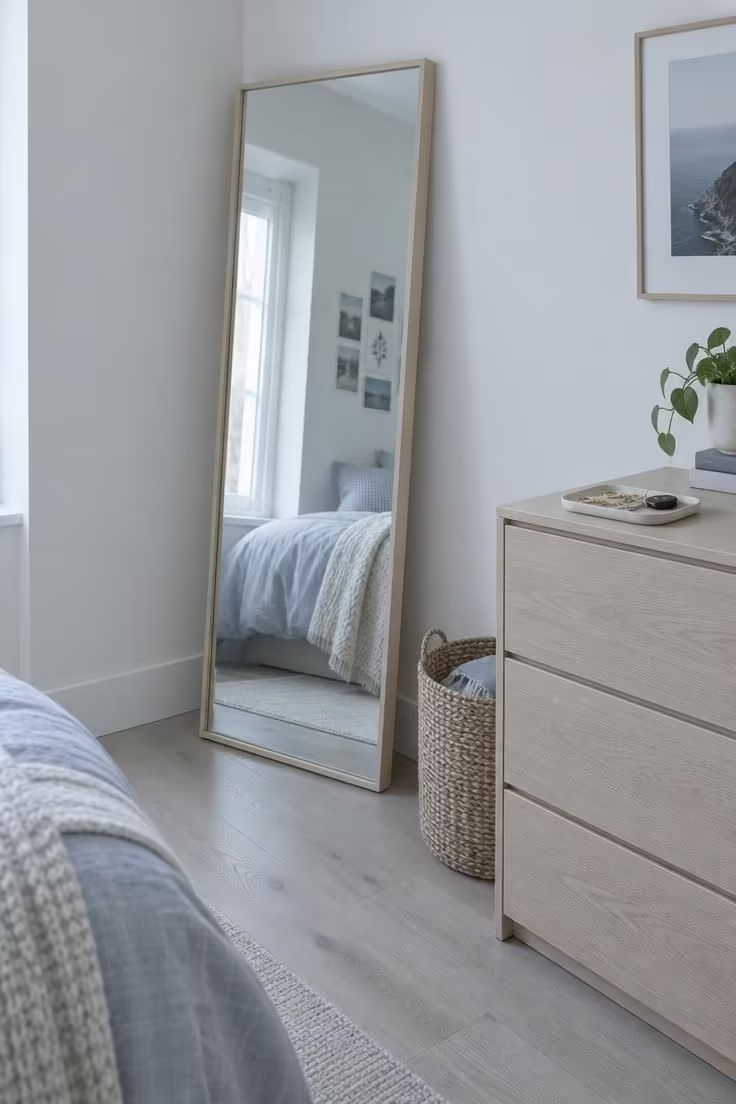
A tall mirror leaning in a corner reads as added depth, and it gives the teen a practical spot to check an outfit before leaving.
The reflection carries window light into parts of the room that would otherwise stay dim, which helps a compact space feel less closed in.
Mirrors show whatever sits behind the viewer, so one facing a cluttered area can multiply the clutter instead of hiding it.
The frame finish, whether wood, black metal, or white, sets the tone more than the glass itself.
A low dresser nearby gives the mirror a purpose and a place for a small tray of jewelry.
Style Blueprint:
- Full-length mirror with a slim wood or metal frame
- Anti-tip strap or wall anchor
- Low dresser or bench nearby
- Small tray for jewelry or keys
- Simple woven basket beside the dresser
A Slim Bedside Bench That Holds a Tray and Doubles as Seating
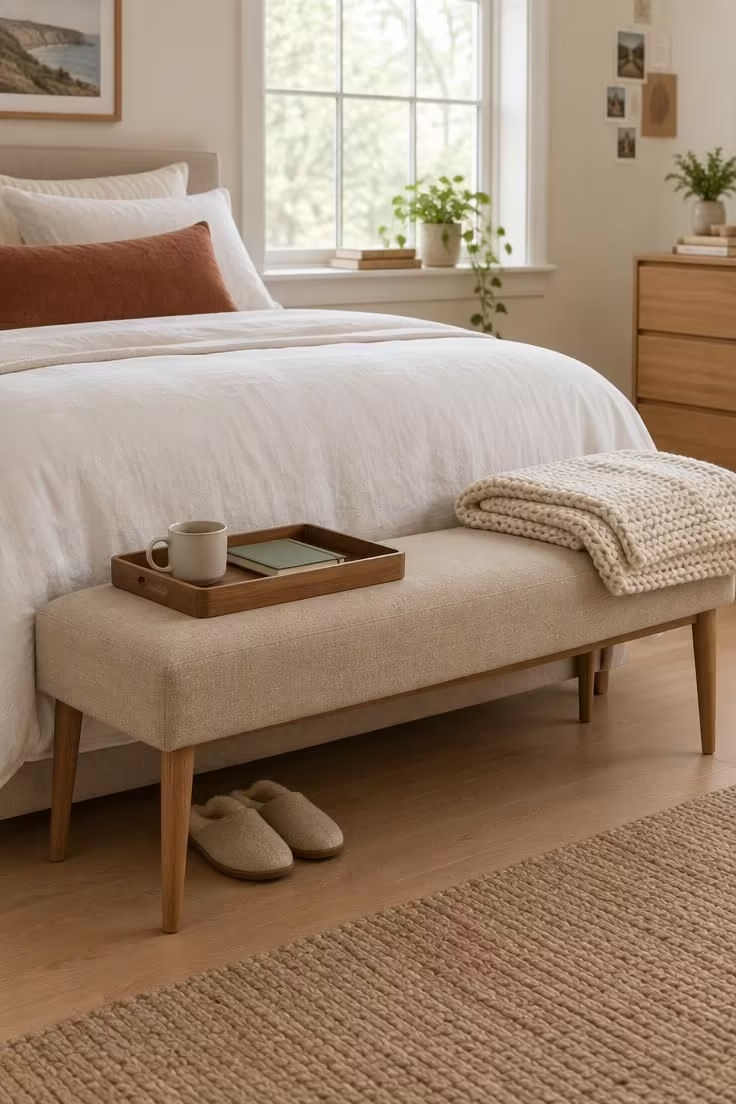
A slim bench at the foot of the bed adds a surface for a tray and a place to sit while pulling on shoes, without the footprint of a chair.
The bench has to leave a walking path on at least one side, so measure the gap before choosing a depth.
A tray on one end keeps drinks and small items from sliding onto the bedding, and a folded blanket on the other end softens the line.
Upholstered benches in linen or cotton show marks sooner than leather or performance fabric, so a washable cover or a darker tone helps in a room used daily.
Slippers or a small basket can live underneath the bench, which keeps the floor edge tidy.
A small bedroom color palette benefits from a bench in sand, oatmeal, or soft grey because those tones recede rather than compete.
This idea suits a teen who wants a spot to sit that is not the bed.
Style Blueprint:
- Slim upholstered bench in linen or performance fabric
- Shallow wooden tray for the bench top
- Chunky knit throw folded at one end
- Small basket or slippers for underneath
- One accent lumbar pillow for the bed
Conclusion
The strongest moves in a small teen bedroom come from placement, vertical use, and pieces that change function, not from adding more furniture.
A low bed, a slim desk, one rug, and layered light create anchors that stay useful as a teen’s taste shifts.
Start with the single biggest constraint in the room, whether that is the walking path beside the bed or the lack of a study surface, and solve that first.
Then layer the rest, swapping textiles and small pieces as preferences change.
Treat the arrangements here as inspiration, and handle attachment, wiring, and structural questions with the relevant product instructions or a qualified professional.