This post may contain affiliate links. If you make a booking or purchase through these links, we may earn a commission at no additional cost to you.
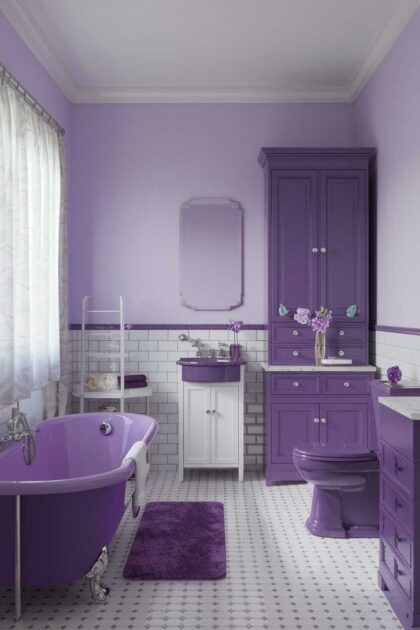
Purple walks the line between restful calm and head-turning drama, and that tension is exactly what makes it a standout choice for bathroom design.
From soft lavender tile to deep plum vanity paint, the right shade can shift a bathroom from forgettable to magnetic.
These 11 purple bathroom ideas cover color schemes, textures, fixtures, and finishing touches that bring richness without overwhelming the room.
Whether you want a full violet immersion or a few well-placed accents, there is a purple approach here that fits your space and your comfort level.
Lavender Oasis: Soft Wall-to-Wall Color Schemes
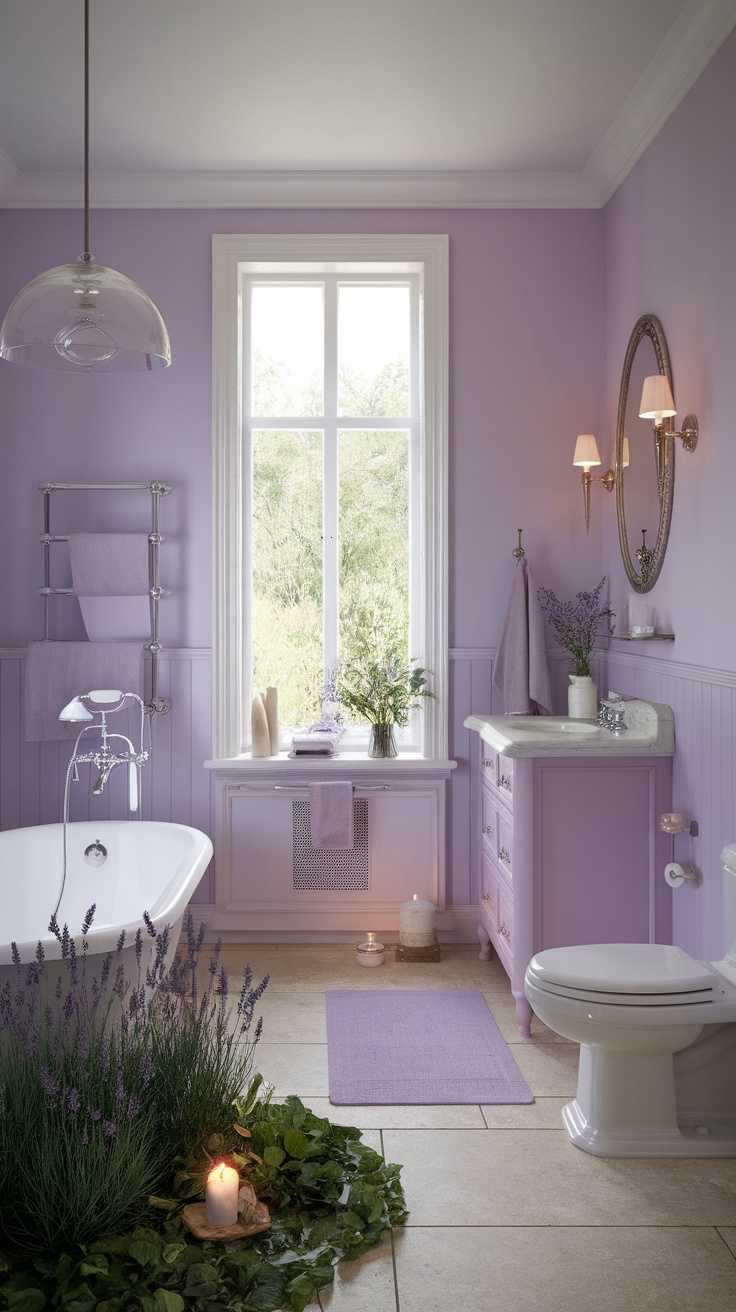
A full lavender palette turns a bathroom into a place that feels quiet the moment you step inside.
Pale purple tiles paired with cream grout lines soften the color and keep the room from reading too cool or too saturated.
Layering in plush cotton towels and a textured bath mat in a slightly deeper lilac shade adds warmth without competing with the walls.
This kind of purple bathroom decor works best in spaces with natural light, where the lavender shifts gently throughout the day from cool morning tones to warmer afternoon hues.
Purple Tile Designs: Geometric Patterns That Add Depth
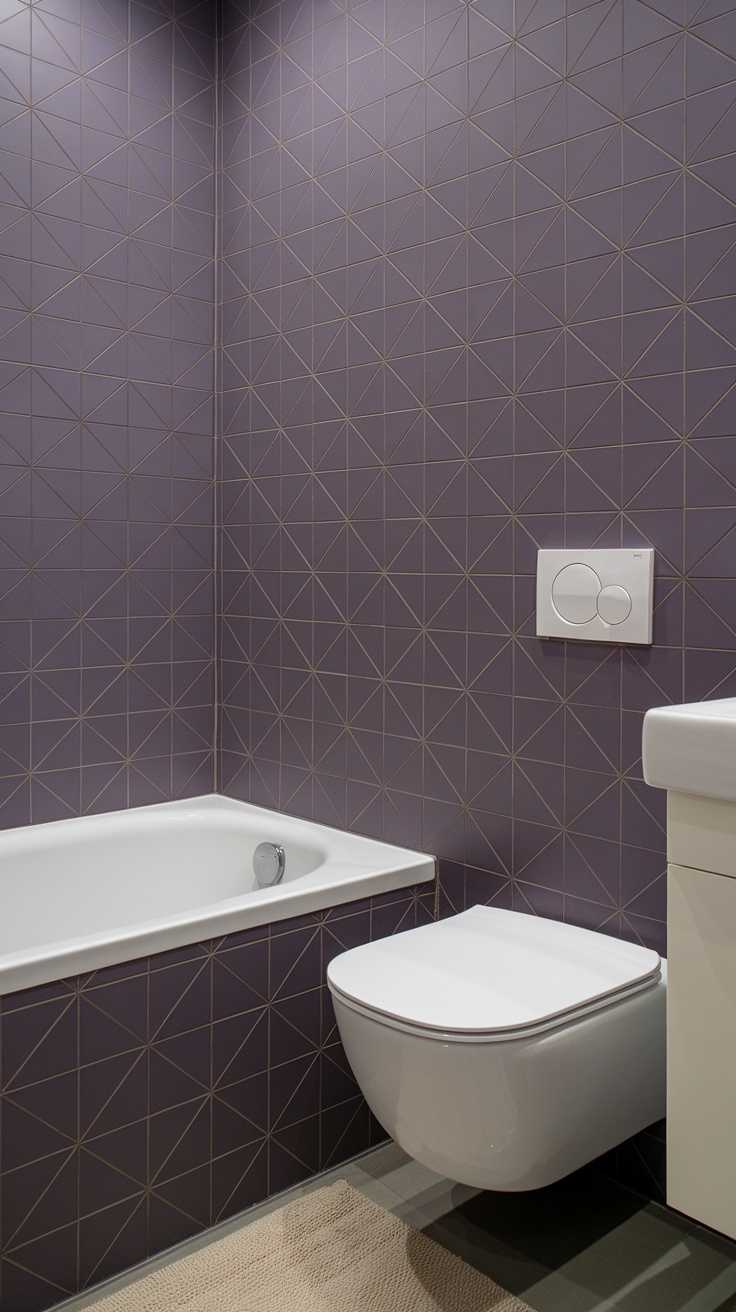
Tile is where purple bathroom ideas get their staying power: a well-chosen pattern locks the color into the room permanently.
Geometric layouts like herringbone or hexagonal mosaic give purple tiles a sense of movement that flat subway layouts lack.
A purple tile bathroom with a mix of matte and glossy finishes in the same shade creates subtle contrast you can feel more than see.
Pairing those tiles with simple white fixtures lets the pattern carry the visual weight of the room on its own.
Grout color matters here: a warm gray grout softens the look, and a contrasting white grout sharpens each tile edge for a crisper graphic effect.
Lighting That Brings Out Purple’s Best Side
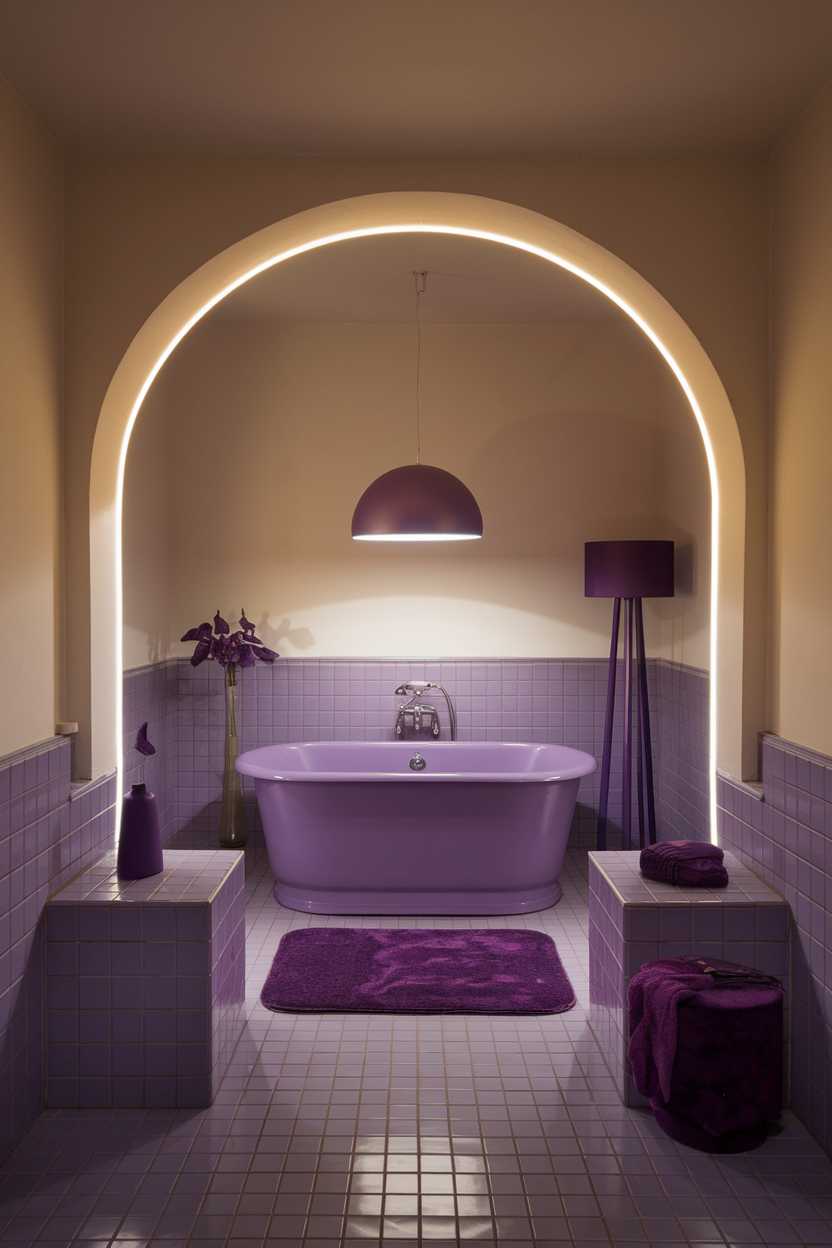
The wrong bulb temperature can flatten purple into a muddy gray, so lighting deserves the same attention as tile or paint.
Warm-white LEDs in the 2700K range pull out the red undertones in plum and aubergine, making those colors feel richer against the wall.
A dimmable sconce on each side of the vanity mirror gives you control over intensity, letting you dial the mood from bright morning prep to a low, relaxed glow at night.
If your purple tile bathroom gets little natural light, a backlit mirror adds soft ambient fill that keeps the space feeling open rather than cavelike.
Mixing Shades: Layering Purple with Neutrals and Metals
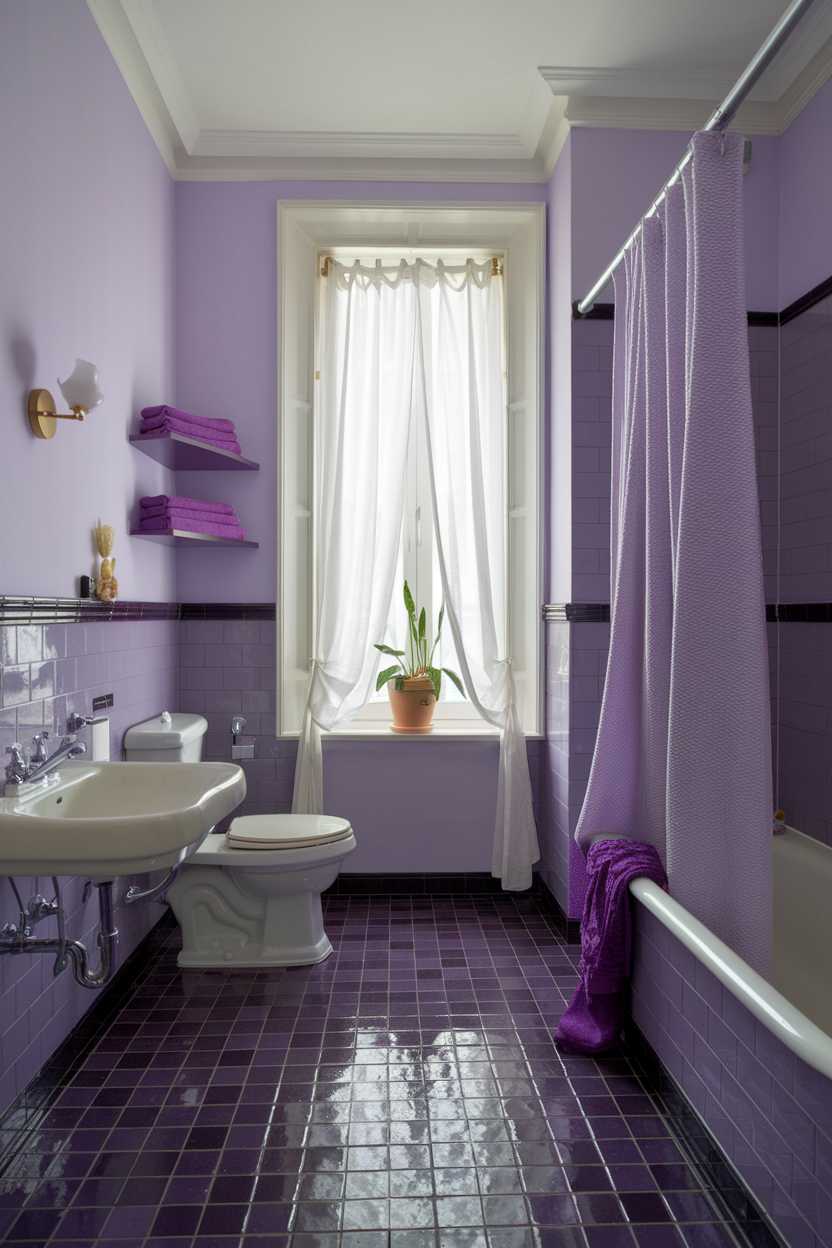
Purple gains clarity when it sits next to the right neutral, and the pairing you pick sets the entire mood of the room.
Cool-toned lilac next to bright white reads modern and clean, and deep plum against warm mushroom or oatmeal tones feels grounded and sophisticated.
Metallic accents in brushed brass or aged gold catch light and break up large purple surfaces, giving the eye a place to rest between color blocks.
Design Pro-Tip: When mixing purple shades in one room, choose tones from the same undertone family (all warm reds or all cool blues) so the palette reads intentional rather than mismatched.
Purple Bathroom Accessories: Small Pieces, Big Shift
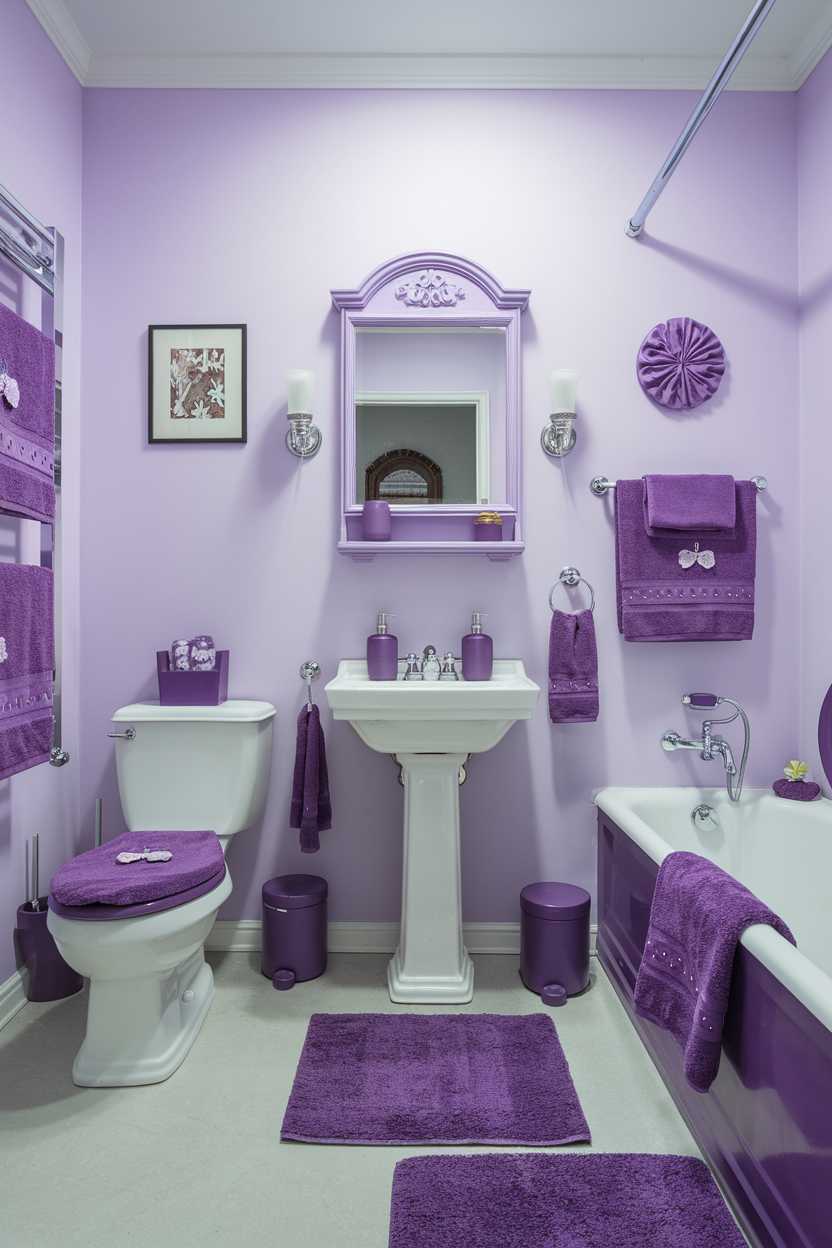
Swapping a few accessories is the lowest-commitment way to test purple bathroom ideas before painting a single wall.
A set of plum-colored towels folded on an open shelf introduces the color immediately and costs almost nothing to change later.
A purple glass soap dispenser, a ceramic toothbrush holder, and a matching tray on the vanity create a collected look that ties the room together quietly.
Bath mats in a deeper amethyst shade anchor the floor and keep the purple story going even when cabinets and walls stay neutral.
These small touches in purple bathroom decor let you experiment freely and swap pieces by season or mood without a full renovation.
Bold Plum Accents Against White Tile and Gold Hardware
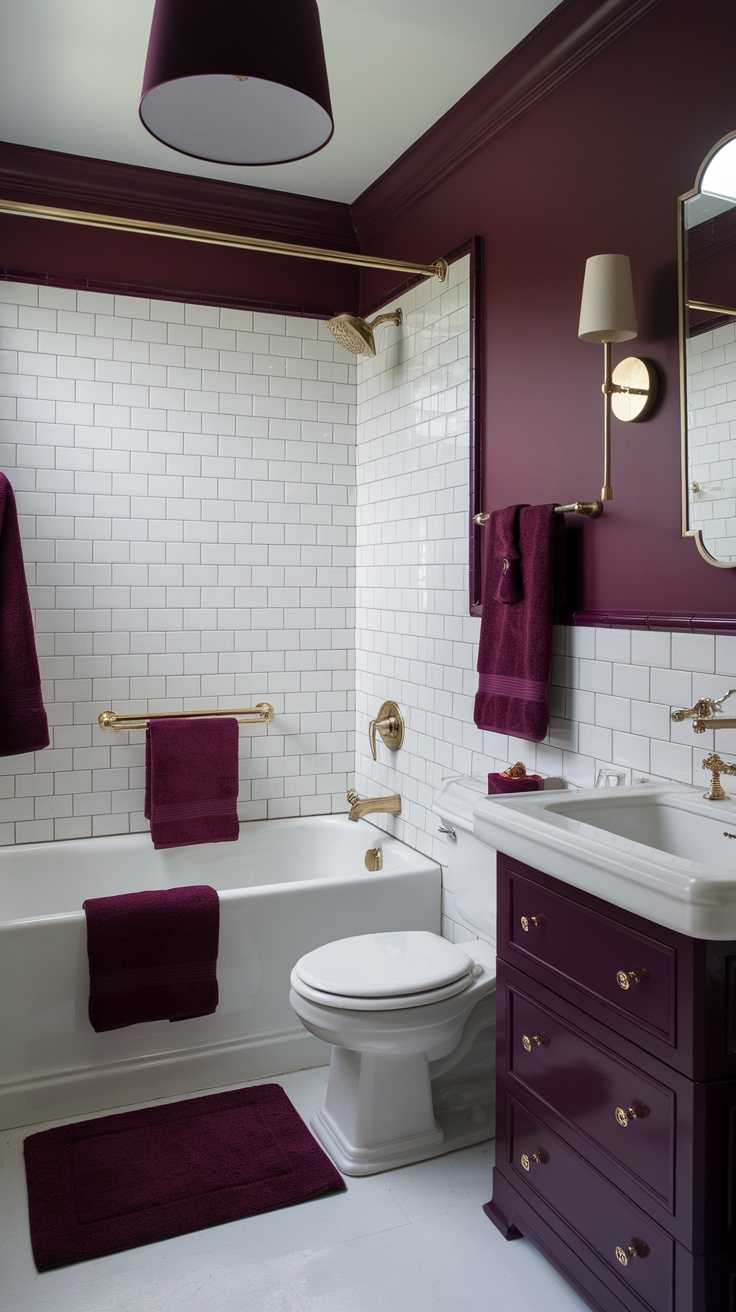
Plum reads more grown-up and dramatic than lighter purples, and it pairs naturally with warm metallics for a look that feels intentional.
A single plum accent wall behind the tub or vanity creates a focal point that draws the eye without darkening the full room.
Gold faucets, towel bars, and cabinet pulls stand out sharply against that deep color, adding a layer of warmth that keeps plum from feeling heavy.
White subway tile on the remaining walls balances the darkness and gives the space enough brightness to feel comfortable at any hour.
Floral Inspirations: Living Plants in a Purple Palette
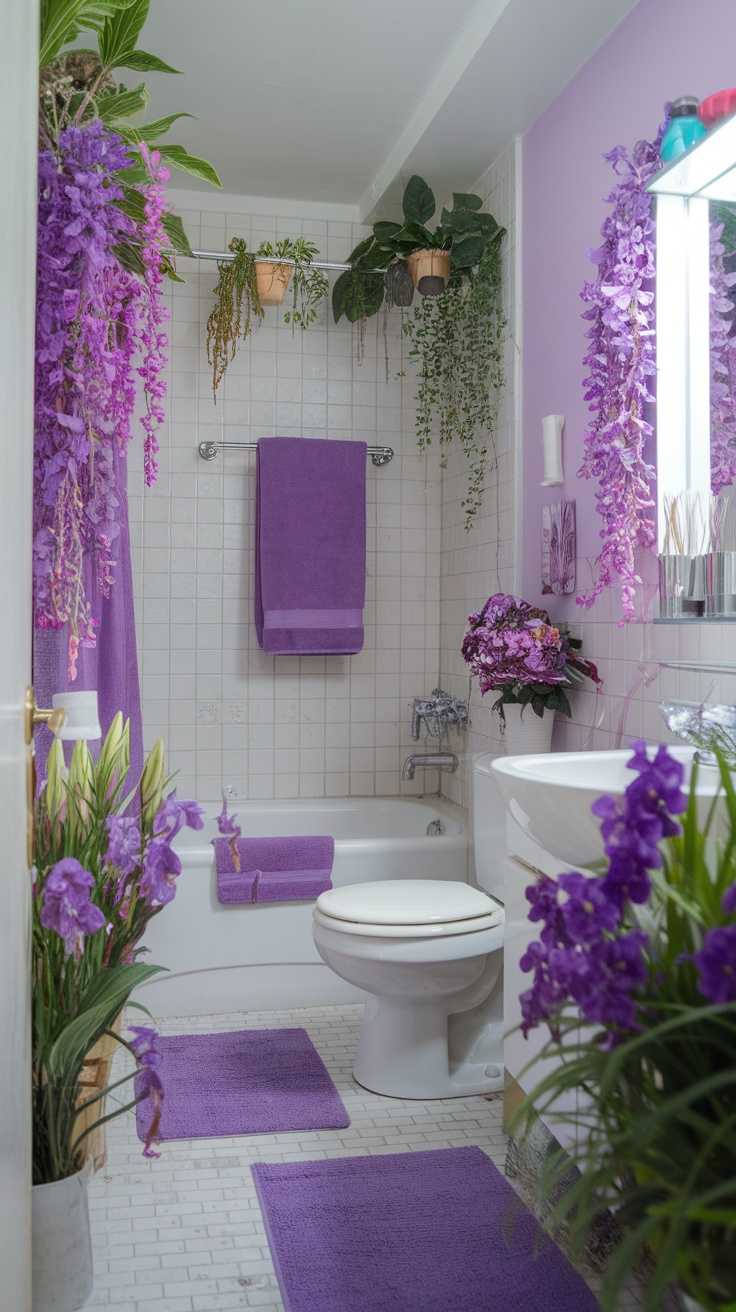
Purple-flowering plants bring organic texture that no manufactured accessory can replicate, and they change subtly with each new bloom cycle.
African violets do well in bathroom humidity and produce clusters of soft purple flowers that complement lavender tiles or lilac walls.
A trailing pothos on a high shelf or a compact orchid on the vanity introduces green foliage that plays off purple tones with natural contrast.
Vintage Vibes: Clawfoot Tubs and Retro Purple Fixtures
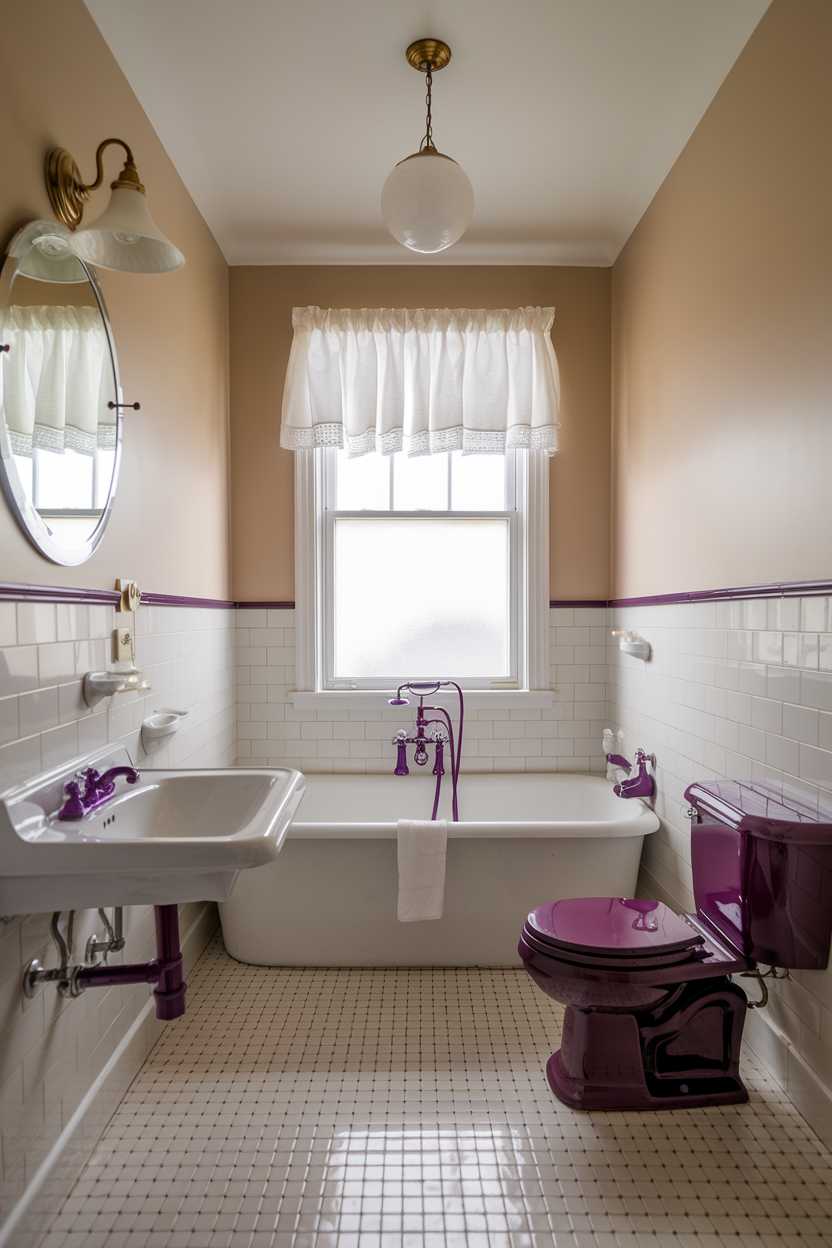
A clawfoot tub painted in a dusky mauve or deep violet becomes the kind of centerpiece that makes the rest of the room orbit around it.
Retro-style cross-handle faucets in polished nickel or oil-rubbed bronze pair well with purple, lending a collected-over-time character that new fixtures sometimes lack.
Pedestal sinks in a soft lilac glaze, once common in early twentieth-century homes, are showing up again in specialty ceramic studios for those willing to invest in a true statement piece.
Penny-round floor tile in black and white grounds these purple bathroom ideas in a classic pattern that keeps the vintage mood authentic.
Finishing the look with a beveled-edge mirror and a small crystal or milk-glass light fixture above the sink completes the period character without turning the room into a costume.
Design Pro-Tip: If sourcing a true vintage fixture feels too risky for plumbing reliability, reproduction clawfoot tubs with modern drain hardware give you the silhouette without the maintenance headaches.
Artwork and Decor: Making a Purple Bathroom Personal
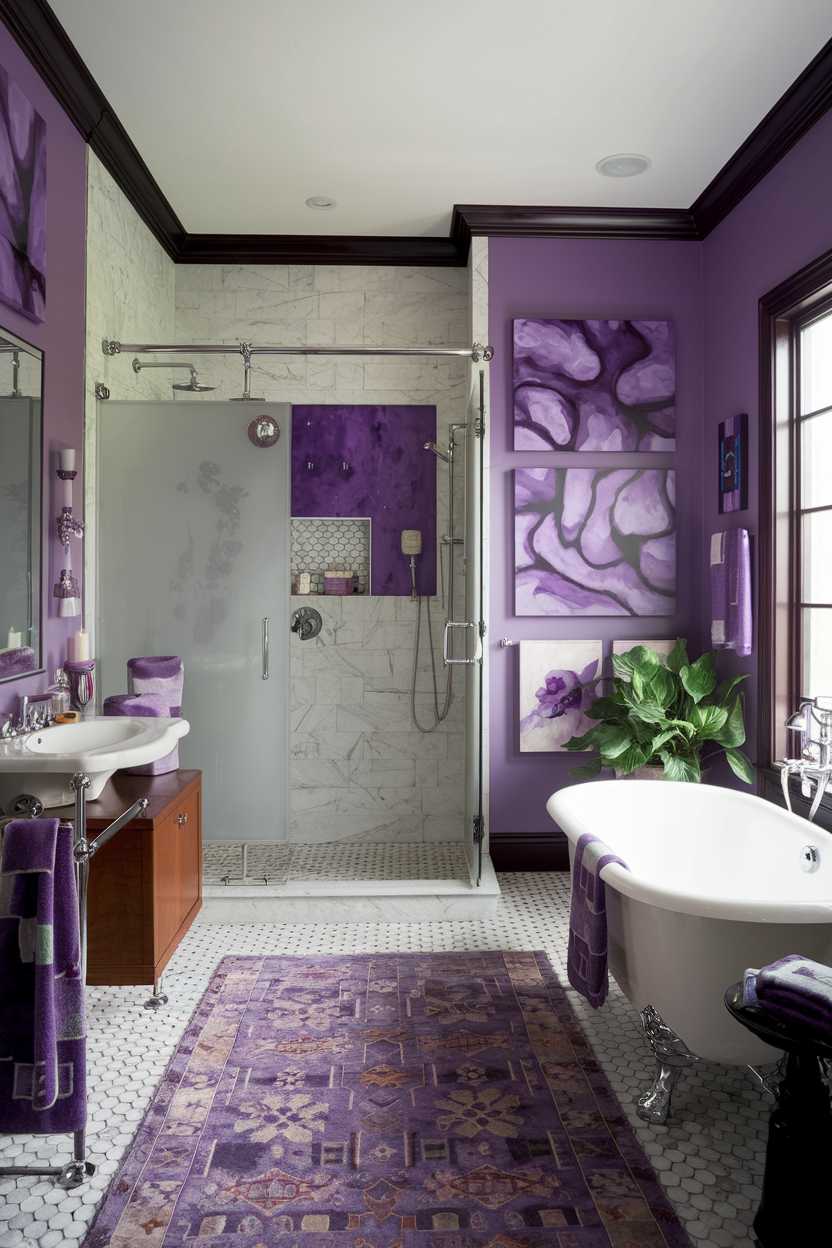
Framed prints or a small original painting on the wall above the toilet or beside the mirror give a purple bathroom a sense of personality that tile and paint alone cannot deliver.
Abstract watercolors in violet and indigo tones echo the room’s palette without matching it too precisely, which keeps the space feeling gathered by instinct rather than by formula.
A small floating shelf displaying a ceramic vase, a candle in a plum-tinted glass holder, and a single stacked stone adds dimension at eye level.
Rotating these pieces seasonally keeps the room from going stale and gives you an excuse to revisit your purple bathroom decor with fresh energy.
Purple Shower Curtains: One Piece That Changes the Room
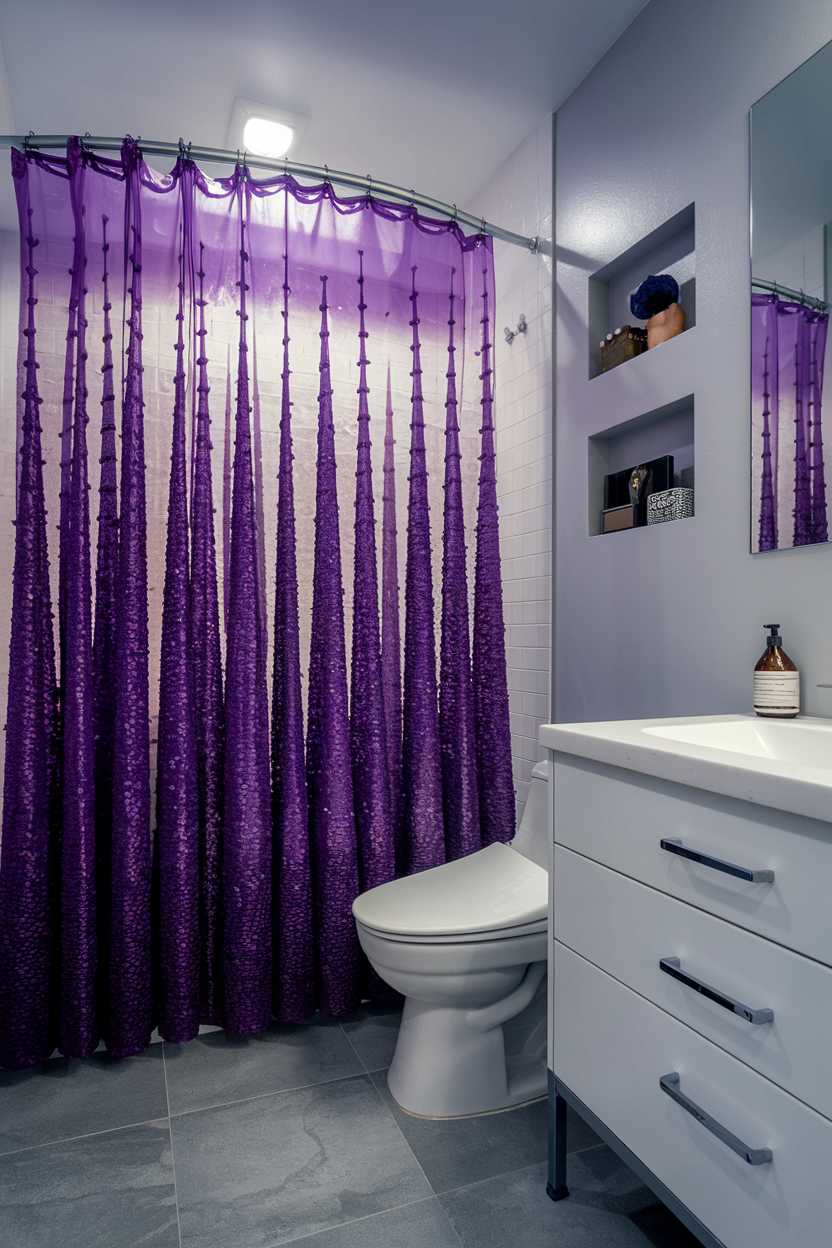
A shower curtain covers the largest single surface in many bathrooms, so changing its color rewrites the room’s entire mood in seconds.
A deep eggplant curtain against white tile creates a rich, cocoon-like feel, and a lighter lavender print on linen fabric keeps things airy and relaxed.
Choosing a curtain with a subtle texture or tonal stripe rather than a loud pattern lets purple stay the focus without visual clutter competing for attention.
Purple Storage Solutions: Cabinets and Shelving in Color
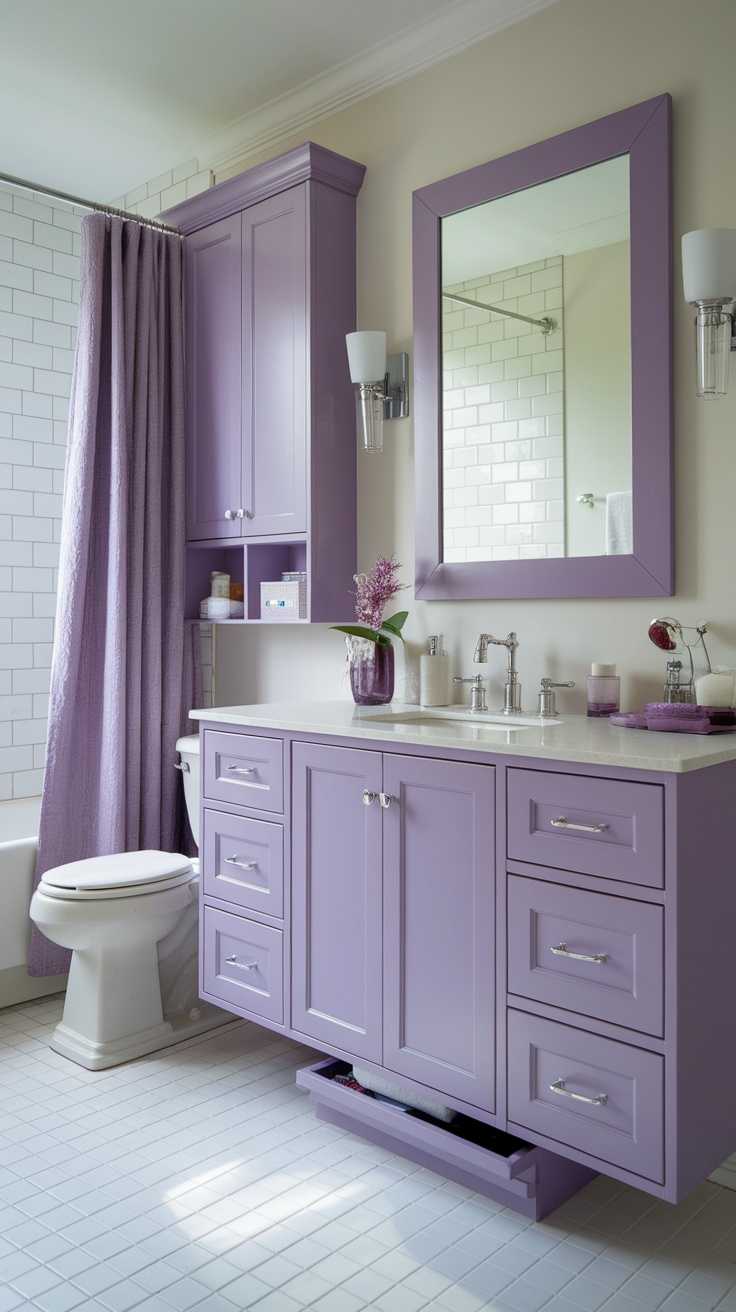
Painting existing vanity cabinets in a matte purple breathes new life into dated storage and anchors the room’s color story at counter height.
Open shelving in a painted lilac or soft grape finish displays folded towels, glass jars, and small plants, turning storage into a style moment.
Matching woven baskets in plum or violet sit neatly inside cubbies and keep smaller items corralled without breaking the color thread running through the room.
Floating shelves in a contrasting wood tone, like light oak or walnut, give the eye a break from purple and add natural warmth to the palette.
These purple bathroom ideas for storage prove that practical pieces carry just as much design weight as a statement tile or a bold accent wall.
Conclusion
Purple rewards confidence: a single committed shade on the vanity, a deliberate tile pattern, or a few plum accessories placed with care can make a bathroom feel like a room you actually chose rather than one you inherited.
The ideas here range from full-room lavender immersions to single accent swaps, so the entry point is wherever your comfort and budget meet.
Start with the piece that excites you most and let the room build from there, one purple layer at a time.
Design Pro-Tip: Test your chosen purple by painting a large sample swatch (at least 12 by 12 inches) on the wall and viewing it under daylight and your bathroom’s artificial light before committing to the full surface.