This post may contain affiliate links. If you make a purchase through these links, we may earn a commission at no additional cost to you.
A desk can photograph as calm and still refuse to open its own drawer.
The look and the daily reality are different tests, and only one of them matters after the first week of work.
Minimalist desk organization is not about owning less or clearing everything away.
It is about showing less while keeping the things you actually reach for within arm’s reach.
The Practical Definition: Edited, Not Empty
Designer Meghan Jay, speaking with Real Simple, offers a useful starting point: begin with what the desk is for, then choose items that do that job while adding character.
That order matters because it protects function before appearance.
A decluttering purge and an edited desk are different exercises.
A purge removes volume.
An edit assigns purpose, deciding which items have earned a place within reach and which need a home out of sight.
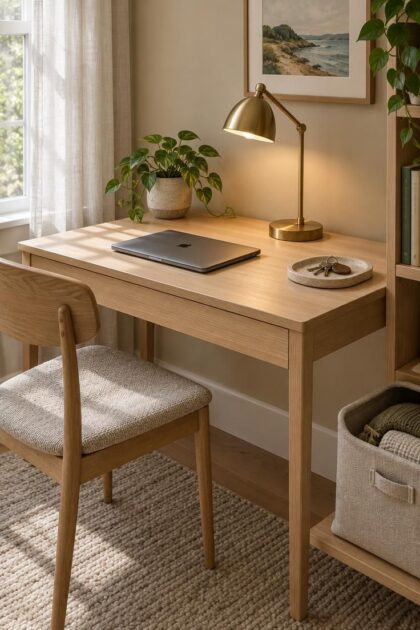
A pared-back desk can hold a keyboard, a monitor, a notebook, a lamp, a plant, and a shallow tray for pocket items and still read as spare, because each of those objects has a reason tied to frequent use or deliberate affection.
The count is not the point.
The reasoning is.
The visible-few test builds that composition from what already exists rather than from a shopping list.
Clear the desk completely, return only what was used in the last week, then add up to two objects kept purely because they are loved.
Why a Flat Desk Becomes a Junk Magnet
IKEA’s Store & Organize Report 2026, which surveyed more than 31,000 people across 31 countries, found that 68 percent of respondents keep a drawer or box for items with no other home.
The finding is worth reading as a description of household habit rather than a flaw to fix.
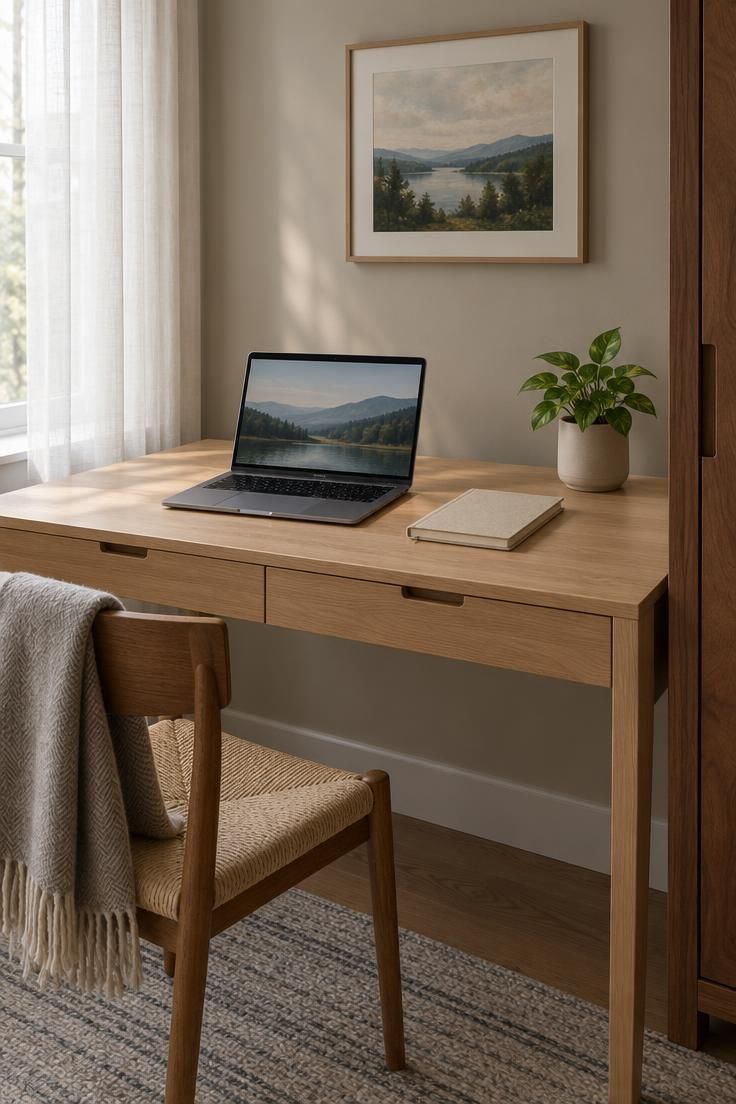
A desk without drawers turns its surface into that catch-all.
Mail lands there, then cables, then adapters, then receipts, because nothing else in the setup is positioned to receive them.
The correction is closed storage with breathing room inside it.
A drawer packed tight stops functioning as storage and starts functioning as a lid on a problem.
The junk drawer does not need to be eliminated.
It needs to be contained deliberately, with a known location and enough capacity that returning an item takes a second rather than a reshuffle.
That single decision, giving loose items a destination before they accumulate, does more for a quiet surface than any styling object placed on top of it.
What Earns a Place on the Surface
Three categories hold a surface together.
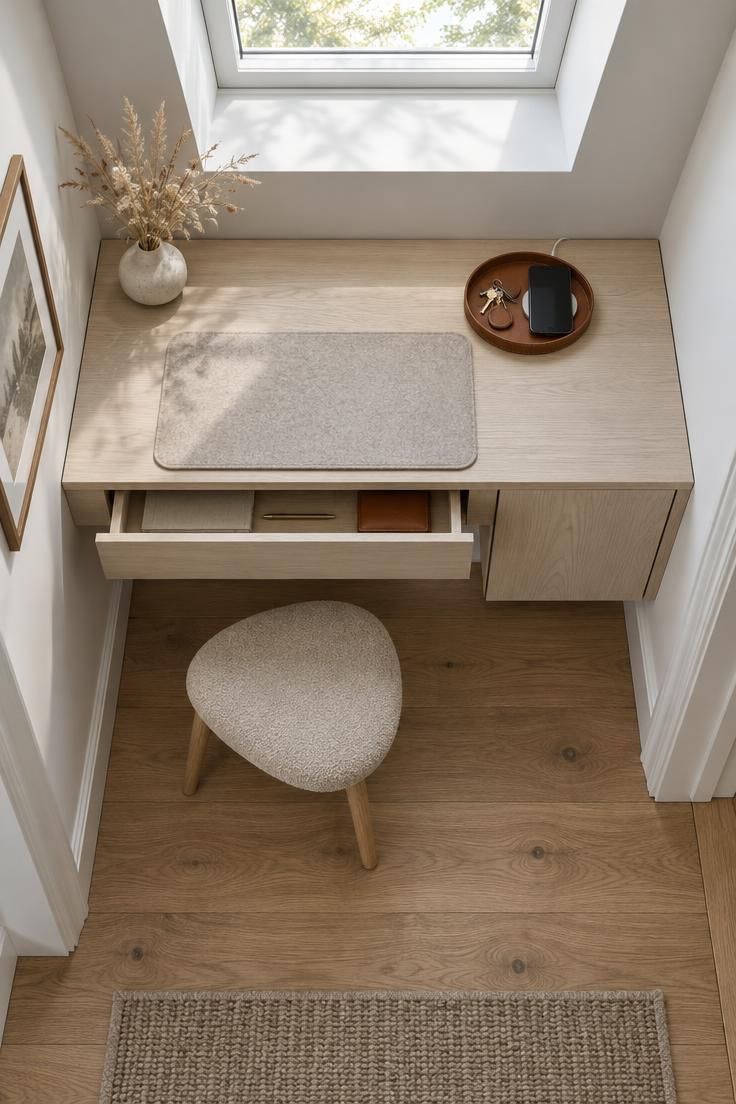
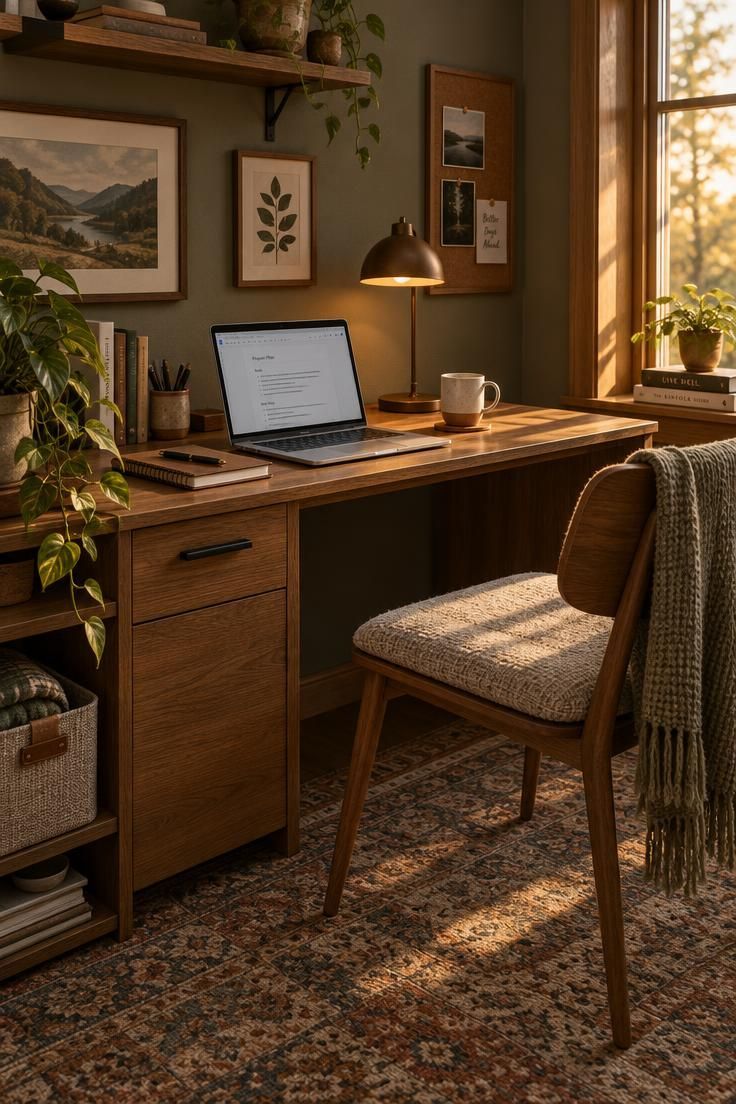
Active tools come first: keyboard, mouse, monitor or laptop, a notebook, one pen.
Layered light comes second, with a task lamp that reads warm rather than clinical.
One or two personal objects complete the group.
Allison Babcock, speaking with Mansion Global, describes a workspace where every object has a purpose and a designated spot.
That standard is easy to apply and easy to check.
The 70/30 guideline works as a visual-balance tool rather than a strict rule.
Roughly seven-tenths of a desk’s contents live hidden in drawers and cabinets, while three-tenths stay displayed.
Decorative objects with no use and no attachment are the first candidates for a drawer.
They create the same visual noise that an overflowing cable pile does, just in a prettier form.
The one-signature idea keeps a surface from looking like a catalog page.
Choose a single material or object, a stone tray or a wood lamp, and let everything else stay quiet around it.
Design Pro-Tip: A linen-covered pinboard or a fabric desk mat adds softness to a pared-back surface without adding objects, and both can be swapped seasonally without rethinking the whole desk.
The Warm Minimalist Palette for a Lived-In Desk
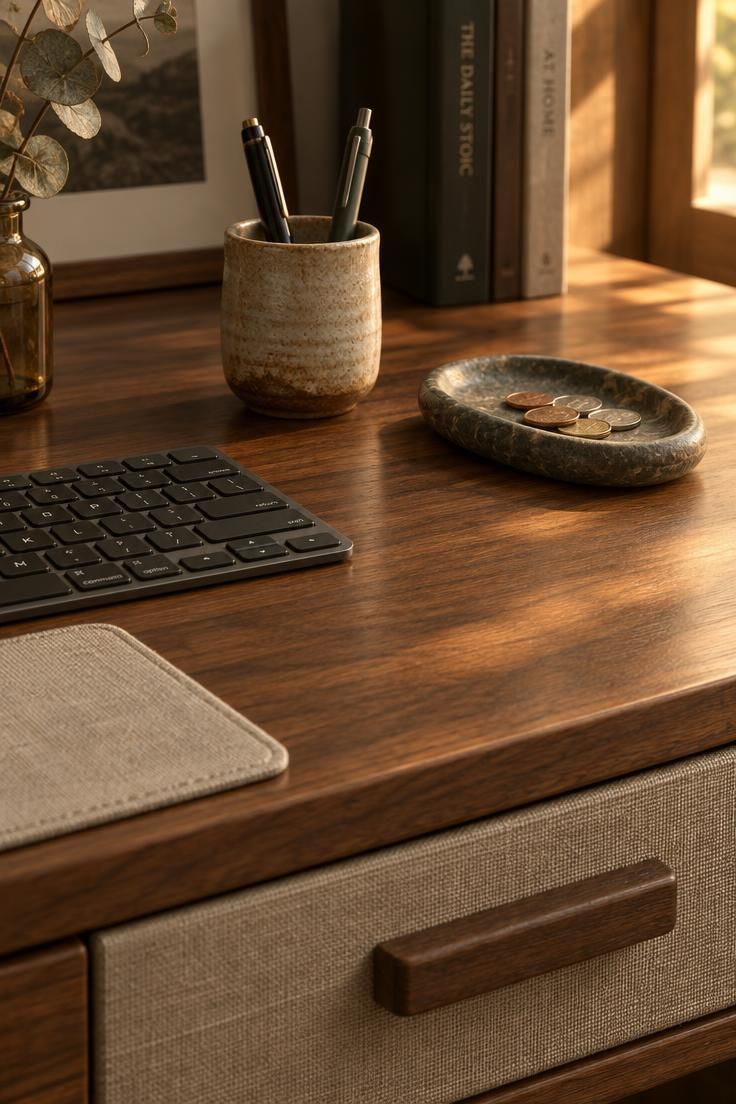
Warm minimalism is the thread that keeps a pared-back desk from reading as corporate.
Building a warm minimalist desk palette with wood tones starts with the base: oak, walnut, or birch, ideally with softened edges rather than sharp metal frames.
Beige, sand, khaki, and chocolate brown carry the supporting neutrals.
One deeper accent belongs on a small object only, such as a burgundy ceramic cup, a moss green pen pot, or a petrol blue trim on a desk mat.
Identical clean-desk setups are giving way to spaces with one clearly personal element, according to that same trend coverage.
A vintage lamp or a distinctive keyboard can carry that role without undoing the minimal frame.
The test for the personal element is simple.
If it would look out of place in a hotel business center, it is probably doing the work.
Closed Storage That Reads as Furniture
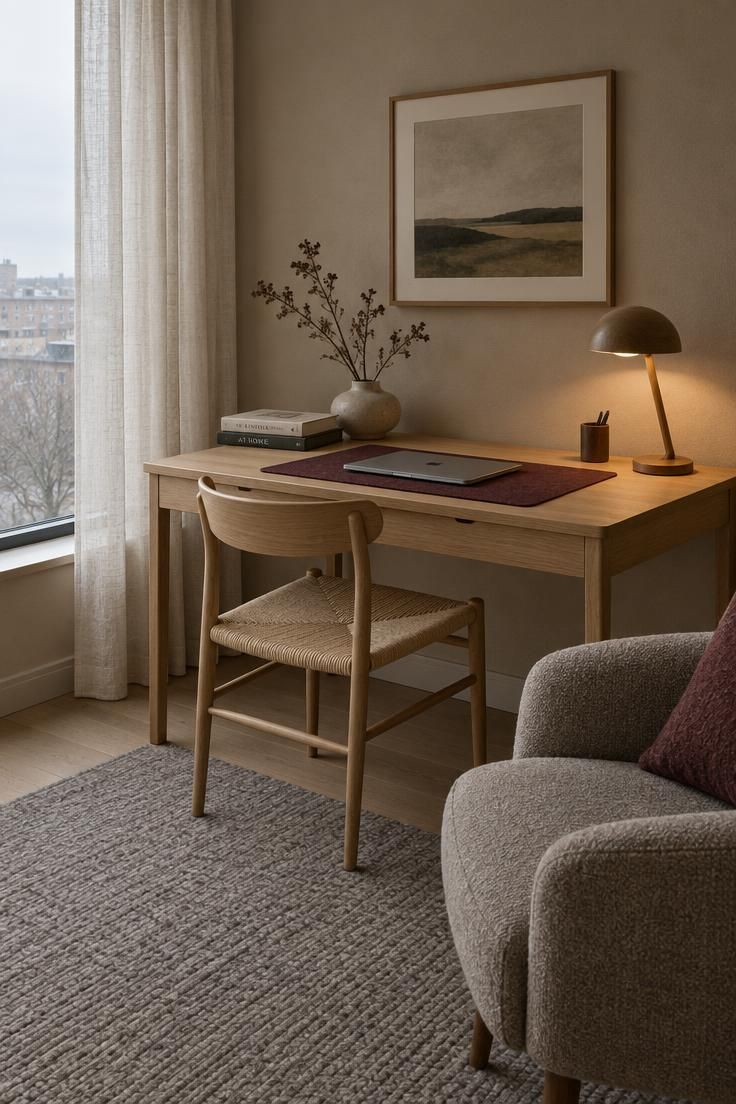
The residential answer to a storage-less desk is closed storage for a home office desk that looks like part of the room rather than office equipment.
A Houzz-featured Dallas home office designed by Melissa Powell shows the pattern: closed lower cabinets hold files, supplies, and paperwork, while open shelves above are reserved for art, books, and a few styled objects.
Repurposed furniture carries the same idea into smaller homes.
A vintage chest, a lidded hamper, or a slim cabinet beside the desk absorbs supplies without announcing that an office has moved in.
Drawer placement deserves attention for comfort.
A shallow center drawer keeps the desk pleasant to sit at, while a deep lap drawer can push the knees outward and make the whole setup awkward to use.
That is comfort guidance, not a specification to measure against.
Closed storage does not have to sit under the desk.
A drawer unit beside it or a slim bookcase along the same wall adds capacity without making the desk itself visually heavy.
Matching the storage finish to the desk keeps the grouping calm.
A chest in a different wood tone can work, but the relationship should look chosen rather than accidental.
Lidded options earn their place in living rooms and bedrooms, where an open bin of supplies would undercut the quiet of the surrounding furniture.
The measure of success is simple: the storage should look like it belongs to the room, and the desk should look like it belongs to the storage.
Cable and Charger Containment for an Uncluttered Look
Cables and chargers are the most common clutter on a desk because they are used daily and rarely look good sitting out.
A coiled cable on a surface reads as unfinished business no matter how neatly it is wound.
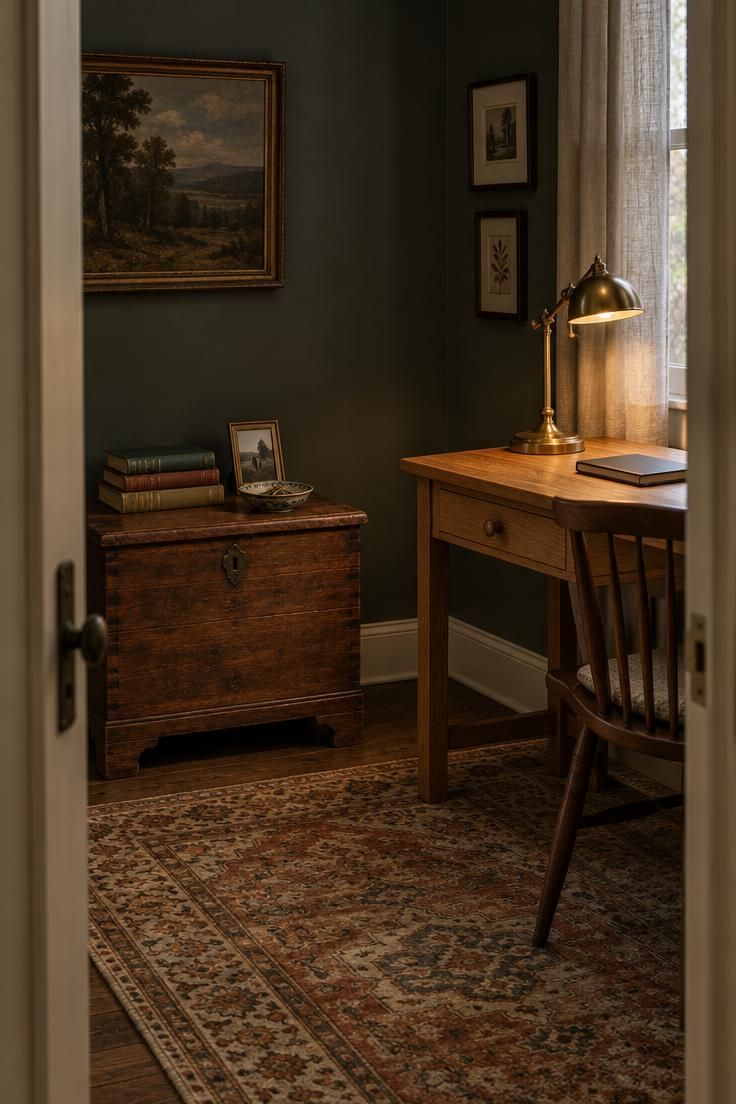
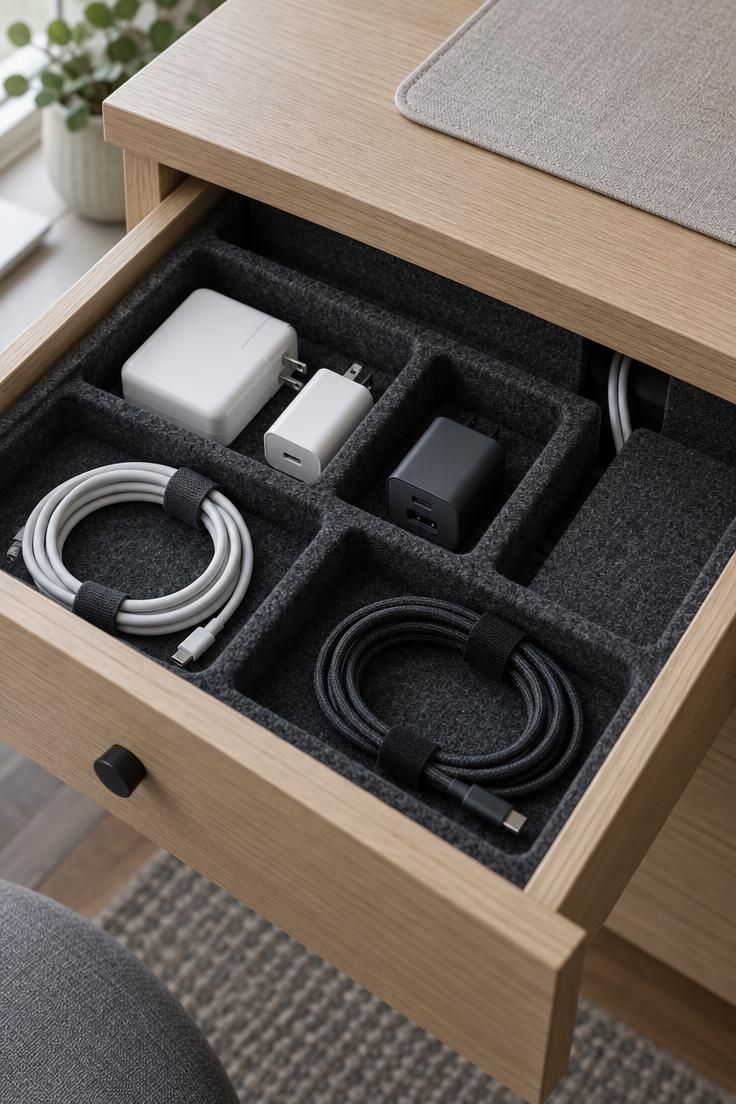
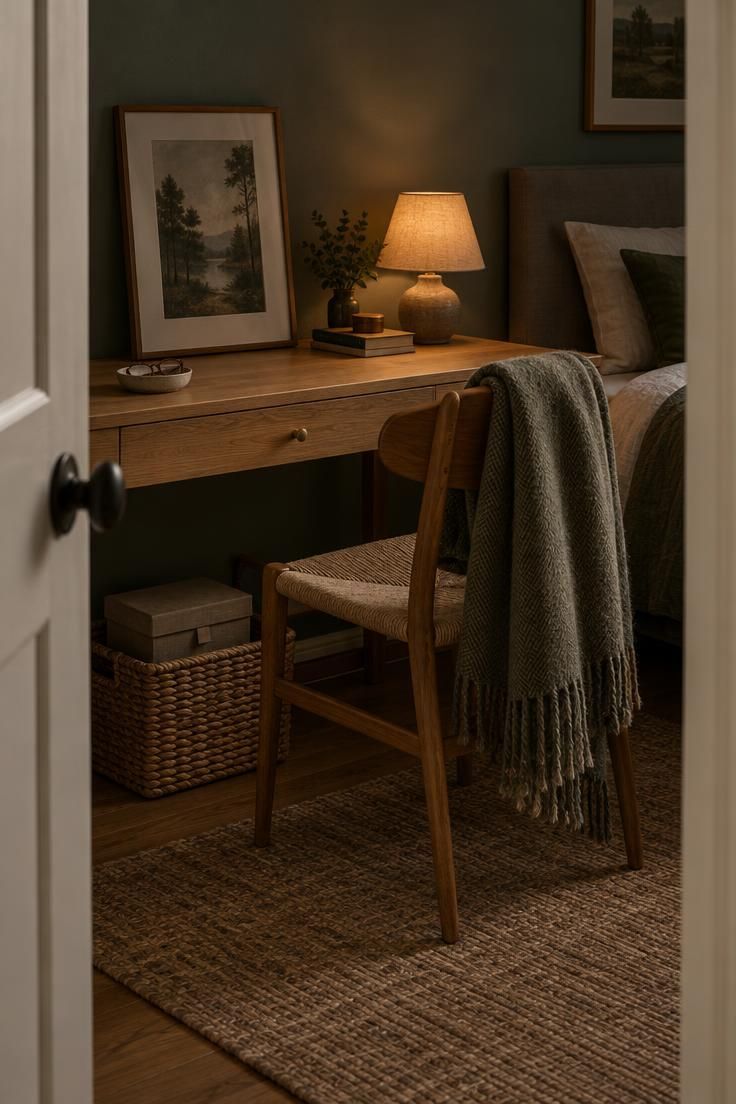
The workable approach is a cable and charger drawer for a home desk: one small box or drawer insert that holds chargers, adapters, and spare cables, kept closed when not in use.
The container does the visual work so the surface does not have to.
Wireless charging pads set into a desk mat, and power strips tucked into a closed compartment, belong to the same invisible-tech layer.
The point is placement and appearance, not wiring.
A felt or woven insert inside the drawer keeps the contents from sliding and makes the drawer pleasant to open, which matters for a container used several times a day.
Design Pro-Tip: Choose a containment box with a lid or a snug felt insert so it can sit on an open shelf without looking like a utility bin pulled from a garage.
Storage That Stays Out of the Way in a Small Bedroom
A small bedroom desk with vertical storage solves more than a floor-space problem.
It keeps the desk from needing a second piece of furniture beside it, which matters when the room already carries a bed, a dresser, and a chair.
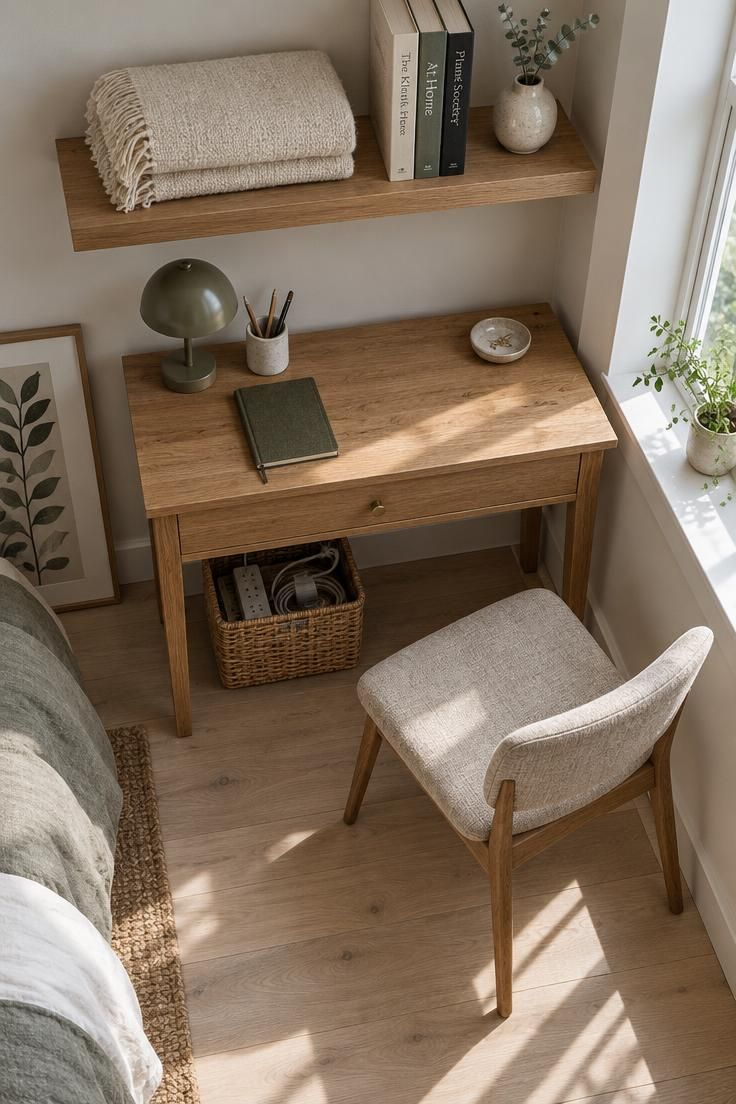
A desk with drawers plus a shelf above, or a slim bookcase set directly beside the desk, keeps the footprint close to the desk’s own outline.
The storage grows upward while the room stays open.
The Shaker peg rail is a useful reference here.
Shaker communities hung peg rails at roughly six feet to free floor and surface space, and built purpose-made storage to hide objects rather than display them, as Architectural Digest describes in its coverage of Shaker design.
Matching the desk finish to the bedroom’s existing wood tones helps the desk read as part of the room.
A pale oak desk in a room of walnut furniture can look like a transplanted workstation, while a closer match settles in.
A storage desk with a bulky drawer pedestal can overwhelm a bedroom that is already visually full.
Lighter wood finishes and a one-sided drawer stack keep the mass to one end.
The shelf above should carry the same restraint as the desk surface.
A folded blanket, a few books, and one ceramic object hold the line; a shelf packed with supplies simply relocates the clutter upward.
Zoning by Reach: Daily, Weekly, Monthly
Sorting by frequency of use gives a desk its own logic.
The surface holds what is used every session.
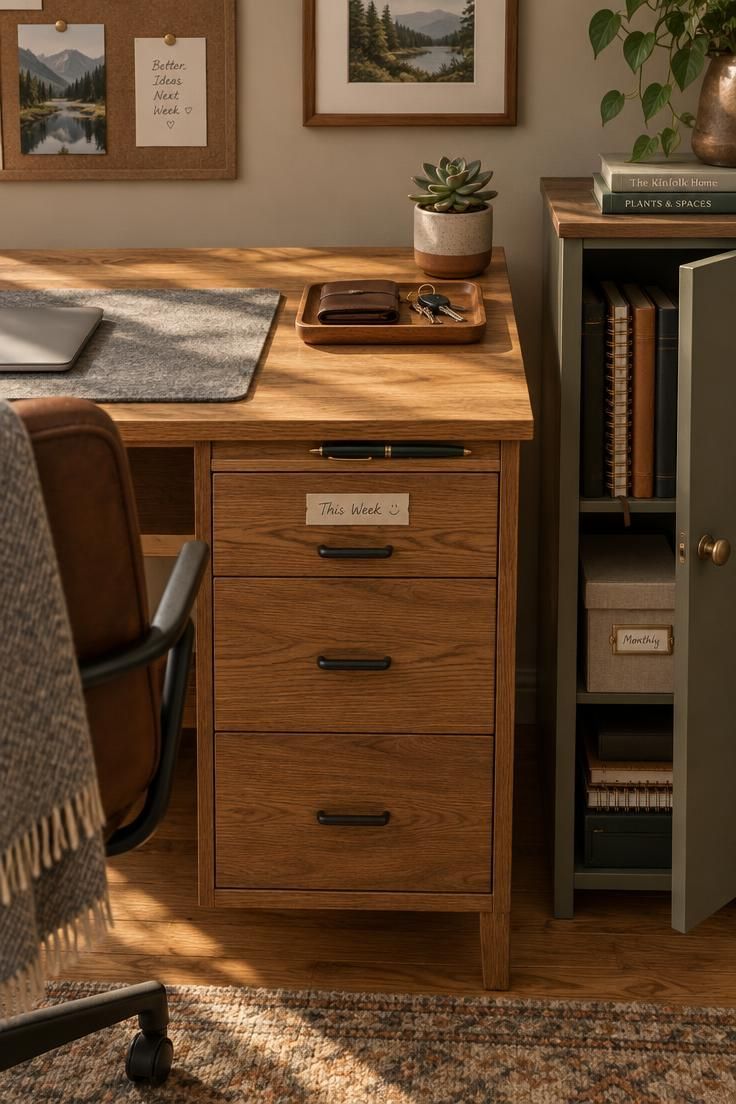
The top drawer holds what is used weekly, such as pens, chargers, a notepad, and adapters.
Closed storage below or beside the desk holds what is used monthly: files, backup drives, spare cables, printer paper.
Anything untouched for a year becomes a candidate for a box elsewhere in the home.
That single rule keeps the monthly zone from slowly becoming the everything zone.
Desktop organizer ideas for pens and keys work best when the organizer sits on the surface and stays mostly empty.
A shallow tray for keys and a single cup for pens handle the daily items; everything else belongs to a drawer.
The two-minute reset is the maintenance plan.
Return stray items to their drawer, wipe the surface, and leave the one or two display objects in place.
The system fails when an item’s home is a drawer that is already full.
Closed storage needs slack, and the way to check is to open each drawer and confirm a hand can move freely inside it.
The Tradeoffs of a Hidden-Everything Desk
Storage desks carry more visual weight than flat desks.
In a small bedroom or a living-room corner, a desk with drawers may read as more furniture than the room can comfortably hold.
A surface that looks calm may hide an overstuffed drawer.
The honest version of this look depends on periodic sorting, not just on concealment.
Too few visible anchors can feel austere.
That is why the warm-minimalist correction matters: wood, fabric, and one or two personal objects keep the desk from reading like a hotel business center.
Knolling, the practice of arranging objects in precise parallel groups, comes from studio workflows and works best as an occasional reset ritual.
It is a photographic and workflow tool, and it is hard to maintain during actual work.
Trend and survey reporting has limits worth respecting.
IKEA’s findings and similar surveys describe what people say they prefer, not what a tidy desk does to them.
Design Pro-Tip: Keep one drawer deliberately loose, with empty space at the back, so a quick tidy before guests arrive is possible without a full sort.
A Practical Reset Order for a Desk That Stays Usable
Start by emptying the desk completely.
Every item comes off the surface and out of the drawers, and the empty desk establishes the baseline against which everything else gets judged.
Return only the items used in the last week.
Keyboard, mouse, laptop or monitor, a notebook and pen, and the lamp are typical survivors of this filter.
Add up to two objects kept for affection rather than function.
A framed photo, a small ceramic, or a plant can hold that role.
Give cables a single closed container.
One drawer insert or lidded box for chargers and adapters removes the most persistent source of surface clutter.
Put weekly items in the top drawer and monthly items in lower closed storage.
Files, backup drives, and printer paper live below or beside the desk, out of the daily reach zone.
Leave slack in every drawer.
A drawer that closes with effort will be avoided, and an avoided drawer becomes a surface pile again.
Treat the two-minute reset as the daily habit that keeps the system working.
The goal is a desk that supports how the person actually lives, not a fixed number of objects, and the organization should flex as the work does.
Conclusion
A desk organized around visible few principles works because the surface shows only what gets used and the storage hides only what is still needed.
The strongest decisions are about containment, not about replacing the desk: choose closed containers with slack, give cables one box rather than a coil, and keep the surface to the items in constant rotation.
The warm palette matters, since wood tones and fabric keep a home workspace from feeling borrowed from an office.
Palette remains secondary to function, and a quiet surface in a mismatched wood finish will serve better than a beautiful desk with no place to put the mail.
The test is practical.
After a week of normal use, if the surface can be reset in two minutes without opening a stuffed drawer, the setup is working.
If it cannot, remove one category of stored items before adding another tray, and start with the drawer used least.