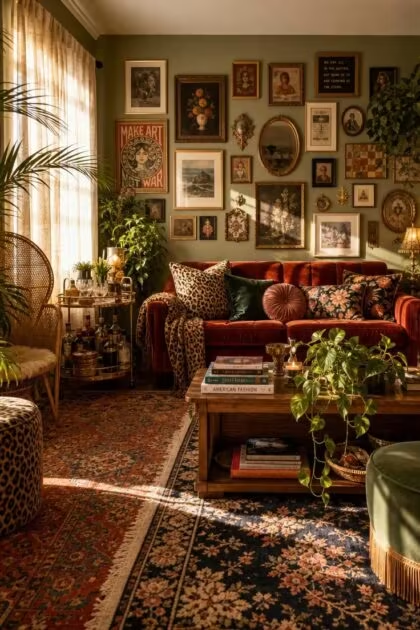
This post may contain affiliate links. If you make a purchase through these links, we may earn a commission at no additional cost to you.
Some rooms whisper.
This one talks back.
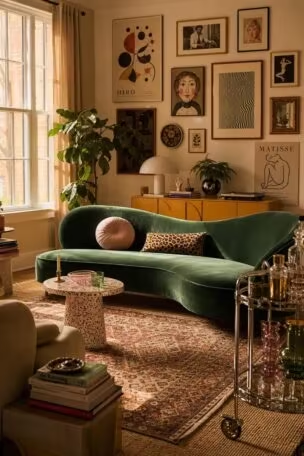
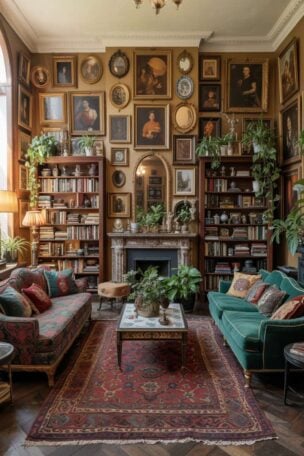
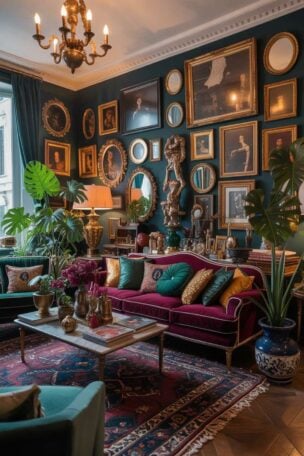
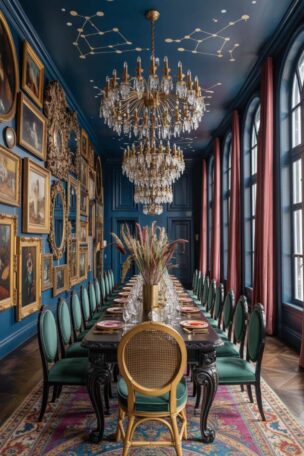
Eclectic maximalist decor is built on the idea that a home should hold every chapter of your life at once, not just the tidy final draft.
Bold color palette choices sit next to inherited furniture, gallery wall arrangements climb the stairwell, and nothing in the room is trying to match anything else on purpose.
These 19 ideas show how to layer pattern, texture, and personal style into rooms that feel collected rather than staged.
Eclectic Maximalist Decor Starts With a Rust Velvet Sofa and Mismatched Wingbacks
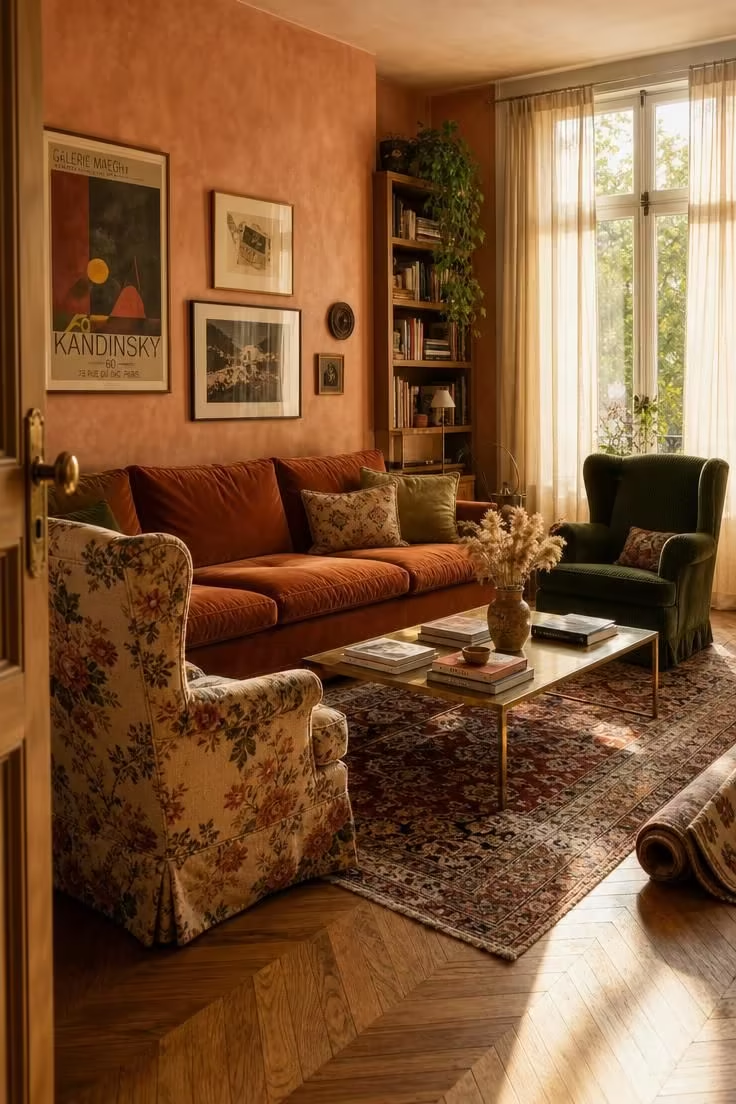
A rust velvet sofa does something a beige one never could.
It gives the room a pulse.
Pairing it with two wingback chairs that clearly came from different decades signals that this space was gathered over years, not ordered from a single catalog.
Vintage furniture like this rarely matches on purpose, and that is exactly the point.
Warm light in the late afternoon pulls out the depth of the velvet’s nap, making the color shift as you move through the room.
That kind of texture play is part of what makes eclectic maximalist decor feel alive instead of chaotic.
The mismatch works because the undertones agree, rust and forest green both lean warm, so the eye reads harmony even before it registers the pattern differences.
A low brass table keeps sightlines open across the seating so the room still breathes.
Style Blueprint:
- A velvet sofa in a saturated warm hue (rust, ochre, or burgundy)
- Two non-matching vintage armchairs with contrasting upholstery
- A low brass or wood coffee table
- A wool or Persian-style area rug with a busy pattern
- Sheer linen curtains to soften direct light
Terracotta Plaster Walls Behind a Sunburst Brass Mirror
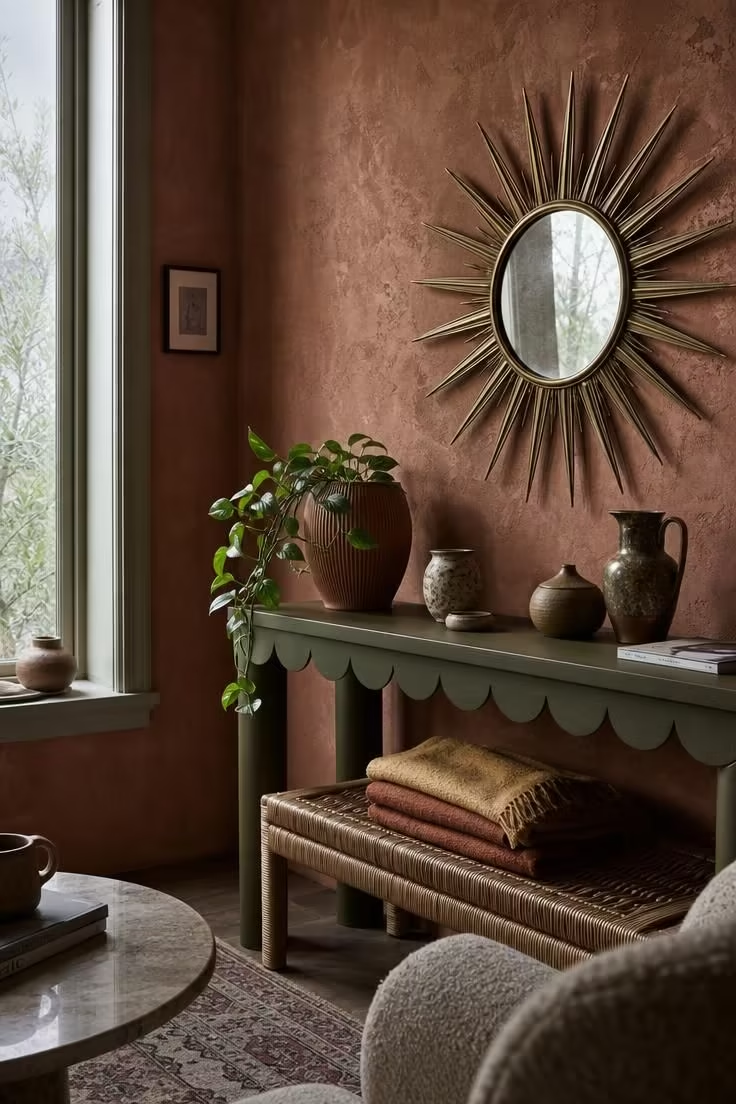
Plaster walls change the entire feel of a room compared to flat paint.
The uneven texture catches light differently depending on the hour, so terracotta plaster looks almost orange at sunset and closer to dusty clay under cool overcast morning light.
A sunburst mirror in aged brass adds a sculptural focal point without needing any additional artwork nearby.
Placing it above a scalloped console instead of a straight-edged one softens the geometry of the whole vignette.
Small ceramic vessels grouped in odd numbers read as gathered rather than arranged, which matters when the goal is a home that feels like it evolved naturally.
A single trailing plant adds movement and keeps the vignette from feeling static.
This kind of layered wall treatment is one of the easiest ways to bring depth into eclectic maximalist decor without adding a single piece of furniture.
Style Blueprint:
- Lime or clay plaster in a warm terracotta shade
- A large sunburst mirror in aged or antiqued brass
- A scalloped-edge console table
- Ceramic vessels grouped in odd numbers
- One trailing houseplant for movement
Checkerboard Marble Tile Underfoot in a Jute-Rug Living Room
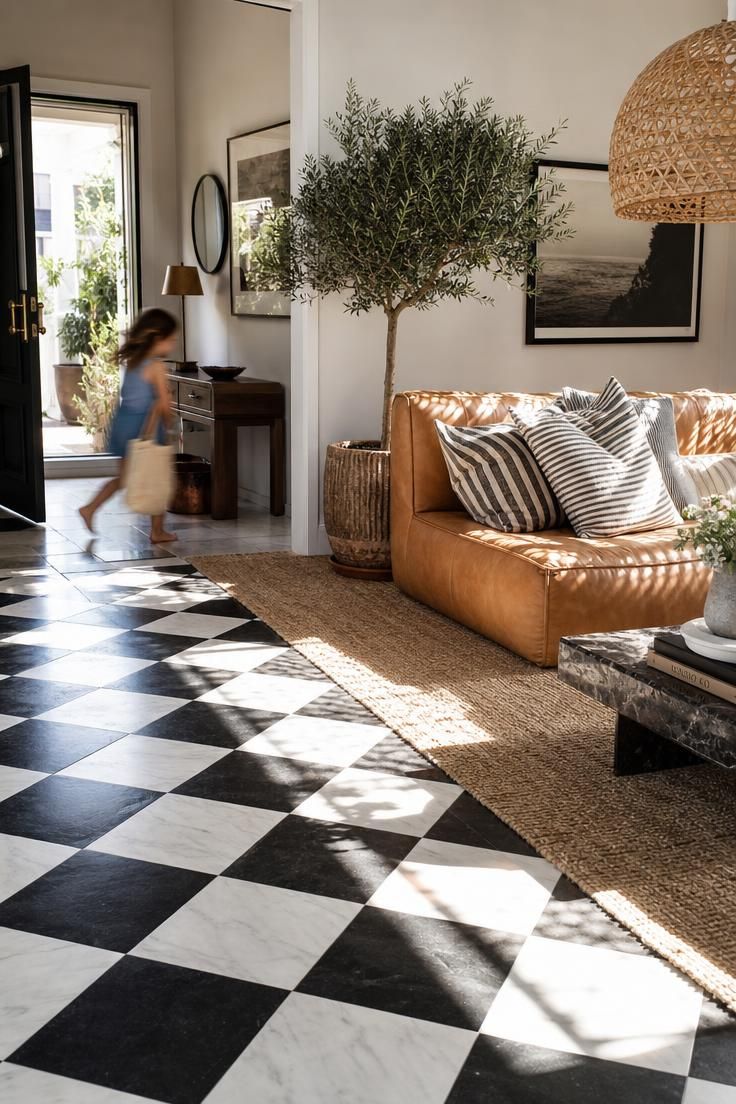
Flooring rarely gets enough credit in a room this layered.
A checkerboard marble tile at the entry sets a graphic, almost theatrical tone the moment you walk in.
Letting it transition into a soft jute rug under the seating area keeps the space from feeling cold despite the hard surface.
Bright midday light exaggerates the contrast between the black and white tile, making the geometry the star for that first few feet of the room.
Camel leather grounds the palette so the eye has somewhere neutral to land after taking in the tile pattern.
Striped pillows echo the graphic quality of the floor without competing directly with it.
A potted olive tree adds height and a bit of green relief against all that hard geometry.
Style Blueprint:
- Black-and-white checkerboard marble or vinyl tile
- A natural fiber jute or sisal rug for the seating zone
- Camel or cognac leather seating
- Striped or graphic-print throw pillows
- A tall potted tree for vertical green contrast
A Grid of Vintage Postcards Framed in Mismatched Gilt Wood
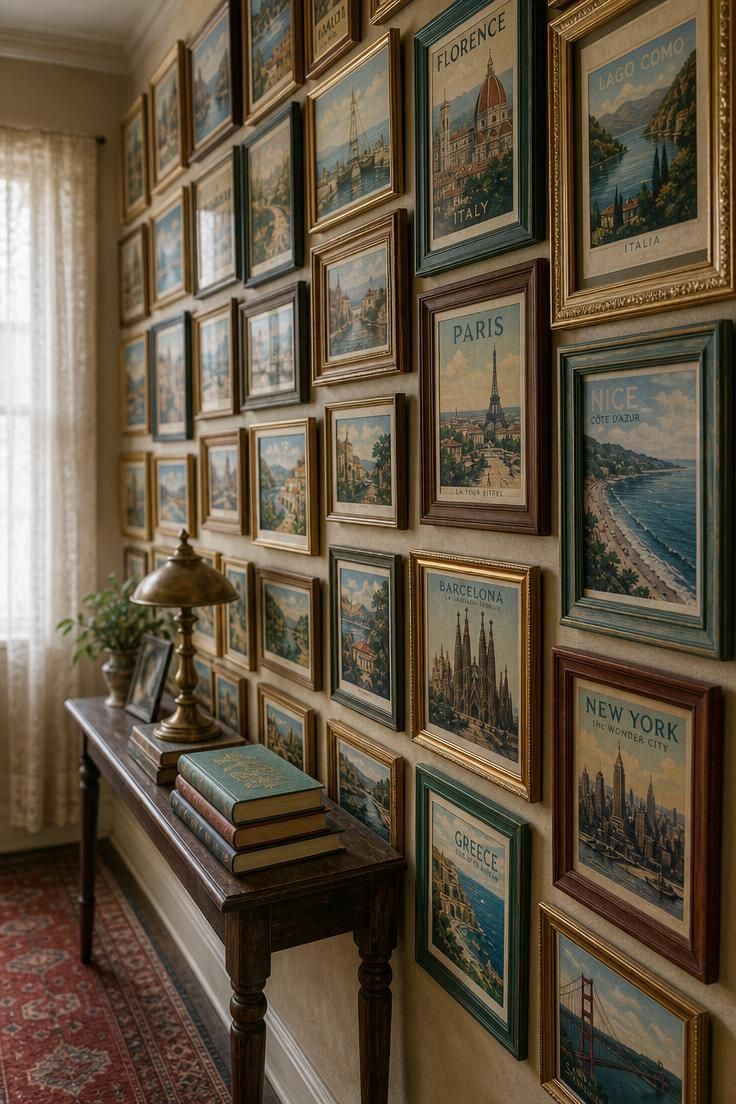
A gallery wall does not have to mean art prints.
Vintage postcards, ticket stubs, or old photographs framed edge to edge tell a far more personal story than anything bought as a set.
Mismatched gilt frames in slightly different finishes keep the grid from feeling like a kit, which is exactly the point.
Soft diffused light is the most forgiving choice for a wall this dense with detail, since it avoids the glare that direct sun would throw across dozens of small glass panes.
A slim console underneath gives the wall a base without crowding the hallway.
Building a collection like this over years, rather than buying it in one trip, is part of what separates genuine eclectic maximalist decor from a showroom imitation.
Style Blueprint:
- A tight grid of small frames in mismatched gilt or painted wood
- Vintage postcards, photographs, or ephemera instead of standard prints
- A slim console table beneath the wall
- A worn runner rug for warmth underfoot
- A small brass or ceramic table lamp
Design Pro-Tip: When building a dense gallery wall, lay every frame out on the floor first and photograph the arrangement from above before hanging a single nail. It saves the wall from a dozen unnecessary holes.
Leopard Print and Ikat Pillows Piled on a Linen Sofa
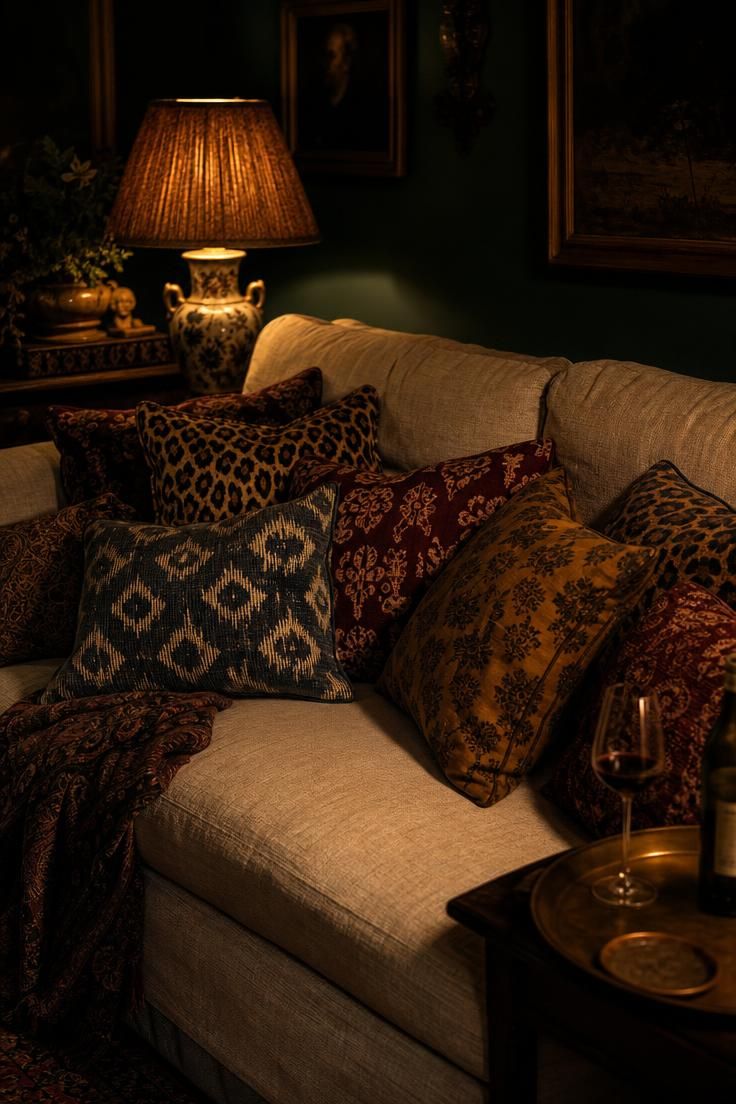
Pattern mixing intimidates people more than almost anything else in maximalist styling, and it should not.
The trick is keeping one element constant, in this case the neutral linen sofa base, while letting the pillows carry all the risk.
Leopard print and ikat share a similar visual weight even though their patterns are completely different, which is why they sit together so comfortably.
Moody low light flatters this kind of dense layering because it softens the edges between competing patterns instead of sharpening every line the way bright light would.
A single warm lamp does more work here than any overhead fixture could.
Dark green walls in the background keep the palette from feeling scattered, giving the eye a quiet anchor behind all that pattern.
Small bohemian touches like these are what separate a room that feels stiffly arranged from one that feels genuinely lived in.
This is the kind of vignette that makes eclectic maximalist decor feel indulgent rather than overwhelming.
Layered patterns like these are easiest to commit to on something replaceable, like pillow covers, before trying them on upholstery.
Style Blueprint:
- A neutral linen sofa as the pattern-mixing base
- A minimum of three clashing pillow patterns
- One warm amber-toned table lamp
- A dark, saturated wall color in the background
- A brass or lacquered side table
A Rattan Peacock Chair Draped in Faux Fur
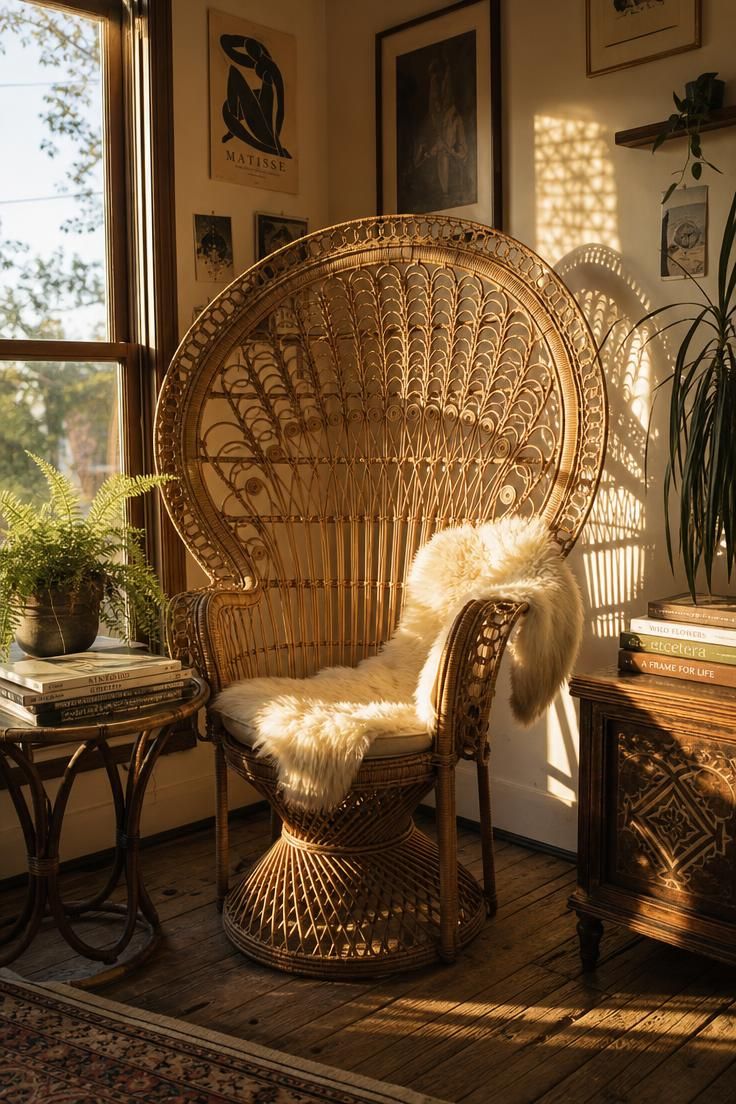
A peacock chair earns its keep as a piece of furniture that is also basically sculpture.
The woven fan back throws shadow patterns across the wall as the sun moves, which is a detail most furniture simply cannot offer.
Draping a faux fur throw over one arm softens the chair’s graphic silhouette and makes it look genuinely comfortable rather than purely decorative.
Warm golden hour light is the best possible companion for rattan, since it deepens the natural tone of the woven cane instead of washing it out.
A small side table nearby keeps the corner functional for actual reading, not just for photographs.
Worn floorboards under the chair let a little imperfection show, which suits the collected feel of the room.
Style Blueprint:
- A rattan or wicker peacock-style accent chair
- A faux fur or sheepskin throw
- A small round side table
- A potted fern or leafy houseplant
- Original or reclaimed wood flooring left unpolished
Two Clashing Vintage Rugs Layered Underfoot
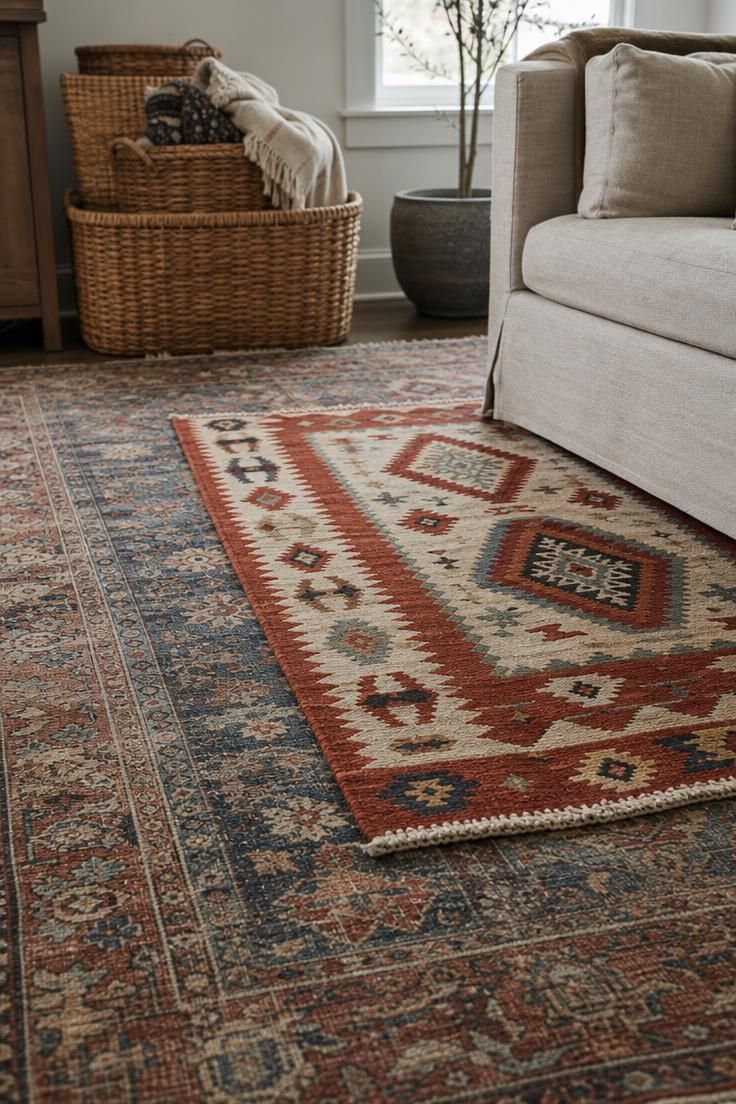
Layering two rugs instead of choosing one is a small move with an outsized effect.
A larger, faded Persian rug sets a soft base, while a smaller kilim on top adds graphic punch exactly where feet and furniture legs land most often.
Cool overcast light is useful here because it keeps the true colors of both rugs visible without the warm cast of afternoon sun exaggerating one palette over the other.
The scale difference between the two rugs matters as much as the pattern difference, since a rug layered inside a much larger one reads as intentional rather than accidental.
Woven baskets in the corner give the floor layering somewhere to rest visually before the eye moves to the walls.
This kind of textile layering shows up again and again across successful eclectic maximalist decor because it adds depth at almost no cost.
Two secondhand rugs are often cheaper than one new large one, which makes this an easy place to start.
Style Blueprint:
- A large faded or vintage-style area rug
- A smaller, brighter patterned rug layered on top
- Woven storage baskets nearby
- A linen or cotton sofa in a neutral tone
- Natural north-facing light for true color
A Brass Bar Cart Styled With Amber Glass Decanters
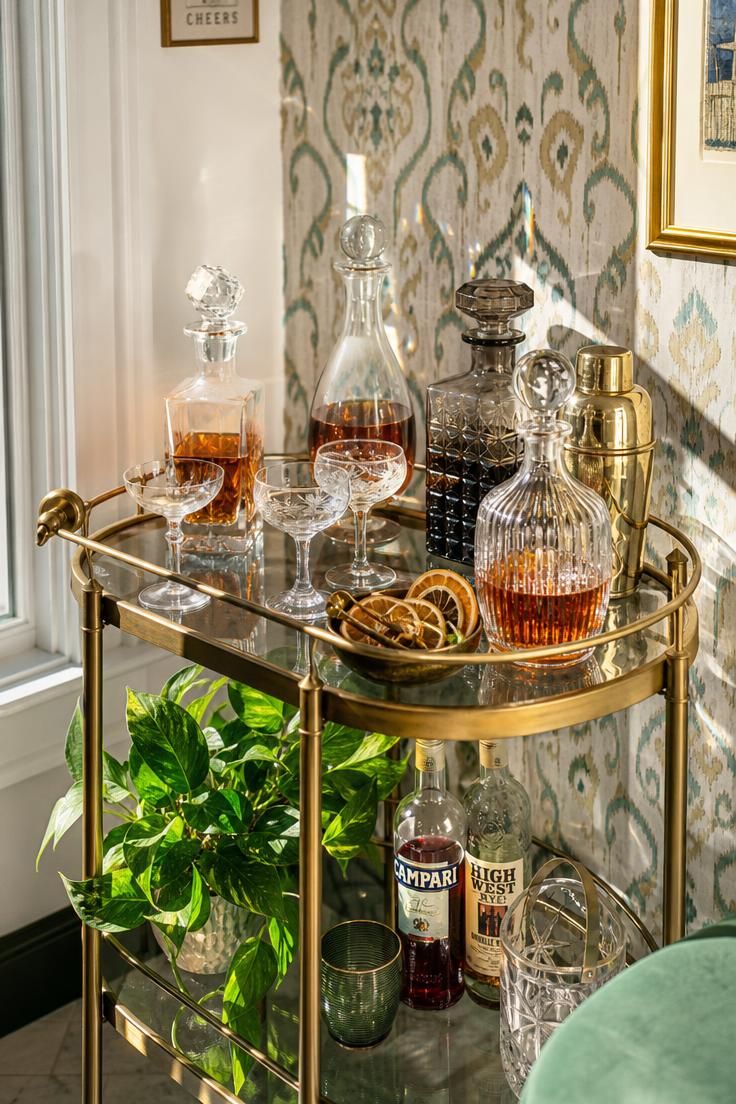
Direct sunlight is usually the enemy of styled vignettes, but a bar cart is the exception.
Bright midday light hitting the amber and smoked glass throws small colored reflections across the nearby wall, turning the decanters into a kind of accidental art installation.
A brass frame keeps the whole cart feeling sturdy instead of flimsy, which matters when it is loaded with glass.
Mismatched crystal coupes, collected one or two at a time from estate sales, read as far more interesting than a matched set bought together.
A trailing plant on the lower shelf softens all that hard glass and metal.
Patterned wallpaper glimpsed behind the cart hints that the rest of the room carries the same layered energy.
Style Blueprint:
- A brass or gold-finished bar cart
- Amber or smoked glass decanters
- Mismatched vintage crystal glassware
- A small trailing plant for the lower shelf
- Patterned wallpaper as a backdrop
A Beaded Chandelier Hung Over a Scalloped-Edge Dining Table
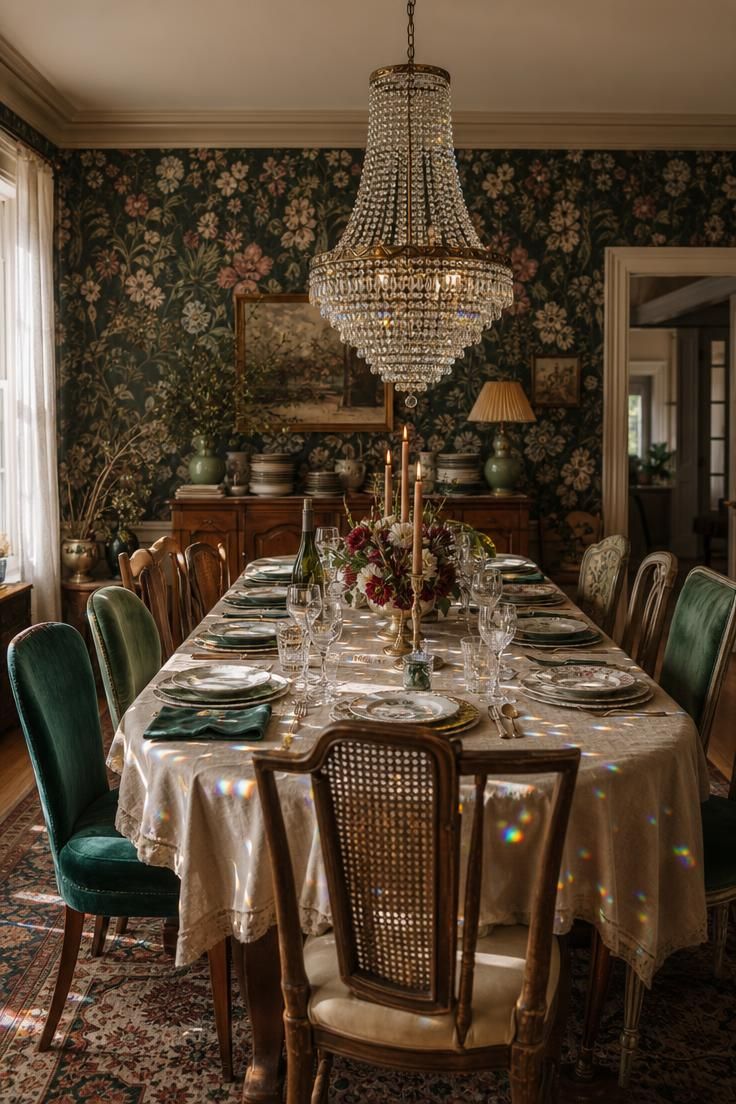
Lighting fixtures do more to set a room’s character than almost any other single object.
A beaded chandelier hung low over the table brings sparkle down to eye level instead of leaving it stranded near the ceiling.
Hazy, soft diffused light lets the beads scatter small prismatic reflections without the harshness that direct sun would create.
Pairing a scalloped-edge table with mismatched chairs in velvet and cane keeps the dining room from feeling like a formal, matched set.
Botanical wallpaper behind the table adds another layer of pattern that a plain wall never could.
Statement lighting like this chandelier is often the single fastest way to shift a dining room from ordinary to genuinely memorable.
A sideboard stacked with ceramics in the background gives the eye somewhere else to travel once it leaves the table.
Style Blueprint:
- A beaded or crystal statement chandelier
- A scalloped-edge or carved wood dining table
- Mismatched dining chairs in at least two materials
- Botanical or floral wallpaper
- A sideboard styled with stacked ceramics
Jungle-Print Wallpaper Wrapping a Window Reading Nook
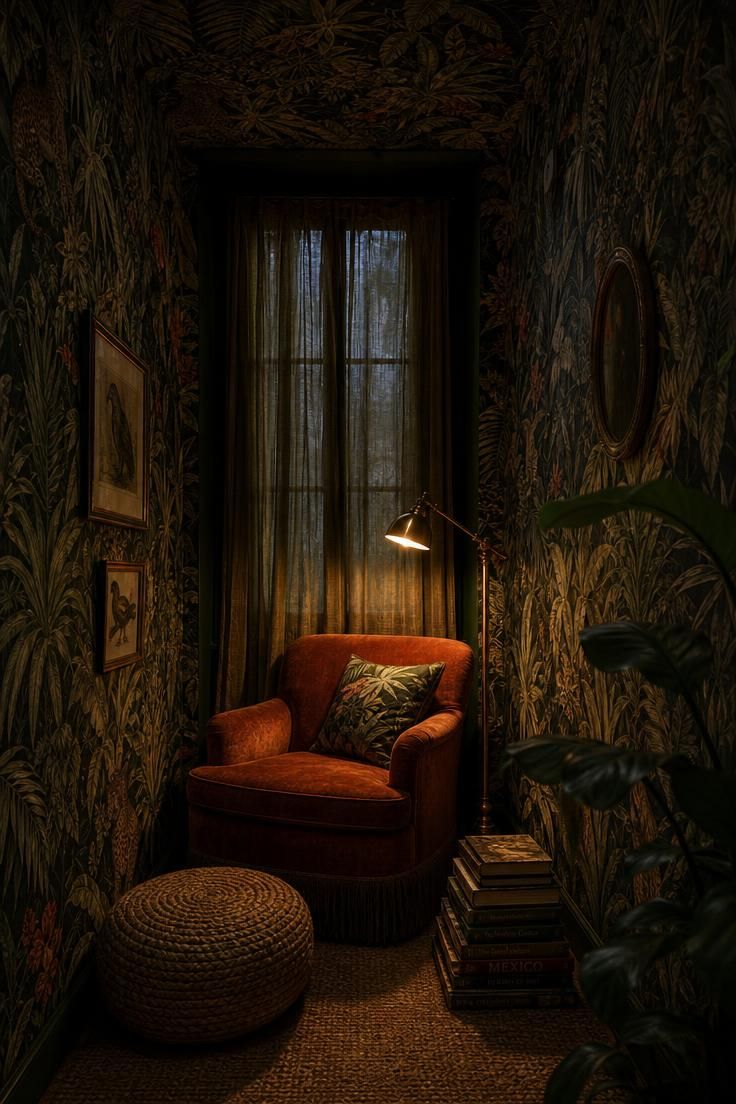
Wrapping a small nook in dense pattern works precisely because the space is small.
Jungle-print wallpaper on all sides of a window seat would feel overwhelming in a large room, but contained to a nook it becomes immersive instead.
Moody low light keeps the print from feeling busy, letting only the closest leaves and shadows read clearly while the rest recedes.
A single burnt orange armchair against all that green creates a strong, simple color contrast that anchors the whole corner.
A brass floor lamp adds a pool of warm light exactly where a reader needs it most.
This kind of enclosed, pattern-heavy nook is one of the more indulgent expressions of eclectic maximalist decor, built purely for comfort rather than for show.
A woven pouf as a footrest keeps the whole setup feeling relaxed rather than formal.
A small stack of books left on the floor signals that this corner gets used, not just photographed.
Style Blueprint:
- Dense jungle or botanical print wallpaper
- A deep-set armchair in a saturated contrasting color
- A brass or wood floor lamp
- A woven pouf footrest
- Gauzy curtains for filtered light
Design Pro-Tip: If wallpapering an entire nook feels risky, paper just the back wall and ceiling of the alcove first. It delivers the same immersive effect with far less commitment.
A Glass Curio Cabinet Packed With Ceramic Figurines
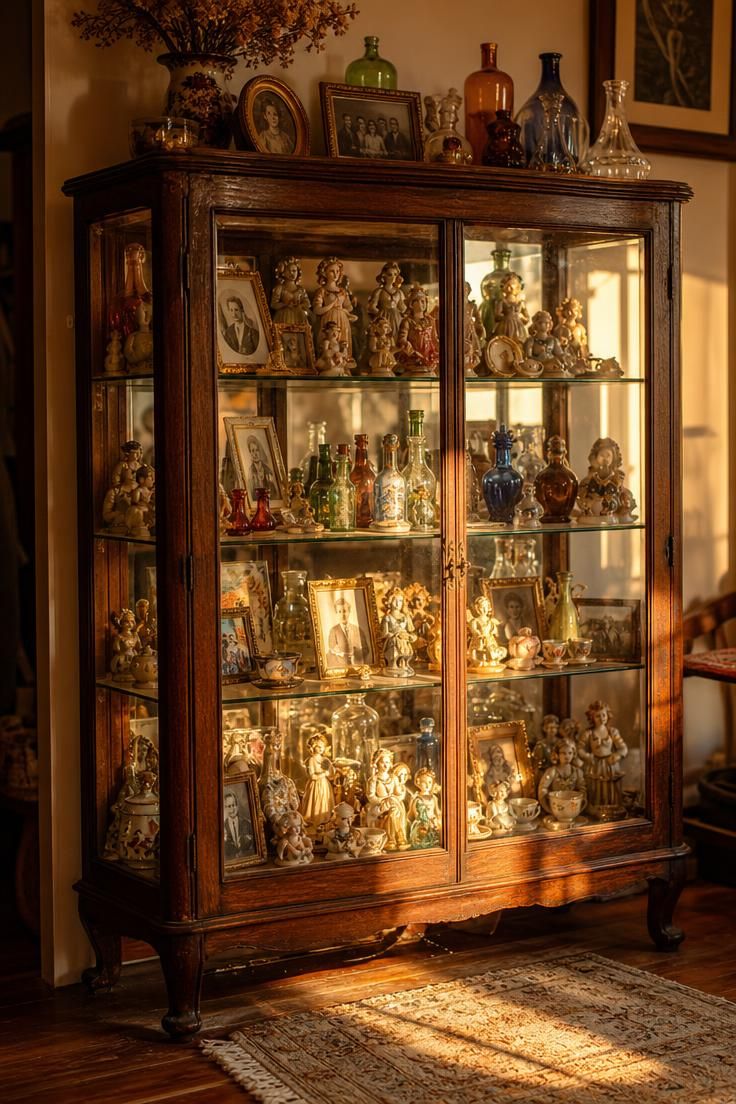
A curio cabinet is essentially a home’s memory made visible.
Packing it with ceramic figurines, small photographs, and colored glass bottles turns an ordinary storage piece into the most personal object in the room.
Warm golden light streaming through the glass front catches the reflections of dozens of small surfaces at once, giving the whole cabinet a gentle glow as evening settles in.
Grouping figurines by color rather than by type tends to read more cohesively than sorting them by category.
Gathered collections like this take years to build, which is exactly why they cannot be faked or bought in a single trip.
A small woven rug beneath grounds the cabinet so it does not feel like it is floating against the wall.
Style Blueprint:
- An antique glass-front curio or display cabinet
- A gathered collection of ceramic or glass figurines
- Small framed personal photographs
- A woven rug placed beneath the cabinet
- Dried flowers in a small bud vase on top
A Striped Canvas Sofa Against a Persian-Pattern Rug
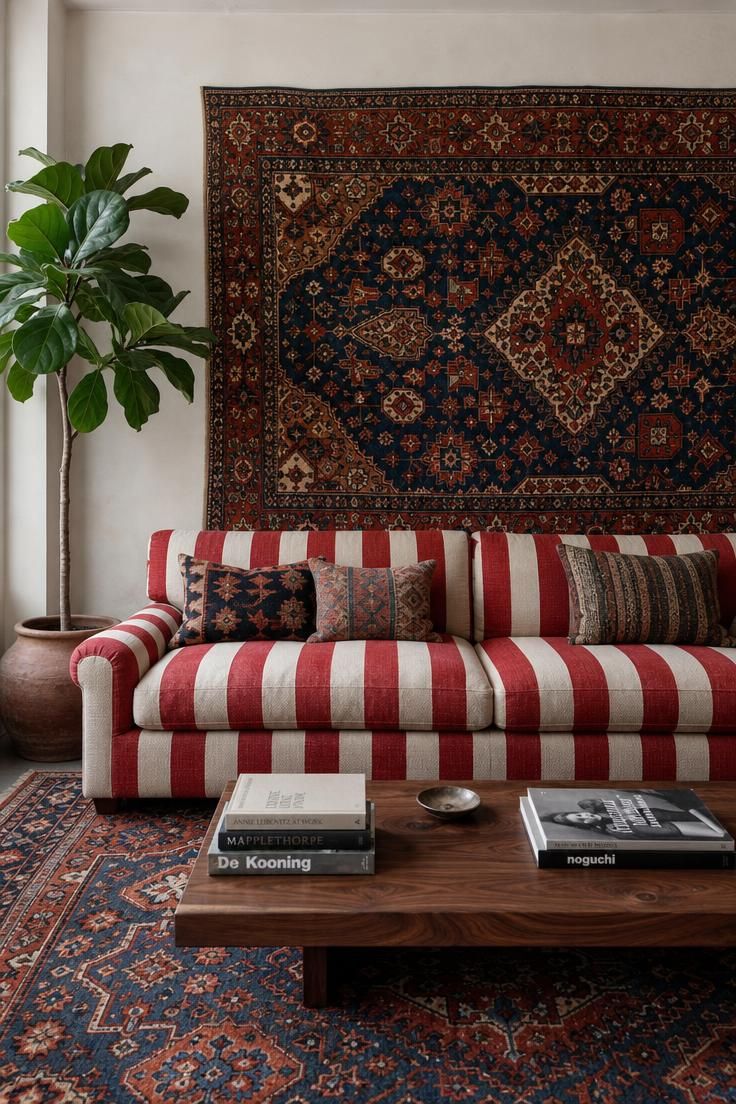
Pattern on pattern intimidates most people until they see it work in person.
A bold striped sofa against a dense Persian rug succeeds because the scale of the two patterns is different enough that the eye can separate them.
Cool overcast light is the most honest light for a room this saturated, since it shows the true colors of both the stripe and the rug without warm distortion.
Keeping the coffee table and walls simple gives the pattern-heavy pieces room to be the stars.
A single oversized floor plant adds a soft, organic counterpoint to all the hard geometry in the stripes and rug motifs.
Confidence, more than any specific formula, is what makes combinations like this read as intentional rather than accidental.
Style Blueprint:
- A boldly striped canvas or cotton sofa
- A densely patterned Persian or Persian-style rug
- A simple low wood coffee table
- One oversized floor plant
- Plain plaster or painted walls to balance the pattern
An Emerald Velvet Headboard Studded With Brass Nailheads
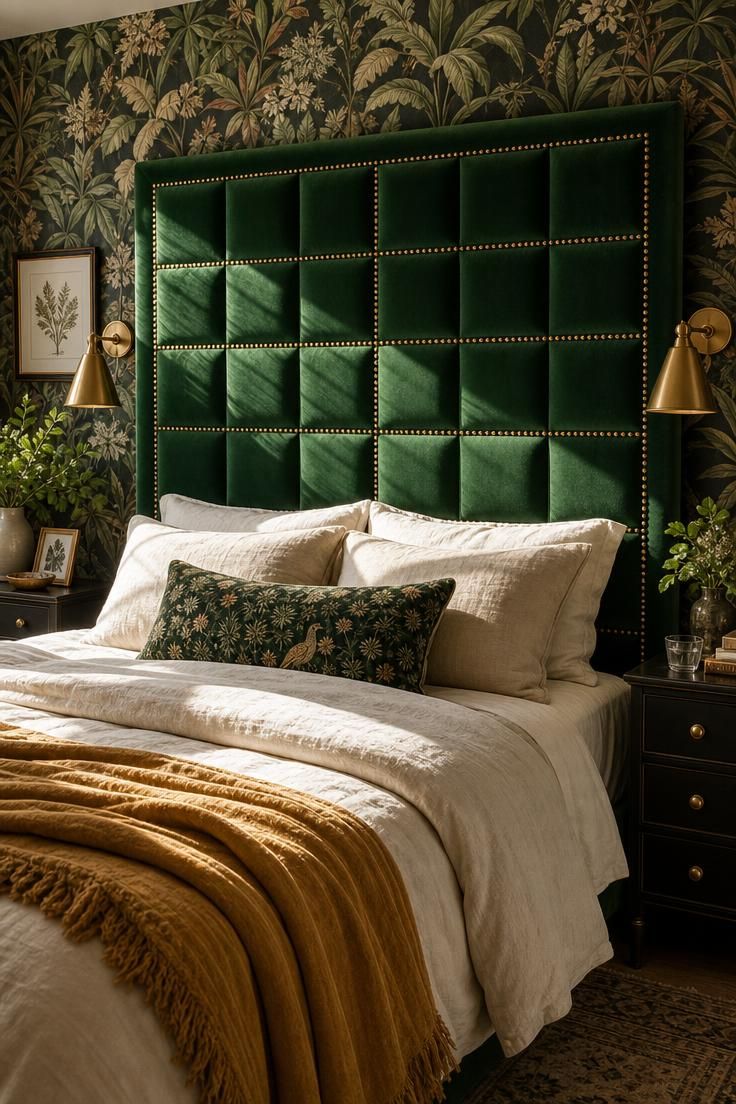
A headboard this saturated changes the entire mood of a bedroom before anything else is added.
Emerald velvet studded with brass nailheads brings both color and craft detail into a wall that is usually left plain.
Bright midday light hitting the velvet at an angle reveals the nap’s texture in a way flat morning light never would.
Brass sconces flanking the headboard repeat the metal tone from the nailheads, tying the whole wall together without needing matching furniture elsewhere.
Botanical wallpaper around the headboard keeps the drama from feeling isolated to one piece of furniture.
An ivory linen duvet balances all that saturated color, keeping the bed itself feeling soft rather than heavy.
Antique accents like the brass sconces and nailhead trim are what lift a bold color choice from bedroom trend to lasting design.
Style Blueprint:
- A tall upholstered headboard in a saturated jewel tone
- Brass or antique nailhead trim
- Brass wall sconces flanking the bed
- Botanical or patterned wallpaper
- An ivory or cream linen duvet for balance
A Macrame Wall Hanging Layered Over Striped Wallpaper
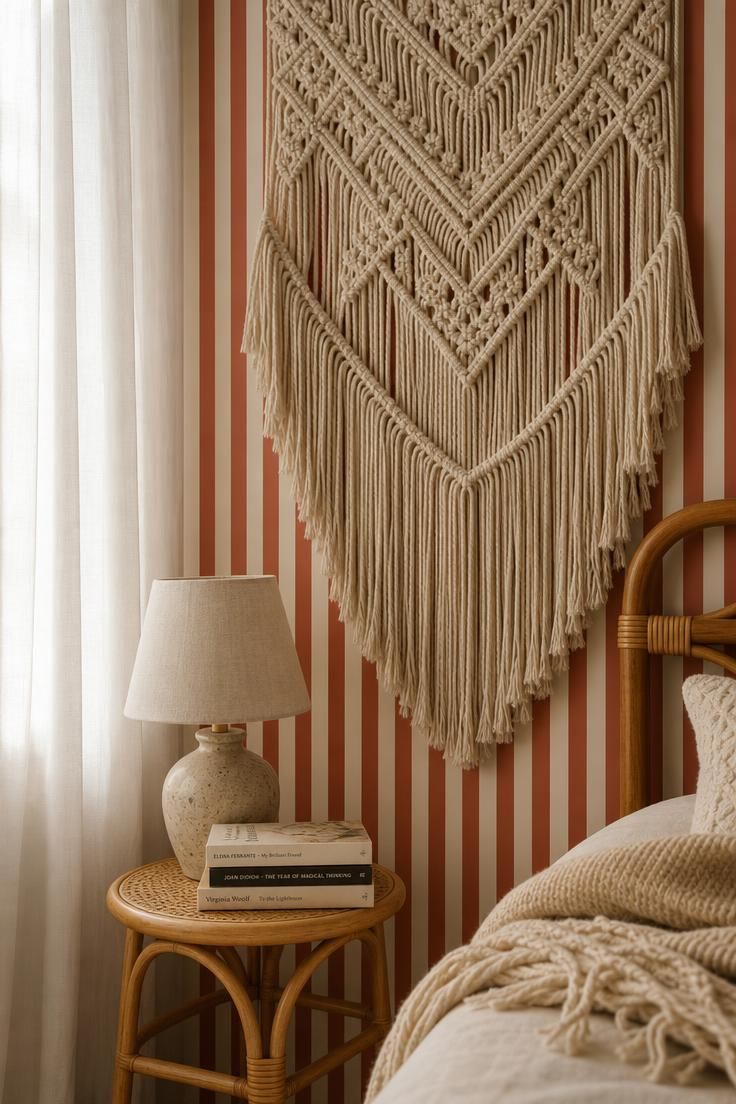
Layering a soft textile directly over graphic wallpaper is a combination most people would not think to try.
The macrame’s loose, organic knotting softens the sharp vertical lines of the striped wallpaper underneath.
Soft diffused light is the right choice here because it keeps both textures readable without one overpowering the other in shadow or glare.
A rattan side table beneath continues the natural fiber theme established by the macrame above it.
Mixed textures like these, rough cotton rope against smooth painted stripes, are part of what gives eclectic maximalist decor its tactile depth.
A ceramic lamp on the table adds one more handmade element to a corner already built on craft.
Style Blueprint:
- A large cream or natural fiber macrame wall hanging
- Bold striped wallpaper in a warm colorway
- A rattan or woven side table
- A ceramic table lamp
- Sheer curtains for even filtered light
A Vintage Steamer Trunk Repurposed as a Coffee Table
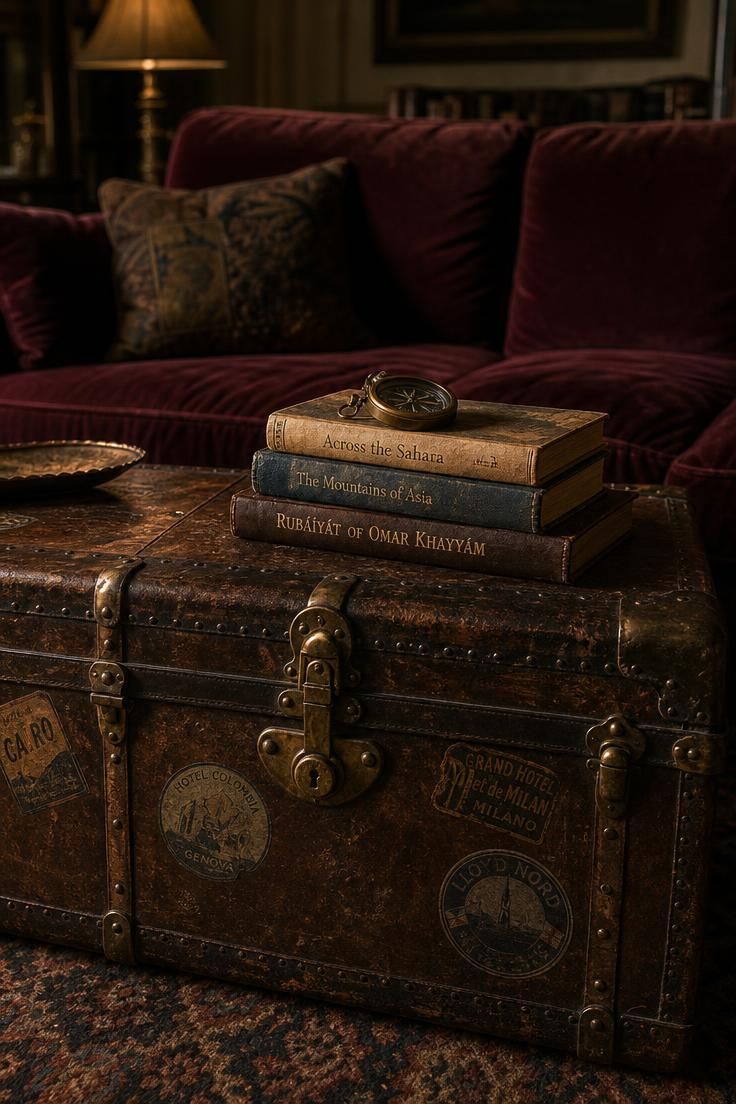
Repurposing an old trunk as a coffee table is a small trick with a big payoff.
The worn leather and travel stickers carry a sense of history that no new furniture piece could replicate.
Moody low light suits the trunk especially well, deepening the shadows in its creases and making the brass hardware glow rather than glare.
Styling the top with travel books and a small compass reinforces the trunk’s original purpose instead of hiding it under decorative objects that feel unrelated.
A burgundy velvet sofa behind grounds the vignette in the same warm, saturated palette as the rest of the room.
Furniture with an actual past does more emotional work in a room than furniture built to look old.
Style Blueprint:
- A weathered leather or canvas steamer trunk
- Aged brass hardware and corner fittings
- A deep-toned velvet sofa nearby
- Vintage books styled on top
- One small collected object, like a compass or globe
Design Pro-Tip: Repurposed furniture like an old trunk works best as a single dramatic swap. Surround it with pieces that are simpler so the trunk’s history stays the focal point.
Mismatched Brass Candlesticks Clustered on a Marble Mantel
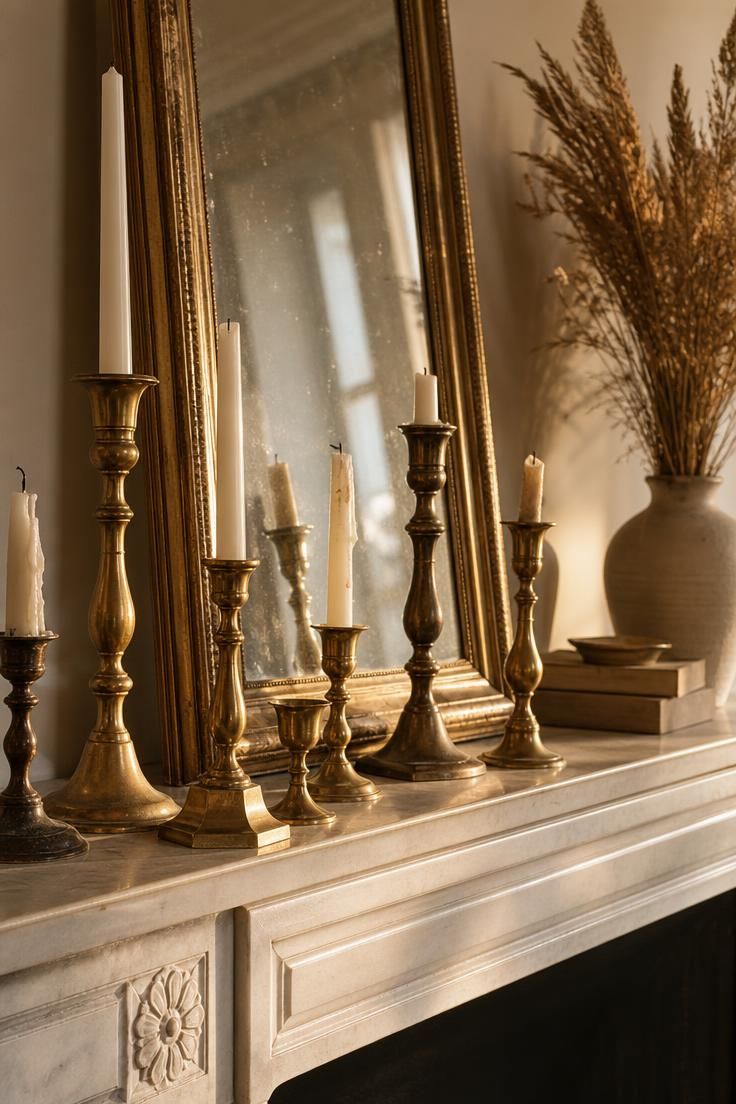
A mantel is one of the easiest places in a home to practice collected styling.
Clustering candlesticks of different heights and brass finishes, rather than a matched pair, gives the eye more to explore.
Warm golden hour light catches every candlestick at a slightly different angle, multiplying the reflections across the marble surface below.
Leaning a large gilt mirror against the wall instead of hanging it flat adds a relaxed, slightly imperfect quality to an otherwise formal material like marble.
Dried pampas grass at one end balances all that reflective brass with something soft and matte.
Honed rather than polished marble keeps the whole mantel from feeling too glossy or showroom-perfect.
Style Blueprint:
- A honed marble or stone mantel surface
- A cluster of mismatched brass candlesticks
- A large gilt mirror, leaned rather than hung
- Dried pampas grass or botanicals in a ceramic vase
- Warm late-day light for reflection detail
Cobalt Zellige Tile Climbing a Kitchen Backsplash
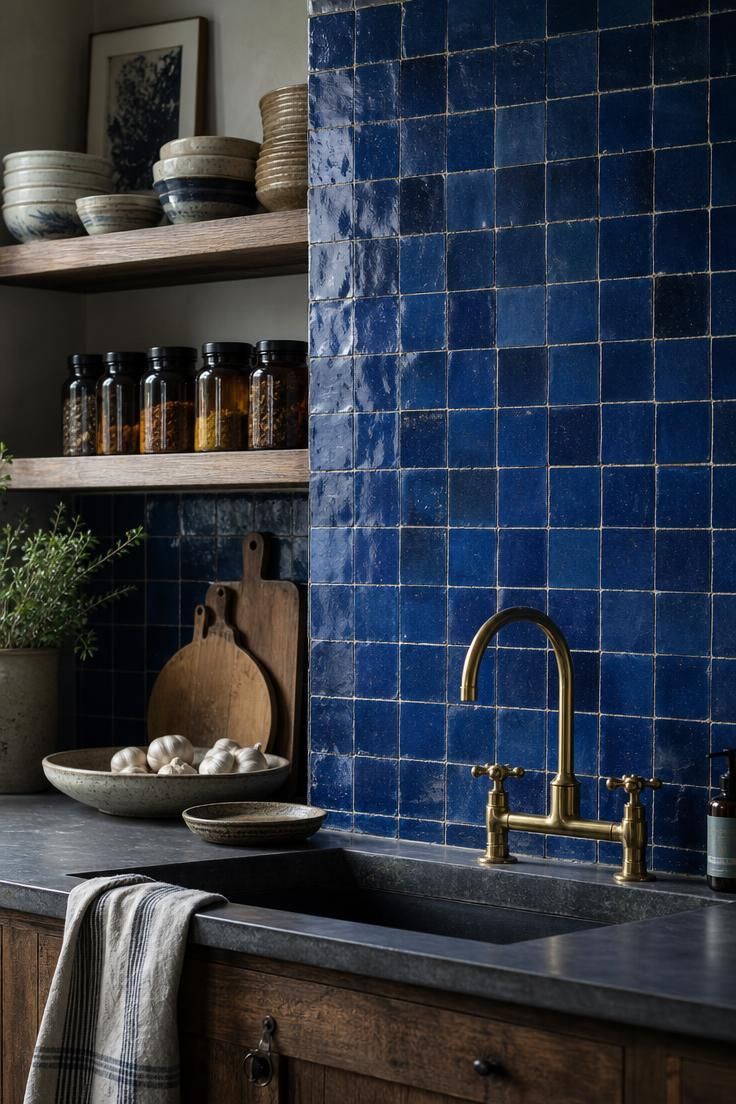
Handmade tile brings a level of texture that machine-made tile simply cannot match.
Zellige’s natural glaze variation means no two tiles reflect light exactly the same way, which is part of why the wall feels alive rather than flat.
Cool overcast light is the right choice for cobalt blue specifically, since warm light would push the color toward teal and dull its richness.
Open wood shelving beside the tile keeps the kitchen from feeling too polished, letting everyday ceramics double as decor.
A brass faucet against all that blue tile adds a small, warm metallic contrast in an otherwise cool-toned wall.
This kind of artisanal tile work is often the single biggest change a maximalist kitchen can make, more than paint or cabinetry ever could be.
Stacked bowls and amber jars on open shelving give the wall a sense of daily use rather than staged perfection.
Style Blueprint:
- Handmade zellige or artisanal tile in a saturated color
- Open wood shelving beside the tiled wall
- Stacked ceramic bowls and glass jars
- A brass or unlacquered metal faucet
- Cool, north-facing natural light
A Sheepskin Throw Draped Over a Rattan Sunporch Daybed
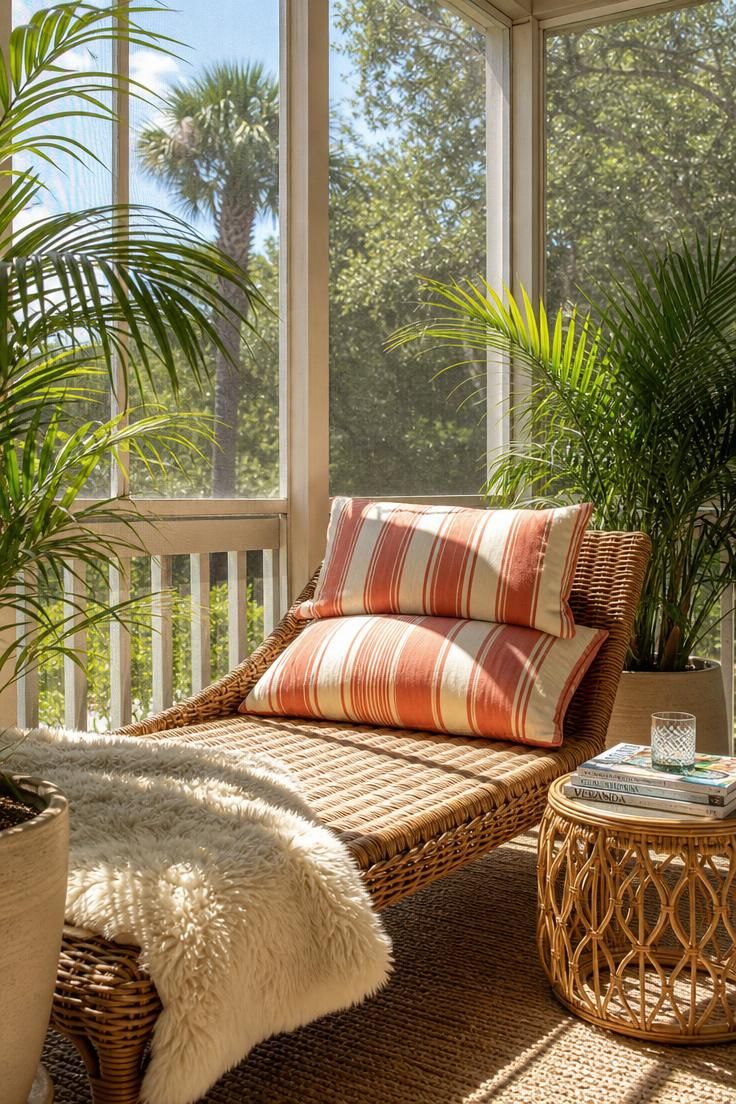
A sunporch gives eclectic maximalist decor room to loosen up a little.
Draping a sheepskin throw over one end of a rattan daybed adds softness to a piece of furniture that can otherwise feel a bit stiff.
Bright midday light streaming through the porch screens throws soft striped shadows across the woven daybed surface, adding a pattern the furniture does not have on its own.
Coral and cream striped pillows pick up on those shadow lines without feeling forced.
Potted palms framing the space blur the line between the porch and the yard beyond it.
A relaxed setting like this proves that bold color palette choices and heavy pattern are not required in every single room for the whole home to still read as maximalist.
Style Blueprint:
- A woven rattan daybed or settee
- A cream sheepskin or faux fur throw
- Striped outdoor-rated throw pillows
- Potted palms or large leafy plants
- A small rattan side table
Design Pro-Tip: Keep at least one room in the house lighter and less pattern-heavy than the rest. It gives the eye somewhere to rest and makes the bolder rooms feel even more intentional by comparison.
Color-Blocked Book Spines Styled on a Floor-to-Ceiling Shelf
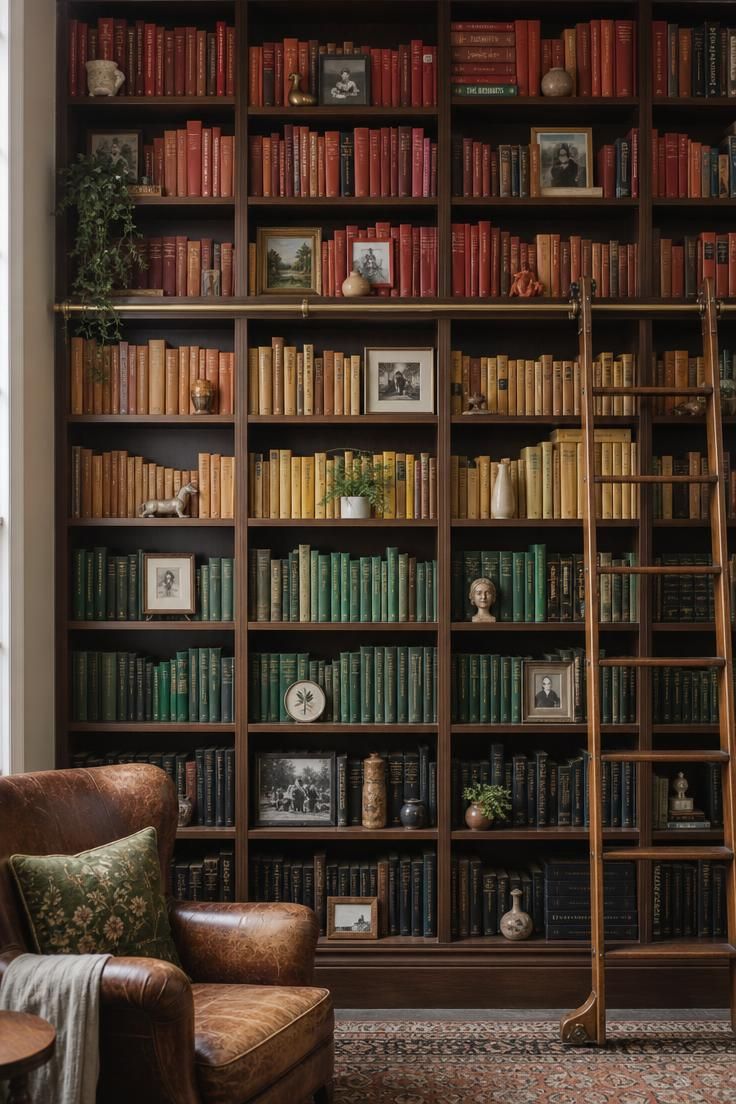
Organizing books by color instead of by author turns a shelf into a piece of art.
Loose color blocks in red, ochre, and forest green give the eye a rhythm to follow up and down the full height of the shelf.
Soft diffused light from the side is the most even option for a wall this tall, avoiding the harsh top-to-bottom shadow that direct sun would create.
Tucking small ceramic trinkets and photographs between the book stacks at irregular intervals keeps the shelf from feeling like a color chart and more like a genuine collection.
A library ladder adds both function and a strong vertical line that draws the eye all the way to the ceiling.
Personal style shows up most clearly in the small, specific choices, like which trinkets earn a spot on a shelf this visible.
A worn leather armchair at the base signals that the shelf gets used, not just admired from across the room.
Style Blueprint:
- A floor-to-ceiling built-in or freestanding bookshelf
- Books organized into loose color blocks
- Small ceramic trinkets and framed photos between stacks
- A library ladder for tall shelving
- A worn leather reading chair nearby
Bringing Eclectic Maximalist Decor Into Your Own Home
Every idea here shares one thing in common.
None of it was bought all at once.
Eclectic maximalist decor rewards patience, since the best rooms in this style are built from years of small, specific choices rather than a single shopping trip.
Start with one bold move, whether that is a velvet sofa, a tiled backsplash, or a wall of collected postcards, and let the rest of the room grow around it.
Mixed textures, layered patterns, and a willingness to let old and new sit side by side will do more for a home’s personality than any single trend ever could.
The goal was never perfect coordination.
It was always a room that finally looks like the people who live in it.