This post may contain affiliate links. If you make a purchase through these links, we may earn a commission at no additional cost to you.
An eclectic kids room isn’t a theme you buy in a box.
It is a room that grows like a child does, gathering colors, treasures, and furniture from different places and times.
This list explores eleven personality-first rooms that mix vintage finds, handmade objects, layered textiles, and the child’s own collections into spaces that feel both playful and collected.
Each idea below is organized around one strong image, with supporting styling notes and a Style Blueprint you can borrow.
Use these as prompts for your own space or as a guide when you’re pinning, saving, or shopping for the next layer.
1. Vintage Dresser + Rainbow Open-Shelf Toy Display
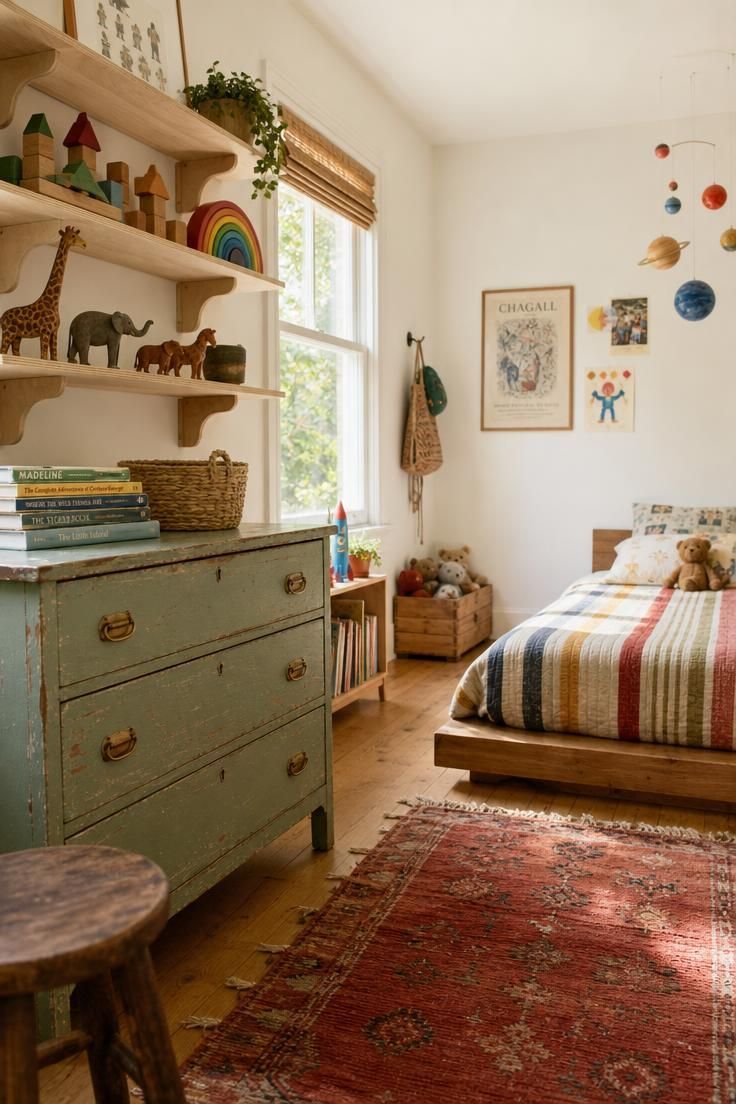
A vintage dresser gives the room an anchor that no flat-pack piece can match.
The worn paint and brass pulls add history, while the open shelves above turn toys into a rotating display.
Keeping the wall white lets the toy colors do the work without visual noise.
The rag rug softens the hard floor and defines the play zone.
This arrangement works because the eye lands on the dresser first, then travels upward to the colorful shelves, then across to the bed.
It feels collected, not decorated.
Style Blueprint: Walnut-stained or painted vintage dresser with original brass pulls, low open shelving made from solid birch or pine, woven seagrass and canvas bins in natural tones, toys displayed as decor such as wooden blocks and felt animals, striped or solid cotton or linen quilt.
Design Pro-Tip: Treat the bottom two shelf rows as hands-on toy storage and the top row as a changing gallery for the child’s current favorite objects. This keeps the display feeling alive instead of staged.
2. Hand-Painted Wardrobe as the Room’s Color Anchor
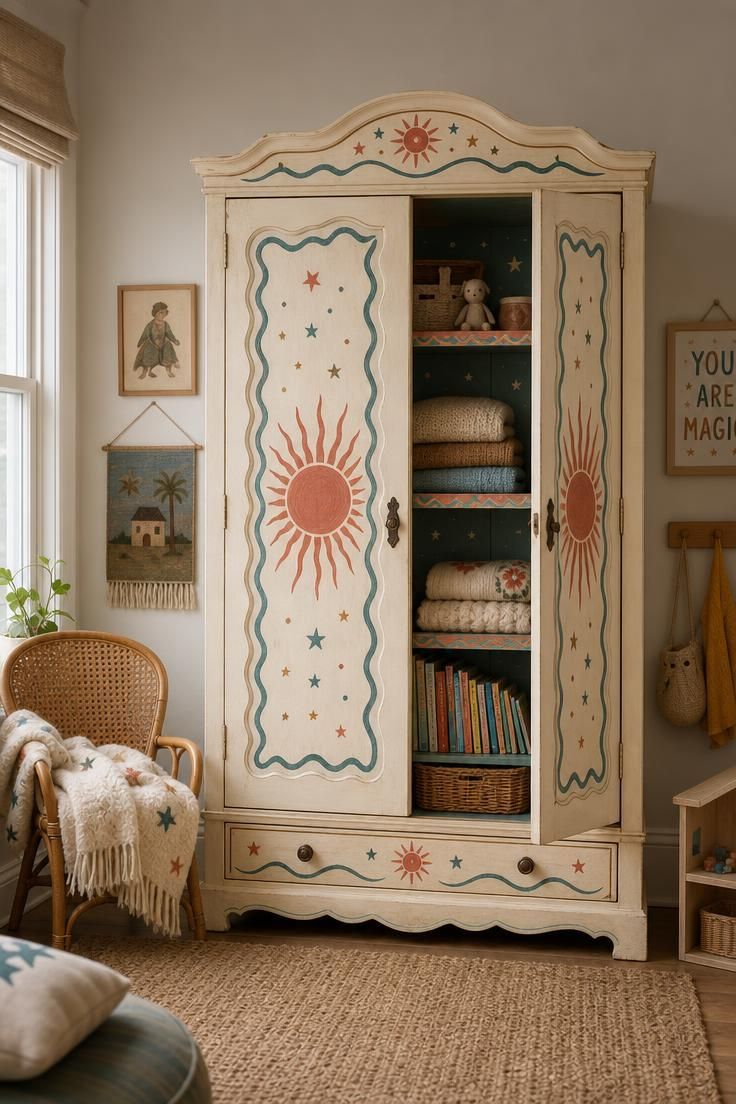
A hand-painted wardrobe turns a piece of storage into the room’s main character.
The folk-art motifs add a homemade quality that feels personal rather than purchased.
Painting the interior shelves draws the eye inside when the door is open, rewarding a child’s daily habit of grabbing a blanket or book.
The cane chair nearby softens the scene with natural texture.
A neutral wall behind the wardrobe is the right choice because it gives the painted pattern room to breathe.
This is a mixed style kids room at its best: old furniture, new paint, and honest signs of use.
The wardrobe also carries the color story for the whole room.
Coral, teal, and ivory can repeat in a cushion, a small basket, or a framed print elsewhere.
That repetition is what makes the room feel cohesive without being matchy.
The result is a piece that could stay in the room for years, even as the child’s interests change.
Style Blueprint: Ivory or cream chalk-painted wardrobe with original hinges, hand-painted abstract motifs in coral and teal, cane or rattan side chair, chipped or weathered secondhand furniture with visible grain, neutral wall color to let the wardrobe stand out.
3. Mixed-Metal Bed Frame with Canopy of Fabric Layers
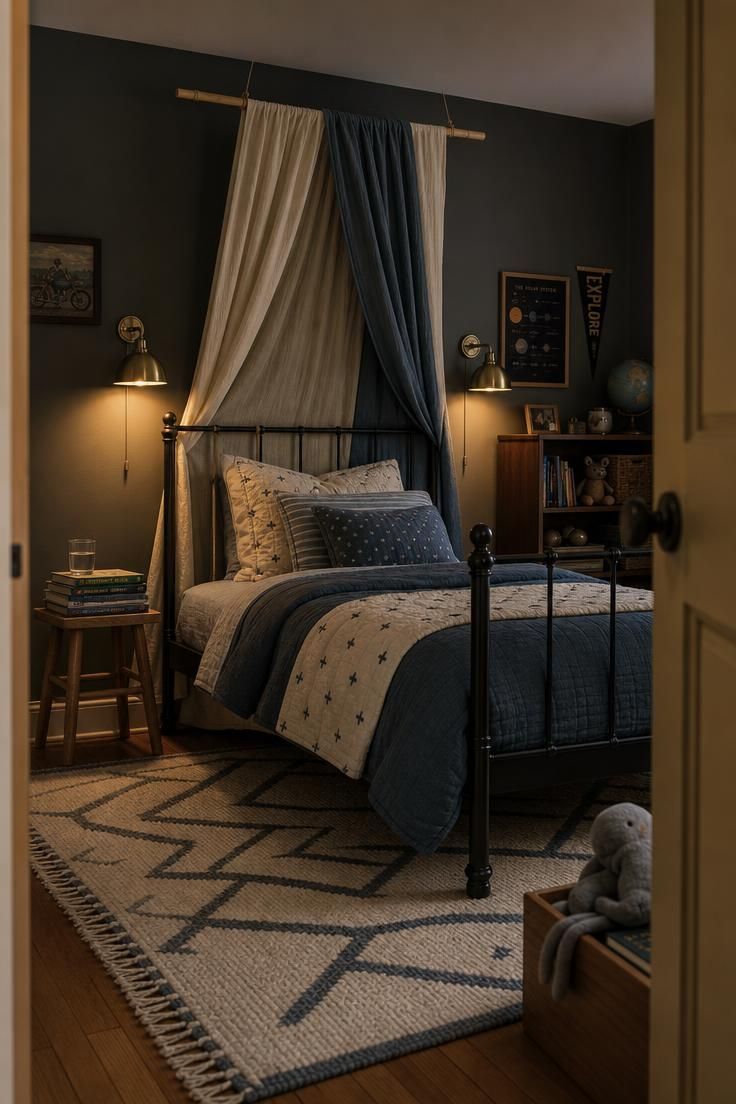
A canopy made from layered fabric panels changes how a bed feels without structural changes.
The two muted tones, cream and dusty blue, add softness against the black metal frame and deep gray wall.
Brass sconces give warm, low light that makes the sleeping corner feel protected.
This is a boho kids room decor idea that leans calm rather than busy.
The flatweave rug grounds the space and keeps the cool palette from feeling cold.
The mixed bedding patterns matter here.
A small floral, a narrow stripe, and a solid work because they share the same dusty blue and cream tones.
The canopy fabric can be switched out with the seasons or as the child grows.
That flexibility is part of why this room still feels personal rather than designed.
Style Blueprint: Black or graphite-finished metal bed frame, cotton voile or linen canopy panels in two muted tones, brass or antique-gold wall-mounted reading sconces, dusty blue and cream bedding in mixed patterns, flatweave wool or wool-blend rug in neutral geometric lines.
4. Repurposed Crates and a Mini Gallery Wall Above a Play Table
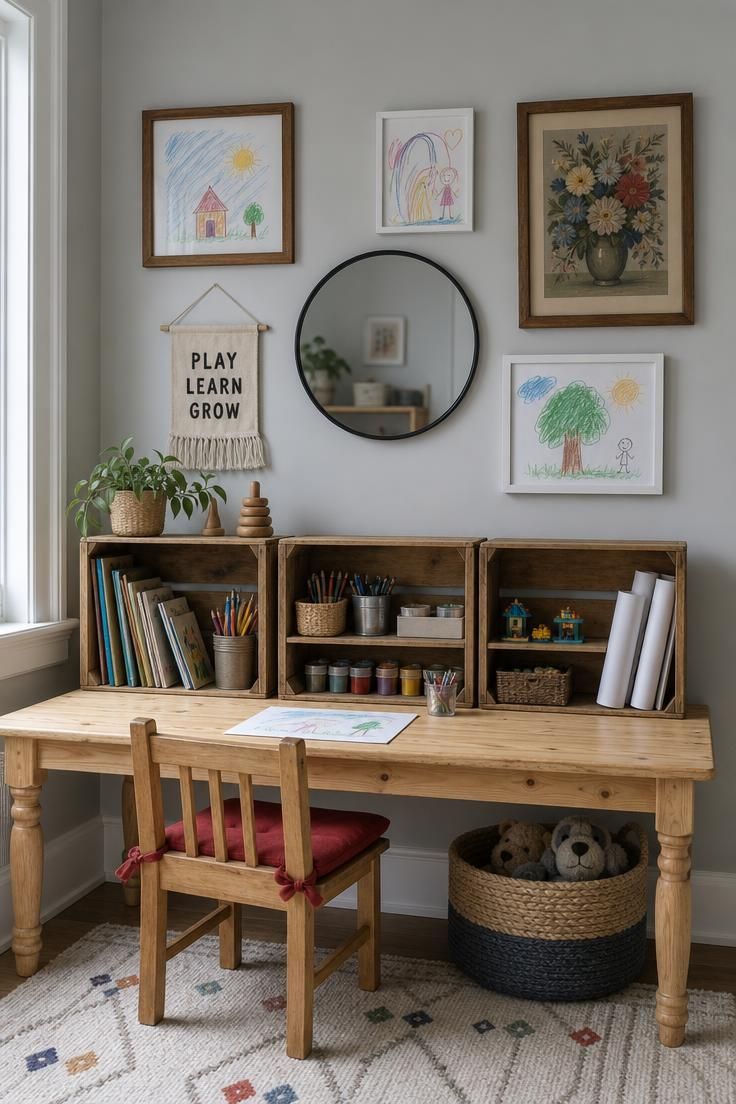
A kids room gallery wall works best when it includes objects that are not flat.
The small round mirror breaks up the rectangles and reflects light back into the room.
Framing a child’s own crayon drawings gives them the same visual weight as a thrifted print.
The repurposed crates serve as open playroom storage solutions that are easy for small hands to reach.
Mismatched frames keep the wall from looking like a catalog page.
The soft gray wall is a smart base because it cools down the wood tones and lets the art colors stand out.
The low pine table suits active play and drawing.
This setup invites a child to sit down, make something, and then hang it up.
That loop of making and displaying is what makes the room feel alive.
Design Pro-Tip: When creating a kids’ gallery wall, start by laying all the pieces on the floor and arranging them by visual weight. Mix one larger frame, several small pieces, and one non-frame object like a woven circle or small mirror to keep the composition from becoming a flat grid.
5. Floor-Cushion Reading Corner with a Library Shelf of Baskets
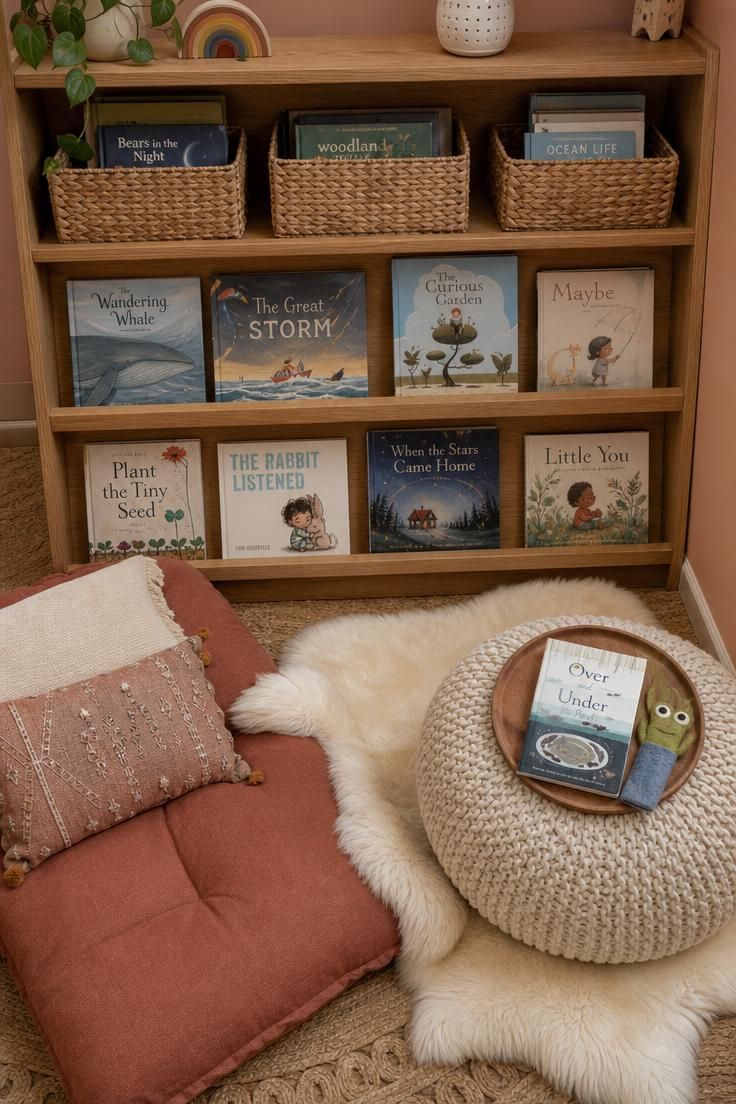
An overhead view flattens the scene into texture and color, which is why this reading corner feels so inviting.
The rust cushion, sheepskin, and chunky pouf each add a different surface quality.
Layered kids room textile layers like this make the floor a destination, not empty space.
The forward-facing books do double duty as decor and as an invitation to read.
The clay-toned wall warms the whole corner without demanding attention.
The low oak shelf keeps books within reach, and the baskets corral smaller items without hiding them entirely.
This is a corner built for a child’s body: low, soft, and full of things to touch.
The sheepskin adds a tactile wild card that children often gravitate toward.
A reading corner like this can stay in place even as books and baskets rotate.
Style Blueprint: Low oak or maple bookshelf with open back, woven water-hyacinth or cotton-rope baskets, rust mustard and oatmeal floor cushions in mixed textures, chunky knit pouf or small ottoman, forward-facing book storage for picture books.
6. Peg-Rail Dress-Up Wall with a Mirror and Hanging Baskets
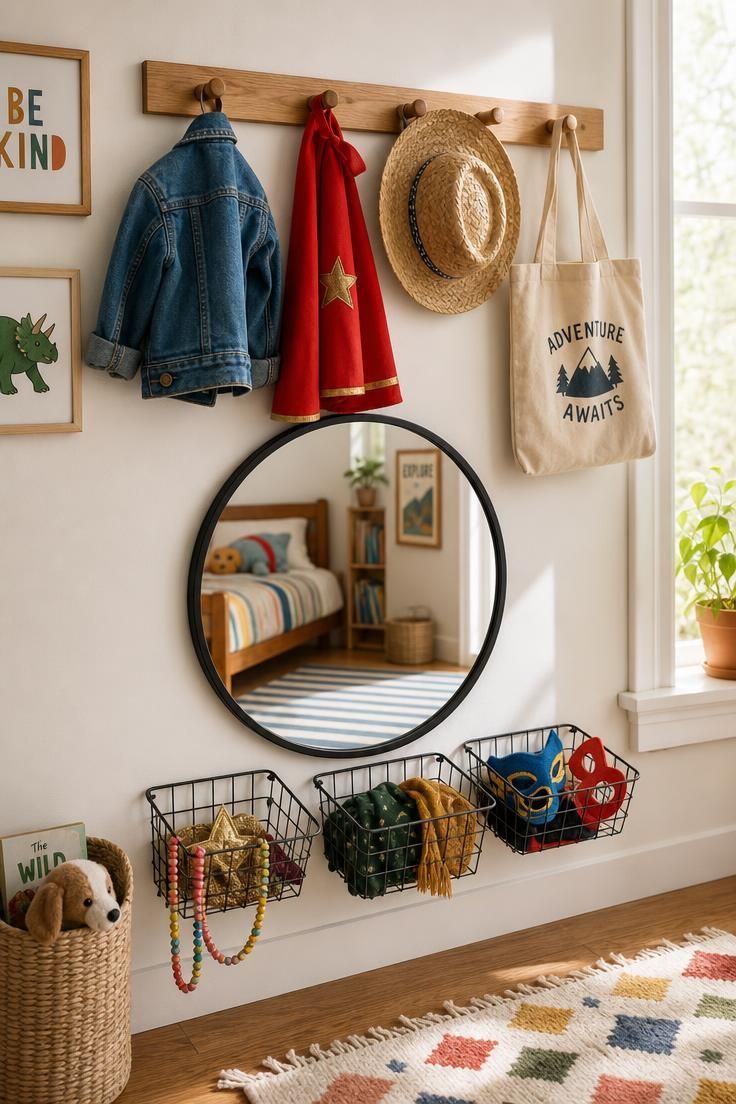
A peg rail turns dress-up clothes into wall art.
The denim jacket, red cape, and woven hat read as a color story on the white wall.
This is personalized kids room decor because the clothes belong to the child, not to a store display.
The metal-wire baskets keep small costume pieces visible and easy to grab.
A mirror at child height makes the wall functional for play and self-checking.
The angle of the photo matters because catching the reflection adds depth to an otherwise flat wall.
Bright midday light keeps the white wall crisp and the red cape vivid.
This is a simple setup that can change daily as costumes rotate.
The peg rail also keeps fabric off the floor, which keeps the play zone clear.
Style Blueprint: Wooden peg rail with dark walnut finish, woven straw or felt hats and small costume pieces, black round mirror with a thin frame, metal-wire hanging baskets or wall-mounted bins, denim canvas and cotton dress-up textiles in simple colors.
7. Mixed Bedding Stack with a Vintage-Style Quilt and Gingham Layers
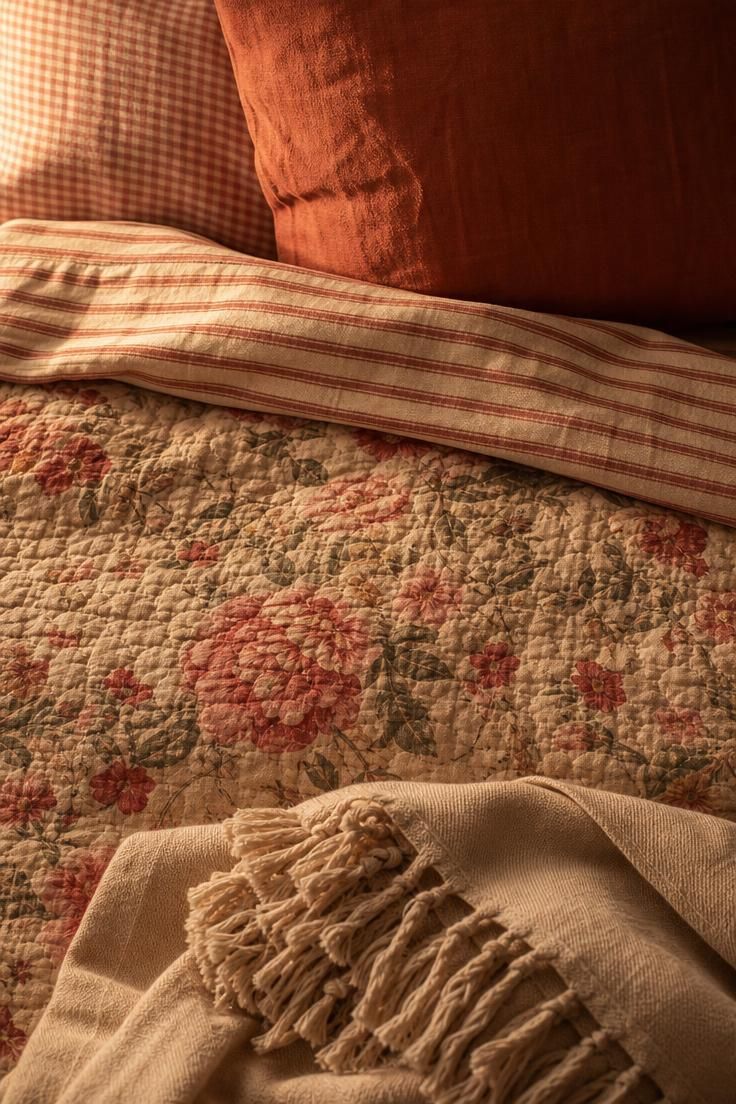
This layered bed is a study in how pattern mixing works.
The floral quilt, gingham pillowcase, and striped sheet all share faded warm tones, so the mix feels calm rather than chaotic.
The solid rust pillow gives the eye a resting place.
The knotted fringe on the cream blanket adds a handmade detail that reads well in close-up.
Low moody light deepens the reds and makes the cotton textures visible.
An eclectic kids room often starts with a bed like this because the layers can be swapped and added over time.
The quilt might come from a thrift store, the gingham from a set of vintage pillowcases, the rust cushion from a modern shop.
That mix of sources is the point.
The bed becomes a collection of fabrics, not a matching set.
Style Blueprint: Vintage-style floral quilt in cotton, gingham pillowcase or sham in a small-scale check, striped flat sheet or duvet edge in muted colors, solid rust or clay-toned cushion, woven cotton blanket with knotted fringe or raw edge.
8. Wall-Mounted Bookshelf Ledges with Small Collections
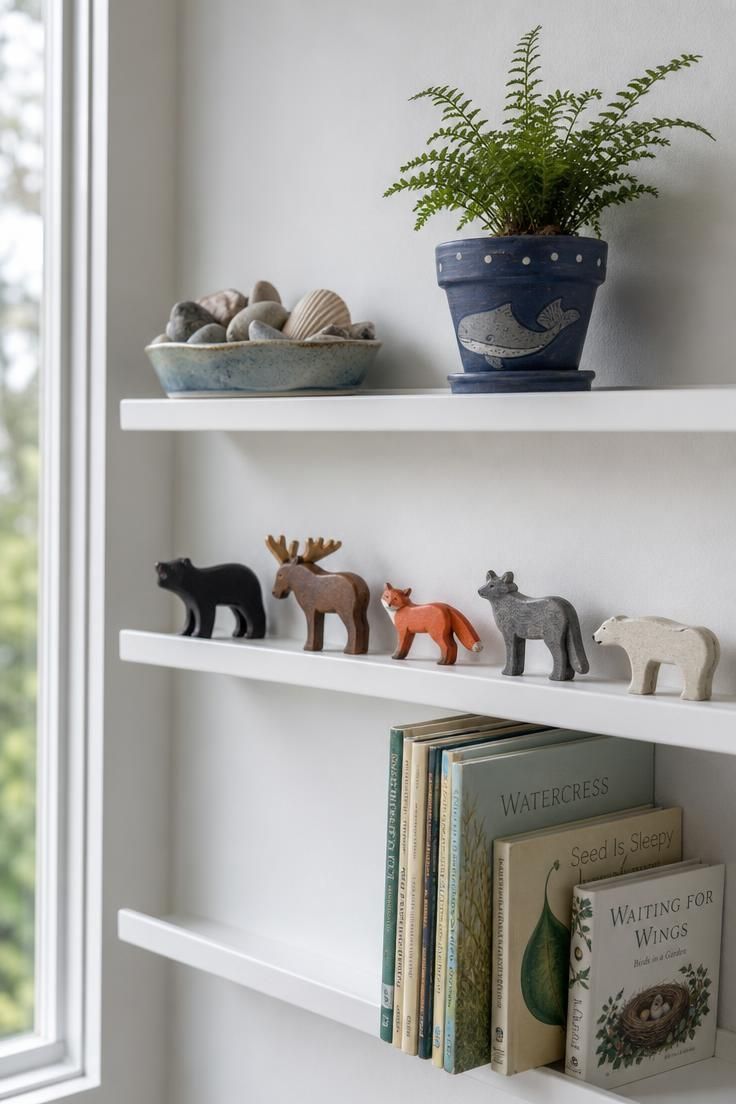
Picture ledges make collections look intentional without much effort.
The uneven vertical steps give the wall a relaxed rhythm.
A child’s stones and shells, placed in a shallow ceramic dish, read as a tiny museum display.
The animal figures form a neat line that invites rearranging.
The potted fern adds a living element and a single green accent against the white wall.
This is a mixed style kids room detail that can change from week to week.
Seasonal finds, new drawings, or a favorite new toy can all take a place on the ledges.
The cool overcast light keeps the white wall from feeling stark and lets the small objects hold their color.
It is a low-effort way to make the room feel looked after.
Design Pro-Tip: Picture ledges make it easy to rotate collections. Swap out rocks, leaves, seasonal finds, or new artwork every few weeks so the room changes with your child’s interests without a full makeover.
9. Fold-Down Art Desk with Paper Roll and Paint-Cup Wall Storage
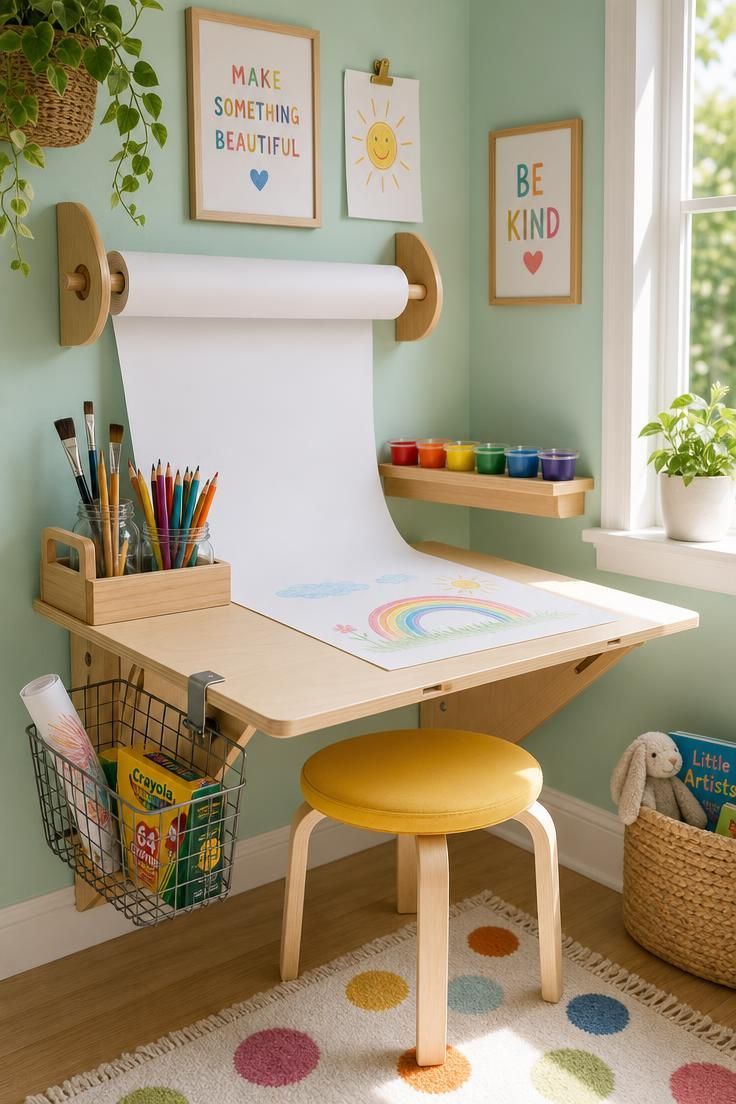
An art desk that folds down saves floor space and still gives the child a real work surface.
The wall-mounted paper roll means there is always a fresh page ready.
Keeping paint cups and brushes on a shallow wall shelf puts supplies at eye level and within easy reach.
The mint wall adds a cool, calm backdrop for the bright paper and colorful tools.
A wire basket on the desk edge catches the constant output of drawings.
This setup works because every tool has a visible home.
The jars, caddy, shelf, and basket are all open storage, which means a child can start a project without asking for help.
The birch wood and mint paint keep the zone feeling light.
It is a functional corner that still reads as part of the room’s overall eclectic mix.
Style Blueprint: Light birch or ash fold-down desk with simple hardware, wall-mounted paper-roll holder or simple dowel system, clear glass jars with cork or wooden lids for brushes and pencils, small enamel or plastic paint cups in primary colors, wooden wall shelf for paints crayons and a water cup.
10. Vintage Suitcase Storage + Floor Bed with a Woven Headboard
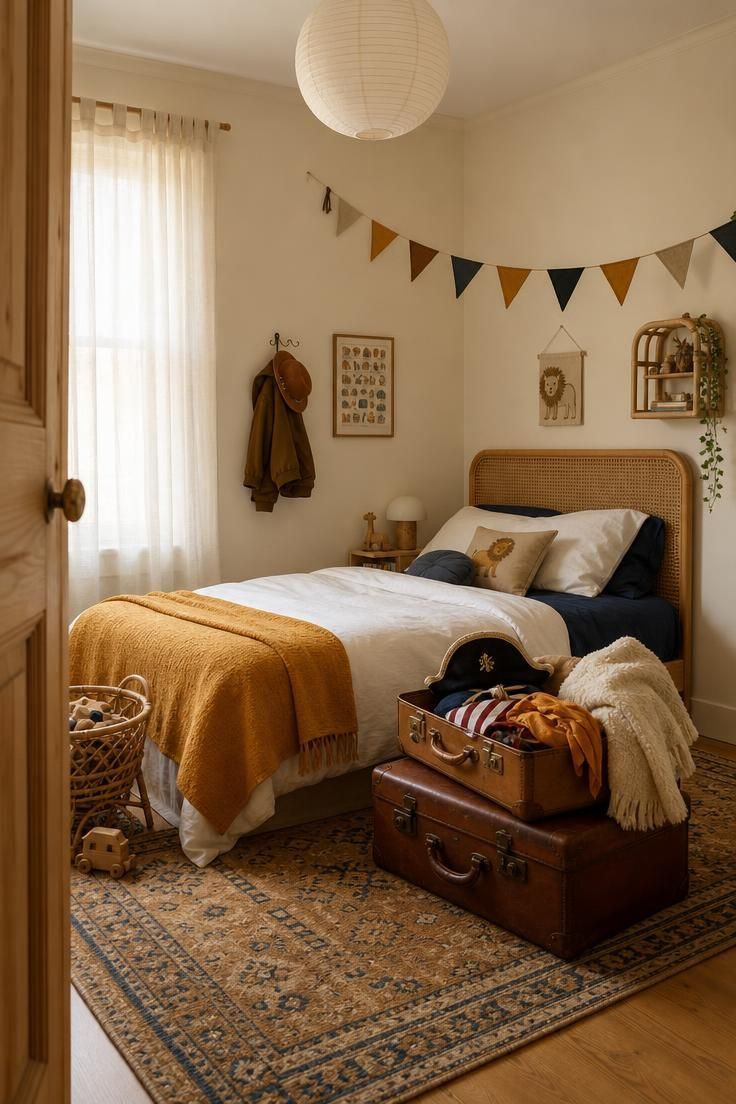
A floor bed makes the room feel grounded and child-scaled.
The woven cane headboard adds texture without height, and the vintage suitcases at the foot serve as practical playroom storage solutions.
They hold dress-up clothes, extra blankets, or off-season layers while looking better with age.
The marigold blanket against the navy sheet is a warm, confident color pair.
The sheer curtain keeps the light soft and the room feeling airy.
This is vintage kids room furniture used in a way that still works for daily life.
The suitcase stack is easy for a child to open and close.
The low bed makes the whole room feel bigger and calmer.
The rattan basket near the door catches toys as they migrate through the house.
Every piece has a job, but none of them are precious.
Style Blueprint: Low platform or floor bed frame with woven cane or rattan headboard, stacked vintage leather or faux-leather suitcases in warm brown tones, marigold wool or wool-blend blanket, cream and navy bedding mix, sheer cotton curtain to soften window light.
11. Chalkboard Wall with Magnetic Display Strips and a Rolling Toy Cart
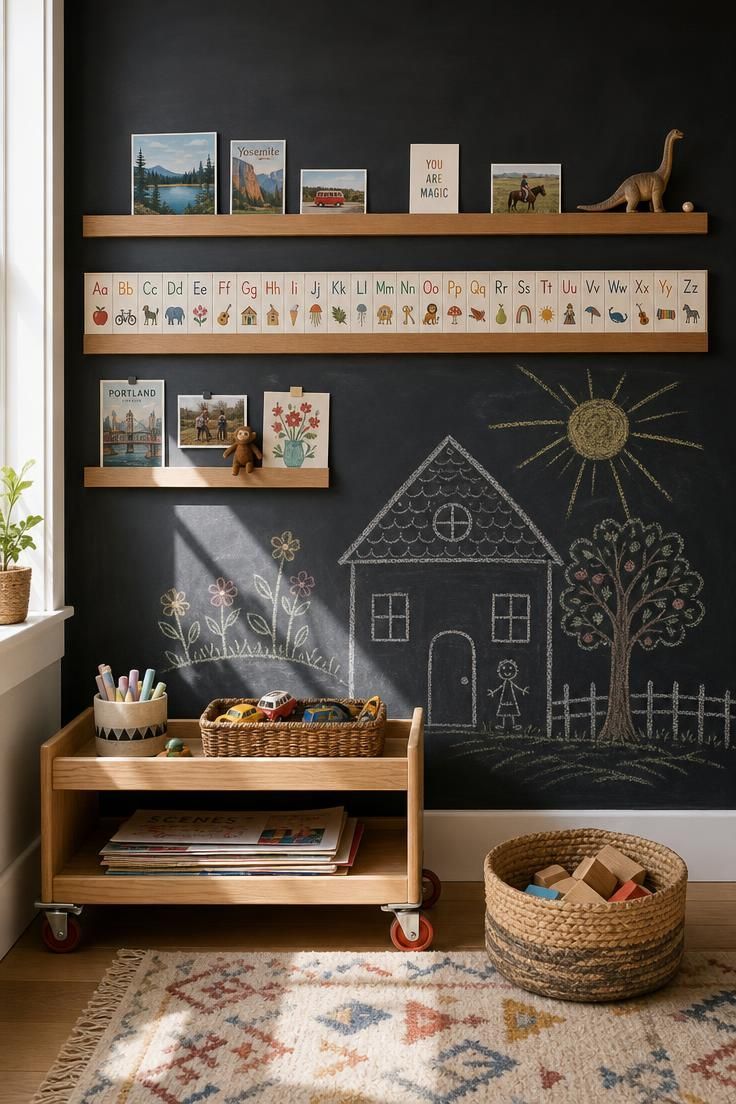
A chalkboard wall gives a child a full-height canvas that changes daily.
The charcoal surface grounds the room and makes the child’s drawings the main color.
Magnetic wooden strips are a clever alternative to pinning things into drywall.
Postcards, photos, and an alphabet frieze can be moved around as interests shift.
The rolling toy cart keeps chalk, paper, and small toys mobile and accessible.
The bright midday light is important here because it makes the chalk marks legible and the charcoal feel lively rather than heavy.
The red metal wheels on the cart add a small jolt of color against the natural wood.
This is a high-energy, play-first corner that still feels pulled together.
It invites a child to draw, erase, and draw again.
Design Pro-Tip: Rub a piece of white chalk across the whole chalkboard surface once before first use, then erase it. This seasons the board so future drawings erase more cleanly and the wall doesn’t develop permanent ghost lines.
Conclusion
An eclectic kids room succeeds when the child’s own drawings, toys, collections, and daily habits shape the space.
Start with one strong element: a painted vintage dresser, a peg rail, a colorful quilt.
Layer outward from there with objects you already have or can find secondhand.
The rooms above are prompts, not templates.
Keep the room low, accessible, and easy for a child to change, because play is the real design work.