This post may contain affiliate links. If you make a purchase through these links, we may earn a commission at no additional cost to you.
Stepping into a bedroom that feels gathered rather than decorated changes the shape of an evening.
Mismatched textures, warm lamplight, and personal objects settle the nervous system at day's end.
A cozy eclectic bedroom layers eras, materials, and textiles into a space unified by warmth and restraint, not randomness.
Image-driven inspiration helps translate that layered look into actionable choices.
What follows is a visual tour through thirteen distinct design moves, each anchored by a specific material, finish, or technique worth studying closely.
Layering a Nubby Linen Duvet Under a Hand-Knotted Wool Throw
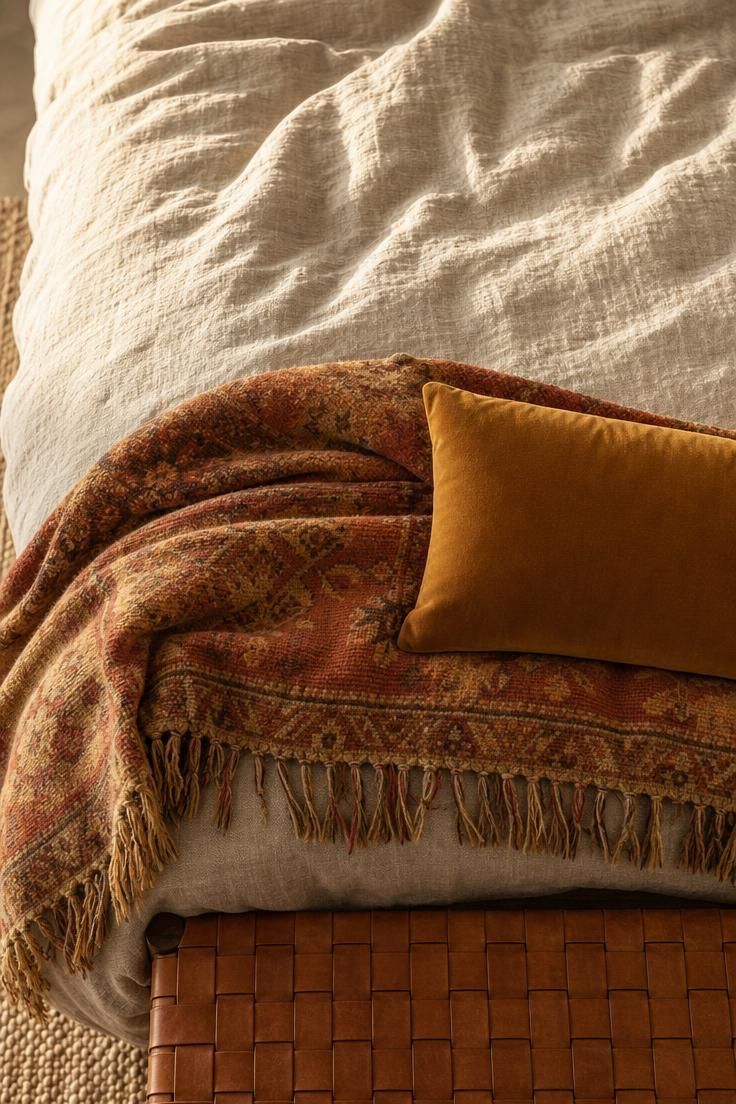
The rumpled linen reads as an optical rest point, calm and unassuming.
Against that quiet base, the hand-knotted wool throw brings dense pile and faded earth tones that feel collected over time.
Offsetting the throw to one-third width keeps the eye moving without tipping into disorder.
Fringe hanging over the foot edge extends a vertical line through the horizontal plane, which gives the bed a sense of structure.
A single velvet lumbar in the throw's secondary color pulls the pairing into relationship.
The image succeeds because every textile remains legible as itself, not blended into a single mass.
Style Blueprint:
- Start with a solid flax-linen duvet in an undyed oatmeal tone as the optical rest point.
- Fold a vintage hand-knotted wool throw at the foot, offset to one-third width to avoid symmetry.
- Choose a throw with at least two earthy accent colors pulled from elsewhere in the room.
- Add one lumbar pillow in a smooth cotton velvet in the throw's secondary color.
- Keep the visible pillow count odd and vary pillow heights for natural rhythm.
Anchoring the Room with a Reclaimed Pine Bed Frame and a Low Jute Rug
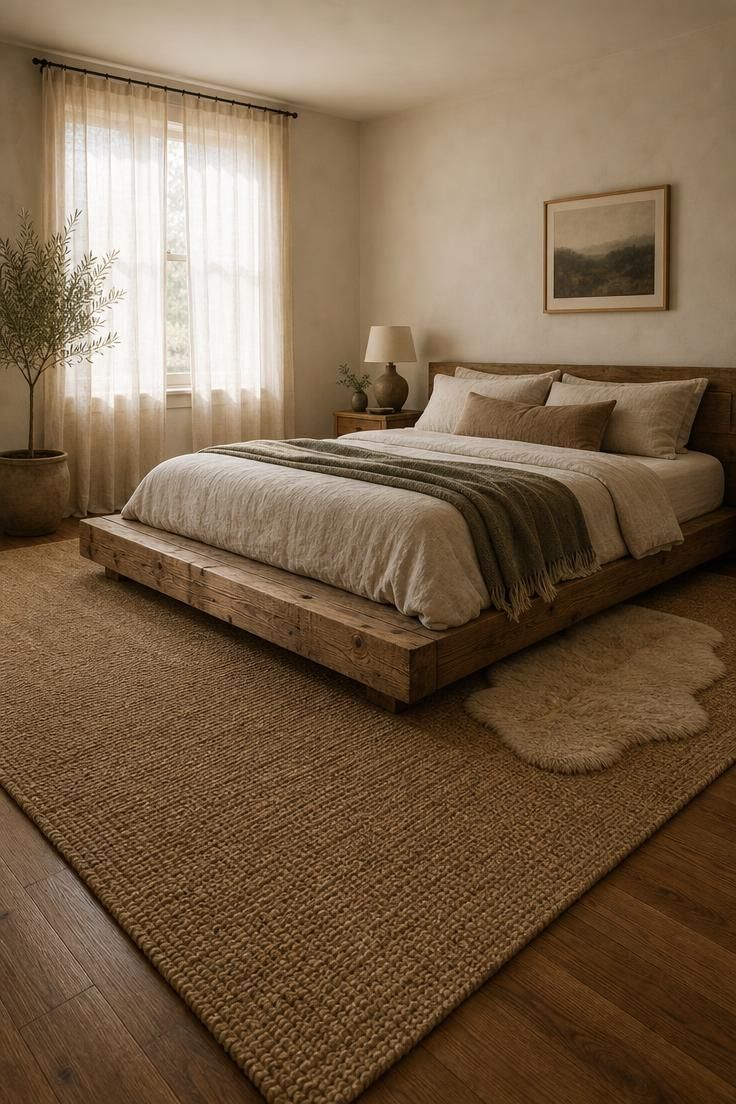
The rough-hewn pine frame carries visible saw marks and tonal variation that no factory finish can imitate.
A large jute rug underneath does more than define the footprint; it dampens sound and softens every step.
Keeping the rug at least two feet beyond the bed on all sides creates a generous boundary that makes the room feel larger.
Low bed height lowers the visual center of gravity, which increases perceived coziness in any square footage.
The small sheepskin peeking from under one corner signals warmth before a foot ever touches it.
This bedroom benefits from warm bedroom ideas like layered rugs, low wood tones, and a soft boundary underfoot.
Style Blueprint:
- Select a reclaimed pine bed frame with visible saw marks or ranging board tones.
- Layer the bed on a large natural jute or sisal rug in a neutral wheat tone.
- Position the rug so the bed sits fully on it with at least 18 to 24 inches visible on the approach side.
- Keep the wall color a warm off-white or pale clay to let wood tone dominate.
- Add a single small sheepskin rug partially tucked under the near bed corner for an immediate foot-warmth cue.
Warming a Plaster Wall with an Arched Cane Headboard and a Single Brass Sconce
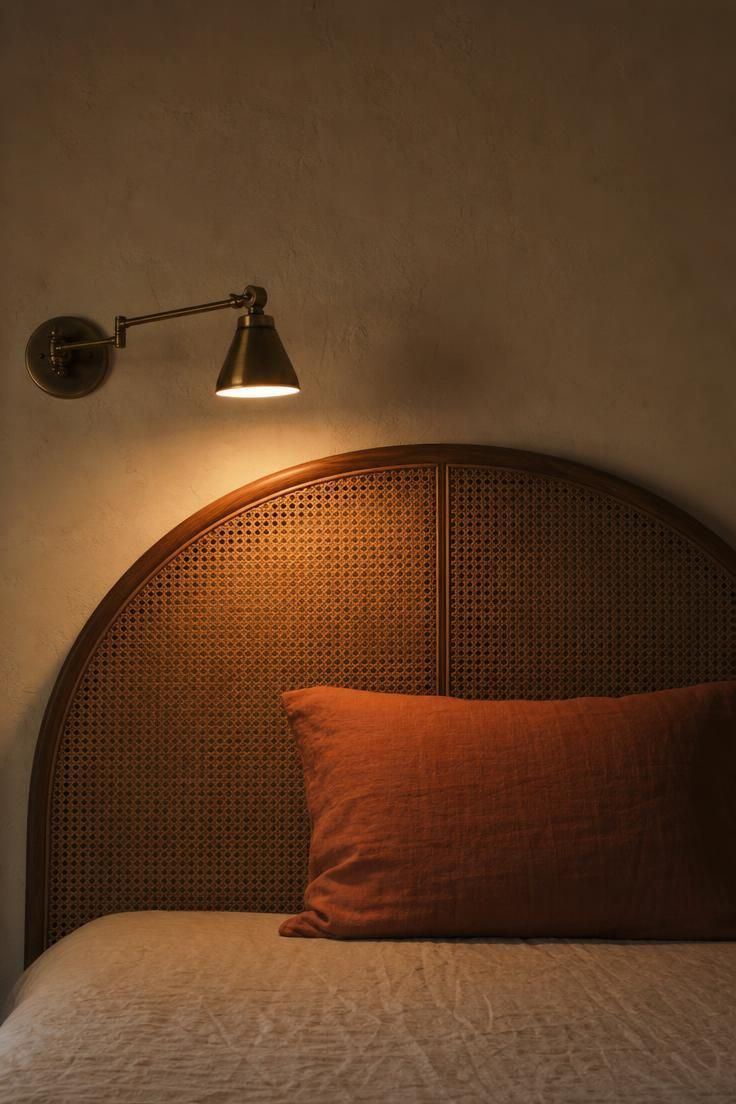
The arched silhouette brings soft geometry into a room otherwise defined by rectangles.
Cane webbing provides visual heat without the heaviness of wood or upholstery.
An offset brass sconce reads as intentional rather than accidental, and its amber pool of light carves out a small zone of warmth.
The plaster wall stays plain, letting the weave pattern hold focus.
Bulb temperature matters here; anything above 2700K would flatten the glow into something cold.
This vignette proves that a single wall-mounted moment can define the whole room's evening character.
This is cozy room design at its most direct: one warm surface, one soft shadow, one light source.
Style Blueprint:
- Choose a headboard with an arched top silhouette to introduce soft geometry against rectangular walls and windows.
- Use cane or rattan webbing for visual heat without adding another heavy upholstered surface.
- Mount one aged-brass swing-arm sconce at reading height on the wall, slightly offset for intentional asymmetry.
- Specify a bulb rated 2700K or lower for the amber glow.
- Keep the wall plain plaster or limewash so no pattern competes with the cane weave.
Design Pro-Tip: Limit yourself to three textile patterns per sightline. When you add a fourth, remove one earlier piece. The difference between cozy layered and cluttered is a subtraction, not an addition.
Mixing a Walnut Nightstand with a Travertine Table Lamp and a Stack of Clothbound Books
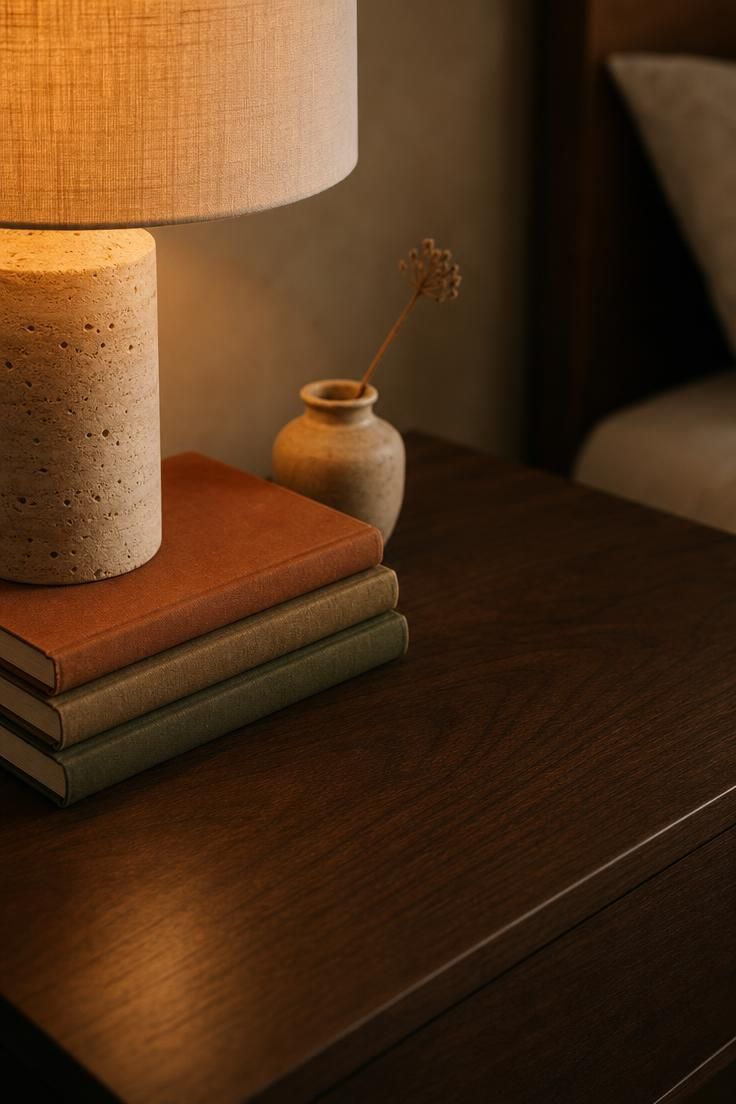
Stone, wood, linen, and paper sit together without competing.
The travertine lamp anchors the arrangement with its porous surface and natural veining, repeating the room's earthbound rhythm.
Book spines turned inward read as a warm-neutral mass, not a wall of text demanding attention.
Stacking them under the lamp or vessel creates a sculpted base with purpose.
A small ceramic cup for jewelry keeps the surface honest and functional.
Leaving empty space on the surface is what makes the grouping feel composed rather than accumulated.
Style Blueprint:
- Choose a dark-toned walnut nightstand with visible grain and simple drawer pulls.
- Place a travertine or unglazed ceramic table lamp with a fabric shade as the tallest object on the surface.
- Stack two or three hardcover books with muted spine tones under the lamp or vessel to create a sculpted base.
- Add one small handmade ceramic cup or bowl for jewelry, keeping function visible.
- Leave negative space on at least one-third of the surface.
Suspending a Woven Paper Pendant Over an Off-Center Bed with a Kilim Bench
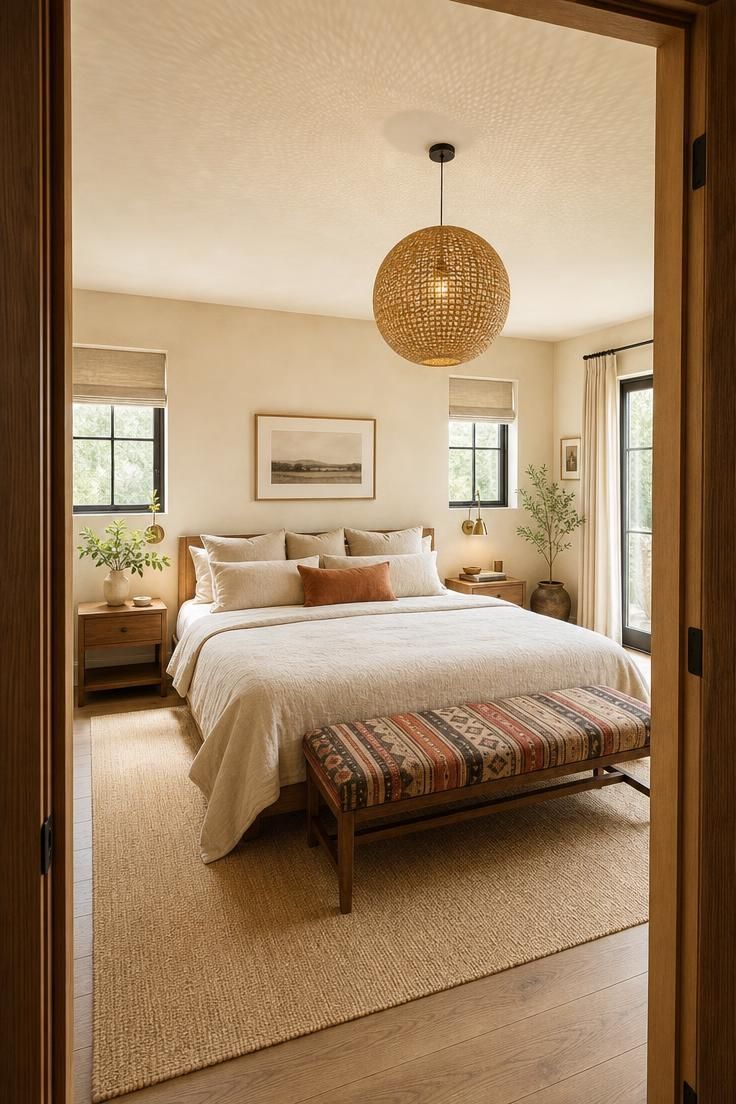
Off-center furniture placement only works when another element creates visual counterweight.
Here, the pendant's shifted hang and the kilim bench's perpendicular pattern balance the bed's placement.
The paper shade diffuses midday light into a soft wash rather than a harsh beam.
This is a room arranged around movement and use, not rigid symmetry.
A clear path from the door to both sides of the bed makes the space function as well as it photographs.
The bench adds a useful surface without needing a full room rearrangement.
This mixed furniture bedroom gathers pieces from different periods into one calm arrangement.
Style Blueprint:
- Hang a woven paper or rattan pendant at a height that frames the bed without touching sightlines.
- Move the bed six to twelve inches off center to allow a more generous walkway on the approach side.
- Place a kilim-upholstered bench at the foot with pattern running perpendicular to the duvet color.
- Choose pendant material that diffuses rather than directs light.
- Keep a visible path from the door to both sides of the bed.
Draping a Vintage Suzani Over a Solid Linen Headboard
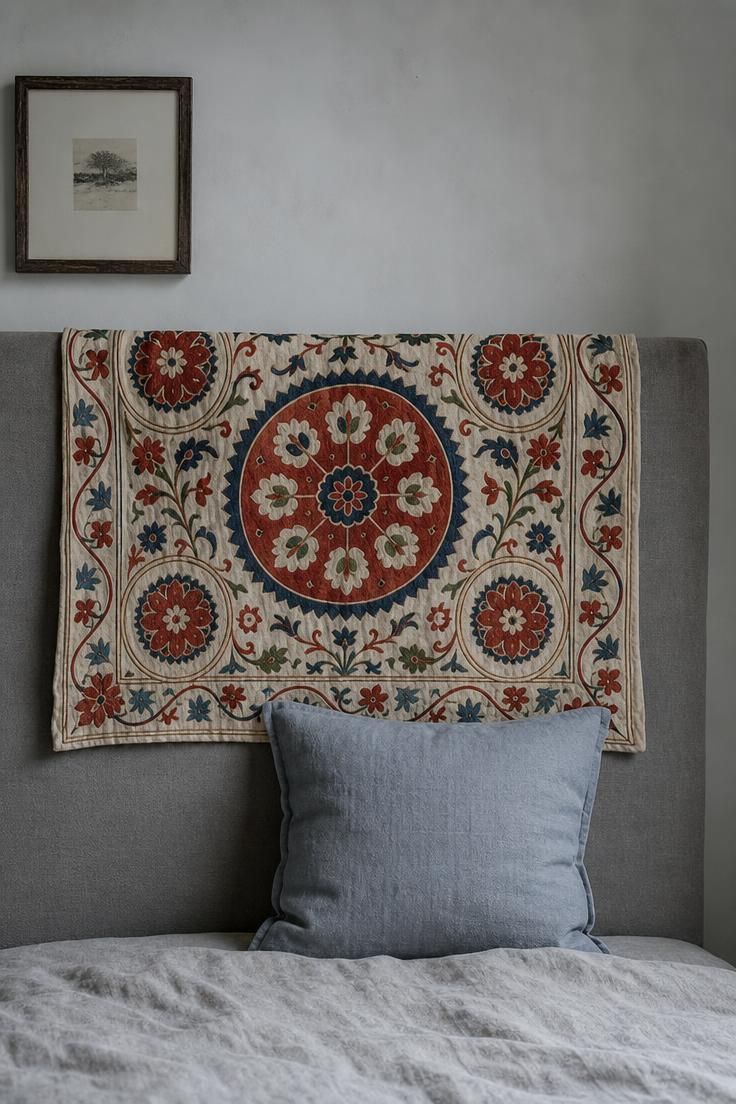
A single textile can change a plain upholstered headboard into a focal point without reupholstering.
The Suzani's stitched surface also adds acoustic softening behind the sleep position.
Cool overcast light lets faded dye variations read clearly without glare.
Offsetting the medallion keeps the drape feeling like a found arrangement rather than a stage set.
Two small brass upholstery pins at the top edge secure the piece while preserving its casual hang.
The surrounding wall stays quiet so the embroidery holds all the visual weight.
This version of vintage bedroom style rests on restraint rather than accumulation.
Style Blueprint:
- Select a solid linen headboard in stone gray or faded blue-grey as the quiet base.
- Drape a vintage Suzani or embroidered textile over the top edge so it hangs roughly 18 to 24 inches down the face.
- Offset the textile so its largest medallion sits slightly left or right of center.
- Pair with one small pillow in a solid tone pulled from the Suzani's border color.
- Keep surrounding wall art minimal.
Building an Odd-Number Still Life on a Blackened-Steel and Oak Console
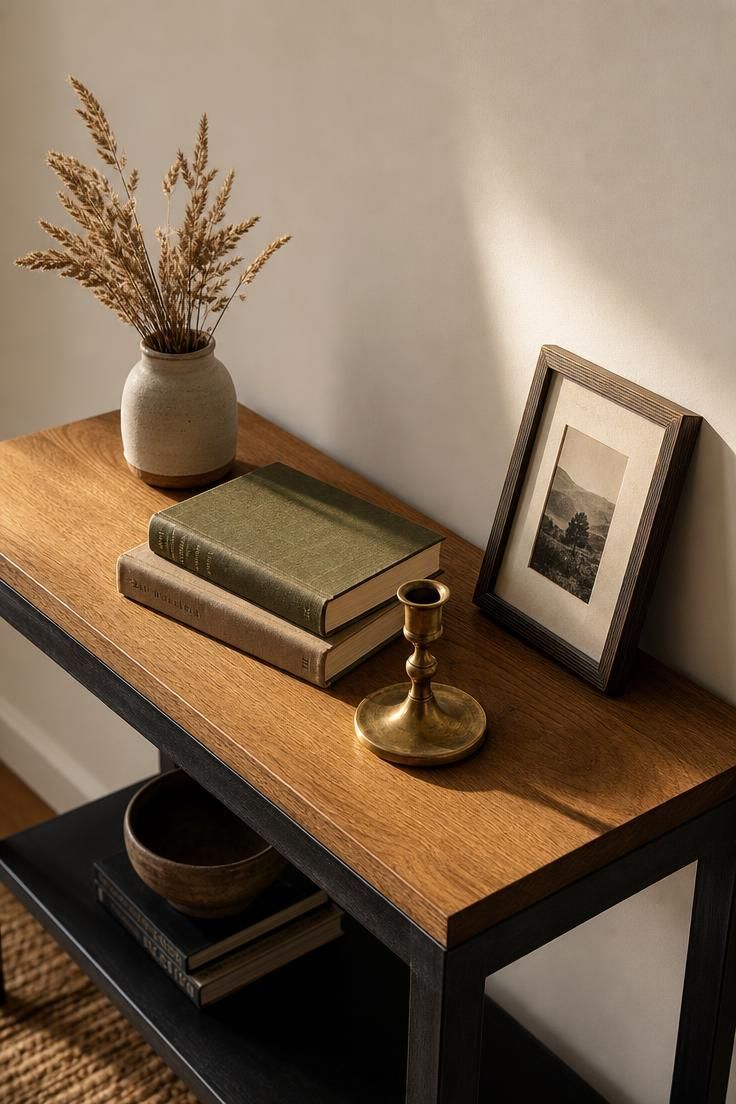
Odd numbers push the eye across a composition instead of locking it into pairs.
Five objects in varied heights create a shallow triangle that reads as collected, not arranged.
The blackened steel base grounds the lighter wood top, providing structure against the room's soft textiles.
Dried grass adds curve and movement where straight lines dominate.
A single leaning frame behind the grouping introduces depth without filling the wall.
This is styling as formula: one tall, two mid, two low, arranged with breathing room.
Style Blueprint:
- Anchor the display with a console or low dresser in mixed materials.
- Select exactly five objects in varied heights.
- Arrange them in a loose triangular composition, not a straight row.
- Include one living or dried organic element for curve and movement.
- Leave the wall behind mostly empty except for the single leaning framed piece.
Enclosing a Reading Nook with a Bouclé Armchair and a Deep-Toned Vintage Rug
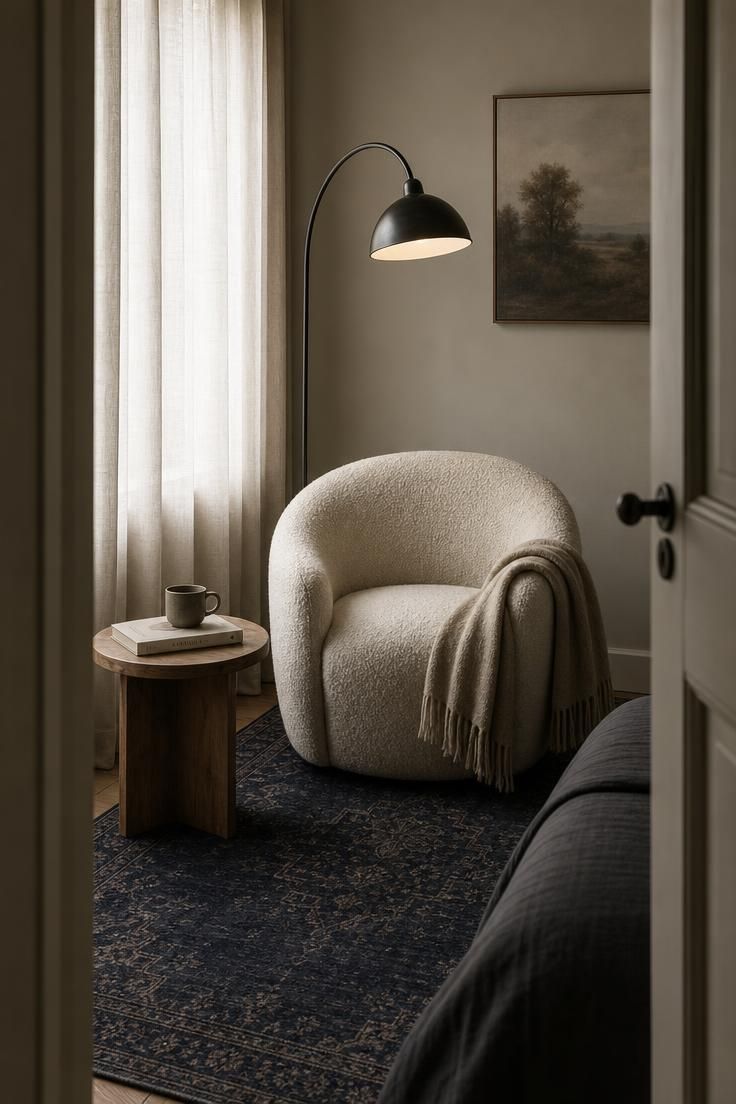
A secondary seating zone extends the room's usefulness beyond sleep.
The bouclé chair's nubby surface invites touch while the dark flatweave rug cools the palette.
One throw over one arm, not both, keeps the vignette from feeling staged.
The arc lamp directs light downward into the lap, creating a functional reading pool without flooding the room.
Diffused daylight through sheer curtains prevents harsh shadow on the chair's curved surfaces.
This corner proves that bohemian bedroom ease can coexist with a quieter, more contained reading spot.
Layered rugs bedroom styling often stops at the bed, but this nook carries the same logic into a corner and makes warm bedroom ideas work beyond the sleep zone.
Vintage bedroom style lives in the faded indigo rug, while cozy room design shows in the lamp's low, focused glow.
Mixed furniture bedroom pieces gather naturally here: bouclé, oak, steel, and wool each hold their own weight.
Textured bedding may anchor the bed, but the nook adds a second layer of textile warmth through the single throw.
Warm lighting bedroom choices determine whether a corner feels like a retreat or an afterthought.
Personalized bedroom moments like this one depend on restraint, a book and a mug are enough to signal use without clutter.
Eclectic bedroom decor at its best extends function into every corner without losing the room's quiet center.
Style Blueprint:
- Place one bouclé armchair with curved or rounded arms in the corner farthest from the door.
- Layer the chair on a darker vintage rug in faded indigo or slate blue.
- Add an arc floor lamp in blackened steel or aged brass that directs light downward.
- Pair with a small oak side table no larger than the chair's armrest height.
- Drape a single alpaca or wool throw over one arm only.
Grouting a Wall-Mounted Shelf with Handmade Ceramic Vessels and a Dried Stem
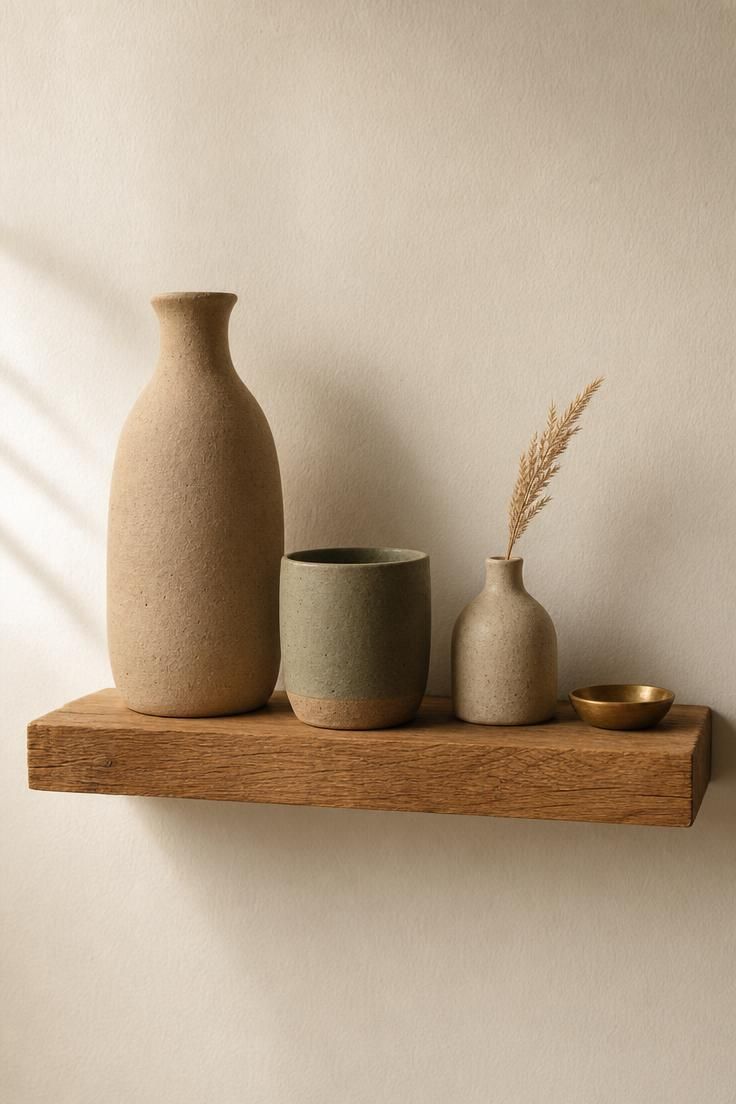
A single shelf can carry more visual weight than a full gallery wall.
Unglazed ceramic finishes absorb light rather than reflect it, letting the vessel shapes speak.
Varying heights by at least thirty percent creates an unforced rhythm.
The dried stem adds a vertical line that lifts the whole composition.
A small brass dish for rings or earrings keeps the shelf functional rather than purely decorative.
The warm wall behind stays bare, which makes the shelf the display, not the backdrop.
Style Blueprint:
- Mount one floating oak shelf stained to match the room's medium wood tones.
- Choose vessels in unglazed or mattified ceramic finishes.
- Include exactly three vessels of varying heights and one organic dried stem element.
- Add a small brass dish for rings or earrings.
- Keep the wall around the shelf bare.
Design Pro-Tip: Shoot your room at the hour you actually unwind in it. If the space only looks good in golden hour but feels flat after dark, adjust your lamp placement and bulb warmth before adding more decor.
Hanging a Macrame Wall Piece Above a Low Oak Platform Bed
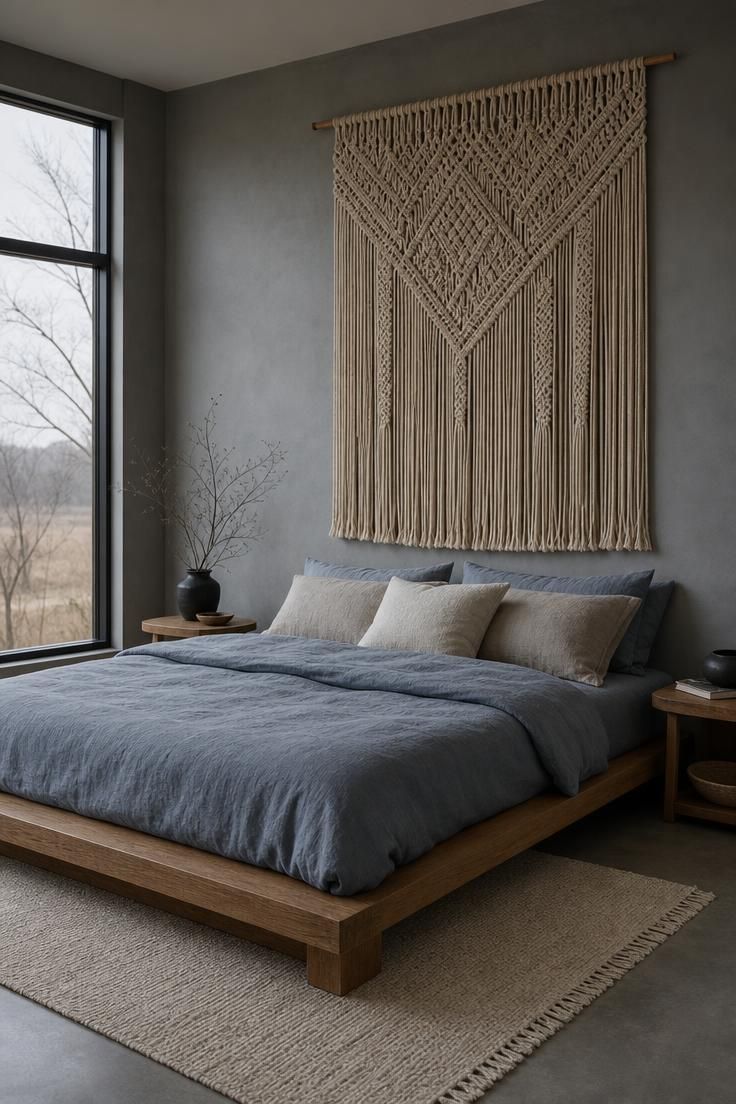
The palette shifts cooler here, but coziness holds through fiber density; macrame's knotted rope surface absorbs sound and creates a visual weight that color alone cannot.
Cool overcast light keeps the blue bedding from feeling sterile by softening contrast at the windows.
Solid bedding tones let the macrame remain the focal texture.
Fringe ends stopping just above the mattress line give the piece vertical impact without disappearing behind pillows.
The low oak bed and small side tables keep sightlines open to the wall piece, a calm take on eclectic bedroom decor.
Style Blueprint:
- Select a low oak platform bed with clean, squared lines.
- Hang a macrame wall piece made of natural cotton rope directly behind the sleep position.
- Choose bedding in washed stone-blue, flax, and cream with no pattern.
- Layer a pale wool flatweave rug under the front third of the bed.
- Keep side tables small and low so the wall hanging dominates the composition.
Framing a Doorway with a Faded Oushak Runner and Antique Brass Floor Lamp
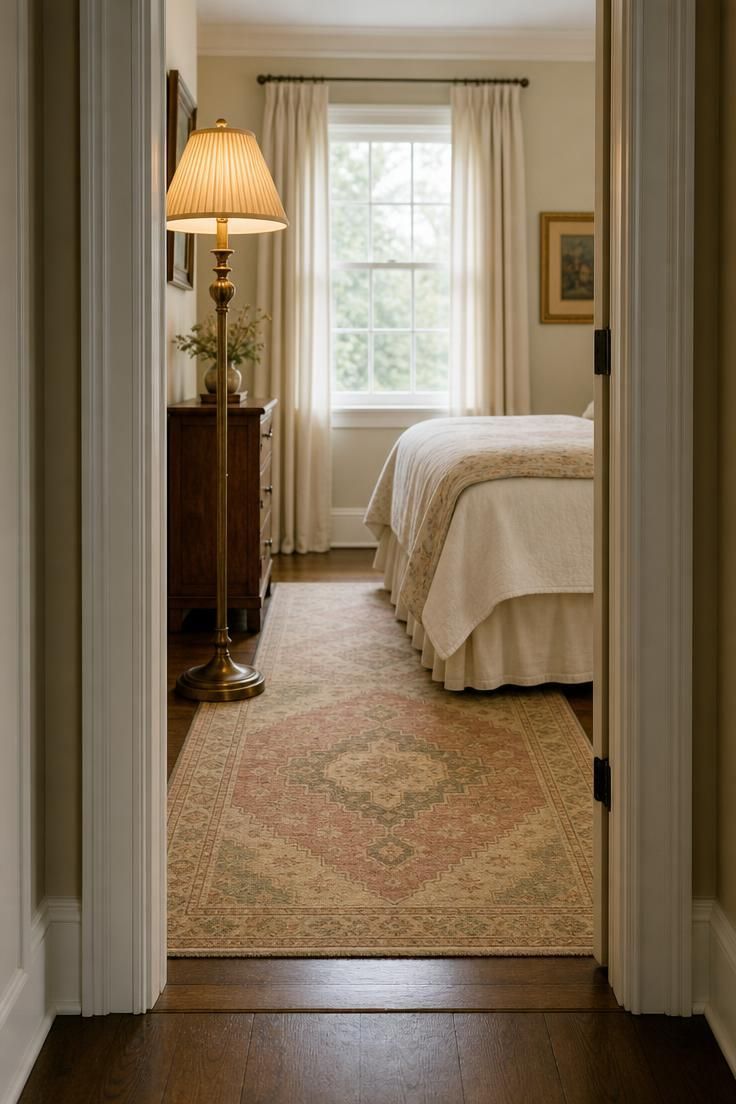
The room begins before you enter it; A runner laid perpendicular to the door pulls the eye inward, stretching the perception of depth.
The lamp's pleated fabric shade diffuses side glare while still glowing as a warm beacon.
Antique brass patina reads as collected rather than polished, which suits the room's mixed metals.
Keeping the threshold clear of anything except rug and lamp makes the entry feel deliberate.
This layered rugs bedroom pairing also shows how warm lighting bedroom accents can begin at the doorway.
Style Blueprint:
- Lay a faded Oushak or Anatolian runner perpendicular to the door, extending two to three feet into the room.
- Position a brass floor lamp with a fabric shade just inside the door on the side opposite the bed.
- Choose a runner with a visible central medallion in muted rose, ochre, or sage.
- Keep the doorway area clear of standing clutter.
- Use a warm bulb in the floor lamp so the threshold glows even on cloudy days.
Layering a Chunky Knit Throw Over a Velvet Quilt and a Cane-Side Chair
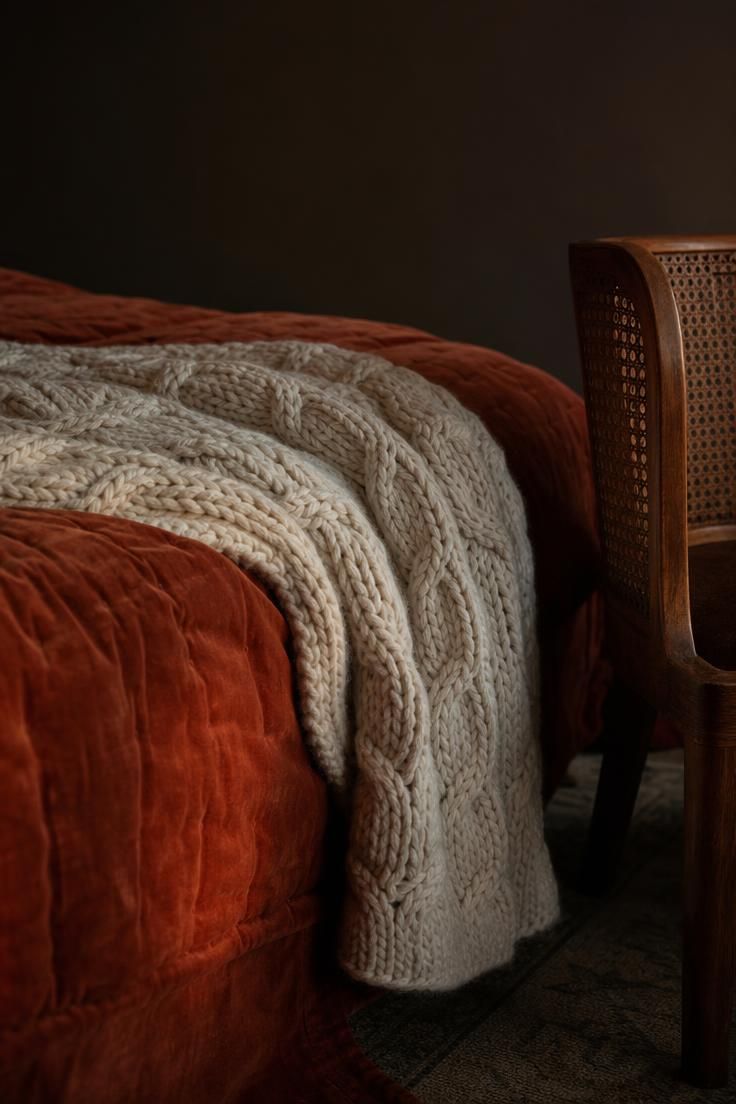
High-low pile contrast is the single most legible cozy pairing in a photograph.
Thick knotted wool against flat-cut velvet reads immediately as warm and inviting.
Moody low light deepens the velvet's saturation, making the whole palette feel enveloping rather than bright.
The cane chair adds sculptural line without introducing more fabric into an already textile-rich moment.
Letting the throw hang past the quilt line creates movement and breaks the bed's horizontal plane.
This vignette works because it resists the urge to match textures.
Textured bedding, especially when layered this way, turns a simple bed corner into the room's most tactile story.
Style Blueprint:
- Start with a cotton velvet quilt in a deep warm tone.
- Drape a chunky hand-knit wool throw in undyed cream over one lower corner.
- Let the throw's edge hang past the quilt line for movement.
- Add a cane-side chair adjacent to the bed with no cushion.
- Keep the background wall plain and dark enough to make the cream throw read clearly.
Softening a Bedside Wall with a Vintage Lace Panel and a Warm Sconce
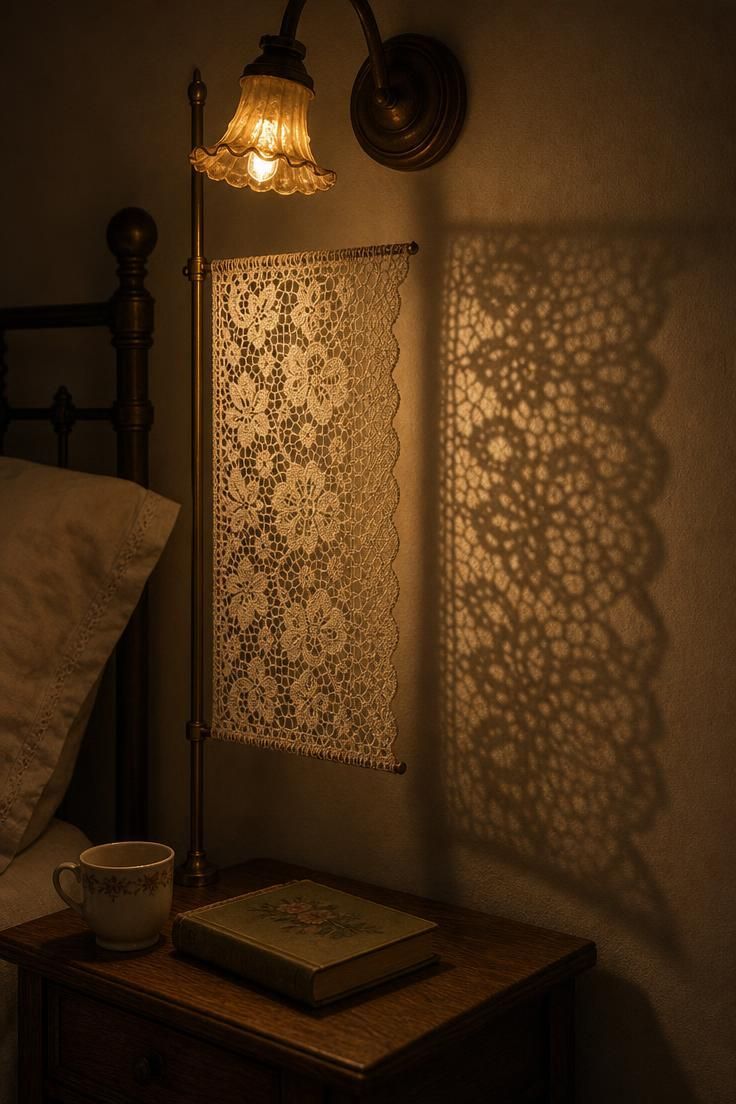
A vintage lace panel turns an empty bedside wall into a soft, breathing surface.
The open weave catches light without adding visual weight.
A warm sconce above the panel casts a patterned shadow that shifts with the angle of light.
Below, a small oak nightstand keeps the scene grounded with everyday objects.
The rest of the room stays in gentle shadow, which concentrates attention on the lace and its quiet texture.
This personalized bedroom detail feels intimate without becoming sentimental.
Style Blueprint:
- Mount a single vintage lace panel on a slender brass rod beside the bed.
- Place a warm sconce above the panel to cast a soft patterned shadow.
- Keep the nightstand surface limited to one ceramic cup and one book.
- Let the surrounding wall remain bare so the shadow pattern reads clearly.
- Choose lace with an open weave rather than heavy embroidery.
Conclusion
A cozy eclectic bedroom succeeds when every layer has a reason to be in the room.
Textile, wood, ceramic, metal, and light each carry their own weight.
The goal is not more objects but more intention in arrangement, with the images as proof that warm, restful spaces grow from material truth and personal selection.
Start with one surface, one textile, or one light source and photograph the result before adding the next layer.
Trust the mix, edit with a steady hand, and let the room become a record of rest.