This post may contain affiliate links. If you make a purchase through these links, we may earn a commission at no additional cost to you.
Most design philosophies want perfection from you.
Clean lines, matching sets, nothing out of place.
Wabi-sabi goes the other way.
It asks you to leave the worn throw where it landed, to keep the table with the dent, to let the room look like people actually live in it.
These 19 wabi-sabi living room ideas are not about buying the right things.
They’re about choosing fewer things and letting each one matter.
Gallery Walls with Mismatched Frames and Hand-Picked Prints
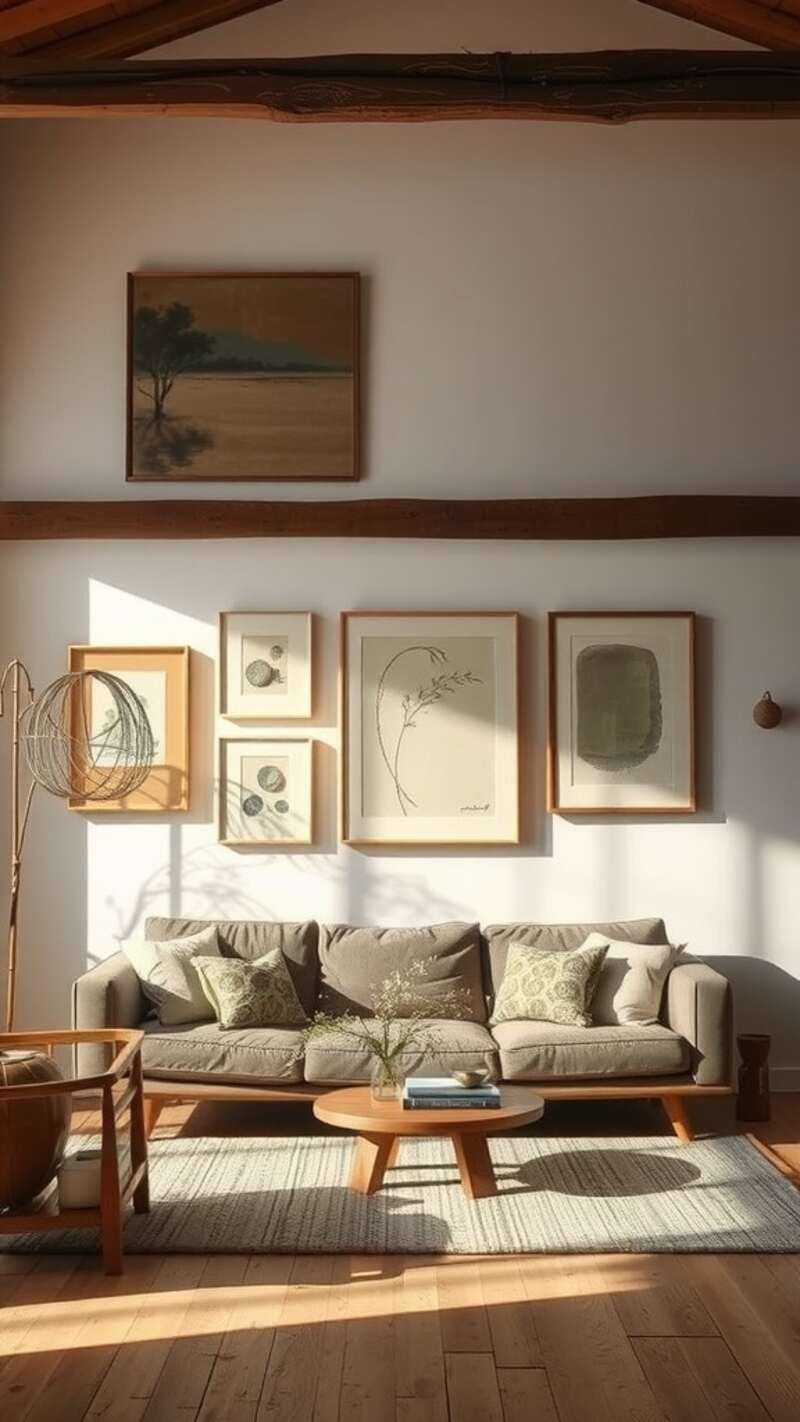
A gallery wall works in a wabi-sabi room when it looks assembled over time rather than purchased as a set.
Mismatched frames — one raw wood, one painted white, one narrow black metal — are preferable to a matching collection.
The art itself matters less than the mix: a watercolor print next to a child’s drawing next to a small oil painting gives the wall a history.
Leave uneven gaps between pieces.
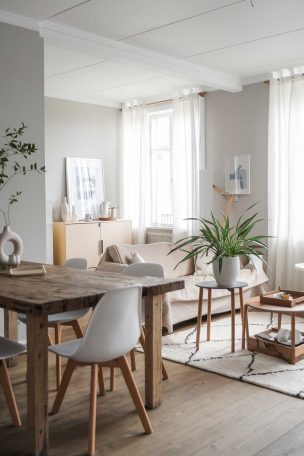
Raw Wood Tables and Linen Cushions That Show Their Age
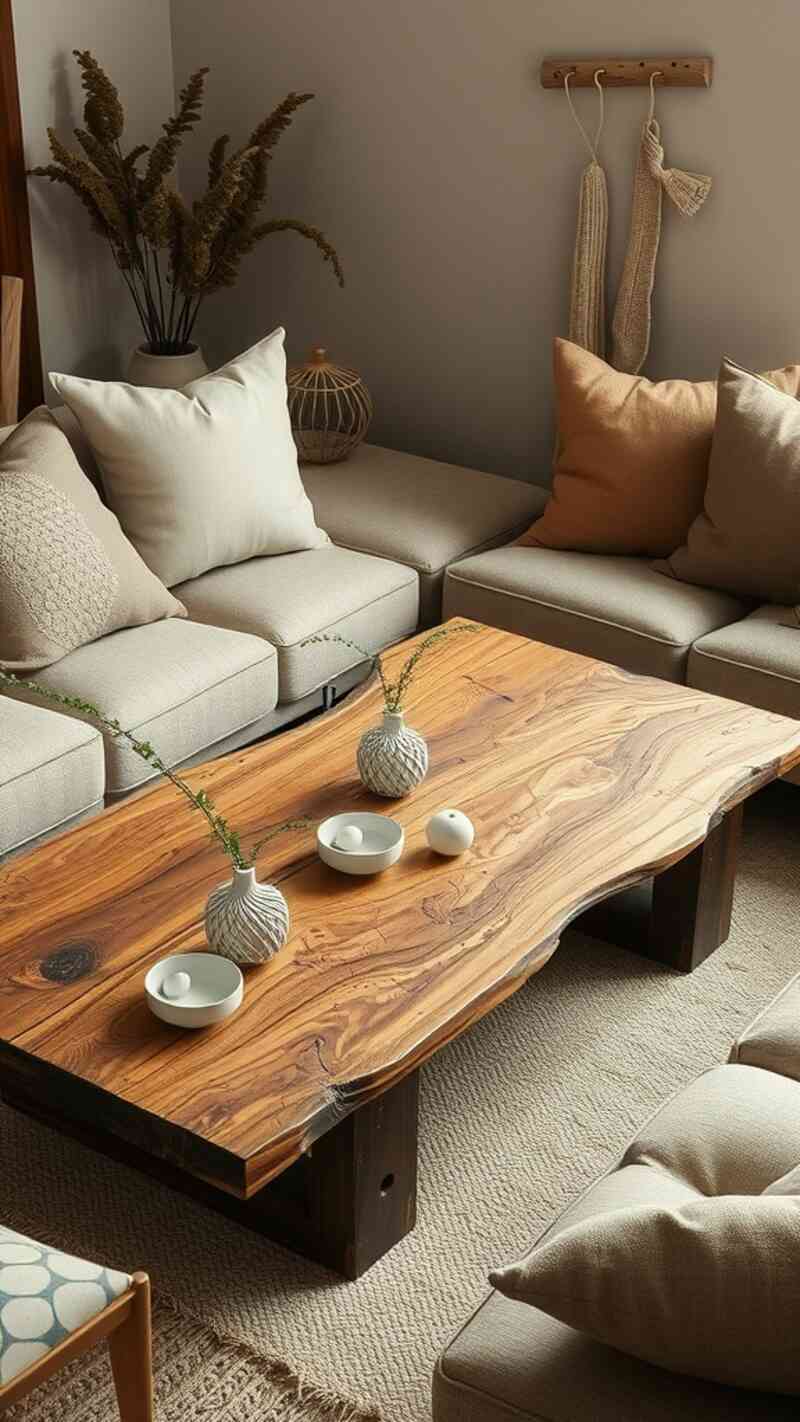
Wabi-sabi living rooms shine with natural materials that showcase their unique flaws.
Think rustic wood tables with beautiful knots or cushions in earthy tones that tell a story.
This style reminds us that true beauty lies in the imperfect and the transient, creating a cozy and timeless space.
Wool Throws, Jute Rugs, and the Art of Layering Without Matching

A chair with scuffed feet, a side table with a watermark ring, a cabinet with its original hardware — these are more useful to a wabi-sabi room than anything new.
Reclaimed wood coffee tables often have saw marks and uneven color, which is exactly what makes them worth keeping.
One well-chosen vintage piece carries more weight than a room full of new furniture styled to look old.
Weathered Chairs and Reclaimed Wood That Carry a History
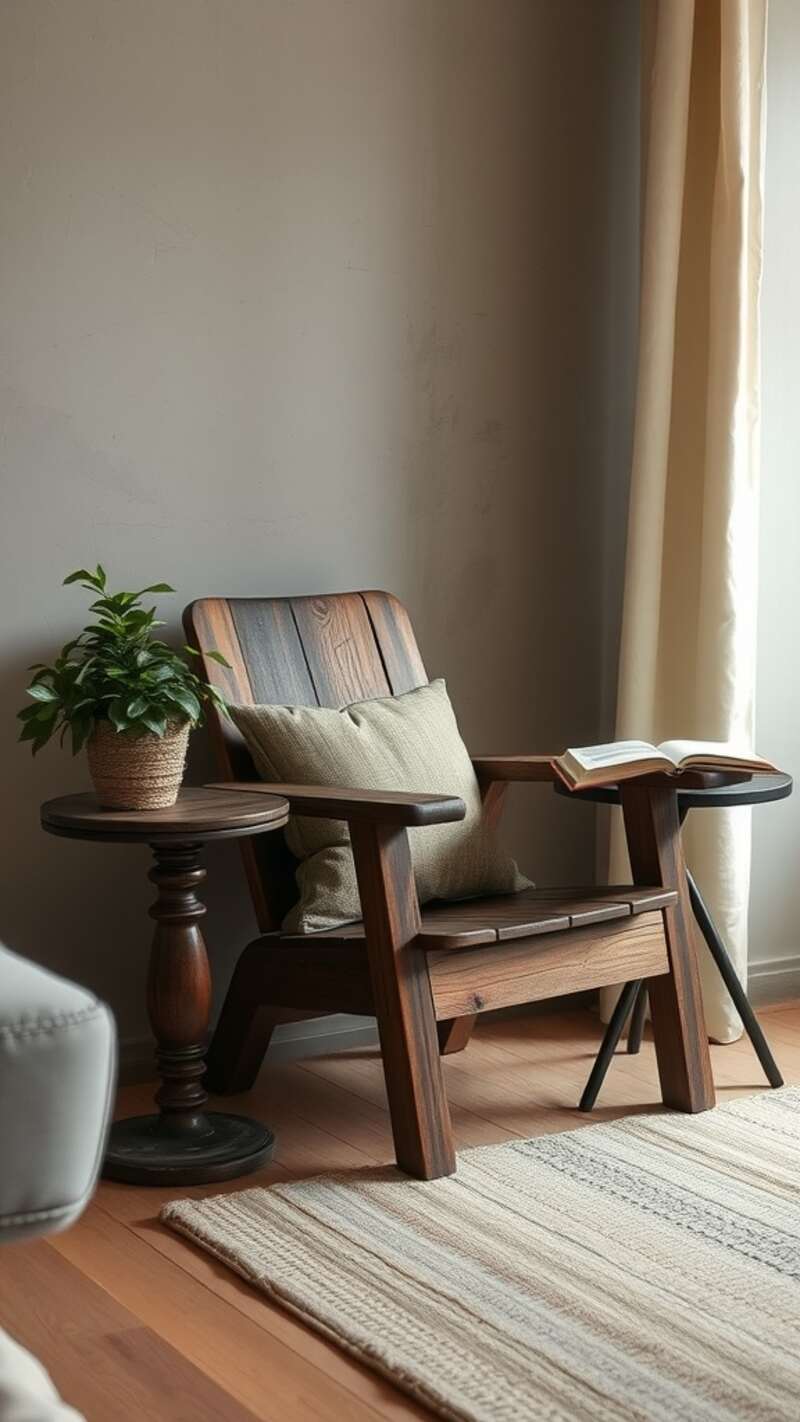
Bringing vintage and reclaimed furniture into your wabi-sabi living room can add unique charm and character.
Look for pieces that tell a story, like a weathered chair or a rustic table.
These items enhance your interior design and create a cozy, timeless space that feels like home.
Terracotta, Warm Stone, and Sage Green for a Grounded Room
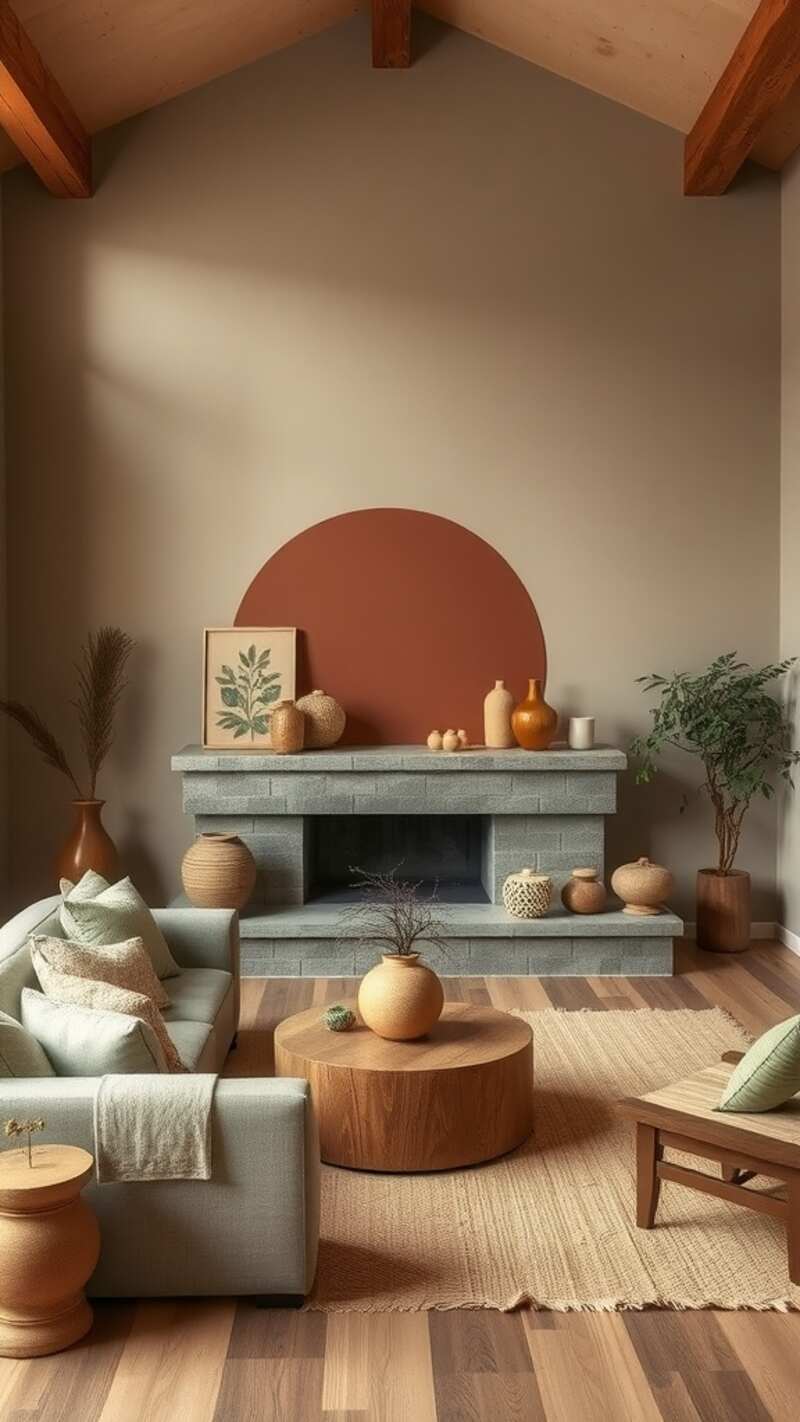
Terracotta, warm sand, dusty sage, and the grey-beige of undyed linen — these are the colors wabi-sabi rooms tend toward.
They don’t shout.
Walls in a muted clay tone absorb light differently at different hours of the day, which is part of their appeal.
Avoid anything too saturated or too bright; the goal is a palette that recedes and lets the objects and textures carry the interest.
A wicker side table or a wool cushion in raw oatmeal will read differently against a deep warm white than against a cold gray..
Paper Pendant Lights and Beeswax Candles for Warm, Uneven Glow
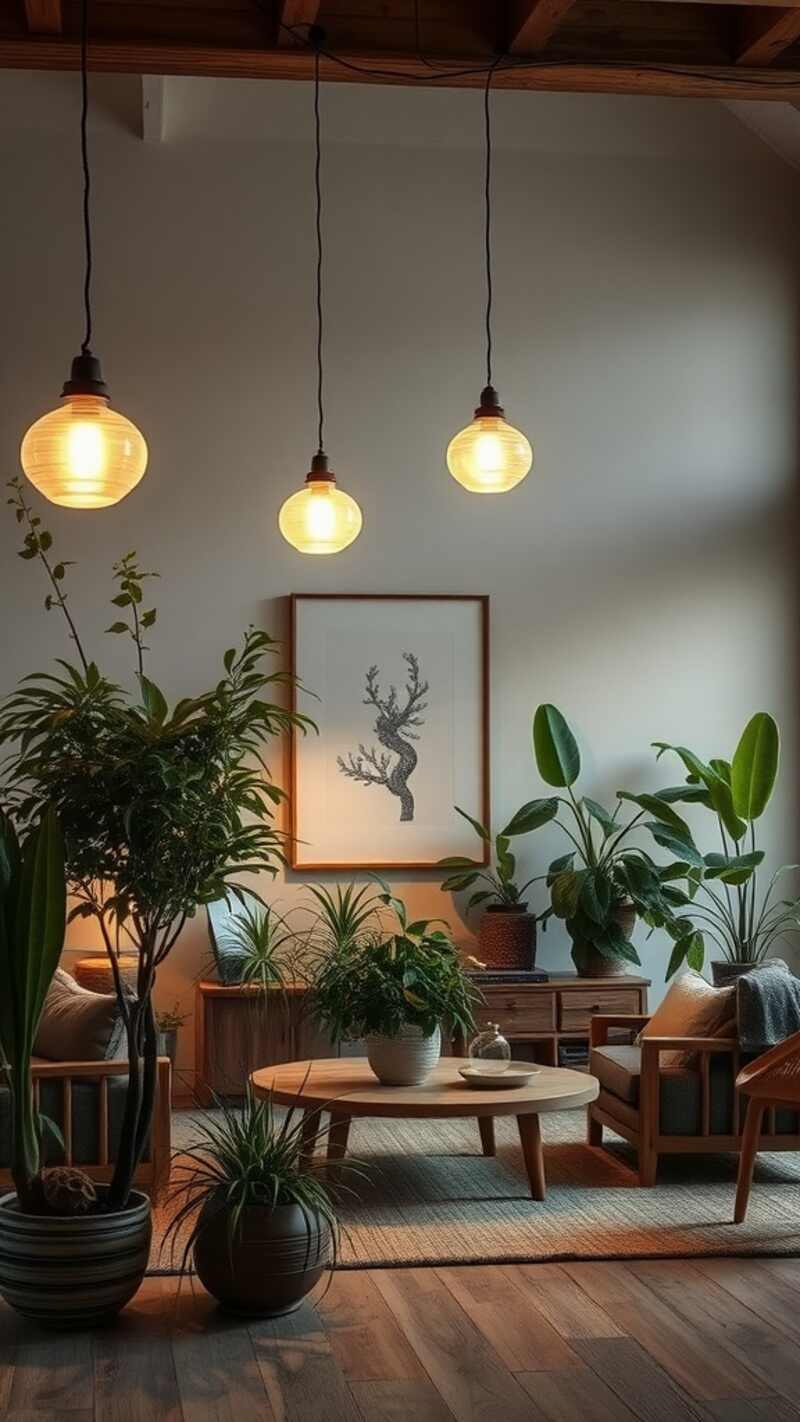
Overhead lighting is usually the wrong choice in a wabi-sabi room.
Pendant lights with paper or washi shades scatter light unevenly, which suits the aesthetic.
Floor-level lighting — a lamp on a low table, a few pillar candles grouped on a tray — casts shadows upward and makes the room feel smaller in a good way.
Beeswax candles burn warmer and smell faintly of honey; they’re worth the extra cost.
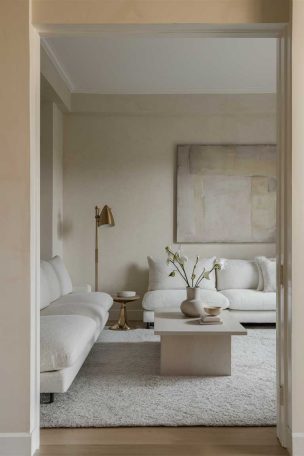
Sparse Furniture Arrangements That Let the Room Breathe
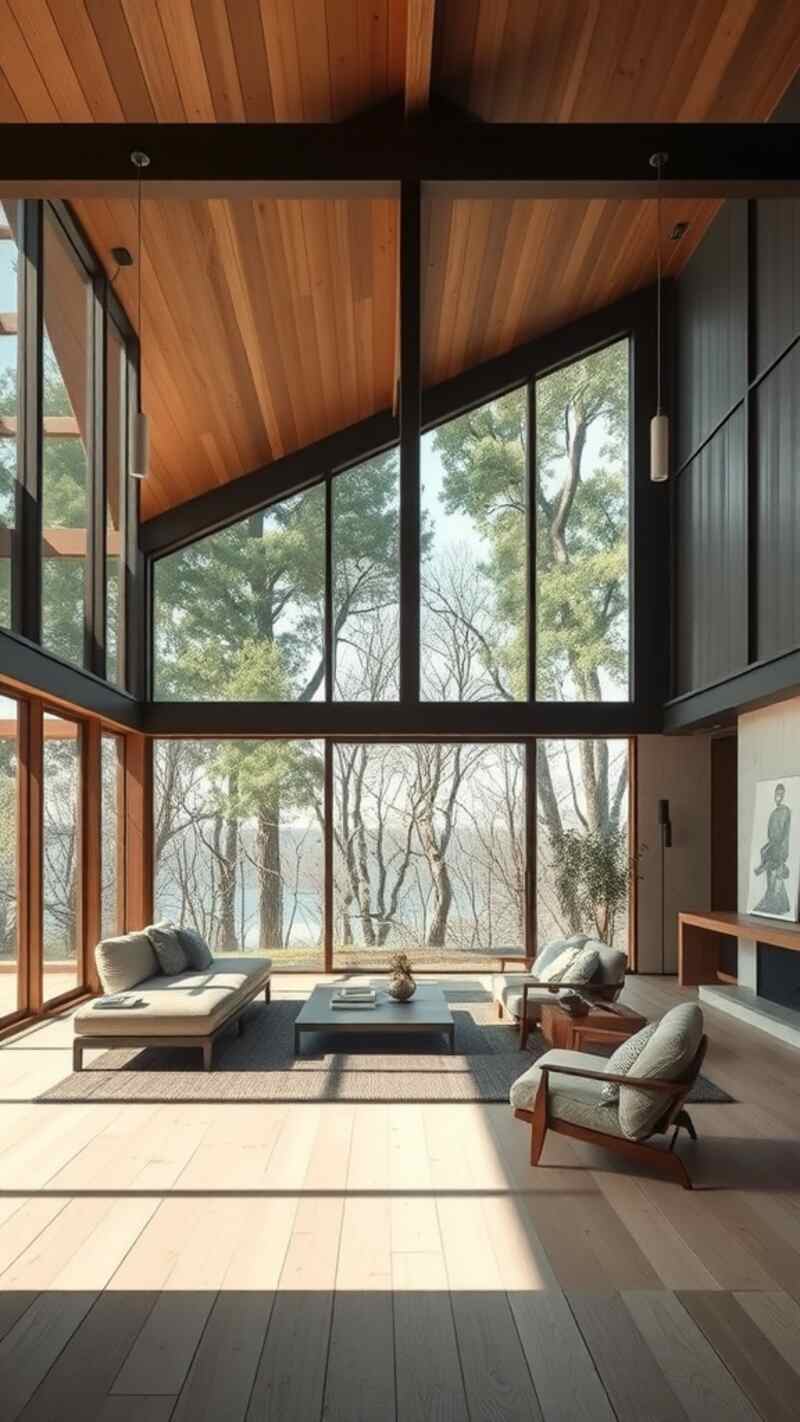
Creating a wabi-sabi living room means embracing open and flowing spaces.
Use large windows to let natural light in and connect with the outdoors.
This simple design choice brings warmth and inspiration, making your living area feel cozy and inviting.
Dried Botanicals, River Stones, and Unglazed Ceramic Vessels
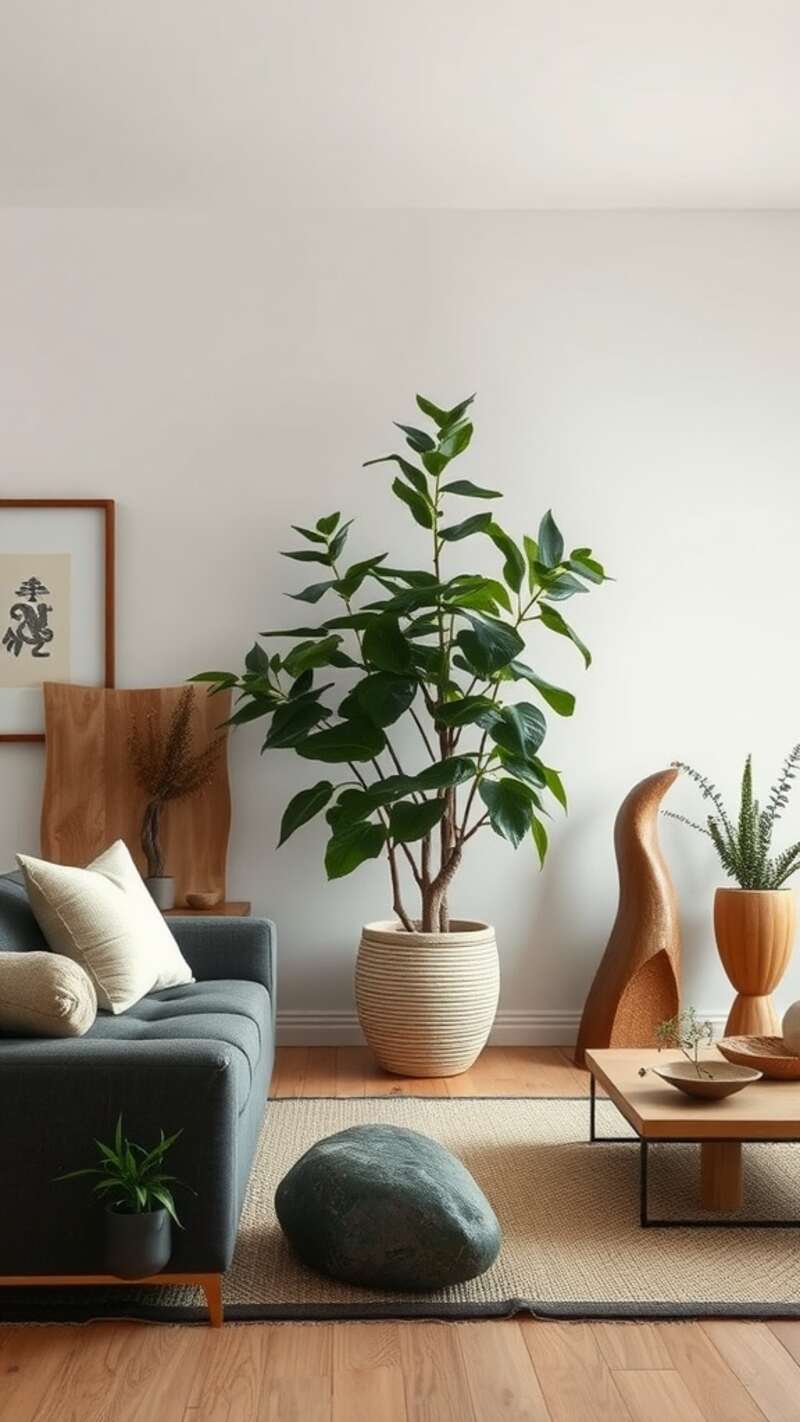
Dried pampas grass in a floor vase.
A flat river stone used as a paperweight.
A branch of dried eucalyptus propped in the corner.
These are not decorations in the traditional sense — they’re objects that belong to a natural world and happen to be indoors.
A single trailing pothos on a high shelf or a small ficus on the floor costs almost nothing and pulls the room away from the feeling of a showroom.
Low Sofas and Floor Cushions for Unhurried Sitting
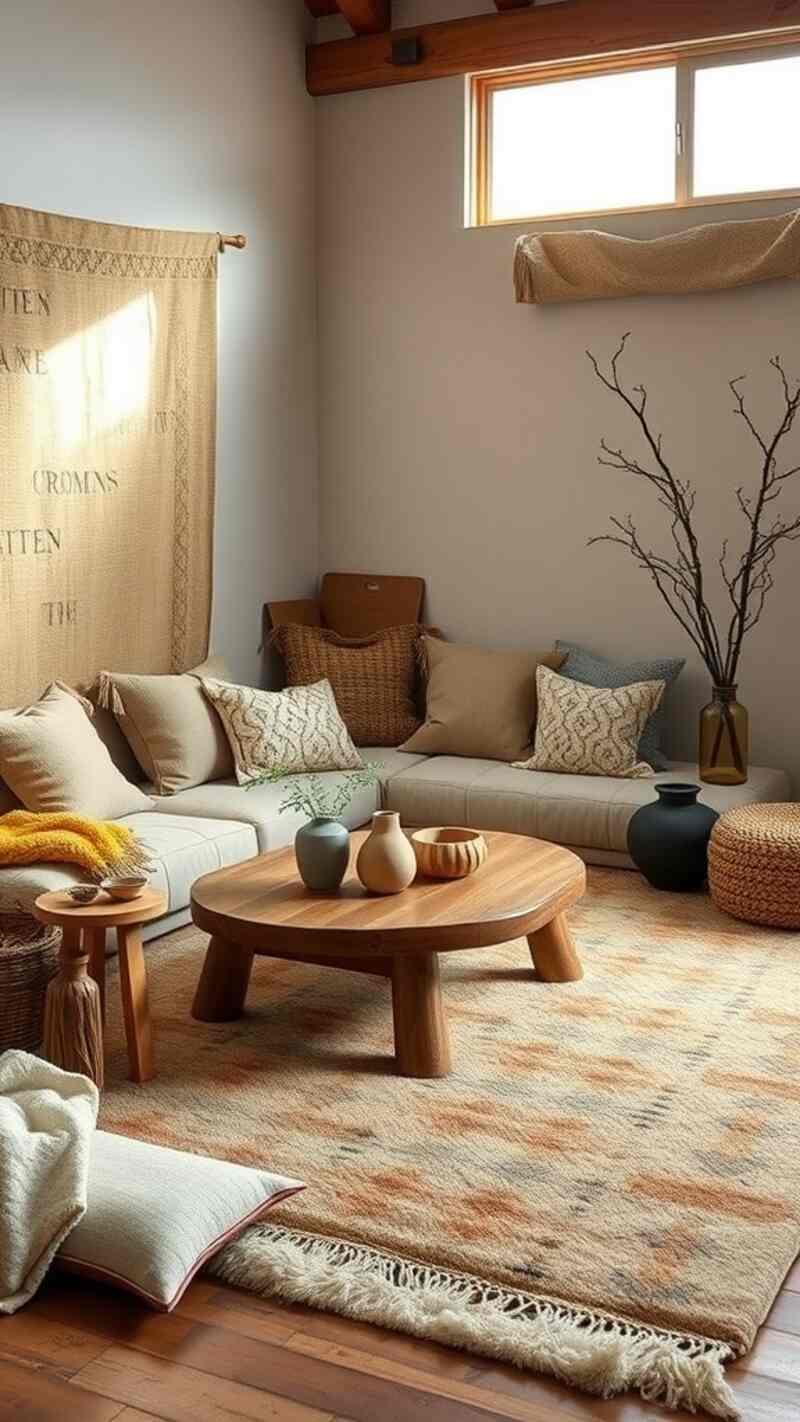
When creating a cozy wabi-sabi living room, focus on comfortable seating that invites relaxation.
Try mixing different textures and patterns in your cushions and throws to add warmth and character.
A simple layout with a couple of soft chairs and a plush sofa can create the perfect space for gathering and unwinding.
Handthrown Pottery and Woven Baskets Over Mass-Produced Accessories
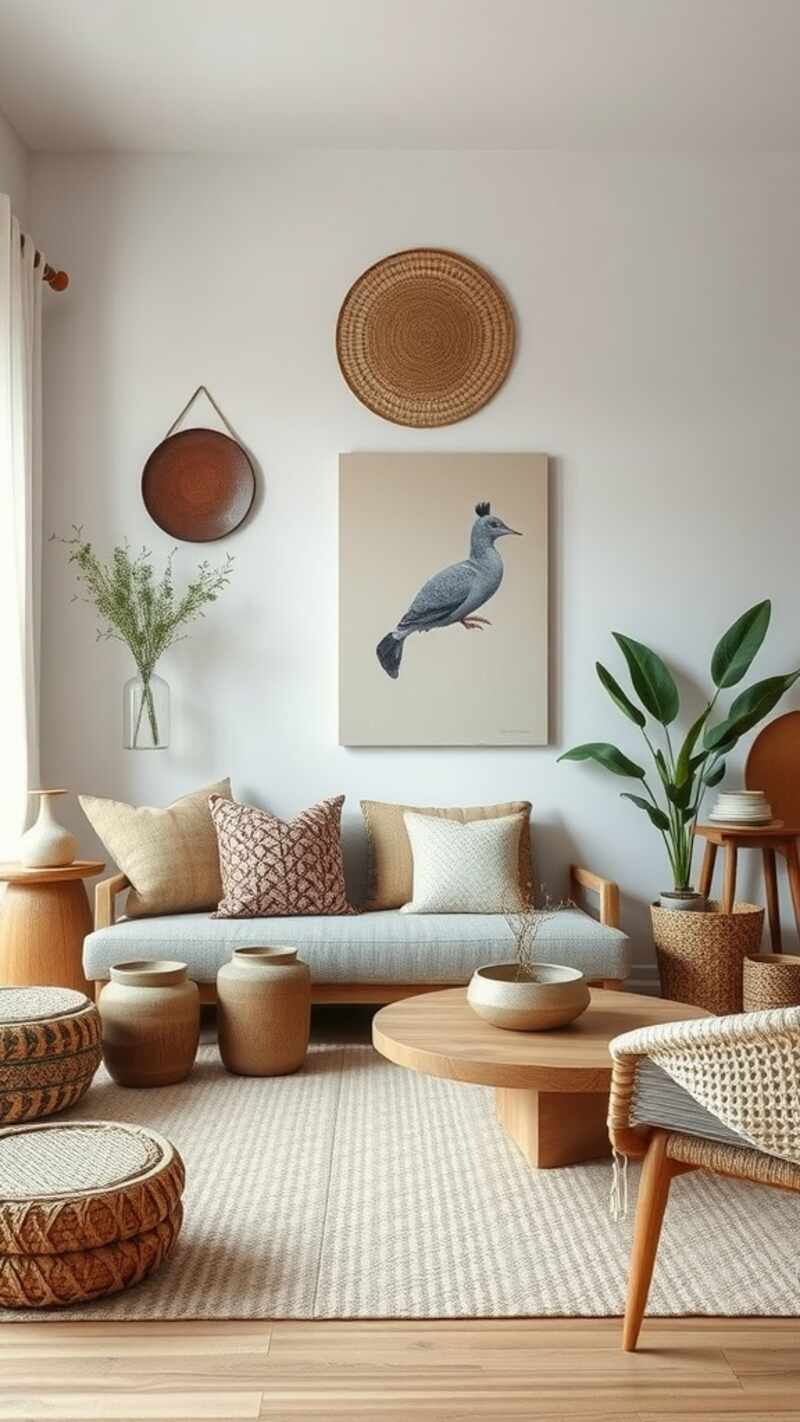
A handthrown bowl with an uneven lip.
A basket woven so that you can see the individual reed.
A candle in an unglazed clay holder.
These objects carry the visible mark of their making, which is exactly what gives a wabi-sabi room its character.
Mass-produced accessories tend to flatten a space; one well-chosen handmade piece does more work than a shelf of matching store-bought ceramics.
Open Shelves with Stacked Books, Plants, and Empty Space
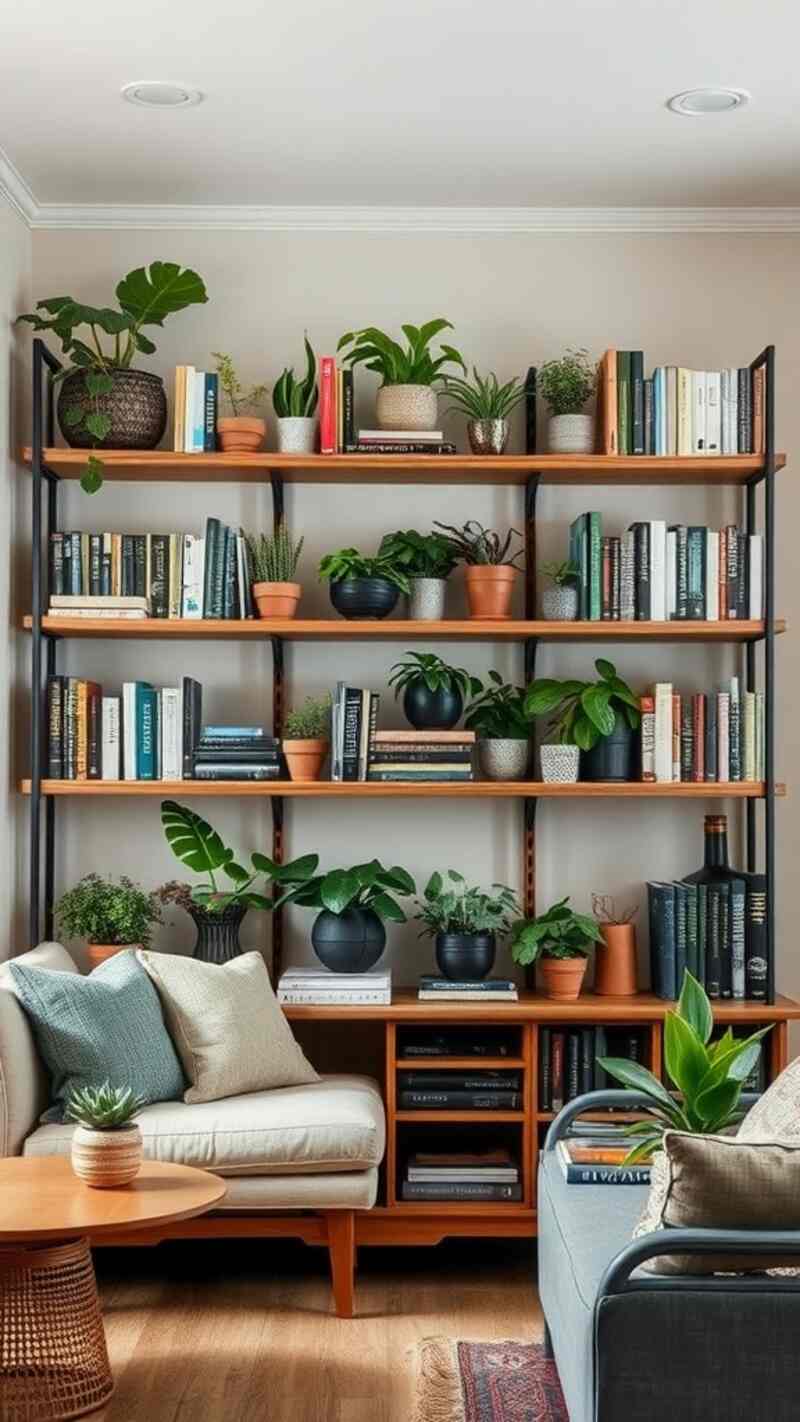
Open shelving in a wabi-sabi room should look edited, not full.
Books stacked horizontally alongside books shelved upright, with a small ceramic pot or a single dried branch as a break between groups.
Leave a gap somewhere on purpose.
The shelf that draws the eye is usually the one with the most empty space on it, not the most objects.
One Good Object Per Surface Rather Than Grouped Collections
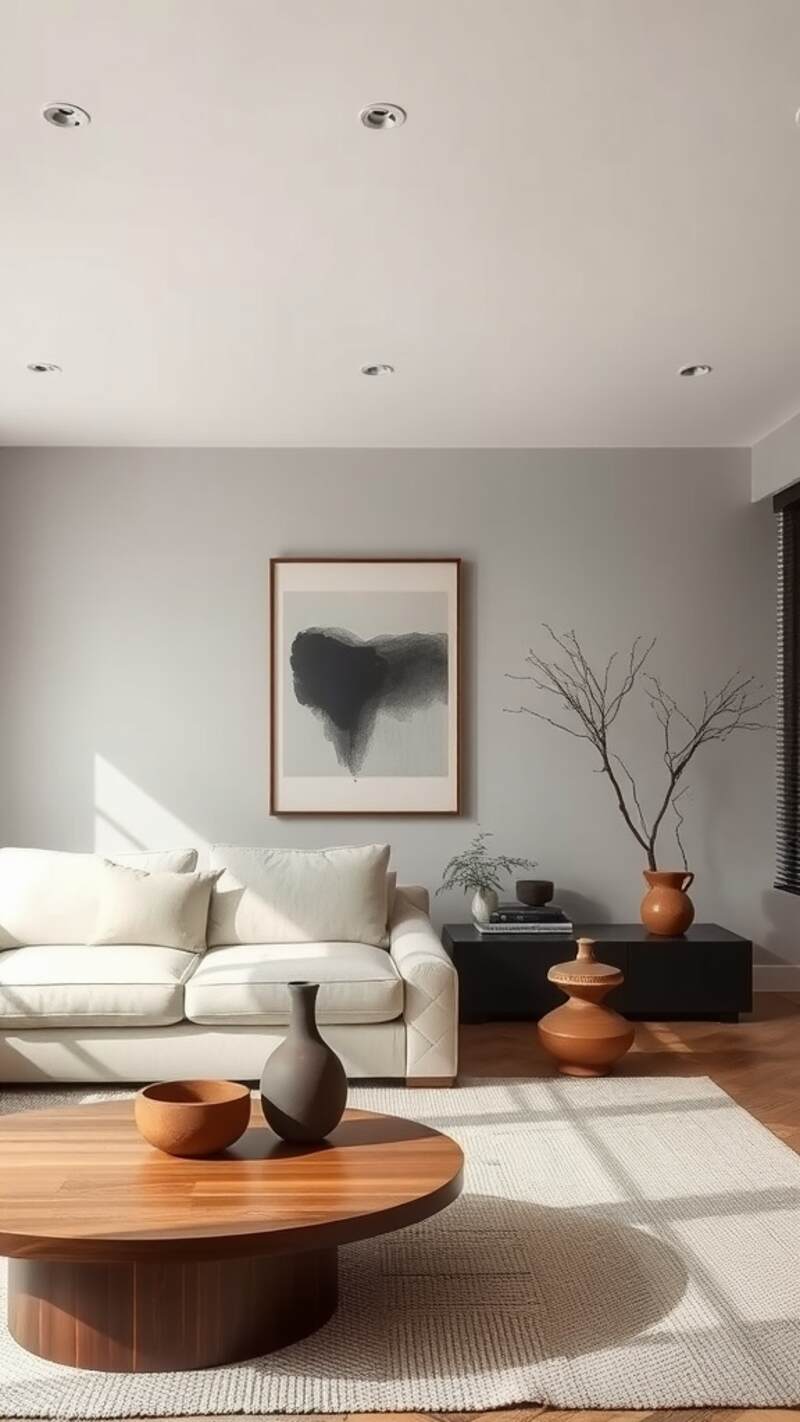
Accessorizing your wabi-sabi living room is all about keeping it simple.
Choose a few carefully selected pieces that reflect your style and add warmth.
Natural materials like wood and soft fabrics can create a cozy vibe without overwhelming the space.
Smooth River Stones, Unscented Candles, and a Dog-Eared Book
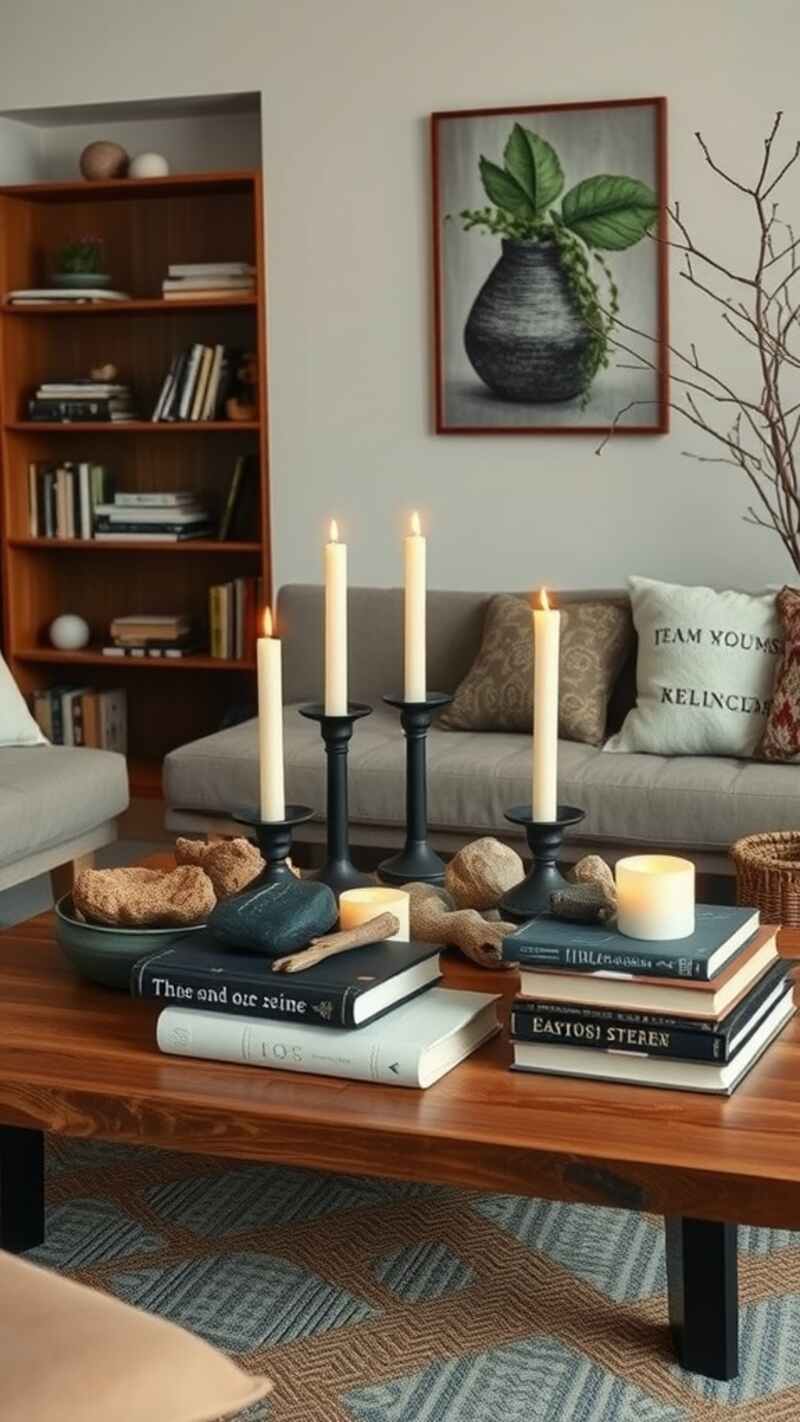
The coffee table display needs restraint.
Two or three objects at most: a smooth river stone, a short pillar candle in a clay holder, a paperback left face-down.
Resist grouping them in a tray — that formalizes the arrangement in a way that works against the aesthetic.
Move them slightly off-center.
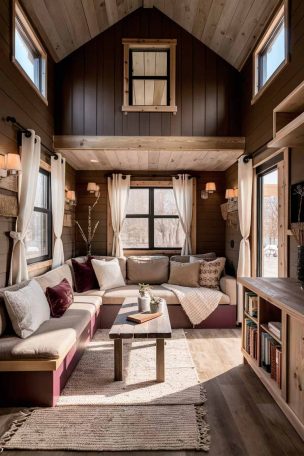
Undyed Linen, Chunky Knit Throws, and Worn Cotton Cushion Covers
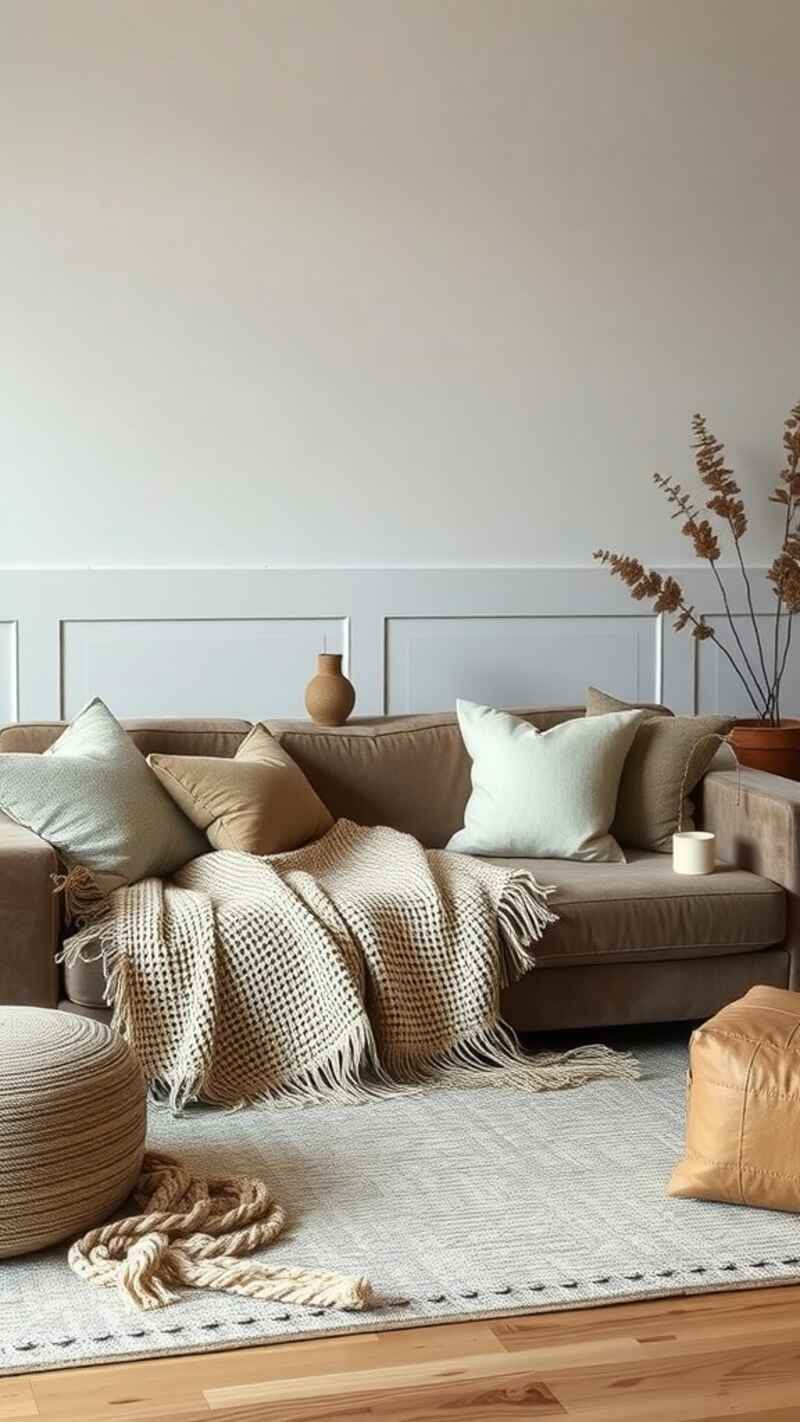
Textiles play a significant role in creating a cozy wabi-sabi living room.
Soft blankets and varied cushions invite relaxation and comfort.
Using natural materials adds warmth and timeless charm to your space.
A Low Chair, a Side Table, and a Reading Light in the Corner
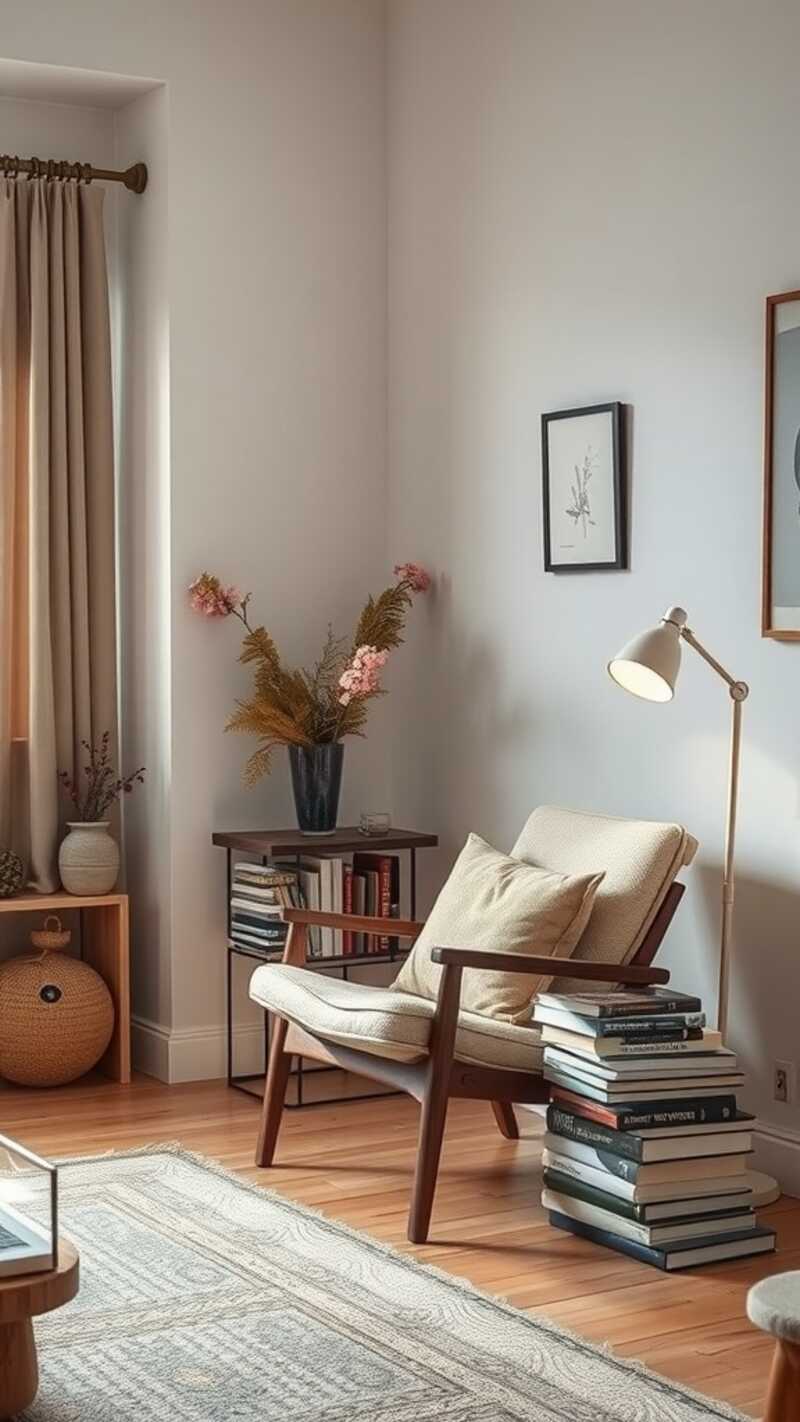
Creating a cozy nook in your wabi-sabi living room is about comfort and simplicity.
Think of a comfy chair with soft cushions and a small side table for your favorite books or a warm drink.
Add a touch of greenery or a delicate vase to bring in some inspiration from nature, making it a perfect spot to unwind.
A Single Ceramic Vase on an Otherwise Empty Shelf
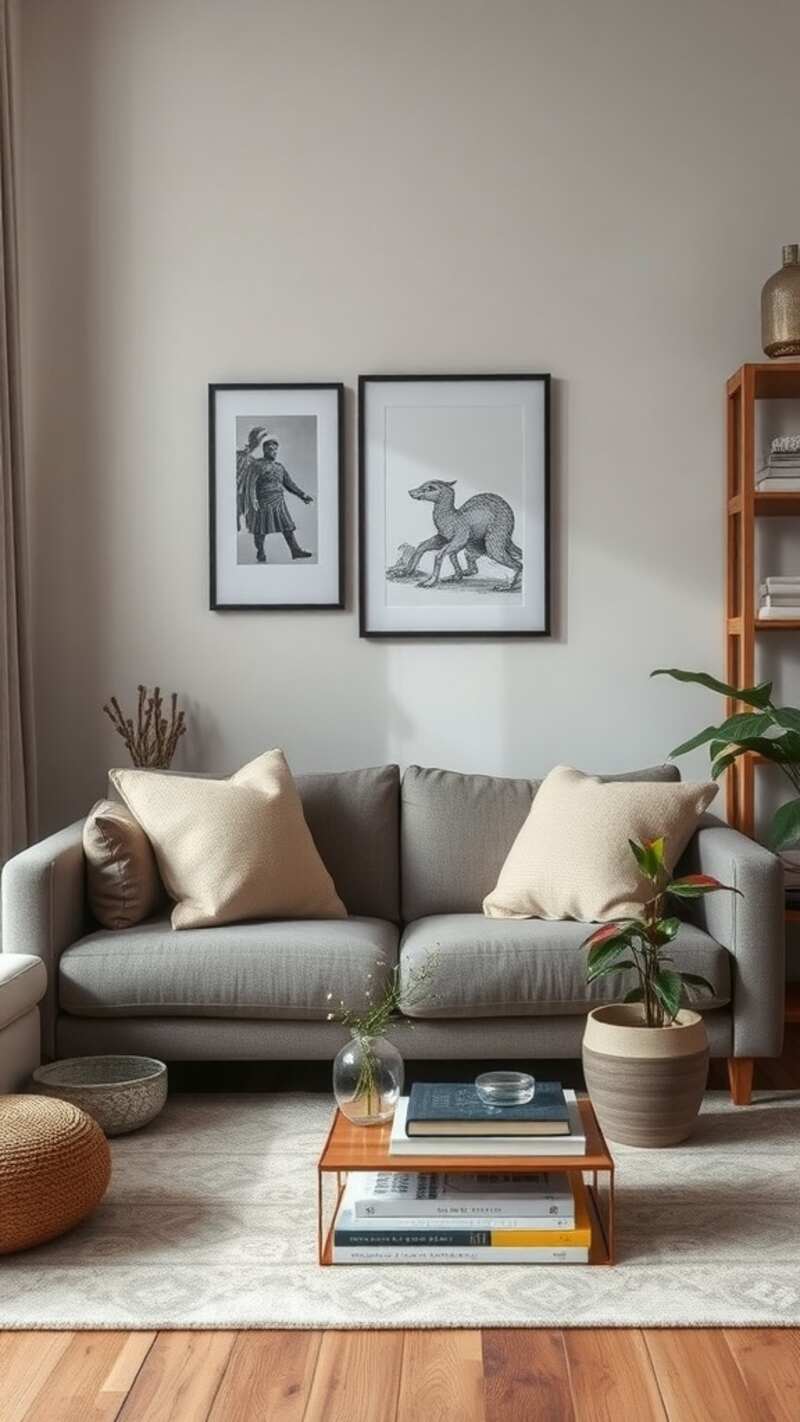
Wabi-sabi living rooms shine with displays of everyday items that tell a story.
Use simple vases, books, and plants to create a cozy vibe that invites conversation.
This interior design approach embraces imperfections, turning ordinary objects into unique pieces of inspiration.
Clean-Lined Furniture Alongside Antique or Vintage One-Off Pieces
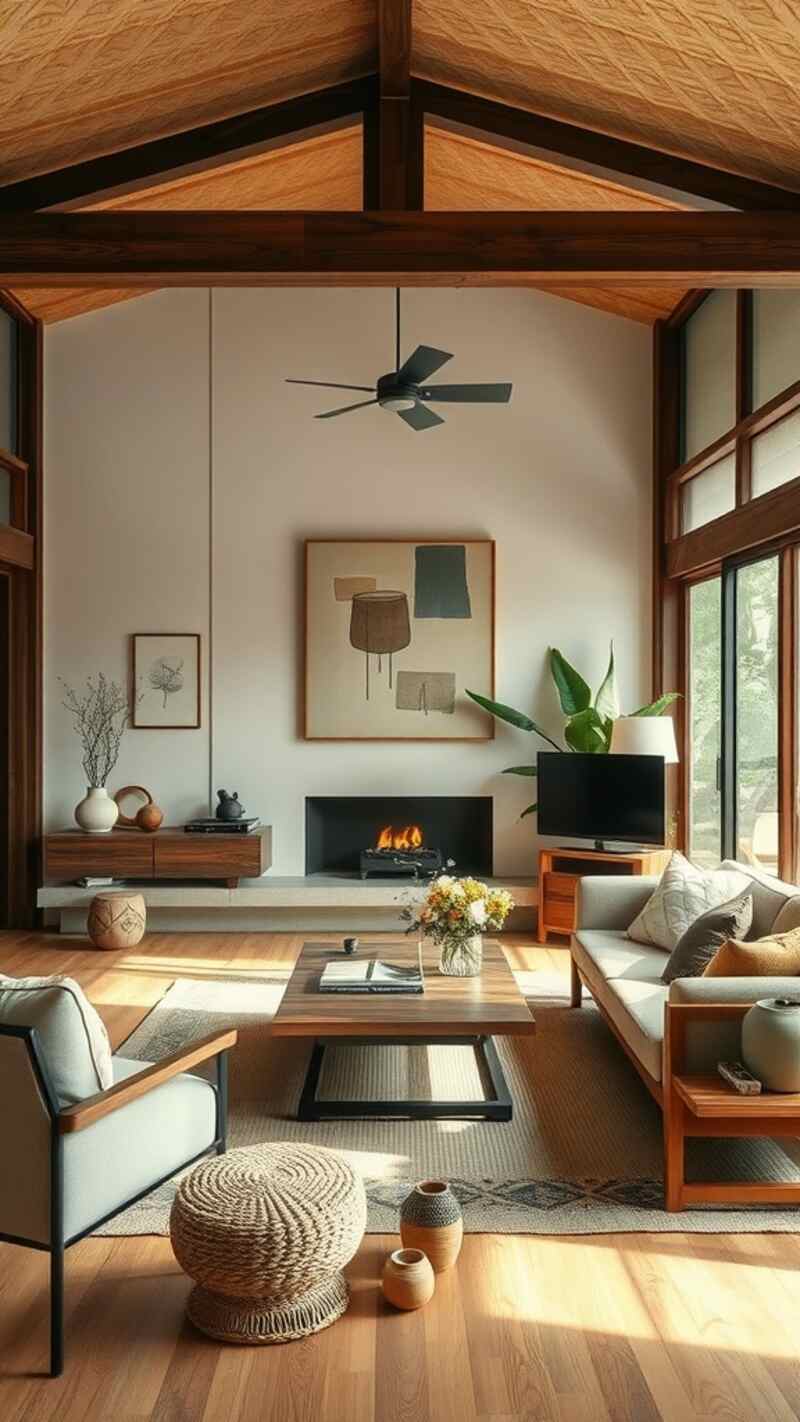
Combining modern and traditional elements can create a unique wabi-sabi living room vibe.
Think sleek furniture paired with vintage decor to bring warmth and character to your space.
This blend adds visual interest and tells a story of timeless design inspiration.
Swapping Woven Baskets and Dried Grasses as Seasons Shift
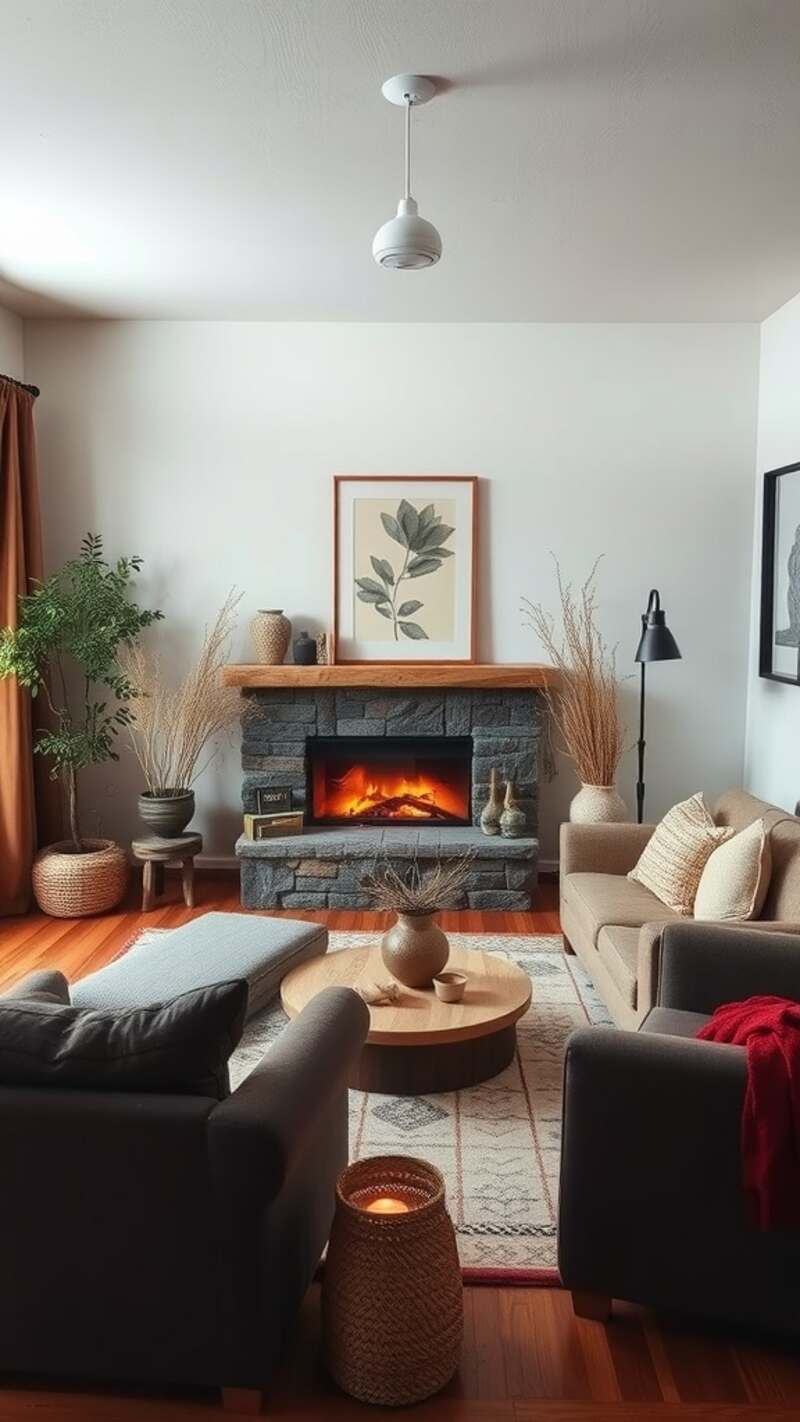
Creating a cozy wabi-sabi living room is all about embracing imperfections.
Use natural materials like woven baskets and earthy tones for seasonal decor that feels relaxed yet inviting.
This approach to interior design makes your space timeless and warm, perfect for any season.
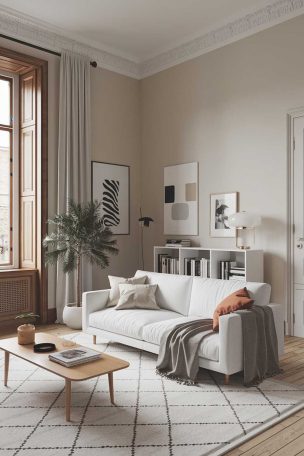
Low Furniture, Negative Space, and the Quiet Power of Doing Less
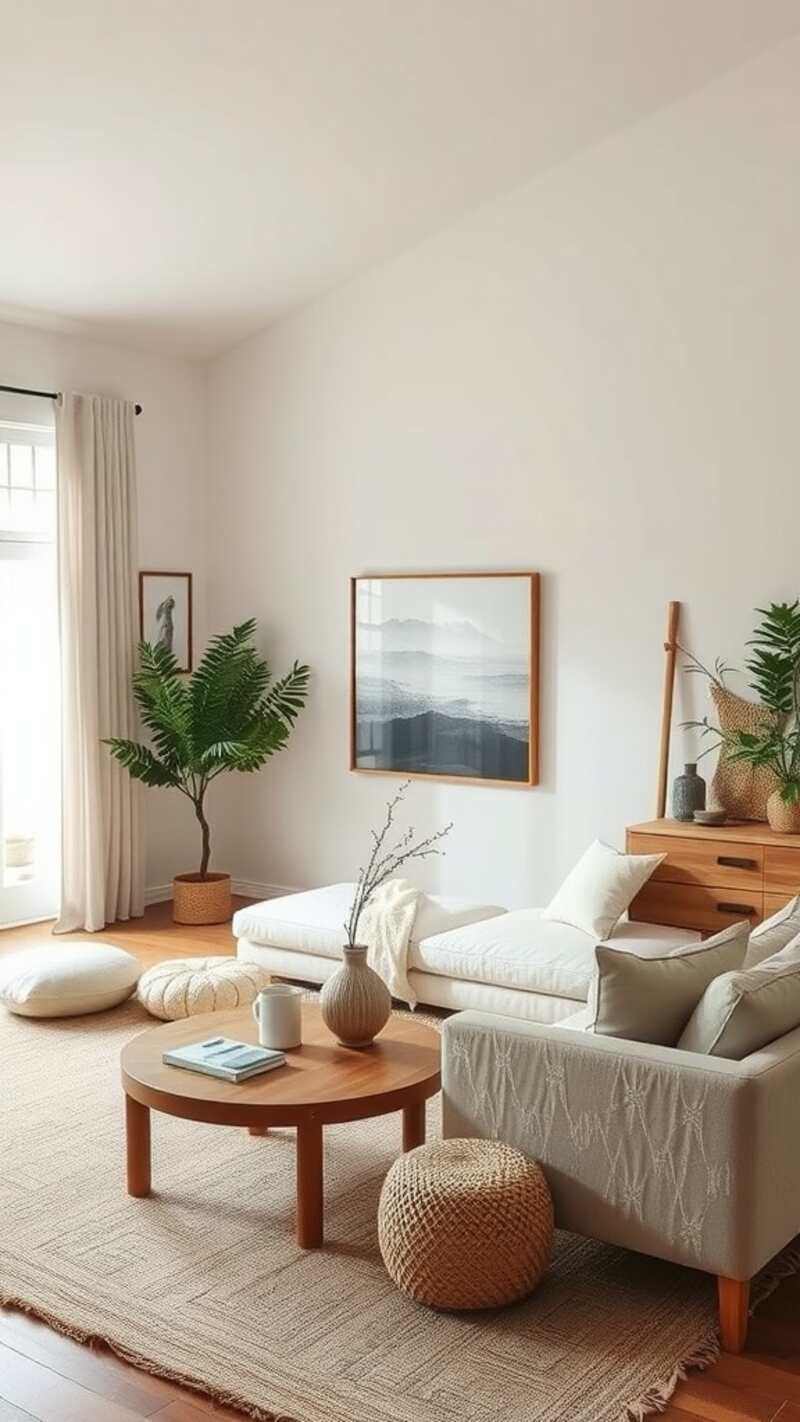
Tranquility in a wabi-sabi room comes from restraint.
Fewer surfaces competing for attention. Furniture sitting lower to the ground.
A gap between the sofa and the wall.
These are not decorating tricks; they’re the result of removing things rather than adding them.
If a shelf looks peaceful, it’s usually because someone decided not to put the fourth object on it.
Soft light at floor level, a wool rug that muffles footsteps, a window kept clear of curtains — small decisions that accumulate into a room that genuinely feels quiet.
Conclusion
Wabi-sabi doesn’t ask for a redesign. It asks for a different way of looking at what’s already there.
The chipped corner of a coffee table.
The linen that wrinkles the moment you sit on it.
The plant that leans slightly toward the window. T
hese are not problems to fix.
Start with one surface — a shelf, a side table — and try leaving something off it. That gap is where the philosophy lives.