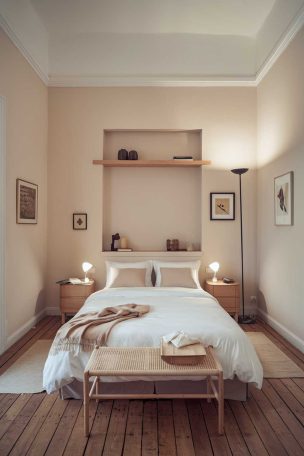
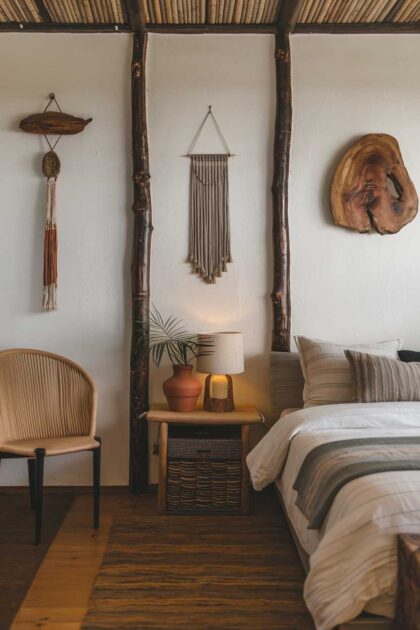
A wabi-sabi bedroom strips away everything that doesn’t belong and leaves only what feels right.
This Japanese design philosophy finds beauty in cracked pottery, unfinished wood, and linens that soften with every wash.
It sits at the intersection of wabi-sabi minimalism and lived-in warmth, two ideas that work together better than most people expect.
Your bedroom is the one room where you spend the most unguarded hours, so it deserves a design approach that prizes calm over perfection.
These 21 wabi-sabi bedroom design ideas cover specific materials, color choices, furniture styles, and styling techniques you can start using today.
What Is Wabi-Sabi Design?
Wabi-sabi is a Japanese aesthetic rooted in three ideas: imperfection, impermanence, and incompleteness.
The word “wabi” originally described the loneliness of living in nature, and over centuries it shifted to mean a kind of rustic simplicity.
“Sabi” refers to the beauty that comes with age, the patina on a copper bowl or the wear on a wooden threshold.
Together, wabi-sabi interior design rejects the polished, the symmetrical, and the mass-produced.
A wabi-sabi style bedroom prizes raw linen over crisp cotton, hand-thrown ceramics over machine-made vases, and reclaimed timber over factory-milled boards.
The philosophy shares DNA with the Japandi movement, which blends Japanese restraint with Scandinavian functionality.
Where Japandi leans slightly more structured, wabi-sabi home decor leans softer and more accepting of visible flaws.
In a bedroom, this translates to spaces that feel quiet, grounding, and unmistakably personal.
Soft Color Palettes Inspired by Nature
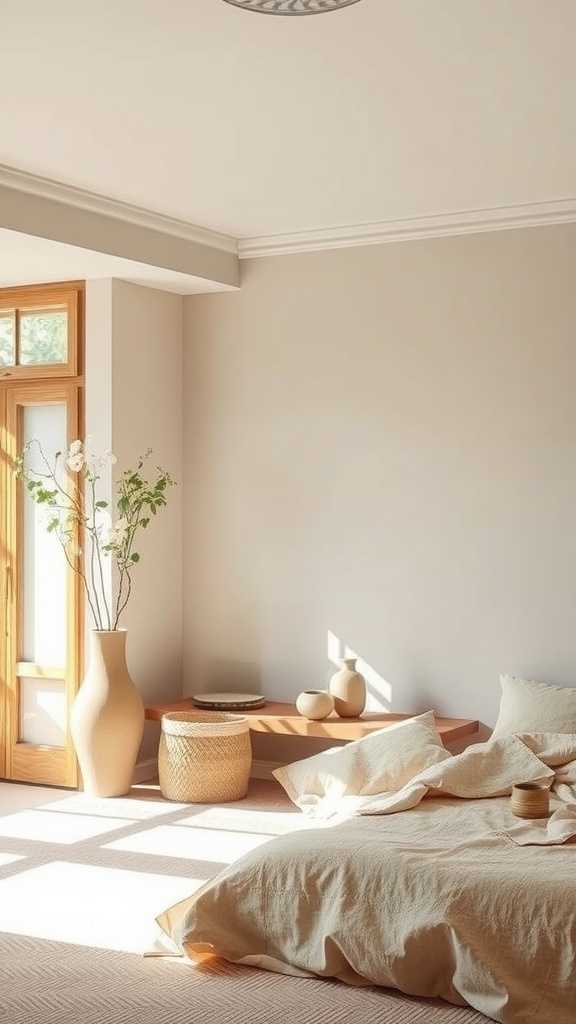
A wabi-sabi color palette draws straight from the earth: mushroom, warm sand, stone gray, dried sage, and soft clay.
These muted tones work because they don’t compete for attention, letting textures and materials do the talking instead.
Warm neutrals like Sherwin-Williams “Accessible Beige” (SW 7036) or Benjamin Moore “White Heron” (OC-57) make strong base wall colors for this approach.
Layer in muted greens, such as a sage or eucalyptus tone, through your bedding or a single upholstered chair.
Avoid stark white walls, which feel clinical rather than calm.
Off-whites with yellow or pink undertones read warmer and mimic the look of aged plaster, a staple of wabi-sabi interior design.
A good rule: pick one warm neutral for walls, one deeper earth tone for textiles, and one subtle accent pulled from dried botanicals or unglazed ceramics in the room.
Embracing Imperfection with Textured Fabrics
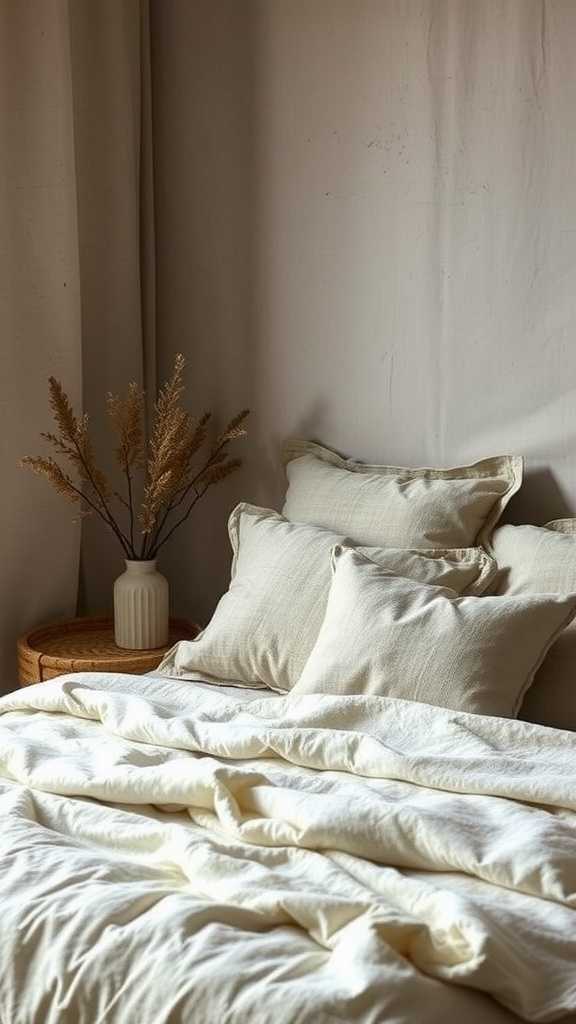
Texture does more visual work in a wabi-sabi style bedroom than color or pattern ever could.
Raw Belgian linen, with its natural slub and tendency to wrinkle, is the single best fabric choice for this look.
Brands like Piglet in Bed and Cultiver sell pre-washed linen bedding in the muted earth tones that suit this aesthetic perfectly.
Pair your linen sheets with a chunky hand-loomed cotton throw at the foot of the bed.
A slubby wool blanket draped over one side of the mattress, rather than folded neatly, adds the deliberate imperfection that defines this philosophy.
Skip anything with a sheen or a tight weave, as polished sateen and percale belong to a different design language entirely.
Creating a Minimalist Yet Cozy Atmosphere
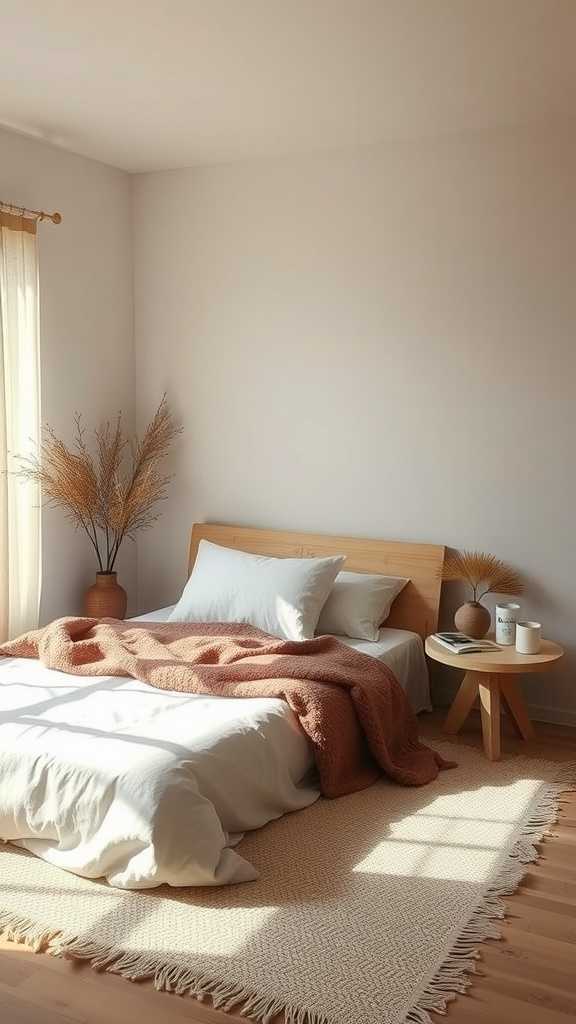
Wabi-sabi minimalism works differently from the stark, everything-hidden minimalism popular in the early 2010s.
The goal is fewer possessions, not fewer comforts.
Start by removing anything purely decorative that has no personal meaning or tactile appeal.
Keep what you actually use: the book on your nightstand, the ceramic mug you drink tea from before bed, the wool slippers by the door.
A low platform bed with a simple frame anchors the room without dominating it.
Choose bedside tables in unfinished or lightly oiled wood rather than lacquered or painted surfaces.
Leave some breathing room between furniture pieces, giving each object enough space to be noticed on its own.
The room should feel pared back and warm at the same time, like a space that has been lived in thoughtfully for years.
Natural Materials That Speak to the Soul
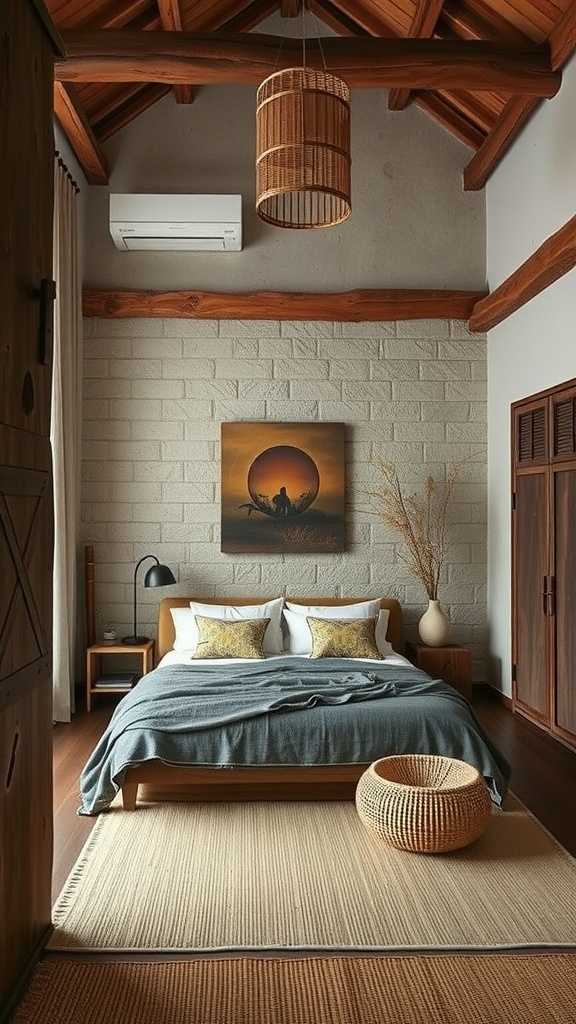
In a wabi-sabi bedroom, every surface tells you what it’s made from.
Reclaimed oak, unfinished cedar, and hand-planed walnut work well for bed frames, shelving, and nightstands.
Look for wood that shows its grain, its knots, and its minor imperfections, because those marks are the whole point.
Stone accents add weight and grounding energy: a slab of travertine as a catchall tray, a river stone bookend, or a raw marble lamp base.
Linen, raw cotton gauze, and undyed wool make up the textile layer.
Clay and stoneware, especially pieces with visible throwing marks or uneven glazes, bring the philosophy to the smallest details.
If you’re sourcing furniture, search for “live edge” or “wabi-sabi bed frame” pieces from makers who leave the wood’s natural edge intact.
Organic Shapes in Furniture and Decor
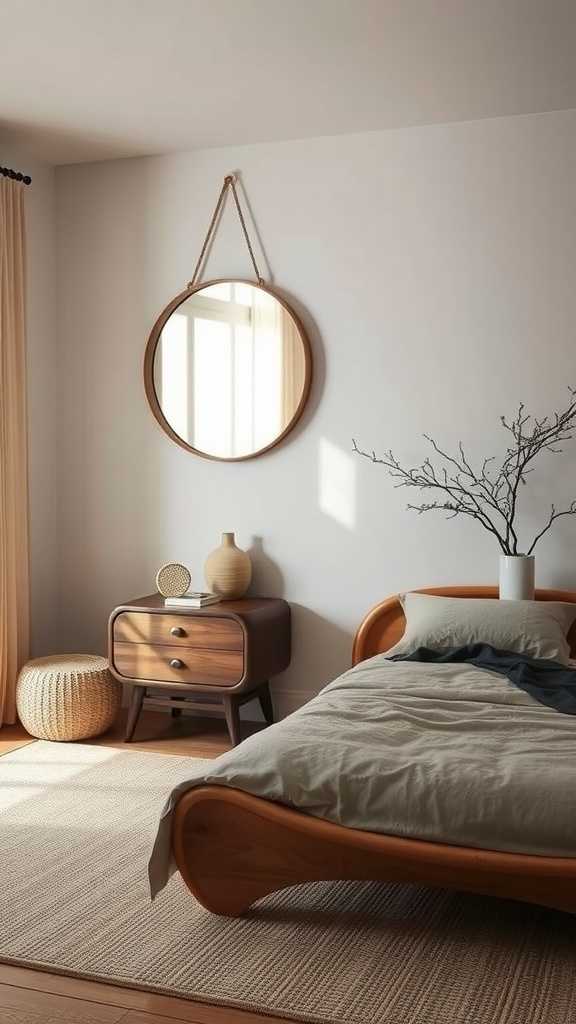
Straight lines and sharp corners have no place in wabi-sabi bedroom decor.
A bed frame with gently curved edges, a round side table, or an asymmetrical ceramic lamp all soften the visual energy of a room.
Look at how Japanese woodworkers shape furniture: they follow the wood’s grain rather than forcing it into rigid geometry.
Curved headboards upholstered in oatmeal linen bring this same principle to a modern bedroom.
An irregularly shaped wooden stool works as a nightstand, plant stand, or spot for a morning cup of coffee.
These organic forms guide your eye through the space in a gentle arc, which feels calming in a way that grid-based rooms rarely do.
Integrating Vintage and Antique Pieces
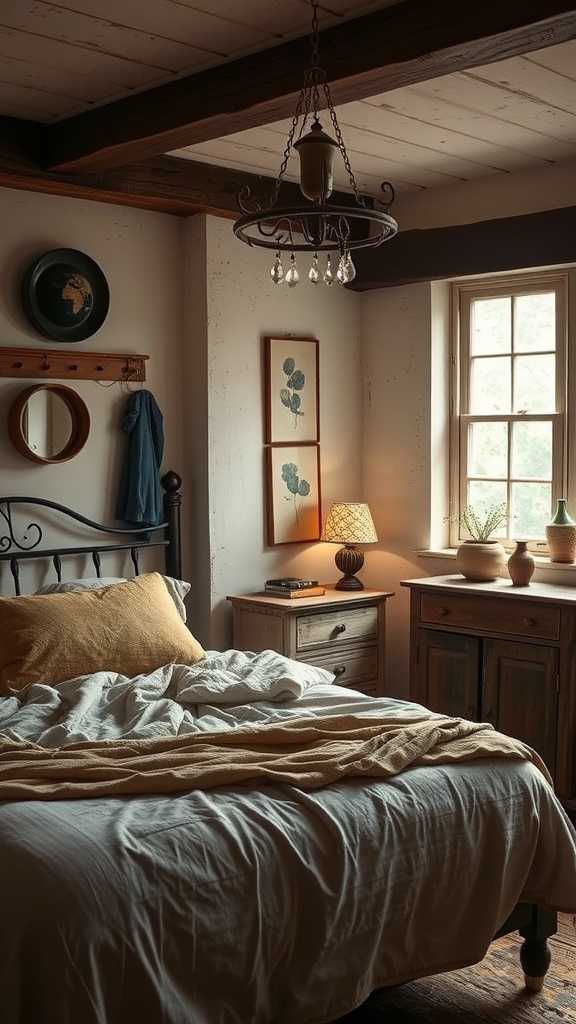
Wabi-sabi and vintage furniture share a core belief: that wear and age make an object more beautiful, not less.
A 1960s teak dresser with drawer pulls that have dulled over decades fits this bedroom style perfectly.
Flea markets, estate sales, and shops like Chairish or 1stDibs are good hunting grounds for these kinds of pieces.
Pair one larger vintage item, like a wardrobe or writing desk, with two or three smaller antique accessories.
An old brass candleholder, a weathered picture frame, or a stack of cloth-bound books on the nightstand adds character without clutter.
The contrast between these aged pieces and your fresh linen bedding creates a visual tension that gives the room its personality.
Avoid “distressed” furniture that’s been artificially aged in a factory, as the whole philosophy depends on authenticity.
Look for items with real patina, real scratches, and a real history behind them.
Mix eras freely: a mid-century chair beside a centuries-old ceramic bowl shows that beauty doesn’t belong to any single period.
Incorporating Natural Light for Serenity
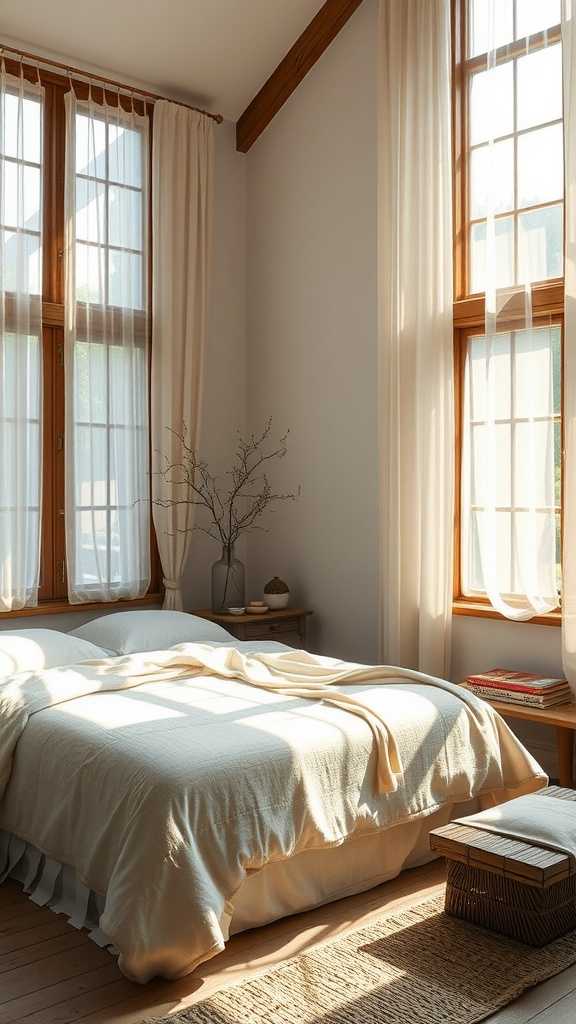
Light shapes mood faster than any piece of furniture can.
In a wabi-sabi bedroom, the goal is soft, diffused daylight that shifts through the room as the hours pass.
Sheer linen curtains filter harsh direct sun into a warm glow while preserving privacy.
Avoid heavy blackout drapes if possible; instead, try double-layered sheers in cream or natural flax that let you control brightness without blocking light entirely.
Position your bed so morning light falls across the pillow area, which naturally supports your circadian rhythm.
If your windows are small, a large mirror with a raw wood or aged metal frame placed opposite the window will bounce light deeper into the room.
The play of shadows and light across textured surfaces, like a rough plaster wall or a woven bedspread, is one of the quietest pleasures of wabi-sabi interior design.
Incorporating Plants for a Calm Vibe
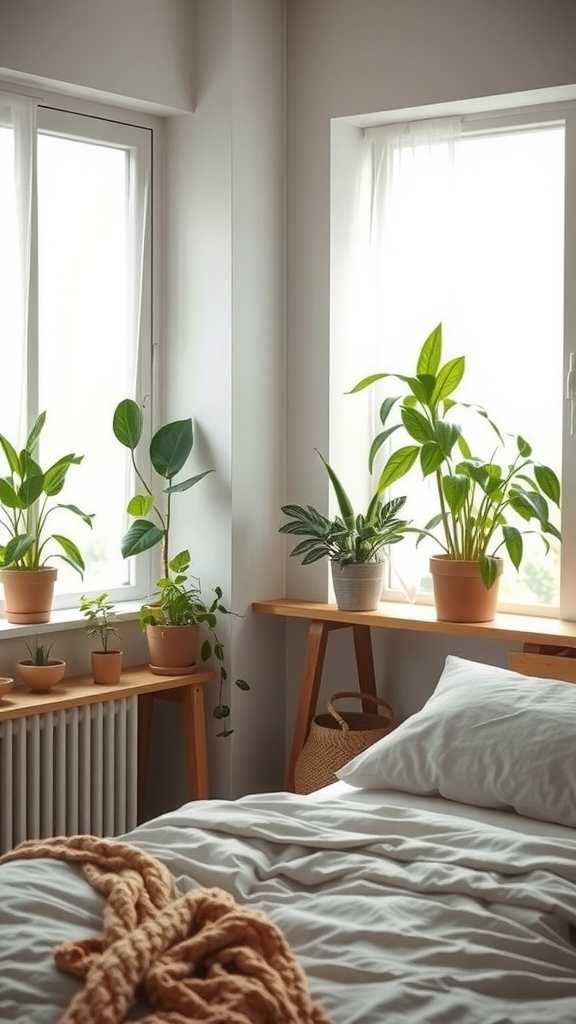
Living greenery brings a wabi-sabi bedroom closer to the natural world it draws inspiration from.
Choose plants with interesting, imperfect shapes: a trailing pothos with uneven vines, a fiddle leaf fig with a slight lean, or a Japanese maple bonsai on the windowsill.
Terracotta pots, unglazed stoneware planters, and woven seagrass baskets make better containers than shiny ceramic or plastic.
Group plants at different heights, one on the floor in a large pot, one on a wooden stool, and one on a high shelf to create visual movement.
Dried botanicals work just as well and honor the wabi-sabi principle of impermanence: a bundle of dried eucalyptus, pampas grass, or a single branch of dried cotton bolls.
Rotate your arrangements with the seasons, letting the bedroom shift as the natural world outside your window does.
Artisanal Touches in Accessories
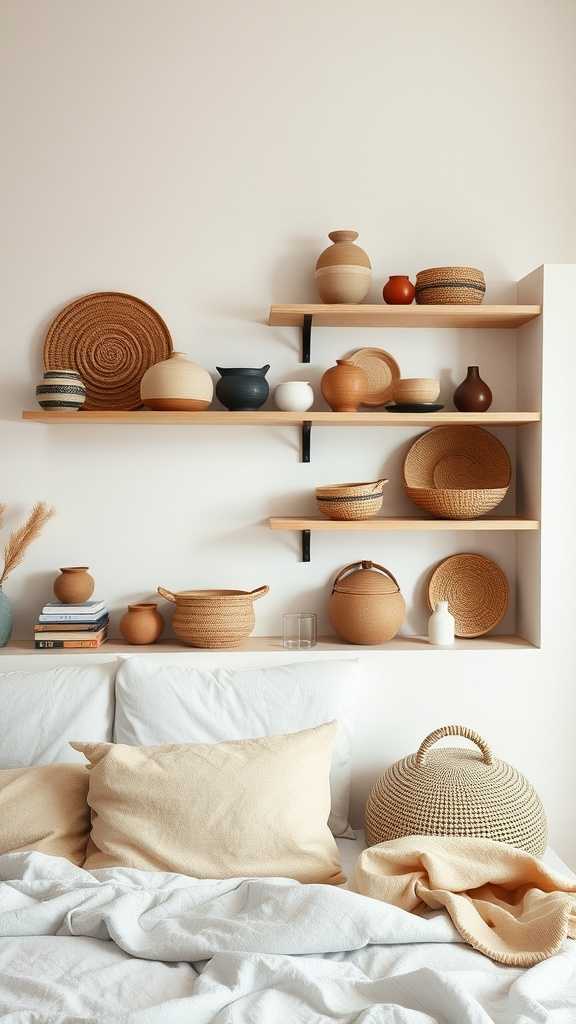
Mass-produced accessories feel hollow in a wabi-sabi style bedroom.
Handcrafted objects carry the energy and imperfection of the person who made them, which is exactly what this philosophy values.
A hand-thrown ceramic vase with a slightly uneven rim holds more visual weight than a factory-perfect one.
Woven baskets from artisan cooperatives in Oaxaca, Morocco, or Bali bring texture and story to open shelving.
Place a hand-stitched linen pillow alongside your machine-made bedding to create a subtle contrast between the two.
A single piece of handmade pottery on the nightstand, filled with nothing at all, can anchor the whole room’s mood.
When sourcing these pieces, look at Etsy shops specializing in small-batch ceramics, local craft fairs, or Instagram makers who show their process.
The imperfections in handmade goods, a thumbprint in the glaze, an uneven edge, a slight wobble, are what make them right for this space.
Intentional Clutter with Purposeful Design
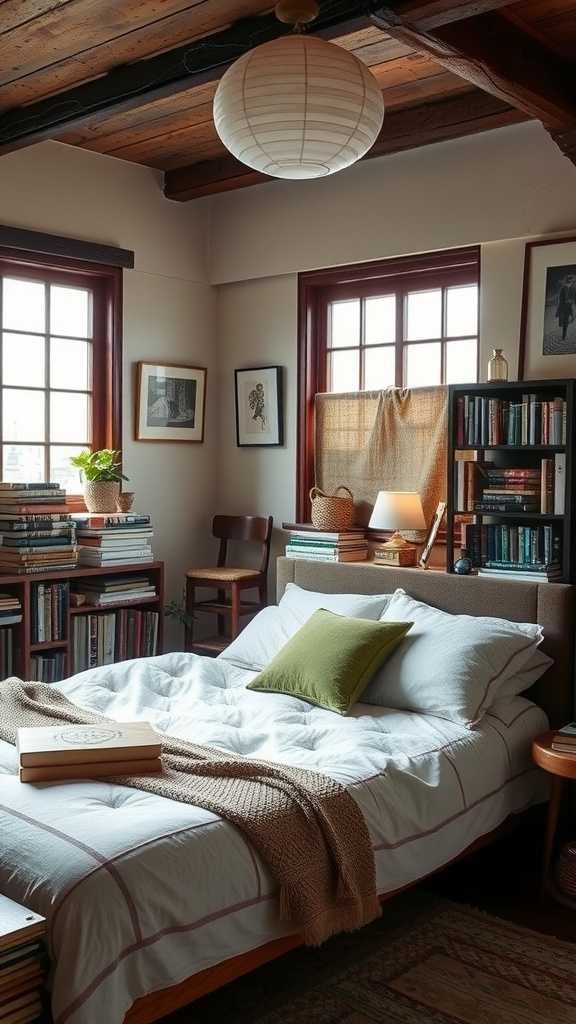
Wabi-sabi is not about empty rooms.
It’s about rooms where everything present has earned its place through use or meaning.
A stack of four or five well-loved books on the floor beside the bed looks natural and inviting.
A folded throw blanket spilling slightly off the armchair suggests a room that’s actually lived in, not staged for a photograph.
The boundary between clutter and character comes down to intention: if you can explain why something is there, it stays.
A collection of small stones gathered from beach trips, displayed in a shallow wooden bowl, is purposeful.
Random mail, charging cables, and plastic water bottles are not, and they break the spell quickly.
Curated Personal Artifacts as Decor
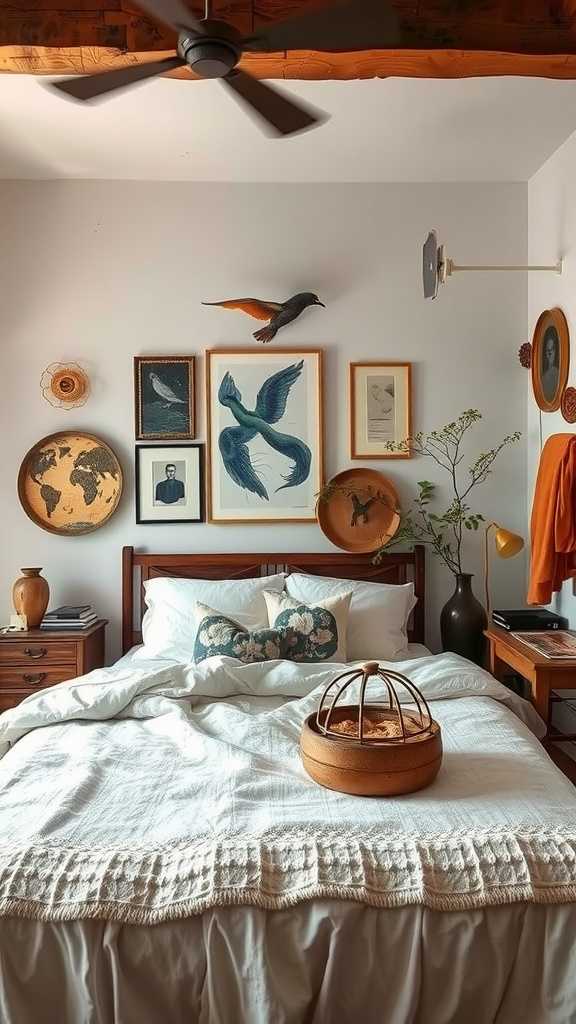
The most compelling wabi-sabi bedrooms contain objects with real personal history.
A framed photograph from your grandparents’ wedding, printed in black and white and placed in a simple wooden frame, carries more visual gravity than any store-bought print.
Travel souvenirs work well when displayed sparingly: a single carved figure from a trip to Kyoto, a woven textile from Guatemala, or a piece of sea glass collected on a coastline walk.
Group these personal items on one surface, like the top of a dresser or a floating shelf, rather than spreading them across every flat surface in the room.
This concentrated display creates a focal point that tells a story about who you are.
Swap pieces out seasonally or as your life changes, letting the display grow and shift with you.
Layering Textures for Depth
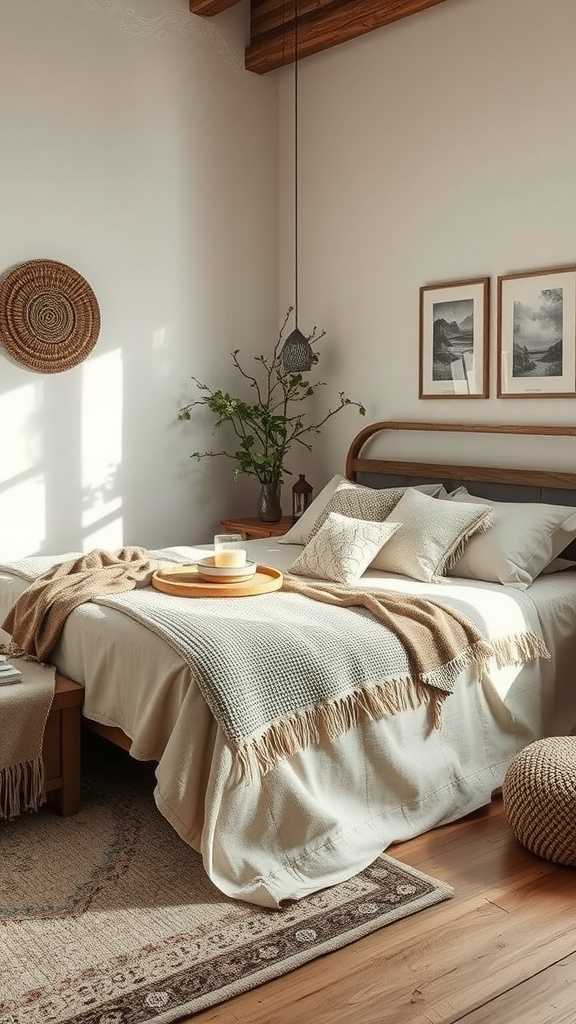
A single-texture room feels flat, no matter how good that texture is.
Wabi-sabi bedroom design relies on stacking different tactile surfaces to build visual richness without adding color or pattern.
Start with the bed: a linen fitted sheet, a cotton waffle-knit blanket, a chunky wool throw, and two or three pillows each in a different weave.
On the floor, layer a jute rug under a smaller sheepskin or a vintage wool kilim beside the bed where your feet land in the morning.
Walls contribute texture too, through rough plaster, lime wash paint, or even a simple coat of matte paint over drywall.
Wooden surfaces add their own grain patterns to the mix.
Ceramic and stone accessories on the nightstand bring cool, smooth textures that contrast with the warmth of your fabrics.
When you stand in the doorway and look at the room, you should see at least four or five distinct textures before your eye reaches the far wall.
Transitional Spaces with Free Flow
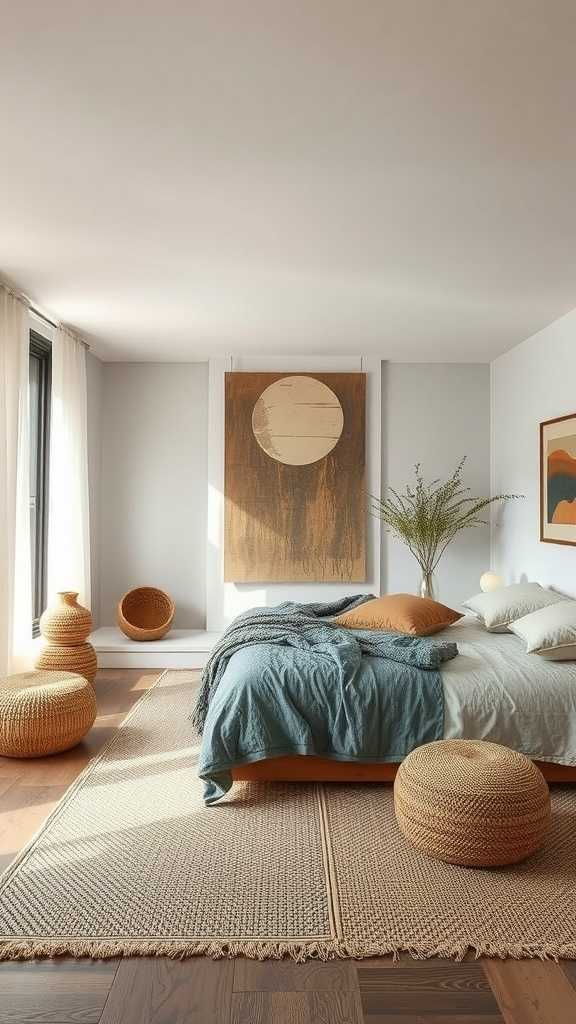
Wabi-sabi design pays attention to how you move through a room, not just how it looks when you’re standing still.
The path from doorway to bed should be clear, unobstructed, and wide enough to walk barefoot without bumping a shin.
Position furniture so it guides movement in a gentle curve rather than forcing sharp turns.
A low bench at the foot of the bed creates a natural boundary between sleeping and dressing areas without a physical wall.
Leave the corners of the room slightly open, resisting the urge to fill every available space.
Open space in a wabi-sabi bedroom is a design element itself, not wasted square footage.
This approach to wabi-sabi home decor makes even a small bedroom feel larger and more restful than it measures on paper.
Soft Lighting Techniques for Relaxation
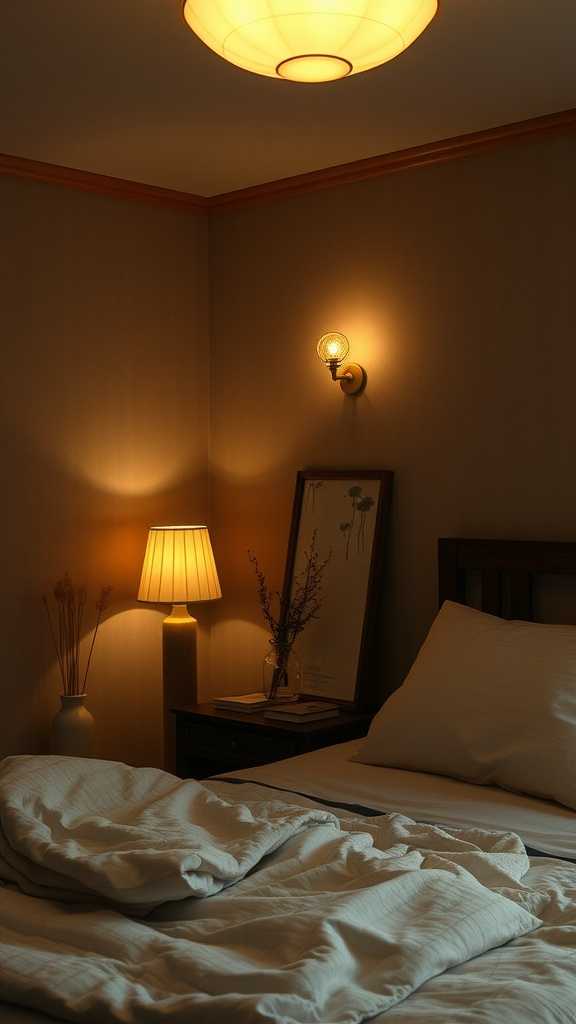
Overhead ceiling lights, especially recessed LEDs, are the enemy of a wabi-sabi bedroom’s mood.
Replace them with layered, low-placed light sources that mimic the warmth of candlelight.
A ceramic table lamp with a linen shade on the nightstand gives off a warm, directional glow ideal for reading.
Paper lanterns in the Noguchi style cast diffused light that softens every surface in the room.
If your room has a dimmer switch, set your bulbs to 2700K color temperature and keep the brightness at about 40% in the evening hours.
A small floor lamp in the corner, positioned behind a plant or a wooden stool, creates depth through shadow.
Handcrafted Elements for Authenticity
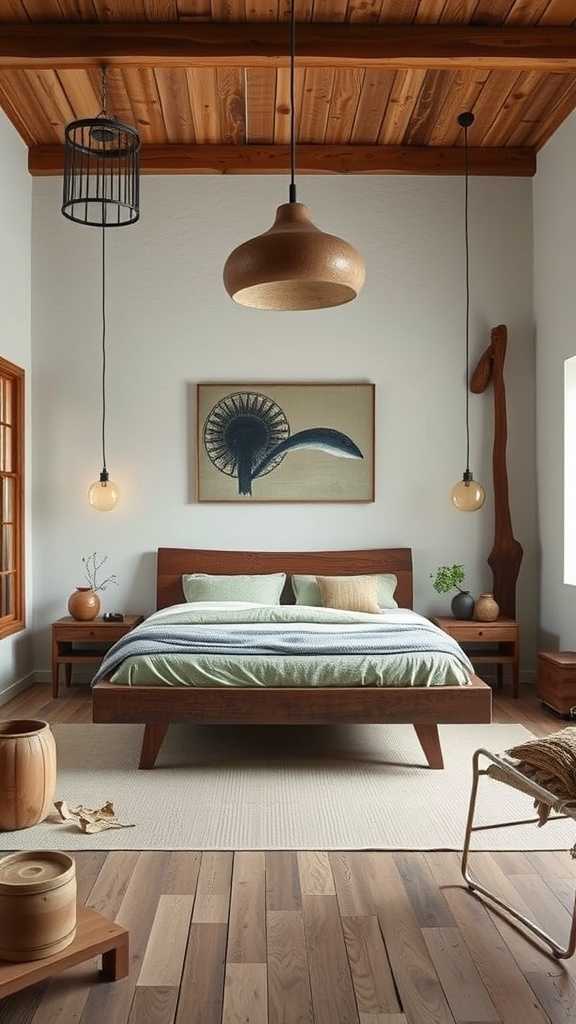
A handcrafted wabi-sabi bed frame, built from reclaimed timber with visible joinery and no stain, serves as the room’s centerpiece.
Makers on platforms like Etsy, Custommade, and local woodworking shops build frames to order with the kind of character that big-box stores cannot replicate.
Look for frames with exposed mortise-and-tenon joints, shou sugi ban (charred wood) finishes, or raw edges left intact.
Handmade ceramics on the nightstand, a pinch pot holding a few rings or a small hand-built dish for your watch, reinforce the handmade theme.
Woven wall hangings made from undyed wool or cotton add a soft sculptural element above the headboard.
The common thread is human touch: the slight irregularities, the tool marks, the grain choices made by a real person.
These imperfections are what separate a wabi-sabi interior design approach from mass-market “natural” decor that mimics the look without the substance.
Each handmade piece carries a small history that a factory item never will.
Welcoming Earthy Accents with Warmth
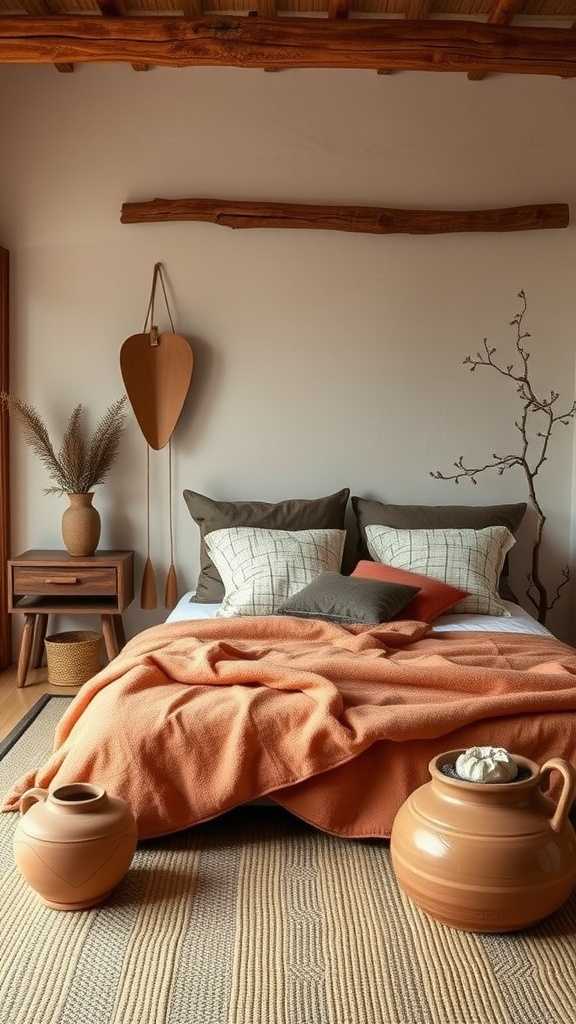
Earth tones in a wabi-sabi bedroom go beyond beige.
Think of the full range: terracotta, umber, ochre, dried lavender, olive, and the warm gray-brown of driftwood.
Introduce these tones through throw pillows, a hand-dyed linen duvet cover, or a small accent rug in a muted rust shade.
Potted plants in terracotta containers add both color and organic shape.
A single piece of wood art, like a cross-section slice mounted on the wall or propped against it on the floor, brings architectural warmth.
Wabi-sabi Japandi interiors lean on this same earthy range, blending Japanese earthiness with Scandinavian wood tones for a look that feels both warm and uncluttered.
The palette should feel like a walk through dry autumn woods: varied but harmonious, with no single color shouting louder than the rest.
Soft Lines with Relaxing Silhouettes
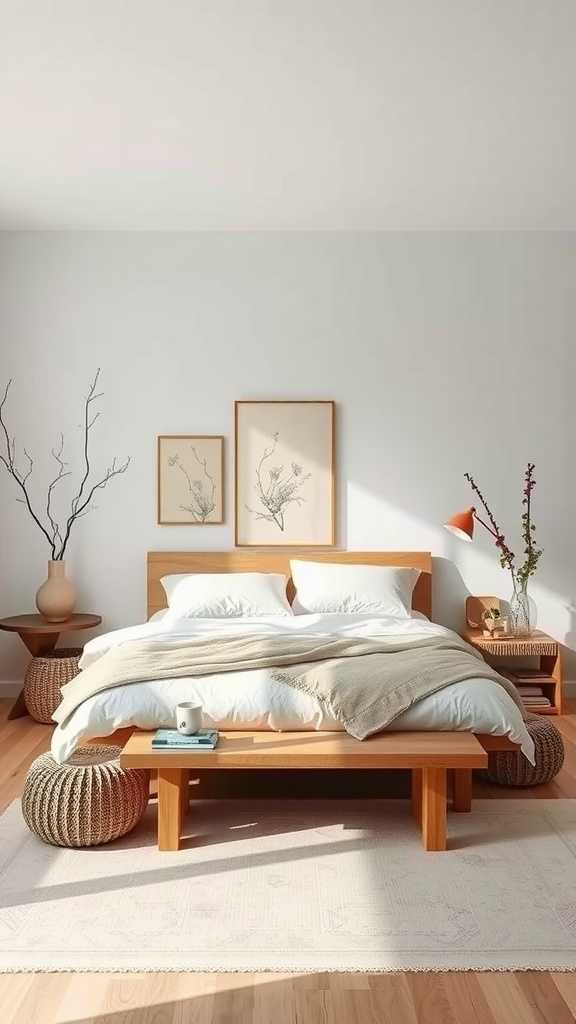
Furniture silhouettes in a wabi-sabi bedroom should look like they could have grown from the floor.
Low-profile beds, rounded nightstands, and gently arched headboards all contribute to this grounded feeling.
A platform bed that sits just 10 to 14 inches off the ground changes the way you relate to the room, pulling your eye line lower and making the ceiling feel higher.
Swap sharp-cornered dressers for ones with rounded edges or waterfall fronts.
Even small details matter: round drawer pulls in brushed brass or matte black ceramic feel softer under the hand than square or rectangular hardware.
The goal is a room where no single line or edge feels aggressive.
Natural Stone Accents for Grounding
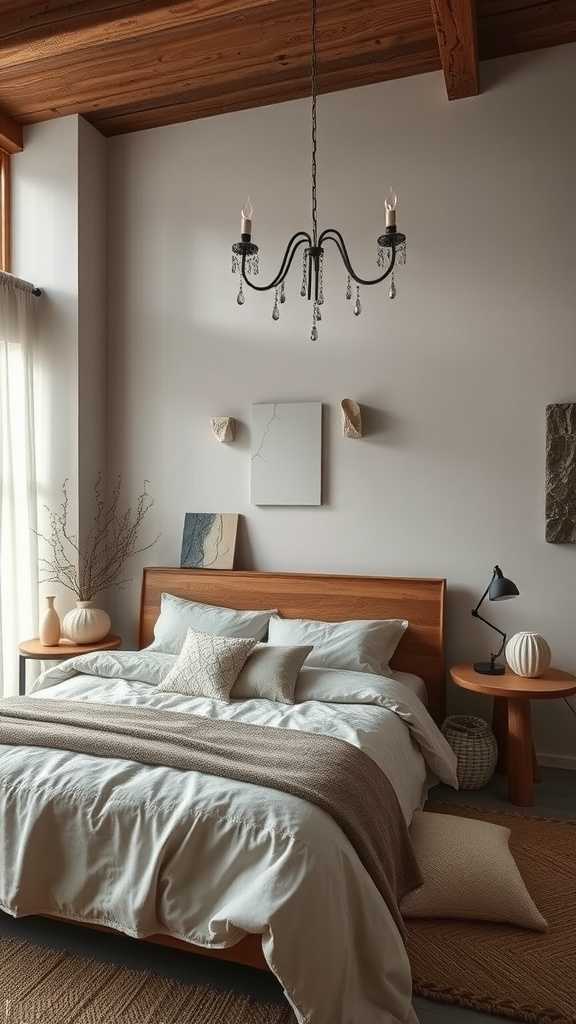
Stone connects a wabi-sabi bedroom to geological time, which is the longest version of impermanence this philosophy celebrates.
A slab of raw travertine on the nightstand, used as a landing pad for your phone and a glass of water, introduces cool weight to an otherwise soft space.
Pebble trays, the kind used in bonsai practice, work as catch-all surfaces for rings, keys, and other pocket items.
A single large river stone placed on a shelf or windowsill acts as a natural sculpture.
If your budget allows, a stone accent wall behind the headboard in a rough-cut limestone or a tumbled marble creates a dramatic focal point.
Marble and granite with natural veining, where no two pieces look the same, embody the wabi-sabi principle that beauty exists in uniqueness.
Pair stone with soft textiles to prevent the room from feeling cold: a sheepskin draped over the bench beside a stone accent wall balances the two extremes.
These stone accents work in wabi-sabi Japandi bedrooms just as well, where the Japanese love of natural materials meets Scandinavian appreciation for clean geometry.
Sustainable Choices in Bedroom Design
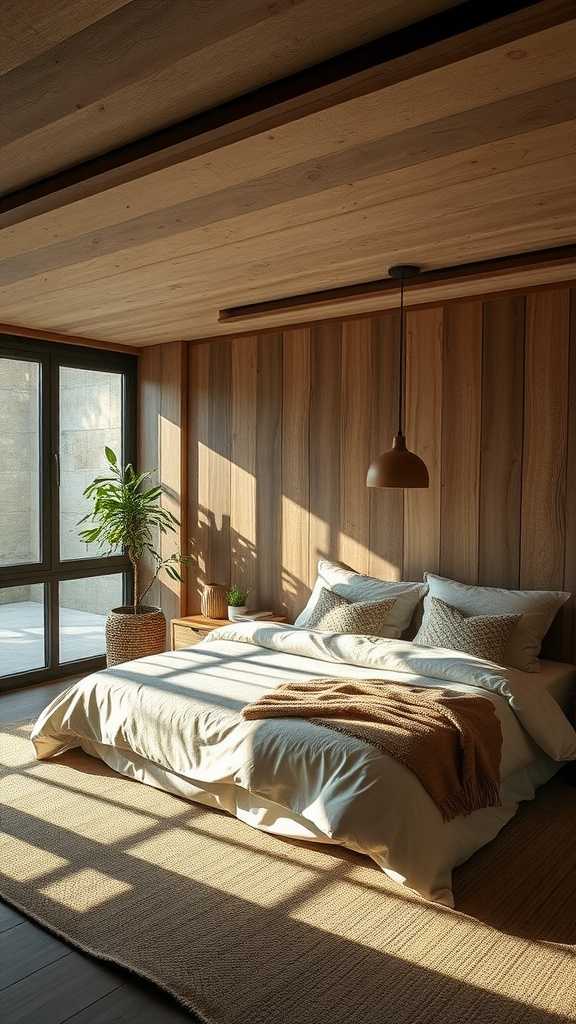
Wabi-sabi and eco-conscious design share the same root instinct: buy less, choose better, and keep it longer.
Opt for a bed frame made from FSC-certified wood or reclaimed barn timber that would otherwise end up in a landfill.
Organic cotton and GOTS-certified linen bedding cost more upfront but outlast synthetic alternatives by years, aging into the soft patina that this style celebrates.
Secondhand furniture is the most sustainable choice of all, and it arrives with the wear marks and character that a new piece would take a decade to develop.
When buying new, look for makers who use water-based finishes, natural dyes, and small-batch production methods.
A wabi-sabi bedroom designed with these choices in mind costs less over time than a room full of disposable furniture replaced every few years.
The philosophy encourages you to invest in a few well-made pieces rather than filling the room with cheap substitutes.
Celebrating Change with Seasonal Decor
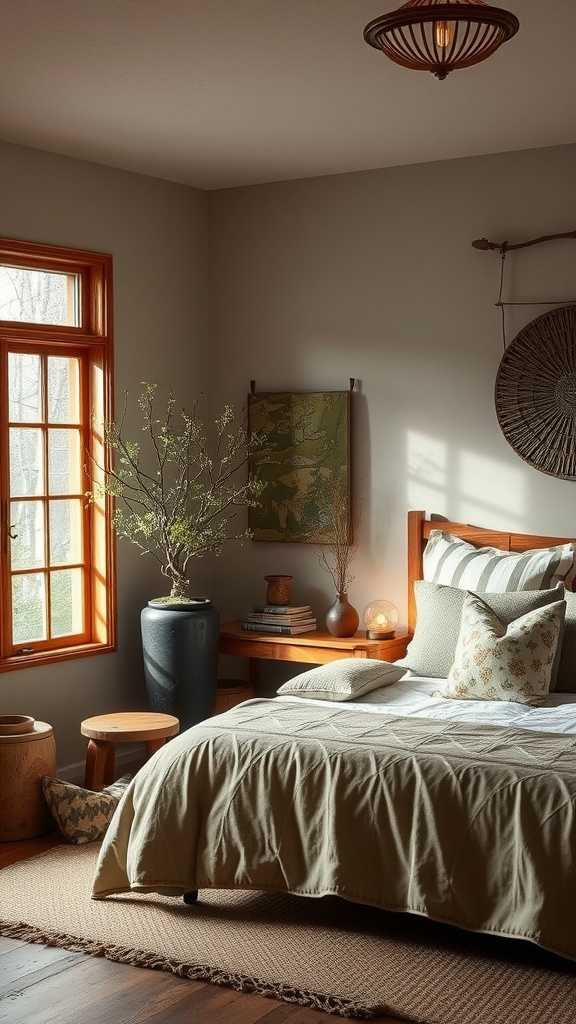
Impermanence is one of the three pillars of wabi-sabi, and rotating your bedroom decor with the seasons is the simplest way to honor it.
In spring, switch your heavy wool throw for a lighter cotton blanket and place a small vase of fresh branches on the nightstand.
Summer calls for open windows, lighter linen layers, and a few stems of dried lavender.
Autumn brings heavier textures back: a chunky knit pillow, a warm rust-colored throw, and a bowl of gathered acorns or pinecones on the dresser.
Winter is the season for maximum warmth, with layered sheepskins, beeswax candles (unscented), and a thicker duvet.
These small shifts keep the room alive and prevent it from feeling frozen in one moment.
Balancing Space with Open Layouts
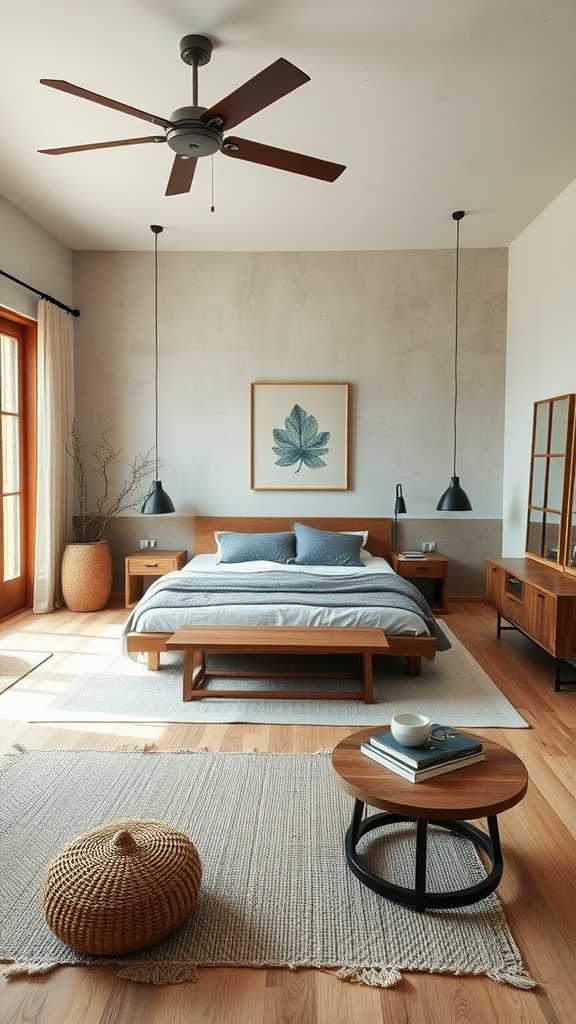
An open wabi-sabi bedroom layout treats negative space as an active design choice.
Resist placing furniture against every wall.
Pull the bed away from the wall by a few inches if the room allows it, which creates a subtle sense of floating.
Keep the area under windows completely clear, letting light spill across the floor uninterrupted.
A single low bench or zabuton floor cushion in an otherwise empty corner gives purpose to the open space without filling it.
In smaller rooms, choose furniture with visible legs, as pieces that sit on the floor with no gap underneath make a room feel heavier than it is.
The open floor area between your bed and the doorway should feel like an invitation to walk slowly, breathe, and settle into the room’s quiet rhythm.
Wabi-sabi bedroom design succeeds when the space itself becomes something you notice and appreciate, not just the objects inside it.
Conclusion
A wabi-sabi bedroom asks very little of you and gives back more than most design styles can.
Choose raw materials over polished ones, keep only what you love or use daily, and let time do the rest of the decorating.
The cracks in a ceramic vase, the fading of a linen pillowcase, the way morning light moves across a rough plaster wall: these are the details that make the room yours.
Start with one change, a new set of linen sheets, a single piece of handmade pottery, a vintage nightstand from a local shop, and build from there.
You do not need to overhaul the entire room at once, and in fact, wabi-sabi works better when it accumulates slowly.
Pick one section from this list that resonated with you, try it this weekend, and save this post for when you’re ready to add the next layer.
Sources: