
This post may contain affiliate links. If you make a purchase through these links, we may earn a commission at no additional cost to you.
Bring peace and calm into your home with Wabi Sabi-inspired bathroom decor that celebrates natural textures and asymmetry
There is something deeply satisfying about a bathroom that doesn’t try too hard.
Wabi-sabi bathroom design leans into that feeling, drawing on natural materials, muted earth tones, and the quiet appeal of surfaces that show their age.
Rough-hewn stone beside smooth plaster, a handmade ceramic dish with an uneven rim, linen towels that soften with every wash: these small imperfections give a space its soul.
The approach strips away anything that feels forced or decorative for its own sake.
From textured walls to reclaimed wood shelving, here are thirteen ideas for building a wabi-sabi bathroom that feels grounded, lived-in, and genuinely restful.
Nature-Inspired Decor for a Balanced Feel
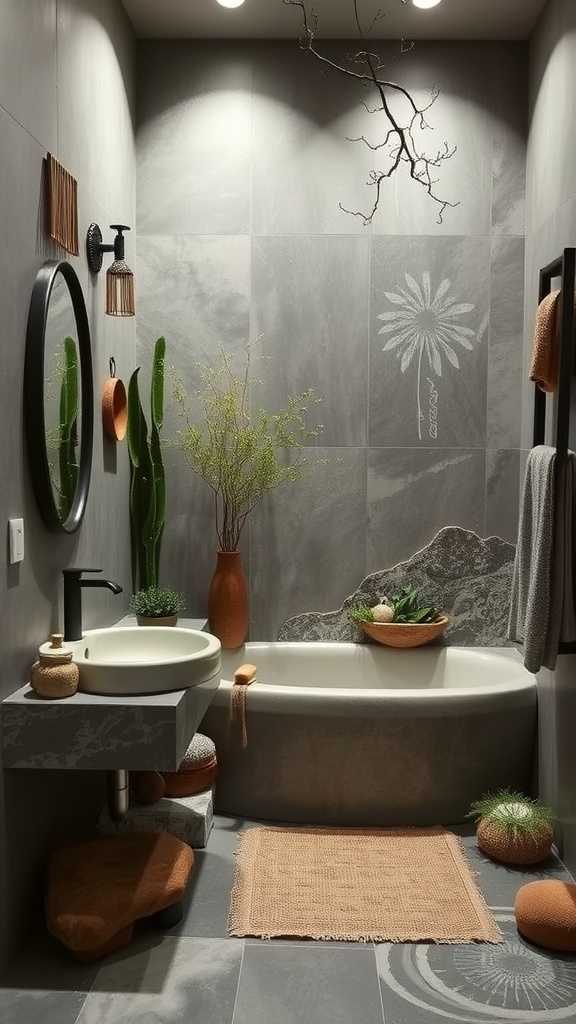
A few well-placed plants can shift the entire mood of a wabi-sabi bathroom.
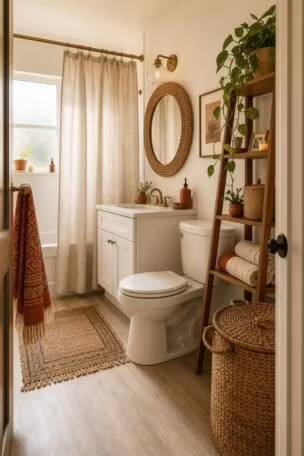
Trailing pothos on a wooden shelf or a single fern in a clay pot brings a living, breathing element into the room.
The containers matter just as much as the greenery itself: unglazed terracotta, rough stoneware, or a chipped vintage planter all reinforce the wabi-sabi idea that beauty lives in imperfection.
Grouping plants at different heights adds depth and keeps the arrangement from looking staged.
The result is a space that feels connected to the outdoors without relying on anything fussy or over-designed.
Embracing Imperfection with Raw Materials
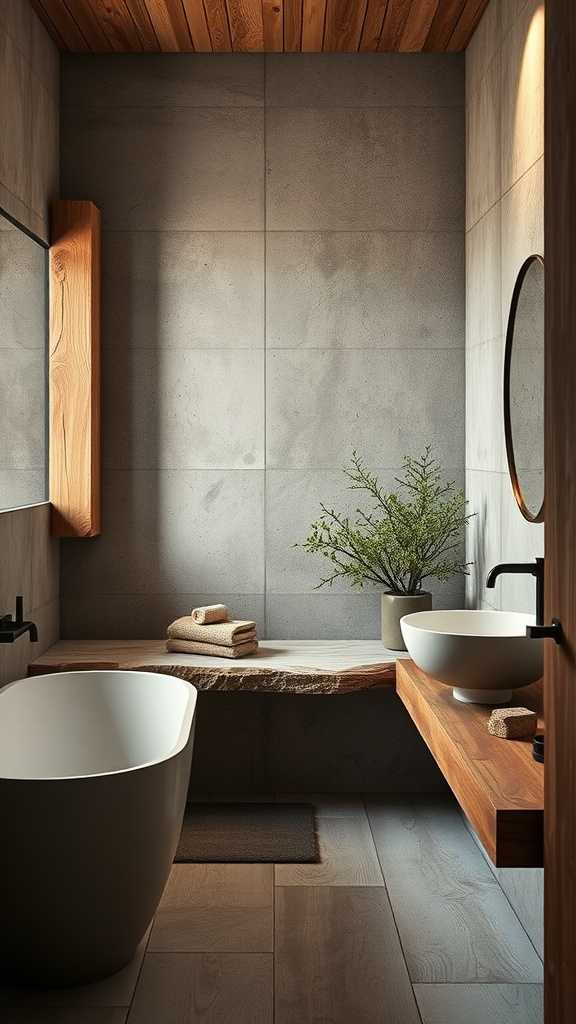
Raw materials are the backbone of any wabi-sabi bathroom.
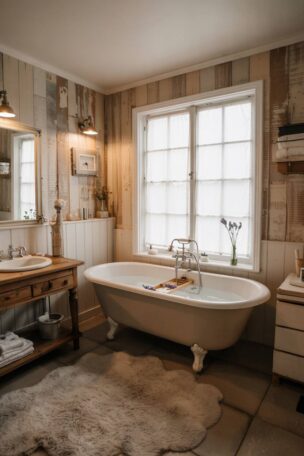
Rough stone countertops paired with warm wood vanities create a layered, tactile experience that polished surfaces cannot replicate.
Matte concrete, weathered brass hardware, and lime-washed walls each carry their own texture and patina.
Letting these materials age naturally, rather than replacing them at the first sign of wear, is what gives the space its character over time.
Minimalist Fixtures for a Calm Wabi-Sabi Bathroom
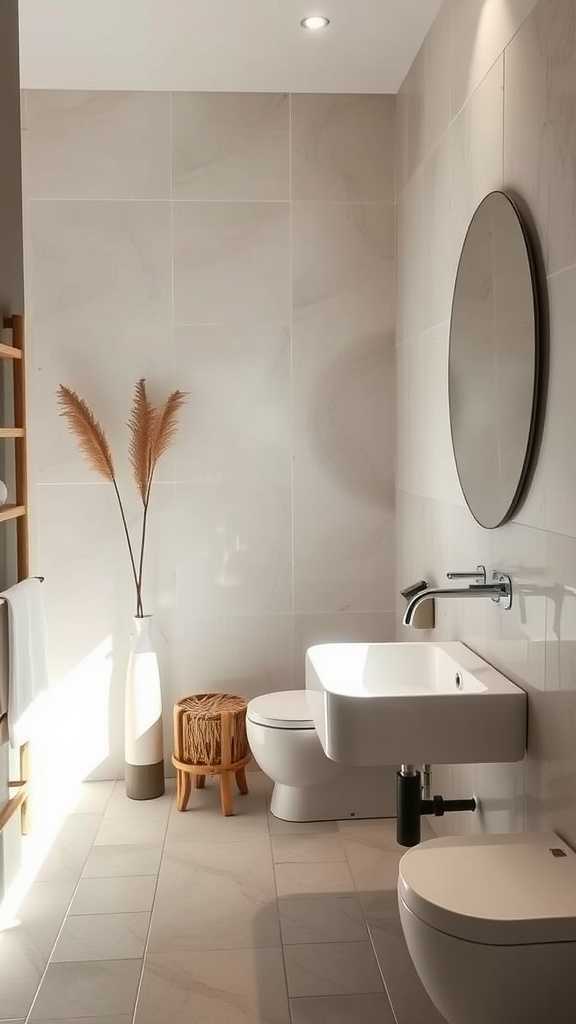
Fixtures with clean, unadorned lines set the tone for a restful bathroom.
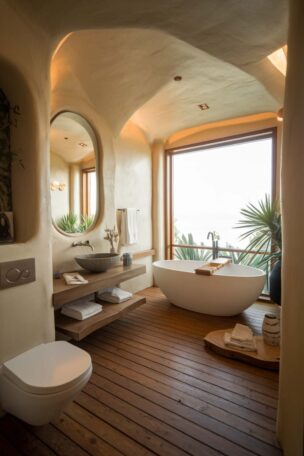
A wall-mounted faucet in brushed nickel or aged brass draws attention without competing with the surrounding materials.
Simple vessel sinks carved from natural stone or shaped from unglazed ceramic feel intentional and grounded.
The goal is to choose pieces that serve their purpose quietly, blending into the room rather than announcing themselves.
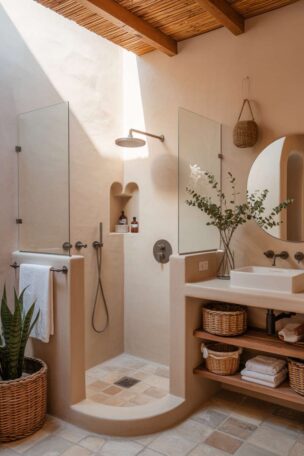
Open shelving below the vanity, rather than closed cabinetry, keeps the space feeling light.
Every fixture becomes part of the room’s calm rhythm instead of an interruption.
Handcrafted Accents for Unique Character
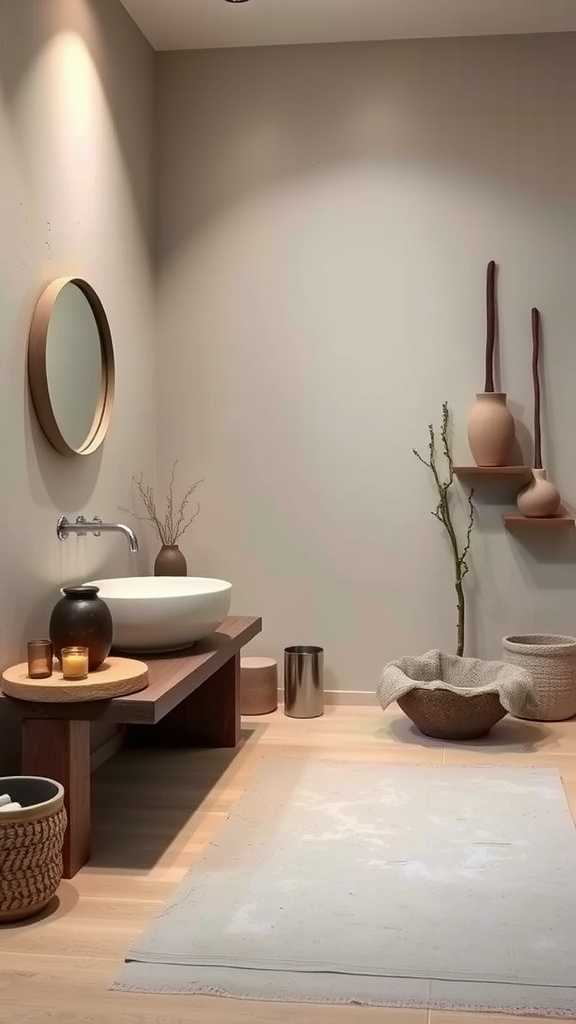
Handcrafted objects carry the energy of the person who made them, and that warmth is impossible to fake.
A stoneware soap dish with fingerprint impressions from the potter, a hand-carved wooden tray, or a linen pouch for bath salts all add quiet personality.
These pieces age beautifully, developing chips and patina that deepen their appeal.
Placing one or two handmade accents near the sink or tub is enough to ground the entire room.
Restraint matters here: a single imperfect object on an empty ledge says more than a shelf crowded with decor.
Design Pro-Tip: When mixing handcrafted pieces, stick to a shared material family (all ceramics, all wood, all woven fiber) so the arrangement reads as collected rather than cluttered.
Earthy Color Palettes for Tranquility
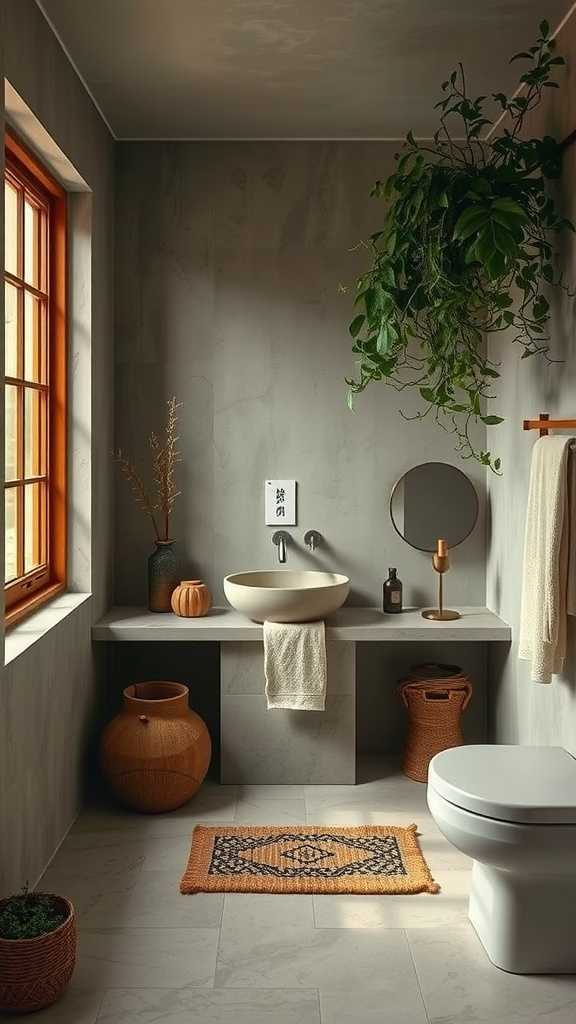
Earthy tones instantly quiet a room down.
Soft ochre, dusty sage, warm taupe, and muted clay work together without competing for attention.
Painting the walls in a chalky, matte finish deepens the organic quality of these colors and absorbs light in a way that feels soft rather than flat.
Layering two or three tones from the same warm family gives the bathroom dimension without visual noise.
Soft Lighting Techniques to Create Ambiance
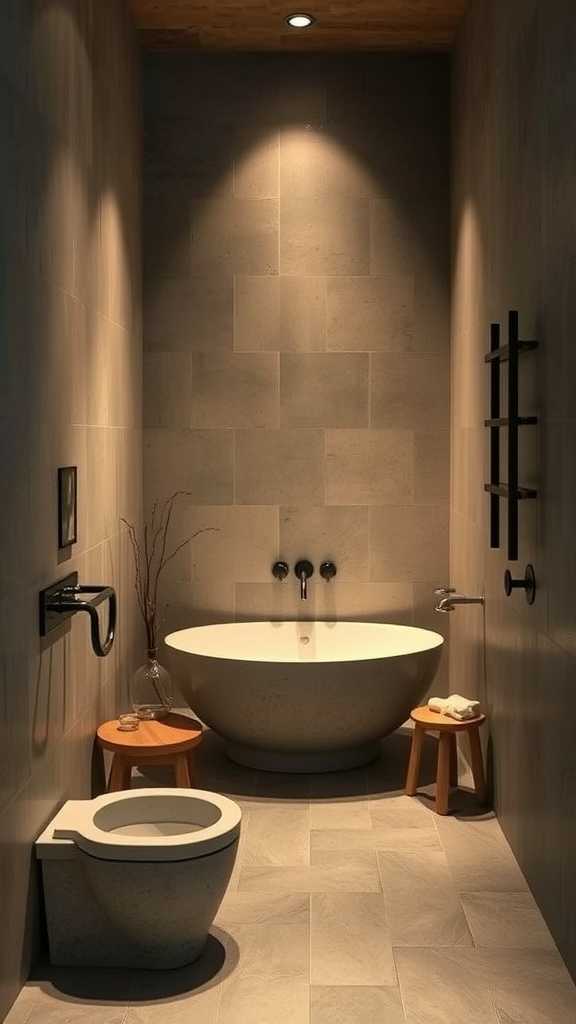
Lighting shapes how every texture and color in the room is perceived.
Warm-toned bulbs in simple sconces or pendant fixtures cast a golden wash that makes natural stone and wood feel richer.
Placing a pair of beeswax candles on the edge of the tub creates pools of flickering light that no overhead fixture can replicate.
Dimmable wall lights give you control over the mood, letting the space shift from bright morning energy to a low evening glow.
A single sculptural lamp on a wooden stool beside the bath can double as a design accent and a light source.
Stone Water Features for Quiet Serenity
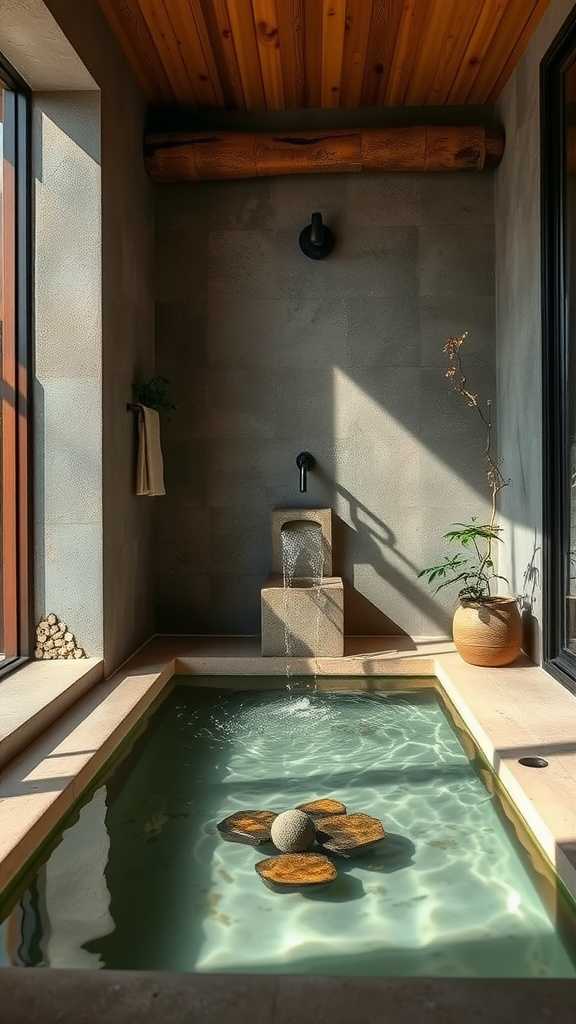
A small water feature turns the bathroom into something closer to a private retreat.
A carved stone basin with a slow trickle of water introduces sound that masks outside noise and draws the mind inward.
River stones arranged at the base of the feature add another layer of natural texture.
The running water catches light differently throughout the day, creating movement in an otherwise still room.
Even a modest tabletop fountain placed near the vanity brings that meditative quality without requiring a full renovation.
Choosing unpolished stone with visible veining keeps the feature aligned with the wabi-sabi spirit of honest, unfinished beauty.
Curated Shelving with Meaningful Objects
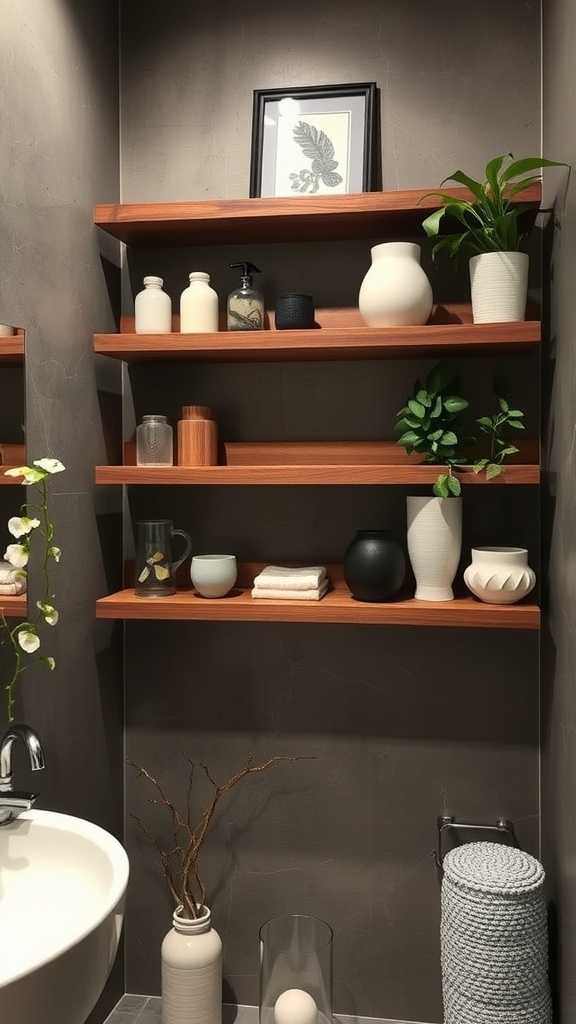
Open shelving in a wabi-sabi bathroom works best when it looks collected, not styled.
A single ceramic vase, a stack of worn paperbacks, and a dried eucalyptus bundle can share a shelf without needing to match.
The objects you display should carry personal meaning: a stone picked up on a hike, a candle from a favorite shop, a piece of driftwood.
Leaving empty space between items is just as intentional as what you place on the shelf.
Organic Textiles for Comfort and Warmth
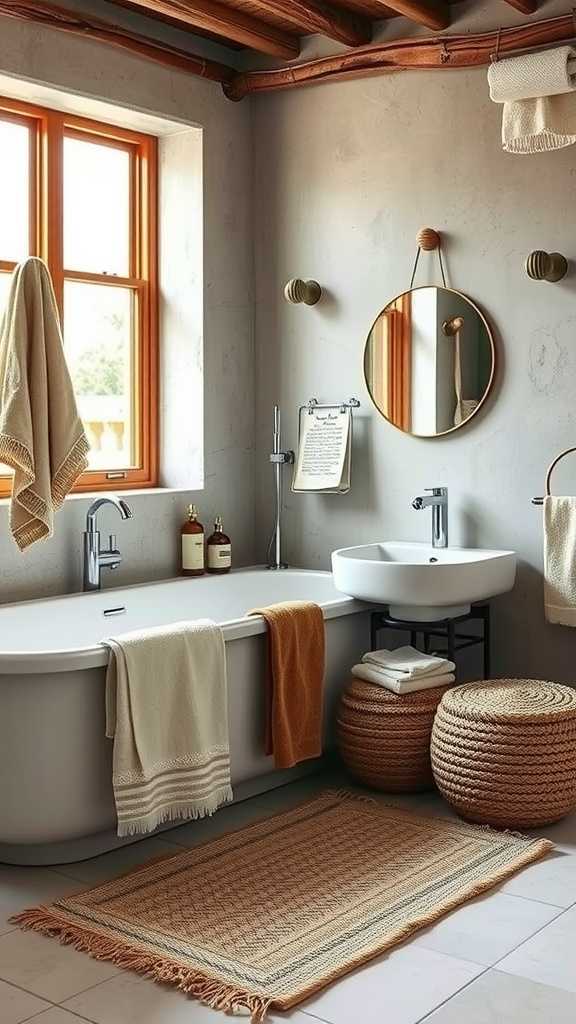
Textiles bring a layer of softness that hard bathroom surfaces need.
Linen bath towels in undyed cream or soft flax drape with a casual elegance that plush cotton cannot match.
A hand-loomed cotton bath mat with an irregular weave adds warmth underfoot and visual texture to the floor.
Hanging a woven wall piece or a small textile art panel behind the tub introduces fiber art into the space without overwhelming it.
Choosing organic, unbleached fabrics means the textiles will age gracefully, softening and developing character with each use.
Design Pro-Tip: Rotate your bathroom textiles seasonally: heavier linen weaves and warmer tones in cooler months, lighter cotton and bleached whites in summer, so the room shifts with the year.
Natural Light in a Wabi-Sabi Bathroom
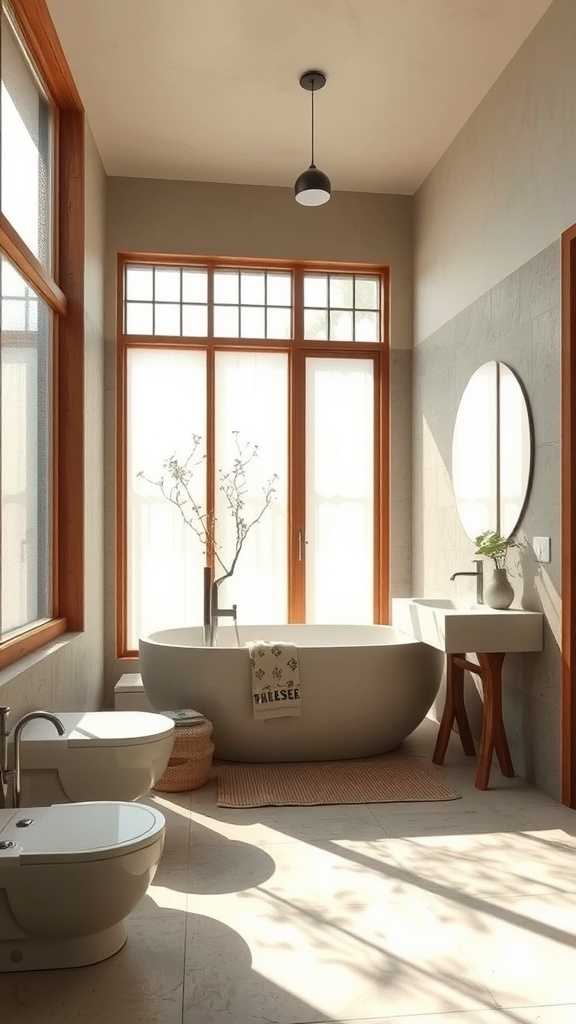
Sunlight does more for a wabi-sabi bathroom than any design decision you can make.
Large windows or a frosted skylight flood the space with light that shifts from cool blue in the morning to warm amber by late afternoon.
That changing light reveals every texture in the room: the grain of a wooden vanity, the pitting in a stone countertop, the soft folds of a linen towel.
Keeping window treatments minimal, or skipping them entirely in favor of frosted glass, lets the light arrive unfiltered.
Shadows become part of the design, casting patterns across the walls that change with the hour.
On overcast days the room takes on a softer, cooler tone that feels just as intentional as direct sun.
Zen-Inspired Layouts for Small Spaces
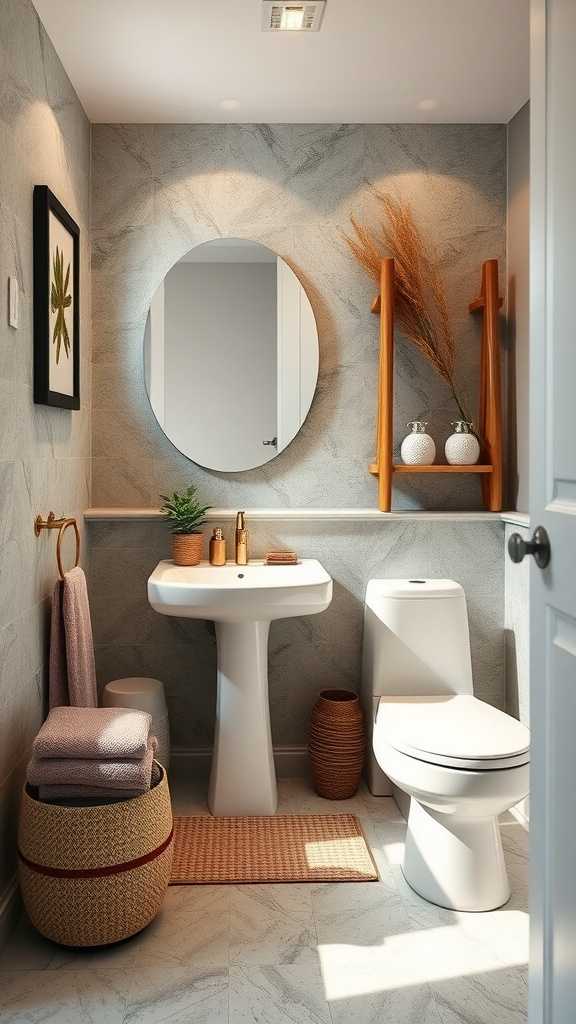
A smaller bathroom actually suits the wabi-sabi philosophy better than a sprawling one.
Fewer objects and surfaces mean each material gets more attention, and the room feels purposeful rather than cramped.
Mounting the sink and storage on the wall frees up floor space and makes the room feel open.
Sticking to two or three materials, like pale wood and concrete, keeps the palette restrained and the mood calm.
Textural Contrast for Visual Interest
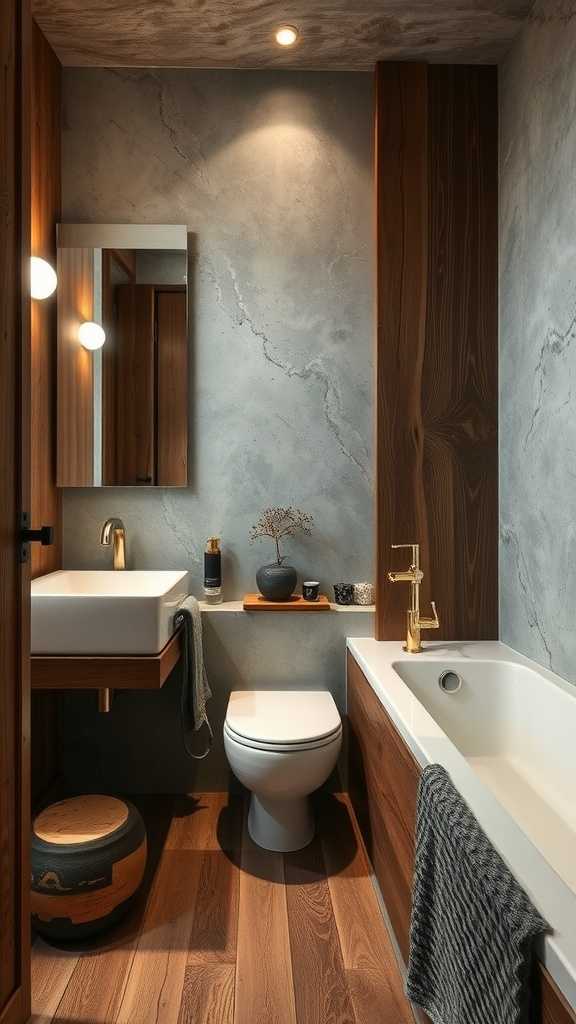
Playing smooth surfaces against rough ones is where a wabi-sabi bathroom gets its visual energy.
A polished concrete floor beneath a rough-sawn timber vanity creates a conversation between refined and raw.
Pairing a sleek freestanding tub with a nubby wool rug or a woven seagrass basket adds another layer of contrast.
The eye moves between these different textures, which keeps the room interesting without introducing clutter or color.
A single rough stone accent wall behind the bath can anchor the entire space and give every smooth surface around it more presence.
Sustainable Elements for Eco-Friendly Design
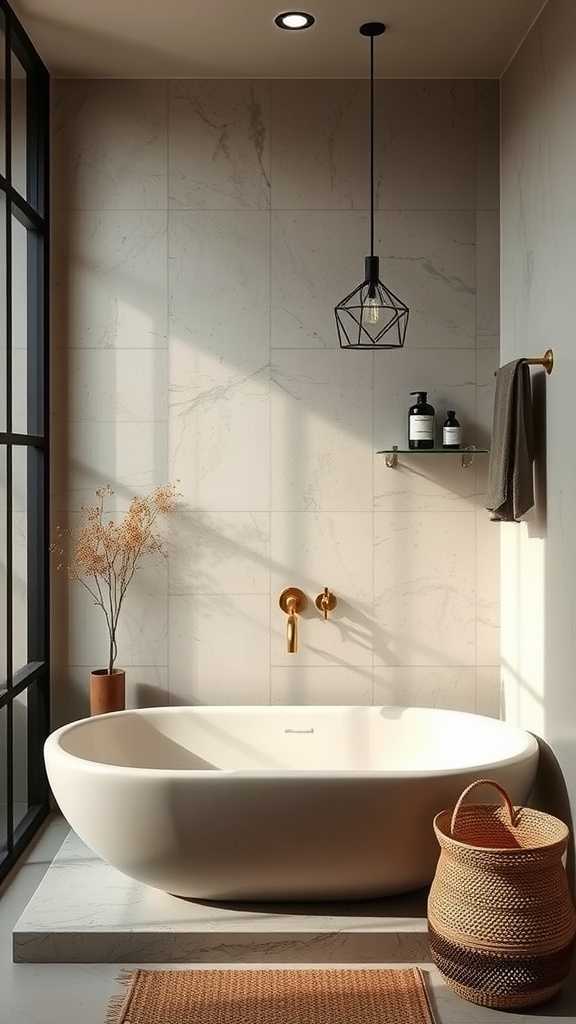
Sustainability and wabi-sabi share the same root idea: respect what already exists.
Reclaimed barn wood turned into floating shelves carries decades of grain, nail holes, and sun-fading that no new lumber can reproduce.
Bamboo accessories, from soap trays to toothbrush holders, bring renewable material into everyday use.
Salvaged stone tiles with chips and color variation give the floor a patchwork character that polished porcelain lacks.
Choosing materials that age, weather, and patina means the bathroom will look better in five years than it does on day one.
That long view, valuing what lasts over what looks perfect right now, is the heart of wabi-sabi design.
Design Pro-Tip: Before buying anything new for a wabi-sabi bathroom, check salvage yards and architectural reclaim shops first. A single slab of reclaimed marble or an old wooden door repurposed as a shelf can anchor the entire room’s character.
Conclusion
A wabi-sabi bathroom asks you to pay attention to the small, honest details: the texture of a linen towel against your hand, the way morning light catches a stone countertop, the quiet sound of water in a ceramic basin.
It rewards patience over perfection and values materials that tell a story.
The thirteen ideas above share a single thread: stripping away the unnecessary so the natural beauty of each surface, object, and material can speak for itself.
Start with one change, a handmade soap dish, an unglazed planter, a pair of linen towels, and let the room evolve from there.