This post may contain affiliate links. If you make a purchase through these links, we may earn a commission at no additional cost to you.
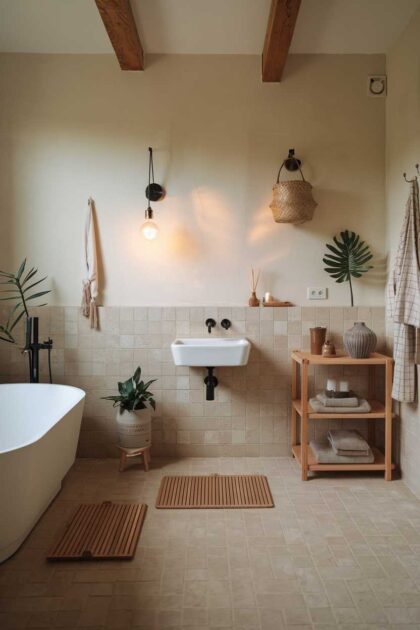
Bare cedar against cool stone, a single green stem in a ceramic vase, light pooling across a pale floor: that is the Japandi bathroom at its best.
This approach to Japandi bathroom design draws from two traditions that share more than you might expect, pairing Japanese restraint with Scandinavian coziness to produce rooms that feel quiet and lived-in at the same time.
The result is a space built on natural materials, muted color palettes, and a deep respect for function.
Here are 15 Japandi bathroom ideas worth borrowing for your next renovation.
Soft Beige and Warm White Color Palettes
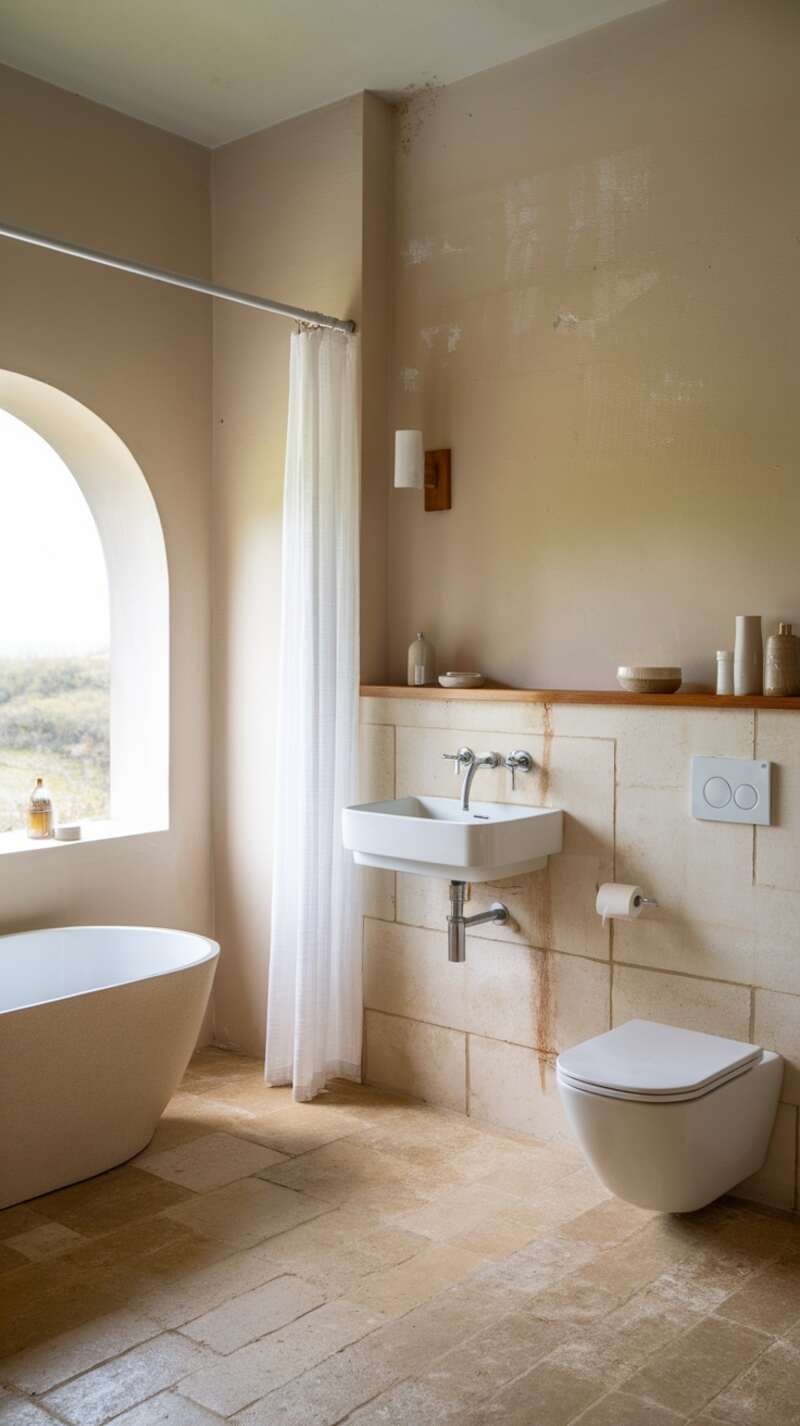
Japandi bathroom ideas start with the palette, and this look keeps things grounded in soft beiges, warm whites, and muted earth tones.
Those restrained hues turn the whole room into a backdrop rather than a statement, letting materials and textures do the talking.
A freestanding bathtub and a minimalist sink stand out more when the walls and floor recede into quiet, chalky warmth.
This kind of Japandi bathroom decor proves that restraint with color is one of the smartest moves you can make in a small room.
Freestanding Soaking Tubs with Garden Views
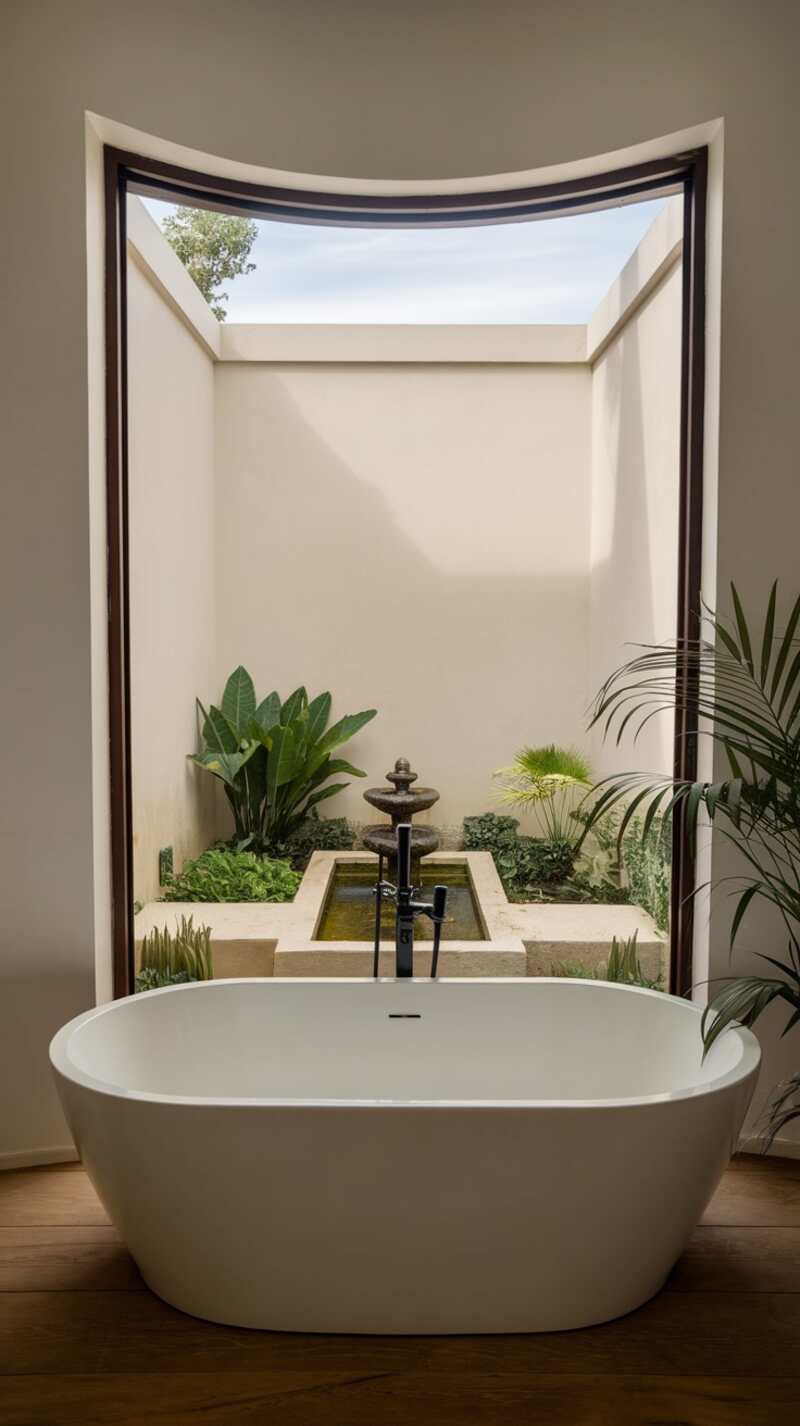
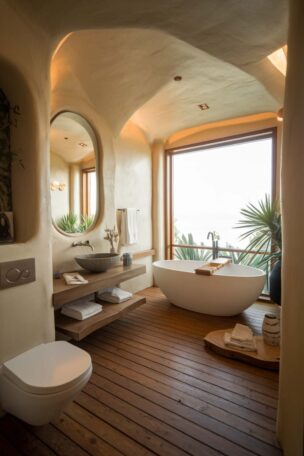
A freestanding bathtub positioned beside a window changes the entire experience of a bath.
Surrounded by greenery and the soft sound of a water feature, the tub becomes less about cleaning up and more about slowing down.
This Japandi style bathroom decor pairs modern form with a direct connection to nature, and that combination is what makes the look feel so different from a standard spa setup.
Tatami-Inspired Woven Flooring
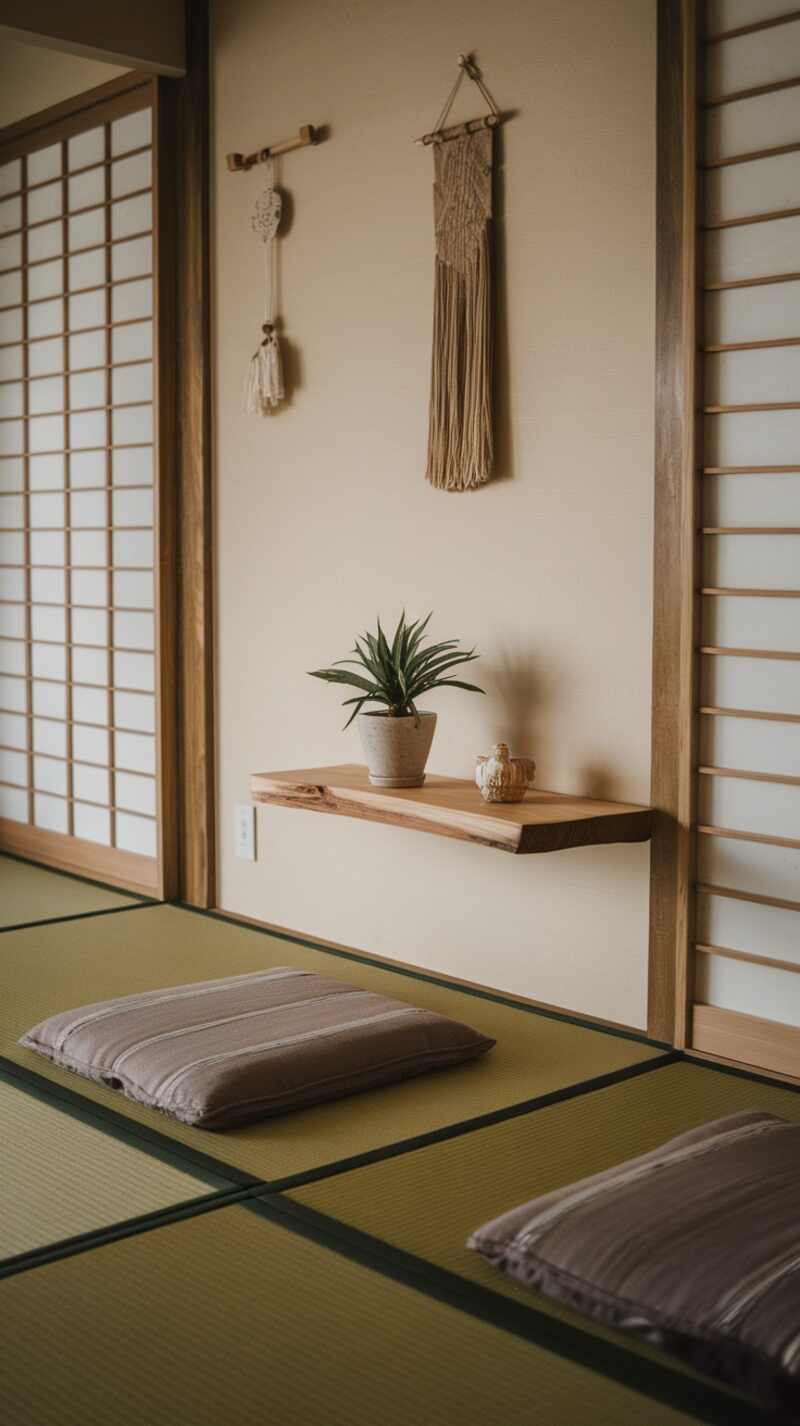
Tatami-inspired flooring brings a texture underfoot that no tile or hardwood can replicate.
The natural fibers carry warmth and a faint earthiness that grounds the room the moment you step in.
Decorative wall hangings and a small potted plant round out the scene, keeping the space spare without feeling empty.
Woven mats work particularly well in a Japandi bathroom design, honoring the Japanese tradition of connecting daily rituals to natural materials.
In a room built around water and rest, that connection feels right.
Sleek Cabinetry and Open Shelf Storage
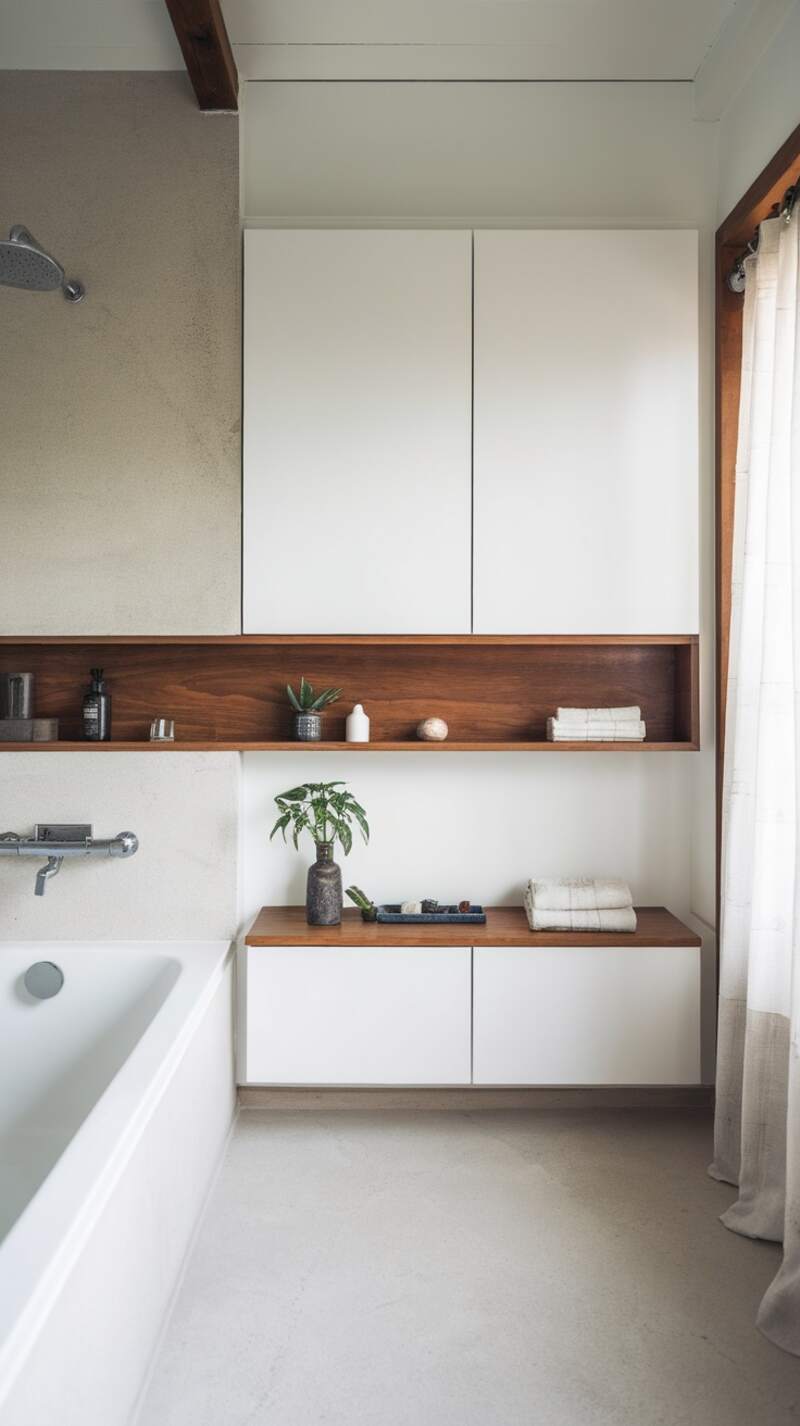
For a Japandi bathroom design that stays clutter-free, integrated storage does the heavy lifting.
Sleek cabinetry hides toiletries and linens behind clean fronts, keeping sightlines unbroken.
Open shelves sit alongside those closed compartments, giving you a spot to display a ceramic dish or a folded linen towel.
The balance between hidden and visible storage reinforces the calm, minimalist character that defines Japandi style bathrooms.
Design Pro-Tip: Group your open-shelf display items in pairs or single objects rather than clusters of three. Odd-numbered groupings can read as staged; a single hand-thrown bowl or two stacked towels feels more honest and more Japandi.
Wooden Tub and Candlelit Spa Ambiance
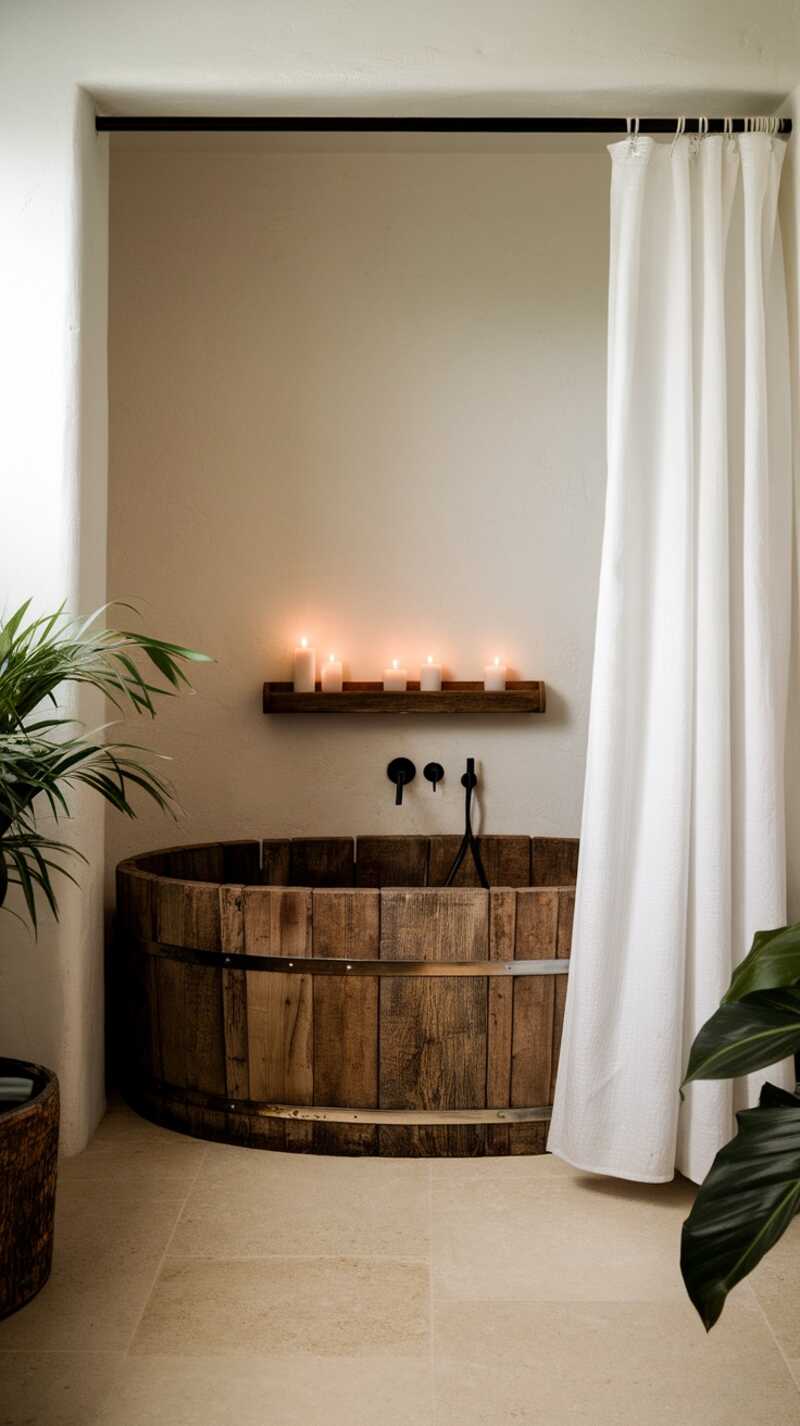
A wooden tub anchors this Japandi bathroom and gives the room an unmistakable warmth that porcelain cannot match.
Candles scattered along the tub’s edge and around the floor cast a low, flickering glow that softens every surface.
The combination of soft lighting and natural materials turns an ordinary evening bath into something closer to a ritual.
Natural Stone, Wood, and Greenery Textures
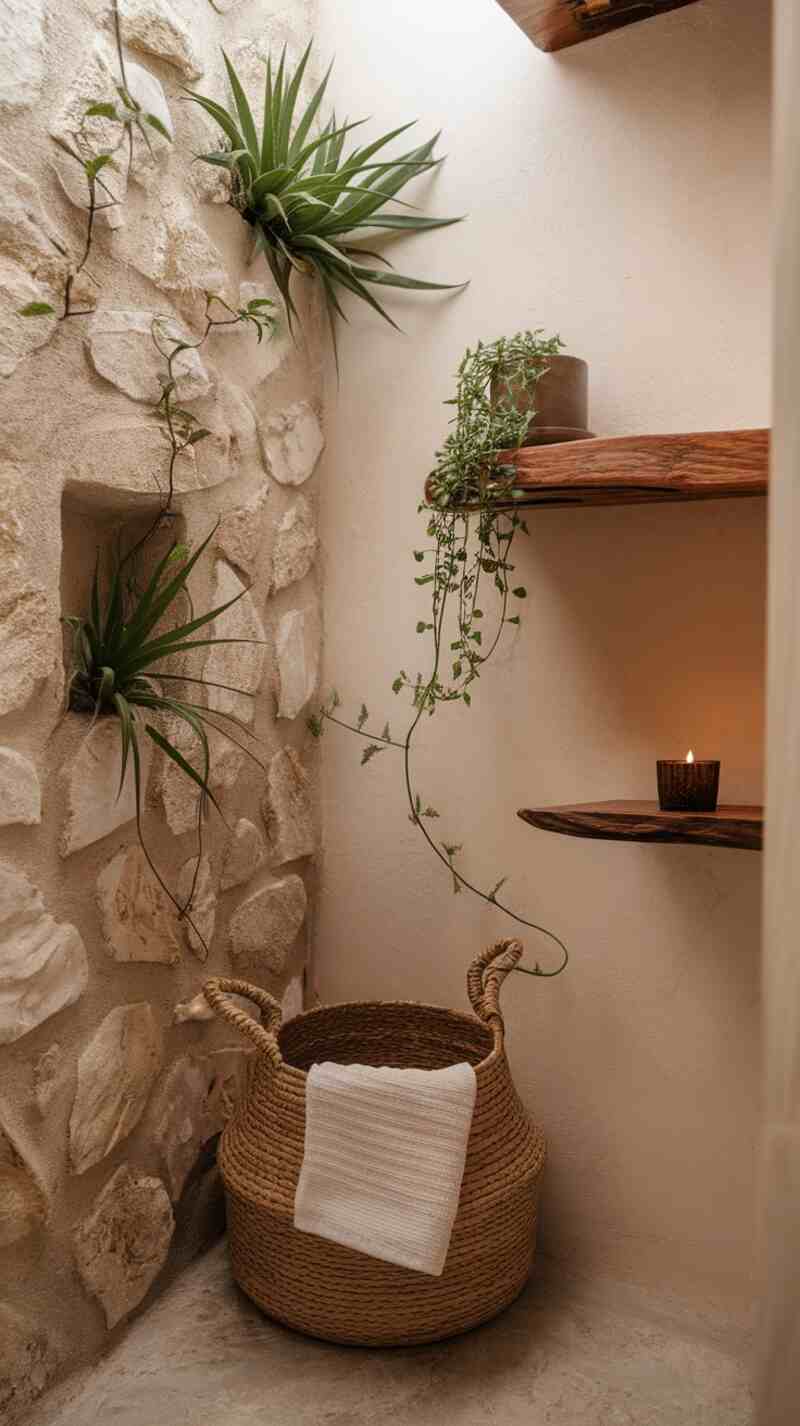
Organic textures carry the weight of a Japandi bathroom’s personality.
Natural stone on the floor or vanity top introduces coolness and visual grain.
Wood adds warmth wherever it appears, from a floating shelf to a small stool beside the tub.
Trailing plants layered in between bring color and life without competing for attention.
Together, these materials create a layered, tactile bathroom that rewards you for pausing and looking closely.
Minimalist Wooden Shelves and Accents
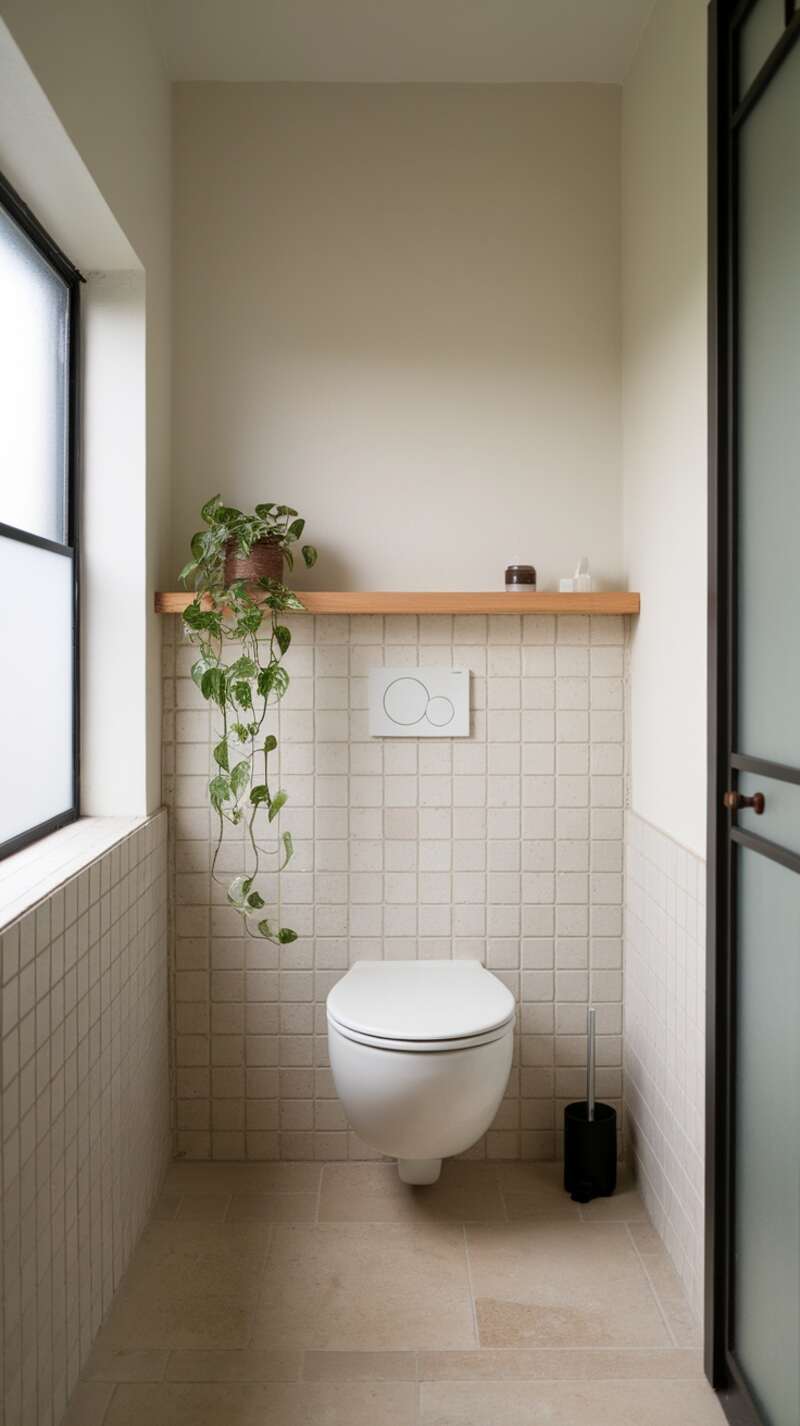
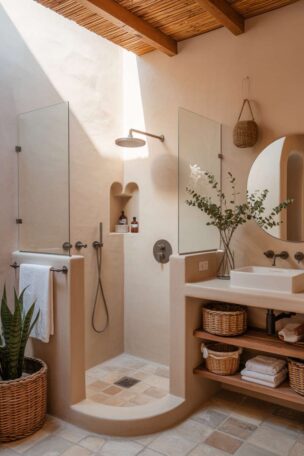
Wood plays a central role in Japandi bathroom decor, and a single floating shelf proves that point perfectly.
Paired with natural stone tiles on the surrounding wall, the shelf adds warmth and a sense of handwork.
Small potted plants placed on top soften the line between storage and decoration.
The shelf itself doubles as a display surface and a practical hold-all, which is exactly the kind of dual purpose that Japandi design values.
Large Windows and Mirror-Reflected Light
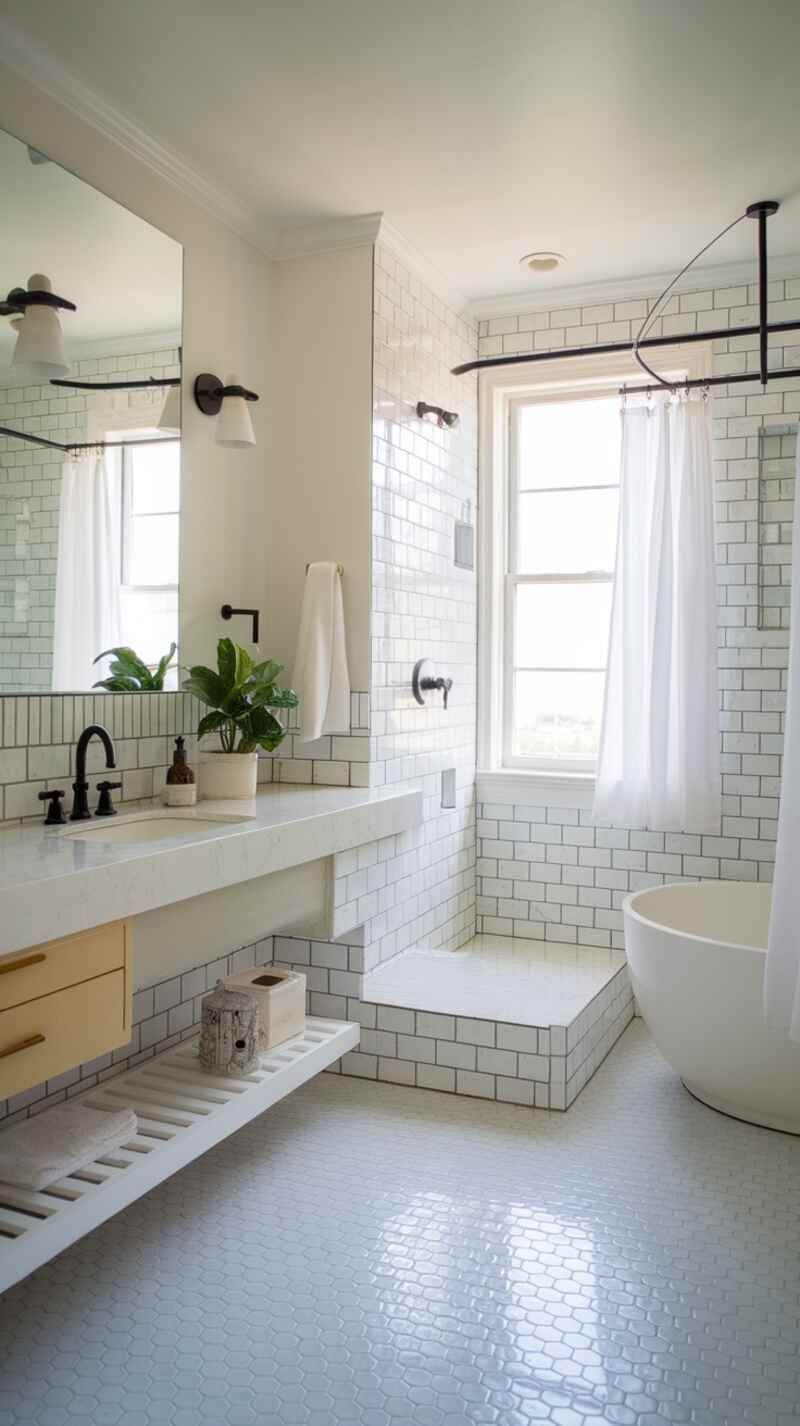
Bringing natural light deep into the room transforms a Japandi bathroom from pleasant to truly memorable.
Larger windows or a skylight flood the space with shifting daylight that changes the mood from morning to evening.
Mirrors placed opposite or beside the window bounce that light across the room, stretching the sense of openness far beyond the actual square footage.
Snake Plants and Pothos for Freshness
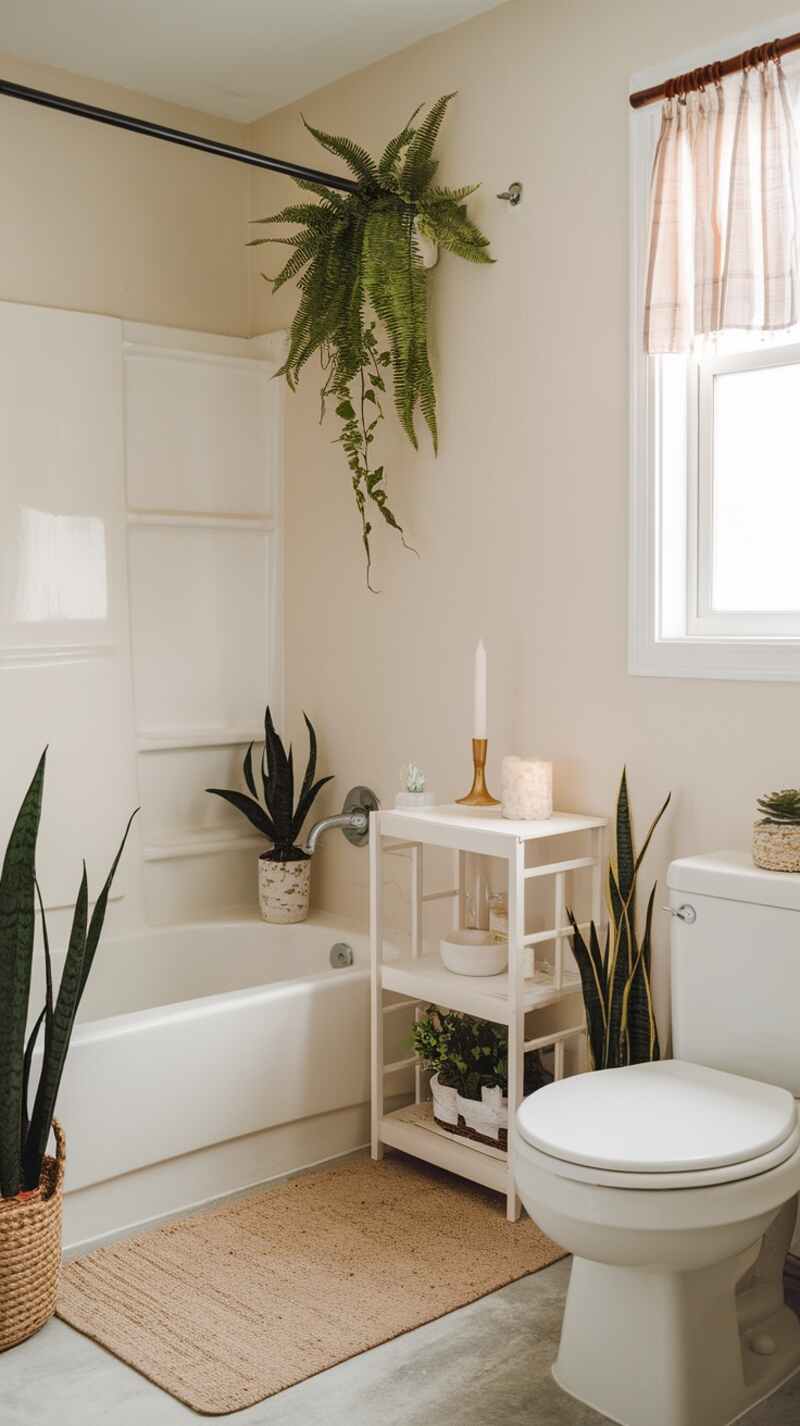
Indoor plants earn their place in a Japandi bathroom by doing two things at once.
Snake plants and pothos clean the air, pulling humidity and impurities out of a room that generates plenty of each.
They bring a living, breathing element into an otherwise still space, which keeps the room from feeling like a showpiece.
A single trailing pothos on a high shelf or a snake plant in a matte ceramic pot is all you need to shift the energy of the entire room.
Greenery like this lines up perfectly with Japandi bathroom ideas that treat nature as a design material rather than a decorative afterthought.
Design Pro-Tip: Choose matte or unglazed ceramic pots over shiny planters. A rough-textured pot echoes the handmade quality that Japandi spaces depend on, and it keeps the plant from looking like an accessory dropped into the room as an afterthought.
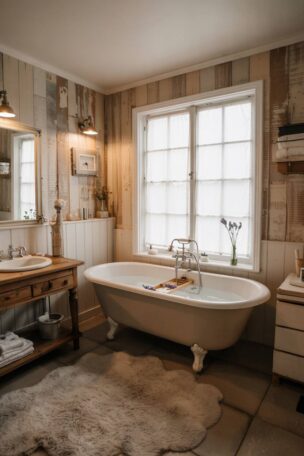
Sleek Sinks and Classic Tub Fixtures
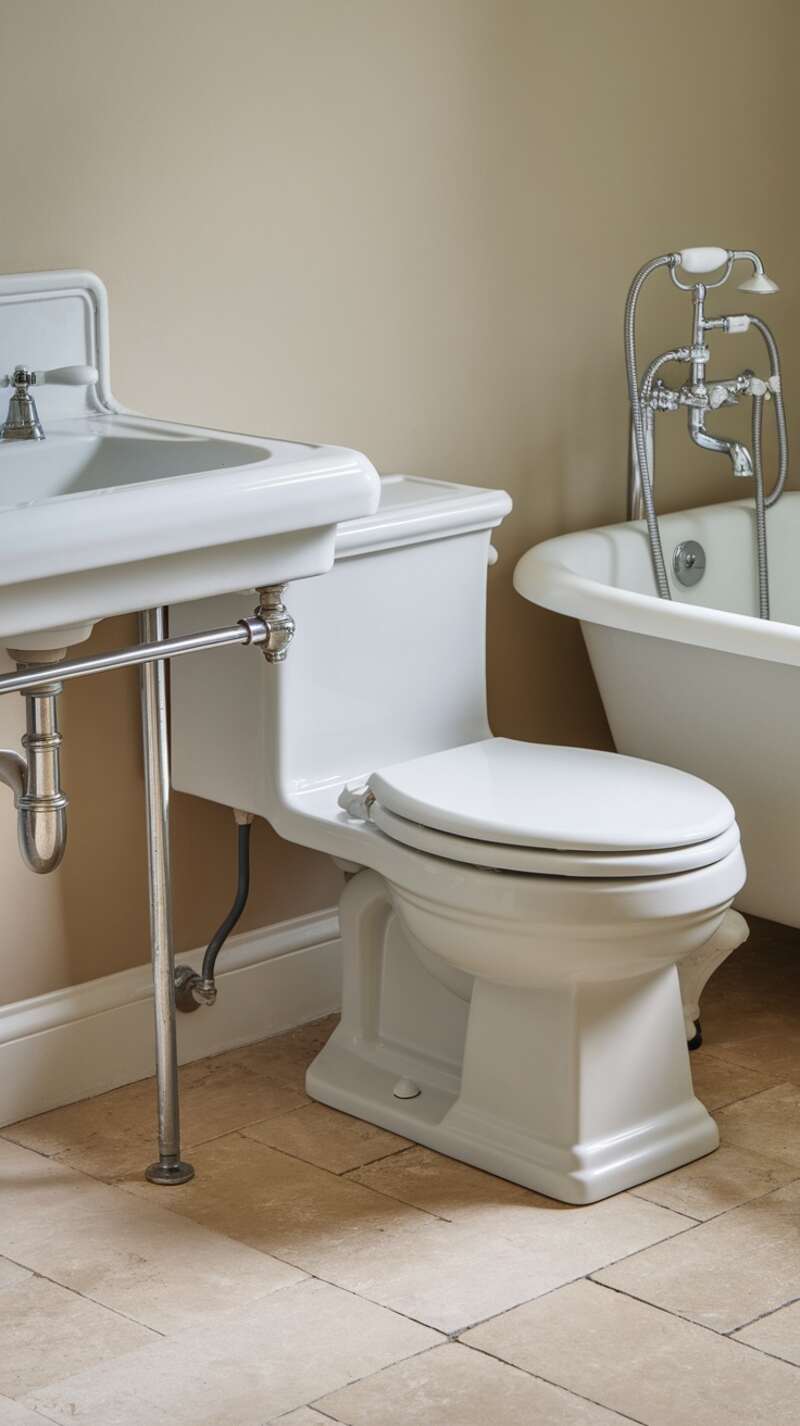
Fixtures set the tone for a Japandi bathroom faster than almost any other element.
Sleek sinks with clean geometry and a classic tub with a simple silhouette carry the room without demanding attention.
The idea here is understated elegance: lines that feel deliberate, finishes that feel quiet, and shapes that let the surrounding materials shine.
That restraint is what separates a Japandi bathroom from one that just looks minimal.
Open Floor Plan with Wooden Accents
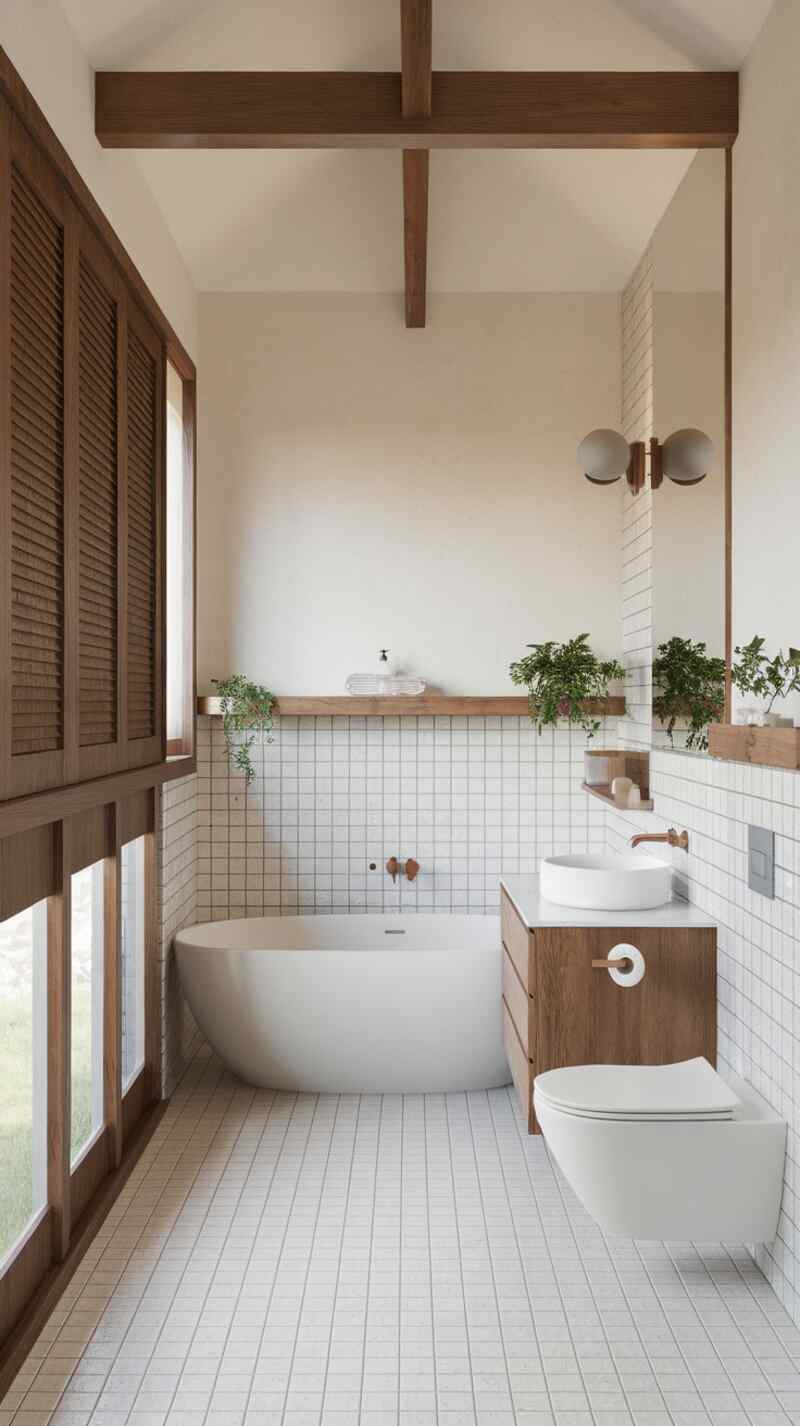
An open concept layout removes visual barriers and lets the bathroom breathe.
Wooden accents and natural light move freely through the space when walls and partitions step back.
The room feels connected to the rest of the home rather than sealed off behind a door, and that sense of flow is a hallmark of Japandi design.
Textured Stone and Wood Wall Panels
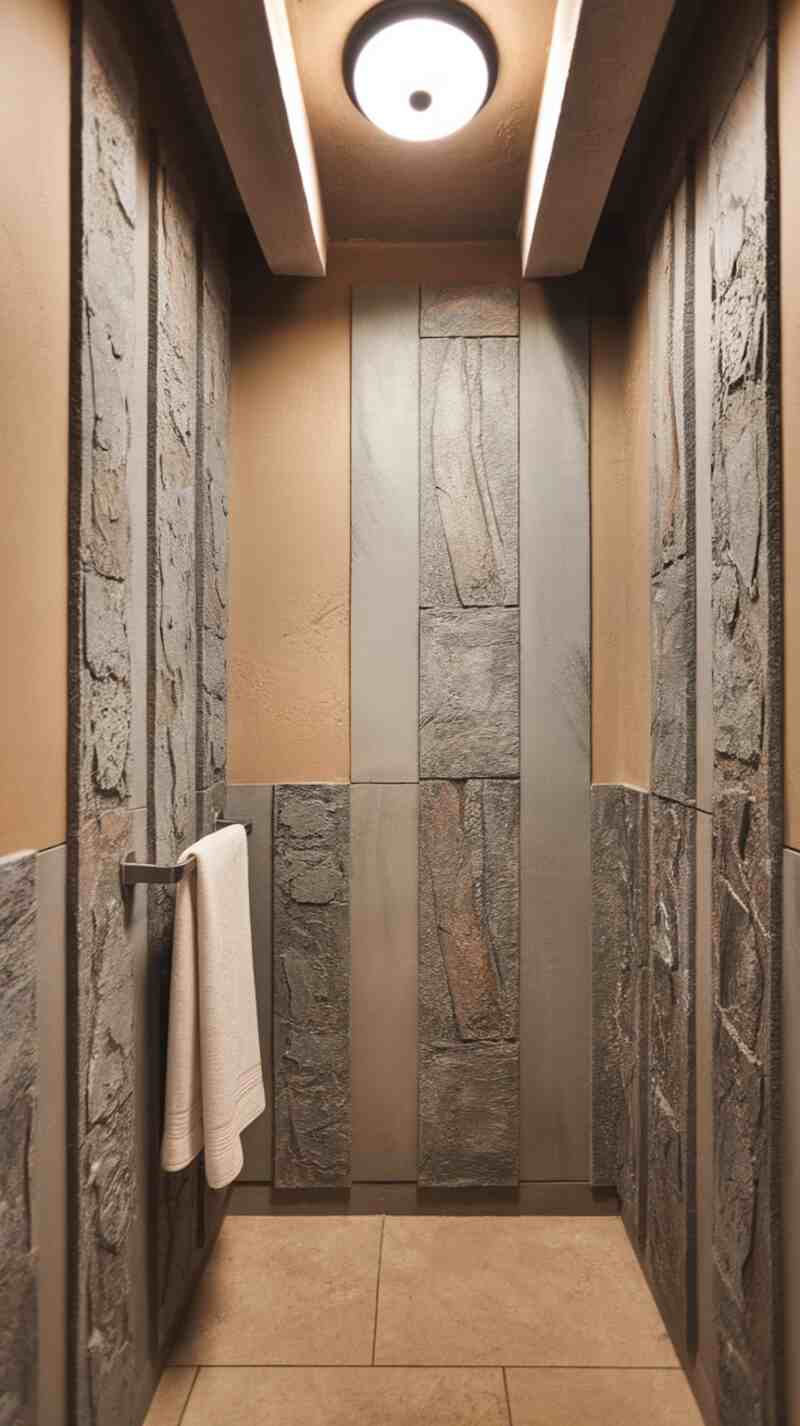
Textured wall panels introduce depth and dimension that flat paint cannot deliver.
Stone panels bring a cool, tactile surface that anchors the room’s palette, and wood panels layer warmth on top.
A mix of the two materials, stacked or alternating, captures the push and pull between Japanese minimalism and Scandinavian coziness.
These panels turn a blank wall into the most interesting surface in the room, giving your Japandi-style bathroom a focal point that feels organic rather than forced.
Warm Pendant Lighting Solutions
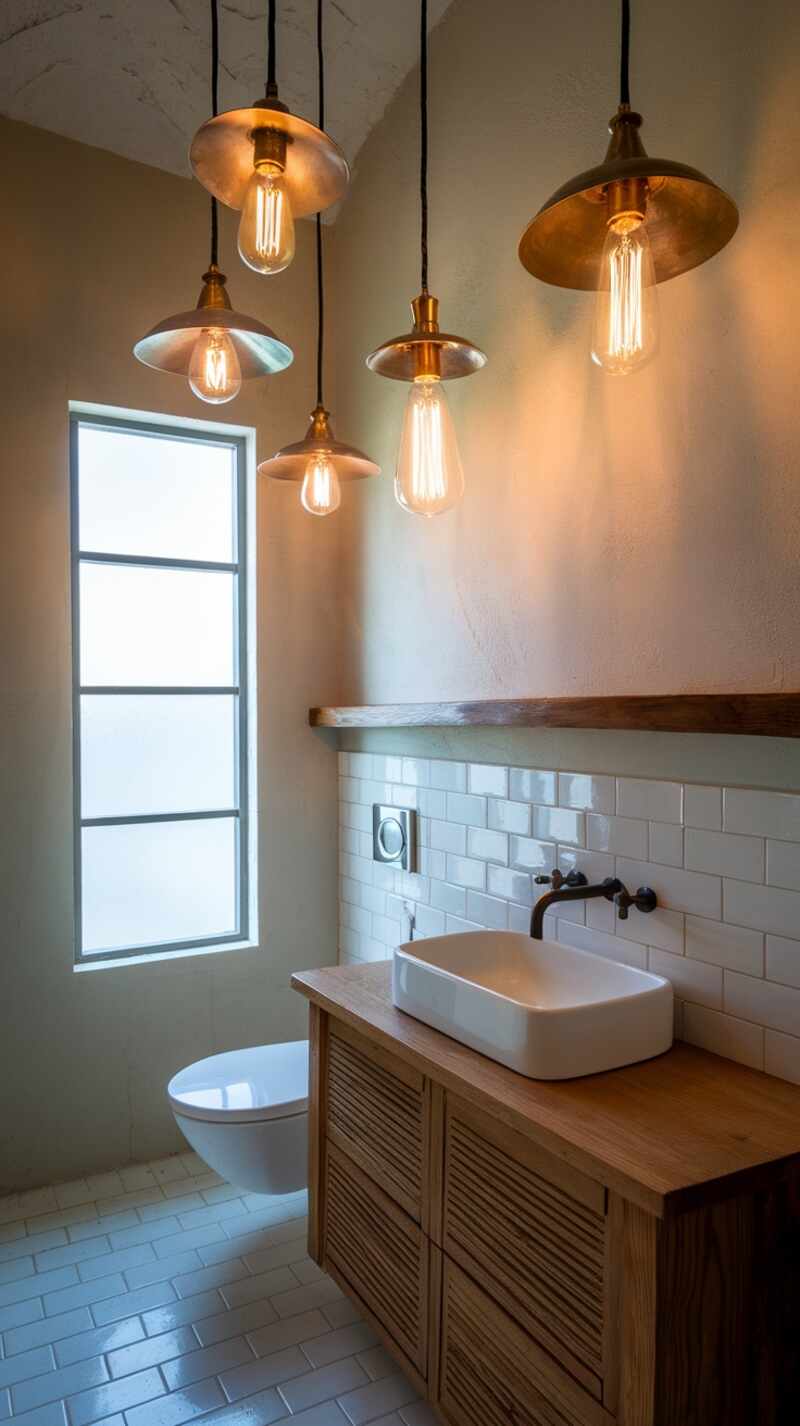
Lighting shapes the feel of a bathroom more than most people expect.
Pendant lights with a warm glow hung at eye level or just above cast soft pools of light that make the room feel intimate rather than clinical.
That single swap, from overhead recessed cans to a pendant with visible warmth, can shift a Japandi bathroom from looking good to feeling good.
Design Pro-Tip: Opt for pendants with a linen or rice-paper shade over exposed bulbs. A diffused glow wraps the room in softness, and the shade itself becomes a sculptural accent that nods to Japanese lantern making.
Smart Lighting and Temperature Controls
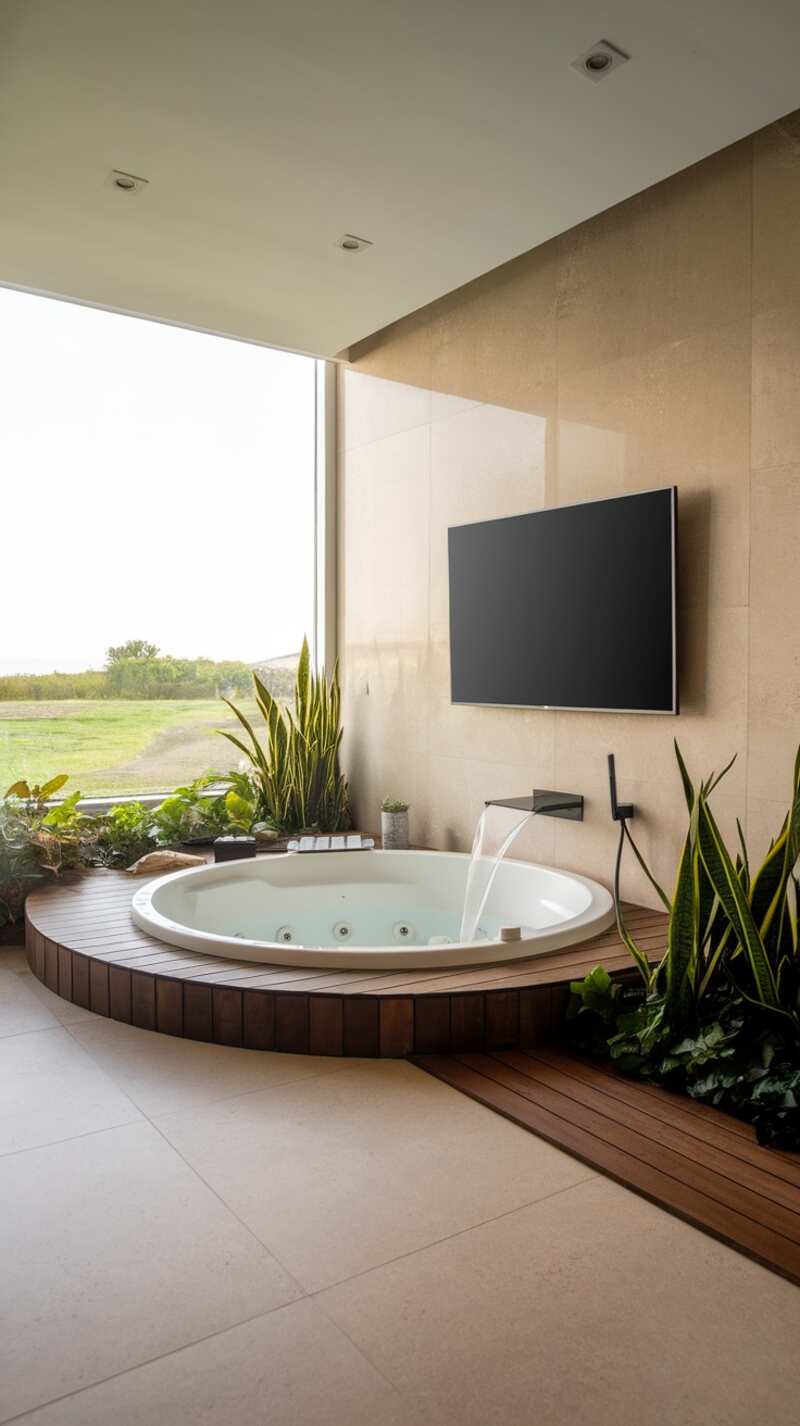
Integrating smart technology into your Japandi bathroom design brings convenience without cluttering the room.
Voice-controlled lighting and phone-adjusted water temperature mean fewer switches and knobs on the wall.
That cleaner surface reinforces the minimalist decor that makes Japandi spaces feel so calm and intentional.
Handmade Pottery and Artisan Shelf Decor
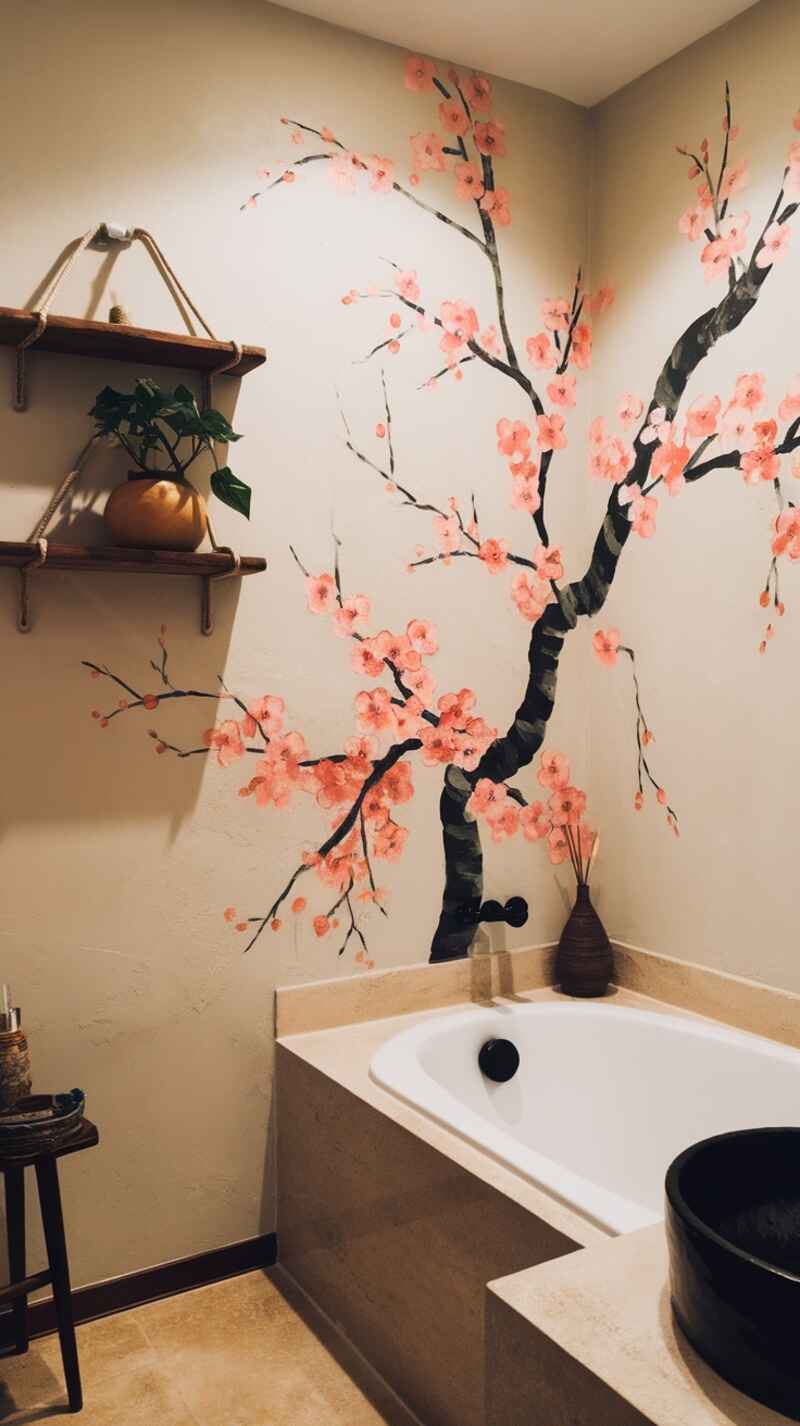
Artisanal handmade decor gives a Japandi bathroom the kind of character that mass-produced accessories never will.
A piece of hand-thrown pottery on the vanity or a set of hand-built shelves along the wall carries the slight imperfections that signal real artistry.
These pieces bring warmth and personality into the room, turning your Japandi bathroom decor into something that feels collected over time rather than purchased all at once.
A cherry blossom mural on the back wall ties the handmade elements together with a nod to Japanese artistry.
Conclusion
The thread running through every one of these Japandi bathroom ideas is the same: choose less, but choose well.
Natural materials, quiet colors, and honest making do the work that no amount of trendy hardware or statement tile ever could.
Start with one change, a wooden shelf, a potted snake plant, a set of matte ceramic accessories, and let the room tell you what it needs next.
A Japandi bathroom is not a style you install in a weekend; it is a sensibility you build one thoughtful decision at a time.