This post may contain affiliate links. If you make a purchase through these links, we may earn a commission at no additional cost to you.
Most laundry rooms get treated as an afterthought, a closed door hiding mismatched shelves and tangled cords.
Industrial style takes a different approach by putting the raw bones of a room on full display.
Exposed metal, poured concrete, and salvaged wood become the design language here, turning a utilitarian space into something worth walking into on purpose.
These ten industrial laundry room ideas each center on a specific material or fixture, giving you a clear starting point for building a space with real weight and character.
Blackened Steel Pipe Clothing Rail Above a Concrete Counter
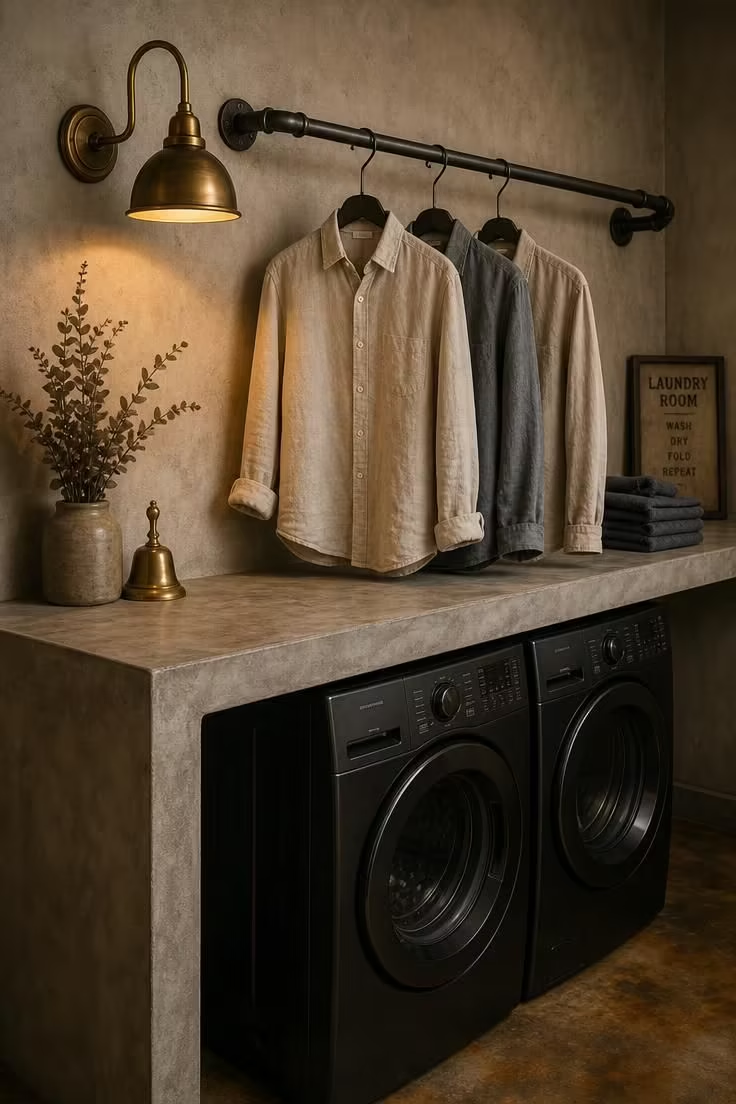
The clothing rail is the first thing that catches your eye when you step through the door, and that is exactly the point.
Running a full-length pipe above the folding station creates an air-dry zone that keeps garments within arm’s reach of the machines below.
Schedule 40 black iron pipe holds weight without flexing, which matters when you load it with damp denim or heavy knits straight from the wash.
The cast iron flanges and elbow joints read as ornamental when left exposed against a raw plaster or mineral-washed wall, giving the hardware a second life as decoration.
Warm golden sconce light running along the pipe picks up every ridge and thread on the fittings, deepening their dark finish.
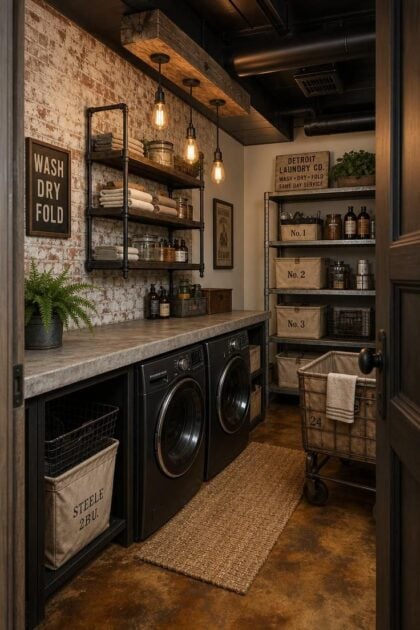
A poured concrete countertop underneath adds mass and coolness to the lower half of the scene, grounding all that dark metal with a neutral slab.
The combination works because the heavy pipe and heavy counter speak the same material language, honest surfaces that get better with wear.
Style Blueprint:
- Schedule 40 black iron pipe rail with cast iron floor flanges
- Poured or precast concrete countertop with hand-troweled finish
- Matte black S-hooks for hanging garments
- Brass or black gooseneck wall sconce for directed warm light
- Sealed concrete or acid-stained floor below
Corrugated Metal Backsplash With Matte Black Faucet
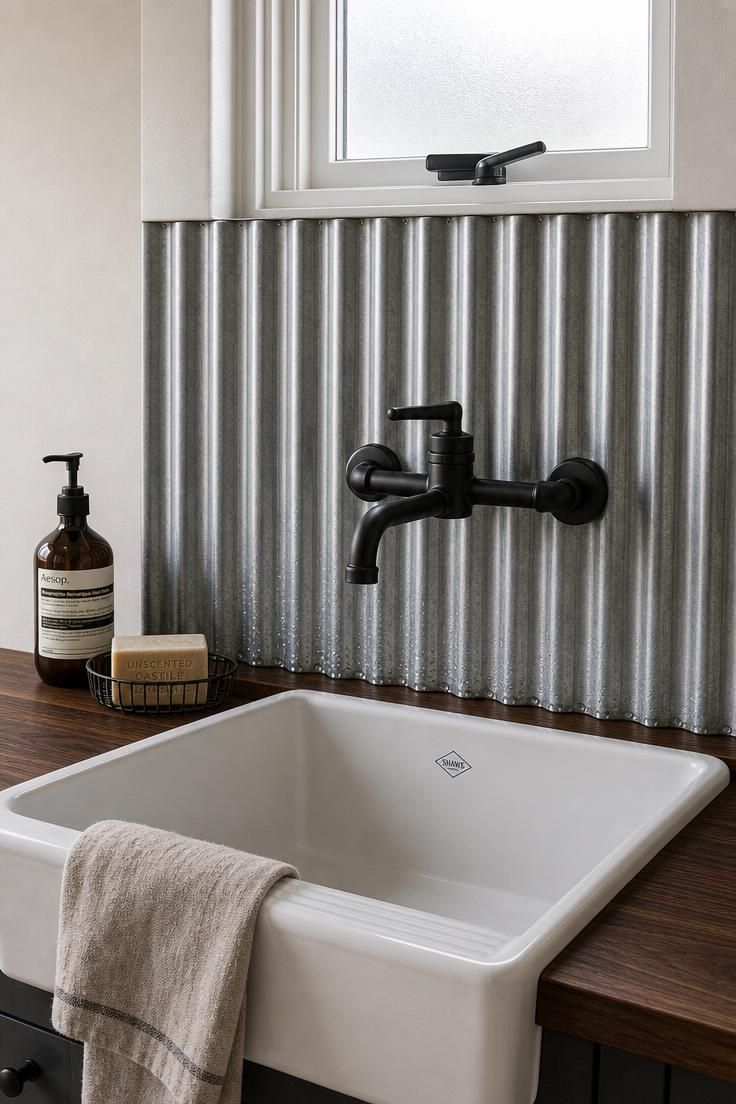
Corrugated steel behind the sink is a move borrowed from agricultural buildings and old machine shops, where the material was chosen for cost and durability rather than looks.
In a laundry room, it serves the same practical purpose, handling splashes and humidity without staining or warping over time.
The vertical ridges create a rhythm of light and shadow that changes throughout the day, especially under the cool tones of an overcast morning window.
Pairing the silver metal with a matte black faucet sets up a clean contrast that keeps the eye moving between the two finishes.
The trick is mounting the panel tight to the wall with minimal trim so the corrugation reads as architecture, not decoration.
A 26-gauge sheet bends easily around corners and cuts with tin snips, making the installation a manageable weekend project.
Style Blueprint:
- 26-gauge galvanized corrugated steel panel, mounted vertically
- Matte black single-handle wall-mount faucet
- Deep white porcelain utility sink
- Oiled walnut or butcher block countertop for warmth
- Wire soap dish and natural linen towel for styling
Vintage Factory Cart as a Rolling Laundry Sorter
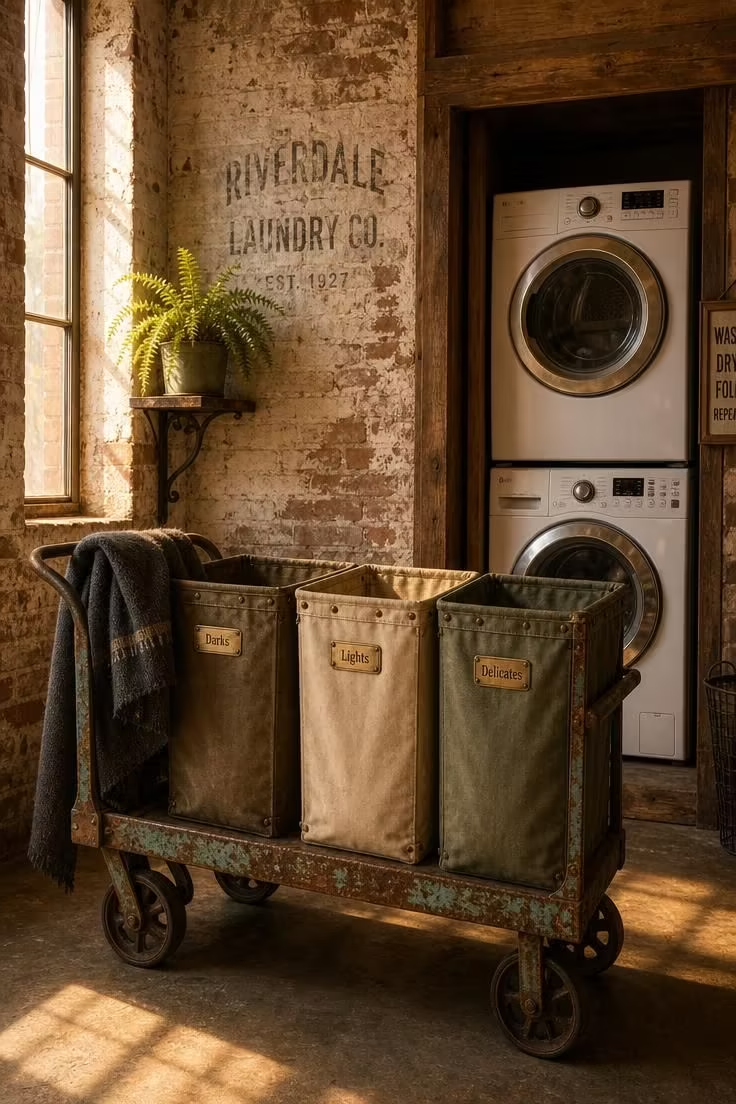
A factory cart with decades of wear rolled right into a laundry room changes the way sorting feels.
The riveted steel frame and cast-iron casters carry a history that no new product can replicate, and that visible age is what gives the piece its presence.
Three canvas bag liners slot into the cart’s open bed, creating a sorting system that lifts out when it is time to carry a load to the machines.
Stamped brass tags on each liner keep the system legible without relying on color coding or handwritten labels that peel off over time.
Sourcing a cart like this usually means a trip to a salvage yard, an estate auction, or a dealer who specializes in factory furniture.
Look for frames with all four original casters intact and joints that still hold square, because a cart that wobbles loses its function fast.
The exposed brick wall behind the cart adds another layer of raw texture, letting the chipped teal paint on the steel rhyme with the aged mortar lines.
Canvas and steel together hit a balance between soft and hard that keeps the industrial laundry room from feeling cold.
Style Blueprint:
- Riveted steel factory cart with original cast-iron casters
- Removable heavyweight canvas bag liners in natural or olive
- Stamped brass label tags with clip-on holders
- Exposed brick wall as backdrop
- Sealed concrete floor beneath
Exposed Ceiling Ductwork Painted in Flat Black
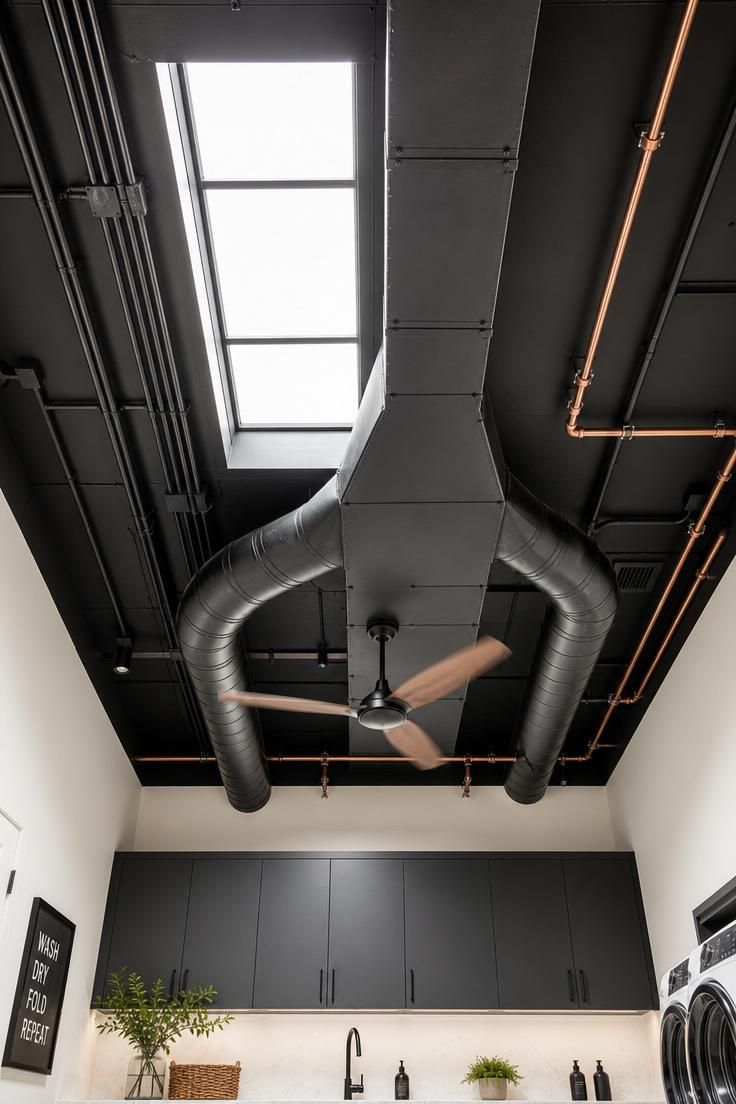
Painting every pipe, duct, and conduit on the ceiling in a single flat black tone does something counterintuitive: it makes the room feel taller.
When the eye cannot distinguish individual lines against a dark plane, the clutter disappears into a unified surface that recedes upward.
Bright midday light from a skylight or high window cuts across the dark surfaces, catching the upper edges of round ductwork and creating sharp white highlight lines.
The prep matters more than the paint here, because bare metal needs a bonding primer before the topcoat will hold without flaking.
A metal etching primer followed by two light coats of flat (not satin, not gloss) black spray gives the cleanest result with no sheen to reflect light back down.
Leave the sheet metal screws and joint seams visible rather than caulking them smooth, because those raw details are the whole point of the industrial look.
Style Blueprint:
- Metal etching primer plus flat black spray paint on all exposed systems
- Frosted glass skylight or high clerestory window for overhead light
- Matte black ceiling fan with wood-tone blades
- Warm white walls to contrast the dark ceiling
- Flat-panel charcoal cabinets below
Design Pro-Tip: When painting exposed ceiling systems, mask off any fire sprinkler heads and smoke detectors before spraying. Covering these devices with paint can delay their response time and may violate local building codes. Use painter’s tape and small plastic bags to protect each head, and remove the covers as soon as the final coat dries.
Soapstone Sink Basin Set Into a Reclaimed Wood Vanity
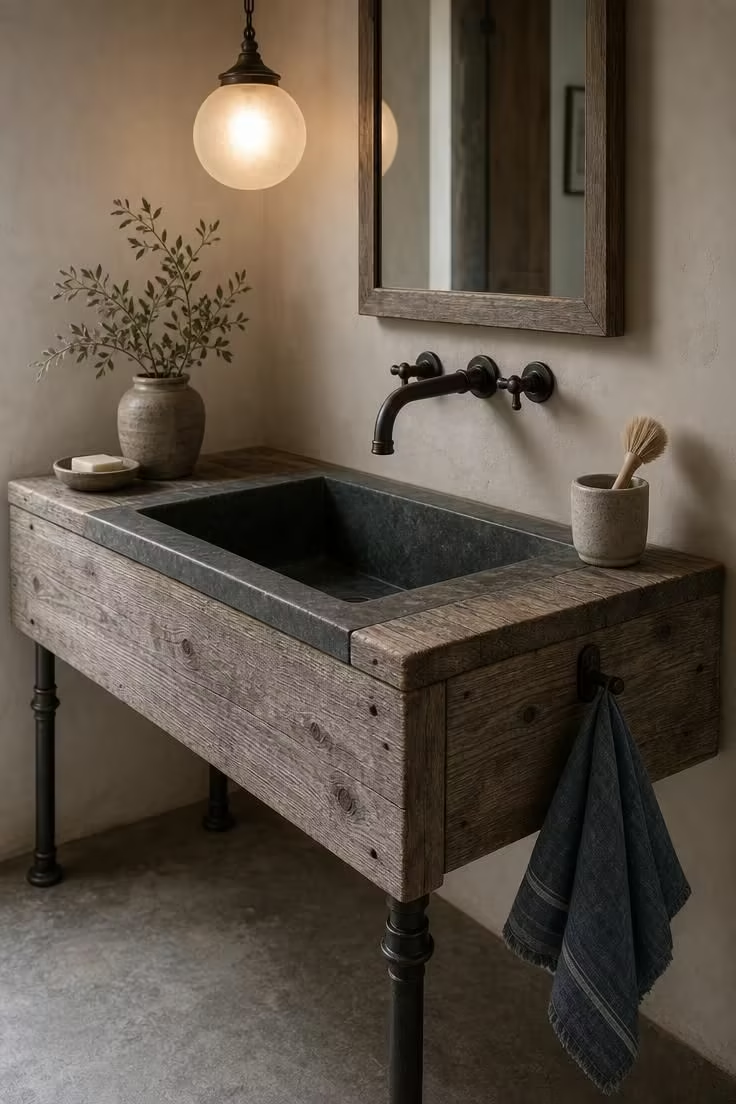
Soapstone has a density and coolness that you feel the moment your hands touch the rim of the basin.
It starts with a matte charcoal-green surface that, over months of contact with water and soap, darkens into a deeper slate tone with its own subtle veining.
That evolving finish makes it one of the few sink materials that actually improves with daily use rather than showing its age as damage.
Mounting the basin into a vanity built from reclaimed hemlock planks puts warm, rough wood right next to cold, smooth stone, and the contrast reads immediately.
Iron pipe legs underneath keep the structure honest, letting you see straight through to the floor and avoiding the visual bulk of a closed cabinet.
Soft diffused light from a frosted pendant above does the surface justice, smoothing the soapstone’s matte finish and casting gentle shadows into the basin’s depth.
This combination of stone, wood, and iron hits three textures in one fixture, which gives the corner of the room more material depth than most full kitchens manage.
Style Blueprint:
- Vermont soapstone basin sink, deep single-bowl
- Reclaimed hemlock or barn wood plank vanity top
- Threaded iron pipe legs at each corner
- Oil-rubbed bronze wall-mount bridge faucet
- Frosted glass globe pendant for soft overhead light
Metal Mesh Cabinet Doors on a Charcoal Shaker Frame
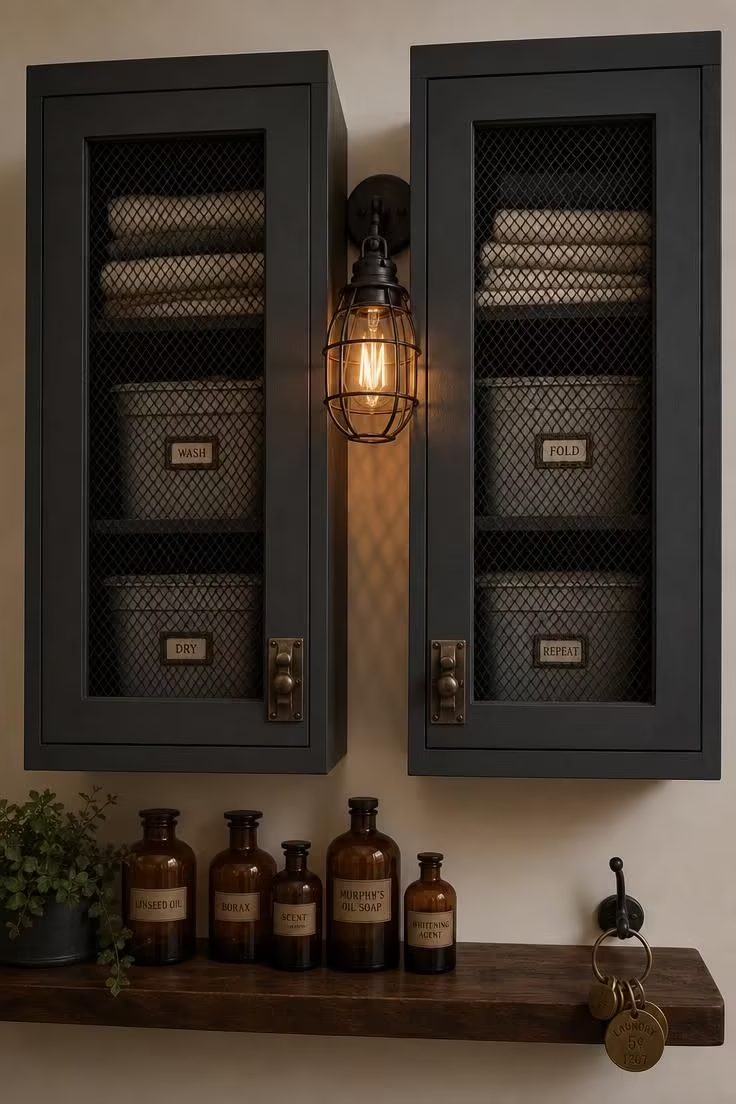
Replacing a solid cabinet panel with woven metal mesh turns closed storage into a display case without losing the frame’s structure.
The mesh lets you see what is inside, folded linens, labeled bins, cleaning supplies, which means the contents become part of the room’s visual texture.
Woven wire is the most common choice, but expanded metal and perforated steel sheet each create a different pattern of light and shadow.
Painting the Shaker frame in charcoal chalk paint keeps all the attention on the metal insert, because a lighter frame would compete with the mesh for the eye’s focus.
Low light from a caged Edison fixture deepens the charcoal tone and throws a grid shadow from the mesh onto the shelves behind, doubling the texture.
This detail works on a single pair of accent cabinets or across an entire wall of uppers, depending on how committed you want the look to be.
Metal storage bins behind the mesh reinforce the industrial vocabulary, creating a layered effect of metal on metal that reads as intentional and collected.
A narrow floating shelf below the cabinets in oiled walnut breaks the monotone with a strip of warm wood.
Style Blueprint:
- Poplar Shaker-profile cabinet frames in charcoal chalk paint
- 16-gauge woven steel mesh center panels
- Caged Edison bulb fixture for low ambient light
- Metal storage bins with clip-on brass label holders
- Oiled walnut floating shelf below for contrast
Pegboard Tool Wall With Iron Hook Rail
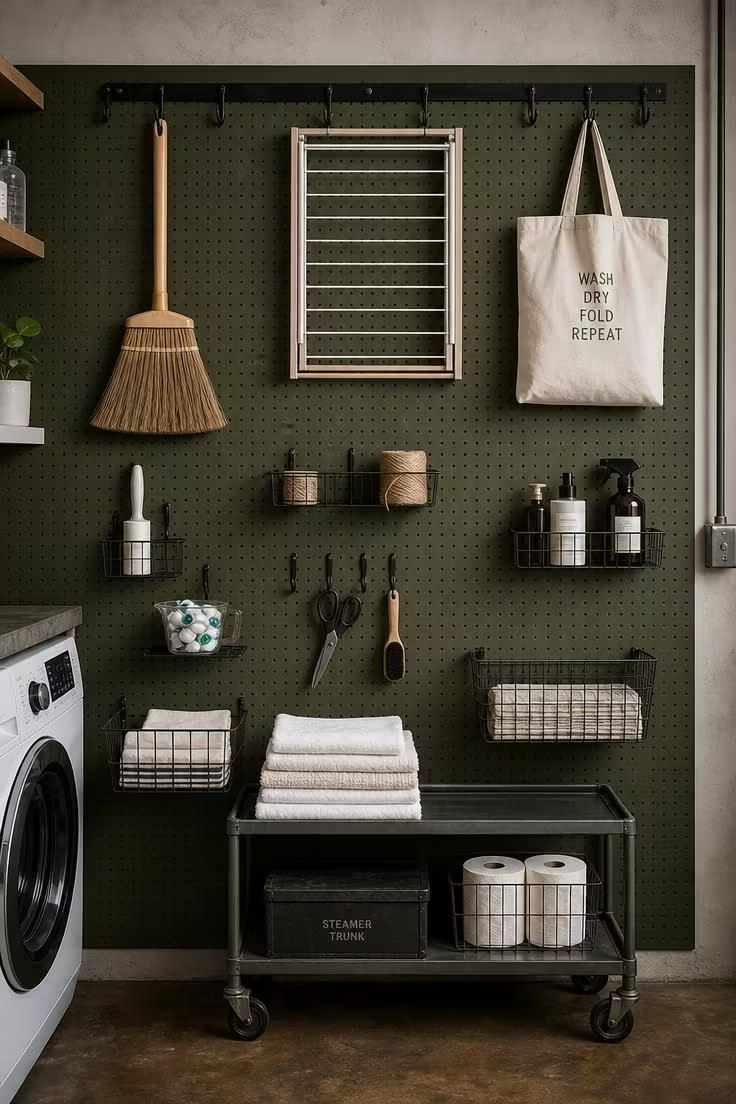
A full pegboard wall turns dead vertical space into a working surface where every tool has an assigned spot.
Painting the board in deep olive or charcoal gives it enough weight to hold its own against the harder finishes in an industrial room, and it pairs well with laundry room shelving on adjacent walls.
Powder-coated steel hooks come in dozens of shapes, from single prongs for brooms to double hooks for folded rags, and they pop in and out as your needs change.
The iron hook rail along the top edge handles the heavy items that pegboard hooks cannot support, like a full-size ironing board or a loaded canvas tote.
Bright, even light from an opposite window is important here, because shadows behind each hook make the wall look sculptural rather than cluttered.
Laundry room organization becomes visible and physical on a pegboard wall, which means you stop losing small tools in drawers and start reaching for them on instinct.
Style Blueprint:
- Quarter-inch tempered hardboard pegboard in olive or charcoal
- Powder-coated steel hooks, wire baskets, and spring clips
- Black iron hook rail along the top edge
- Bright natural light from an opposite window
- Low rolling metal cart at the base for overflow
Concrete Floor Stained in Acid-Washed Amber
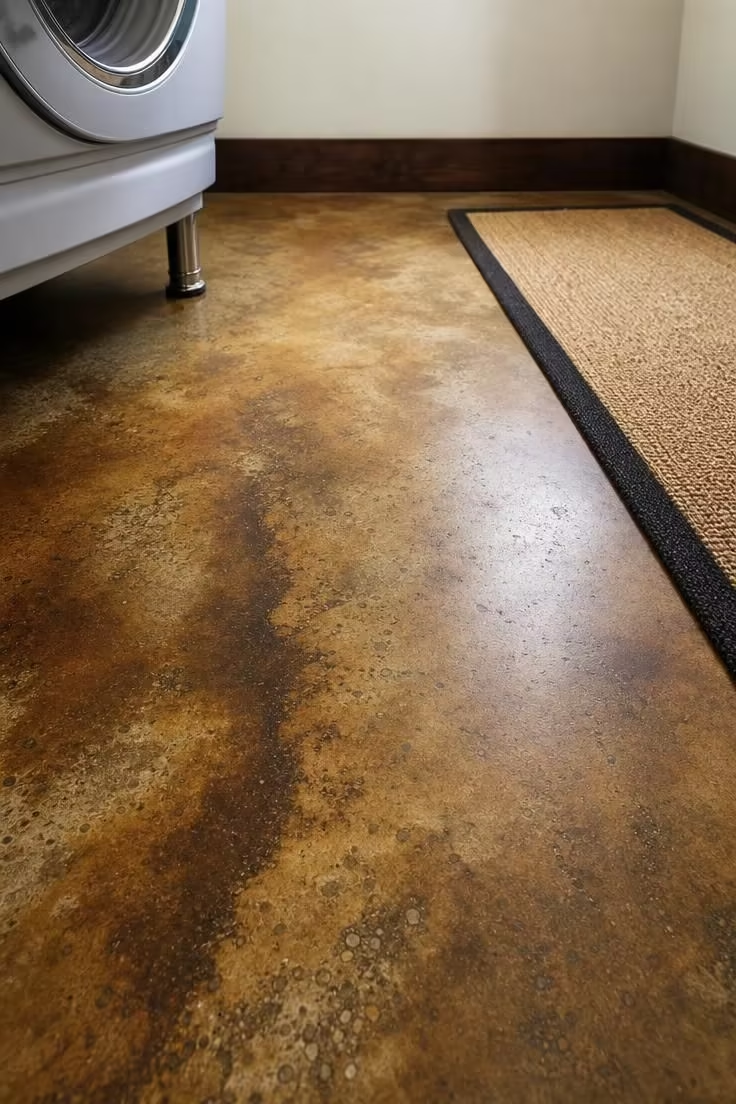
Acid staining a concrete slab produces a color that no paint or overlay can imitate, because the chemical reaction with the minerals in the cement creates a result unique to that specific floor.
Iron chloride is the classic reagent, leaving behind amber, umber, and burnt sienna tones that shift depending on the concrete’s age, cure, and mineral content.
The mottled pattern reads like leather or natural stone from a distance, giving the floor a material richness that a plain sealed slab cannot match.
Prep is the invisible labor that determines the outcome: degreasing, etching, and cleaning the slab before the stain goes down removes any barrier between the acid and the cement.
After the stain sits and reacts (usually four to eight hours), a neutralizing wash stops the process and the floor gets sealed with a matte water-based polyurethane.
That matte seal protects against moisture and detergent spills without adding a plastic gloss that would fight the natural, earthy tone of the stain.
Small spots where the stain did not penetrate, usually over aggregate or dense patches, become part of the pattern rather than flaws.
Style Blueprint:
- Iron chloride acid stain in amber or umber tones
- Concrete degreaser and etching solution for prep
- Matte water-based polyurethane sealer topcoat
- Jute or sisal runner for softness underfoot
- Dark walnut baseboard for a finished edge
Design Pro-Tip: Test your acid stain on an inconspicuous patch of the slab before committing to the full floor. Concrete from different pours, or even different bags of mix within the same pour, can react with wildly different intensity. A two-foot test square in a closet or behind the machines tells you exactly what color and depth you will get before you cover the whole room.
Edison Bulb Pendants on a Reclaimed Timber Beam
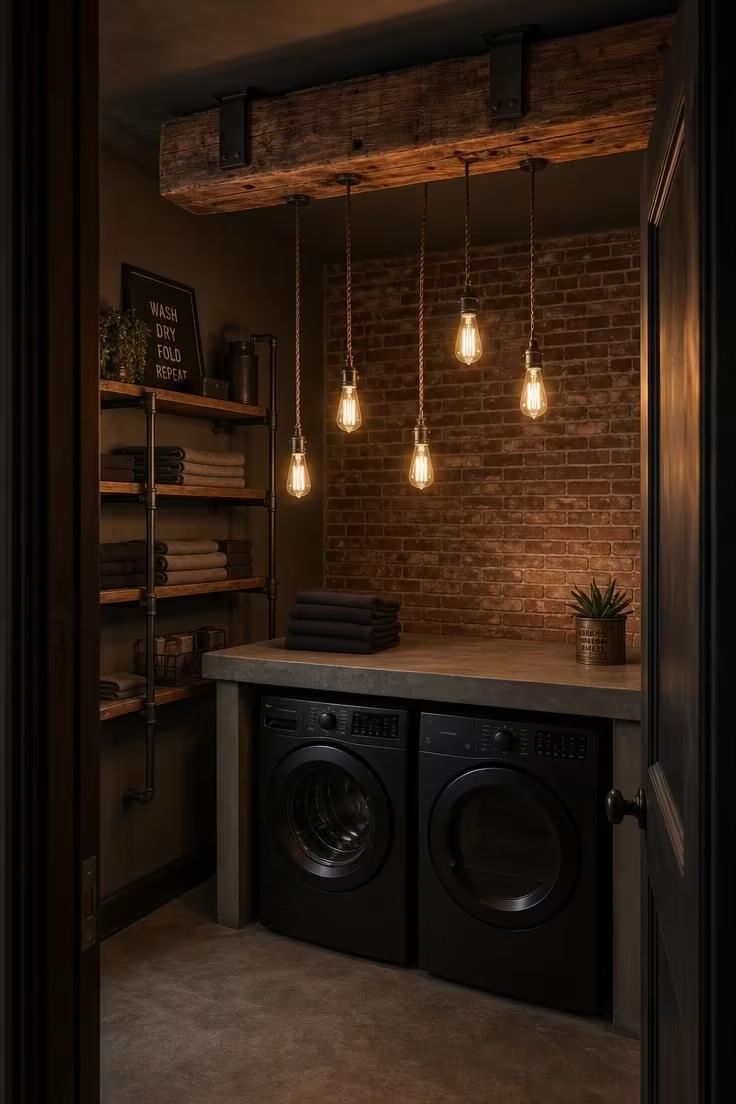
A single timber beam carrying a row of exposed bulbs does more for the atmosphere of a room than a whole ceiling full of recessed downlights.
The beam itself brings mass and warmth overhead, its saw marks and nail holes recording a previous life in a barn or warehouse.
Routing a shallow channel along the top of the beam conceals the wiring while keeping the underside clean and visible, so the fixture looks structural rather than rigged.
Staggering the cord lengths at different drop heights adds rhythm and movement to the light arrangement, preventing the row from reading as flat or mechanical.
ST64 teardrop filament bulbs throw a warm amber glow that flatters every surface below, turning concrete countertops and matte black machines into something soft.
The low moody light reflects off an exposed brick wall at the far end of the room, picking up the texture of mortar joints and the variation in brick color.
Pipe shelving mounted with iron brackets on the adjacent wall catches enough of the amber glow to be readable without needing a separate light source.
This is the kind of fixture that makes people stop and look up when they walk into the room, which is rare for a laundry space.
Reclaimed Douglas fir is a reliable choice for the beam because of its tight grain, resistance to splitting, and the deep honey-gold color it develops with age.
Style Blueprint:
- Reclaimed Douglas fir timber beam with visible saw marks
- Heavy black iron ceiling brackets for mounting
- ST64 teardrop Edison filament bulbs on twisted cotton cord
- Staggered cord lengths for varied drop heights
- Deep warm putty or charcoal wall paint as backdrop
Galvanized Metal Shelving Unit With Canvas Bin Inserts
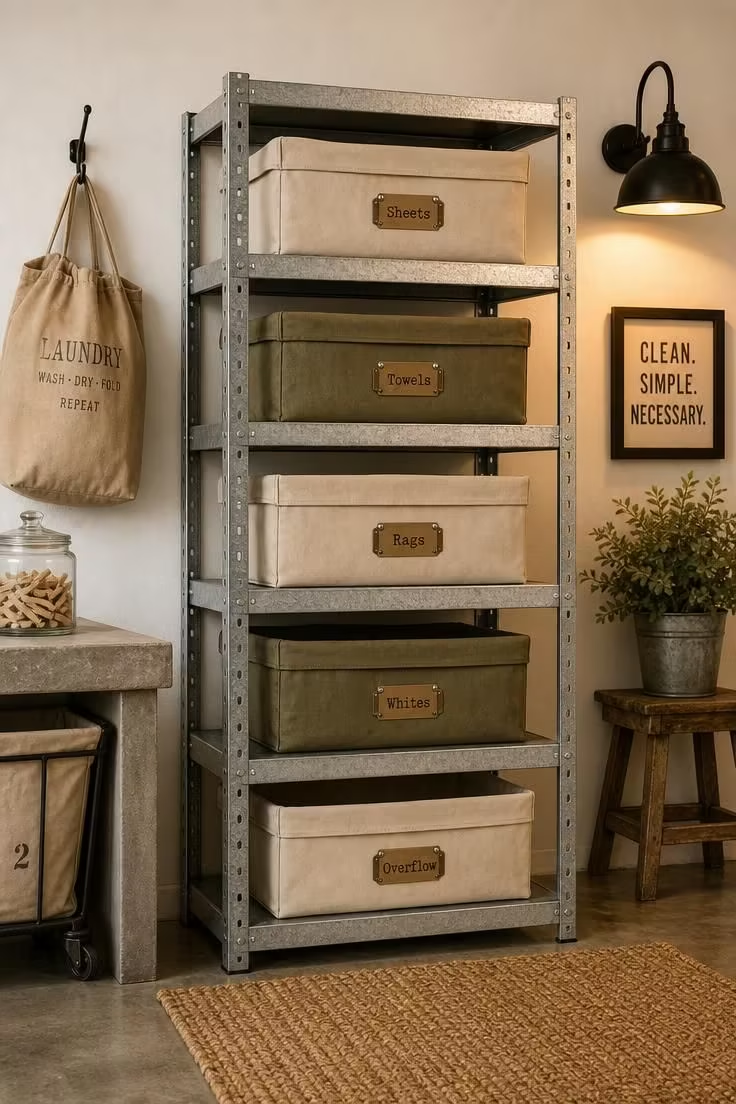
A galvanized steel shelving unit is the workhorse of industrial laundry room ideas, and its strength is that it hides nothing.
Every bin, every label, every folded stack is visible from across the room, which turns laundry room organization into something you can read at a glance.
Five-tier bolt-together units carry 250 to 350 pounds per shelf depending on the gauge, which means you can load an entire household’s worth of linens without worrying about the frame.
Canvas bin inserts in natural or olive tones soften the hard steel edges and give each shelf a contained, tidy look that loose stacks of towels cannot achieve.
Hand-stamped brass tags on nickel-plated clip holders bring a material consistency to the labels, keeping the whole system within the industrial vocabulary.
Warm golden light from a barn-style sconce positioned beside the unit is the detail that brings the metal to life, shifting its cool silver tone toward something warmer and more inviting.
A jute rug at the base of the shelving unit cushions your feet and anchors the piece visually so it does not float against the wall.
Style Blueprint:
- Five-tier galvanized steel bolt-together shelving unit
- 16-ounce duck canvas bin inserts in natural or olive
- Nickel-plated clip-on label holders with brass tags
- Matte black enamel barn-style wall sconce
- Jute rug at the base for grounding
Conclusion
An industrial laundry room earns its character one material at a time, from a pipe rail bolted to the wall to a timber beam carrying a row of glowing filaments overhead.
The ideas here share a common thread: they let raw finishes, honest hardware, and functional fixtures stand as the design rather than hiding behind polish.
Start with the one detail that fits your space and budget, whether that is a corrugated metal backsplash you can install in an afternoon or an acid-stained floor that takes a full weekend.
Layer in a second piece when you are ready, and let the room grow on its own schedule.
The best industrial spaces feel collected over time, not assembled from a catalog, and your laundry room deserves that same kind of slow, deliberate attention.