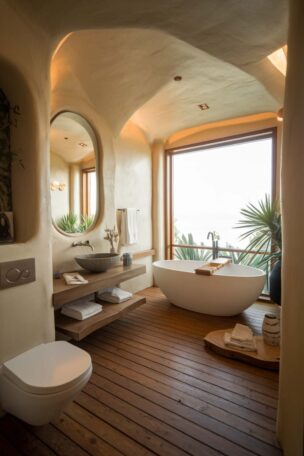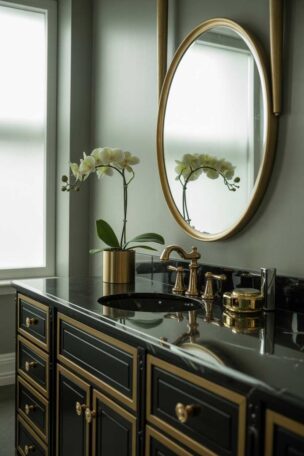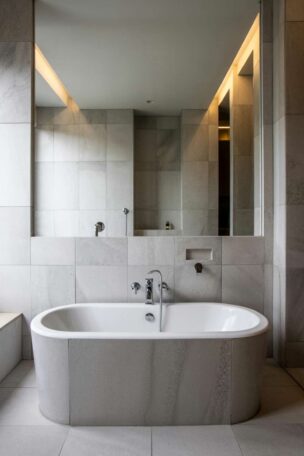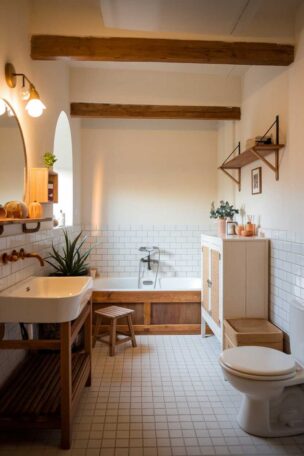

A black and white bathroom never goes out of style, and the reason is simple: high contrast does the heavy lifting so you don’t have to.
The palette works across every design era, from Art Deco checkerboards to clean-lined contemporary spaces.
What makes it so versatile is the range of materials and patterns available within just two colors, from matte black hardware to glossy white subway tile.
Below are 17 ideas that show how to put this monochrome combination to work in your own space.
Geometric Accent Walls in Black and White
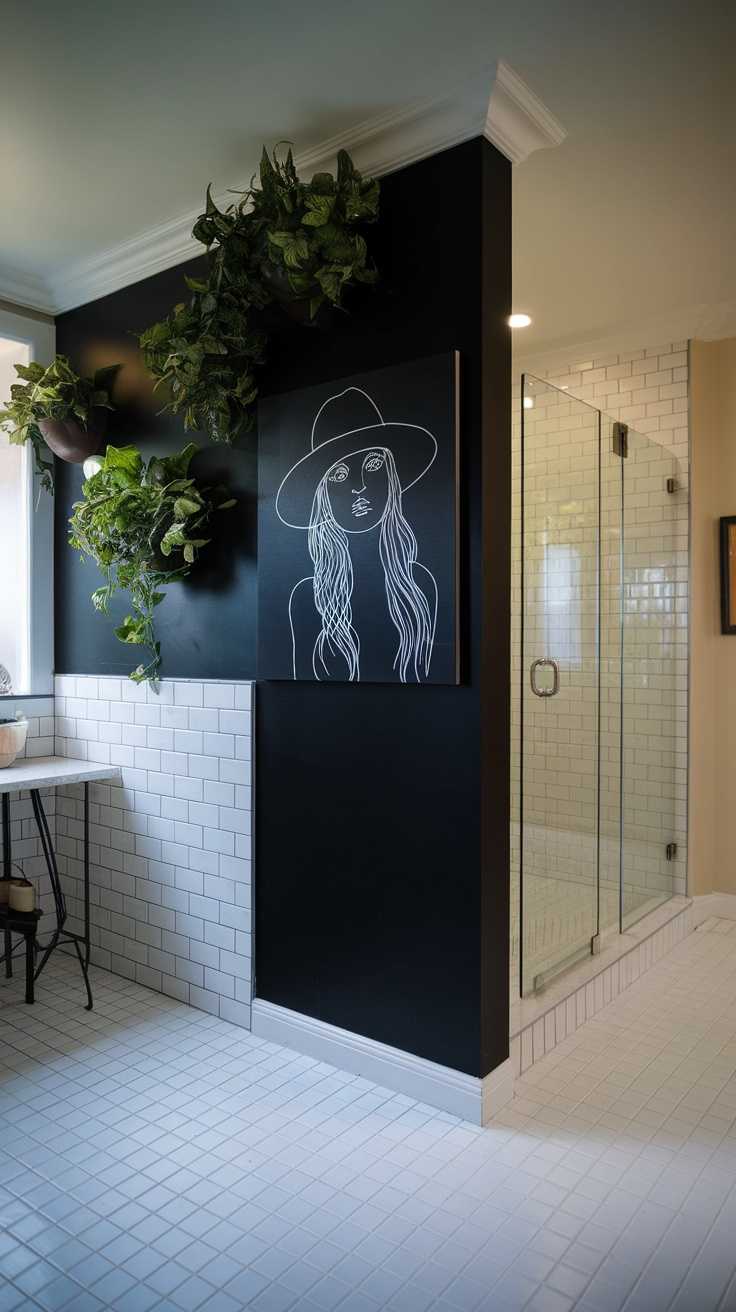
Accent walls can shift the entire mood of a monochrome bathroom in a single afternoon.
A deep black wall with a striking geometric pattern becomes the room’s anchor, pulling the eye forward the moment you step inside.
The contrast between dark and light on a single surface gives the space an architectural quality that flat paint alone cannot match.
White tile on the floor or adjacent walls keeps the surrounding area bright and breathable.
That balance is what prevents a dark accent from feeling heavy or closed-in.
Monochrome Tile Patterns with Mixed Motifs
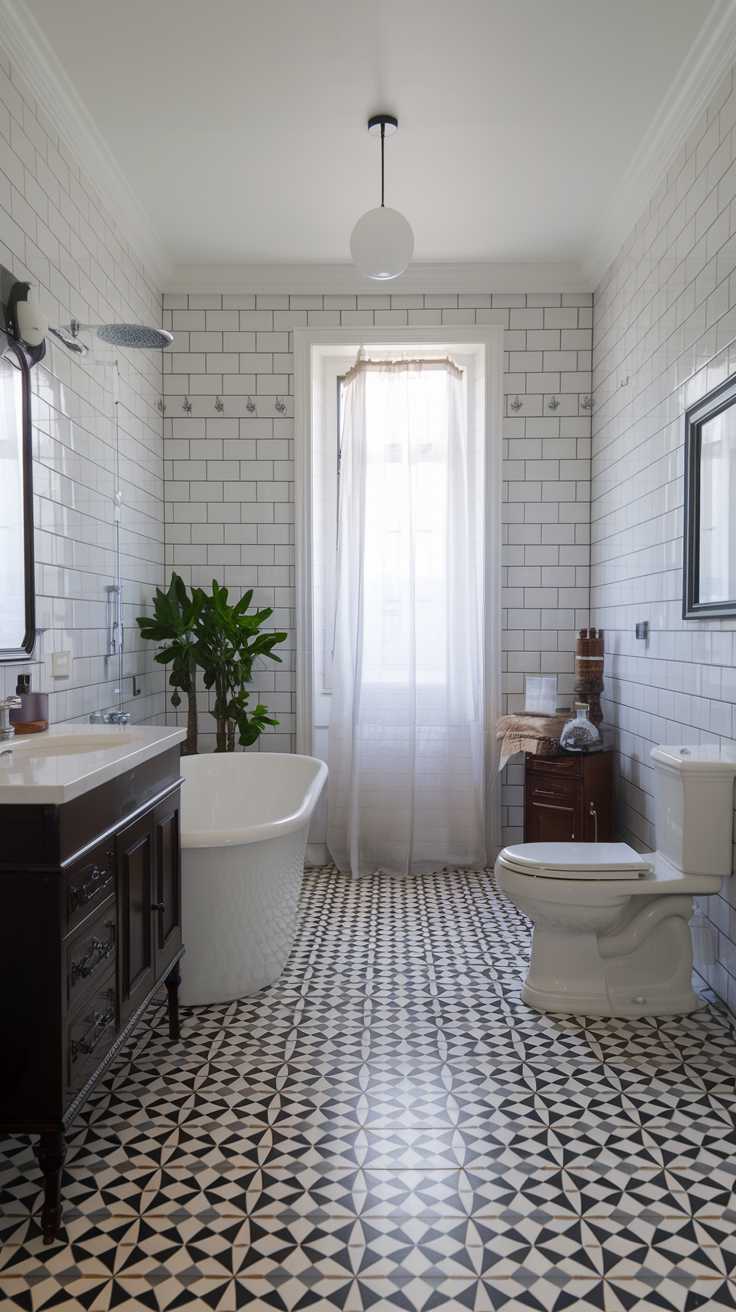
Tile patterns are where a monochrome bathroom gets its personality.
Mixing geometric and floral designs on the same surface creates layered visual interest that a single repeat pattern cannot achieve.
Small-scale mosaics in the border paired with a larger motif at center stage give the floor a sense of intention and care.
The result is a bathroom that feels designed rather than decorated, with every tile placed for a reason.
These patterns tie the room together without requiring a single additional color or accent piece.
Matte Black Fixtures Against White Surfaces
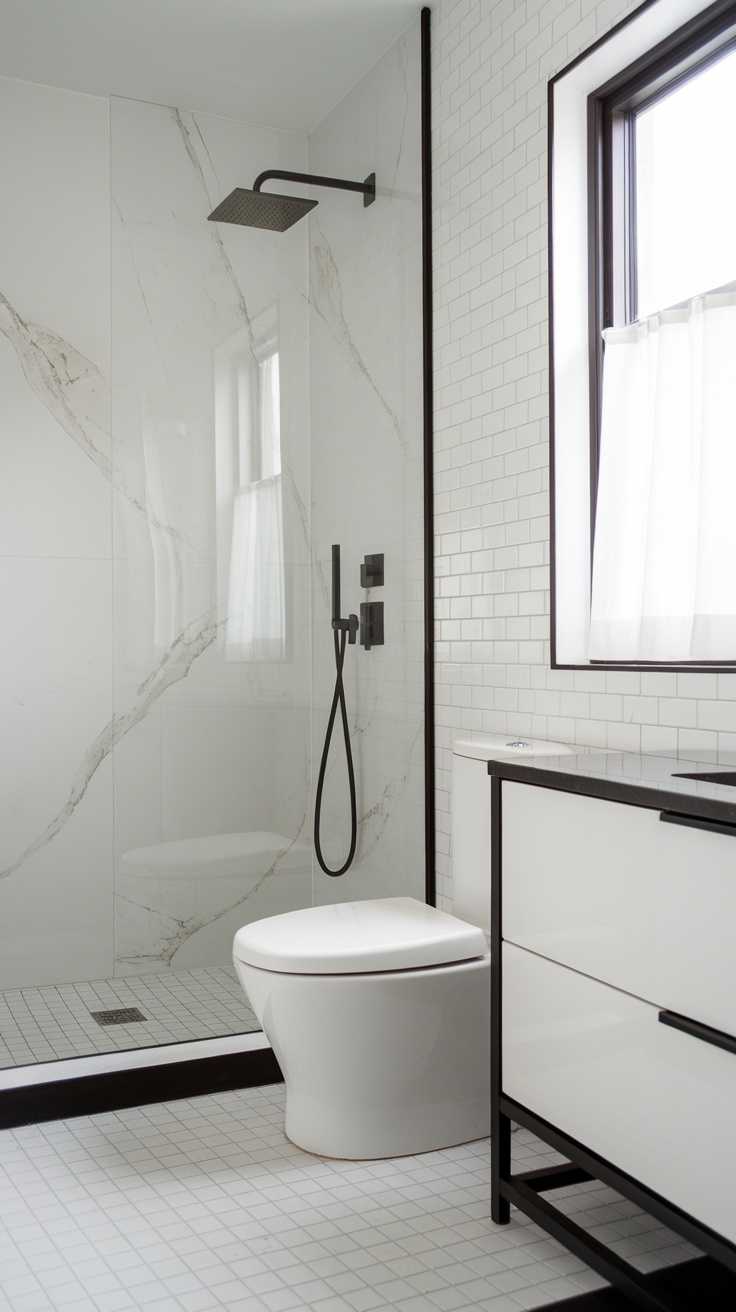
Black fixtures bring instant definition to any white and black bathroom.
A matte black faucet or showerhead set against white porcelain creates a crisp line of contrast that reads as intentional and refined.
The darker hardware draws the eye to the room’s functional details, turning them into design statements of their own.
Swapping chrome for black is one of the simplest upgrades that makes the biggest visual impact in a space this monochromatic.
The matte finish resists fingerprints better than polished options, keeping the look crisp between cleanings.
Striped Towels and Patterned Rugs for Contrast
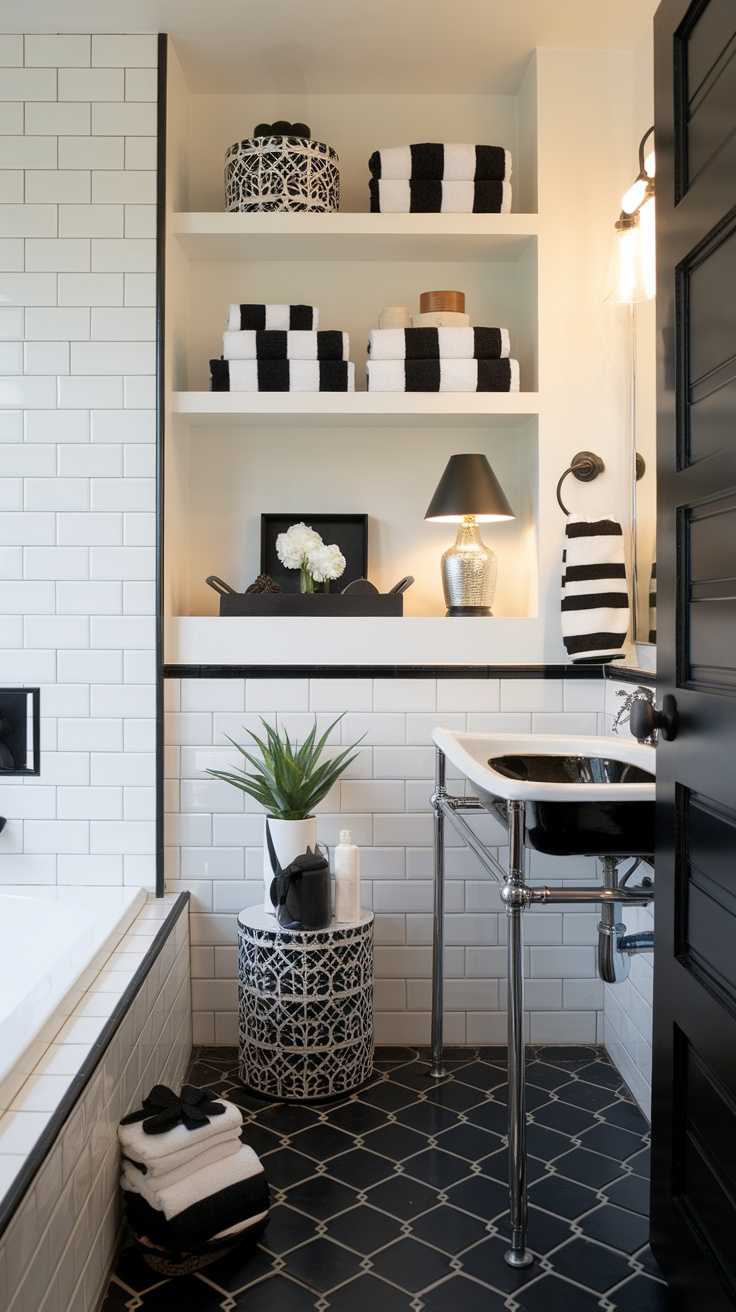
Textiles are one of the easiest ways to refresh your black and white bathroom decor.
Striped towels hung on a matte bar, or a patterned rug at the foot of the vanity, bring softness and personality that hard surfaces alone can’t deliver.
The fabric absorbs sound and light in a way that makes the room feel warmer and less echoey.
Mixing these elements into a monochrome space creates a layered, lived-in look that still feels intentional and carefully pulled together.
Design Pro-Tip: In a two-color bathroom, textiles are your secret weapon for adding warmth. Choose fabrics with visible texture, like waffle-weave towels or a tufted cotton rug, so the room doesn’t feel cold or sterile.
Black Pendant Lighting Over a Marble Vanity
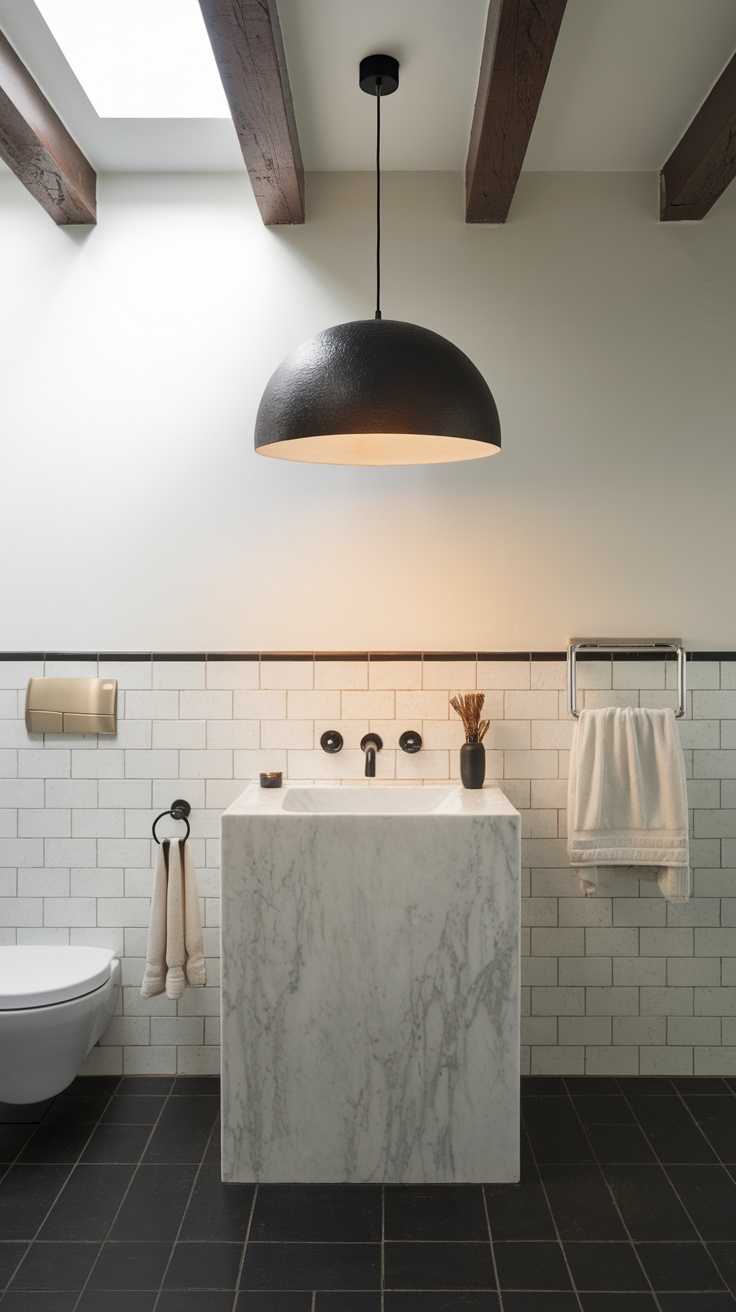
The right lighting fixture changes the character of a white and black bathroom overnight.
A bold black pendant lamp suspended above the vanity adds a sculptural quality that recessed lights simply cannot replicate.
Its dark silhouette stands out against lighter walls and countertops, creating a focal point at eye level.
The warm glow it casts softens the high-contrast palette and makes the space feel welcoming after dark.
Pairing it with black and white tile on the floor anchors the whole look from ceiling to ground.
Sleek Black Vanity with a White Countertop
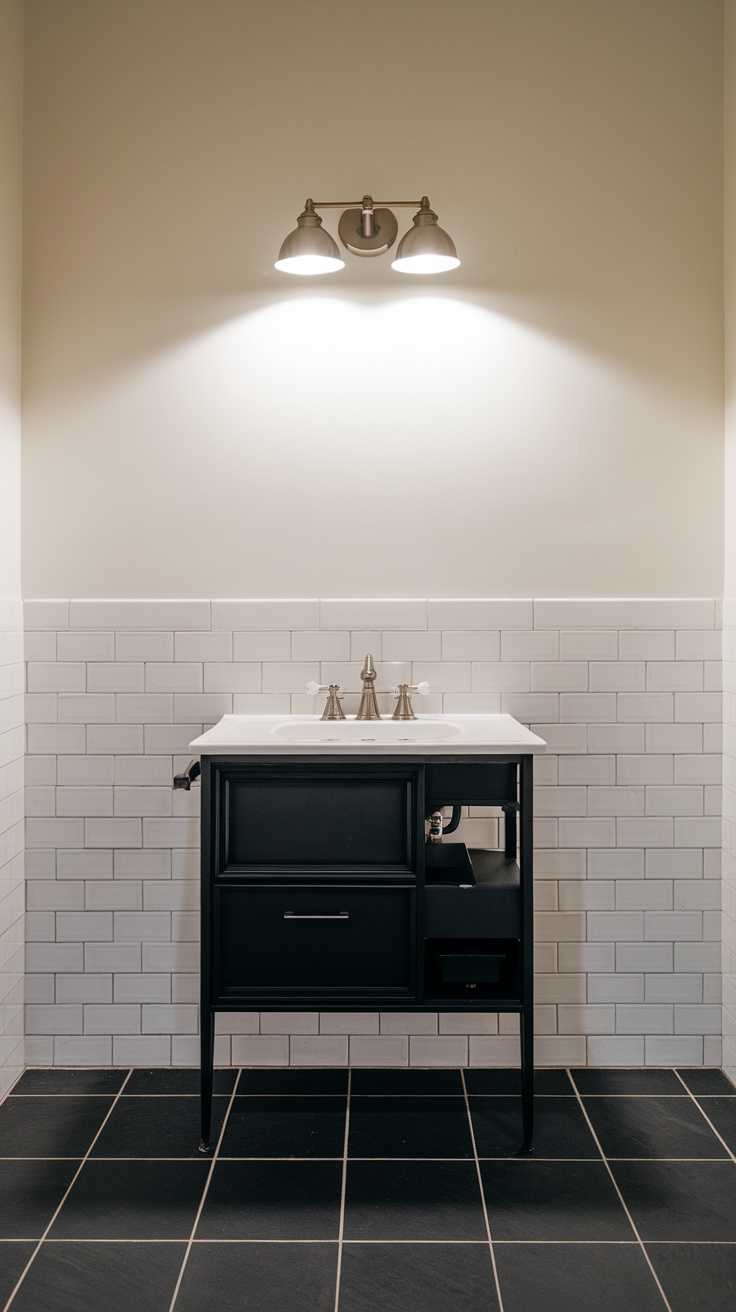
A minimalist vanity in solid black paired with a bright white countertop creates a clean, grounded foundation for the rest of the room.
The slim, clean profile keeps visual clutter low, which is exactly what a small or midsize bathroom needs.
Black cabinetry reads as confident and modern without overwhelming a lighter surrounding.
This combination turns the vanity into the room’s quiet, unmistakable centerpiece, setting a serene and grounded tone that anchors every other finish and fixture in the space.
Classic Checkerboard Tile Flooring
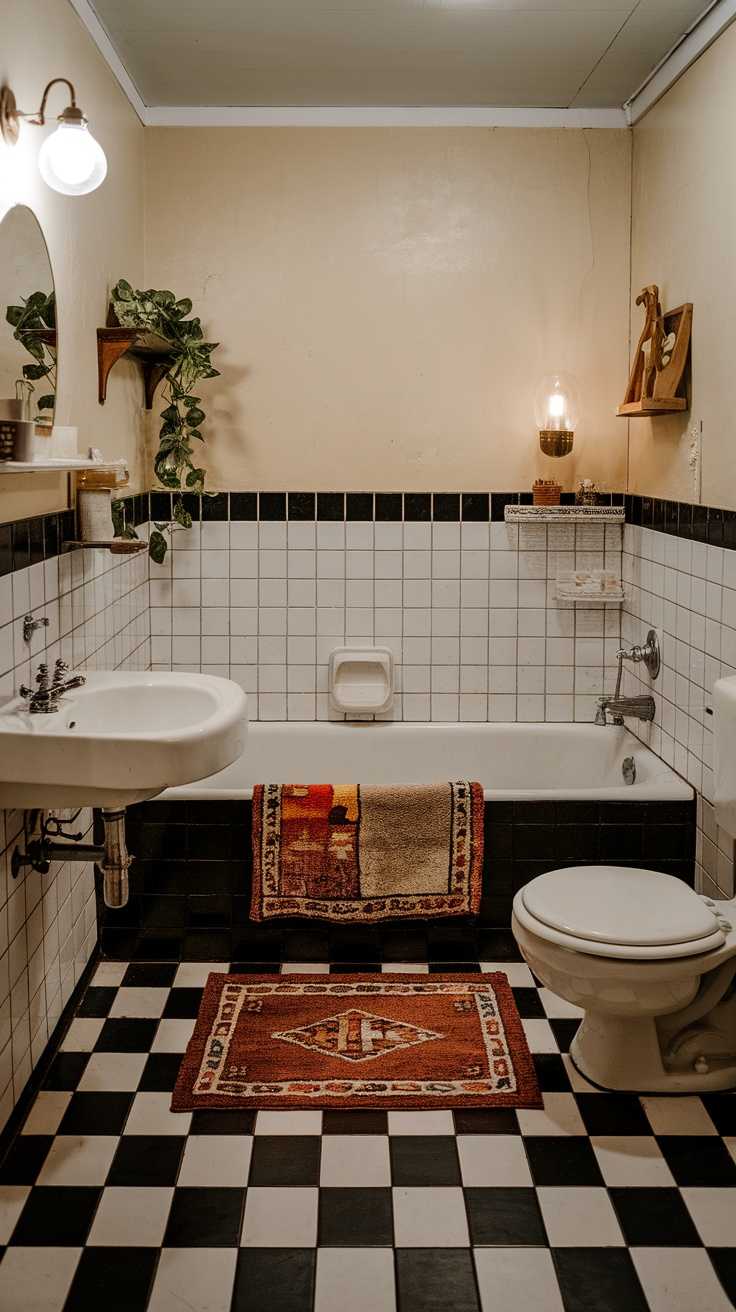
Checkerboard flooring is one of those designs that earns the word “timeless” without exaggeration.
Laid on the diagonal, the alternating squares trick the eye into reading a small floor as larger than it is.
Big tiles give a contemporary spin, smaller squares lean vintage, and the character shifts again depending on grout color.
The pattern looks just as strong in a narrow powder room as it does in a full primary bathroom, which is part of why it keeps showing up decade after decade.
Design Pro-Tip: Grout color matters more than most people realize on a checkerboard floor. Matching the grout to the lighter tile keeps the pattern graphic and clean, darker grout adds a grid-line effect that highlights each individual square.
Freestanding Bathtub as a Monochrome Focal Point
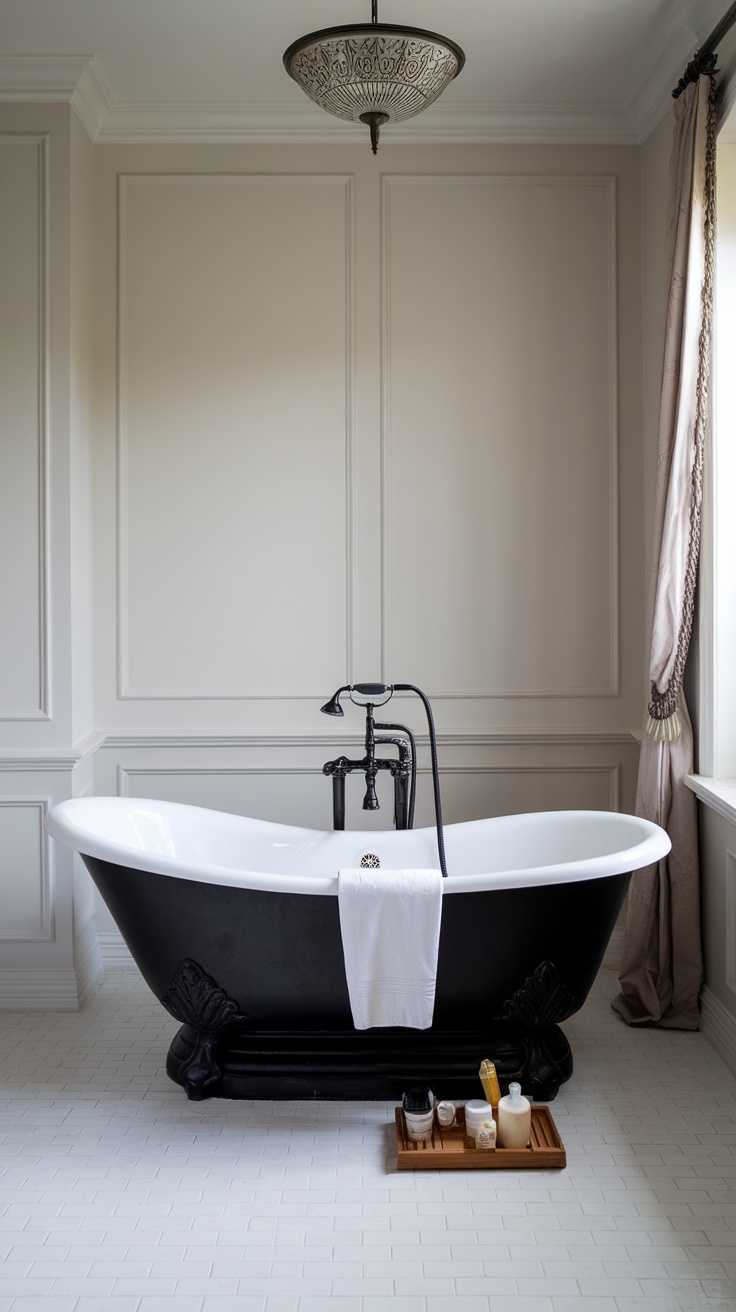
A freestanding tub set against a monochrome backdrop becomes the room’s showpiece without trying.
The tub’s curved silhouette softens all the straight lines that tile, vanity edges, and mirror frames create around it.
A white exterior with black claw feet, or an all-black finish against white wainscoting, sharpens the sense of contrast.
That contrast is what turns a functional fixture into something worth pausing for.
The invitation to slow down, relax, and soak is built right into the design itself.
Bold Geometric Shower Curtains
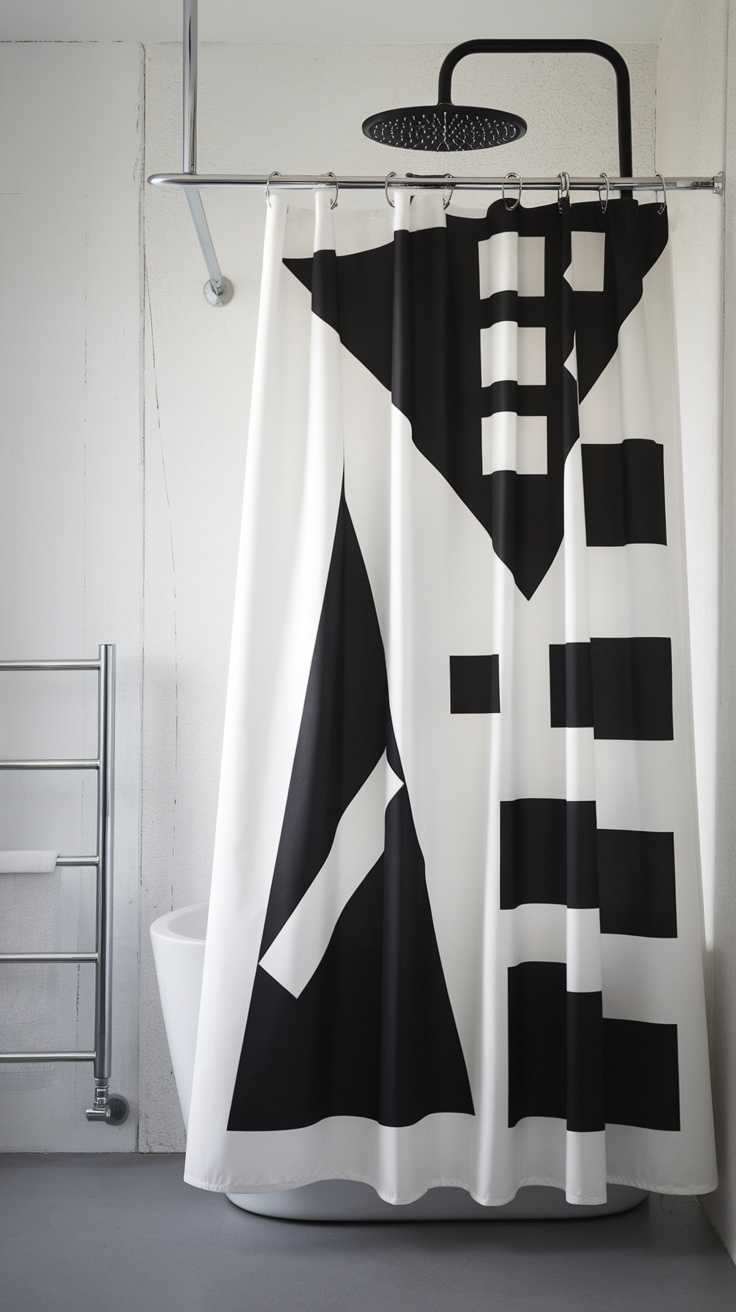
A shower curtain with a strong monochrome pattern can anchor the entire room for a fraction of what tile costs.
Geometric shapes, abstract line work, and oversized prints all read well against lighter walls.
The curtain acts as a movable accent wall, drawing attention to the shower zone and giving the bathroom a graphic focal point that holds its own against permanent finishes.
Swapping it out seasonally is an effortless way to shift the room’s mood without touching anything permanent.
Retro Mirrors and Vintage Soap Dishes
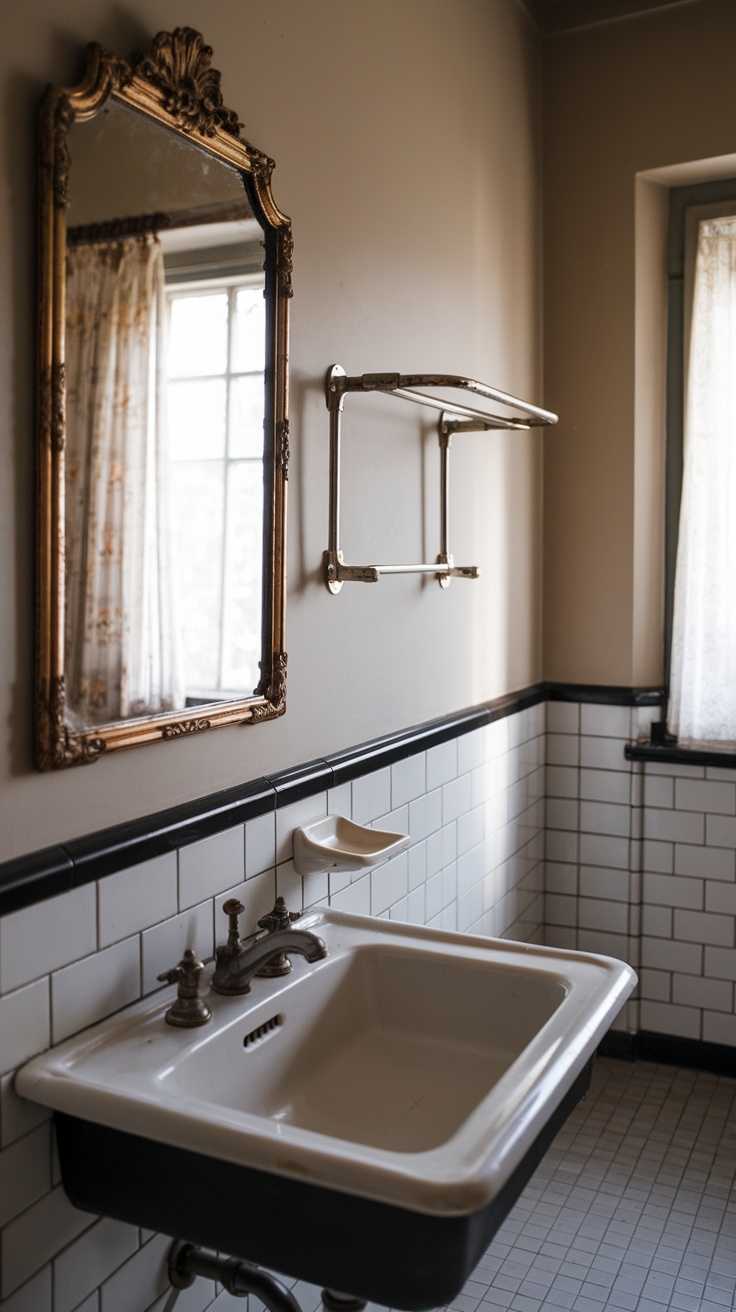
Vintage accessories layer character into a monochrome bathroom that new pieces alone can’t replicate.
A classic metal-framed mirror with aged patina or a retro ceramic soap dish brings a sense of history to a clean-lined space.
The contrast between worn, time-touched finishes and crisp modern tile or fresh paint is part of what makes these pieces so effective.
These small touches add a nostalgic dimension that gives the room depth, story, and a personality that mass-produced hardware simply doesn’t carry.
Design Pro-Tip: Stick to one or two vintage pieces per bathroom. A single standout accessory reads as curated; too many start competing for attention and the space loses its clean monochrome focus.
Open Black Metal Shelving for Display Storage
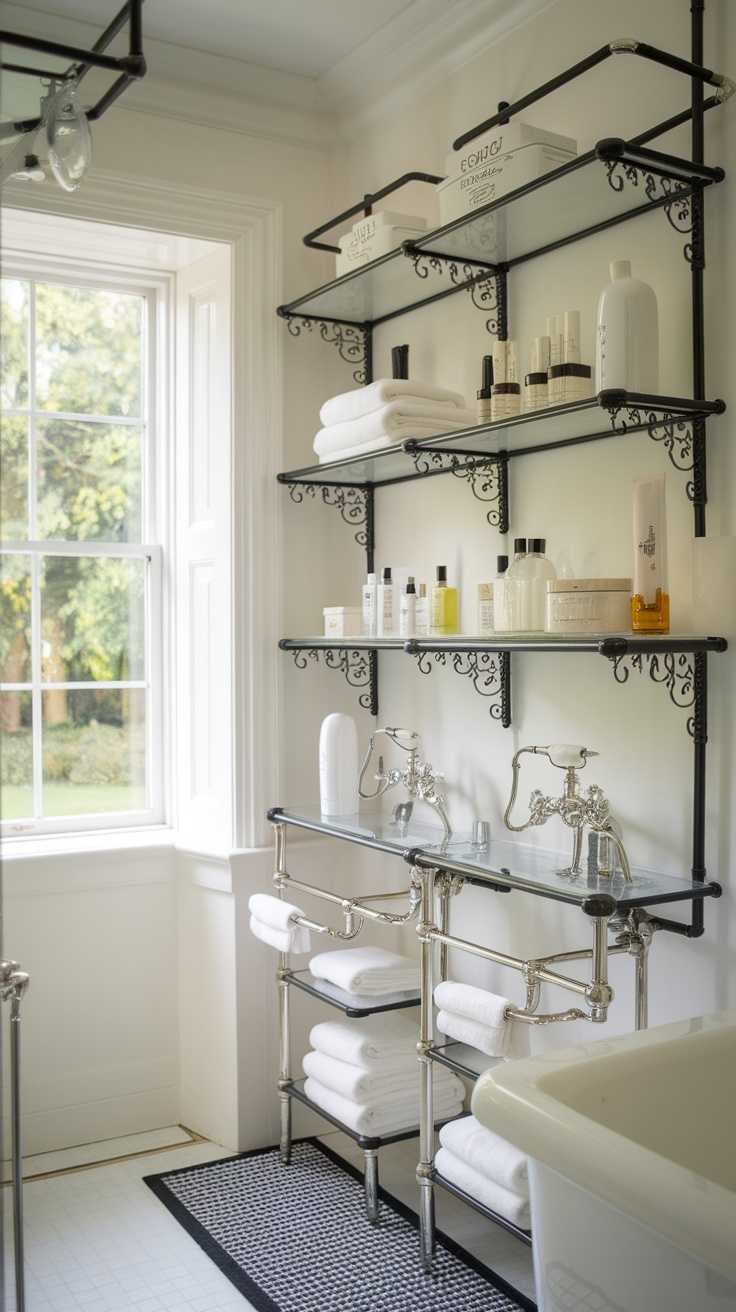
In a black and white bathroom, storage deserves to look as good as the decor it supports.
Open shelving in black metal frames offers a way to display rolled towels, glass jars, and favorite toiletries as part of the room’s visual story.
The dark frame lines up with other black accents in the room, from fixtures to hardware, creating a consistent thread.
Keeping the shelves edited and intentional prevents the display from tipping into clutter.
Thoughtful storage like this makes the entire space feel curated and complete.
Black and White Graphic Wall Art
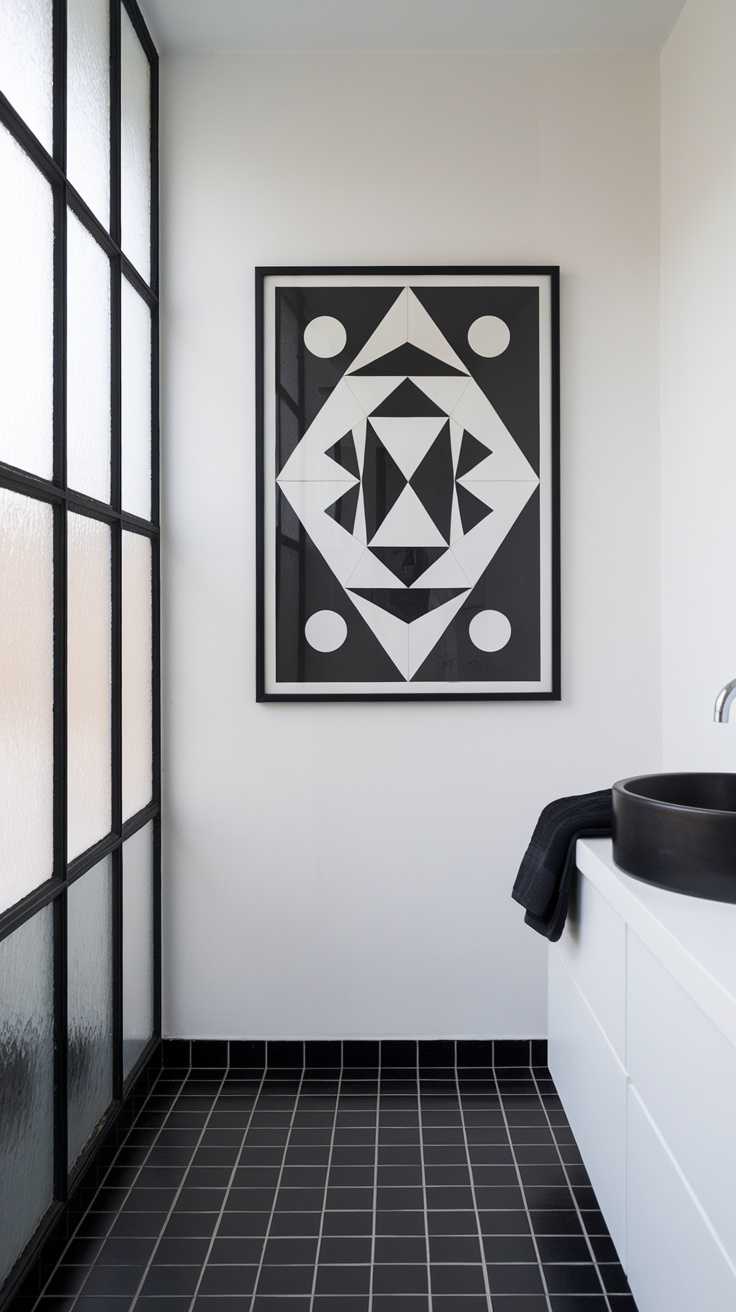
A single piece of graphic wall art can break up a monochrome tile backdrop and give the eye a place to land.
Abstract line drawings, black ink botanicals, or bold typographic prints all work within the palette without introducing a competing color.
The art introduces texture, personality, and a point of view that tile and hardware alone can’t supply.
Hanging it at eye level above the toilet or beside the mirror turns a blank wall into a statement that visitors notice immediately.
Patterned Bath Mats for Underfoot Comfort
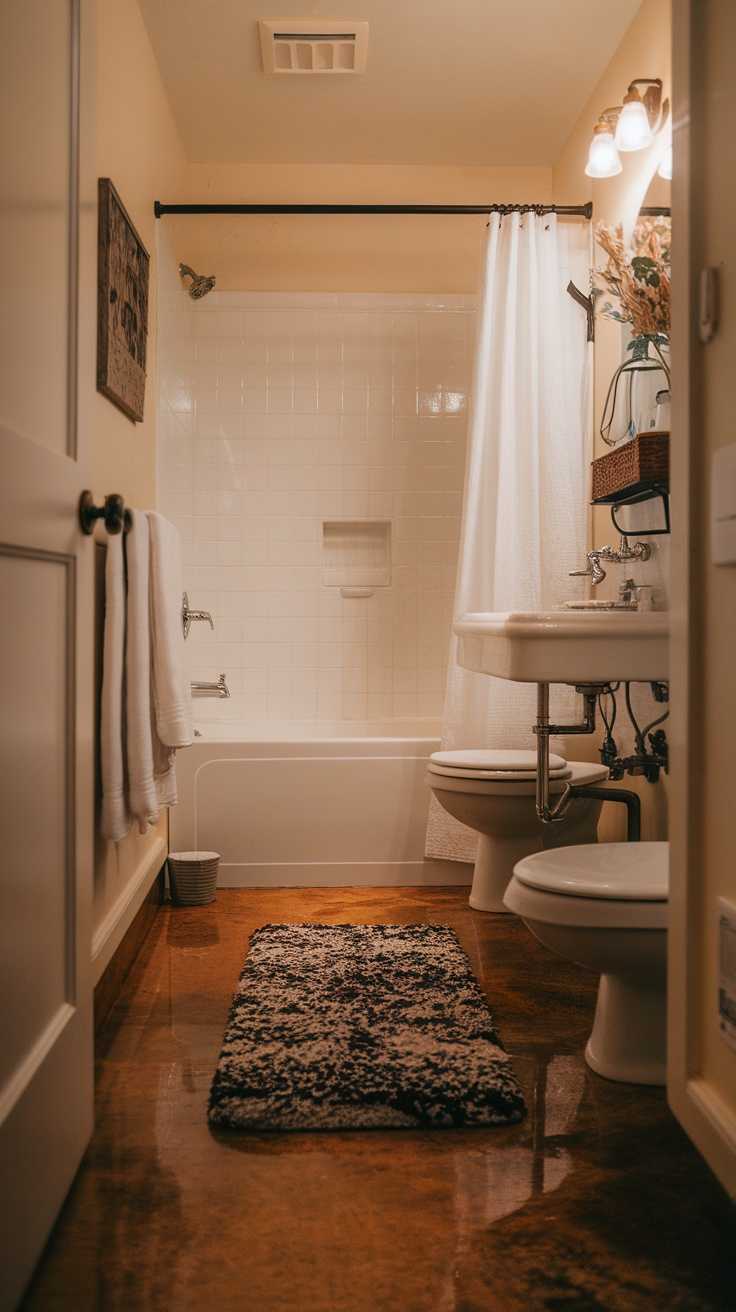
A well-chosen bath mat grounds the entire design right at your feet.
A simple geometric pattern in black on a white field ties the floor to the room’s broader palette and gives the entrance to the tub or shower its own visual identity.
The mat adds a layer of softness underfoot that bare tile doesn’t offer, making the morning routine feel a little more comfortable and a lot more intentional.
Replacing it is a low-commitment way to refresh the room’s look whenever the mood strikes.
Design Pro-Tip: Match your bath mat’s pattern scale to the room’s tile. Small mosaic floor tile pairs best with a smaller geometric mat, larger format tile looks better with a bolder, bigger print.
Matte Black Faucet Over a White Porcelain Sink
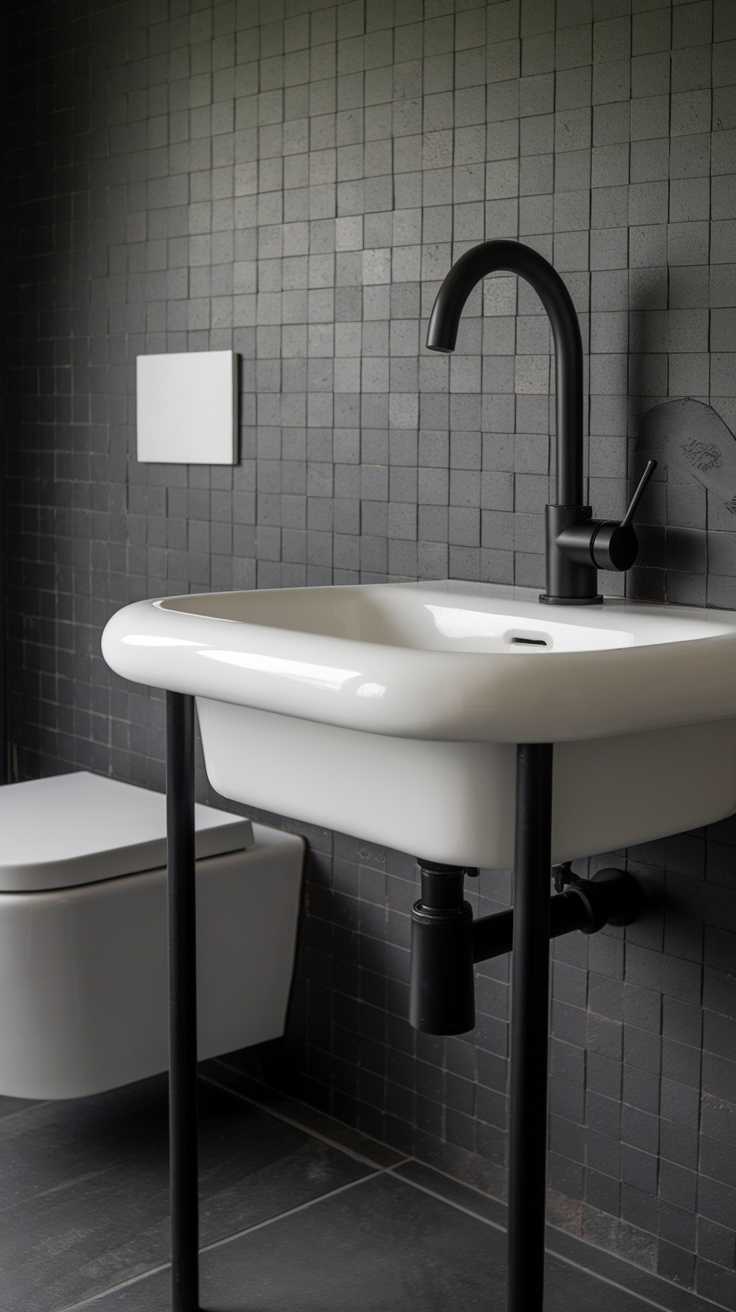
A single well-designed faucet can set the tone for the entire bathroom.
Matte black against white porcelain creates a crisp, high-contrast moment that reads as modern and deliberate.
The dark finish highlights the faucet’s form, whether it’s a slim single-handle design or a more sculptural wall-mounted spout.
Carrying that same matte black into the showerhead and towel bar ties the hardware story together across the room.
It’s a small swap that delivers disproportionate visual payoff for very little effort or expense.
Textured Wall Panels for Dimensional Contrast
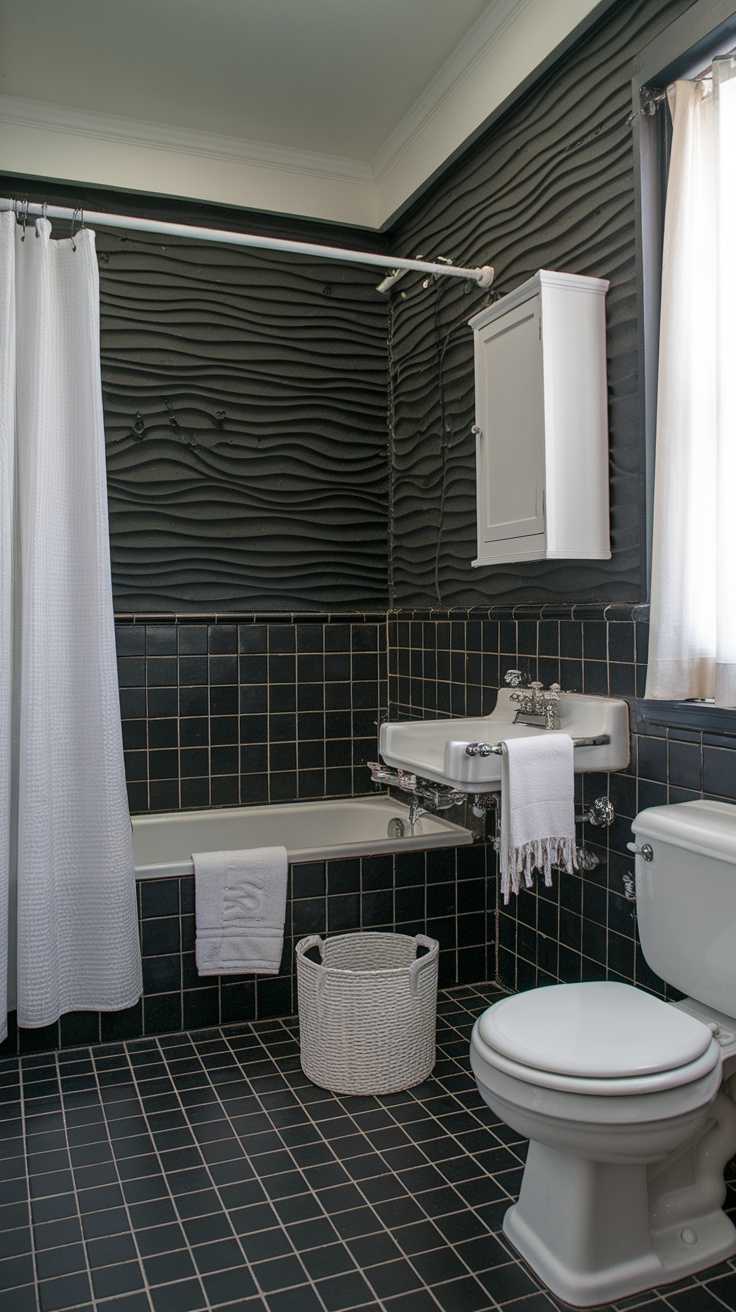
Textured wall panels bring a layer of dimension that flat paint and smooth tile cannot.
Installed behind the vanity or inside the shower alcove, the panels catch light differently throughout the day, shifting the room’s mood from morning to evening.
The relationship between raised texture and black and white tile on adjacent surfaces creates a tactile quality that makes the bathroom feel finished and deliberate.
Running your hand across the surface is a reminder that design is about more than what you see.
Black Countertop with White Fixtures
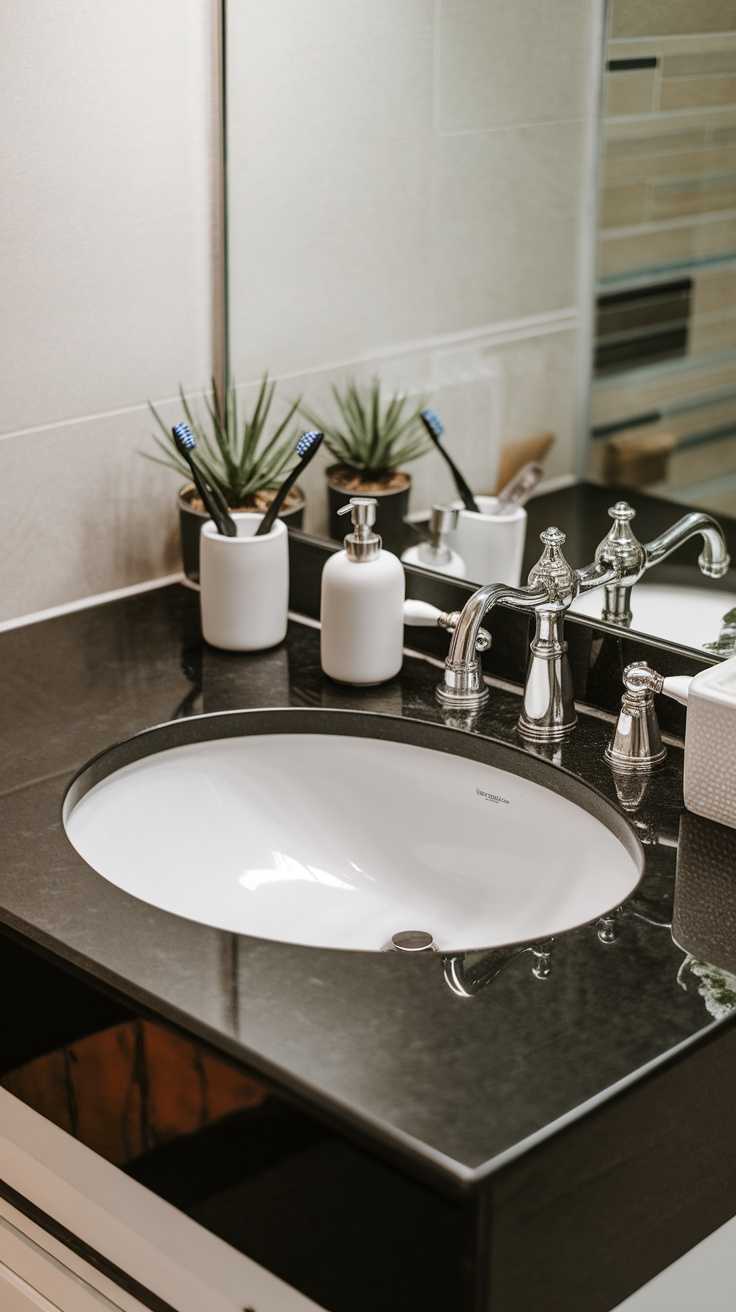
The right countertop anchors every item placed on it, from the soap dispenser to the toothbrush holder.
A solid black surface paired with a white undermount sink creates a high-contrast stage that makes everyday objects look intentional.
The dark finish hides water spots and minor scuffs better than lighter alternatives, so the countertop stays sharp between cleanings.
It’s a practical choice that happens to look effortlessly striking, which is the best kind of design decision in any hardworking bathroom space.
Striped Curtains and Graphic Window Treatments
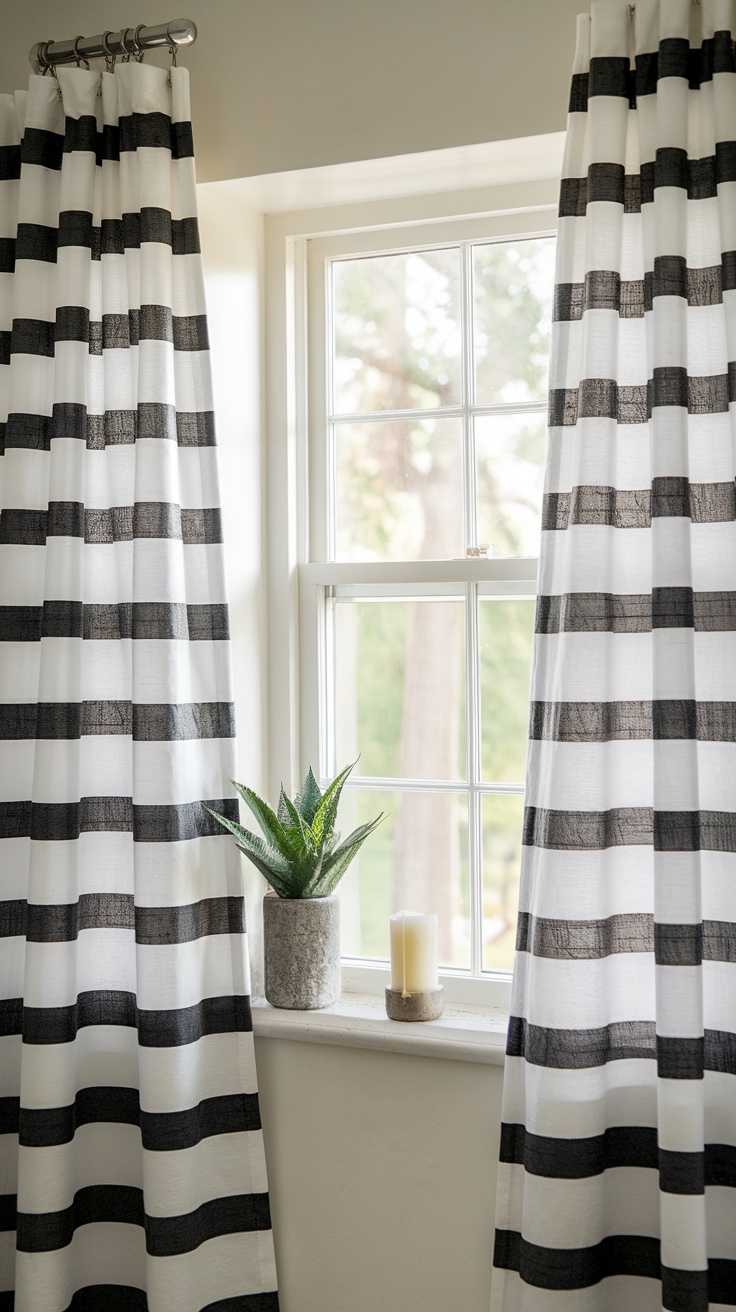
Bold window treatments close the loop on a black and white bathroom by extending the palette to the only surface most people overlook.
Striped curtains in black and white add a graphic punch that’s playful without straying from the monochrome theme.
They frame natural light in a way that reinforces the room’s high-contrast character from every angle.
Pulling the curtain pattern into the window zone gives the bathroom a sense of completeness that stops at nothing short of the sill.
Design Pro-Tip: If your bathroom window is small, hang the curtain rod several inches above the frame and let the fabric extend just past each side. The extra width and height trick the eye into reading the window as larger and the room as taller.
Conclusion
The strength of a black and white bathroom sits in its refusal to date itself.
Contrast, pattern, and texture do the design work here, and every element you choose, from a checkerboard floor to a matte black faucet, reinforces the same clean visual language.
Start with the surfaces that cover the most area, pick one or two accent pieces that show personality, and let the monochrome palette carry the rest.