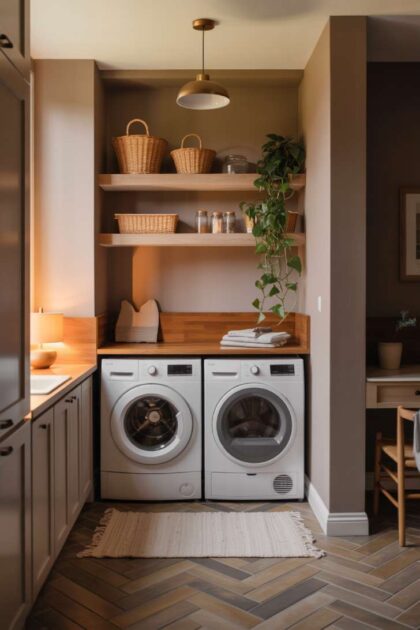
This post may contain affiliate links. If you make a purchase through these links, we may earn a commission at no additional cost to you.
Living in an apartment means every square foot has a job to do — and the laundry area is no exception.
The good news? A small laundry closet or a tucked-away corner can still look great and function like a full-sized setup if you’re intentional about the layout.
These 13 apartment laundry room ideas cover everything from stackable washer and dryer configurations to renter friendly laundry hacks, so you can find the right fit for your space, your budget, and your style.
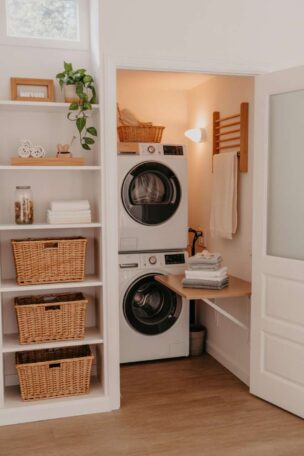
Stacked and Hidden in a Hallway Closet
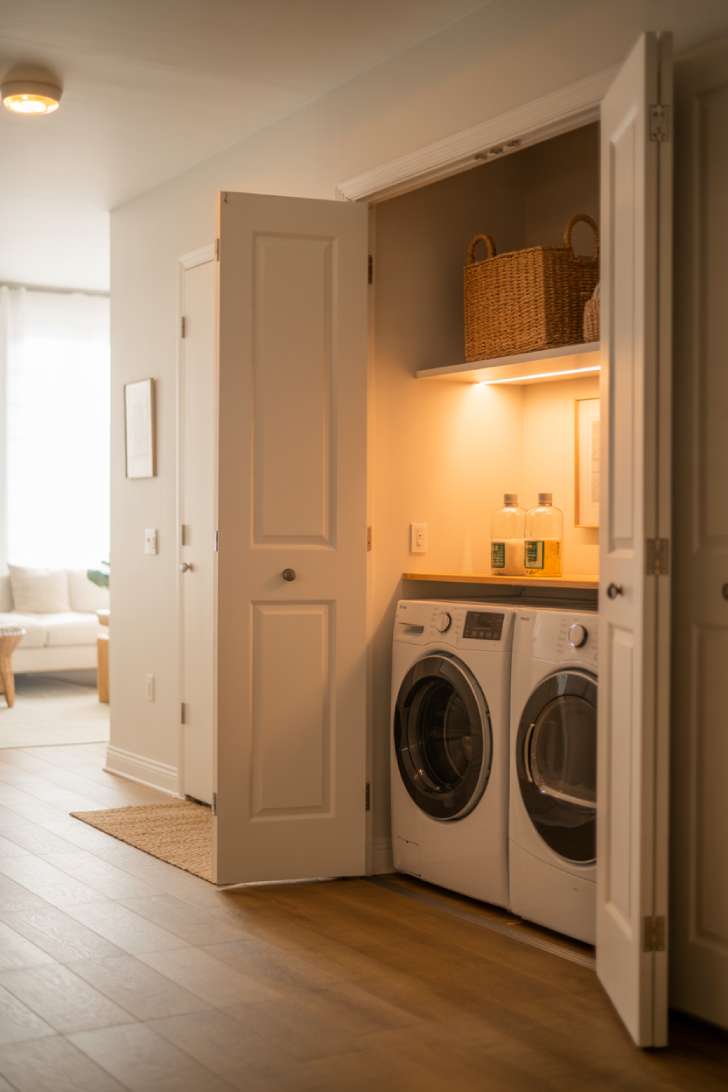
This is the most common apartment laundry room setup, and for good reason — it works.
A stackable washer and dryer fits into a standard closet opening, and when the doors close, the whole thing disappears.
What makes this feel calm rather than cramped is the vertical proportion of it.
Your eyes naturally follow the stacked units upward, which makes a narrow closet feel taller than it is.
The single floating shelf keeps supplies within reach without creating visual noise overhead.
And that LED strip under the shelf? It does more than look nice — it pulls your attention to the organized shelf instead of the machines.
Soft, diffused light in a small enclosed space reduces the feeling of being boxed in, which is why this kind of under-shelf lighting works so well in tight spots.
Style Blueprint:
- 24-inch compact stackable washer and dryer set
- White or warm wood bifold closet doors
- One floating shelf with concealed bracket hardware
- Seagrass or woven storage basket
- Adhesive LED light strip (warm white, 3000K)
One Machine Does It All Under the Kitchen Counter
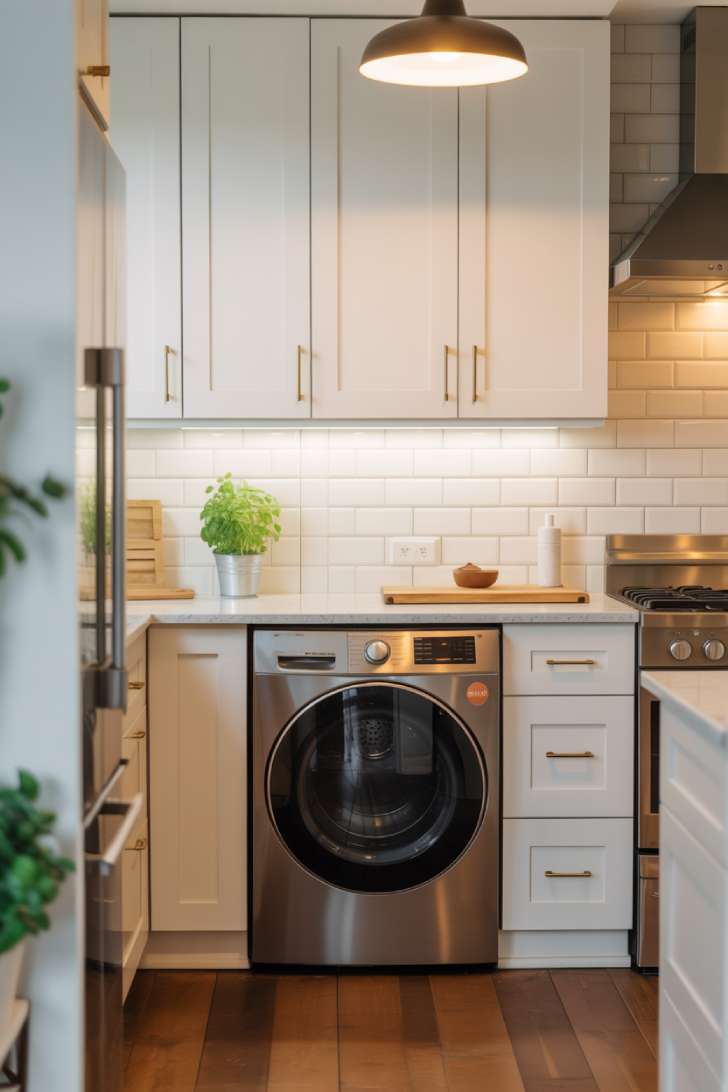
If your apartment has zero dedicated laundry space, the kitchen is often the smartest place to put a compact washer dryer combo.
The plumbing is already there.
The drain is already there.
And a single combo unit slides right under the counter where you’d normally expect a dishwasher.
These machines wash and dry in the same drum, so there’s no transferring loads between two appliances.
The trade-off is that cycle times run longer and load sizes are smaller — plan on splitting larger loads in half for better drying results.
What makes this idea visually successful is integration.
When the machine sits flush with the surrounding cabinetry and the countertop runs continuously over it, the laundry function blends right into the kitchen.
Your brain reads it as “more kitchen,” not “laundry zone crammed into the kitchen.”
That visual continuity is what keeps the space from feeling disjointed.
Style Blueprint:
- All-in-one ventless washer dryer combo (24-inch width, 120V preferred)
- Cabinet panel kit or matching cabinetry surround
- Continuous countertop surface running over the unit
- Under-cabinet task lighting
- Slim pull-out storage tray for detergent pods beside the unit
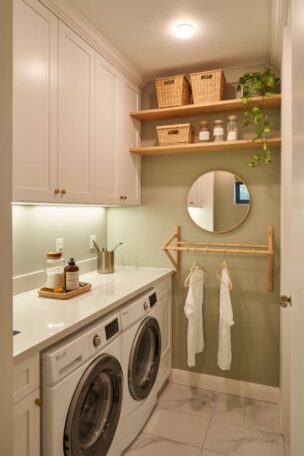
Floating Shelves and Woven Baskets Over the Machines
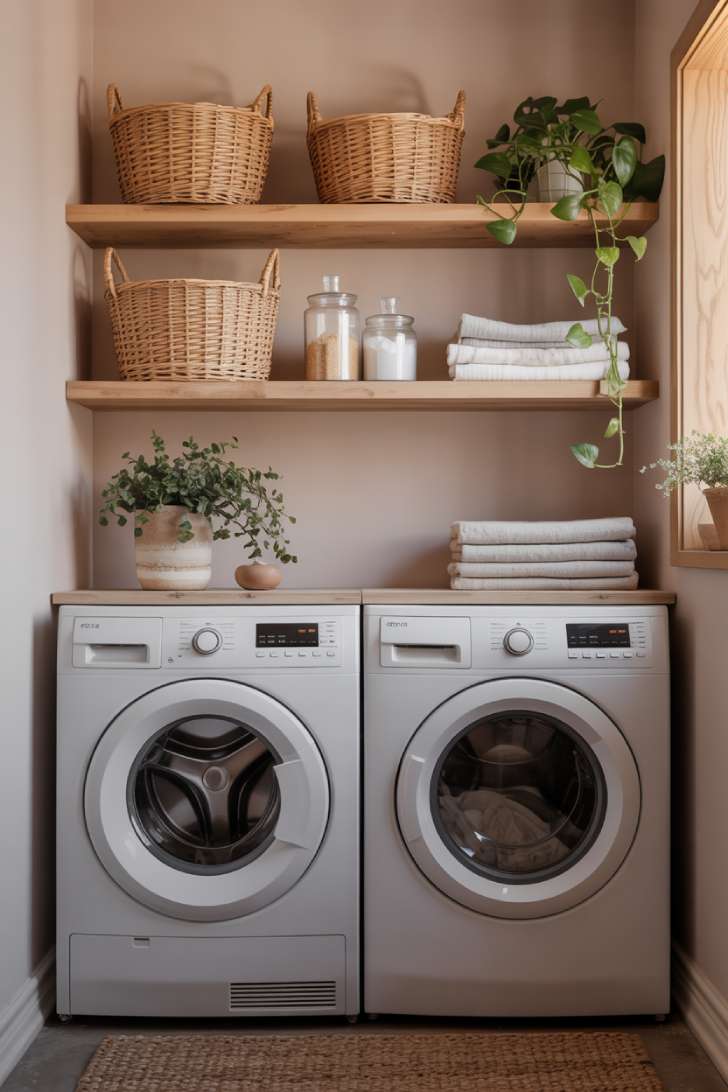
Laundry room storage doesn’t have to mean bulky cabinets.
Floating shelves above the washer and dryer are one of the easiest upgrades you can make — a few wall anchors and you’ve got a whole system.
The trick is restraint.
Two to three shelves work better than four or five, and each shelf should have a clear purpose: daily items like detergent and stain remover on the lowest shelf, less-used supplies up high, and one shelf left partially open with something that just looks good — a plant, a candle-free decorative object, or a neatly folded stack of towels.
The reason this arrangement feels so satisfying is rhythm.
When objects on a shelf alternate between different heights, textures, and shapes — a tall jar, a short basket, a trailing vine — your eye moves naturally across the display without getting stuck.
That movement creates a sense of calm, which is the opposite of what a cluttered shelf does.
Style Blueprint:
- Two or three floating shelves in matching wood tone (light oak or white)
- Woven rattan or seagrass baskets (at least two, same style)
- Glass apothecary jars for decanting detergent
- One small potted plant (pothos or eucalyptus)
- Concealed shelf brackets for a cleaner look
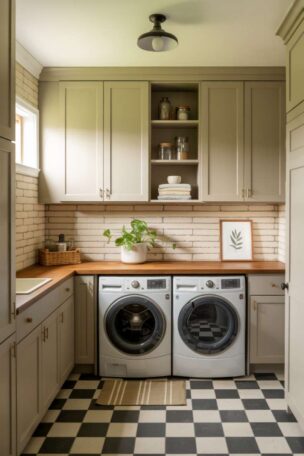
A Butcher Block Folding Surface Over Side-by-Side Units
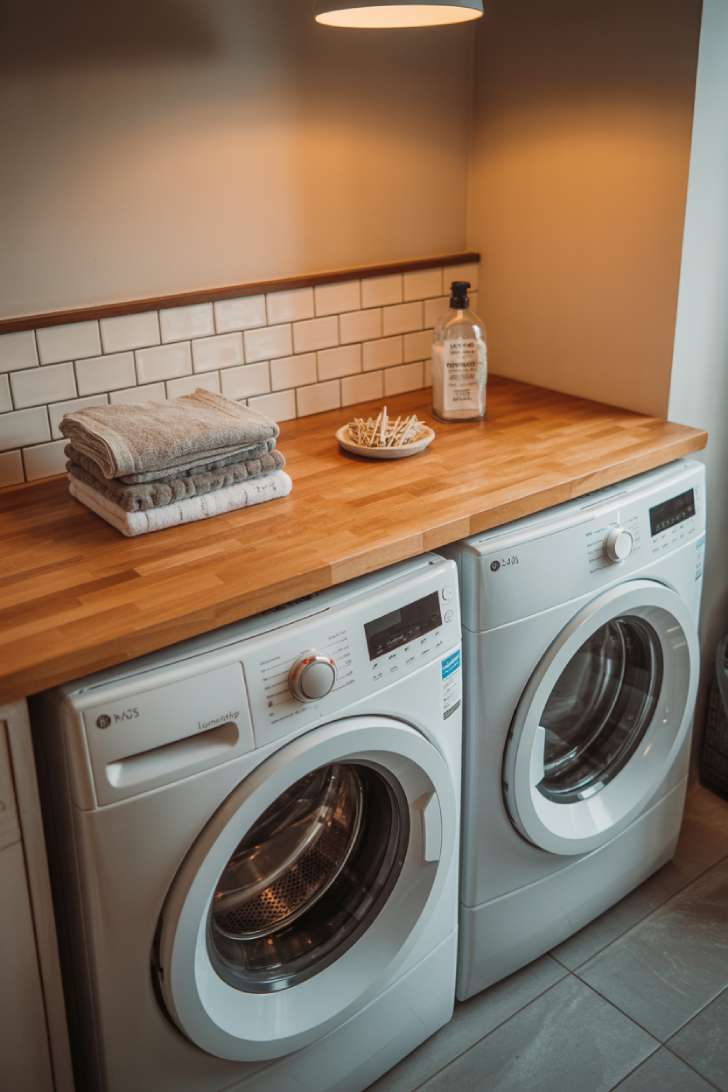
A folding area changes everything about a small laundry space.
Without one, clean clothes end up in a basket on the couch.
With one, you fold right where you dry.
A butcher block or a cut-to-size piece of finished plywood laid across two side-by-side machines creates an instant countertop.
It’s a simple weekend project — no installation required if you just rest the slab on top and use anti-slip pads underneath.
Adding a peel-and-stick tile backsplash behind the machines finishes the look and protects the wall from moisture.
What makes this setup work visually is the horizontal line the countertop creates.
That unbroken surface stretches across the width of the space and tricks the eye into reading the two machines as one unified piece of furniture.
It brings order.
And the warm wood tone against the white machines adds a layer of texture that stops the space from feeling sterile.
Style Blueprint:
- Butcher block or finished plywood countertop (cut to fit your machine width)
- Anti-slip rubber pads between countertop and machines
- Peel-and-stick subway tile backsplash
- Matching small accessories (ceramic dish, glass detergent bottle)
- Warm-toned pendant light or plug-in sconce above
Design Pro-Tip: Stick to one wood tone and one metal finish in a small laundry space. Mixing too many materials in a tight area creates visual chaos. A consistent material palette — say, light oak wood and brushed brass — makes even a tiny room feel intentional and pulled together.
A Bathroom Alcove That Doubles as a Laundry Room
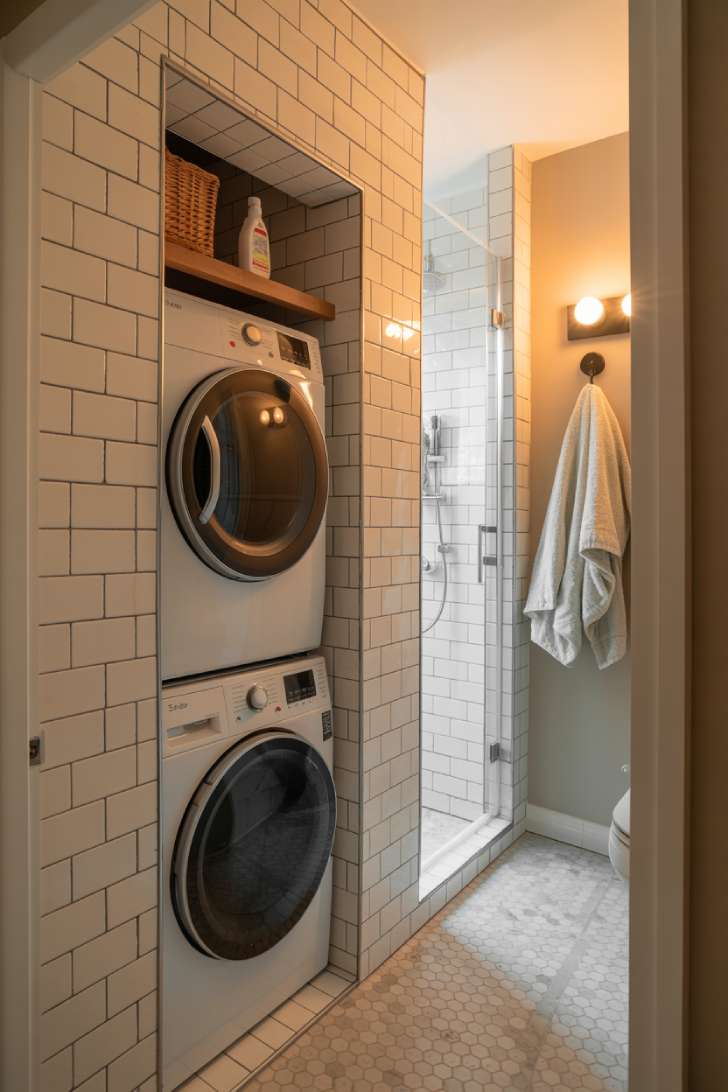
Bathrooms already have water supply lines and drainage — which makes them a natural fit for a laundry setup without needing new plumbing work.
This is one of the most practical small space laundry solutions in apartments, especially if you have a second bathroom or a bathroom with an unused alcove.
Some apartment owners replace a bathtub with a shower stall and put stacked laundry units in the freed-up space.
Others tuck machines into an existing niche.
The tile on the walls and floor already handles moisture, which means you’re in a wet zone — and that matters in buildings with wet-over-dry rules that restrict laundry placement above dry living spaces on the floor below.
What keeps this from looking like an afterthought is material continuity.
When the same tile wraps around the machines that covers the rest of the bathroom, the laundry area feels like it was always part of the plan.
It reads as architecture, not compromise.
Style Blueprint:
- Compact stackable washer and dryer (24-inch, ventless dryer preferred)
- Matching bathroom wall tile extended into the laundry alcove
- One slim shelf above machines for supplies
- Matte black or brushed nickel hardware to match bathroom fixtures
- Waterproof membrane or pan liner under the machines for leak protection
Barn-Style Sliding Doors That Conceal Everything
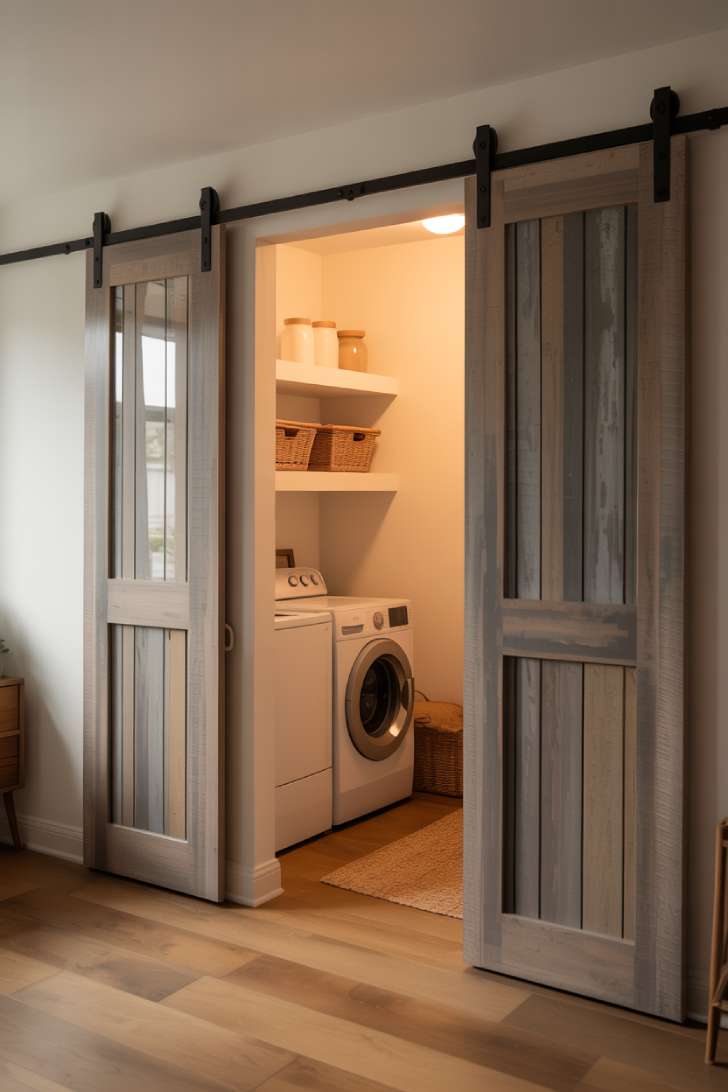
In open-plan apartments, the laundry area is often visible from the living space — and that’s where sliding doors come in.
Barn-style doors on a surface-mounted rail don’t need swing clearance, so they work in hallways and tight spots where a hinged door wouldn’t fit.
When the doors are shut, all you see is the wood texture and the hardware.
When they’re open, the full laundry setup is right there.
The reason concealment works so well in open floorplans is about mental separation.
When you can see the washing machine from your couch, the room feels like a utility space.
When that machine is behind a closed door, the living room stays the living room.
Your brain compartmentalizes better when zones are clearly defined — and that holds true whether the physical distance between them is three feet or thirty.
Style Blueprint:
- Two sliding barn doors (reclaimed wood, grey-washed, or painted finish)
- Matte black barn door rail and hardware kit
- Stacked washer and dryer inside the closet
- Two to three shelves above machines for laundry room organization
- Small woven rug or mat outside the closet
The Slim Rolling Cart in the Gap
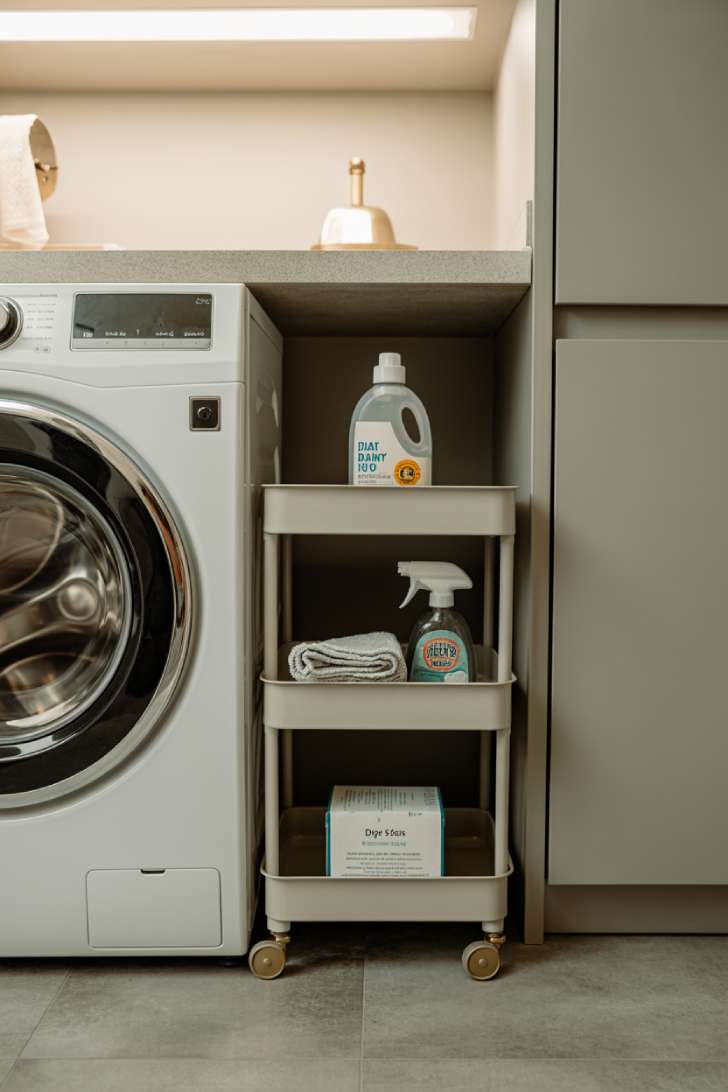
There’s almost always a gap between the machine and the wall.
Sometimes it’s only six or seven inches — but that’s enough for a slim rolling cart with two or three tiers.
These carts slide out when you need something and push back flush when you don’t.
It’s one of the simplest laundry room organization upgrades that costs under $30 and takes zero installation.
This idea works so well from a functional standpoint for a simple reason: it keeps supplies at arm’s length without putting anything on top of the machines.
Cluttered machine tops are one of the biggest visual offenders in small laundry areas.
Moving everything to a side cart keeps the top surface clear, which makes the whole space feel bigger and more breathable.
Style Blueprint:
- Slim three-tier rolling cart (6–8 inches wide, with wheels)
- Clear or matching containers for detergent and softener
- One microfiber cloth and a stain remover spray within reach
- Cart finish that matches the room tone (white, black, or natural wood)
- Anti-tip bumpers or wall guards if needed
Wall-Mounted Drying Rack With a Tension Rod for Hanging
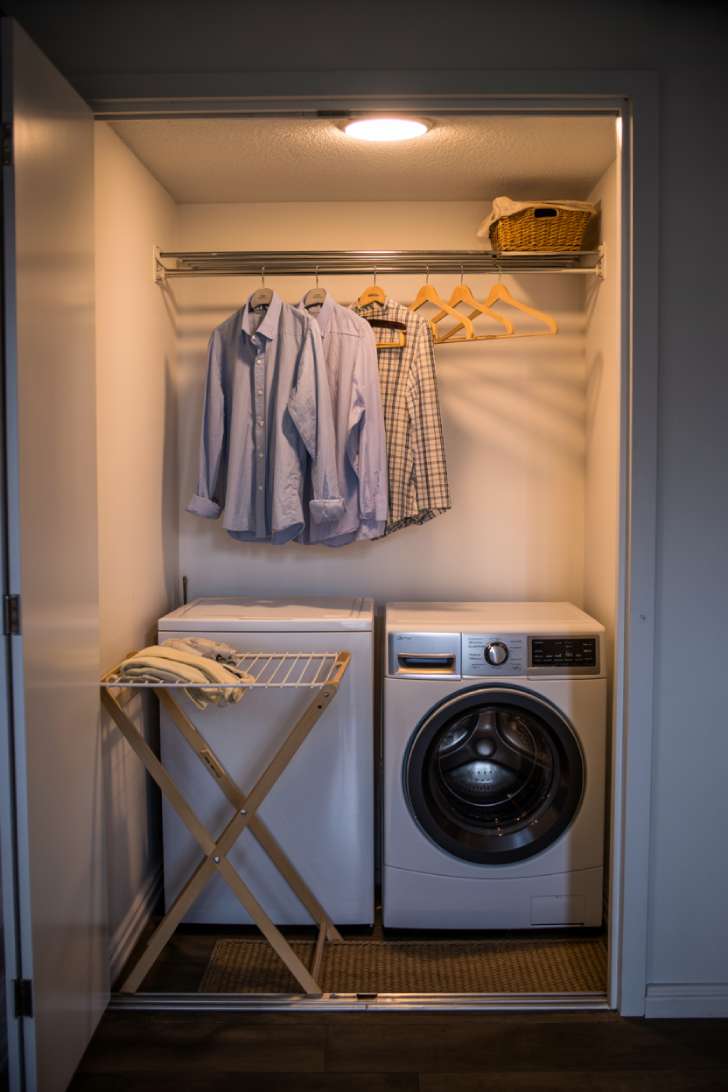
Some apartment setups skip the dryer entirely.
Others need a spot for delicates that can’t go in the tumble dryer.
Either way, a wall-mounted fold-down drying rack paired with a tension rod solves the problem without eating up floor space.
The drying rack folds flat against the wall when it’s not in use.
The tension rod — the same kind you’d use for a curtain — fits inside a closet between two walls with no screws, no drilling, and no damage.
This is about as renter friendly laundry as it gets.
What makes this setup feel intentional rather than improvised is consistency in materials.
Wooden hangers instead of plastic, a painted wood drying rack instead of a chrome wire one — small material choices like these send a signal that the space was planned, not just thrown together.
And that perception of intention is what turns a utility closet into a room that feels like it belongs.
Style Blueprint:
- Wall-mounted fold-down wooden drying rack (white or natural finish)
- Brushed nickel or matte black tension rod
- Matching wooden hangers (5–10)
- LED puck light (battery-operated, warm white)
- Small woven floor mat inside the closet
Design Pro-Tip: If you’re a renter and can’t put holes in the wall, a tension rod between two walls or inside a closet opening is the single most useful tool you can own. It holds hangers, it supports a drying rack, and it removes in seconds with no trace left behind.
A Pegboard Wall for Customizable Storage
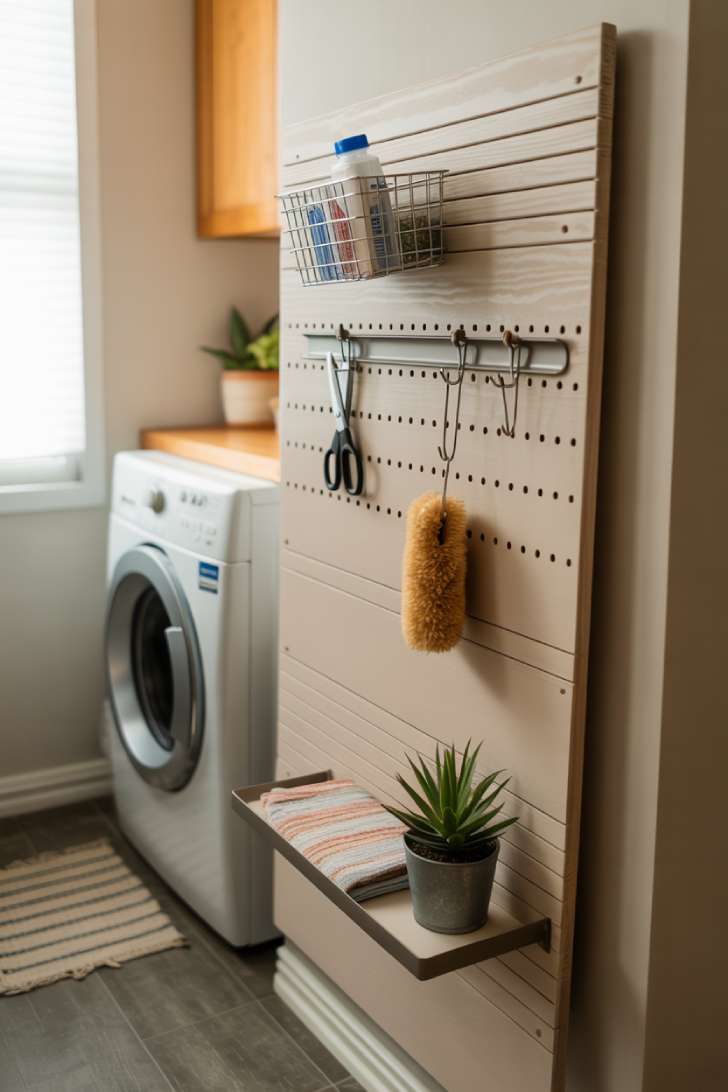
Pegboard is one of those ideas that looks simple but gives you a lot of flexibility.
You mount one panel on the wall above the machines, and from there, you can rearrange hooks, baskets, and small shelves any time you want.
Need more hooks this week? Move them.
Want to swap the basket for a shelf? Done.
Laundry room shelving doesn’t have to be permanent or expensive to be effective, and pegboard is proof of that.
Compared to multiple individual shelf brackets and anchors, a pegboard requires fewer holes in the wall — usually just four mounting points for a full panel.
That’s a real advantage in a rental.
What gives pegboard its visual appeal is the grid pattern itself.
An evenly spaced grid creates a sense of order before you even hang a single item on it.
The regularity of the pattern tells your brain that this space is organized, and that perception holds even when the items on the board aren’t perfectly arranged.
Style Blueprint:
- Large painted wooden pegboard panel (white, natural, or matte black)
- Assorted pegboard hooks and shelf attachments
- One small wire basket for cleaning supplies
- One or two decorative items (small plant, framed card)
- Four wall-mounting screws or anchors
Clean Lines and Handleless Cabinets for a Minimal Look
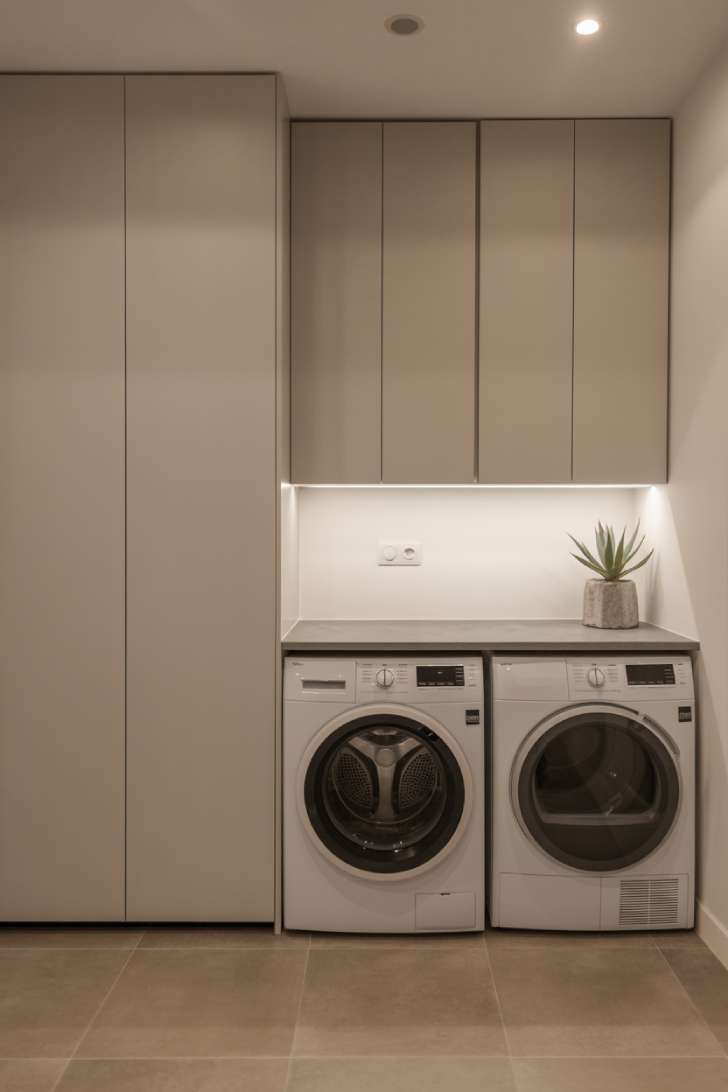
This one is for the people who want their laundry room to look like nothing is happening in it.
Handleless cabinets, a clear countertop, machines built flush into the surround — everything disappears behind flat, uninterrupted surfaces.
It’s minimalist home decor applied to a utility space, and it works beautifully.
The 2026 trend here is a shift from stark, cold white to warmer neutrals — mushroom tones, soft taupe, creamy off-whites.
These warmer shades make a minimal room feel inviting instead of clinical.
What makes minimalism succeed in small spaces is the absence of visual interruption.
Every visible handle, knob, or misplaced object creates a small “stop” for the eye.
Remove those stops, and the eye sweeps across the entire space without pausing.
That continuous movement is what makes a small room feel larger and calmer than its actual square footage suggests.
Style Blueprint:
- Floor-to-ceiling handleless slab-front cabinets (push-to-open or j-channel pull)
- Warm grey or off-white quartz countertop
- Built-in washer and dryer surround
- Recessed LED ceiling lights (warm white, dimmable)
- One single decorative object on the counter — no more
Farmhouse Warmth in a Tiny Laundry Corner
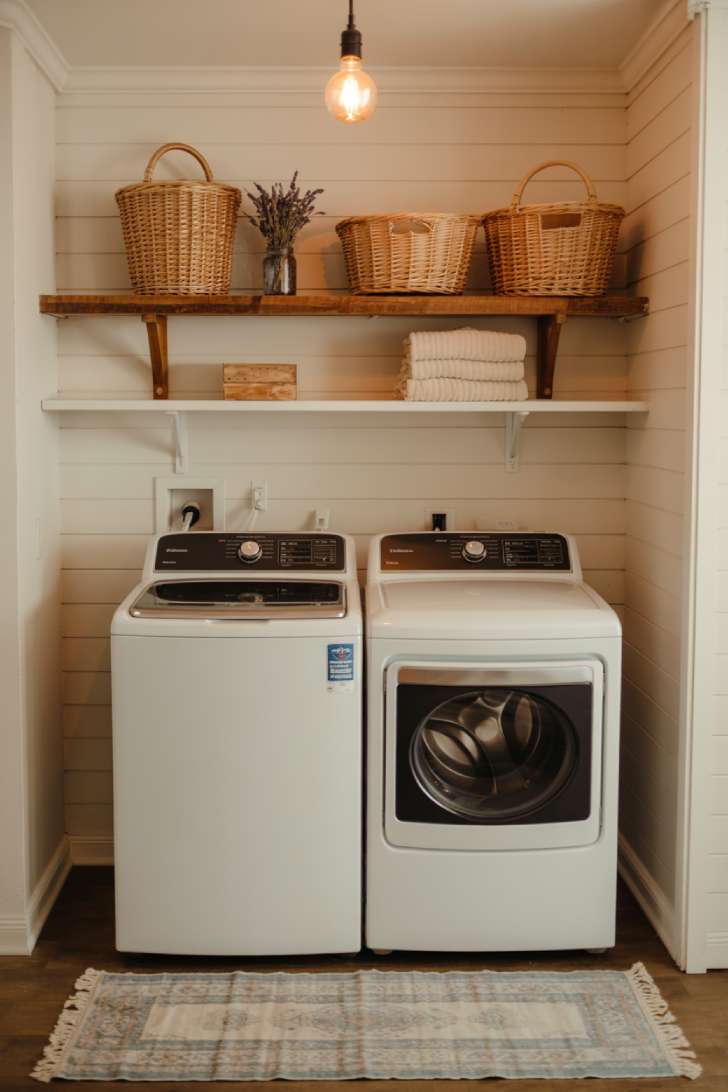
Farmhouse style has a way of softening spaces that would otherwise feel cold or forgettable.
Shiplap, reclaimed wood, wicker baskets, a faded rug — these are all textures that carry warmth.
And warmth is exactly what a cramped laundry corner needs.
Open laundry room shelving is the right call here, but it demands curation.
Every item on the shelf should look like it belongs.
If the basket is wicker, all the baskets should be wicker.
If the towels are cream, keep them cream — don’t mix in a random blue one.
The reason farmhouse textures feel comforting is tied to association.
Natural materials — wood grain, woven fibers, linen — carry a sense of familiarity and age.
They feel handled and human, which is the opposite of the smooth, cool surfaces you find in a typical utility room.
That contrast between soft textures and hard-working appliances is what gives this look its charm.
Style Blueprint:
- White shiplap peel-and-stick wall panels (renter friendly)
- One reclaimed or distressed wood floating shelf
- Three woven wicker baskets in graduated sizes
- Vintage-style cotton runner rug (machine washable)
- Edison-style pendant light or plug-in cord fixture
Design Pro-Tip: If you’re using open shelves, follow the “one in, one out” rule. Every time you add something to the shelf, remove something else. Overcrowded open shelving instantly kills the look, no matter how nice the individual pieces are.
A Portable Washer for No-Hookup Apartments
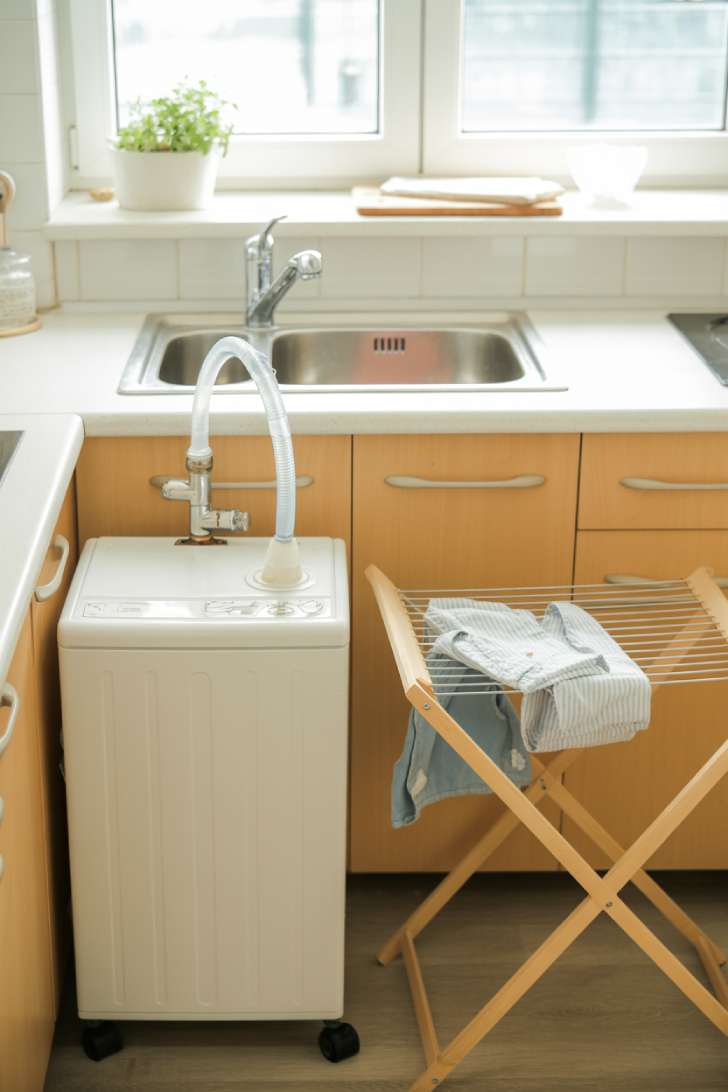
No hookups? No dedicated laundry space at all?
A portable washer might be your answer.
These compact machines connect to a standard kitchen or bathroom sink faucet with an adapter, fill and drain through the sink, and roll on casters so you can store them in a closet when they’re not in use.
They’re the most renter friendly laundry option available — fully removable, no plumbing changes, no permission needed in most buildings.
Capacity runs smaller, usually around 1.5 to 2.5 cubic feet, so you’ll run more frequent loads.
And most portable setups skip the dryer altogether, relying on a fold-away rack or a tension rod for air drying.
What makes this setup feel organized instead of chaotic is containment.
When the washer is out and connected, the drying rack is up and in use, and everything is happening in one defined corner of the kitchen.
When laundry is done, the washer rolls away, the rack folds down, and the kitchen goes back to being a kitchen.
That ability to fully reset the space is what makes portable laundry work in small apartments.
Style Blueprint:
- Compact portable washing machine on casters (1.5–2.5 cu. ft.)
- Sink faucet adapter kit (included with most units)
- Foldable wooden drying rack
- Small rubber mat under the machine to protect the floor
- Dedicated closet or corner for storing the machine when not in use
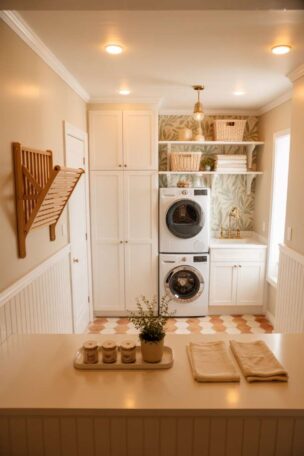
Bold Pattern in a Tiny Laundry Closet
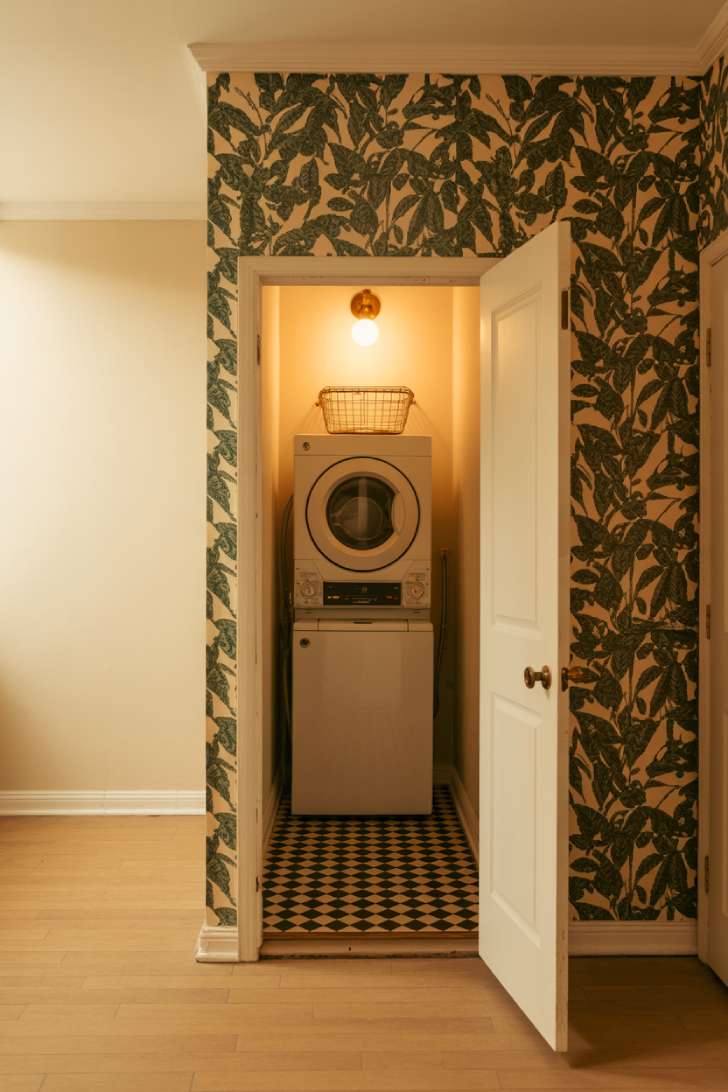
Small utility spaces are the perfect spot to take a design risk you wouldn’t try in a main room.
A laundry closet is tiny, self-contained, and behind a door most of the time — so go bold.
Checkered cement tile on the floor, large-scale patterned wallpaper on the walls, a brass sconce for warmth.
It turns a forgettable closet into something you actually want to open.
Moisture-resistant wallpaper is available now in hundreds of patterns, making this possible even in a space where damp clothes hang.
The reason bold patterns work in tiny spaces is a bit counterintuitive.
In a large room, a busy pattern can feel overwhelming.
But in a closet-sized space, the pattern fills your entire field of vision and creates an immersive effect instead — more like stepping into a jewel box than being crowded.
The contained boundaries of the closet give the pattern edges, which keeps it from feeling chaotic.
That’s why powder rooms and laundry closets are the spaces where this kind of move really pays off.
Style Blueprint:
- Patterned cement tile or peel-and-stick floor tile (checkered or geometric)
- Moisture-resistant wallpaper in a bold botanical or graphic print
- One brass or warm-toned wall sconce
- Brass or gold-toned wire basket for the shelf
- Stackable washer and dryer in a neutral finish to let the patterns do the talking
Design Pro-Tip: When layering bold pattern on pattern — like a checkered floor with a botanical wall — pick patterns that share at least one color in common. That shared color ties them together and keeps the room from feeling like two different spaces fighting each other.
Wrapping Up
An apartment laundry room doesn’t need a lot of square footage to work well or look good.
Every idea on this list started with a real constraint — a narrow closet, a missing hookup, a shared bathroom — and found a way to make it work.
Pick the setup that matches your space and your budget, and don’t overthink it.
Even one small upgrade — a shelf, a countertop, a fresh coat of paint — can change how the whole space feels and how you feel about doing laundry in it.