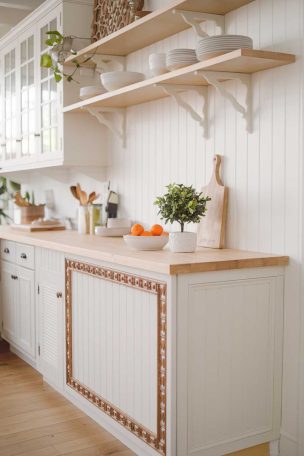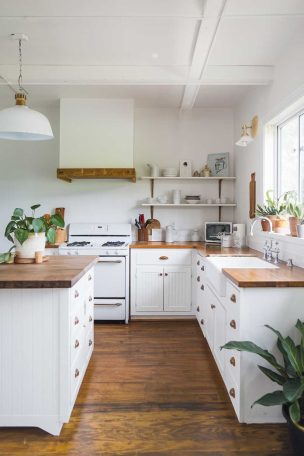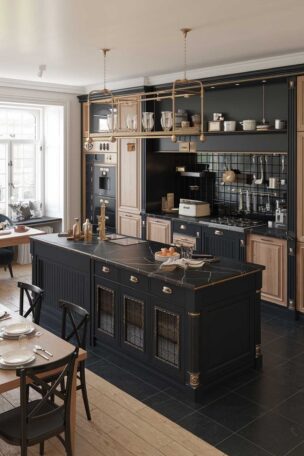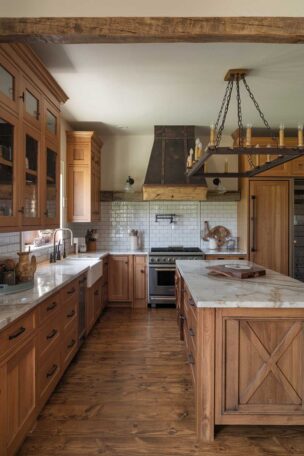
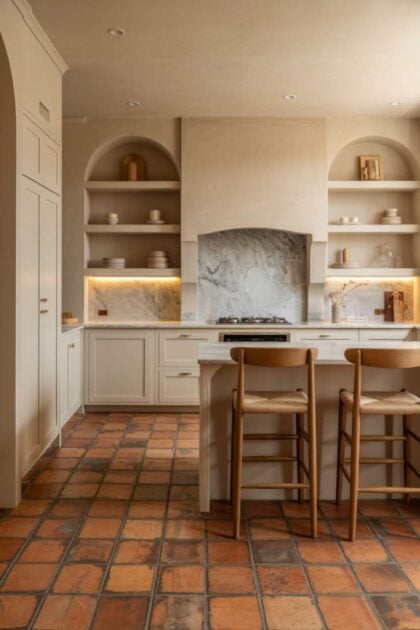
Kitchen design in 2026 is rejecting cold minimalism.
Instead, we’re seeing a shift toward warm, textured spaces that feel organic and deeply personal.
The new kitchen isn’t a sterile work zone — it’s a multi-sensory living environment where materiality, light, and form work together to create atmosphere and connection.
The Color Story: Warm Neutrals and Nature-Inspired Accents
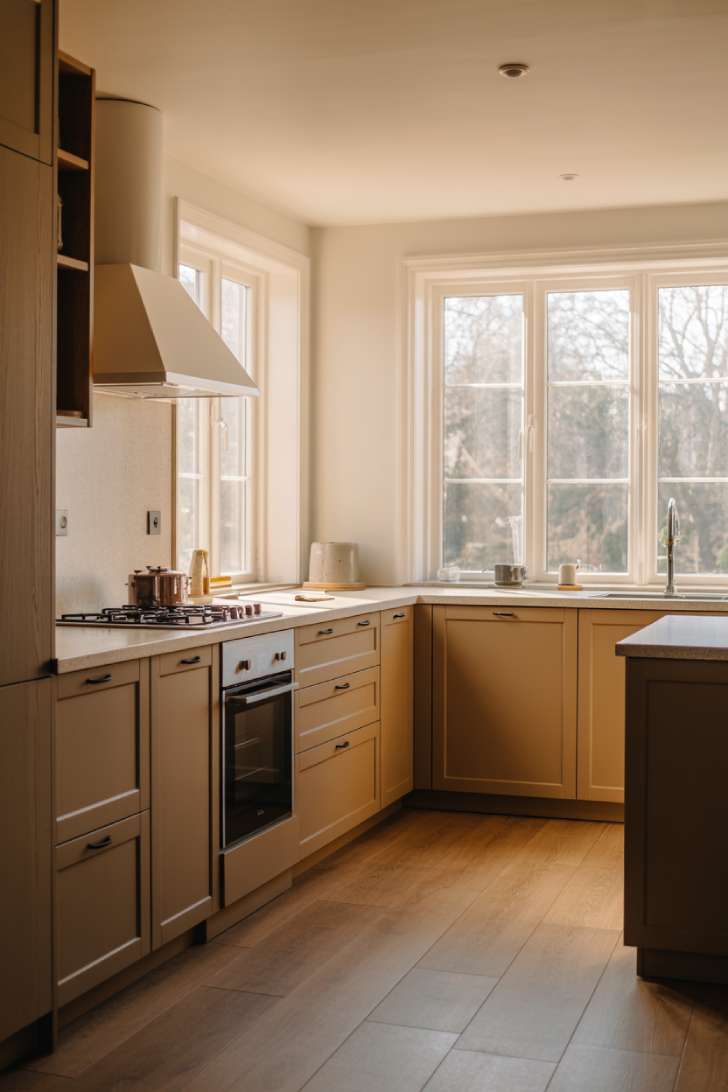
The 2026 kitchen color palette centers on warm, grounded neutrals.
Soft stone tones like sand, clay, mushroom, putty, and warm taupe form the foundation.
Warm off-whites and creamy linen tones replace stark white for a softer backdrop.
Mid-tone woods — white oak with visible grain, walnut, and natural timber stains in honey and chestnut — bring organic warmth throughout the space.
These aren’t your typical builder neutrals.
They have depth and character.
Accent Colors That Define 2026
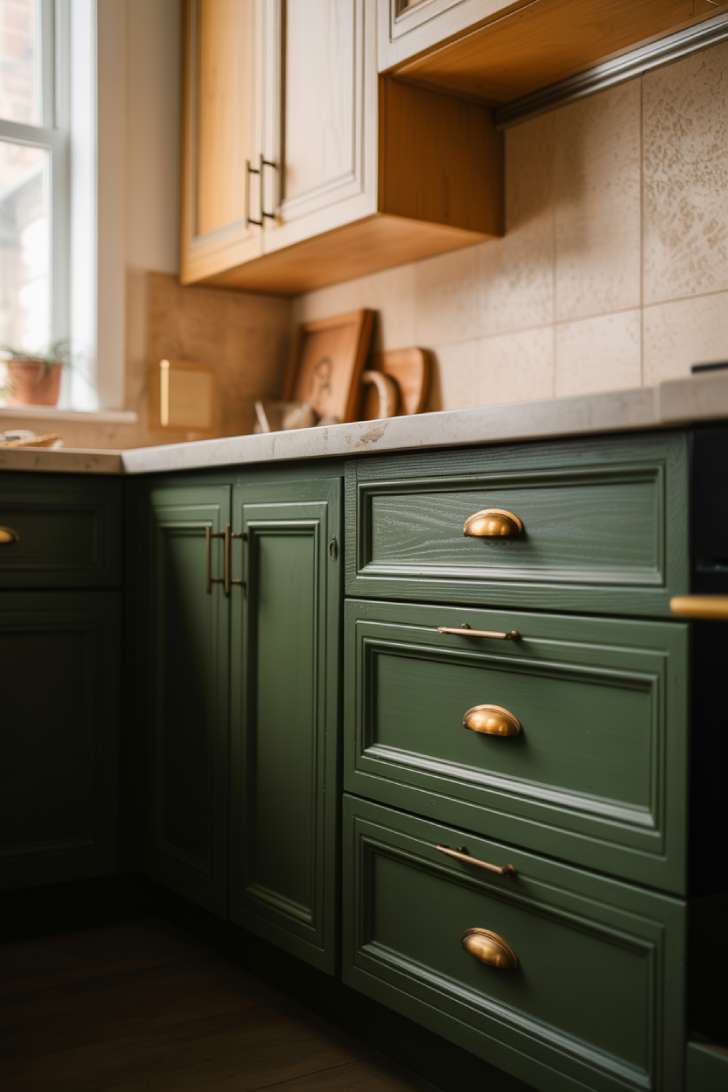
Forest and olive greens serve as the new neutral, appearing on cabinets and walls.
These yellow-undertoned greens feel grounded and timeless.
Earthy clays and brick reds — terracotta, burnt sienna, warm rust — add richness and soul.
Deep jewel tones provide moody contrast without feeling cold: inky navy, charcoal, and deep forest green.
Color Blocking and Monochrome Kitchens
Some 2026 kitchens are drenched in a single saturated color.
Deep green cabinets might be paired with matching green-veined stone counters.
Others use strong color blocks — perhaps a brick-red island against warm-white perimeter cabinets.
The approach is layered and tonal rather than high-contrast.
Gentle transitions between colors matter more than stark light-dark pairings.
Materials That You Want to Touch
2026 kitchens are defined by their materiality.
These are surfaces you want to touch, with visible grain, texture, and patina.
Natural and Organic Materials
Wide-plank white oak, walnut, and red oak with brushed, matte, or wire-brushed finishes dominate.
Wood appears on cabinet fronts, shelving, islands, and paneled walls.
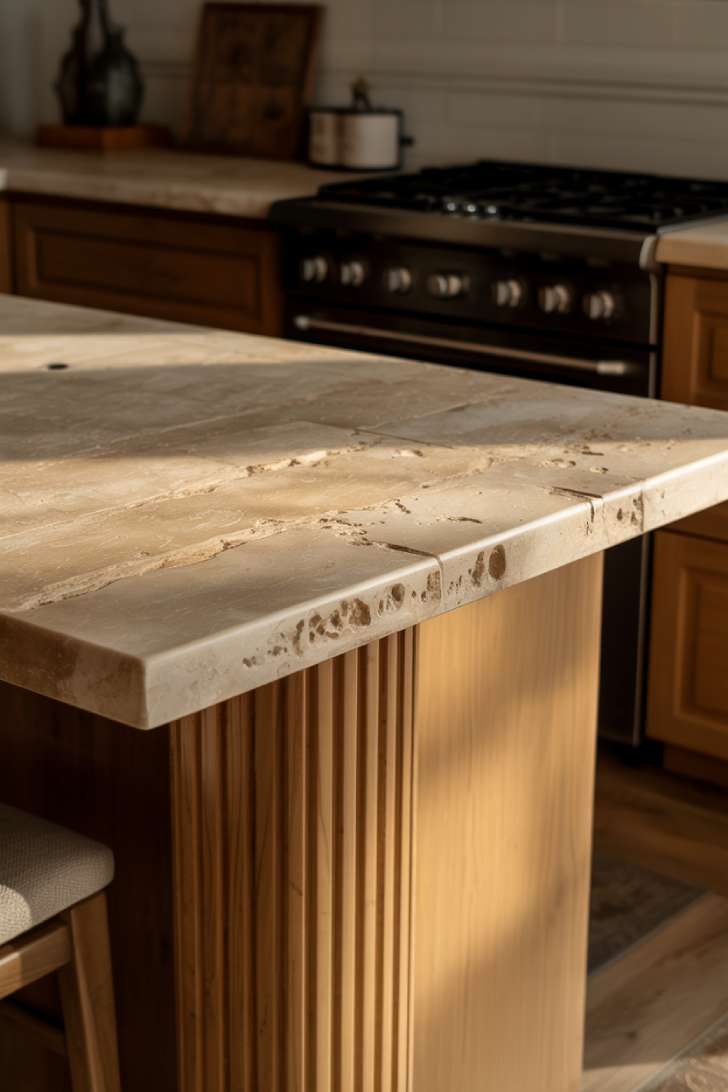
Honed and textured stone — travertine, limestone, soapstone, quartzite, and marble — comes with tumbled, brushed, or leathered finishes rather than polished gloss.
Terracotta is making a comeback in tiles, backsplashes, and flooring for its warmth.
Lava stone emerges as a luxury countertop choice — heat-resistant, durable, with unique glazed variations.
Aged metals like zinc, bronze, iron, and antique brass develop patina over time.
These living finishes gain character as they age.
Textural Layering
The most distinctive 2026 kitchens layer multiple textures in a single space.
You might see ribbed wood cabinet fronts paired with smooth stone counters.
Matte porcelain tile sits alongside brushed brass hardware.
Smoked glass cabinet inserts contrast with natural wood frames.
Concrete accents — in lighting or decor — work against soft plaster or render.
Terracotta tile meets creamy painted cabinetry.
Designers intentionally combine smooth with rough, matte with brushed, warm with cool.
This creates depth without pattern overload.
Soft Forms and Sculptural Elements
Hard, boxy geometries are softening across every element of kitchen design.
Curved Elements Taking Over
Rounded islands with organic, flowing shapes improve circulation.
They create natural gathering points.
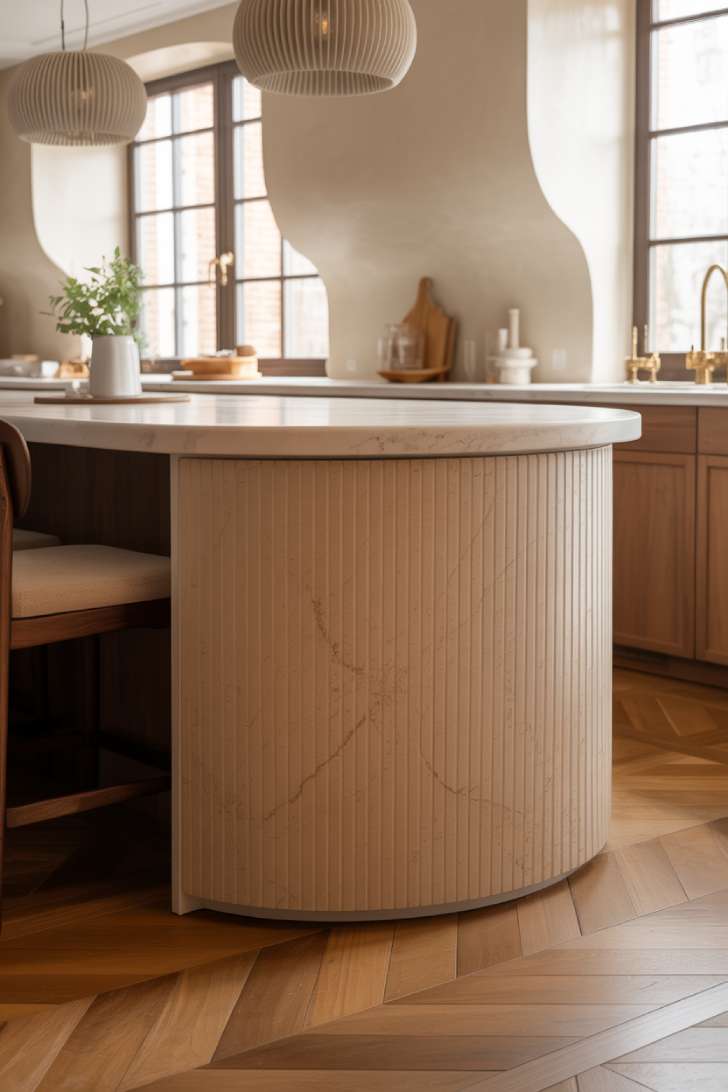
Arched details appear in niches, doorways, and cabinet openings.
These add elegance and architectural interest.
Rounded countertop corners, bullnose edges, and cove profiles replace sharp 90-degree angles.
Sculptural Presence
Monolithic stone islands become sculptural centerpieces.
Waterfall or block-style islands clad entirely in stone command attention.
Statement backsplashes — full-height stone slabs extending from counter to ceiling — act as dramatic focal walls.
This works best where upper cabinets are removed.
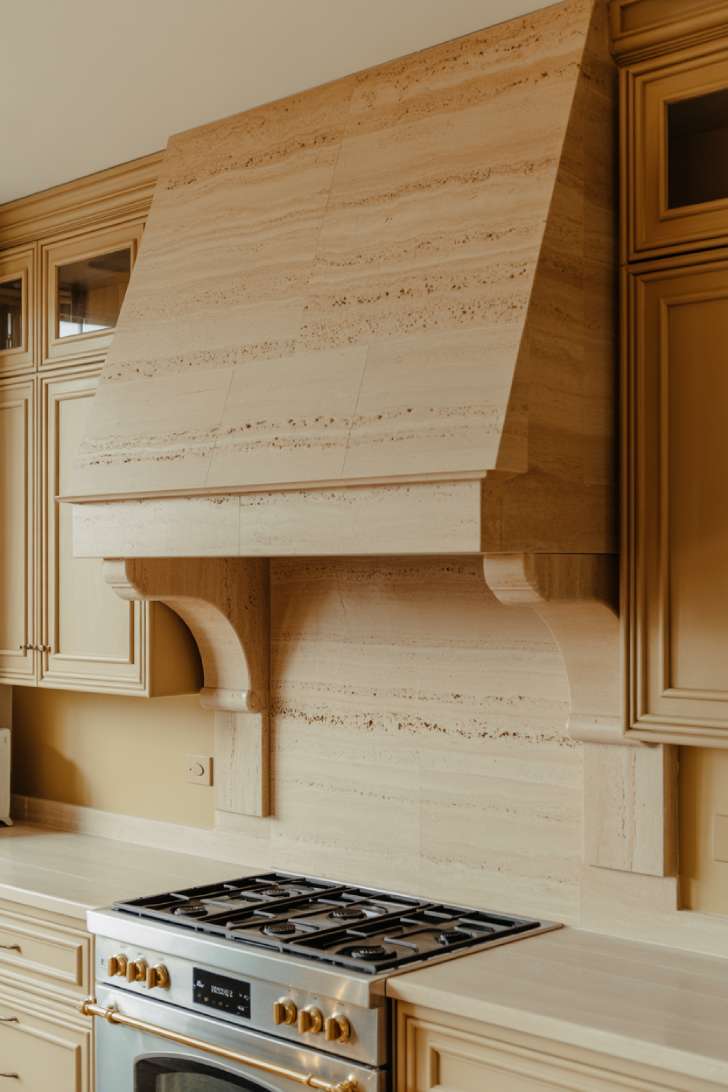
Ranges, hoods, and counters wrapped in matching stone, plaster, or render create a seamless, furniture-like appearance.
These softer forms make kitchens feel less institutional and more residential.
The boundary between kitchen furniture and living room design blurs.
Cabinet Design: Refined and Concealed
Cabinet design in 2026 balances visual simplicity with hidden complexity.
Cabinet Styles for 2026
Refined Shaker remains popular — but with slimmer, lighter-profile doors.
Subtle panel details replace heavy traditional frames.
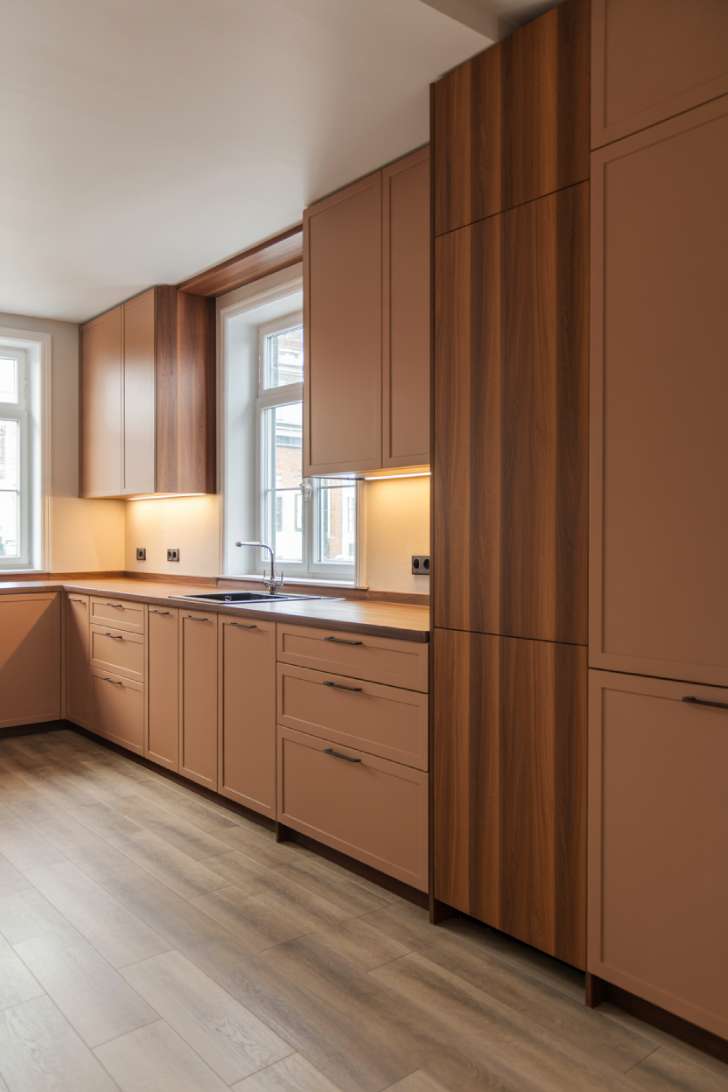
Handleless and integrated systems maintain clean lines.
Push-to-open systems, recessed rails, and seamless fronts dominate.
Textured fronts add tactile richness: fluted, ribbed, slatted wood, or paneled doors.
Mixed materials create interest — painted cabinets in warm neutrals or deep colors combined with natural wood accents, open shelving, or glass-front uppers.
Matte and natural finishes replace high-gloss lacquer.
Soft-touch laminates, honed wood, and matte-painted surfaces feel better to the touch.
Smart Storage Solutions
Walk-in pantries, pocket-door appliance garages, and “back kitchens” hide prep areas.
Small appliances and bulk storage disappear behind cabinet-like doors.
Curated open shelving appears as restrained, architectural breaks around windows or as intentional interruptions in upper cabinetry.
Not entire walls of exposed storage.
Glass-front cabinets replace some open shelving for a lighter look with dust protection.
They offer the opportunity to display curated items.
Custom drawer systems feature modular interiors, adjustable dividers, integrated charging stations, and personalized layouts for specific cooking habits.
The goal is maximum function with minimal visual noise.
Everything has a place, and most of it can be hidden.
Countertops and Backsplashes Making Statements
Countertops and backsplashes are where 2026 kitchens get bolder and more luxurious.
Countertop Trends
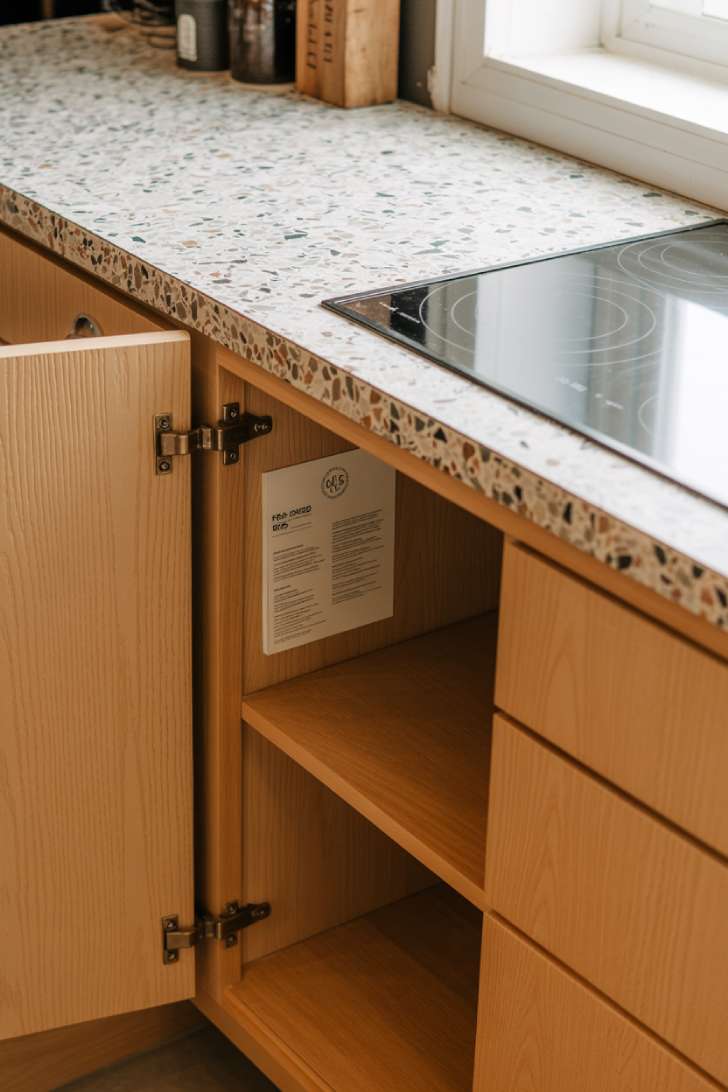
Natural stone dominates: quartzite, marble, terrazzo, soapstone.
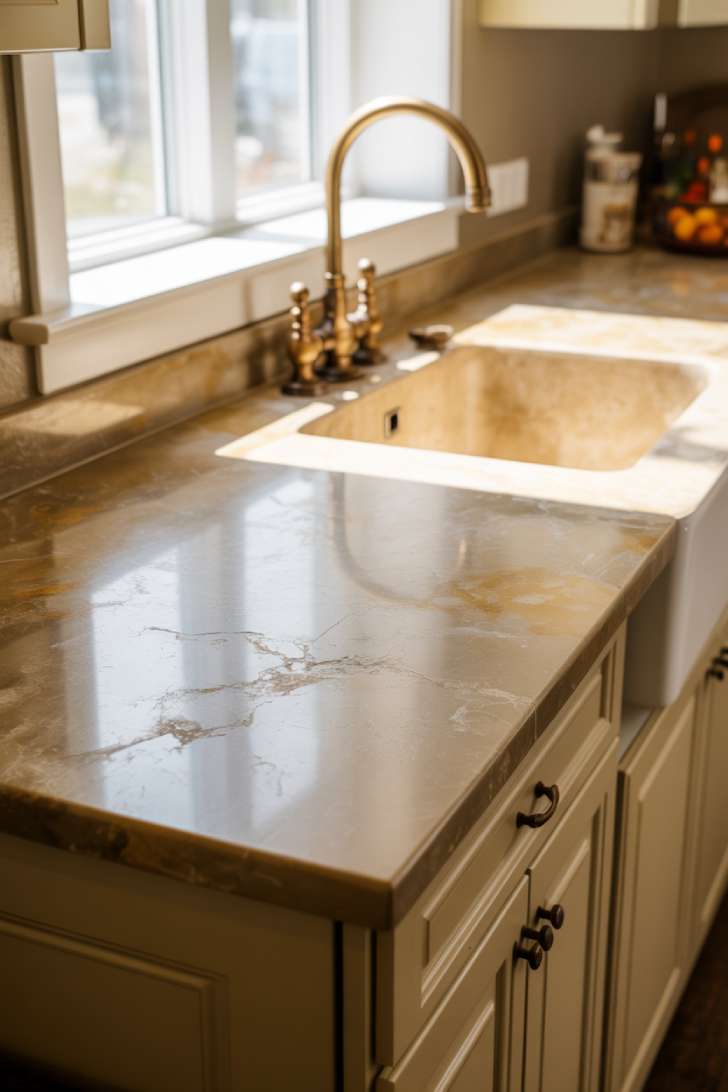
High-quality engineered stone that convincingly mimics natural veining works too.
Light, creamy stones, soft beige, and warm quartz replace cold white and blue-gray tops.
Some counters make bold statements with deep greens, burgundies, and dark charcoals.
Dramatic veining turns counters into focal points rather than background surfaces.
Tactile finishes — honed, leathered, and matte — are favored over ultra-gloss.
They’re softer, more forgiving, and more touchable.
Expressive edges matter now: delicate thin-line profiles, crafted edges like cove bullnose or ogee, and waterfall ends on islands.
The Backsplash Shift
Slab and solid-surface backsplashes represent the biggest backsplash change for 2026.
Continuing the countertop material up the wall in large slabs looks seamless and luxurious.
It’s easy to clean.
Variations include full-height stone to the ceiling, stone ledges, integrated stone shelves, and curved or sculpted profiles.
Simple white subway tile is no longer the automatic choice.
Zellige, hand-painted, or character tiles are used selectively to add texture and softness.
They don’t overwhelm the space.
Backsplashes are either calm, continuous stone or deliberately artisanal and textural.
Very little in between.
Flooring as a Design Statement
Kitchen flooring in 2026 is treated as a major design statement rather than a neutral backdrop.
Formats and Layouts
Wide-plank hardwood — 7 to 9 inches wide — in white oak, walnut, or engineered wood creates fewer seams.
This makes the space feel more expansive.
Large-format tiles — 24×48 inches or larger — in porcelain or stone minimize grout lines.
They create a clean, seamless look.
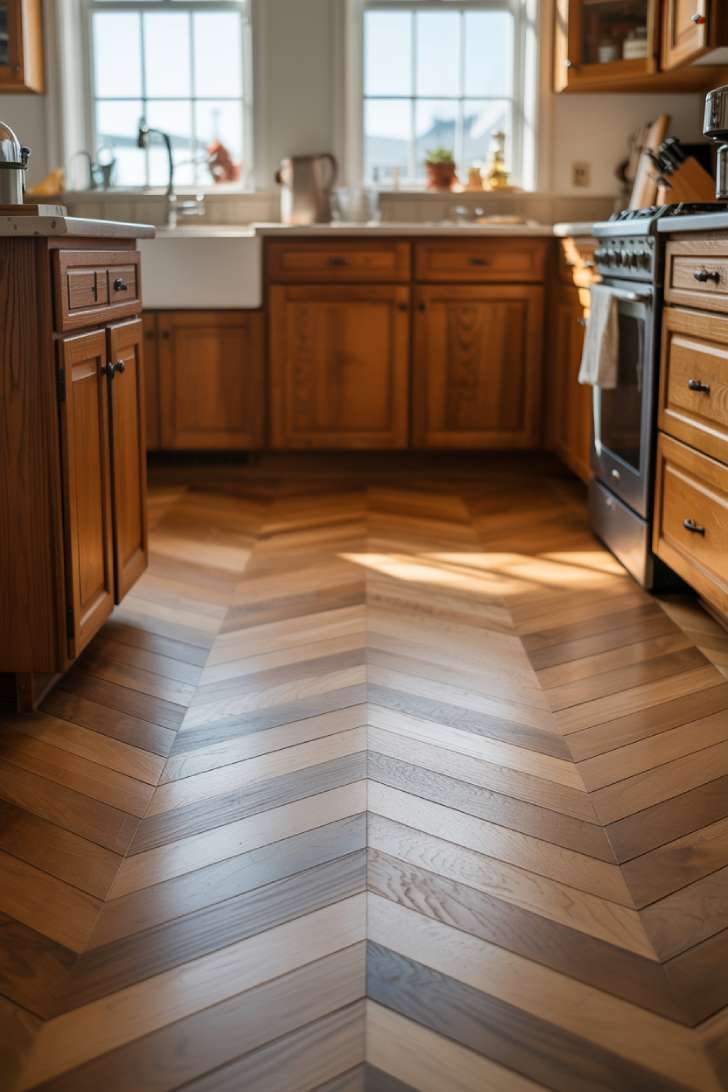
Patterned layouts add sophistication: herringbone, chevron, and parquet patterns in wood or tile show craftsmanship.
Materials and Finishes
Warm mid-tones replace cool builder-gray: honey, chestnut, caramel, and soft greige.
Natural stone brings luxury: tumbled limestone, aged travertine, brushed marble, and hand-cut flagstone.
Each piece has an authentic variation.
Stone-look porcelain offers realistic reproductions of marble, terrazzo, and travertine.
It has better durability and easier maintenance.
Waterproof luxury vinyl — advanced rigid-core planks with realistic embossed-in-register texture — works well in European oak and natural walnut looks.
Matte and satin finishes dominate.
High-gloss floors that show every scratch and footprint are fading.
Lighting: Layered and Atmospheric
Lighting is no longer an afterthought.
It’s a core design tool that defines zones, improves materials, and shifts mood.
The Four-Layer Approach
2026 kitchens use multiple light sources at different levels.
Ambient or overhead lighting provides general illumination: recessed LED panels, flush mounts, or decorative pendants.
Task lighting focuses on work: under-cabinet LED strips, integrated drawer lighting, and directional spots over prep zones.
Accent lighting creates drama: LED strips in glass cabinets, backlit shelving, plinth lighting, and illuminated niches.
Decorative or sculptural lighting behaves like furniture: statement pendants, wall sconces, and table lamps.
Fixture Trends
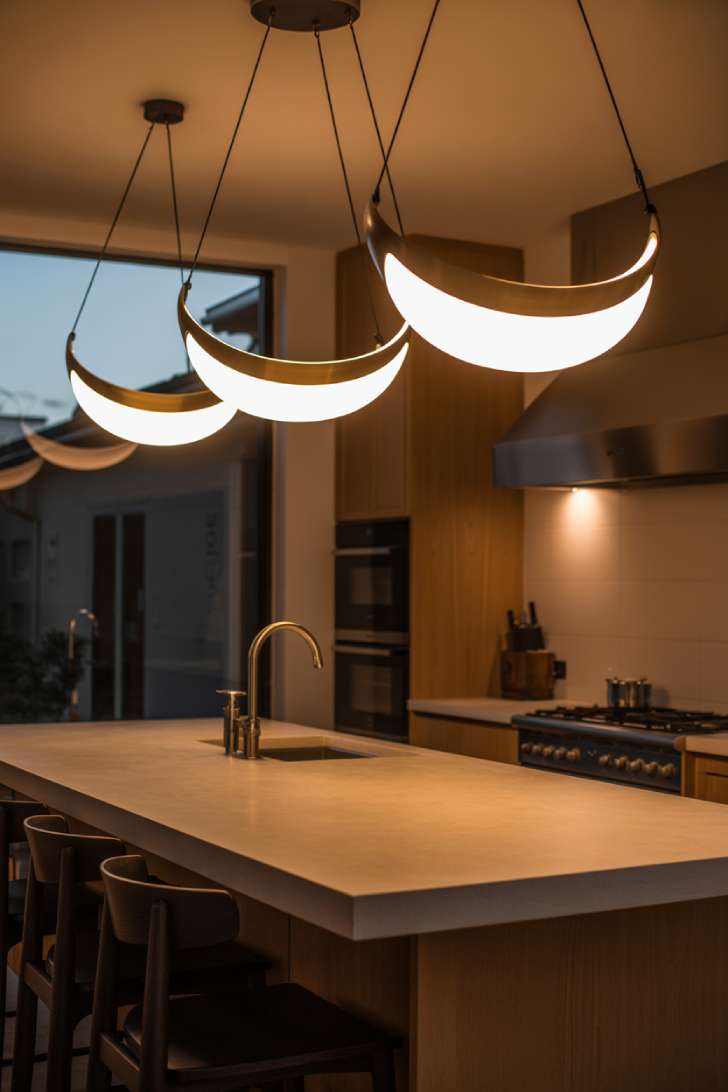
Curved and crescent profiles dominate: soft arcs, halos, and organic silhouettes diffuse warm, gentle light.
Living-room-inspired fixtures bring sophistication: wall sconces, table lamps, and sculptural pendants that feel like salon-style pieces.
Mixing vintage and contemporary fixtures adds narrative depth.
A vintage chandelier might pair with modern cabinetry.
Ceramic and porcelain pendants glow softly as LED light filters through the thin material.
They add warmth and curated whimsy.
Smart Controls
Programmable lighting scenes shift from bright task lighting to soft ambient glow.
Color-temperature tuning adjusts from cool (morning prep) to warm (evening entertaining).
Motion and proximity sensors activate lighting as you approach prep zones.
Dimmer switches and app or voice control offer seamless adjustment.
Lighting in 2026 creates atmosphere as much as visibility.
Warm tones — not clinical cool white — improve earthy palettes and natural materials.
Hardware and Metal Finishes
Cabinet hardware is treated as the jewelry of the kitchen.
2026 sees a decisive shift away from matte black and chrome.
Dominant Finishes for 2026
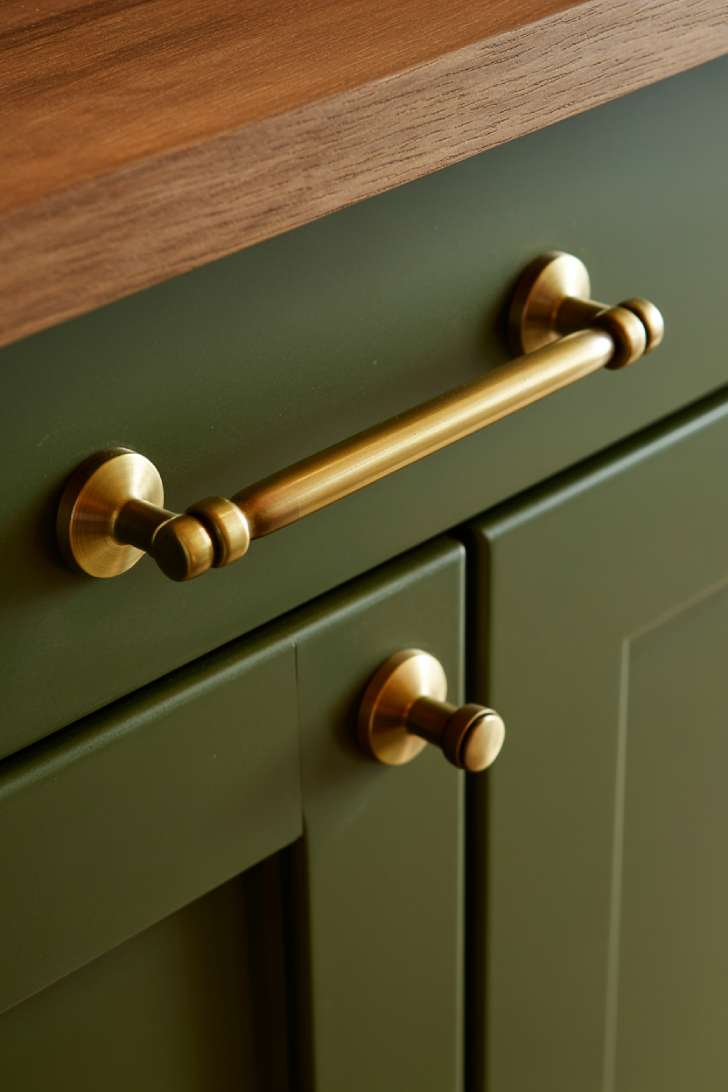
Brushed or satin brass offers warm, understated luxury.
It pairs beautifully with deep greens, dark woods, and warm neutrals.
Antique bronze and iron bring darker, textured metals with Spanish and rustic influences.
Less polished, more dramatic.
Gunmetal works for smoky dark gray in industrial or contemporary schemes.
Unlacquered brass develops a natural patina over time.
It’s valued for its living finish.
Design Details
Mixed metals create layered depth: intentional blending of warm and cool tones.
You might see brass pulls with matte nickel faucets.
Unique shapes matter: T-bar knobs, long slim pulls, and hardware with leather or wood insets offer tactile, artisanal appeal.
Matte or brushed finishes dominate.
High-polish and high-sheen hardware is out.
Matte black, though still present, is no longer the default.
Metallics are taking over.
Kitchen Layout: Integrated and Multi-Functional
The kitchen is increasingly designed as a continuous living environment rather than a separate workspace.
Whole-Home Integration
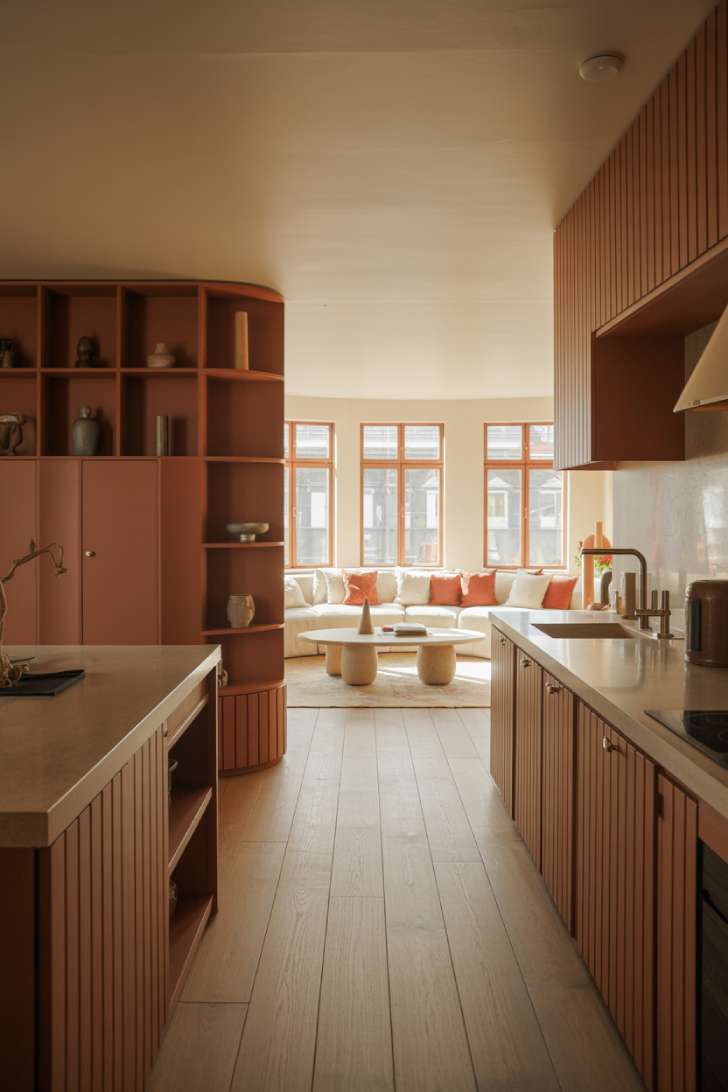
Cabinetry extends into adjacent butler’s pantries, laundries, home bars, and living areas in matching finishes.
This creates visual cohesion.
Kitchen materials — stone, wood, color — are intentionally linked to adjoining rooms in open-plan layouts.
Defined Zones with Flexibility
Prep zones feature good lighting, task-focused areas with integrated storage, and hidden small appliances.
Cooking zones, treat ranges and hoods as focal points, often clad in matching stone or render.
Social zones at islands become gathering points with curved edges, integrated seating, and lower task lighting.
Hidden utility areas conceal coffee bars, appliance garages, and pantries that close flush when not in use.
Smart Technology Integration
Voice-activated ovens and hobs respond to commands.
Connected appliances monitor supplies and suggest recipes.
AI cooking assistants adapt to pantry inventory.
Boiling and multifunction taps — 3-in-1 and 4-in-1 — deliver filtered, sparkling, and chilled water.
Panel-ready appliances hide behind matching cabinet fronts.
Wireless charging zones and embedded drawer charging stations keep devices powered.
Technology is present but discreet.
It’s seamlessly integrated rather than displayed.
Sustainability and the “Slow Kitchen” Philosophy
2026 interior design trends focus on materials and decisions that age gracefully and last.
Responsible Material Choices
Sustainably sourced and FSC-certified timber matters.
Recycled countertop materials and eco-friendly finishes are chosen more often.
Natural stone is valued for longevity and minimal processing.
Energy-efficient appliances and water-saving fixtures respond to environmental concerns.
Underfloor heating compatibility drives material selection.
Designing for Longevity
Designers focus on structural quality, durable finishes, and timeless palettes.
They’re not chasing short-lived visual trends.
The focus is on kitchens that can change over time.
Hand-painted cabinets can be refreshed.
Modular systems adapt to changing needs.
Classic forms get improved with contemporary details.
This “slow kitchen” philosophy values permanence over disposability.
What’s Leaving in 2026
Understanding what’s fading helps clarify the direction forward.
High-gloss finishes are dated: shiny lacquer cabinets and polished counters give way to matte and honed surfaces.
Cool grays and builder neutrals — flat gray palettes without warmth — are being replaced by earth tones.
Expansive open shelving is out: wall-to-wall open shelves disappear in favor of restrained, architectural open elements.
Granite countertops lose ground: quartz, quartzite, and alternative stones dominate (78% designer preference vs. 43% for granite).
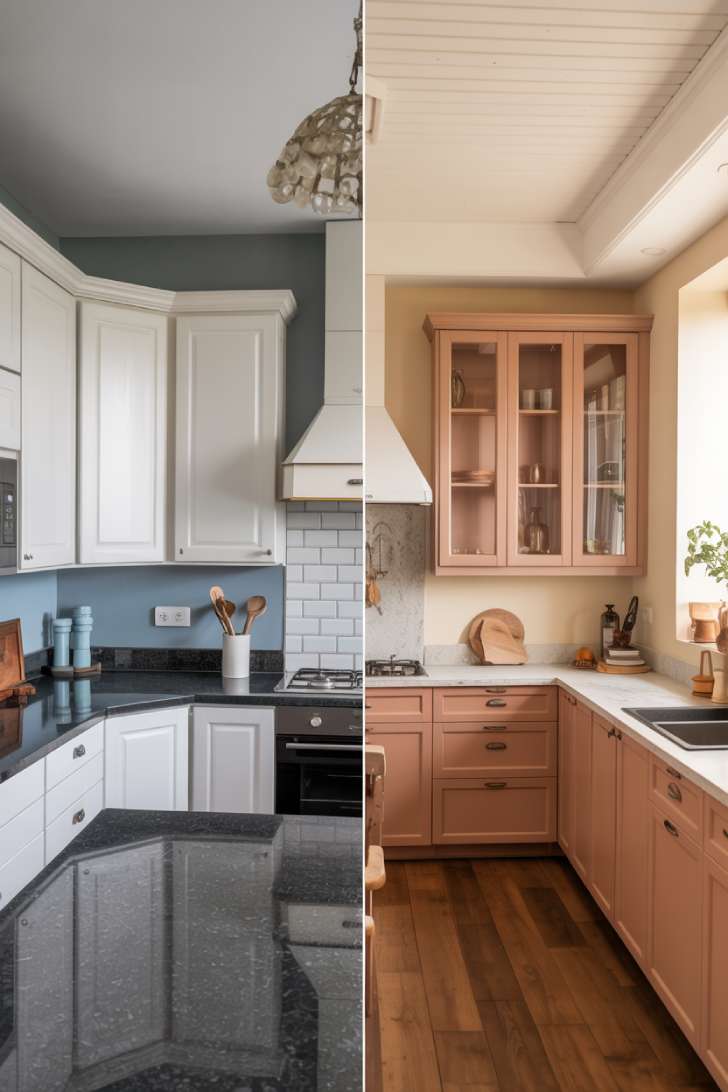
Stark white kitchens — bright white everywhere — are replaced by warm off-whites and layered neutrals.
Matte black as default hardware gives way to metallics: brass, bronze, gunmetal.
Industrial style — overly utilitarian looks — softens toward warmer, more residential aesthetics.
Bold, brightly colored cabinets shift to styling accents instead: pastels in homewares and art rather than fixed cabinetry.
How to Apply These Trends in Your Kitchen
Creating a kitchen that captures the 2026 spirit doesn’t require a complete renovation.
Start with warm neutrals: use sand, clay, mushroom, or soft stone as your foundation on walls and larger surfaces.
Layer natural materials: combine wood, honed stone, terracotta, and aged metals for tactile depth.
Introduce curves strategically: soften at least one element — maybe an island edge, cabinet detail, or arched niche.
Plan layered lighting early: combine ambient, task, accent, and decorative sources.
Use warm color temperatures and dimming capability.
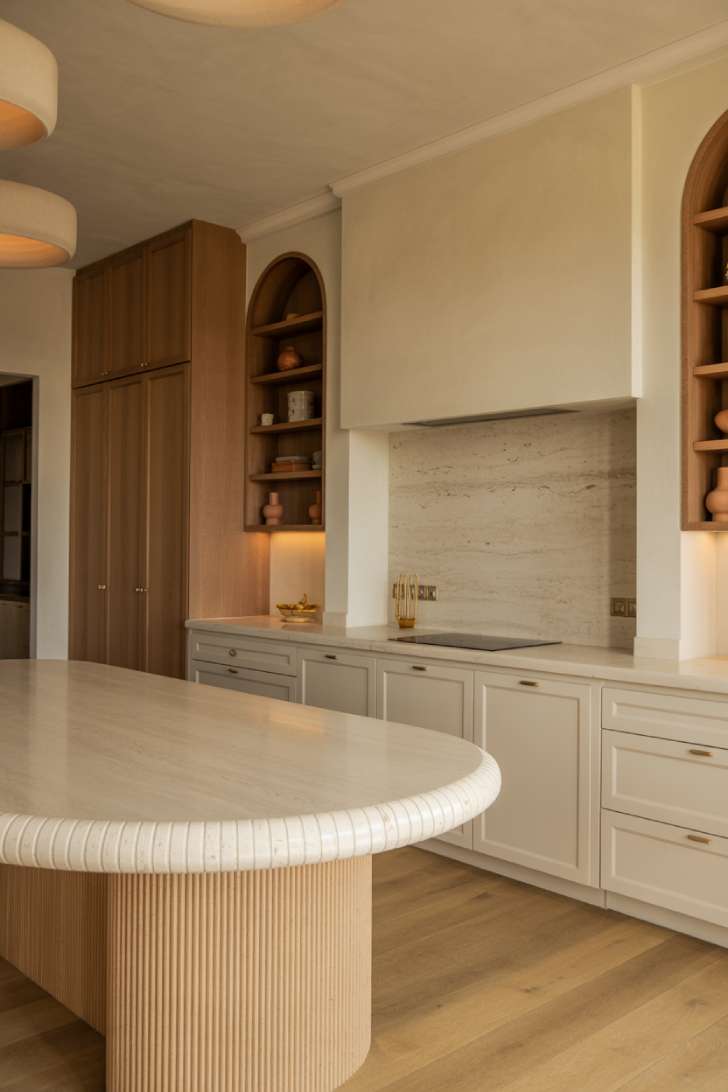
Conceal complexity: invest in hidden storage, integrated appliances, and pocket-door utility zones.
This maintains visual calm.
Choose hardware thoughtfully: select brushed brass, bronze, or mixed metals in unique shapes.
Don’t default to matte black.
Use color intentionally: add depth with deep greens, clays, or jewel tones on islands or lower cabinets.
Keep the upper areas lighter.
Select flooring as a statement: go for large-format tiles or wide-plank wood in warm mid-tones with matte finishes.
The result is a kitchen that feels lived-in, warm, and sculptural.
It’s a space designed around how you cook, gather, and live — not how a showroom looks.
Conclusion
The 2026 kitchen trends point toward spaces that feel human, textured, and deeply connected to the rest of the home.
Cold minimalism and sterile work zones are giving way to warm, layered environments.
Natural materials, soft curves, concealed storage, and quiet technology create kitchens that work beautifully while feeling inviting.
These aren’t just new kitchen ideas — they represent a shift in how we think about the heart of the home.
The 2026 interior design trends for kitchens reflect a desire for spaces that age gracefully, adapt to our lives, and make us want to spend time in them.
Whether you’re planning a full renovation or just refreshing your space, these principles can guide you toward a kitchen that feels both current and timeless.