You’ve always dreamed of having your own library, but you’re working with limited square footage.
Here’s the good news: you don’t need a mansion to create a reading retreat that feels like a personal sanctuary.
With smart design choices and creative space planning, any corner of your home can transform into a cozy library that invites you to curl up with a good book.
Let me show you 15 small library room ideas that prove size doesn’t matter when it comes to creating your perfect reading space.
Start with the Right Seating
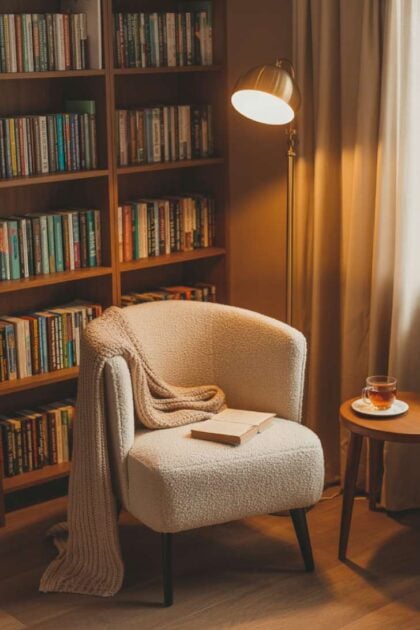
Your reading chair is the heart of your small home library design.
This is where you’ll spend hours lost in stories, so comfort isn’t negotiable.
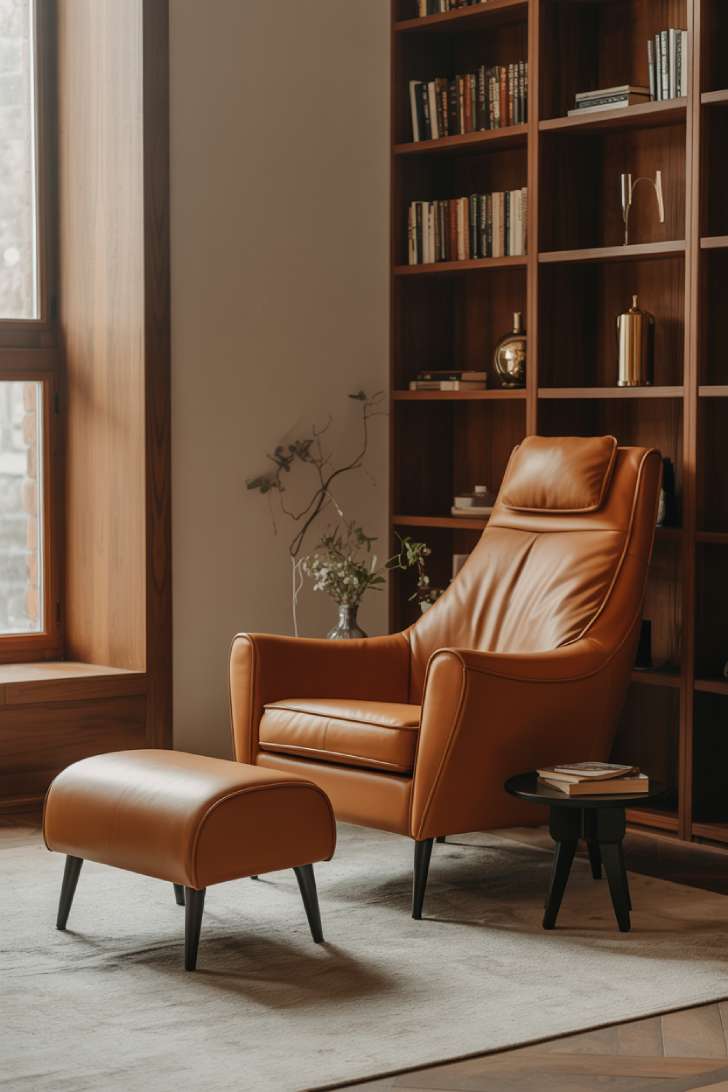
Look for chairs that offer proper lumbar support and deep seating that lets you settle in for the long haul.
Test chairs in person before buying—you want to assess how the cushions feel, whether the arms are the right width, and if the seat depth works for your height.
Window seats are brilliant for small spaces because they use an area that might otherwise go unused.
Add plush cushions, throw pillows, and maybe a storage drawer underneath for extra blankets.
If you’re really tight on space, consider built-in benches that tuck into alcoves or even large floor cushions that you can stack away when not in use.
The key is finding seating that makes you want to stay awhile.
Maximize Vertical Space with Smart Shelving
When floor space is limited, think upward.
Floor-to-ceiling bookshelves create a dramatic visual impact and give you tons of storage without eating up precious square footage.
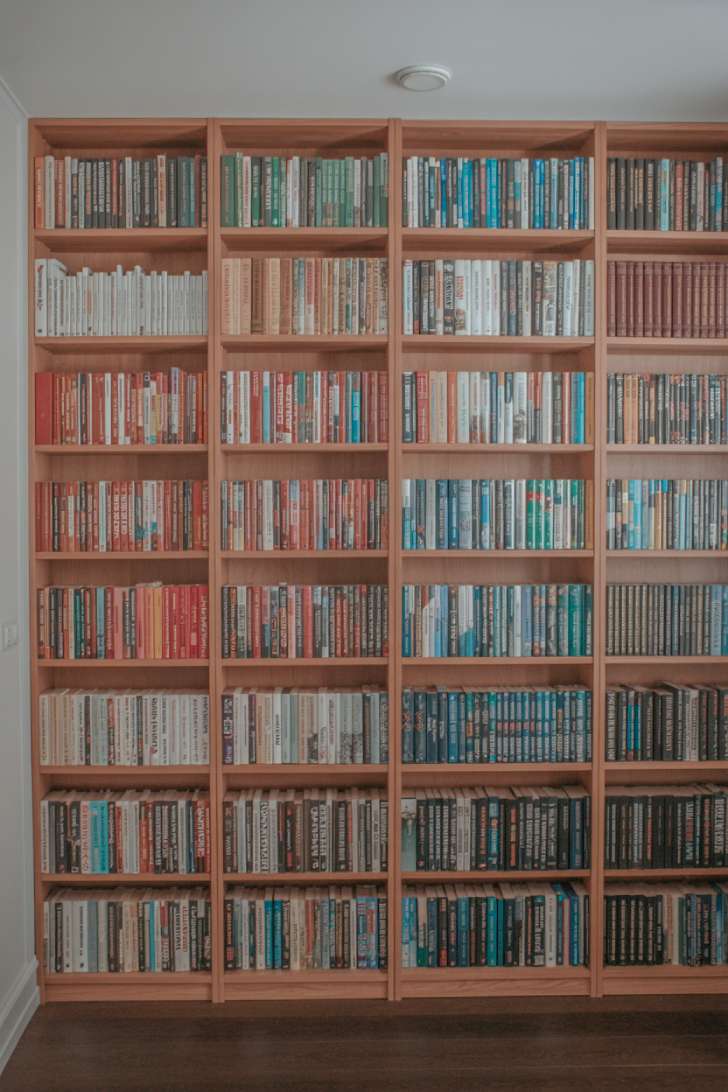
Floating shelves are your friend in compact rooms.
They provide storage without the visual bulk of traditional bookcases, making the space feel more open and modern.
Don’t overlook unusual spots for shelving—the space above doorways, awkward corners that can’t fit furniture, or narrow hallways can all accommodate books.
Corner shelving that wraps around two walls maximizes every inch.
Add a rolling library ladder if you’ve gone tall with your shelves, which is both practical and charming.
Layer Your Lighting for Perfect Ambiance
Good lighting transforms a room from ordinary to magical.
You need three types: ambient lighting for overall illumination, task lighting for reading, and accent lighting to highlight your collection.
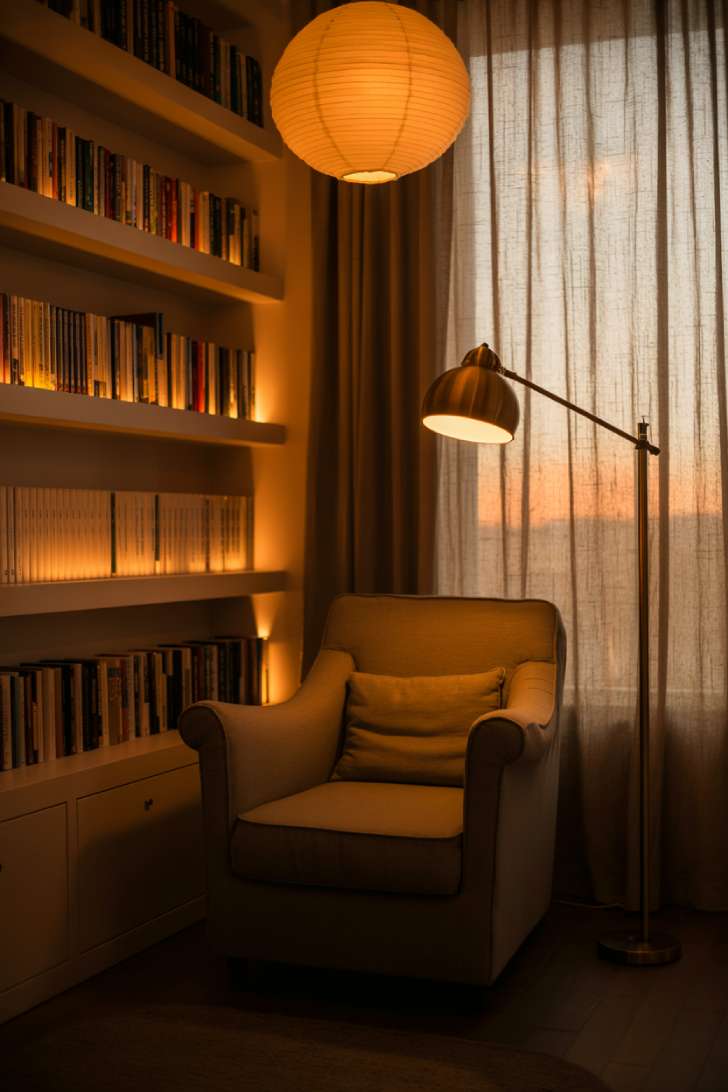
Choose bulbs with warm color temperatures between 2700K and 3000K—these create that inviting, cozy feeling that makes you want to grab a book.
Pharmacy-style floor lamps or adjustable wall sconces positioned next to your reading chair give you focused light exactly where you need it.
Install dimmable switches so you can adjust the mood throughout the day.
Bright light for daytime reading, softer glow for evening relaxation.
Don’t forget natural light—if you have windows, maximize them with sheer treatments that filter harsh glare without blocking brightness.
Strip lighting along bookshelves adds a sophisticated touch and makes it easier to read book spines.
Battery-powered candles scattered around the room add flickering warmth without any fire risk.
Choose Your Color Palette
Color sets the entire mood of your small home library.
This year’s design trends favor warm, nature-inspired palettes over cool neutrals.
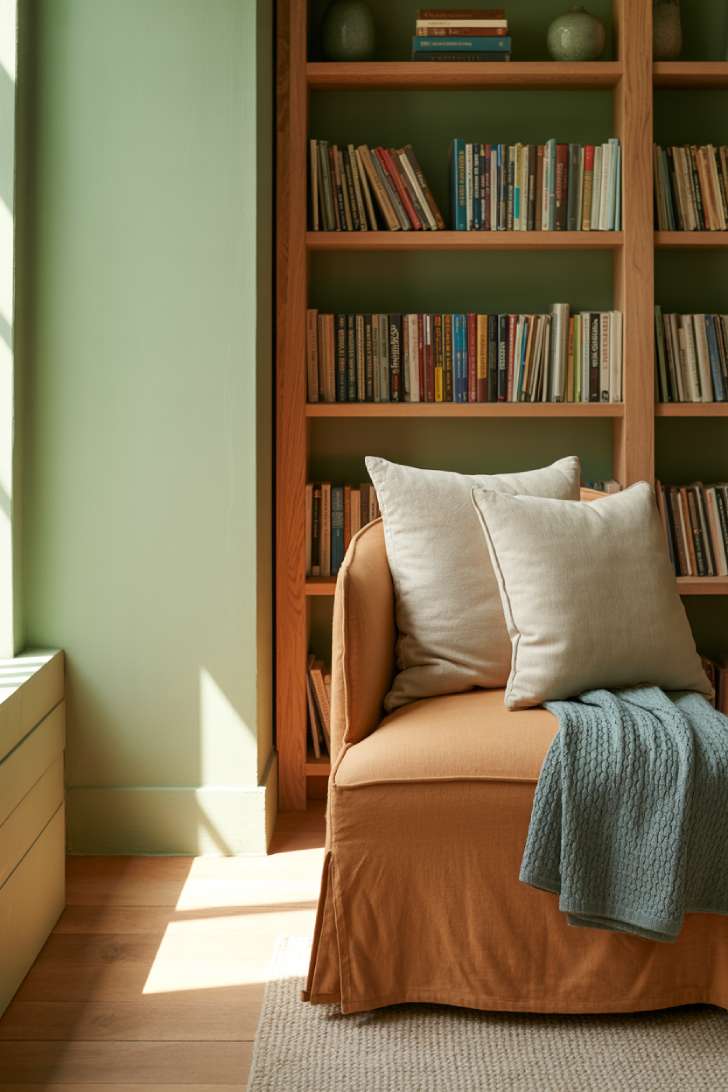
Earthy tones like sage green, dusty blue, terra cotta, and warm taupe create spaces with depth that feel connected to nature.
If you want something more dramatic, deep jewel tones like burgundy, forest green, or navy add sophistication and intimacy to smaller rooms.
These moody colors make the space feel like a cozy cocoon.
For rooms with good natural light, a bright minimalist approach works beautifully—think light oak shelves, soft leather seating, and whites paired with natural wood tones.
The key is picking colors that make you feel calm and inspired rather than confined.
Create a Window Reading Nook
If you’re lucky enough to have a window in your library space, make it the star.
Natural light is priceless for reading and connecting your indoor retreat to the outside world.
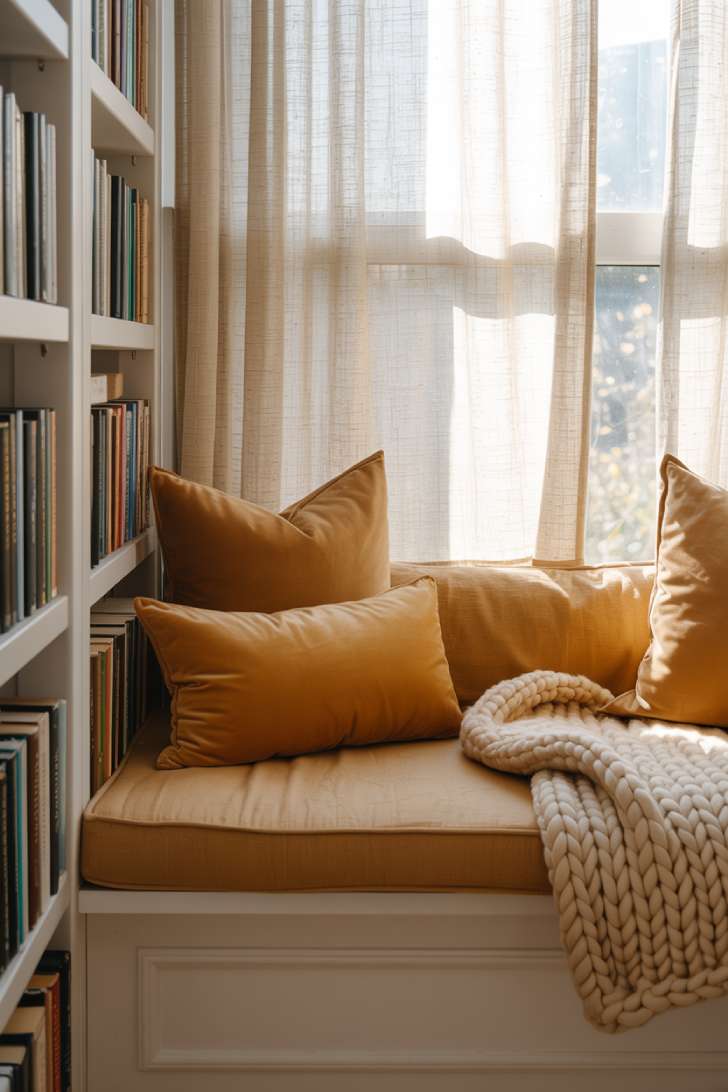
Build shelving around your window frame to create a cozy enclosure.
A built-in bench beneath the window with storage drawers underneath makes perfect use of that space.
Add a thick cushion, several pillows, and a soft throw blanket.
Soft linen curtains or rice paper screens let you control light levels without completely blocking your view.
This becomes your go-to spot for afternoon reading sessions.
Embrace Japandi Design Principles
The Japandi aesthetic perfectly suits small library spaces by combining Japanese minimalism with Scandinavian coziness.
This style keeps things calm, uncluttered, and focused on natural materials.
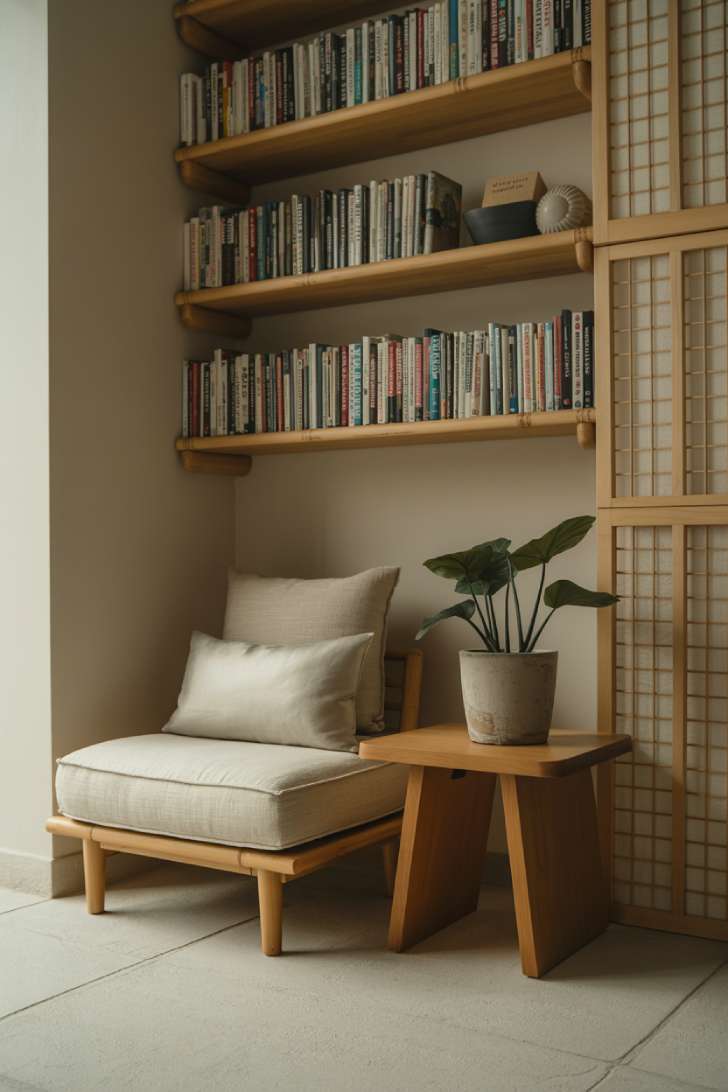
Choose furniture made from bamboo, light oak, or other natural woods.
Keep your color palette neutral—warm sand, soft grays, and natural wood tones work together beautifully.
Floating shelves and low-profile furniture maintain an airy feeling even in tight quarters.
Hidden storage solutions keep clutter out of sight.
Add a single statement plant—maybe a fiddle leaf fig or monstera—rather than crowding the space with lots of greenery.
Linen upholstery, ceramic accents, and simple wooden accessories reinforce this aesthetic without overwhelming the room.
Repurpose Unexpected Spaces
Your library doesn’t need to be a dedicated room.
Look for underutilized areas throughout your home that could become reading retreats.
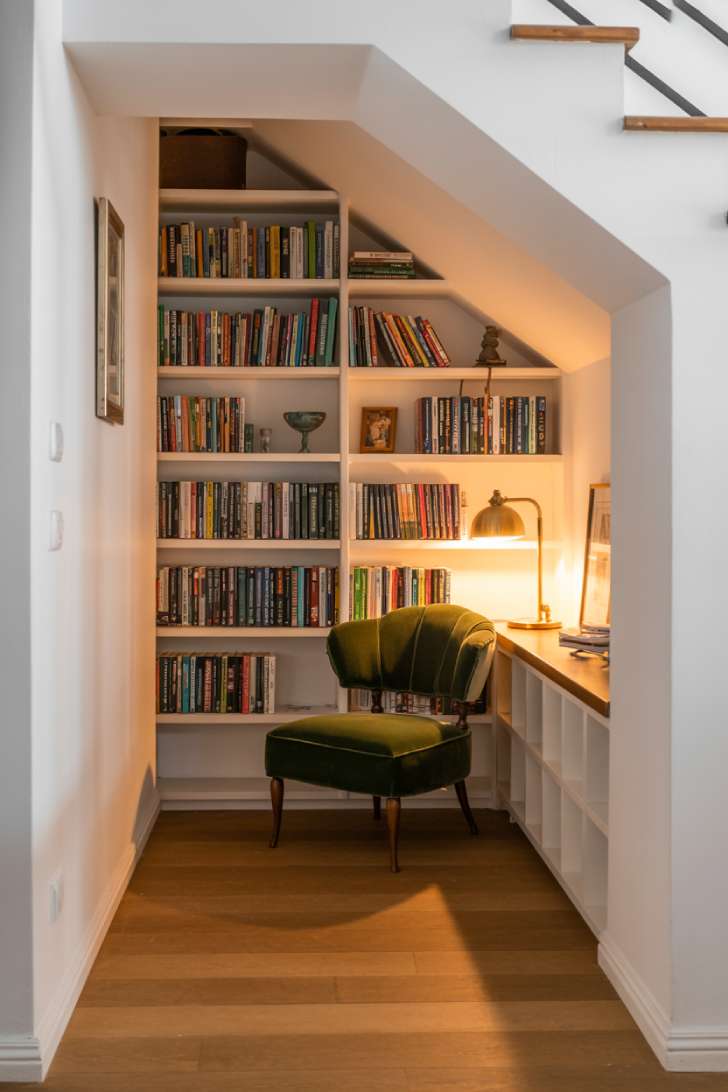
The area under your staircase is often wasted space that’s perfect for a small library.
Add custom shelving that fits the angles, tuck in a comfortable chair, and you’ve got a magical hideaway.
Closets can convert into tiny reading rooms—remove the doors, add shelves and a small seat, and you have a private escape.
Hallway alcoves and awkward corners that can’t fit regular furniture are ideal for a console table topped with books and a small chair pulled up beside it.
Even a landing at the top of the stairs can become a mini library with the right furniture.
Add Multifunctional Furniture
Smart furniture choices help you maximize every inch of your small home library.
Storage ottomans do triple duty as footrests, extra seating, and hidden storage for blankets and reading accessories.
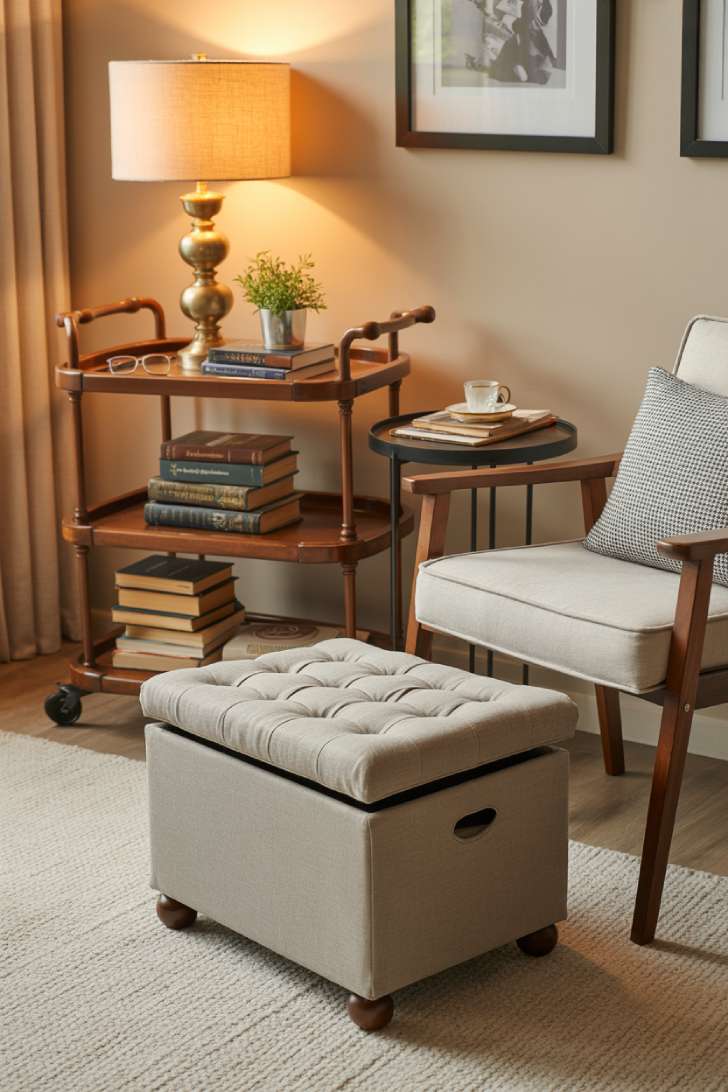
Side tables with built-in shelving keep your current reads within arm’s reach without taking up extra space.
Nesting tables tuck together when not needed but pull out when you want to set down your tea or journal.
Repurposed bar carts make excellent mobile stations for reading essentials—books, bookmarks, notepads, and your favorite beverage.
The goal is furniture that works hard so your small space can do more.
Define Your Library Zone
If you’re carving a library out of a larger room, you need to create visual separation.
An area rug anchors your seating area and tells your brain, “This is the reading zone.”

Choose a rug that extends beyond your chair and side table to create a cohesive zone.
Paint your library wall a different color from the rest of the room—this instantly sets it apart.
Strategic plant placement can mark boundaries without feeling like walls.
A large potted tree at the edge of your reading area creates a natural divider.
Floating shelves arranged in a specific pattern can suggest a separate zone without blocking light or views.
Organize Books Creatively
How you arrange your books affects both function and aesthetics.
Organizing by color creates a stunning rainbow effect that becomes artwork in itself.
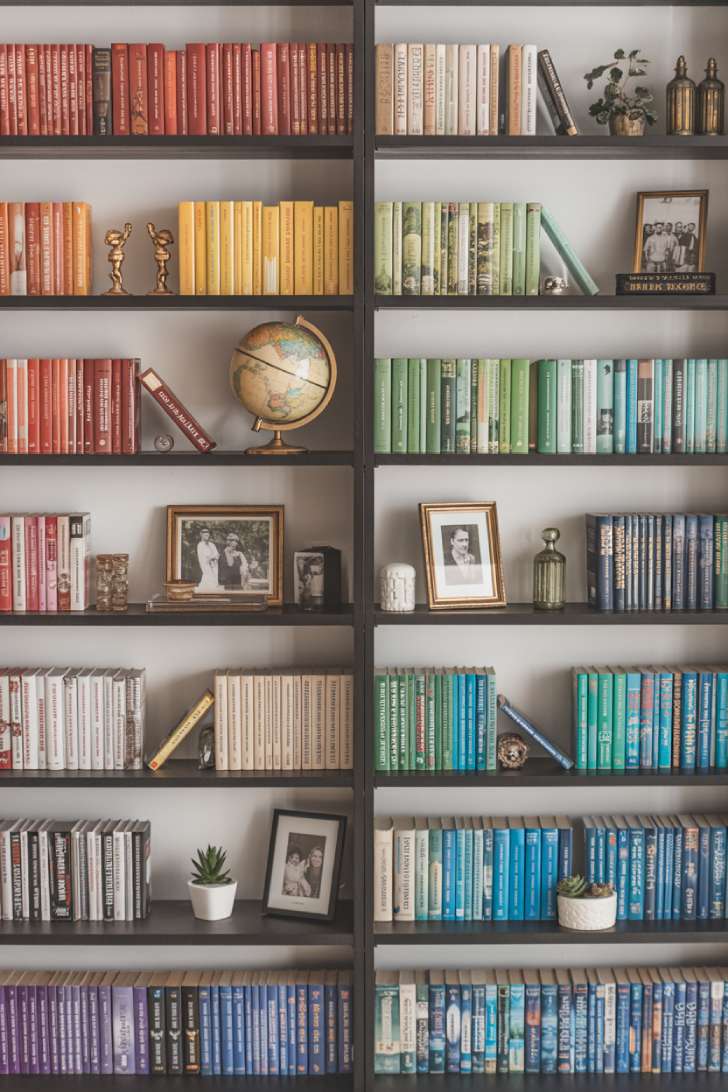
Mix your books with decorative objects so the shelves don’t feel overwhelming.
Add framed photographs, small plants, vintage finds, or meaningful souvenirs between book stacks.
Decorative bookends—whether brass animals, marble blocks, or wooden sculptures—add personality and help organize sections.
Vary the direction of your books occasionally, stacking some horizontally to break up rows of vertical spines.
This creates visual interest and gives you surfaces to display small objects.
Layer Textures for Comfort
Texture makes the difference between a room that looks nice and one that feels cozy.
Chunky knit throw blankets draped over your reading chair invite you to snuggle up.
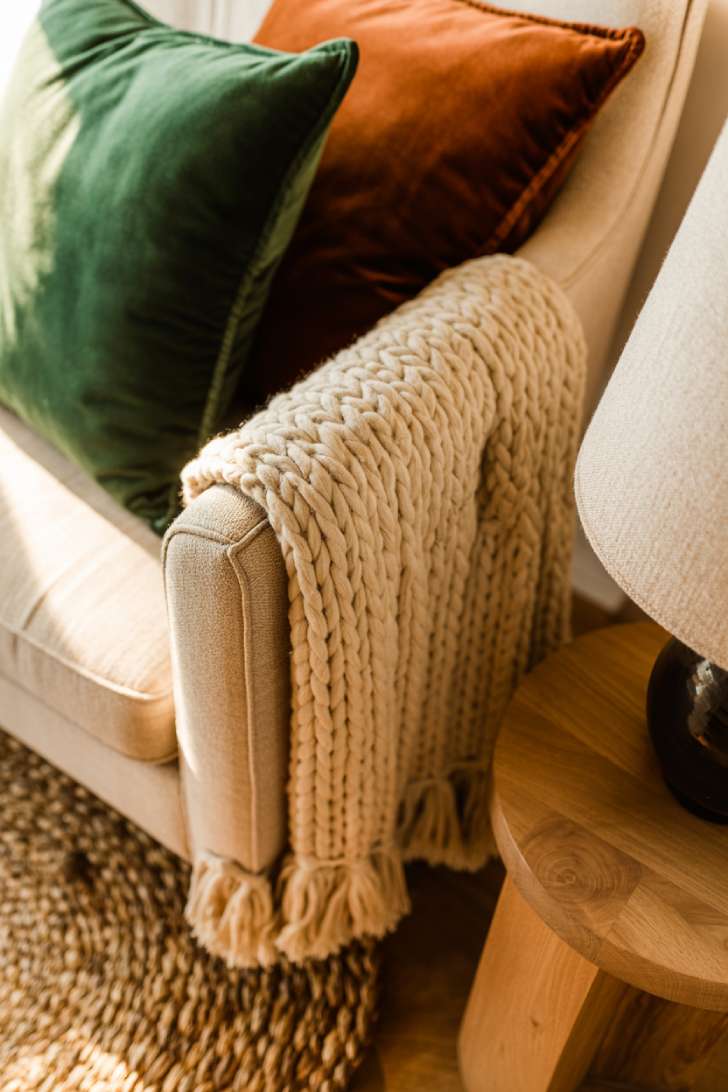
Add throw pillows in different fabrics—maybe velvet, linen, and cotton—for visual depth and comfort.
A woven jute or wool rug underfoot adds warmth and helps with acoustics in your reading space.
Natural materials like wood and bamboo bring an organic texture that makes the room feel grounded.
Even your lighting fixtures can contribute texture—think linen lampshades or woven pendant lights.
These layers work together to create a space that begs you to touch everything and settle in.
Bring in Greenery
Plants breathe life into your library and connect your indoor space to nature.
They also purify the air and help regulate humidity, which is great for preserving your books.
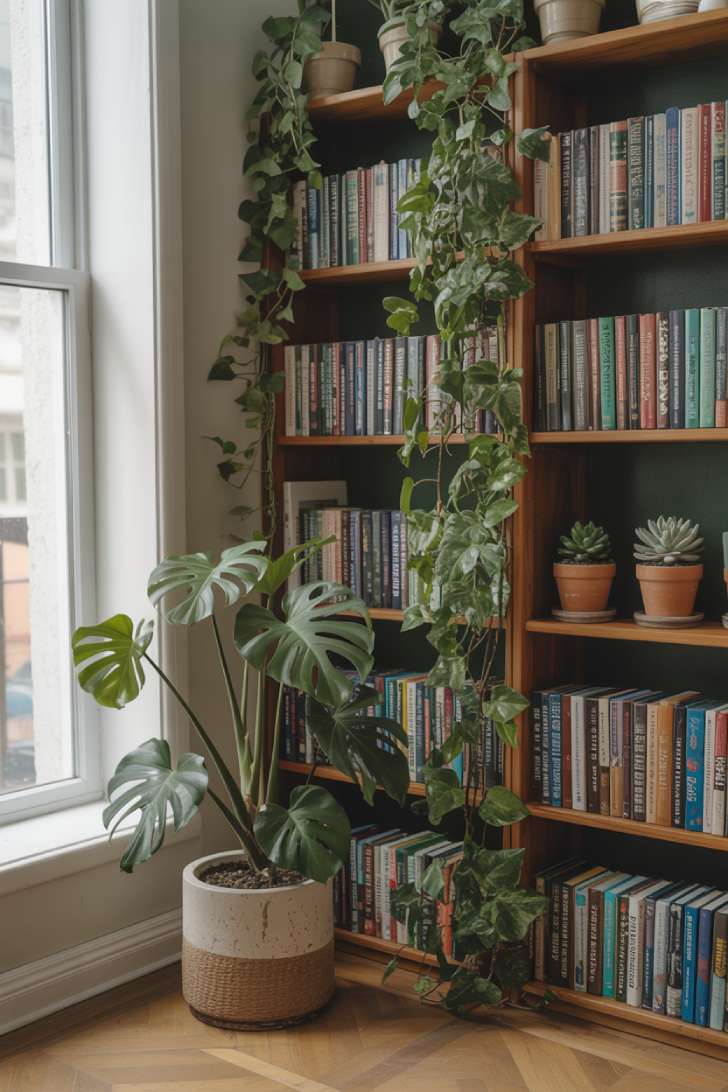
A large monstera or fiddle leaf fig makes a dramatic statement in a corner.
Trailing plants like pothos or ivy can cascade down from upper shelves, softening the hard lines of bookcases.
Small potted plants in simple ceramic planters scattered throughout your shelves add touches of green without overwhelming the space.
Choose varieties that do well in the light conditions of your room—some plants thrive in bright windows, others prefer shadier corners.
Add Personal Touches
Your library should tell your story.
Display objects that reflect your interests, travels, and memories.
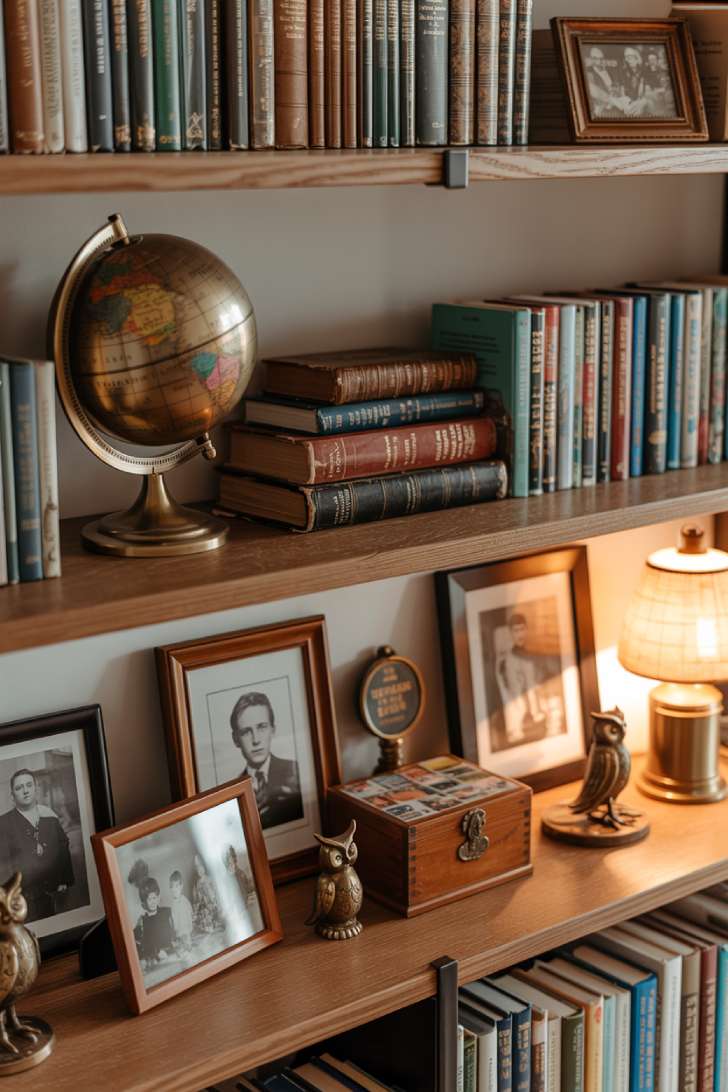
Vintage maps and globes speak to curiosity and wanderlust.
Family photographs in beautiful frames make the space feel intimate.
Artwork that resonates with you—whether prints, paintings, or framed book pages—adds visual interest to walls.
Travel souvenirs and meaningful objects collected over the years give your library character.
Handmade or vintage pieces with history and patina feel more authentic than mass-produced decor.
The goal is to create a space that feels uniquely yours.
Create a Refreshment Station
A dedicated spot for beverages and reading essentials makes your library feel like a true retreat.
You don’t need much—just a small side table or cart within reach of your reading chair.

Keep tea, coffee, or water easily accessible so you don’t have to interrupt your reading flow.
A small tray holds your current beverage and maybe a snack.
Use the same cart or table to store reading essentials—spare reading glasses, a collection of bookmarks, your journal, and pens.
A candle adds ambiance and a gentle scent that helps you relax.
This little station signals that this space is dedicated to your comfort and enjoyment.
Finish with Creative Wall Treatments
Don’t forget about the walls themselves—they’re prime real estate for adding personality.
Painting your bookshelves a contrasting color from your walls creates a dramatic visual impact.

Try removable wallpaper above chair rail molding if you want a pattern without permanent commitment.
A gallery wall of artwork, framed book quotes, or vintage prints adds visual interest to blank spaces.
Some people frame meaningful pages from damaged books—poetry, illustrations, or first edition title pages—as literary art.
For the adventurous, a painted mural or accent wall in a calming color like soft blue or green creates a backdrop for your collection.
The wall treatments should reflect your taste and make the space feel finished and intentional.
Wrapping Up Your Cozy Small Library
Creating a cozy small library comes down to a few key elements: comfortable seating that invites long reading sessions, smart use of vertical space, layered lighting that sets the mood, and personal touches that make the space uniquely yours.
You don’t need a massive room or unlimited budget to build your dream reading retreat.
Even a corner, alcove, or repurposed closet can become a magical escape when designed with care.
Start with one element—maybe a great chair or a wall of shelves—and build from there.
Your small home library will become your favorite spot in the house, a personal sanctuary where you can disconnect from the world and lose yourself in stories.