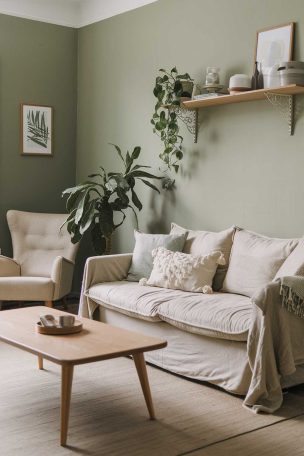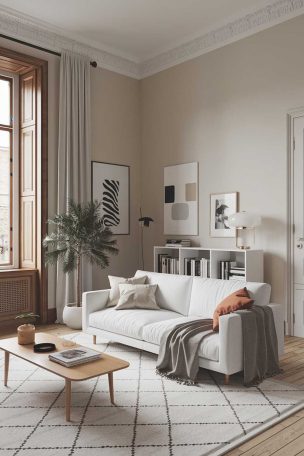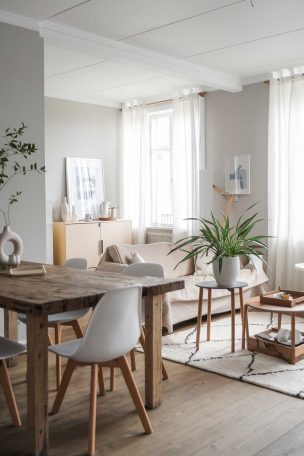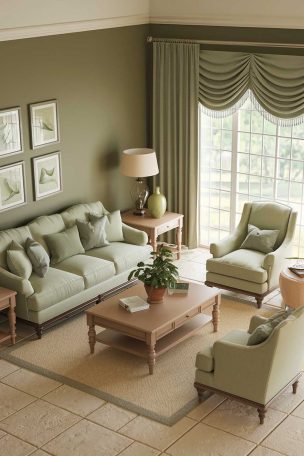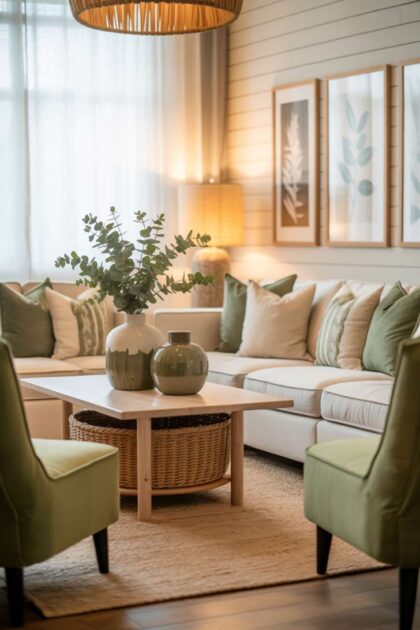
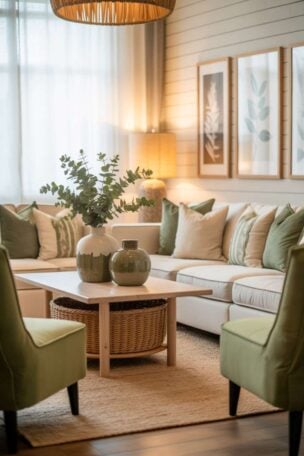
There’s something genuinely calming about a neutral and green living room.
The pairing works because it mirrors what we find in nature — soft, grounding bases layered with organic greens that feel alive without feeling loud.
These living room color schemes don’t go out of style.
They age well, photograph beautifully, and more than anything, they make a room feel like somewhere you actually want to spend time.
Whether your space is large and open or small and cozy, the ideas ahead cover the full range — from relaxed minimalism to polished elegance.
Cream, Sage, and Eucalyptus: A Room That Breathes
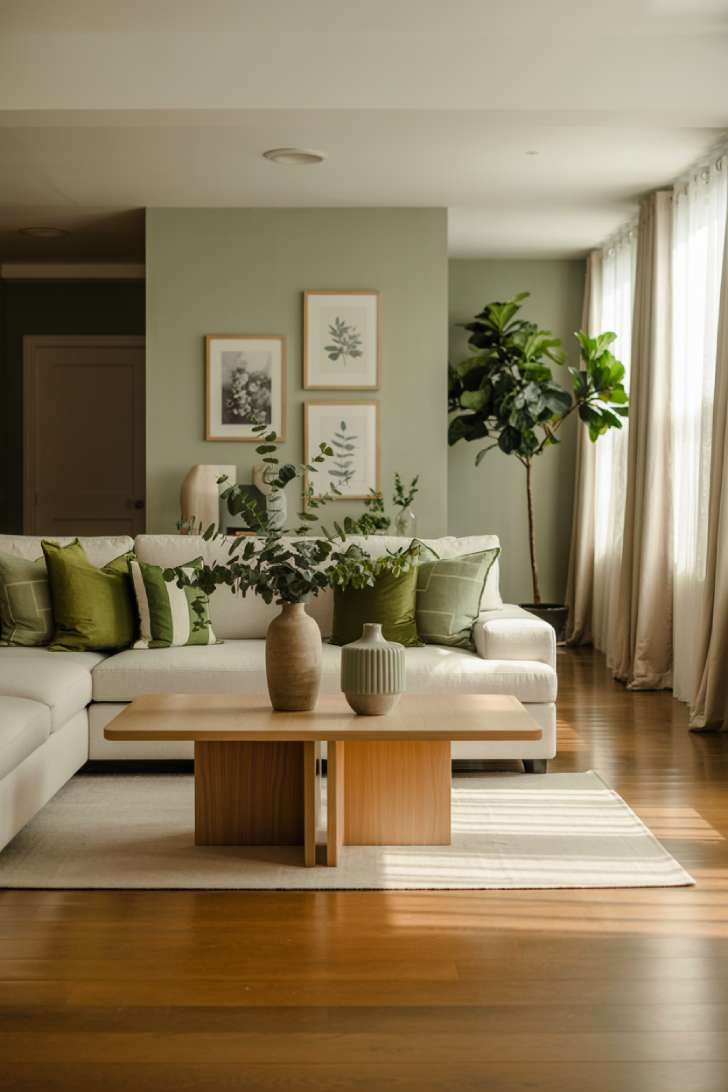
This room gets a lot right from the start.
The cream sectional creates a neutral base that doesn’t compete with anything around it, which is exactly what you want when you’re building a green living room decor scheme from the ground up.
From a design psychology standpoint, the eucalyptus branches in ceramic vases do quiet but real work here.
Organic shapes on a table surface signal informality and ease — they tell the brain this is a space for rest, not performance.
The gray accent wall is a smart move, too.
It’s softer than white but more interesting, and it gives the botanical prints somewhere to land without washing them out.
Natural light through sheer curtains keeps everything feeling open without letting the room feel exposed.
Style Blueprint:
- Cream or off-white sectional sofa as the anchor piece
- Light oak or pale wood coffee table
- Ceramic vases with eucalyptus or dried botanicals
- Framed botanical prints on a gray or greige accent wall
Snake Plant Simplicity on a Beige Rug
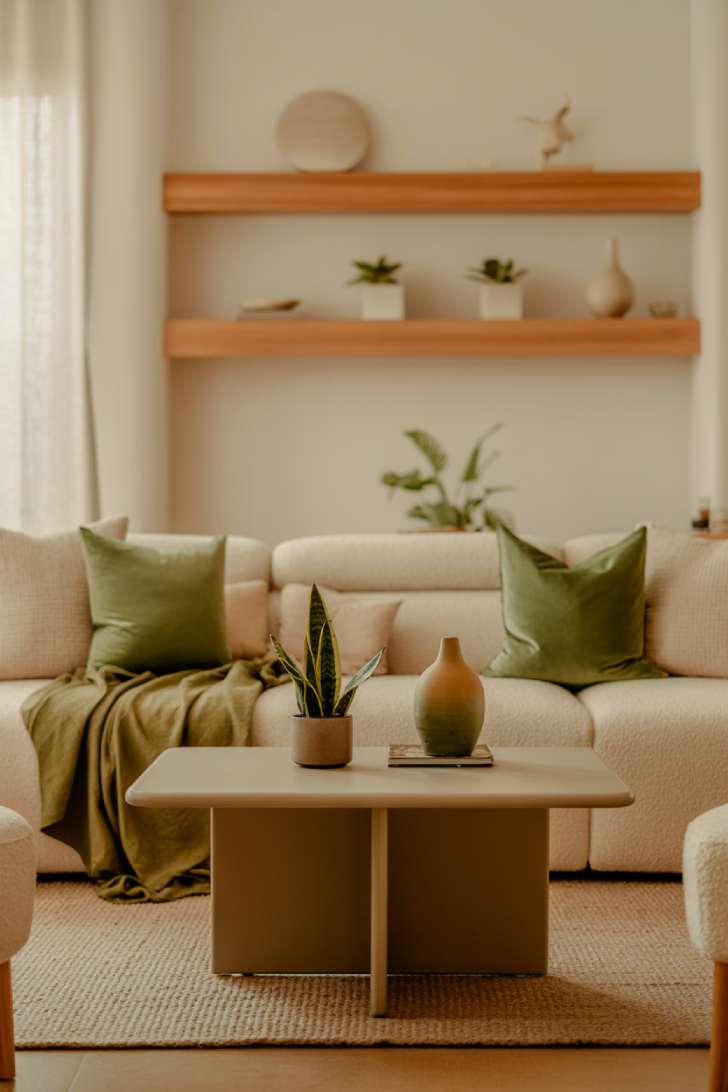
This one leans into restraint, and it’s better for it.
The olive green blanket draped over the sofa arm is a casual gesture that softens the whole room.
It’s the kind of detail that makes a space feel lived-in rather than staged.
The snake plant on the coffee table is a deliberate choice from a design psychology angle.
Vertical plant forms draw the eye upward and create a sense of height in rooms with lower ceilings.
Pair that with the floating shelves displaying small succulents, and you get green living room decor that’s distributed evenly across the room — not just concentrated in one corner.
The terracotta vase introduces warmth into what could otherwise read as a very cool palette, and that contrast keeps the room color combination from feeling flat.
Style Blueprint:
- Low-profile wood coffee table on a textured beige area rug
- Snake plant or tall vertical houseplant as a table accent
- Terracotta or warm-toned ceramic vase to balance cool greens
- Natural wood floating shelves with small potted succulents
Botanical Prints, Black Frames, and a Touch of Drama
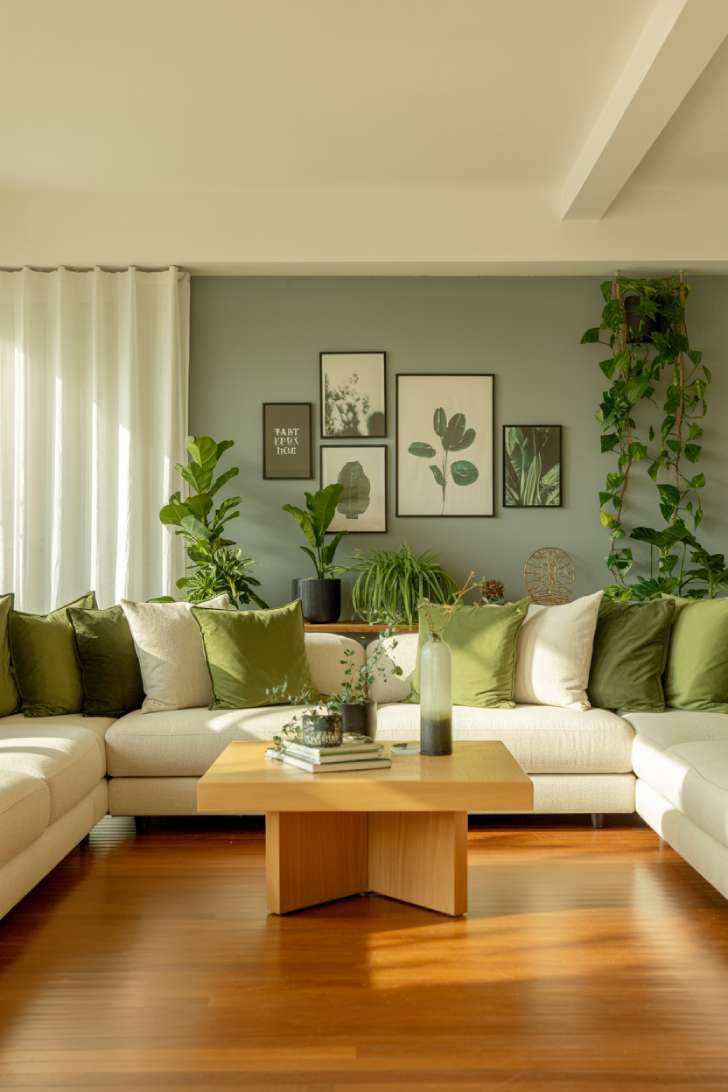
The shift to black frames here changes the mood noticeably.
Where natural wood frames read as warm and organic, black frames add a layer of contrast that feels more deliberate — more curated.
It’s a subtle way to give a neutral and green living room a stronger visual identity without changing the color palette at all.
The cascading pothos in the corner is one of those design decisions that earns its place.
Trailing plants introduce a sense of movement and softness that upright plants can’t replicate.
Psychologically, organic lines and irregular shapes signal life and spontaneity, which works as a counterpoint to the clean geometry of the coffee table.
The combination of fiddle leaf fig plus pothos gives you two very different green textures in the same frame — and that contrast is what stops the room from feeling monotonous.
Style Blueprint:
- Botanical prints displayed in sleek black frames
- Natural wood coffee table with geometric or angular lines
- Tall fiddle leaf fig paired with a trailing plant like pothos
- Sage and olive pillow combination for tonal layering
Design Pro-Tip: When mixing plant types, pair one structured upright plant with one trailing variety. The contrast in form adds visual interest without changing your color palette at all.
Monstera, Olive Curtains, and Scandinavian Calm
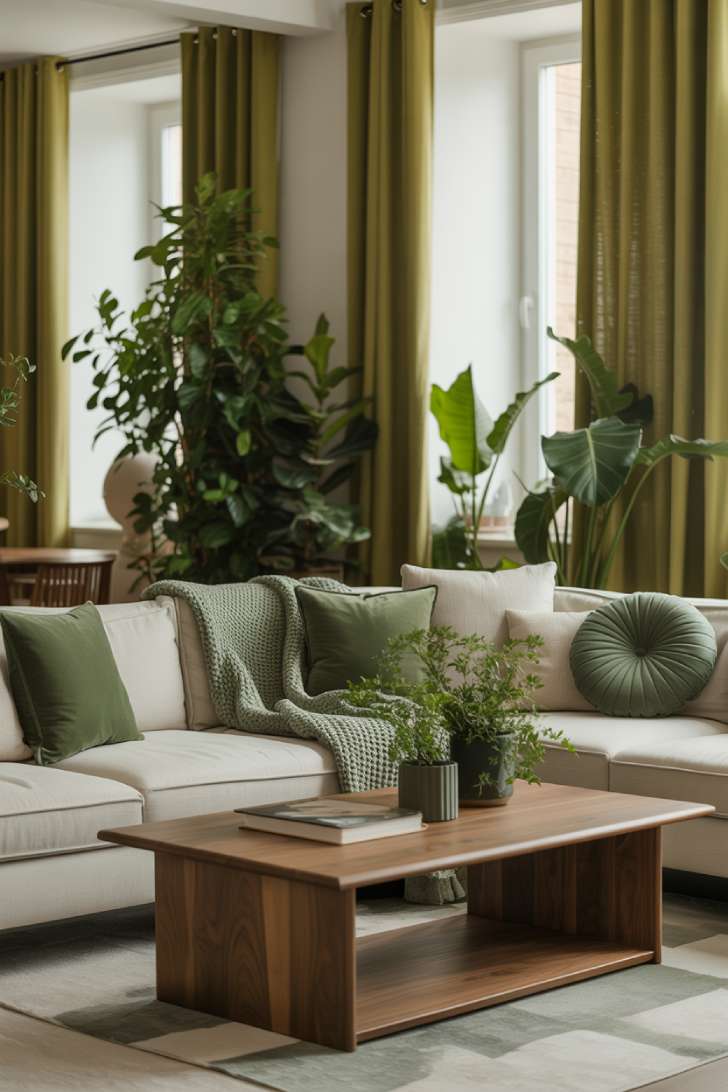
The olive green curtains are doing a lot of heavy lifting in this room.
Window treatments in a deeper green shift the tone from casual to considered.
They frame the natural light rather than just filtering it, which changes how the whole room reads at different times of day.
The chunky knit blanket on the sofa is a texture story in one piece.
From a design psychology perspective, tactile softness signals comfort and safety — it’s why cozy lounge room ideas almost always feature layered textiles.
The walnut coffee table is a warmer choice than oak or pine, and it sits well with the deeper greens in the curtains and the monstera’s waxy leaves.
This is a room color combination that doesn’t try too hard.
Everything feels intentional without feeling stiff.
Style Blueprint:
- Olive green curtains or drapes for deep color framing at windows
- Walnut-toned coffee table for warmth
- Monstera deliciosa as a statement plant
- Chunky knit throw blanket draped over one sofa arm
Forest Green Pillows, Woven Baskets, and Earth Tones
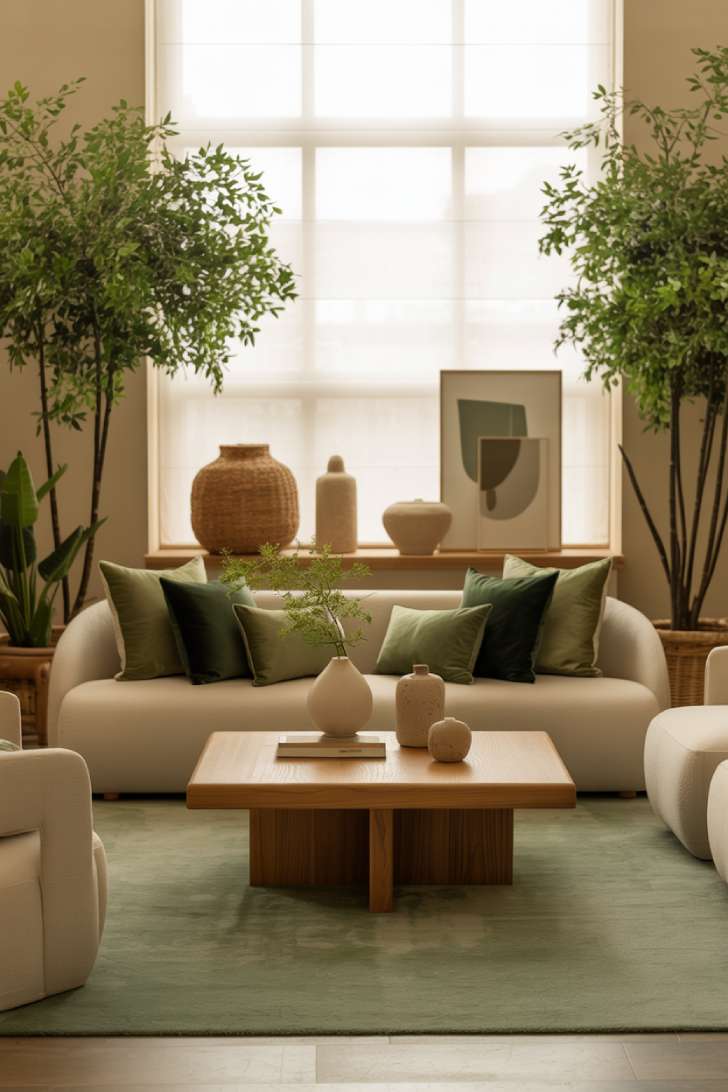
The sage green area rug is the foundation here, and it earns that role.
Rugs don’t just define a seating zone — they set the temperature of the room.
A sage green rug pulls the eye downward and creates a sense of grounding that makes the whole space feel more settled.
This is one of those earthy neutral living room setups where every material choice references something found in nature.
Woven baskets, ceramic vases, wood grain — nothing is synthetic-looking.
Design psychology tells us that natural materials reduce perceived stress levels.
The brain associates them with safety and familiarity, which is exactly the feeling a well-planned lounge room wants to create.
The minimalist wall art in earth tones keeps the walls from feeling empty without adding visual clutter.
Style Blueprint:
- Sage green area rug to anchor the seating zone
- Woven baskets as both planters and decorative storage
- Forest green and sage pillow pairing on a neutral sofa
- Minimalist earth-tone wall art in simple frames
Brass Accents, Jute, and a Room That Glows
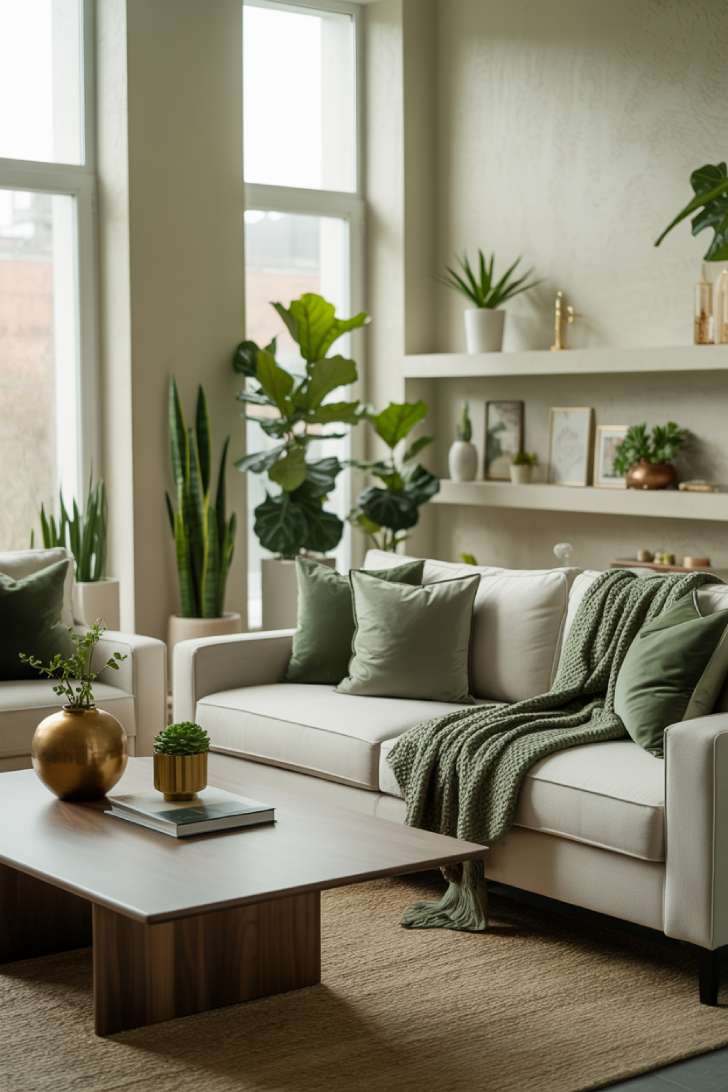
Brass is the secret ingredient in this room.
It catches light in a way that other metals don’t — it adds warmth rather than coolness, which is exactly what a green and neutral palette needs to feel finished rather than sterile.
The jute rug beneath the seating area introduces texture at floor level, which is a layer that many rooms miss entirely.
Psychologically, texture variation across a room’s surfaces prevents the eye from glazing over — it keeps the space interesting without relying on color to do all the work.
Succulents on floating shelves is a practical choice too.
They’re low-maintenance and stay compact, so they add green living room decor without overwhelming the shelves or requiring constant attention.
The large fiddle leaf fig grounds the room in its corner, giving the space a natural focal point that doesn’t compete with the sofa or coffee table.
Style Blueprint:
- Brass accent pieces — think small trays, candle holders, or lamp bases
- Jute area rug for natural floor-level texture
- Floating shelves with a mix of small succulents and ceramics
- Forest green throw pillows against a cream sofa base
Design Pro-Tip: Place brass accents near natural light sources. They’ll reflect warmth back into the room and make the green tones in your decor look richer and more saturated.
Organic Curves, Linen Curtains, and Trailing Greens
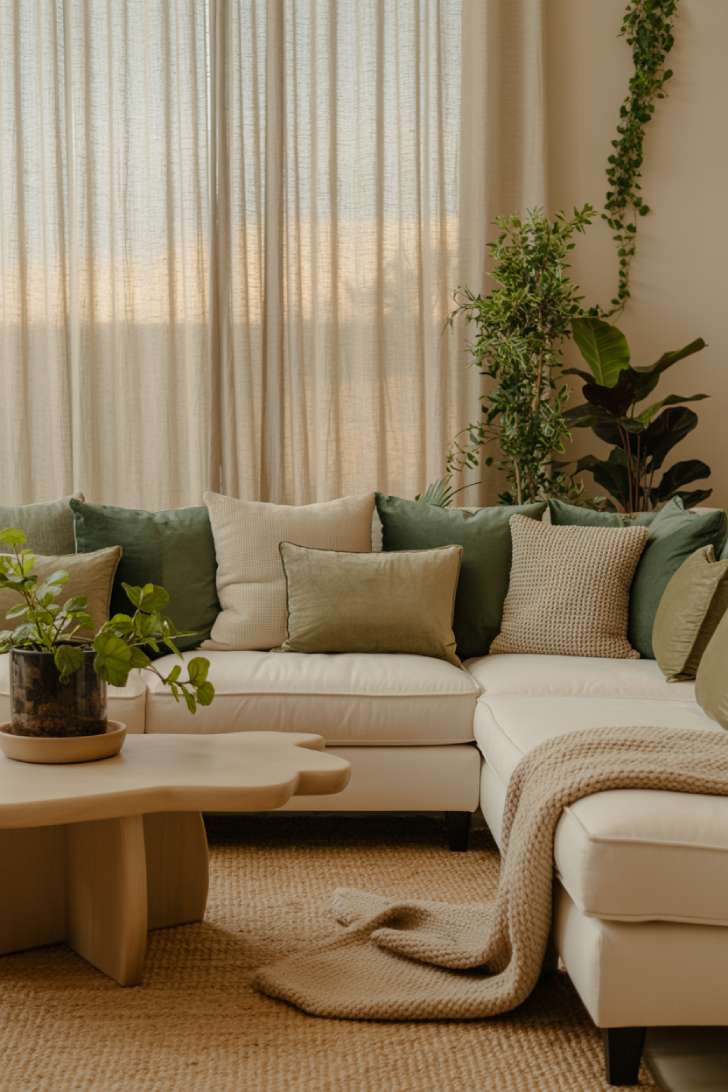
The coffee table with organic curves is a quiet departure from the geometric shapes seen in earlier rooms, and it changes the atmosphere noticeably.
Curved furniture softens a space.
From a design psychology standpoint, right angles signal structure and formality, and curves do the opposite — they introduce ease and flow.
When your living room color schemes lean neutral, a curved wood table becomes one of the most effective ways to add character without adding color.
The linen curtains here filter light more warmly than sheer white curtains do.
Linen has a slight golden undertone that shifts the quality of light in the room, making it feel more like late afternoon even at midday.
Paired with the trailing pothos and the chunky knit throw, this room feels layered and personal in a way that’s hard to manufacture.
Style Blueprint:
- Coffee table with organic, curved edges rather than geometric lines
- Sheer linen curtains for warm, filtered natural light
- Trailing pothos or similar cascading plant in a corner
- Beige and forest green pillow mix for a grounded, earthy feel
Brass Lamps, Warm Off-White Walls, and Scandinavian Soul
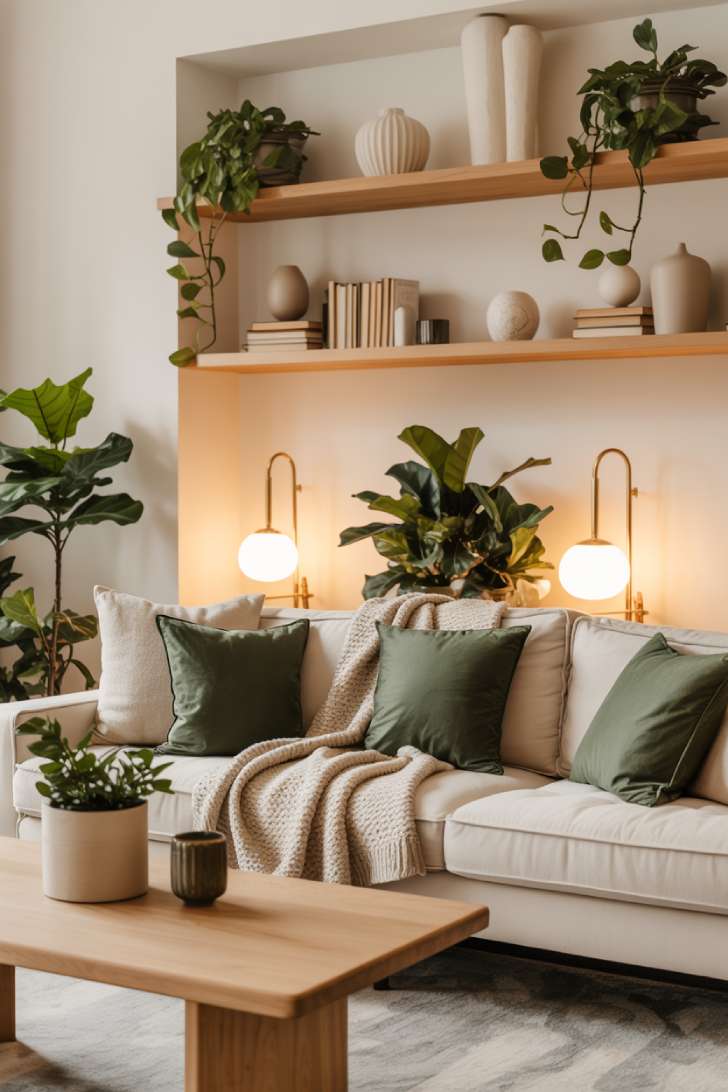
Warm off-white walls are underrated.
Pure white can feel clinical, especially in rooms where the furniture is soft and organic.
An off-white with a warm undertone makes the whole room feel like it’s been gently lit from within, even when the lamps aren’t on.
The brass table lamps in this room are doing more than providing light — they’re adding height variation to the surface level, which breaks up the flatness that can happen when everything sits at coffee table height.
This is one of the most livable lounge room ideas in this collection.
The natural wood shelving with ceramic vases and books gives the room a sense of personal history, which is something Scandinavian-inspired design does exceptionally well.
Books, objects, and plants together read as a life being lived, not a showroom being displayed.
Style Blueprint:
- Warm off-white wall paint with a yellow or beige undertone
- Brass table lamps for warm accent lighting
- Natural wood shelving with a mix of books, ceramics, and plants
- Trailing pothos and fiddle leaf fig for layered botanical presence
Abstract Art, Ceramic Vases, and a Sophisticated Green Palette
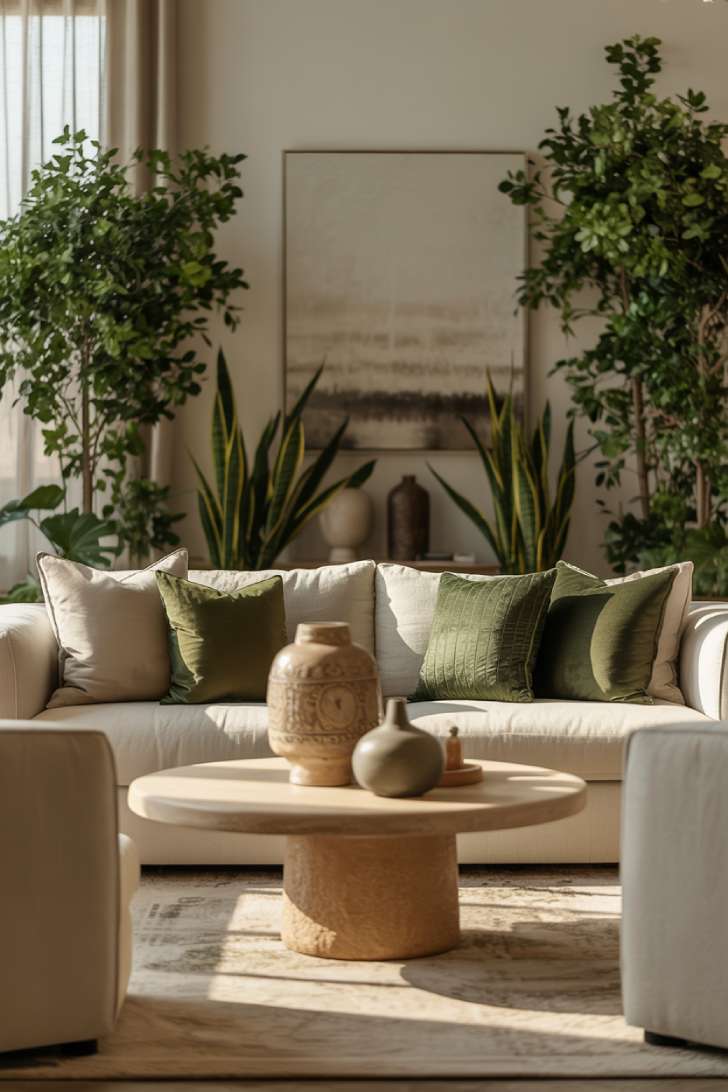
Abstract art in muted earth tones is one of the smarter choices for an earthy neutral living room.
It adds visual interest to the wall without introducing a competing color.
The artwork in this room feels like it belongs rather than being placed there to fill space.
From a design psychology angle, art positioned above and behind the sofa creates a sense of enclosure — it gives the seating area a defined back wall, which makes the space feel more intentional and intimate.
The tall potted plants flanking the seating area reinforce that sense of enclosure from the sides.
It’s a framing technique that makes people feel contained in the best possible way — held rather than exposed.
The layering of sage and olive pillows gives this green living room decor a tonal richness that a single shade simply can’t achieve.
Style Blueprint:
- Large abstract artwork in earth tones — greens, beiges, and warm browns
- Tall potted plants positioned to frame the sides of the seating area
- Sage and olive pillow layering for tonal depth
- Ceramic vases on the coffee table as decorative objects
Design Pro-Tip: Hang artwork so its center sits at eye level when you’re seated, not standing. It makes the art feel connected to the room rather than floating above it.
Emerald Curtains, Marble, and Brass: Grown-Up Green
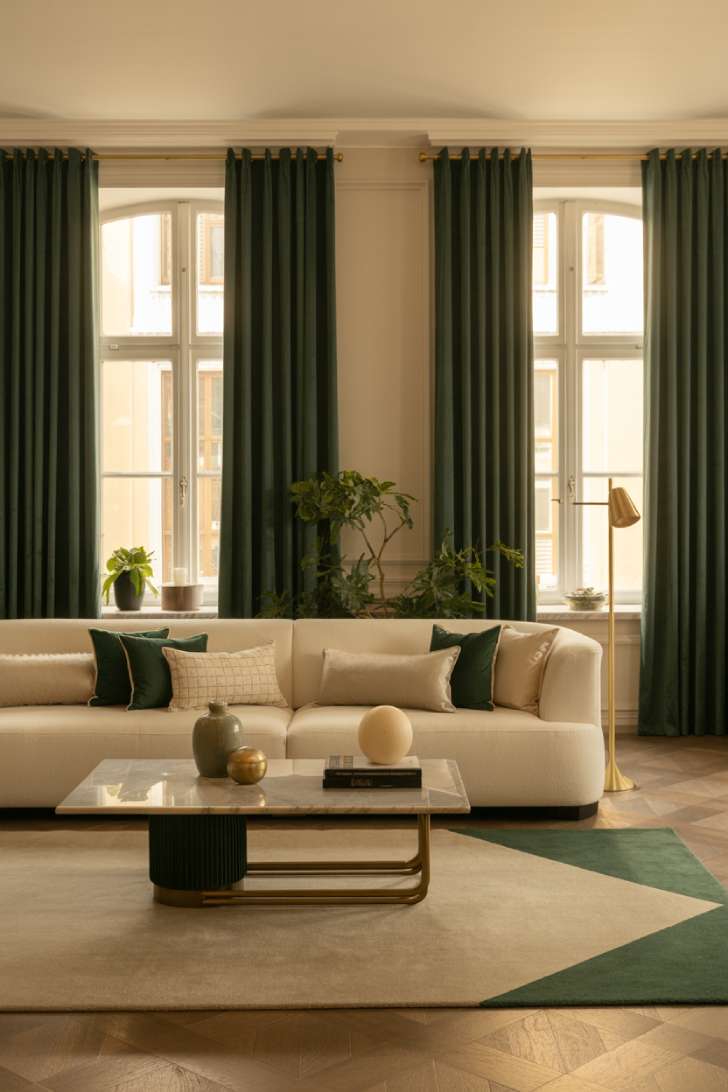
This is where the neutral and green living room gets dressed up.
The emerald green velvet curtains are a statement — they commit to color in a way that sage and olive don’t, and they bring a sense of luxury that softer greens can’t replicate.
Velvet as a material matters here psychologically.
It absorbs light rather than reflecting it, which creates a sense of depth and richness that immediately signals a more formal, polished space.
The marble coffee table with brass accents shifts the room color combination into elevated territory.
Marble’s cool veining contrasts beautifully with the warmth of the curtains and the brass details, and that contrast is what gives the room its energy.
The geometric area rug in beige and forest green ties the floor to the curtains without being too matchy.
Style Blueprint:
- Emerald green velvet curtains as the room’s color statement
- Marble coffee table with brass accent details
- Geometric area rug in beige and forest green
- Brass floor lamp for warm vertical lighting
Fireplace, Abstract Greens, and Polished Hardwood
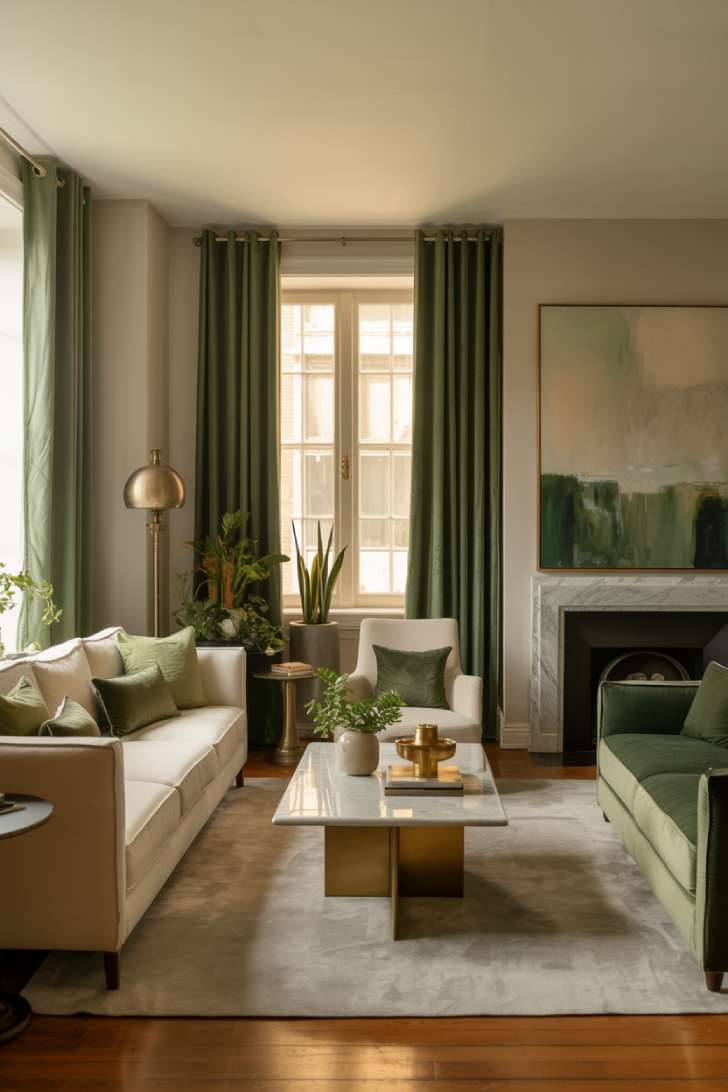
A fireplace changes everything about how a room feels.
It creates an immediate focal point and gives the seating arrangement a clear purpose — everyone faces the fire.
The abstract painting above the white mantel bridges the gap between the room’s neutral walls and the deeper green of the curtains.
Art that picks up multiple colors from the room acts as a visual connector, making the overall palette feel intentional rather than assembled from separate decisions.
The polished hardwood floors reflect the natural light coming through the windows, which distributes brightness throughout the room more evenly than a matte floor would.
From a design psychology perspective, light-reflecting floors make a room feel larger and more open — a practical consideration in any living room layout.
The vintage brass floor lamp adds a note of warmth and a slight sense of history that stops this elegant room from feeling too pristine.
Style Blueprint:
- White fireplace mantel as the room’s natural focal point
- Abstract artwork in greens and beiges positioned above the mantel
- Polished hardwood floors for light reflection
- Vintage or antique-style brass floor lamp
Emerald Rug, Velvet Pillows, and Eucalyptus on the Table
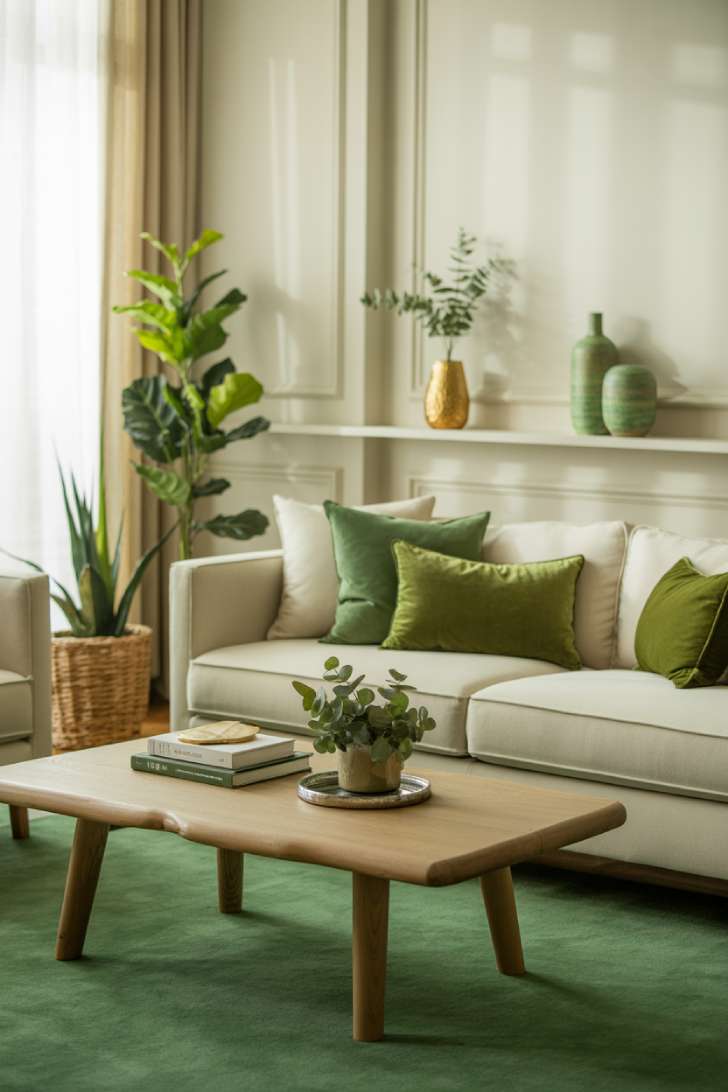
This room leads with the rug, and that’s the right call.
A large emerald green area rug is a bold choice for a neutral and green living room, and it pays off here because everything else in the room stays measured and calm.
The cream sofa, the soft white walls, the natural wood — none of them compete with the rug’s presence.
Instead, they let it breathe.
The sage and olive velvet pillows introduce texture at eye level that echoes the richness of the rug without duplicating its color exactly.
That distinction matters — if the pillows were also emerald, the room would feel heavy.
The small potted eucalyptus on the coffee table and the fiddle leaf fig in the woven basket add organic green that softens the rug’s more formal tone.
This is green living room decor that knows how to balance drama with warmth.
Style Blueprint:
- Large emerald green area rug as the room’s color anchor
- Sage and olive velvet throw pillows for tactile contrast
- Fiddle leaf fig in a woven basket planter
- Muted green ceramic vases on shelves for subtle continuity
Design Pro-Tip: If you’re using a bold-colored rug, keep your sofa and walls in the lightest neutrals you have. The rug will read as a statement without making the room feel heavy.
Minimalist Beige and Sage for a Small Space
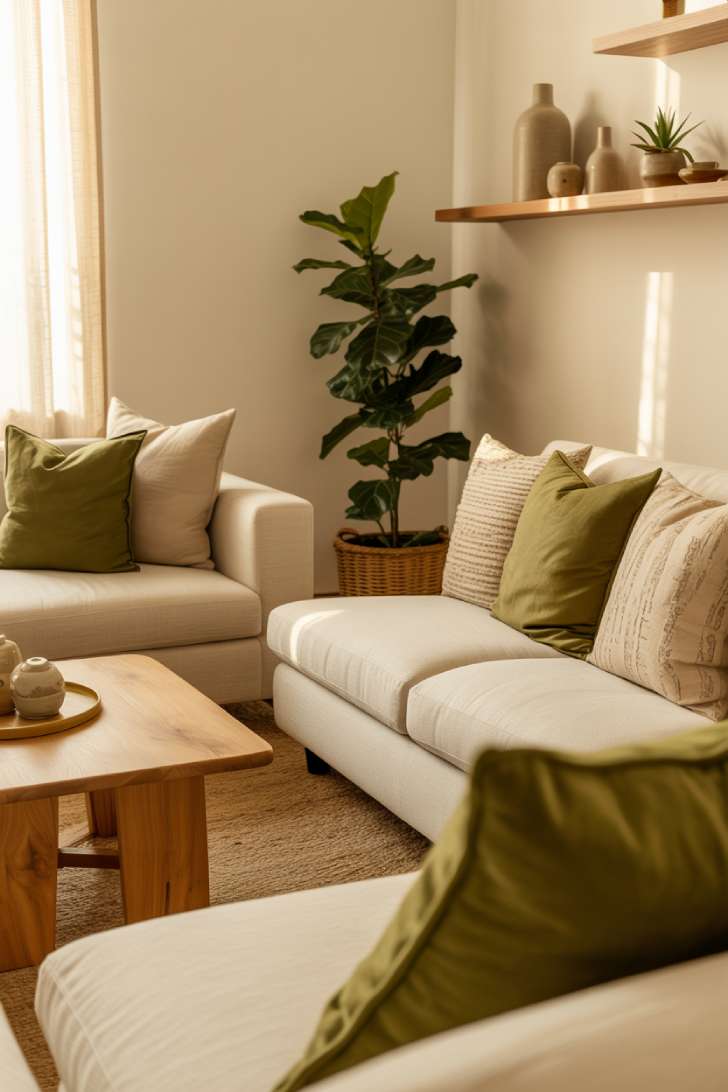
Small rooms benefit enormously from this kind of room color combination.
Soft beiges and sage greens keep the space feeling open, and the absence of dark or heavy tones stops the room from closing in on itself.
The linen throw pillows introduce texture without adding visual weight, which is a distinction that matters a great deal in a compact space.
The jute rug anchors the seating area without dominating it — its natural color sits quietly between the cream of the sofa and the wood of the coffee table.
From a design psychology standpoint, natural grain patterns in wood are processed by the brain as soothing rather than stimulating.
A coffee table with visible, subtle grain brings a sense of calm that painted or lacquered surfaces simply don’t offer.
The floating shelves keep storage and decoration off the floor, which preserves the visual openness of the room — one of the most practical lounge room ideas for anyone working with limited square footage.
Style Blueprint:
- Cream sectional in a compact, low-profile size for small spaces
- Linen throw pillows in olive or sage for a lightweight texture
- Jute area rug in a size that fits under the coffee table without extending past the sofa
- Floating wood shelves with succulents and ceramics to keep floor space clear
Forest Green, Chunky Knit, and Effortless Minimalism
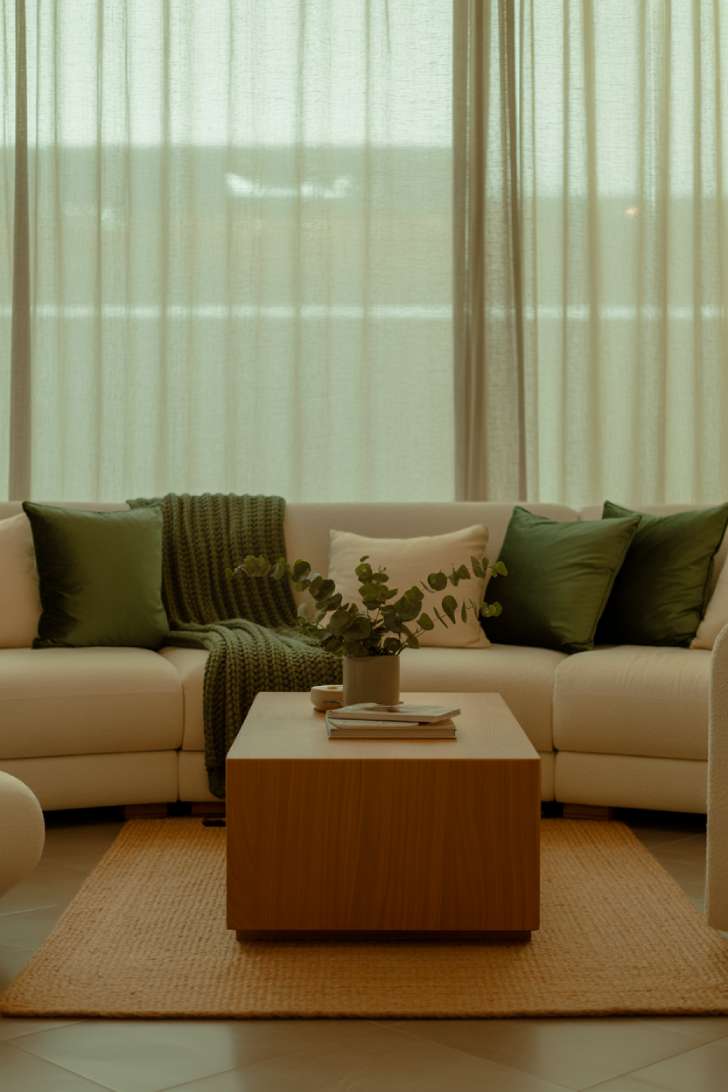
This room proves that you don’t need a lot to make a space feel complete.
A cream sofa, a few forest green pillows, a chunky knit blanket, and an eucalyptus plant on the coffee table.
That’s it — and it works.
The restraint here is a design choice, not a compromise.
From a design psychology perspective, uncluttered spaces reduce cognitive load.
The brain doesn’t have to process competing inputs, so the room feels calm almost immediately upon entering.
The chunky knit blanket is doing more than adding warmth — it’s adding a tactile invitation.
Textures that look soft make people want to sit down and stay, which is exactly what a well-considered earthy neutral living room should do.
The sheer curtains let light in without creating a harsh glare, keeping the mood gentle throughout the day.
This is one of those lounge room ideas that works just as well in a rented apartment as it does in a forever home.
Style Blueprint:
- Forest green throw pillows against a cream sofa for simple contrast
- Chunky knit blanket in cream or oatmeal for tactile warmth
- Sleek, low-profile wood coffee table on a natural jute rug
- Small potted eucalyptus plant as the sole tabletop accent
Side-by-Side: Comparing All 14 Looks at a Glance
| Look | Primary Vibe | Green Tone | Key Material | Plant Type | Best For |
|---|---|---|---|---|---|
| 1 – Eucalyptus & Botanicals | Organic, airy | Sage + olive | Light oak, ceramics | Fiddle leaf fig | Medium to large rooms |
| 2 – Snake Plant Simplicity | Calm, minimal | Sage + olive | Wood, terracotta | Snake plant, succulents | Any room size |
| 3 – Black Frames & Pothos | Curated, modern | Sage + olive | Wood, black metal | Fiddle leaf fig + pothos | Modern interiors |
| 4 – Monstera & Olive Curtains | Scandinavian, warm | Sage + olive | Walnut, knit | Monstera, fiddle leaf | Rooms with tall windows |
| 5 – Sage Rug & Woven Baskets | Earthy, grounded | Forest + sage | Woven, ceramic | Tall flanking plants | Open-plan spaces |
| 6 – Brass & Jute | Warm, contemporary | Forest green | Brass, jute | Fiddle leaf fig, succulents | Rooms lacking warmth |
| 7 – Organic Curves & Linen | Soft, relaxed | Forest + beige green | Linen, curved wood | Pothos, fiddle leaf | Casual living rooms |
| 8 – Brass Lamps & Off-White | Cozy Scandinavian | Forest green | Wood, brass | Fiddle leaf, pothos | Year-round comfort |
| 9 – Abstract Art & Ceramics | Sophisticated, layered | Sage + olive | Ceramic, wood | Tall statement plants | Art-focused rooms |
| 10 – Velvet & Marble | Elegant, dramatic | Emerald + forest | Velvet, marble, brass | Scattered potted plants | Formal living rooms |
| 11 – Fireplace & Hardwood | Polished, classic | Emerald | Marble, hardwood | Potted plants | Rooms with a fireplace |
| 12 – Emerald Rug & Eucalyptus | Bold, warm | Emerald + sage | Velvet, wood, woven | Fiddle leaf, eucalyptus | Rooms needing a focal point |
| 13 – Minimalist Beige & Sage | Airy, minimal | Sage + olive | Linen, jute, wood | Fiddle leaf, succulents | Small rooms |
| 14 – Forest Green Minimalism | Simple, restful | Forest green | Knit, jute, wood | Eucalyptus | Small spaces, renters |
Conclusion
A neutral and green living room is one of the most satisfying room color combinations to put together.
It’s forgiving, flexible, and genuinely lovely to live in.
Whether you’re drawn to the elegance of emerald velvet and marble or the quiet ease of sage pillows and a jute rug, this palette adapts to your space and your lifestyle.
Start with one or two pieces that feel right — a plant, a rug, a throw — and let the rest follow naturally.