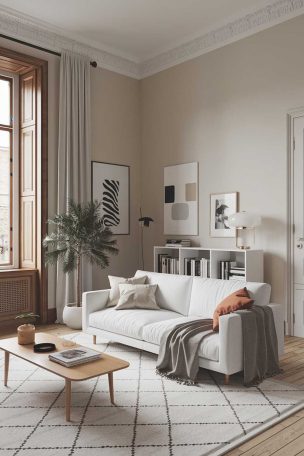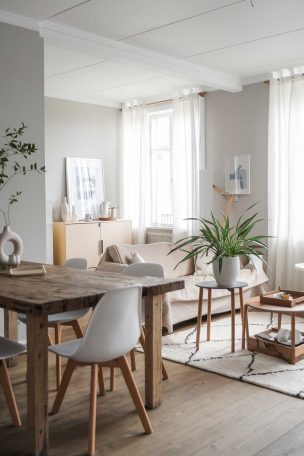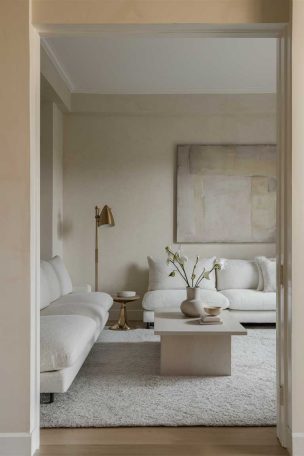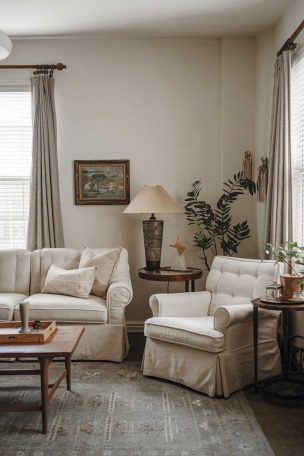
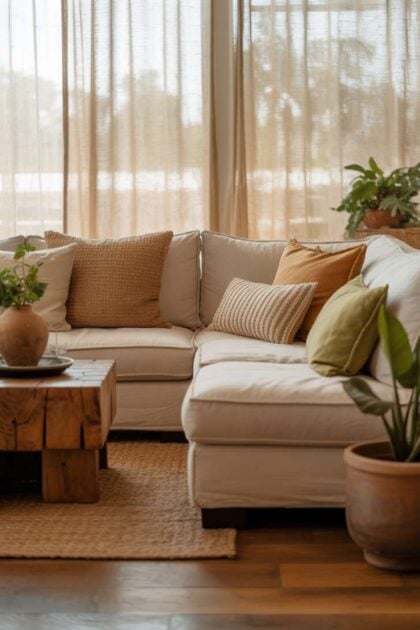
Earthy neutral living rooms bring warmth and serenity into your home through natural materials and muted color palettes.
These spaces create a calming retreat from daily stress.
Think beige linens, reclaimed wood, and organic textures that make you want to curl up with a good book.
The beauty lies in their timeless appeal—they never feel dated or trendy.
Minimalist Warmth Through Natural Textures
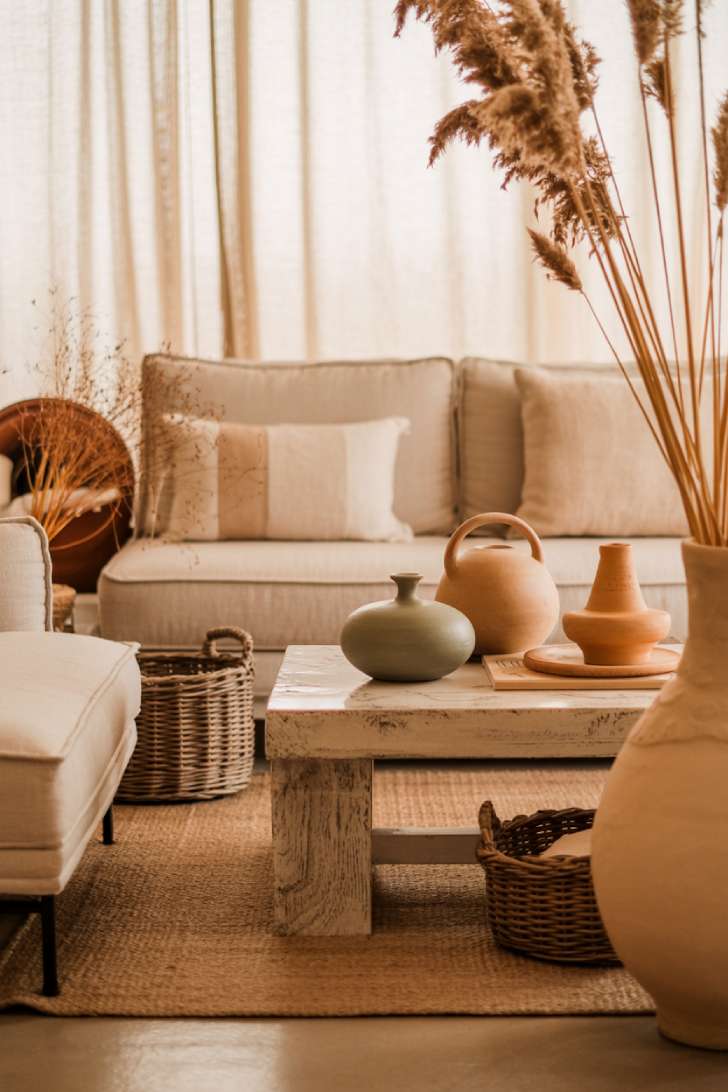
This space proves that simplicity doesn’t mean boring.
The beige linen sofa anchors the room without demanding attention, which creates a sense of calm that psychologists link to reduced cortical arousal.
Your brain literally relaxes when surrounded by these muted tones.
Natural light filtering through sheer curtains mimics the soft glow of early morning—our circadian rhythms respond positively to this type of illumination.
The placement of dried pampas grass in the corners draws the eye upward, making the ceiling feel higher than it actually is.
Ceramic pottery in terracotta and sage green adds just enough color variation to prevent visual monotony.
This earth tone house decor works because it mirrors the colors found in nature, which our brains are wired to find restorative.
Style Blueprint:
- Beige linen sofa with neutral throw pillows
- Natural jute area rug for texture
- Ceramic pottery in terracotta and sage tones
- Dried pampas grass in clay vases
Layered Comfort with Organic Elements
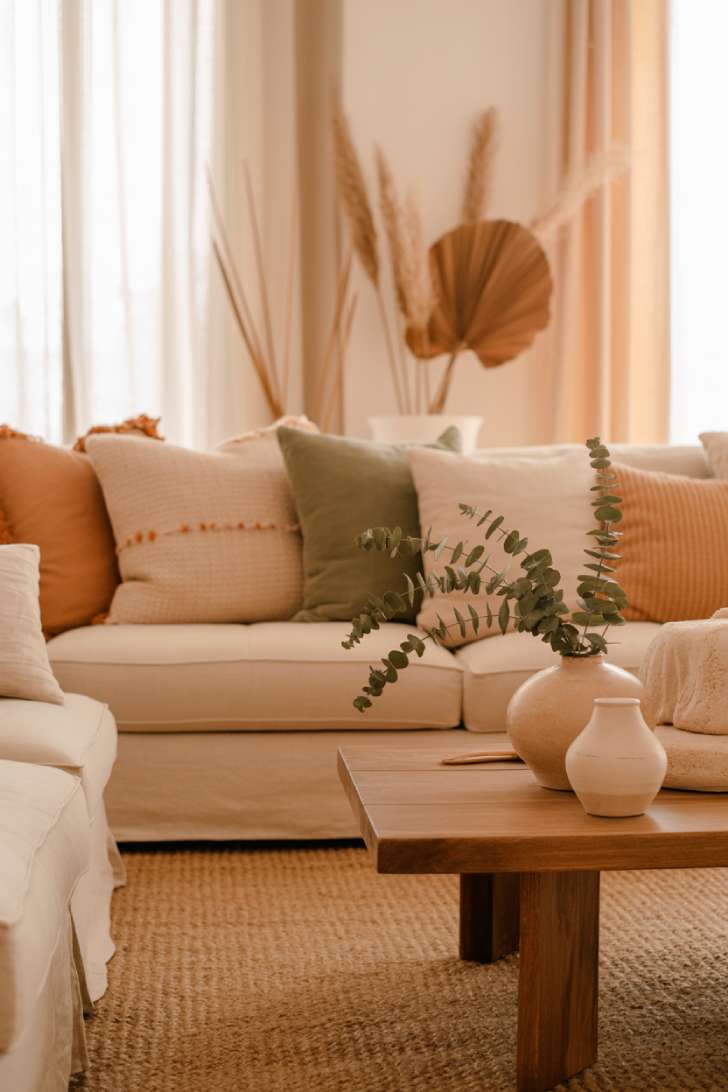
Textured throw pillows in cream, sage green, and soft terracotta do more than look pretty.
They invite touch, which triggers a psychological response called haptic perception—basically, your brain rewards you for interacting with pleasant textures.
The rustic wooden coffee table serves as a visual anchor point.
Designers call this the “focal point principle,” where one substantial piece grounds the entire arrangement.
Natural light here doesn’t just illuminate—it performs.
Sheer curtains diffuse harsh rays into a gentle glow that reduces eye strain and creates what environmental psychologists call “prospect-refuge theory” at work.
You feel safe (refuge) but can still see out (prospect).
This organic neutral living room demonstrates how material choices affect mood more than color alone.
Style Blueprint:
- Plush beige linen sofa
- Textured throw pillows in varied neutral tones
- Rustic wooden coffee table
- Sheer curtains for light diffusion
Art as the Emotional Center
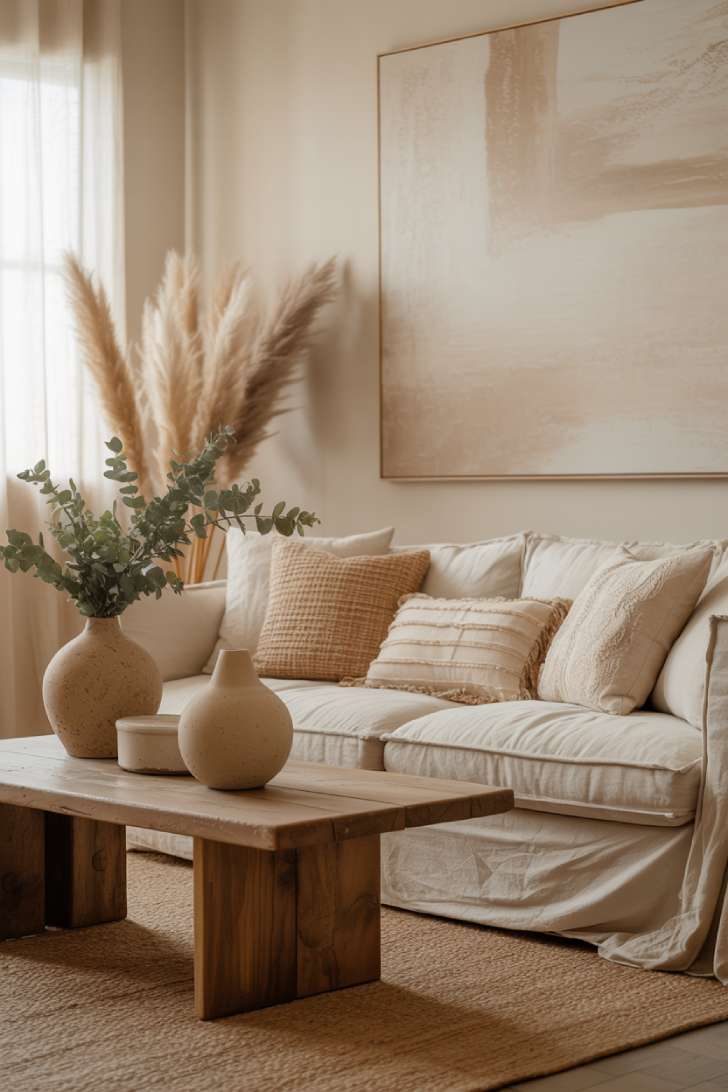
That large abstract artwork in muted earth tones isn’t just decoration—it’s doing psychological heavy lifting.
Studies show that abstract art in neutral colors reduces mental fatigue better than bold, busy patterns.
Your eyes can wander without getting stuck on any particular detail.
The positioning beneath the artwork matters too.
A plush linen sofa creates what designers call a “visual conversation” between furniture and art.
Dried pampas grass and eucalyptus branches bring the outside in, which research suggests can lower blood pressure and reduce stress hormones.
The straight-on perspective makes this space feel balanced and symmetrical, appealing to our innate preference for order.
Soft shadows across natural materials create depth without darkness.
Style Blueprint:
- Large abstract artwork in earth tones
- Plush linen sofa with textured pillows
- Ceramic vases with dried botanicals
- Woven jute rug for grounding
Spacious Flow with Living Greenery
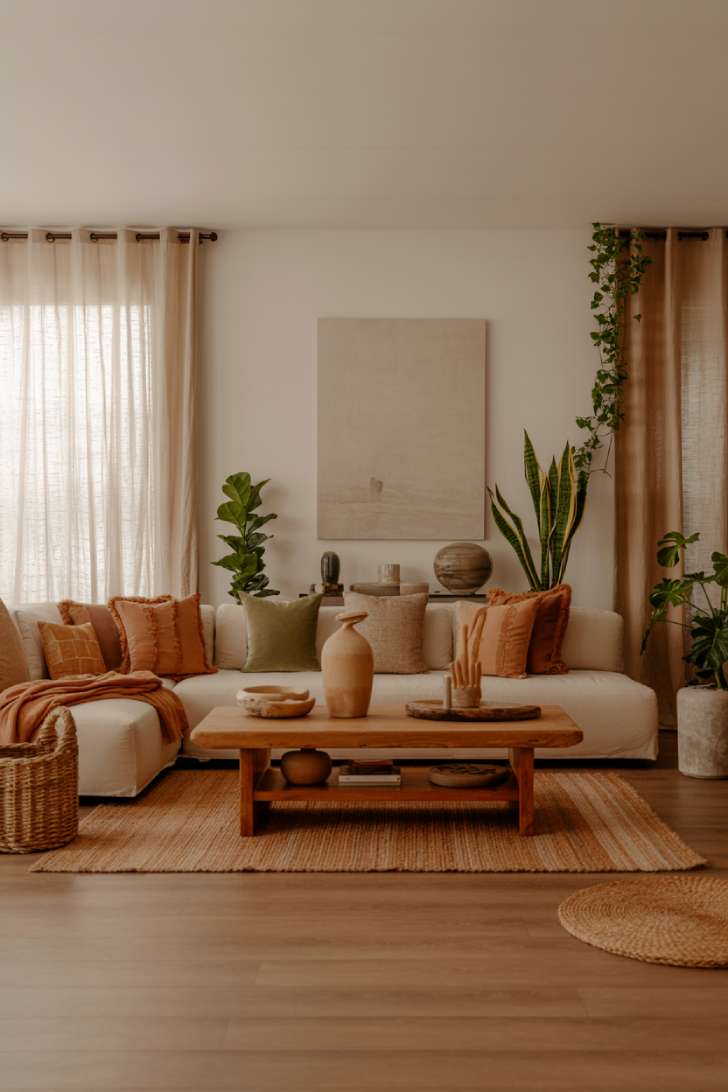
A beige sectional sofa makes the room feel larger by eliminating visual breaks.
The continuous line guides your eye smoothly around the space, which reduces cognitive load—your brain doesn’t have to work as hard to process the layout.
Woven jute rugs covering portions of hardwood create zones without walls.
This technique, called “area definition,” helps your mind categorize different functional spaces within one room.
Living plants like fiddle leaf figs aren’t just trendy—they improve air quality and provide what psychologists term “micro-restorative experiences.”
Quick glances at greenery throughout the day actually help your attention span recover.
The low wooden coffee table keeps sightlines open, which makes the room feel more expansive than it measures.
This earthy living room proves that neutral doesn’t mean lifeless.
Style Blueprint:
- Beige sectional sofa with warm-toned pillows
- Woven jute rugs for zone definition
- Tall potted plants (fiddle leaf fig recommended)
- Low wooden coffee table with natural grain
Design Pro-Tip: Apply the 60-30-10 rule—60% dominant neutral (walls, large furniture), 30% secondary color (rugs, curtains), and 10% accent color (pillows, pottery). This creates visual balance without overthinking each purchase.
Natural Light as Architecture
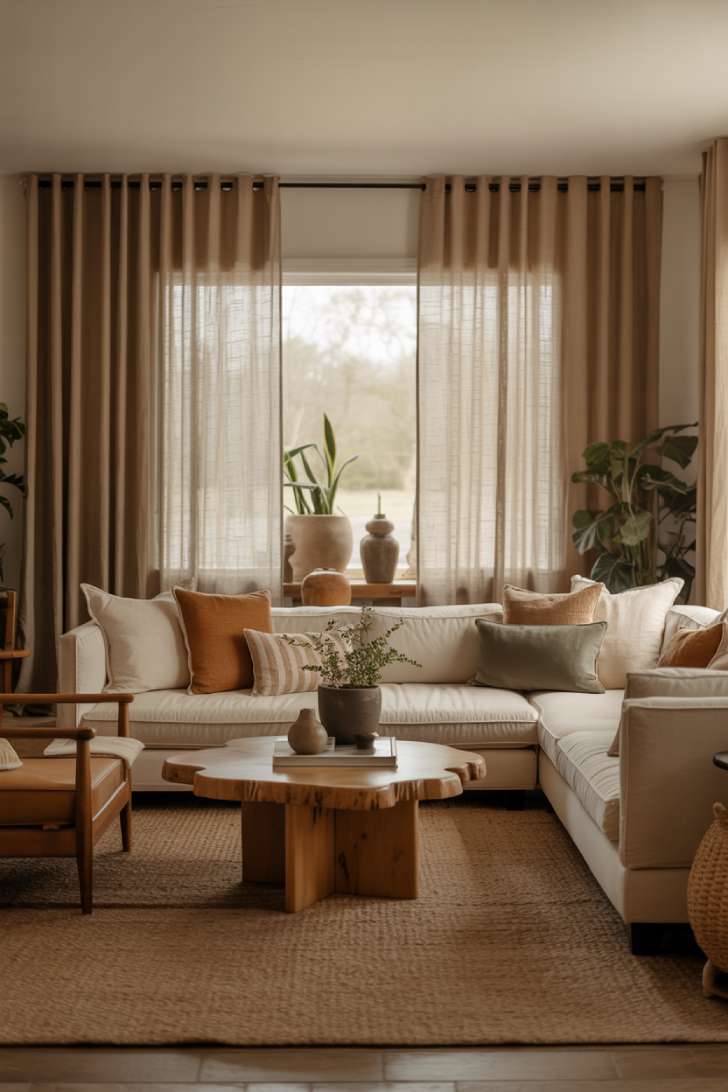
Floor-to-ceiling windows transform natural light from a feature into the room’s structural element.
This matters psychologically because exposure to daylight regulates melatonin production, improving sleep quality at night.
Flowing linen curtains in soft taupe soften the light without blocking it completely.
They create what lighting designers call “volumetric lighting”—that gorgeous hazy glow that makes everything look like a magazine spread.
The live-edge coffee table brings organic irregularity into an otherwise ordered space.
This slight imperfection actually makes the room more inviting, tapping into the Japanese concept of wabi-sabi.
Terracotta vessels scattered throughout add warmth through their earthy red undertones, preventing the space from feeling too cool or sterile.
Style Blueprint:
- Cream sectional with textured throw pillows
- Floor-to-ceiling linen curtains in taupe
- Live-edge wood coffee table
- Terracotta planters for warm accents
Sophisticated Simplicity Through Curation
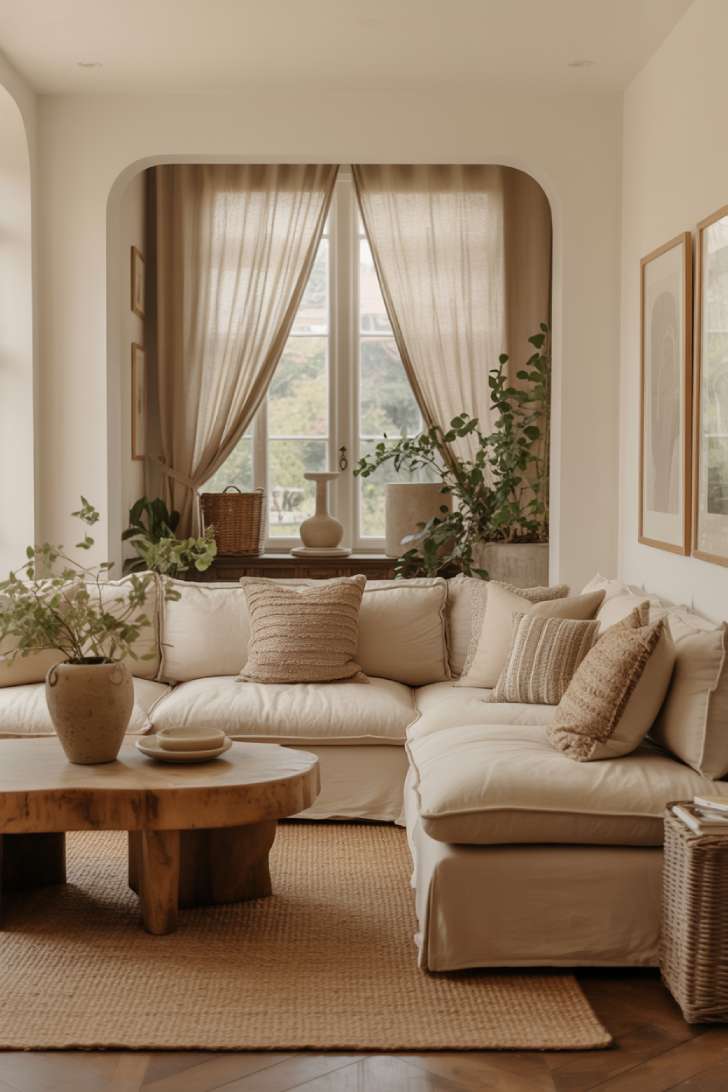
The neutral paint colors here—warm beiges, soft taupes, creamy whites—create what color psychologists call a “chromatic retreat.”
Your nervous system literally calms down in spaces with limited color variation.
Reclaimed wood adds character through its imperfections.
Each knot and weathered mark tells a story, which gives the space what designers term “authenticity”—something mass-produced furniture can’t replicate.
Minimalist artwork in wooden frames keeps the focus on the room itself rather than competing for attention.
This restraint demonstrates sophisticated design confidence.
Natural fibers in throw pillows provide tactile interest without visual chaos, proving that texture can do the work of pattern.
The partial coverage of hardwood floors by a jute rug creates temperature variation underfoot, adding sensory richness.
Style Blueprint:
- Linen sectional in warm beige
- Reclaimed wood coffee table with organic curves
- Large jute area rug
- Minimalist framed artwork
Architectural Drama Through Natural Materials
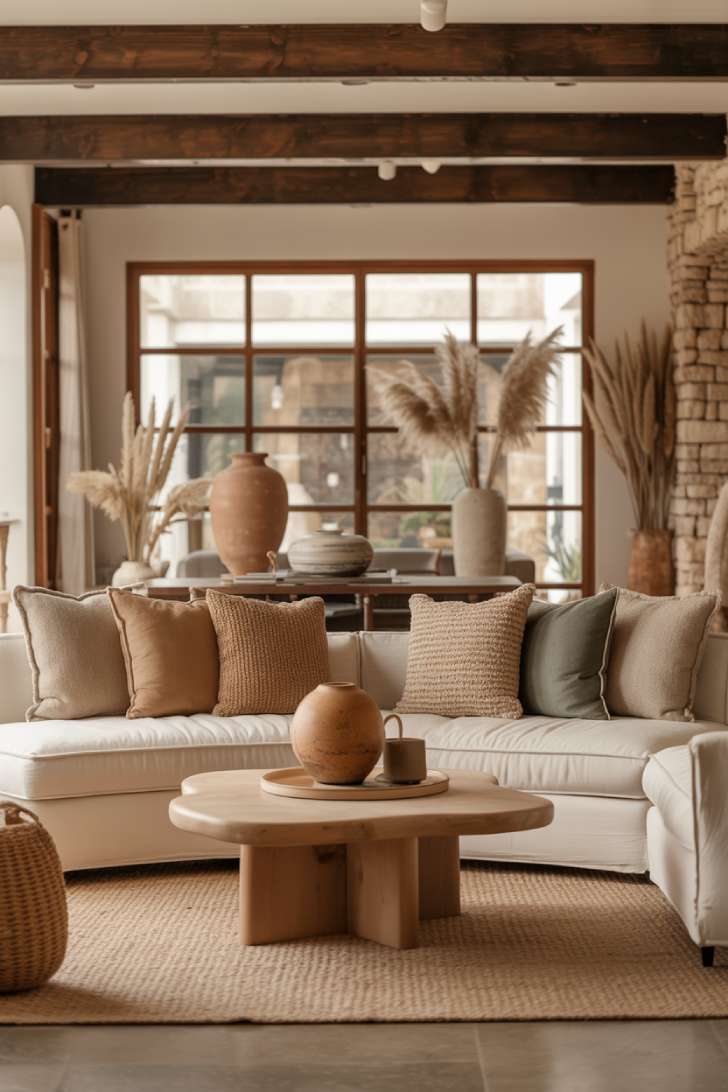
Exposed wooden beams overhead add visual weight that makes the room feel grounded.
This architectural detail triggers what environmental psychologists call “shelter response”—the comforting feeling of being protected.
The stone accent wall provides textural contrast that your eyes actually need.
Too much smoothness becomes boring; the varied surface keeps your visual cortex engaged without overwhelming it.
Floor-to-ceiling windows balance the heaviness of wood and stone with openness and light.
This push-pull between solid and transparent creates spatial tension that keeps the room interesting.
Dried pampas grass arrangements soften hard surfaces with their feathery texture, demonstrating how one natural material can calm another.
This neutral lounge decor shows that drama doesn’t require bright colors.
Style Blueprint:
- Exposed wooden beams (architectural feature)
- Stone accent wall for texture
- Cream sectional with sage and beige pillows
- Dried pampas grass in ceramic vases
Urban Warmth with Industrial Touches
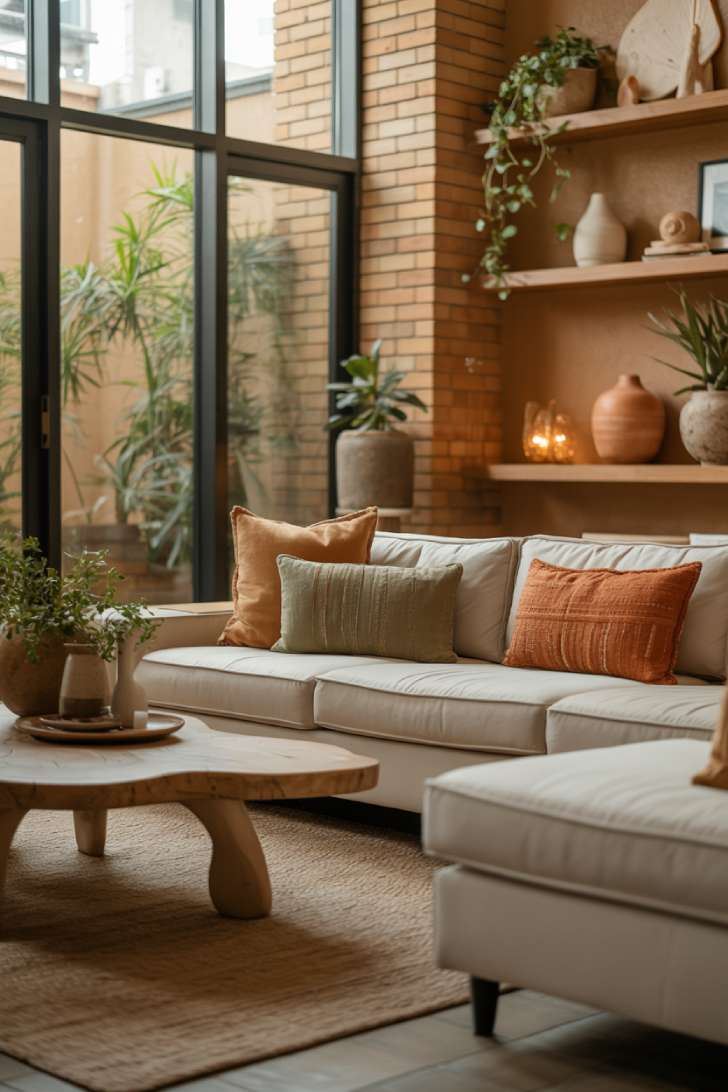
Exposed brick in warm ochre tones brings unexpected warmth to this earthy neutral living room.
The irregular surface creates micro-shadows throughout the day, which adds depth and prevents the flat, lifeless feeling some neutral spaces suffer from.
Floating wooden shelves display curated pottery, demonstrating the psychological principle of “edited abundance”—having nice things without clutter.
Your brain appreciates order but also wants variety.
Plants with trailing vines introduce movement and life, which biophilic design research shows can improve concentration and mood.
Ambient lighting creates what designers call “layered illumination”—different light sources at different heights prevent the harsh, institutional feeling of overhead-only lighting.
Natural wood curves on the coffee table soften the rectangular geometry of brick and shelves.
Style Blueprint:
- Beige sectional with terracotta and sage pillows
- Exposed brick accent wall
- Floating wooden shelves for display
- Trailing plants in ceramic vessels
Design Pro-Tip: Layer three types of lighting—ambient (overhead), task (reading lamps), and accent (highlighting art or plants). This mimics natural outdoor lighting patterns and makes spaces feel more alive.
Built-In Intelligence
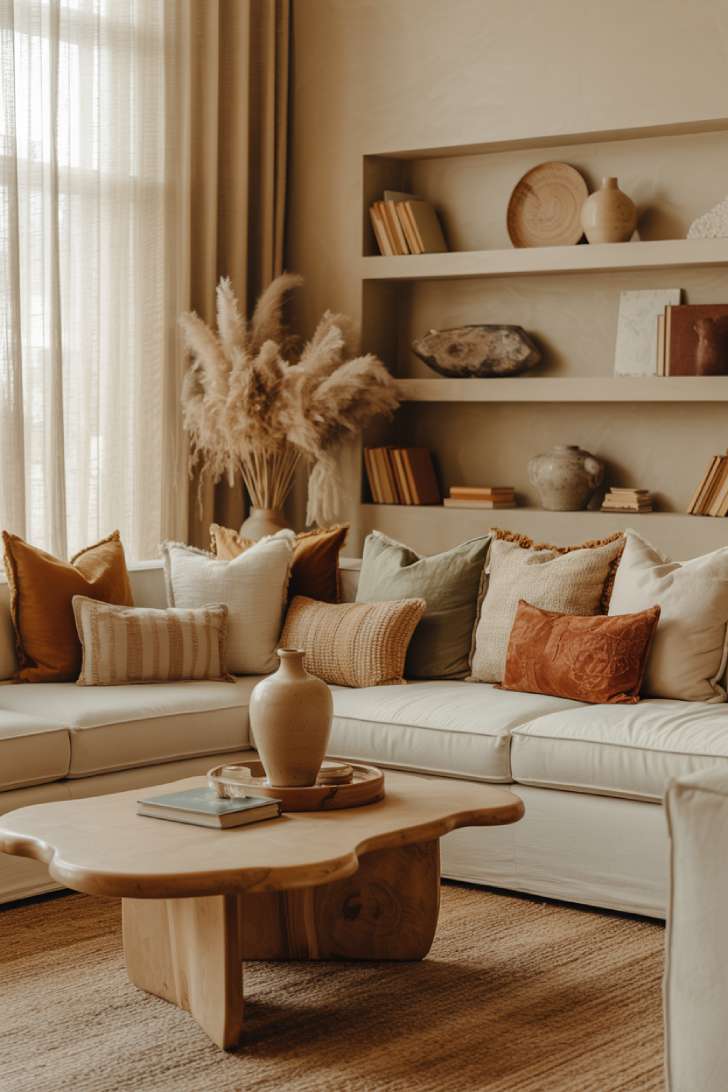
Built-in shelving serves a psychological function beyond storage.
It creates what designers call “curated background”—a composed backdrop that makes the rest of the space feel more organized even when it’s not.
The cream sectional positioned in front anchors your attention in the foreground, while the shelving adds visual depth behind.
This layering technique makes rooms feel larger by creating multiple focal planes.
Dried pampas grass and leather-bound books in muted tones demonstrate color discipline—sticking to your palette even in accessories.
Sheer linen curtains filter light into that perfect soft glow that photographers spend thousands on equipment to recreate.
Rattan, stone, and reclaimed wood accents prove that mixing natural materials adds richness without requiring bright colors.
Style Blueprint:
- Built-in shelving for curated display
- Cream sectional with multi-toned pillows
- Sheer linen curtains for filtered light
- Mix of natural materials (rattan, stone, wood)
Modern Minimalism with Natural Warmth
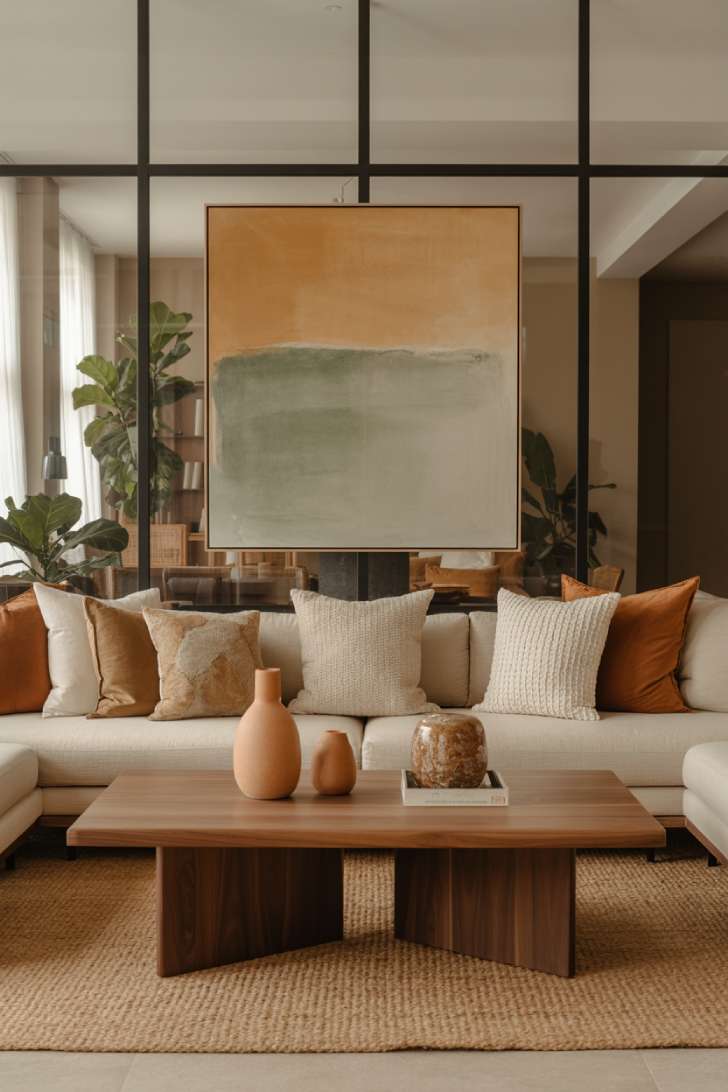
The sleek walnut coffee table brings refined sophistication to this space.
Its clean lines and natural wood grain demonstrate that modern doesn’t have to mean cold.
A large abstract canvas in muted ochre and sage provides a color story without overwhelming the senses.
Art at this scale creates what designers call a “visual anchor”—your eyes return to it repeatedly, which makes the space feel cohesive.
Fiddle leaf fig plants add vertical interest and living texture.
Their large leaves create dramatic shadows that change throughout the day, keeping the space dynamic.
The beige sectional’s texture comes through in the weave of the fabric rather than pattern, showing restraint and confidence.
Floor-to-ceiling windows flood everything with natural light, which is the secret ingredient that makes neutral paint colors work.
Style Blueprint:
- Sleek walnut coffee table
- Large abstract canvas in muted tones
- Fiddle leaf fig plants for height
- Beige sectional with textured weave
Gallery Wall with Natural Balance
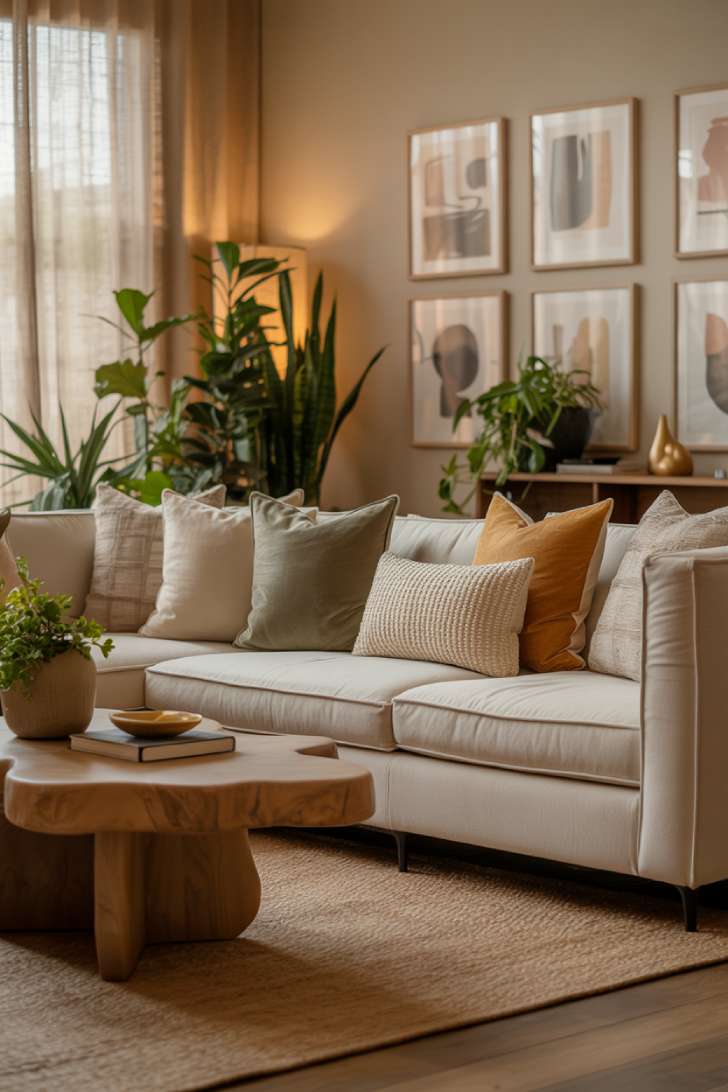
A curated gallery wall in abstract earth tones creates visual interest at eye level.
This placement matters—art hung at the right height feels like it’s in conversation with you rather than floating above your head.
The beige sectional grounds the composition while textured pillows in cream, sage, and taupe add subtle variety.
Your brain craves this kind of controlled variation—too much sameness feels sterile, too much difference feels chaotic.
Tall fiddle leaf figs and trailing pothos create what biophilic designers call “vertical greening,” which makes ceilings feel higher and air feel fresher.
Sheer linen curtains maintain privacy without sacrificing the natural light that makes this whole color scheme work.
The jute area rug anchors everything with its nubby texture and warm sandy color.
Style Blueprint:
- Curated gallery wall in earth tones
- Beige sectional with varied throw pillows
- Mix of tall and trailing plants
- Large jute area rug as foundation
Design Pro-Tip: When arranging a gallery wall, lay everything on the floor first. Take a photo from above. This bird’s-eye view reveals balance issues your standing perspective might miss.
Textural Abundance
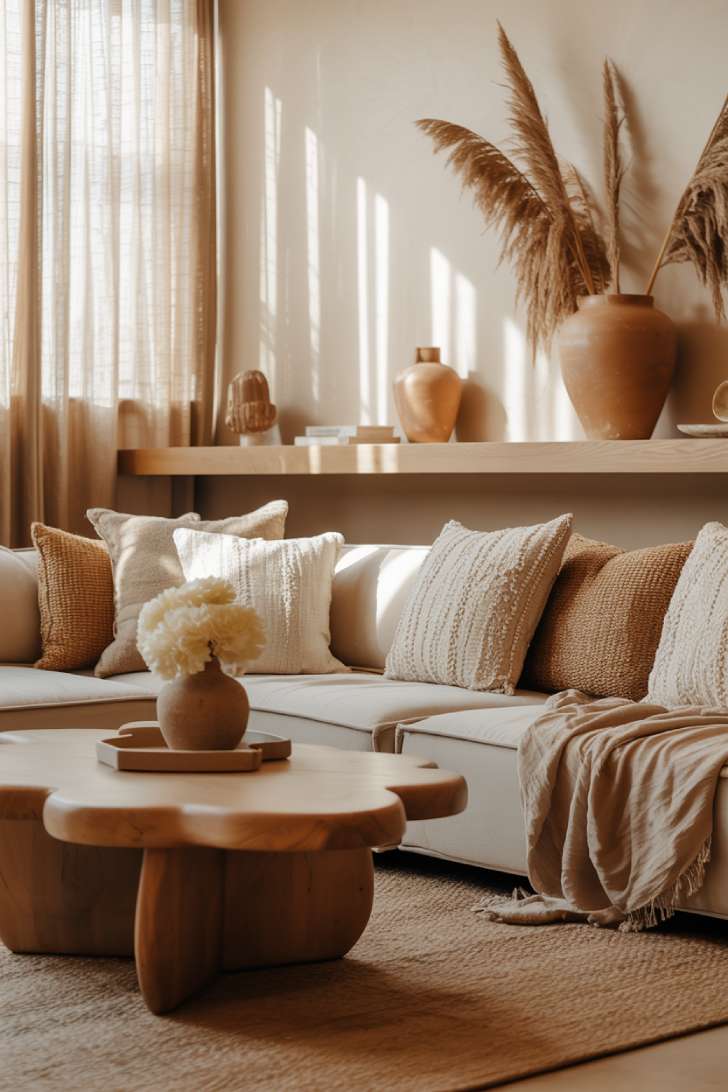
Woven jute rugs in warm sand tones create the textural foundation this room needs.
The subtle variation in the weave adds visual interest without pattern, which keeps the space calm.
Floating oak shelves display terracotta ceramics and dried pampas grass, demonstrating the principle of “display editing”—showing just enough to feel curated, not cluttered.
The beige sectional with cream and taupe pillows provides comfortable seating that doesn’t compete for attention.
Sheer linen curtains perform their magic here too, transforming harsh sunlight into that coveted soft, diffused glow.
The organic curved edges on the coffee table introduce softness into a room of straight lines and right angles.
This mix of geometric and organic shapes keeps your visual cortex engaged.
Style Blueprint:
- Woven jute rugs in warm sand tones
- Floating oak shelves for display
- Beige sectional with tonal pillows
- Natural wood coffee table with curves
Sophisticated Curation
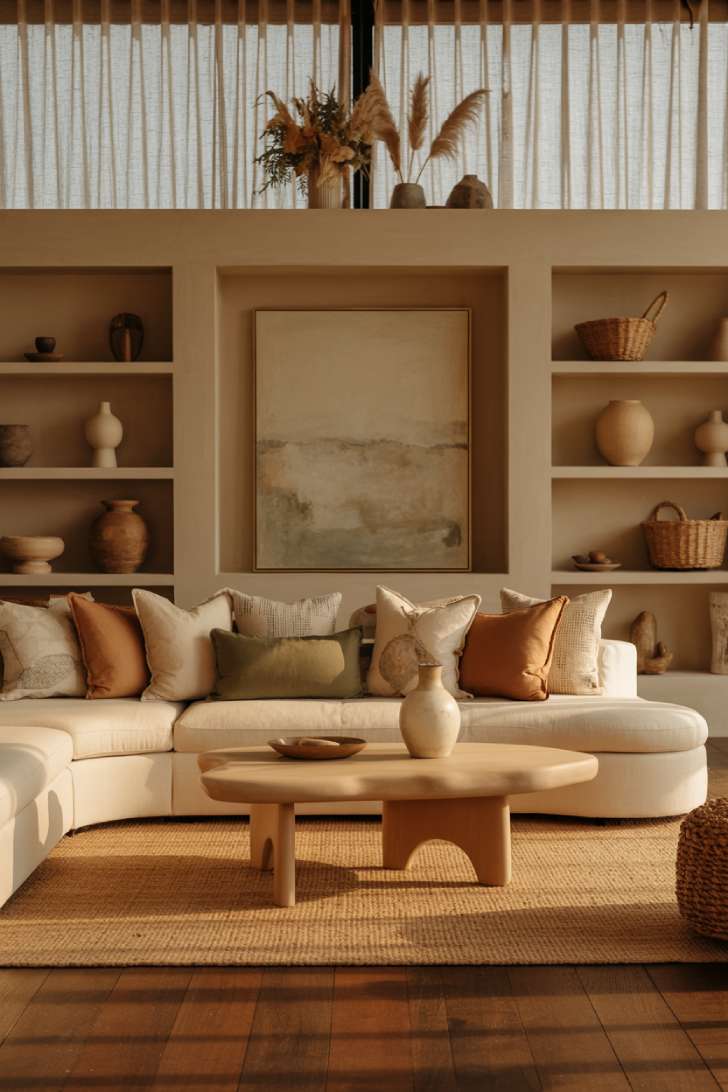
Built-in shelving here isn’t just storage—it’s a designed composition.
Carefully arranged pottery, dried pampas grass, and woven baskets create what museum designers call “visual rhythm.”
Your eye moves from object to object in a pleasing pattern.
The cream sectional positioned in front creates spatial layers—foreground, middle ground, and background—which adds depth perception to the room.
A large abstract painting serves as the focal point above the sofa, giving your eyes somewhere to rest.
Afternoon light filtered through sheer linen curtains creates those gentle shadows that prevent flat, lifeless lighting.
Rich hardwood floors warm up the space from the bottom, proving that not everything needs to be upholstered or soft.
This earth tone house decor demonstrates mature design restraint.
Style Blueprint:
- Built-in shelving with curated displays
- Cream sectional with earth-toned pillows
- Large abstract painting as focal point
- Rich hardwood floors for warmth
Clean Lines with Organic Touches
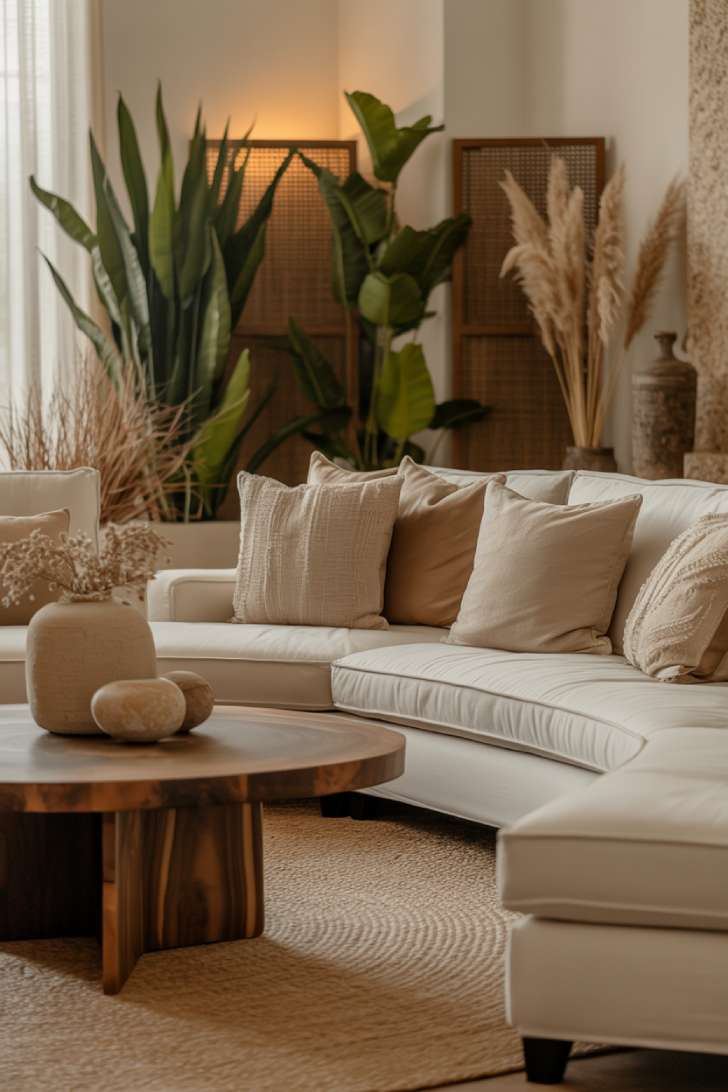
A live-edge walnut coffee table steals the show here with its natural, organic edge.
This imperfection creates what designers call a “conversation piece”—something unexpected that draws the eye and holds interest.
Natural woven jute rugs layer beneath the seating area, creating depth and defining the space without rigid boundaries.
Tall fiddle leaf figs in the corners draw the eye upward, making the room feel more spacious than its square footage suggests.
The cream sectional provides that clean, contemporary base that lets natural elements shine.
Sheer white curtains filter light into a gentle, ambient glow that changes throughout the day, keeping the space alive and dynamic.
Stone decorative elements add cool contrast to warm wood tones.
Style Blueprint:
- Live-edge walnut coffee table as centerpiece
- Layered jute rugs for depth
- Tall fiddle leaf fig plants
- Cream sectional with linen pillows
Design Pro-Tip: The 70/30 material split works brilliantly—70% soft materials (upholstery, rugs, curtains) and 30% hard materials (wood, stone, metal). This ratio creates comfort without feeling overstuffed.
Complete Earthy Elegance
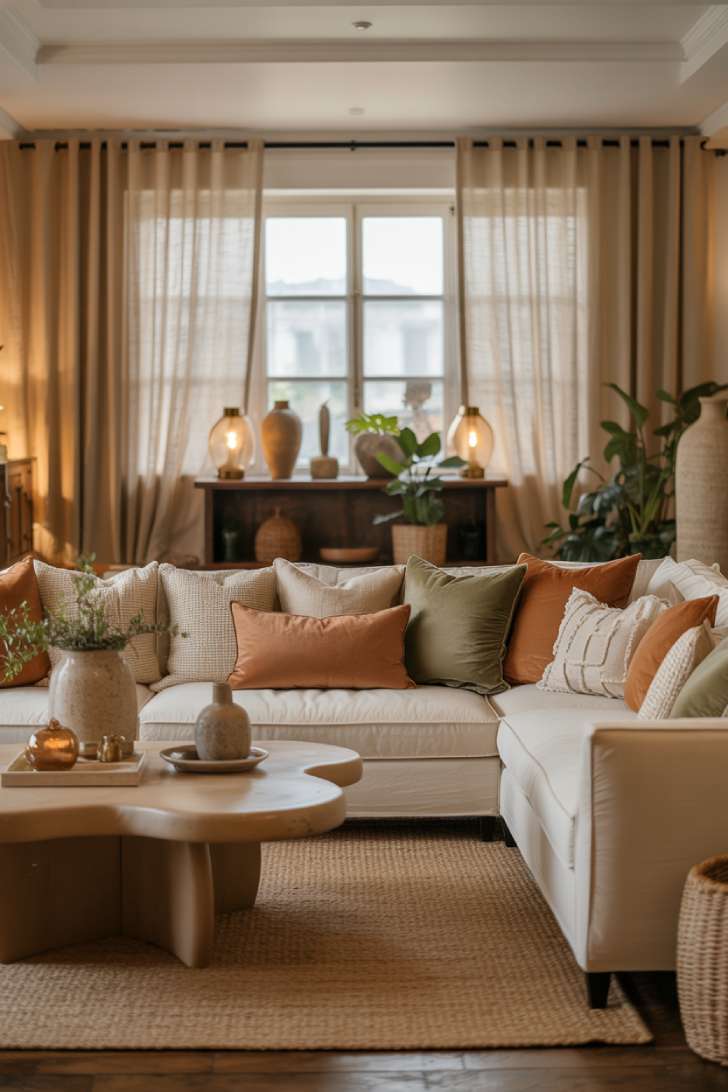
Floor-to-ceiling windows draped in flowing linen curtains create architectural drama that no amount of furniture can match.
This natural light floods the space and makes every neutral color come alive with subtle variations.
The cream sectional arranged around a natural wood coffee table demonstrates functional layout—conversation-friendly without feeling staged.
Ceramic vases in muted clay tones and potted plants in woven baskets bring that neutral living room aesthetic home.
Brass table lamps add warm metallic accents that catch and reflect light, creating what lighting designers call “sparkle points.”
The large jute area rug grounds everything with its substantial presence and natural texture.
This space shows how earthy neutral living room design achieves sophistication through material quality rather than bright colors or bold patterns.
Style Blueprint:
- Floor-to-ceiling linen curtains
- Cream sectional with earth-toned pillows
- Brass table lamps for warm accents
- Large jute area rug as foundation
Earthy Neutral Living Room Elements at a Glance
| Design Element | Material Options | Mood Created | Maintenance Level |
|---|---|---|---|
| Sofas & Seating | Linen, cotton, natural weaves | Calm, inviting | Medium (regular cleaning) |
| Rugs | Jute, natural fiber, woven textures | Grounded, warm | Low to medium |
| Coffee Tables | Reclaimed wood, live-edge, walnut | Organic, authentic | Low (occasional oil) |
| Window Treatments | Sheer linen, flowing curtains, taupe fabrics | Soft, diffused light | Low (seasonal cleaning) |
| Plants & Greenery | Fiddle leaf fig, pothos, dried pampas | Fresh, living, restorative | Low to medium |
| Accent Materials | Terracotta, ceramic, stone, rattan | Earthy, textured | Low |
| Lighting | Brass lamps, natural light, layered sources | Warm, ambient | Low |
| Wall Finishes | Neutral paint, exposed brick, stone | Balanced, grounded | Low |
Conclusion
These earthy neutral living room ideas prove that calm doesn’t mean boring.
Natural materials, thoughtful lighting, and a restrained color palette create spaces that feel both sophisticated and deeply comfortable.
The psychology behind these choices—from the stress-reducing effects of muted tones to the restorative power of natural light—makes these rooms more than pretty.
They’re genuinely better for your wellbeing.
Start with one element that speaks to you, whether that’s a jute rug, linen curtains, or a piece of reclaimed wood furniture.
Build from there, trusting that quality materials in neutral tones will always look current.
Your home should be a retreat, and these neutral lounge decor ideas deliver exactly that.