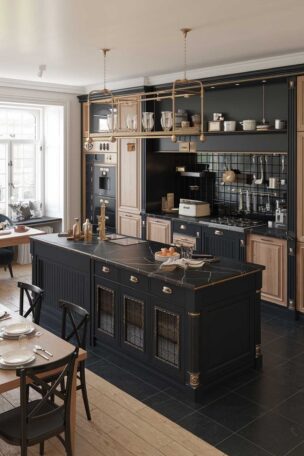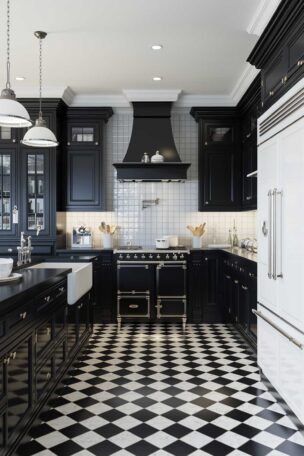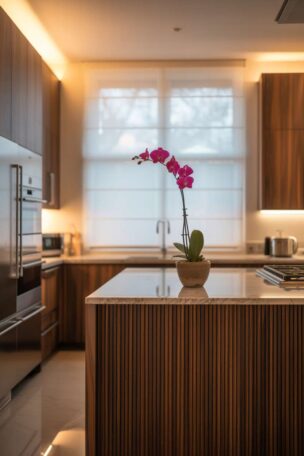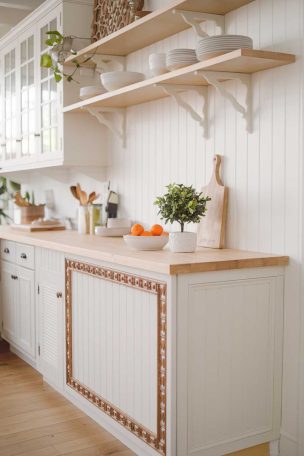
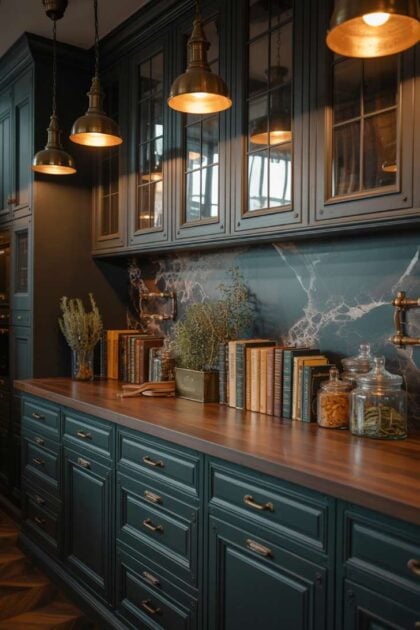
The dark academia kitchen aesthetic transforms your cooking space into something far more profound than a place to prepare meals.
It’s a scholarly sanctuary where gothic romance meets classical elegance.
This design style celebrates the beauty of old libraries, the mystery of candlelit study sessions, and the timeless sophistication of academic spaces.
If you’re drawn to leather-bound books, vintage maps, and moody color palettes, you’ll love how this aesthetic can reshape your kitchen into an intellectually inspiring environment.
Foundations of Dark Academia Kitchen Design
Color Palettes That Set the Mood
The dark academia kitchen starts with rich, jewel-toned colors that create instant atmosphere.
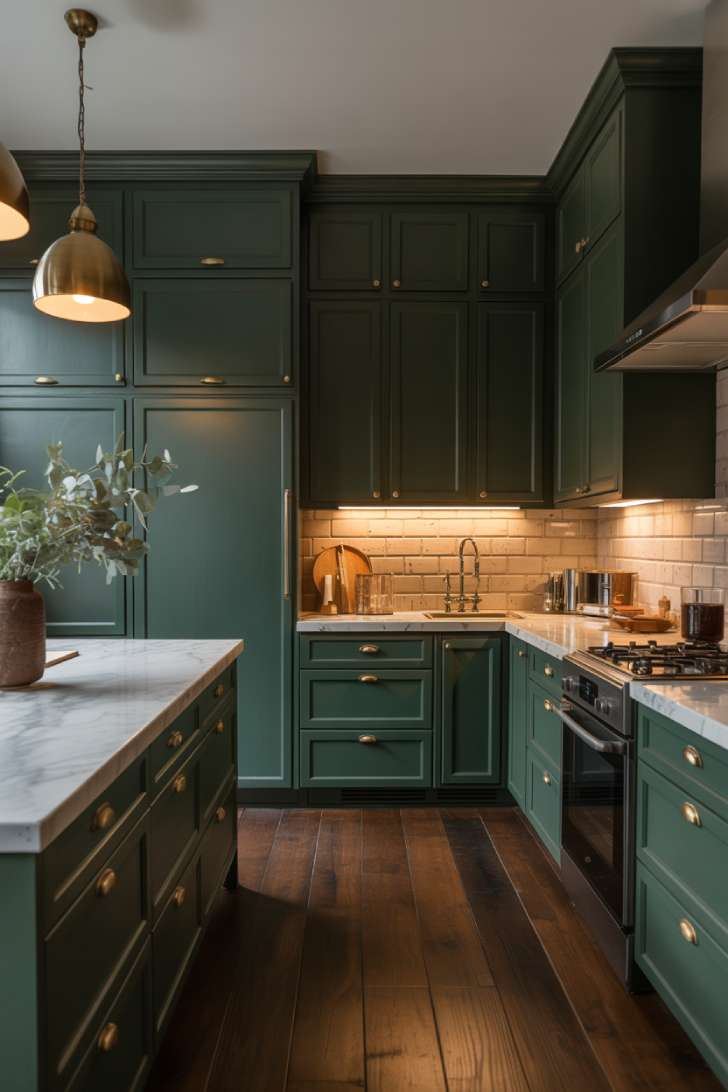
Deep forest green stands as the signature color of this aesthetic—it evokes antique libraries and scholarly prestige.
Navy blue paired with brass accents creates a luxurious feel that’s cozy and refined at the same time.
Charcoal and midnight black add mystery and depth to your space.
Warm mahogany browns bring organic warmth that balances the darker tones.
Black and white combinations offer a more modern edge—think all-white countertops contrasting dramatically against jet black lower cabinets.
Light wood uppers in ash or oak prevent the space from feeling too heavy.
Each color should work together to create warmth and intellectual charm.
The emotional resonance of the dark academia kitchen lies in making the space feel timeless and deeply personal.
Material Selection
Materials matter tremendously in achieving authentic dark academia interior design.
Dark wood species form the backbone—mahogany, walnut, and oak are your best choices.
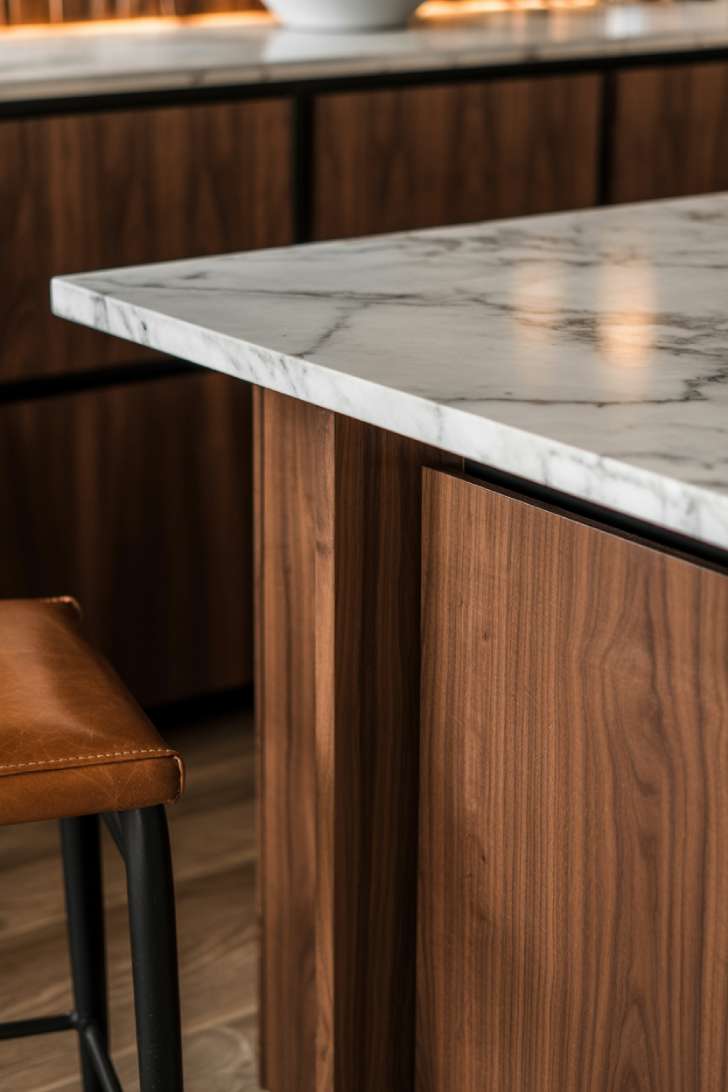
Matte finishes on wood cabinetry create a more authentic, scholarly appeal than glossy surfaces.
Stone countertops with natural patina provide a luxurious backdrop that feels worn by time.
Leather accents scattered throughout—on bar stools, chair seats, even wrapped around pendant lights—add texture and refinement.
These materials layer together to create richness and depth that define the aesthetic.
Cabinetry and Hardware Choices
Cabinet Colors and Finishes
Your cabinetry serves as the largest visual element in your dark academia kitchen.
Floor-to-ceiling cabinets in deep forest green, navy, or charcoal black immediately establish the mood.
These moody cabinet colors create a dramatic departure from typical light kitchen palettes.
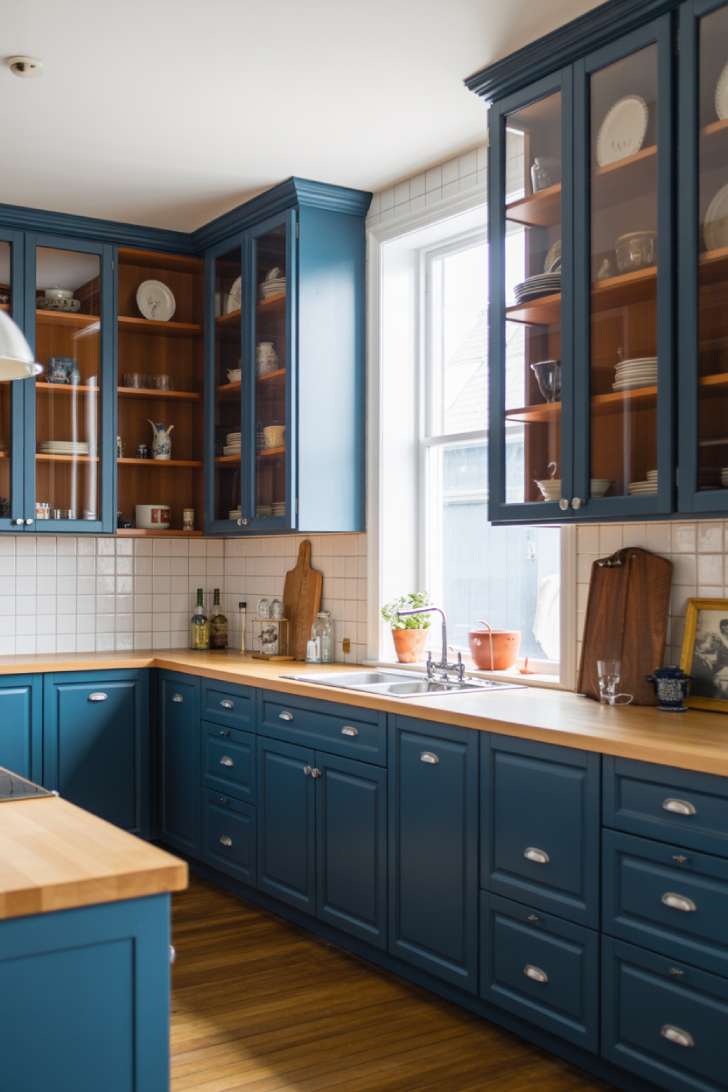
If replacing your cabinetry isn’t possible, painting existing cabinets works beautifully.
Use quality paint formulated specifically for kitchen use to ensure durability.
Matte finishes feel more authentic to the dark academia aesthetic than satin or semi-gloss options.
Vintage-Inspired Hardware
Hardware plays a bigger role than you might think in completing the scholarly look.
Brass and bronze pulls and knobs bring warmth and formality to dark cabinet finishes.
Cup pulls and bin pulls evoke the drawers of vintage desks and card catalogs from old libraries.
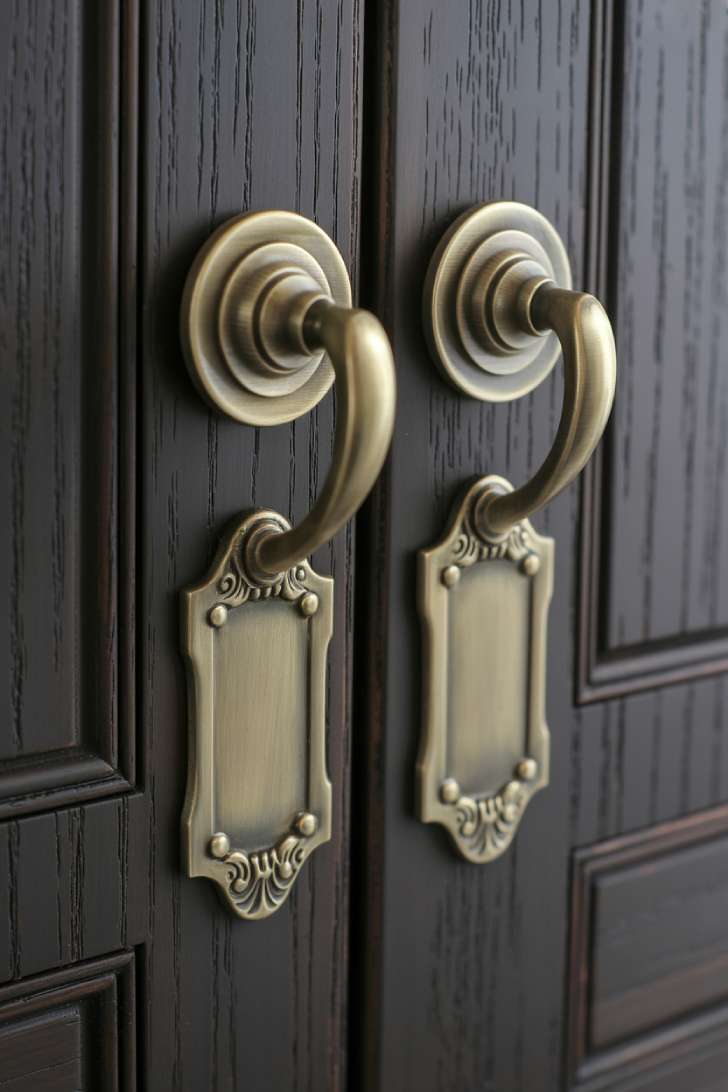
Decorative backplates on panel doors add an extra layer of formality and vintage authenticity.
For a collected-over-time look, mix and match hardware styles rather than keeping everything uniform.
This approach creates the feeling that pieces were gathered gradually, like a personal collection.
Glass-Front Display Cabinets
Glass-front cabinets transform functional storage into visual interest.
They let you showcase curated dishware, vintage china, and antique glassware like a personal museum.
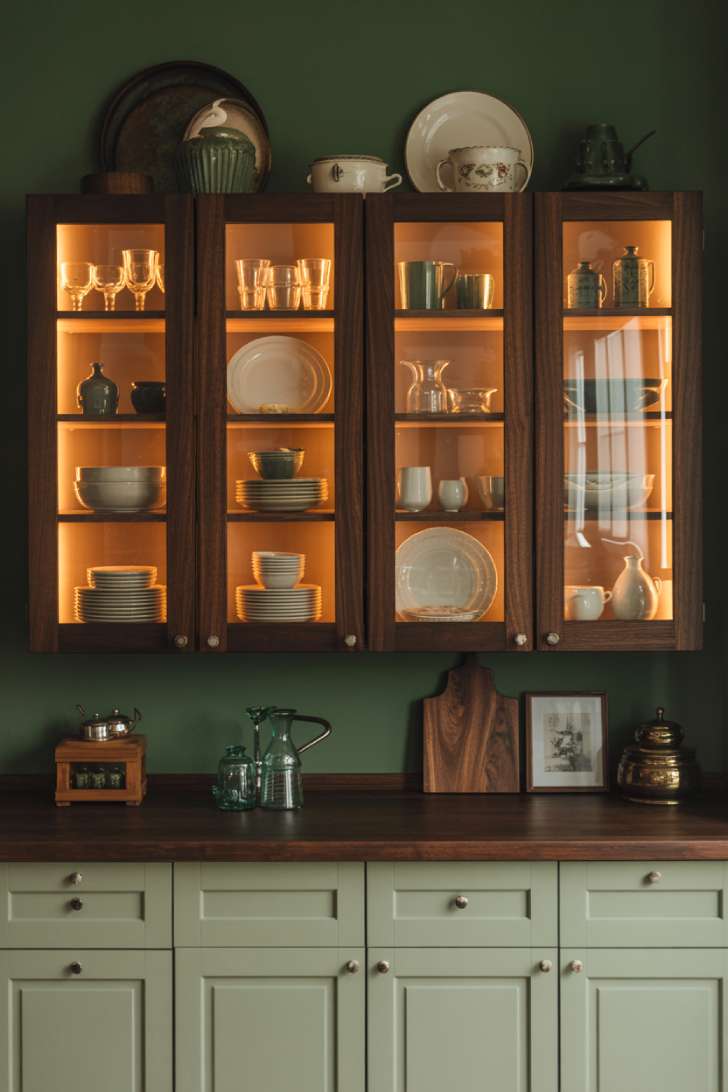
The transparency of glass against dark wood cabinetry creates beautiful depth.
You can display your most interesting pieces while keeping them protected and accessible.
This feature is perfect for showing off inherited china, collected pottery, or vintage cooking vessels.
Countertops and Work Surfaces
Marble Options
Marble countertops bring instant elegance to your dark academia kitchen aesthetic.
Look for marble with natural patina and prominent veining rather than pristine white varieties.
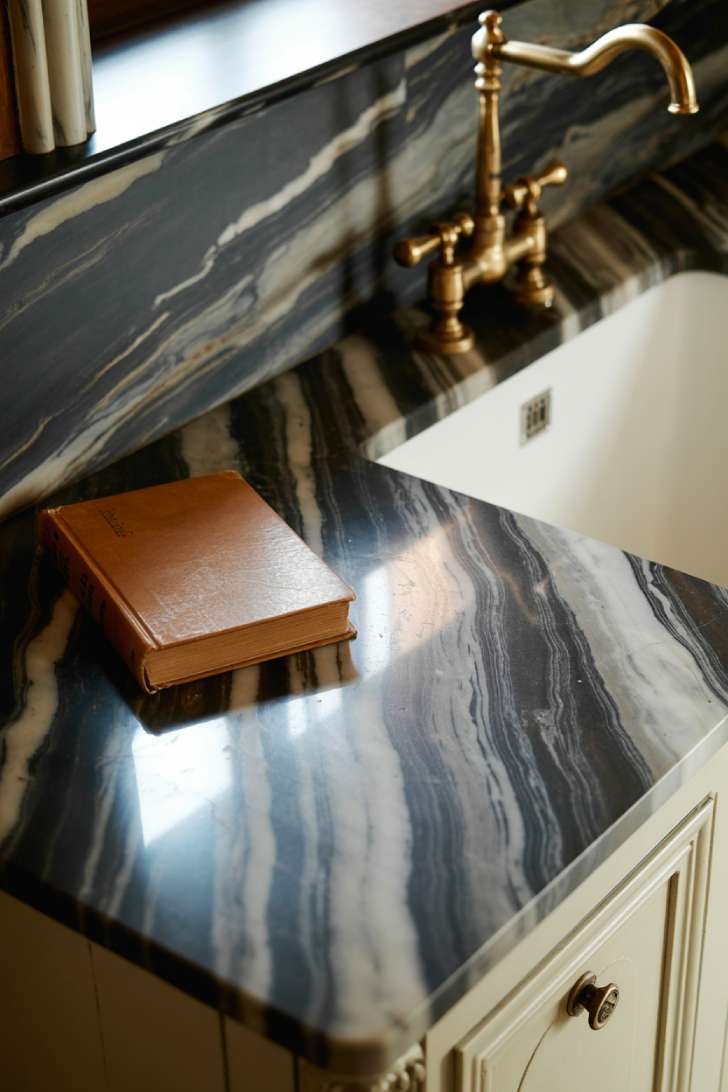
The slightly worn quality of aged marble feels more authentic to the aesthetic.
Veining in gray, charcoal, or even soft brown adds visual movement and interest.
This material references library reading tables and historic academic buildings.
Wood Countertops
Butcher block countertops in warm wood tones offer another authentic option.
Walnut and oak finishes work beautifully in the dark academia kitchen.
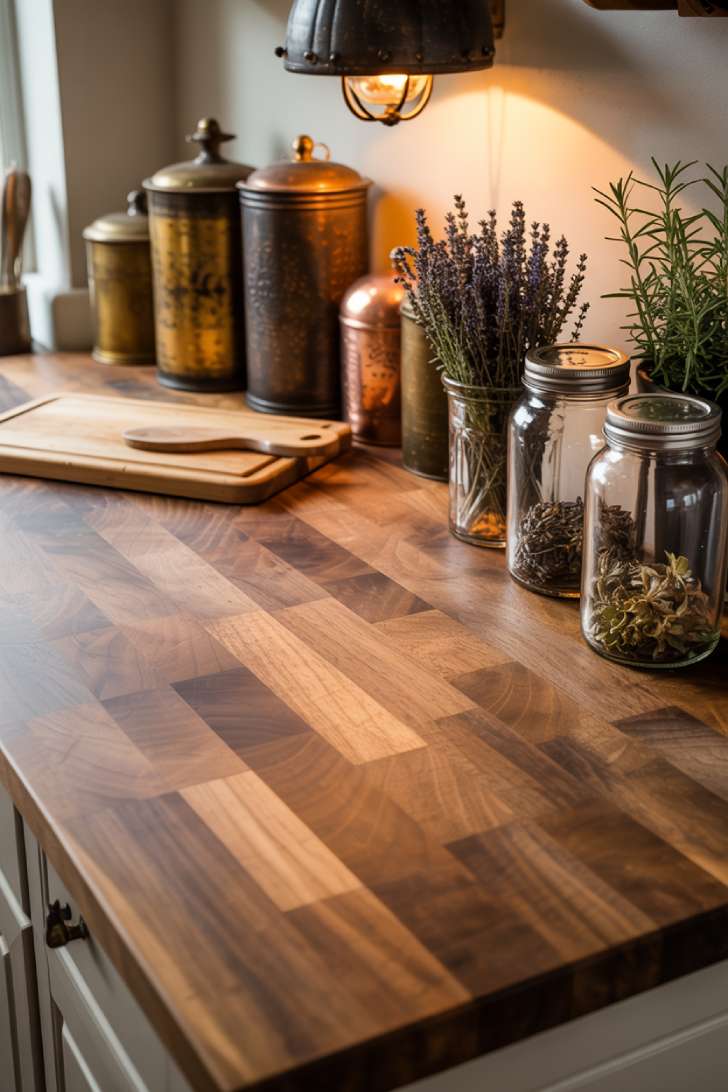
Wood countertops age gracefully, developing character over time.
They bring organic warmth that complements dark cabinetry without competing visually.
The natural material aligns perfectly with the romantic, scholarly aesthetic.
Stone Alternatives
Granite in leathered finishes adds organic texture that pairs beautifully with dark cabinetry.
Look for granite in charcoal gray, deep brown, or inky black.
Slate countertops evoke library tables and academic spaces.
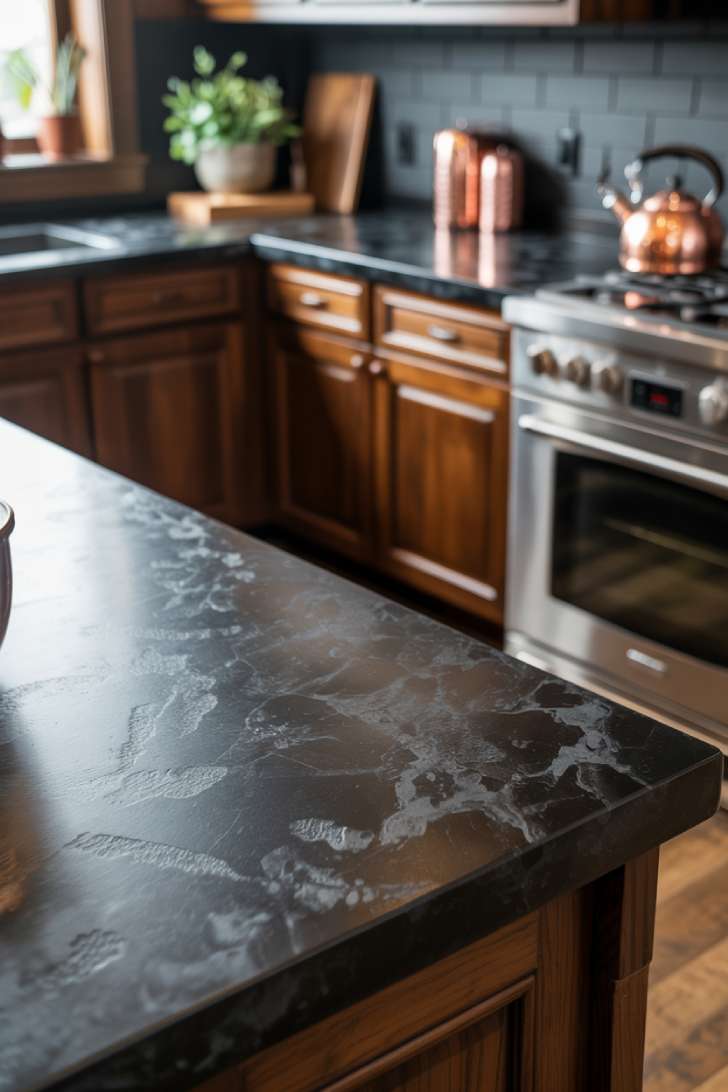
These darker stone options create a moody atmosphere that’s still highly functional.
The leathered finish prevents the stone from looking too polished or contemporary.
Backsplash Design
Traditional Tile Patterns
Your backsplash becomes a focal point for establishing the dark academia aesthetic.
Dark subway tiles in navy blue, black, or forest green complement your overall color scheme perfectly.
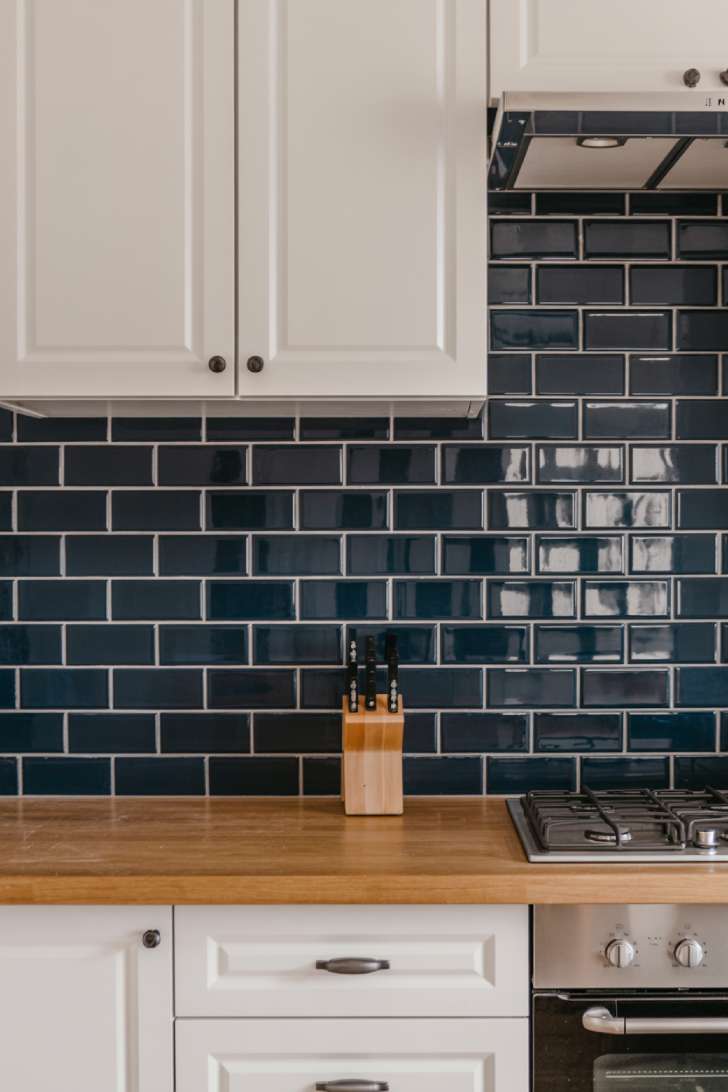
Herringbone layouts add texture and visual interest while reinforcing old-world charm.
Geometric patterns create movement without feeling too modern or trendy.
Dark grout lines emphasize the pattern and add to the vintage feel.
Decorative Options
Hand-painted custom tiles elevate your kitchen from functional to artistic.
Ornate patterns in muted earth tones reference period architecture and classical design.
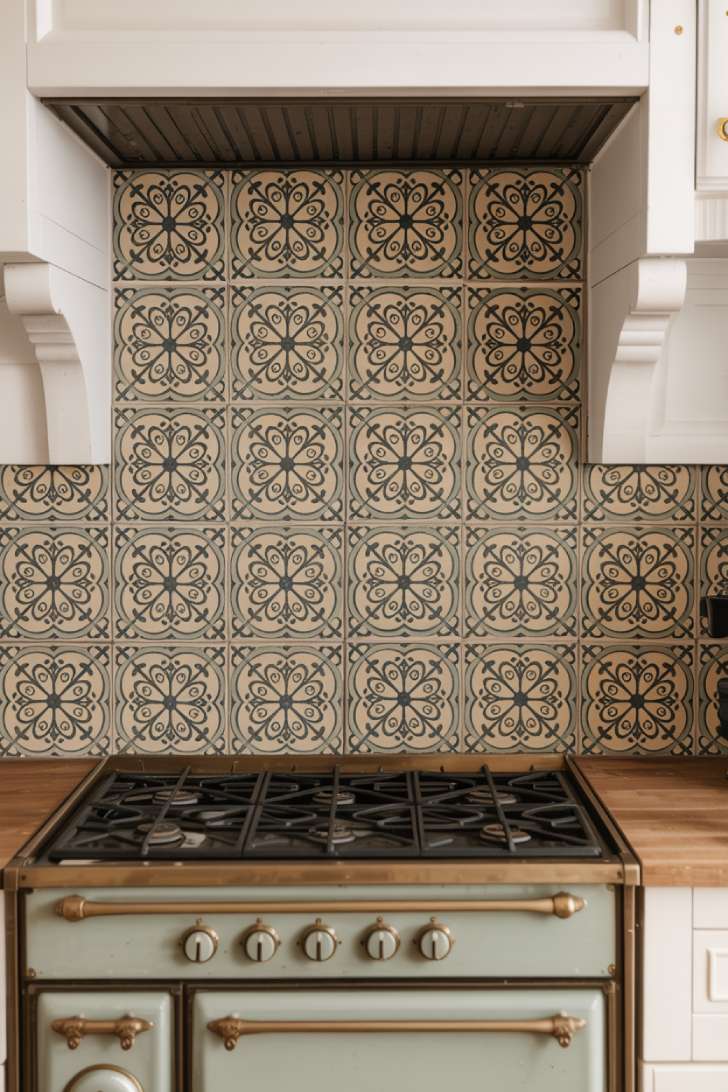
Marble slab backsplashes create a seamless, luxurious look.
These decorative choices transform your backsplash into a statement piece that captures attention.
Lighting for Atmosphere
Pendant Lights and Chandeliers
Lighting is what transforms a dark academia kitchen from heavy to inviting.
Install dramatic pendant lights above kitchen islands or dining areas.
Globe fixtures and lanterns create an instant library-like ambiance.
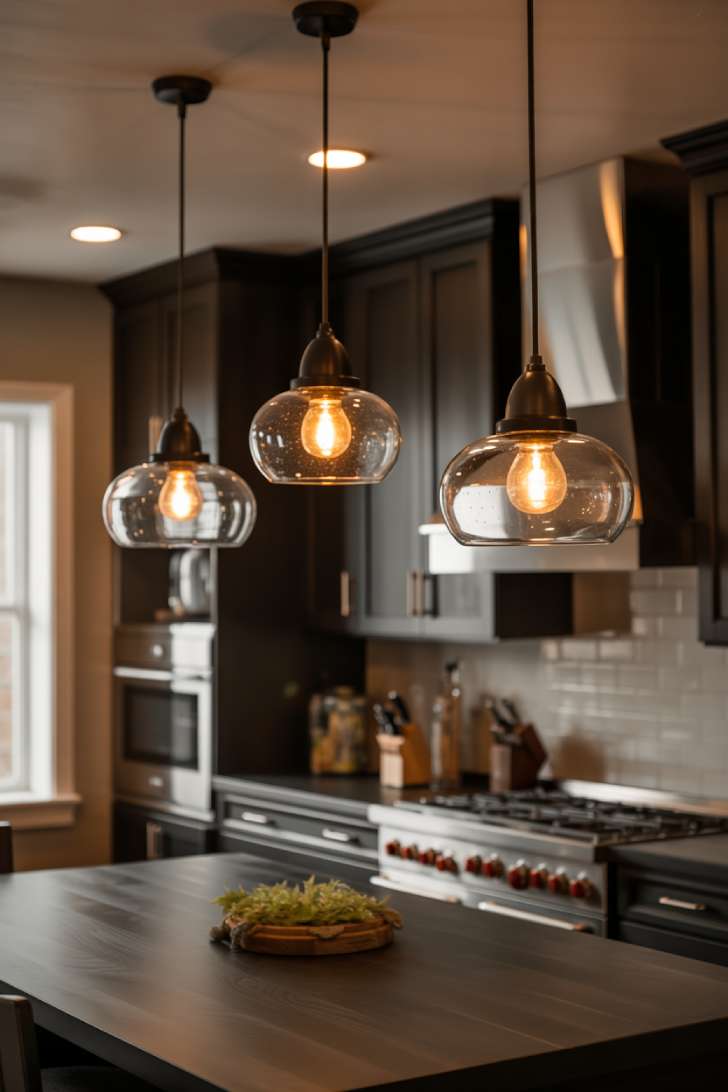
Bronze and seeded glass designs offer soft, diffused illumination.
Edison-style bulbs add to the vintage scholarly atmosphere.
These fixtures become sculptural elements that define your space.
Layered Lighting Approach
Under-cabinet lighting serves functional and aesthetic purposes.
It illuminates work surfaces for cooking prep during the day.
At night, it creates a flickering glow reminiscent of candlelit study sessions.
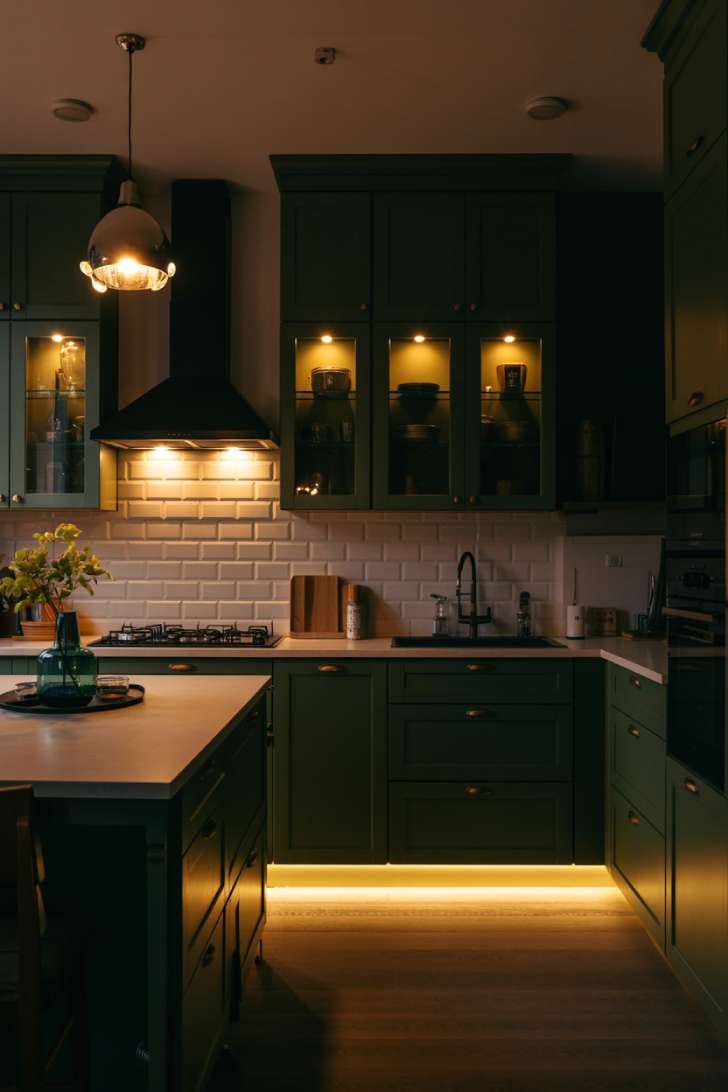
Wall sconces with fabric shades add softer illumination to break up harsh shadows.
Warm-toned bulbs around 2700K enhance the moody feeling without making the space cold.
This layered approach lets you adjust the atmosphere for different times of day.
Natural Light Management
Maximize natural light from windows but soften it appropriately.
Heavy curtains or sheer panels in jewel tones filter harsh sunlight.
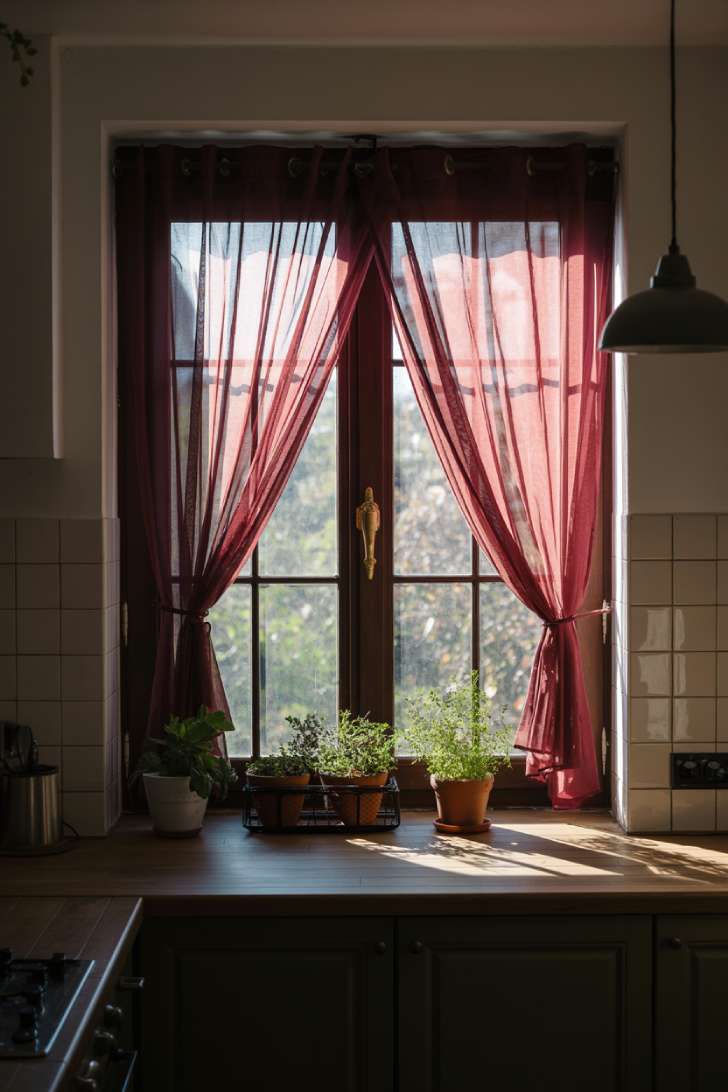
The balance between shadow and light creates the romantic atmosphere central to the aesthetic.
You want brightness for functionality without losing the moody character of the space.
Open Shelving and Book Displays
Built-In Bookshelves
Open shelving transforms your kitchen into an intellectual showcase.
Built-in bookshelves flanking your range or bar area display leather-bound cookbooks and vintage encyclopedias.
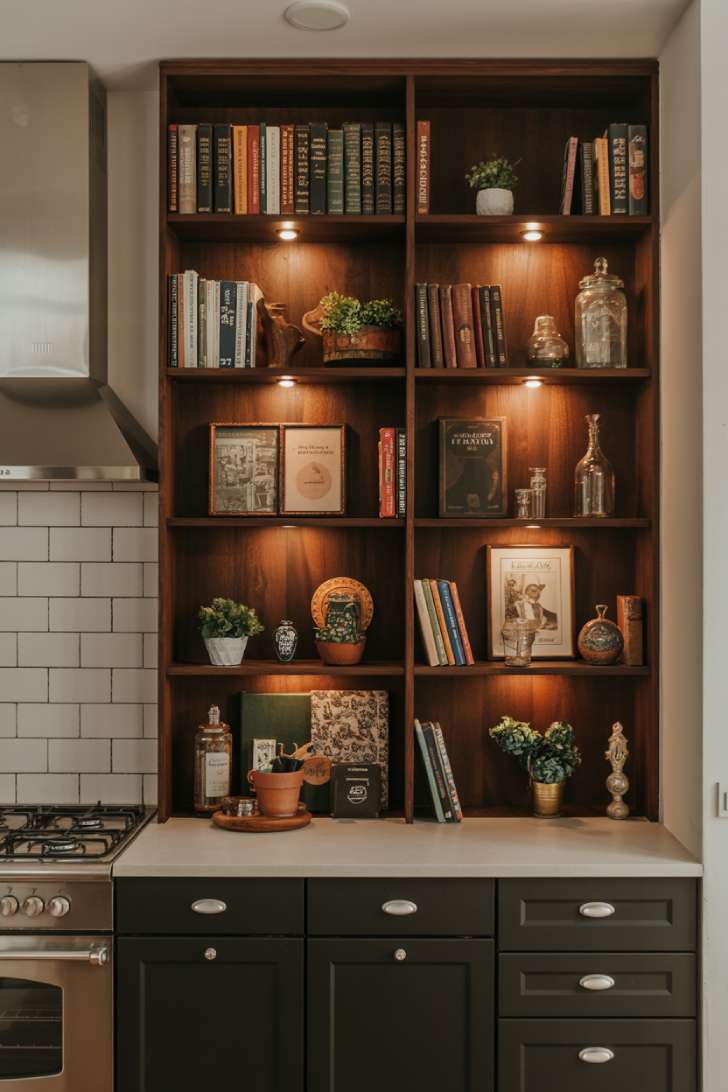
Mix academic texts with apothecary jars and curious decorative objects.
This approach serves functional storage and artistic expression at once.
Your kitchen becomes a space that invites exploration while you cook.
Styling Open Shelves
Create visual balance by displaying vintage kitchenware at varying heights.
Layer items so they feel curated rather than cluttered.
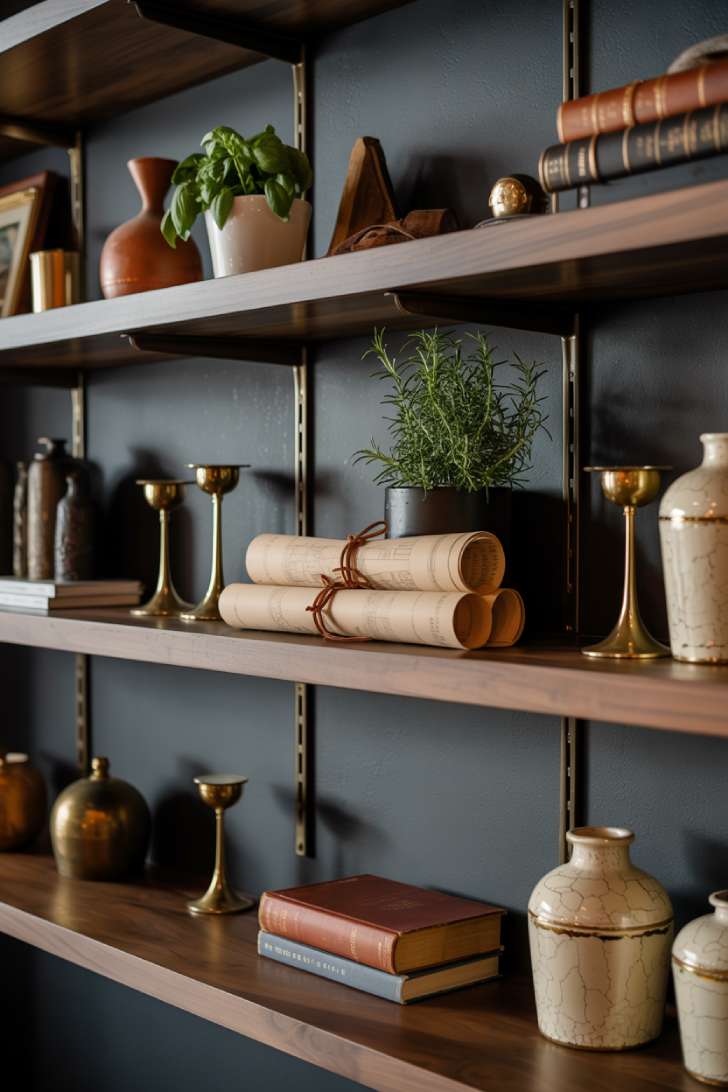
Include rolled maps, potted plants, and curated decor objects alongside your books.
Interior shelf lighting creates a warm, old-world glow that highlights your collection.
This chaotic-yet-intentional layering creates authentic dark academia vitality.
Flooring Solutions
Classic Patterns
Black and white checkerboard flooring offers striking geometry that grounds the academic aesthetic.
This classic pattern references period architecture and vintage design.
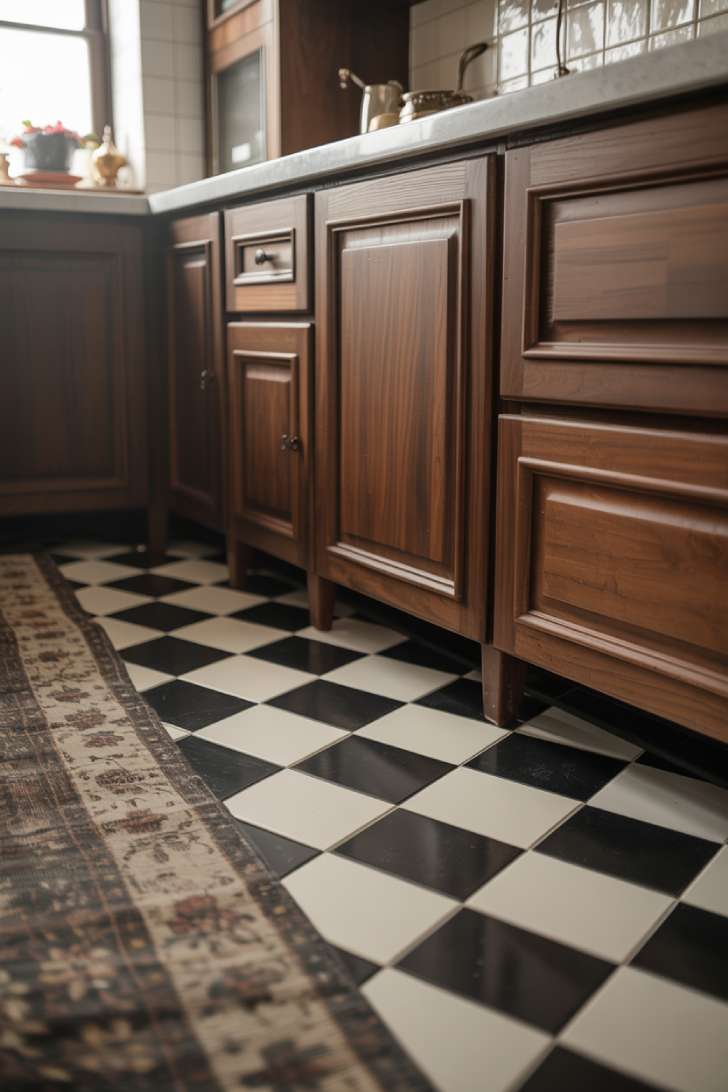
The high contrast creates visual interest at ground level.
It works especially well in kitchens with darker upper elements, providing balance.
Natural Materials
Dark wood flooring in warm tones adds authentic warmth.
Natural stone and slate options create a more rustic scholarly feel.
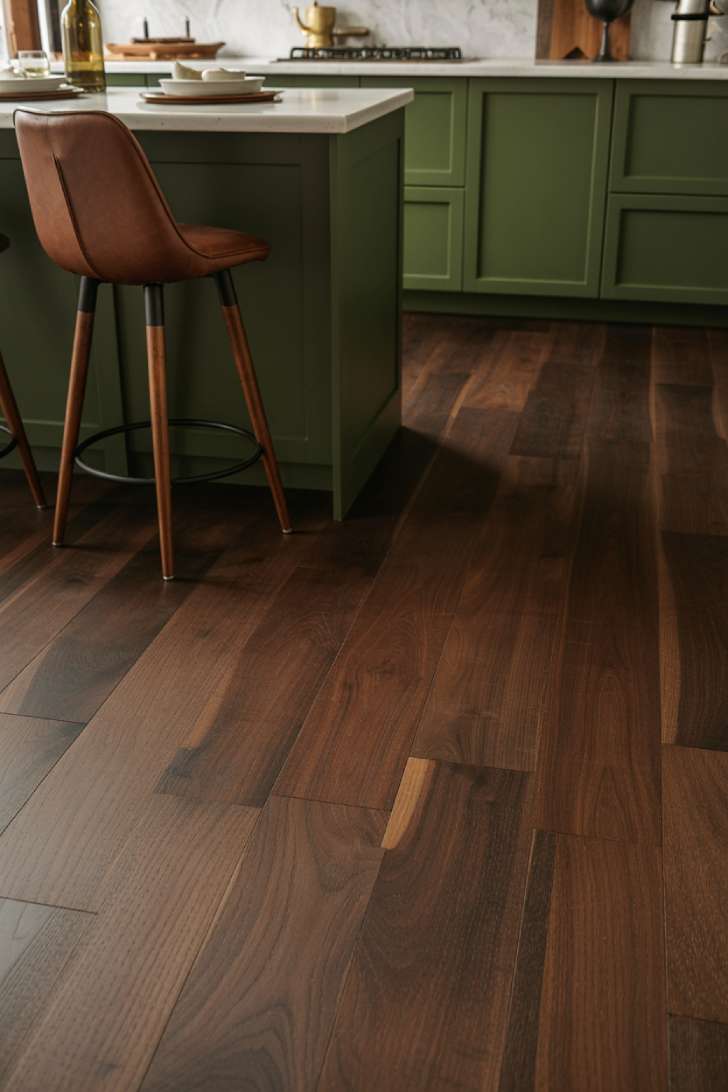
Rich wood floors in mahogany, walnut, or oak complement dark cabinetry beautifully.
Matte and satin finishes suggest age and authenticity better than high-gloss options.
These natural materials ground the space in organic warmth.
Area Rugs
Vintage-inspired area rugs define your kitchen space and add softness underfoot.
Turkish kilim patterns work beautifully without feeling too contemporary.
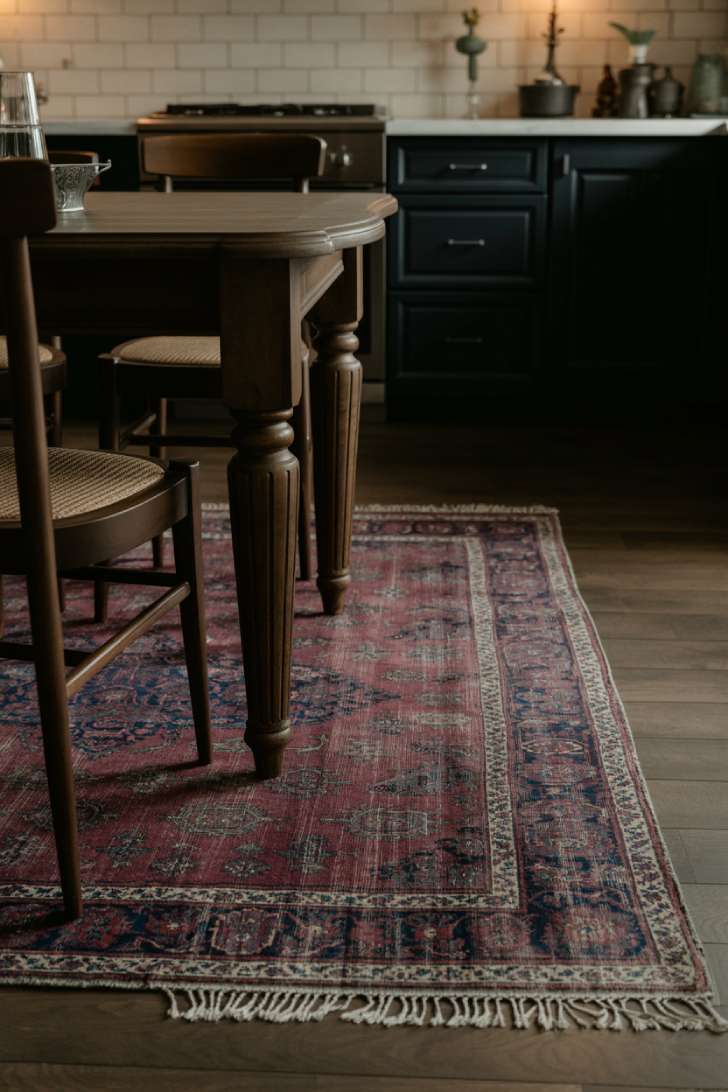
Geometric designs in muted tones or classic oriental patterns complement the aesthetic.
Rugs add warmth and help define different zones within your kitchen.
They’re especially nice in eat-in kitchen areas or in front of the sink.
Decorative Accessories
Wall Decor
Antique maps and botanical prints bring scholarly charm to your walls.
Classical artwork in black or metal frames creates a gallery-style arrangement.
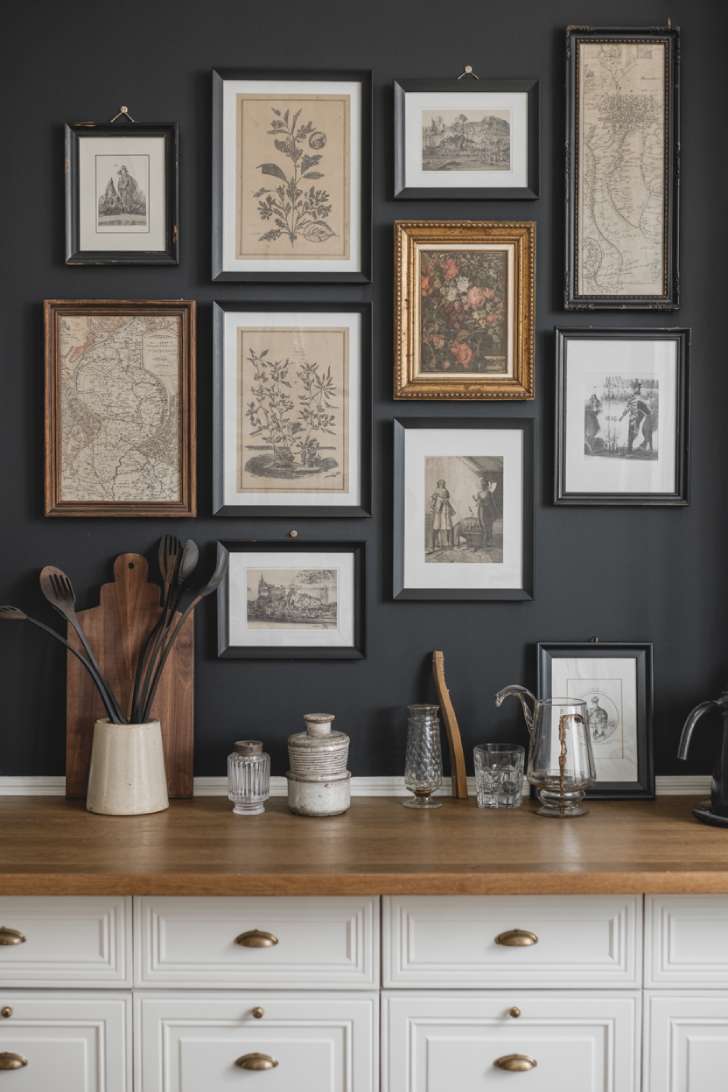
Display vintage maps, globes, and intriguing scientific instruments.
These pieces transport viewers to scholarly classrooms and historic libraries.
Arrange frames at different heights for a collected-over-time feel.
Functional Vintage Items
Apothecary jars filled with dried herbs serve a function and aesthetics at once.
Copper cookware hung on pot racks adds warmth and catches light beautifully.
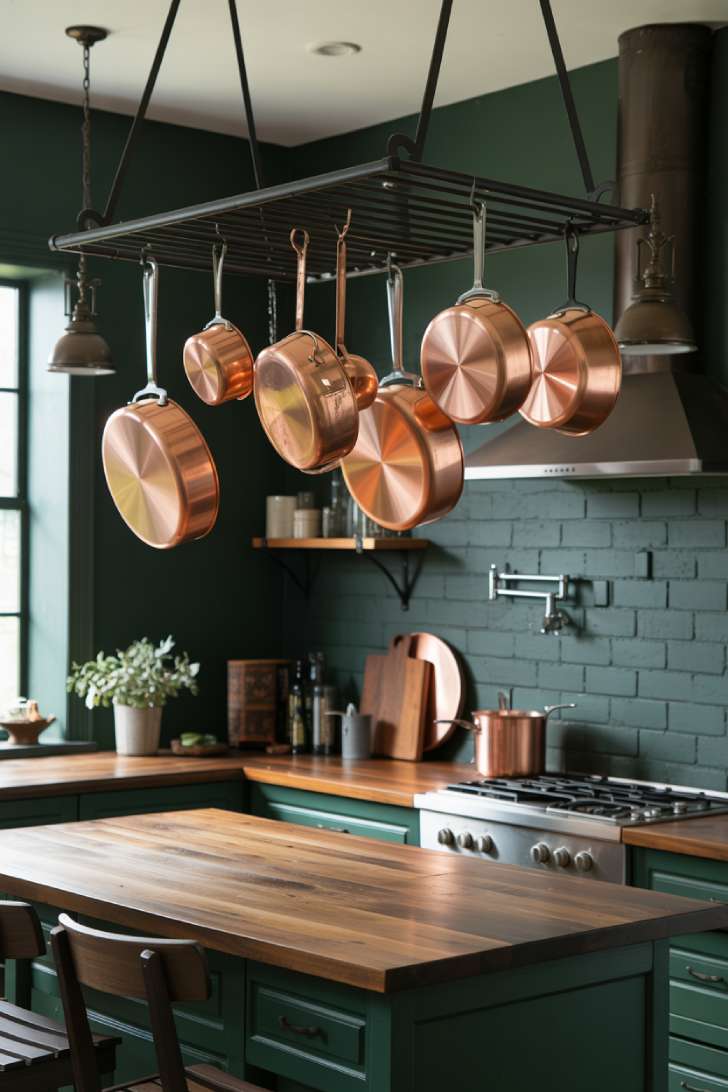
Vintage kitchenware displayed on open shelves becomes part of your decor.
Ornate candelabras cast soft light and add gothic romance.
These practical items double as decorative elements that reinforce the aesthetic.
Scholarly Touches
Vintage typewriters positioned on kitchen desk nooks create whimsical intellectual charm.
Scientific instruments like old scales or measuring tools add curiosity.
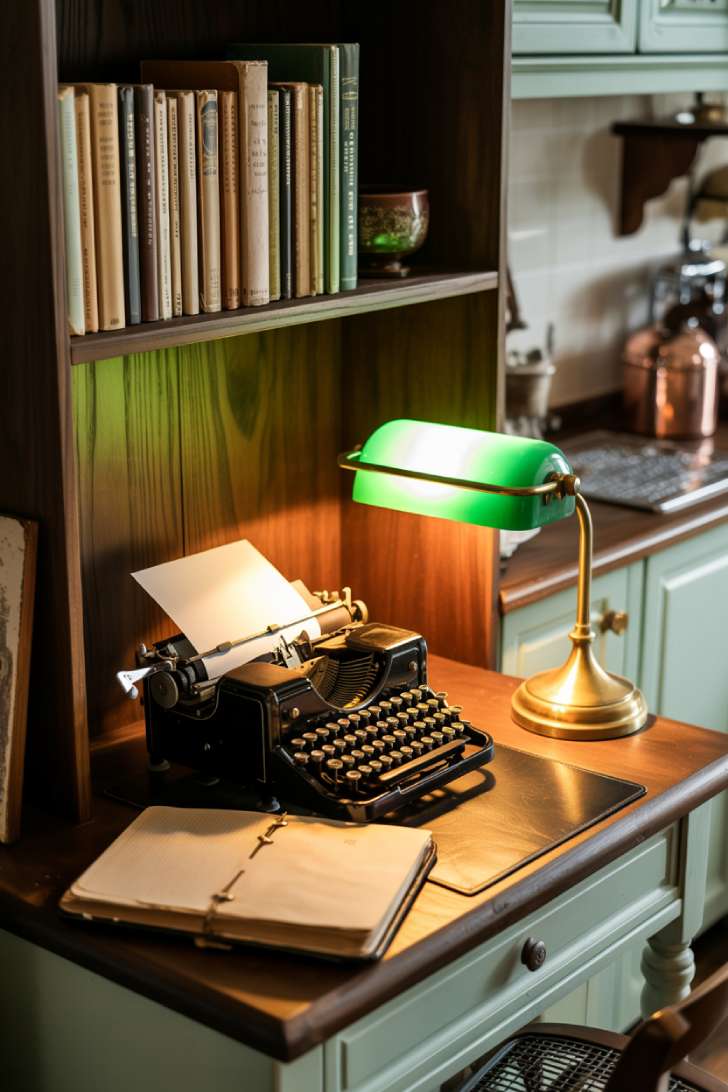
Leather-bound journals for meal planning sit beautifully on countertops or shelves.
Antique desk accessories like brass magnifying glasses or vintage pens add authentic touches.
These quirky details infuse personality while maintaining refined sophistication.
Window Treatments and Textiles
Curtain Selection
Heavy curtains in jewel tones frame your windows dramatically.
Deep burgundy, forest green, navy, or chocolate brown work beautifully.
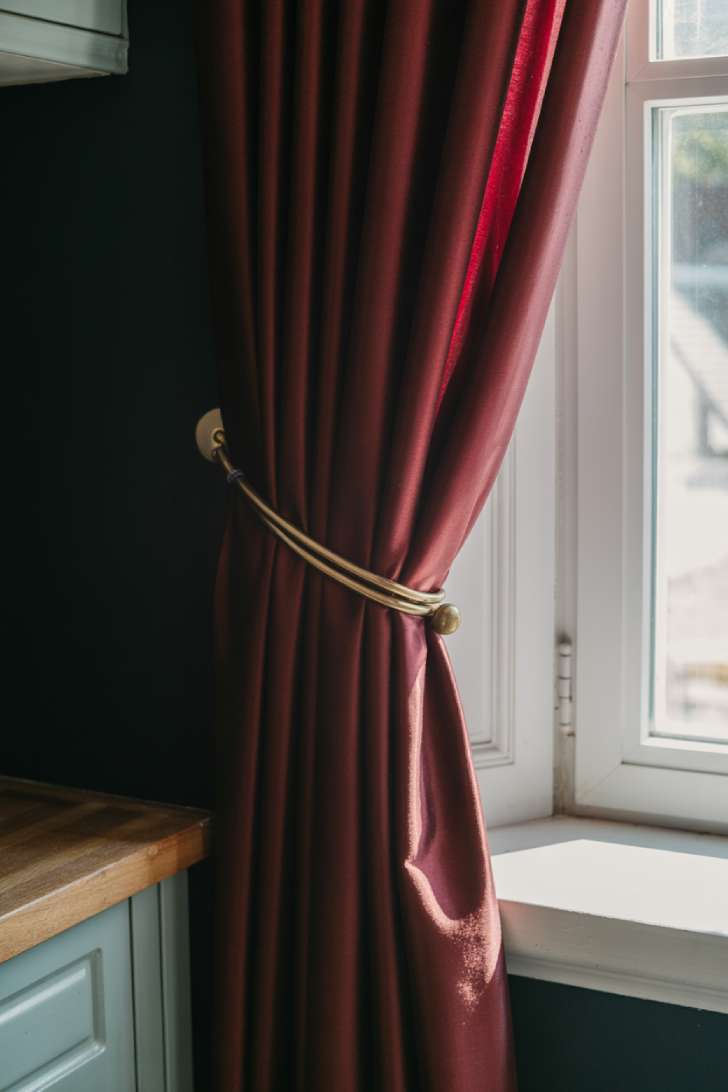
Linen and linen-cotton blends in neutral cream or beige offer a lighter option.
Damask patterns, ornate florals, or subtle checks add visual interest.
Solid fabrics with interesting texture work just as well as patterns.
Kitchen Linens
Kitchen towels, aprons, and linens in wool or linen complete the look.
High-quality cotton in complementary colors adds practical beauty.
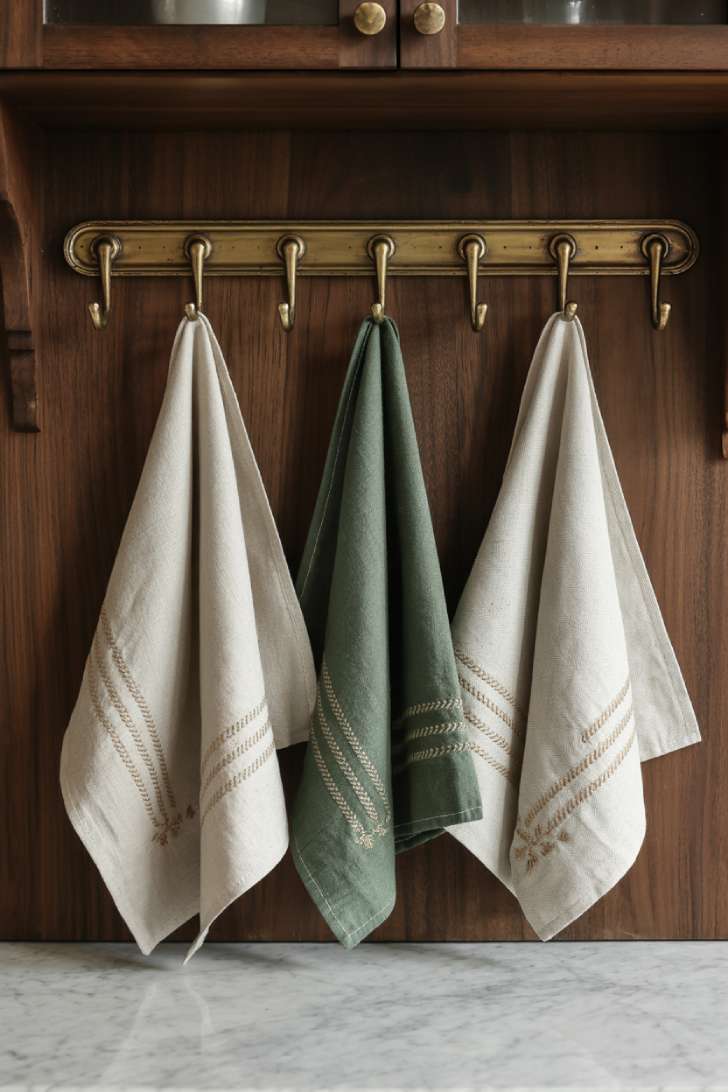
Vintage or vintage-reproduction patterns create visual interest without overwhelming.
These textiles bring softness to a space dominated by wood and stone.
Blending Modern and Vintage
Retro-Styled Appliances
Modern dark academia kitchens balance nostalgia with functionality perfectly.
Retro-styled appliances in deep colors now come with contemporary features.
Forest green refrigerators, black vintage-style stoves, and deep blue ovens look period-appropriate.
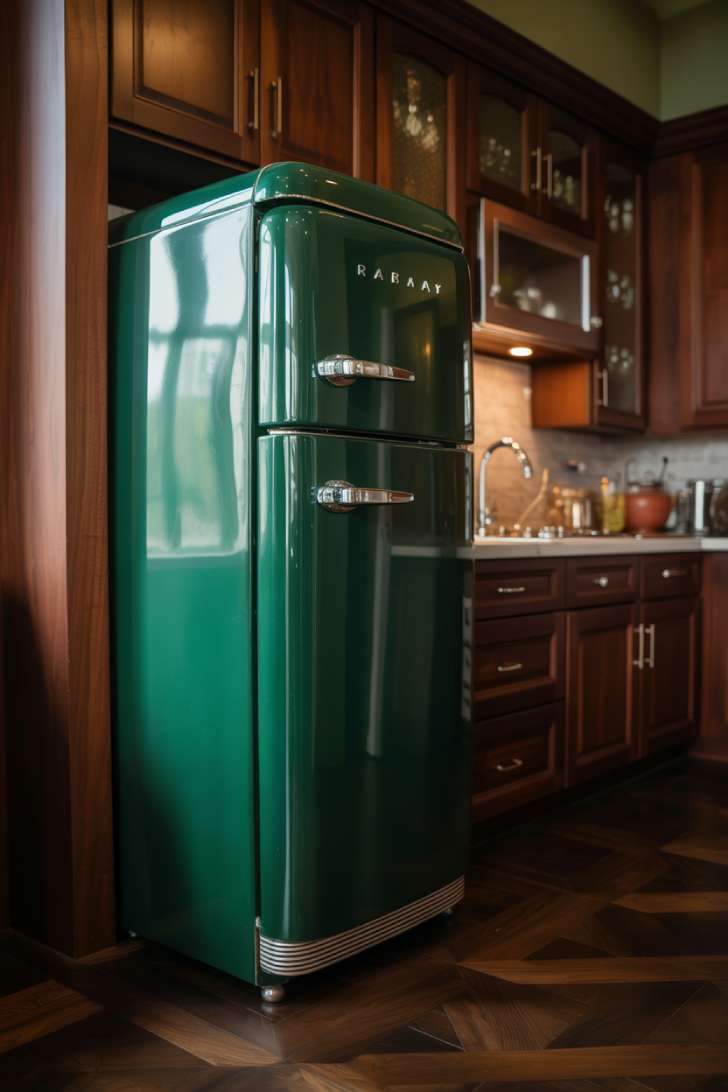
Small appliances like toasters and mixers in vintage styles complete the aesthetic.
These pieces ensure your space functions as a modern kitchen without sacrificing style.
You get the romantic, scholarly atmosphere with all the convenience of contemporary cooking.
Hiding Modern Appliances
Integrate modern appliances behind cabinet panels when possible.
This approach keeps sleek contemporary items from disrupting your aesthetic.
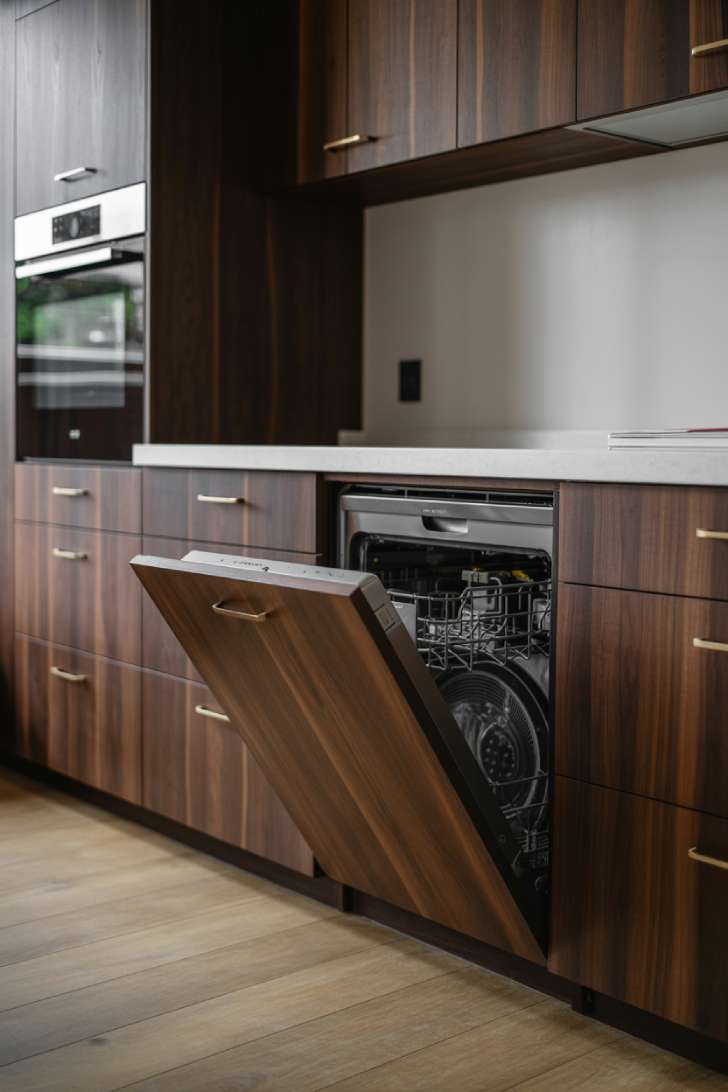
Select models in stainless steel or black finishes that recede visually against moody cabinetry.
The goal is functionality that doesn’t compete with your carefully crafted atmosphere.
Layout and Spatial Considerations
Small Space Adaptations
The dark academia kitchen adapts beautifully to kitchens of any size.
In compact spaces, focus on color elements through paint and targeted cabinetry.
Strategic lighting becomes even more important in smaller kitchens.
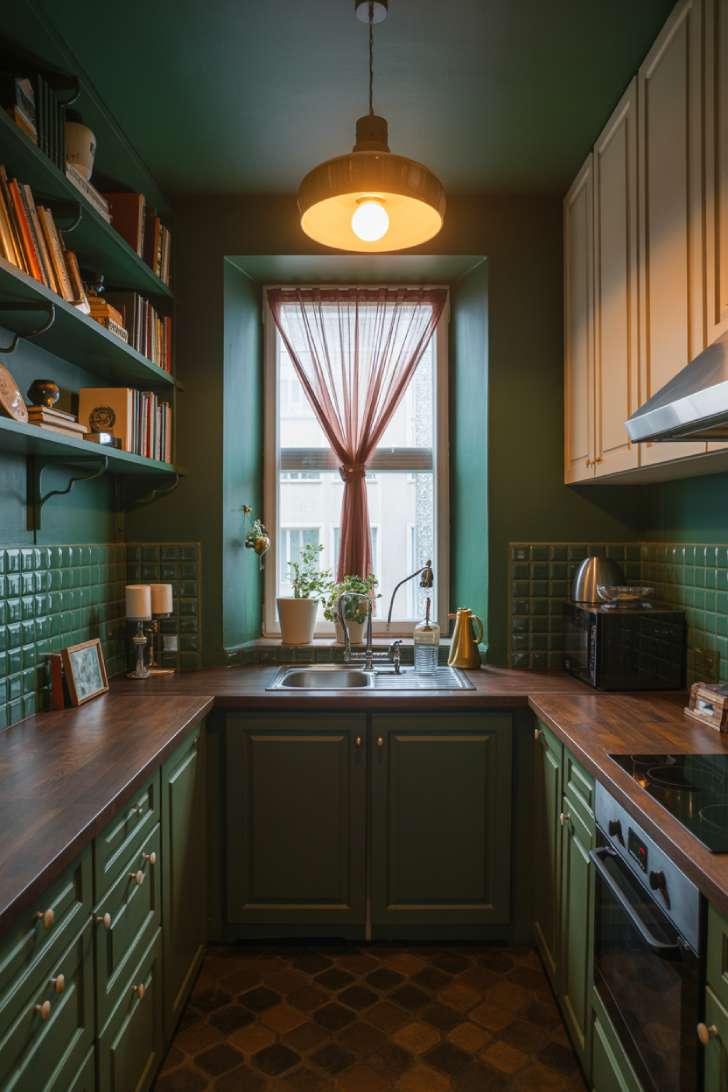
You don’t need to overwhelm a small area with too many dark elements.
Choose key pieces—maybe dark lower cabinets with lighter uppers and strategic accessories.
This focused approach creates the aesthetic without making the space feel cramped.
Creating Gathering Spaces
Create an eat-in kitchen area with wooden chairs and barstools.
Your kitchen table becomes a focal point where culinary and literary pursuits intersect.
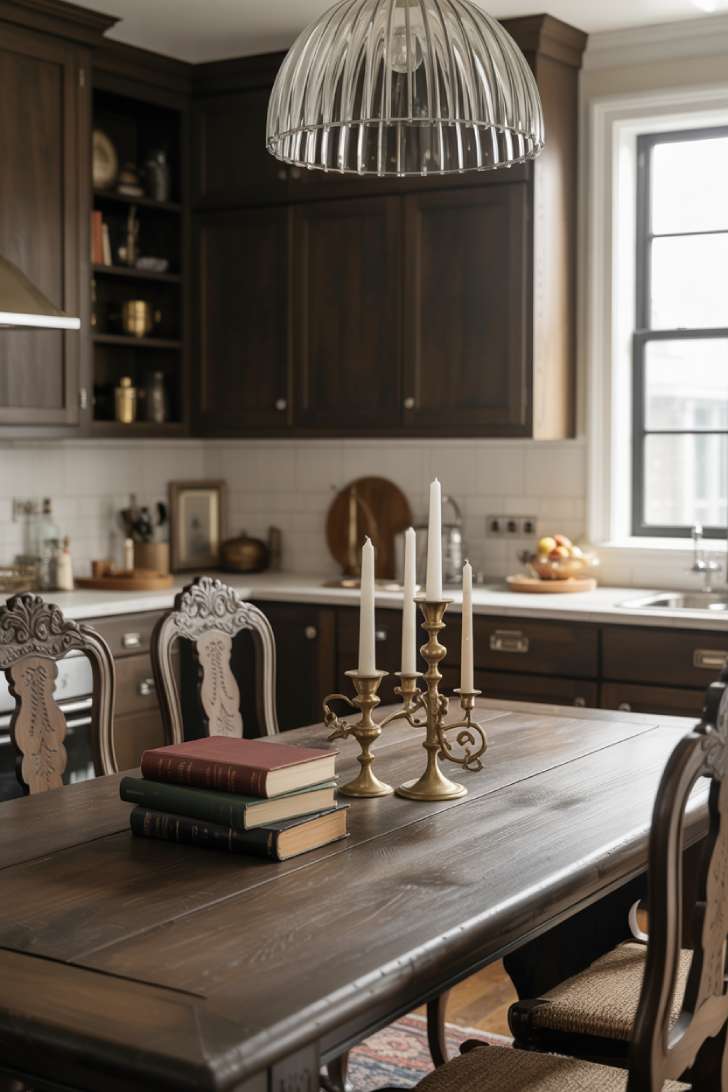
Position seating to establish gathering spaces where meals become intellectual occasions.
The scholarly feast happens here—where both meals and ideas come together.
This transforms your kitchen from purely functional to truly living space.
Conclusion
The dark academia kitchen transcends its function as just a cooking space.
It becomes a sanctuary where aesthetic refinement meets scholarly passion.
Through thoughtful color choices, authentic materials, and curated accessories, your kitchen transforms into an immersive experience.
You’re celebrating knowledge, history, and timeless elegance every time you step into the space.
This aesthetic proves that kitchens can be both practical and deeply personal—places that feed not just the body but the imagination.