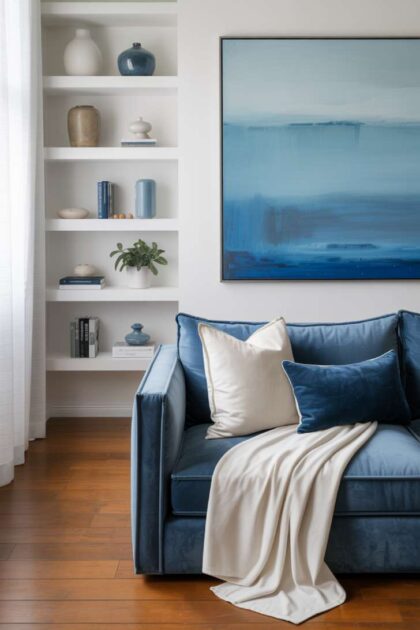
A blue and white living room offers endless possibilities for creating a space that feels fresh, calming, and sophisticated.
This classic color pairing works across nearly every design style, from breezy coastal retreats to elegant traditional homes.
The secret lies in selecting the right shades and balancing them thoughtfully throughout your space.
Choosing Your Blue Color Direction
Soft and Serene Blues
Light blues create peaceful, airy environments perfect for relaxation.
Powder blue, sky blue, and duck egg blue pair beautifully with warm whites or cream.
These softer shades work exceptionally well in smaller living rooms where you want to maintain an open, spacious feeling.
The gentle contrast prevents the room from feeling too stark or clinical.
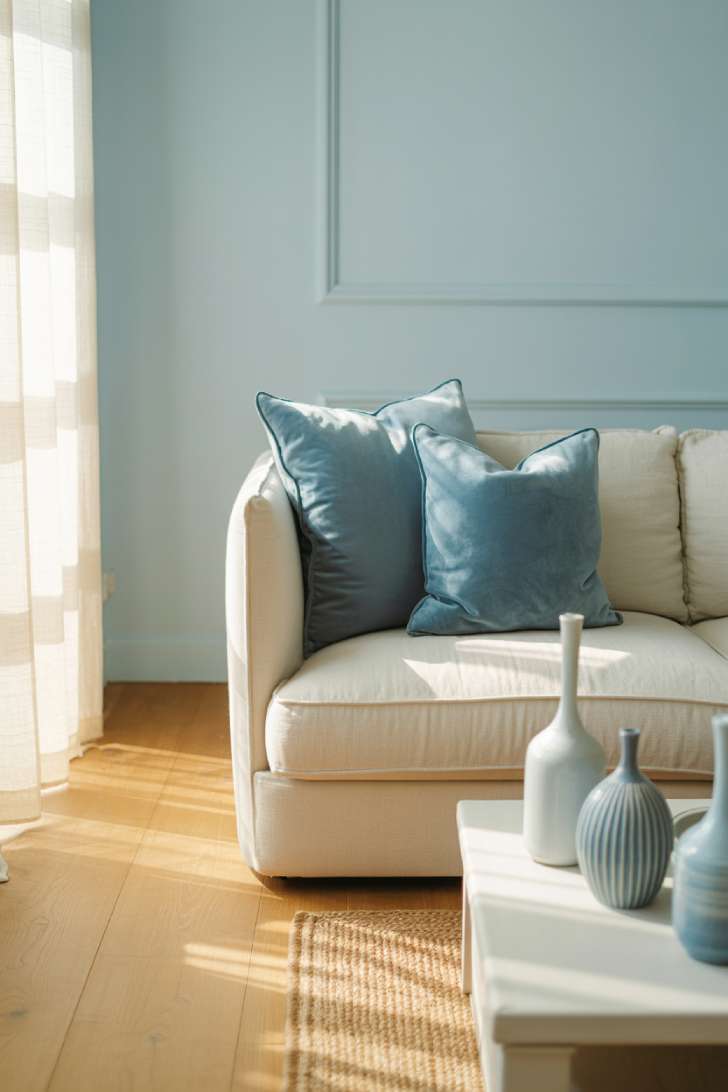
Consider pairing these lighter blues with off-white rather than stark white for a softer, more lived-in appearance.
Navy and Deep Blues
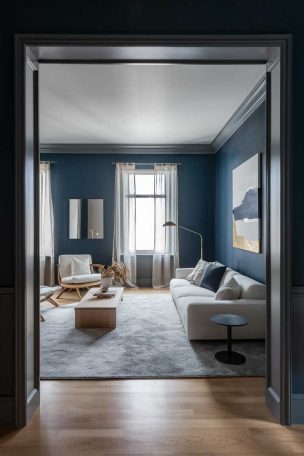
Dark blues bring drama and sophistication to your blue and white living room.
Navy, midnight blue, and ink blue create striking focal points when used on accent walls or large furniture pieces.
These deeper shades work best in rooms with good natural light or when balanced with plenty of white surfaces.
The high contrast between navy and bright white gives your space a crisp, tailored look that feels both timeless and current.
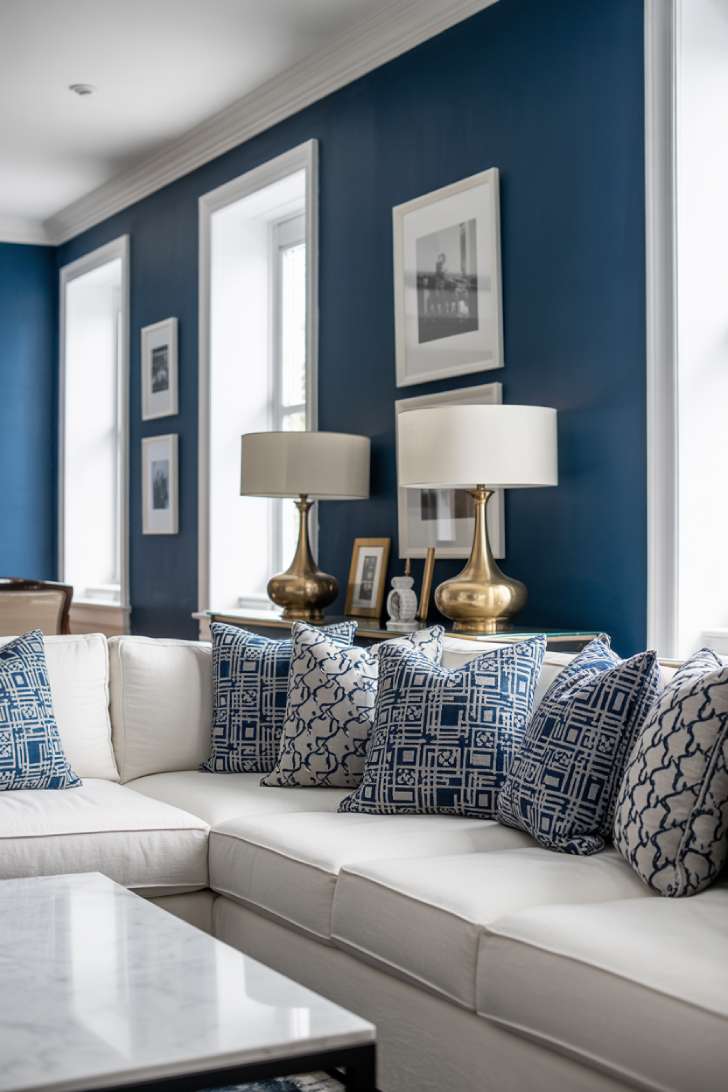
Darker blues pair exceptionally well with metallic accents like brass or gold for an elevated, refined aesthetic.
Coastal and Medium Blues
Medium blues capture the essence of the ocean and sky.
Shades like cerulean, Mediterranean blue, and aqua bring energy and freshness to your living space.
These mid-tone blues work beautifully in coastal-inspired designs but adapt equally well to modern or eclectic interiors.
They offer more presence than light blues without the weight of darker navy.
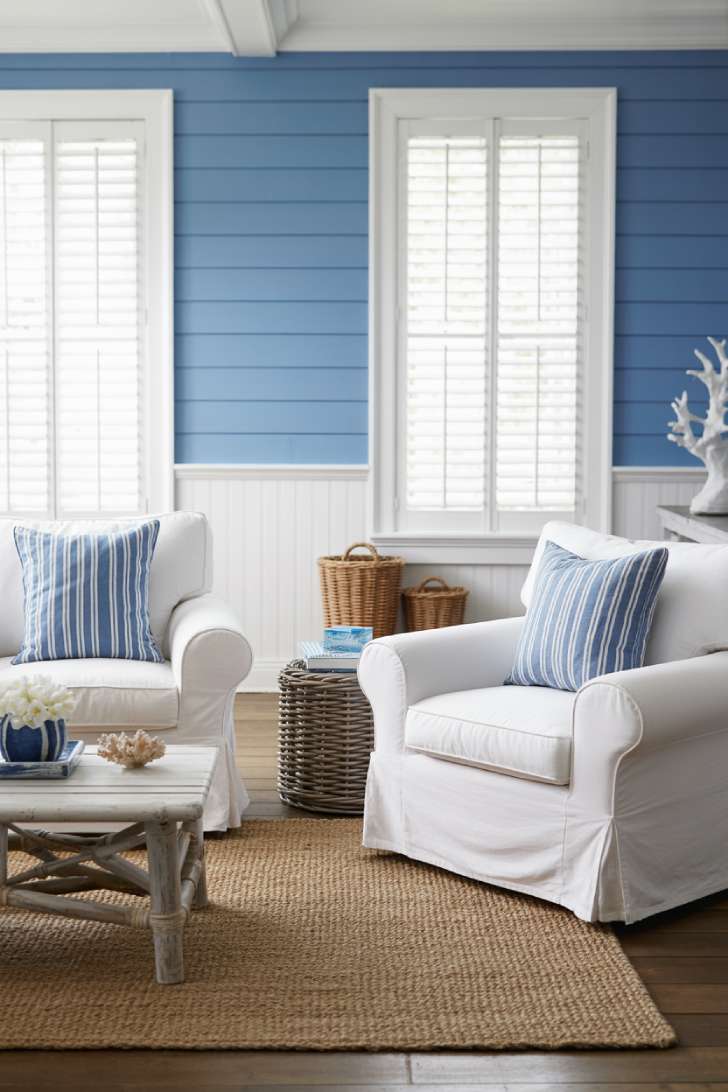
Medium blues create living rooms with blue accents that feel vibrant without overwhelming your senses.
Muted and Gray-Blues
Gray-blue tones offer a contemporary, understated approach.
Slate blue, steel blue, and dusty teal provide sophistication with a modern edge.
These desaturated blues create calm, minimalist environments that feel current and refined.
They pair beautifully with cool whites and black accents for a sleek, gallery-like quality.
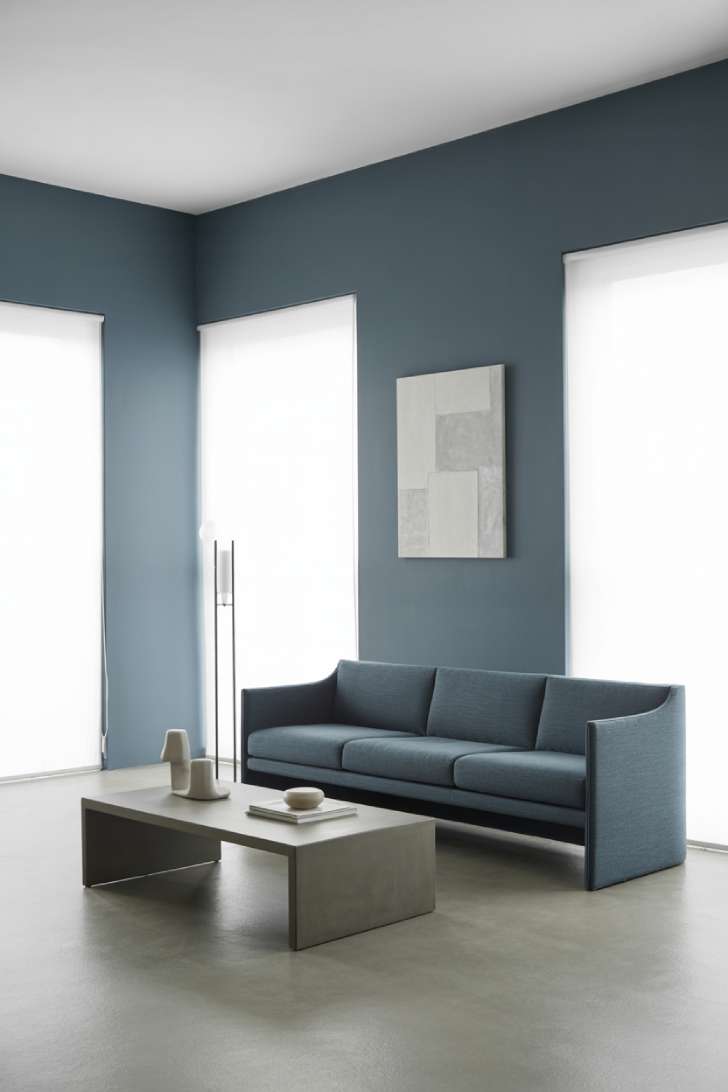
These subdued tones work perfectly when you want color without making a bold statement.
Wall Color Strategies
White Walls with Blue Accents
Keeping your walls white provides maximum flexibility.
This approach lets you introduce blue through furniture, textiles, and accessories that you can easily change over time.
White walls reflect light beautifully, making your living room feel larger and brighter.
You maintain control over how much blue appears in your space without committing to painted surfaces.
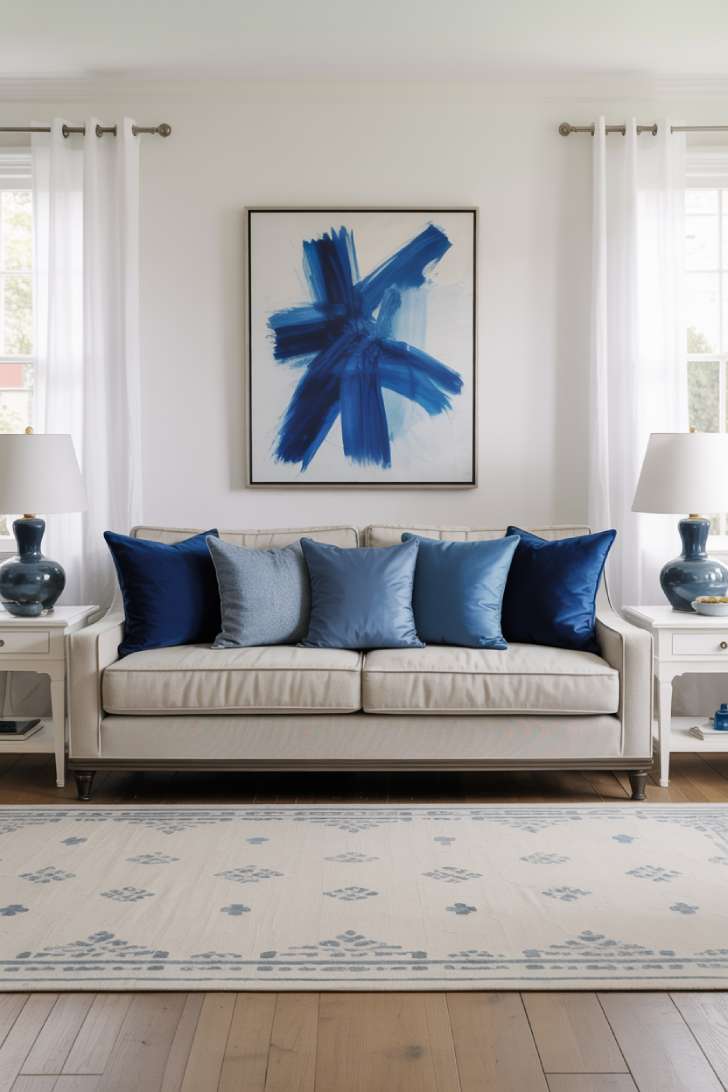
This strategy works particularly well for renters or anyone who prefers to update their look seasonally.
Blue Accent Walls
A single blue wall creates instant visual interest.
Choose the wall behind your sofa, your television, or the one you see when entering the room.
The accent wall becomes your focal point, drawing the eye and anchoring your furniture arrangement.
Darker blues work well for this technique, creating depth and dimension without overwhelming the entire space.
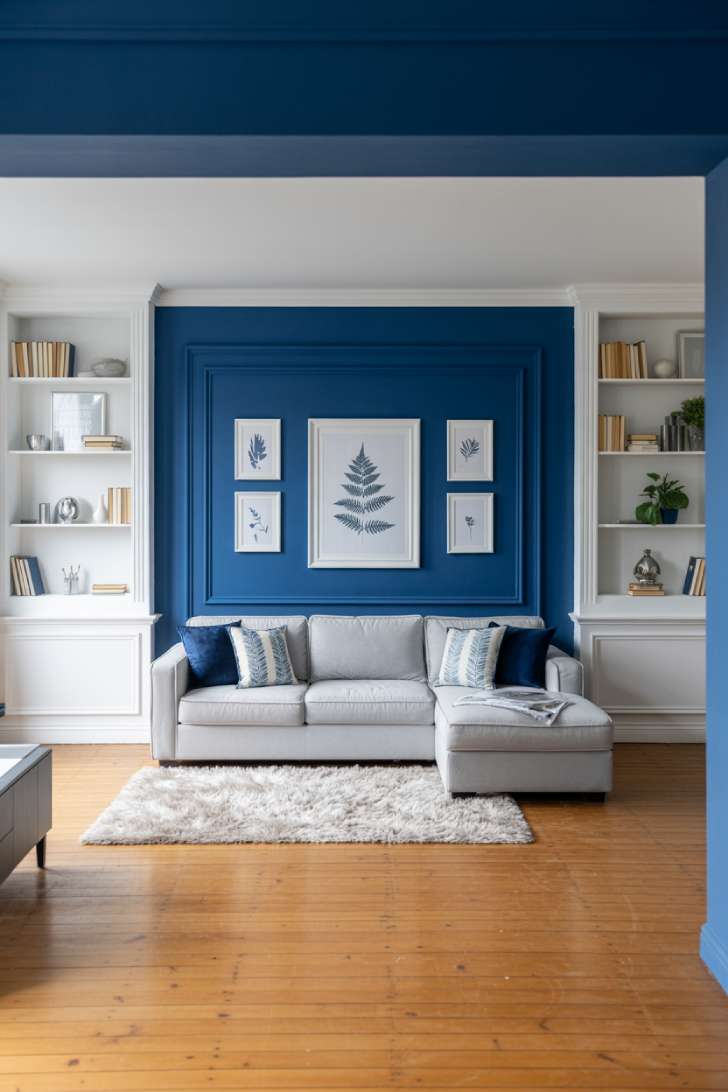
Light blues work as accent walls too, providing a softer backdrop for darker furniture pieces.
All-Over Light Blue
Painting all walls a soft blue creates a cohesive, enveloping environment.
Choose very light, slightly grayed blues to avoid a nursery-like appearance.
Pair your blue walls with white trim, baseboards, and door frames for a crisp, finished look.
This technique works beautifully in spaces with good natural light and high ceilings.
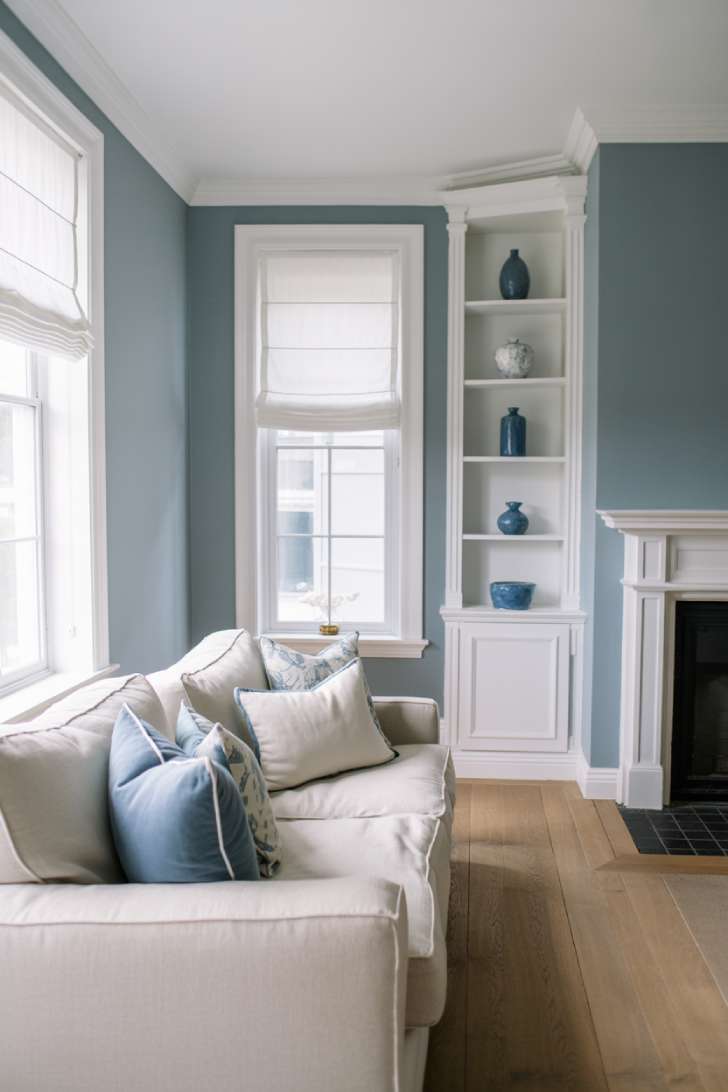
The all-over approach creates a blue and white interior design that feels intentional and complete.
Furniture Selection and Placement
Blue Sofas as Statement Pieces
A blue sofa anchors your entire color scheme.
Navy velvet sofas bring luxury and sophistication to traditional or glam-style rooms.
Denim or chambray upholstery creates a more casual, approachable feel, perfect for family spaces.
Lighter blue linen or cotton sofas work beautifully in coastal or modern settings.
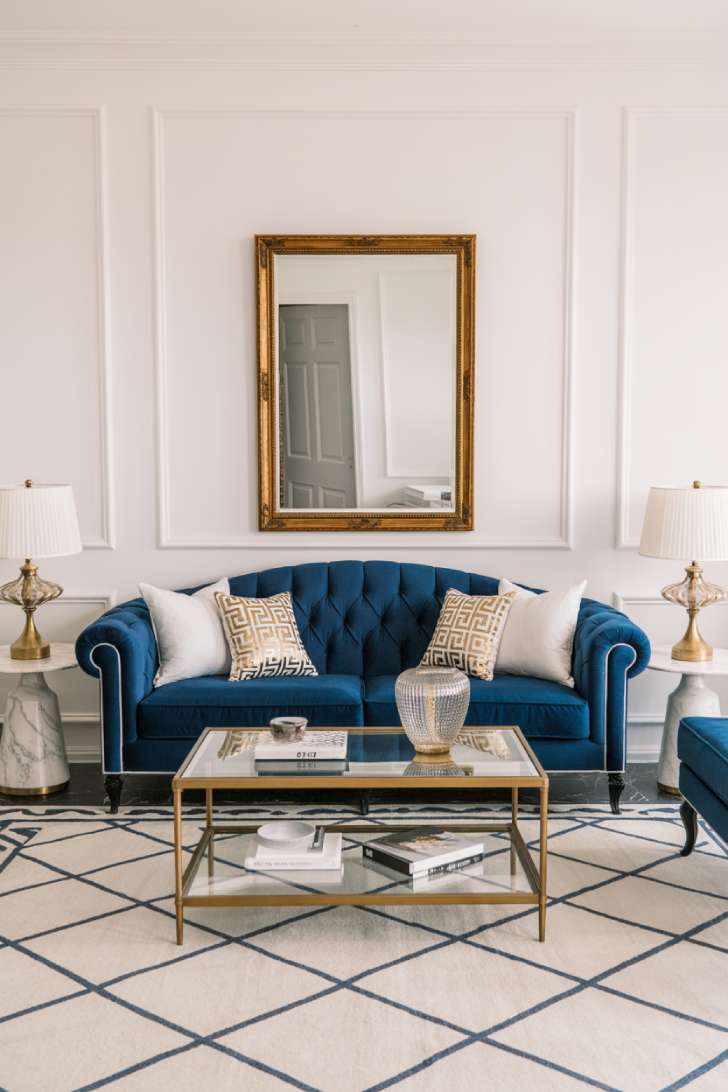
When your sofa is blue, keep most other large pieces neutral to let it shine as the focal point.
White and Neutral Furniture
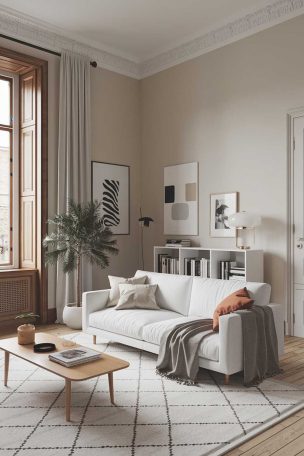
A white or cream sofa provides a neutral foundation.
This choice gives you complete freedom to play with blue in your accessories and accent pieces.
Neutral furniture also reflects light, helping smaller living rooms feel more spacious.
You can easily shift your color story by simply changing pillows, throws, and other decorative elements.
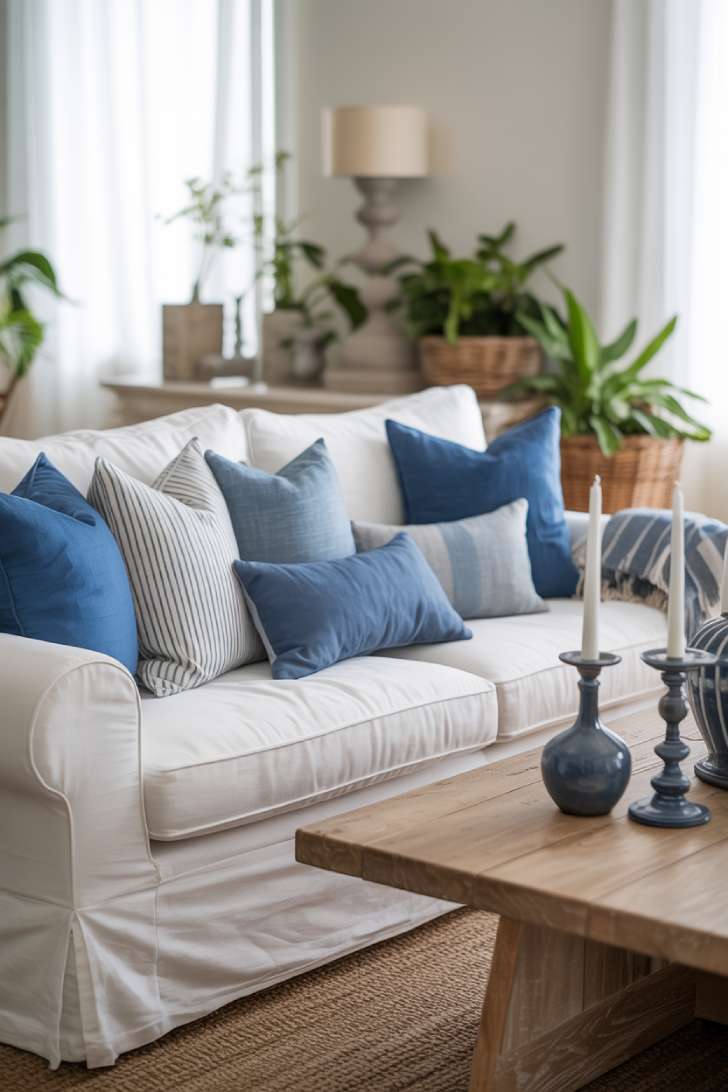
White furniture prevents your living room with blue accents from feeling too heavy or dark.
Wood Furniture for Warmth
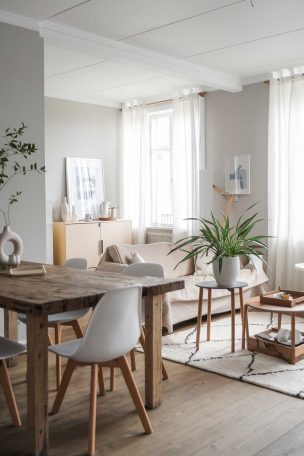
Natural wood pieces add warmth to the cool blue and white palette.
Light woods like oak, ash, and pine create a casual, Scandinavian-inspired aesthetic.
Darker woods such as walnut or cherry bring richness and tradition to more formal spaces.
Coffee tables, side tables, media consoles, and bookcases in wood finishes break up the blue and white while adding textural interest.
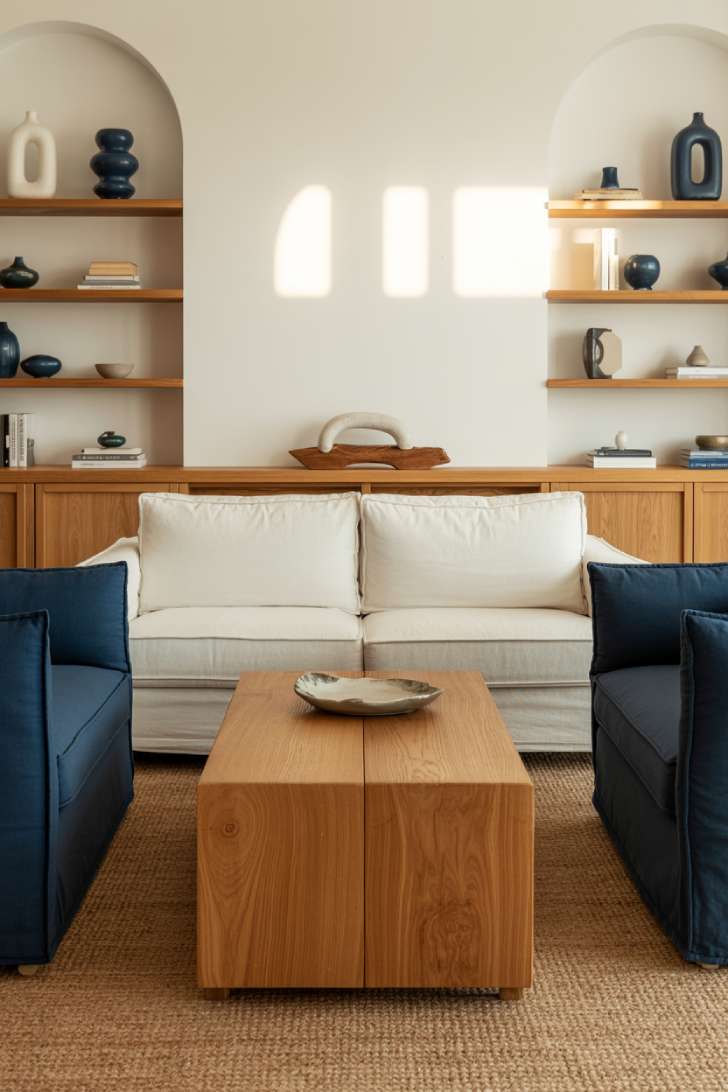
Wood tones prevent your blue and white living room from feeling too cold or sterile.
Textiles and Soft Furnishings
Throw Pillows and Cushions
Pillows are the easiest way to introduce multiple shades of blue.
Mix solid navy, medium blue, and light blue pillows with white or patterned options.
Aim for 2-3 different blue shades to create depth without chaos.
Vary the sizes and shapes—combine square, lumbar, and rectangular pillows for visual interest.

Patterns like stripes, simple geometrics, or subtle florals add personality without overwhelming your space.
Area Rugs
The right rug ties your entire blue and white living room together.
A white or cream rug with blue patterns provides a light foundation that opens up the space.
A blue rug with white details creates more visual weight and works well when walls and furniture are lighter.
Natural fiber rugs in jute or sisal offer a neutral ground that lets other blue elements take center stage.
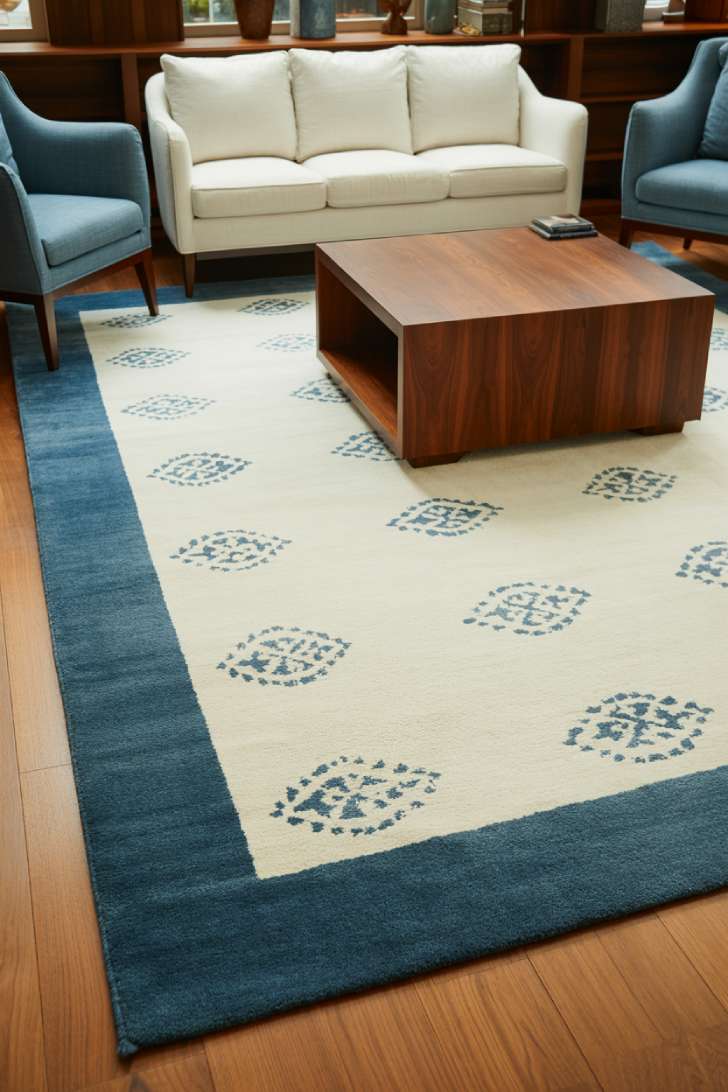
Your rug should be large enough that all front furniture legs sit on it, creating a cohesive seating zone.
Curtains and Window Treatments
Window treatments control natural light and frame your views.
White linen or cotton curtains keep things bright and airy while adding softness.
Sheer white curtains allow maximum light penetration, perfect for rooms where you want brightness.
Blue curtains make a bolder statement—choose lighter blues for a subtle effect or navy for drama.
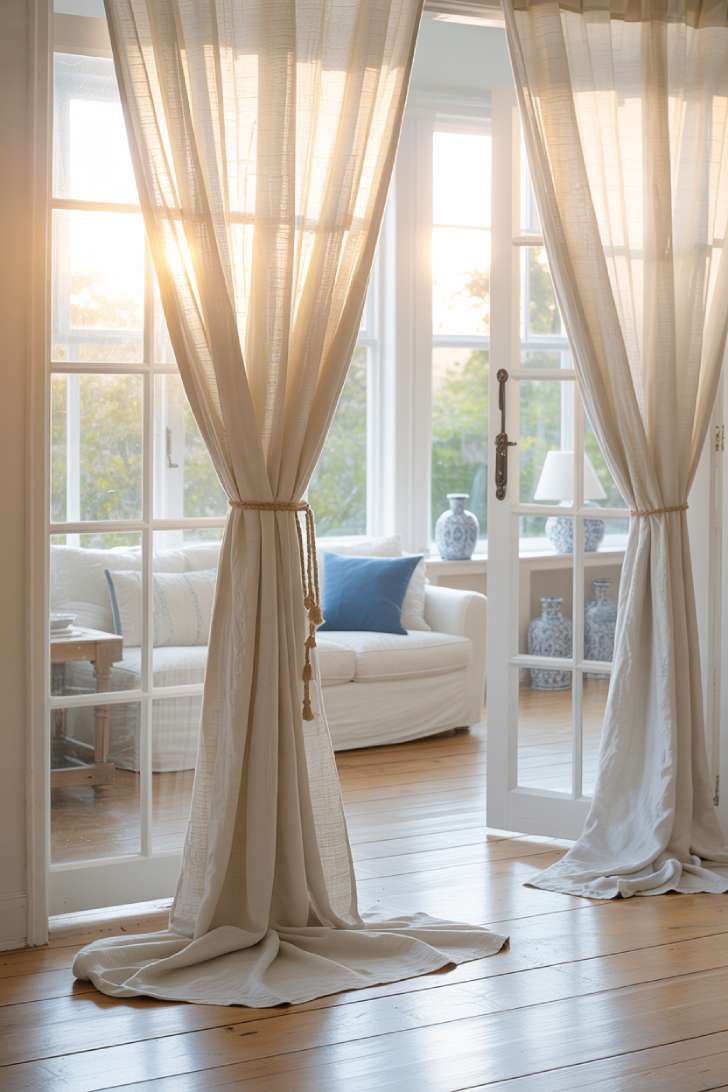
Blue and white striped curtains offer a classic look that works particularly well in coastal or traditional settings.
Throws and Blankets
Throws add texture, warmth, and finishing touches.
Drape a chunky knit throw in cream or light blue over your sofa arm for casual comfort.
Navy or patterned blue throws provide color pops on neutral furniture.
Layer different textures—pair a smooth cotton throw with velvet pillows or a cable-knit blanket with linen upholstery.

Throws make your space feel lived-in and welcoming rather than overly styled.
Pattern Mixing Techniques
Stripes and Geometrics
Blue and white stripes are a foolproof pattern choice.
Classic ticking stripes bring a casual, farmhouse quality to your space.
Wide stripes feel more modern and graphic, whereas thin stripes read as more traditional.
Mix stripes with geometric patterns like chevrons, hexagons, or Greek key designs for visual variety.
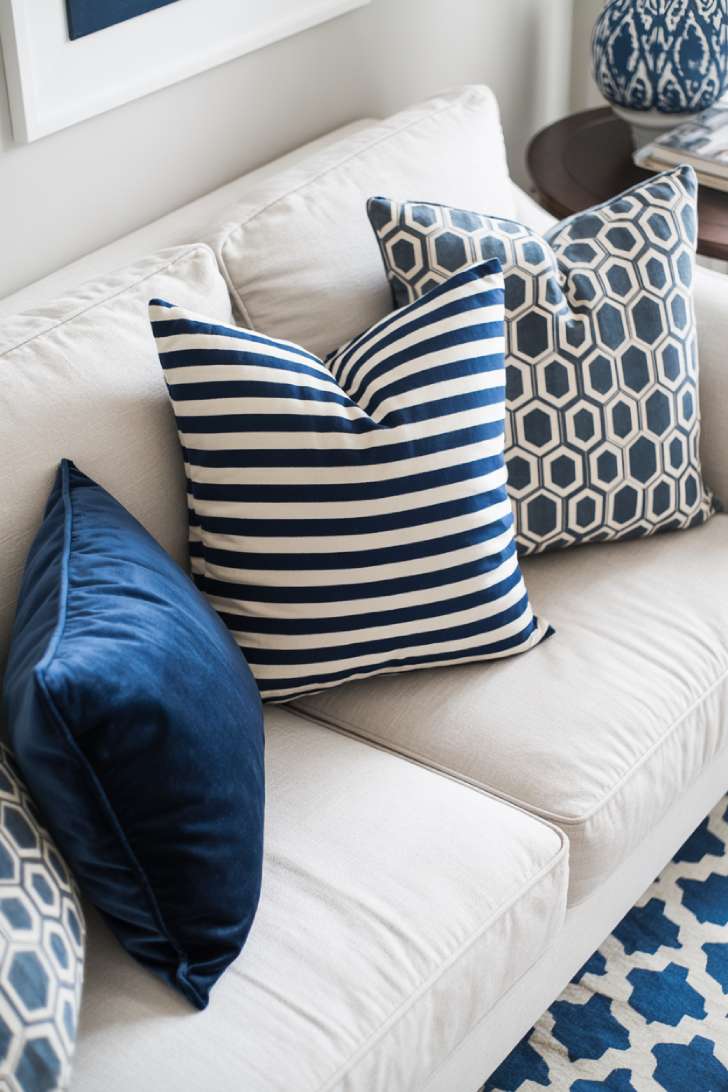
Keep patterns in the same color family but vary the scale for a cohesive yet interesting look.
Florals and Botanicals
Floral patterns bring softness and traditional charm.
Classic blue and white chinoiserie features intricate Asian-inspired motifs.
Modern botanical prints with navy leaves or flowers on white backgrounds feel fresh and current.
Mix one floral pattern with solids and one geometric for balance.
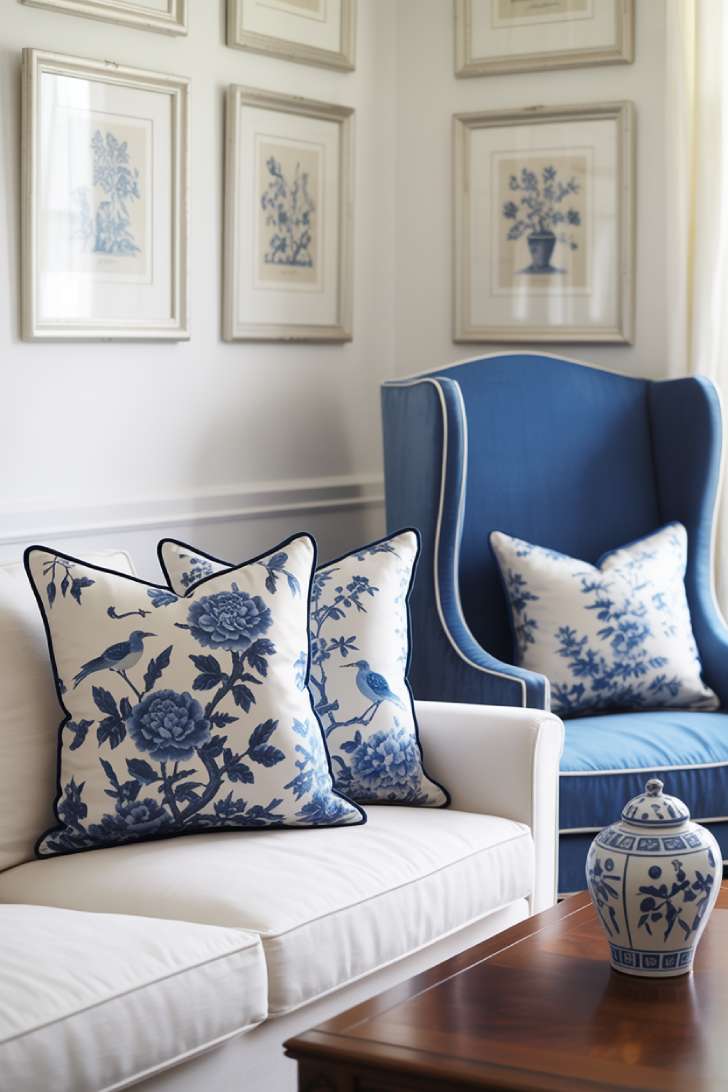
Florals work beautifully when you want to soften a more modern space or lean into traditional blue and white interior design.
Abstract and Modern Patterns
Abstract patterns bring contemporary energy.
Look for painterly strokes, watercolor effects, or artistic interpretations of blue and white.
These patterns work well in modern or eclectic spaces where you want artistic flair.
Pair abstract patterns with plenty of solids to let the artistic elements stand out.
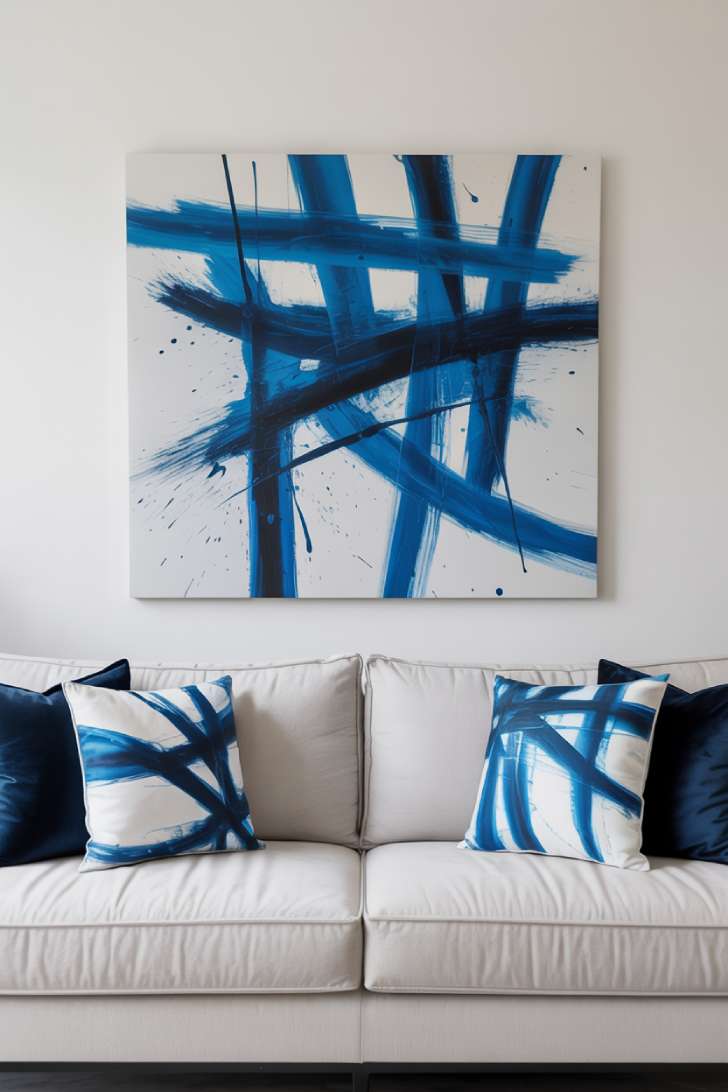
Abstract patterns let you incorporate blue in artistic ways that feel personal and unique.
Design Style Applications
Coastal and Beach House Style
Coastal style embraces relaxed, breezy materials.
Combine medium to light blues with crisp white and natural textures like rattan, jute, and weathered wood.
Add rope details, nautical stripes, and ocean-inspired accessories like coral, shells, or driftwood.
Keep the overall feeling casual and comfortable rather than formal.
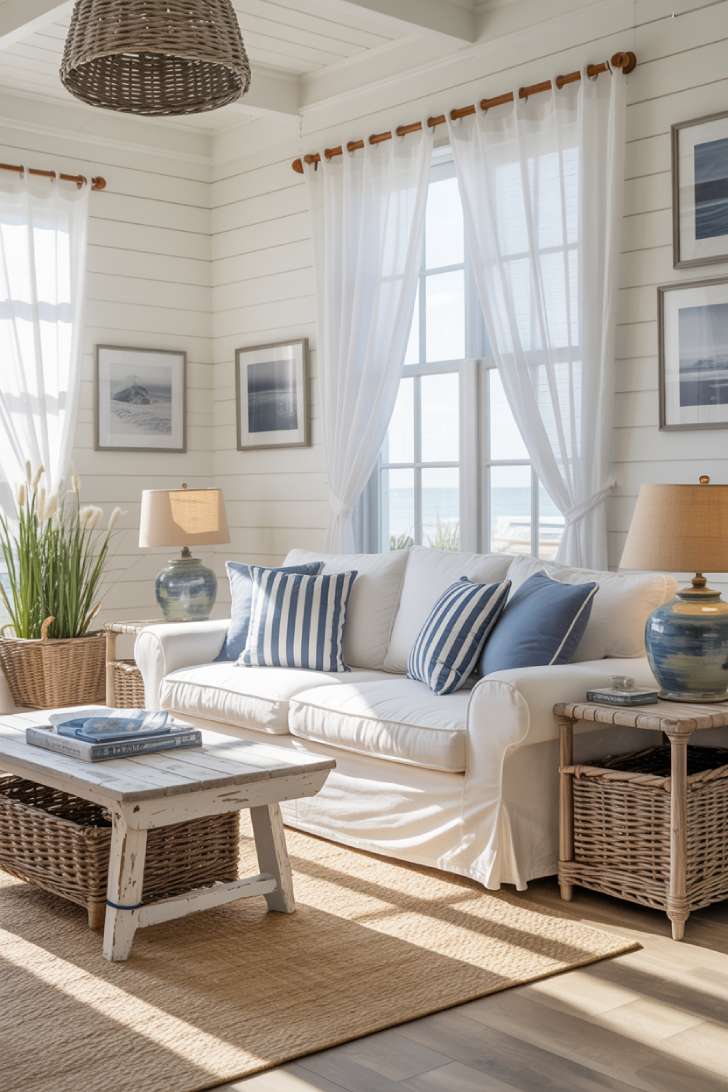
The coastal approach to blue and white living room design feels perpetually vacation-ready.
Classic and Traditional
Traditional style calls for richer materials and more formal arrangements.
Use navy blue with cream or bright white, adding touches of brass or gold.
Incorporate classic patterns like damask, toile, or chinoiserie.
Choose furniture with traditional silhouettes—rolled arms, tufting, and turned legs.
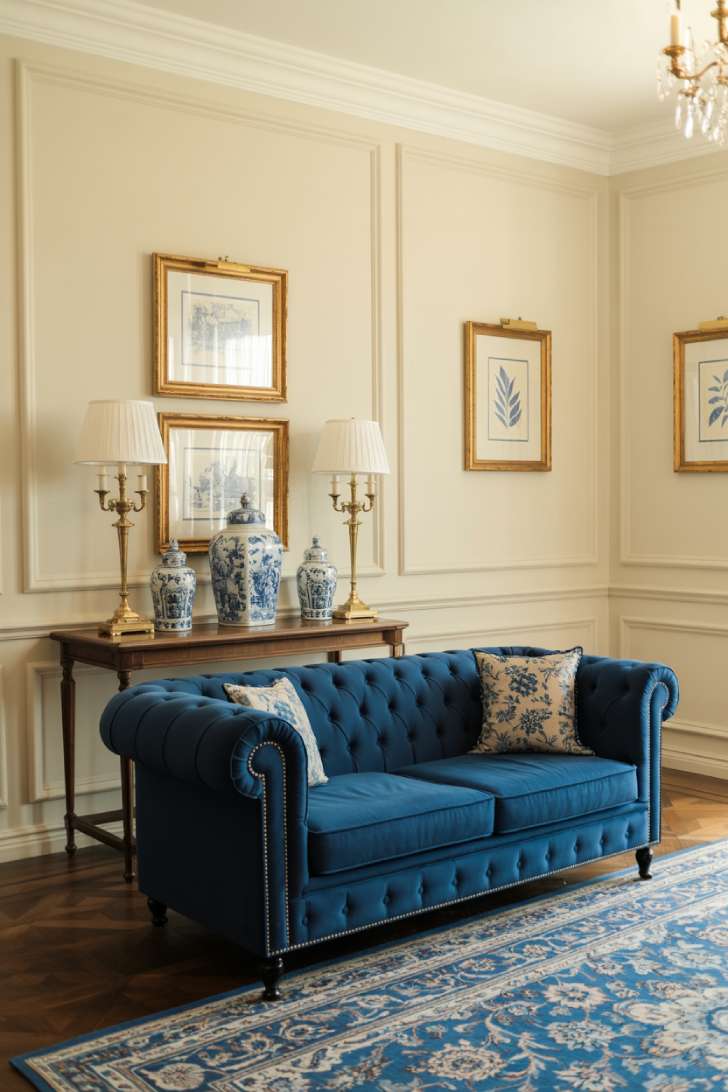
This approach creates a blue and white living room that feels refined and enduring.
Modern Minimalist
Minimalist style strips things down to clean lines and careful editing.
Use muted gray-blues with stark white and limited black accents.
Keep furniture simple with straight lines and no ornamental details.
Display very few decorative objects, choosing each piece intentionally.
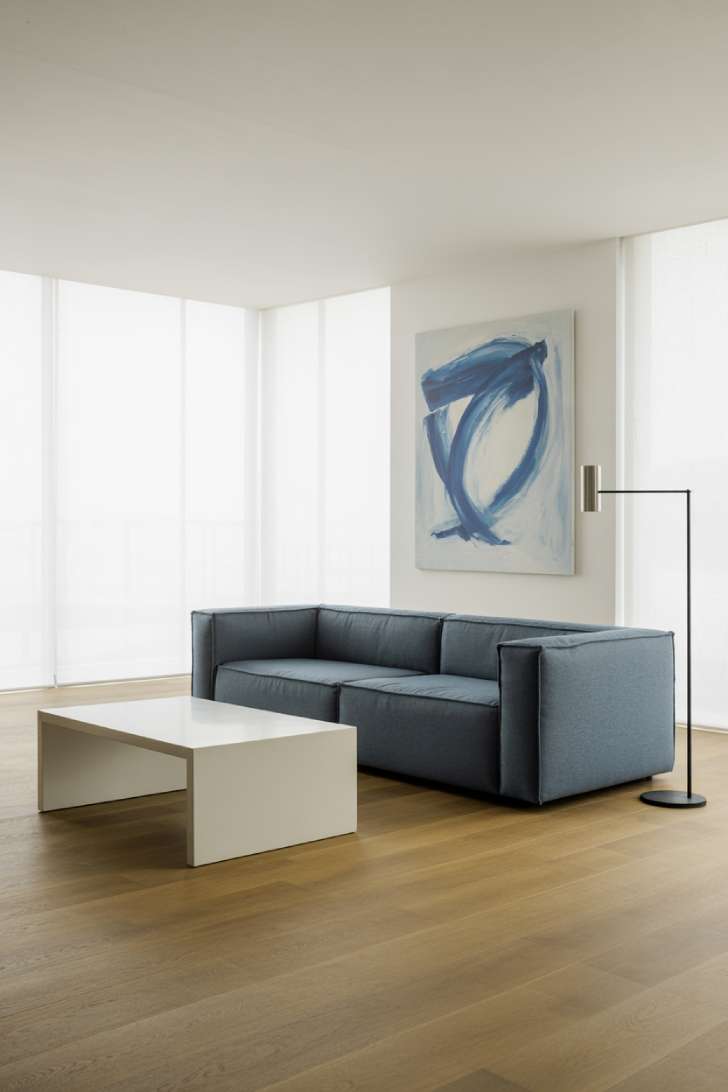
The minimalist version of the living room with blue accents focuses on quality over quantity.
Transitional Blend
Transitional style mixes traditional and modern elements.
Combine classic furniture shapes with contemporary fabrics and colors.
Pair navy upholstery with clean-lined frames or mix modern art with traditional furniture.
This style offers flexibility and appeals to a wide range of tastes.

Transitional spaces feel current without abandoning timeless appeal.
Lighting Considerations
Natural Light Optimization
Natural light dramatically affects how your blues appear.
Rooms facing north receive cooler light that can intensify blues.
South-facing rooms get warmer light that softens blue tones.
Use sheer white curtains or light-filtering shades to maximize daylight without harsh glare.
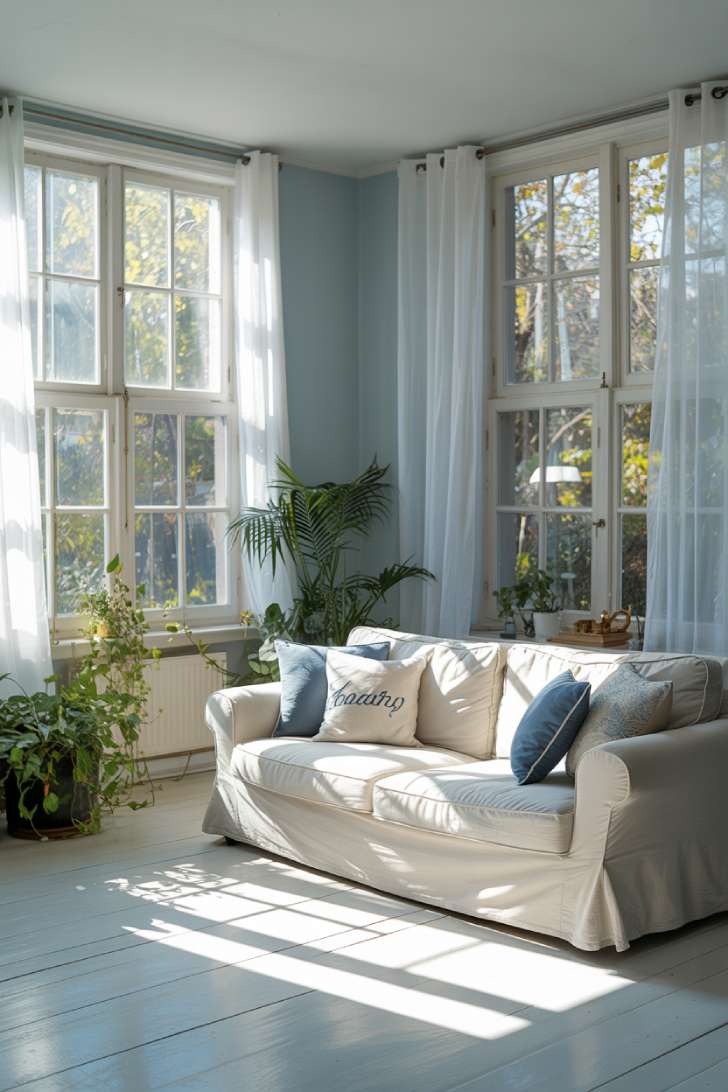
Mirrors placed across from windows amplify natural light and make spaces feel larger.
Artificial Lighting Layers
Good artificial lighting requires multiple sources at different heights.
Combine overhead lighting with table lamps and floor lamps for flexibility.
Ceiling fixtures in white, natural materials, or simple metal finishes keep focus on your color scheme.
Table lamps with blue ceramic bases or white linen shades reinforce your palette.
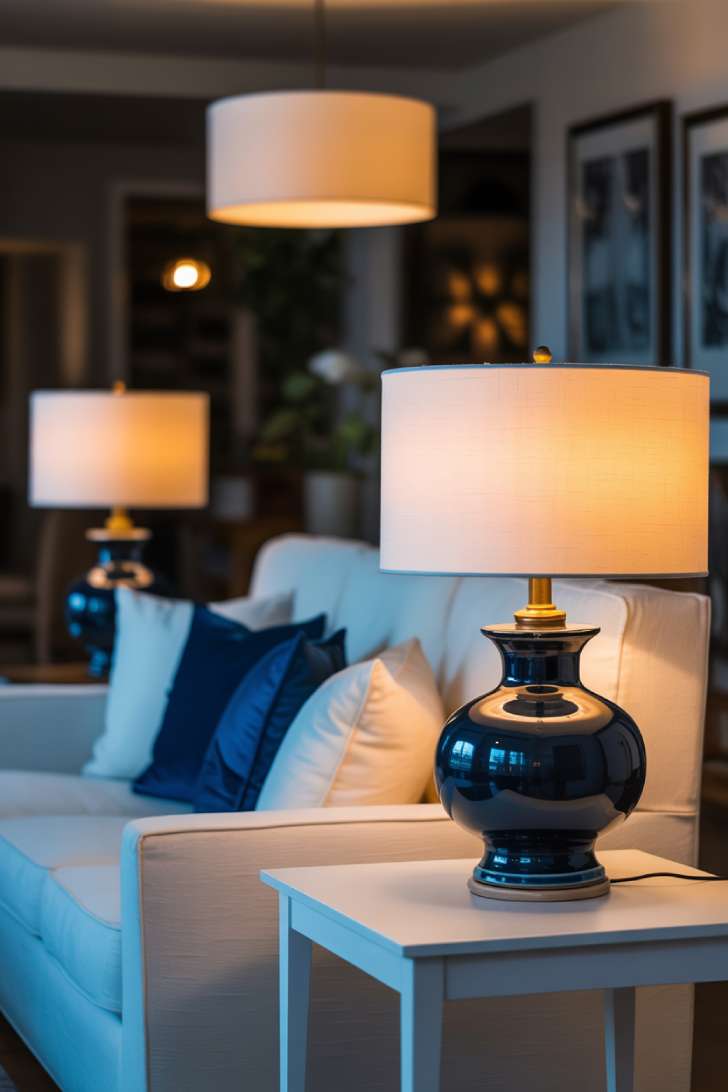
Floor lamps in brass or black metal add height and provide reading light for specific seating areas.
Bulb Temperature Selection
Bulb color temperature changes how your blues read.
Warm bulbs (2700-3000K) add golden tones that soften blues and create cozy environments.
Cool bulbs (4000K+) enhance the crispness of blues but can feel clinical.
Most blue and white living rooms benefit from warm-toned bulbs that balance the inherently cool palette.
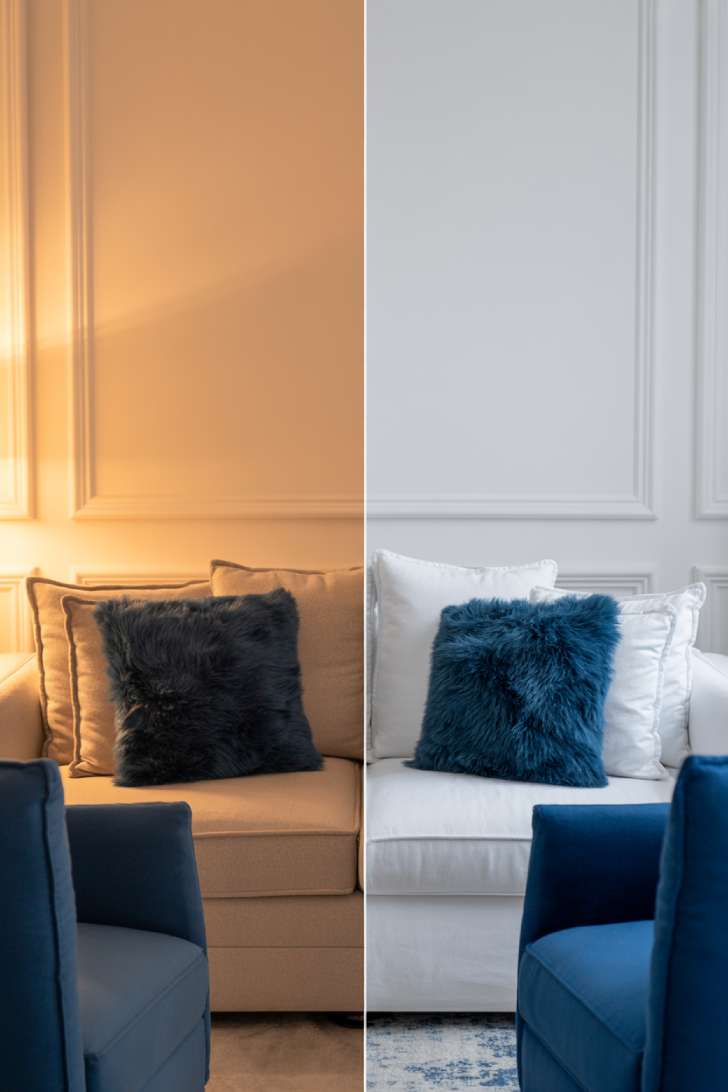
Dimmable lights give you control over ambiance throughout the day.
Adding Warmth and Balance
Metal Accents
Metallic finishes add shine and visual interest.
Brass and gold bring warmth and elegance, perfect for traditional or glam spaces.
Black iron or matte black creates modern contrast and graphic appeal.
Brushed nickel or chrome offers sleekness but needs wood to avoid feeling cold.
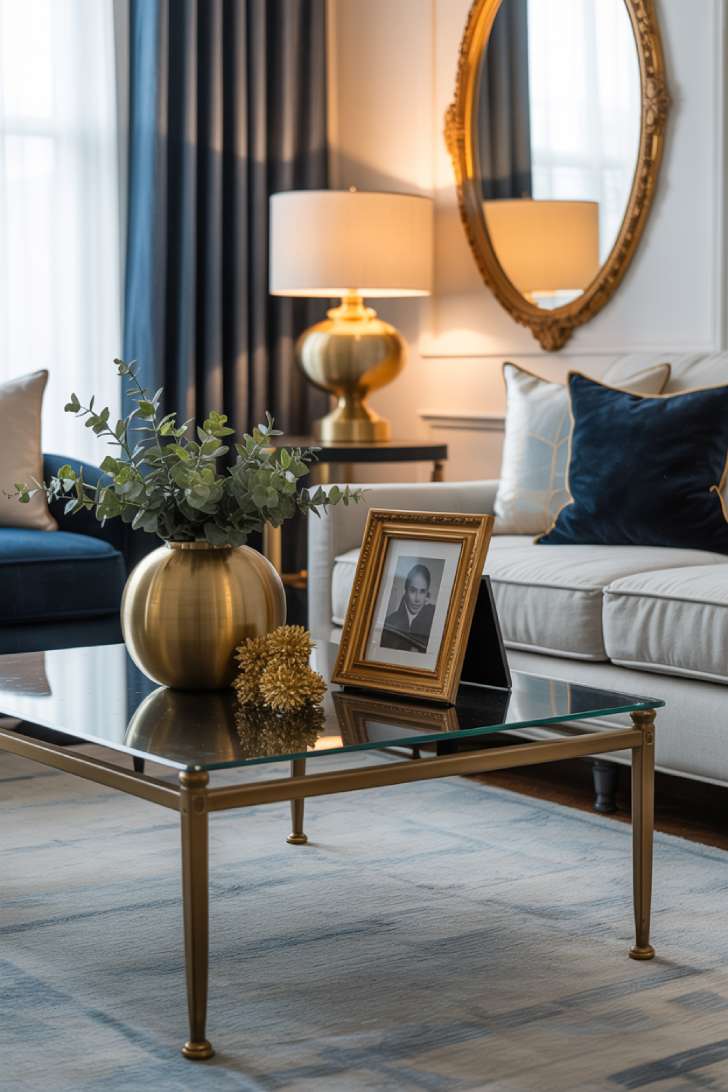
Stick to one or two metal finishes throughout the room for a cohesive look.
Natural Materials
Organic materials ground your blue and white palette.
Wood appears in coffee tables, side tables, shelving, and picture frames.
Rattan and wicker add texture through baskets, chairs, or decorative pieces.
Plants bring life and green tones that complement blue beautifully.
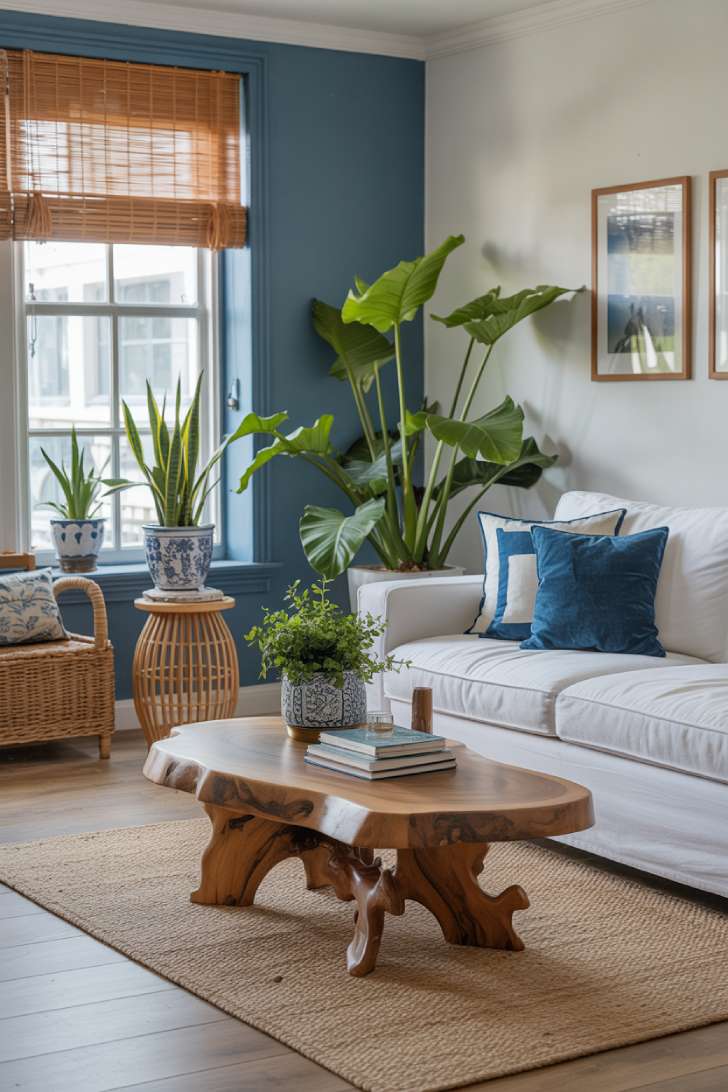
Natural materials prevent blue and white interior design from feeling too perfect or sterile.
Beige and Tan Touches
Neutral warm tones bridge blue and white.
Beige or tan throw blankets add softness without competing with your color scheme.
Cream or oatmeal upholstery on secondary seating provides warmth.
These neutrals work particularly well when your blues lean cool or gray.
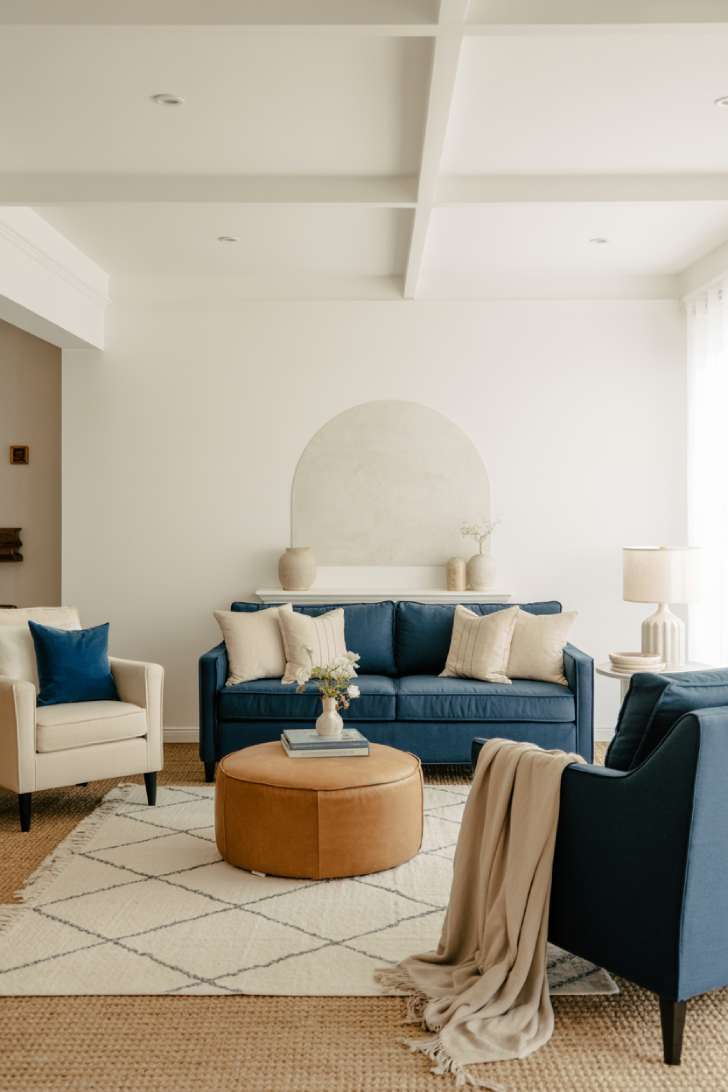
These warm neutrals ensure your space feels welcoming rather than cold.
Artwork and Wall Decor
Blue and White Art
Art reinforces your color scheme and adds personality.
Abstract paintings with blue brushstrokes on white canvas create focal points.
Ocean photography, sky scenes, or architectural images provide specific subject matter.
Choose pieces with your exact blue shades to create color harmony.
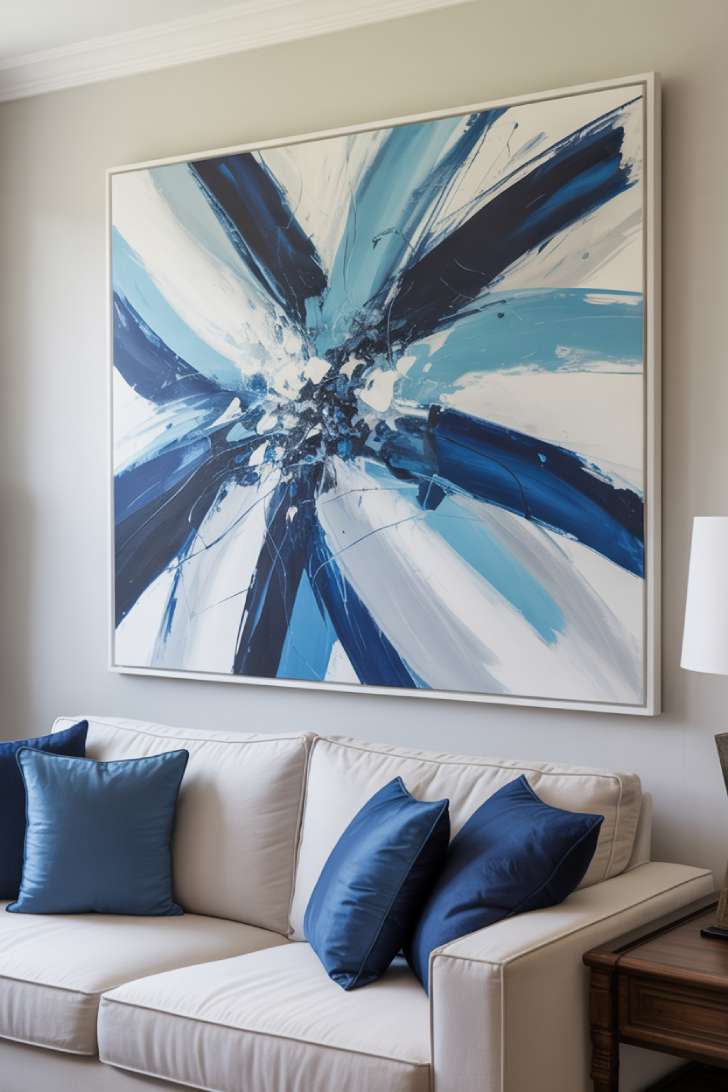
Oversized art makes more impact than multiple small pieces in contemporary spaces.
Gallery Walls
Gallery walls let you display multiple pieces.
Mix frame styles or keep them uniform for different effects.
Include art in various blue tones along with black and white photographs.
Arrange pieces on the floor first to find the best composition before hanging.
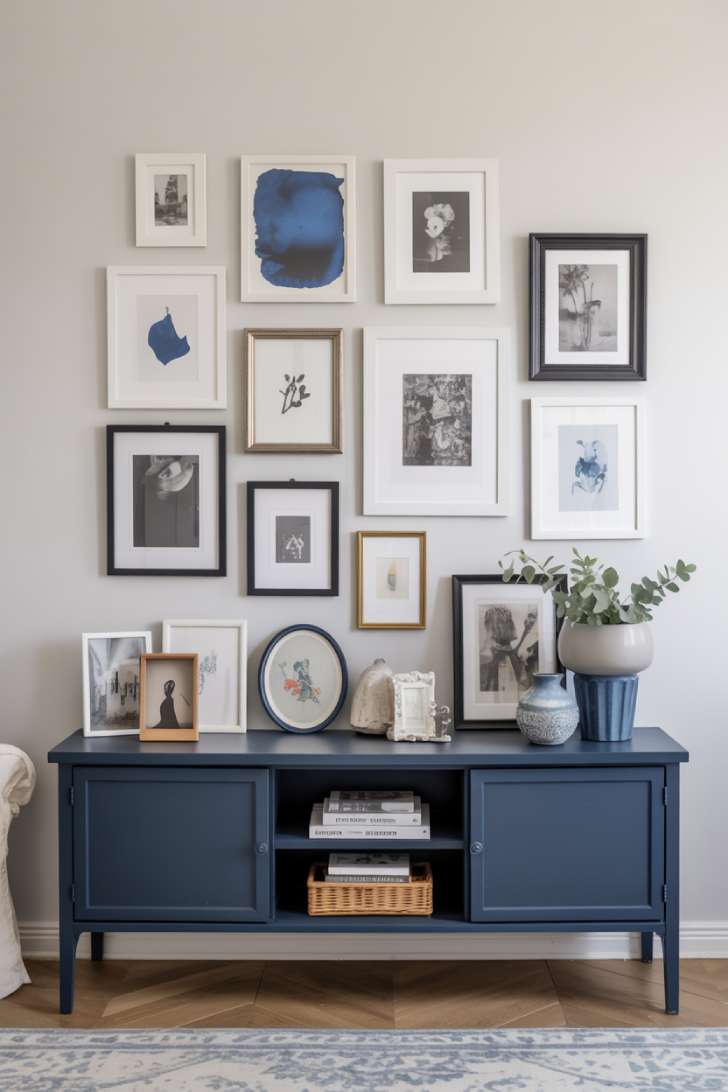
Gallery walls work beautifully on large blank walls that need visual interest.
Decorative Objects
Three-dimensional objects add depth to flat surfaces.
Blue and white ceramic vases bring classic appeal.
Glass objects in blue tones catch and reflect light.
Keep groupings in odd numbers (3, 5, or 7) for visual balance.
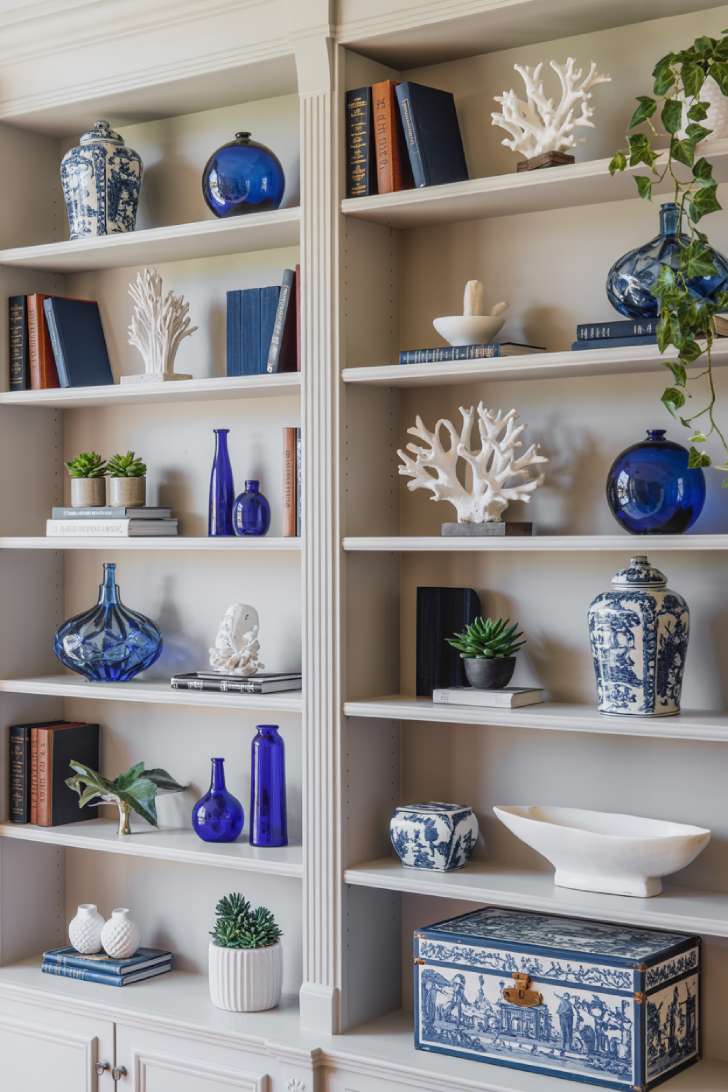
Vary heights and shapes when grouping decorative pieces for visual interest.
Small Space Strategies
Smaller living rooms require special consideration with blue and white.
Keep walls light—soft blue or white—to maximize the feeling of space.
Choose furniture with exposed legs rather than skirted pieces to create visual lightness.
Use mirrors strategically to reflect light and make rooms feel larger.
Limit darker blues to smaller accent pieces rather than large furniture.
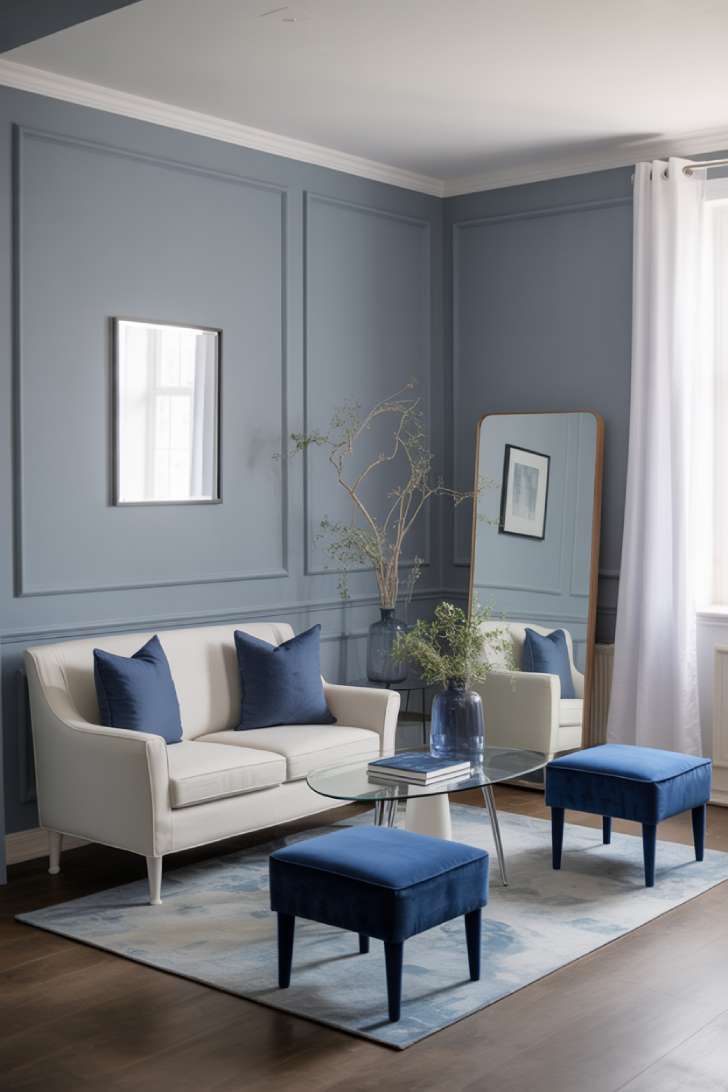
Fewer, larger pieces work better in small spaces than many small items.
Conclusion
Your blue and white living room can reflect any mood you want to create.
The palette offers enough variety to suit your personal style, whether that’s coastal and relaxed, traditionally elegant, or sleekly modern.
Start by choosing your blue shade, then balance it thoughtfully with white, warm materials, and carefully selected patterns.
The result will be a living room with blue accents that feels both timeless and personal.